Category: Dance

  • Music from the Sole @ The Joyce

    Music from the Sole jpg

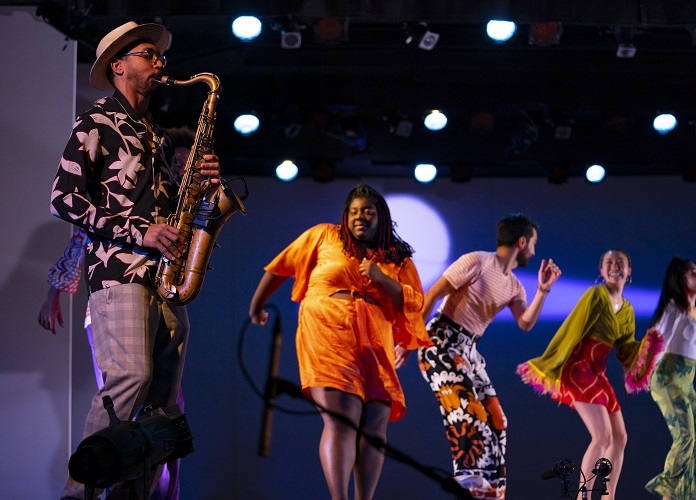
    Above: sax man José Carlos Cruzata Revé, and dancers Roxy King, Orlando Hernandez, Naomi Funaki, and Ana Tomioshi; photo by Titus Ogilvie Laing

    ~ Author: Oberon

    Tuesday January 30th, 2024 – I haven’t had this much fun in years…in decades, really! I Didn’t Come to Stay, an evening-length work from the New York City-based company Music From The Sole, opened at The Joyce on Tuesday night and it left me feeling higher than a kite. Everything about the evening was uplifting: such a joy to see…and to hear: for the musicians were beyond fabulous…and they can dance, too!

    The Brazilian tap dancer and choreographer Leonardo Sandoval had rocked me with the brilliant piece he devised for the Philip Glass études program earlier this season.

    Bassist/composer Gregory Richardson led the five-piece band featuring Jennifer Vincent (cello & bass…such resonant sounds!), José Carlos Cruzata Revé (delicious tones from his sax & flute), and stellar percussionists/keyboardists Noé Kains and Josh Davis, both of whom showed singing talent as well. The sounds and rhythms this ensemble produced were wondrously vivid and inspiring. And when they joined in the dancing, it gave the show one more thing to love.

    As we settled in, a projected ‘logo’ floated on the backdrop: a circle and a triangle; these changed colors throughout the evening. The lighting for the entire performance, by Kathy Kaufmann, was a major factor in the brilliance of the show: shadow effects, and a segment with the dancers in silhouette, were meshed with vibrant saturated hues illuminating the backpanel. The costumes, by Dede Ayite, seemed ideally matched to each dancer’s personality.  

    As the houselights dimmed, a commotion developed at the back of the hall: the dancers and musicians made a spectacular entrance, parading down the aisle and up onto the stage, singing and jamming. This created a feeling of rejoicing, which permeated the evening.

    02_TitusOgilvieLaing_MusicFromTheSole-GiseleSilva_LeonardoSandoval_LucasSantana_AnaTomioshi jpg

    Hypnotic, irresistible rhythms filled the space as the dancing progressed from full ensemble numbers (including the musicians) to solos and passages for smaller groups. Both abundant, full-out athletic energy and intriguing subtlety came naturally to these titans of tap. A particularly engaging quartet brought together Gisele Silva, Mr. Sandoval, Lucas Santana, and Ana Tomioshi (photo above by Titus Ogilivie Laing). Early in the evening, a solo by Orlando Hernandez displayed his appealingly casual grace and smoothness of style; then we didn’t see him again until the finale was imminent. Tall and super-cool, Gerson Lanza looked totally at home in every step and gesture; he also seemed to have a natural, effortless gift for acting. Along with Mlles. Silva and Tomioshi, the women all excelled technically: Naomi Funaki, a veritable speed-demon in some of the most demanding passages, and Roxy King, whose lively, suave dancing and sheer enjoyment in her art made her an audience favorite.

    The evening sped by; most of the crowd – myself included – were bouncing and swaying in our seats the whole time. There was a roaring standing ovation at the end as the company made their exit up the aisle, high-fiving people, smiling, singing, drumming, and blowing kisses to as, whilst tossing streamers into the air.

    What made the evening so special on a personal level was the fact that it made me feel young again. I was remembering how much I used to love going out dancing: in my late 30s, I had a much younger lover, and we would go out dancing most weekends, either in Hartford or P’town. Tonight, for the first time since then, I felt like dancing again.

    ~ Oberon
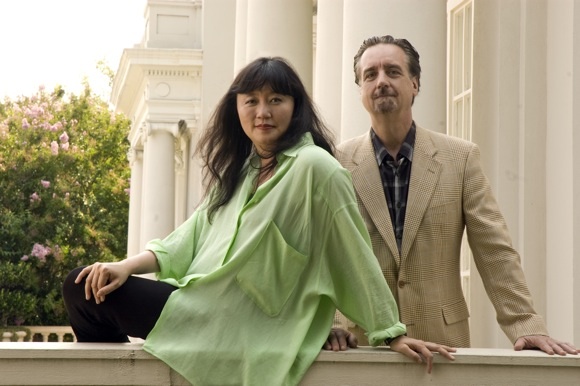
  • An Evening with David Finckel and Wu Han

    Wu han - finckel

    ~ Author: Oberon

    Sunday January 28th, 2024 – Pianist Wu Han and her husband, cellist David Finckel (photo above), are the co-Artistic Directors of Chamber Music Society of Lincoln Center. This evening at Alice Tully Hall, they shared the stage to present a well-devised program of works by Debussy, Bruce Adolphe, Shostakovich, and Dvořák.

    Claude Debussy’s Sonata for Cello and Piano, composed in 1915, was initially subtitled “Pierrot is angry at the moon“. It is a charming piece in three brief movements. The opening Prologue calls for very subtle piano playing, which Wu Han is always so good at. Skittering music is heard, followed by an awakening of tenderness. The music then goes deep. Plucking cello and staccato notes from the piano decorate the Serenade, which has a jazzy feel. For the Final, swirls of notes from the keyboard and appealing melodic fragments carry the players to a fast finish.

    In 1998, Bruce Adolphe wrote Couple for Cello and Piano for Wu Han and David Finckel. The four movements suggest different aspects of an evolving relationship: the first begins dreamily, then accelerates before fading away. A warm, nostalgic feeling arises in the second movement, with the cello digging in. The slow third movement has a sentimental air, and the final section is animated and light-hearted. The composer joined the artists for a bow at the end.

    Dmitri Shostakovich’s Sonata in D-minor for Cello and Piano, Op. 40 dates from 1934. A beautiful feeling of restlessness runs thru the opening Allegro moderato; the piano glitters on high, and a lovely cello theme is heard. Plucked notes and staccati spring up, and then the music slows. The following Allegro is a kind of scherzo: a swirling dance with music that slips and slides into an insistent rhythm. The songful Largo commences with a wistful cello theme that sinks to the depths; the piano sounds a steady heartbeat. The music turns dreamy, with the piano evoking feelings of peace. The cello carries us into the minor mode, seeking a quiet ending. At last we reach the final Allegro: a big, folksy dance, full of animation. There is a grand piano ‘cadenza’ which develops a sense of irony. The sprightly cello joins, and all seems well with the world. Wu Han and David Finckel basked in a sustained standing ovation, called back for a second bow as the packed hall resounded with shouts of approval.

    In 1889, Antonín Dvořák wrote his Quartet in E-flat major for Piano, Violin, Viola, and Cello, Op. 87. For this finale to the evening’s program, pianist and cellist were joined by Richard Lin (violin) and Timothy Ridout (viola). These two young gentlemen looked very dapper, and they played superbly.

    The opening Allegro con fuoco has an urgent start. The piano takes over, leading to an anxious passage before a joyous melody arrives. We hear colorful playing from the violin and viola as they exchange phrases or harmonize, The Finckel cello adds depth to the textures. Mr Lin’s violin sings on high, and Wu Han offers luminous piano phrases. A buzzy tremelo exchange between violin and viola is a delightful touch. Brilliant playing from all!

    With a simply gorgeous cello motif, David Finckel opens the Lento, and there is magical duetting here from Mssrs. Lin and Ridout. The music turns passionate…and then charming. Achingly beautiful harmonies tug at our souls; Mr. Finckel then resumes his poignant melody, amiably supported by pizzicati from the violin and viola. There is a marvelous sheen to the sound as a progression of modulations leads us onward and Wu Han’s hypnotic playing casts a heavenly spell.

    Now comes the waltz-like opening of the Allegro moderato, grazioso with its gypsy tinge. This movement contains and endless supply of marvels, including sizzling tremelos and rhythmic tapping of the strings. Melodious, dancing phrases carry us onward.

    The gypsy spirit prevails into the final Allegro ma non troppo: a veritable celebration of Czech folk dance. Mssrs. Lin and Ridout were simply incredible here, for their beauty of tone and of expression. Together with Wu Han and David Finckel, they made this Dvořák masterpiece an exuberant statement about the power of music to inspire and reassure us in dark times. Tonight, these four artists gave us one of the outstanding musical experiences of recent seasons, reaffirming yet again the invaluable role Chamber Music Society of Lincoln Center plays in the life of the City.

    ~ Oberon
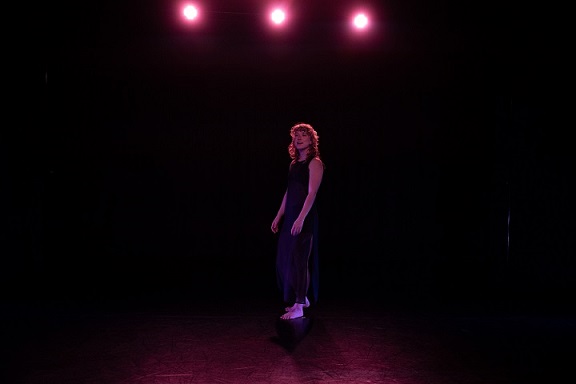
  • Compagnie Hervé KOUBI ~ Sol Invictus

    Abdelghani FERRADJI

    Above: dancer Abdelghani Ferradji; photo by Nathalie Sternalski

    ~ Author: Oberon

    Tuesday January 23rd, 2024 – Compagnie Hervé KOUBI returning to The Joyce with “Sol Invictus,” a dancework which brings elements of breakdance, martial arts, capoeira, and acrobatics together. Named after the all-powerful god of the sun, the theme of the piece is the ideal of love as the basis for peace. The original score is by Mikael Karlsson, interwoven with excerpts by Beethoven, Steve Reich, and Maxime Bodson.

    Hervé Koubi’s dancers are spectacular athletes who are also artists. The dancing all evening was jaw-droppingly sensational: for seventy-five minutes, the dancers flung themselves into the air, spun on their heads, executed daredevil flips and airborne somersaults, and tossed their fellow dancers heavenward with unflagging energy and commitment. The production was splendidly lit by Lionel Buzonie, and the staging was enhanced by a huge, billowing sheet of cloth-of-gold.

    Francesca BAZZUCCHI

    Above: dancer Francesca Mazzucchi; photo by Nathalie Sternalski

    While there was a narrative feeling, I could not discern a story line. In a program note, the choreographer said he wanted to make the stage “a playground of all possibilities” and that was indeed the best way for the large and wonderfully attentive audience to relate to the performance. It is impossible to describe the fantastical moves these dancers make: they have to be seen to be believed.

    At one point, the nurturing light of the sun goes out; the stage is plunged into smoky darkness, and the dancers appear as silhouettes, bereft of their source of energy.  Then, In the ballet’s most stunning moment, the light slowly returns, and emerging from under the golden shroud a beautiful new sun-king is born.

    The community rejoices in the renewed light, and the physical feats this inspires drew gasps from the audience. The dancers cheered each other on which shouts and whoops of joy as insane airborne combinations were daringly executed. 

    When the curtain fell, the audience released their pent-up excitement, hailing the dancers with a vociferous standing ovation. Once again, Hervé Koubi has brought life to Gotham.

    ~ Oberon

  • The Cleveland Orchestra ~ Prokofiev & Webern

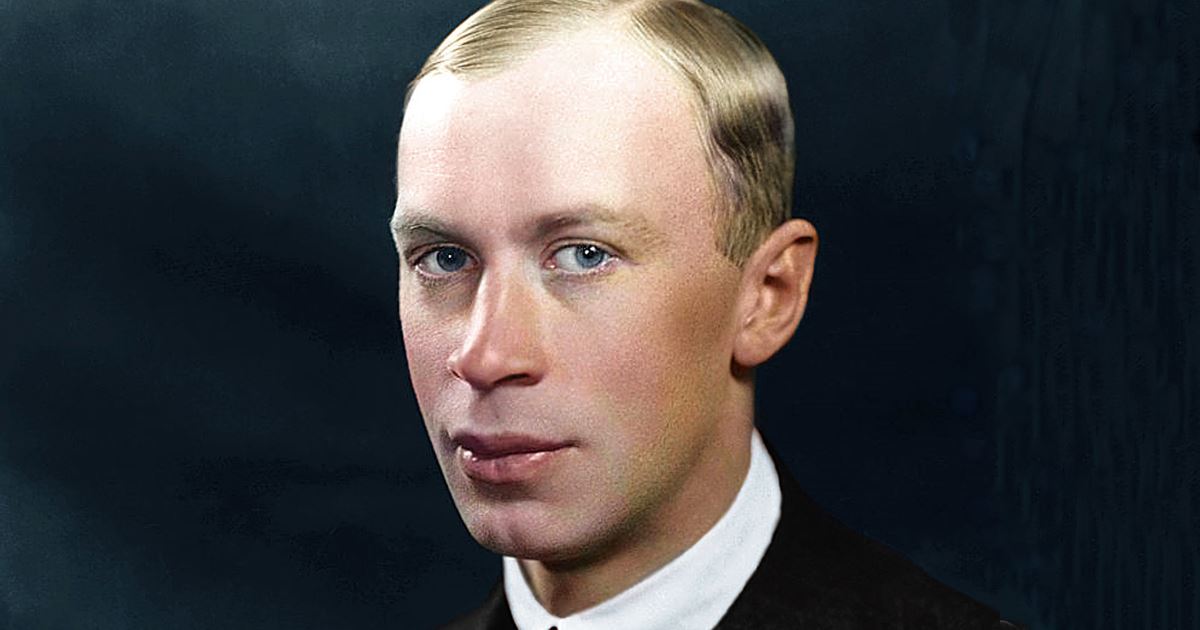
    Sergei-prokofiev

    Above: Sergei Prokofiev

    ~ Author: Oberon

    Sunday January 21st, 2024 matinee – The Cleveland Orchestra offering an afternoon of symphonies by Sergei Prokofiev and Anton Webern, conducted by Franz Welser-Möst, at Carnegie Hall. Maestro Welser-Möst has recently returned to conducting following several weeks of treatment for cancer. The program was rather unusual, with two Prokofiev symphonies book-ending a performance of Anton Webern’s rarely-played Symphony, Op. 21.

    Prokofiev’s Symphony No. 2 in D-Minor, Op. 40, in rather odd piece, consisting of only two movements. It opens with a dazzling Allegro ben articolato: brass voices issue vivid calls, rollicking strings join in, and a march springs up. Plucking violins and rich motifs from the basses lend a cinematic quality. The music rolls on like a big machine, calming briefly only to turn into a fugue, with the horns blazing away. Battling rhythms bass and turbulent strings add to the excitement, with the trumpet sounding a repeated phrase. A new march emerges, going faster and faster. The horns! The drums! And then: a sudden silence.

    The theme-and-variations second movement begins with a gently poised theme played by the oboe and then taken up by the violins. Solo wind voices – flute, clarinet, bassoon – sound over dense strings with somber basses. A slow, ponderous dance gains momentum. The music moves thru various moods, from witty to pensive; with percolating winds and urgent strings, a big sway develops, turning into a whirlwind agitato. Suddenly, a full stop. The music resumes, trudging forward; after potential endings prove evasive, the oboe is heard again over lulling strings. To me, this second movement went on a bit too long…but it was all so beautifully played.  

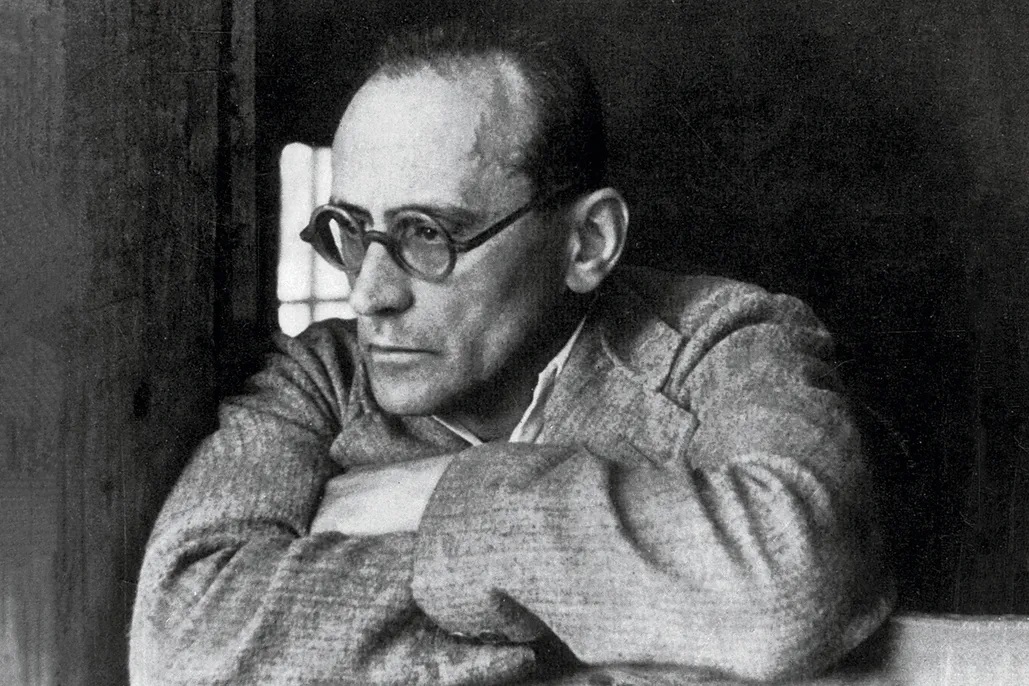
    Webern jpg

    Anton Webern (above) composed his Symphony, Op. 21 in 1928. Set for strings (without double-basses), harp, clarinet, bass-clarinet, and two horns, this miniature lasts all of ten minutes and is divided into two movements. The writing of the opening Ruhig schreitend (“Walking quietly”) is very spare: the wind instruments have brief phrases, whilst the strings comment. The harp adds an interesting texture. The second movement, Variations, has more substance musically. To the general listener, the piece may seem quizzical and a bit aimless, though it is highly regarded by musicians and scholars as a distillation of “symphonic logic”.

    Following the interval, we heard a thrilling performance of the Prokofiev 5th symphony, spectacularly played. It opens with an Andante that for a moment made me think Enzo Grimaldo’s ship riding its anchor in the sea off Venice in Act II of LA GIOCONDA. Where do these imagined connections come from?  Sixty years of opera-going! New themes are heard, richly played, and a sense of grandeur develops. The Cleveland basses are just fabulous, underlining so much gorgeous music-making: with a vast breadth of sound that is overwhelming to experience, the Andante reaches its glorious conclusion.

    The Allegro marcato that follows was the highlight of the evening – and of the season to date. Right from its sprightly start, this music is brilliant and dynamic, with superb bits for the various wind instruments etched in. Wit and irony abound in this technicolored music: a sumptuous treat. The music speeds up, with marvelous unison violins taking us to a sudden end. 

    The ensuing Adagio begins with an off-kilter waltz from which a lush theme for the strings emerges. The velvety depths of the basses enrich and ennoble this massively lyrical sonic feast, which later develops another simply gorgeous violin melody, and a luminous clarinet passage: an abundance of riches, all strikingly played.

    The final Allegro giacoso has a songful start, which turns agitated. The wind soloists exchange mini-themes, and then the basses introduce a fresh song, which builds and hustles along, sailing forward. Prokofiev pauses for a brief, nostalgic interlude before the momentum resumes with an optimistic rush to the finish line. Brilliant!!

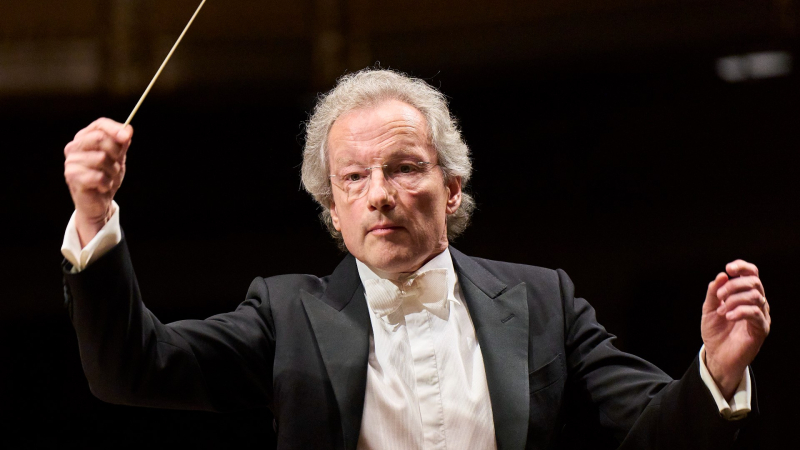
    Welser-Möst

    The thrilling performance of the 5th symphony was greeted with fervent applause. Welcome back, Maestro Welser-Möst!

    Note: Photo of the conductor by Roger Mastroianni.

    ~ Oberon

  • The Cleveland Orchestra ~ Prokofiev & Webern

    Sergei-prokofiev

    Above: Sergei Prokofiev

    ~ Author: Oberon

    Sunday January 21st, 2024 matinee – The Cleveland Orchestra offering an afternoon of symphonies by Sergei Prokofiev and Anton Webern, conducted by Franz Welser-Möst, at Carnegie Hall. Maestro Welser-Möst has recently returned to conducting following several weeks of treatment for cancer. The program was rather unusual, with two Prokofiev symphonies book-ending a performance of Anton Webern’s rarely-played Symphony, Op. 21.

    Prokofiev’s Symphony No. 2 in D-Minor, Op. 40, in rather odd piece, consisting of only two movements. It opens with a dazzling Allegro ben articolato: brass voices issue vivid calls, rollicking strings join in, and a march springs up. Plucking violins and rich motifs from the basses lend a cinematic quality. The music rolls on like a big machine, calming briefly only to turn into a fugue, with the horns blazing away. Battling rhythms bass and turbulent strings add to the excitement, with the trumpet sounding a repeated phrase. A new march emerges, going faster and faster. The horns! The drums! And then: a sudden silence.

    The theme-and-variations second movement begins with a gently poised theme played by the oboe and then taken up by the violins. Solo wind voices – flute, clarinet, bassoon – sound over dense strings with somber basses. A slow, ponderous dance gains momentum. The music moves thru various moods, from witty to pensive; with percolating winds and urgent strings, a big sway develops, turning into a whirlwind agitato. Suddenly, a full stop. The music resumes, trudging forward; after potential endings prove evasive, the oboe is heard again over lulling strings. To me, this second movement went on a bit too long…but it was all so beautifully played.  

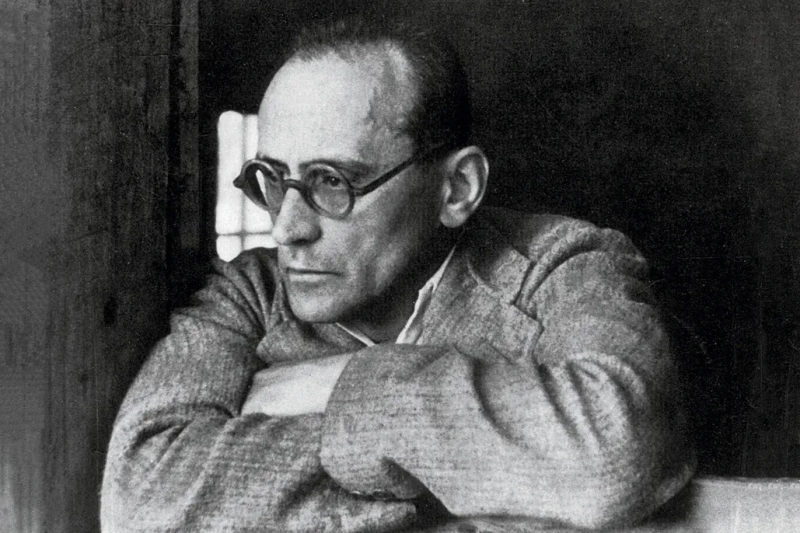
    Webern jpg

    Anton Webern (above) composed his Symphony, Op. 21 in 1928. Set for strings (without double-basses), harp, clarinet, bass-clarinet, and two horns, this miniature lasts all of ten minutes and is divided into two movements. The writing of the opening Ruhig schreitend (“Walking quietly”) is very spare: the wind instruments have brief phrases, whilst the strings comment. The harp adds an interesting texture. The second movement, Variations, has more substance musically. To the general listener, the piece may seem quizzical and a bit aimless, though it is highly regarded by musicians and scholars as a distillation of “symphonic logic”.

    Following the interval, we heard a thrilling performance of the Prokofiev 5th symphony, spectacularly played. It opens with an Andante that for a moment made me think Enzo Grimaldo’s ship riding its anchor in the sea off Venice in Act II of LA GIOCONDA. Where do these imagined connections come from?  Sixty years of opera-going! New themes are heard, richly played, and a sense of grandeur develops. The Cleveland basses are just fabulous, underlining so much gorgeous music-making: with a vast breadth of sound that is overwhelming to experience, the Andante reaches its glorious conclusion.

    The Allegro marcato that follows was the highlight of the evening – and of the season to date. Right from its sprightly start, this music is brilliant and dynamic, with superb bits for the various wind instruments etched in. Wit and irony abound in this technicolored music: a sumptuous treat. The music speeds up, with marvelous unison violins taking us to a sudden end. 

    The ensuing Adagio begins with an off-kilter waltz from which a lush theme for the strings emerges. The velvety depths of the basses enrich and ennoble this massively lyrical sonic feast, which later develops another simply gorgeous violin melody, and a luminous clarinet passage: an abundance of riches, all strikingly played.

    The final Allegro giacoso has a songful start, which turns agitated. The wind soloists exchange mini-themes, and then the basses introduce a fresh song, which builds and hustles along, sailing forward. Prokofiev pauses for a brief, nostalgic interlude before the momentum resumes with an optimistic rush to the finish line. Brilliant!!

    Welser-Möst

    The thrilling performance of the 5th symphony was greeted with fervent applause. Welcome back, Maestro Welser-Möst!

    Note: Photo of the conductor by Roger Mastroianni.

    ~ Oberon
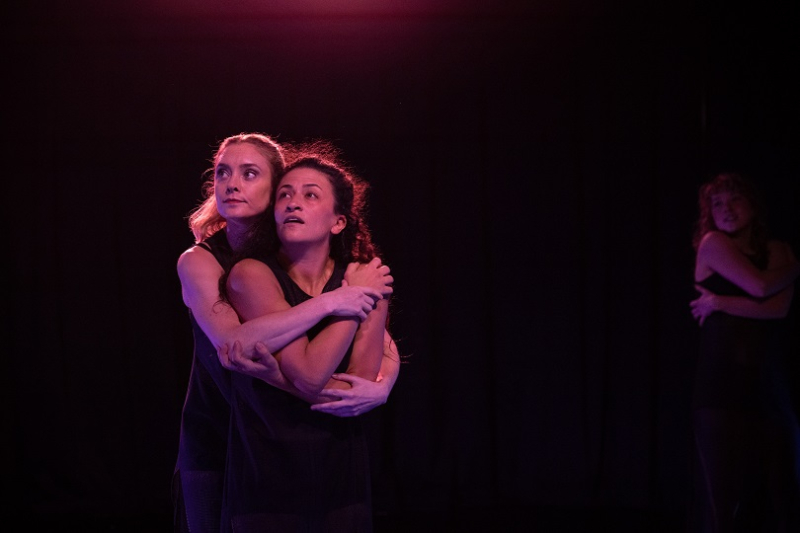
  • Dancing With Glass @ The Joyce

    MakiNamekawa_Photo by Steven Pisano

    Above: pianist Maki Namekawa, photo by Steven Pisano

    ~ Author: Oberon
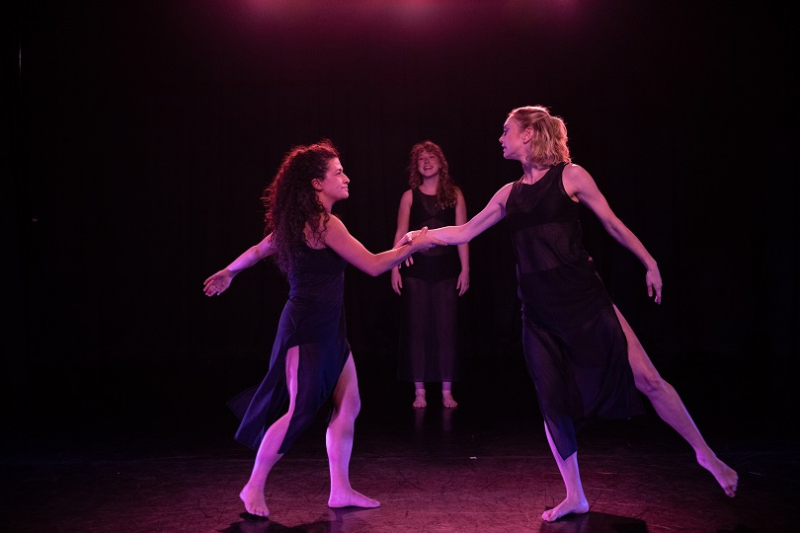
    Tuesday November 28th, 2023 – The long-awaited opening of Dancing With Glass at The Joyce: a program wherein several of Philip Glass’s études were performed by pianist Maki Namekawa; five of the études had been choreographed by prominent artists in the danceworld: Lucinda Childs, Chanon Judson of Urban Bush Women, Justin Peck of the New York City Ballet, Brazilian tap artist Leonardo Sandoval, and Los Angeles-based choreographers Bobbi Jene Smith and Or Schraiber.

    A packed house, which included some luminaries of the NYC dance scene, seemed mesmerized both by the music and the dancing. Ms. Namekawa is a pianist with a special affinity for the works of contemporary composers; she played eleven of the études in the course of the evening, commencing with the spellbinding Etude #1. Her playing was remarkably clear, committed, and soul-filling.

    OrlandoHernandez_LeonardoSandoval_LucasSantana_AnaTomioshi_Photo by Steven Pisano

    The dancing commenced with a fabulous tap-dance setting of the 7th étude, choreographed by Leonardo Sandoval, who was tapping along with his mates Ana Tomioshi, Orlando Hernandez, and Lucas Santana (photo above by Steven Pisano). Noé Kains was onstage with the quartet, and he was dancing along when suddenly he stepped to the edge of the stage and eased his way down to the pit where he took over the keyboard and played the 7th étude to perfection. Meanwhile, his fellow tapsters – such gorgeous humans – continued to dance in sync, with brilliant solo moves etched into the choreography. An exhilarating start to the evening’s dancing.

    BobbiJeneSmith_Photo by Steven Pisano

    Above: Bobbi Jene Smith, photo by Steven Pisano

    Bobbi Jene Smith (co-choreographer of the memorable DEO for the Martha Graham Dance Company in 2019) and her husband Or Schraiber both choreographed and performed the familiar Etude #8. On a dusky, hazy stage, an anxious man and a moody woman take us thru various states of a romantic relationship. Each dressed all in black, with Ms. Smith’s luxuriant hair playing its own role, the dancers are hypnotic movers and shapers of phrase. Passion underscores everything: the wounded man is rejected, but – true to life – within seconds the couple are kissing again. Touches of humor are subtly woven in…and at the end, aggression turns to peace in the twinkling of an eye. The piece, marvelous in every way, made me think of so many evenings spent at home with my partner. 

    ChanonJudson_Photo by Steven Pisano

    Tall, lithe, and elegant in a sky-blue Josie Natori frock, Chanon Judson of Urban Bush Women (above, photo by Steven Pisano) took the stage for Etude #11. John Torres’ lighting – a major contribution to the evening’s pleasures – was especially perfect here. Ms. Judson danced with compelling authority and grace to the vividly dramatic music. Veering from madness to repose, this long-limbed goddess filled the space with her magnetic presence and riveting moves. Overcome by trembling, she is finally becalmed as the pulsating music fades to silence.

    Patricia Delgado_Photo by Steven Pisano

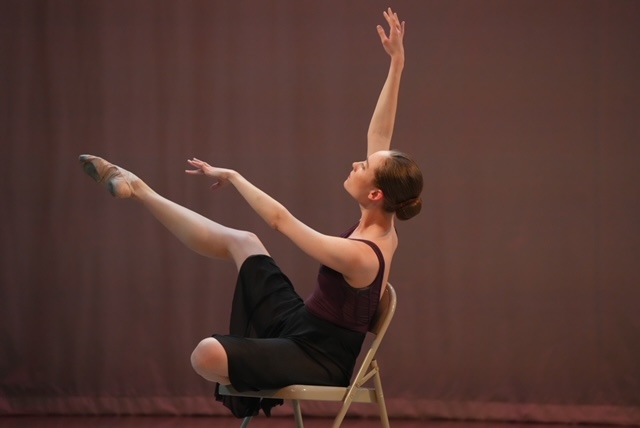
    Justin Peck’s setting of Etude #6 brought a stunning performance from Patricia Delgado (above, photo by Steven Pisano); I had only seen Ms. Delgado once previously, when she appeared in a 2009 gala here in New York featuring many alumni from the School of American Ballet. In her Glass solo tonight, she was fascinating to watch. Clad in a black trouser outfit, she is seated in a chair at curtain-rise. The music’s fast staccati underscore her restlessness. She at times ventures a few steps from her chair, but always returns to this safe haven. As the music turns grand, her mental instability becomes palpable. Ms. Delgado is both a gorgeous mover and a subtle actress. At the end, unable to cope, the woman seeks to hide herself from the world under her chair.

    CaitlinScranton_KyleGerry_Photo by Steven Pisano

    Clad in white and looking like angels, dancers Caitlin Scranton and Kyle Gerry (above, photo by Steven Pisano) reveled in the flow of Lucinda Childs’ luminous choreography in Etude #18. Sometimes dancing side-by-side and at other times moving about the space with a sense of other-worldly beauty, the dancers perfectly embodied the lyricism of this particular Glass piece. 

    Bringing the evening full circle, Ms. Namekawa played the last of the études: #20. This rather long work gave us a chance to reflect on the evening, whilst savouring the pianist’s poised musicality. As the applause commenced, all of the dancers appeared onstage to receive the audience’s wholehearted accolades. Ms. Namekawa then drew Philip Glass from his seat to the side of the piano, while the standing crowd hailed him with a joyous ovation.

    All photos by Steven Pisano.

    ~ Oberon

  • Lydia Johnson Dance @ Westbeth 2023 ~ Gallery

    Thumbnail_Laura Michael Chapters Graham Steven P.

    Above: Michael Miles and Laura DiOrio in CHAPTERS; photo by Steven Pisano

    A gallery of performance photos by Steven Pisano from Lydia Johnson Dance‘s November 12th, 2023 matinee at Westbeth. Read about the afternoon here.

    The following photos are from FOR ELI, a ballet dedicated to the memory of a young pianist:

    Thumbnail_Catherine For Eli ( chair section) Steven Pisano

    Catherine Gurr

    Thumbnail_Mchael ( back) MaliQ holding hin For Eli Steven P.

    MaliQ Williams and Michael Miles

    Thumbnail_Michael held by MaliQ For Eli Graham Steven P.

    MaliQ and Michael

    Thumbnail_MaliQ w Michael Portrain diff angle For Eli Steven P.

    Michael and MaliQ

    Thumbnail_Emily Skkirt end of section 1 For Eli GRaham Steven P.

    Emily Sarkissian and MaliQ Williams

    The following images are from Lydia Johnson’s newest work, CHAPTERS, having its premiere performances:

    Thumbnail_Laura and Michael Graham Steven P.

    Laura DiOrio and Michael Miles

    Thumbnail_Min & Arieh Chapters Graham Steven P

    MinSeon Kim and Arieh Bates Vinueza 

    Thumbnail_Cara & MaliQ 2 Graham Steven P.

    Cara McManus and MaliQ Williams

    Thumbnail_Michael Chapters Graham Steven P

    Michael Miles and Arieh Bates-Vinueza

    Thumbnail_Cara & MaliQ Graham (Steven P.)

    Cara McManus and MaliQ Williams

    The program ended with a revival of Lydia’s NIGHT OF THE FLYING HORSES (premiered in 2013):

    Thumbnail_Min & Quinton FH Skirt Graham Steven P.

    MinSeon Kim and Quinton Guthier

    Thumbnail_Min and Cara FH arm gesture opening Graham Steven P

    MinSeon Kim and Cara McManus

    ~ All photos by Steven Pisano

  • TAKE Dance @ St. Mark’s Place

    TD 032

    Above: Corinna Lee Nicholson, Lynda Senisi, and Corinne McLoughlin in Jill Echo’s If You Find Yourself Missing; photo by Nir Arieli

    Author: Oberon
    Thursday October 26th, 2023 – TAKE Dance presenting the world premiere of Bamboo Dreams, the latest creation by the Company’s Artistic Director, Takehiro Ueyama. Also on the bill: the world premiere of If You Find Yourself Missing by TAKE Dance’s Associate Director, Jill Echo.
    TD 001

    If You Find Yourself Missing is not only choreographed by Ms. Echo, but she also designed the costumes, and wrote the text, which is spoken by Corinne McLoughlin (above). Comprising the musical setting are The Blue Hour by Federico Albanese and Dna by Akira Kosemura. 

    TD 025

    Corinna Lee Nicholson and Lynda Senisi (above) are the dancers, with Ms. McLoughlin joining the dance moves in addition to voicing the text.  This dancework raises the question: “Where is home?” The choreography is restless and poetic by turns, and beautifully articulated by the trio of women.

    More of Nir Arieli’s images from If You Find Yourself Missing:

    TD 030

    TD 040

    TD 047

    TD 057

    TD 136

    Corrine, Lynda, and Corinna take a bow after If You Find Yourself Missing

    Take’s latest, Bamboo Dreams, is danced to atmospheric music by Ryuchi Sakamoto, who passed away in March 2023. Take first heard Sakamoto’s music as a teen-aged baseball player in Japan, and now he honors the composer’s memory with this ballet.

    TD 167

    It commences with a vibrant, demanding solo for Kristen (Arnold) Bell (above), dancing with her customary authority and perfectly shaping the phrases.

    TD 150

    TD 186

    Kristen Bell in Bamboo Dreams; photos by Nir Arieli

    TD 204

    There follows a duet for Ms. Nicholson and Orion Duckstein (above). From 1999-2010. Mr. Duckstein was a member of the Paul Taylor Dance Company, where Take also danced for eight seasons.  Orion is a beautiful mover, actor, and super-partner, forming a compelling alliance with Ms. Nicholson, whose lithe beauty and fluent movement are intriguing at every moment.

    TD 203

    TD 205

    TD 209

    TD 212

    Photos by Nir Arieli

    Lynda Senisi and Kristen Bell now join the Nicholson/Duckstein duo. The ensuing quartet veers from huddling together to space-filling combinations. Each dancer is distinctive; you can focus on them as individuals, assured of their technical prowess and expressiveness.

    More of Nir Arieli’s images from the quartet:

    TD 272\

    TD 275

    TD 278

    TD 252

    Lynda Senisi (above) made a particularly vivid impression in this work…and all evening, actually.

    TD 299

    TD 330

    Photos by Nir Arieli

    TD 344

    A movement from last season’s duet, 10/18/22, now forms the finale of Bamboo Dreams. It opens with a solo for Kristen Bell (above, photo by Nir Arieli).

    Watching 10/18/22 for the first time last season, it immediately became one of my favorite dance duets, in part because it is danced so movingly by two of my favorite dancers: Kristen Bell and Corinna Lee Nicholson,  The ballet honored the memory of longtime TAKE Dance board president and friend, James Kraft, who passed away on that specific date; it is danced to solo violin music by J S Bach.

    TD 350

    TD 351

    TD 378

    TD 407

    TD 424

    The choreography veers from lyrical to athletic, from serene calm to moments when we might suspect the two women of being a bit deranged. Kristen and Corinna invested all their energy, strength, thoughtfulness, and commitment into this work, to striking effect. A ritualistic scattering of rose petals leaves a poignant impression:

    TD 359

    All photos by Nir Arieli.

    ~ Oberon

  • An Evening of Trios @ Carnegie Hall

    Trio 1

    Performance photo by Chris Lee, courtesy of Carnegie Hall

    ~ Author: Oberon

    Tuesday October 24th, 2023 – Three beloved luminaries of the classical music world joined forces on the Carnegie Hall stage tonight, playing trios by Haydn, Ravel, and Mendelssohn. Pianist Jean-Yves Thibaudet, violinist Lisa Batiashvili, and cellist Gautier Capuçon took the stage to a warm welcome from the crowd.

    I’m sure the two gentlemen will forgive me if I mention my particular affection for Ms. Batiashvili; I became familiar with her artistry thru her appearances with the New York Philharmonic during Alan Gilbert’s tenure. Violinist and maestro formed a particularly cordial musical relationship; their rapport was as lovely to watch as to hear. Tonight, it was wonderful to see Lisa on the Carnegie Hall stage, looking elegant in a black trouser number with black stilettos.

    The opening Allegro moderato of the Haydn E-major Trio commences with a plucked motif, which will recur at times as the movement goes forward. In the cantabile passages, the sweetness of Ms. Batashvili’s tone was finely meshed with the mellow lyricism of the Capuçon cello, whilst M. Thibaudet at the Steinway produces silvery cascades of notes.

    The Allegretto opens with a rather somber unison passages, and then M. Thibaudet begins a long piano solo, with appealing commenting phrases from the violin and cello. Some vivid flourishes near the movement’s end carry us on to the final cadence.

    The trio’s final Allegro has a gently bustling feeling, with the players bringing lovely subtleties to the music. A darkish, minor-key interlude develops into a tempest, and the movement then takes a da capo before reaching a coda with retards and pauses etched in. Beautiful blends of timbres, and a sense of camaraderie among the artists that was lovely to observe.

    The players rose for a bow, and then immediately sat down to play Maurice Ravel’s Piano Trio.

    M. Thibaudet’s delicate piano introduction to the opening Modéré creates a sense of mystery. The strings join, and the music develops a gentle sway. Cello and violin exchange brief melodic sentences, and the music grows passionate. Then Ms. Batiashvili spins out exquisite phrases in the violin’s highest range; following an agitato interruption. The music turns dreamy.

    Ravel titles the second movement Pantoum, which refers to a Malaysian form of poetry.  It is sprightly and dancelike, with the strings conversing. There are some stormy bits, and then an acceleration. M. Thibaudet opens the third movement, Passacaille, with a low, simple theme. M. Capuçon joins, with a hauntingly deep, rather mournful melody, and Ms. Batiashvili brings her magic to a ravishing solo. Passion waxes and wanes, with the music becoming dense and darkish; things quieten for a sustained cello solo, richly played. The piano brings the movement to a close.

    The last movement of the Ravel is an Allegro appassionato. It has a high, airy start, luminously played from our trio. The music gets grand. Ms. Batiashvili executes a sustained trill, to which M. Capuçon replies with a trill of his own. At the Steinway, M. Thibaudet’s technical wizardry is on display. The music rushes on, restless…and dazzling.  

    The Mendelssohn piano trios are the first chamber works I fell in love with, and while the first of the two is my favorite, I am always very pleased to hear either of them played live. Tonight, it was the second that was on offer, played to perfection.

    The C-minor Piano Trio finds Mendelssohn at his passionate, rhapsodic finest. The pianist immediately sets the tone with an unsettled opening theme; a second theme – song-like and fervent – takes over, played first by the violin and cello with the piano accompanying. M. Thibaudet is simply marvelous here, and the ebb and flow of the familiar melodies gave a feeling of reassurance.

    The piano opens the ensuing Andante, lending a feeling of peace. Violin and cello harmonize with extraordinary beauty of tone, creating a wistful mood. Next comes a true Mendelssohnian delight: a jittery, scrambling Scherzo, to which the players brought pristine technique and spine-tingling nuances. The trio’s finale veers from between minor and major modes, with mood swings shifting from agitated to tranquil. Here the perfect blending of the three voices was at its most savourable.

    The audience, one of the most attentive and alert in recent seasons, cheered heartily as the musicians took their bows. An encore was demanded: the Vivace from Dvořák’s Piano Trio in E-minor, Opus 90. The  music has a gypsy lilt and featured a long solo for Ms. Batiashvili, a remarkably sustained tremelo from M. Capuçon, and an array of delights from M. Thibaudet.

    After a couple of weeks of my feeling out-of-sorts, this concert provided a miracle cure. Thank you, Lisa, Jean-Yves, and Gautier!!

    Lisa b capucon thibaudet carnegie 2023

    Heading out for a bow; photo by Chris Lee

    Trio 2

    Photo by Chris Lee, courtesy of Carnegie Hall

    ~ Oberon

  • John Cage’s Ryoanji at the Japan Society

    John cage

    Above: John Cage in Japan; photo by Yasuhiro Yoshioka, Courtesy of Sogetsu Foundation

    Author: Shoshana Klein

    Sunday October 22nd, 2023 – The Japan Society is doing a John Cage’s Japan series, of which this was the second installment. It was directed by Tomomi Adachi and played by members of the International Contemporary Ensemble.

    The premise is very interesting – the performers play John Cage’s Ryoanji, and there is a video with reactive elements. After intermission, the video is played back and the performers use it as a score to perform again. I was left with many questions – though I read most of the program, I think it could have benefited from explanations of some sort.


    First of all, some musicians were here, and some were in Japan, supposedly. There was a vocalist and a Hichiriki (according to the program) coming from speakers, but we never saw these performers or were introduced to them. It was also 300 AM in Japan, so I’m not sure how likely it was that they were performing live in this performance. They were not present for the second half. Instead, Adachi (I think) performed with the original trio. 


    It was unclear to me how the video was reactive to the musicians – it was a sort of constellation visual with points of light moving around, and brightly colored lines and shapes would appear, connecting these star-like dots. If the lines and shapes were related to the audio being played, I couldn’t figure out how – my best guess for the video reactivity had to do with the perspective and the amount of movement. For instance, for a while it seemed like the perspective, zoom, and amount of movement of the start may be affected by the musicians, but if so, it seemed to change throughout the performance. It was interesting to try to figure out and they were cool visuals, but relatively static throughout the 20 or 30 minute performance.


    The piece, musically, was pretty sparse and I had trouble finding structure or latching on to anything, but the musicians obviously played well together and there were moments of responsiveness that were nice. Reading about the score is helpful – it’s not really notated and the performers are basically playing graphic scores of drawings of rocks. It should be noted that I do like John Cage, at least theoretically – I think his ideas and philosophical concepts are very interesting, but sometimes I find it hard to translate that to an enjoyable auditory experience.


    The second half had significantly more musical movement, though it wasn’t clear how they were using the video as a score, and it appeared that they were also reading music (maybe the original score in combination?). It seemed shorter than the first half but I’m not sure that it was, it could have been my perception since there was so much more to listen for. All in all, an interesting experience that I would have liked to know more about. 


    ~ Shoshana Klein