Category: Dance

  • John Cage’s Ryoanji at the Japan Society

    John cage

    Above: John Cage in Japan; photo by Yasuhiro Yoshioka, Courtesy of Sogetsu Foundation

    Author: Shoshana Klein

    Sunday October 22nd, 2023 – The Japan Society is doing a John Cage’s Japan series, of which this was the second installment. It was directed by Tomomi Adachi and played by members of the International Contemporary Ensemble.

    The premise is very interesting – the performers play John Cage’s Ryoanji, and there is a video with reactive elements. After intermission, the video is played back and the performers use it as a score to perform again. I was left with many questions – though I read most of the program, I think it could have benefited from explanations of some sort.


    First of all, some musicians were here, and some were in Japan, supposedly. There was a vocalist and a Hichiriki (according to the program) coming from speakers, but we never saw these performers or were introduced to them. It was also 300 AM in Japan, so I’m not sure how likely it was that they were performing live in this performance. They were not present for the second half. Instead, Adachi (I think) performed with the original trio. 


    It was unclear to me how the video was reactive to the musicians – it was a sort of constellation visual with points of light moving around, and brightly colored lines and shapes would appear, connecting these star-like dots. If the lines and shapes were related to the audio being played, I couldn’t figure out how – my best guess for the video reactivity had to do with the perspective and the amount of movement. For instance, for a while it seemed like the perspective, zoom, and amount of movement of the start may be affected by the musicians, but if so, it seemed to change throughout the performance. It was interesting to try to figure out and they were cool visuals, but relatively static throughout the 20 or 30 minute performance.


    The piece, musically, was pretty sparse and I had trouble finding structure or latching on to anything, but the musicians obviously played well together and there were moments of responsiveness that were nice. Reading about the score is helpful – it’s not really notated and the performers are basically playing graphic scores of drawings of rocks. It should be noted that I do like John Cage, at least theoretically – I think his ideas and philosophical concepts are very interesting, but sometimes I find it hard to translate that to an enjoyable auditory experience.


    The second half had significantly more musical movement, though it wasn’t clear how they were using the video as a score, and it appeared that they were also reading music (maybe the original score in combination?). It seemed shorter than the first half but I’m not sure that it was, it could have been my perception since there was so much more to listen for. All in all, an interesting experience that I would have liked to know more about. 


    ~ Shoshana Klein

  • Philadelphia Orchestra ~ Rachmaninov/Higdon

    Rachmaninoff jpg

    Above: Sergei Rachmaninov

    ~ Author: Ben Weaver

    Tuesday October 17th, 2023 – The Philadelphia Orchestra was Sergei Rachmaninov’s favorite orchestra. He not only composed multiple works which they premiered, but it was the orchestra he chose to record his symphonies and piano concertos with. And, through the decades, the Philadelphians have played Rachmaninov as well as anyone and better than most.

    The orchestra’s current artistic director, Yannick Nézet-Séguin, has already recorded Rachmaninov’s complete symphonies and piano concertos (with Daniil Trifonov as soloist) and is continuing his presentation of the works at Carnegie Hall. (In a one-time-only mega event, pianist Yuja Wang and the combination of maestro Nézet-Séguin and Philadelphia Orchestra  performed all the piano iano Concertos and the Rhapsody on the Theme of Paganini at Carnegie Hall in a single memorable concert last season.) On October 17th Nézet-Séguin presented a marvelous evening of two of Rachmaninov’s audience favorite works: the Symphonic Dances and Symphony No. 2.

    Rachmaninov composed the Symphonic Dances in 1940 and the Philadelphia Orchestra and Eugene Ormandy premiered it in January of 1941. Apparently Ormandy was not very fond of the work, though he did perform it frequently and record it more than once. 

    The first dance opens with a three-note staccato motif, dark – even sinister – in tone, and it remains the driving rhythmic force throughout the movement. An alto saxophone plays a memorable role during the quieter moments (alas the wonderful player is not specified in the Playbill.) Rachmaninov ends the movement with a modified quote from his First Symphony, a work that had been lost 40 years earlier, so he knew nobody would have any idea what they were hearing. (The score was fortunately discovered again, but after Rachmaninov died, so he did not get an opportunity to hear it again after it’s catastrophic premiere led to his composers’ block.) Maestro Nézet-Séguin took a hard-driven, very steady, and deliberate pacing in the beginning of the work, speeding up considerably when the opening theme returned later in the movement.

    The second dance is a stilted Waltz that I always thought of a cousin to Ravel’s La Valse. The compositions share an odd limping rhythm, the wistful minor key melodies swirling like aged ballerinas remembering happier days. Perhaps Nézet-Séguin lingered a little too much occasionally here, but always recovered the pulse of the work. The final dance, with its heavy reliance on the Dies Irae (a theme Rachmaninov used in many of his works) fights against a quotation from Rachmaninov’s own All-night Vigil Vespers, as light tries to conquer darkness. It seems the heavens win (Rachmaninov even scribbled “Hallelujah” in the score.) The Philadelphia Orchestra and Nézet-Séguin dazzled all the way through.

    The Symphony No. 2 in E minor, Op. 27 is, along with his Piano Concerto No. 2, Rachmaninov’s most beloved work and oft-performed work. A gigantic, lush, deeply Romantic and melodic work was a hit from its premiere (conducted by Rachmaninov himself in St. Petersburg in 1908; the US premiere took place just one year later in – where else – Philadelphia under the composer’s baton.) Maestro Nézet-Séguin’s interpretation was magnificent, sometimes even revelatory. The tumultuous climax of the first movement, with its howling brass, for the first time reminded me of Tchaikovsky’s Pathétique Symphony. The magnificent Adagio movement – with a ravishing melody everyone recognizes – contains a tremendous extensive solo for the clarinet, played by principal clarinetist Ricardo Morales with incredible beauty and tenderness that made you lean forward. The final Allegro vivace movement was a high voltage thrill ride which the orchestra dispatched with effortless aplomb.

    I must acknowledge that the concert opened with a performance of Jennifer Higdon’s Fanfare Ritmico, a brief 1999 piece I occasionally thought may have resembled John Adams’ “Short Ride in a Fast Machine.” But the resemblances were fleeting even if they existed. My red flags went up when I looked at the list of instruments used in this 6 minute piece and it contains, as so many contemporary works do, every imaginable percussion instrument there is. Perhaps 2/3 of the instruments listed were percussive. I suppose to Higdon’s credit she does not use them all at once (something others do and never to anybody’s benefit). But she does fall into the same trap countless contemporary composers do where being unable to transition from one theme to another, the easiest path is to have somebody hit something. And so things kept getting hit. When it ended I said to my companion: “Well, whatever that was, they played it very well.”

    ~ Ben Weaver

  • ONOKORO ~ creations/beginnings

    Miki 2

    Author: Oberon

    Sunday September 24th, 2023 – This evening at Westbeth, dancers Miki Orihara and Ghislaine van den Heuvel joined a fantastic ensemble of musicians in a program entitled ONOKORO – creations/beginnings. The production, Tokyo to New York, is under the artistic direction of Thomas Piercy; the performance took place at the Martha Graham Studios.

    Onokoro comes from the ancient Kojiki, Japan’s oldest mythology; it was the name of the first island formed by the gods Izanagi and Izanami when they were creating Japan. The evening’s program took us on a musical and spiritual journey from “Ryoanji” (the first sounds) to “Netori, Netori” (the emergence of organized sound and music), and onward thru to “Onokoro” (which combines the Eastern and Western styles of music and movement).

    The Graham space at Westbeth was the perfect setting for this production. As the house lights went out and silence fell over the space, the studio’s large windows created a feeling of l’heure bleue, that fleeting time when day yields to night. In the darkness, the musicians took their places to perform John Cage’s 1985 work “Ryoanji”. The only source of light in the room was the tablets from which the musicians read their scores. The piece opens with a kneeling percussionist, Marina Iwao, striking a bell; this summons is repeated insistently throughout the piece. Thomas Piercy plays the hichikiri, a small double-reed Japanese instrument which seems like a cross between flute and oboe. Mr. Piercy is joined by two other hichikiri players: Lish Lindsey and James Joseph Jordan. The sound of their instruments veers from sighs and whispers to squawking and whining. The audience seemed intrigued by the music.

    Mr Piercy now took up his clarinet for Bin Li‘s clarinet concerto “Netori, Netori”. A seated Gagaku ensemble – Ms. Lindsey and Mr. Jordan joined by Harrison Hsu (sho) and Masayo Ishigure (koto) – create fascinating, otherworldly musical colours which are plucked or piped. As Mr. Piercy begin to play, dancer Maki Yamamae appears, dressed as a young warrior and carrying a ceremonial spear. The space is illuminated in golden light as the the slow ritual dance evolves in a series of poses. Mr. Piercy illuminates the music with soft trills and warblings, and the sound of escaping air; his dynamic control is uncanny. There are silent pauses in the music, and eventually the ensemble rejoins. Following the dancer’s exit, there is a quirky coda for the clarinet.

    Two works having their world premieres at these concerts came next. The first, Gilbert Galindo‘s “Primordial” for clarinet, cello, and piano, opened with a somber cello passage, introducing us to an extraordinary cellist: Daniel Hass. Mr. Piercy again took up his clarinet for this work, and Ms. Iwao was at the keyboard. Galindo’s pensive music is hauntingly beautiful, bringing us a magical mixing of timbres. Mr. Hass produced shivering tremolos while Ms. Iwao found poetic depths in the piano’s lower octaves, and Mr. Piercy’s lambent tone and dynamic variety made for an engrossing experience.

    After the briefest of pauses, the players proceeded to the second premiere, Miho Sasaki’s “黎明 – reimei – Dawn”. Here Mr. Piercy traded his clarinet for the ohichiriki. This music is intense, with threads of melody woven in amidst jarring harmonies. From this emerges high, delicate figurations from Ms. Iwao’s keyboard, while Mssrs. Piercy and Hass create a very distinctive tonal blend. The music, veering from disturbing to reassuring along the way, was very impressively served by these three musicians. And both the Galindo and the Sasaki works seemed to me ideal candidates for choreography.

    For the program’s concluding work, Masatora Goya‘s “Onokoro” Concerto for hichiriki and strings, Mr. Piercy was joined by a string ensemble: violinists Sabina Torosjan and Lara Lewison, violist Laura Thompson, bassist Pablo Aslan, with Mr. Hass’s cello  and Ms. Iwao at the piano.
    Isolated notes from Mr. Aslan’s double bass set the mood as the space becomes fully lit. Mr. Piercy’s hichiriki seems to sigh before taking up a mournful (and vaguely jazzy!) passage. To quirky rhythms, the strings vibrate and the hichiriki wails. Mr. Hass’s cello introduces the dancers: Miki Orihara and Ghislaine van den Heuvel. Gorgeous string harmonies emerge as the dancers remain still. Playing over plucked string motifs, Mr. Piercy’s hichiriki urges the women forward; Miki Orihara is wearing a cape with an extraordinarily long train (costume design by Karen Young). For a fleeting moment, Mr. Piercy veers into a bluesy phase.
    Seated on the floor, the dancers commune with flowing port de bras. The train is briefly passed to Ms. van den Heuvel but then returned to Ms. Orihara. The music takes on a chorale-like feeling; the dancers rise, as if transfixed. Mr. Hass’s cello sounds gorgeously while the women kneel and arrange the cape between them, placing on it a beautiful mask, ‘Tuskiyom‘ (on loan from the Theatre of Yugen, in San Francisco). Their ritual complete, the dancers part and slowly back away. Mr. Piercy then embarks on a grand cadenza before the music fades with tremolo strings.
    The evening ended with warm applause from the audience, who had experienced the performance in a spellbound state, as if in church. While I wished on one hand that a large crowd could see this work, it was exactly the intimacy of the presentation that made it so meaningful.
    My thanks to Miki Orihara for alerting me to this engrossing production; it reminded me at times of Miki’s fascinating  2014 solo presentation, Resonance, which created the same kind of hallowed atmosphere. And how wonderful to see Ms. van den Heuvel again, after watching her magnetic dancing in a Graham 2 performance in 2022.
    To Mr. Piercy and everyone involved in ONOKORO, my deepest thanks for a truly inspired – and inspiring – evening.
    ~ Oberon

  • CMS Summer Evenings 2023 ~ Concert 4

    Juho_Lisa-Marie Mazzucco jpg

    Above: pianist Juho Pohjonen, photo by Lisa-Marie Mazzucco

    Author: Oberon

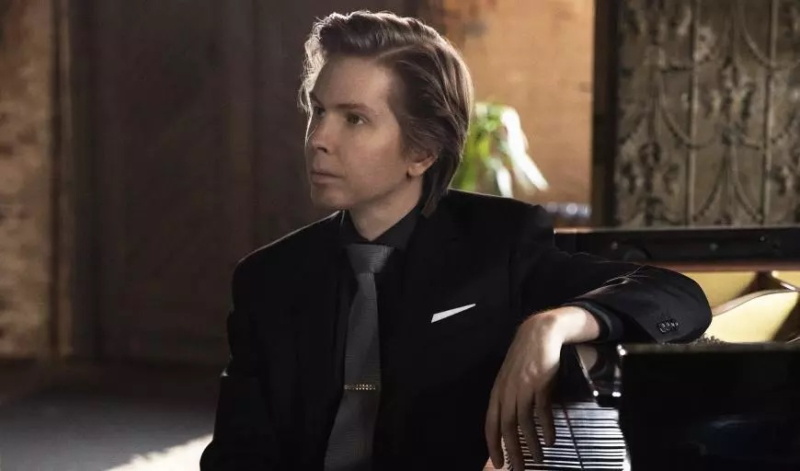
    Tuesday July 18th, 2023 – The final concert in Chamber Music Society of Lincoln Center‘s 2023 Summer Evenings series presented a quintet of distinctive artists in music of Haydn, Mozart, and Fauré. The remarkable Finnish pianist Juhi Pohjonen was at the center of this engrossing program, playing in all three works with the combination of passion and subtlety that is his trademark.

    Haydn’s Trio in E-flat major for Violin, Cello and Piano, Hob. XV:29, dating from 1797, made for an elegant start to the evening. The opening Poco allegretto commences with a sustained note from the three artists: violinist Stella Chen, cellist Sihao He, and Mr. Pohjonen. The music then progresses in a ‘theme and variations’ setting, briefly entering the minor mode. The pianist’s rippling florid passages delighted the ear, whilst violin and cello duetted lyrically.

    The pianist opens the Andante with the most delicate of pianissimi, taking up a simple melody in which the three voices blend sweetly. The ebb and flow of passion and restraint leads to a mini-cadenza from the pianist before the Allemande finale kicks off with a burst of energy.  Mr. Pohjonen spins off immaculate fiorature laced with trills, whilst Sihao He offers rapid cello scalework. After pausing for a playful piano passage, the music dances on: winding down, only to re-boot to a zesty finish.

    Mozart’s Concerto No. 12 in A -major for Piano and String Quintet, K. 414, was written in 1782 for the composer himself to perform, with a small ensemble; the string quartet setting was created later. This piece offers a perfect showcase for Mr. Pohjonen’s artistry.

    The opening Allegro features genial strings: violist Beth Guterman Chu has joined violinists Stella Chen and Danbi Um, with Sihao He’s mellow sound enriching the harmonies. Mr. Pohjonen’s marvelous tone and sparkling agility are pure magic. Ms. Guterman Chu, with a gleam in her eye, is a wonderful addition to the ensemble, whilst Sihao He’s rich-toned descending motifs are truly appealing. At last comes a fabulous Pohjonen piano cadenza, so gracefully played.

    The Andante suffered from the intrusion of two dropped objects and a jangling cellphone, but the artists kept their focus, opening with a string quartet. Mr. Pohjonen’s nuanced playing was just sublime, and I must again praise Sihao He’s plush sound. A minor-key piano passage underlined by sighing strings achieves a marvelous blend, and Mr. Pohjonen’s cadenza was offered in a hushed pianissimo, with trills etched in.

    The final Rondeau: Allegretto is lively indeed, with nimble, utterly clear piano phrases and unison string passages, which eventually develop into a fugue. Full stop…and then the pianist’s virtuosity was in full   flourish, pausing only for some enticing delicate measures along the way. Bravo Juho!

    Following a rather longish the interval, Gabriel Fauré’s Quartet in C-minor for Piano, Violin, Viola, and Cello No. 1, Op. 15, was given a luminous performance by Mr. Pohjonen, Danbi Um, Beth Guterman Chu, and Sihao He.

    The opening Allegro molto moderato momentarily has an à la Russe feeling, later becoming quietly rapturous. A piano theme is soon taken up by Danbi Um’s silken violin, then passed on to Ms. Chen and Ms. Guterman Chu. The music becomes overwhelmingly beautiful and passionate, before turning more lyrical. Mr. Pohjonen’s sorcery is again evidenced in the movement’s sustained conclusion.

    Delicate plucking opens the Scherzo, with sprightly motifs from the Steinway: all is lightness and air. Rhythms compete, the music covering a broad dynamic range with shifts of energy. After a false finish, the piano gently resumes. The unison strings then part company, taking up slithering scales. The music dances on, full of fun.

    Sihao He introduces the Adagio with an achingly gorgeous theme; the strings unite, and the pianist is at his most pensive. Danbi Um’s violin sounds radiantly, whilst the violist and cellist, playing in unison, introduce darker hues. These lower voices join Danbi in poignant harmonies. The music is lush and passionate until a sudden mood swing comes from the piano, playing pianissimo.  The the opening cello solo returns, and a feeling of time standing still gave me the chills…so haunting. Then Mr. Pohjonen offers a final benediction.

    In the final Allegro molto, we can simply sit there and savour the vibrant playing that’s on offer. Juho is beyond splendid, and bits of melody are passed about among the string players. After a brief interlude, the music seems to be summoning energy for a big finish, but instead there’s a full stop. From the silence, Danbi Um’s exquisite sound emerges, opening a pathway to a grand and sweeping finish.

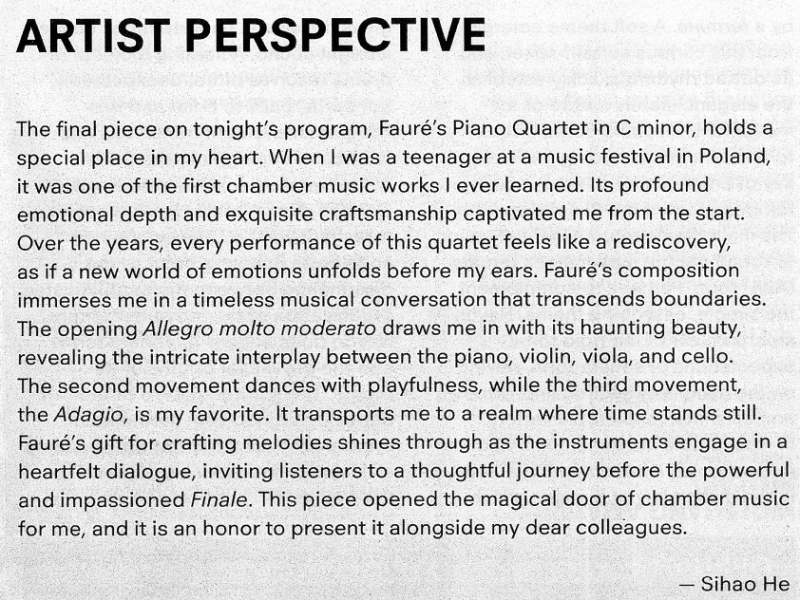
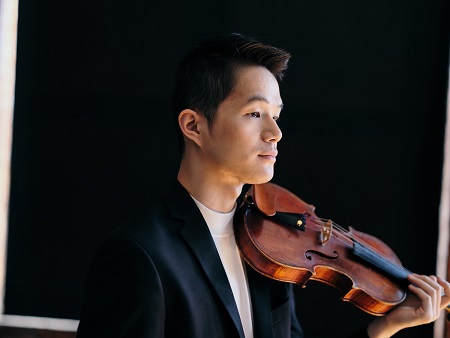
    Cellist Sihao He wrote of his experience learning the Fauré C-minor quartet as a teenager; I wanted to include his thoughts about the work here, as they align perfectly with my own:

    Faure-1 jpg

    ~ Oberon

  • Composer Portraits: Suzanne Farrin

    Farrin

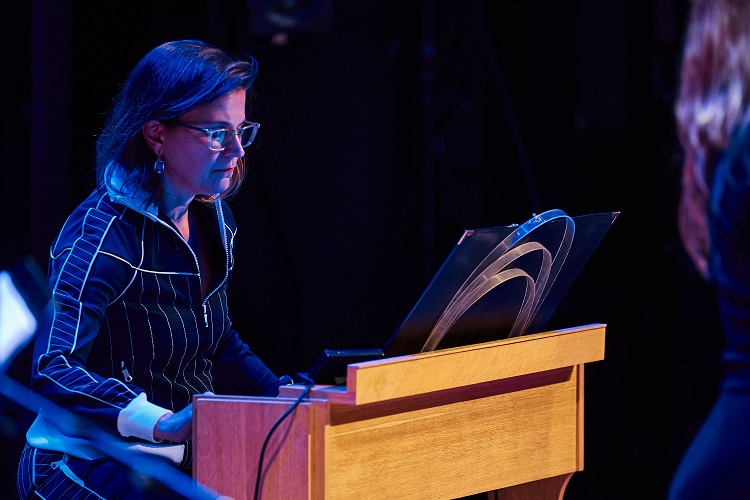
    Above: composer Suzanne Farrin at the ondes Martenot; photo by Rob Davidson

    Tuesday May 23rd, 2023 – The final program of the season in the Miller Theatre’s unique Composer Portraits series featured Suzanne Farrin, who hails from a small town on the Maine coast. It was an incredible musical experience which moved me deeply.

    Two fascinating singers – soprano Alice Teyssier and countertenor Eric Jurenas – joined virtuoso members of the International Contemporary Ensemble for an evening of magical music-making, with conductor Kamna Gupta leading the large ensemble works, and the composer joining in for the program’s world premiere finale, playing the ondes Martenot. Special kudos to audio engineer Caley Monahon-Ward and lighting designer Philip Treviño for their expertise in making it a memorable evening in every possible way.

    I knew nothing about Ms. Farrin’s work until this evening; in the days leading up to the performance, I read her bio but didn’t sample any of her compositions, as I like to be introduced to new music live whenever possible. All day, I felt an odd sense of anticipation for the concert, as if something special was about to happen. This was prophetic: from first note to last, the program mesmerized me.

    Five excerpts from Ms. Farrin’s 2016 opera, dolce la morte, were presented during the evening. I cannot imagine anything that could more perfectly have captivated my imagination than the opening measures of the aria unico spirto, which begins with oboe (Kemp Jernigan) and bassoon (Rebekah Heller) on a sustained tone. Matching the pitch, countertenor Eric Jurenas joins them with a straight tone of unearthly beauty. Mr. Jurenas’s fantastical voice was heard with a subtle halo of echo, evoking an ancient world which lingers only in the imagination.

    Suzanne Farrin Composer Portrait 170

    Above: Kyle Armbrust (viola), Evan Runyon (double bass), conductor Kamma Gupta, and countertenor Eric Jurenas; photo by Rob Davidson

    Odd harmonies from the wind players wrap around the vocal line; the texts are drawn from letters of Michelangelo to the young Italian nobleman Tommaso dei Cavalieri, and Mr. Jurenas voiced them with a spine-tingling air of sensuality. Near the end, Evan Runyon’s double bass introduces tension with a shivering tremolo. The aria ends with the singer’s magical voice fading into thin air.

    The other excerpts from dolce la morte were interspersed thru the concert’s first half. The first of these was come serpe in which Mr. Jurenas’s timbre was almost unbearably gorgeous. Bassoonist Rebekah Heller displayed amazing breath control, whilst double bassist Evan Runyon brought forth tones from the depths. At times, the music seemed to be reaching us from a distant galaxy.

    veggio found the countertenor veering between the ethereal and the dramatic; his is an uncanny sound, delighting me constantly with its kozmic beauty. The ensemble meanwhile sighed, trembled, and groaned, with pulsing notes played pianissimo by the bass, and insistent high notes beaming from Nuiko Wadden’s enchanted harp.

    In an oboe solo from the opera, l’onde della non vostra, Kemp Jernigan summoned squawking, stuttering, twittering sounds, along with trills and sagging tones, before rising to a high finish. From there, Mr. Jurenas took up the oboe’s final note and commenced rendete, the final excerpt from dolce la morte. His voice blended marvelously with the oboe and bassoon, soon joined by violinist Josh Modney, violist Kyle Ambrust, and cellist Clare Monfredo. Ms. Wadden’s harp twinkled in the high range as the singer ventured upward. There were shivering motifs from Mr. Runyon’s bass, leading to a big, grinding sound from the ensemble. Overall, the heavenly voice of Mr. Jurenas sounded with utter clarity.
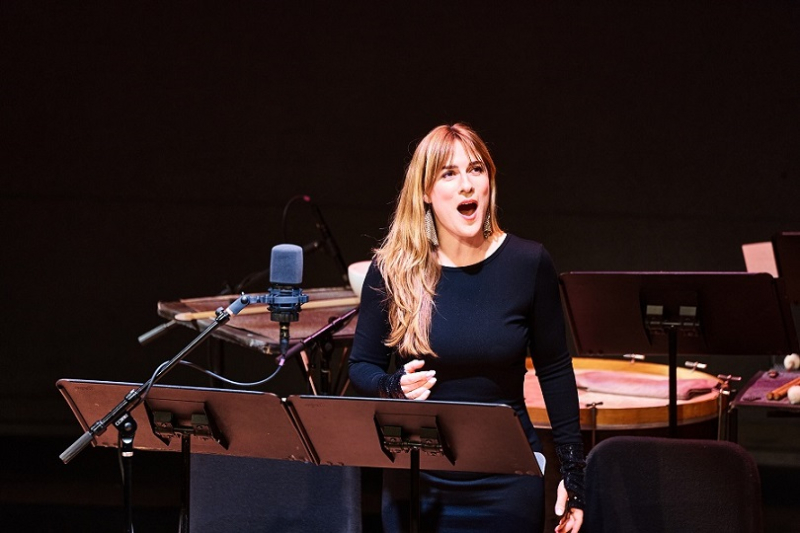
    Suzanne Farrin Composer Portrait 38

    Backtracking, the concert’s first half had offered soprano Alice Teyssier (above, photo by Rob Davidson) in Il Suono (from 2016) in which Ms. Wadden’s harp sounded in skittering passages and entrancing melismatic flourishes whilst Ms.Teyssier’s voice floated dreamily on the air, with straight tones of alluring purity.

    Suzanne Farrin Composer Portrait 101

    Above: Nuiko Wadden; photo by Rob Davidson

    Three works for solo instruments put members of the International Contemporary Ensemble in the spotlight. The first of these was polvere et ombra (2008) for harp, in which Ms. Wadden delivered swirls of notes and cascading glissandi, followed by some crisp plucked notes. The piece ends with the strings being gently brushed, almost a caress.

    Suzanne Farrin Composer Portrait 81

    Above, the evening’s string contingent: John Modney (violin), Clare Monfredo (cello), Kyle Armbrust (viola), and Evan Runyon (double bass); photo by Rob Davidson

    In Time is a Cage (2007), violinist John Modney produced a wide range of sonic motifs: tremolos and trills,  and passages of fluttering, buzzing, slithering sounds. In the piece’s most delicate moments, the music went from being impressive to being spellbinding. 
    Suzanne Farrin Composer Portrait 354

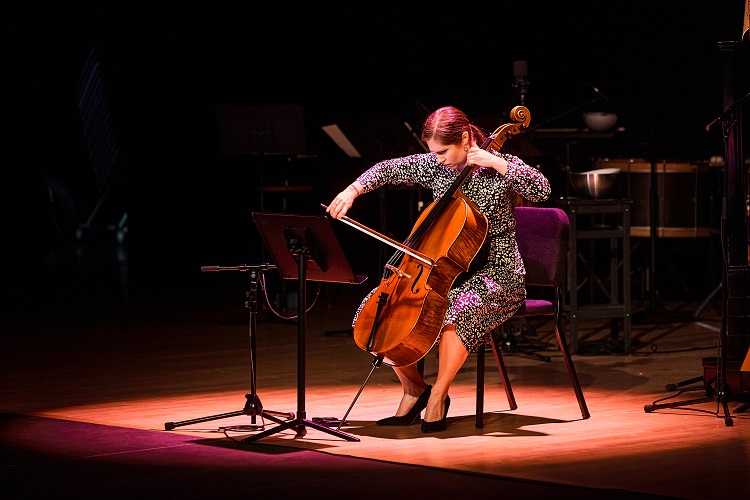
    Following the interval, cellist Clare Monfredo (above, photo by Rob Davidson) played corpo di terra (2009). From quietly tapping the strings, trills carried the music to a discordant passage. After rising to quiet, repeated notes, and a feeling of quivering, the cello drops to a drone. A lullaby-like motif turns astringent, and then rather ominous. Calming, the strings are gently brushed. There follows a sort of coda, with an upward rush to a sort of oozing sound, ending in a trembling state. Ms. Monfredo took all of this in stride, making the music feel like a poem that expresses many moods.

    Suzanne Farrin Composer Portrait 500

    Above, Evan Runyon, Nathan Davis, Alice Teyssier, and Suzanne Farrin; photo by Rob Davidson

    Concluding the evening, the world premiere of Ms. Farrin’s Their Hearts are Columns (2020) brought together Mlles. Teyssier and Wadden, Mr. Runyon, percussionist Nathan Davis, and the composer herself, seated at the ondes Martenot. This work, a setting of poems about love and its meaning to the woman’s character, begins with quiet drumming and bass tones, and then the voice of Ms. Teyssier emerged, remote and beckoning. The sound of the ondes Martenot entices the ear, like the soundtrack of a dream. The entwining timbres of this unique instrument with the bass, harp, and percussion made for some extraordinary textures, An unexpected outburst from the singer brings the work to a sudden end.

    In a mid-concert interview with the Miller’s Melissa Smey, Ms. Farrin spoke of the essential elements for  living in our increasingly disquieting world: compassion and empathy. This confirmed what I felt while listening to her music: she and I are on the same wave-length,

    ~ Oberon

  • YCA Presents Violinist Lun Li ~ Debut Recital

    Lun li

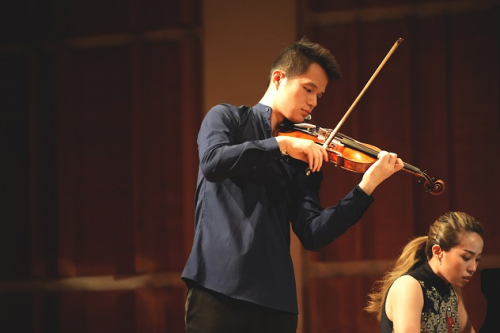
    Wednesday April 26th, 2023 – Young Concert Artists presenting the New York debut recital of violinist Lun Li (above) tonight at Merkin Hall. Pianist Janice Carissa shared the stage with the young violinist in a wide-ranging program which Lun Li described in a program note:

    My debut program explores the interplay between fantasy and reality through the works of Bartók, Messiaen, Schumann and others. I have chosen a set of repertoire that explores this blurred dimension, and more importantly, allows the listener to form sonic connections without needing extensive knowledge and context. I invite you to form your own personal narratives with this program.”

    In the program’s brief opening work, “Don Quixote” from 18 Miniatures by Giya Kancheli, both players showed themselves to be passionate and highly accomplished musicians. The music has a boisterous start, which develops into a strutting dance. Thereafter, extroverted phrases alternate with delicate, witty ones.

    Lun Li then spoke briefly, and asked that we withhold applause during the remainder of the program’s first half. He and Ms. Carissa then commenced on a marvelous performance of Francis Poulenc’s Violin Sonata.

    Poulenc originally wrote this sonata in 1942/1943, for the young French violinist Ginette Neveu, who perished in a plane crash in 1949 at the age of thirty. Thereafter, the composer revised the sonata, making several changes in the last movement. The work recalls the composer’s memories of the great Spanish poet Federico García Lorca (1899-1936); suspected of homosexuality, García Lorca was executed by the Fascists soon after the outbreak the of the civil war.

    The sonata’s opening Allegro con fuoco makes a frantic start before easing into a tango-like mood, which speeds up before halting for a long pause. A tender melody develops with great passion; alternating moods carry us to a fantastic finish.

    Poulenc headlined his second movement, an Intermezzo, with a quotation from García Lorca: “The guitar makes dreams weep,” alluding to the poet’s own guitar arrangements of Spanish songs. The music begins with a lulling piano motif accompanied by plucked violin notes. A subtle melody becomes rapturous, the piano lapses into a dreamlike state. Off-kilter harmonies sound before an upward violin glissando brings a quizzical end.

    The third movement’s title, Presto tragico, foreshadows the death of the poet: fast and urgent passages mesh with dancelike swirls of notes, climaxing with a violent chord. A searing violin theme jolts us, then the music subsides to a tragic, mournful conclusion.

    Honoring Lun Li’s request for “no applause” was difficult after such a thrilling performance, but the mood held and he commenced the high, soft agitato of Salvatore Sciarrino’s Per Mattia, a brief work that flowed seamlessly into the ensuing Schoenberg. 

    Janice carissa.

    Above: pianist Janice Carissa

    Arnold Schoenberg’s Phantasy, Op. 47, began life as a solo violin piece, to which the composer later added a separate piano accompaniment. Lun Li and Ms. Carissa here displayed the wonderful sense of teamwork that underlined their playing all evening. The pianist, whose gown was a work of art in and of itself, is wonderfully subtle, and she deftly handled the rhythmic shifts in which this music abounds. Together, the players veered from the ethereal to the drunken, dancing along thru stuttering, jagged passages which morphed, incredibly, into Fritz Kreisler’s Miniature Viennese March. This was a brilliant ending to the concert’s first half: jaunty, and impeccably played.

    Music of Olivier Messiaen, his Fantaisie, opened the evening’s second half; the composer is perhaps best remembered for his magnificent, poignant Quartet for the End of Time. The Fantaisie opens with Ms. Carissa delivering an emphatic statement from the piano. Dance-like passages are heard, and then Lun Li’s violin soars over gorgeous rippling figurations from the pianist. The music sails along, alternating rapid passages with thoughtful ones: mood swings that are relished by the players. From a high-velocity, tumultuous buildup, the music becomes cinematic. Animated/agitated music gives way to another high-flying, silken violin theme. The climax is reached, with the composer offering a swift, dazzling finish. 

    Robert Schumann’s quirky Bird as Prophet, arranged by Leopold Auer, comes next. Ascending violin phrases have a touch of irony, and then a lyrical song springs up, with a shimmering trill. The music features some wistful hesitations.

    4

    Lun Li and Ms. Carissa polished off the evening with a compelling performance of Béla Bartók‘s Violin Sonata No.2, Sz. 76. Lun Li aptly described this music as being “from a different planet”, and from its big, strange start it is indeed kozmic, weird, and wonderful. Passion and pensiveness send alternating currents thru the hall, sagging violin motifs develop into an epic expressiveness. As things simmered down, Lun Li remained unfazed by the ill-timed sound of a cellphone: he delivered a plucking ‘cadenza’ from which a dance emerged: cascades of notes from the violin over a pounding rhythm from the keyboard. Fabulous playing…they sounded like a whole orchestra! 

    Bartók offers a fantastical sonic variety in this piece in terms of tempi and dynamics: a piano solo of epic power gives way to a spidery violin motif. Lun Li becomes a veritable speed demon, playing fast and furious, and taking things to new heights. The music calms, and slows; the violin sighs, then starts plucking, and the music dances onward.

    2

    The audience hailed the musicians with a fervent ovation at the sonata’s end, and Lun Li graciously thanked us for having accompanied him on this musical journey. He then launched a performance of Schubert’s  Erlkönig that was an astounding demonstration not only of his virtuosity but of his unbounded passion and his heartfelt dedication to music.

    I look forward eagerly to hearing Lun Li again…and soon: on Friday May 5th, he will play the Prokofiev 2nd with the Riverside Symphony at Alice Tully Hall. Tickets and info here

    Performance photos courtesy of Young Concert Artists.

    ~ Oberon.

  • Premieres @ Graham

    MGDC_Get-Up-My-Daughter_MSherwood_06

    Sunday April 23rd, 2023 – The Martha Graham Dance Company have presented two premieres during their current season at The Joyce. I saw them both on this afternoon’s program, and I found them to be engrossing (for different reasons), with fascinating musical scores, terrific lighting, and – needless to say – spectacular dancing.

    Some images have come my way, and I am posting one picture from each of the new works now, with my write-up to follow tomorrow. At the top, dancing Annie Rigney‘s GET UP, MY DAUGHTER, are Richard Villaverde and So Young An. The score, which sometimes draws on Bulgarian folk music, is by Marco Rosano.

    Below, from CORTEGE 2023, choreographed by Baye and Asa to a score by Aidan Elias, are dancers James Anthony, Anne Souder, and Richard Villaverde.

    MGDC_Cortege-2023_MSherwood_7899

    Both photos are by Melissa Sherwood, courtesy of the Martha Graham Dance Company.

  • Graham Gala @ The Joyce ~ 2023

    Ying xin melissa sherwood

    Above: Ying Xin of the Martha Graham Dance Company; photo by Melissa Sherwood

    Author: Oberon

    Thursday April 20th, 2023 – The Martha Graham Dance Company are at The Joyce for a couple of weeks, and tonight was their gala evening. The program offered Graham’s All-City Panorama and Embattled Garden book-ending three excerpts from Canticle for Innocent Comedians (choreographed by Sonya Tayeh with the individual sections by Jenn Freeman, Martha Graham, and Micaela Taylor).

    All-City Panorama is a re-take on Martha Graham’s 1935 work, Panorama, which premiered at a summer retreat in Bennington, Vermont. The original Panorama was 45 minutes long, set to a score by Norman Lloyd, and was performed by student dancers, It served as a rallying call to for social change. Panorama was lost until 1992, when an early film was discovered; from this, the dancework was reconstructed by Yuriko, who passed away in 2022 at the age of 102.

    Panorama rosalie banner

    Above: from All-City Panorama, photo by Rosalie Banner

    Tonight’s performance boasted a large ensemble of teen-aged dancers, all clad in red (Martha Graham had designed the original costumes). Heralded by drums, they take the stage with a youthful energy that is exhilarating. Forming and re-forming in various sub-groups, they move in compelling design patterns – from runabouts to noble processions – employing classic Graham steps and gestures.  

    A central quintet was impressively danced, and at one point, everyone musters into a moving, stage-filling circle: a celebration of community. Following a finale filled with traveling leaps, the stage is emptied. The dancers took their bows to a vociferous ovation from the packed hall.

    Janet Eilber then appeared onstage, hailing the young dancers as the future of Graham; later in the evening, the past was also honored as veteran dancers among the audience were cheered. Overall, the evening felt like a celebration of the proud continuum of the Martha Graham Dance Company, now in their 97th season. It all left me wondering if I will live to see the 100th season.

    I was not impressed with Canticle for Innocent Comedians when I first saw it a year ago at City Center; but last week, I had a chance to see a studio rehearsal which made me alter my opinion. The choreography is demanding and often quite beautiful. I enjoyed it much more with the dancers in practice clothes; the costumes, while visually striking, seemed to detract from rather than enhance the movement, and they sometimes affect the dancers’ line. Tonight, the music, by pianist Jason Moran, also seemed more captivating than I remembered.

    Performed this evening, a suite of excerpts from the work opened with the breath-takingly lyrical duet Moon, choreographed by Martha Graham herself – apparently the only portion of her 1952 the work to have survived more or less intact. Tonight, it was hypnotically danced by So Young An and Jacob Larsen with a gentle sensuality and a feeling of tenderness and trust. 

    Stars, choreographed by Michaela Taylor, was brilliantly danced by two of Company’s charismatic Italian stars, Marzia Memoli and Alessio Crognale. Their partnering is effortless, and their personalities meld persuasively to illuminate the dance.

    The beauteous Ying Xin then appeared for the solo Death/Rebirth, choreographed by Jenn Freeman. This solo is a profound depiction of loneliness, and Ying Xin’s suppleness of movement – and her expressive face – made for a captivating dance experience: paradoxically draining emotionally and uplifting spiritually. 

    Minutes later, Ying Xin was back onstage, portraying Eve in Graham’s iconic Embattled Garden

    At the same rehearsal where Innocent Comedians gave me a second look, Graham’s Embattled Garden had been danced, complete with sets and costumes. The work is always stunning to see, but up close it was simply thrilling. The cast of four must not only be dancers, but also acrobats, actors, and possessed of vibrant personalities.

    Tonight, in the theatrical setting, a slightly different cast made a most powerful impression. The Noguchi sets are masterpieces in their own right, and the Carlos Surinach score seemed fresh and vivid. Ying Xin’s Eve is the epitome of feminine grace, and her partner Lloyd Knight’s Adam is magnificent both as a presence and as a mover.

    Garden hibbard nash

    Above, trouble in paradise: Leslie Andrea Williams and Lorenzo Pagano in a Hibbard Nash image

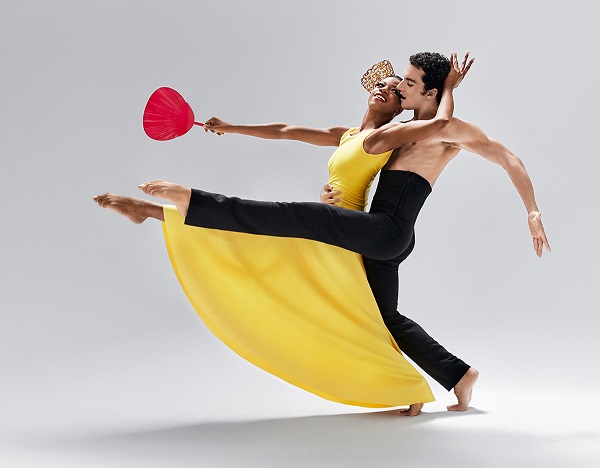
    Observing Adam and Eve from his perch in a fanciful Noguchi tree is the Stranger, danced by Lorenzo Pagano; lounging in the shade, fanning herself, is Lilith, danced by Leslie Andrea Williams. These intruders in Eden are hellbent on destroying the happiness of the young couple…just because they can. Aside from the astonishing flair and virtuosity of their dancing, Leslie and Lorenzo communicate volumes with their facial expressions and especially with their ever-observant, knowing eyes. Brilliant!

    ~ Oberon

  • Composer Portraits: Nicole Mitchell

    Nicole-mitchell

    Above: Nicole Mitchell

    Author: Oberon

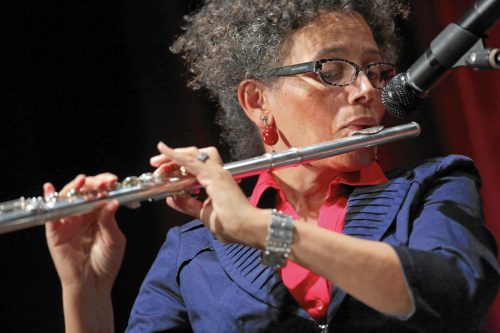
    Thursday March 30th, 2023 – Another adventurous evening in the Miller Theatre’s ongoing Composer Portrait Series as we were introduced to the multi-talented Nicole Mitchell: composer, flautist, bandleader, educator, and the first woman president of Chicago’s Association for the Advancement of Creative Musicians (AACM).

    Ms. Mitchell brought her flute along with her this evening, joining members of the International Contemporary Ensemble, vocalist Lisa E. Harris, and violinist Mazz Swift in works she has composed from 2015 thru 2023.

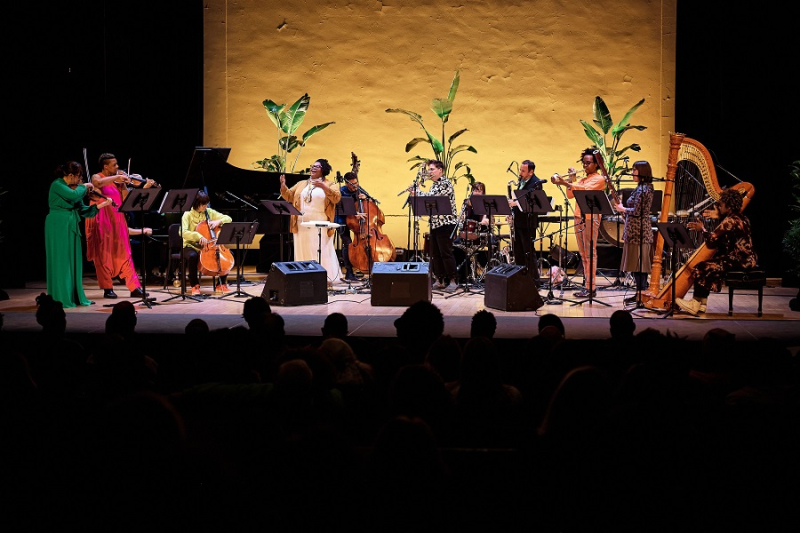
    On the Miller Theatre stage, a magic garden had been created with towering plants and clusters of candles; as the program progressed, the back panel was illuminated in varying hues. The musicians were distinctively dressed, creating the feel of a casual family gathering where every member had an invaluable place in the musical scheme.

    The evening opened with Whispering Flame, co-composed by Nicole Mitchell and Lisa E. Harris in 2017. From a busily insectuous opening instrumental passage, Ms. Harris’s rich, warm tones engaged us in a slow-rising vocal line. Ms. Mitchell’s flute playing was pristine, and she also presided over the electronics. Percussionist Clara Warnaar struck a summoning gong, and the music took on a windswept feeling, with trumpeter Jonathan Finlayson producing sputtering effects, and duetting violinists Mazz Swift and Gabriela Diaz adding a touch of lyricism. This kozmic work made for a perfect introduction to the program.

    SVfhZhko

    Above, playing Procession Time: Cory Smythe, Katinka Kleijn, Isabel Lepanto Gleicher, and Joshua Rubin; photo by Rob Davidson

    Bringing new sounds into the evening’s musical sphere, a quartet of artists played with such a wide range of colours that they created an impression of hearing a larger ensemble for Procession Time (2017). In the work’s first section, “Ritual Conception”, deep violet tones from Katinka Kleijn’s cello were matched by Joshua Rubin’s velvety bass clarinet. The music has a hesitancy about it, with Cory Smythe at the piano joining Isabel Lepanto Gleicher’s purring flute. Ms. Gleicher then takes off on a melodic flight, interrupted by the bass clarinet sounding rather ominous. Flute and standard clarinet harmonize to calming effect.

    The second section of Procession Time, “Carnival at the Cliff”, features quirky piano and cello motifs, and more harmonizing from flute and clarinet. A heavy rhythm develops, with squealing and screeching from the flute and clarinet.

    Transitions Beyond (2021) is a quintet for Ms. Harris (voice), Mr. Rubin (clarinet), and Mlles. Gleicher (flute), Diaz (violin), and Kleijn (cello). Although the program listed five movements, I could only detect four (perhaps I missed a transition along the way); but, at any rate, the work is a finely-woven sound. It starts with wordless vocalizing from Ms. Harris from which a text emerges over the sighs of a drooping cello: “I don’t want to leave you…” A violin solo turns into a dialogue for violin and cello, and soon their sounds begin to ooze, whereupon the winds take over. Ms. Harris sings a vocalise of uncanny sounds and pitches.

    The bass clarinet burbles and stutters, the violin take on a wispy feel, the singer continues to summon an array of colours. Cello and clarinet mingle, the winds sounding whimsical and the singer’s lines turning edgier. Now there is a flow of lyricism from the instruments, and a shimmering quality hovers over the singer’s low-range phrases. There is lots of beauty here, doled out so that each participating artists shines.

    The program’s first half concluded with the big hit of the evening: Building Stuff (2015, rev. 2023). This irresistible music had the whole place jumping, and provided wonderful opportunities for each of the nine players involved to shine. To a jaunty rhythm, Mr. Rubin’s clarinet sings out, followed by Ashley Jackson’s captivating harping and a sparkling xylophone motif from Clara Warnaar.

    A fantastic sway develops, steered by double-bass phenom Brandon Lopez. Mazz Swift reels off a vivid, jazzy violin solo, pianist Cory Smythe and Ms. Warnaar’s drumming combine in high style, and Ms. Mitchell’s flute adds a bright lustre. There are intriguing textures, with Sara Schoenbeck’s vibrant bassoon playing grabbing our attention, and Ms. Kleijn’s cello ever aglow with resonance. Mr. Smythe reaches into the piano to pluck some steely notes, and Ms. Jackson’s harp sounds sweet and sure. As Mr. Lopez’s fascinating rhythm steered the music to its finish, the crowd erupted in a burst of applause and cheering.  

    A6AKo05Y

    Above, the ensemble playing Inescapable Spiral; photo by Rob Davidson

    Following a charming  interview of Ms. Mitchell by The Miller’s Melissa Smey (and beautifully signed by two young people at the edge of the stage), the evening concluded with Inescapable Spiral (2017, rev. 2023) which brought together all the artists save for the composer, who listened from the hall. This long work seemed rather tame and aimless at times, especially after the fabulousness of Building Stuff, but it did let us continue to savour the individual playing of everyone involved.

    ~ Oberon

  • Jennifer Muller Has Passed Away

    Jennifer m by Matt Murphy
     
    It is very sad to read of the death of Jennifer Muller, a wonderfully musical and inventive choreographer. She was always very kind to me, opening her rehearsals to me and treating me almost like a member of her Company. I loved everyone who danced for her over the years that I knew her, and I grew very fond of her cozy rehearsal space. Above photo: Matt Murphy
     
    Some of my favorite memories of Jennifer’s work:
     
    Muller
     
    Above: from  MISERERE NOBIS
     
    Click each title to view: