Category: Dance

  • Farewells: Amar Ramasar

    Amar

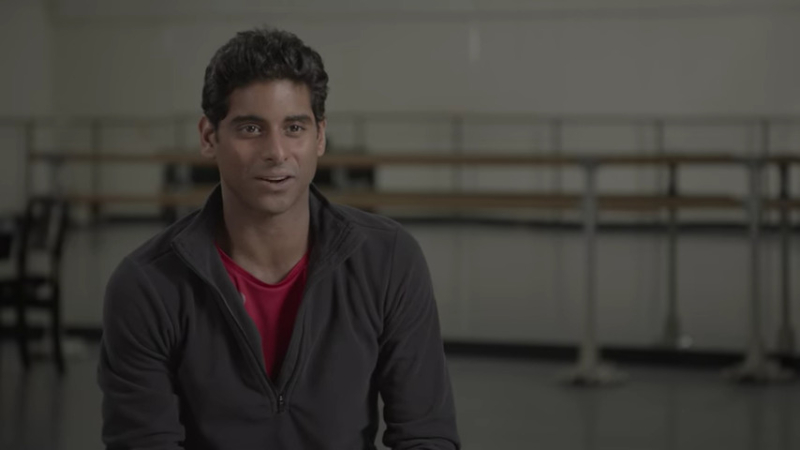
    Above: New York City Ballet principal Amar Ramasar

    Author: Oberon

    Sunday May 29th, 2022 matinee – This afternoon, we bade farewell to one of New York City Ballet‘s most popular stars: Amar Ramasar. I remember so clearly seeing the handsome young man with the engaging smile for the first time on Mr. B’s stage during the 2000-2001 season. His ascent thru the ranks came quite soon and seemed inevitable: a soloist by 2006 and a principal in 2009.

    Thru the ensuing seasons, I enjoyed seeing Amar countless times. Among the ballets in which he made a vibrant impression were Balanchine’s AGON, BRAHMS-SCHOENBERG QUARTET, FOUR TEMPERAMENTS, LIEBESLIEDER WALTZES, STRAVINSKY VIOLIN CONCERTO, SYMPHONY IN C, SYMPHONY IN THREE MOVEMENTS, UNION JACK, and WHO CARES?; Jerome Robbins’ DANCES AT A GATHERING, FANCY FREE, FOUR SEASONS, GLASS PIECES, IN THE NIGHT, and WEST SIDE STORY; Bigonzetti’s OLTREMARE, LUCE NASCOSTA, and AMARIA; Peter Martins’ CHICHESTER PSALMS and FEARFUL SYMMETRIERS; Jorma Elo’s SLICE TO SHARP; and Ratmansky’s RUSSIAN SEASONS and PICTURES AT AN EXHIBITION.

    Amar has also appeared on Broadway in CAROUSEL and WEST SIDE STORY.

    Amar discusses Ratmansky’s PICTURES AT AN EXHIBITION here.

    Here’s some photos of Amar with his renowned partners:

    Amar & becky russian seasons john ross

    With Rebecca Krohn in RUSSIAN SEASONS; photo by John Ross

    Amar starling symph in 3 moves kolnik

    With Sterling Hyltin in SYMPHONY IN THREE MOVEMENTS; photo by Paul Kolnik
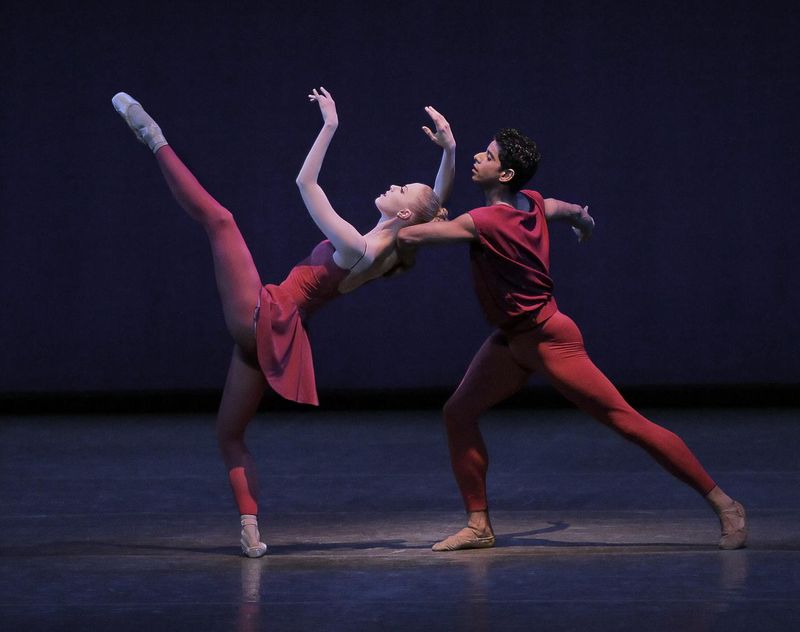
    Amar tess fearful symetries kolnik

    With Teresa Reichlen in FEARFUL SYMMETRIES; photo by Paul Kolnik

    Amar tess polyphonia kolnik

    Again with Tess, in POLYPHONIA; photo by Paul Kolnik

    Amar tiler divert 15 kolnik

    With Tiler Peck in DIVERTIMENTO #15; photo by Paul Kolnik
    Tess amar  C Duggan in the night jpg

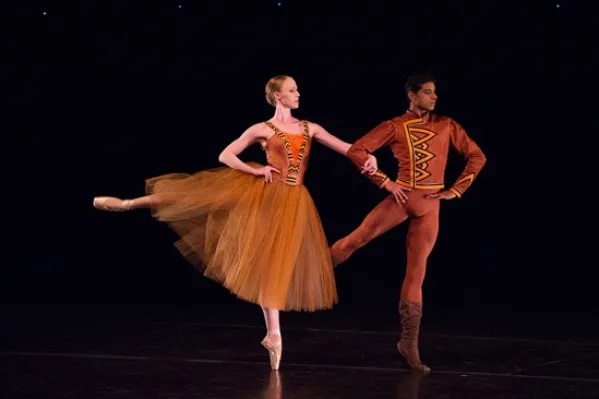
    With Teresa Reichlen in IN THE NIGHT; photo by Christopher Duggan

    AMARIA jpg

    With Maria Kowroski in Mauro Bigonzetti’s AMARIA, danced at Maria’s farewell performance
    Twirl sara amanda amar

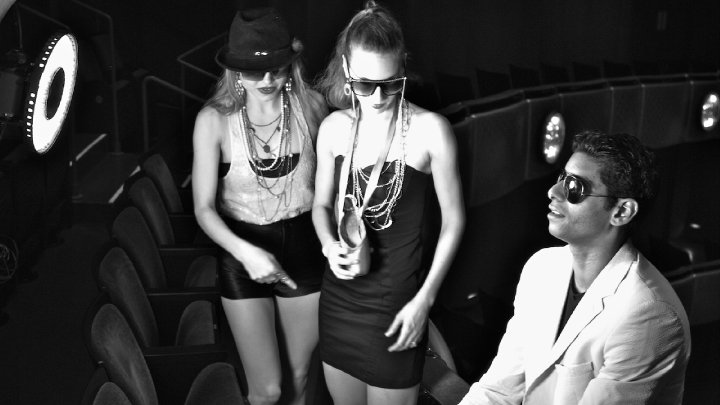
    Above: in 2010. Amar appeared with Sara Mearns and Amanda Hankes in Kristin Sloan’s brief film, TWIRL; I was planning to post a link to the film here, but it’s no longer available. Sara was to have danced Titania in Amar’s farewell performance this afternoon, but she was out with an injury.

    I met Amar in passing several times, and once at one of Emery LeCrone’s rehearsals. He was always extremely friendly and upbeat, and always ready with an infectious laugh.

    ~~~~~~~~~~~~~~~~~~~~~~~~~~~~~~~~~~~~~~~~~~~~~~~~~~~~~~~~~~~~~~~~~~~~~~~~~~~~~~~~~~~~~~~~~~~~

    I’ve loved Mr. B’s MIDSUMMER NIGHT’S DREAM ever since I first saw it in May of 1977 with a fantastic cast headed by Karin von Aroldingen and Robert Weiss as the fairy queen and king, Patricia McBride and Helgi Tomasson in the second act pas de deux,and Jean-Pierre Frohlich (no less!) as Puck. You can see how I became spoiled rotten from my early days of ballet-going.

    Amar sterling

    For his farewell, unfortunately, Amar did not have an evening of ballets of his own choosing, but rather he was scheduled to dance the divertissement pas de deux in Act II of MIDSUMMER NIGHT’S DREAM with Sterling Hyltin (photo above by Paul Kolnik). In the days running up to the farewell matinee, there were numerous cast changes due to illness and injury; then Amar himself sustained an injury, and it was arranged that he would dance only the adagio in today’s performance; sportingly, Andrew Veyette took over the allegro sections, squiring Sterling handsomely. When Amar finally appeared, the crowd went absolutely berserk, with a roaring flood of applause that obliterated several bars of music.

    Amar looked very serious throughout the adagio, partnering Sterling with tender loving care. They won a tumultuous, extended ovation, embracing frequently as the applause rolled on. In the ballet’s grand finale, Amar finally began to smile – that dazzling smile that has won the hearts of so many ballet fans over the years. 

    The entire performance had a special glow. The orchestra, under Clothilde Otranto’s genial baton, sounded wonderful in this magical score to which Balanchine tells the tale so very clearly, without a wasted note or gesture. Unity Phelan, my first dark-haired Titania since Karin, was lovely, and Daniel Ulbricht’s Oberon was simply delightful both in his virtuosity and his acting. Harrison Ball was a spectacular Puck, his characterization tinged with just a hint of darkness. 

    As the mortals Helena and Hermia, Isabella LaFreniere and Ashley Laracey were finely-contrasted: Isabella the more lyrical and wistful, Ashley the more dramatic. Ashley’s solo, alone in the woods at night, was a masterpiece all its own. Their suitors, Aaron Sanz and Peter Walker, were lively and played their parts engagingly. Gil Bolden was a terrific Bottom, the recently-promoted Chun Wai Chan looked dashing as Titania’s Cavalier, and Alexa Maxwell was a brilliant Butterfly, having her own personal triumph. Dazzling me – and the entire House – with her vivid beauty, spacious dancing, and fabulous fouettés, Emily Kikta displayed full-fledged star-power as Hippolyta, causing the noble Preston Chamblee, as the Duke of Athens, to fall to his knees and ask her to marry him.

    With Puck drifting skyward in the ballet’s final moments, the audience burst into applause; after some bows before the curtain, Amar finally stood alone on the big stage and the audience unleashed a deafening hurricane of cheers. Amar leapt off the stage to embrace Peter Martins, then resumed his place center-stage as a procession of well-wishers came forward to greet him. How wonderful to see the gorgeous Lourdes Lopez and her husband carrying bouquets to Amar; and moments later, Gonzalo Garcia surprised Amar by bringing forth the beloved Joaquin de Luz. The ovation went on and on and on, Amar clearly moved by the outpouring of love. He pounded his heart and seemed on the verge of tears.

    Outside the stage door, a huge crowd gathered to wish Amar well. But after an hour, he still had not emerged, and people began drifting away. If he’d come out sooner, he would have been there til nightfall, signing autographs and being photographed. 

    Amar-Ramasar igor burlak

    Above: Amar Ramastar, photo by Igor Burlak

    Hail and farewell, Amar! Thank you for brightening our lives. I hope I’ll see you around town from time to time in the years ahead.

    ~ Oberon

  • Alma Mahler: Muse or Monster?

    Alma-Mahler jpg

    Above: Alma Maria Mahler Gropius Werfel

    Wednesday, May 18th, 2022 – Aspect Chamber Music Series presenting works by Alma and Gustav Mahler, Korngold, and Zemlinsky at the Italian Academy. In the days leading up to this concert, I watched again the remarkable film Bride of the Wind; read about it here.

    I had not realized that this evening would include a lecture; I generally avoid such events, though tonight’s commentary was not overly long. However, it was not until the lights went down and an announcement was made that wearing masks during the performance was “optional” that I realized how many people around us did not have masks on. Had I known this in advance, I would never have attended. But the lights were down and it would have been impossible to exit without disturbing people. So we stayed for the first half, feeling quite uncomfortable.

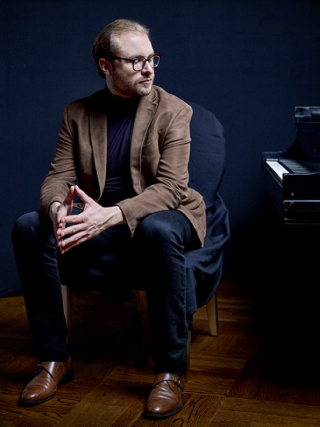
    Golka

    As a sort of unannounced prelude to the evening, pianist Adam Golka (above) played a Chopin nocturne with ravishing finesse. This established a beautiful musical atmosphere which was sustained throughout the performance.

    A screen was then lowered and musicologist Nicholas Chong spoke of Alma’s famed beauty and of the many men in her life, while photos of the lady and her suitors were shown. What a life she led! Of course, many of her adventures are spoken of in the film Bride of the Wind. It might have been illuminating to hear more about her musical education and of her small catalog of surviving works, though.

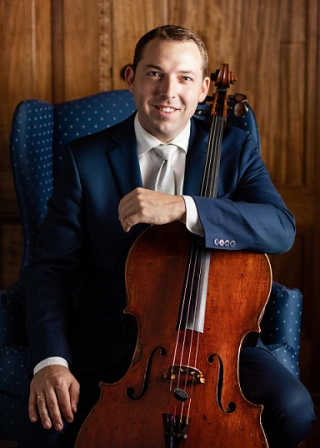
    Brook-Speltz - anna kariel

    Alexander Zemlinsky was Alma’s music teacher…and her lover. Tonight, Zemlinsky’s Three Pieces for Cello and Piano were performed for us by the Escher Quartet’s marvelous cellist Brook Speltz (photo above, by Anna Kariel), with Mr. Golka at the keyboard. The first of these, Humoreske, is a folkish piece that turns lyrical. Then comes Lied, a song of poignant beauty which expresses a sense of longing. The third piece, Tarantella, is a lively dance. To each of the three, Mr. Speltz brought his trademark warmth and expressiveness, well-matched by Mr. Golka’s sensitive and rhythmically deft playing.

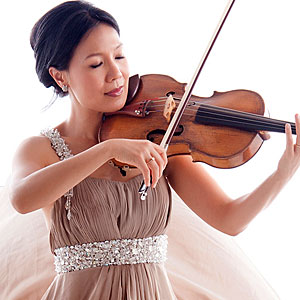
    Ringle-Rebecca-10

    Two sets of songs, four by Gustav Mahler and five by Alma Mahler, brought forth mezzo-soprano Rebecca Ringle Kamarei (above) and the Canadian pianist Brian Wagorn. Ms. Kamarei, a comely woman with a unique voice and a sure sense of feminine power, looked striking in a black gown trimmed with golden vine-like appliqué.

    From Gustav Mahler’s vast song repertoire, Ms. Kamarei opened her set with the dramatic “Wenn mein Schatz Hochzeit macht“; her voice instantly captivated me with its distinctive colour-palette, size, a compelling command of dynamics, and a thoughtful way with words.  Continuing with the familiar “Rheinlegendchen“, the singer was sailing along beautifully when she had a momentary memory lapse and needed a re-set…this was charmingly handled, and she and the pianist resumed their music-making. In two of my most beloved songs from the Rückert-Lieder, “Ich atmet’ einen linden Duftand “Liebst du um Schönheit”, Ms. Kamarei and Mr. Wagorn wove their spell thru the dreamy passages of the first song to the wryly romantic sensibilities of the second.

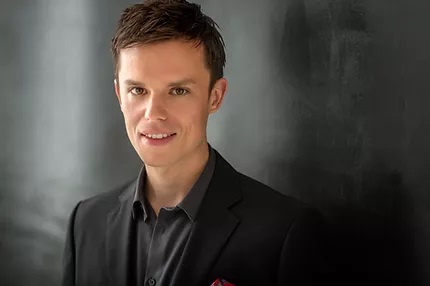
    Wagorn  jpg

    Above: pianist Bruce Wagorn

    The five Alma Mahler songs drew my companion and me into even higher regard for Ms. Karamei and Mr. Wagorn. In “Die stille stadt“, the singer gave the signature descending phrases a nice sense of quiet drama; an unfortunate cellphone intrusion did not deter her from her poetic path: she displayed the great power of her voice, then reined it in to an impressive piano with complete control The pianist’s lovely postlude gave the song a perfectly polished end.

    During “Laue Sommernacht“, the singer’s expressive hands were captivating to watch. Again, her assurance of dynamic ‘rightness’ found her skillfully pulling back from forte to piano, making an exciting effect. This songs ends quietly; throughout, Mr. Wagorn was the ideal collaborator. In “Bei dir ist es traut“, lyrical expressiveness and finely-shaded vocal colours kept us riveted to the music; and the gentle sway of the song’s central section had its own allure. 

    Mr. Wagorn’s gently restless piano figurations created the right summertime mood for “Ich wandle unter Blumenen“;  but the singer cannot suppress a sudden burst of drama when she feels the desperate need for her lover’s embrace: her ardour creates a touch of witty irony. 

    Finally came “Lobgesang”, a song of praise. Introspective at the start, the music becomes quite grand. By now we are under Ms. Kamarei’s spell, and wanting to hear her in…some Wagner: Fricka and Waltraute came immediately to mind, as did – of course – the Wesendonck Lieder.

    Meanwhile, our desire to escape became more urgent as the unmasked couple in front of us began coughing the moment the music ended. We left hastily, regretting that we were missing the concert’s Korngold finale.

    ~ Oberon

  • Flautist Anthony Trionfo @ The Morgan Library

    Trionfo

    Thursday April 14th, 2022 – Young Concert Artists presenting flautist Anthony Trionfo (above, in a Matt Dine portrait) in a noontime recital at The Morgan Library. Mr. Trionfo was joined by Emmanuel Ceysson (harp), Hsin-Yun Huang (viola), and Albert Cano Smit (piano) in a program of music by Debussy, Prokofiev, and YCA Composer Katherine Balch.

    I first heard Mr. Trionfo in recital at Merkin Hall in 2018 and was dazzled by his extraordinary talent. This afternoon, he chose works especially dear to him and then invited colleagues he especially enjoys working with to join him. The result was a very personal and pleasing hour of music-making of the highest order. 

    Cano_Smit_Albert4_credit_Chris_Lee

    Above: pianist Albert Cano Smit, photo by Chris Lee

    Sergei Prokofiev’s Sonata in D-major, Opus 94, opened the concert; Mr. Trionfo’s collaborator here was the tall, handsome Dutch/Spanish pianist Albert Cano Smit.  

    The sonata has a lyrical Moderato start, which soon peps up. A familiar melody is heard, and then there’s a sort of fanfare-like passage. Fanciful fluting follows, high and swift. Calming with more sustained themes, the familiar melody returns, moving on to a soft ending. The charming Scherzo has an exuberant quality, which both players relished. A peaceful interlude gives way to a feast of coloratura from Mr. Trionfo. The Andante has a dreamy quality, and an air of mystery. The concluding Allegro con brio opens with a rhythmic dance, and there are cascades of notes from the flautist. At the piano, Mr. Smit keeps things zipping along, and then has a strikingly dramatic interlude. A pensive melody for the flute leads on to the sonata’s flashy finish. The Trionfo/Smit duo reinforced the high esteem in which I hold Prokofiev’s music with their brilliant playing.


    Hsin-yun-huang

    For Ms Balch’s miniature, Musica Spoila, violist Hsin-Yun Huang (above) joined Mssrs. Trionfo and Smit. In announcing the work, Mr. Trionfo spoke of the intense concentration needed by the three players for this quirky, fifteen-minute score; he said the composer wanted the music to sound like a “crisp, light machine”, and the trio achieved just that quality.

    The music putters and sputters, with the viola scraping and plucking. Each player produces various sound effects: Mr. Trionfo makes eerie breathing noises on the piccolo, and the piano is sometimes tapped or plucked from within. It’s all very subtly done, and perfectly timed. The piece was over in the twinkling of an eye.

    I had heard Hsin-Yun Huang earlier this season playing Arnold Schoenberg’s Verklärte Nacht with Chamber Music Society of Lincoln Center; I was very glad of this opportunity to hear her again today.

    Emmanuel

    Above: harpist Emmanuel Ceysson

    Claude Debussy’s Sonata for flute, violin, and harp brought forth harpist Emmanuel Ceysson, who gained a large following of fans during his five seasons with The MET Opera Orchestra. Currently, he is principal harpist with the Los Angeles Symphony. He’s a great-looking guy whose love of music is palpable; watching Mr. Ceysson is as pleasing as listening to him.

    From the gentle start of the sonata’s opening Pastorale, the intriguing blend of the sweet-toned flute, the poignant viola, and the the caressive harp gives us a feeling of peace. In the lower range, Hsin-Yun Huang’s viola has a lovely duskiness. After a passage of gentle animation, the movement ends with a dreamy hush.  The central Interlude soon takes on the feeling of a gentle romp in a Spring meadow; to magical glissandi from Mssr. Ceysson’s golden harp, the sound of the flute and viola entwine in blithe melodies which become quite lively. The vibrant harp sets off the concluding Allegro con brio, giving an agitato feeling. The flute and viola exchange simple passages. The pace quickens, and the blended textures of the three instruments become denser, delighting the ear.

    The trio were enthusiastically applauded for their brilliant playing and, returning for a bow, they called on Mr. Smit to join them onstage.

    The music today was twice interrupted by the loud ringing of cellphones. As always, these intrusions came at just the wrong moments; I felt sorry for the players, who carried on despite the distraction.

    ~ Oberon

  • Taylor & Keigwin @ City Center

    Rush Hour (Keigwin) John Harnage (L-R) Maria Ambrose  Lee Duveneck  Devon Louis_photo by Whitney Browne

    Above: from Larry Keigwin’s RUSH HOUR; photo by Whitney Browne – the dancers are Maria Ambrose, John Harnage, Lee Duveneck and Devon Louis

    Author: Oberon

    Wednesday March 30th, 2022 – I’ll never forget the tumultuous ovation that rocked the New York State Theatre at the end of the world premiere performance of Larry Keigwin’s RUSH HOUR by the Paul Taylor Dance Company in 2016. I’d always hoped to see this piece again, and tonight that opportunity presented itself. Rightly, the Keigwin was presented last tonight because it is hard to imagine anything coming after, aside from massive applause.

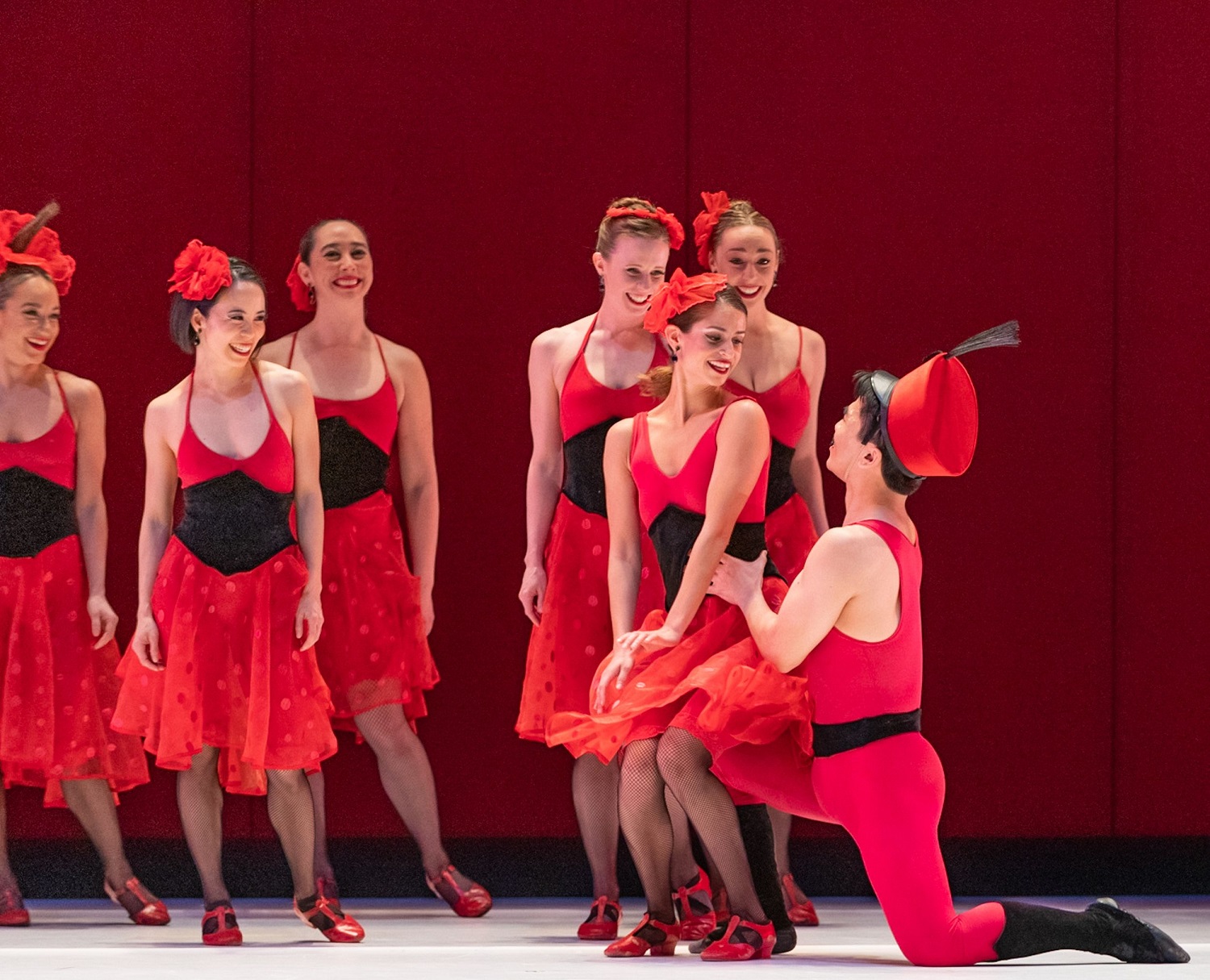
    The program opened with OFFENBACH OVERTURES, Paul Taylor’s 1995 creation that spoofs the conventions of classical ballet. The Orchestra of St. Luke’s played the well-worn tunes with spirit for this “red” dancework: red backdrop, red costumes, red red red…

    OFFENBACH OVERTURES is funny once, and this was my second viewing of it after a gap of several seasons. Tonight it seemed corny, dated,  cliché-ridden, and long…I got restless waiting for it to end. All that being said, the dancing was first-rate: it looked thoroughly and very well-rehearsed, and several of the individual dancers made a splash. Lisa Borres as an un-hinghed ballerina was amazingly loose-limbed, and her facial expressions were priceless. Jada Pearman and Michael Apuzzo duetted persuasively, and Devon Louis and Lee Duveneck excelled as the Duelists who can’t keep their rockets in their pockets, so they rush off for a quickie mid-duel. New to the Company, Austin Kelly’s handsome face and compact, sturdy physique kept drawing my gaze.  

    N2W2981Y

    Above: Austin Kelly courts Maria Ambrose in OFFENBACH OVERTURES; photo by Ron Thiele

    Far more pleasure was derived from Taylor’s AIRS, one of his masterworks. Set to the music of Handel, this dancework premiered on this very stage in 1978,  and it looks as fresh, clean, and clear as ever this evening. Kudos to the Orchestra of St. Luke’s under David LaMarche’s baton for their gracious playing of these timelessly lovely airs. As opposed to the “send-up” balleticisms of the Offenbach, AIRS is genuinely balletic. In fact, the first time I saw it, it was being danced at ABT; that was – in fact – my first experience seeing any Paul Taylor work.

    AIRS has a small cast (seven dancers) and tonight’s septet were exceptional. Four women – Madelyn Ho, Maria Ambrose, Jada Pearman, and Jessica Ferretti – and three men: Alex Clayton, John Harnage, and Devon Louis – come and go in various pairings and ensemble passages. They all looked beautiful beyond words.

    2022-Airs-Ho-Clayton-by-Whitney-Browne1 - Copy

    The beating heart of AIRS is a remarkable duet performed tonight by Madelyn Ho and Alex Clayton (above, in a Whitney Browne photo); they danced with breath-taking skill and artistry. The audience was spellbound by their poetic grace, hailing them with warm applause when their duet ended. 

    Jada Pearman and John Harnage shared a Gavotte, dancing divinely together; Maria Ambrose was lovely in a solo weaving among the three men, and Jessica Ferretti in the final movement of AIRS presented herself as an already-shining Taylor star.

    Larry Keigwin’s RUSH HOUR triumphed again tonight. While many of the dancers who created roles in this piece have since left the Company, each member of tonight’s cast stepped proudly up to bat, hitting a series of home runs.

    Danced on the stage opened to the wings, with club lighting, and  smoke hovering on the air, RUSH HOUR zooms to life on Adam Crystal’s fantastical score. Larry Keigwin’s dynamic choreography demands incredible energy from the dancers, and each of them have ample opportunity to dazzle us with their power and passion.

    RUSH HOUR is perfectly tailored to the Taylor Company; soaring on the music, the dancers leap, swirl, and rush about the space in movement that is impulsive but that always seems well-charted. Everyone danced full-tilt, and I must again mention Alex Clayton, who was having a really great night.

    ~ Oberon

  • Taylor & Keigwin @ City Center

    Rush Hour (Keigwin) John Harnage (L-R) Maria Ambrose  Lee Duveneck  Devon Louis_photo by Whitney Browne

    Above: from Larry Keigwin’s RUSH HOUR; photo by Whitney Browne – the dancers are Maria Ambrose, John Harnage, Lee Duveneck and Devon Louis

    Author: Oberon

    Wednesday March 30th, 2022 – I’ll never forget the tumultuous ovation that rocked the New York State Theatre at the end of the world premiere performance of Larry Keigwin’s RUSH HOUR by the Paul Taylor Dance Company in 2016. I’d always hoped to see this piece again, and tonight that opportunity presented itself. Rightly, the Keigwin was presented last tonight because it is hard to imagine anything coming after, aside from massive applause.

    The program opened with OFFENBACH OVERTURES, Paul Taylor’s 1995 creation that spoofs the conventions of classical ballet. The Orchestra of St. Luke’s played the well-worn tunes with spirit for this “red” dancework: red backdrop, red costumes, red red red…

    OFFENBACH OVERTURES is funny once, and this was my second viewing of it after a gap of several seasons. Tonight it seemed corny, dated,  cliché-ridden, and long…I got restless waiting for it to end. All that being said, the dancing was first-rate: it looked thoroughly and very well-rehearsed, and several of the individual dancers made a splash. Lisa Borres as an un-hinghed ballerina was amazingly loose-limbed, and her facial expressions were priceless. Jada Pearman and Michael Apuzzo duetted persuasively, and Devon Louis and Lee Duveneck excelled as the Duelists who can’t keep their rockets in their pockets, so they rush off for a quickie mid-duel. New to the Company, Austin Kelly’s handsome face and compact, sturdy physique kept drawing my gaze.  

    N2W2981Y

    Above: Austin Kelly courts Maria Ambrose in OFFENBACH OVERTURES; photo by Ron Thiele

    Far more pleasure was derived from Taylor’s AIRS, one of his masterworks. Set to the music of Handel, this dancework premiered on this very stage in 1978,  and it looks as fresh, clean, and clear as ever this evening. Kudos to the Orchestra of St. Luke’s under David LaMarche’s baton for their gracious playing of these timelessly lovely airs. As opposed to the “send-up” balleticisms of the Offenbach, AIRS is genuinely balletic. In fact, the first time I saw it, it was being danced at ABT; that was – in fact – my first experience seeing any Paul Taylor work.

    AIRS has a small cast (seven dancers) and tonight’s septet were exceptional. Four women – Madelyn Ho, Maria Ambrose, Jada Pearman, and Jessica Ferretti – and three men: Alex Clayton, John Harnage, and Devon Louis – come and go in various pairings and ensemble passages. They all looked beautiful beyond words.

    2022-Airs-Ho-Clayton-by-Whitney-Browne1 - Copy

    The beating heart of AIRS is a remarkable duet performed tonight by Madelyn Ho and Alex Clayton (above, in a Whitney Browne photo); they danced with breath-taking skill and artistry. The audience was spellbound by their poetic grace, hailing them with warm applause when their duet ended. 

    Jada Pearman and John Harnage shared a Gavotte, dancing divinely together; Maria Ambrose was lovely in a solo weaving among the three men, and Jessica Ferretti in the final movement of AIRS presented herself as an already-shining Taylor star.

    Larry Keigwin’s RUSH HOUR triumphed again tonight. While many of the dancers who created roles in this piece have since left the Company, each member of tonight’s cast stepped proudly up to bat, hitting a series of home runs.

    Danced on the stage opened to the wings, with club lighting, and  smoke hovering on the air, RUSH HOUR zooms to life on Adam Crystal’s fantastical score. Larry Keigwin’s dynamic choreography demands incredible energy from the dancers, and each of them have ample opportunity to dazzle us with their power and passion.

    RUSH HOUR is perfectly tailored to the Taylor Company; soaring on the music, the dancers leap, swirl, and rush about the space in movement that is impulsive but that always seems well-charted. Everyone danced full-tilt, and I must again mention Alex Clayton, who was having a really great night.

    ~ Oberon

  • Paul Taylor Dance Company/City Center/2022

    ROSESHarnage Ho by Steven Pisano

    Above: John Harnage and Madelyn Ho in Paul Taylor’s Roses; photo by Steven Pisano 

    ~ Author: Oberon

    (Click on each image to enlarge…)

    Wednesday March 24th, 2022 – Opening night of the Paul Taylor Dance Company‘s 2022 season at City Center. Two Taylor masterworks book-ended the program, with a premiere by the Company’s recently-designated Resident Choreographer, former New York City Ballet principal ballerina Lauren Lovette, in between.

    This was my first time seeing the Company since several popular Taylor stars left, starting with Michael Trusnovec and followed by Laura Halzack, Parisa Khobdeh, Michelle Fleet, Jamie Rae Walker, Heather McGinley, James Samson, Robert Kleinendorst, and Sean Mahoney. Incoming new dancers were just getting their feet wet two years ago when the pandemic caused a prolonged pause in their progress. So, for me, tonight was a reunion and a re-discovery.

    As an ardent admirer of the music of Richard Wagner, Paul Taylor’s Roses is one of my favorites among his numerous masterworks. It moves me so deeply each time I see it…and hear it. The story of the first performance of Wagner’s Siegfried Idyll, played on the staircase at Villa Tribschen on the morning of December 25, 1870, by a small chamber orchestra, is one of my favorite tales out of musical history. It was the composer’s birthday and Christmas gift to his beloved Cosima, and marked one of the happiest days of their life together. You can read about it here.

    Roses - Jessica Ferretti  Shawn Lesniak and Company_photo by Steven Pisano

    Above: Jessica Ferretti and Shawn Lesniak in Roses; photo by Steven Pisano

    Roses opens with five couples onstage, the women in long black gowns. The pairings tonight were: Jessica Ferretti with Shawn Lesniak, Christina Lynch Markham with Jake Vincent, Raechelle Manalo with Alex Clayton, Madelyn Ho with John Harnage, and Kristin Draucker with Michael Apuzzo. Watching these beautiful creatures in a series of duets summoned many emotions in me – all of them warm and reassuring – for they are the future of the Paul Taylor Dance Company, and that future is in good hands. All these dancers radiated confidence, and their performances were suffused with poetry and light. The audience took a special liking to Ms. Ho and Mr. Harnage…understandably: they were superb. 

    As the Siegfried Idyll reaches its end, we have found a place of tranquility in an ever-darkening world; the music and dancing have nourished the spirit, and one cannot imagine that anything more beautiful and poignant could possibly follow it. But then Jada Pearman and Lee Duveneck, clad in pristine white, appear to dance one of the most entrancing of Paul Taylor’s duets. Set to a score by Heinrich Baermann which features a clarinet solo played sublimely by the Orchestra of St. Luke’s inimitable Jon Manasse, this pas de deux had a particularly hypnotic effect tonight. Mr. Duveneck towers over the petite and radiant Ms. Pearman, his partnering so protective and tender, and her dancing a vision of grace. The five couples remain seated on the floor at the rear of the stage during this duet, keeping echoes of the Siegfried Idyll in our consciousness. A genuine “Taylor ovation” greeted the dancers during their bows.

    Anticipating Ms. Lovette’s new work, I was pleased to read of her choice of music, and intrigued by the piece’s title: Pentimento. I first discovered the music of the Argentine composer Alberto Ginastera many years ago when a pianist I was dating played some of it for me on his baby grand, which took up most of the space in his little studio apartment. “Pentimento” is an Italian word meaning repentance; in the art world, it refers to a painter’s regret when a piece he is working on does not come out quite as he wanted it to; he paints over and re-uses the canvas, but with the passing of time, the original picture may bleed thru, causing a ghostly image.

    Pentimento (Lovette) - Lee Duveneck and Company_photo by Whitney Browne

    Above: Lee Duveneck and the ensemble in Lauren Lovette’s Pentimento; photo by Whitney Brown

    My expectations for the Lovette work were high, and the opening moments, with the dancers in silhouette against a glowing backdrop, boded well. Christina Lynch Markham, her hair down, has a dramatic solo passage which finds her in a state of worry and agitation; she clutches a red scarf as she dances…and finally collapses. Now the scarf will be passed from dancer to dancer, each one having a featured solo amidst the ensemble. Thus we watched the lively Lisa Borres, a tormented Jada Pearman (who emits a scream at one point), the willowly and wonderful Maria Ambrose, the pale and somewhat mysterious Lee Duveneck, and the bold and beautiful Devon Louis being put thru their paces.

    Clad in dreary costumes that might have come off the racks at Old Navy, the community perform athletic combinations, with Tayloresque gestures; they roll about on the floor, form brief alliances, strike quirky poses, and gather – with expressions of care and concern – to watch their colleagues go thru the motions. Meanwhile, the Ginastera music, not his best by far, has become sort of an after-thought. My mind started to wander; the audience, so engrossed by Roses, began to get restive.

    Pentimento was well-received, but during the intermission I could not sense the sort of buzz that usually follows a premiere. I suppose having your new work debuted between two classics by one of the great choreographers of all time would be somewhat daunting. We shall see where this collaboration goes in the future.     

    Brandenburgs - Jada Peaman and Company - photo by Ron Thiele

    Above: Jada Pearman and the Taylor men in Brandenburgs; photo by Ron Thiele

    Paul Taylor’s festive Brandenburgs, to the immortal music of Johann Sebastian Bach, made for a perfect end to the evening. Tonight, the ballet looked as fresh and vibrant as it ever has…and that music!  The magnificent Taylor dancers soar on the wings of Bach’s score; they inspire and uplift us at a time when hope and joy are in short supply.

    Brandenburgs - Madelyn Ho  John Harnage  Maria Ambrose  Jada Pearman - photo by Ron Thiele

    Above: John Harnage and Maria Ambrose in Brandenburgs with Madelyn Ho and Jada Pearman kneeling; photo by Ron Thiele

    The male ensemble – Lee Duveneck, Alex Clayton, Devon Louis, Adam Dickerson, and Jake Vincent – race about the stage in trademark Taylor patterns. Blindingly handsome and charismatic, John Harnage held the audience in the palm of his hand simply by being there. His dancing is so clear and so poetic. And later – standing stock still as he watches his three muses  (Maria Ambrose, Jada Pearman, and Madelyn Ho) dance solos to dazzle him – he looked like a young god. Mr. Harnage’s adagio pas seul, was a portrait of masculine beauty. Then Brandenburgs sweeps onward to its final pose: an uplifting celebration of music and dance, and of the human spirit.

    Danceworld luminaries among the audience included Justin Peck, Troy Schumacher, Damian Woetzel, and Edward Villella.

    All photos by the credited photographers, courtesy of Paul Taylor Dance Company. Many thanks to the Company’s wonderful press liaison de luxe, Lisa Labrado. 

    ~ Oberon

  • Saxophonist Steven Banks @ The Morgan Library

    Steven banks

    Wednesday March 23rd, 2022 matinee – Young Concert Artists presenting a noontime “encore” concert by saxophonist Steven Banks (photo above) at the Morgan Library. Pianist Xak Bjerken joined Mr. Banks for a wonderfully varied program.

    From way back in my high-school days, I’ve loved the sound of the saxophone; I chose the French horn, but in band, I always sat next to our phenomenal first sax player. This afternoon was the first time I’ve ever attended a full recital of music for the instrument, and I was bowled over by Mr. Banks’ opulent sound, commanding technique, and deep musicality. 

    The program opened with Canadian composer Denis Bédard‘s Fantasie, a delightful piece which Mr. Banks played on soprano sax. As the afternoon evolved, he moved to alto sax, and then to tenor sax. The exuberant opening of the Bédard immediately established Mr. Banks as a virtuoso of the first order. His tone is luminous, his technique compelling, his breath control astonishing. Tall and slender, he is a charismatic musician, and he had the audience under his spell within seconds. Bédard makes the pianist an equal partner in this work, and Mr. Bjerken played with great clarity and feeling, both here and throughout the concert.

    The Fantasie features flowing melodies, with alternating passages of lyricism and animation; as the music takes a pensive turn, both artists made much of the sustained phrasing. Then, a da capo of the zestful opening speeds on to a quirky end.

    Xak Bjerken

    Above: pianist Xak Bjerken

    I became familiar with Paul Creston’s Sonata in E-flat Major, Op. 19, during the pandemic via YouTube; this afternoon, I was very glad for the opportunity to hear it played live. The piece was premiered by one of the most popular American saxophonists of his day, Cecil Leeson, in New York City in 1940. For this, Mr. Banks took up his alto sax.

    The sonata is in three movements; the first, marked “With Vigor“, has a lively beginning and goes on thru many contrasts of speed and flow, including  a warm, drawn-out melody and passages of bustling wit. Both Mr. Barnes and Mr. Bjerken showed off a wide range of dynamics. The second movement, “With Tranquility“, finds Mr. Bjerken with a solo which develops into a lovely song in which both artists showed a gift for finely-shaped phrasing and for finding appealing colours. The music becomes passionate, then turns dreamy. The sustained ending was immaculately rendered. Following a spirited opening the third movement – “With Gaiety” – moves on to an interlude wherein Mr. Banks summoned up some of his sweetest sounds. The music then breezes on to its finish.

    Now that we have Mr. Banks among us as a saxophone paragon, let’s hope contemporary composers will follow Paul Creston’s lead and bring us more sonatas – and/or concertos – for the instrument.

    Mr. Banks then spoke of the next three works, which are often featured as encores; he wanted to bring them to us as a set, and as such they were highly enjoyable to hear…their contrasts setting each work in high relief.

    First came Claude Debussy’s brief and haunting Syrinx, which is usually heard as a flute solo. Languorous and seductive, this music found fresh hues in the saxophone range: a dusky quality develops, and Mr. Banks’ fantastic dynamic control made it so alluring.

    From Astor Piazzolla, we heard Milonga del Angel, which Mr. Bjerken commenced with a slow swaying motif from the piano. The music is full of suggestion: at first inviting, then more insistent.  

    Steven Stucky’s Scherzino is playful and slithering at first, then becomes songful, and finally dotty. The piano goes high before we reach a sudden end.

    Mr. Banks’ next offering was a large piece he wrote himself: Come As You Are. It is in four movements, three honoring of his siblings, and the final one dedicated to his mother; each movement drew its inspiration from a beloved spiritual. For this, Mr. Banks brought forth his tenor sax.

    In the first movement, Lift My Eyes, we could hear echoes of “My Lord, What a Morning”. There are big bursts of melody, and the pianist plays an important role here. An uncannily sustained note from Mr. Banks led to a slow, quiet cadenza.

    Times of the Storm draws on “Wade in the Water”; it is bustling, jazzy music. At one point, Mr. Banks turned his back to the audience and achieved a sort of echo effect as Mr. Bjerken reached into the piano to pluck individual strings. A sense of quiet rapture settles over us; from the keyboard, Mr. Bjerken plays swirling pianissimo spirals of notes.  

    Strength of my Life moved me deeply, since the old song “His Eye Is On The Sparrow” was a great favorite of my maternal grandmother, who would sing it to me in her old age with a quavering voice. From a lulling start by the piano, the saxophone sings to us passages that veer from poignant to passionate. Mr. Banks finishes this movement with a long tone that slowly vanished into the air. What a sound!

    For the fourth and concluding movement of this suite – Lift My Hands – Mr. Banks turned to “I Still Have Joy”. A somber start soon grows more lively. I cannot recall ever hearing a more sumptuous saxophone tone than what Mr. Banks gave us here…well, all afternoon, actually.  And then he turns to some flights of coloratura before a big build-up to the finish.

    This singular creation, at once personal and universal, was such an impressive undertaking for the artist. His family were present, hearing the music performed ‘live‘ for the first time.

    The program concluded with Pedro Iturralde’s Pequena Czarda, which has a dramatic start before becoming a big sad-love song. A fast and bouncy czardas pops up, slows for an interlude, and then ends with a swirl of notes.

    Mssrs. Banks and Bjerken gave us so much to enjoy this afternoon. The concert marked a reunion with my high-school classmate Deb Hastings, who came down from Connecticut specially for the occasion. After the two-year pandemic lull, it was wonderful to see her again…and to hear together such fresh, vibrant music so engrossingly played.

    ~ Oberon

  • Chen/Honeck @ The NY Philharmonic

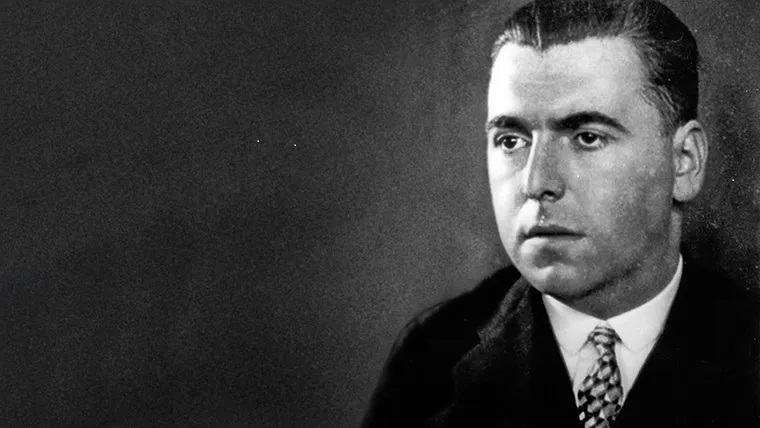
    Schulhoff

    Above: composer Erwin Schulhoff

    ~ Author: Ben Weaver

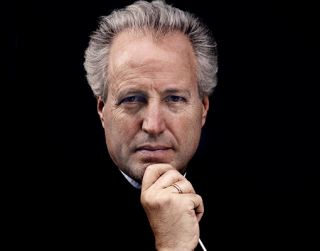
    Thursday February 24th, 2022 – Conductor Manfred Honeck returned to the New York Philharmonic with a thrilling concert of old chestnuts and a fresh take on an unfamiliar classic. Maestro Honeck and composer Tomáš Ille have created some marvelous orchestral arrangements of familiar pieces like a suite of Richard Strauss’ Elektra, Dvořák’s Rusalka, among others. In 2021 they premiered what may be their most successful collaboration yet: an orchestral arrangement of Erwin Schulhoff’s Five Pieces for String Quartet, composed in 1923 (and dedicated to Darius Milhaud).

    Shulhoff’s marvelous composition, a collection of dances (including a valse, a tango, and a tarantella), is a lively and inventive piece. Honeck and Ille created a highly imaginative suite, filled with a wide range of colors, with a touch of jazz (a style of music Schulhoff loved). Each movement – featuring a great deal of fun percussive instruments (including a marimba, a vibraphone, woodblock, tambourines, tom-toms, and castanets) – burst at the seams with excitement. A playful Alla Serenata gives way to a blousy Czeca. A soulful and passionate Tango milonga (with a lovely solo played by concertmaster Sheryl Staples) is followed by a head-spinning Tarantella, all played magnificently by the orchestra. Special kudos to the percussion section who juggled their instruments with aplomb.  And more kudos to Honeck and Ille for giving this wonderful pieces new life.

    Schulhoff is not as known as he should be. He was born Ervín Šulhov (Erwin Schulhoff being the Germanized version of the name) in 1894 in Bohemia. When he was 6 years old, Antonín Dvořák told his family to prepare their child for a musical career. Schulhoff was friends with people like Alban Berg. Schulhoff was arrested by the Nazis in 1941 and died in the Wülzberg Concentration Camp in Bavaria on August 18, 1942.

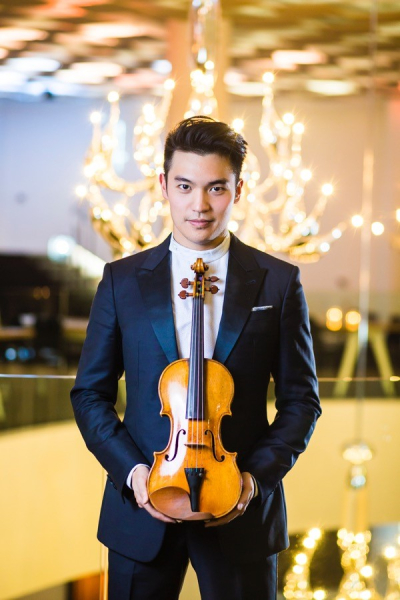
    Ray chen

    Above: violinist Ray Chen

    Felix Mendelssohn’s famous E minor Violin Concerto, composed in 1844, is one of the standard violin concertos in the repertoire. Young violinist Ray Chen was making his Philharmonic debut this season and there’s alway ssome risk playing a work as familiar as this because everyone has heard it numerous times and no doubt has some favorites already in mind. Chen was dazzling. His playing is gorgeous and secure, with beautifully honeyed tones from the violin, and a very passionate and committed interpretation. He received wonderful support from Maestro Honeck, who supported the soloist at every turn. The audience greeted Chen enthusiastically. As an encore, he played dazzling variations on Waltzing Matilda, the unofficial anthem of Australia, the country of Chen’s birth. 

    Manfred_Honeck Felix_Broede

    Above: Maestro Manfred Honeck, in a Felix Broede portrait

    Antonín Dvořák’s cheerful Symphony No. 8 (composed in 1889), is one of his most enduring works. I’ve always called it Dvořák’s “Pastoral” symphony. Filled with sunshine and joy, melodies you feel like you’ve known your entire life (including a magical Waltz of the third movement), it came as a big contrast from the dark and stormy Symphony No. 7. Maestro Honeck clearly loves his work (he conducted it without a score), etching every moment and phrase with relish. The orchestra (including another wonderful solo from Sheryl Staples) was on peak form once again. A rousing ovation was well-deserved.

    ~ Ben Weaver

  • Farewells: Gonzalo Garcia

    Apollo-Garcia jpg

    Above: Gonzalo Garcia in George Balanchine’s immortal APOLLO

    Sunday February 27th, 2022 matinee – Gonzalo Garcia, one of the handsomest men ever to grace the ballet stages of the world, bade farewell to the New York City Ballet this afternoon.

    Gonzalo, a native of Zaragoza, Spain, won the Prix de Lausanne in 1995 at the age of 15 – the youngest dancer to win that coveted prize. He joined San Francisco Ballet in 1998 at the age of 18, and at 22 he became a principal dancer there.

    In 2007, Gonzalo made a great leap from one coast to the other, leaving San Francisco Ballet to join New York City Ballet. Since then, he has performed many roles for us here; among them, I have especially loved his Apollo, Oberon in MIDSUMMER NIGHT’S DREAM, the Princes in the Peter Martins productions of SWAN LAKE and SLEEPING BEAUTY, Franz in COPPELIA, the principal male roles in BALLO DELLA REGINA, RUBIES, and BAISER DE LA FEE, the leads in Jerome Robbins’ OPUS 19/THE DREAMER, DANCES AT A GATHERING, and GLASS PIECES, in Christopher Wheeldon’s POLYPHONIA and LES CARILLONS, and Alexei Ratmansky’s CONCERTO DSCH. Most recently, I greatly enjoyed seeing Gonzalo in Justin Peck’s ROTUNDA, an excerpt from which he danced at his farewell gala.

    Some wonderful Gonzalo Garcia partnerships:

    Gonzalo scheller beauty

    Above: Gonzalo Garcia and Ana Sophia Scheller in SLEEPING BEAUTY; photo by Paul Kolnik

    Gg & starling rubies kolnik

    Above: Gonzalo with Sterling Hyltin in RUBIES; photo by Paul Kolnik

    Other dances tiler baiano

    Above: Gonzalo with Tiler Peck in OTHER DANCES; photo by Erin Baiano

    Megan f gg nutcracker

    Above: with Megan Fairchild in NUTCRACKER

    When time has allowed, Gonzalo has danced as a guest artist:

    Gg guesting strs &stripes

    …in STARS AND STRIPES at a gala in Italy

    Gg guesting giselle madrid

    …and, in Madrid, as Albrecht in GISELLE

    Gg morphoses kokyat

    Closer to home: dancing with MORPHOSES in Central Park 2009; photo by Kokyat

    Gg

    And in this charming film, Gonzalo shows us how he kept in shape at home during the pandemic.

    ““““““““““““““““““““““““““““““““““““““““““““““

    For his farewell performance at New York City Ballet, Gonzalo danced works by Balanchine, Robbins, and Justin Peck. The program was book-ended by ballets set to two of Sergei Prokofiev’s most fascinating scores: the Violin Sonata #1 in D-major sets the stage for my favorite Jerome Robbins ballet – OPUS 19/THE DREAMER – and PRODIGAL SON, which marked the only time George Balanchine used Prokofiev’s music. In between, a studio film of Gonzalo working on a solo from Justin Peck’s ROTUNDA (to a fine Nico Muhly score) was followed by a live performance of part of the ballet, with its cast of twelve. Andrews Sill was on the podium, and Kurt Nikkanen’s playing of the violin concerto was simply spectacular. How meaningful it was today to hear the scores of Prokofiev, a son of the Ukraine.

    During the interval, I loved running into Carlos Lopez, Charles Askegard, David Fernandez, and Wendy Whelan.

    Gonzalo was alone onstage as the curtain rose on OPUS 19, and the audience greeted him with a warm round of applause. His opening solo as the restless dreamer was hypnotically beautiful…his arms and hands are so expressive. For this occasion, two ballerinas took turns dancing with Gonzalo: first, Sterling Hyltin skimmed about the space with an airy lightness before their sublime pas de deux. Tiler Peck then appeared for the allegro passages, and then Sterling returned; it was Tiler who ended the ballet, resting her head on Gonzalo’s palm. The corps danced splendidly, and the three principals exchanged embraces of mutual affection during the curtain calls.  

    The filmed excerpt from ROTUNDA gave us an up-close view of the danseur at work, whilst the soundtrack included accolades from Gonzalo’s colleagues and his own words about what it means to be a dancer. The live performance went brilliantly, Gonzalo sharing some moments with another of his frequent partners, the spirited Megan Fairchild. The ballet ends with Gonzalo rushing forward into a sudden blackout.

    The distinctive setting for PRODIGAL SON was created in 1929 by painter Georges Rouault. This poignant ballet tells of a young man who leaves his home and his gentle family to find excitement in the wide world; seduced, beaten, and abandoned, he returns home in shame and abject misery only to be enfolded in his father’s loving arms. Gonzalo, looking youthfully handsome, danced the role with the verve and commitment of a spirited teenager. His degradation and downfall were poignantly portrayed, and the moment where he creeps into his father’s forgiving embrace was extraordinarily moving.

    Sara Mearns was the deceitful Siren. Harrison Coll and Lars Nelson excelled in their dancing “duel”, and Mary Elizabeth Sell and Jenelle Manzi were lovely as the sisters. Arron Sanz made a profound impression as the father.

    The gala ended with a massive ovation which Gonzalo accepted with humility and great joy, pounding his heart with his hand to express his love for us. His colleagues came out one by one, presenting flowers and hugs: they all seemed genuinely sincere. Then Gonzalo’s husband came out, and they shared a kiss, to the audience’s great delight. And so, Gonzalo finished his dancing career while still at peak form, truly one of the finest – and best-loved – dancers I’ve had the pleasure to watch.

    ~ Oberon

  • YCA Presents Martin James Bartlett

    Bartlett_martin_james

    Above: British pianist Martin James Bartlett

    Author: Oberon
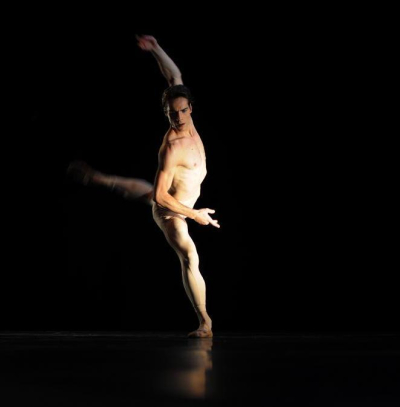
    Thursday February 24th, 2022 – Young Concert Artists presenting pianist Martin James Bartlett in recital at Merkin Hall.

    Opening his refreshing and unique program with two Bach transcriptions, Mr. Bartlett immediately established himself as an engaging artist with his performance of the Busoni arrangement of Ich ruf du dir, Jesu Christ, BWV 639, wherein an air of mystery was created and the sustained to spellbinding effect. This was followed by Dame Myra Hess’s arrangement of Jesu, Joy of Man’s Desiring in which the lyrical flow of the music was enhanced by Mr. Bartlett’s mastery of dynamics.

    The lively animation of Rameau’s Suite in A-Minor, RCT 5/VII. Gavotte et six doubles, was played as a gallant invitation to the dance, with virtuosic spirit in the changing dance rhythms, and a grand finish. 

    Haydn’s Sonata No. 31 in A-flat Major; HOB. XVI:46 began life as a divertimento. Mr. Bartlett’s marvelous agility and sense of fun made the opening Allegro moderato a delight. The Adagio, commencing with a left-handed opening passage, is quite gentle, with some elegant little trills etched in. In the concluding Presto, Mr. Bartlett dazzled us with his virtuosity, whilst introducing sly subtleties along the way. By this point, the engaging young pianist had the audience in the palm of his hand.

    Following the interval, Franz Liszt’s solo piano arrangement of the Liebestod from Wagner’s TRISTAN UND ISOLDE was a wonderful treat, starved as I am for live performances of the music of the Master of Bayreuth. Mr. Bartlett played with great passion, and also great tenderness; again, his dynamic range put a personal mark on this sublime music.

    Contemporary British composer Julian Anderson wrote She Hears to honor the memory of Imogen Holst. Ms. Holst was the daughter of Gustav Holst, and was a composer herself as well as an educator and writer; she was known for her uncanny gift for hearing music on a transcendental level. The Anderson work, and Mr. Bartlett’s playing of it, had a fascinating sense of introspection that seemed to captivate the audience.

    Three Rachmaninoff gems came next. The first two were transcriptions by Earl Wild: both the melodious flow of Where Beauty Dwells and the rhapsodic qualities of the Vocalise, Op. 34, No.14, displayed Mr. Bartlett’s true affinity for the music of the Russian composer. The third Rachmaninoff work, Polka de W.R. was jaunty, and spiced with wry hesitations: music that played to the young pianist’s sense of humor…and his brilliant technique.

    My ballet-loving companion and I were so pleased to hear Ravel’s La Valse as the concert’s closing work, our thoughts drifting back to the many performances of Balanchine’s haunting ballet of the same title that we have witnessed. From its rumbling start, and thru the moods of mystery and drama in which Ravel’s score abounds, we were drawn deeper and deeper into the music. By the final madness, Mr. Bartlett seemed possessed, his fingers sweeping the keyboard with fiery passion to summon the vision of dancing on the edge of a volcano.

    The audience had clearly taken this personable and vastly talented young pianist to their hearts, and he responded to our avid applause with a silken rendition of Gershwin’s Embraceable You.

    ~ Oberon