Category: Dance

  • L-E-V @ The Joyce

    L-e-v

    Tuesday February 22nd, 2022 – The Brutal Journey of the Heart, the final installment of a trilogy on love by choreographer Sharon Eyal, opened this evening at The Joyce, performed by L-E-V. With a score by Ori Lichtik, costumes by Dior creative director Maria Grazia Chiuri, and superb lighting by Alon Cohen, this dancework  explores the ways we heal from wounds of the heart. As an oft-wounded romantic living in an unromantic world, I have had much experience with these healing processes. And – I am  sorry to have to admit – I have also thoughtlessly inflicted such wounds on people who deserved better. And so, I expected The Brutal Journey of the Heart to speak to me with poignant clarity; what it ended up doing was make me want to go out dancing.

    At curtain rise, a solitary woman on the dramatically lit stage begins to move to a fascinating beat. She is soon joined by her five colleagues who show off witty ways of walking, and pausing to pose. The movement is inventive and everything feels wonderfully fresh and vivid. As one alluring song melds into another, the urge to dance is increasingly difficult to suppress. After about fifteen minutes, though, one begins to wonder what comes next: a change of lighting? Maybe a pas de deux, something slow and heart-achy?

    But, no: the dancers simply draw into a cluster, swaying and writhing in place while their arms and hands weave stylized gestures. Then they spread out again and repeat passages from earlier in the piece. Meanwhile, the music is pretty much relentless, and a feeling of ‘too much of a good thing’ starts to creep in. A male duet and a female solo are briefly eye-catching, but the ensemble keeps giving us recycled moves; it begins to feel like we’re in the purgatory of lost love.

    Maybe this is the brutal thing about the journey of the heart: it never really ends, and there’s no redemption to be found. The dancers continue on to a false ending, and though it seems that the woman who opened the performance alone onstage has now found some kind of peace, we don’t really know how, beyond the notion that dance is wonderfully therapeutic, especially to this music.

    Despite a sense of aimlessness at times, the evening was very much worthwhile for the excellence of the dancing, the atmospheric lighting, and most of all for the score.

    The dancers – Clyde Emmanuel Archer, Keren Lurie Pardes, Darren Devaney, Guido Dutilh, Dana Pajarillaga, and Edit Domoszlai – were hailed at the end with a whooping standing ovation, which they truly deserved.

    ~ Oberon

  • Stile Antico @ The Miller Theatre

    Stile-Antico

    Above: the singers of Stile Antico, photographed by Marco Borggreve

    Saturday February 19th, 2022 – Stile Antico, the London-based Early Music vocal ensemble, gave a wonderful program this evening at Columbia University’s Miller Theater. The music – and the ensemble’s hauntingly beautiful singing of it – was a balm to the spirit in these uncertain times. 

    In this program, entitled Toward the Dawn, Stile Antico brings us works – both sacred and secular – that sing of the hours between dusk and dawn: nocturnal music of mystery and of assurance that carries us through the watches of the night.

    The twelve singers of Stile Antico stood in a semi-circle on the bare stage, all clad in black, rearranging themselves for each work. The program was devised in three sections: Evening, Nightfall, and Dawn. After the first piece of the evening – John Wilbye’s Draw on sweet night – there was a lovely silence, and then people started applauding. Although the singers seemed prepared for this intrusion – they took a bow – for me it broke the atmosphere. Thereafter, each piece was applauded and bows were taken.

    The opening Wilbye set the mood for everything that follows: dreamlike, and tinged alternately with hope and uncertainty. in Thomas Tallis’s Te lucis ante terminum, we hear a prayer for God to watch over us throughout the night. John Ward’s Come, sable night is extraordinarily beautiful, both in words and music.  From William Byrd, we heard Vigilante, a dramatic work that urges true believers to remain faithful…and aware.

    The Nightfall section of the program commenced with Orlande de Lassus’ Toutes les nuitz, which tells of the restlessness of sleeping alone. This rang true with me as I thought back on the very few nights in the past twenty years that my beloved has not been there to have and to hold. Both in music and words, and in Stile Antico‘s singing of it, this song was a highlight of the program.

    Next came the most familiar work of the evening: Gregorio Allegri’s Miserere. I first  heard this heavenly music in a movie theatre, while watching the iconic gay film, Maurice. Jonathan Hanley was the tenor soloist, and the high-spinning soprano line was beautifully woven into the sonic tapestry. An interesting program note told of the transformation of this work over the years, so that it probably is quite unlike what Allegri originally wrote. Nevertheless, its enduring enchantment is easy to understand, especially when it is as poetically sung as it was tonight.

    John Sheppard’s In manus tuas also calls for a soloist: bass James Arthur’s tone had a poetic sonority. The words, from Psalm 31:6, are wonderfully simple: “Into your hands I commend my spirit; you will redeem me, Lord, God of truth”.

    The only contemporary work on the program, Nico Muhly’s Gentle sleep, composed in 2015 to a text by Shakespeare, did not seem at all out-of-place. The bending harmonics in fact gave a pleasing contrast to the rest of the works on the program. Muhly’s score has an intriguing and somewhat anxious feeling.

    Now the dawn is heralded by Thomas Tallis’s O nata lux de lumine, which hails Christ as the “Light of the World”; this is followed by Claudio Monteverdi’s Ecco mormorar l’onde, a poem describing the morning breeze out of the Orient, stirring the ocean’s waves and bringing the world to wakefulness.

    The evening concluded with Ave Dei Patris Filia by John Taverner: a longish work of varying moods that extols the Virgin Mary. While a blend of timbres is essential in a choral ensemble like Stile Antico, I did find myself frequently listening to individual voices as the program unfolded; the altos, in particular, impressed me in the concluding Taverner.

    The concert ended with a joy-filled Amen, whereupon the singers were given a hearty and very well-deserved ovation. I’d had high expectations for this program, and they were surpassed: extraordinary music-making…bravi Stile Antico!

    The hall seemed full, and for the most part silence reigned during the music. Invariably, though, if there is one thoughtless person in an audience, that person is destined to sit next to me. This individual arrived as the lights were going down, with a suitcase, and all bundled up; he/she clambered over me, took forever to settle in, and then spent the evening flipping noisily thru the dreaded texts booklet. Yet another case of the triumph of indifference.

    Oberon

  • Schultz/Rouvali @ The NY Philharmonic

    Composer

    Above: composer Žibouklė Martinaitytė, photo by Romas Jurgaitis

    Author: Ben Weaver

    Saturday February 19th, 2022 – As we all anxiously await the reopening of David Geffen Hall (née Philharmonic Hall, then re-christened Avery Fisher Hall) at Lincoln Center in Autumn 2022 (two years ahead of schedule!), the orchestra returned to the Rose Theater at Jazz at Lincoln Center for a concert featuring Richard Strauss, Tchaikovsky and a US Premiere of a recent work by Žibouklė Martinaitytė.

    Born in St. Petersburg (then Leningrad), USSR, but raised in Lithuania and now based in NYC, Ms. Martinaitytė’s gripping 2019 work Saudade received its US Premiere in these NY Philharmonic performances. The word “saudade” is Portuguese and has no direct English equivalent, but it comes close with “longing,” (or as Madonna described it when covering Césaria Evora’s great ballad “Saudade” during her Madame X Tour: “yearning.”) To be honest, I’m not entirely certain what Ms. Martinaitytė is longing for in her Saudade, which is rather dark and ominous. But that’s not important when the music is this hypnotic. Much of the composition is played at a steady, slow pace, with strings providing the canvas on which the rest of the orchestra makes its contributions. There is something of Arvo Pärt here, though more varied in orchestration. Martinaitytė’s orchestra is huge, with numerous brass and percussion instruments (including, three trombones, tubular bells, and vibraphone), but unlike the lazy “throw in the kitchen sink ” noise of a composer like Christopher Rouse (who Albert Gilbert subjected us to for several seasons), Ms. Martinaitytė’s use of every instrument on stage is always economical and perfectly woven into the tapestry of sound, not just smashing a gong to cover up inadequate musical transitions – something numerous contemporary composers do with abandon. As she slowly builds Sodade to its climaxes and retreats, the work most reminded me of the freezing winds of Sibelius and crashing waves of John Luther Adams. Although unlike John Luther Adams (not to be confused with John Adams), Ms. Martinaitytė believes in brevity. She tells the whole story in about 15 minutes of Saudade. This is a beautiful and gripping piece. Maestro Santtu-Matias Rouvali, currently artistic director of the Philharmonia Orchestra in London, shaped it superbly, and the orchestra seemed to enjoy its challenges. They applauded Ms. Martinaitytė warmly when she came up on stage for a bow: the crowd seemed truly impressed.

    The work Saudade has been recorded by the Lithuanian State Symphony Orchestra conducted by Giedrė Šlekytė, and is available on the Ondine label. It is highly recommended.

    Richard Strauss’ Brentano-Lieder, Op. 68, were composed in 1918 following a lengthy break from lieder composition, and on the heels of completing ROSENKAVALIER, both versions of ARIADNE AUF NAXOS, and DIE FRAU OHNE SCHATTEN. This is relevant because you can hear all three of these operas in these Brentano songs, and that is perhaps the reason they are infrequently performed as a set: the style of composition is so different from song to song that it’s difficult to find as singer who can cover the full spectrum of Straussian styles in less than 25 minutes. Over the years, some of these songs have been performed at the Philharmonic, by Beverly Sills, Kathleen Battle, Barbara Bonney, and Deborah Voigt, but they did not sing the same songs.

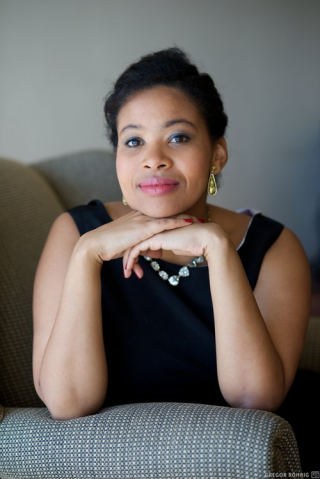
    Golda

    Above: Golda Schultz, photo by Gregor Röhrig

    Fortunately the orchestra found an interpreter who managed to not only survive the challenge, but do so with flying colors. Young South African soprano Golda Schultz, who now resides in Bavaria, made a stunning Philharmonic debut with these performances. She has a silky, beautiful voice, even throughout the range, from a secure bottom (which she wisely does not force) to a ringing and full top. “Säus’le, liebe Myrtle!” and “Amor” could be outtakes from Zerbinetta, the more thoughtful in the former and coquettish in the latter, and Ms. Schutlz managed the runs and playful coloratura with aplomb. The lyrical yearning of “An die Nacht” could be Sophie’s wedding night jitters, and wildly passionate “Als mir din Lied erklang” a desperate outburst of the Composer. Ms. Schultz already sings Sophie and I think she’d make a marvelous Composer too. (Originated by Lotte Lehmann, it’s not really supposed to be sung by mezzo-sopranos.) And finally DIE FRAU OHNE SCHATTEN comes blaring in with an Empress-inspired “Ich wolf ein Sträußlein binden” – lyrical and passionate, with some light coloratura, Ms. Schultz never pushed her voice, but showed a simple pleasure of passion and signing. The final song of the cycle, “Lied Der Frauen,” is something the Dyer’s Wife could have sung. Perhaps here Ms. Schultz was reaching the limits of her current vocal comfort, but she did not become desperate and Maestro Rouvali did not allow the orchestra (massive, echt-Strauss sound) to cover her. If the Dyer’s Wife – a vocally brutal role – would be beyond Ms. Schultz’ natural capabilities, I think the Empress is a role she should seriously consider taking on. Ms. Schultz is an exciting young singer and was greeted appreciably by the audience. (…which did applaud after each song…but what can you do?)

    Rouvali

    Santtu-Matias Rouvali (above, photo by Chris Lee) concluded the concert with Tchaikovsky’s familiar Symphony No. 5. It is a long favorite of the public, even though after the premiere Tchaikovsky – in his typical manner – declared it his worst composition and that the public only pretended to like it. Perhaps Maestro Rouvali took the slow parts a bit too slow, they began dragging from the opening pages of the score. But anything above Adagio took on a playful pep and interesting rhythms. The Valse was perhaps the most successful of the movements, a warm and well judged pacing, lovingly shaped by the orchestra. The finale, too, was thrilling. This is music the orchestra has played many times and they seem to relish it once again.

    Since NY Philharmonic music director Jaap van Zweden is leaving the Philharmonic, people are speculating that every conductor who steps on the podium is auditioning for the post. This is certainly true of Maestro Rouvali. New York could certainly do much worse. I’d argue it has.  Worth noting currently Rouvali is principal conductor of the Philharmonia Orchestra, chief conductor of the Gothenburg Symphony, and chief conductor and artistic director of the Tampere Philharmonic Orchestra.

    Another interesting note on the state of the current Covid-19 pandemic and wearing of masks. One thing that has historically been difficult not to notice is how noisy NYC audiences frequently are. Many nights – and not only in the cold season – it sounds like a consumption ward with someone hacking up a lung every moment of a concert. This was not the case at this concert. One thing the CDC has noted is that, no doubt due to wearing of masks, very few people have gotten sick with the common cold. I don’t think I heard a single cough at this concert. I think perhaps we should make the wearing of masks mandatory at all times going forward.

    ~ Ben Weaver

  • Vengerov/Trpčeski @ Carnegie Hall

    CH11152281_Medium_res_comp

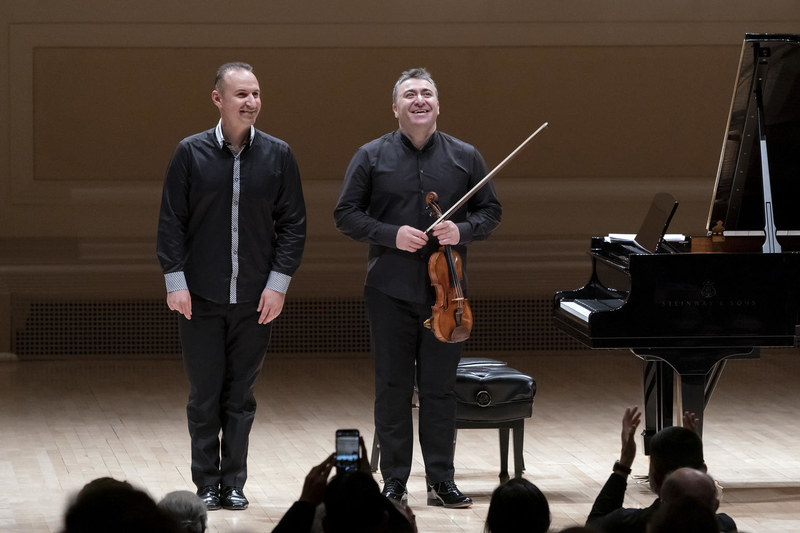
    Above: violinist Maxim Vengerov and pianist Simon Trpčeski onstage at Carnegie Hall; photo by Jennifer Taylor, courtesy of Carnegie Hall

    Thursday January 20th, 2022 – My first concert at the Stern Auditorium at Carnegie Hall since March of 2020. I was very happy to bring my friend DK to see one of his favorite artists, Maxim Vengerov, in recital. The Macedonian pianist Simon Trpčeski was at the Steinway for a wonderful program.

    The audience gave the musicians a hearty welcome as they walked out onto the stage. People are simply aching to hear great music played live again after the the long months of uncertainty. And so the opening Mozart seemed like a transfusion of peace and hope, though still tinged with darkness.

    CH11152497_Medium_res_comp

    Above: Maxim Vengerov, photo by Jennifer Taylor

    Mozart’s Violin Sonata in E-Minor, K. 304 was composed in 1778; this is the only one of Mozart’s violin sonatas written in a minor key; its underlying wistfulness might be connected to the fact that the composer’s mother had passed away while he was working on it.

    Departing from the norm, this sonata is in only two movements. The Allegro takes its character from the poignant opening theme, played in unison by violin and piano. The piano brings forth a second, more animated theme, though the mood remains restrained. A lovely dovetailing of dynamics marked the Vengerov/Trpčeski partnership’s playing, the violinist’s repeated insistent notes met by the pianist’s wonderful subtleties. 

    Mozart marks the second movement Tempo di Minuetto, but it has a forlorn quality not usually heard in a minuet. Solo piano introduces the grave yet graceful opening melody, and soon the two instruments take turns with it, their voices entwining. A major-key interlude gives us an unexpected ray of light, with sublimely soft playing from Mr. Trpčeski. The minor mode resumes, the melody flowing on to a rather sudden stop.

    CH11152391_Medium_res_comp

    Photo by Jennifer Taylor

    In direct contrast to the Mozart, Mssrs. Vengerov and Trpčeski next offered the Prokofiev Violin Sonata No.1. Prokofiev is one of my A-list composers, and this sonata encapsulates everything I love about his works: the rough-edged drama, the heartfelt lyricism, the chiaroscuro dynamics, and the subtle wit of his music always fascinates me.

    Following the four-movement structure (slow-fast-slow-fast) of the Baroque church sonatas, Prokofiev opens this sonata with a somber passage from the piano. The violin joins, edgy and buzzy, and then the two instruments blend in a unison lament. The piano’s dolorous notes draw the violin into a yearning, dramatic passage. Then the violin skitters softly on high as the pianist intones soft chords; it sounds “like the wind in a graveyard” as Prokofiev told David Oistrakh, who played the sonata’s premiere performance.

    The second movement, Allegro brusco, begins vigorously, lapses into a songful state, then turns fast and furious. Things subside briefly, but accents soon propel the piano forward again as the violin makes agitated remarks. Calming to lyricism, the music then gets grand – with a soaring melody leading to a wild finish.

    In the third movement, Andante, the Vengerov/Trpčeski transported us with their spectacular playing. An opening passage of piano filigree is taken up by the violin. A gorgeous violin melody is heard, whilst the piano sustains a magical atmosphere. This ethereal music puts us in a blissful state, with Mr. Vengerov finishing his reverie with a miraculously sustained pianissimo trill. Heavenly!

    Brilliant playing from both artists drove the sonata’s concluding Allegrissimo forward in spectacular fashion. A melodious interlude lets us again savour the warmth and serenity of Prokofian lyricism, and then some biting staccati dazzle us yet again. Another whiff of the “wind in a graveyard” motif leads on to work’s quiet closing. 

    CH11152496_Medium_res_comp

    Photo by Jennifer Taylor

    Following the interval, César Franck’s ever-popular Violin Sonata was given a thrilling performance by the Vengerov/Trpčeski duo. This sonata was inspired by the marriage of the great violinist Eugène Ysaÿe to Louise Bourdeau in 1886.  Franck’s initial idea for the sonata was to commence with a a slow and reflective opening movement, but Ysaÿe persuaded him that it worked best at a quicker tempo, so Franck marked it Allegretto, ben moderato. This movement juxtaposes rather than develops two themes, the first given almost exclusively to the violin, the second to the piano. These themes, particularly the violin’s, will return in the following movements. From note one, I fell under the spell of this music, which seemed so fresh and vivid as performed tonight. Mr. Trpčeski’s playing was positively rhapsodic, whilst Mr. Vengerov poured so much passion into the thrilling melodies the composer has given him.  

    The agitated, dramatic second movement casts its own spell, with the players again displaying their intriguing dynamic range and their peerless legato. The music is at once propulsive and poetic. Then comes the pensive Recitativo-Fantasia, wherein Mr. Vengerov’s rapturous playing in the high range is heard over the piano’s gently rolling misterioso figurations.

    The familiar and beloved themes reappear in the sonata’s final movement, which builds to a glorious finish. The inevitable reaction of the audience to the playing of Mssrs. Vengerov and Trpčeski was a fervent ovation, richly deserved. 

    Ravel’s Tzigane was a late addition to the program. Familiar to me mainly from the ballet that George Balanchine created for his muse, Suzanne Farrell, to this music, it’s a Vengerov specialty: he played it here at his February 2020 concert, just days before the pandemic shut everything down. 

    In July 1922, Maurice Ravel met the young Hungarian violinist, Jelly d’Aranyi, who was the grand-niece of famed 19th-century violinist Joseph Joachim. The composer was intrigued when he heard the violinist playing gypsy melodies at a party. Inspired, he fashioned a gypsy rhapsody, working on it over a period of two years. Ravel completed it just a few days before the premiere: on April 26, 1924, in London, Mlle. d’Aranyi and pianist Henri Gil-Marchex gave the premiere of Tzigane.

    Tzigane is a legendary showpiece, and tonight the amazing dexterity of the violinist (later joined by the pianist) kept the audience on the proverbial edge of their seats. After a giant “pre-cadenza”, the music starts to dance, by turns high and shimmering, then wildly earthy.

    CH11152444_Medium_res_comp

    At the concert’s end, Trpčeski and Vengerov were greeted with a lively ovation. They returned for three encores: two delicious Fritz Kreisler treats, and then Gabriel Fauré’s sublime Après un rêve, which was sublimely played. Bravo, gentlemen!  Bravissimo!!

    All photos by Jennifer Taylor, courtesy of Carnegie Hall.

    ~ Oberon

  • Strings Only @ Chamber Music Society

    K lee

    Above: violinist Kristin Lee

    Tuesday January 18th, 2022 – Chamber Music Society of Lincoln Center brought together six virtuoso string players from their stellar roster for a program of music by Beethoven, Schulhoff, and Dvořák at Alice Tully Hall.

    Beethoven’s Quintet in C-minor for Two Violins, Two Violas, and Cello, Op. 104, started life as a piano trio composed in 1794–95; the composer arranged the work for string quintet in 1817.

    An almost waltzy feeling springs up for the opening of the Allegro con brio. The music spills forth with contrasting passages of animation and lyricism, which tonight’s five musicians graced with delicious harmonies and finely-judged dynamics. Violist Matthew Lipman’s playing (all evening) was of particular note.

    A gentle flow of melody opens the Andante cantabile. Ensuing variations include a sad interlude and some boisterous passages; Mr. Lipman and cellist Keith Robinson seize on their opportunities. The irresistible magic of Beethoven abounds here. The Menuetto has a courtly feeling, but fabulous flourishes from Kristin Lee’s violin add a spicy touch. Later, some charming echo effects are heard.

    Ms. Lee takes the lead in the quintet’s Finale: Prestissimo. Here I found myself deriving great joy from watching the five musicians reveling in the pleasure of playing such marvelous music. After all that has gone before, Beethoven pulls off a final magic trick: the quintet ends quietly.   

    Erwin-Schulhoff

    Above: composer Erwin Schulhoff

    The centerpiece if this evening’s program was Czech composer Erwin Schulhoff‘s Sextet for Two Violins, Two Violas, and Two Cellos, composed in the early 1920s. This evening was my first hearing of this work, and it was an engrossing, revelatory experience. My only other Schulhoff encounter was a powerful performance of the composer’s 5th symphony by the American Symphony orchestra in 2017.

    Schuhoff’s Sextet opens with an Allegro risoluto, the musicians digging in and then trudging along with numerous dramatic effects. The music calms, with wisps of melody woven in; our two violists (Mssrs. Lipman and Neubauer) have much to do here, with plucking and tremolo passages. The music has hauntingly somber harmonics and brusque accents.

    In the eerie Tranquillo: Andante which follows, the music is spine-tingling: unsettling yet beautiful. Mr. Neubauer and cellist Keith Robinson share an evocative exchange, and Kristin Lee spins a silky violin theme over a rocking motif. A solo from Mr. Robinson sustains the mood, and then a creepy, insectuous theme yields to a hushed atmosphere. The cello sings low, and then, with fantastic control, a final passage for viola and cello. “Wow!” I scrawled in my notes.  

    An agitato movement, marked Burlesca. Allegro molto con spirito brought forth fun, lively rhythms and some fiery playing from Matthew Lipman. The tempo speeds up for a propulsive unison passage at the finish.

    Inbal Segev’s deep, dolorous cello sound opens the concluding Molto adagio; the music has a dense, plaintive quality. Mr. Sussmann and Ms. Lee exchange lamenting themes; and while the violas sustain a tremolo effect, Mr. Robinson joins: his cello imitates the sound of a pendulum clock. An uneasy quietude settles over the hall as the music takes a long fade, and Mr. Robinson’s cello has a last utterance.
     
    This magnificent rendering of the Schulhoff will linger long in my memory.

    Arnaud-Sussmann-Photo-V-Photo-Credit-Carlin-Ma jpg

    Above: violinist Arnaud Sussmann, photographed by Carlin Ma

    To close the evening, Antonin Dvořák’s Sextet in A-major for Two Violins, Two Violas, and Two Cellos, Op. 48 (1878) was gorgeously played by our six artists.

    From the start, this sextet is a veritable font of melody. And the dance rhythms are indeed toe-tappingly appealing. But after a while, it all becomes so very pleasant, and I began to think back to the jarring fascination of the Schulhoff. As time goes by, I find that Dvořák’s music seldom draws a deep response from me.

    Despite such quibbles, I was so glad to stand up and cheer at the end of the concert, joining my fellow music-lovers in a heartfelt homage to these six great musicians. 

    ~ Oberon

  • Timo Andres @ Merkin Hall

    Andres jpg

    Thursday December 16th, 2021 – Pianist/composer Timo Andres (above) in recital at Merkin Hall. This evening’s program, part of The Kaufman Music Center’s Piano Dialogues series, grew out of the musical friendship of Mr. Andres with his fellow composers, Sarah Goldfeather and Eric Shanfield. Honoring the continuing influence of Robert Schumann’s piano music, Mr. Andres performed the composer’s Waldszenen.  Ms. Goldfeather’s new work for Mr. Andres, and Mr. Shanfield’s aptly titled new work, Timo Variations, based on a theme which Mr. Andres composed for Eric in 2019, completed the program.

    Sarah Goldfeather

    I simply loved the new work by Sarah Goldfeather, entitled Fern Canyon, which opened the evening in its world premiere performance. Ms. Goldfeather could not have asked for a finer interpreter of her new work than Mr. Andres, a tall, bookish-looking fellow with beautiful hands.

    Fern Canyon is at first whimsical and repetitive at the start, keeping in the piano’s mid-range. Little flourishes turn up, and then the music gets more lyrical. Mr. Andres then lingers in the high range, with delicate figurations tickling the ear. Suddenly, the music turns grand, and Rachmaninoff springs immediately to mind. But the piece ends magically, with Mr. Andres keeping his foot on the pedal to sustain the sound of the final note, which hung beautifully on the air. Fern Canyon would make a wonderful dancework, in my view.

    Without taking a break, Mr. Andres then commenced Schumann’s Waldszenen, Opus 82. These nine short solo piano pieces were inspired by the German woodlands. In the Teutonic imagination, forests are ancient, restful, and – sometimes – eerily haunted places. Schumann’s nine miniatures conjure up such visions of the woods.

    Composed in 1849, this series of intimate scenes from Nature begins with Eintritt, the entry into a cool and shaded grove filled with forest murmurs. A simple, folkish tune emerges as the forest-stroller’s eye wanders about.

    Horn calls and the sounds of rifle-fire herald the human invasion of Nature’s sanctuary; in Jäger auf der Lauer, huntsmen who have been stalking their prey break into wild pursuit. The music conveys the thrills of the chase.

    The two ‘flower’ pieces that follow are very different in feeling: the simplicity of Einsame Blumen (Lonely Flowers) leads to the shadowy, flowing Verrufene Stelle (Haunted Places) which describes a dark red flower that draws its colour from Earth saturated with human blood.

    Things brighten with Freundliche Landschaft (Friendly Landscape) while the coziness of sitting before the fire with a pint are evoked in the almost hymn-like Herberge (The Inn).

    The best-known of the Waldszenen is Vogel als Prophet (Bird as Prophet), which captures a sonic image of forest birds, flitting from tree to tree. A central, more poetic passage praises the mystical powers of the forest’s avian dwellers.

    Then the music sings of hunters again: in Jagdlied (Hunting Song) the woodland sportsmen look forward to feasting on their catch of the day. The final Abschied (Farewell) was so affectingly played, but the jarring sound of a cellphone came at the worst possible moment.

    Throughout this Schumann cycle, Mr. Andres’s playing moved from the poetic to the passionate with a lovely mastery of dynamics, and an unfailingly distinctive style. 

    E shanfield

    Eric Shanfield‘s Timo Variations brought the program to an end. The theme was Mr. Andres’ own creation, brief and uncomplicated; thereafter the pianist embarked on a 9-variation journey, with a closing Aria.  Theme I, Scheletrica (“emaciated, meager”) features sharp accents. A reference to the Waldszenen comes next, in a brisk and brusk reply to Schumann’s Vogel als Prophet. Then, bell-like sounds give way to rippling effects in the 3rd variation. 

    Variation 4 is marked Espressivo (‘ritmico ma no meccanico’) – “rhythmic but not mechanical”  – wherein Mr. Andres followed those instructions to the letter. Variation 5 begins with a pulsing feeling, later flowing freely. Continuum (Variation 6) maintains a steadiness, then gives over to a fluttering feeling in Variation 7, which ends up expansively. In the 8th Variation, entitled Kreisleriana, flourishes are played over sustained notes before the music turns quite majestic. The ‘delicate and precise’ music of the 9th Variation is really fun to hear. 

    Each of these variations is rather longer than one might expect, but they are very inventive and pleasing to hear. Mr. Andres reveled in each of the variations Mr. Shanfield crafted for him. The Timo Variations end with a final Aria which is marked “Elegante“, a word that truly describes Mr. Andres’s playing.   

    I usually don’t stay for post-performance talks, but this evening I was in no rush to get home, so we stayed to hear what Mssrs. Andres and Shanfield and Ms. Goldfeather had to say. Being well-acquainted with one another, the three hardly needed a moderator. They chatted blithely, and some interesting things popped up along the way: Ms. Goldfeather noted the influence of Rachmaninoff on Fern Canyon, and also revealed that she does not own a piano. Mr. Shanfield said that he owns a piano, but admits to being “a terrible pianist”. 

    ~ Oberon

  • Shostakovich/Tchaikovsky @ The NY Phil

    Dmitri_Slobodeniouk_Photo_Credit_Marco_Borggreve-1024x683

    Above: conductor Dima Slobodeniouk, photo by Marco Borggreve

    Thursday November 18th, 2021 – It was wonderful to re-connect with The New York Philharmonic this evening when they offered a program of music by Shostakovich and Tchaikovsky at Alice Tully Hall. As the hall slowly filled to capacity, I loved seeing so many of my favorite musicians again, taking their places onstage after the long months of isolation. Sheryl Staples was the concert-master tonight, and a sense of anticipation seemed to fill the Hall.

    I was not sure how these big works would fare in the rather intimate space of Tully Hall, where we’re accustomed to hearing chamber music. But in fact, the sonic effect of the large ensemble was wonderful to experience: rich and deep; and when solo moments came along for the principals, the clarity was vivid. The risers for the winds and percussion were abandoned in this space. Most of the string players remained masked throughout the evening.

    As the date of the concert drew near, an announcement was made that the scheduled conductor, Semyon Bychkov, would be replaced by Dima Slobodeniouk, who is making his Philharmonic debut with these performances.

    Shostakovich wrote his first violin concerto 1947-48, but the composer hid it away until 1955, when it had its premiere performance by with the Leningrad Philharmonic, with David Oistrakh as soloist. It is to Oistrakh that Shostakovich dedicated the concerto.

    It had not been safe for Shostakovich to bring forth this piece until Josef Stalin had been dead for two years. The 1946 Zhdanov Doctrine had warned that the post-war divide between US imperialism and the democratic Soviet Union had produced a conflict in Soviet culture: a conflict between good and best. Shostakovich knew that “best” meant: ‘…adhering to cultural standards specified by the government.’ And he also knew that this concerto would not have been deemed “acceptable”. He had already been previously condemned by Stalin, and he knew enough not to tempt fate.

    Gomyo

    Violinist Karen Gomyo (above) opened the evening, playing the Shostakovich 1st violin concerto in her debut NY Philharmonic performances. And what a triumph she had in this exceptionally demanding piece! Ms. Gomyo is a native of Tokyo; she studied at the Juilliard School with Dorothy DeLay. She looked gorgeous tonight in her midnight-blue frock, upon which tiny silver sequins sparkled like diamonds.

    The concerto’s opening movement is entitled Nocturne. The deep strings underscore a low, doleful melody for the solo violin; as the music moves into a higher range, a sense of longing takes over.  The winds, and then the violins, accompany the soloist’s ascent. Harp notes sound, the basses growl, and the winds create darkish textures, with a particularly rich solo passage for bass clarinet. Now the soloist rises to a shimmering, sustained high note.

    The second movement, Scherzo, bounces out in agitato mode, the soloist deftly handling her tricky passages over the sound of plucking strings. Rhythms are brisk and uneven, taken at high speed, and the xylophone, horns, and clarinet add to the colorful palette of sound. The music breaks into a dance as the scherzo runs on to a big finish.

    The third movement, Andante, is a passacaglia; after a deep, dramatic start, the music becomes dirge-like, with the basses and low winds maintaining an almost ominous feeling. The solo violin sings a poignant lament; the horn has a solo passage, plushy played, and then the plodding basses are joined by their celli brothers. The violin embarks on a gigantic cadenza, which ranges from the depths to the heights and calls for exceptional technical mastery; Ms. Gomyo’s staggering virtuosity kept the audience spellbound during this incredible solo.

    The finale, a Burlesque marked allegro con brio, is introduced by the drums, with the xylophone again kicking in. How sweet to hear Anthony McGill’s clarinet singing forth! Ms. Gomyo makes a brilliant entrance.  Orchestra and soloist have frequent interactions, with the Passacaglia theme popping up out of nowhere, now animated in a presto setting. The finale dances along its bravura way to a dazzling conclusion.

    Ms. Gomyo was as riveting to watch as to hear: throughout her performance, her intensity and deep commitment could be read on her face. The audience responded to her thrilling performance with a vociferous standing ovation, the Philharmonic players joining in enthusiastically: a wonderful, celebratory atmosphere in the Hall.   

    After the interval, Tchaikovsky’s first symphony, known as “Winter Dreams” was sumptuously played by the orchestra, conducted with passion and great attention to detail by Maestro Slobodeniouk.

    While I have always thought of Tchaikovsky as one of my favorite composers, for me the first symphony is not one of his finest works. I’d only heard it played live once before, by this same orchestra; at that time I found it pleasant enough. But maybe that is all it is: pleasant.

    The first movement really felt over-long this evening; basically it seemed to be heading nowhere. Likewise, the fourth movement takes forever to get going, with various detours and a slow revving of the engines before the Allegro maestoso finally bursts forth  The highlights of this performance were the passages that Tchaikovsky assigned to the principals: Robert Langevin (flute), Liang Wang (oboe), Anthony McGill (clarinet), and Judith LeClair (bassoon). Liang Wang’s solo in the second movement, which becomes entwined with the sound of the Langevin flute, was a little slice of heaven.  Section by section, too, the orchestra simply sounded great: the viola and cello themes in the Adagio really glowed, and the richness of the cellos and basses in the final movement was truly savourable.

    Yet, despite superb playing, tonight the Tchaikovsky 1st joined the Beethoven Pastoral on my list of symphonies to avoid in future. I think Tchaikovsky did Winter better in THE NUTCRACKER.

    ~ Oberon

  • Graham @ The Joyce ~ 2021 – Program B

    MGDC_Jacob_MSherwood-02

    Above: Jacob Larsen of the Martha Graham Dance Company in Sir Robert Cohan’s solo Jacob; photo by Melissa Sherwood

    Wednesday October 27th, 2021 – The Martha Graham Dance Company is presenting two programs at The Joyce in these final days of October, 2021. I happened to see Program B before seeing Program A.

    During the long months of the pandemic, I found myself seriously missing the Graham dancers. Whenever I was down in The Village, I would walk by the Company’s home at 55 Bethune Street on the off-chance of seeing some of them, even though I knew full well that some of them had left the City. I did run into Lorenzo Pagano once, and that truly made my day. Otherwise, my only encounter with any of these fascinating people during the shutdown was via the Company’s webcasts of Immediate Tragedy in June 2020 and the three-part GrahamFest95 in May 2021.

    This evening, my ‘reunion’ with the Graham Company was simply spectacular. It’s a company of stars, and they all shone tonight to dazzling effect.  
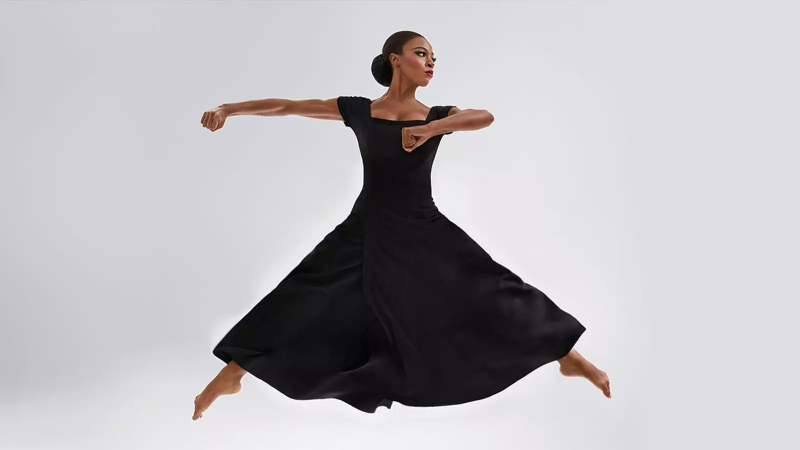
    Leslie steps hibbard nash jpg

    Above: Leslie Andrea Williams in Steps in the Street; photo © Hibbard Nash Photography 

    The excellent program opened with the powerful Steps in the Street, the second movement of Martha Graham’s epic all-female anti-Facist dancework Chronicle. Set to a vibrant, martial score by  Wallingford Riegger, Chronicle premiered at the Guild Theater here in New York City in December of 1936. In her introductory remarks, the Graham Company’s artistic director Janet Eilber called the work “…a dance of determination and resilience.”

    Led by the ever-luminous Leslie Andrea Williams, the women back rather hesitantly onto the stage one by one in silence. As the music commences, the choreography becomes complex (both in steps and gestures); it’s extremely demanding, calling for deep dedication and boundless energy. The Graham women were simply magnificent; their individual beauty and power radiated at every moment. These are women I have admired so much in recent years: So Young An, Laurel Dally Smith, Natasha M. Diamond Walker, Marzia Memoli, Anne O’Donnell, Anne Souder, and Xin Ying…watching them flash across the stage in intricate combinations – or simply walking with tremendous dignity and strength – was an exhilarating experience. New to the Company are Devin Loh and Kate Reyes. At the center of it all, the arresting presence of Ms. Williams glowed like a beacon of feminine strength and grace. 

    MGDC_Jacob_MSherwood-06

    Above: Jacob Larsen, photo by Melissa Sherwood

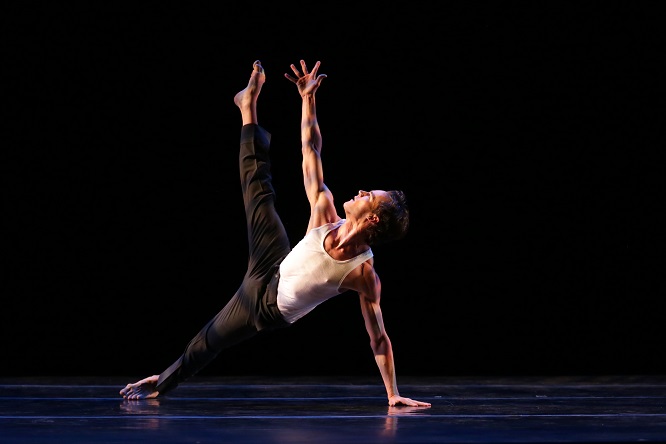
    Sir Robert Cohan‘s solo Jacob takes its name from dancer Jacob Larsen; Sir Robert, who passed away in January of this year at the age of 95, created the work on the dancer remotely during the period of pandemic isolation. Set to Nils Frahm’s Hammers, the dance opens with pulsating music as the dancer, clad in dark trousers and a wife-beater tee-shirt, does a run-about the finely-lit space, pausing from time to time in a pose with arms outstretched.

    Mr. Larsen’s dancing filled the space with the choreographer’s finely-cratfted movement, his face handsome and expressive. Thrice he collapsed to his knees and then magically executed back-somersaults. Combining energy and artistry expertly, the danseur gave a compelling performance. During the solo’s final moments, danced in silence in the fading light, one could sense the audience’s pent up admiration building; and when the lights came up, Jacob was greeted with a great wave of applause and bravos, so richly deserved. “A star is born!”, I scrawled in my program.  

    Natasha lloyd

    Above: Natasha M. Diamond-Walker and Lloyd Mayor in Untitled (Souvenir); photo by Melissa Sherwood

    I was very pleased to see Pam Tanowitz’s Untitled (Souvenir) again. I saw it twice during its premiere performance run in 2019 and had different (but all positive) feelings about it at each viewing. Caroline Shaw’s score was again a key element to my enjoyment of the piece: with elements of Americana, British Baroque, and an echo of hymn “The Lord Is Our Great Shepherd” all brilliantly woven together by the composer. The Graham dancers all looked fabulous in their costumes by Ryan Lobo and Ramon Martin of TOME.

    This time around, Untitled (Souvenir) summoned up for me images of an English garden party sometime in the early days of the 20th century, when Art Deco was all the rage in Europe. Anne O’Donnell and Marzia Memoli are onstage for the work’s silent opening; Marzia unfolds into a beautiful arabesque and then the dancing starts: witty, but very much tongue-in-cheek. Other dancers now arrive: Lloyd Mayor, striking in lounging pajamas; the tall beauty Natasha Diamond-Walker; Lloyd Knight hopping on; the distinctive (and glamorously gowned) Xin Ying; Jacob Larsen (looking fresh after his brilliant solo performance); and Laurel Dalley Smith, who I always love to watch.

    Everyone strikes poses, frequently ignoring the other guests. I was particularly taken with Natasha Diamond-Walker’s ‘character’: her spotlit, silent solo displayed the many mood shifts of a woman at once alluring and insecure. At one point, she even hid behind a piece of scenery…which is something I would do at a party.

    There are duets, fleeting suggestions of romance, a trio of men in the cross-currents of mutual interests. In all, the work is a delight. And again, I must praise Caroline Shaw’s wonderful score, with cunningly accented motifs and a lambent cello solo. Iconic Graham moves and gestures pop up, getting a fresh take in Ms. Tanowitz’s choreography.

    MGDC_Treading_MSherwood-13

    Above: Marzia Memoli and Lloyd Kinght in Treading; photo by Melissa Sherwood

    Following the interval, Elisa Monte’s duet work, Treading, was stunningly danced by Lloyd Knight and Marzia Memoli. These two gorgeous creatures gave their all in a steamy, intimate pairing which demands great strength and control…and perfect timing. In their sleek body tights, Marzia and Lloyd generated a hothouse atmosphere, holding the audience in rapt attentiveness as their bodies folded and snaked thru the slow partnering motifs.
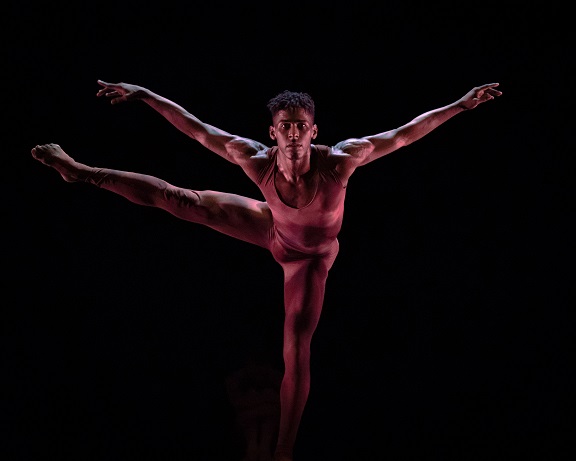
    MGDC_Treading_BrianPollock-05

    Lloyd (above, in a Brian Pollock photo) was mesmerizing to behold right from his opening solo…

    MGDC_Treading_MSherwood-03

    …and Marzia created incredible shapes (Melissa Sherwood’s photo above), and her lush back-bend was a stunning moment. For me, Marzia’s was another ‘star is born’ performance tonight, and the audience seemed in full agreement. 
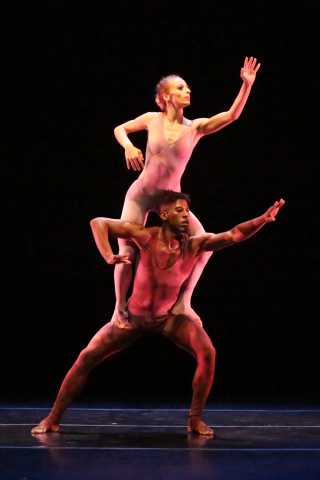
    MGDC_Treading_MSherwood-09

    Above: Marzia and Lloyd in Treading; photo by Melissa Sherwood  

    Treading drew a huge response from the audience, and Ms. Monte joined the dancers onstage for a bow. Roses and champagne to Marzia and Lloyd for their breathtaking performance!

    Anne o lloyd diversion

    Above: Anne O’Donnell and Lloyd Mayor in Diversion of Angels; photo by Luis Luque

    Diversion of Angels had its premiere at Connecticut College in August of 1948. This ballet is set to a wonderful romantic score by Norman Dello Joio; in it, three couples dance duets reflecting on different aspects of love. A Couple in Red embodies passionate love; a Couple in White, mature love; and a Couple in Yellow, the joys of young, flirtatious love.

    Diversion is one of the Graham ballets that places extraordinary demands on all the dancers in the cast. So Young An, Devin Loh, Kate Reyes, and Anne Souder formed a lovely ensemble, their dancing filled with commitment, beauty, and energy. At one point, they are seated on the floor, gazing ardently into the eyes of their cavaliers: a very romantic moment in this ultra-romantic ballet. A newcomer to Graham, Richard Villaverde, made his mark with his handsome presence and deft dancing.

    The three couples were splendid, each in their own way. Leslie Andrea Williams, a vision in White, danced like a goddess, and her partner, Alessio Crognale, was equally impressive. Together, they expressed the couple’s deep sense of quiet ecstasy, secure in their mutual love.

    Anne O’Donnell looks fetching in Red, and she had the perfect partner in Lloyd Mayor. Their dancing, both individually and in duet passages, was vibrant and wonderfully true to the music. At one point, while Lloyd was elsewhere, Anne seems to be tempting Alessio; that’s the thing about passionate lovers: their passion can get directed in a different direction at the drop of a hat.

    Laurel Dalley Smith was like a ray of sunshine in Yellow; Jacob Larsen completed his stellar evening as Laurel’s cavalier. Their choreography includes some daredevil catches and lifts: Laurel flew like a golden bird into Jacob’s arms and was swiftly swept aloft. Brilliant! I just loved watching them, and I must say that Laurel’s performance had the same ‘star-is-born’ feeling as Jacob’s and Marzia’s…the third in a single evening.

    And what an evening it was…it stands as one of the great dance performances I have witnessed in the last quarter-century. Although tinged with regret for two ‘missing persons’ – who I hope are both well along on the road to recovery – the evening was made memorable by the unstinting generosity and mind-boggling talent of these unique and extraordinary dancers.

    ~ Oberon

  • ABT GISELLE: Brandt ~ Cornejo ~ Petersen

    Herman-Cornejo (3)

    Thursday October 21st, 2021 – After watching some clips of Ana Sophia Scheller in a recent production of GISELLE at Cagliari, Italy, I suddenly felt a great desire to see this immortal ballet live again. But…where? I’ve been so out of touch during the pandemic; but then I remembered that ABT were about to begin a season at the New York State Theater; might they be giving giving GISELLE? I went to their website and…voilà! There is was: a whole week of GISELLEs to choose from. Fortune smiles on me yet again. I quickly chose this evening’s performance, drawn by the presence in the cast of Herman Cornejo (photo) as Albrecht. The ticket was ordered, and soon enough I was cozy in my 3rd Ring AA seat and experiencing this ballet which carries so much personal meaning for me.

    The audience, who have been starved for live performances of ballet for a year and a half, were wonderfully attentive and wildly enthusiastic. The orchestra, under David LaMarche’s astute leadership, played the Adam score superbly; we often take the pit bands of our two ballet companies for granted, but both ensembles are loaded with excellent musicians, and tonight the ABT orchestra played this incomparable score very handsomely indeed.

    In the first act, dancers whose characters do not re-appear after the intermission made such fine impressions that I was wishing there were curtain calls in order to show appreciation for their performances. This was especially true of the inimitable Susan Jones, whose Berthe is so touching; her mime is incredibly clear and telling. Isadora Loyola, a vision all in red, was a striking Bathilde. A tall couple were cast in the Peasant Pas de deux: the dancing of Betsy McBride and Jose Sebastian gave the duet a spacious feel. Ms. McBride’s deft footwork and Mr. Sebastian’s cushioned landings made a very pleasing effect.

    Andrei Ishchuk was a tall, impressive Hilarion. As I have often said in the past, Hilarion is the ‘good guy’ in GISELLE; had Giselle trusted her longtime beau and seen thru Albrecht’s deception, her story would have had a different outcome. But…love in blind (and don’t I know it…) At any rate, Mr. Ishchuk did a fine job with the part, including some flashy air turns in his tormented dance in Act II.

    ABT’s first-class Wilis seemed unfazed by the somewhat more limited space of the State Theater stage (as opposed to that of The Met). Their dancing made the ballet’s second act everything it should be. Fangqi Li and April Giangeruso were lovely in their solo passages as Moyna and Zulma respectively.

    Petersen_Stephanie Jade Young

    Stephanie Petersen (above, in a Jade Young portrait) danced Myrthe beautifully. During this week of ABT GISELLEs, this role has gone thru several casting changes: originally, Catherine Hurlin was listed for this evening, and but then Christine Shevchenko’s name appeared in her place. Stephanie was to have danced Zulma tonight, but a pre-curtain announcement made her the Queen of the Wilis instead.

    It was simply delightful to see Ms. Petersen again; in the past I’ve seen her dancing not only with ABT but also for Joshua Beamish, Emery LeCrone, and Claudia Schreier…and every time she’s dazzled me. Stephanie, who returns to the stage from the COVID layoff – and from becoming a mother – is on fabulous form, and her Myrthe was regally danced (both her solos simply entrancing) and dramatically more nuanced than some I have seen: for beneath the icy, commanding presence of the Wili queen, one can still see the young woman that Myrthe once was. Brava, Stephanie!  

    I saw Herman Cornejo as Albrecht in 2008 – I believe it was his ABT role debut – opposite Xiomara Reyes. Read about that wonderful performance here. Tonight, this now 40-year-old prince of the dance triumphed yet again; his Albrecht is boyish of face and figure, compelling in his dancing, and incredibly expressive and impressive in his partnering. The bravura passages were tossed off with élan, and his affectionate dancing with Ms. Brandt in Act I gave way to his soul-searing partnering in Act II, where his remorse was so movingly expressed. The two overhead lifts were simply astounding, and his final parting from the girl who not only forgave him but saved him from his fate, was heart-rending. In a beautiful gesture, during the final bows, Herman sent Ms. Brandt out alone, only joining her after she had faced the avalanche of cheers that descended on her.   

    Skylar-Brandt

    Skylar Brandt’s Giselle can stand proudly in my pantheon of great interpreters of this iconic role. The long-limbed ballerina danced her heart out all evening, and she had the audience with her every step of the way. Her first solo – Giselle emerging from her home on her last day on this Earth – had an immediacy and freshness that was most appealing. Her modesty and shyness with Albrecht were lovingly portrayed, and her big solo – just before her world comes crashing down – featured triumphant yet delicate hops on pointe and remarkably swift turns. The mad scene was that of a dazed girl, unable to comprehend what has befallen her. 

    Dazzling is the only word for Skylar’s dancing of Giselle’s whirlwind turns after being summoned from her grave by Myrthe…this passage evoked a massive round of cheers and applause from the audience. Then, from the very start of her pas de deux with Albrecht, the ballerina cast a poetic spell over me. She and Herman were so moving, the danseur gorgeously partnering her with infinite tenderness. Giselle’s steadfastness, protecting her beloved from the Wili’s curse, was poignantly expressed. I felt a knot in my throat as their inevitable parting loomed. And then the weeping started. 

    ~ Oberon

  • Cellist Zlatomir Fung @ Weill Hall

    Zlatomir-Fung

    Tuesday October 19th, 2021 – One of my favorite musicians, Zlatomir Fung, made his Carnegie debut this evening at Weill Hall, a red-letter event for me. Zlatomir, whose unique name derives from his Bulgarian and Chinese-American parentage, was the first American in four decades – and the youngest cellist ever – to win first prize at the International Tchaikovsky Competition in 2019.

    I first heard Mr. Fung in a Young Concert Artists recital at Merkin Hall in February 2019, and was captivated by his remarkable talent. Read about the evening here.

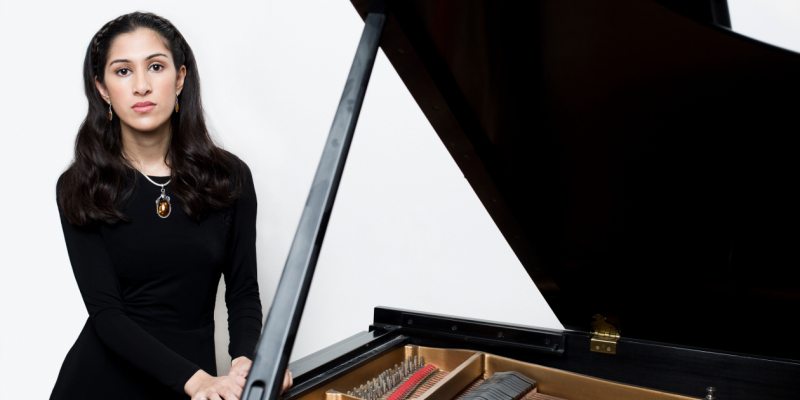
    Mishka

    Joined at Weill Hall this evening by pianist Mishka Rushdie Momen (above), the cellist gave us a marvelous program of classics from the Romantic period. The concert was sold out, and the audience’s rapt attention was a tribute both to the music and to the musicians. 

    Robert Schumann’s Adagio and Allegro, Op. 70, was composed in 1849. The pensive adagio, heart-tugging in its emotional expressiveness, gives way to the lively and passionate allegro, a deft flow of music that sometimes looks back to the opening movement. From note one, I was transfixed by Mr. Fung’s achingly beautiful playing, which drew me – and my fellow audience members – immediately in to the music.

    Franz Schubert’s Sonata in A-Minor, D. 821, “Arpeggione“, was written in 1824, soon after the beloved song cycle Die Schöne Müllerin and shortly before the C-major symphony.

    The sonata’s opening movement is a songful allegro moderato, tinged with a feel of nostalgia. A dance springs up, with a folkish flavor, and a passage of staccati from the cello aligns with sparkling notes from the piano. The movement continues, shifting between sadness and joy…a sort of reflection on the times in which we are living. 

    From its poignant opening, the sonata’s central adagio found Mr. Fung at his most persuasively eloquent as the music carried him across a wide dynamic range, leaving the listener in awe of his sustained, finely nuanced phrasing. Ms. Momen was a ideal companion. This was music-making of the highest calibre.  

    The concluding allegretto is energetic, at times having with a somewhat jaunty feel; both players displayed great  nimbleness, dancing us along to a surprisingly subdued finish. 

    Antonín Dvořák’s “Silent Woods“, Op. 68, No. 5, was – to me – the heart of the evening; subtle dynamic shadings from both players constantly allured the ear, and the astonishing resonance in Mr. Fung’s playing reached the depths of my soul. A dance-like passage gives way to a wave of passion; this subsides only to sweep over us again moments later. Mr. Fung’s glorious descending phrase at the end was thrilling.

    The musicians took only the briefest of breaks between works, but they seemed wonderfully fresh as they returned to the Weill Hall stage for the program’s concluding work: César Franck’s epic and very demanding Sonata in A-major. The cellist Jules Delsart was so moved when he first heard this sonata in its original violin setting that he obtained the composer’s permission to arrange the work for his own instrument. This arrangement was published in 1887.

    The sonata’s opening Allegretto ben moderato joins two themes: one for the cello and one for piano. These themes, especially the cello’s, will return in the following movements. The players seemed to gently bend the melodies, putting a personal stamp on this familiar music. 

    Turbulence rises for the second movement, a dramatic scherzo, in which the restless piano is over-lain with a vivid, dramatic passage for the violin. Lyrical moments, featuring this sonata’s second well-loved theme, come and go. From a veritable feast of notes, passion rises with the great melody sounding forth. Becalmed, deep resonance from the cello lingers briefly, then another rise to a triumphant finish.

    The Recitativo-Fantasia brings back sonic images from the previous movements. There is a feeling of improvisation here which leads in a slow buildup to another haunting melody for the cello. Then the final Allegretto con moto commences with the piano and cello seemingly exchanging thematic thoughts. Things grow turbulent again, and earlier themes resurface, all leading to a vibrant, joyous ending.

    Enthusiastic applause, the audience standing, brought Mr. Fung and Ms. Momen back for an encore: a Nocturne by Alexander Borodin which was unfamiliar to me. This was elegantly played, with appealing dynamic shifts and a spine-tingling tremelo passage from the cellist. As throughout the evening, I loved watching Mr. Fung’s expressive face as he played; he seemed to be communing with Saint Cecilia, all to the greater glory of the music.

    ~ Oberon