Category: Opera

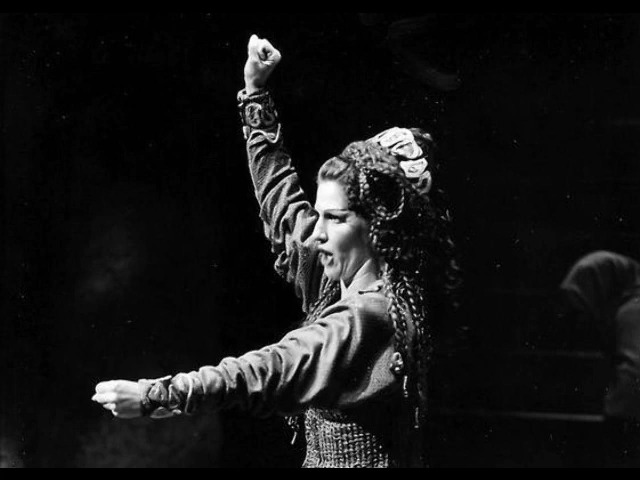
  • Singers: Gilda Cruz-Romo

    (This paean to the Mexican soprano Gilda Cruz-Romo first appeared on Oberon’s Grove in 2008.)

    gilda 1

    In the Autumn of 1969 I decided to move to New York City; I withdrew all my savings from the bank and reserved a room at the Empire Hotel at a monthly rate. The plan, as I sold it to my parents, was that I would find a job and then an apartment. In actuality, all I really wanted to do was go to the opera every night. And that is exactly what I did, forgetting about job-hunting til my cash gave out and I returned home after a few weeks.

    Unfortunately for me, that was the year of the Met orchestra’s strike. But I was not to be deterred: I went to every single performance of the New York City Opera’s Autumn season. Standing room cost next-to-nothing and I already had some favorite singers there – people like Beverly Sills, Maralin Niska, Patricia Brooks, Enrico di Giuseppe, Dominic Cossa and Norman Treigle. Treigle was in fact the focus of that Autumn season since NYCO was mounting a production of Boito’s MEFISTOFELE for him. Carol Neblett was singing the dual role of Margherita and Helen of Troy; but for the final performance of the run a debut was announced: a Mexican soprano named Gilda Cruz-Romo.

    One never knows what to expect from a debut, and that was especially true back then when there was no Internet buzz, YouTube or Facebook that might have provided an inkling or an outright sample of a new singer’s work. In the weeks prior to her debut, I’d actually seen Gilda and her husband Bob Romo several times around Lincoln Center and at the Footlights Cafe; I’d even said hello to her and as a young, unknown singer she seemed genuinely thrilled to be recognized. But what – I kept wondering – does she sound like?

    Her performance was something of a revelation: it was a big, warm lyric voice bordering on spinto. Her tone had an unusual freshness and clarity, with a pliant technique and shining upper register, and the kind of vocal candor that one finds in a new singer who just sings without relying on artifice. The audience took to her at once – the fans sensing that here was an Italianate voice that had real potential in the Verdi & Puccini repertoire. After the great aria “L’altra notte”, Cruz-Romo was warmly applauded but it was in the Helen of Troy scene that she capped her success: in the great concertato “Amore mistero!” the voice sailed out over the ensemble with a gleaming quality and as the line soared up to its climatic top-B the sound seemed to blossom – and Cruz-Romo swept onwards to triumph. I met her after the performance; she and her co-stars Norman Treigle and Nicholas di Virgilio all signed my program:

    gilda 2

    The next afternoon at Footlights a small gathering of fans met and we played over and over again our house tapes of the performance; we must have listened to that ensemble about twenty times. People at neighboring tables were drawn to the sound of her voice. In those days, New York City Opera was a real Company: if you made a successful debut you were invited back and became part of the family and were cast in as much repertoire in your fach as was available. Obviously Julius Rudel knew a special voice when he heard it, so Gilda – as we were by now all calling her – sang there for the next 2 or 3 years until the Met snatched her away.

    And so I saw her in more performances of MEFISTOFELE, as a glowing-voiced Butterfly and a golden-toned Mimi (especially moving) and – in one of her first ventures into the heaviest rep – Amelia in BALLO IN MASCHERA. Of her City Opera performances, my very favorite was her Tosca in 1971:

    “…Gilda surpassed my highest expectations as Tosca. Rarely has this role had such a balanced combination of: a beautiful face, fine stage presence, sincere acting, fine diction and GORGEOUS spinto singing. In the first act, many phrases of great beauty. She looked lovely, young and excited. In Act II she sang superbly, her high Cs large and luminous. The dramatic utterances were all convincingly delivered. As she neared the end of her marvelously phrased “Vissi d’arte” tears welled up in her: one sob at the end, straight from the heart, was a perfect effect. She carried off the murder and the acting demands of the closing of Act II with excellent control. Maintaining her high level in Act III, Gilda ended the opera on a stentorian top-B and took a death-defying leap of ten feet! She was given a tumultuous ovation eminently deserved. Backstage she was literally mobbed – as big a crowd as I’ve seen at NYCO. After edging my way through the throng we hugged and she kissed me so many times. It took a few moments before either of us could speak…”
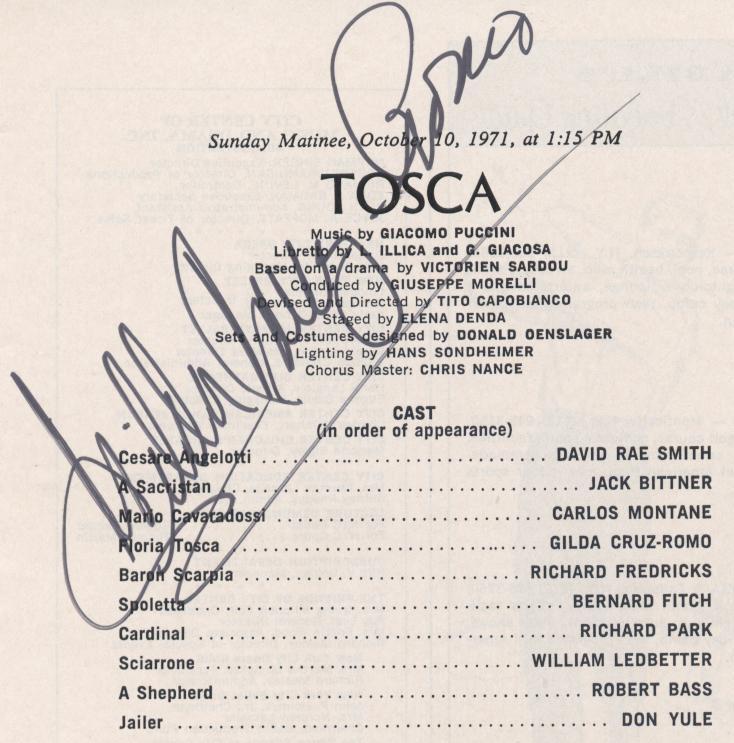
    gilda tosca

    When things calmed down and we got to discuss the performance, she told me how petrified she was of taking that final jump. The production was designed so that Tosca’s suicidal leap was visible to the audience as she fell about a dozen feet before a parapet blocked her landing-mattresses from view. She had not had a stage rehearsal and she said she got to the edge of the platform and realized in a split second how exposed her descent would be; she crossed herself and took the plunge.
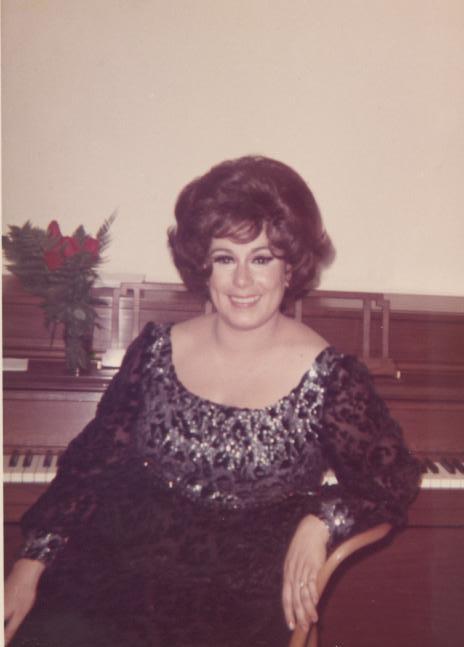
    gilda 4

    It was inevitable that a voice like Gilda’s would be both wanted and needed at the Met. In 1970 she entered the Met National Auditions and was a finalist, singing “La mamma morta” from ANDREA CHENIER. On May 8, 1970 she debuted with the Company on tour in Atlanta singing that same opera. In December of the same year she debuted at the Met proper as Butterfly, beginning a career there that stretched into the mid-1980s and encompassed over 160 performances.
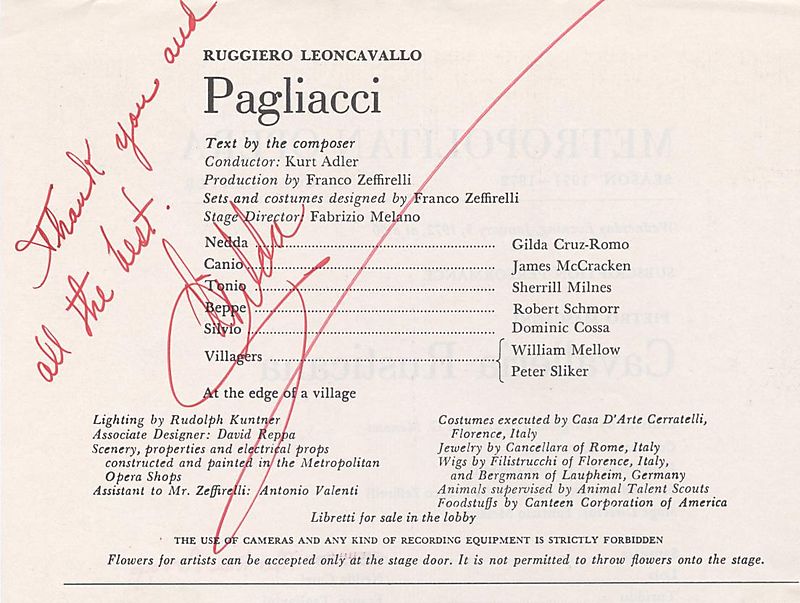
    gilda pag

    I saw her at the Met for the first time as Nedda in PAGLIACCCI opposite the frighteningly intense Canio of James McCracken. Gilda sang so beautifully, especially in the sensuous duet with Silvio (Dominic Cossa): “…great crescendos from tiny pianissimos...” It was after this performance that she and I were photographed together backstage. (OK, no comments about my tie…or my hair! Remember this was the 70s).
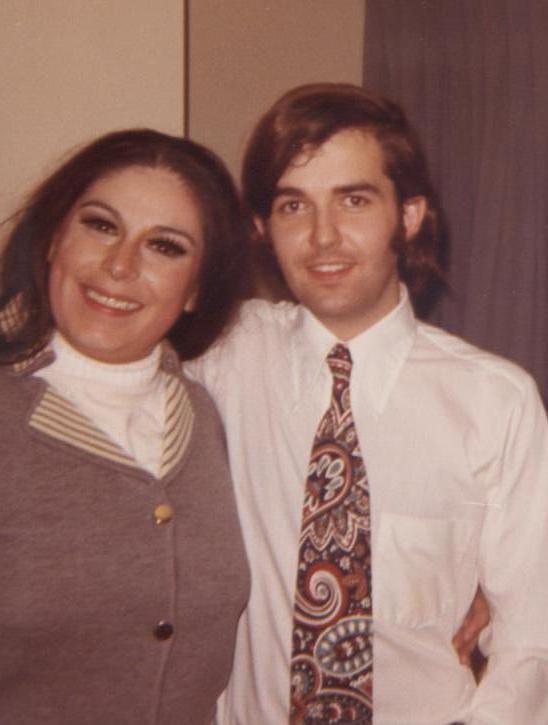
    gilda 3

    Then came a hiatus: I moved to Houston for a while and only kept tabs on her via the broadcasts. But after a while I was lured back to the Northwest and we had a beautiful reunion at a matinee of AIDA where she sang opposite Franco Corelli:

    …Gilda was in complete command of this arduous role every step of the way…there were phrases upon phrases of golden Verdi singing: her deeply-felt prayer at the end of ‘Ritorna vincitor’ and the miraculously spun high pianissimi in ‘O patria mia’ and even more incredibly on ‘Fuggiam, fuggiam…’ as she lured Corelli into her escape plan. She was able to healthily dominate the big ensembles and then turn around a float effortlessly in the tender ‘O terra addio…’  Really top-class Verdi singing!”

    Gilda also sang in a revival of MANON LESCAUT and sounded lovely despite being cast opposite a very mediocre tenor. Her ‘In quelle trine morbide’ was poignantly phrased, mirroring Manon’s longing for the simple, true love of her Chevalier des Grieux. (Photo: Bill Hendrickson).

    Gilda Cruz-Romo – In quelle trine morbide – MANON LESCAUT -Met dress rehearsal 1973

    Then several things happened which kept me from seeing her onstage at the Met; I moved to Hartford with TJ and for a couple years we were basically broke. Trips to New York were infrequent and most of the time ballet trumped opera.  Then too, Gilda’s international career was in full bloom; it seemed she sang everywhere and sang the most taxing repertoire – I think I once read that she ended up singing Aida five-hundred times! It seemed like whenever I was at the Met, she was somewhere else.

    gilda desdemona

    Thus it was a special pleasure when she came to Hartford and sang Desdemona in OTELLO (above), one of her most attractive roles. In 1979 she was Desdemona on a Met telecast opposite Placido Domingo and Sherrill Milnes.

    In 1987 I saw Gilda onstage for the final time, as Cherubini’s Medea at Bridgeport, Connecticut. The declamatory style of many of the character’s utterances didn’t suit her so well – she was always a melodic singer – but the voice was still powerful and expressive.

    I met her again a few years ago when she was honored by the Puccini Foundation. I handed her the photo of the two of us and it took her only a half-second to realize who I was…I have changed MUCH MORE than she has!  We keep in touch now; she lives in San Antonio and I was tickled to read recently that she keeps up her deep-sea fishing and is also active in a local Texas group which matches senior citizens with canine companions:
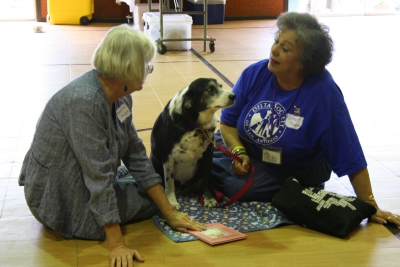
    gilda 5

    It’s been a long time since that day in Footlights soon after her NY debut that I pestered her with a million questions and she was unbelievably kind and patient. Once I wrote to her after she’d sung the title role in ANNA BOLENA in Dallas expressing my dismay that I couldn’t have been there; a few days later I was astounded to open the mailbox and find she had sent me a tape of the performance. That’s the generosity of spirit that Gilda always shows. So now, with love and gratitude, I’ve tried to put my admiration for her into words.

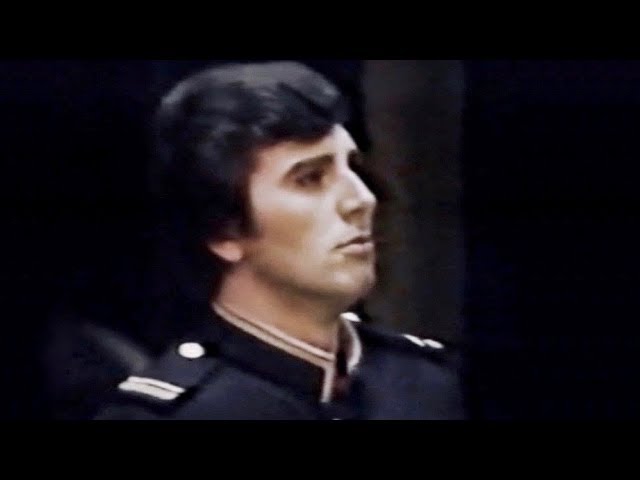
  • Michail Aleksandrovich ~ “Cielo e mar"

    Michail Aleksandrovich c

    Latvian tenor Michail Aleksandrovich (above) sings “Cielo e mar” from Ponchielli’s LA GIOCONDA

    Listen here.

  • Teresa Stich-Randall ~ Vier letzte Lieder

    Stich-randall c

    Teresa Stich-Randall (above) sings Strauss’s Vier letzte Lieder, with the Radio-Symphonieorchester, Vienna, conducted by László Somogyi. The recording dates from June 1964.

    Listen here. 

    In November of 1963, I attended my first-ever performance at the Metropolitan Opera (at the Old Met!). It was DON GIOVANNI, and Ms. Stich-Randall sang Donna Anna.

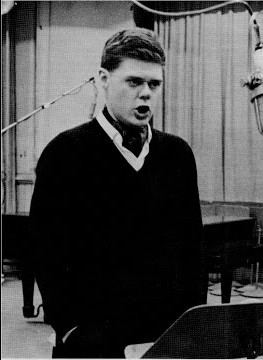
  • Donald Bell ~ BELSHAZZAR’S FEAST

    D bell

    Bass-baritone Donald Bell (above) sings Walton’s BELSHAZZAR’S FEAST with the Netherlands Radio Choir and the Radio Chamber Orchestra, broadcast live from the Concertgebouw in Amsterdam in December of 1965. Hugo Rignold conducts.

    Listen here

  • Hadley/Christin/Titus ~ BUTTERFLY (scene)

    hadley

    Jerry Hadley (above), Judith Christin, and Alan Titus in a scene from Act III of Puccini’s MADAMA BUTTERFLY. The performance, by the New York City Opera, was televised in 1982 and is conducted by Christopher Keene.

    Watch and listen here.

  • Singers: Maralin Niska

    (This article about the great singing-actress first appeared on Oberon’s Grove in 2008; it included many more photos, but for this revival, I’ve chosen a few special favorites.)

    maralin fave

    Back in 1968, I was at a performance of CAV/PAG at NYCO and the soprano singing Nedda caught my fancy, not just because she was slender and sexy and moved with a natural command of the stage, but also that at one point she stamped out a cigarette with her bare foot. I could not think of many divas who would do that.

    I could write a book about Maralin Niska; her performances are among the most potent memories I have of that heady time in the 1960s-1980s when so many great singers played nightly at both of New York’s opera houses.

    Her voice was unconventional; an enigma, really. I would not call it beautiful though she could convince you that it was utterly gorgeous in certain phrases. Her technique was based very much on a chest resonance which gave her unusual power; while the timbre of her voice was dark, the thrust of it was very bright. When I think of other great singing-actresses I have seen – Rysanek, Silja, Behrens – Niska stands firmly in their company and she was the most versatile of them all. She was a striking woman; I remember her being referred to as the Rita Hayworth of opera.

    In 1969, while the Met was closed due to a strike, Maralin was alternating Mozart’s Countess Almaviva with the role of Yaroslavna at NYCO. Two more dissimilar roles would be hard to imagine but she was utterly at home in both. Her Countess had an almost tragic dimension as she suffered the indignations her husband heaped on her; she used her perfectly supported piano technique to great effect in Mozart’s music. As Yaroslava, left by Prince Igor to run the unruly kingdom while he is off fighting Khan Kontchak, Niska sang a hauntingly hushed lament for his absence. But when the rebels set fire to the palace, Maralin, surrounded by the thundering chorus of boyars, let fly with an unscripted high-D which was as thrilling as any note I’ve ever heard in an opera house.

    As Marguerite in FAUST, Niska was anything but a shrinking violet. Faust was the key to her sexual awakening and when he bade her adieu in the Garden Scene, Niska broke into sobs of frustrated passion. Her overwhelming power in the final trio, and her devastating rejection of Faust at the end literally ring in my ears even today.

    The vocal and dramatic strokes Niska used in her canvas remain vividly alive for me all these years later. In BUTTERFLY, kneeling with Suzuki and Trouble with backs to the audience as the Humming Chorus is intoned and evening falls, Niska slowly looked over her shoulder to the audience with an expression of quiet fear: Butterfly’s unshakable faith would not pass the test. In TRAVIATA, having been asked by Germont pere to give up his son, Niska sustained the opening of “O, dite alla giovine” with a remarkable hushed tone and drew no breath before continuing. With that phrase, Violetta’s fragile world comes undone. No other soprano has done it quite the same way. But I went backstage afterwards and said, “Maralin! That NOTE!” “Which note?” “The note before “Dite alla giovine!” “Um…yes?”  “You held it so long and so quietly and then went into the phrase without breathing!” “I did?”

    She sang Tosca, her contempt for Scarpia expressed with icy power. After she had murdered him, she knelt by his corpse and sang “E morto…or gli perdono!’ and with a swift stroke buried the blade of the knife into the stage about an inch from the baritone’s head. Then she sang Mimi, and I thought she’d be way too cold for that. But she told an interviewer: “I put on the costume and I became Mimi.” Using portamenti and her miraculous piano, Niska did indeed become the pathetic seamstress.

    Niska was also singing at the Met by now, in VESPRI and TOSCA among other operas. She was wonderful and wove her own magic into the existing stagings.

    niska medea

    Above: Maralin as Medea

    NYCO mounted Cherubini’s MEDEA for her. This complex role, sometimes sung as a verismo shrew, was more classically structured by Niska who seemed to realize that vocally Medea is more akin to Donna Anna than anything else. Moreover, she convinced me that Medea was “right” and that her horrific murders of Glauce and of her children were perfectly natural. I never saw Callas in opera, but it would be hard to imagine she was any more potent a Medea than Niska.

    At NYCO she continued in her Mimi mode with a beautifully expressive Manon Lescaut.  Then she took on Salome, having just the ideal combination of silver & blood in the voice. I was dazed by the mesmerizing, obsessive power of both her singing and her portrayal. The art deco sets were superb, and Niska ended her dance in a shimmering body stocking. In the end, as the soldiers crushed her, Maralin let out a chesty groan and writhed for a moment before death took her.

    Then came one of her most delightful and unexpected triumphs: the Composer in ARIADNE AUF NAXOS. This is my favorite opera and I just loved NYCO’s production which seemed to capture the two colliding worlds to perfection. Maralin sang the idealistic Composer, who is finally forced to deal with the realities of life in the theatre, with a flood of dark, soaring tone and vivid dynamic control. The Composer disappears at the end of the Prologue, but in this production, Niska entered the pit and “conducted” the opening of the opera; then Julius Rudel, already seated next to the podium, took over after several measures.

    TJ and I had moved to Hartford and were stunned one night when we went to see TRAVIATA at the Bushnell to find that Maria Chiara had cancelled and Maralin was replacing her. “Let’s go leave her a note!” suggested TJ. Rushing to the stage door, we came upon Maralin pounding on the “wrong” door, trying to get into the theatre where she’d never performed before. She was thrilled to see us, not least because we were able to show her the right door.

    FANCIULLA DEL WEST was another perfect Niska creation; she seemed just to “become” this unpretentious, good-hearted Wild West woman…not above cheating at cards to win her man.

    TURANDOT was a role we never got to see her do; apparently NYCO asked Maralin to learn it for the LA tour, promising her performances in NYC afterwards. The promise was broken. But I have a tape of the LA performance and it’s pretty impressive.

    Maralin sang the unlikely role of Rosalinda in FLEDERMAUS and, at Carnegie Hall, the Latvian national opera BANUTA in which her steely top notes and powerful chest voice were thrillingly on display.

    maralin em

    Above: Maralin as Emilia Marty

    Niska’s greatest triumph, though, was in the Frank Corsaro production of Janacek’s MAKROPOULOS AFFAIR. This fascinating story of a 342-year-old woman who has spanned the decades under various names (always using the initials E.M.) thanks to her alchemist father’s potion for eternal life has been fashioned by Janacek into a vivid drama which centers on Elina’s need to find the lost prescription: she needs a dose to extend her life another 300 years. Ruthlessly manipulative, she manages by seduction to attain the formula only to decide in the end that she is weary of life. Corsaro told the story of the opera onstage while overhead, films of episodes from EM’s past are shown on multiple screens. Maralin appears in the films in various period costumes, using and abusing her sexual fascination to get what she wants from her various lovers. Onstage there is a nude scene where EM removes her dressing gown to show Baron Prus the scars inflicted by one of her sadistic lovers; few divas besides Niska have the body to appear nude onstage. It seemed entirely natural. In the end, Elina offers the magic formula to the young Christa who burns it; spontaneously all the screens burst into flame and out of the darkness, EM’s enigmatic chauffeur comes to bear her away into the smoke. The ovations Maralin received for these performances rivalled any I have encountered in the theatre.

    I saw her onstage for the last time as Elisabetta in MARIA STUARDA; she was still singing with amazing force but NYCO had decided they didn’t need her – even though the latest revival of the Janacek had been even more powerful than the original run. But she threw herself into the Donizetti, brazenly sailing in and out of registers and treating Maria (Ashley Putnam) with palpable disdain. After signing Maria’s death warrant, Elizabetta turns on the hapless Leicester and orders him to be witness to Maria’s execution. Launching her final stretta with almost gleeful vengeance, Niska propelled the scene to its climax and struck a brazen high E-flat which rang into the house (and onto my tape recorder!)

    She moved to Santa Fe and we kept in touch. Then one year my Christmas card came back marked “No such number”. I wrote again: same thing. I feared we had lost contact.

    I thought about her all the time; and the power of thought worked. Shortly after I moved to NYC, I was working one morning and down the aisle Maralin came walking. She was in town with her husband Bill Mullen for a NYCO “family reunion”. We had the most amazing conversation and established why my letters hadn’t reached her. Three years later she was in town again and came in expressly to say hello.

    Now I’m re-reading what I’ve written. How feeble it sounds; I don’t think l’ve begun to express the impact of her performances. My diaries have much more detail, but even they seem very pallid. It’s the impressions she made on my mind or my…soul…that can’t be defined. The diaries, the old tapes, the photos, the programmes, notes she sent me. No one could grasp from any of this what Maralin Niska really meant to me. But I wanted to try to express it anyway.

    niska
    niska derksen wozzeck

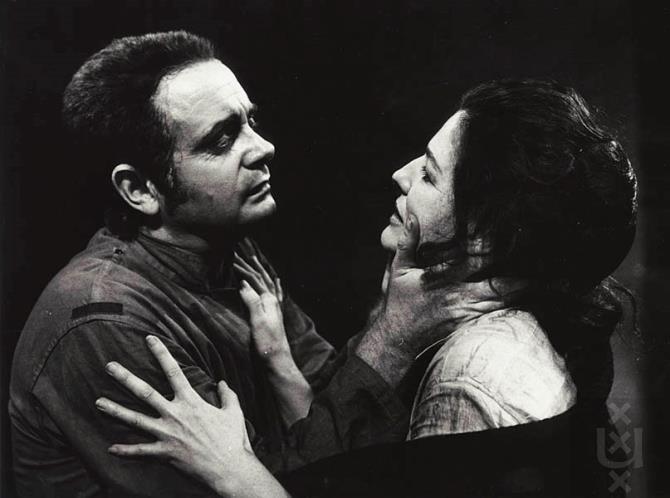
    Above: with baritone Jan Derksen in WOZZECK, one of Maralin’s European triumphs

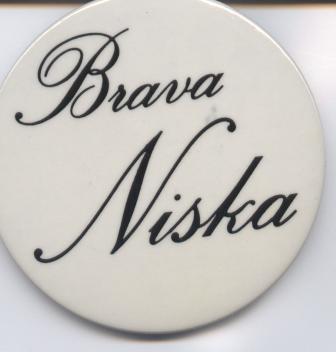
    niska button
  • Wendy & Pauline

    (Imported from Oberon’s Grove, a 2007 story of one of my most memorable days as a blogger: a chance meeting with New York City Ballet’s Wendy Whelan and Pauline Golbin)

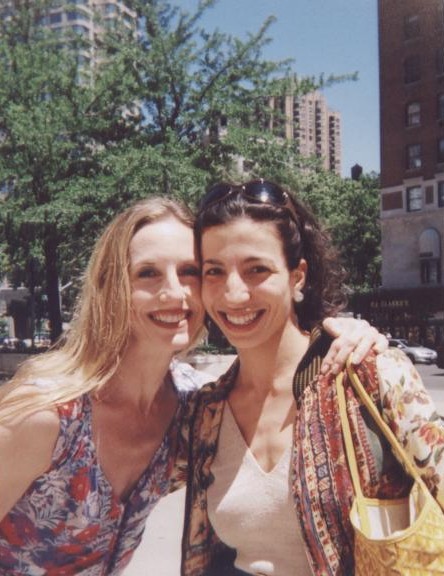
    wendy pauline c

    This was my big opportunity as a blogger: having Wendy Whelan and Pauline Golbin and my camera all in the same place at the same time. To be honest, I almost always have my camera with me but I rarely work up the nerve to ask any of the dancers if I can take their picture. However, it was such a gorgeous day (6/23/07) and the girls were in such a great mood that I said ‘what the heck’ and asked them. I just love the results, if I do say so myself. And I will tell you that these two dancers have an awful lot to do with not only my devotion to NYC Ballet but the way I have come to watch the Company.

    After going to NYCB pretty often in the late 1970s, I sort of wavered; I was really into opera, and whenever I would come down to NYC from Hartford, opera was my main priority. It’s too bad because every time I did squeeze in a visit to the State Theatre I just loved it. I missed entire careers there, and dancers I really admired came & went without me being aware of it.

    In 1996 I was dating a Japanese guy named Toshi who lived on the East Side; he was a textile designer with an incredible eye. One night on a whim, I took him to NYC Ballet. Walking home across Central Park, I asked him if any of the dancers had made an impression. “Wendy Whelan. Can’t you see she is on a whole other level from the other dancers?” I had seen her dance a few times and always really liked her. So we started going pretty frequently and I realized he was right. There seemed to be something almost profound about everything she did – not profound in a weighty sense but in a way of making you feel and think about what she was doing as being more than just dancing.

    After I moved here in 1998 there was a season when most of the principal ballerinas were either sick, injured, or pregnant. Wendy, along with Yvonne Borree and Miranda Weese, was carrying the whole season and since there were lots of ballets that Yvonne & Miranda didn’t do, Wendy ended up dancing at literally every performance, and often two – and sometimes three – ballets a night. Far from getting tired of her or craving a different face and body, I became addicted. Wei and I went more and more frequently, just to see what she would do. We fell under her spell. Going so often simply became a habit, and when  the other ballerinas rejoined the ranks we found that Wendy had managed to get us hooked on the whole scene.

    It was Pauline Golbin who turned me into a corps-watcher. And again it was Toshi who noticed her. I must say that until 1996 I didn’t pay much attention to the corps. I knew they were there and that Mr B had given them plenty to do on any given night, but I couldn’t tell one bun-head from the next, and the boys I hardly ever even noticed. So after one piece, Toshi asked me: “Who is that girl with the black hair and the wonderful smile?” Hmmmm, well there’s about a dozen of ’em onstage; I couldn’t answer his question. We came out the side doors and this very girl dashed past us in a striking coat, scarf,  and hat.”That’s her! So chic!!” said Toshi. So next time we went we started looking for her; it became a ritual to find this girl onstage. Then, during an intermission, we scanned thru the season booklet and found her: Pauline Golbin.

    By watching for Pauline, I started  to notice how demanding the corps work was at NYCB, and that they weren’t just a mass of anonymous bodies but beautiful/handsome people who were doing amazing things. I began matching names to faces and hoping to see certain dancers get some of the featured roles. I began watching the corps much more intensely, and it really gave the performances a whole other dimension. There have been many nights when I have gone to a performance just because someone from the corps that I like had landed a solo.  Of course, I love to see them get promoted though I realize not everyone can be a soloist. Though many of them should be.

    wendy pauline 2 copy

    Pauline is famous for her hats, and I said something about it…and she reached into her bag and pulled one out. In the book ROUND ABOUT THE BALLET, Wendy was asked: “Is there anything people don’t know about you that you’d like them to know?” and she replied: “I’m a funny person! I think I come across as so serious in ballets. But I’m a pretty silly girl. I don’t know if people realize that.” So it didn’t surprise me when she started cutting up and trying to get under Pauline’s hat.

    As they strolled into the theatre, I really felt like I’d truly been in the right place at the right time.

  • Remembering an ABT BAYADERE from 2014

    (On Thursday May 29th, 2014, I experienced a remarkable performance of LA BAYADERE at ABT. I’ve brought forward part of my Oberon’s Grove review, the better to remember it. The photo is from the Mariinsky production of the same ballet.).

    viktoria-tereshkina-and-vladimir-shklyarov-3

    “Vladimir Shkyarov completely won the Met audience’s collective heart tonight; enthusiastic applause greeted his solo passages, and his partnering of Ms. Tereshkina was simply exquisite. Shklyarov’s dancing was marked by big virtuosity, his jumps sublimely floated and grandly elevated, his turns rapid and sure. His portrayal was marked by great tenderness for Nikiya and the despair of helplessly watching his beloved expire, forced by decorum to turn his back on her anguish. Remorse and guilt, and then the elation of finding Nikiya again among the Shades, were finely depicted by the danseur; by the time he stands before the Brahmin to be married, Solor is nearly mad, haunted by visions of his beloved. 

    Ms. Tereshkina was everything one can hope for in a Nikiya; her dancing – all rooted in a stupendously strong technique – was refined, spiritual, and deeply musical. Forming a particularly resonant relationship with her partner, the ballerina reveled in the tenderness and ecstacy of their mutual love. In the solo danced before the betrothed Gamzatti and Solor, Tereshkina’s lithe and fluid body revealed the temple dancer’s sense of both duty and humiliation in a finely nuanced performance. In the Kingdom of the Shades, the ballerina attained a remarkable level of technique and artistry, re-affirming the great admiration I had felt when I first saw her dancing with the Kirov. She made a stunning spirit in the final scene as she drove the bridal couple asunder.

    When the final curtain fell on Nikiya and Solor ascending the stairway to heaven, the audience commenced an appreciative ovation that lasted longer than anything I’ve heard at the opera or the ballet in recent seasons. Tereshkina and Shklyarov bowed together several times, and even after the house lights were up and the gold curtain definitively closed, they were called out yet again. The audience clearly wanted solo bows, but the two stars remained resolutely a couple throughout the ovation.

    One especially lovely moment during the bows: Tereshkina came to the very edge of the stage and gave a deep curtsey to the musicians in the pit, thanking them with a sweeping gesture.” 

  • I Lived With Madonna!

    kenny madonna

    (Another personal story from Oberon’s Grove: the story of Kenny and me.)

    My best friend Richard and I were living in a walk-up near Trinity College in Hartford in 1985, and we did our grocery shopping at Stop & Shop. Working there as a cashier was a very handsome and unusual-looking boy with red hair and Spanish eyes. Both Richard and I were quite taken with him but he was totally aloof: never made eye contact when he was ringing up our groceries, and if we asked him a question he would give a one-word, dismissive answer. However, that didn’t deter us from always choosing his check-out lane. Then one day he disappeared. I assumed he had found a better job.

    kenny 1

    I was right. He suddenly appeared in the cafeteria of the building where I worked. I managed to find out that he was working in a medical billing office which was renting space from my company. My one-sided infatuation suddenly took on a new aspect when – to my amazement – he began making eyes at me during lunch hour. My co-workers were instantly aware of what was going on, and they would always arrange for me to have a seat at the table with a clear prospect for flirting with the mystery boy. This went on for a couple of weeks; Franky, the Hispanic boy from the mail room who I was fooling around with, referred to the interloper as Peppermint Patty. Everyone seemed to be watching and waiting for something to happen.

    Then one afternoon Pam, the adorably mischievous little Black girl who did our filing, whispered in my ear: “You know that boy you like?  He’s upstairs at the soda machine!” I never moved faster in my life. I raced up the stairwell and found him coming down.  “Hi! I’m Philip.” “I’m Ken.” Then I shoved him up against the wall and started kissing him. He liked it. “How old are you?” “19,” he lied. I was thinking more like ‘barely legal’. Turns out he was 18.

    He came over that night and in between doing what boys like to do we found out about the complications that we would be dealing with in the weeks ahead: his girlfriend, my boyfriend, his mother. Extricating ourselves from these situations was a long and frequently agonizing process. Many nights we had no place to go and spent hours driving around in his car, Miss Malibu, listening to Madonna singing La Isla Bonita. Like all young people at that time, he adored Madonna. I got used to her, for his sake. We went to see DESPERATELY SEEKING SUSAN, blatantly making out in the darkened cinema.

    Sparing you the novel-length description of our travails, it’s enough to say we ended up finally freeing ourselves from our involvements with Carmen and Felix, and that his mom eventually came to accept me as a second son.

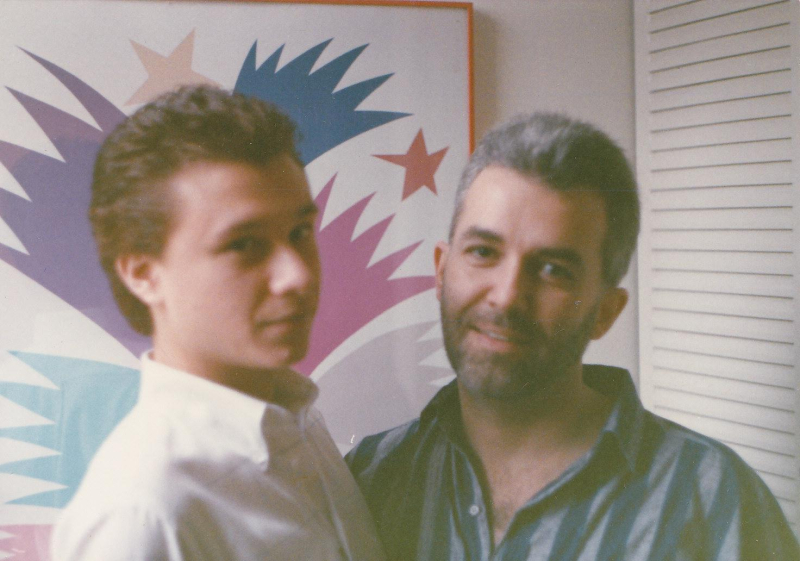
    kenny and me

    We set up house together in a very nice apartment in Downtown Hartford; for the first few weeks we holed up there, delighting in being alone together in our own place. The only thing I could cook was spaghetti with sauce from a jar. We ate that on so many nights and went out to our favorite haunt, Shenanigans, two or three times a week. Mostly we just talked and talked and talked. Kenny told me his story, which I found extremely moving. Abandoned in a hospital lobby in Columbia, South America as a baby (he has a white scar on his ankle where the I.V. was inserted that kept him alive) he was adopted via a Catholic orphan-placement organization by parents in Maine of Canadian descent. His adoptive father was a slacker, but Little Mama – as I came to call her – worked tirelessly at a manufacturing job to make a life for herself and her son. That he turned out so well is a credit to her energy and devotion.

    In my vanity, I loved introducing him to my friends; having a twenty-years-younger lover was a novelty for me and I was feeling rejuvenated. In truth though, neither one of us was ready for a committed, monogamous relationship. I still had a vast supply of wild oats to sow and he, newly exposed to the gay world, was a bit like a kid who had never been inside a particularly yummy candy store before. Knowing that young people need to be amused, I started taking him out to Backsteet. Hartford had a limited dance-club scene: Backstreet was pretty much it. There were flirtations, jealousies, three-ways. For a brief period we lived in a stormy menage a trois with a Portuguese boy. The one person who had the potential to be a major part of our life, Freddy, contacted viral pneumonia soon after we’d met him and died within three days.

    For all the turmoil in our socio-sexual lives, we stuck together. We basically liked each other and got on well despite the 20-year age difference.

    kenny 3

    We spent lots of time in Provincetown where the beaches, bars, jacuzzis and rooftop sundecks seethed with erotic possibilities all day and night. Following an afternoon on the dance floor at The Boatslip we would settle in for a long dinner at our favorite place, Gallerani’s. One of the many memorable evenings we spent in P’town was attending the local premiere of Madonna’s TRUTH OR DARE.

    We took in his cat, Boo, from his mom’s menagerie and moved to a lovely townhouse in the West End. Madonna’s poster was up, her music playing frequently. On one trip to P’town he played the DICK TRACY soundtrack about 1,000 times; I really didn’t mind. I’d gotten used to living with Madonna. 

    We sunbathed in the park, trekked to Jacob’s Pillow, adored Emmylou Harris, shopped at Macy’s in New Haven, and danced on weekends. He spent more and more time with his best friend Danny. I’d go down to New York City for opera and ballet knowing he was home getting into mischief. We sort of had an understanding…but, like most understandings, this one started to wear thin.

    When the owner of the townhouse wanted it back, we moved for the last time together to a nice but ordinary place. I nursed him thru a bout of illness, and we still sometimes referred to ourselves as lovers, but after six years of togetherness (with a couple breaks) we each had our own life and we were becoming something of a hindrance to each other. We couldn’t form relationships with other people when we were still tied to each other domestically. I had met and fallen in love with a Chinese callboy in NYC and was obsessed with all things Asian. Having enhanced his body at the gym, Kenny was quite the object of desire. Things had reached a turning point.

    After quarrels and edginess started to overwhelm the good times of our life together, we decided to live separately. He had expanded his social circle and after a while he moved to Philadelphia (leaving me bereft, though I never told him that) and eventually to Fort Lauderdale. I took a beautiful, huge old top-floor apartment in the West End, biding my time and knowing that by my 50th birthday I really needed to escape to Gotham. I did, and Kenny was among the guests at my 50th birthday lunch in the Village.

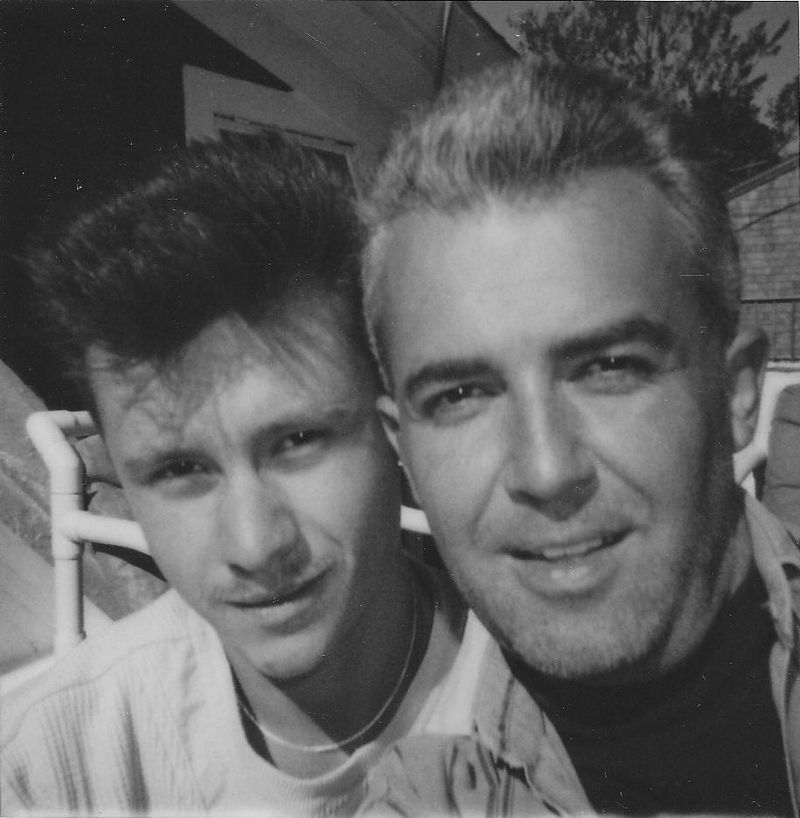
    kenny and me 2

    One of my favorite pictures of Kenny & me, on the roofdeck of the Normandy House in P’town. I can imagine him saying: “Oh, my god…my hair!”  It was very stylish at the time, however.

    We have remained good friends and though we haven’t seen each other for years, we keep in touch and we understand one another in ways than only former lovers truly can. Whenever I hear Madonna’s voice, I remember our times together. In true romantic fashion, I have forgotten all the bad things between Kenny and me, and can best remember us driving around on those first unforgettable nights, when he would play ‘La Isla Bonita‘, singing along and changing the words: “…I fell in love with San Felipe…”

  • It’s All Because of Renata Tebaldi

    (One of my earliest long articles for Oberon’s Grove: the story of how my obsession with opera started.)

    tebaldi copy

    In a way, I could say that I am where I am today because of Renata Tebaldi. It’s simplistic, and of course there are a million things which influence our choices as time goes by. But it was Tebaldi who made me fall in love with opera; it was opera that brought me to New York City on my own for the first time in 1966;  it was in New York City that I – the proverbial small town boy – discovered that I was not the only male in the world attracted to other men; it was a fellow opera fan who introduced me to New York City Ballet; it was my devotion to opera and ballet that kept me coming to NYC from Connecticut for 22 years – and spending a fortune.  And finally it was the desire to have opera & NYCB at my fingertips that finally got me to move here in 1998. And once I did, I met Wei. So, I owe it all to Renata!

    It was on January 12, 1959 that I happened to watch the Bell Telephone Hour; Tebaldi sang excerpts from MADAMA BUTTERFLY. I know the exact date because the performance has been released on video. This was not my first exposure to operatic singing; my parents had some classical LPs in their collection and there were snippets of Flagstad and Lily Pons on these. But nothing that moved me or drew me in like watching Tebaldi’s Cio-Cio-San. That was the beginning.

    My parents bought me my first 2-LP set of opera arias; I found out about the Saturday afternoon Met broadcasts; I subscribed to OPERA NEWS; I wrote fan letters to singers I heard on the radio. I used my tiny earnings from my paper route and working in my father’s store to buy a few more LPs. I plastered a big bulletin board in my room with pictures of singers. My parents took me to my first opera at the Cincinnati Zoo. Then they took me to the Old Met.  But it was a lonely obsession; I had no one to share it with.

    In 1966 when the new Met opened, I was allowed (freshly out of high school) to make my first trip to NYC alone. I got a room at the Empire Hotel and timidly went across the street to Lincoln Center.

    tebaldi ticket line c

    There I found a group of people sitting outdoors along the North side of the Opera House. “Sign in and take a number,” said a girl who was minding the line. Somewhere I still have my tag; I think I was number 57. I sat down and soon people started talking to me; I suppose to the many gay men the sight of a novice seventeen-year-old must have been tantalizing even though I was pretty ordinary looking. But people were so nice: what operas did I want to see? What singers did I like? After 5 years of having no one to talk about opera to, I thought I was in heaven. I shyly mentioned liking Gabriella Tucci, who I had seen at the Old Met. So the Tucci fans gathered and we talked about her.

    I ended up not leaving the line for 3 days and 2 nights. The late summer air was comfortable; we slept (or stayed awake) on the pavement. We sang thru complete operas: we sang all of TOSCA and someone jumped into the (empty) fountain at the end. People gave me soda, a few of the girls brought home-made baked goods. Pizzas were ordered, and Chinese take-out. Someone smuggled out a recording of a rehearsal of FRAU OHNE SCHATTEN  – a work most of us were totally unfamiliar with. I was devastated hearing the voice of Rysanek in that music for the first time. Franco Corelli served coffee one night; Franco Zeffirelli came out and got in someone’s sleeping bag. News filtered out about the new productions that were being rehearsed. There was a flurry of excitement when Leonie Rysanek was spotted at the far end of the Plaza. The crowd, now hundreds strong, surged around her. In a panic, she gestured for security guards from the House to come to her aid. Once inside, she turned and waved to us.

    Finally the box office opened; I got my tickets: TURANDOT, TRAVIATA, GIOCONDA, ANTONY & CLEOPATRA, RIGOLETTO. I had made my first friends in NYC; I had addresses and phone numbers of people who would send me tapes and get more tickets for me.

    Grubby and ecstatic, I went back to the Empire. My pants were slipping down: I hadn’t been eating. I took the bus back to Syracuse, asleep. My parents picked me up and took me home. I fell asleep in the bathtub.

    Soon after, I was back in NYC for the performances I had bought. For some strange reason, I had also stopped by the New York State Theatre and bought a ticket for their Opening Night of Handel’s GIULIO CESARE. Beverly Sills was singing Cleopatra. I had heard her already when NYCO toured to Syracuse and she sang Rosalinda in FLEDERMAUS. The CESARE was of course Beverly’s “big bang”.

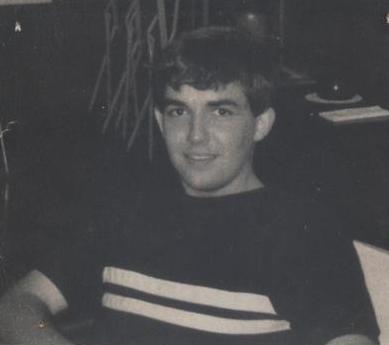
    This was what I looked like during that summer of 1966; I loved this t-shirt and wore it literally every day until it wore out. My sweet Jeanette says I was “embedded in it.”

    tebaldi me