Category: Opera

  • @ My Met Score Desk for TROVATORE

    Daniele-callegari-jpg

    Above: Maestro Daniele Callegari

    ~ Author: Oberon

    Saturday October 26th, 2024 matinee – What made this performance outstanding was the conducting of Daniele Callegari; he made the music come alive with brisk but never rushed tempi, whilst keeping the volume under control, helping the singers to sing without forcing. At a few points, the musicians fell back on the Y N-Z approach: play loud and fast. But mostly, the performance was immeasurably satisfying. It wasn’t until I got home and checked the archives that I realized I’d heard a Callegari TROVATORE in 2013; the awfulness of his cast that night had made me purge the memory from my mind.

    This afternoon, TROVATORE started with a bang: Ryan Speedo Green’s Ferrando immediately established the singer’s vocal authority, seizing our interest – and holding it – throughout his monolog, which was expertly supported by the Maestro. Ryan’s diminuendo on “All’inferno!” was chilling. The scene’s finale, and the sounding of the castle’s alarm bells, assured us we were in for some vibrant Verdi.

    As Inez, Briana Hunter’s appealing voice and sense of urgency in her exchange with Rachel Willis-Sorenson’s Leonora engaged us in their story right from the start. At first, Ms. Willis-Sorenson’s tone showed a steady beat, and passing hints of sharpness, but the voice would come under control as the opera progressed. Maestro Callegari kept the forward impetus of “Tacea la notte placida” flowing, and the soprano went on to regale us with her deft vocalism in “Di tale amor“, etching in some very fine trills.

    Igor Golovatenko gave the Count di Luna’s opening lines a quiet, sustained feeling; then the power of his voice came into play.  All afternoon, he would prove himself an excellent Verdi baritone. The harp sounds, and Michael Fabiano’s instinctive phrasing and passionate delivery of the words of his serenade were a joy to experience. Coming forward, Mr. Fabiano’s scornful “Infida!” raised the performance’s temperature to the boiling point. Ms. Willis-Sorenson scorchingly brilliant “M’odi” staved off the duel until the dynamic stretta ended with a joint high D-flat from the soprano and tenor, and the adversaries’ swords clanged as they rushed off.
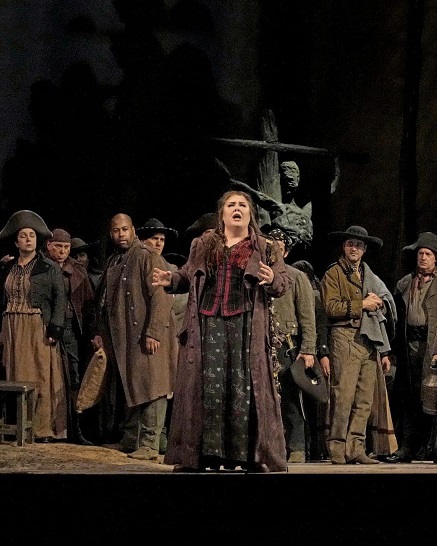
    Barton azucena

    After a truly rousing Anvil Chorus with the blacksmiths’ thunderous hammerings, Jamie Barton (above in a MET Opera photo) commenced Azucena’s iconic “Stride la vampa” and I was soon thinking this would be Jamie’s best Met role to date. She could be deliciously subtle one moment and richly chesty the next, and her trills and top notes were really impressive. She ended the brief aria with a bang, but there was no applause. Jamie’s very sustained “Mi vendica!” was another perfect touch. Ned Hanlon’s powerful summons from the Old Gypsy made its mark.The gypsies headed off.

    Now mother and son are alone, and Jamie commences the old woman’s story: what perfect support the Maestro and his players gave to her great narrative, and how persuasive the mezzo’s story-telling. As Azucena is about to tell her son the ironic truth of those moments at her mother’s execution, Fabiano/Manrico takes a poignant diminuendo of “Tu forse…?” and then the fire music of the high strings gives him an answer even before his mother can say the words. Jamie nailed the top B-flat of the story’s climactic moment, then sang her final lines in a sustained, chilling hush. Back in the day, this kind of singing would have stopped the show,  but today there was only a brief round of applause.

    A vividly expressive conversation between mother and son brings on Fabiano’s “Mal reggendo” in which his lyricism and sense of ebb and flow captivates, as does his marvelously quiet “Non ferir!” This great scene now races to its end with the striking duet “Perigliarti ancor...” with some plummy chest notes from Jamie, and as well as a colorful, wide-ranging cadenza.

    Maestro Callegari gave us a wonderfully stealthy opening to the Convent Scene, and then Mr. Golovatenko’s great voicing of the recit leads to an exchange with Ryan Speedo Green before cresting with Di Luna’s powerfully delivered “Leonora di mia!. The great aria “Il balen...” was taken slightly faster that usual; overall it was beautifully sung though there were traces of sharpness along the way. Mr. Golovatenko was heartily cheered. Another exchange with Mr. Green, with some urgent chorus passages, led to di Luna’s brief cabaletta, which fades away as the nuns are heard approaching.

    Fab igor

    Above: Michael Fabiano and Igor Golovatenko as Manrico and Count di Luna; a MET Opera photo

    There was a lovely exchange of farewells between Mlles. Willis-Sorenson and Hunter before all Hell breaks loose and Manrico returns from the dead. Ms. Willis-Sorenson launches the ensemble in hesitant wonder at her beloved’s re-appearance…radiant top notes, and the poignant “Sei tu dal ciel discendere?” from Leonora, and then a trading of insults between her rival lovers. Suddenly Manrico’s men rush in crying “Urgel viva!” and Manrico greets them with one of my favorite lines in the opera: “Miei prodi guerrieri!” The ensemble rushes to a finish but is halted for Ms. Willis-Sorenson to again beautifully voice her wonderment at her beloved’s resurrection.

    After the interval, Ryan Speedo Green is again superb as he urges the Count di Luna’s men to victory in the coming siege. Azucena is apprehended lurking about the camp; Jamie Barton’s “Giorni poveri” is expressively sung, with nice subtleties of phrasing, but after Mr. Green calls the old gypsy out, Jamie turns fiery with “Deh, rallentate…!” 

    Inside his besieged castle, Manrico tries to calm Leonora though his fate seems predestined. Mr. Fabiano’s recit and his gorgeously phrased “Ah, si, ben mio” won him vociferous applause, though I was sensing a bit of tension in the highest notes. After a tenderly harmonized duet passage with his beloved, Ruiz (played by Daniel O’Hearn) rushed in to tell of Azucena’s impending execution. Manrco’s “Di quella pira” was taken at breakneck speed…very exciting…though again, Mr. Fabiano’s highest notes were not thoroughly comfortable.

    After the applause had died down, there was a very odd sound of someone screaming from the stage-left wing; this was followed by a moan, and the sound of someone talking on a cellphone. No idea what the problem was.

    (Update: on Sunday evening at the Tucker Gala, I found out the reason for the offstage commotion. After singing the Di quella pira“, Michael Fabiano walked into the wings and tripped over something. He let out a scream and then a moan, and you could hear a walkie-talkie call summoning medics. He finished the opera, but last night at Carnegie Hall, he had to be walked unto the stage by the pianist, moving stiffly and very slowly. Kudos to Michael for keeping his commitment to the Tucker event.)

    Now Ms. Willis-Sorenson regaled us with her spectacular singing in the great scene where Leonora comes to the tower where her lover is awaiting execution; she seeks to bargain with di Luna and save Manrico’s life. As Ruiz, Mr. O’Hearn brings her to this dark place; his voicing of his despair over Manrico’s imminent death was infinitely touching when a trace of a gentle sob spoke volumes of his devotion. 

    The the Met stage was now Ms. Willis-Sorenson’s to own, and own she did. Absolutely phenomenal singing here! Her recit was finely phrased, then came the beloved aria “D’amor sull’ali rosee” in which the soprano held her own against memories of great Leonoras from the past. Her line was beautifully sustained, the trills lovingly defined, her tone richly lyrical. In the cresting lines “Ma deh! non dirgli, improvvido, le pene del mio cor!” did not spin the piano/pianissimo effects that many sopranos favor, but instead sounded more resolute. Her cadenza featured a lovely piano top note, on which she did a thrilling crescendo. She finished the aria with the lower ending.

    In the Miserere that follows, a vivid sense of fate developed at the soprano’s “Quel suon, quelle prece”, and her anguish at hearing Manrico’s voice singing an ardent farewell to her was palpable. Ms. Willis-Sorenson then sailed thru her cabaletta, dispensing the coloratura with aplomb and capping the scena with a house-filling high-C.

    Both the diva and Mr. Golovatenko were cooking in their great duet, sung with great abandon and dramatic pointing of the text. Some people will doubtless say that the soprano left out the high-C at the end, but…it’s not in the score. 

    In prison, awaiting execution, Manrico tries to calm his anxious mother; Mr. Fabiano sang with consoling beauty of tone whilst Ms. Barton delivered a fearsome “Parola orrendo!“. Jamie’s superb control made “Si, la stanchezza” so moving, and then the two singers found a lovely blend in “Ai nostri monti“, with a perfect fadeway at the end. Mr. Fabiano’s anger at Leonora makes sparks fly, but Jamie interrupts them with a dreamy reprise of “Ai nostri monti“. 

    Fab w-s

    Above: Michael Fabiano and Rachel Willis-Sorenson in the opera’s final scene; a MET Opera photo

    Leonora reveals that her death is at hand: she has taken poison. Ms. Willis-Sorenson’s “Pria che d’altri vivere” was so poignant. Her death releases di Luna from his promise, and Manrico is swiftly executed. Jamie Barton then gave the opera a flaming finish with her powerful “Sei vendicata, o madre!” 

    Bravi, tutti!

    Trovatore.jpg r-2

    I went to the stage door after the performance where I met Maestro Callegari; he very kindly signed my program (above). 

    ~ Oberon
  • Tebaldi/Simionato ~ GIOCONDA Duet

    Tebaldi simionato

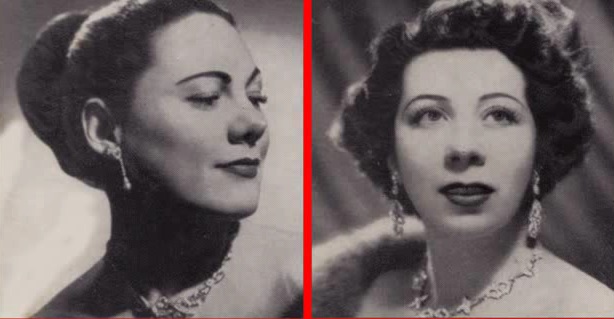
    Renata Tebaldi and Giulietta Simionato (above) sing the great duet “L’amo come il fulgor del creato” from Ponchielli’s LA GIOCONDA at a Chicago Lyric Opera gala in 1956. Sir Georg Solti conducts.

    Listen here

  • Lioba Braun ~ Alto Rhapsody

    Lioba Braun

    Lioba Braun sings Johannes Brahms’ Alto Rhapsody, with Helmuth Rilling conducting the Radio-Sinfonieorchester Stuttgart des SWR.

    Listen here.

    German mezzo-soprano Lioba Braun was born in 1957. Based at the Nationaltheater Mannheim, she has appeared at the major opera houses and festivals of Europe. She became internationally known after singing Brangäne at the Bayreuth Festival in 1994, and she performed the soprano role of Isolde onstage for the first time in 2012.

  • Paola Prestini’s SILENT NIGHT @ National Sawdust

    Prestini

    Above: composer Paola Prestini; photo by Caroline Tompkins

    ~ Author: Lili Tobias

    Saturday October 28th, 2024 – I was lucky enough to have a front row seat to the world premiere of composer Paola Prestini’s new opera, Silent Light. I walked into National Sawdust on Saturday night to ambient insect noises mingling with the chatter of the audience finding their seats. As I looked out over the set of unfinished wood, I could smell the faint hint of bacon, eggs, and pancakes. And these things were just the beginning of how this production expanded not only my ears, but all of my senses!

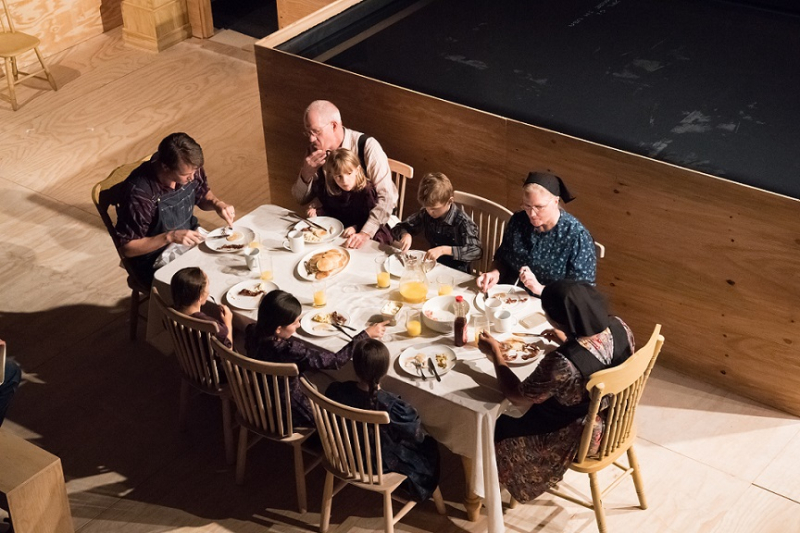
    The innovative ways Prestini played with the sounds, visuals, and physical objects on stage really made Silent Light stand out, though the plot stuck close to standard operatic tropes—love, infidelity, etc. One of the first aspects of this that caught my attention was how she used mundane sounds either by themselves or incorporated into the musical sounds. The opera gets underway with the loud tick-tock of a grandfather clock (seen in the back left corner of the stage) oscillating in volume. The louder it gets, the more surreal the set feels. As that first scene progresses, the women and children of the family come onstage to set the table for breakfast (cooked onstage!) and all begin eating. The natural clatter of plates and utensils mingling with the warm low brass and string instruments created a very fun and realistic soundscape. It truly felt like the audience members were invisible observers within the room with the characters.


    Silent Light performance at NS_0115_


    Above: the ensemble, photo by Jill Steinberg


    I was especially impressed with the transitions between scenes, both in terms of the music and the staging. As breakfast wraps up, a wave of construction sounds rise up from the left side of the stage as the chorus becomes a team of workers. There’s a large waft of dust, which visually separates the two halves of the stage between the men at work outside and the women at work in the house. There were also two wonderful moments of transition between diagetic and non-diagetic music. One occurred during this scene as the chamber ensemble begins playing what seemed to me a lively popular song and the chorus sings along, simultaneously moving the chairs and table to prepare for the next scene. And later on, a French ballad begins playing on a television in the kitchen, then becoming the background for the characters Johan and Marianne to meet up in a hotel room. Both transitions were executed so seamlessly and really helped push the the flow of action forward.


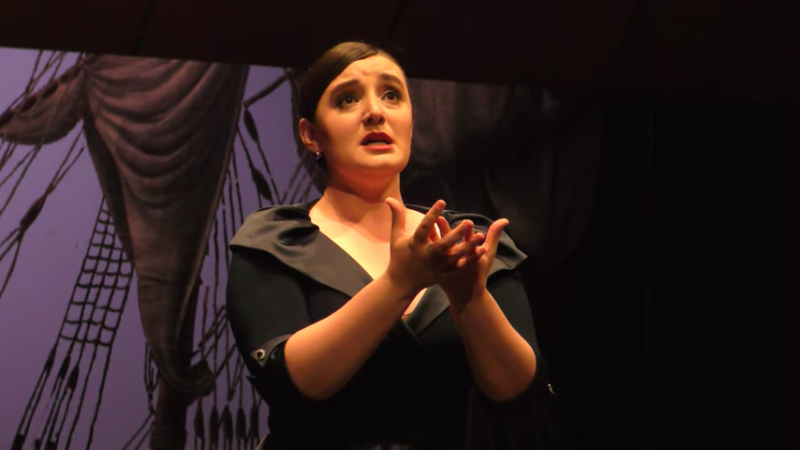
    Silent Light performance at NS_0498_


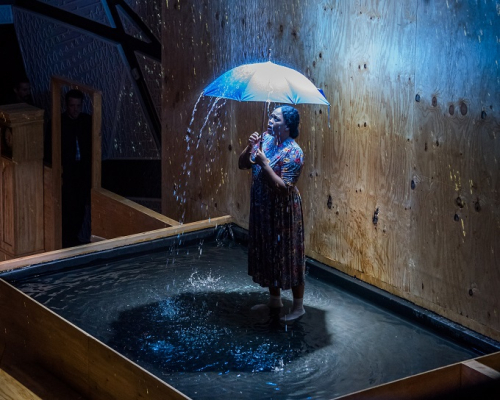
    Above: Brittany Renee; photo by Jill Steinberg


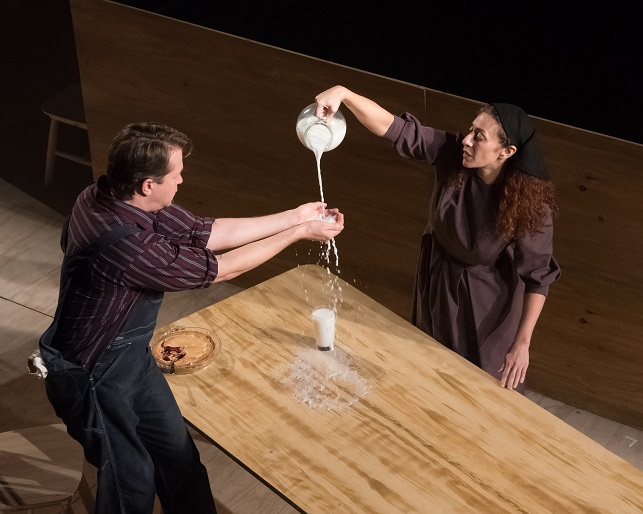
    Another remarkable aspect of this opera were the juxtapositions between silence or quiet sounds and loud, nearly overbearing sounds. Overall, I felt like there was minimal actual singing in this opera, but not in a bad way at all! As a listener, I tend to get fatigued when operas have extra long passages of continuous singing, so I really appreciated the many moments of silence or instrumental music—or even just foley sounds—that provided contrast (and rest for the singers’ voices too). There were also many moments of abrupt shift from sound to silence. One especially striking moment takes place when Johan and his wife Esther are driving in a truck, Esther knowing that Johan has just slept with Marianne. The music, accompanied by the sound of heavy rain, creates a steady and unceasing anxiety as Esther finally comes to terms with her own feelings about her husband’s affair. Then it suddenly stops as she rushes out of the truck, leaving behind just the sound of the rain (and the literal water which has started pouring down onto the stage!).


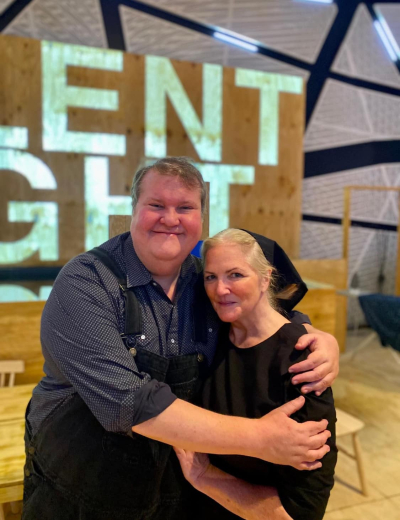
    Tony & margaret silent light


    Above: Anthony Dean Griffey and Margaret Lattimore; photo courtesy of Mr. Griffey


    I also want to add that the novelties of this opera did not go unsupported by amazing musicianship. All the singers were incredibly strong both vocally and as actors, and the lyricism of Prestini’s music really helped them sound even more amazing! I also enjoyed Prestini’s writing for brass. Because of the small size of the instrumental ensemble, the proportion of brass instruments to other types felt very high relative to, for example, an orchestra. I liked how predominant a role the trumpet and trombone played in the music, and they really added a unique depth to the sound that was especially resonant in the small performance space.


    Silent Light performance at NS_0230_


    Above: Daniel Okulitch and Julia Mintzer, photo by Jill Steinberg


    This opera contained so many interesting things that it’s honestly been difficult to write about everything that caught my attention! I thought it was a huge success at National Sawdust, and I hope it gets many more performances. It will be super interesting to see how the staging evolves in different spaces and with different cast members. Silent Light was an incredibly immersive experience, and there was always something of interest to listen to, look at, and even smell!


    ~ Lili Tobias

  • Nicola Benedetti: Korngold’s “Marietta’s Lied”

    Nicola

    Violinist Nicola Benedetti gives a luxuriant rendering of Marietta’s Lied from Erich Korngold’s opera DIE TOTE STADT at the BBC Proms 2015, with the Bournemouth Symphony Orchestra under the baton of Kirill Karabits.

    Watch and listen here.

  • Nicola Benedetti: Korngold’s “Marietta’s Lied”

    Nicola

    Violinist Nicola Benedetti gives a luxuriant rendering of Marietta’s Lied from Erich Korngold’s opera DIE TOTE STADT at the BBC Proms 2015, with the Bournemouth Symphony Orchestra under the baton of Kirill Karabits.

    Watch and listen here.

  • Lucine Amara Has Passed Away

    Lucine

    Above: Lucine Amara as Aida; she signed the photo for me after a Met performance of PAGLIACCI

    The death of soprano Lucine Amara at the age of 99 has been announced. A native of Hartford, Connecticut, Ms. Amara was raised in San Francisco and sang with the San Francisco Opera chorus from 1944-1946; she made her professional concert debut in 1946.

    She made her Metropolitan Opera debut on November 6, 1950, as the Celestial Voice in Verdi’s DON CARLO, a performance that marked the start of Sir Rudolf Bing’s tenure as General Manager of The Met. From that date thru 1991, Ms. Amara sang 750 performances with The Met in New York City and on tour.

    The soprano’s vast repertoire included Wellgunde in the RING Cycle, Pamina, Liu, Nedda, Antonia in TALES OF HOFFMAN, both the Verdi Leonoras, Aida, Micaela, Contessa Almaviva, Eva in MEISTERSINGER, Alice Ford, Maddalena (and later, Madelon) in ANDREA CHENIER, Cio-Cio-San, Elsa in LOHENGRIN, Mimi, Donna Elvira, Amelia in BALLO IN MASCHERA, Tchaikovsky’s Tatyana, Ellen Orford, Tosca, Marguerite in FAUST, Fiordiligi, Luisa Miller, Mother Marie in DIALOGUES OF THE CARMELITES, Gertrude in HANSEL AND GRETEL, and Mascagni’s Santuzza.

    6a00d8341c4e3853ef022ad3e2833f200b-800wi

    My first experience of hearing Lucine Amara live was at the Old Met as Liu in TURANDOT in 1965. She sang gorgeously, with a lovely sense of lyricism and some finely-spun pianissimi. I met her after the performance (my only backstage visit at the Old House), and she was very happy to meet a young – but already very keen – opera enthusiast. (I was 16 at the time…)

    In the ensuing seasons at the New Met, I enjoyed Lucine’s Aida, Nedda, TROVATORE Leonora, and Cio-Cio-San. On April 22nd, 1972, she returned to her Met debut role as the Celestial Voice in DON CARLO to mark the final matinee broadcast of the Bing Era, which I attended. That evening, she sang the LOMBARDI trio at the Bing farewell gala. Her final Met appearance was as Madelon in 1991.

    The soprano left us some very fine recordings: the Verdi REQUIEM conducted by Eugene Ormandy, Musetta in the classic Beecham BOHEME, Nedda in PAGLIIACCI with Franco Corelli, and Elsa in LOHENGRIN under the baton of Erich Leinsdorf.  

    Here some samplings of Lucine Amara’s singing:

    As the TROVATORE Leonora:

    Lucine Amara – TROVATORE aria – Met 6~3~71

    Tatyana’s Letter Scene (in English) from EUGENE ONEGIN:

    Lucine Amara – Tatyana’s Letter Scene ~ ONEGIN – in English – Met 1957

    Duet from LA GIOCONDA from The Met’s 100th anniversary gala in 1983, with Bianca Berini:

    Lucine Amara & Bianca Berini – GIOCONDA ~ duet – Met Gala 1983

    And from her commercial recording of the Verdi REQUIEM:

    Lucine Amara – Requiem aeternam ~ Verdi REQUIEM

    Watch a video of the final scene of PAGLIACCI with Lucine and Richard Tucker from the Bell Telephone Hour, with Donald Voorhees conducting, here.

    One afternoon, while working in the opera room at Tower Records, I was playing the Leinsdorf LOHENGRIN on the overhead speakers. Four rather boisterous opera fans from Munich, who were in town for some Met performances, came in and were browsing the shelves while chatting away. As Lucine’s voice commenced Elsa’s ‘dream’ aria, the four fell silent. They stood listening as if under a spell. Then one of them came over to me and asked: “Who is this soprano?” They’d never heard of Lucine Amara. I told them of her Met career and her extensive repertoire. “This is a perfect Elsa voice! If we had had this singer in Europe, she would have been highly esteemed. It’s a heavenly sound.” 

    In the months that followed, I kept hoping Lucine might come in the store so I could tell her this story. But I never got the chance. 

  • Beth Taylor ~ Voce di Donna

    Beth2

    Scottish mezzo-soprano Beth Taylor sings La Cieca’s aria “Voce di Donna” from Ponchielli’s LA GIOCONDA from a concert performance given by the Deutsche Oper Berlin in 2020, during the pandemic.

    Watch and listen here.

    In 2023, Beth was a finalist at the Cardiff Singer of the World competition; many people, myself included, felt she was the rightful winner.

    In May 2025, Beth will be at Carnegie Hall with the English Concert under Harry Bicket’s baton, singing Cornelia in Handel’s GIULIO CESARE. Details here

  • Hildegard Behrens ~ Documentary

    Behrens_Isolde[5]

    A documentary about Hildegard Behrens, with lots of musical excerpts. Behrens was one of the most fascinating singers I ever encountered in my long years of going to the opera. Her commitment to each role she took on was thrilling to experience.

    Watch and listen here.

  • Kai Kluge ~ Schumann’s Dichterliebe

    Snapshot kai 3

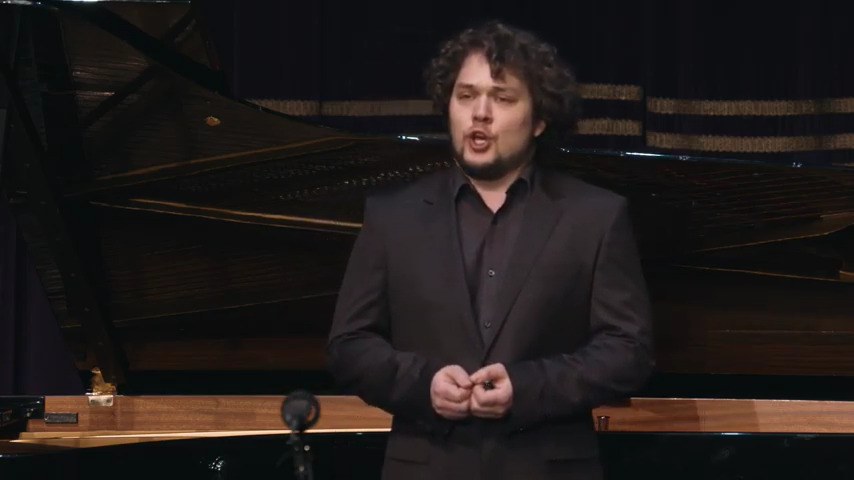
    Tenor Kai Kluge sings my favorite song-cycle for male voice, Robert Schumann’s Dichterliebe, in a live performance before an empty hall in Stuttgart during the pandemic. Alan Hamilton is the pianist.

    Watch and listen here.