Category: Opera

  • In Recital ~ Ema Nikolovska @ Weill Hall

    Ema-Nikolovska-Photo-by-Kaupo-Kikkas jpg

    Above: Ema Nikolovska, photo by Kaupo Kikkas

    Author: Oberon

    Thursday March 28th, 2024 – Earlier this year, I was looking to add a vocal recital – by a singer I had never previously heard, in an intimate setting, including some songs that would be brand new to me – to my late-winter calendar.  Flipping thru the Carnegie Hall brochure, I zeroed in on tonight’s offering at Weill Hall: Macedonian-Canadian mezzo-soprano Ema Nikolovska, with Howard Watkins at the piano. I listened to about ten seconds of her singing on YouTube and requested a ticket. I’m so glad I was there.

    I must say at the start that it was a recital wherein the encore proved the highest highlight of the evening. Ms. Nikolovska announced this work, which she had commissioned, prior to singing it, and now I am casting about, trying to find more information about it, since I did not catch the name of the composer. 

    But to begin at the beginning, the mezzo-soprano and her collaborating pianist offered four songs by Franz Schubert. She chose songs somewhat off the well-trodden Schubert path, some of which were brand new to me.

    Im Frühling” was the most familiar. From its opening phrases, I sensed a large voice that had been tamed and polished. It took a few warm-up measures before things began to flow, but within seconds Ms. Nikolovska was ravishing the ear with her keen sense of nuance, and her expressive diction.

    Howard-watkins

    In “Dass sie hier gewesen” it became clear that Mr. Watkins (above) was so much more than an accompanist: his artistry is deep, and he plays from the heart. Ms. Nikolovska here displayed her gift for introducing straight tone into her singing, and the effect was enchanting. Mr. Watkins opened “Herbst” with a rippling restlessness, and then the music took on a sense of urgency. The song has an Erlkönig feel to it. Ms. Nikolovska’s subtle inflections and Mr. Watkins’ marvelous playing drew us deeper and deeper into the music.

    The Schubert set ended with the longest of the songs, “Der Unglückliche” which felt like an intimate mini-opera. The piano opens with a darkish sense of doom, and the voice moves from pensive to intense. We pass thru many moods in this dramatic and engrossing song.

    Ms. Nikolovska then spoke, rather at length, about the program. When the music resumed, it was Richard Strauss’ very brief “Nichts” that re-established the mood with its big piano intro and its final vocal outburst. A thoughtful atmosphere is established in “Gefunden“, which turns melodic and ends with Ms. Nikolovska on a gorgeously sustained, dreamy final note. We remain in dreamland with the opening of “Das Rosenband“, which soon gives way to rapture. Ms. Nikolovska was simply sublime here, her soft singing so engaging, and so beautifully controlled. The straight tone moments were spine-tingling, with awesome dynamic control, and a high-lying passage near the end which was magical. Mr. Watkins, in the piano postlude, was equally impressive.

    Songs of the Seasons, by Margaret Bonds, sets four poems of Lankston Hughes. A touch of jazz inflects Autumn, while a slow sway and dreamily sustained pianissimi evoke a cozy afternoon before the fire as snow falls outside in Winter. Mr. Watkins sets a music hall mood with sparkling motifs for Spring; this song has a big finish, and leaves it to Ms. Nikolovska to spin out a delectable diminuendo. The pianist introduces Summer with animated playing which becomes an infectious rhythm.

    An over-long intermission threatened to break the spell, but at last we were drawn back into the alternate universe by Debussy’s atmospheric Ariettes oubliées. The first song, “C’est l’extase langoureuse“, is aptly named, as its sense of languor is so finely evoked by the composer…and so perfectly captured by pianist and singer. The sweet sadness of “Il pleure dans mon coeur” was immediately conjured up by our two musicians: Ms. Nikolovska exploring the wide vocal range with uncanny dynamic control, and Mr. Watkins at his most poetic. The pianist was exceptional in “L’ombre des arbres“, while the singing was tinged with a sensual glow.

    In a mighty mood-swing. we are suddenly on a carousel for “Chevaux de Bois“; yet even here, the excitement and energy winds down as the circling horses slow their pace. Ms. Nikolovska followed the pianist’s delicate introduction to “Green” with some of her most delicious singing of the evening, finding heaven in her final phrase. For the concluding “Spleen“, the pianist creates a mysterious mood, and the singer ‘speaks’ on one note before a moody melody emerges, which the Nikolovska voice caresses with uncanny pianisssimi.

    Another treat follows with two songs by Nicolas Medtner: “Twilight” and “Sleeplessness“. The first is a hymn to nature, introduced by descending motifs from the keyboard. The song has a lovely lyrical feel, and Ms. Nikolovska’s sustained tones were again an outstanding feature. “Sleeplessness” has a dirge-like start; the singing grows more urgent, then recedes to resignation and ends with a vocalise.

    In a total change of atmosphere, Ms. Nikolovska introduced Nicolas Slominsky’s Five Advertising Songs: cabaret-type numbers that extol, in turn, bed linens, bran muffins, face powder, Fletcher’s Castoria, and Pepsodent toothpaste – the last two very familiar to me from my childhood in the Little Town. Ms. Nikolovska proved a sporting, lively comedienne, moving about the stage and playing to the crowd like a carnival huckster. It was all in good fun, but the best was yet to come.

    The encore – and I will find out its title and composer as soon as I can – was commissioned by Ms. Novolovska and draws on a Macedonian song. The Sun, The Moon, and The Forest are each evoked in turn. The music has an improvisational air, with melismas and winding melodies for the voice. Meanwhile, Mr. Watkins often reaches into the piano to place glissandi like a harp. The vocal line ranges from the subtlety to powerful passion, and it all ends in a whisper. 

    UPDATE: I now have details of the encore. The song, Zajdi, zajdi, jasno sonce, was composed by Aleksandar Sarievski, and arranged for Ms. Nikolovska by Darija Andovska.

    I also found that Ms. Nikolovska gave a second encore at her recital, after I had slipped out to catch my train, Incredibly, it was the Composer’s aria from Strauss’s ARIADNE AUF NAXOS…my favorite opera. I can’t believe I missed it!

    May I suggest to Ms Nikolovska that she make the arrangement of Zajdi, zajdi, jasno sonce an integral part of her recital programs. Everyone should hear it!

    So now, I am in hopes that Ms. Nikolovska will return to our City before too long, and that we might hear her Wesendonck Lieder.

    ~ Oberon

  • Alarm Will Sound @ Zankel Hall

    Alarm will sound


    Above: concert photo by Fadi Kheir


    ~  Author: Shoshana Klein


    Tuesday March 26th, 2024 – Though this concert started with slight technical difficulties, after  about 3 minutes, the whole rest of the show went on without a hitch. The pieces were played with minimal breaks and the show could have gone on with no applause, except that everyone was so excited about the pieces that there was a lot of excitement in between.


    There were audio introductions from each composer, and sometimes they even overlapped with the beginnings of the pieces. This created a really good flow that made the concert seem a little more connected and seamless than a normal program. This was actually my first official Alarm Will Sound concert despite being a fan of them for years. I’ve seen them in other contexts but not a fully programmed concert – it was a real treat! 


    The concert started with a piece by Tania León, who curated the concert in her capacity as the Richard and Barbara Debs Composer’s Chair of Carnegie Hall. Her piece was cool, groovy and fun, scored for small ensemble. 


    The second piece, by Chris P. Thompson, had some basis in drum corps, as explained by his introduction. It was really cool to hear about marching band in the context of “classical music”. I think it often gets ignored as an art form or a rigorous type of music when it’s actually pretty difficult in a way that was contextualized really well by the introduction to this piece, which was also really fun. The piece had a lot of rhythmic complexity and was really upbeat. One effect that was used was these tubes that are swung around by various musicians to create a pitch (and the pitch changes based on how quickly you swing the tube). I’ve been seeing this used in new music spaces more often recently and in this particular instance it did evoke the marching band – the coordination and visual aspects, or maybe more specifically the color guard spinning flags around on the field.


    The next piece was by Christian Quiñones (who I worked with a couple of years ago but we’d never met in person!) His piece was really cool and also had lighting effects attached to the electronic sounds, which was an interesting though slightly jarring experience. The sounds were a little glitchy but rhythmic in a way that sounded really cool. The piece was based on the sound of hearing loss – sounds becoming obscured and distorted throughout. 


    The last piece on the first half, in my opinion, was definitely the show stealer. It was an excerpt of an opera by Damon Davis and he called it in his introduction a “black rap space opera”. I had moments of feeling like some of the music was familiar to the point where I wondered if I’d heard it before – but I think it was just that type of music, kind of magical in its familiarity as well as its novelty. It was well orchestrated, interesting in the way it used members of the ensemble as characters or kind of as set pieces. The songs were beautiful but also definitely post-genre, almost more similar to musical theater than anything. The music and the story were optimistic in a mythological way, almost like Disney or Miyazaki. Everybody seemed to want to hear the whole thing. This was a fragment of a larger work that will hopefully be performed soon!


    The second half started with a piece by Elijah Daniel Smith which had a different tone – more subdued and introspective than the first half. It had a lot of really interesting sound worlds accompanying a narration that was interesting and impactful.


    Next was a piece by Texu Kim that was rhythmic and upbeat and ended a frenzy of rhythm that was perhaps intentionally impossible to keep completely together, which was a nicely unconventional end to the piece.


    Next was a five movement piece by Bora Yoon that was eclectic. There were moments of poetry, moments that felt conversational, and really interesting sound worlds including a prepared piano and an instrument she seemed to have made out of bicycle bells. The last movement particularly struck me – it was really really beautiful around an ocean theme. I wish I had more to say about this piece – it was delightful and brought us through many emotional spaces in a short time.


    Tania and alan pierson


    Above: Tania León and Alan Pierson; photo by Fadi Kheir
     
    Before the last piece, we heard a little bit from Ms. León. She, with the help of Alarm Will Sound‘s Alan Pierson, framed the concert within the context of this question that her father had asked her right before he died. In this conversation she showed him some of her music and he’d asked her where she was in it. Every explanation by the composers in this concert told where they as a human were in their music. It really tied the whole thing together in addition to the fact that after this conversation, The ensemble played the León from the beginning but arranged for the full ensemble. Bringing back the piece from the beginning was a really cool effect. Unfortunately, I didn’t really remember it that well but I still liked the symmetry of it. All in all, it was a little bit of a long concert but everything was so good that I don’t know what I would have been able to leave out!
     
    ~ Shoshana Klein

  • ASO ~ Gurre-Lieder @ Carnegie Hall

    Gurre 4

    Above: tenor Dominic Armstrong (seated), conductor Leon Botstein, and soprano Felicia Moore onstage at Carnegie Hall; photo by Matt Dine

    ~ Author: Ben Weaver

    Friday March 22nd, 2024 – Arnold Schoenberg’s gargantuan Gurre-Lieder, composed in 1900-03 (revised 1910-11), is unlike anything else in his catalog. With this lush and highly melodic work – for soloists, chorus and orchestra – he reached the ceiling of Romanticism and the only way out was to shatter it to smithereens. For Schoenberg, a mix of musical philosophy and observing the ravages of WWI signaled that music could not continue on the path laid out by his predecessors (Bach, Haydn, Mozart, Beethoven, Brahms, Wagner, etc. etc.) Schoenberg may have overreacted quite a bit, but, at a least with Gurre-Lieder, he left us with a grand finale of sorts to the excesses of 19th century music.

    Gurre-Lieder’s libretto is adapted from Jens Peter Jacobsen’s dramatic poem Gurresange, written in 1868. It tells the story of King Waldemar and his love for the beautiful Tove, who is murdered by Waldemar’s jealous wife. Enraged, Waldemar curses God and is condemned to roam every night on wild hunts with his ghostly vassals. Waldemar is redeemed with arrival of Spring, and he and Tove are reunited as they become one with nature. Performances of this work are extremely rare, no doubt because Schoenberg calls for more than 150 musicians, an extravagance few organizations can afford, and none can afford frequently.

    Part I opens with what Gabriel Adorno called “fairy land” music, a shimmering tapestry of harps, celesta, flutes, piccolo and some strings. Waldemar and Tove exchange declarations of love in extended monologues, set to ravishing Wagnerian and Straussian sounds.

    Tenor Dominic Armstrong (above) took on the – let’s face it – impossible role of Waldemar. Schoenberg wrote the part for at least three different voices; not many singers have been able to possess them all. This is a Tristan/Parsifal/Tannhäuser part, with Tamino thrown in for good measure. I honestly don’t know who can really sing all this in a live performance. Dominic Armstrong is a lyrical tenor with a strong top, but sadly the voice disappears in the lower registers. And conductor Leon Botstein was not very kind, allowing the orchestra to cover Mr. Armstrong all evening. Armstrong’s strongest moments were in the lighter passages; his best singing came late in Part 3, in his final aria “Mit Toves Stimme flüstert der Wald”, when Schoenberg’s orchestration relaxed, allowing Waldemar to finally emerge.

    Soprano Felicia Moore (above) possesses a large, blooming voice, that managed to break through the orchestral cacophony, in spite of an insensitive conductor. Her Tove was exotic and warm.

    Gurre 2

    Mezzo-soprano Krysty Swann (above, in a Matt Dine photo), as the Wood-Dove who describes the terrifying details of Tove’s murder, was exciting in her long monologue. The voice is large and steely, the vibrato a bit loose at the top, but Ms. Swann possessed an excellent sense of drama, managing to build to thrilling and hair-raising final moments of the Wood-Dove’s narrative.

    Gurre 3

    Bass-baritone Alan Held (above, photo by Matt Dine) has been a favorite of mine for many years. Though it seemed like James Levine always kept Mr. Held back at the Metropolitan Opera, where he should have been singing Wotan among many other roles, I still vividly recall a searing Wozzeck Mr. Held sang at the Met in 2011. It was wonderful to hear him once again, his large voice easily filling Carnegie Hall as the Peasant who is terrified by Waldemar and his men’s nightly processions.

    Gurre

    Tenor Brenton Ryan (photo above by Matt Dine) was a very memorable Klaus the Jester, starting his long monologue from the house floor, then jumping on to the stage. Mr. Ryan possesses a strong, characterful tenor that made me think he might have been a better choice to sing Waldemar.

    And German bass-baritone Carsten Wittmoser was a magnificent Narrator, his crystal clear diction perfect for the sprechstimme part, which is usually given to older singers nearing retirement or even non-singer actors (Karl Maria Brandauer and Barbara Sukowa, for example.) So it was nice to hear a singer still in his prime take on this role.

    The American Symphony Orchestra was founded by Leopold Stokowski – who conducted the US Premiere of Gurre-Lieder in 1932, so it has a direct connection to this work, and they played quite beautifully, and certainly loudly. Here I must fault Leon Botstein for not being more considerate of his singers. Even the Bard Festival Chorale found itself drowned out by the orchestra, occasionally becoming just a mass of garbled sounds coming from somewhere at the back of the stage.

    Still, any live performance – flaws aside – of this supremely difficult work is was a special treat to be able to experience. How long before another performance is organized in New York City?

    ~ Ben Weaver

    Performance photos by Matt Dine, courtesy of Carnegie Hall

  • CARMINA BURANA @ Carnegie Hall

    Carl-orff

    Above: composer Carl Orff

    ~ Author: Oberon

    Tuesday February 27th, 2024 – This evening at Carnegie Hall, the Orchestra of St Luke’s presented Carl Orff’s CARMINA BURANA. The performance was conducted by Tito Muñoz, with soloists Ying Fang (soprano) Nicholas Phan (tenor), and Norman Garrett (baritone), and the Westminster Symphonic Choir (James Jordan, Director) and the Young People’s Chorus of New York City (Francisco J. Núñez, Artistic Director).

    What an exhilarating evening! The Carnegie stage was jam-packed with music-makers, and they brought the amazing score vividly to life. There is never a dull moment in CARMINA BURANA; every bar of music engages us. Maestro Muñoz had the massed forces under fingertip control, and by keeping his arms poised in the air between the work’s individual movements, he held applause at bay…until the end, when an ovation of tsunami proportions swept thru the venerable Hall, everyone on their feet and cheering with delight.

    The choral singing was truly impressive, ever-alert to the shifting rhythms and the swirls of words. Their dynamic range is vast, down to near whispers at times, and then going full-tilt in the lusty Tavern Song. Likewise, Orff’s keenly judged orchestration was given in its full glory: rich, sweeping strings, clear and enticing winds (a special cheer for the flutes), and the percussionists, who are busy all evening with an array of instruments that includes chimes and castanets. The sounds of piano and celesta add magic to Orff”s imaginative scoring.

    The work is divided into 25 relatively short sections, many of which are assigned to the chorus. There are three solo vocalists; the first to be heard was baritone Norman Garrett, a tall gentleman with an intriguing timbre. He was especially impressive in the Cour d’amours section, where the vocal line took him from falsetto to bass-like depths, and where a high-lying song displayed his lyrical powers. He looked very dapper in his tux.

    By contrast, tenor Nicholas Phan wore an appropriately white nightclub suit in his role of a Roasted Swan. His treacherous aria, which lingers in a super-high tessitura, was cunningly managed, and his droll facial expressions conveyed the bird’s torment.  

    That ravishing soprano, Ying Fang, was the crowning glory of the evening. Clad in an unusual white frock trimmed in black, the soprano’s crystalline purity of timbre was magically projected into the great Hall. She lingered on uncannily sustained pianissimi that hung on the air like an alluring perfume. And on the sensual heights heights of the Dulcissime, Ying Fang’s voice shimmered with an intoxicating glow.

    ~ Oberon

  • Saint-Saëns and Fauré @ CMS

    Anthony_McGill_2022-Todd-Rosenberg

    Above: Anthony McGill, photo by Todd Rosenberg

    ~ Author: Oberon

    Sunday February 25th, 2024 – Music by two of France’s most beloved composers – Camille Saint-Saëns and Gabriel Fauré – was on offer this evening at Alice Tully Hall. Chamber Music Society of Lincoln Center once again assembled a stellar group of musicians, assuring a thoroughly enjoyable concert experience.

    Gabriel Fauré’s Dolly Suite for Piano, Four-Hands, composed between 1894 and 1896, made for a charming start to the program. Pianists Anne-Maria McDermott and Gloria Chien gave a splendid performance of the work, which derives its name from an affectionate nickname for Helene Bardac, the young daughter of Fauré’s long-time mistress, Emma Bardac. Fauré composed these gem-like miniatures between 1893 and 1896, to mark Helene’s birthdays and other events in her young life.

    The suite’s movements are:

    Berceuse (a lullabye), honoring Helene’s first birthday (Allegretto moderato).
    Mi-a-ou, which gently mocks Helene’s attempts to pronounce the name of her elder brother Raoul, who later became a pupil of Fauré’s.
    Le Jardin de Dolly (Andantino); this was composed as a present for New Year’s Day, 1895. It contains a quotation from Fauré’s first violin sonata, composed 20 years earlier.
    Kitty-valse: this is not about a cat, but rather about the Bardacs’ pet dog, named Ketty.
    Tendresse, an andante, was written in 1896 and presages the composer’s beloved Nocturnes.
    Le pas espagnol (Allegro) denotes a lively Spanish dance tune which brings the suite to its close.

    Tonight, Ms. Chien was in charge of the lower octaves, and Ms. McDermott of the upper. They seemed to be truly enjoying playing this music, which veers from rambunctious to elegant. At the end, they embraced, and then basked in the audience’s warm applause.

    It’s always a delight to hear Anthony McGill, Principal Clarinet of The New York Philharmonic, and this evening he regaled us with his sumptuous playing of Camille Saint-Saëns’ Sonata in E-flat major, Op. 167, dating from 1921…one of the composer’s last works. With Ms. Chien at the Steinway, the music simply glowed, from first note to last.

    The opening Allegretto has a subdued start, but passion lurks beneath the surface. Mr. McGill was soon astounding us with his mastery of dynamics and his fluent coloratura. His pianissimi must be experienced to be believed: such control! Infinite beauty of tone is a McGill trademark, reaching our souls like a blessing from above. The movement has a poetic finish.

    From a sprightly start, the Allegro animato finds the two players in perfect simpatico mode. Enchanting subtleties from both musicans continually cast a spell over the Hall. Ms. Chien opened the Lento with a deep, somber melody. She then commences a soft heartbeat motif, with Mr. McGill’s clarinet singing a forlorn melody. A wistful ‘ending’ is reached, but there’s a lovely piano postlude to follow.

    Rapid keyboard figurations open the concluding Molto allegro, wherein the virtuosity of both players delights us: rapid scales and sparkling cascades of notes are crystal clear. Then M. Saint-Saëns makes a surprising mood-swing: there is a gorgeous fade-away, from which a lovely melody arises. Mr. McGill’s final pianissimo note, sustained to spine-tinlging effect, was simply uncanny.  
    Meigui-zhang-original c

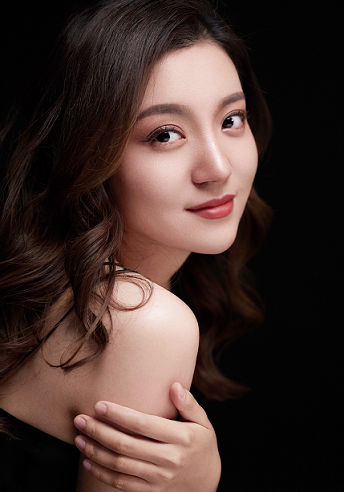
    I cannot recall ever having heard Fauré’s La Bonne Chanson performed live before. When this concert was first announced, Sasha Cooke was listed as the soloist; but in the event, it was the radiant young Chinese soprano Meigui Zhang (photo above) who sang the Fauré for us…exquisitely.

    It’s been nearly a year since I first heard Ms. Zhang: in John Luther Adams’ Vespers of the Blessed Earth, on a memorable evening at Carnegie Hall, which you can read about here. For the Fauré songs tonight, she joined an ensemble of outstanding musicians: violinists Arnaud Sussmann and Paul Huang, violist Matthew Lipman, the NY Phil’s primo basso Timothy Cobb, and Ms. Chien at the piano.

    The nine songs are settings of nine poems by Paul Verlaine, which the poet wrote as a wedding gift to his wife. (Ironically, Verlaine had also had an affair with Emma Bardac, mistress of Fauré.)

    The songs explore many moods, by turns restless, idyllic, passionate, and pensive. The pretty, lyrical quality of Ms. Zhang’s voice is ideally suited to these songs. Particularly impressive were “J’allais par les chemins perfides” where the singer’s silken tone sounded especially lovely among the rich string mix; the urgent ecstasy of “Avant que tu ne t’en ailles“; the meltingly soft allure of her tone in “Donc, ce sera par un clair j:our d’été” with its beautifully sustained final note; and the sweet rapture of her “L’hiver a cessé“. Surely Ms. Zhang gained many new admirers this evening.

    In these songs, the piano and strings provide a sonic tapestry into which the voice is woven to magical effect. Ms. Chien’s playing was a constant source of pleasure, and Arnaud Sussmann’s tone shimmered on high, seconded by Paul Huang. The deeper voices gave plushness to the ensemble: Matthew Lipman (viola) and David Requiro (cello) have much to do – they were particularly fine in “N’est-ce pas?”  The composer might have given more to the bass, but Mr. Cobb made the most of each opportunity.

    Following the interval, a glorious rendering of Camille Saint-Saëns’ 1875 Quartet in B-flat major brought together Ms. McDermott, and Mssrs. Huang, Lipman, and Requiro. Ms. McDermott commences the opening Allegretto, with the trio of strings joining in a unison passage. The blending of the four voices is most cordial, with the pianist’s seamless phrasing and the intriguing timbres of the three string players. I hadn’t heard Paul Huang for a while, and it was simply great to hear his distinctive sound again, as he sailed thru an ascending/decending solo motif. The Allegretto has a terrific ending.

    Ms. McDermott emphatically attacks the opening bars of the Andante maestoso; the strings again join in unison, and the music has a vaguely Russian feel. There’s a slow piano theme, with the strings etching in comments along the way. Things then turn fast and furious, Ms. McDermott commanding the keyboard and the strings slashing away. Turbulence! 

    Mr. Lipman and Ms. McDemott launch the delightful Poco allegro, which charmed my companion and me with its Mendelssohnian flavor. There are major/minor shifts which lead to a Paul Huang cadenza, passionately played and with a ravishing trill. The music races lightly forward to a deliciously subtle finish.

    The concluding Allegro starts briskly, the piano leading the way. The strings play in unison or pass phrases to one another. There’s an underlying restlessness that calms to a series of soft pizzicati. A slow build-up of tension gives way to a luxuriant sense of peace before a rising passage brings this splendid piece to its end. The musicians enjoyed a standing ovation; with our spirits lifted, we headed out into the freezing winter night.

    ~ Oberon

  • DON CARLO ~ Final Scene

    Don carlo  g

    The final scene of Verdi’s DON CARLO, performed in concert at the Musikvereinsaal in Vienna in 1988. The soloists are soprano Mara Zampieri, tenor Giacomo Aragall, and bass Kurt Rydl. Mr. Rydl sings the lines of Philip II, the Grand Inquisitor, and the Ghost of Charles V. Very sporting of him!

    Watch and listen here.

  • Riccardo Muti ~ Verdi REQUIEM

    Ombuena

    Above: tenor Vicente Ombuena

    Maestro Riccardo Muti conducts a performance of the Verdi REQUIEM at Ravenna, 1994. The soloists are Michele Crider, Luciana D’Intino, Vicente Ombuena, and Dean Peterson.

    Watch and listen here.

  • @ My Met Score Desk for CARMEN

    Aigul

    Above: Aigul Akhmetshina

    ~ Author: Oberon

    Saturday January 27th, 2024 matinee – Feeling no need to see a 6-ton tractor trailer on the stage of the Metropolitan Opera House, I took a score desk for today’s matinee of the Met’s new production of CARMEN. I wasn’t feeling my best this morning as I prepared to leave for Lincoln Center, and even considered staying home. But once the house lights dimmed, my spirits perked up, CARMEN is an opera I had not heard for a very long time, and the music seemed truly fresh to me today.

    The main draw of the day was Aigul Akhmetshina, the gorgeous Russian mezzo-soprano, in the title-role. I fell under she spell when she sang Maddalena in Verdi’s RIGOLETTO here last season, which I saw three times.

    Maestro Daniele Rustioni got the opera off to a fast start, setting a brisk tempo with the start of the prelude. Unlike some of the other conductors the Met favors these days, Rustioni is not a volume freak; the voices were – for the most part – clearly audible throughout the opera, and his tempi always felt right. I especially like his accelerations as each repeat of the theme of the Act II Danse Bohème sped up: exhilarating! The preludes to the four acts were beautifully played, particularly the touching music that introduces Act III. All the choral work was super as well, notably the lovely smoking chorus in Act I.

    The first solo voice we hear is that of Morales, sung very impressively today Benjamin Taylor; it’s a Met-sized voice of handsome timbre. Equally striking was the singing of Wei Wu as Zuniga. Both these gentlemen deserve more opportunities at The Met.

    Carmen’s friends – Frasquita (Sydney Mancasola), Mercedes (Briana Hunter), Dancairo (Michael Adams), and Remendado (Frederick Ballentine) – joined Ms. Akhmetshina for the quintet in Act II, excelling at the quick repartee. Ms. Mancasola popped off some bright top notes at the end of the Toreador Song and at “La Liberté!” to end the third act.  

    Micaela is the first principal character to appear, in the person of Angel Blue. This role suits Ms. Blue far better than Violetta did last season. She sounded warm and lyrical in the duet with Don José, etching in some appealing piano effects. And her aria in Act III – with its finely-played horn introduction – was a vocal highlight of the afternoon; Ms. Blue’s rich voice could be tapered smoothly to a sweet softness, making for a spine-tingling finish. Her final plea, with its stunning drop at “Ah, José!“, was beautifully handled.

    Maestro Rustioni provided a whiplash start to the famous Toreador Song; Kyle Ketelsen sang the familiar tune engagingly, and he was excellent in his ‘fight’ duet with José in Act III. Later – before the bullfight commences – he and Ms. Akhmetshina shared a lyrical moment. 

    Beczala 2

    Above: Piotr Beczala

    Piotr Beczała’s bio says he is 57 years old, but he certainly doesn’t sound it…nor look it, when I chatted him up at the stage door after the performance: he’s a very handsome guy, with an easy-going charm. His singing today as was most impressive, covering a wide dynamic range, from passionate, house-filling outpourings to ravishingly heady tones.  He and Angel Blue blended voices perfectly in their Act I duet, trading phrases persuasively, and finishing off with Piotr’s amazingly hush-toned “Souvenirs du pays…” 

    Chez Lillas Pasta, after Carmen upbraids José for abandoning her when the trumpets summon him back to the barracks, Mr. Beczala gave us his poetic Flower Song, so ardently voiced…and with a fascinating pianissimo climax to the final phrase. 

    When the music turns darker and the menacing edge of jealousy overtakes Don José, Mr, Beczala unleashed the power of his voice to thrilling effect. The character’s descent into madness was set forth in vocal terms, with a manic desperation in his singing of the final, deadly encounter with Carmen.

    Aigul Akmenshina established herself as one of the finest Carmens imaginable. Introducing herself with a sultry Habanera – the second verse sung with enticing subtlety – the comely mezzo displayed a warm, dusky timbre with a plushy low range and smooth forays to the top. Aigul’s Seguidilla put both the tenor and the audience under her spell with her creamy, gorgeous voice, topping it off with sustained final note. 

    Her singing of the the Chanson Bohème in the tavern scene veered from subtle to triumphant, but the fact that her later castanet song was not working on José as she’d expected unleashes her temper.  After listening patiently to José’s love plea, Carmen returns to enticement. Zuniga’s arrival causes José to capitulate, and he joins the smugglers. My feeling here is that Carmen already hates him.

    At the smugglers’ den, Aigul’s reading of the tarot cards was sung with doom-ladened low notes and a sense that time was running out for her. Her final meeting with Mr. Beczala’s José was fiery, their exchanges quickly descending to threats and taunts. In this production, José kills Carmen with a baseball bat, which I am glad I could not see; the audience gasped.

    Ms. Akhmetshina’s is a welcome voice and presence on the Met stage, and I will always look forward to her performances; I also hope to one day hear her in Chausson’s Poème de l’amour et de la mer, for which I think she has the perfect voice. 

    The few times I glimpsed the the stage setting today, it looked cheap and junky. A real eyesore.

    After the performance, I went to the stage door where I met Aigul and Piotr; they are such kind and lovely people.

    Carmen met-1jpg

    ~ Oberon

  • They’ll Remember You

    Stauffenberg

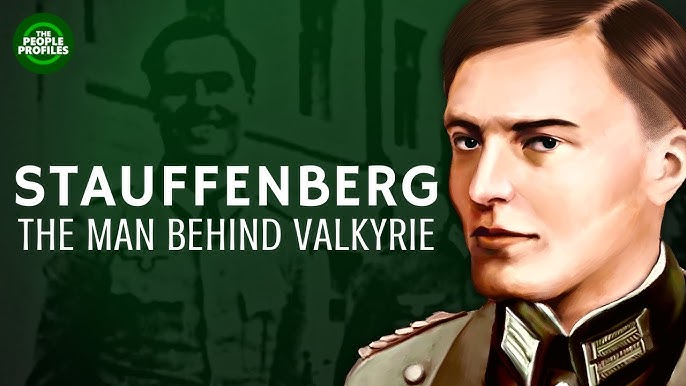
    Last week, I was re-watching the 2008 film VALKYRIE, which is based on the story of a plot to kills Adolf Hitler. By mid-1944, it was clear that Germany was losing the war. Hitler, growing increasingly deranged, was firm that Germany should fight to the last man and never surrender.

    There was a group of high-level German military officers who foresaw the massive destruction and loss of civilian lives that the final months of the war would bring; among these was Count Claus von Stauffenberg, who was a decorated hero of the war in North Africa, where he lost a hand and an eye in serving the Reich.

    A plot was hatched to assassinate Hitler at a war council meeting of German officials to be held at Hitler’s hideaway, the Wolf’s Lair. Count von Stauffenberg managed to sneak a bomb into the conference room, but on realizing that Himmler was absent from the gathering, the plan was dropped. 

    A few days later, at a second meeting, the Count was able to detonate the bomb by a time-delay fuse, after he had hastily left the meeting saying he was called to Berlin on an urgent matter.

    The bomb exploded, killing four attendees and injuring several others; but Hitler was only slightly hurt. von Stauffenberg, back in Berlin with his fellow conspirators, soon learned that the plot had failed. He and the other conspirators were subsequently executed. The war lingered on for nine more months, with catastrophic property damage and loss of German lives, until Hitler committed suicide on April 30th, 1945. 

    I realized, in my latest viewing of the film, that I had never played thru the credits to the end. In the last moments of the soundtrack, there is a moving hymn to the heroes who tried to bring down a tyrant and madman. It was composed, as was the film’s score, by John Ottman.

    The text is drawn from Wanderer’s Nightsong II by Johann Wolfgang van Goethe, translated as follows:

    Up there all the summits
    are still.
    In the tree-tops
    you will feel but the dew.
    The birds in the forest have stopped singing.
    Soon, done with walking,
    you shall rest, too.”

    Listen to “They’ll Remember Youhere, with mezzo-soprano Sylke Schwab as soloist.

  • They’ll Remember You

    Stauffenberg

    Last week, I was re-watching the 2008 film VALKYRIE, which is based on the story of a plot to kills Adolf Hitler. By mid-1944, it was clear that Germany was losing the war. Hitler, growing increasingly deranged, was firm that Germany should fight to the last man and never surrender.

    There was a group of high-level German military officers who foresaw the massive destruction and loss of civilian lives that the final months of the war would bring; among these was Count Claus von Stauffenberg, who was a decorated hero of the war in North Africa, where he lost a hand and an eye in serving the Reich.

    A plot was hatched to assassinate Hitler at a war council meeting of German officials to be held at Hitler’s hideaway, the Wolf’s Lair. Count von Stauffenberg managed to sneak a bomb into the conference room, but on realizing that Himmler was absent from the gathering, the plan was dropped. 

    A few days later, at a second meeting, the Count was able to detonate the bomb by a time-delay fuse, after he had hastily left the meeting saying he was called to Berlin on an urgent matter.

    The bomb exploded, killing four attendees and injuring several others; but Hitler was only slightly hurt. von Stauffenberg, back in Berlin with his fellow conspirators, soon learned that the plot had failed. He and the other conspirators were subsequently executed. The war lingered on for nine more months, with catastrophic property damage and loss of German lives, until Hitler committed suicide on April 30th, 1945. 

    I realized, in my latest viewing of the film, that I had never played thru the credits to the end. In the last moments of the soundtrack, there is a moving hymn to the heroes who tried to bring down a tyrant and madman. It was composed, as was the film’s score, by John Ottman.

    The text is drawn from Wanderer’s Nightsong II by Johann Wolfgang van Goethe, translated as follows:

    Up there all the summits
    are still.
    In the tree-tops
    you will feel but the dew.
    The birds in the forest have stopped singing.
    Soon, done with walking,
    you shall rest, too.”

    Listen to “They’ll Remember Youhere, with mezzo-soprano Sylke Schwab as soloist.