Category: Opera

  • Uta-Maria Flake ~ Träume

    Wesendonck

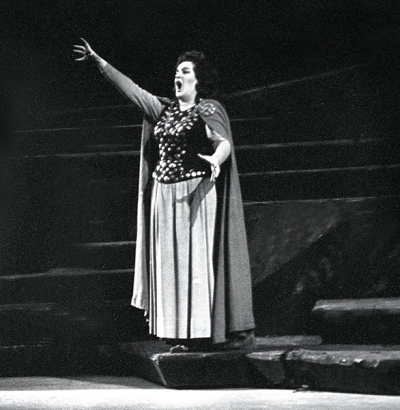
    German soprano Uta-Maria Flake (1951-1995) sings “Träume” from Richard Wagner’s Wesendonck-Lieder; her interpretation is rather unusual, but I like it.

    Listen here.

    “Ms. Flake studied at the Hamburg University of Music and, as a scholarship holder of the Hamburg State Opera, at Indiana University in Bloomington (USA). Further training by Tito Gobbi in Florence and by Mario del Monaco in Lancenigo. As early as 1971 she took part in a television recording of Offenbach’s ORPHEUS IN THE UNDERWORLD from the Hamburg Opera. In 1973 she won first prize in the national singing competition, and in 1974 she was a prizewinner at a concours in Montepulciano. She began her actual stage career in 1975 at the Stadttheater in Ulm, where she made her debut as Leonora in Verdi’s FORZA DEL DESTINO. From 1976-80 she was a member of the Dortmund Opera House. Here in 1979 she sang Eve in the German premiere of the opera PARADISE LOST by Penderecki; this was followed by guest appearances in this role at the Munich State Opera, at the Warsaw Opera and (in concert version) at the Salzburg Festival. From 1980-83 she was engaged at the Staatsoper Stuttgart, where she sang her great roles: Beethoven’s Leonore and Weber’s Agathe, Wagner’s Elsa and Eva, and Offenbach’s Giulietta.

    She made successful guest performances at the State Theater in Hanover, at the Deutsche Oper am Rhein Düsseldorf-Duisburg, at the State Opera (as Lisa in PIQUE DAME) and at the Deutsche Oper Berlin (as Leonore), at the Covent Garden Opera London (as Elsa and as Freia), at the Teatro San Carlos Lisbon (Freia, Sieglinde, Gutrune and 3rd Norn), at the Cologne Opera House (Tchaikovsky’s Lisa), and at the Teatro Verdi in Trieste and at the Stadttheater in Basel as Sieglinde in WALKURE. Ms. Flake was also a concert soloist and lieder recitalist.”

  • Benjamin Bernheim in RIGOLETTO @ The Met

    Feola bernheim rigoletto

    Above: Rosa Feola and Benjamin Bernheim in RIGOLETTO at The Met

    Author: Oberon

    Saturday November 26th, 2022 matinee – After reading several glowing reviews of the French tenor Benjamin Bernheim over the past few years, and hearing of his recent success in LUCIA DI LAMMERMOOR opposite Lisette Oropesa at Vienna and Zurich, I decided to add today’s Met matinee of RIGOLETTO to my schedule. And I’m glad I did! This afternoon’s performance was strongly cast, from the title-role down to the Page and Guard.

    This was my first time to see the Bartlett Sher production. The staging is inoffensive, with some interesting ideas; but the scene of Gilda’s sacrifice at the inn was clumsily managed. The set sometimes revolves like a carousel on high speed. Having been brought to the palace by the courtiers, Gilda seems eager when the duke comes to her, but then she seems humiliated when she emerges from the bedroom soon after. Having a bloodstain on her white nightgown might have been a telling touch.

    In my estimation, Mr. Bernheim carried off top vocal honors. The voice is wonderfully clear and well-projected, with top notes that bloom. He is capable of ravishing soft singing, and he keeps the music fresh with subtle dynamic shifts. His performance was stylish and assured; I certainly hope we will hear more of him at The Met. 

    Kelsey

    Quinn Kelsey’s Rigoletto (photo above) was sung with great power and commitment. His incredibly sustained “Ah no, è follia!” at the end of the “Pari siamo!” monolog was one of the afternoon’s great thrills, and throughout the opera, his vocal generosity seemed boundless. Whether it was the baritone’s decision or the conductor’s, “Cortigiani, vil razza dannato!” was taken at an absurdly fast pace, giving it a surface urgency rather than a deeper sense of feeling; but when “Miei signori…” was reached, the great beauty and tenderness of the Kelsey voice was at its most impressive. There were a few rather husky notes as the opera progressed, but overall Kelsey’s Rigoletto was a stunning performance. (I should mention here the beautiful playing of the cellist in the “Miei signori…” section).

    Rosa Feola had many lovely passages as Gilda, though the sound of the voice is not truly distinctive. To me, she seems more of a lyric rather than a coloratura soprano, and some of the topmost notes tested her a bit. It would be nice to hear her as Liu or Mimi.  

    Aside from Mr. Bernheim, John Relyea’s Sparafucile was a big draw for me. The basso cuts a fine figure as the assassin, and his dark timbre is perfect for this music. At the end of his Act I encounter with Rigoletto, Mr. Relyea’s incredibly sustained low-F drew a round of applause.

    In her Met debut role of Maddalena, Aigul Akhmetshina displayed an attractive presence and a plushy voice; she merits more Met opportunities. I consider Monterone to be a very important character in the opera; though his scenes are relatively brief, if they are powerfully delivered they can make a great impact. Today Bradley Garvin sang the role with vivid authority. As the courtiers, Scott Scully (Borsa), Jeongcheol Cha (Marullo), and Paul Corona and Brittany Renee (the Cepranos) were all excellent, and Edyta Kulczak’s Giovanna – clearly on the Duke’s payroll – had a memorable moment: as Rigoletto stands aghast at having been an accomplice in the kidnapping of this own daughter, the nurse flees the house with her suitcase. Brilliant! 

    How many times over the decades that I have been going to the opera have the singers of the Page and the Guard in RIGOLETTO captured my attention? Today was the first! Met choristers Andrea Coleman and Yohan Yi each stepped up to bat, and each hit a home run. Ms. Coleman has a bit more to sing, and she sang it prettily indeed; and Mr. Yi’s “Schiudete: ire al carcere Monteron dee!” was strikingly voiced. I borrowed this photo of Mr. Yi and Ms. Coleman from the Met Chorus’s Facebook page:

    Yi and coleman

    I met Speranza Scapucci when she was at Juilliiard; several of my young singer-friends who were studying there at the time spoke highly of her. Lately, she has come into her own, with prestigious productions on her resumé, including a debut at La Scala conducting Bellini’s CAPULETI ED I MONTECCHI featuring Ms. Oropesa as Giulietta. This run of RIGOLETTO marked her Met debut performances.

    From the pit, Ms. Scapucci certainly gave us a lively RIGOLETTO; the opera swept by with a feeling of inevitability, yet she also had a handle on the more reflective passages. The only drawback, really, was her tendency to let the brass players cover the voices; things got out of hand in the ‘storm’ trio in the final act, where Mlles. Feola and Akhmetshina and Mr. Relyea were giving their all, to no avail.

    Metropolitan Opera House
    Saturday November 26th, 2022 matinee

    RIGOLETTO
    Giuseppe Verdi

    Rigoletto...............Quinn Kelsey
    Gilda...................Rosa Feola
    Duke of Mantua..........Benjamin Bernheim
    Maddalena...............Aigul Akhmetshina
    Sparafucile.............John Relyea
    Monterone...............Bradley Garvin
    Borsa...................Scott Scully
    Marullo.................Jeongcheol Cha
    Count Ceprano...........Paul Corona
    Countess Ceprano........Brittany Renee
    Giovanna................Edyta Kulczak
    Page....................Andrea Coleman
    Guard...................Yohan Yi

    Conductor...............Speranza Scappucci

    ~ Oberon 

  • Margreta Elkins ~ Elgar’s Sea Pictures

    Elkins

    Mezzo soprano Margreta Elkins (above) sings Sir Edward Elgar’s Sea Pictures with the Queensland Symphony Orchestra, conducted by Werner Andreas Albert, recorded in 1983. Listen here.

    Ms. Elkins, born in Brisbane, was a favorite colleague of her compatriot Dame Joan Sutherland. They sang together at Covent Garden (where Elkins was for ten years a principal artist) and toured Australia together with the Sutherland-Williamson Opera Company in 1965.  A regular member of Australian Opera, Margreta Elkins enjoyed a special success there in 1976 as Sieglinde.

    She also appeared at Dublin, the Liceu, Boston, Philadelphia, and New Orleans, and was an admired recitalist, particularly in her native land.

  • Margreta Elkins ~ Elgar’s Sea Pictures

    Elkins

    Mezzo soprano Margreta Elkins (above) sings Sir Edward Elgar’s Sea Pictures with the Queensland Symphony Orchestra, conducted by Werner Andreas Albert, recorded in 1983. Listen here.

    Ms. Elkins, born in Brisbane, was a favorite colleague of her compatriot Dame Joan Sutherland. They sang together at Covent Garden (where Elkins was for ten years a principal artist) and toured Australia together with the Sutherland-Williamson Opera Company in 1965.  A regular member of Australian Opera, Margreta Elkins enjoyed a special success there in 1976 as Sieglinde.

    She also appeared at Dublin, the Liceu, Boston, Philadelphia, and New Orleans, and was an admired recitalist, particularly in her native land.

  • Orchestra of St. Luke’s: All-Mendelssohn Program

    Benjamin Grosvenor

    Above: pianist Benjamin Grosvenor

    Author: Ben Weaver

    Thursday November 17th, 2022 – The Orchestra of St. Luke’s and conductor Harry Bicket continued their multi-season traversal of the works of Felix Mendelssohn on Thursday evening at Carnegie Hall.

    British pianist Benjamin Grosvenor was the soloist in Mendelssohn’s Piano Concerto No. 1 in G-minor, Op. 25, composed in 1831. The 22-year-old composer’s Piano Concerto is not a standard piece in the concerto repertoire and that’s rather inexplicable. It’s a well-crafted work, with wonderful melodies, wide range of moods, and plenty for a soloist to dig into. A stormy opening from the orchestra and a quick, dramatic entry for the soloist set the tone for a wild ride. Grosvenor is an accomplished pianist and his dazzling playing was never lacking in beauty and excitement. The concerto is written without a pause between movements, effortlessly flowing from the tumultuous first to the lyrical second movement. One thing that stands out is the lack of sentimentality from Mendelssohn: he is earnest without cheap effects, and Grosvenor reflected that wonderfully. An especially lovely passage in the Andante movement passes the melody from the piano to lower strings, and here Grosvenor and the string players of the orchestra were spellbinding. A seamless transition into a quirky final movement was nicely handled, and Grosvenor continued his dazzling playing. Perhaps only a bit of humor was lacking in the whole proceeding, but I’ll place the blame for his on Maestro Bicket because this also marred an otherwise wonderful performance of Mendelssohn’s most famous work, incidental music to A Midsummer Night’s Dream.

    Mendelssohn composed the famous Concert Overture when he was 18 years old and it became a staple of the concert repertoire quickly: a magnificent work filled with whimsy, drama, and endlessly hummable tunes, it conquered the world. 15 years later Mendelssohn was commissioned to write additional music for Shakespeare’s play and – remarkably – the now mature composer managed to time-travel to his youth and compose a score as magical as the Overture had been. After a shimmering playing of the Overture, Bicket and the Orchestra of St. Luke’s launched into the Scherzo – a lively wind section driven ode to fairies (excellent playing by the flutes especially).

    Hiding among the players all along was actor David Hyde Pierce, appearing seemingly from nowhere as Puck: which is, obviously, the best way for Puck to appear. Hyde Pierce’s performance of selected sections of the text were delightful: by turns dramatic (Titania shocked to discover her husband’s tricks), a wryly delightful Puck, and gravely pompous Oberon, the real ass of the play. The veteran actor and comedian of TV, film, and stage, moved effortlessly from one mood to the next, sometimes without taking a breath. A marvelous performance! I have always enjoyed Mendelssohn’s music for these melodramas in the work, and so many recordings omit them, alas. So it was a pleasure to hear this music, especially as sensitively played as it was. 

    Soprano Elena Villalón and mezzo-soprano Cecelia Hall were most excellent Fairies, one wishes Mendelssohn had written more music for the singers. Members of the The Choir of the Trinity Wall Street were also excellent in their music; I especially appreciated their very clear diction.

    The Orchestra of St. Luke’s played extremely well all night. The only difficulties came in the beautiful Notturno. Featuring extensive writing for the horns, perhaps the players got tired. The only thing missing in the whole – as I mentioned above – was a sense of humor in the proceedings. The dramatic and lyrical passages were magnificent, but a somewhat lighter touch would have been welcome. Since this afflicted both the Piano Concerto and A Midsummer Night’s Dream, I’ll place this squarely on the shoulders of Maestro Bicket. Maybe he was just having one of those days; let’s blame it on a spell.

    ~ Ben Weaver
  • Orchestra of St. Luke’s: All-Mendelssohn Program

    Benjamin Grosvenor

    Above: pianist Benjamin Grosvenor

    Author: Ben Weaver

    Thursday November 17th, 2022 – The Orchestra of St. Luke’s and conductor Harry Bicket continued their multi-season traversal of the works of Felix Mendelssohn on Thursday evening at Carnegie Hall.

    British pianist Benjamin Grosvenor was the soloist in Mendelssohn’s Piano Concerto No. 1 in G-minor, Op. 25, composed in 1831. The 22-year-old composer’s Piano Concerto is not a standard piece in the concerto repertoire and that’s rather inexplicable. It’s a well-crafted work, with wonderful melodies, wide range of moods, and plenty for a soloist to dig into. A stormy opening from the orchestra and a quick, dramatic entry for the soloist set the tone for a wild ride. Grosvenor is an accomplished pianist and his dazzling playing was never lacking in beauty and excitement. The concerto is written without a pause between movements, effortlessly flowing from the tumultuous first to the lyrical second movement. One thing that stands out is the lack of sentimentality from Mendelssohn: he is earnest without cheap effects, and Grosvenor reflected that wonderfully. An especially lovely passage in the Andante movement passes the melody from the piano to lower strings, and here Grosvenor and the string players of the orchestra were spellbinding. A seamless transition into a quirky final movement was nicely handled, and Grosvenor continued his dazzling playing. Perhaps only a bit of humor was lacking in the whole proceeding, but I’ll place the blame for his on Maestro Bicket because this also marred an otherwise wonderful performance of Mendelssohn’s most famous work, incidental music to A Midsummer Night’s Dream.

    Mendelssohn composed the famous Concert Overture when he was 18 years old and it became a staple of the concert repertoire quickly: a magnificent work filled with whimsy, drama, and endlessly hummable tunes, it conquered the world. 15 years later Mendelssohn was commissioned to write additional music for Shakespeare’s play and – remarkably – the now mature composer managed to time-travel to his youth and compose a score as magical as the Overture had been. After a shimmering playing of the Overture, Bicket and the Orchestra of St. Luke’s launched into the Scherzo – a lively wind section driven ode to fairies (excellent playing by the flutes especially).

    Hiding among the players all along was actor David Hyde Pierce, appearing seemingly from nowhere as Puck: which is, obviously, the best way for Puck to appear. Hyde Pierce’s performance of selected sections of the text were delightful: by turns dramatic (Titania shocked to discover her husband’s tricks), a wryly delightful Puck, and gravely pompous Oberon, the real ass of the play. The veteran actor and comedian of TV, film, and stage, moved effortlessly from one mood to the next, sometimes without taking a breath. A marvelous performance! I have always enjoyed Mendelssohn’s music for these melodramas in the work, and so many recordings omit them, alas. So it was a pleasure to hear this music, especially as sensitively played as it was. 

    Soprano Elena Villalón and mezzo-soprano Cecelia Hall were most excellent Fairies, one wishes Mendelssohn had written more music for the singers. Members of the The Choir of the Trinity Wall Street were also excellent in their music; I especially appreciated their very clear diction.

    The Orchestra of St. Luke’s played extremely well all night. The only difficulties came in the beautiful Notturno. Featuring extensive writing for the horns, perhaps the players got tired. The only thing missing in the whole – as I mentioned above – was a sense of humor in the proceedings. The dramatic and lyrical passages were magnificent, but a somewhat lighter touch would have been welcome. Since this afflicted both the Piano Concerto and A Midsummer Night’s Dream, I’ll place this squarely on the shoulders of Maestro Bicket. Maybe he was just having one of those days; let’s blame it on a spell.

    ~ Ben Weaver

  • @ My Met Score Desk for PETER GRIMES

    Grimes

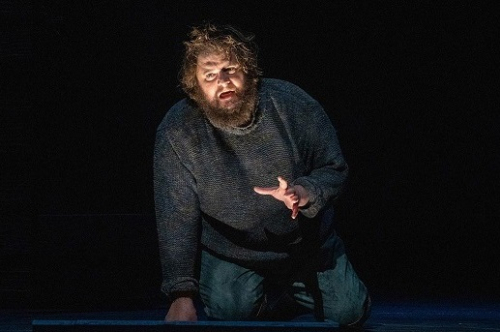
    Above: Allan Clayton as Peter Grimes; a Met Opera photo

    NOTE: This article was delayed due to problems with Typepad. Photos may be slow to load, and the musical excerpt may not play.

    Saturday October 28th, 2022 matinee – I didn’t like the Met’s current PETER GRIMES production, which premiered in 2008, when I saw it in the House, but later I watched it on DVD and found it thrilling. For this revival, I pondered getting a seat with a view, but then opted for practicality and took a score desk.

    I first saw GRIMES in 1983; it was a day I shall never forget. We’d been to SIMON BOCCANEGRA in the afternoon, and I was exhausted; sitting there waiting for GRIMES to begin, I thought “I’ll never make it to to end.” But moments after the curtain rose, Jon Vickers delivered his blazing first line, “I swear by almighty God…”, stepping on Swallow’s line in his impatience, and from that moment on, I was riveted. Vickers, his colleagues Elisabeth Söderström and Thomas Stewart, and a stellar lineup of singing actors (Jean Kraft, Lili Chookasian, Jerome Hines, Dale Duesing, Ezio Flagello, and Robert Nagy) gave me a thrilling first GRIMES, under the baton of the great Sir John Pritchard.

    In the ensuing years, I experienced two magnificent portrayals of Grimes at The Met: Philip Langridge and Anthony Dean Griffey each made an overwhelming impression. This afternoon, the British tenor Allan Clayton staked out his own claim to the role with a stunningly sung performance. I first heard the voice of Allan Clayton on the excellent Decca DVD entitled Britten’s Endgame.

    The Met Orchestra were on top form this afternoon, and the opera’s interludes – well-beloved as a concert ‘suite’ – were by turns painfully beautiful and searingly violent. The conductor, Nicholas Carter, was at his finest in these glorious passages. But he was less successful when solo voices were singing, sometimes giving too much volume and either covering the singers or leaving them to struggle for a heftier sound. The Met Chorus, with so much to do in this opera, were simply grand: “O tide that waits for no man…spare our coasts!

     
    Allan Clayton’s Grimes was more lyrical in sound than the other tenors I have heard live in the role, though he has good cutting power when he needs it. It was in the poetic passages of the music that the tenor made our hearts ache for this hapless, misunderstood man. From the start, his wonderfully clear diction made every word count. In the opening scene in the court, telling of the death of the first apprentice, Mr. Clayton drew us in.
     
    As the opera unfolds, the character’s hopes for a new life are raised, only to be dashed. Mr. Clayton’s extraordinarily expressive singing caught every nuance of these shifts in Grimes’s mental state. His poignant “Great Bear and Pleiades“, where he sings of the “…clouds of human grief…” along with “What harbour shelters peace?, and “In dreams I’ve built myself some kindlier home” were hauntingly sung, in contrast to the deranged scene in which he torments the apprentice and eventually sends the boy down the sea cliff to his doom.  My feeling is that Mr. Clayton’s Grimes may be the closest to Peter Pears’ in vocally capturing the personality of the doomed fisherman. Mr. Clayton’s performance deservedly won the audience’s vociferous approval.
     
    Soprano Laura Wilde made an unexpected Met debut this afternoon as Ellen Orford. Her voice, with a somewhat girlish timbre, was appealing in her Act II scene with the apprentice, John, and especially so in her third act Embroidery aria. In more dramatic passages, the conductor sometimes failed to do the right thing, leaving Ms. Wilde to push the tone. The soprano and Mr. Clayton were well-matched in general, She was warmly received by the audience.
     
    Balstrode fills an odd place in the opera: as one of the few true friends and defenders of Grimes, the character is key; but Britten does not give him all that much to sing. Adam Plachetka was fine in the role today.
     
    The librettist and composer create expert character studies amongst the townsfolk of The Borough, affording wonderful opportunities for today’s cast. Prime among these is Swallow, splendidly voiced this afternoon by the excellent Patrick Carfizzi.
     
    Two mezzo roles offered Denyce Graves and Michaela Martens many choice phrases as Auntie and Mrs. Sedley respectively. After a few warm-up notes, Ms. Graves sounded very well; “A joke’s a joke, and fun is fun!” she jibed sarcastically. Ms. Martens, with the meatier role of one of the opera’s most despicable characters (a busybody and gossip with a drug addiction,) got a round of laughs from the crowd with “I’ve never been in a pub in my life!” and pulled out some darkish chest tones at “Murder most foul it is!” and “Crime, which my hobby is...”
     
    Harold Wilson as Hobson kicked the opera off with his strong-voiced summons of Grimes to take the oath; later, Hobson tries to evade Ellen’s offer to accompany him to pick up Grimes’s next apprentice. Chad Shelton (Bob Boles) and Justin Austin (Ned Keene) each made their mark, and the always-effective Tony Stevenson excelled as the Reverend Horace Adams. As Auntie’s two nieces, Brandie Sutton and Maureen McKay sang prettily; they were joined by Mlles. Wilde and Graves in the opera’s pensive quartet, one of the score’s unique highlights.
     
    With this performance, PETER GRIMES seemed to edge out BILLY BUDD as my favorite Britten opera; however, that pendulum might swing back if I ever get to see BILLY BUDD again, just as the very top spot on my list of favorite operas has shifted between ARIADNE AUF NAXOS and ELEKTRA for years.
     
    PETER GRIMES is a cruel opera; the characters (well, except for Ellen) each have a mean streak, and zero tolerance for anyone who is ‘different’. Growing up in a similar small town, where everyone knows (and minds) everyone else’s business, I learned to keep mostly to myself, leaving the world behind to live in my own dream-space filled with opera, and with longings I didn’t understand. Like Peter, I had an understanding girlfriend who protected me in a way, and soothed my sadness.  My classmates were cruel, but things never turned brutal, as they do in The Borough: “Bring the branding iron and knife…what’s done now is done for life!” I sometimes wonder how I endured those long, worrisome days.

    Metropolitan Opera House
    October 28th, 2022 matinee

    PETER GRIMES
    Britten

    Peter Grimes............Allan Clayton
    Ellen Orford............Laura Wilde (debut)
    Captain Balstrode.......Adam Plachetka
    Mrs. Sedley.............Michaela Martens
    Auntie..................Denyce Graves
    Niece...................Brandie Sutton
    Niece...................Maureen McKay
    Hobson..................Harold Wilson
    Swallow.................Patrick Carfizzi
    Bob Boles...............Chad Shelton
    Rev. Horace Adams.......Tony Stevenson
    Ned Keene...............Justin Austin
    John....................Brandon Chosed

    Villagers: Helena Brown, Ross Benoliel, Scott Dispensa,
    Ned Hanlon, Jeremy Little, Patrick Miller, Steven Myles, Earle Patriarco,
    Jonathan Scott, Meredith Woodend, Yohan Yi

    Conductor...............Nicholas Carter

    Settling in at my desk well before curtain time. I opened the old, heavy score I had taken from the library, and found the incredible inscription shown below. It means that Benjamin Britten actually held this score in his hands.

    Britten autograph-1 jpg
    ~ Oberon

  • @ The Met’s Opening Night ~ MEDEA

    Met medea

    Tuesday September 27th, 2022 – The Metropolitan Opera opened their 2022-2023 season this evening with the Met premiere of Cherubini’s MEDEA. Originally performed in French – the opera’s world premiere took place on March 13th, 1797, at the Théâtre Feydeau in Paris – MEDEA in its Italian version became one of Maria Callas’s greatest triumphs.

    This was my fourth time experiencing MEDEA in the theatre. In 1974, the New York City Opera staged the work for their premiere singing-actress, Maralin Niska, who was magnificent in the role. Incredibly, in 1982, the Company offered another new production of the work – somewhat more timeless in feeling – with Grace Bumbry very effective in the title-role. In 1987, the opera was given in Bridgeport, Connecticut, in a traditional setting; Gilda Cruz-Romo sang Medea. Gilda, a longtime favorite of mine, was not ideally suited to the role but she still had plenty of voice a her disposal; it was the last time I ever saw her onstage. 

    Met Opening Night tickets being prohibitively expensive, I took a score desk for this performance; I plan to go a second time to have a view of the sets and costumes. This evening was a huge personal triumph for Sondra Radvanovsky; singing to a sold out house – a real rarity at The Met in this day and age – she won a thunderous ovation of the kind singers like Tebaldi, Nilsson, Rysanek, and Dame Gwyneth Jones used to garner. Sondra deserved every decibel, for she threw herself into the difficult and demanding role with total commitment.

    The evening opened with the national anthem. I have always love singing it, but when we came to the words “…o’er the land of the free…” and was suddenly overcome with grief. We seem to be rushing headlong to our doom as a great democracy; I am hoping I won’t live long enough to experience the bitter end.

    MEDEA itself is maddeningly uneven: thrilling passages – mainly for the title-character – alternate with routine music; conductor Carlo Rizzi led a performance that was more dutiful than inspired. It was in the individual singers that the evening made its musical impact; chorus and orchestra played a vital role in keeping the opera afloat when the main characters were otherwise occupied.

    Matthew Polenzani’s Giasone is quite different from that of such earlier stalwarts in this music as Jon Vickers and James McCracken: more lyrical and thus more vulnerable. Polenzani sang beautifully, and his voice carried perfectly in the big hall. His expressive range veered from poetic (with his bride) to defiant (dealing with his ex-), to ultimate despair as he watched his entire world go up in flames. 

    Janai Brugger’s Glauce made much of what is a rather ungrateful role; Glauce has a very demanding aria early in the opera and thereafter is eclipsed both musically and dramatically by her rival, Medea. Ms. Brugger’s voice sails easily into the hall, and she combined full-toned lyricism with technical assurance.

    Michele Pertusi has had a long and distinguished career, and tonight, as Creon, he was most impressive. The voice is steady and sure, and it fills the house. It’s always wonderful to hear a native Italian making the most of the words. Pertusi’s Creon was outstanding, establishing real authority.

    I had previously experienced Ekaterina Gubanova as a powerful Cassandra in a concert performance of LES TROYENS, and as Brangaene in a concert version of Act II of TRISTAN UND ISOLDE where she sounded a bit taxed in her upper range. Tonight, as Medea’s faithful companion, Neris, Ms. Gubanova was superb. Her poignant aria, with its haunting bassoon accompaniment, was the musical centerpiece of the evening. The singer seemed to hold the house under a spell as she sang of her devotion to her mistress, winning warm applause at the aria’s end, and an enthusiastic round of bravas at her bows.

    Mille bravi! to Met principal bassoonist Evan Epifanio for his gorgeously mellow playing in Neris’s aria; he and Ms. Gubanova ideally complimented one another. 

    Witnessing the Radvanovsky triumph was vastly pleasing to me, as I have been a great admirer of the diva since her days as a Met Young Artist. In her many performances that I’ve experienced, she has always seemed to have a unique gift for making opera seem important. Sondra’s dynamic range is her greatest gift: the incredible focus and power of her highest notes can be followed moments later by a shimmeringly “alive” pianissimo. And she has an enthralling stage presence: a fearless actress, she seems to become the woman she is portraying. All this made her Medea a holy terror.

    Medea makes a sneaky entrance, and soon she is alone with her former lover/husband, to whom she pours out her emotions in the great aria “Dei tuoi figli la madre…“; here, the Radvanovsky voice ranges from extraordinary tenderness to blind fury. I might have wished for a more chesty expression at “Nemici senza cor!” (Sondra really opened the chest range in Act II!) but the soprano knew what she was about. Polenzani gave a powerful response, eliciting a blistering, sustained top note from the furious sorceress. They quarreled on, to brilliant effect.

    Act II commences without a break (thank god they didn’t bring up the houselights to quarter!) and Sondra, who had had a couple of throaty notes in Act I, was now blazing away on all cylinders, the voice fresh as can be, and the increasing use of chest voice adding to the thrills. Medea’s pleadings to Creon to be given one more day in Corinth cover a wide range of cajoling and deceit…Sondra and Mr. Pertusi were electrifying here. And when she won, Sondra celebrated her success: Medea now has time to work her destructive spells.

    Following Neris’s gorgeous aria, sounds of the wedding ceremony are heard, with the chorus invoking the gods to bless Glauce and Giasone. Medea counters this with diabolical mutterings of her own, cursing the crowd with a starkly chested “Rabia infernal!“. Then, suddenly, she sails up to a vibrant final phrase. I admit I was kind of hoping Sondra would “take the fifth” here, as Callas sometimes did, but that notion was lost in the barrage of applause.

    Act III is only about 30 minutes long, and is preceded by an over-long prelude. Sondra again stuns us with her powerful “Numi, venite a me!” and then gives us her finest, most magical singing of the evening with “Del fiero duol!” capped by en enormous high note. Polenzani, maddened by grief, assails her: “Our sons! What was their crime that they deserved to die?”…to which she answers, “They were your children!”

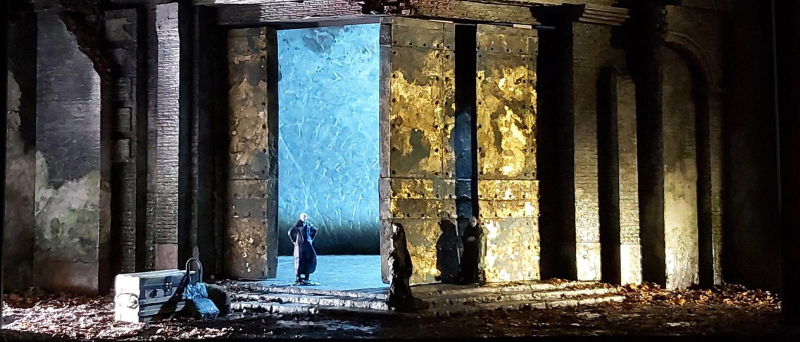
    I stood up from my desk to watch the finale: flames are licking at the walls of the temple; the corpses of the two boys are lying on the floor upstage. Medea delivers her final line to Giasone: Al sacro fiume io vo! Colà t’aspetta l’ombra mia!” (“I go to the sacred river…there, my shade will await you!”) and moves slowly to her dead sons. She settles herself between them, taking their bodies in her arms as the entire temple is engulfed in flames.

    There’s a video of tonight’s finale – and the curtain calls – that is a wonderful souvenir of the evening. However, having been recorded on a cellphone, it gives no idea of the sheer volume and depth of the sound of a full-house standing ovation at The Met. To Sondra, it must have felt like being hit by an avalanche of affection. Watch here.

    ~ Oberon

  • Gunther Schuller: Of Reminiscences And Reflections

    Gunther-schuller

    Above: composer Gunther Schuller

    Passing some of the time while sheltering in place by re-reading my twenty-volume opera diary, I came upon an entry dating from the Spring of 1997 detailing a concert by the Hartford Symphony. It seems that I was very taken that evening with a work by Gunther Schuller entitled Of Reminiscences And Reflections. I’d never heard this music again after that first encounter, but I got to wondering how I would feel about it now.

    Of course, I found the music on YouTube: you can listen to it here.

    Below is the program page from the Hartford performance:

    Htfd symph

    And this is what I wrote in my diary:

    “…the revelation here was Gunther Schuller’s Of Reminiscences and Reflections, conducted by the composer. I kept hearing Salome, especially near the end of the 20-minute work. The textures are rich and varied, giving an impression in certain passages of dark clouds drifting across a night-time sky, sometimes allowing stars to shine thru. The percussionists had a real workout. Overall, it was quite thrilling, and the orchestra played very well.”

    Listening to it now, some twenty+ years on, I was again impressed. The piece was composed in 1992 as a response to the death of Mr. Schuller’s wife; a feeling of the threat of engulfing tragedy suffuses much of the music.

    ~ Oberon

  • Opera’s Greatest Love Duet

    Nuit d'ivresse

    Béatrice Uria-Monzon and Roberto Alagna are seen in both rehearsal and performance of “Nuit d’ivresse“, the love duet from Hector Berlioz’ LES TROYENS from a concert given at Marseille in 2013. Lawrence Foster conducts.

    Watch and listen here.