Category: Opera

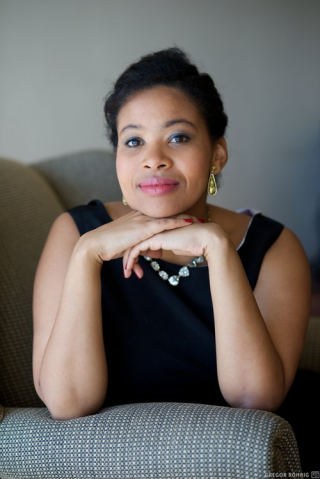
  • Julia Faulkner ~ Vier Letzte Lieder

    Julia faulkner capriccio

    Above: Julia Faulkner as the Countess in Strauss’s CAPRICCIO

    Soprano Julia Faulkner sings Richard Strauss’s Vier Letzte Lieder with the orchestra of the Vienna State Opera conducted by Michael Halász; the performance took place in 1993. Listen here.

    Ms. Faulkner studied at the Eastman School of Music, and had a major career in both opera and concert. She had a long association with both the Bavarian State Opera and the Vienna State Opera, and she sang with such prestigious orchestras as the Concertgebouw, the Berlin Philharmonic, and the Cleveland Orchestra.

    Julia Faulkner was a Met Auditions winner in 1985, made her Met debut in 1994 as Arabella, and in 2001-2002 sang several performances as Marianne in ROSENKAVALIER and the Voice of the Falcon in FRAU OHNE SCHATTEN with the Company.

    She is currently Director of Vocal Studies at the Chicago Lyric Opera’s Ryan Opera Center. Her beautiful recording of Pergolesi’s STABAT MATER for Naxos is one of my favorites.

  • Sasha Cooke’s Cherubino @ The Met

    Sasha cherubino

    Above: mezzo-soprano Sasha Cooke in a Cherubino selfie; borrowed from Sasha’s Facebook page

    Author: Oberon

    Thursday April 21st, 2022 – I very seldom go to evening performances at The Met these days; the long intermissions can leave me getting home after midnight, which makes me nervous. However, I could not possibly forego a chance to see Sasha Cooke’s Cherubino at The Met, and since this cast did not have a matinee I could attend, I went tonight with a plan to stay for two acts, thus hearing both of Sasha’s arias. Once there, the excellence of the entire cast made me wish I could stay to the end…to give Sasha a big “bravissima” during the bows.

    The Met’s current NOZZE DI FIGARO production, needless to say, is updated, having a sort of Downton Abbey feel. The set, of metallic latticework, seemed ugly at first, but I soon got used to it as it revolved from room to room. Richard Eyre’s staging is excellent, each character being finely delineated. I “learned” this opera in the late 1960s when I attended several performances of the New York City Opera’s English-language production, and the words kept coming back to me this evening: opera in English works well for comedies. Of course, tonight it was Italian that was being sung.

    Pfeffer-nimrod-david-resized

    The Israeli conductor Nimrod David Pfeffer (above) made his Met podium debut tonight; a member of the Company’s music staff since 2014, Maestro Pfeffer was given this last NOZZE of the current run, and he did a very fine job. The brisk overture set the tone of the evening, and he kept the energy level high whist still allowing the singers some leeway here and there to spin out their lines, or add a bit of embellishment. A couple of times, things got out-of-sync; but this was swiftly remedied. Of special note this evening were the expert continuo players: Howard Watkins (fortepiano) and Julia Bruskin (cello)…bravi!!

    Every person in the cast was outstanding; from both a vocal and a theatrical point of view, this NOZZE stood with the finest performances of this masterpiece that l have attended.

    Nozze 2

    Above, in a Ken Howard/Met Opera photo: Gerald Finley, Federica Lombardi, Christian van Horn, and Ying Fang

    Let’s start with the title-role: Christian van Horn’s Figaro was at the same entrancing level as his Mefistofele here in 2018. With his house-filling voice and tall, slender frame, this singer compels you to attend to his every note, word, and gesture; yet somehow he also always manages to be part of the ensemble, so attentive to everything that happens around him. His “Se vuol ballare” and “Non piu andrai” were splendidly sung. 

    Mr. van Horn and the lovely Ying Fang as Susanna made a cozy couple; they were very comfortable with each other physically, and their by-play in the opening scene was quite intimate. It seemed obvious that, while their marriage vows were as yet unspoken, this would not be a “brautnacht” in the true sense of the word. Ms. Fang’s singing was simply delicious; her voice so sweet and clear in the big House. As an actress, she proved deft and subtle, with expert timing and witty facial expressions. One can hear already a Contessa in her future, but for now let us savour her delectable Susanna.

    Lombardi finley

    Above, the Almavivas: Ferderica Lombardi and Gerald Finley; a photo borrowed from Mr. Finley’s Twitter page

    Gerald Finley’s Count was yet another feather in the cap of this wonderful Canadian bass-baritone, who I last saw as a magnificently-sung Athanaël in THAIS in 2017. He gave a perfect portrayal of the predatory Count, constantly thwarted by Figaro & Friends. I was surprised to discover that Mr. Finley is in his 60s now: he sounds and moves like a much younger man. The voice is in fine estate, including an interpolated top note as his dismissed his wife’s story about Cherubino’s presence in her boudoir: “I don’t believe you!”

    I heard the Italian soprano Federica Lombardi earlier this season as Musetta in BOHEME and thought she was good but unexceptional. Reading her Playbill bio tonight, I found that it’s loaded with Mozart roles; and then, hearing her “Porgi amor“, I could easily understand how her Mozart is valued. The voice is clear, with a kind of quiet allure; she sometimes employs straight-tone to lovely effect, and her dynamics gave me tingles of delight. In the ensemble where her husband tries to win her forgiveness, Ms. Lombardi’s voice flew up to two crystalline high-Cs. A tall, slender woman, the soprano looks striking onstage, and she conveyed the Contessa’s nobility and the long-suffering abuse she’s endured in he marriage. But also: she let us know that Rosina is still a young woman, and understandably tempted by the over-sexed Cherubino. Ms. Lombardi is a valuable addition to The Met roster

    Nozze

    Above, two girls and a boy in a bedroom: Ying Fang, Federica Lombardi, and Sasha Cooke; a Met Opera photo

    I first heard Sasha Cooke when she was a Met Young Artist; she was in the same ‘class’ as my lovely Lisette Oropesa, and they both had their ‘stepping out’ in solo parts in HANSEL & GRETEL: Sasha as the Sandman, and Lisette as the Dew Fairy. I heard Sasha at various Young Artist presentations, and was much taken with both her voice and her distinctive personal beauty. Since then, she has become a world-class recitalist whilst continuing to take on choice operatic roles. This season, after being absent since 2008, Sasha returned to the Met as Edwige in Handel’s RODELINDA and as Cherubino.

    The first thing I noticed about about Sasha tonight – aside from what a handsome boy she makes – was that the voice has grown larger and warmer over time, without losing its unique qualities. In the playful “Non so più cosa son“, she handled the Maestro’s swift tempo with complete assurance, and then made a very touching impression as the page turns more pensive at “E se non ho chi mi oda...” before polishing it off with a joyous …”parlo d’amor con me!”  In the page’s trademark aria, “Voi che sapete“, Sasha’s warm tone and perfect diction set her comfortably in the high echelon with my delightful Cherubinos of the past: Biancamaria Casoni, Evelyn Lear, Rosalind Elias, Kay Creed, Helene Schneiderman, Frederica von Stade, Susanne Mentzer, and Susan Graham.

    Sasha’s Cherubino was a lively youth, crawling under the bed to hide from the Count, enjoying her transformation into a girl, and finally clambering up a tall armoire to leap out of the window.  In sum, she simply lived the part…and it was very sweet to read that Ms. von Stade had sent Sasha her bejeweled ‘Cherubino’ shoe buckles to honor Sasha’s return to The Met. Now, we just need to keep her here!

    Four top-flight singing actors graced the cast with their presence: Elizabeth Bishop (whose Berlioz Dido and Gluck Iphigenie I had the good fortune to see) was a voicey Marcellina, with astute comic timing, whilst Maurizio Muraro, a basso buffo the great tradition of Salvatore Baccaloni and Fernando Corena, gave a powerful rendering of Bartolo’s “vendetta” aria. Paul Corona’s strong-toned Antonio was another plus, trying hard not to be duped by Figaro’s made-up story of who it was who jumped from the window. 

     As Don Basilio, Giuseppe Filianoti revealed his still-beautiful voice aligned to the touching colours he found in the words – something that comes naturally to a native Italian.

    ~ Oberon

  • 50 Years Ago ~ End of The Bing Era @ The Met

    Montserrat_Caballé

    Above: Montserrat Caballé

    On April 22nd, 1972, fifty years ago today, a matinee of Verdi’s DON CARLO was the final opera performance of Sir Rudolf Bing’s reign at The Metropolitan Opera. That evening, a gala concert featuring many great artists of the day paid tribute to the departing general manager.

    I attended the matinee, and I tried to get a ticket for the evening’s farewell concert, but none were to be had. Here’s what I wrote in my diary about the afternoon’s DON CARLO:

    “In spite of a few shortcomings, this was for the most part a superb and highly enjoyable performance; the opera itself is magnificent. Francesco Molinari-Pradelli’s conducting was dutiful, and not very inspired. I found myself wishing for a different maestro.

    All the singers were perfectly suited to their roles. Two fine tenors – Leo Goeke as Count Lerma and Rod MacWherter as the Herald – sounded wonderful in their brief musical moments. Lucine Amara and Frederica von Stade graciously took on small roles in honor of Mr. Bing: Ms. Amara repeated her 1950 Met debut role as the Celestial Voice to lovely effect, whilst Ms. von Stade stepped back from such roles as Nicklausse, Hansel, and Cherubino to make a sensational Theobald, the queen’s page. What a voice this mezzo has, and how boyish and alert her acting was! Paul Plishka was amply resonant as the mysterious Friar (aka Charles V).

    John Macurdy sang very well as the Grand Inquisitor, joining the great Cesare Siepi’s Philip II to make the confrontation of church and state a chilling scene. The Siepi voice remains impressive, giving us a wonderfully personal “Ella giammai m’amo“; his acting and bearing left nothing to be desired. Bravo!

    Grace Bumbry as Eboli gave one of the finest performances I have heard from her. A couple of snags in the Canzone del Velo were quickly forgotten as she swept thru the fiery Garden Scene trio and on to a striking “O don fatale” which elicited great applause. Bumbry looks sensational onstage, though her acting is sometimes mannered.

    Franco Corelli did not seem as vocally secure in the title-role as is the 1970 performances with Raina Kabaivanska, but still quite exciting. His singing was sustained and well-modulated, and of course he looks great onstage, though as an actor he sometimes went overboard. Still, Corelli always ignites the crowd.  Sherrill Milnes sounded better today than he did earlier in the season; his Posa is a masculine, commanding figure, and he makes you care about the character’s fate.

    Standing head and shoulders vocally above her colleagues, Montserrat Caballé was a sublime Elisabetta. Her regal bearing and innate sense of nobility made her physical stature irrelevant: she in unquestionably a queen in every sense of the word. She looked magnificent in the costumes, especially the rich red gown of the Auto da Fé scene. Ms. Caballé’s singing was thrilling from first note to last, and it is a pleasure to watch her sing: she expends no evident effort, whether producing an ensemble-topping forte or a shimmering pianissimo.  Her farewell to the Countess of Aremberg (both verses) was a poised moment of poetic beauty. All afternoon, the diva seemed to inspire her colleagues, especially in the Closet Scene quartet which was a highlight of the performance. And in the great aria “Tu che le vanita“, Ms. Caballé rose to spectacular heights, pouring out the queen’s despair rich-toned phrases, and weaving in uncanny pianissimi of spine-tingling delicacy. The aria won a huge ovation. And then La Caballé ended the evening by holding the opera’s final note FOREVER! Her Elisabetta ranks with the greatest operatic interpretations I have experienced to date. Bravississima!!!

    Don carlo-1 jpg

    Montserrat Caballé’s sensationally sustained final note at this performance is preserved on this recording of the opera’s ending from the broadcast: Cesare Siepi is Philip II, John Macurdy is the Grand Inquisitor, Placido Domingo is Don Carlo, and Paul Plishka’s is the Voice of Charles V.  Listen here.

    ~ Oberon

  • Ghena Dimitrova: Berlioz ~ La Mort de Cléopatre

    Ghena d

    The great Bulgarian soprano Ghena Dimitrova sings Hector Berlioz’s La Mort de Cléopatre at a concert given in Valencia, Spain, in 1995.

    Listen here.

  • Limón Dance Company @ The Joyce

    José+Limón+-++Photo+by++Paul+Draper

    Above: choreographer José Limón, photo by Paul Draper

    Tuesday April 19th, 2022 – The Limón Dance Company celebrating their 75th Anniversary Season with performances at The Joyce Theatre. This evening marked my third experience watching the Limón troupe: the first was in 2008, and more recently in 2019. There have been quite a few changes in the Company’s roster since my last viewing, including the departures of such entrancing dancers as Jacqueline Bulnés and Jesse Obremski. But the current ensemble is a staggeringly beautiful assemblage of forms and faces.

    Each work was prefaced by commentary from an unseen narrator…spoken by my longtime friend, actor Dion Mucciaito. These brief speeches provided us with interesting background material for the works being performed. But I wish Dion had appeared onstage to impart this information, because…he’s such a great-looking guy!

    Doris Humphrey was José Limón‘s inspiration and mentor. Watching Humphrey’s achingly gorgeous AIR FOR THE G-STRING, created in 1928, gives us a sense of the timeless resonance – and the great necessity – of dance in our lives. Bringing to mind the iconic female danced-rituals of Isadora Duncan, AIR FOR THE G-STRING shows us the value of great music as the inspirational springboard for creating danceworks that will endure.

    Limonphotochristopherjonesairforthegstring2022

    Above: from Humphrey’s AIR FOR THE G-STRING; photo by Christopher Jones

    From the curtain-rise – on the dancers in silhouette against a rose-coloured back-panel – to final pose, AIR FOR THE G-STRING held us under its spell. Five women, clad in simple gowns of varied hues and long Renaissance-style golden cloaks with trains, move slowly in processions and circling motifs. Though not in any way religious in feeling, it conveys a depth of spirituality that speaks to me poignantly.

    This evening, Frances Lorraine Samson, a petite woman with a space-filling presence, led the ensemble: Mariah Gravelin, Deepa Liegel, Jessica Sgambelluri, and Lauren Twomley…distinctive beauties all. This Humphrey work is part of that long continuum of dances of sisterhood that spans the centuries from the swans, slyphs, shades, and Wilis of classical ballet, through the more intimate Duncan, to Graham’s epic CHRONICLE, Balanchine’s SERENADE, Robbins’ ANTIQUE EPIGRAPHS, and Lydia Johnson’s CROSSINGS BY RIVER. Watching this spell-binding work tonight gave me an incredible lift of spirit – something so desperately needed in these bleak days as the world sometimes seems to be crumbling around us.

    Two Limón masterpieces were central to this evening’s program. The first of these, PSALM, dates from 1967. The choreographer drew inspiration from the French author Andre Schwarz-Bart’s semi-historical novel, “The Last of the Just,” which traces the martyrdom of the Jews through thirty-six generations of the Levy family, ending at Auschwitz.

    Limonpsalmphotobychristopherjones infrontnicholasruscica

    Above: Nicholas Ruscica in Limón’s PSALM; photo by Christopher Jones

    For PSALM, Limón was unable to obtain the music he wanted to use – Stravinsky’s “Symphony of Psalms” – so he created the work in silence. Nearing the date of the premiere, the choreographer asked composer Eugene Lester to provide a score, based on his “million counts”. Later, Limón disciple Carla Maxwell, feeling the choreography called for something grander, commissioned a score from Jon Magnussen which included a full chorus, ten instruments, and a baritone soloist; it was to the Magnussen score that I saw PSALM performed in 2019. This evening, the Lester score – more intimate and highly personal – was back in place. Lester’s score is percussion-based, features a male singer/speaker, and somehow feels right.

    Superbly lit Al Crawford, PSALM is a story of the triumph of the human spirit over death, created by Limón at a time when his own untimely death from pancreatic cancer loomed before him. The Lester score, while quite spare in contrast to the Magnussen, provides vividly contrasted rhythms which give the dancers an aural roadmap for the movement. 

    Eight dancers appear, seemingly searching for someone…or something. The whole Company then takes the stage, moving in finely-wrought patterns. In one passage, they kneel in a row, reminding me yet again of Robbins’ ANTIQUE EPIGRAPHS. Dancer Nicholas Ruscica was the central figure in tonight’s performance, commencing with a solo to the sound of a baritone voice. We hear the word “Adonai” (Hebrew for ‘God’) which put me in mind of Krzysztof Penderecki‘s monumental SEVEN GATES OF JERUSALEM; with such references, PSALM became more and more meaningful to me as it progressed.

    Mr. Ruscica’s dancing was very subtle and expressively detailed. As the comings and goings of the populace surged around him, the danseur‘s movement took on a hypnotic, other-worldly feeling. He collapses; to delicate music, the women tend to him. He then awakens and begins to dance, first on his knees, and then – gathering strength – he rises. The group swarm about him in a celebratory dance. Circling in a dazzling passage, they lift him aloft. 

    PSALM thrilled me tonight, even more than it did in 2019. To me, it seems a dance very much for our time. All of the dancers are captivating to watch, and each has a distinctive personality. Mariah Gravelin, Savannah Spratt, and Lauren Twomley had featured roles among the women, with the ladies from the opening Bach work all dancing divinely here. Terrence D. M. Diable, B. Woods, Joey Columbus, MJ Edwards, and Johnson Guo are the Company’s wonder-men, and it was great to see Robert M. (‘Buddy’) Valdez again, very tall and handsome, with eyes that dazzle. In this large-scale scale work, dancers from Limón 2 – Erin Hollaman, Nicole Miera, and Sabrina Olivieri – joined the full Company.

    José Limón created the solo CHACONNE in 1942 to the familiar music from Bach’s violin Partita #2. Onstage tonight, standing in separate pools of light, were violinist Johnny Gandelsman and guest-artist dancer Shayla-Vie Jenkins. Ms. Jenkins, a poised beauty with the gift of lyrical grace, wore trousers and a soft, loose-fitted blouse. When Mr. Gandelsman struck up the familiar Bach piece, the dancer began to move in place, her expressive arms and hands speaking to us in dance’s silent language. Later her movement becomes almost balletic, her dancing at once supple and courtly. With the violinist’s subtle nuances tempting the ear, the two made this Limón gem a sheer delight.

    Limononlyonewillrise.photochristopherjones.dancersSavannahSpratt MJEdwards BWoods(jumping)

    Above: Samantha Spratt, MJ Edwards, and B Woods in Tarpaga’s ONLY ONE WILL RISE; photo by Christopher Jones

    In line with the current quest for choreographer-based companies to find new works to provide fresh opportunities for their dancers once the founding choreographer has passed away, tonight we saw ONLY ONE WILL RISE, choreographed by Olivier Tarpaga. This work tells of the ‘dark horse’, the person who unexpectedly triumphs in the end: in this case, it was the the youthful-looking MJ Edwards, who made a very fine impression both in movement and presence, with a poetic face. The choreographer provides brief solos for the other dancers, too, as well as well-constructed ensemble passages. The work is quite dark, and the final illumination of the dancers, with Mr. Edwards having risen in their midst, was a beautiful moment.

    LimononlyonewillrisedancersJohnsonGuo  Nicholas Ruscica  Lauren Twomley

    Above: Johnson Guo, Nicholas Ruscica, and Lauren Twomley in ONLY ONE WILL RISE; photo by Christopher Jones

    What gave ONLY ONE WILL RISE its appeal was the music, composed by the choreographer and guitarist Tim Motzer, and played live onstage by Mr. Motzer, with his fellow musicians Daniel Johnson and Saidou Sangare. They were fantastic.

    It’s not easy to find danceworks that can appear on programs alongside the masterworks of some of the world’s all-time greatest choreographers without being eclipsed. The Balanchine, Graham, and Taylor companies have to work in this current situation, as does Limón. Perhaps though, it’s true that – as Miki Orihara once said – “To find the future of dance, we must look to the past.”

    ~ Oberon

  • @ My Met Score Desk for ELEKTRA

    Runnicles

    Above: Maestro Donald Runnicles

    Saturday April 16th, 2022 matinee – Feeling no need to again see Patrice Chéreau’s intimate staging of Strauss’s ELEKTRA in the vast space of The Met, I took a score desk this afternoon to hear my ‘second favorite’ opera (my #1 opera remains the same composer’s ARIADNE AUF NAXOS). While the Chéreau production is a misfit at The Met, it is fascinating to watch on DVD: look for it here.

    Today, The Met Orchestra under the baton of Donald Runnicles was the main attraction. They played Strauss’s astounding score for everything it’s worth: from the massive onslaughts of sound to those spine-tingling subtleties that the composer introduces at just the right moments. For the most part, Maestro Runnicles maintained a perfect balance between the orchestra and the voices, though – inevitably in this gruesome score – there were times when the voices were covered; and that might be what Strauss wanted all along. Mr. Runnicles also did everything he could to support soprano Nina Stemme, who was announced to be experiencing the effects of “seasonal allergies”. 

    If a singer needs to have an announcement made before the opera starts to the effect that she/he is suffering from some physical malady and asks our indulgence, this comes off as a cop-out. If said singer then goes on to give an abysmal performance, she/he has covered her/his ass, and the audience will be forgiving.

    Today’s pre-curtain announcement of Nina Stemme’s allergy problem was not unexpected: she had been replaced (with success) by the debuting Rebecca Nash at the previous performance. But really, such announcements are unfair to the audience, who have paid good money to attend and who deserve to hear singers in their best of health. Ms. Stemme’s struggle today was palpable, and disturbing to hear. To me, it seemed like a simple case of taking on a role that is beyond her present capabilities. Signs of her vocal decline were evident in her 2016 performances here as Turandot and Isolde, and now – nearing the age of 60 – she has even less to work with. The result this afternoon was singing that was painful to the ear.

    Lise Davidsen was a thrilling Ariadne earlier this season, and her soaring top notes were amazing in the music of Chrysothemis today: high B-flat is definitely her “money note”. But the rest of the voice is not all that alluring, as her Four Last Songs at the Met’s Gala for Ukraine in March hinted at: the sound can get lumpy and inexpressive. I am wondering if she is really the new goddess of sopranos, or just another flash in the pan. Time will tell.

    Schuster elektra

    Overall, top honors today went to Michaela Schuster (above, in a Met Opera photo) for her vivid and subtle singing of Klytemnestra’s music. The mezzo-soprano illuminated the terror and insinuation of the character’s music with her great verbal clarity, making her long narrative the most engrossing scene in the opera.

    Greer Grimsley’s dark, growling sound was ominously powerful in the  music of Orest; his “Laß den Orest…” was very impressive, and indeed it was he, rather than Ms. Stemme, who made the Recognition Scene – the heart of the opera – so riveting this afternoon.

    Stefan Vinke did what he could with the brief, demanding, and thankless role of Aegisth. Harold Wilson made his mark as the Guardian, and the lively singing of Thomas Capobianco, set against the world-weariness of the inimitable Richard Bernstein, made the scene of the Young and Old Servants a perfect vignette.

    Speaking of inimitable, Tichina Vaughn wonderfully chesty “Wo bleibt Elektra?” got the opera off to a perfect start. Her sister-Serving Women – Eve Gigliotti, Krysty Swann (interesting timbre indeed), and Alexandra Shiner – did much with their quick exchanges of lines. And the beloved Korean soprano Hei-Kyung Hong, as the valiant Fifth Maid who suffers a whipping for her brave defense of Elektra, sang poignantly, with a crystalline top note to climax the opera’s opening scene.  

    Metropolitan Opera House
    Saturday April 16th, 2022 ~ matinee

    ELEKTRA
    Richard Strauss

    Elektra....................Nina Stemme
    Chrysothemis...............Lise Davidsen
    Klytämnestra...............Michaela Schuster
    Orest......................Greer Grimsley
    Aegisth....................Stefan Vinke
    Overseer...................Alexandra LoBianco
    Serving Woman..............Tichina Vaughn
    Serving Woman..............Eve Gigliotti
    Serving Woman..............Krysty Swann
    Serving Woman..............Alexandria Shiner
    Serving Woman..............Hei-Kyung Hong
    Confidant..................Alexandra LoBianco
    Trainbearer................Krysty Swann
    Young Servant..............Thomas Capobianco
    Old Servant................Richard Bernstein
    Guardian...................Harold Wilson

    Conductor..................Donald Runnicles

    ~ Oberon

  • Flautist Anthony Trionfo @ The Morgan Library

    Trionfo

    Thursday April 14th, 2022 – Young Concert Artists presenting flautist Anthony Trionfo (above, in a Matt Dine portrait) in a noontime recital at The Morgan Library. Mr. Trionfo was joined by Emmanuel Ceysson (harp), Hsin-Yun Huang (viola), and Albert Cano Smit (piano) in a program of music by Debussy, Prokofiev, and YCA Composer Katherine Balch.

    I first heard Mr. Trionfo in recital at Merkin Hall in 2018 and was dazzled by his extraordinary talent. This afternoon, he chose works especially dear to him and then invited colleagues he especially enjoys working with to join him. The result was a very personal and pleasing hour of music-making of the highest order. 

    Cano_Smit_Albert4_credit_Chris_Lee

    Above: pianist Albert Cano Smit, photo by Chris Lee

    Sergei Prokofiev’s Sonata in D-major, Opus 94, opened the concert; Mr. Trionfo’s collaborator here was the tall, handsome Dutch/Spanish pianist Albert Cano Smit.  

    The sonata has a lyrical Moderato start, which soon peps up. A familiar melody is heard, and then there’s a sort of fanfare-like passage. Fanciful fluting follows, high and swift. Calming with more sustained themes, the familiar melody returns, moving on to a soft ending. The charming Scherzo has an exuberant quality, which both players relished. A peaceful interlude gives way to a feast of coloratura from Mr. Trionfo. The Andante has a dreamy quality, and an air of mystery. The concluding Allegro con brio opens with a rhythmic dance, and there are cascades of notes from the flautist. At the piano, Mr. Smit keeps things zipping along, and then has a strikingly dramatic interlude. A pensive melody for the flute leads on to the sonata’s flashy finish. The Trionfo/Smit duo reinforced the high esteem in which I hold Prokofiev’s music with their brilliant playing.


    Hsin-yun-huang

    For Ms Balch’s miniature, Musica Spoila, violist Hsin-Yun Huang (above) joined Mssrs. Trionfo and Smit. In announcing the work, Mr. Trionfo spoke of the intense concentration needed by the three players for this quirky, fifteen-minute score; he said the composer wanted the music to sound like a “crisp, light machine”, and the trio achieved just that quality.

    The music putters and sputters, with the viola scraping and plucking. Each player produces various sound effects: Mr. Trionfo makes eerie breathing noises on the piccolo, and the piano is sometimes tapped or plucked from within. It’s all very subtly done, and perfectly timed. The piece was over in the twinkling of an eye.

    I had heard Hsin-Yun Huang earlier this season playing Arnold Schoenberg’s Verklärte Nacht with Chamber Music Society of Lincoln Center; I was very glad of this opportunity to hear her again today.

    Emmanuel

    Above: harpist Emmanuel Ceysson

    Claude Debussy’s Sonata for flute, violin, and harp brought forth harpist Emmanuel Ceysson, who gained a large following of fans during his five seasons with The MET Opera Orchestra. Currently, he is principal harpist with the Los Angeles Symphony. He’s a great-looking guy whose love of music is palpable; watching Mr. Ceysson is as pleasing as listening to him.

    From the gentle start of the sonata’s opening Pastorale, the intriguing blend of the sweet-toned flute, the poignant viola, and the the caressive harp gives us a feeling of peace. In the lower range, Hsin-Yun Huang’s viola has a lovely duskiness. After a passage of gentle animation, the movement ends with a dreamy hush.  The central Interlude soon takes on the feeling of a gentle romp in a Spring meadow; to magical glissandi from Mssr. Ceysson’s golden harp, the sound of the flute and viola entwine in blithe melodies which become quite lively. The vibrant harp sets off the concluding Allegro con brio, giving an agitato feeling. The flute and viola exchange simple passages. The pace quickens, and the blended textures of the three instruments become denser, delighting the ear.

    The trio were enthusiastically applauded for their brilliant playing and, returning for a bow, they called on Mr. Smit to join them onstage.

    The music today was twice interrupted by the loud ringing of cellphones. As always, these intrusions came at just the wrong moments; I felt sorry for the players, who carried on despite the distraction.

    ~ Oberon

  • Philharmonic Ensembes~Ewazen/Stravinsky/Dvořák

    Ewazen

    Above: composer Eric Ewazen

    Author: Oberon

    Sunday March 27th, 2022 matinee – I always enjoy the Philharmonic Ensembles series at Merkin Hall, and I was very glad to be there this afternoon for an excellent program. The players of the New York Philharmonic love playing chamber music together when time allows, and this afternoon’s lineup of artists was really impressive.

    Composer Eric Ewazen greeted us prior to the program’s opening work: his Ballade, Pastorale, and Dance for the unusual combination of flute, horn, and piano. The last time I heard an Ewazen score was in 2018, when the composer’s violin concerto was used by the great choreographer Paul Taylor for his last major work: Concertiana. Today, introducing his Ballade, Pastorale and Dance, Mr. Ewazen touched on his Ukrainian heritage, and then the performance began.

    William_wolfram

    For the Ewazen trio, the tall and distinguished pianist William Wolfram (above) was joined by the Philharmonic’s stellar flautist Mindy Kaufman, and the orchestra’s current Acting Associate Principal Horn, the radiant Leelanee Sterrett.

    The opening Ballade begins with a darkish motif from the piano, soon joined by the mellow depth of the horn and the gleaming upper range of the flute. The blend of these three voices was really delectable, making me wish other composers would write for this particular combination. From a long flute trill and spiraling piano figurations, the music turns animated, and then calms for a really gorgeous andante. Then another burst of vigor, and another contrasting slower passage before a brisk final statement.

    Rippling sounds from Mr. Wolfram keyboard introduced a lovely Pastorale theme from Ms. Sterrett’s horn, which is then harmonized by Ms. Kaufman’s flute. Here, the contrast between burnished richness of the horn with the silvery sweetness of the flute truly delighted the ear. Lovely phrases follow, one after another, and then Ms. Sterrett’s horn sings a lyrical theme over the warbling flute and the piano’s arpeggios. A feeling of hope seems to rise within us as the Ballade reaches its solemn end.

    With sparkling sounds from Ms. Kaufman’s flute, and with Mr. Wolfram’s piano sounding in the upper octaves, we are ready to Dance. Ms. Sterrett’s summoning horn draws us in to this lively and tuneful music, which gets quite grand as the work comes to its close.  Such a unique treat this music is! Other choreographers might do well to follow Paul Taylor’s lead and have a listen to Mr. Ewazen’s music.

    More music I’d never heard before – Igor Stravinsky’s Octet for Winds – came next. For this, a brilliant ensemble drawn from the ranks of the Philharmonic’s wind sections were gathered: Robert Langevin, flute; Pascual Martínez Forteza, clarinet; bassoonists Judith LeClair and Kim Laskowski; trumpeters Christopher Martin and Thomas Smith, with Colin Williams on trombone and George Curran on bass-trombone. Mr. Langevin, in his introductory remarks, told us a story about a dream Stravinsky had had in which this particular set of instruments were playing together, and he wrote this octet to try to capture what he’d heard in his dream.

    The Octet is in three movements, though there was no discernible break between the second and third. A trumpet note introduces the Sinfonia, followed by a blending of woodwind voices. The full ensemble engage in music that is wittily paced and harmonized. A brassy march springs up, with trumpet calls and chuckling bassoons. The Sinfornia comes to a sudden halt.

    The Theme and Variations, which runs directly into the Finale, starts out with plodding brass and unison woodwinds; they then switch roles. Scurrying bassoons herald a military brass band passing by, and everyone falls in. Suddenly, I hear a waltz, with Mssrs. Langevin and Martínez Forteza taking the lead. Brilliant rhythms briefly take over, then there’s a slow bassoon passage, taken up by the clarinet and the brass. The music becomes chorale-like, before the flute and clarinet have a dialogue. The bassoons, sounding jolly, are joined by the clarinet; shifting rhythms carry us to the Octet‘s finish.     

    The afternoon’s program ended with a magnificent performance of Antonín Dvořák’s beloved Piano Quintet in A-major, Op. 81, one of his most familiar and oft-played works. The musicians here were violinists Kuan Cheng Lu and Su Hyun Park, violist Rebecca Young, and cellist Ru-Pei Yeh, with Mr. Wolfram returning to the piano. Ms. Young introduced the piece, and then took up her viola to regale us in the numerous opportunities Dvořák provides for the instrument. Kuan Cheng Lu played the many magical violin melodies with Olde World sweetness, warmth, and emotion; and the composer has also been generous to the second violinist: Su Hyun Park, playing beautifully this afternoon. And the cello is prominent throughout, with Ru-Pei Yeh providing cordial tone and rhythmic finesse. At the piano, Mr. Wolfram sustained the excellent impression he made in the Ewazen, making me wish to hear him in a solo recital.

    The applause throughout the afternoon was rather subdued; the audience consisted largely of senior citizens (anyone older than me is a senior citizen!) and perhaps they lack the stamina to clap for a long time. I honed my applauding skills during the 20-minute ovations that often ensued during the last Golden Age at the opera, which ended years ago. These days, applause lasting more than five minutes is extremely rare. Well, we live in different times now: everyone’s constantly in a rush – to get to the theatre, and then to get home. As my commadre used to say, “No time for love.” 

    ~ Oberon

  • Crespin & Meliciani ~ AIDA Scene

    Meliciani

    Soprano Régine Crespin and baritone Carlo Meliciani (above) sing the father/daughter duet from Act III of Verdi’s AIDA; the performance is from Mexico City, 1962, with Nicola Rescigno conducting. Jon Vickers is heard as Radames.

    Listen here.

    Mr. Meliciani recently passed away at the age of 92. He was a popular star at La Scala, debuting there In 1959 as Ping in TURANDOT and continuing to sing there thru the 1970s, taking on the Verdi baritone roles. He performed at the major opera houses of Italy, where such roles as Scarpia, Tonio in PAGLIACCI, and Carlo Gerard in ANDREA CHENIER supplemented his Verdi list. Mr. Meliciani also appeared at Wiesbaden, Lausanne, in Greece, Mexico, and in the USA (Philadelphia and Hartford). 

  • Saxophonist Steven Banks @ The Morgan Library

    Steven banks

    Wednesday March 23rd, 2022 matinee – Young Concert Artists presenting a noontime “encore” concert by saxophonist Steven Banks (photo above) at the Morgan Library. Pianist Xak Bjerken joined Mr. Banks for a wonderfully varied program.

    From way back in my high-school days, I’ve loved the sound of the saxophone; I chose the French horn, but in band, I always sat next to our phenomenal first sax player. This afternoon was the first time I’ve ever attended a full recital of music for the instrument, and I was bowled over by Mr. Banks’ opulent sound, commanding technique, and deep musicality. 

    The program opened with Canadian composer Denis Bédard‘s Fantasie, a delightful piece which Mr. Banks played on soprano sax. As the afternoon evolved, he moved to alto sax, and then to tenor sax. The exuberant opening of the Bédard immediately established Mr. Banks as a virtuoso of the first order. His tone is luminous, his technique compelling, his breath control astonishing. Tall and slender, he is a charismatic musician, and he had the audience under his spell within seconds. Bédard makes the pianist an equal partner in this work, and Mr. Bjerken played with great clarity and feeling, both here and throughout the concert.

    The Fantasie features flowing melodies, with alternating passages of lyricism and animation; as the music takes a pensive turn, both artists made much of the sustained phrasing. Then, a da capo of the zestful opening speeds on to a quirky end.

    Xak Bjerken

    Above: pianist Xak Bjerken

    I became familiar with Paul Creston’s Sonata in E-flat Major, Op. 19, during the pandemic via YouTube; this afternoon, I was very glad for the opportunity to hear it played live. The piece was premiered by one of the most popular American saxophonists of his day, Cecil Leeson, in New York City in 1940. For this, Mr. Banks took up his alto sax.

    The sonata is in three movements; the first, marked “With Vigor“, has a lively beginning and goes on thru many contrasts of speed and flow, including  a warm, drawn-out melody and passages of bustling wit. Both Mr. Barnes and Mr. Bjerken showed off a wide range of dynamics. The second movement, “With Tranquility“, finds Mr. Bjerken with a solo which develops into a lovely song in which both artists showed a gift for finely-shaped phrasing and for finding appealing colours. The music becomes passionate, then turns dreamy. The sustained ending was immaculately rendered. Following a spirited opening the third movement – “With Gaiety” – moves on to an interlude wherein Mr. Banks summoned up some of his sweetest sounds. The music then breezes on to its finish.

    Now that we have Mr. Banks among us as a saxophone paragon, let’s hope contemporary composers will follow Paul Creston’s lead and bring us more sonatas – and/or concertos – for the instrument.

    Mr. Banks then spoke of the next three works, which are often featured as encores; he wanted to bring them to us as a set, and as such they were highly enjoyable to hear…their contrasts setting each work in high relief.

    First came Claude Debussy’s brief and haunting Syrinx, which is usually heard as a flute solo. Languorous and seductive, this music found fresh hues in the saxophone range: a dusky quality develops, and Mr. Banks’ fantastic dynamic control made it so alluring.

    From Astor Piazzolla, we heard Milonga del Angel, which Mr. Bjerken commenced with a slow swaying motif from the piano. The music is full of suggestion: at first inviting, then more insistent.  

    Steven Stucky’s Scherzino is playful and slithering at first, then becomes songful, and finally dotty. The piano goes high before we reach a sudden end.

    Mr. Banks’ next offering was a large piece he wrote himself: Come As You Are. It is in four movements, three honoring of his siblings, and the final one dedicated to his mother; each movement drew its inspiration from a beloved spiritual. For this, Mr. Banks brought forth his tenor sax.

    In the first movement, Lift My Eyes, we could hear echoes of “My Lord, What a Morning”. There are big bursts of melody, and the pianist plays an important role here. An uncannily sustained note from Mr. Banks led to a slow, quiet cadenza.

    Times of the Storm draws on “Wade in the Water”; it is bustling, jazzy music. At one point, Mr. Banks turned his back to the audience and achieved a sort of echo effect as Mr. Bjerken reached into the piano to pluck individual strings. A sense of quiet rapture settles over us; from the keyboard, Mr. Bjerken plays swirling pianissimo spirals of notes.  

    Strength of my Life moved me deeply, since the old song “His Eye Is On The Sparrow” was a great favorite of my maternal grandmother, who would sing it to me in her old age with a quavering voice. From a lulling start by the piano, the saxophone sings to us passages that veer from poignant to passionate. Mr. Banks finishes this movement with a long tone that slowly vanished into the air. What a sound!

    For the fourth and concluding movement of this suite – Lift My Hands – Mr. Banks turned to “I Still Have Joy”. A somber start soon grows more lively. I cannot recall ever hearing a more sumptuous saxophone tone than what Mr. Banks gave us here…well, all afternoon, actually.  And then he turns to some flights of coloratura before a big build-up to the finish.

    This singular creation, at once personal and universal, was such an impressive undertaking for the artist. His family were present, hearing the music performed ‘live‘ for the first time.

    The program concluded with Pedro Iturralde’s Pequena Czarda, which has a dramatic start before becoming a big sad-love song. A fast and bouncy czardas pops up, slows for an interlude, and then ends with a swirl of notes.

    Mssrs. Banks and Bjerken gave us so much to enjoy this afternoon. The concert marked a reunion with my high-school classmate Deb Hastings, who came down from Connecticut specially for the occasion. After the two-year pandemic lull, it was wonderful to see her again…and to hear together such fresh, vibrant music so engrossingly played.

    ~ Oberon