Category: Opera

  • Alessandra Marc’s Met Debut ~ 1989

    Marc

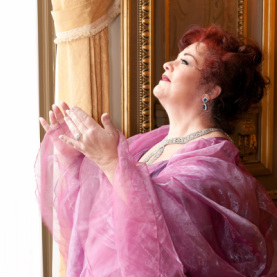
    Alessandra Marc made her Metropolitan Opera debut on October 14th, 1989. My friend Paul and I were there. Soon after, another friend sent me a recording of parts of the performance.

    AIDA ~ duet – Alessandra Marc & Stefania Toczyska ~ Met 10-14-89

    Alessandra Marc – Met debut as Aida – excerpts – w Martinucci & Toczyska – 10~14~89

    Marc aiida-1

    Here’s my diary entry, written late on the evening of the date; despite the excitement of the Marc debut, Stefania Toczyska’s Amneris was the afternoon’s masterpiece:

    “Overall, a good performance and better-than-good much of the time. Audience most distracting (candy wrappers at their worst!). The settings are grand and it’s a Met-sized production, but very little happens dramatically – it falls to the individual singers to create theatrical sparks.

    Christian Badea favored slow tempi in general – but his support of the singers, in allowing them time to breathe and to sustain the vocal line, was admirable. The orchestra played very well, though there were times when their volume threatened to swamp even this big-voiced cast. The ballet was rather silly, though well-danced.

    While the Marc debut was the afternoon’s focal point, it was the superb Amneris of Stefania Toczyska who topped the cast. She sang with tremendous authority and passion, and she alone of the principals had a grasp of the drama. Her upper range has grown more secure over time, whilst maintaining a strong chest voice; her lovely entries in the opening passages of the Boudoir Scene were especially fine. And Toczyska is ever alert to the situation in every scene, creating a wonderfully feminine portrait of the ultimately distraught princess.

    The Judgement Scene was her crowning glory, a tremendously thrilling twenty minutes. After her beautifully sustained “Io stessa lo gettai…” the audience broke in with sustained applause. She concluded the scene with a fiery verbal assault in the priests, followed by a sustained final note before rushing off in a fury. Toczyska is a very attractive singer and her Amneris was deeply satisfying to experience. To top it off, she graciously pushed the debuting Aida, Alessandra Marc, forward during the group bow and started applauding her!

    Marc made a highly successful Met debut. Her voice has a curiously stimulating throb; at times it lacks resonance in the lower range, but the top has a lovely, almost girlish quality (such as we sometimes hear on recordings of sopranos from the early days of audio documentation): Marc’s voice blooms as it ascends. 

    Although lacking the ultimate cresting power in ensembles that some sopranos can muster, the soprano’s singing abounded in gorgeousness: starting with “Ritorna vincitor“, she won the audience with her opulent tone and marvelous turnings of phrase. The unaccompanied descending phrase in the Triumphal Scene was especially superb, and in the Nile Scene she proved herself with a splendid “O patria mia“, rising to a sustained, glowing high-C, and phrasing magically. 

    Marc did not make the most of the dramatic phrases of the duet with Amonasro, as some Aidas do, but in the seductive passages of the duet with Radames (“La tra foreste virgini…”) she sounded truly alluring. Likewise, the opera’s final duet showed the Marc voice at its distinctive best. Applause for the soprano was enthusiastic throughout the evening, and at the end the audience showered her with enthusiastic bravas

    Nicola Martinucci was a far more than capable Radames: his bronze-tinged voice has a nice metallic edge when needed, with strong tops – one or two of which were almost imperceptibly a hair’s breadth flat. Martinucci’s “Celeste Aida” went very well, with a sustained conclusion that won a vociferous response from the crowd. His voice cut thru the ensembles of the Triumphal Scene, and he found his lyric side in the Nile Scene before ending with a prolonged, ringing “Io resto a te!” Together with Toczyska, Martinucci made vocal sparks fly in the Judgement Scene, and he finished the opera strongly. Throughout, his slender, masculine figure looked great onstage, and his authentic Italian sound was more than welcome. 

    Juan Pons really sang Amonasro – no barking or hectoring. His warm sound and exemplary phrasing gave his singing a wonderfully noble sense of humanity…really impressive.

    Margaret Jane Wray sang beautifully as the Priestess, and Mark Baker strongly as the Messenger. Franco de Grandis sounded rough and effortful as the King, but even so he outshone the sadly out-of-voice Ramfis of Stephen Dupont.

    Despite the audience distractions, Paul and I were glad to have been there, and we enjoyed talking over the performance on the drive home.”

    ~ Oberon
  • Alessandra Marc’s Met Debut ~ 1989

    Marc

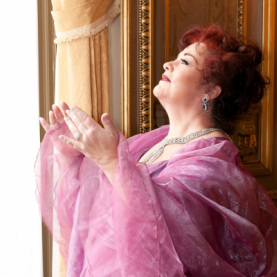
    Alessandra Marc made her Metropolitan Opera debut on October 14th, 1989. My friend Paul and I were there. Soon after, another friend sent me a recording of parts of the performance.

    AIDA ~ duet – Alessandra Marc & Stefania Toczyska ~ Met 10-14-89

    Alessandra Marc – Met debut as Aida – excerpts – w Martinucci & Toczyska – 10~14~89

    Marc aiida-1

    Here’s my diary entry, written late on the evening of the date; despite the excitement of the Marc debut, Stefania Toczyska’s Amneris was the afternoon’s masterpiece:

    “Overall, a good performance and better-than-good much of the time. Audience most distracting (candy wrappers at their worst!). The settings are grand and it’s a Met-sized production, but very little happens dramatically – it falls to the individual singers to create theatrical sparks.

    Christian Badea favored slow tempi in general – but his support of the singers, in allowing them time to breathe and to sustain the vocal line, was admirable. The orchestra played very well, though there were times when their volume threatened to swamp even this big-voiced cast. The ballet was rather silly, though well-danced.

    While the Marc debut was the afternoon’s focal point, it was the superb Amneris of Stefania Toczyska who topped the cast. She sang with tremendous authority and passion, and she alone of the principals had a grasp of the drama. Her upper range has grown more secure over time, whilst maintaining a strong chest voice; her lovely entries in the opening passages of the Boudoir Scene were especially fine. And Toczyska is ever alert to the situation in every scene, creating a wonderfully feminine portrait of the ultimately distraught princess.

    The Judgement Scene was her crowning glory, a tremendously thrilling twenty minutes. After her beautifully sustained “Io stessa lo gettai…” the audience broke in with sustained applause. She concluded the scene with a fiery verbal assault in the priests, followed by a sustained final note before rushing off in a fury. Toczyska is a very attractive singer and her Amneris was deeply satisfying to experience. To top it off, she graciously pushed the debuting Aida, Alessandra Marc, forward during the group bow and started applauding her!

    Marc made a highly successful Met debut. Her voice has a curiously stimulating throb; at times it lacks resonance in the lower range, but the top has a lovely, almost girlish quality (such as we sometimes hear on recordings of sopranos from the early days of audio documentation): Marc’s voice blooms as it ascends. 

    Although lacking the ultimate cresting power in ensembles that some sopranos can muster, the soprano’s singing abounded in gorgeousness: starting with “Ritorna vincitor“, she won the audience with her opulent tone and marvelous turnings of phrase. The unaccompanied descending phrase in the Triumphal Scene was especially superb, and in the Nile Scene she proved herself with a splendid “O patria mia“, rising to a sustained, glowing high-C, and phrasing magically. 

    Marc did not make the most of the dramatic phrases of the duet with Amonasro, as some Aidas do, but in the seductive passages of the duet with Radames (“La tra foreste virgini…”) she sounded truly alluring. Likewise, the opera’s final duet showed the Marc voice at its distinctive best. Applause for the soprano was enthusiastic throughout the evening, and at the end the audience showered her with enthusiastic bravas

    Nicola Martinucci was a far more than capable Radames: his bronze-tinged voice has a nice metallic edge when needed, with strong tops – one or two of which were almost imperceptibly a hair’s breadth flat. Martinucci’s “Celeste Aida” went very well, with a sustained conclusion that won a vociferous response from the crowd. His voice cut thru the ensembles of the Triumphal Scene, and he found his lyric side in the Nile Scene before ending with a prolonged, ringing “Io resto a te!” Together with Toczyska, Martinucci made vocal sparks fly in the Judgement Scene, and he finished the opera strongly. Throughout, his slender, masculine figure looked great onstage, and his authentic Italian sound was more than welcome. 

    Juan Pons really sang Amonasro – no barking or hectoring. His warm sound and exemplary phrasing gave his singing a wonderfully noble sense of humanity…really impressive.

    Margaret Jane Wray sang beautifully as the Priestess, and Mark Baker strongly as the Messenger. Franco de Grandis sounded rough and effortful as the King, but even so he outshone the sadly out-of-voice Ramfis of Stephen Dupont.

    Despite the audience distractions, Paul and I were glad to have been there, and we enjoyed talking over the performance on the drive home.”

    ~ Oberon

  • Gabriella Reyes ~ Tu che di gel sei cinto

    Snapshot reyes

    Soprano Gabriella Reyes sings Liu’s poignant aria “Tu che di gel sei cinta” from Act III of Puccini’s TURANDOT; Madeline Tsai conducts the Dallas Opera Orchestra.

    Watch and listen here.

  • Cheryl Studer ~ “Dich, teure Halle”

    Studer

    Soprano Cheryl Studer sings “Dich, teure Halle” from Wagner’s TANNHÄUSER in a televised concert from Munich in 1988. Leopold Hager conducts.

    Watch and listen here.

  • Julius Huehn

    Huehn-Julius-03

    Born at Revere, Massachusetts in 1904, bass-baritone Julius Huehn’s career centered at the Metropolitan Opera, where he sang over 225 performances with the Company in New York City and on tour. He also appeared with the opera companies of San Francisco, Chicago, and Philadelphia.

    His Met debut took place in 1935, as the Herald in LOHENGRIN. His Met roles included Wagner’s Wotan/The Wanderer, Donner, Gunther, Wolfram, Amfortas, Kothner, Kurvenal, and Telramund; Strauss’s Orestes, Jochanaan, and Faninal; Pizarro in FIDELIO, Escamillo, Sharpless, and the High Priest in SAMSON ET DALILA.

    Huehn left the Met in 1944 to serve in the Marine Corps during the final year of World War II. He returned in 1946 for a single performance as Wolfram. He subsequently taught at the Eastman School for many years, and passed away at Rochester, New York, in 1971.

    Julius Huehn as Kurvenal, with Lauritz Melchior:

    Julius Huehn & Lauritz Melchior – TRISTAN UND ISOLDE ~ scene from Act III

    Listen to Julius Huehn sing Wotan’s Farewell from WALKURE here, and the duet of Telramund and Ortrud (with Kerstin Thorborg) from the opening of Act II of LOHENGRIN here.

  • Rosette Anday

    Anday-Rosette - Copy

    The Hungarian mezzo-soprano Rosette Anday made her Vienna State Opera debut in 1921 at the age of 18 as Carmen. Franz Schalk, the Company’s director, had first heard the young mezzo-soprano in Budapest, where she studied at the local conservatoire whilst also taking violin lessons. Schalk engaged her immediately, and following her highly successful debut, she went on to become one of Vienna’s most beloved stars. Richard Strauss – no less – was Ms. Anday’s accompanist when she gave her first lieder recital in the Grosse Musikvereinssaal in Vienna soon after her debut.

    Rosette Anday’s roles included Mozart’s Cherubino and Dorabella, Verdi’s Preziosilla, Amneris, and Azucena, Wagner’s Fricka, Erda, Waltraute, Brangane, and Adriano in RIENZI, Laura in GIOCONDA, Dalila, and Klytemnestra. She was one of the youngest singers ever to be named ‘Kammersängerin‘.

    Banned from the stage during the Nazi occupation of Austria, Ms. Anday was able to resume her career immediately after the war, joining the renowned ensemble at the Theater an der Wien. In 1961, she celebrated the 40th anniversary of her debut with a performance of Klytemnestra.

    Also beloved as a concert artist and recitalist, Rosette Anday toured North and South America and appeared in Berlin, Paris, and at the Salzburg Festival. She passed away in 1977.

    Rosette Anday – Erda’s Warning ~ RHEINGOLD – 1948 – with F Frantz

    Rosette Anday – Printemps qui commence ~ SAMSON ET DALILA

    Rosette Anday – Mahler’s Urlicht

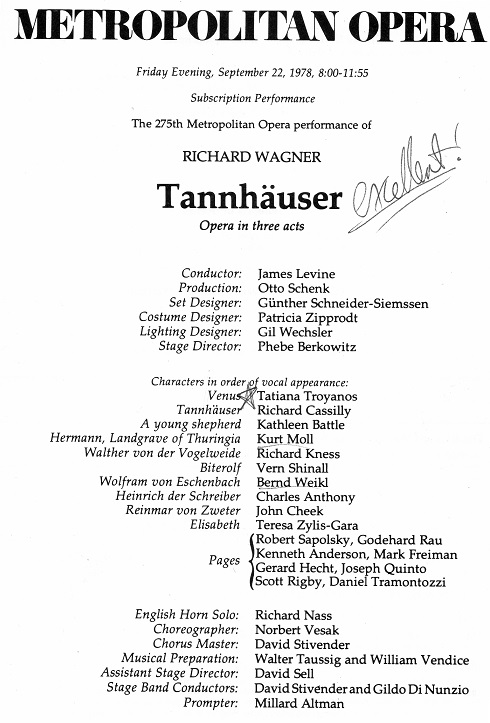
  • My First TANNHAUSER ~ 1978 @ The Met

    ONTannhauser1984

    Above: Richard Cassilly as Tannhauser and Tatiana Troyanos as Venus

    I saw Wagner’s TANNHAUSER for the first time in 1978 in The Met’s classic Otto Schenk/Gunter Schneider-Siemssen production, conducted by James Levine. Here’s what I wrote in my opera diary the morning after:

    TANNHAUSER – first time – great!! Really a superb production (equal to the LOHENGRIN, but the opera is less exciting…) The sets, costumes, direction, and choral work were all excellent. Levine had some bombastic moments, and some places where he covered the singers, but his pacing was excellent and the orchestra played beautifully.

    Kathleen Battle was the very fine Shepherd – she sounds a bit like Reri Grist, which is a huge compliment. Vern Shinall made an exceptional impression as Biterolf, and Richard Kness (most likely the cover for the title-role) sang powerfully as Walther.

    Moll

    Kurt Moll, repeating his Met debut role as the Landgraf, brought his warm, velvety bass to the music – a great pleasure to hear his clear and steady tones, wonderfully resonant in the deep notes.

    Weikl

    Bernd Weikl as Wolfram (above) looked as handsome as he sounded. His voice is lyrical, and he projected superbly in the big hall. An outstanding performance! This was my first time hearing Weikl, and he immediately became a favorite. 

    Z-g

    As Elisabeth, Teresa Zylis-Gara (above) began with an exciting “Dich teure halle“, followed immediately by her thrilling singing in the duet with Tannhauser, wherein she conveyed subtle emotional changes convincingly. Zylis-Gara’s portrayal of the saintly woman as she searched desperately among the pilgrims for her beloved, and her subsequent downcast expression, were extremely poignant. She sang the Prayer with haunting expressiveness, and then walked slowly and sadly up the hill to her fate. It’s great to have Zylis-Gara moving into heavier German repertoire – the voice is satiny and strong; I would love to hear her as Elsa, Ariadne, Chrysothemis and, eventually, as Sieglinde.

    Richard Cassilly was a powerful, committed Tannhauser. His voice is not tonally beautiful, but he makes great use of it. The role is vocally grueling, almost sadistic in its demands. Cassilly was able to summon great reserves of sound, but he could also be subtle at need. He not only sang tirelessly, but made the character come vividly to life. His manic joy as he described the Venusberg to the stunned court, and later his crushed, agonized acting as a returning pilgrim were particularly well brought off. Cassilly’s potent rendering of the Rome Narrative, with his mocking of the Pope’s voice, was superb. He really deserved the huge ovation…bravo! 

    Tatiana Troyanos was electrifying as Venus, possibly her best role. She looked absolutely gorgeous, and her portrayal abounded in sensuous allure. Her wrath when she rejected Tannhauser was so intense, and her brief appearance in the opera’s final scene was simply spectacular. Her vocalism, which could smoulder alluringly one moment and blaze forth the next, was stunning. Troyanos was a stand-out in an outstanding cast.

    There were tumultuous ovations during the curtain calls, with the singers basking in the audience’s vociferous praise at the end of this glorious performance.”

    Tannhauser-1

    ~ Oberon

  • Verdi REQUIEM ~ Warsaw National Philharmonic

    Giuseppe-Verdi

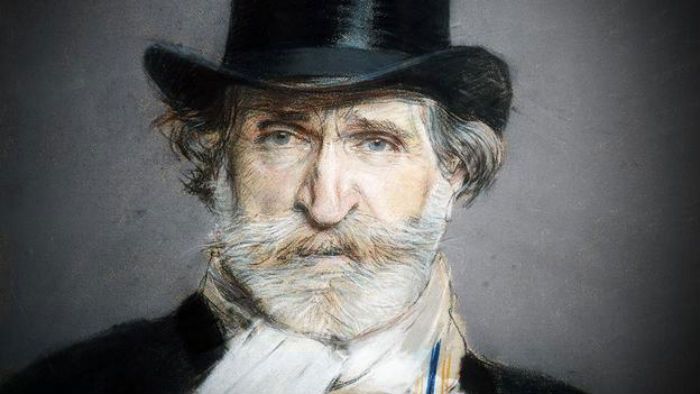
    The Verdi REQUIEM, as recorded by the Warsaw National Philharmonic.

    Kazimierz Kord conducts an all-Polish quartet of soloists: Teresa Żylis-Gara, Krystyna Szostek-Radkowa, Wiesław Ochman,and Leonard Andrzej Mróz.

    Listen here.

    Leonard_Andrzej_Mroz

    As I mentioned in yesterday’s post, I found this performance of the Verdi masterwork by happy chance while looking for recordings by basso Leonard Andrzej Mróz (above). It instantly became one of my favorite recordings of the REQUIEM.

    Mr. Mróz, as it turns out, passed away recently – in December 2020 at the age of 73. He was a native of Warsaw who began his career by winning voice competitions at Wroclaw, Munich, Geneva, and Amsterdam. He joined the Grand Theatre, Warsaw, in 1972 and sang there for many seasons.

    The basso’s international career took him to Glyndebourne, New York’s Carnegie Hall, Vienna, Budapest, Prague, Moscow, Paris, Parma, Mexico, Sofia, Philadelphia, London, Lisbon, Cleveland, Leipzing, Dresden, Paris, Berlin, and Moscow, as well as opera centers in Great Britain, Switzerland, Austria, the Netherlands, and Italy.

    After retiring from the stage, Mr. Mróz  taught at the State Music School Fryderyk Chopin in Warsaw and at the Academy of Music in Poznan.

    Leonard Andrzej Mróz sings Rachmaninov’s Zdes’ khorosho here, the Death Scene from BORIS GODUNOV here, and Banquo’s aria (and murder) from Verdi’s MACBETH here.

  • Elīna Garanča @ the 2011 Vienna Opera Ball

    Garanca

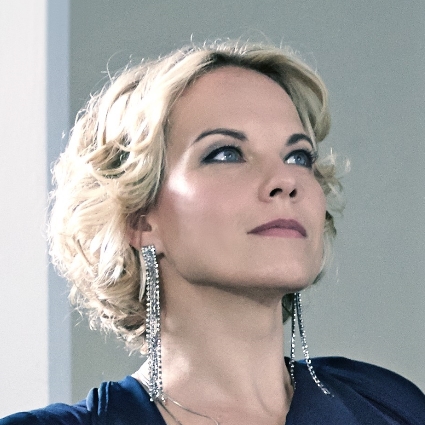
    The Latvian mezzo-soprano Elīna Garanča sings at the 2011 Vienna Opera Ball.

    Watch and listen here.

  • Christopher Lowrey ~ Ombra Mai Fu

    Snapshot ombra mai fu

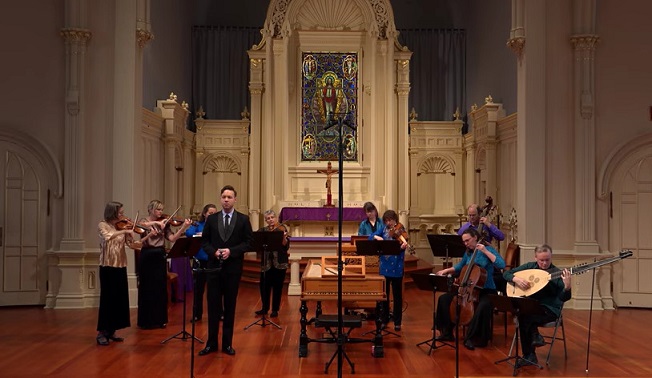
    Counter-tenor Christopher Lowrey and Voices of Music perform “Ombra mai fu” from Handel’s SERSE.

    Watch and listen here.