Above: tenor Alex Kim
I like this Korean tenor’s lyrical rendering of the Prize Song from Wagner’s DIE MEISTERSINGER.
Above: tenor Alex Kim
I like this Korean tenor’s lyrical rendering of the Prize Song from Wagner’s DIE MEISTERSINGER.
Above, the Miró Quartet: Daniel Ching and William Fedkenheuer (violins), Joshua Grindele (cello), and John Largess (viola). Photo by Naova Ikegami.
~ Author: Oberon
Thursday October 25th, 2019 – For their concert at Weill Hall this evening, the Miró Quartet honored the history of string quartet performance in America by replicating a program performed by the country’s first professional touring string quartet – the Kneisel Quartet – over a hundred years ago.
Franz Kneisel, then concertmaster of the Boston Symphony Orchestra, founded his quartet in 1885. The program offered tonight by the Miró was first performed by the Kneisel in 1910 during the Kneisel Quartet’s 25th anniversary season. The Miró Quartet are celebrating their own 25th anniversary this season, so the connection has layers of meaning.
The first half of tonight’s concert was beset with extraneous distractions; following an over-long interval, the Miró took the chill off a hall that had become frigid due to A/C overload with their sizzling performance of Schubert’s Death and the Maiden.
Mozart’s “Hunt” quartet, K.458, opened the evening. The Miró’s violinists faced one another, with the cellist and violist in the middle. Right from the music’s joyous start, a wonderful vitality could be felt in the quartet’s music-making. Daniel Ching’s trill tickled the ear, and a five-note motif was passed from player to player with wit and sparkle. A gracious interlude and a paragraph in the minor key were so persuasively delivered.
The cordial mood the Miró had established was then spoilt by late seating. It took a while for things to re-settle in the hall. There were more latecomers allowed in later. Very distracting.
The Menuetto: Moderato profited from lovely depth of tone from each player. The ensuing Adagio has the feel of a melancholy bel canto aria, with a tender melody sung first by the violin and then taken up by the cello. As the movement continued, with exquisite playing from Mr. Ching, the sound of quiet snoring crept into our collective consciousness. I could not tell if the players could hear it or not. At any rate, they carried on with the sprightly start of the final Allegro assai, the cellist reveling in his rich tone, everything lively and appealing.
The opening Allegro drew vibrant playing from the Miró. The individuality of the players’ respective timbres achieves a surprisingly coherent, compelling blend: they make this familiar music sound fresh – and what more can we ask? Their rhythmic surety and variety of dynamics make their playing irresistible.
The sublime Andante con moto, which introduces the doleful “Death” theme, moved me deeply with its air of hushed lamenting. The emotional ebb and flow of this movement seemed to well up from Mr. Gindele’s richly resonant cello, suffusing the whole with a spiritual glow.
The Scherzo is quite brief; we don’t know if Wagner intentionally lifted one rhythmic motif here to serve as a leitmotif for Nibelheim in his opera DAS RHEINGOLD, but it always gives me a smile.
Now the finale is reached, with Mr. Ching festooning the music with precise filigree over the passion and drive of his colleagues’ playing. A high-velocity rush suddenly shifts into hyper-gear as the music careens almost recklessly to its end.
Playing at the peak of their powers, the dazzling Miró artists turned the concluding Presto into the crowning glory of this outstanding musical experience. Though “death’ is in the work’s title, the word I kept scrawling in my notes about the Miró’s playing was: “…alive..!”
~ Oberon
Above: pianist Hélène Grimaud
~ Author: Ben Weaver
Tuesday October 15th, 2019 – When The Philadelphia Orchestra premiered Valerie Coleman’s orchestral version of Umoja, Anthem for Unity last month, it was the first time the orchestra had played music by a living female African -American composer. Yes, there are still such firsts to be had in 2019.
Ms. Coleman’s work was originally written in 1997 for a female chorus, then arranged for a woodwind quintet (Coleman’s own acclaimed chamber ensemble, Imani Winds.) And now the full orchestral arrangement makes something clear: Ms. Coleman, born in Louisville, Kentucky, is a major voice in contemporary classical music and is a magnificent orchestrator.
One thing I always note upon entering the concert hall where a contemporary piece is to be played is how big the percussion section is. Typically. it is large: everything and the kitchen sink. The problem, though, isn’t so much that there is more percussion than Mahler ever used, but that it is used as a crutch by so many contemporary composers; a crutch to transition from point A to point B to point C of the music. Unable to develop their material, too often composers rely on a few bangs and smashes from percussion to reset and change the subject. It’s lazy, it’s transparent and it’s bad music. And it is something Valerie Coleman notably does not do in her extraordinary orchestral version of Umoja, Anthem for Unity, a roughly 14 minute cinematic tone poem of shifting moods, sweeping melodies, surprising orchestral effects (the bowed vibraphone that opens the piece, for example) and undeniable joy.
Ms. Coleman (above) explains in the Playbill that the work grew out of a simple, short melody. “Here the melody is sung sweetly in its simplest form and is reminiscent of Appalachian-style music. From there, the melody dances and weaves throughout the instrument families, interrupted by dissonant viewpoints led by the brass and percussion sections…” Someone described the work almost as a concerto grosso, where the music passes around, evolving and shifting from section to section. This gives many artists on stage to shine, notably the wind and the brass sections. Maestro Yannick Nézet-Séguin shaped the work expertly and the thunderous ovation that greeted Ms. Coleman on stage at the end, one hopes, sends a message to leaders of orchestras and opera houses. Tonight, the Metropolitan Opera’s general manager Peter Gelb sat directly in front of me; did he realize that before us was an extraordinary composer, worthy of more commissions. Why not an opera, Mr. Gelb?
Béla Bartók’s Piano Concerto No. 3 received a spectacular performance from Hélène Grimaud. The playful, spiky, percussive writing of the outer movements presented no challenges to Grimaud, her crystal clear playing etching each note as if out of marble. Yet the percussiveness was never mere banging on the keyboard either; Grimaud is too good of an artist for cheap tricks. But it is in the concerto’s slow movement, Adagio religioso, that Bartók’s soul and Grimaud’s musicality and artistry truly shone. Conductor and orchestra provided first rate support.
After intermission Richard Strauss’ last tone poem, Eine Alpensinfonie, received a thrilling, no holds-barred performance. Strauss began composing the work after years of putting it off after the death of Gustav Mahler in 1911. “Mahler’s death has affected me greatly,” Strauss wrote and set out to complete Eine Alpensinfonie, an unacknowledged tribute to Mahler. Certainly Mahler’s love of nature – which he attempted to capture in his music throughout his entire career – is here in spades as one travels through the Alps.
Strauss divides the symphony into sections representing different parts of the region. Between the growling, dark Night that opens and closes the symphony, the wanderer observes a glorious Sunrise, a magnificent Waterfall, a treacherous Glacier, a horrifying Thunderstorm and chilling winds disappear with Sunset as Night returns. Strauss, of his many gifts, was an exceptional orchestrator. His command of large orchestral forces, of sound-painting has no betters. (Equals, maybe, but no betters.) The Philadelphians threw themselves into the music as if possessed, with Nézet-Séguin once again demonstrating that his grasp of the great Romantics is something of a specialty.
~ Ben Weaver
Above: Lisette Oropesa as Manon in The Met’s production; a Marty Sohl/Met Opera photo
Saturday matinee September 28th, 2019 – After a rather scrappy dress rehearsal on Friday September 20th, the Metropolitan Opera’s revival of their tedious Laurent Pelly production of Massenet’s MANON opened this past Tuesday. For today’s matinee, a group of friends who are admirers of Lisette Oropesa met up in the Family Circle boxes to see and hear the Cuban-American soprano in her latest new role.
Vocally, there are basically two types of Manons: the lyric-coloraturas and the full-fledged (and even slightly…beyond…) lyrics. The role was created by Marie Heilbronn, whose repertory included the coloratura roles of Marie (FILLE DU REGIMENT), Ophélie (HAMLET), Gounod’s Juliette, and Catherine in Meyerbeer’s ETOILE DU NORD. Massenet’s preferred Manon was Sibyl Sanderson, who created the high-flying title-role in his opera ESCLARMONDE. The light-voiced Brazilian soprano Bidu Sayão became a beloved Manon at The Met starting in 1937, and the tradition of coloratura-oriented Manons continued with Beverly Sills (perhaps her greatest role), Patricia Brooks, and Reri Grist.
Sopranos with larger, richer voices have also taken on the role: Lucrezia Bori, Geraldine Farrar, Claudia Muzio (!), Victoria de los Angeles, Eleanor Steber, Anna Moffo, Virginia Zeani, Raina Kabaivanska, Jeannette Pilou, Catherine Malfitano, Carol Vaness, Renee Fleming, and Anna Netrebko. Some of these sopranos had to make adjustments in Manon’s coloratura set-pieces, and in dealing with (or omitting) the score’s high-Ds. And at times, the opera has seemed to take on a verismo tinge in these interpretations, as listening to their various recordings will show.
Lisette Oropesa’s Manon is in the lyric-coloratura vein, and it’s so enchanting to hear her intriguingly perfumed timbre in this music. This is a voice that draws us into the music, covering the wide range with that distinctive sound, rejoicing in the fiorature of the Cours la Reine arias, pinpointing those top-Ds, and seducing both the tenor and the audience with the serpentine vocal line of “N’est-ce plus ma main”: that passage which Beverly Sills knew was the key to the whole character.
To accomplish her success in the music of Manon, Lisette had to overcome a hideous production and an interpretation of the score by an out-of-touch conductor. As the opera progressed, we moved scenically from a dreary grey courtyard – surrounded by perched toy-town houses and cuckoo-clock windows that periodically opened and closed – to an ugly wheeled-out ‘garret’ for the lovers wherein the ‘petite table‘ seemed like an afterthought.
The ridiculous ramps and metal dog-run fencing of the Cours la Reine deprived the setting of its glamour and left the bevy of ballerinas that Guillot had brought to cheer Manon up little space to execute some rather pointless choreography (the girls deserved better!) With the gaslights, Manon clad in a enormous feathered hat, boa, and ruffled gown, and the top-hatted men courting her in-sync, the scene recalled bad productions of HELLO DOLLY.
Seeking out des Grieux at Saint Sulpice, Manon arrives in what looks like a long white slip. There’s a lot of stage business to this seduction, as compared to the Sills Manon who just stood there, enticing her lover with vocal allure until – at the right moment – she let her cape fall to reveal the diva’s legendary décolletage, to which her tenor immediately succumbed. In the Pelly production, a convenient bed (for the altar boys?) is where Lisette and Michael Fabiano end up in a bodice-ripping finale. It’s the tenor’s bodice that gets ripped.
The gambling den in a drab basement room with more ramps, and with card tables wheeled busily on and off; the tension of the game between des Grieux and Guillot is minimized. The scene’s redeeming feature is the vision of Lisette in a stunning magenta gown.
The opera’s final scene is misty and appropriately foreboding. Manon is beaten by the guards who are escorting her to the ship for deportation. She seems to die from this beating rather than from some infection she picked up in prison.
Manon is one of the least appealing characters in all opera: selfish, willful, faithless, conniving. And those are her good qualities. But somehow, Lisette managed to be one of the very few Manons to make us feel sorry for her as the life ebbs out of her.
Maurizio Benini on the podium seemed to have no feeling for the distinctive atmosphere of the score, redolent of a time and place that the production has simply glossed over; the large orchestra frequently unleashed Puccinian waves of passion. But the musicians did what they could, bringing forth the desired poetry: of particular appeal was the clarinet solo in the prelude, played with captivating tenderness and nuance by Inn-Hyuck Cho. Mr. Cho also stayed in the pit thru much of the intermission, practicing various themes, much to my delight.
The pairing of Lisette Oropesa and Michael Fabiano as the doomed lovers was not felicitous. They are a vocal mismatch, and though they went thru the motions of romance and seduction, it was only in a theatrical sense that they made it work. The tenor, who would seem better suited to the Puccini rather than the Massenet des Grieux, lacked the heady vocal elegance that Alfredo Kraus, Vinson Cole, and Enrico di Giuseppe have brought to this music. Mr. Fabiano managed his Dream aria nicely enough, seemingly employing falsetto, but a flattish start to “Ah, fuyez, douce image” led to what felt like a struggle thru this demanding aria.
Two excellent baritones enhanced the afternoon: Artur Ruciński as Lescaut and Brett Polegato as de Brétigny. Mr. Ruciński, who sang Enrico to Lisette’s Lucia at the Teatro Real in 2018, Madrid, and who is a very impressive Onegin in a DVD of the Tchaikovsky opera from Valencia, has sung Sharpless and Germont at The Met. He transforms Lescaut into a leading role, making his arias – which can in lesser hands devolve into character pieces – real vocal gems thru the beauty and colour of his timbre, whilst also creating a lively (and – eventually – moving) character. His curtain calls drew enthusiastic and well-deserved bravos.
I first heard Canadian baritone Brett Polegato’s voice on a tape from the Cardiff Competition in 1995. He made a very fine impression, which was subsequently amplified by his wonderful 2001 recording (with Christine Goerke, conducted by Robert Spano) of Vaughan Williams’ A Sea Symphony for Telarc. Hailed upon its release as “…a Sea Symphony for the new century…”, this recording won a Grammy.
It wasn’t until 2012 that I got to hear Mr. Polegato live: he sang Walton’s Belshazzar’s Feast with the Atlanta Symphony at Carnegie Hall. I sat in the front row and enjoyed his performance immensely, and I questioned at the time why he was not at The Met. And now here he is in his debut performances at The House, the voice very much at home in the big hall. As de Brétigny today, the baritone made the most of every line, especially in the garret scene quartet, and proved a wonderful support (literally) to Lisette’s Manon at the Cours la Reine. Had Manon only stuck with this well-to-do and dapper gentleman, she might have lived long…and prospered.
Basso Kwangchul Youn brought warm, house-filling sound to the Comte de Grieux’s aria, in which he urges his son to forget about the priesthood and find a nice girl to marry, one worthy of himself and of the family. The Comte, his visit to Saint Sulpice having proved in vain, departs with the wistful farewell to his son – “Adieu … reste à prier!” – which was touchingly spoken by Mr. Youn.
Carlo Bosi, a sensational Nick in FANCIULLA DEL WEST when it was last done at The Met, was equally high-profile this afternoon as Guillot, the man who destroys Manon and, consequently, des Grieux.
In another example of how to make a smallish role resonate, Paul Corona as the Innkeeper was outstanding. He took a bow at the dress rehearsal, and I wish he had done so this afternoon so I could have given him a “bravo!“.
As a tease, the Met has installed Bidu Sayão’s Cours la Reine costume (above) in a glass display case on the Dress Circle level. This cloth-of-gold creation, incredibly detailed, served as a reminder of what MANON is all about. I hope one day that Lisette will have a production of this opera worthy of both herself and of the opera’s long traditions, with charming costumes, with a swing for Manon to sit on in the garden at Amiens for “Voyons, Manon“…and with de Brétigny bringing her an emerald necklace to dazzle her right after the kidnapping of her beloved chevalier.
~ Oberon
Above: Katarina Karnéus in ERWARTUNG at The New York Philharmonic; photo by Chris Lee
~ Author: Oberon
Thursday September 26th, 2019 – This long-awaited program by The New York Philharmonic paired Arnold Schoenberg’s monodrama ERWARTUNG with Béla Bartók’s expressionist opera BLUEBEARD’S CASTLE. The Philharmonic’s music director, Jaap van Zweden was on the podium, and a trio of esteemed singers took on the demanding vocal roles. The orchestra was simply splendid, from first note to last.
In 1989, the Metropolitan Opera presented these two works on a double bill, conducted by James Levine. Jessye Norman sang both The Woman in the Schoenberg and Judith in the Bartók; Bluebeard was sung by Samuel Ramey. It was a magnificent evening musically, though the setting and direction for the Bartók left a lot to be desired. But the staging of the Schoenberg was unforgettable: just a grand piano, hundreds of white candles, and Ms. Norman. How I would love to see it again!
The idea of presenting these two works in a semi-staged concert setting at Geffen Hall seemed intriguing on paper but was less successful in practice. The singers performed on a raised platform behind the musicians, who were seated in near darkness. The addition of silent actors – portraying medical staff and a crime-scene photographer in ERWARTUNG, and Bluebeard’s previous wives in the Bartók – neither added to nor distracted from the flow of the two works. From where we were sitting, we could not discern what was under the sheet of that autopsy table, which was revealed when they came to take The Woman away. One small screen sufficed for the projections, which were neither here nor there. The lighting effects, however, were well-integrated into the music, especially a blood-red drenching at one point.
The monodrama and the opera were linked theatrically by having Katarina Karnéus, who had just given a phenomenal performance in the Schoenberg, re-appear as the prologue to BLUEBEARD’S CASTLE. Here, Ms. Karnéus (using a megaphone) proved to be every bit as engaging as a speaker as she has been in her singing of The Woman. And while, in the end, the evening could have just as thrillingly been presented in straight-up concert form, that would have deprived us of Ms. Karnéus’s inspired acting of her role.
The concert opened with a performance of the song Erwartung, from Schoenberg’s Vier Lieder, his opus #2, composed in 1899. This gorgeous piece of music, which I had never heard before, was originally written for voice and piano but was tonight performed in a setting for voice and harp. The Philharmonic’s harpist Nancy Allen played divinely, creating a poetic atmosphere. In a black gown shot with silver and holding a large bouquet, soprano Nina Stemme’s voice seemed beset by a wide tonal beat or fluctuation which rather undermined the strange beauty of the song. Ms. Stemme fared much better in BLUEBEARD, where she was fully warmed-up and with the voice profiting from the cushioning orchestra.
Katarina Karnéus was the Cardiff Singer of the Year in 1995 and from there went on to a grand worldwide career. She came to The Met in 1999, debuting as Varvara in KATA KABANOVA and also appearing as Siebel, Olga in EUGEN ONEGIN, as Rossini’s Rosina, and as Cherubino. I had the pleasure of meeting her while I was working at Tower Records, and of attending a lovely recital she gave in 2001 with pianist Brian Zeger. She last sang at The Met in 2005; in the interim she has developed into a fascinating singing-actress.
Above: Katarina Karnéus as The Woman in ERWARTUNG; photo by Chris Lee
What a performance of ERWARTUNG Ms. Karnéus gave tonight! The voice encompasses an impressive vocal span, with a silvery sheen on the high notes and a dusky, dramatic throb in the lower range. Her wide-ranging singing is pointed and subtle in terms of word colourings, has a lovely vein of lyricism running thru it, and is possessed of striking power in the climactic moments. It’s an expressive, even bewitching, instrument. Beyond this, Ms. Karnéus is a compelling physical presence, and she captured the emotional state of The Woman with her vibrant and detailed physicality; at one point her entire body was overcome with trembling agitation. Mixed in with the madness were passages that were extraordinarily moving, as in the moment she tells her absent lover that he has “…not even the grace to let me die with you.”
In recent years, only a handful of operatic performances have captivated me in the way Katarina Karnéus did tonight in ERWARTUNG. She is truly one of a kind.
Here’s a sampling of the Karnéus voice:
Katarina Karneus – Mahler ~ Ich bin der Welt abhanden gekommen
Above: Katarina Karnéus in the spoken prologue to BLUEBEARD’S CASTLE at The New York Philharmonic; photo by Chris Lee
After the interval, BLUEBEARD’S CASTLE commenced with a re-appearance of Ms. Karnéus in a speaking role; I must admit that I found myself wishing she was also singing Judith, for while there is no denying the power and commitment of Nina Stemme’s performance in that role, hers is a voice that has never reached me on a deeper level. That said, the soprano was in full-tilt form for the Bartók tonight and was much admired by the audience.
In the role of Bluebeard himself, it gave me great pleasure to see onstage again the excellent baritone Johannes Martin Kränzle who, in 2014, was an ideal Beckmesser in his (to date) only Met appearances. We simply must have this man back at The Met, for he is a singing-actor (and an acting-singer) of the highest calibre.
Above: Johannes Martin Kränzle and Nina Stemme in BLUEBEARD’S CASTLE; photo by Chris Lee
Ms. Stemme and Mr. Kränzle made the Bartók glow in all its dark radiance with their powerful vocalism and intense acting. They played beautifully off one another, seeming to feed off each others energy as well as off the astonishing sounds being produced by the artists of the Philharmonic.
It was a performance to immerse oneself in totally, and by the time the harp and horns marvelously underscored Mr. Kränzle’s spectacular vocalism at the opening of the fourth door, I was thoroughly enthralled. Ms. Stemme’s blockbuster high-C at the opening of the fifth door was followed by simply mind-bogglingly impressivel singing from the baritone. Ever a compelling mover, Mr. Kränzle even executed a little dance, and then led his soprano is a waltz.
Responding to Judith’s questions about the mysterious white lake, Mr. Kränzle was hauntingly moving as he replied: “…tears, Judith…tears!” And then – incredibly – he took his performance to an even higher level with his gorgeous singing of the passage where Bluebeard describes how he met his previous wives and what they mean to him: morning, noon, and evening have been personified for him by these women, and with Judith joining them, his world is complete. “Now it will be night forever!”
Above: from BLUEBEARD’S CASTLE, photo by Chris Lee
Throughout the evening, the playing of The New York Philharmonic was darkly dazzling, glorious, sublime. Maestro van Zweden reigned over the music with a sure sense of its enormous emotional range, from eerie piani to unfettered, magnificent fortes. The musicians played their hearts out, creating sonic textures that sent chills thru me time and again, and the numerous solo passages were given extraordinary clarity by these remarkable artists.
~ Oberon
Agnes Baltsa (above) and Placido Domingo in the final confrontation from Bizet’s CARMEN.
Agnes Baltsa and Placido Domingo – CARMEN ~ final scene – Chicago Opera Callas Gala 1983
Agnes Baltsa (above) and Placido Domingo in the final confrontation from Bizet’s CARMEN.
Agnes Baltsa and Placido Domingo – CARMEN ~ final scene – Chicago Opera Callas Gala 1983
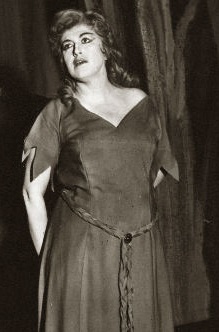
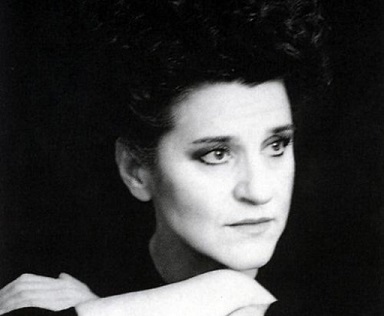
Marion Lippert is a soprano I will always remember with affection, as she was my first (and a very lovely) Marschallin in a performance at The Met in 1970, conducted by Karl Böhm; she more than held her own in a stellar cast featuring Christa Ludwig, Reri Grist, and Walter Berry.
Marion Lippert was born in Munich in 1936. Among her voice teachers was Annelies Kupper. Ms. Lippert made her operatic debut as Aida The Hague in 1956, later joining the opera companies of Cologne and Stuttgart, and singing in Berlin, Paris, Barcelona, and Venice. Her repertory included Lady Macbeth, Abigaille, Leonore in FIDELIO, Amelia in BALLO IN MASCHERA, Leonora in FORZA DEL DESTINO, Tosca, Norma, Senta, Elisabeth in TANNHAUSER, and Sieglinde.
The soprano made her Met debut in 1968 as Turandot; she also sang Senta, and Elisabetta in DON CARLO (which I saw) at the House in addition to the Marschallin.
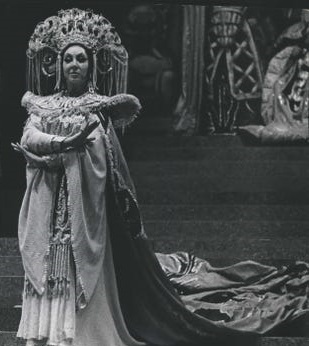
Turandot became a signature role for Ms. Lippert; here is her “In questa reggia” from an unnamed venue, in 1969. Her Calaf is Flaviano Labò.
Marion Lippert – In questa reggia ~ TURANDOT – 1969
Marion Lippert’s ‘Vissi d’arte‘ (though missing the opening line) may be found here.
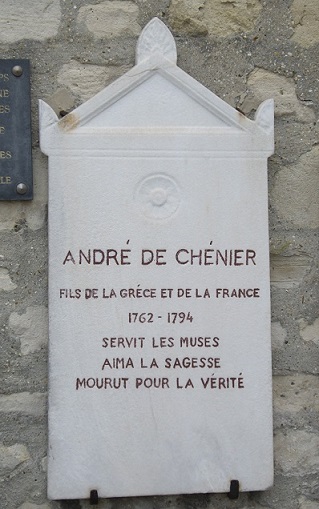
In Umberto Giordano’s opera, ANDREA CHENIER, there is a powerful aria that could easily be sung in an opera about our current world state. The opera’s story is built on the real-life character of the poet André Chénier, who died on the scaffold in the final days of the Reign of Terror.
During the years of the French revolution, Carlo Gérard, a former servant in an aristocratic household, has risen to a powerful position in the Reign of Terror. As a prosecutor for the Revolutionary Tribunal, he arranges “evidence” against those charged with treason.
Now he must present the case against the poet André Chénier, a man he knows full well is innocent of the charges against him. At this moment, Gérard finds his true heart and soul again. At the trial, he defends Chénier, saying that his accusing document is a fabrication.
Nevertheless, Chénier is condemned to death. He was guillotined on July 25, 1794. Three days later came Robespierre’s fall from power and subsequent execution, ending the Reign of Terror.
The great baritone Giuseppe Taddei sings the aria, “Nemico della patria” here.
Follow the words below; it could be happening today:
“An enemy of the State?!
It’s an old fable
That people are still blissfully swallowing.
Born in Constantinople? A Foreigner!
Studied at Saint-Cyr? A Soldier!
Traitor! Accomplice to Dumouriez!
And a poet? Corrupter of hearts
And morals!
(a pause)
I once lived joyfully,
Without hatred or vengeance
Pure, innocent, and strong;
I thought myself a giant!
But I’m still only a servant…
One who’s changed masters.
An obedient servant to violent passions!
Ah, worse yet: they’ve made me a killer!
And while I kill, I weep!
Me, a son of the Revolution,
One of the first to hear its cry!
For the world, I united that cry to my own.
Have I now lost faith
In that dream of destiny?
Oh, how my path
Shone with glory!
The heart’s conscience,
A reawakening of the people,
Gathering up the tears
Of the vanquished and suffering,
Making the world a Pantheon,
Changing men into gods;
And in one kiss –
In one kiss and one embrace –
To love all mankind!”