Category: Opera

  • Bernhard Sönnerstedt

    Sonnerstedt-Bernhard-01

    Swedish bass-baritone Bernhard Sönnerstedt studied with Karl Nygren-Kloster, and later at the Stockholm Academy of Music from 1935 to 1938 (with Joseph Hislop and Julia Claussens). After the war, he also worked with Giuseppe de Luca in Milan.

    Sönnerstedt debuted the Royal Opera in Stockholm as Prince Gremin in Eugen Onegin. He went on to sing in both opera and recital throughout Scandinavia. Among his operatic roles were Leporello, Mozart’s Figaro, Mephistopheles in Faust, Escamillo, the four Villains in Hoffmann, and King Philip in Don Carlo.

    In 1966, at the Stora Theater, Göteborg, Sönnerstedt appeared as Porgy in the Swedish premiere of Porgy and Bess.

    As a recitalist and concert artist, Sönnerstedt toured the Scandinavian countries, England, Italy, France, and Switzerland, and had a high reputation as an interpreter of the works of J.S. Bach.

    Bernhard Sönnerstedt was a producer of musical broadcasts at the Swedish Radio, and was later appointed managing director of the Stora Theatre, Göteborg. He passed away in 1971.

    Bernhard Sönnerstedt – Wolf~Anakreons Grab

  • Gia la Pleiade ardente al mar discende…

    Steber

    Above: Eleanor Steber

    One of the most poetic love duets in all opera – and one of the few sung by a husband and wife – comes at the end of Act I of Verdi’s OTELLO.

    Vinay

    Above: Ramon Vinay

    Eleanor Steber & Ramon Vinay – Gia nella notte densa ~ OTELLO

  • Aase Nordmo-Løvberg & Kolbjørn Høiseth

    Aase-nordmo-lvberg-6d8aba9d-d166-4244-b6c9-58dc451cbbf-resize-750

    Above: soprano Aase Nordmo-Løvberg

    Ms. Nordmo-Løvberg spent most of her career at Oslo and Stockholm. She was a highly-regarded soprano who worked with top conductors (such as Karajan and Solti). She sang at the Vienna State Opera, and gave a dozen performances at The Met in 1959-1960 singing Elsa, Eva, Sieglinde, and Beethoven’s Leonore.

    HOISETH Kolbjorn

    Above: the Norwegian tenor Kolbjørn Høiseth

    Mr. Høiseth’s career took him to London, Berlin, Stockholm, Lyon, and Bordeaux as well as numerous German houses. He specialized in Wagner and Verdi, also appearing in WOZZECK, FIDELIO, and ELEKTRA.

    In 1975, the tenor sang Froh in RHEINGOLD (in which role I saw him twice) at The Metropolitan Opera, where he also appeared as Siegmund in a single performance of WALKURE. His voice had a lyric quality, but also ample power when needed.

    Aase Nordmo Løvberg & Kolbjørn Høiseth – WALKURE – ACT I scene – Stockholm 1963

  • Teatro Nuovo ~ LA STRANIERA

    P01br19s

    Above: composer Vincenzo Bellini

    ~ Author: Oberon

    Wednesday July 17th, 2019 – Will Crutchfield’s Teatro Nuovo presenting Bellini’s rarely-performed opera LA STRANIERA at Rose Hall in the Jazz at Lincoln Center home-space. The semi-staged performance featured the following cast:

    Alaide (La Straniera) – Christine Lyons, soprano
    Isoletta – Alina Tamborini, soprano
    Arturo – Derrek Stark, tenor
    Valdeburgo – Steven LaBrie, baritone
    Il Priore – Vincent Grana, bass
    Montolino – Dorian McCall, bass-baritone
    Osburgo – Isaac Frishman, tenor

    Chorus and Orchestra of Teatro Nuovo
    Will Crutchfield, maestro al cembalo
    Jakob Lehmann, primo violino e capo d’orchestra

    Written in 1829, LA STRANIERA was Bellini’s fourth opera. It has, in the last 50 years, been briefly associated with such bel canto paragons as Renata Scotto and Montserrat Caballe. One of the Scotto performances, from Palermo 1968, was in my reel-to-reel collection for years; hearing the opera live tonight brought back memories of enjoying her persuasive styling of this music. 

    In terms of plot, the opera borders on the risible: a queen (Alaide, known as La Straniera – the “Foreign Woman”) has been living incognito in a hut by a lake. She has inspired the love of the local Count Arturo, who murders a supposed rival who is in fact Alaide’s brother. Somehow, it’s Alaide who is accused of having committed the murder; but at her trial, the dead man suddenly shows up, saying he had fallen into the lake. Things muddle on until the king’s messenger appears to tell Alaide (turns out she’s the Queen of France) that she must resume the throne as the ‘other’ queen has died. At this news, the still-smitten Count Arturo kills himself, and Alaide has the obligatory mad scene. As with so many operas written in this time period, the story line is merely an excuse for a lot of singing. 

    Musically, LA STRANIERA has its moments but they are rather few and far between. There’s an awful lot of filler, most of it pleasant enough…but it’s music that rarely grips the imagination. There is no feeling of a musico-dramatic arc in the opera, but rather a series of disjointed scenes in which the story’s convoluted twists and turns make minimal sense. Above all, if these old operas are to be revived, the singing must be spectacular.  

    Vocally, the opening scene for Valdeburgo and Isoletta was really impressive and augured well for the rest of the evening. Baritone Steven LaBrie has a handsome voice, sizeable and expressive, with a gift for dramatic nuance. As Isoletta, a hapless bride-to-be, Alina Tamborini displayed a most interesting timbre, with a trace of flicker-vibrato that was very appealing. She has the wide range demanded by the composer – clear high notes and plush low ones – and a lovely trill.

    Tenor Derrek Stark’s sustained opening note of his long introductory recitative assured us that his would be a pleasing voice to hear in Arturo’s plentiful music. Later, in uncomprehending anger, Mr. Stark unleashed a brilliant top note that sent wave of murmuring approval thru the hall. The tenor’s flashy jacket was something of a visual distraction, though.

    Just as the onstage harp solo announcing the appearance of La Straniera (Alaide) sounded, the man sitting behind us began rummaging thru his belongings; he continued, undeterred by dirty looks and shushing. I think he was looking for a sandwich. This interruption was the beginning of ongoing deterrents to my concentration.

    Soprano Christine Lyons’s offstage opening lines did not intrigue; her voice had a throaty quality which – luckily – would soon become less evident. As the first act unfolded, the soprano produced many fine passages, with a good feel for dynamics and for the text. In her scenes with Mr. LaBrie and Mr. Stark, Ms. Lyons offered expressive singing, with an appealing sense of the character’s vulnerability.

    Having been accused of murdering Valdeburgo, Alaide has a ‘mad scene’ in which she incoherently tries to explain to the angered townspeople why she is holding a bloody sword. The vocal demands here, which come in fits and starts, brought out a weighted chest voice from the soprano that seemed better suited to verismo than bel canto.

    While all this was happening, the hall had become freezing due to air conditioning overkill. A woman in the front row kept checking her phone, the screen flashing brightly. In front of us were a whispering couple. Across the aisle, a squeaky chair added an unwanted obbligato to the music. And the young primo violino e capo d’orchestra, seated at audience level, was animated to the point of distraction. 

    Midway thru the intermission, we decided that Bellini had delighted us long enough.

    ~ Oberon

  • Paolo Washington

    A-1726033-1532529259-1673.jpeg

    Basso Paolo Washington (above) was a featured artist at the major opera houses of Italy, beginning with his professional debut at the Teatro Comunale, Florence, in 1958. He subsequently appeared at La Scala, Rome, and Naples, and participated in broadcasts by the RAI.

    Chicago Lyric Opera was Washington’s home base in the United States. From 1968 thru 1997, he appeared in 14 roles for a total of 101 performances with the Company He sang in operas by Donizetti and Bellini, as well as in Stravinsky’s LE ROSSIGNOL and OEDIPUS REX. He was particularly admired for his moving portrayals of Colline in LA BOHEME and Timur in TURANDOT.

    Washington was heard throughout Spain, and also at Geneva, Marseille, Nice, Toulouse, and Lisbon, and at the Salzburg and Bregenz festivals. His wide repertory extended from Handel to the 20th century works by Prokofiev and Hans Werner Henze. He appeared only twice at the Metropolitan Opera, in the title role of DON PASQUALE in 1979.

    He passed away in 2008 at the age of 75.

    Paolo Washington – Nabucco ~ Tu sul labbro

  • 2nd Summer Evening @ CMS ~ 2019

    Artist_2237

    Above: pianist Juho Pohjonen

    ~ Author: Oberon

    Sunday July 14th, 2019 – The second of three concerts in Chamber Music Society of Lincoln Center‘s annual Summer Evenings series brought together a trio of esteemed CMS artists joined by The New York Philharmonic’s beloved principal clarinetist Anthony McGill. No French music on this Bastille Day program; Austria, Germany, and Russia were represented. The playing was superb.

    Bella-Hristova-FI

    Above: violinist Bella Hristova, photo by Lisa-Marie Mazzucco

    With Mr. Pohjonen at the Steinway, Ms. Hristova opened the concert with Mozart’s Sonata in B-flat major for Violin and Piano, K. 454, which dates from 1784. Fittingly enough, this sonata was composed for a female violinist: Mozart wrote it for the Viennese debut of Regina Strinasacchi, and he himself was the pianist on that occasion. Female violinists were quite rare in those days. Signorina Strinasacchi had studied at the famous Ospedale della Pietà in Venice where Antonio Vivaldi had once served as music director. She was 21 years old at the time of her Vienna debut, and was said to be a dazzling violin virtuoso who had also trained as an opera singer.

    Ms. Hristova, who in March of this year gave a dazzling recital at Merkin Hall, looked fetching in a dusty rose à la Grecque frock. After a courtly – almost regal – introduction, Ms. Hristova’s playing of the affecting first melody set the mood. She and Mr. Pohjonen traded melodic statements, making it clear from the start that they are ideal colleagues. The music gets lively, with little hesitations and subtleties woven in; abundant charm and sweet lyricism prevail.

    A tender theme commences the Andante; the musicians take turns playing melody and rhythmic figurations. Ms. Hristova’s phrasing is so appealing here. The music turns a bit melancholy, with a sense of passion restrained. A sustained note from the violinist leads on to a sort of coda and a gentle finish.

    The sonata’s concluding Allegretto is a lot of fun; violinist and pianist sometimes play in unison and sometimes harmonize. The pacing and dynamics offer pleasing contrasts along the way to a virtuosic finale.

    IMG_7629-e1350511246980-1024x748

    Anthony McGill (above) then joined Nicholas Canellakis and Mr. Pohjonen for Johannes Brahms Trio in A-minor for Clarinet, Cello, and Piano, Op. 114. This was composed in 1891, after Brahms had heard the great clarinetist Richard Mühlfeld and was much taken with the sound of the instrument.

    Mr. Canellakis has the trio’s opening statement – a rich melodic passage – and soon Mr. McGill’s clarinet makes its sublime entrance. From the Steinway, Mr. Pohjonen pulses up and the music takes off, calming for a cello solo in which Mr. Canellakis’s depth of tone makes a marvelous impression. Cello and clarinet bring incredible subtlety to a scale passage, and there’s a trace of gypsy lilt in the music. Following more scalework, the Allegro fades away.

    At the start of the Andante, Mr McGill’s lambent tone is beautifully matched to Mr. Canellakis’s, producing a spellbinding blend: ‘phrasing is all’ here as the voices entwine. To their mix, Mr. Pohjonen adds his poetic playing. The Andantino grazioso begins like a serenade: the clarinet sings while the cello provides a plucked accompaniment. This lighthearted movement transforms itself into a waltz, which proceeds lyrically.

    Mr. Canellakis’s cello digs into the final Allegro, with the piano urgent and the clarinet vibrant. The music is broad, with a folkish feel. Descending phrases are heard, and the trio finds a brisk ending.   

    N C

    Following the interval, Nick Canellakis (above) along with Ms. Hristova and Mr. Pohjonen, offered Anton Arensky’s Trio No. 1 in D-minor for Piano, Violin, and Cello, Op. 32. Whenever I hear Mr. Canellakis playing, I find myself thinking back to his magnificent performance of Leon Kirchner’s Music for Cello and Orchestra at Carnegie Hall in 2015.

    Images

    Arensky (above) is something of a forgotten composer – unfairly, in my view. You can read about him, and hear some of his music, here. Listening to his music, you can see where Scriabin and Rachmaninoff profited from having been Arensky’s students.

    Bella Hristova’s gorgeous violin solo plays over restless patterns from the Steinway; the cello then takes up the melody. Mr. Pohjonen relishes the con moto sweep of the virtuoso writing for piano.  “This is fabulous music!”, I scrawled across my notes.  The string players exchange bits of melody, the pianist deftly dispatches phrase after lovely phrase. A soft, sustained violin note ends the Allegro moderato.

    The second movement is a sprightly Scherzo, with plucked strings and high trills from the piano: at times the instruments sound almost like toys. Mr. Pohjonen’s tone shimmers throughout. An engaging waltz gets quite grand, and, after some wry hesitations, the Scherzo‘s end is lighthearted.

    A tender, reflective cello solo opens the Elegia; the music seems to recall happier times that have been left behind. Ms. Hristova’s violin climbs poignantly higher and higher, whilst Mr. Canellakis’s cello again sounds from the depths. 

    From a turbulent start, the cello and then the violin carry the melody of the concluding Allegro non troppo: this music is very much à la Russe. As passion ebbs and flows thru the melodies, the shining piano and soft strings lend an ethereal air. The composer then crafts a lively finale for his trio.

    Ms. Hristova and Mssrs. Canellakis and Pohjonen were greeted with great enthusiasm at the program’s end, and insistent applause brought them out for a second bow.

    ~ Oberon

  • Meeting Gian Carlo Menotti

    Photo menotti

    Above: Gian Carlo Menotti

    A day at work in the opera room at Tower Records could veer, in the twinkling of an eye, from the accustomed drudgery of a job in retail to memorable encounters with artists from the world of classical music and dance.

    Over the nine years that I worked in that now-forgotten space, it sometimes felt like the center of the world. Singers – from Juilliard hopefuls to retired divas – came in on a daily basis. Conductors (Ehrling, Levine, and Conlon, among others) and designers (Ming Cho Lee was a lovely regular), and even famous fans (Mayor Giuliani – hate him if you want, but he was a true opera-lover…), all made their way to 66th and Broadway.

    One day in November of 2001, a very elegantly dressed older gentlemen stepped into my small domain. It took me only a moment to recognize Gian Carlo Menotti. Mr. Menotti was in New York City for events surrounding the 50th anniversary of his “TV opera”, AMAHL AND THE NIGHT VISITORS; but he did not mention that at all in the course of our chat. He was wearing a light grey suit, immaculately tailored, and his noble posture was that of a much younger man (he was 90, I believe, at the time). His Old World manners and the delightful cordiality of his speaking voice put me at ease.

    Peters last savage

    Above: Roberta Peters as Kitty in Mr. Menotti’s opera THE LAST SAVAGE

    We talked, surprisingly enough, about his comic opera THE LAST SAVAGE, which had had its US premiere at the Old Met in 1964. I mentioned that I would love to see the opera performed again, and he smiled and said: “You remember the music, then? Which parts did you most enjoy?” (I think he doubted that I could actually recall anything specific from the piece.)

    Since the voices of George London, Roberta Peters, Nicolai Gedda, and Teresa Stratas are indelibly linked in my mind to their arias from THE LAST SAVAGE, I began to ‘sing’ little snatches for him. By the time I got to Kitty’s line, “Let me explain to you the how and the why: no anthropologist is braver than I!”, he was smiling. “Oh…wonderful! You must tell the people at The Met to revive it!”

    Mr. Menotti found the recording he’d been looking for; we shook hands and bowed to one another as he departed.

    25-Gian-Carlo-Menotti-and-Barber-in-the-summer-of-1936

    Gian Carlo Menotti was the lover and domestic partner of Samuel Barber, a relationship that was sustained for forty years. Above, a photo from 1936 shows what a handsome couple they were.

    In 2007, I read of Mr. Menotti’s death at Monte Carlo. Although there was a place reserved for him next to Samuel Barber’s grave at West Chester, Pennsylvania, Menotti was buried in Gifford, East Lothian, Scotland, beneath the simplest of stone markers:

    Menotti grave - Copy

    If AMAHL is probably Menotti’s most widely-known opera, and if THE LAST SAVAGE still sings in my mind, it’s with Magda’s aria “To this we’ve come...” from THE CONSUL that the composer made his most enduring statement. Desperate to get a visa so that her husband can escape persecution by the secret police, Madga Sorel fights a losing battle against bureaucratic indifference to her plight.

    Watch Patricia Neway’s incredible performance of this scene here.

    Magda’s aria opens with these chillingly timely lines:

    “To this we’ve come:
    that men withhold the world from men.
    No ship nor shore for him who drowns at sea.
    No home nor grave for him who dies on land.
    To this we’ve come:
    that man be born a stranger upon God’s earth,
    that he be chosen without a chance for choice,
    that he be hunted without the hope of refuge.
    To this we’ve come.

    And you, you too shall weep!”

    ~ Oberon

  • Blanche Thebom

    51J27V3W9WL

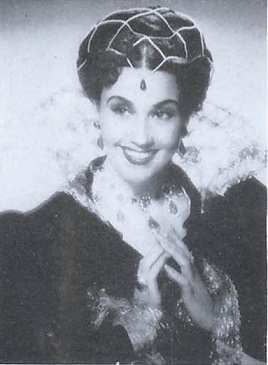
    Blanche Thebom (above), the glamorous mezzo-soprano whose career at The Met lasted over 30 years, was as well-known for her magnetic stage presence and her sensationally long hair as for her singing.

    She made her debut with the Metropolitan Opera Company in 1944 as Brangaene in TRISTAN UND ISOLDE in a performance at Philadelphia, Pennsylvania; two weeks later, she sang Fricka in DIE WALKURE at The Met. These performances drew rave reviews for Ms. Thebom, both for her singing and for her distinctive beauty and dramatic flair.

    Ms. Thebom went on to sing more that 360 performances with the Metropolitan Opera Company, in New York and on tour. She was a much-admired Carmen and Dalila, and in Verdi she made a regal impression as Amneris and Princess Eboli. She seemed capable of singing anything, from Adalgisa in NORMA to Venus in TANNHAUSER, while – in a lighter vein – she appeared as Prince Orlofsky and as Dorbella in COSI FAN TUTTE.

    Thebom Eboli

    Above: Blanche Thebom as Princess Eboli

    Blanche Thebom – O don fatale ~ DON CARLO

    Ms. Thebom appeared in the US premieres of two important works at The Met: as Baba the Turk in Stravinsky’s RAKE’S PROGRESS in 1953, and as Adelaide in Strauss’s ARABELLA in 1955. In the 1960s, she undertook what might be called “principal character” roles such as Genevieve in PELLEAS ET MELISANDE, Magdalene in MEISTERSINGER, and the Old Baroness in VANESSA. Her last role was that of the Countess in Tchaikovsky’s QUEEN OF SPADES – performed in English, at the New Met – in which she appeared opposite Teresa Stratas and Jon Vickers.

    After retiring from the Met, Blanche Thebom taught singing and also served on the Metropolitan Opera’s Board of Directors until 2008. She passed away in 2010, at the age of 94.

    AR-311309810

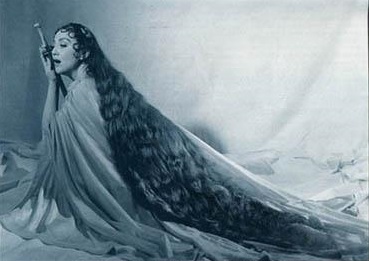
    In my earliest days of opera-loving, Blanche Thebom was already spoken of in our house. My father, who had seen her on TV, referred to her as ‘Blanche the Bomb’ due to her physical allure. And my grandmother told me about Thebom’s legendary hair, which had been used as a dramatic device when she sang Berlioz’s Dido at Covent Garden in 1957 (photo above).

    I finally heard Thebom’s voice on the radio in 1962:

    Metropolitan Opera House
    December 29th, 1962 Matinee/Broadcast

    PELLÉAS ET MÉLISANDE

    Pelléas.................Nicolai Gedda
    Mélisande...............Anna Moffo
    Golaud..................George London
    Arkel...................Jerome Hines
    Geneviève...............Blanche Thebom
    Yniold..................Teresa Stratas
    Physician...............Clifford Harvuot
    Shepherd................William Walker

    Conductor...............Ernest Ansermet

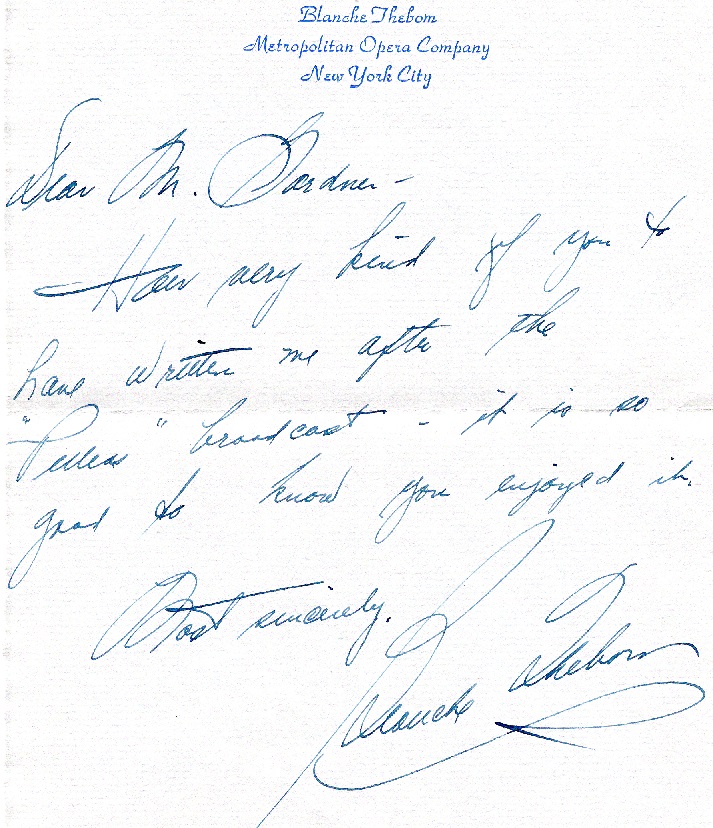
    Listening to her sing Debussy’s  Genevieve on a Texaco broadcast of PELLEAS ET MELISANDE, I was well-prepared to like her. And like her I did, so much so that I wrote her a letter; soon after, I received this elegant reply:

    Scanned Section 14-1

    More samplings of Blanche Thebom’s singing below. In RHEINGOLD, her usual role was Fricka, but I’m partial to her recording of Erda’s Warning:

    Blanche Thebom – Weiche Wotan weiche! ~ RHEINGOLD

    Blanche Thebom – Mon coeur s´ouvre a ta vois ~ SAMSON & DALILA

    Blanche Thebom – Wolf ~ Um Mitternacht

    ~ Oberon

  • Catherine Gallant ~ Escape From the House of Mercy

    L2000115

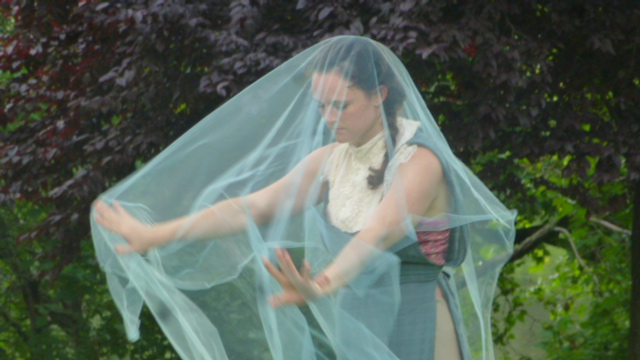
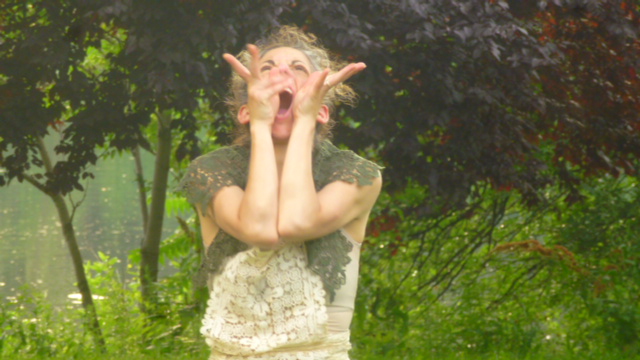
    Above: dancer Cecily Placenti

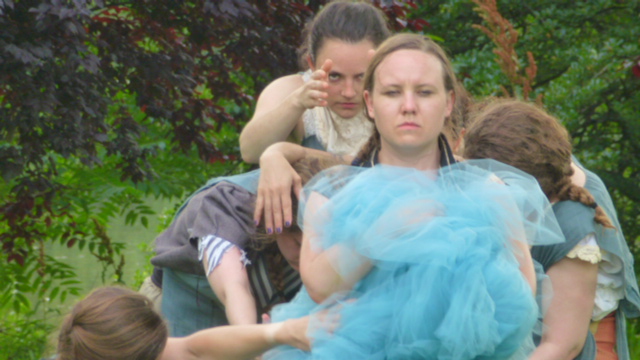
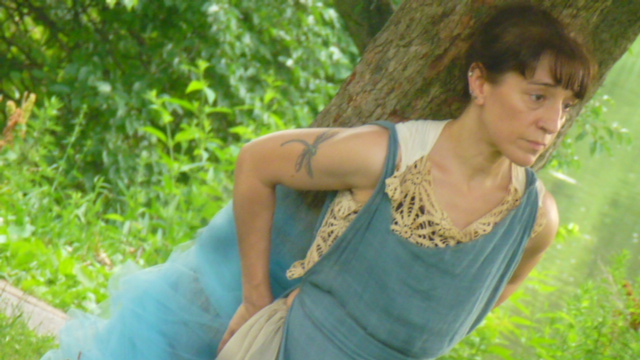
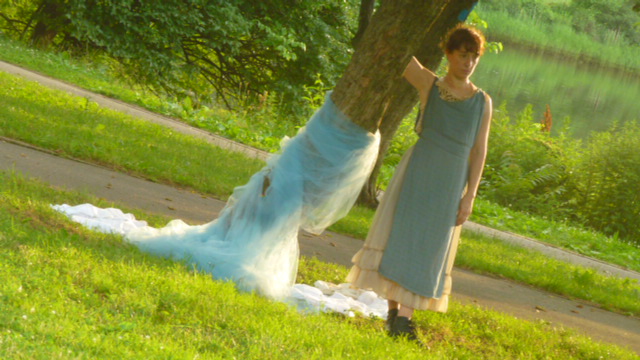
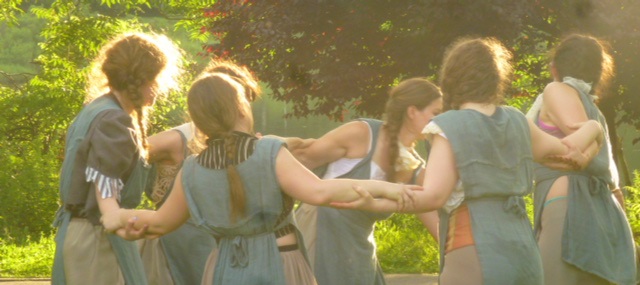
    On Thursday and Friday, June 27th and 28th, 2019, Catherine Gallant/DANCE present ESCAPE FROM THE HOUSE OF MERCY on Pat’s Lawn at Inwood Hill Park. Detailed information about these performances – and the story behind the dancework – may be found here.

    An excerpt from ESCAPE FROM THE HOUSE OF MERCY was presented at the Baruch Performing Arts Center in April; it was at that time that I learned about the institution for which the dancework is named – the House of Mercy – and that it was located just a few blocks from where I live, up here at the Northern tip of Manhattan.

    Under the guise of caring for young women who had gone astray, places like the House of Mercy were modeled on the Magdalen Laundries created by the Catholic Church in Ireland. Essentially they were prisons, where the ‘inmates’ worked long hours doing laundry, wardened by nuns who resorted to cruel punishments to enforce discipline among their charges.

    Ms. Gallant told me that the site of the House of Mercy was off the beaten path where I often take my daily hikes: the trail that leads up from Inwood Hill Park, under the Henry Hudson Bridge, and down to the banks of the Hudson River. In such a place, the girls would have been truly isolated from the world. The House of Mercy was demolished in 1933; in Ireland, apparently, such places existed until the 1990s.

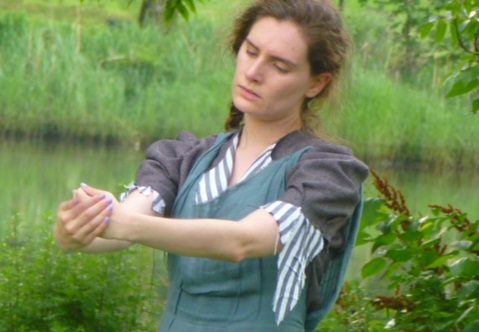
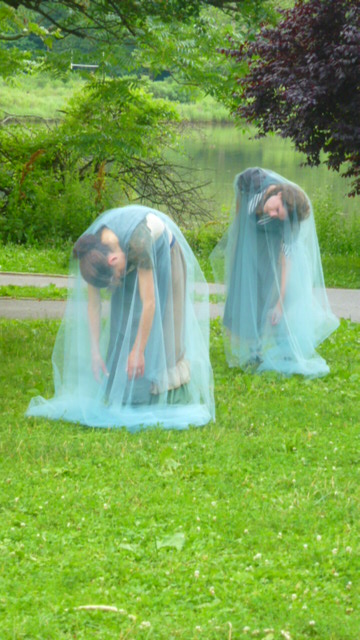
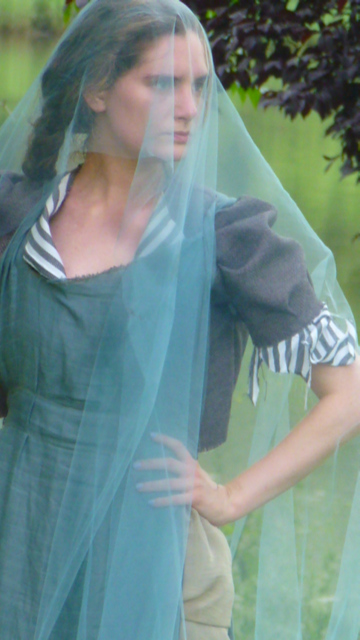
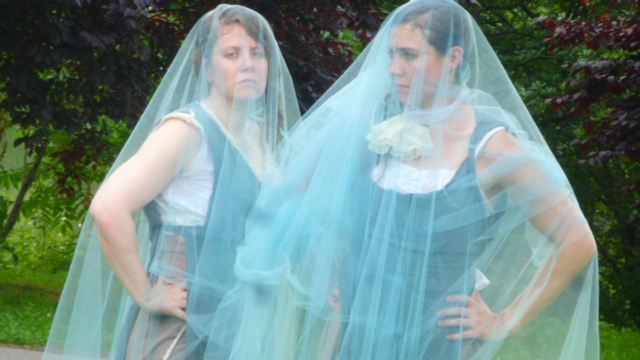
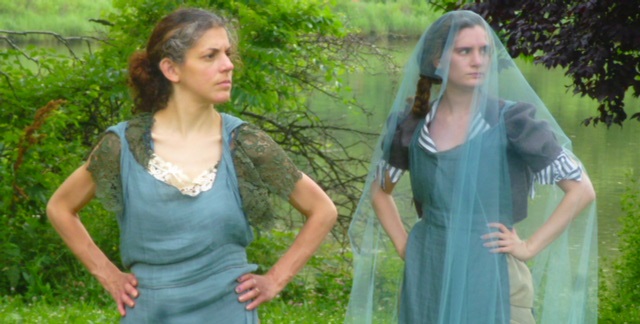
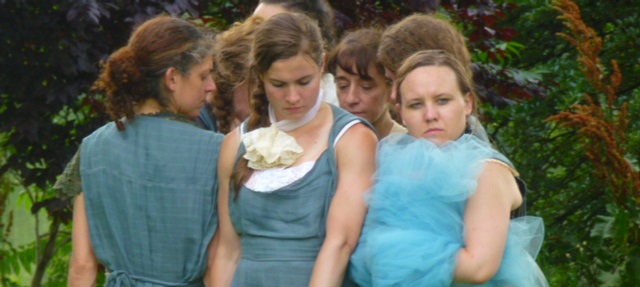
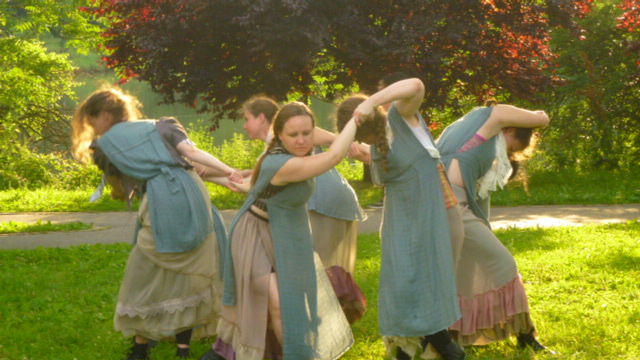
    On Tuesday, June 25th, a dress rehearsal for the presentation took place on Pat’s Lawn. I went over to observe; at first there was a feeling of chaos as other events in the park distracted from the matter at hand. But soon things settled in, and I was able to take a few pictures.

    L1990927

    An instrumental ensemble, led by trumpeter Kevin Blanq, perform New Orleans funeral songs and music by Lisa Bielawa live. Their instruments seem to have stories of their own to tell.

    L1990983

    Above: dancer Jessie King and tuba player Kenny Bentley.

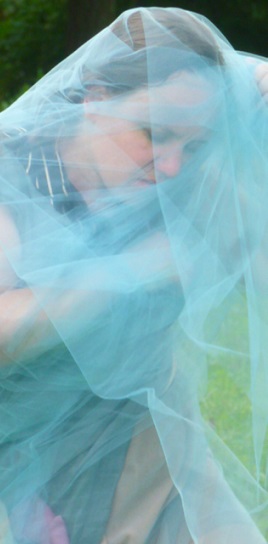
    Ivana Drazic designed the costumes, which have the look of petticoats, old work clothes, and aprons.

    L2000106
    Jessie King

    L2000047

    Cecily Placenti, Halley Gerstel

    L2000094

    Abra Cohen

    L2000103

    Megan Minturn

    L2000108

    L2000119

    L2000127

    Abra Cohen

    L2000132

    Charlotte Hendrickson, Kelli Chapman

    L2000133

    Halley Gerstel, Abra Cohen

    L2000143

    L2000151

    Jessie King, Megan Minturn

    L2000162

    Kelli, Halley, Abra, Megan, Charlotte, Cecily

    L2000180

    Cecily Placenti

    L2000185

    Charlotte Hendrickson, Halley Gerstel

    L2000205

    Cecily Placenti

    L2000223

    L2000230

    L2000248

    Megan, Cecily, Abra

    L2000257

    Halley Gerstel

    The dancers are: Kelli Chapman, Abra Cohen, Halley Gerstel, Jessie King, Charlotte Hendrickson, Erica Lessner, Megan Minturn, and Cecly Placenti

    The musicians are: Kevin Blancq (group leader/trumpet), Scott Bourgeois (tenor sax), Rick Faulkner (trombone), Kenny Bentley (tuba), Moses Patrou (snare drum), and Connor Elmes (bass drum)

    ~ Oberon

  • Die Meistersinger von Hamburg ~ 1970

    Scanned Section 6-1

    Above: Giorgio Tozzi as Hans Sachs and Richard Cassilly as Walther von Stoltzing

    Author: Oberon

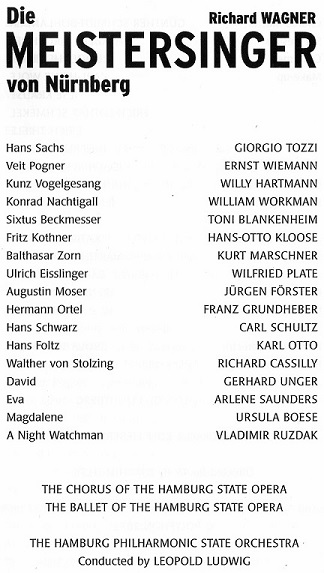
    I plucked a DVD of Wagner’s Die Meistersinger off the shelf at the Library of the Performing Arts; it was described as a “studio production from the Hamburg State Opera, 1970”. I had no idea what to expect, but I ended up really loving it.

    Purists will kvetch over the fact that about 25 minutes of music has been cut, including parts of David’s long monolog in Act I and the Apprentices Dance in Act III. The cuts were apparently made so as to conform to the four hours allotted for a television presentation. Since the David is very fine, and since the overall performance is excellent, it’s too bad that the cuts had to be made. They did not, however, affect my great enjoyment of the performance.

    Sets are ‘suggested’ rather than built. The opera is fully staged, in appropriate costumes; the singers appear to be lip-syncing to a pre-made recording, and they all do a splendid job of it…so good, in fact, that you can’t really tell

    Leopold Ludwig leads a stylish reading of the overture; throughout the performance, he sets perfect tempi and ideally balances the comedy and chaos against the intimacy, passion, and humanity that pervade this marvelous opera.

    The filming makes us part of the action. In Act I, the lively apprentices tease David whilst setting up for the meeting of the Masters: we are part of their work and their play. The apprentices, by the way, are a handsome bunch of boys, each with his own personality. In live performances, petite women from the chorus are sometimes pressed into service in this ensemble group, so as to sing the higher-lying phrases. Here, the boys seem to tackle those lines in falsetto.

    Once the masters have convened, we are right in the thick of their debates: the camera sweeps and zooms in as opinions are expressed and reactions are caught on film. An expert bunch of singing-actors, we get a vivid feeling of each Master as an individual. And later, we even go inside the Marker’s curtained booth as Walther von Stoltzing sings his heart out in his trial song…to no avail.

    The conversations, comings and goings, furtive lovers’ meetings, and Beckmesser’s silly serenade (mistaking ‘Lene for Eva) in Act II lead up to a convincingly bumptious “riot”. In Act III, the intimate scene of Sachs urging Stolzing onward in the composing of the “Prize Song”, and of Beckmesser’s pilfering of said song, and of the blessèd joy of the great quintet, gives way to the meadow on St. John’s Day – a vast space with only a gallery for the Masters, a chair for Eva, and the platform from which the “Prize Song” becomes an immortal melody. The triumph of true love is celebrated by all.
    Scanned Section 7-1 (3)

    The cast is superb in every regard. Each singer has the measure of his or her role, both vocally and in characterization. There’s little in terms of theatricality to come between us and these folks as real townspeople, and the story unfolds with complete naturalness.

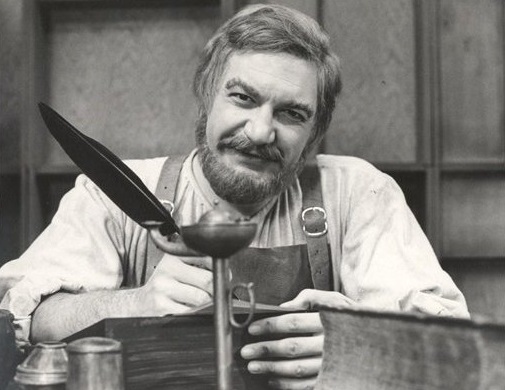
    Giorgio Tozzi is for me simply a perfect Hans Sachs; he was, in fact, the very first singer I saw in this role at The Met in 1968. More than that, Tozzi played a huge part in my developing passion for opera: the first basso voice I came to love, his arias from NABUCCO and SIMON BOCCANEGRA were on the first operatic LP set I every acquired; he was Don Giovanni in the first opera I attended at the (Old) Met, and later he was my first Daland and Jacopo Fiesco. I saw Tozzi onstage for the last time as Oroveso in NORMA at Hartford, CT, in 1978; he was so vivid as the almost deranged high priest of the Druids.
    Tozzi6

    Here in this MEISTERSINGER film, Tozzi (above) is everything I want in a Sachs: vocally at ease in every aspect of the wide-ranging music, his singing warm, his portrayal so human and so rich in detail. His two monologs (Flieder– and Wahn-) are beautifully sung and deeply felt, and his impassioned final address to the citizens of Nuremberg – a warning against the intrusion of foreign powers on their daily lives – rings true today. It is so pleasing to have Tozzi’s magnificent Sachs preserved for the ages.

    Saunders Eva

    Arlene Saunders (above, as Eva) is another singer to whom I feel a strong attachment, as well as a sense of gratitude: over a span of time, I saw Ms. Saunders singing four vastly different roles, making a memorable impression in each. First was her Anne Trulove when the Hamburg Opera brought THE RAKE’S PROGRESS came to The Met in 1967; Ms. Saunders’ pealing lyricism in her aria and ‘cabaletta‘ left such a lovely impression. Later, she was a surprisingly thrilling Minnie in FANCIULLA DEL WEST at New York City Opera, a movingly vulnerable and hopeful Elsa in LOHENGRIN at Hartford’s Bushnell Auditorium, and strikingly beautiful, touching, and wonderfully-sung Marschallin at Boston. 

    In this Hamburg MEISTERSINGER, we first see Saunders’ adorable face looking up from her prayer-book in church, secretly thrilled by the attention of the tall knight who is captivated by her. From there to the end, Ms. Saunders endears and charms us in every moment of the role of Eva.

    66852356_10216720847467589_5296722770879578112_n

    Richard Cassilly (above, with Ms. Saunders as Eva) is an imposing and big-voiced Stolzing; he towers over his beloved Ev’chen, and indeed over most everyone in the film.  Often seeming stiff and dour, the tenor blossoms into smiles whenever Eva is near. The knight’s pride, insecurity, and hopefulness are all expressed in Mr. Cassilly’s acting; as to his singing, it is big, warm, and winning. The scene of the ‘birth’ of the “Prize Song” – and of Eva’s hearing it for the first time – is very moving to an old romantic like myself.

    Snapshot

    Toni Blankenheim (above, with Giorgio Tozzi as Sachs at the end of Act I) scores in one of his greatest roles, Beckmesser. In the hands of such an imaginative singing-actor, this annoyingly vain character finally moves us in Blankenheim’s portrayal of his defeat. The baritone also convinces us that he is actually playing the lute. (There is apparently a similar filmed production from Hamburg of Berg’s WOZZECK with Blankenheim in the title-role and Sena Jurinac as Marie; I want to see it!)

    Unger Boese

    Above: Gerhard Unger and Ursula Boese as David and Magdalene

    Petite of build, tenor Gerhard Unger with his boyish face does not seem out of place among the apprentices. Unger is a first-rate, “voicey” character singer and an impetuous actor. As his slightly older betrothed, Magdalene, Ursula Boese is wise and warm-hearted whilst also being a sly conspirator in getting everything to go well for Eva and Stolzing. Both Unger and Boese sing very well indeed.
    Snapshot 2

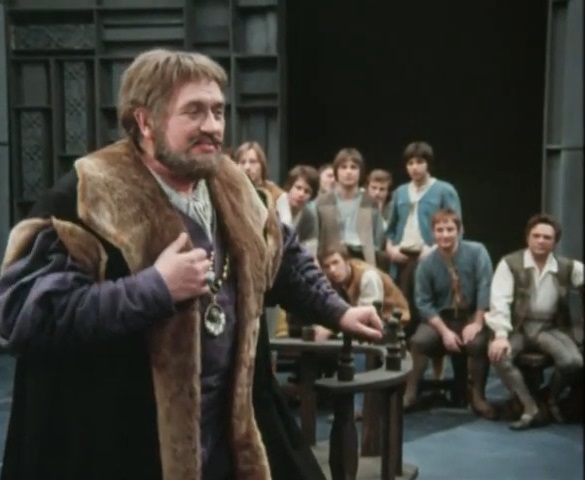
    Basso Ernst Wiemann (above) sang nearly 75 performances at The Met from 1961 to 1969, including the roles of Fafner, Hunding, Hagen, the Commendatore, Rocco, King Henry, and Daland in broadcasts of these operas that I was hearing for the very first time. As Pogner in this film of MEISTERSINGER, Wiemann displays his ample, seasoned basso tones in a warmly paternal portrayal.

    Hans-Otto Kloose

    The one singer in a major role with whom I was totally unfamiliar is Hans-Otto Kloose (above), who plays an upbeat, gregarious Kothner. In both his portrayal and his singing, Mr. Kloose excels. He was a beloved member of the Hamburg State Opera ensemble for thirty years, starting in 1960, giving more than 1,800 performances with the Company. For all that, I cannot seem to find other samples of his singing.

    The Meistersingers include both veterans and jünglings: among the latter, Franz Grundheber is an extremely handsome Hermann Ortel. As a final link among the singers in this film to some of my earliest operatic memories, Vladimir Ruzdak, who sang Valentin in my first FAUST at the Old Met, appears here as a baritonal Nightwatchman.

    Snapshot 4

    “All’s well as ends better,” as they say in The Shire. Sachs is crowned with a laurel wreath by Eva at the feast of St. John’s Day in Olde Nürnberg.  

    ~ Oberon