Category: Opera

  • My First WALKURE

    T16406_jon-vickers-canadian-tenor

    Above: Jon Vickers, my first Siegmund

    ~ Author: Oberon

    With Wagner’s RING Cycle currently playing at The Met, I’ve been thinking back to when I saw these operas for the first time. My first RHEINGOLD was conducted by Herbert von Karajan; it was part of a thrilling weekend I spent at The Met in 1969.

    It wasn’t until 1975 that I saw WALKURE, in a production based on Karajan’s Salzburg Festival production. Karajan of course had been due to stage and conduct the entire Cycle at The Met, but he never got beyond the first two operas before withdrawing from the project.

    My first WALKURE

    Of my first WALKURE, I wrote in my diary:

    “First time – an uneven performance: the good moments were very good, but much of the performance was a letdown.

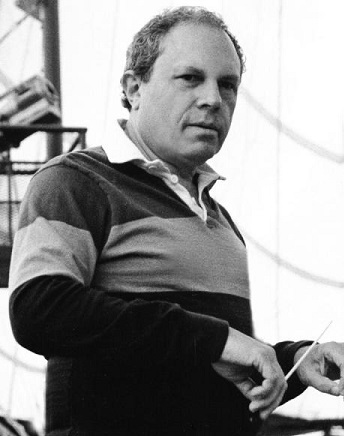
    Sixten-ehrling

    Sixten Ehrling (above) did a really great job; he kept things moving, allowed the singers to be heard at all times, and his reading had warmth and clarity. The Valkyries were a mixed lot [I am not sure why I underlined two of the singers’ names on my cast page, especially as people like Marcia Baldwin, Batyah Godfrey, and Jean Kraft were favorites of mine at the time]. Bengt Rundgren was an impressive Hunding.

    Dunn Fricka

    Mignon Dunn as Fricka (above) got off to a rough start, but quickly got things in gear and was very fine. [She was another top favorite of mine, and in 1977 established herself as a star with her portrayal of Ortrud in LOHENGRIN].

    Wotanalone

    Donald McIntyre (above) as Wotan was truly effective: well-sung, very involved, a first-class actor. His long Act II monologue was a high point of the performance.

    Birgit Nilsson was not good as Brunnhilde. She looks really old, was uninvolved as an actress, and she behaved stupidly during the curtain calls. Her “Ho-Jo-To-Ho!” was full of swoops and off-pitch notes. Most of Act II was very ambiguous pitch-wise, and her voice seems to have diminished in size and scope. In Act III, she sounded somewhat better, but pitch was really a problem, and spoiled much of her performance.

    Janis Martin as Sieglinde was very good in Act I, but after that she slid downhill. She does not have the ringing upper range for this music, and seemed always to be singing at full-force. Stage-wise she was not exciting at all. Considering all this, I was surprised that she received a rapturous ovation during the curtain calls.

    Only one word is needed for Jon Vickers’ Siegmund: perfect! Bravo!!


  • @ My Met Score Desk for WALKURE

    54727491_10161727100955533_4208711738377371648_n

    Above: Stuart Skelton and Eva-Maria Westbroek as Siegmund and Sieglinde/a Met Opera photo

    ~ Author: Oberon

    Saturday March 30th, 2019 matinee – I admit that I am not feeling excited about the Met’s current RING Cycle performances. Much as I have been starved for Wagner in recent Met seasons, and despite the RING being very high on my list of favorite works, a lot of the casting this time around is uninspiring. And, if the free-standing RHEINGOLD I saw recently was any indication, Philippe Jordan’s Wagner conducting doesn’t really send me. So I went to this afternoon’s WALKURE simply because it’s WALKURE.

    En route to the theater, I encountered Michael Volle, the alternate Wotan, heading for the Met’s stage door in the passageway under Lincoln Center. I wondered if there would be a cast change, but – after a delayed start of fifteen minutes – the performance commenced with the announced cast.

    I did not stay for the third act; after debating with myself, I decided to leave before enduring another prolonged intermission. Then on the train going home, I thought: “What if that was your last WALKURE…ever?”

    Blasts of frigid air (common up in the Family Circle boxes) continued throughout the performance; whilst waiting for the House to go dark, we heard a gorgeous cacophony of Wagnerian leitmotifs from the musicians warming up.

    The singers today ranged from stellar to acceptable, but Maestro Jordan seemed far more impressive here than in the RHEINGOLD, and the orchestra playing was – for the most part – thrilling, both in its overall resonance and in the many featured opportunities; the cello (especially before “Kühlende Labung gab mir der Quell“), the clarinet (as the mead is tasted, and later in the prelude to the Todesverkundigung ), the somber horns and heartbeat timpani in that magnificent Annunciation of Death…and countless other phrases.

    Stuart Skelton’s Siegmund seemed to me to stand firmly in the top echelon of the role’s interpreters of the last half-century, alongside Jon Vickers and James King. Both musically and as a character, this role suits Mr. Skelton far better than Otello. His Siegmund has both power and poetry. The son of a god, he is deeper and more thoughtful than he might seem on the surface; for, in his own way, Siegmund has great nobility…and great humanity. In finding and liberating Sieglinde, he finds a joy and purpose in life hitherto denied him; that it will last less than a day makes him all the more poignant. His overwhelming tenderness towards his sister-bride, his awe in encountering Brunnhilde, and his helpless rage at his father’s deceit are all vividly expressed in his music. And Mr. Skelton took all of this to heart: with generous lyricism, warmth of tone, and vivid declamation, he brought Siegmund palpably to life, making him the central figure of the opera.

    Mr. Skelton’s Sword Monolog in Act I was among the very finest I have ever heard. But even before that, he had so many wonderful passages of clear-voiced, expressive singing: ” Kühlende Labung…”, and the great subtlety and feeling of resignation he brought to “Nun weißt du, fragende Frau, warum ich Friedmund nicht heiße!” 

    The mysterious, uneasy orchestral prelude to the Monolog set the mood for our tenor, who caught every nuance of the text and brought vocal colors into play with masterful modulations of dynamic. Sublime tenderness at “…ein Weib sah’ ich, wonnig und hehr...” was followed moments later by Mr. Skelton’s phenomenal sustaining of the cries of ” Wälse! Wälse!“, so tonally steady and true, whilst the orchestra generated white heat. The trumpet then rang out with the Sword Motif. Magnificent moments! 

    The tenor’s energy seemed to flag momentarily after these arduous pages of dramatic singing, but he quickly attained peak level again with a beautifully poetic “Winterstürme“.  From thence, Mr. Skelton and his Sieglinde, Eva-Maria Westbroek, gave a strikingly passionate account of the final pages of Act I, from the growing excitement as they begin to realize who they are, (Skelton’s “Du bist das bild das ich in mir barg” – “Yours is the image I held in my heart!”…yet another perfect moment) thru the drawing of the sword from the tree, and their escape into the night.

    Ms. Westbroek’s singing overcame the distractions of a widening vibrato and insecurity at the top of her range by sheer willpower: her passionate commitment to the music and to the character made her vocal flaws seem irrelevant. The soprano’s rendering of the narrative “Der Männer Sippe” had its vocal ups and downs, but underlying her singing was this deep raging fire: a hope for freedom…and love. This more than compensated for a lack of ‘ring’ in her upper notes. “Du bist der Lenz” likewise had many lovely touches along the way: and then the A-flat loomed. She got it.

    Sieglinde describes the sensation of having heard Siegmund’s voice before, as a child; and then, at “Doch nein! Ich hörte sie neulich” (“But no, I heard it of late…”) Ms. Westbroek suddenly cut loose vocally, as if liberated. This launched a magnificent outpouring of emotion and song from both singers as the sibling-lovers surrendered to the inevitable. The soprano staked out a long, resounding top-A as she named Siegmund. And the music rolled on, in an unstoppable flood of hope and desire. 

    A titanic ovation rocked the house and, as has long been a tradition at this point, the two singers – Ms. Westbroek and Mr. Skelton – stepped out for a bow as the crowd went wild. Günther Groissböck, our excellent Hunding, joined them and the applause re-doubled. It seemed like old times.

    G groissbock

    Mr. Groissböck (above) is not a cavernous-toned basso in the manner of Martti Talvela or Matti Salminen; the Groissböck Hunding is leaner and meaner. His voice has power, authority, and insinuation. Having patiently listened to Siegmund’s tale of woe, the basso kicks out the blocks with “Ich weiß ein wildes Geschlecht!” and delivers a knockout punch with “Mein Haus hütet, Wölfing, dich heute…”  Bravissimo! 

    Jamie Barton’s Fricka was prodigiously sung; the top notes sometimes have a slightly desperate feel, and to me her over-use of chest voice runs counter to the character: she is the queen of the gods, not a desperate, ex-communicated Sicilian peasant. Barton’s parting lines to Brunnhilde were more to the point: a self-righteous woman calmly dealing from a position of power; a wife who has the upper hand.  

    Greer Grimsley’s voice is now rather time-worn, but he knows the role of Wotan inside-out and makes a vibrant impression through his deep understanding of the character, using the words as a dramatic springboard, and hurling vocal thunderbolts at just the right moments. His long monolog in Act II was rich in detail and feeling, and his dismissal of Hunding was a memorable moment: “Geh!” first as a quiet command, then in a snarling fit of rage.

    A lot of water has flowed under the bridge of time since Christine Goerke gave her revelatory performances of the Dyer’s Wife in FRAU OHNE SCHATTEN at The Met in 2013. At that time, the huge Met contract she was offered following her triumph seemed both exciting and amply justified. But the ensuing seasons, during which Goerke has put her voice to unstinting use in the most demanding repertory, have taken a toll: notes above the staff are thinned out and approximated now, the power of the voice has lessened, and today there were passing pitch difficulties in the mid-range. Perhaps to compensate, the soprano seemed to be over-enunciating the text, spitting out and biting off her words.

    The soprano got off to a rocky start with a helter-skelter Battle Cry. But Ms. Goerke settled in for the opera’s heart and soul: the Todesverkundigung (Annunciation of Death), where the music lies very much in her comfort zone. Maestro Jordan took this scene a bit faster than I’d have liked, and sometimes let the voices be covered. The music is full of foreboding as Brunnhilde tells Siegmund he will die in the coming fight against Hunding, after which she will bear him to Valhalla; there, as Ms. Goerke beautifully tells him, he will be greeted by Wish-Maidens who will serve and delight him.

    When Siegmund asks if Sieglinde can come with him into the afterlife, Brunnhilde/Goerke replies – meltingly lovely of tone – “Erdenluft muß sie noch athmen” (“Earthly air must she keep breathing…”). Siegmund then rejects the bliss of Valhalla. When Brunnhilde chides him for placing his love for this “poor, ailing woman” above the glory of immortality, Siegmund’s reply is one of the great crushing dismissals in all opera:

    “So young and fair you shine before me,
    yet how cold and hard is your heart!
    If you can only mock me,
    then take yourself hence,
    you cruel, merciless maid!
    Or if you hunger for my distress,
    then freely feast on my woe;
    let my grief quicken your envious heart:
    But of Valhalla’s loveless raptures
    speak no more to me!”

    No mortal has ever answered Brunnhilde thus; now, moved by Siegmund’s plight and her eyes opened to her father’s deceit, Brunnhilde vows that Siegmund shall win the coming fight.

    This leaves the stage now to Mr. Skelton’s Siegmund. Gearing up for the battle, he looks upon the sleeping Sieglinde and sings – with infinite tenderness: “So slumber on, till the fight be fought, and we find our  peace and joy!”

    The ominous blaring of Hunding’s hunting horns is heard. And the fight is on! The voices of Skelton and Groissböck – so alive in the House – threaten one another. The orchestra storms wildly. Brunnhilde shields Siegmund, but Wotan suddenly appears out of nowhere, shatters Siegmund’s sword, and Hunding slays his enemy with a spear thrust. Pausing only to dispatch Hunding, Wotan/Grimsley turns his wrath on his disobedient daughter, who has fled with Sieglinde and the pieces of the shattered sword:

    “But Brünnhilde! Woe to that traitor!
    Dearly shall she pay for her crime,
    if my steed o’ertakes her in flight!” 

    Metropolitan Opera House
    March 30th, 2019 matinee

    DIE WALKÜRE
    Richard Wagner

    Brünnhilde..............Christine Goerke
    Siegmund................Stuart Skelton
    Sieglinde...............Eva-Maria Westbroek
    Wotan...................Greer Grimsley
    Fricka..................Jamie Barton
    Hunding.................Günther Groissböck
    Gerhilde................Kelly Cae Hogan
    Grimgerde...............Maya Lahyani
    Helmwige................Jessica Faselt
    Ortlinde................Wendy Bryn-Harmer
    Rossweisse..............Mary Phillips
    Schwertleite............Daryl Freedman
    Siegrune................Eve Gigliotti
    Waltraute...............Renée Tatum

    Conductor...............Philippe Jordan

    ~ Oberon

  • The ASO Presents Martinů’s JULIETTA

    B martinu

    Above: the composer Bohuslav Martinů

    ~ Author: Oberon

    Friday March 22nd, 2019 – Bohuslav Martinů’s opera JULIETTA in a concert presentation by The American Symphony Orchestra at Carnegie Hall, conducted by Leon Botstein. Based on the French play Juliette, ou La clé des songes (Juliette, or The Key of Dreams) by Georges Neveux, Martinů’s opera explores a world where dreams and reality converge.

    The plot of the opera was once described thus: “Michel Lepik, a bookbinder from Paris, is dreaming. Finding himself in a small seaside town, he sets out to look for a woman, Julietta, he’s absolutely convinced he met there three years before. The only problem is, everyone in the town has lost their memory. After a search, he finally finds her and tries to coax from her memories of their time together. Frustrated, he shoots her. But did it all really happen? Michel finds himself  in the “Central Office for Dreams”, where the nightwatchman tries to persuade him to leave…because, if he stays past the allotted time, he must stay forever.”

    While it was interesting to experience JULIETTA live, not all operas work well in a concert setting. The story is somewhat intriguing in its own right, but it seems to me that it cries out for an imaginative staging: it is not really a strong enough narrative to sustain interest over a three-hour span without some visual context. Beyond the leading roles of Julietta and Michel, the singers each portrayed multiple characters. A booklet with the full text was provided, but it is not easy to watch the stage, read the words, and take notes all at the same time. Also, throughout the performance, the sound of text booklets dropping to the floor was annoying.

    Martinů’s orchestration is sometimes fascinating, but only in the final moments of Act II did the opera draw me in musically. Much of the first act is given over to banter – some of it spoken, in English – and at times it felt more like a play or a Broadway show than an opera; I must say, in truth, it became tiresome after a while. At 10:00 PM, there was an intermission, with another act still to come. Knowing how whimsical the MTA is at night, I decided it was safest to leave Carnegie Hall at the point. Sure enough, I had an ordeal getting home.

    The orchestra played very well under Maestro Botstein’s detailed leadership; the score is strewn with brilliant little instrumental opportunities, which the players eagerly seized upon. Tenor Aaron Blake, slender and lively, impressed in the role of Michel. His music calls for plaintive lyricism but also power and passion. Mr Blake’s voice had the needed beauty of tone as well as the intensity required to give a truly impressive performance. In the title-role, the attractive soprano Sara Jakubiak sang with a warm spinto sound, making me wish the character had more extended passages of song. David Cangelosi, who has been so excellent as Wagner’s Mime and in other highlighted character roles at The Met, was simply superb as the Police Chief.

    Multi-tasking in myriad roles were: the comely young mezzo Rebecca Jo Loeb, the lively and boisterously endearing mezzo Raehann Bryce-Davis, the always-wonderful contralto Tichina Vaughn, Met stalwart and strong-voiced baritone Philip Cokorinos, the fine basso Kevin Burdette – who I heard many times in his Juilliard days – and the inimitable Alfred Walker, a vocal scene-stealer and impressive presence, with ultra-clear diction. A small vocal ensemble from the Bard Festival Chorale (James Bagwell, director) sang from stage right.

    I wish I could feel more enthusiastic about the piece itself; I also wish the ASO would start their performances at 7:00 PM, so as to end before the MTA makes getting home a chore.

    ~ Oberon

  • The ASO Presents Martinů’s JULIETTA

    B martinu

    Above: the composer Bohuslav Martinů

    ~ Author: Oberon

    Friday March 22nd, 2019 – Bohuslav Martinů’s opera JULIETTA in a concert presentation by The American Symphony Orchestra at Carnegie Hall, conducted by Leon Botstein. Based on the French play Juliette, ou La clé des songes (Juliette, or The Key of Dreams) by Georges Neveux, Martinů’s opera explores a world where dreams and reality converge.

    The plot of the opera was once described thus: “Michel Lepik, a bookbinder from Paris, is dreaming. Finding himself in a small seaside town, he sets out to look for a woman, Julietta, he’s absolutely convinced he met there three years before. The only problem is, everyone in the town has lost their memory. After a search, he finally finds her and tries to coax from her memories of their time together. Frustrated, he shoots her. But did it all really happen? Michel finds himself  in the “Central Office for Dreams”, where the nightwatchman tries to persuade him to leave…because, if he stays past the allotted time, he must stay forever.”

    While it was interesting to experience JULIETTA live, not all operas work well in a concert setting. The story is somewhat intriguing in its own right, but it seems to me that it cries out for an imaginative staging: it is not really a strong enough narrative to sustain interest over a three-hour span without some visual context. Beyond the leading roles of Julietta and Michel, the singers each portrayed multiple characters. A booklet with the full text was provided, but it is not easy to watch the stage, read the words, and take notes all at the same time. Also, throughout the performance, the sound of text booklets dropping to the floor was annoying.

    Martinů’s orchestration is sometimes fascinating, but only in the final moments of Act II did the opera draw me in musically. Much of the first act is given over to banter – some of it spoken, in English – and at times it felt more like a play or a Broadway show than an opera; I must say, in truth, it became tiresome after a while. At 10:00 PM, there was an intermission, with another act still to come. Knowing how whimsical the MTA is at night, I decided it was safest to leave Carnegie Hall at the point. Sure enough, I had an ordeal getting home.

    The orchestra played very well under Maestro Botstein’s detailed leadership; the score is strewn with brilliant little instrumental opportunities, which the players eagerly seized upon. Tenor Aaron Blake, slender and lively, impressed in the role of Michel. His music calls for plaintive lyricism but also power and passion. Mr Blake’s voice had the needed beauty of tone as well as the intensity required to give a truly impressive performance. In the title-role, the attractive soprano Sara Jakubiak sang with a warm spinto sound, making me wish the character had more extended passages of song. David Cangelosi, who has been so excellent as Wagner’s Mime and in other highlighted character roles at The Met, was simply superb as the Police Chief.

    Multi-tasking in myriad roles were: the comely young mezzo Rebecca Jo Loeb, the lively and boisterously endearing mezzo Raehann Bryce-Davis, the always-wonderful contralto Tichina Vaughn, Met stalwart and strong-voiced baritone Philip Cokorinos, the fine basso Kevin Burdette – who I heard many times in his Juilliard days – and the inimitable Alfred Walker, a vocal scene-stealer and impressive presence, with ultra-clear diction. A small vocal ensemble from the Bard Festival Chorale (James Bagwell, director) sang from stage right.

    I wish I could feel more enthusiastic about the piece itself; I also wish the ASO would start their performances at 7:00 PM, so as to end before the MTA makes getting home a chore.

    ~ Oberon

  • Matthias Goerne ~ Adams: The Wound-Dresser

    Goerne

    Above: baritone Matthias Goerne

    ~ Author: Oberon

    Thursday March 21st, 2019 – This long-awaited concert featured The New York Philharmonic‘s Artist-in-Residence Matthias Goerne singing one of my favorite 20th-century vocal works: John Adams’ The Wound-Dresser. Music by Charles Ives and Johannes Brahms was also on the bill, with the orchestra’s Music Director, Jaap van Zweden, on the podium.

    Charles Ives’ mysterious Central Park in the Dark made for a strangely fascinating program-opener. If you’ve ever walked across The Park at night, this atmospheric and slightly creepy music – which at first drifts by like a cool nocturnal mist – perfectly summons up the surreal feeling of being alone in the huge City.

    The sound of Pascual Martínez-Forteza’s clarinet introduces a human element; the trumpet and a pair of pianos come into play, and there is a boisterous, off-kilter rendering of “My Ragtime Gal” and a noisy battering of percussion that makes you want to call 311. Then, slowly, the music fades into a dream. 

    Mr. Goerne then appeared for John Adams’ The Wound-Dresser. This work was composed for and premiered by the late, great American baritone Sanford Sylvan in 1989. The texts are from Walt Whitman’s poem of the same title. The poet took on the task of visiting the sick and dying soldiers in hospitals during the time of the Civil War.

    Composer John Adams said of this poem: “…(it) is the most intimate, most graphic, and most profoundly affecting evocation of the act of nursing the sick and dying that I know of. It is also astonishingly free of any kind of hyperbole or amplified emotion, yet the detail of the imagery is of a precision that could only be attained by one who had been there.”

    Mr. Goerne’s interpretation of this poignant work had an almost operatic feeling. One could say that his English diction had a ‘British accent’; for the most part, his enunciation was admirable, whilst overhead titles filled in any blanks. The sound of a dropped item in the audience at the very outset of the piece was the worst kind of intrusion, but Maestro van Zweden would not be deterred.

    The music at first evokes the tread of the nurse, walking the wards. Mr. Goerne’s voice at the start was deep and dark; the baritone’s great gift of a vast dynamic range meant that he could bring a haunting, unexpected pianissimo into the turning of a phrase, At some moments, feelings of anger rose in the voice: a righteous anger over the death and despair of war.

    The poignant descent of the basses before “I onward go“, the sheer lyric beauty of Goerne’s “One turns to me…”, and the unbearable tenderness of “…to die for you, if that would save you!“: these were but a few of the memorable moments in this moving performance. The singer’s powers of expression as he describes horrific afflictions, his passionate distress – leading to the haunting “Come, sweet death...” – and the miraculous sustained piano at “…in mercy…” draw us deeper and deeper into the poet’s thoughts.

    The lamenting violins, the deep-purple basses, the celesta-like intimations of angel wings, the plaintive high trumpet as the wounds are described – from these the music builds to a flood of anguish, to be overtaken by the high violins and their vision of heavenly rest. Surrounded by suffering, the nurseman sings: “I am faithful. I do not give out.” 

    The music grows huge, the voice now with an almost demented quality. Mindy Kaufman’s flute sounds forth, and the woodwinds take on the aspect of a choir. Mr. Goerne’s singing, so perfectly modulated, is heartbreaking. The gleaming trumpet sounds, the music rises on high.

    In the watches of the night, the poet/nurse sits by the dying men: “Some are so young. Some suffer so much.” And at the end, his story becomes personal: “Many a soldier’s loving arms about this neck have cross’d and rested. Many a soldier’s kiss dwells on these bearded lips.”

    A long silence followed this most moving performance. The composer joined Mr. Goerne and Maestro van Zweden onstage, with Mr. Adams summoning the orchestra’s principal trumpet, Christopher Martin, to rise for a bow. As so often after a memorable musical experience, part of me wanted to leave and hold onto the memory of it.

    But, following the interval, we heard a lustrous performance of Brahms’ Symphony No.1. It took Brahms nearly fifteen years to compose this, his his first symphony. He continually made revisions throughout this time-span, discarding pages, editing, and starting over from scratch. At the time of the premiere, Brahms worried whether anyone would like the finished work. But Hans von Bülow – a composer, conductor and pianist, just like Brahms – referred to the symphony as ‘Beethoven’s Tenth’. High praise indeed: and Brahms, now feeling confident after a positive public reception, wrote a second symphony the following year.

    Another “dropped item” made an unwanted dent in the score as the symphony began; I notice that people are now allowed to bring water bottles into the hall, and possibly these are contributing to what seems to be an increasing annoyance of extraneous sounds spoiling the music we’ve all come to hear.

    The first movement of the Brahms 1st was especially wonderful to experience tonight. Flautist Robert Langevin and clarinetist Anthony McGill were in for the concert’s second half, making beautiful music. The blended sound of the orchestra was so finely integrated, the horns sounded opulent, and the sense of longing in the music as the movement progressed was palpable.

    The Andante sostenuto, with Sherry Sylar’s lovely oboe solo, the satiny sound of the rising violin theme,  Mr. McGill’s pliant phrasing of the clarinet line, and Richard Deane’s velvety horn all highlighted the Autumnal beauty of the music. The ensuing Poco allegretto feels merely pleasant at first, but soon turns livelier. Again, Mr. McGill – and the Philharmonic’s grand bass players – gave much for us to enjoy.

    Sneaky plucking made a delightful impression in the concluding movement, wherein the horn, flute, and a brass choir each have their say before the familiar tune commences, carrying us on to the work’s vibrant finish.

    Under Maestro van Zweden’s leadership, The Philharmonic tonight played the Brahms as magnificently as I have ever heard them play anything – and that is saying a great deal. The sound was rich, profound, and heartfelt. The symphony unfolded naturally, unhurried but always alive, leading to a celebratory ovation at the end.

    ~ Oberon

  • Oratorio Society: Sibelius ~ KULLERVO

    439px-Wettenhovi-Aspa _Kullervo_(Sibelius)

    Above: artwork by Georg Sigurd Wettenhovi-Aspa (1870-1946)

    ~ Author: Oberon

    Monday February 25th, 2019 -The Oratorio Society of New York presenting works by Berlioz, Debussy, and Sibelius at Carnegie Hall. The concert provided my first opportunity to experience Jean Sibelius’ epic choral symphony, Kullervo, live. The first half of the program was given over to two wonderfully atmospheric works featuring women’s chorus: Hector Berlioz’s “La mort d’Ophélie” from Tristia, and Claude Debussy’sSirènes from Nocturnes.

    Berlioz’s Tristia dates from 1842; the “Mort d’Ophélie” was written as a solo work, and later re-set for female chorus and orchestra. The attractive scoring of the 1849 version heard tonight brings thoughts of Les Troyens amd Les Nuits dété to mind; in fact, the composer seems to have anticipated the former and borrowed from the latter as certain motifs rise up. The women of the Oratorio Society Chorus harmonized lovingly, and the orchestra played to perfect effect.

    A song without words, the Debussy “Sirènes” (from 1899) evokes thoughts of the composer’s La Mer (of course) as well as of the haunting Pelléas et Mélisande, which the Met recently offered in a very fine performance.

    “Sirènes” surely cast a spell this evening, though the repeated themes made the piece stretch long after a bit. Still, there’s no denying the great appeal of this dreamy music. As the work moved towards its ending, a cellphone going off brought us back to reality all too abruptly.

    After a rather lengthy intermission, Jean Sibelius’ Kullervo received a superb performance under Kent Tritle’s baton. The male chorus of the Society was further fortified by the men of the Manhattan School of Music ‘s Symphonic Chorus: the combined choruses made an outstanding contribution to the performance, giving the audience cause to celebrate. The work calls for two vocal soloists, and both were marvelous: soprano Johanna Rusanen and baritone Takaoki Onishi.

    Composed in 1892, the five-movement work tells us of the mythic Kullervo, a complex, tragic figure from Finnish legend. The Introduction depicts the Finnish land and its people and introduces us to the main character. In the second movement, Kullervo’s childhood is evoked: haunted by tragedy from birth onwards, he spends his youth largely in slavery.

    The pivotal movement is the third, in which Kullervo meets and seduces (or rapes) a woman who is – unbeknownst to him – his own sister. When she learns the truth, the woman drowns herself. Kullervo laments his crime and his sister’s death; as atonement, he seeks death on the battlefield. But Death does not find him; he returns to the site where his sister died and, consumed by guilt, he falls on his sword.

    I must admit that the first two movements – very well played by the Society’s orchestra – left me with restless feelings. Full of themes, and finely orchestrated to boot, the music nonetheless seemed over-long; I kept eyeing that big chorus seated onstage, wanting them to burst into song. And when they did, the effect was thrilling: the signature choral motif – “Kullervo! Son of Kalervo!” – surges forth several times in the course of the work…and its every appearance makes the blood rush. This is, seemingly, the Scherzo of the piece.

    The two soloists have now taken their places onstage. Johanna Rusanen, a Finnish soprano who was a Young Artist at Berlin’s Deutsche Oper and has since made her mark in such roles as Venus, Ortrud, Isolde, and Marie in Wozzeck, is an intriguing stage presence with a clear-toned, full spinto sound that rang beautifully into the venerable Hall. Her long monologues were both vocally impressive and charged with dramatic accents as the character’s story unfolds. Ms. Rusanen’s voice struck me as one that should be heard at The Met. 

    The Japanese baritone Takaoki Onishi has fared well in several premiere vocal competitions. A Juilliard graduate, he was a member of the Ryan Opera Ensemble at Lyric Opera of Chicago for three seasons, where he sang several roles. His career mixes opera, concert, and recital, and I can’t wait to hear him again. A slender, handsome fellow who looks elegant in a tuxedo, Mr. Onishi possesses a baritone voice of fine quality, capable of expressive lyricism or of vivid declamation; the role of Kullervo demands both, and the baritone sang forth with distinction.

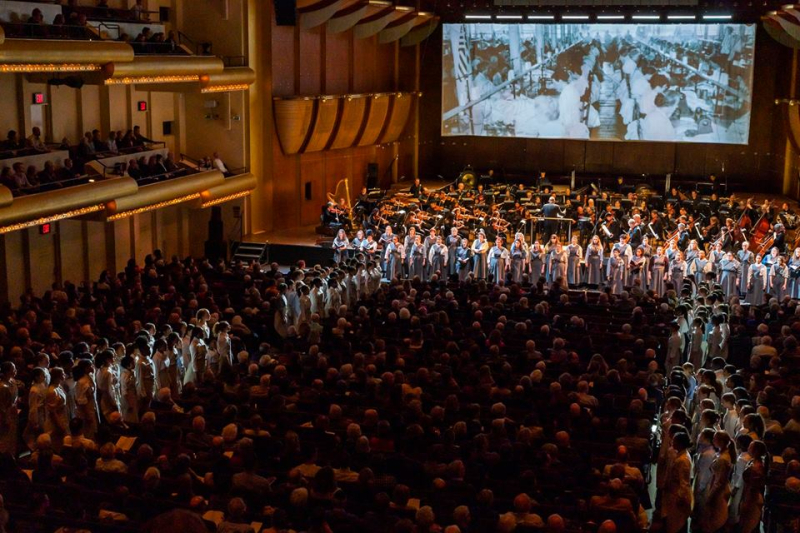
    Oratorio Society of NY at Carnegie Hall  2-25-19  photo by Anna Yatskevich  Manhattan School of Music 47166962492_8510b0d4bf_k

    During the long and loud ovation that followed, the soloists and Maestro Tritle were deservedly cheered, as were the the excellent singers and players of the Oratorio Society of New York. The above photo by Anna Yatskevich from the Manhattan School of Music captures the joy of the moment.

    Hearing the women sing Berlioz, and listening to the handsome voices of Ms. Rusanen and Mr. Onishi made me crave a concert performance of Berlioz’s Prise de Troie. How wonderful these two singers would be as Cassandra and Chorebus!

    ~ Oberon

  • Stravinsky’s FIREBIRD @ The NY Philharmonic

    Pintscher_matthias_1819

    Above: composer and conductor Matthias Pintscher

    ~ Author: Brad S. Ross

    Thursday February 21st, 2019 – It was an evening of exquisite sounds Thursday night at David Geffen Hall as the guest conductor Matthias Pintscher led the New York Philharmonic in music by two early 20th-century greats sandwiching one of his own, composed almost exactly a century years later.  Pintscher, a German-born composer and conductor now residing in New York City, has quickly built a reputation as one of the finest younger composer–conductors of recent memory to emerge on the world stage.  On this night, he brought with him a much-welcomed performance of his recent violin concerto, featuring the talents of the renowned French violinist Renaud Capuçon.

    The evening began with Maurice Ravel’s “Alborada del gracioso” (“Dawn Song of the Jester”) from his 1905 piano suite Miroirs, which he had transcribed for orchestra in 1918.  Ravel, a master of orchestration above all, peppered this score with myriad and most enjoyable colors, including numerous pizzicato phrases, muted brass, and varied percussive bursts.  Pintscher brought the best out of the Philharmonic, which performed here with precision and grace.  It made for a lively and dynamic opening piece.
    Violinist-Renaud-Capucon-

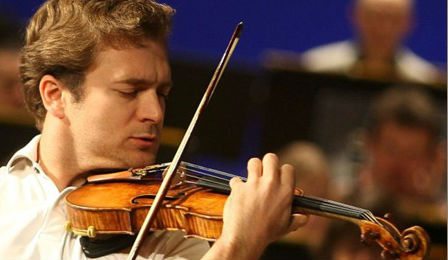
    Above: Renaud Capuçon

    Next up was Pintscher’s own mar’eh, a concerto for violin and orchestra composed in 2011 on a commission from the Lucerne Festival, Alte Opera Frankfurt, and the London Philharmonic Orchestra, which was here receiving its New York premiere.  Its title comes from a Hebrew word meaning “face sign” or, as the composer’s note indicates, “the aura of a face, a beautiful vision, something wonderful which suddenly appears before you.”  Why he chose to write it in lower case is as mystifying to me as any other inexplicably ungrammatical contemporary music title.

    The piece began quite eerily on a single suspended note played high on Capuçon’s violin, joined only by an ominous rumble in the percussion.  A languid melody soon entered, trading between Capuçon and various brass soloists, as dark colors began to emerge throughout the orchestra.  Following this menacingly silent introduction, a series of tantalizing full-ensemble swells seemed to indicate a change of direction for mar’eh before the work fell back into another series of quietly shifting timbres.  This carried on for some time until the same solitary high note and percussive rumble returned to bookend the concerto.

    Extended technique abounded throughout mar’eh and the players, including Capuçon, were at their absolute finest, but it was nevertheless hard to shake a sense of dissatisfaction when it was all over.  What the piece lacked was a sense of direction—momentum.  Its tempo always leaned toward the adagio, if that, and its dynamics, aside from the occasional fortissimo burst, rarely seemed to escape mezzopiano.  For a duration of roughly 23 minutes, this made for a hard-going listening experience.  The audience was politely receptive to it, however, even if their enthusiasm seemed more directed at its soloist than the composer.

    After intermission was the third and final piece of the night: Igor Stravinsky’s mighty Firebird.  Written in 1910, The Firebird marked the first of the composer’s many fruitful collaborations with the ballet impresario Sergei Diaghilev—a relationship that would also produce the likes of Petrushka and The Rite of Spring.  Premiering only eight days after his 28th birthday, it was also Stravinsky’s breakout piece and one that placed him on the world stage as one of the finest composers of his time and beyond.

    The audience knew it was in for a treat from the moment it began, as those memorable and ominous opening bars in the cello and bass harbingered the danger ahead.  The First Tableau was equal parts beautiful and menacing leading up to its volatile climax (the unforgettable “Infernal Dance of All Koschei’s Subjects”) and the haunting lullaby that follows.  The Second Tableau redeemed this carnage and misery with its exuberant and triumphant finale—one of the grandest in all classical music.

    The experience of hearing these magnificent bars played live by an orchestra as fine as the New York Philharmonic is one I wish every person on Earth could experience for himself.  The ethnomusicologist John Blacking once defined music as “humanly organized sounds…” if this be so, then these are no doubt some of the finest sonorities ever compiled by a single person.

    The crowd was quick to its feat upon conclusion with many shouts of “Bravo!”  This was easily one of the most animated displays of approval I’ve witnessed all season.  Pintscher and company received several curtain calls and every section of the ensemble was given a chance to take their bows.  The adulation was much-deserved for Pintscher and this stupendous orchestra, the gem of New York City.  Bravo, indeed.

    ~ Brad S. Ross

  • Matthew Polenzani @ Zankel Hall

    Polenzani ~ Fay Fox

    Above: tenor Matthew Polenzani, photographed by Fay Fox

    ~ Author: Oberon

    Sunday February 24th, 2019 – This afternoon’s program by tenor Matthew Polenzani at Zankel Hall had been a red-letter date on my calendar ever since Carnegie Hall announced their 2018-2019 season nearly a year ago. To say that the performance surpassed my highest expectations would be an understatement.

    Over the years since Mr. Polenzani first came on the New York operatic scene in 1997, he has given me some of my fondest musical memories. Of particular joy was his portrayal of David in Wagner’s DIE MEISTERSINGER, which I saw four times. Matching his sunny – and very human – portrayal of the young apprentice to his sweetly ingratiating lyrical singing, Mr. Polenzani won the hearts of audiences each time. Those performances, musically sublime under Maestro Levine’s heartfelt leadership, were some of my happiest times at the opera. 

    Since then, Mr. Polenzani has had great success in Mozart, bel canto, and French opera at The Met where his credentials are approaching the 400-performance mark; earlier this month, he produced a sonic miracle in his aria in Tchaikovsky’s IOLANTA. And we will soon hear him as Mozart’s Tito and Verdi’s Duke of Mantua. More red-letter dates!

    Today’s recital opened with a selection of lieder by Franz Schubert in which Mr. Polenzani and the renowned pianist Julius Drake formed a treasurable musical alliance. The two men walked out onto the Zankel Hall stage to a truly warm and long-lasting applause.

    From the opening “Nachtstück” – an old man’s acceptance of impending death – Mr. Polenzani showed himself to be among the most appealing and compelling interpreters of German lieder now before the public. The words flow beautifully, and without fussiness, whilst the multi-hued sound and the incredible skill with which he runs the gamut of the piano/pianissimo spectrum, make each song truly an absorbing experience.

    Two Spring-songs follow: “Im Frühling” (with Mr. Drake’s dramatic piano intervention, and the singer’s incredibly sustained softness towards the end), and the familiar “Frühlingsglaube“. “Der Einsame” (The Recluse…it could be my theme song!) is somewhat jaunty in tone, and has an optimistic outlook. Then the well-beloved “Ständchen” so persuasively phrased by the tenor and finely articulated by the pianist. The concluding  “Im Abendrot“, with its lovely piano introduction, sings like a prayer.

    Julius+Drake
     
    Above: pianist Julius Drake

    Beethoven’s An die ferne Geliebte, the composer’s only true song cycle, strings six poems by Alois Jeitteles together in an uninterrupted flow of song. Mssrs. Polenzani and Drake perfectly captured the songs’ many poetic references to the natural world, which the singer mentally relates to the finding and eventual loss of an idealized lover. Mr. Polanzani’s golden tone, the naturalness of his way with words, and the continuing enchantment of his softest notes kept us riveted; and Mr. Drake matched the singer, nuance for nuance, in their marvelous performance.

    Cano

    Johannes Brahms’ Zigeunerlieder, Op. 103, brought forth mezzo-soprano Jennifer Johnson Cano (above). This set of gypsy songs served the singer as a prologue to her role as the gypsy lass Zefka in Janáček’s The Diary of One Who Vanished. In a striking deep blue gown, Ms. Johnson Cano gave a vivid performance, in which Mr. Drake, at the Steinway, was a perfect accomplice.  

    Ms. Johnson Cano has the ideal voice, temperament, and personality for these songs; her gift for musical characterization is spot on, and is reflected in her stage manner: she plays the diva one moment and the loving lady the next. Singing with her warm, inviting mezzo timbre, Ms. Johnson Cano was particularly lovely in the cycle’s penultimate song, “Kommt der manchmal in den Sinn” where, at the words “Täusch mich nicht, verlass mich nicht…” the melody takes up an air of longing which the singer conveyed with expressive vocal colours. In the Brahms, as all evening, Julius Drake’s playing was so inviting.

    Following the interval, Janáček’s The Diary of One Who Vanished, was given a mesmerizing performance by Mr. Polenzani, Ms. Johnson Cano, and three offstage singers: Kathleen O’Mara, soprano, and mezzo-sopranos Marie Engle and Megan Grey. At the piano, Julius Drake played this music – which might be described as a chamber opera – with a vast range of colour and brilliant rhythmic clarity.

    This is the story of a young village boy who fell in love with a gypsy beauty and abandoned his safe and simple life to join her in her wanderings. Originally thought to have been drawn from the boy’s discarded diary, the story was eventually discovered to have been written by Josef Kalda, a accomplished author from Prague. In his 62nd year, Janáček himself fell under the spell of a much younger ‘gypsy’ woman; their relationship was revealed in a series of passionate letters, published in the 1980s.

    Julius Drake’s phenomenal artistry was a key element in this fascinating work; one hardly needs an orchestra with this gentleman at the Steinway. His playing again superbly matched Mr. Polenzani’s singing: full of passion, poetry, intensity and natural beauty of expression.

    The first several songs of The Diary of One Who Vanished are given over to the tenor: what a great pleasure to hear Mr. Polenzani and Mr. Drake here in a long stretch of music-making of such evocative qualities. Ms. Johnson Cano then appears, singing splendidly, with a bewitching, smouldering quality to her lower range. An offstage trio of voices – Mlles. O’Mara, Engle, and Grey – produced a lovely blend that sometimes brought to mind Wagner’s Rhinemaidens, or Strauss’s ARIADNE nymphs.

    The finale is an extended sing for the tenor, again with Mr. Drake playing grandly. From lyrical outpourings, the music turns to a hymn of farewell sung by the boy about to take leave of his homeland. Here Mr. Polenzani unleashed hall-filling power; the audience could scarcely restrain themselves from applauding until the last echoes from the Steinway had faded.

    At the end of the Janáček, the sold out hall was the scene of a tumultuous standing ovation. As the artists came forward to bow, the audience clearly wanted more music. But what sort of encore could follow such a performance? After a long delay, during which the applause redoubled, Mr. Polenzani and Mr. Drake came onstage again.

    The tenor spoke of the difficulty of finding the right piece to sing after the drama of the Janáček. In the course of his travels, he said, the most-requested song was the universally beloved “O Danny Boy‘. Taking up the thrice-familiar melody, which has been sung by everyone from Ernestine Schumann-Heink to Johnny Cash, Mr. Polenzani gave the most ravishing performance of it I could ever hope to hear. The words – so simple and moving  – came from the heart, and the colours of the voice were haunting. People around me were holding back tears as Mr. Polenzani took the final ascending phrase of the song to an exquisitely sustained final note than hung magically on the air.

    ~ Oberon

  • Young Concert Artists: Zlatomir Fung

    Fung_Zlatomir5CreditMattDine-1140x642

    Above: cellist Zlatomir Fung, in a Matt Dine photo

    ~ Author: Oberon

    Tuesday February 19th, 2019 – Young Concert Artists presenting cellist Zlatiomir Fung in his New York debut recital at Merkin Hall. Tengku Irfan was the pianist for this wide-ranging, thrillingly-played program.

    “Young” was the operative word tonight. And both of these musicians disprove the old adage that ‘youth is wasted on the young’; they have spent their teen years developing their talent, and building impressive performance résumés. Now they are ready for anything.

    Mr. Fung, a native of Oregon, reveals a charming personality in this Q & A from the Violin Channel. Of Bulgarian and Chinese heritage, the earnest 19-year-old cellist was greeted by enthusiastic cheers from the packed house when he walked onstage at Merkin Hall tonight. In the course of his opening work – four of the Eleven Capricci for Solo Cello by Joseph Dall’Abaco – Zlatomir Fung established himself as both a poet and virtuoso of the highest order.

    These Dall’Abaco works are a very pleasant alternatives to the Bach cello suites with which cellists so often open their recital programs. Mr. Fung displayed clean, warmly resonant tone, a gift for dynamic finesse, and a depth of feeling that seemed remarkable in one so young. In the first Capriccio, trills and grace notes were deftly etched into the musical line. To end his set of four, Mr. Fung chose the 11th, which includes passages of demented agitato, played with great fervor. As applause engulfed the cellist, he took a spot among my top five players of the instrument…or maybe even…my top three? 

    Pianist Tengku Irfan – slender of frame and looking far younger than his score of years – then joined Mr. Fung for a revelatory performance of Enest Bloch’s Baal Shem. This music was new to me; the passion and tenderness with which the two artists played it made a direct connection to my soul.

    Ernest Bloch, a native of Switzerland, was a young violinist on tour in the USA when, falling short of money, he got stranded in New York City and decided to stay here. Moved by a Hasidic Jewish service he attended in 1919, Bloch wrote the Baal Shem, subtitled “Three Pictures of Hasidic Life.

    During the opening Vidui, I was so mesmerized by the playing of Mssrs. Fung and Tengku that I couldn’t write even the briefest note about the music; all I can say is that it moved me deeply – both the music itself and the playing of it. The piano introduction to the ensuing Nigun – masterfully played by Irfan Tengku – leads to music-making of searing intensity from both players. A series of descending trills for the cello took my breath away. In a complete mood swing, the concluding Simchas Torah has a very optimistic feel: an almost romantic-style passage leads to dancing and ultimately to passion. With a tumult of cheers and applause, the audience saluted the two musicians after this spell-binding performance. 

    In a remarkable display of what a cello can do, Mr. Fung gave a triumphant performance of Luciano Berio’s Sequenza. From his opening tapping, patting, and slapping of his cello, Mr. Fung creates all manner of sound effects – shivering, squeaking, barking, scratching, gliding – as the piece proceeds. Mixed in are brief touches of whispered pianissississimo, including an ultra-quiet ending. This bravura showcase knocked the audience for a loop; Mr. Fung took a bow amid a din of enthusiasm.

    Following the interval, the pianist and cellist gave the premiere performance of Prelude by Katherine Balch, the current YCA Composer-in-Residence. This was my second hearing of music by Ms. Balch, and again it struck me as finely-crafted music from a composer who has perhaps not yet found her own distinctive voice.

    From a turbulent start, we go on a magical mystery tour and – via some strong accents – to noisy music that works both players into a frenzy. The gimmick of having the pianist reach inside the piano to produce isolated sounds has been done before – I never get the point of it – but a mad cello cadenza gives the piece a spark. An amusing sour taste sets in as some intentionally ambivalent pitches crop up. Drifting onward, Prelude leads without pause into the evening’s final work: the Brahms Cello Sonata in E-minor, Opus 38.

    TengkuIrfanpianolad001_1533856206

    Above: pianist Tengku Irfan, photo by Owee Ah Chun

    In the Brahms, the partnership of cellist and pianist showed yet again how finely matched these two musicians are. It’s a bit of an odd sonata, in that there’s really not a ‘slow’ movement per se. But the opening Allegro non troppo (actually very ‘non troppo’) makes up for it: it has a darkish glow with a poignant, wistful melodic line. The pianist here was a marvel, and Mr. Fung summoned incredible depth of tone from his cello. The second movement is a Menuetto that sometimes teasingly has the air of a waltz; the musicians play at times in unison. Mr. Tengku had the Steinway in full flourish for the concluding Allegro, and Mr. Fung sealed his New York debut triumph with spectacular playing.

    As an encore, these two young artists offered a luminous rendering of Gabriel Fauré’s “Après un rêve“. The sheer enthralling beauty of their playing held the audience in a state of breathless awe.

    ~ Oberon

  • Sanford Sylvan Has Passed Away

    Sylvan

    Sanford Sylvan’s was one of my favorite voices of all time. It wasn’t simply beautiful and expressive: it had a personal quality, as if he was singing just to you. Very few singers have reached me on that level – Victoria de los Angeles and Dame Janet Baker come to mind – and it is so sad to think that Sandy’s voice has been stilled, at the age of 66. 

    I met Sanford Sylvan long before his name came to prominence in the vocal music field. In the early 1970s, while he was a student at the Manhattan School of Music, Sandy worked as an usher at The Met. At that time, he had long blonde hair that flowed down his back to his waist, and ice-blue, incredible eyes.

    Those were the great, heady years of my opera-loving career; I would make frequent 4-day trips from Syracuse to New York City, staying at the Henry Hudson Hotel and hearing the great singers of the last Golden Age at both New York City Opera and The Met. I had fallen in with a group of deranged young fans – about a dozen of us – who went crazy over such titans as Sills, Nilsson, Cossotto, and Bergonzi. We spent intermissions arguing over who was the best Violetta or Dutchman; we waited patiently at the stage door to meet our idols, and then adjourned to the old O’Neill’s for fondue and more discussion, into the wee hours. And then on to an all-nite diner at Columbus Circle where we listened to the house tapes we had made.

    We all of us, both guys and girls, had a crush on Sandy Sylvan. Since he saw us at the opera all the time, he became friendly with us. We would always invite him to O’Neill’s, and a couple of times he joined us. He was on the quiet side; we knew he was a voice student, but then…wasn’t everyone? Who would have guessed that, years later, he’d be at New York City Opera and making marvelous recordings.

    I first saw Sanford Sylvan onstage at the 1987 summer fest at Purchase, New York, as Mozart’s Figaro in the Peter Sellars production, set at Trump Tower. In the seasons to come, he sang Leporello, the Speaker in MAGIC FLUTE, the King of Scotland in Handel’s ARIODANTE, and Collatinus in Britten’s RAPE OF LUCRETIA at New York City Opera. In each of these diverse roles, he made a vivid impression.

    A champion of the music of John Adams, Sanford appeared in NIXON IN CHINA and THE DEATH OF KLINGHOFFER. In 1989, the baritone premiered Adams’s The Wound Dresser, settings of Walt Whitman’s Civil War poems, which had been composed specially for him.

    In May 2011, I finally had an opportunity to experience Sanford Sylvan’s iconic performance of The Wound Dresser live, in an concert given by the Oregon Symphony at Carnegie Hall. Both vocally and verbally, his was a remarkable interpretation, with a deeply personal resonance. He sang so beautifully, and I had every reason to believe I’d be hearing him again. 

    The baritone voice has always had a special appeal for me; from the very first opera LP I owned as a pre-teenager, featuring the great baritones of the day – Leonard Warren and Robert Merrill – this sonorous vocal range has seemed to have a hot-wire to the human spirit.

    Over time, two baritones came to epitomize for me all that can be enriching in the art of singing: Dmitry Hvorostovsky and Sanford Sylvan. They were so different in repertory and in the scope of their respective careers, but both moved me to the core. And now they are gone.

    From Samuel Barber’s Hermit Songs, “The Desire for Hermitage” tells me everything I love about Sanford Sylvan’s voice:

    Sanford Sylvan – Barber ~ The Desire for Hermitage

    “Ah! To be all alone in a little cell
    with nobody near me;
    beloved that pilgrimage before the last pilgrimage to death.
    Singing the passing hours to cloudy Heaven;
    Feeding upon dry bread and water from the cold spring.
    That will be an end to evil when I am alone
    in a lovely little corner among tombs
    far from the houses of the great.
    Ah! To be all alone in a little cell, to be alone, all alone:
    Alone I came into the world
    alone I shall go from it.”