Category: Opera

  • Premiere: Levine/Schenk GÖTTERDÄMMERUNG

    Scanned Section 6-1

    (NOTE: this was originally published during the pandemic…)

    During these endless days of being at home, I’ve been reading thru my opera diary, a hand-written document I started in 1962 and which now fills numerous file folders. So many wonderful memories of the great performances I saw over the years were stirred up by reading about them.

    One such exciting night was the 1988 premiere of the Otto Schenk GÖTTERDÄMMERUNG, the closing opera of Wagner’s epic RING Cycle. Often referred to affectionately as “the Levine RING”, full cycles of the production in the ensuing seasons created a great international buzz; Wagnerites from all over the globe gathered in New York City to witness this classic staging.

    Having already seen the RHEINGOLD, WALKURE and SIEGFRIED, I had a pretty good idea of what to expect; still, when the Gibichung Hall loomed into view, it took my breath away. Levine was mostly magnificent, though there were moments when he let things drag a bit; his orchestra gave it their all, and the chorus sounded sensational as they gathered in lusty expectation of the double wedding.

    As to the singers, here’s what I wrote upon returning to my room at the Colonial House after the performance: 

    “Casting was strong, with pretty singing from the Rhinemaidens – Joyce Guyer (in her Met debut), Diane Kesling, and Meredith Parsons – and Franz Mazura made an astoundingly vivid Alberich, singing with oily malice. The opening scene of Act II, with Alberich pawing at the sleeping Hagen, was very atmospheric.

    The Gibichung brother and sister were rather curiously cast: as Gunther, Anthony Raffell’s voice sounded veiled and throaty, and Kathryn Harries’ beautiful (and beautifully acted) Gutrune was undone by effortful singing and a prominent vibrato. [I mentioned that Cornell MacNeil and Lucine Amara could have made for far more interesting casting in these roles!].

    The Norn Scene, which I have always loved, benefited from the super casting of Mignon Dunn as 1st Norn, sung with richly doom-ladened tone. Hanna Schwarz (2nd Norn) had a couple of husky moments, but overall sang vividly, with excellent diction. As the 3rd Norn, Marita Napier sometimes sounded a bit insecure, but she did not let down the side. These three really made something of their opening discussion. 

    Toni Kramer sang erratically but acceptably in the torturous role of Siegfried. He seemed to be husbanding his powers, doing his best singing in Act III.

    C l + h b

    Above: Christa Ludwig as Waltraute and Hildegard Behrens as Brunnhilde

    The divine Christa Ludwig made a thrilling Waltraute, singing with great clarity and verbal point. The distinctive Ludwig tone – that cherished sound – drew the audience in to her every phrase. Add to this the anguished urgency of her delivery, and the result was a veritable triumph.

    The Ludwig Waltraute produced one of my all-time favorite curtain calls: stepping before the gold curtain for her first solo bow, she was greeted by such a din of applause and shouting that she halted in her tracks; her eyes opened wide in amazement, and she broke into a huge smile. It seemed to me that she had not expected such an avalanche of affection. She bowed deeply, clearly savoring this outpouring of love from the crowd.

    Matti

    The towering magnificence of Matti Salminen as Hagen (above) produced tremendous excitement in the House. His huge voice was at peak form, effortlessly filling the hall with sinister sound. In the scene where Hagen’s father appears to him in a dream, Salminen and Franz Mazura matched one another in both power and eerily expressive subtlety: thoroughly engrossing. The basso’s portrayal as the drama of Act II unfolded was towering in its epic nastiness and in his manipulation of the situation to attain the character’s sole goal: to regain the ring. This was a performance thrilling to behold, and to hear. 

    The roar of applause for each of Salminen’s solo bows was thunderous, and I was so excited to be part of it, shouting myself hoarse.

    ~ Sample the Salminen Hagen, from a later broadcast…it gives me he chills: 

    Matti Salminen as Hagen – Met 1993

    Snapshot

    Hildegard Behrens (above) was a Brunnhilde of terrifying intensity and incredible feminine strength. This was an overwhelming interpretation, in which voice and physicality combined to transcend operatic convention, reaching me on the deepest possible level. Behrens lived the part, in no uncertain terms.

    The Dawn Duet found Behrens portraying the tamed warrior maid to perfection, savoring her domestic bliss but eager that Siegfried should go out into the world and do great deeds. Her unconventional beauty and her inhabiting of the character were so absorbing to behold. Later, In the scene with Waltraute, Behrens as Brunnhilde listened anxiously to all her sister’s words and she began to grasp the first signs of the downward spiral that would culminate with Siegfried’s betrayal and her own sacrifice. Even so, she dismissed Waltraute with fierce disdain. Behrens’ vivid depiction of Brunnhilde’s terror and helpless dejection as the false Siegfried wrested the ring from her was palpable.

    Scanned Section 1-1

    In one of the evening’s most gripping moments, Behrens – having become possessed by Brunnhilde’s plight in Act II – responded to Siegfried’s oath by snatching Hagen’s spear away him and singing her own oath with blistering abandon. Totally immersed in the character, her pain was painful to behold. In the powerful trio that ends Act II, Behrens, Raffell, and Salminen were splendid.

    Behrens GOTTER

    Above: Hildegard Behrens as Brunnhilde ~ Immolation Scene

    In the Immolation Scene, the great strength of Brunnhilde’s love for Siegfried, and her determination to perish in the flames of his funeral pyre, marked the culmination of Hildegard Behrens’ sensational performance. Her singing was powerful, with unstinting use of chest voice and flaming top notes; there were moments when expressionistic effects crept in but it all seemed so right. The amazing thing about Behrens’ singing and acting here was that it all seemed spontaneous…she seemed to be living it all in the moment. One cannot ask more of an operatic portrayal.

    The curtain calls went on and on, the audience eager to show their appreciation with volleys of bravos as the singers stepped forward time and again. Here we must also thank James Levine, whose grand design underlies the great success to date of the individual operas. Ahead, in the Spring, seeing the full cycle in a week’s time is already on my calendar. My dream will come true!” 

    ~ Oberon

  • The Met’s Newest Aida (+ A Cast Change!)

    nilsson

    ~ Author: Oberon

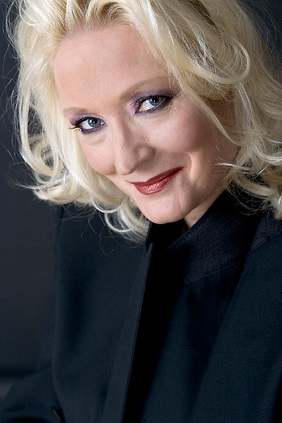
    Saturday March 22nd, 2025 matinee – In 1883, a Swedish soprano named Christina Nilsson sang Marguerite in FAUST for the opening of the then-new Metropolitan Opera House. Last week, another Swedish soprano named Christina Nilsson (photo above) made her Met debut as Aida. This afternoon, I went to hear my second AIDA of the current season to see how she fared in the daunting role.

    Alejandro-Roy

    Another singer new to me, tenor Alejandro Roy (above), stepped in today as Radames; he had made a short-notice Met debut in TURANDOT in 2019 opposite Christine Goerke…

    Burdenko

    …and the Amonasro, Roman Burdenko (above), had just made his Met debut a few days ago.

    Alexander Soddy was on the podium, and while he has good ideas about tempi and the alternating currents of grandeur and intimacy that run thru the score, he (like so many opera conductors today) tends to let the orchestra get the better of the singers all too frequently. Despite this, the score seemed extremely beautiful today, and I often felt moved.

    The Messenger and the Priestess – Yongzhao Yu and Ann-Kathrin Niemczyk – made the most of their moments. The two bassos were both super: Alexander Vinogradov (Ramfis) and Krzysztof Bączyk (the King) have powerful voices and they sounded assured throughout their range. So many phrases from these two gentlemen impressed me today. In the ensemble in the opening scene – and again in the Triumphal Scene – where both bassos have great moments, they created a sonic energy that was so pleasing to experience.

    Mr. Burdenko likewise made a vivid impression, his opening “Suo padre!” immediately established his dignity and fierce pride. Capable of both power and subtlety, Mr. Burdenko made every phrase come to life; a feeling of steadfastness emerged in his plea “Ma tu, Re…“. In the Nile Scene duet with Ms. Nilsson, the baritone veered from venomous (“…tu sei la schiava!“) to tenderness (“…pensa che un popolo…vinto…straziata…”) Bravo!!

    Mr. Roy’s voice exudes masculine confidence; it’s tinged with baritonal shadings at times but he also had the top notes for the music when needed. Following with my score, he seemed to heed all the dynamic markings, though he took the end of the “Celeste Aida” full voice. Joining in the trio with Ms. Nilsson and Judit Kutasi (Amneris), the three were sometimes covered by the orchestra. Again, in the Temple Scene, the sturdy voices of Mssrs. Roy and Vinogradov had to combat the orchestra’s volume..

    Having only one intermission, after the Triumphal Scene (wherein Mr. Roy blasted an epic B-flat at one point), the tenor must sing in succession the demanding Nile Scene and the dramatic confrontation with Amneris, and then bring forth lyricism for the tender final duet, “O terra addio…”). He handled this marathon quite impressively. I thought he might run out of steam near the end, but the final “…si schiude il ciel…” with Ms. Nilsson was handsomely clear and sustained. 

    Ms. Kutasi, whose Amneris was disappointing at my earlier performance this season, fared little better today, though her B-flats in the repeated phrase “…dal ciel si compira...” in the Judgement Scene were her best notes of the day. I really don’t know what is going on with her; there are exciting clips of her on YouTube, but the voice now is very erratic. The audience cheered her enthusiastically.

    I grew up on such plushy spinto Aidas as Leontyne Price, Martina Arroyo, Leona Mitchell, Gilda Cruz-Romo, and Anna Tomowa-Sintow. Ms. Nilsson today curiously put me in mind of Lucine Amara, an under-appreciated ‘big lyric’ soprano who could float lovely piani on high; Ms. Nilsson’s style is not as Italianate as Lucine’s, but their vocal heft is similar. 

    A ravishing clarinet solo introduces Aida, and the Nilsson voice has immediate appeal; she sounds young – even girlish at times. In the cantabile passages of the trio and ensemble of the opening scene, her singing is very persuasive; but Mr. Soddy lets that ensemble get too brassy…and there was an added drum rhythm I’d never noticed before.

    Ms. Nilsson got to show her stuff with “Ritorna vincitor“, her singing reflective, her phrasing having a lyrical glow; she gave the aria a lovely, poignant finish. In the boudoir scene, the soprano’s tone sometimes lacked richness, but she fared well in the Triumphal Scene, with a gleaming top-C to cap the ensemble’s first half.

    On the banks of the Nile, Ms. Nilsson shaped “O patria mia…” perfectly, though more colours could have been introduced along the way. Her sweet high-C lingered long on the air, and her sustained phrases at the aria’s finish were gorgeous. Mr. Burdenko’s raging “…tu sei la Schiava!” elicited a blistering top-A from the soprano. She later got enticingly floaty and provocative with “…la, tra le foreste vergini...” in the duet with Radames, before spinning out a magical “…fuggiam…fuggiam.....” The stretta, with Mr. Roy, was excitingly sung.

    The tenor commenced the final scene expressively, and Ms. Nilsson’s lyricism glows, lit by beaming high notes along the way; here she really reminded me of Amara. Mr. Roy sang valiantly as the opera moved towards its solemn ending, his voice well-matched to Ms. NIlsson’s. They took a joint bow, to a warm salute from the crowd. Mr. Roy had saved the day, and Ms. Nilsson had won new admirers. 

    Notably, it was the all-male ballet in the Triumphal Scene that roused the audience to the afternoon’s most enthusiastic cheers.

    ~ Oberon

  • SOLOperas at The Tank

    Tank

    ~ Author: Shoshana Klein

    Thursday March 20th, 2025 – This evening, I went to The Tank in Midtown (close to my office!) for a showing of solo operas in a small black box theater. Two operas were performed, both in impressive solo performances with varied skills and stories compellingly set forth forth. Other than that, they were very different experiences! 

    Shoshana 2


    This is not about Natalie ~ Jason Cady


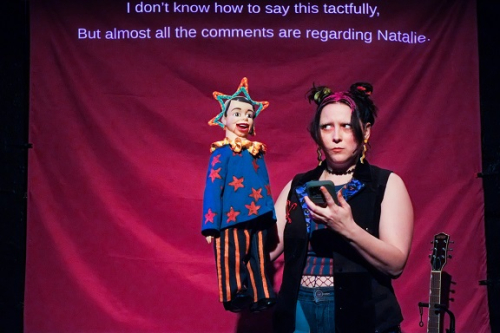
    The first opera followed an unsuccessful musician feeling bad about her ex-music partner who became successful and moved on from their band. The story was told by way of daily vlogs that included conversations with a puppet – performer Sarah Daniels (photo above by Reuben Radding) did a great job, singing varied types of music, sometimes accompanying herself on electric guitar, and interacting with the ventriloquist puppet (whose voice had been pre-recorded, along with some accompaniment music, which was mostly kind of synth-pop). I thought it was interesting and pretty fun that the texture of the music – including songs performed as if they were kind of indie pop or rock – were being sung operatically, which somehow on the whole worked pretty well. The piece was clever, though transparent, and well executed.


    INcomplete Cosmicomics ~ Anna Heflin 


    After intermission, we settled in for a piece twice the length of the first. This piece was different in most ways. Based off of/inspired by/in conversation with Calvino’s Cosmicomics (Which I came in knowing almost nothing about), the character Qwfwq spends the hour in verbal and musical conversation with the audience. There was no operatic style singing – just one performer with a cello, voice, and looper with some effects. The music often made use of the looper, with stories being told intermittently – stories that often felt like folk tales, but sometimes involved ruminations, and other times explanations. Qwfwq was in conversation with his author, and those who have written about him – Ursula K Le Guin, and some others I didn’t know – he responds in a very human way to the criticisms given to him.


    Qwfwq spoke to us as the audience, directly, wearing an altered blue jumpsuit (photo above by  with patches and doodles sewn on, and wool socks. The character often had a kind of self-deprecating self awareness that was very engaging, as well as feeling friendly and approachable, though presented as fragments, or a set of thoughts.


    The music used a lot of looping – including with singing and speaking voice, as well as the cello, sometimes in complicated counterpoint. The piece went through many creative sound worlds that I liked – including making use of a tray of beads with contact microphone, and lots of breathing sounds that molded from the voice to the cello almost seamlessly. 


    Soshana


    I should have known this piece would have been great, since Anna wrote a somewhat similar solo piece for a friend of mine based on Alice and Wonderland – using voice and various effects to create something impressively textured and evocative. Prepared or not, I thoroughly enjoyed the performance, and Aaron Wolff (photo above by Reuben Radding) was an impressive interpreter – as an actor, cellist, and communicator. 

    ~ Shoshana Klein

    (Performance photos by Reuben Radding)

  • LYRIC OPERA OF CHICAGO ~ 25th ANNIVERSARY

    Loc

    A gala concert celebrating the 25th anniversary of the Lyric Opera of Chicago was given on October 14th, 1979.

    The participating conductors were George Prêtre, Nicola Rescigno, Riccardo Chailly, Bruno Bartoletti, Sir John Pritchard, and Krzysztof Penderecki, and the line-up of singers was impressive indeed.

    Listen here.

  • Miranda van Kralingen

    Portrait-miranda-van-kralingen

    The Dutch soprano Miranda van Kralingen competed at the 1991 Cardiff Singer of the World Competition. Her performance of ‘Beim Schlafengehn’ from Strauss’s Four Last Songs stood out among much fine singing at that prestigious event, and I’ve preserved my tape of it over the years, despite a radio dropout during the orchestral interlude.

    Click below to listen:

    Miranda van Kralingen – Beim Schlafengehn ~ R Strauss – Cardiff 1991

  • Mother and Child Reunion

    (A re-post from Oberon’s Grove, dating from 2007)

    My friend Mollie, who lives in Fareham, England, sent me this story about meeting her mother after 71 years! Mollie and I have known each other for over 3 decades, since the time I answered her small ad in the British magazine OPERA. She was looking for tapes of Frederica von Stade and I happened to have a real rarity: a recital Flicka gave in Syracuse, NY on her first tour as a professional singer.

    Mollie came to the USA several times over the years and once she had the good fortune to have Flicka invite her to a working rehearsal of IDOMENEO at the Met. Mollie and Flicka have stayed in touch to this day.

    Each summer Mollie sends me the tapes of the Cardiff Singer of the World Competition and so it was that I was one of the first people on these shores to hear the voices of Dmitri Hvorostovsky and Bryn Terfel within a week of the famous ‘battle of the baritones’ in 1989.

    The last time Mollie was here, she met my late friend the Japanese contralto Makiko Narumi  who was at that time on the brink of the big career that never happened. 

    I knew that Mollie had not been raised by her real parents but I had no idea of the story behind it, or that she had located her mother who is now 93 years old. I’ll let Mollie tell the story; Jeremy is Mollie’s son and Syd is Jeremy’s daughter.

    mollie and her mom

    Tuesday, November 27, 2007

    “HI dears…just to send on this fantastic photo of me and MY REAL MOTHER!!! After 71 years!!! A  sad story and we did not stay long. Jeremy was great and knocked on the door and when she answered he said she was not to be upset at what he had to say, but that he was her grandson. She went to say ‘go away’ [nicely] but he said, “Before you say anything I have to say we just would like to put a face to a name and have waited a long time to do so but we will go away after that”. She was explaining that she lives alone and was RAPED by my drunken Irish father..that accounted for her never wanting to know about me.

    I then got out of the car and went over and said it was so kind of her to see us and we would not stay but may we just have a photo? She said that since 1920 she had lived here in the family home. She had a little smile and twinkle in her eye and said, “He is very handsome isn’t he?”…meaning Jeremy, who was charm himself…glad he took me!!!

    Anyway, she made us promise not to come again and said it is too much for her…at 93!! Very sprightly!!! She said she had driven until she was 80 but has severe athritis in her hands and knees. When we were leaving she called me back and gave me two photos of herself…and she gladly took the latest school photo of Syd which Jeremy happened to have in the car…so…we were all exhausted but exhilarated…especially as although it took 2.4 hrs to get to Ash it took another hour or more along single lanes to find the house..and only then because a lady drew us a map!!!!!

    Home exhausted…Jeremy had driven for 7 hours…so was kindness itself..he was as excited at me at finding his grandmother as he has none and hasn’t since he was 4!! That’s all folks but just wanted to share my good news…”

  • Franz Welser-Möst and the Cleveland Orchestra Make a Statement @ Carnegie Hall

    CH11527596

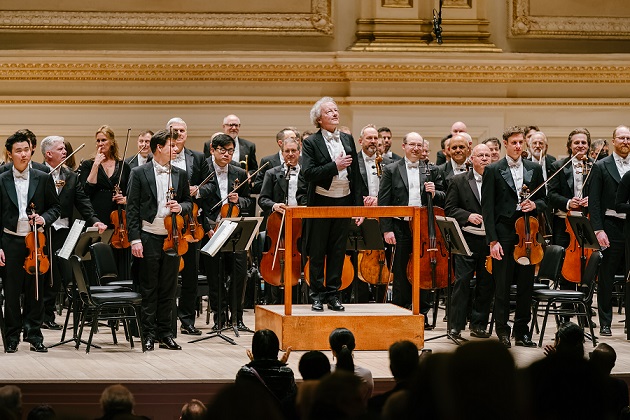
    Above: Maestro Welser-Möst and the Cleveland Orchestra onstage at Carnegie Hall; photo by Fadi Kheir

    ~ Author: Lane Raffaldini Rubin

    Tuesday March 18th, 2025 – Tuesday March 18th, 2025 – Franz Welser-Möst led The Cleveland Orchestra tonight in the first of two back-to-back Carnegie Hall performances. The second concert will feature music of Stravinsky and Tchaikovsky, but the Orchestra was forced to make a major change in the program of tonight’s concert after Asmik Grigorian announced her withdrawal for personal reasons. Ms. Grigorian, the Lithuanian soprano, was set to sing Richard Strauss’s Four Last Songs and the final scene from Puccini’s Suor Angelica with the Clevelanders.


    Missing a chance to hear the Four Last Songs is a real shame, but Welser-Möst took this opportunity instead to make a timely political statement in what might be one of his last Carnegie Hall appearances before his retirement in 2027:

    “This program change has given us a chance to say something important about our world today. As people fight for freedom everywhere, these pieces tell that same human story. Beethoven’s Fifth shows us the journey from darkness to light. Janáček’s From the House of the Dead reveals how human dignity survives even in the most desolate of circumstances. And the Leonore Overture is, to me, simply the greatest music about freedom ever written. These works together create a profound statement that I believe will resonate deeply with our audiences in both Cleveland and New York.”

    The first notes of the performance were the V-for-victory theme of Beethoven’s Fifth Symphony. Besides being perhaps the world’s most famous four notes, this music represents Allied Europe’s victory over the Axis in World War II. (Russia, are you listening?)

    CH11527621

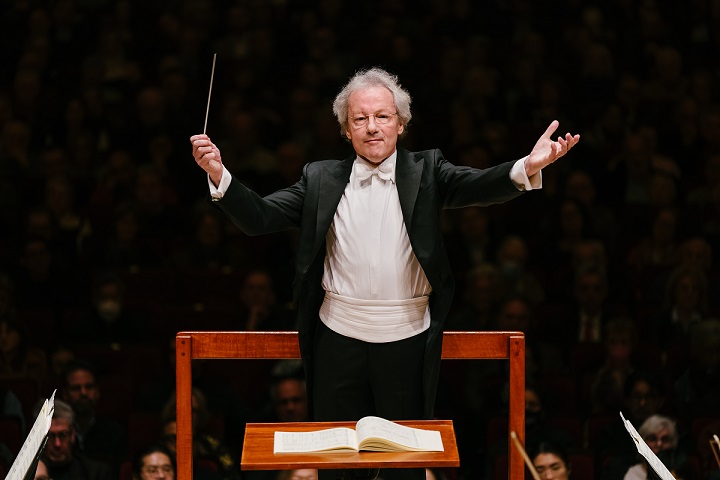
    Maestro Welser-Möst (above, photo by Fadi Kheir) mobilized the full forces of the Cleveland Orchestra for the Fifth, making it an orchestra more than twice the size of that envisioned by Beethoven. The result was an impressive, explosive sonority at the expense of contrast and transparency. In the first movement the Clevelanders’ sound was burnished and energetic as it traversed Beethoven’s volatile landscape of darkness and light.

    The second movement was beautifully elegant, with notable vibrato-less hushed passages and flawless string crossings throughout the later variations of the theme. The finale was brisk without being breathless and avoided the Indiana Jones clichés that this movement often receives.

    The second half of the program featured the suite (arranged by František Jílek) from Leoš Janáček’s final opera From the House of the Dead as well as Beethoven’s Leonore Overture No. 3. These pieces both come from larger dramas about imprisonment and the liberation of the steadfast human body and spirit. If Beethoven’s Fifth Symphony lays out a hero’s abstract journey through conflict toward triumph, the latter two pieces give a much more visceral view into their protagonists’ struggles against adversity and fate.

    Janáček’s suite is wonderfully off-kilter and begins with a herculean violin solo—a free-associating kind of playing that involves an almost desperate sawing away at the top of the instrument’s register. Chaotic passages of music played by smaller sections of instruments are interspersed between bursts of the full orchestra with towering clusters of sound, always grounded by the low strings and brass. Inventive sounds made by rachet noisemakers, wood clappers, percussively plucked strings, and relentless repetitive figures all have the effect of boring a hole into one’s skull, slipping toward madness.

    Passages drawn from a scene in the opera in which the prisoners stage a play feature macabre oom-pah-pahs, vaudeville fragments, and whiffs of a klezmer band. The final movement of the suite is a fauvist palette of blurry chords, a luxuriously strange and gorgeously dissonant tableau that concludes too optimistically considering all that came before.

    It seems odd, then, to conclude the concert with an overture. Rare, too, is the chance to hear Beethoven after Janáček. But the Leonore Overture—from the opera that would become Fidelio—is a concise encapsulation of Welser-Möst’s message for the evening.

    This piece was better suited than the Fifth to the large orchestra, which was able to achieve subtle shades ranging from the bright fanfare of the full orchestra (in C-major, like the final movement of the Fifth) to the eerie distance in the flute after the portentous off-stage trumpet call.

    Fidelio is ultimately about the triumph of enlightenment values over despotism. Although Welser-Möst’s program had the potential to come off as trite and facile, his linking of these two Beethoven scores to Janáček’s and his reversal of the obvious order of their performance charted an intelligent, moving, and novel course that he hopes—despite our current administration’s unenlightened displays of power—might be followed in Europe.

    ~ Lane Raffaldini Rubin

    Performance photos by Fadi Kheir, courtesy of Carnegie Hall

  • Waiting for Elisabeth Grümmer

    The most-read article from Oberon’s Grove:

    Gruemmer

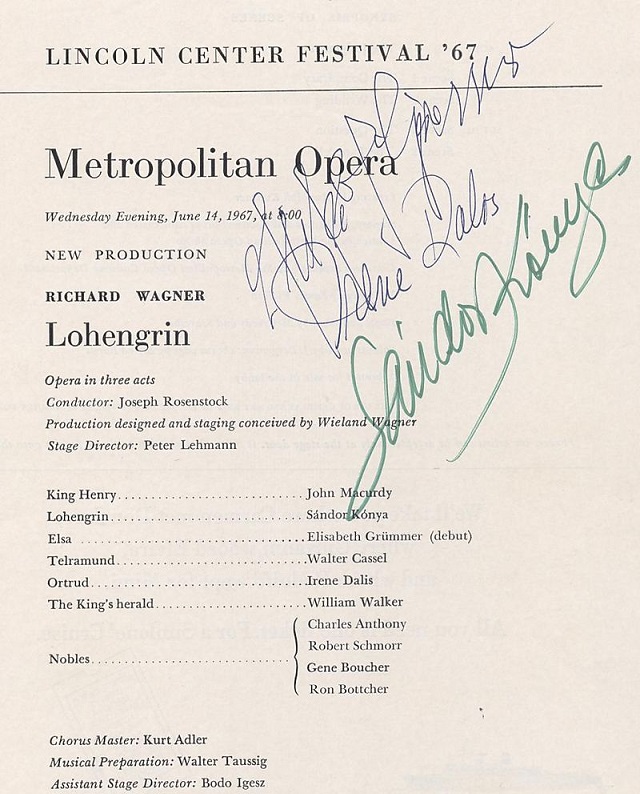
    ~ In 1967 the Metropolitan Opera held its first June Festival. Having just opened the ‘New Met’ in September 1966, ticket demand for the premiere season at Lincoln Center had been phenomenal and the Company seized the opportunity to add several performances in the month of June. This was a bonanza for the fans and also provided the general public, who were curious to see the interior of the new opera house, expanded possibilities. The Met offered some very fine casting that June, and topping the list of exciting events (at least from the fans’ point of view) was the belated Met debut of the German soprano Elisabeth Grummer. 

    Grümmer was 57 at the time, and had already had a very successful career in Europe and had made several top-class recordings, working with Europe’s finest conductors. She had made her debut with the Met on tour in Boston earlier that Spring and was now coming to the House in the role of Elsa in Wieland Wagner’s production of LOHENGRIN.

    This was my first chance to see this opera; Sandor Konya was at that time the leading exponent of the title role, and my beloved Irene Dalis was singing her venomous Ortrud. Stalwarts Walter Cassel, John Macurdy and William Walker completed the cast. Andre Cluytens, who was to have conducted this production of LOHENGRIN, had died the previous summer and so Joseph Rosenstock was on the podium. I suppose by international standards that Rosenstock was considered a routinier but – inexperienced as I was – I was simply thrilled to be there.

    Grümmer made her entrance, and I recall the entire phalanx of Family Circle standees were waiting with collectively bated breath for her first line, which she deployed with a silvery pianissimo: “Mein armer bruder!”  We were under her spell immediately and she went on to sing a really thrilling Elsa and to win a very warm acclaim from the packed house. Although nearing the end of her career, Grümmer had maintained her clarity of sound; the voice had a lyrical feeling but she was able to ride the ensembles  with a bit of metallic thrust. It was an exciting debut but after repeating the role once, she never sang at the Met again. (She did appear as the Marschallin at the New York City Opera the following season.)

    A large contingent of fans gathered at the stage door. Sandor Konya came out and was so kind; aside from signing my programme he gave me a beautiful photo of himself as Lohengrin. Irene Dalis  appeared and she even remembered me and thanked me for coming. Then the crowd began to drift away. I knew Grümmer hadn’t left yet and I couldn’t imagine why no one wanted her autograph after such an exciting debut.

    After a few moments only a half-dozen of us remained. A chorister walked out and someone asked him if Miss Grümmer was coming out soon: “Oh, she doesn’t sign autographs!” Someone else emerged and saw us: “You waiting for Grümmer? She won’t sign.” The other fans left. I figured at least I would get a glimpse of her. It had been an hour since the curtain had fallen, and I was exhausted. But something kept me there.

    A car pulled up; the driver got out. He looked at me and said, “If you’re waiting for Elisabeth Grümmer, you’re wasting your time.  She doesn’t like giving autographs.”  I shrugged, trying to pretend that I WASN’T waiting for Elisabeth Grümmer.

    Finally the stage door opened and Ms. Grümmer walked out with a gentleman. They got in the car and closed the doors. But they didn’t leave. I stood by the stage door holding my program and pen, looking as forlorn as I could. I was 19 but looked younger, and I hoped she would take pity on me. The driver was pointing at me and the soprano looked my way hesitantly. Then she suddenly rolled down her window and gestured to me. Neither of us spoke, but I handed her the program. She briskly wrote her name and handed it back to me with just a trace of a smile. I thanked her and made a little bow; she rolled up the window and the car pulled away.

    Click to enlarge:

    6a00d8341c4e3853ef00e553e3255c8833-800wi
  • @ My Met Score Desk for FIDELIO

    Fidelio tk and ld

    Above: Tomasz Konieczny and Lise Davidsen in Act II of FIDELIO; a MET Opera photo

    ~ Author: Oberon

    Saturday March 15th, 2025 matinee – I’ve never really been drawn to Beethoven’s FIDELIO. I’ve only seen it a few times; my first Leonore was Shirley Verrett (!), later followed by Hildegard Behrens, Karita Mattila, and  Waltraud Meier in the title-role. I love the drama of Leonore’s rescue of her beloved Florestan, but I don’t like the ‘operetta’ couple who are quite silly; they hold up the action in what could otherwise be a potent drama.

    This afternoon’s performance of the Beethoven opera was sold out, and overall it was a good FIDELIO. Susanna Mälkki’s conducting seemed on the fast side, and at times she seemed to succumb to the current Met trend of swamping the singers. The orchestra were on peak form, with excellent work from the horns. The chorus likewise excelled.

    In the briefest roles, tenor Jonghyun Park’s sweet lyricism made his mark as the First Prisoner; Jeongcheol Cha was equally fine as the Second Prisoner, though he has less to sing. Ying Fang as Marzelline and Magnus Dietrich as Jaquino both sang beautifully, but their characters are cardboard…and if they were absent from the narrative, it wouldn’t matter. 

    Milling fidelio

    The impressive Danish basso Stephen Milling (above, in a MET Opera photo) is ever welcome at The Met. Today he had the brief but pivotal role of Don Fernando, and he sang with authority; I look forward to his Sarastro later in the season.

    Rene Pape, who turned 60 last Autumn, retains the power and firmness of his cherished voice; he has given me so many wonderful memories in my opera-filled lifetime, and he sang handsomely and effortlessly today. His Act I aria, and his scene with Leonore as they prepare for their gruesome task, were highlights of the afternoon.

    Tomasz Konieczny was a vivid Don Pizarro; his first spoken lines had a sense of urgency, and he displayed the meanness of the character in his sinister inflections. Joining Mr. Pape in duet, the sheer amplitude of their sound defined the description “Met-sized…”. Later, Mr. Konieczny’s taunting of the hapless Florestan was unsettling. 

    Following a superb prelude to Act II from the MET Musicians under Ms. Mälkki’s baton, tenor David Butt Philip emitted an uncanny, sustained tone with his opening “Gott!” The intensity of Florestan’s suffering was strikingly voiced by the English tenor, who has an impressive list of European achievements to his credit. His trio with Ms. Davidsen and Mr. Pape had a palpable feeling of terror. Rescued by his wife’s cry “Töd’ erst sein Weib!” as she holds Pizarro at gunpoint, Florestan joins Leonore in the blazing “O namenlose Freude!”  But I did miss hearing Florestan’s haunting spoken line, “Was hast du für mich getan?” 

    Lise Davidsen was the star of the afternoon, just as Leonore is the heroine of the story. The tall Norwegian soprano is pregnant with twins, and this run of FIDELIO at the Met will be her last performances until after the babies arrive. She was in excellent voice today, and her strikingly clear and shining top notes seemed truly to stun the audience. Her singing of the great aria “Abscheulicher!” had remarkable power but also some incredible subtleties, and the prayerful passage “Komm, Hoffnung” moved me deeply.  The soprano then went on to a blazing, prolonged top B at the aria’s climax, drawing cries of brava! from the Hall. In the opera’s finale, more of the soprano’s high notes lit up the afternoon. 

    Following a benedictive passage from Mr. Milling’s Don Fernando, the minister then asks Leonore to remove her husband’s shackles. In this moving moment, I glanced up at the sculpture that hangs over the Met’s proscenium; created by American sculptor Mary Callery, it was described at the time the House opened in 1966 as having been inspired by the opened shackles of Florestan, rescued by his devoted wife. 

    ~ Oberon

  • The Marcella Sembrich Museum

    Sembrich museum-1 jpg

    In the summer of 1963, my parents took me to see an English-language production of Rossini’s BARBER OF SEVILLE given by the Lake George Opera Company; this was my third live opera performance. I still remember how cold it was in the small theater, how much I liked the Berta (played by Ellen Berse, who later joined the short-lived Metropolitan Opera National Company), and that my favorite part of the opera was the “Frigid and motionless” ensemble. 

    We spent an extra day on Lake George, which included a visit to the Marcella Sembrich Museum; this was housed in a pink cottage at Bolton’s Landing, NY, where the legendary Polish soprano spent her off-seasons from The Metropolitan Opera, giving voice lessons.

    The main thing I remember about our time at the museum was that it was far briefer than I had anticipated. Although I was fascinated by all the opera artwork, old photographs, scores, even some of Sembrich’s costumes and accessories, my parents seemed oddly tense. It took me a few minutes to realize that the middle-aged man who was overseeing the place was subtly eyeing me; whenever I stopped to examine a particular photo or artifact, he would hover nearby and comment on whatever it was I was looking at. My mother would then materialize out of nowhere.  

    We’d only been there for 15 minutes when my father announced that it was time to go; I was not anywhere near done looking around, and I had also wanted to ask if I could play the piano (I was sure it was forbidden) and then sit outside the cottage, enjoying the sun and the lake view. The man then suggested that my parents leave me there and come back and pick me up in an hour. My mother turned frosty, and we left a few seconds later. Once in the car, I complained that there was so much I hadn’t gotten to see. They quickly changed the subject: where should we have lunch?

    Of course. I knew perfectly well what was going on: they viewed the man as a predator and me as an innocent victim. I wasn’t exactly innocent anyway; I’d been fooling around with one of the neighbor boys for a while. But I sometime think back on that afternoon; it would be another ten years, filled with fantasies and frustrations, before I took the leap.