Category: Opera

  • Checking In With Tom Gold Dance

    6a00d8341c4e3853ef016762aa026d970b-800wi

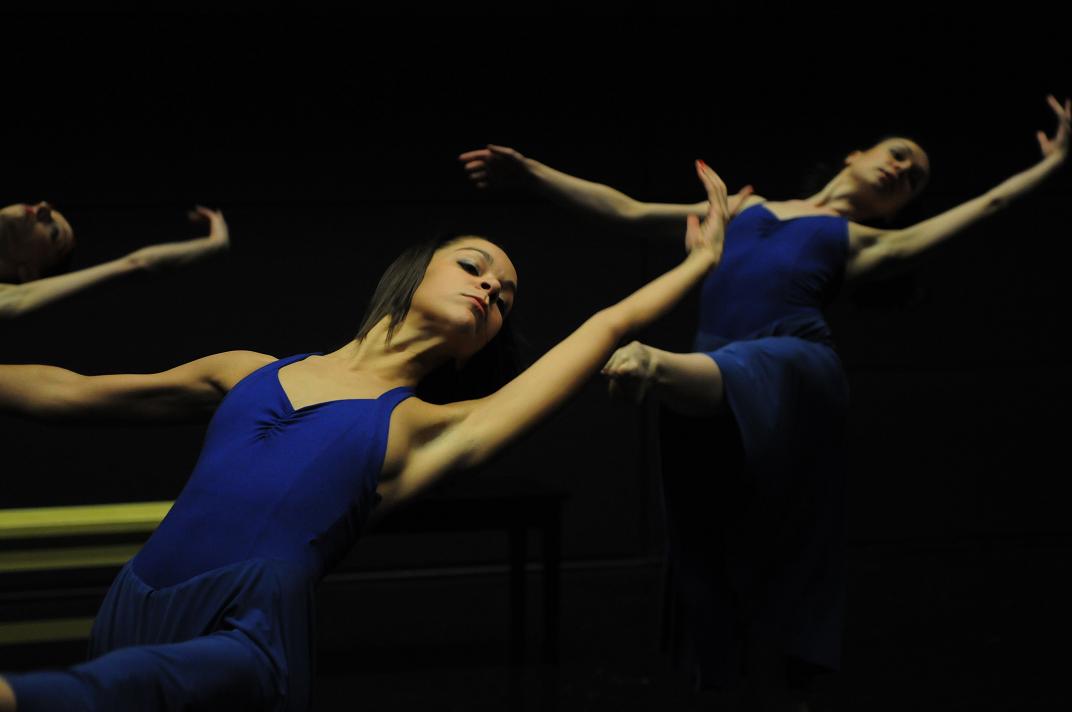
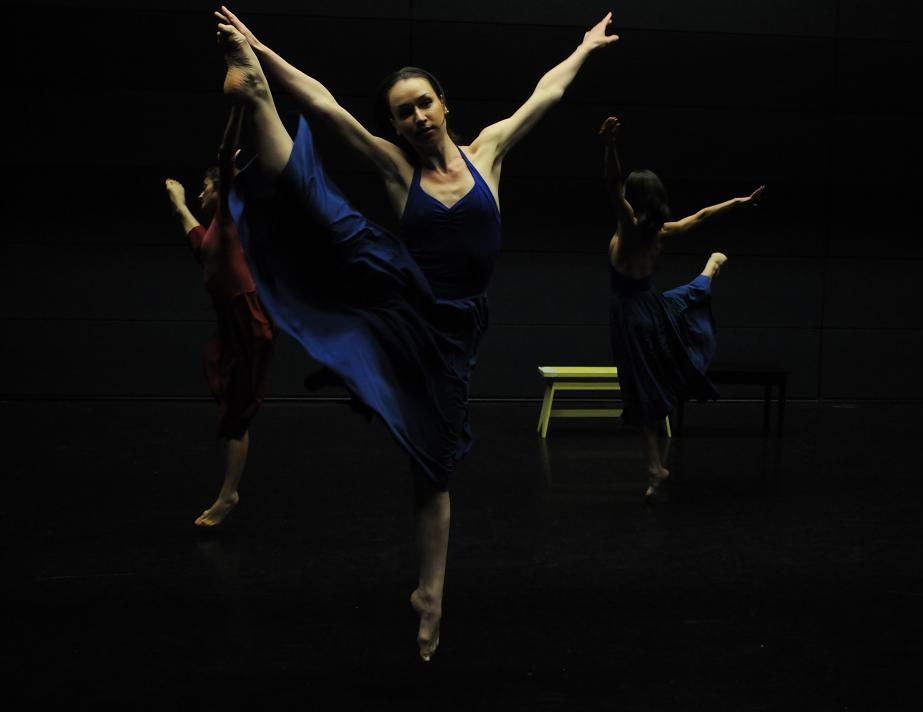
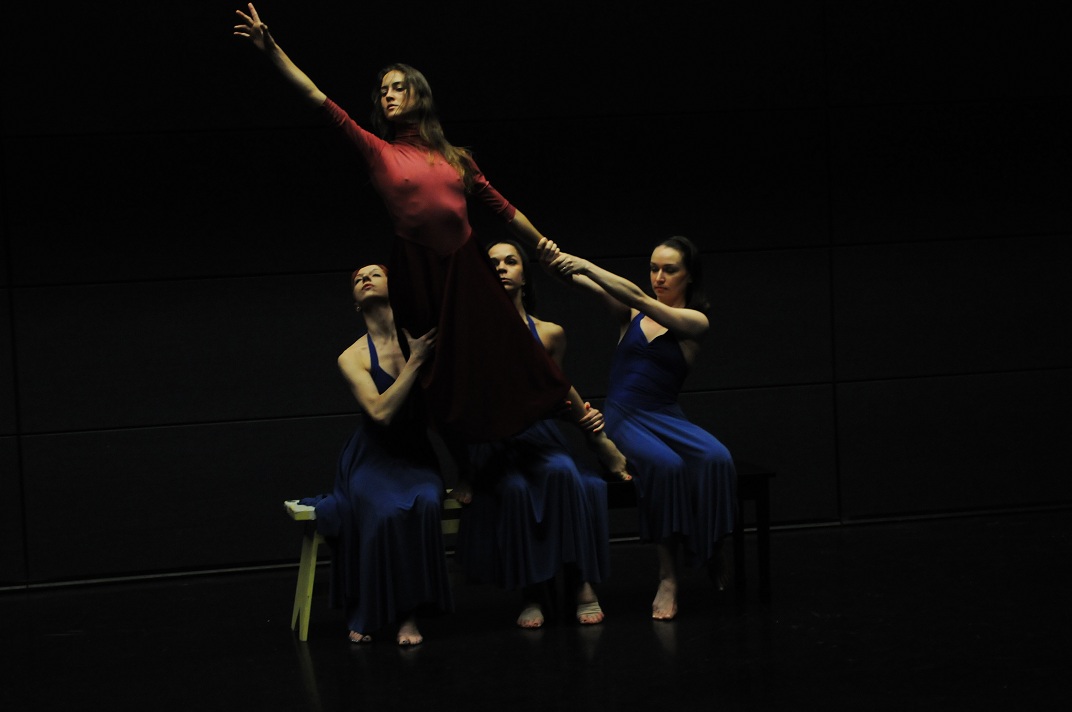
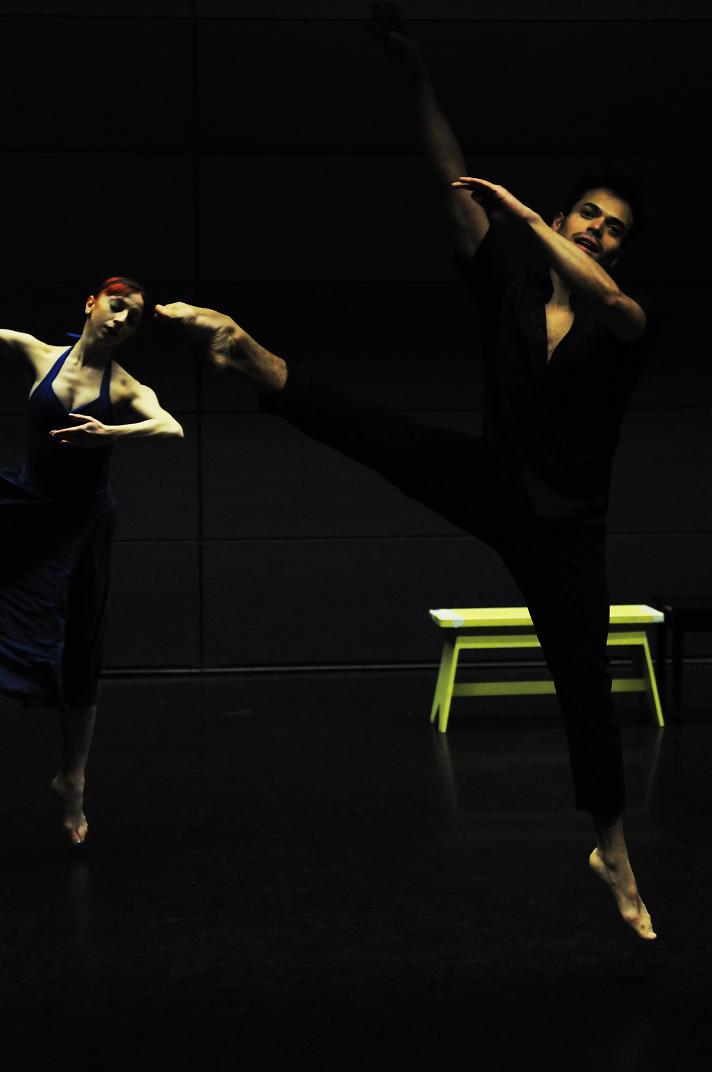
    Tom Gold Dance will be performing at Kykuit, the Rockefeller Estate in Sleepy Hollow, New York on June 27th, 2012. Abi Stafford (in a Matt Murphy photo above), principal ballerina at New York City Ballet will share the stage with her fellow NYCBers: principal Jared Angle, and corps de ballet dancers Likolani Brown, Amanda Hankes, Gretchen Smith, Devin Alberda and Russell Janzen. Tom Gold himself will put on his dancing shoes again and appear in two of the works on the programme.

    On Monday June 25th, I stopped in at City Center Studios where Tom and his dancers were putting the finishing touches on the works to be danced at Kykuit. They’d started rehearsing at the ungodly hour of 10:00 AM yet they all seemed full of vim and vigor. New York City Ballet pianist Susan Walters was at the keyboard and Willy Burmann, Tom’s designated ballet master, was giving out tidbits of advice to the dancers: invariably he was spot on.

    Put me in a room with dancers from NYCB and I’m happy – especially with this particular bunch of dancers who happen to be among my favorites in my favorite Company. It’s incredible to see these great technicians at close range. Tom’s choreography looks really demanding to me: a virtuoso himself, he asks for virtuosity in his ballets. He’s chosen top-notch music: Faure, Satie, Poulenc, Gershwin and – in his newest creation – classic songs by Noel Coward and Ivor Novello which will be sung live by vocalist Sasha Weiss.

    The Coward/Novello ballet, entitled Mad About The Boy, features Amanda Hankes dancing an elegant solo to the title song. My opera glasses frequently get ‘stuck’ on Amanda during NYCB performances; I so enjoyed watching her today. The ballet has a Gosford Park air about it, with Likolani Brown and Devin Alberda as the below-stairs couple kicking things off with a charming duet. Abi Stafford, Gretchen Smith, Jared Angle, Russell Janzen and Tom Gold take turns whirling around the salon in pairs and solos while the songs remind us of a more innocent time…though of course, it wasn’t really.

    Another ensemble work, Faure Fantasy, will open the Kykuit evening, and Abi Stafford and Jared Angle will dance in Tom’s setting of the Gershwin Preludes. Likolani Brown and Russell Janzen perform Suite Francaise, three duets in contrasting moods set to music by the French immortals Faure, Satie and Poulenc.

    Earlier this year, Tom Gold Dance gave their full-evening New York City debut performance at Florence Gould Hall. In the coming months the Company will tour to Spain and Cuba, with anticipated performances in New York City this Autumn.

  • The Third Kingdom

    6a00d8341c4e3853ef0168e7bb11cd970c-800wi

    Monday May 28, 2012 – By this, my third ABT BAYADERE within a week, certain aspects of the ballet were not quite holding my attention. Contributing to my inability to focus during Act I were a pair of people in the next box who wouldn’t shut up. They were obviously Cojocaru fans, since every move the ballerina made caused them to turn to one another and comment, with animated gestures. It seemed to me they missed about half of her performance as they analyzed her play-by-play. They were just out of range for shushing. So I retreated to the Family Circle where there were rows of empty seats; I watched my third ravishing Kingdom of the Shades from on high, then decided I’d had enough BAYADERE for one season and went home.

    The thrills of the evening were provided by Herman Cornejo (photo at top) who was I believe dancing Solor at The Met for the first time. He was simply splendid, a lover by turns ardent and distraught, a young prince of a fellow caught in a triangle not of his own devising. His dancing was magnificent; his Act I solo at the betrothal festivities simply thrilling – the audience went wild – and he was equally impressive in the Shades variation. Herman’s partnering was gallant and smooth, and he maintained his cool command even when the feather in his headpiece went somewhat awry in Act I. And he’s just such a handsome man, you can’t help loving him. My only regret in leaving early was not to be present for the final curtain calls where, I feel certain, Herman would have received a dazzling ovation.

    Alina Cojocaru danced beautifully as Nikiya and I thoroughly enjoyed watching her; unfairly (and ironically) the antics of her two admirers in the next box kept me from fully engaging in her performance in Act I. In Shades, she had a lovely lightness of movement that was captiviating, though I did feel at times she was not getting just the tempo she wanted from the pit. An opera singer can communicate to an attentive conductor when she wants to go a bit faster or slower, but there’s really no way for a dancer to do this unless she simply dances on at her own pace and hopes the orchestra will catch up. I wonder if I’d have been more drawn into Cojocaru’s portrayal if she’d been my first rather than my thrid Nikiya of the week. Hee Seo had successfully mined the deep lyricism and mystery of the role, and Polina Semionova’s dramatically nuanced interpretation and her breath-taking dancing somehow held more resonance for me, though Cojocaru was nothing short of sublime. 

    The scheduled Gamzatti, Natalia Osipova, was ill and was replaced by Isabella Boylston, repeating the role in which she made a very fine impression last week. The trio of solo Shades – Sarah Lane, Maria Riccetto and Yuriko Kajiya – danced grandly and were well-differentiated. Roddy Doble was an especially vivid High Priest. In the third scene of Act I, I had a very hard time prying my opera glasses off Simone Messmer; whenever she was onstage I was enslaved.

  • Morales Dance Rehearsing AMOR BRUTAL

    Copy of 18

    Above: dancers Karina Lesko and Leonel Linares, photo by Kokyat. Click on the image to enlarge.

    Monday May 21, 2012 – Choreographer Tony Morales invited Kokyat and me to a rehearsal-in-costume of his latest creation, AMOR BRUTAL which will premiere at performances by Staten Island Ballet on May 26th (8:00 PM) and May 27th (3:00 PM). For tickets call: 718 980 0500.

    In this domestic-drama ballet, a married couple have reached an impasse. The mother tries to sway their three daughters to her side, but the girls prefer their charming father. The mother is left on her own.

    Copy of 49

    Karina Lesko and Leonel Linares are the married couple…

    Copy of 55

    …MarieLorene Fichaux, Kate Loh and Joanna Prewieziencew are the daughters.

    Here are some of Kokyat’s images from this rehearsal:

    Copy of 14

    Karina Lesko

    Copy of 22

    Copy of 30

    Copy of 24

    MarieLorene Fichaux

    Copy of 69

    Kate Loh

    Copy of 44

    Joanna Prewieziencew

    Copy of 38

    Mother and daughters

    Copy of 72

    Father and daughters

    Copy of 74

    MarieLorene, Leonel

    Copy of 54

    Karina, MarieLorene

    Copy of 60

    Karina Lesko

    Copy of 16

    Leonel, Karina

    Copy of 17

    Copy of 51

    Copy of 40

    The ballet will be danced to live music: Mary Ann Stewart (soprano) and Doug Martin (piano) performing four of Manuel de Falla’s Popular Spanish songs. The fifth and final section is danced to an old recording of Tony Morales’ father singing “Amor Brutal” when he was a professional singer in Puerto Rico and the USA in the 1960’s and 70’s.

    AMOR BRUTAL will also be performed on Sept 29th and 30th @ The Theater of The Riverside Church.

    All photography by Kokyat.

  • SALOME @ Carnegie Hall

    FWM_conducting_2_(credit_Roger_Mastroianni)

    Thursday May 24, 2012 – This concert performance of Richard Strauss’ SALOME by the Cleveland Orchestra under the baton of Franz Welser-Most has been on my calendar for months. Photo of the conductor above by Roger Mastroianni.  The maestro and his musicians gave a spine-tingling account of this most dazzlingly colourful of operatic scores. From the massive onslaughts of ominous themes predicting the opera’s brutal outcome to the shimmering delicacy of filagree harp or the sensuous spinning of mid-East exotica in the winds, SALOME has never sounded better. The great sway and sweep of the Dance of the Seven Veils was enthralling, and the maestro’s fingertip control of dynamics helped soprano Nina Stemme turn the arduous final scene into a personal triumph.

    One unfortunate aspect of the presentation though was that the singers were seated on raised platforms along the outer walls of the stage. This meant that for 1/3 of the audience in the hall’s upper reaches, the protagonists were simply not visible. We had a great view of the Nazarenes, Jews and Soldiers but had nary a glimpse of Ms. Stemme all evening. It seems like presenters are always trying to do something clever when giving an opera in concert form; it’s best just to line the singers up across the front of the stage and let ’em rip.

    Nina Stemme scored a huge success in the title-role. I’ve had a great run of Salomes in my years of opera-going: Rysanek, Bumbry, Niska, Marton, Behrens, Malfitano, Mattila. Ms. Stemme’s final scene was on a par with the finest of these, though earlier in the opera the tone was a bit edgy, not always in focus, and some top notes were a shade flat. There’s also not a lot of sheer beauty in the Stemme timbre although – like the immortal Behrens – she can persuade you through vocal colouring that certain notes are disturbingly lovely. But any misgivings were swept clean away by the power and expressivity of her vocalism in the opera’s magnificent closing pages. 

    Eric Owens sang with powerful commitment as Jochanaan. His tone has a somewhat covered, throaty quality and in a few spots the force of the orchestra almost overwhelmed him. He stayed the course and was clearly well-liked by the audience.  Rudolf Schasching sang with cutting power and verbal subtlety as Herod and Jane Henschel made the most of every phrase of Herodias’s neurotic music: these two singers contibuted much to the evening’s success. Jennifer Johnson Cano, a Met Rhinemaiden, sang with seductive, darkish appeal as the Page, and Garrett Sorenson was a strong Narraboth. Oddly, Mr. Sorenson remained onstage after his character’s suicide and was still there as Salome met her fate. Sturdy excellence from a trio of lower voices – Evan Boyer, Sam Hindley and Brian Keith Johnson – who doubled variously as Nazarenes and Soldiers. The Jews were a noisy, annoying lot but that’s exactly what Strauss wanted.  

  • ABT BAYADERE: Seo/Muntagirov/Boylston

    Hee seo

    Wednesday May 23, 2012 – Tonight was the first of three BAYADEREs I’ll be seeing at ABT. Although this evening’s cast was devoid of top-tier stellar names, the evening turned out very nicely and my friend Kokyat enjoyed his first experience of watching the Kingdom of the Shades. Hee Seo, above, danced the role of Nikiya, with Isabella Boylston as Gamzatti and an ABT newcomer Vadim Muntagirov as Solor. 

    Going to the ballet at The Met is not a particularly rewarding experience. The place is simply too huge and you feel detached from the action; even when I sit in the orchestra, the dancers seem miles away. Tonight we were in Balcony Row A which was fine until a group of young people snatched the seats behind us after the first intermission and were restless and whispery. We moved further back for the last act. Sadly, there were tons of empty seats on every level; the Family Circle was virtually empty.

    There’s also the distracting sound of toe shoes clomping on the Met stage. Mr. B made sure that this would not be a problem at His House, but at The Met – which was built to project sound from the stage – it sometimes sounds like horses are galloping around.

    For all that, the performance succeeded in making a fine impression thanks to the work of the three principals and several fine individual contributions among the smaller roles. Hee Seo was a beautiful Nikiya to behold, her dancing was lyrical and devoid of theatricality. It’s a long and demanding role and the ballerina maintained her dramatic focus and her refined musicality throughout, leaving us with several luminous images.

    Foto Sian Trenbeth

    Vadim Muntagirov (above, photo by Sian Trenbeth) is a slender, elegant danseur with a lovely technical polish. His airy leaps and swift footwork held the opera glasses in place throughout his variations, with deep backbends in the concluding poses making an especially fine impression. He and Ms. Seo created a dreamy partnership as their adagio unfolded.

    Boylstonweb

    Isabella Boylston (above) was Gamzatti. I overheard someone refer to the character as an ‘evil princess’, but is she really evil? Like Amneris in Verdi’s AIDA, she’s entitled – she’s used to having her way. And, it should be pointed out, Nikiya tries to kill her first. Yes, the snake in the basket thing is cruel but you have to admire Gamzatti’s inventiveness. At any rate, Ms. Boylston was excellent both in her dancing and presentation of the character; in the third act especially her pirouettes were radiant. I look forward to her upcoming Odette/Odile.

    Craig Salstein was the Bronze Idol. His technical clarity and vivid delineation of this short but demanding role save me having to publish a disclaimer: he’s one of my opera buddies. I know he’s always thrilled to be on the stage where Tebaldi and Corelli sangs their hearts out. Bravo, Craig! Dancing two roles, including the third solo varation in Kingdom of the Shades, Simone Messmer is one of the most captivating dancers I’ve ever encountered. Technique and presence are abundant, but Simone also has an intangible quality that sets her apart. And it was fun picking out dancers we’ve met in other contexts: people like Sean Stewart, Eric Tamm, Nicola Curry and Puanani Brown.

    Yes, parts of BAYADERE – including much of Act I – are hokey. But once Solor takes up the hookah, we know we’re about to be transported to that elusive Kingdom of the Shades. It’s an experience that always makes ballet-going worthwhile.

  • YAGP Makarova Gala 2012

    Makarova

    Saturday August 28, 2012 – The concluding event of the 2012 Youth America Grand Prix was a gala evening celebrating the great ballerina Natalia Makarova. I’m not really a fan of ballet galas (my idea of a perfect gala would be SERENADE, FOUR TEMPERAMENTS and SYMPHONY IN C) but tonight’s programme offered the chance to see so many dancers I love all in one place that I took advantage of the opportunity to attend. The audience were far better-behaved than at the previous night’s gala (though I’m always annoyed by Russians sitting near me at the ballet or opera – they can’t STFU for a moment, seemingly) and the performance (almost) started on time. There was still late seating, but less of it than on Friday evening.

    The filmed presence of Makarova loomed over the stage almost ominously at times. Some of today’s greatest dancers were not allowed even to bow after their dancing; they were hustled offstage in the dark while the enormous image of Makarova re-appeared on the screen, relating anecdotes from her career. This was particularly unfortunate following a sublime White Swan pas de deux danced by Yuan Yuan Tan and Friedermann Vogel; no sooner had they struck their poetic final pose than La Makarova came looming out of the darkness, chattering away. No chance for reverie.

    Well, anyway, there was lots of superb dancing and everything was a highlight basically. This was my first Osipova Experience and she was remarkable in a pair of very strongly contrasted works (both danced with the excellent Ivan Vasiliev): the jaggedly contemporary and exciting Serenata by Mauro Bigonzetti and a spell-binding GISELLE pas de deux. Osipova made a glorious impression and I very much look forward to seeing her again soon at ABT.

    Yuan Tuan Tan’s silken sumptuousness as Odette (such a lovely filagree of rapid beats in those final slow supported turns) was enthralling, and Friedermann Vogel was a perfect cavalier for her. Later, in Black Swan, Ekaterina Kondaurova sizzled with dramatic fire and her dancing was on the grandest scale; she and Marcelo Gomes (at his most charismatic) had the chemistry going full-blast. A second couple (Tamara Rojo and Sergei Polunin) then took over, with Ms. Rojo unleashing a torrent of fouettes with some fascinating quadruples.

    Veronika Part appeared all-too-briefly as Nikiya is the evening’s opening piece, the encounter from BAYADERE where Gamzatti exposes the temple dancer’s love for Solor. Ekaterina Kondaurova was the imperious princess, later switching gears impressively for a Forsythe solo from IN THE MIDDLE, SOMEWHAT ELEVATED. From the Jacqueline Kennedy Onassis School, Catherine Hurlin paid tribute to one of Makarova’s first solo roles, dancing Princess Florine’s variation very prettily. Later in the evening, Ashley Bouder celebrated the Jerome Robbins/Makarova connection with a scintillating solo from OTHER DANCES. New York City Ballet’s Tyler Angle and Maria Kowroski honored Makarova’s Broadway triumph in ON YOUR TOES with Maria’s mind-boggling extension gorgeously displayed.

    A trio of romantic pas de deux reminded us of Makarova’s flair for drama, and of her work with the 20th century’s greatest choreographers: Tamara Rojo and Federco Bonelli from Ashton’s A MONTH IN THE COUNTRY, Diana Vishneva and Marcelo Gomes in MacMillan’s MANON, and Alicia Amatriain and Friedermann Vogel in Cranko’s ONEGIN

    Tamara Rojo and Denis Matvienko commenced the evening’s closing work, from the Kingdom of the Shades, saluting Makarova’s glorious staging of BAYADERE for ABT which remains the best production in that Company’s repertoire. The evening’s final surprise came with the appearance of a seemingly last-minute addition to the casting: David Hallberg, who looked like a god in his simple white tights and tee-shirt. The audience welcomed him warmly and he was soon joined by the divine Kondaurova, a majestic Nikiya, also in white practice clothes. These two gave us a glimpse of Heaven on Earth, what more can be said?

    As all the dancers made a final bow, Kevin McKenzie escorted Natalia Makarova onstage to a massive standing ovation. All the ballerinas laid their flowers at the Assoluta‘s feet, then Marcelo and David hoisted her into a high lift as a radiant sunburst-backdrop appeared.

  • Ballet Next: Choreographic Exhibition

    BalletNext_9288

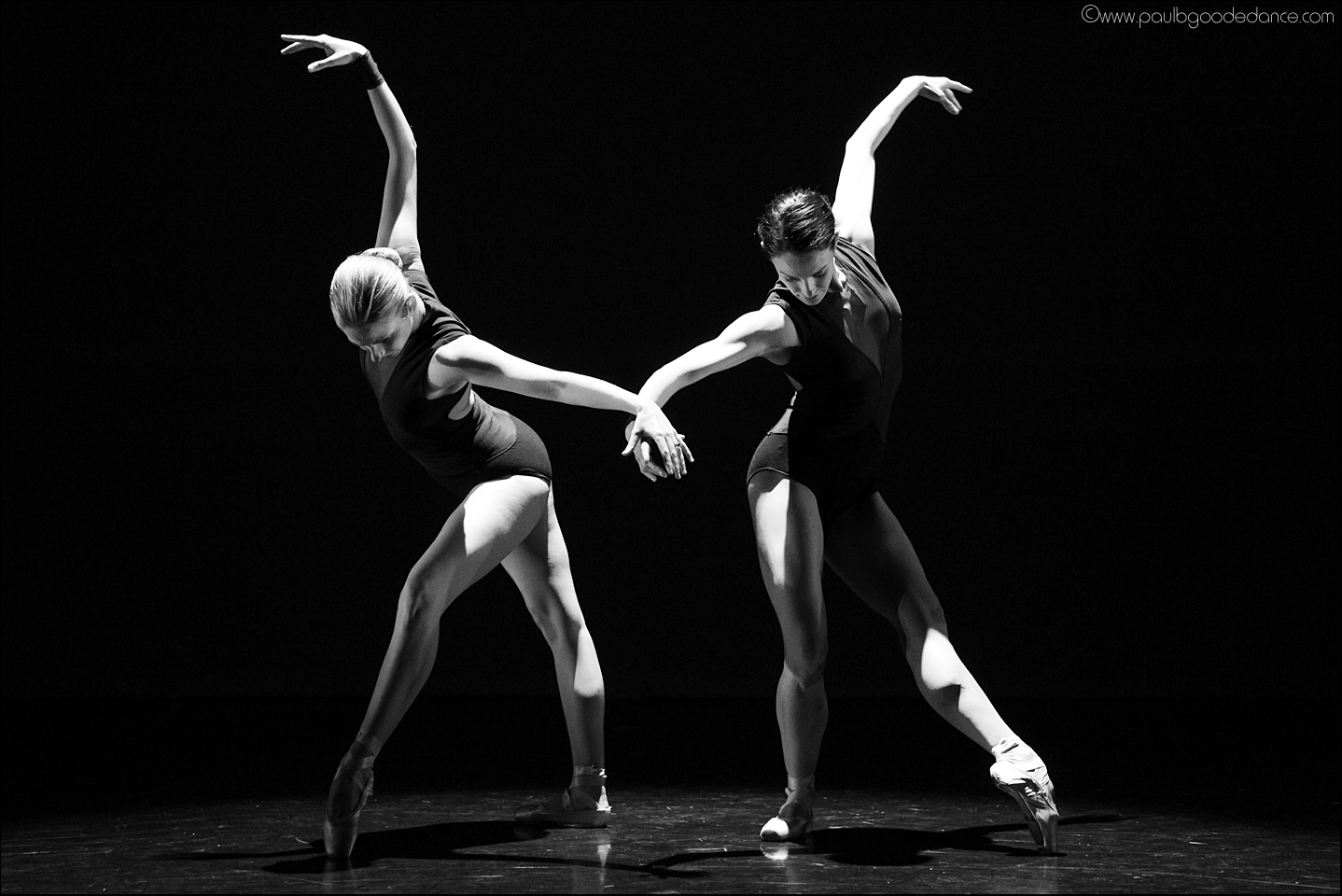
    Above: Michele Wiles and Kristi Boone in Mauro Bigonzetti’s LA FOLLIA, photo by Paul B Goode. Click on the image to enlarge.

    Wednesday April 25, 2012 – “You’ll be close enough to see us sweat and breathe,” said ballerina Michele Wiles in a brief film shown at the start of this evening’s presentation by Ballet Next. She was right, and there’s nothing more beautiful – for me at least – than watching dancers dance, especially at close range. Some dance-goers want to see an effortless sheen of ‘artistry’ which masks the physicality of the dance; myself, I love to see the body working, the minute flickerings of facial expression as the dancer ‘edits’ herself, the sense of stretch as the muscles respond, and the mechanics of delivering a triple pirouette. In a large theatrical setting, you’re at a remove from all of this. Tonight at Manhattan Movement and Arts Center, the dancers exposed themselves to our keenest scrutiny. They looked superb.

    Michele Wiles and Charles Askegard created Ballet Next as a continuation of their top-flight dance careers after they ‘retired’ from ABT and New York City Ballet respectively. They certainly don’t look like any retirees I know; their vitality and their eagerness to share their excitement about Ballet Next with an ever-broadening audience are infectious. Michele and Charles have set forth to bring us classic and new choreography danced by ballet’s greatest talents to live music. So far they’ve been succeeding admirably.

    Tonight’s programme delivered four works, each created especially for Ballet Next. The Company’s music director Elad Kabilio and his troupe of gallant young musicians delivered inspired playing of works by Stravinsky, Shostakovich, Satie and Vivaldi. Setting their musical barre very high gives Ballet Next an added lustre in my view; the better music you use, the better your choreography and dancing will look. It’s that simple. 

    And so we started with Stravinsky, violinist Hajnal Karman Pivnick and pianist Ben Laude treating us to shimmering suite of music from Baiser de la Fee. I have a special love for this music since Balanchine’s gorgeous setting of the score was the first work I ever saw danced by New York City Ballet (by Patricia McBride and Helgi Tomasson, no less…)

    Charles Askegard entitles his duet to this music simply DIVERTIMENTO. Danced with teriffic flair by Charles and NYCB‘s Georgina Pazcoguin, his choreography is witty and wonderful with some very inventive partnering motifs threading thru the music. Physically demanding, the dance evoked genuine enthusiasm from the packed house. Ms Pazcoguin, always a dancer to lure the opera glasses when she’s on the big stage, is a fascinating technician and personality to experience in this more intimate setting. Charles, one of the ballet world’s most valuable partners, doesn’t give himself any easy breaks in his own choreography. DIVERTIMENTO is a pure pleasure in every regard.

    By way of contrast, Brian Reeder’s summer-shadowy PICNIC proved to be a small jewel of a narrative ballet. Drawing inspiration from the film PICNIC AT HANGING ROCK, the choreographer turns to Shostakovich’s Cello Sonata in D Minor with its alternating currents of pensive and slightly ominous feeling, and shows us three schoolgirls in white frocks setting out on that fatal picnic from which two of them never returned. Michele Wiles, Kristi Boone and Misty Copeland comprised a stellar trio, each (like the girls in the film) with her own unique little quirks. Kissing, chaste but inquisitive, delicately projects the Sapphic undercurrents found in the film. Meanwhile, Charles Askegard, perhaps drawing on his incredible portrayal of the death figure in Robbins’ IN MEMORY OF…seems silently to draw Misty and Kristi into his thrall, leaving Michele to awaken, alone and mystified. Cellist Elad Kabilio and pianist Ben Laude supported the dancers with a poetic rendering of the Shostakovitch.

    Following an intermission during which we were up-dated as to the success of the evening’s live- streaming (people tuning in worldwide), Margo Sappington spoke briefly about her creation of ENTWINED for Ballet Next. I’ve seen this ballet evolve from a single, sensuous duet thru the addition of a pas de trois and a solo (for Michele Wiles); Margo revealed she has one more idea up her sleeve, a duet for two women; then ENTWINED will be complete. Or, she might even go on from there.

    What she has crafted to date is an atmospheric piece set to Satie Gnossiennes (played by Ben Laude) which opens with a pas de trois danced by Charles Askegard, Georgina Pazcoguin and Ana Sophia Scheller. The choreography here flows thru a misty setting, as in a dream. Images of sleep and wakefulness drift by. The solo for Michele Wiles (beautifully danced, of course) evolves seamlessly from the pas de trois and this in turn floats into the pas de deux danced by Misty Copeland and Charles Askegard. By turns sculptural and steamy, this duet borders on the erotic, temptingly lush in its signature choreographic entwining of two bodies. Misty looked gorgeous.

    (My only tiny complaint about the evening was that we didn’t get to see more of Ana Sophia Scheller; a ballerina in my super-top echelon of favorites, she danced gloriously in ENTWINED…and we did have the delightful experience of watching her warm up before the performance. Major beauty.)

    Mauro Bigonzetti’s LA FOLLIA is a grand finale for a Ballet Next presentation. I’ve seen this duet now four times and it’s just incredible. The two women – Michele Wiles and ABT‘s fantastic Kristi Boone – nailed the complex in-sync steps and launched their complex solos with real bravado. This is dancing that’s taxing to the max, and the girls gave it a splendid energy. Meanwhile the excellent quartet of musicians (violinist Francesca Anderegg joining Ms. Pivnick and Mssers. Kabilio and Laude) played the dazzling Vivaldi theme and variations for all it was worth. This brought the evening to a truly exciting close.

    So glad I ran into my young dancer-friend Alejandro Herrera whose easy, outgoing personality helped me overcome my innate shyness for once. Chatting with Chuck Askegard,  Amanda Hankes, Rebecca Krohn, Adam Hendrickson, Sterling Hyltin, Gina Pazcoguin and Kristi Boone was a pleasure, while MMAC‘s Erin Fogarty let a couple of cats out of the bag for what is sure to be a grand night of Dancing Against Cancer at MMAC on May 7th (Matt Murphy will photograph that dress rehearsal for me). 

    As for Ballet Next, the future looks bright indeed with a season scheduled for The Joyce this Autumn and plans for growth and development running apace. Michele and Charles are not only great artists but great people who have a real passion for ballet and who have the connections in the dance world to make Ballet Next a truly dynamic force. I look forward to following their every step.
  • Bewitched? We Bitched! Met MACBETH

    Witch-brew-66170

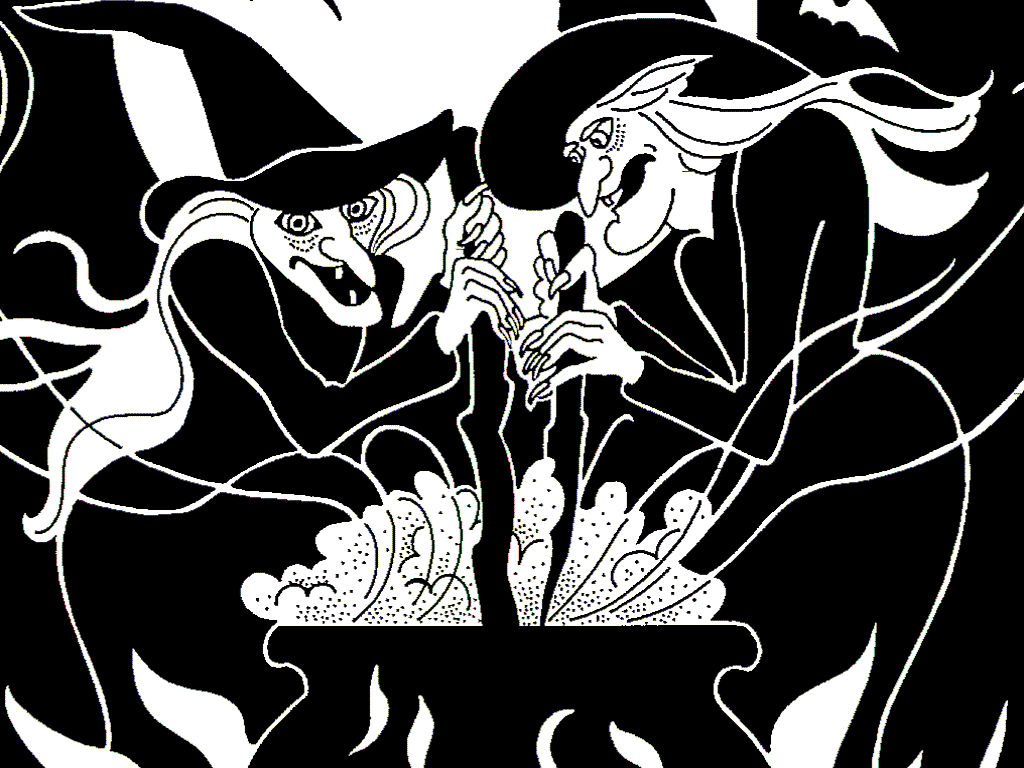
    Tuesday March 20, 2012 – I have no one to blame but myself, really. When the Met calendar for the current season came out, I skipped easily over MACBETH even though it is an opera I love: “Not with that cast!” But then a few weeks ago I was listening to the Leinsdorf recording and decided it would be good to experience MACBETH in the opera house. Despite the currrent Met trend for unmemorable productions and often brainless casting, I decided to give it a try. 

    I’d seen this production before; I love the huge moon with the black, scudding clouds that fills the proscenium as we wait for curtain-rise. But then the opera starts with the trivialized witches in 30s housedresses, coats and purses (each purse contains lightbulbs, how clever!). They are not sinister or even mildly interesting dramatically. And thus the production is off to a ho-hum start, and proceeds on its dreary way with injections of blood and vomit meant to shock us. It doesn’t work.

    Gianandrea Noseda is often a fine helmsman at the opera, but tonight his MACBETH was workaday, and the chorus seemed uninspired. I very much liked the firm and dark-hued basso of Gunther Groissbock as Banquo; to hear his aria would have been the only reason to stay longer than we did. But not reason enough.

    Over the years I have greatly enjoyed Thomas Hampson’s performances at The Met, but although he’s been fine in the more lyrical Verdi roles of Posa and Germont he simply doesn’t have what it takes for the big-guns parts like Boccanegra or Macbeth. It’s a bit like the borderline between a Merrill and a Warren: the former never trespassed into the Nabucco/Boccanegra/Macbeth region which suited (or would have) the latter so well. It’s a matter of amplitude. The sound of the Hampson voice is still fine, steady and more resonant than I expected. But it’s not Italianate in the least, it doesn’t billow and bloom with the turns of phrase or sail grandly on the words. Verbal over-emphasis, a common gimmick for over-parted singers, was a distration in a few places, as was a tendency to be ever-so-slightly sharp pitchwise. Yet still there was a lot to admire in his vocalism.

    I’d heard Nadja Michael about ten years ago singing the mezzo part in the Verdi REQUIEM at Avery Fisher Hall. She sounded awful. Of late her name has cropped up as Salome in a European production that has made it to DVD (so many productions do these days, god knoweth why). I was expecting nothing from her vocally as Lady Macbeth, and that’s what I got. I’ve heard lots of bad, unattractive or hopeless singing in my day but usually it either has to do with a ‘beloved’ singer being past his/her prime, or a perfectly respectable singer attempting a role beyond his/her capabilities, or being indisposed but giving it a go to ‘save’ the evening. In these instances, you can usually still perceive that there is a real instrument at work but just not suited – for whatever reason – to the task at hand. There’s no such excuse to be made for Ms. Michael: this is how she sounds.

    Obviously no one at The Met these days knows or cares enough about singing to have sorted this out in advance.  Would this woman have passed an audition for the East Buttfcuk, Idaho community choir?  I dunno, but somehow she’s entrusted with a great Verdi role at The Met. Her first aria was a mess and wtf is up with giving her a repeat of the cabaletta? Once was more than enough: the voice is shallow, desperate, breathy, wobbly, harsh and grossly unpleasant. Some people have said: “At least she has the high notes!” Yeah, if ill-pitched, desperate screeching counts. Following “Vieni, t’affretta” there was one prominent ‘brava’ (husband? manager? paid goon?) and one boo from a neighboring box, plus tepid applause for an aria that should bring down the house. There was also an oddly rustling sound to be heard which I soon determined to be the joint spinning in their graves of Callas, Rysanek, Nilsson, Dimitrova and Verrett.

    The booer got up and left; I eyed my friend Alan to see if he was ready to leave but the opera was going forward and I didn’t want to cause even a slight disruption for those around us, so we stayed on thru the end of the great ensemble that marks King Duncan’s murder. Luckily no one attempted the traditional top note to crown the choral finale. I would like to have heard Mr. Groissbock’s aria but that meant listening to “La luce langue” first. No way.

    Despite the mess she made, Michael won’t be bought out. The Met can’t afford to do that anymore. So if she shows up, ready to sing, she sings and gets paid leaving the audience with the stick end of the lollipop. One might wish for her to vanish from the scene, but apparently they have her down for BLUEBEARD’S CASTLE two seasons hence. I won’t go to that, regardless of who sings the Duke.

    Alan and I staggered down to the Plaza in disbelief at what we’d just heard. There’s no excuse for it, really. A sad commentary on the state of things at The Met. And then there were all those empty seats…

  • Tom Gold Dance @ Florence Gould Hall

    PHILIP_GOLD-4

    Monday February 27, 2012 – Tom Gold (above in a Matt Murphys photo), formerly a brilliant and popular soloist at New York City Ballet, has been touring with his own chamber ensemble of dancers for the past four years, performing in Israel and Europe. Tonight he brought his stellar group of City Ballet colleagues (and a luscious ABT guest) to Florence Gould Hall in a full evening of his own choreography.

    On the program were four works, three of which were danced to live music. This added to the immediacy of the evening, which was marked by top-notch dancing (a given, considering Tom’s roster) and genuine enthusiasm on the part of the audience. Tom’s choreography is rooted in the classical ballet vocabulary; even when the ballets take on aspects of Chinoiserie or of Argentine tango, the combinations stay true to the essence of classic technique. The dancing is non-stop – there’s no standing about or promenading in Tom’s ballets: if you are onstage, you are dancing…unless you are sitting out one of the tangos. To me it seemed the choreography was really demanding, calling for absolute technique which, of course, these dancers have.

    The opening work, ELEMENTAL, immediately set the dance in motion. Alexandre Desplat’s Far Eastern-coloured score (the only recorded music of the evening) along with the delicate gestures of the girls in their silky, short tunics gave the feeling of Orientalia with a contemporary touch. While the dancers played with the subtle wit of their characterizations, there was no stinting on the steps. Duets for Abi Stafford and Robert Fairchild, and for Sara Mearns and Jared Angle, gave us a chance to savour the star quality of four of NYCB’s finest dancers. Meanwhile a sprightly trio for Amanda Hankes, Lauren King and Kristen Segin was particularly appealing. The stage at Florence Gould seemed barely able to contain the energy of these dancers, with Russell Janzen towering over his colleagues and dancing handsomely.

    NYCB concertmaster Kurt Nikkanen and pianist Susan Walters gave luminous life to music of Satie, Poulenc and Faure for Tom’s SUITE FRANCAISE, an extended pas de deux in three movements, each with a different mood: lyric, dramatic, romantic. ABT soloist Simone Messmer was partnered by NYCB’s danseur noble de luxe Tyler Angle, a duo I’d love to see more of.

    13846_228670781857_15817871857_4711979_3734678_n

    Simone Messmer was simply ravishing; only a handful of ballerinas in my experience have the perfumed radiance of this enigmatic and sublime dancer: total gorgeousness from the moment she stepped onstage. I was thoroughly bewitched.

    Tom Gold’s MOZART VARIATIONS is an elegant tutu ballet, and a complete delight. This is the perfect point to commend Tom for his excellent musical choices, and send a signal to other choreographers that great music invariably makes your choreography all the finer. Here my lovely Abi Stafford reveled in her technical refinement with Jared Angle ever the prince of cavaliers. Russell Janzen again made his mark, as did one of NYCB‘s emerging bright lights: Kristen Segin – rather a late addition to Tom’s group – who danced charmingly. In recent seasons, my opera glasses have often been trained on Amanda Hankes, a particular favorite among my beloved NYCBers; she’s simply so fetching and I really enjoyed having the opportunity to see her dancing in this more intimate setting. Rounding out the cast of this Mozart jewel was Devin Alberda, a perfectly polished young dancer whose work always has a distinctive quality. Duo pianists Ms. Walters and Jeffery Moore gave the dancers perfect support.

    I have a thing for tango ballets…yes, really. Tom Gold’s TANGO FANTASIE provided a flourishing finale for the evening, keeping things on the up-and-up musically (tango king Astor Piazzolla and other works in the genre) while allowing the dancers to let their hair down a bit, yet with no slouching in the choreographic demands. Hot red frocks for the girls and red billowy shirts for the boys gave everything a sultry feel; when not dancing, the dancers observed their colleagues from chairs placed along the sidelines. Abi Stafford and Jared Angle danced an enticing duet, and Sara Mearns and Tyler Angle crossed paths in this nightclub more than once. Outstanding dancing from Robert Fairchild, exuding star quality even when standing still. As the dancers dipped and swayed thru the dangerous rhythms of the tango, one moment captivated: swirling out of a sexy solo passage, Sara Mearns sank into a chair where she magically arranged herself with the provocative languor of a silver screen goddess. You couldn’t take your eyes off her.

    Kurt Nikkanen and Susan Walters gave the tangos all the sinuous allure they deserve; Kurt’s silky style also stood out in an interlude before the final work began.

    Maria Kowroski, Wendy Whelan, Stephen Hanna, Suki Schorer, and Anne Bass were among the crowd, along with Stacy Caddell and Willy Burmann, both of whom are working with Tom Gold and his dancers. This was a most enjoyable evening of dance and I hope it heralds more opportunites to see Tom’s work in the future.

  • Stravinsky & Desyatnikov @ New York City Ballet

    February 23, 2012 – New York City Ballet has been my home away from home since I moved to New York City in 1998. In fact, NYCB was a major factor in my desire to move here in the first place. This season has seen the effects of changes in ticket pricing and seating availability, along with the marginalizing of the 4th Ring Society and the way long-time friends and supporters of the Company feel they have been treated by the powers that be. The official stance seems to be that the changes are working and that everything’s hunky-dory, but the gaping emptiness of the 4th Ring (ten people sitting up there tonight) is a sad commentary on the real situation.

    Increases in ticket prices are a necessary evil from time to time, but it’s the way it was done and the lack of sync between the website and the box office in terms of availability and pricing that is off-putting to say the least. The level of dancing is very high and the lure of Balanchine is as strong as ever, but the sheer joy of attending often and feeling you are part of a happy family of ballet-goers is greatly diminished these days. In this Winter season where I’d ear-marked 14 performances on my calendar, I ended up only going six times.

    At any rate, when the curtain rose on STRAVINSKY VIOLIN CONCERTO tonight and Janie Taylor was standing there with four handsome boys, I forgot my misgivings. On the podium, George Manahan brought out individual voices in the orchestra – as we might expect a seasoned opera conductor to do – and violinist Lydia Hong conveyed the angular beauty of the concerto in an overall very pleasing performance.

    Janie and her partner Ask LaCour gave an especially fine rendering of their duet; in the course of it I noticed things in the choreography that I’d somehow never picked up on before. The allure of the two dancers, and the Taylor mystique, seemed in a way to create a narrative where there isn’t one. I really enjoyed watching them.

    Maria Kowroski and Amar Ramasar are developing into a powerful and vastly appealing partnership. Their pas de deux was marvelous in its sense of nuanced dramatic detail and in the dancers’ technical strength and clarity which both underscored the complex choreography and made it seem inevitable.

    The corps danced beautifully, and it is wonderful to see Faye Arthurs onstage again after a hiatus. It was a performance of this classic work that re-affirmed its iconic standing in the Balanchine pantheon.

    Ratmansky’s RUSSIAN SEASONS is an unique ballet in many ways; drawing on aspects of Russian peasant life, the choreographer presents characters who are anonymous yet differentiated by finely detailed aspects of gesture and movement. The music, with it’s prominent violin (Arturo Delmoni) and soulful singing (Irina Rindzuner) all came back to me from the moment of Manahan’s downbeat. The score, and the rich colours of the dancers’ costumes, weaves a particular spell. I was very glad to see this piece again after a few seasons’ absence from the repertoire.

    The Playbill now denotes role debuts at NYCB, and only Georgina Pazcoguin had previously appeared in her role as the Woman in Red. Abi Stafford danced in the premiere of RUSSIAN SEASONS but has now switched to the role originally created by Jenifer Ringer. Beyond that, the cast drew together some of the Company’s most attractive personalities.

    Amanda Hankes, Marika Anderson and Lauren Lovette were each lovely and distinctive to watch, while the presence of Taylor Stanley, David Prottas, Andrew Veyette, Adrian Danchig-Waring and Christian Tworzyanski showed off the strengths of the Company’s male contingent.

    Abi Stafford’s performance had a nice sense of freshness to compliment her clarity of movement. As the central couple, Rebecca Krohn and Robert Fairchild used their personal magnetism to full advantage. Rebecca’s dancing was serene – and poignant in the passage where she seems to have been abandoned. Rob Fairchild seized the opportunity to make yet another ballet ‘sing’ to his charismatic approach. His dancing was technically impressive and dramatically vivid.

    In a glorious performance, Georgina Pazcoguin’s Woman in Red was suffused with her highly individual beauty and intensity; as she swirled with a restless spirit through the many swift pirouettes and space-filling combinations of this demanding role, Gina seemed like a woman possessed. Truly breath-taking at every moment.

    STRAVINSKY VIOLIN CONCERTO: Taylor, la Cour, Kowroski, Ramasar

    RUSSIAN SEASONS: Pazcoguin, *Krohn, *A. Stafford, *Lovette, *Hankes, *Anderson, *R. Fairchild, *Prottas, *Stanley, *Tworzyanski, *Danchig-Waring, *Veyette