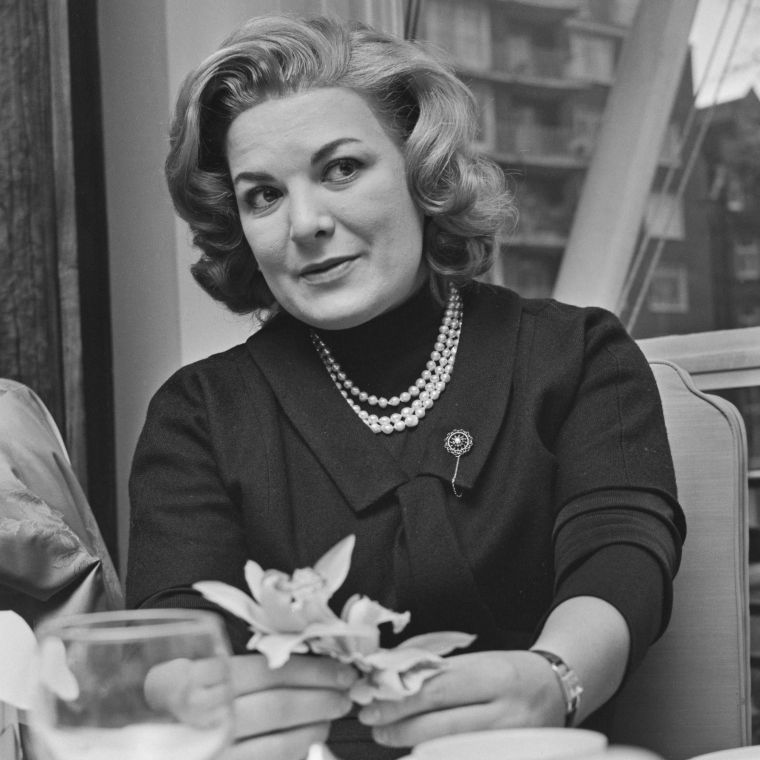
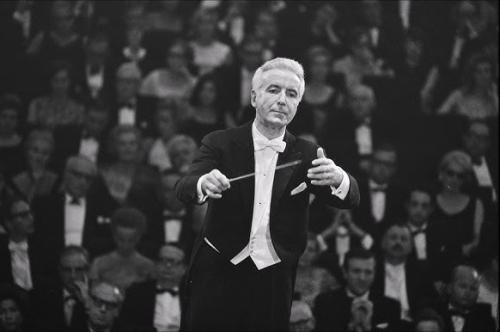
Teresa Stich-Randall (above) sings Strauss’s Vier letzte Lieder, with the Radio-Symphonieorchester, Vienna, conducted by László Somogyi. The recording dates from June 1964.
In November of 1963, I attended my first-ever performance at the Metropolitan Opera (at the Old Met!). It was DON GIOVANNI, and Ms. Stich-Randall sang Donna Anna.
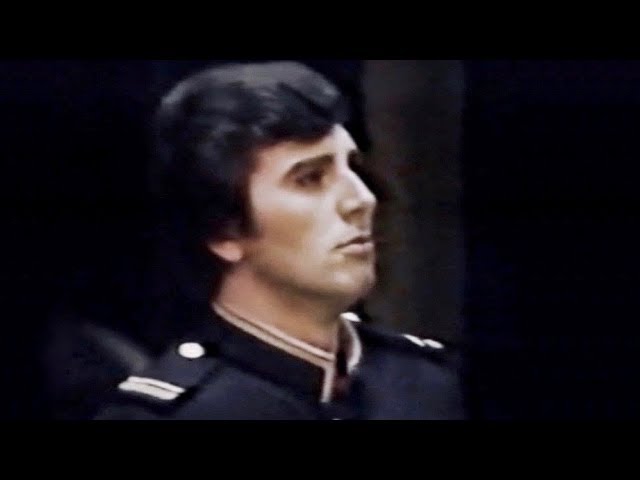
Jerry Hadley (above), Judith Christin, and Alan Titus in a scene from Act III of Puccini’s MADAMA BUTTERFLY. The performance, by the New York City Opera, was televised in 1982 and is conducted by Christopher Keene.
King Philip II – Samuel Ramey; Elisabeth – Rosalind Plowright; Don Carlos – Neil Shicoff; Marquis of Posa – Håkan Hagegård; Princess Eboli – Eva Randova; Grand Inquisitor – Kevin Langan; Tebaldo/Voice from Above – Barbara Bonney; Monk – Constantin Sfriris; Royal Herald – Valentin Jar; Count of Lerma – Constantin Zaharia.
On Thursday, August 21st, 2025, I headed back to the DiMenna Center for my second concert of the week to see another performance that was part of the Time:Spans Festival. On the program was the world premiere of False Division, a collaboration between Endlings (Raven Chacon and John Dieterich) and Yarn/Wire (Laura Barger, Julia Den Boer, Russell Greenberg, and Bill Solomon), which created an emotional experience entirely different from Tuesday’s concert. While Chaya Czernowin’s the divine thawing of the core was powerfully haunting, False Division ultimately maintained a sense of underlying safety amidst the chaotic banquet of noise.
The music began with glowing bell tones in the percussion and electronics, reminding me of fireflies or droplets of water on a summer night. Everything that followed was incredibly different though! While I wasn’t a fan of each and every sound in the piece (such as the nails-on-a-chalkboard sound of bowing a block of styrofoam), each one was an experience of some sort, and many sounds were completely new to me (like the rumbling of a massage gun on the surface of a bass drum). There were often quick shifts between sections with very different sound profiles, each one with its own unique character.
False Division celebrated the joy of musical exploration and experimentation. I had really great seat, with a direct line of sight towards one of the elaborate percussion setups, so I could not only hear everything, but also see the process of how those sounds were brought to life. One of my favorite moments of the piece was when the percussionist nearest to me ecstatically bowed a cymbal resting on a drum until nearly half the bow hairs had frayed and split—and he did all this with a mallet held between his teeth!
I could tell all the musicians were having a ton of fun, and this fun continued through the duration of the performance. To kick off the “grand finale,” the keyboardist pulled out a twirly noisemaker, and, spinning it around above her head, made her way over to the piano bench to join the pianist for a lively 4-hand explosion of notes. Even as just an audience member, I could feel the joy of making music together, and I left the concert hall far more lighthearted than I did on Tuesday. Both nights were filled with incredibly inspiring music, and it’s always good to have variety at a long festival like this!
Above: composer Chaya Czernowin, photo by Astrid Ackerman
~ Author: Lili Tobias
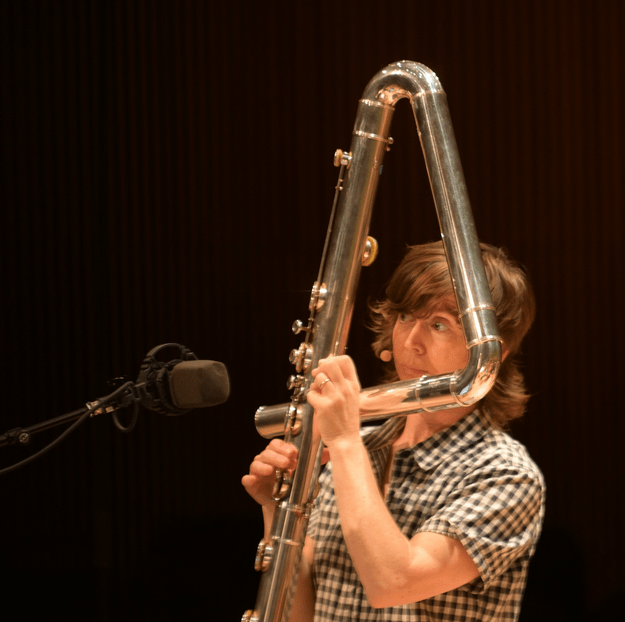
Tuesday August 19th, 2025 – This evening, the Talea Ensemble, with Claire Chase on solo contrabass flute, performed the US premiere of Chaya Czernowin’s the divine thawing of the core at the DiMenna Center. The concert was part of the Time:SpansFestival, and the musicians delivered a stunning performance to a nearly full house!
Breathing played a prevalent role in the sound world of the divine thawing of the core. The unusual collection of instruments in the ensemble, which included six flutes, six oboes, and six trumpets, leaned heavily on the winds, which were truly “windy” to the greatest extent. It was as if the musicians made up a collective weather system, at times calm and at others, stormy. The music began with a plaintive, single-note call-and-response structure between Claire Chase on the contrabass flute and the other sections of instruments. Tranquil, but at the same time eerily apprehensive and ill at ease.
Above: Claire Chase (rehearsal photo)
Further on in the piece, the storm broke: the winds and brass howling and screaming, the notes swirling behind the frantic trills of the contrabass flute. Chase displayed incredible breath control when the music got chaotic. Although it seemed at first as though she was struggling for breath with sharp uptakes of air, I could ultimately tell that this effect was deliberate. The breath in was just as important as the breath out, as it added an extra layer of humanity to the music that can be difficult to achieve with a non-vocal ensemble.
From the first few delicate tones to the turmoil of a “demonic waltz,” Czernowin’s music continually circled around exact pitches, rarely landing solidly on a frequency. The winds bent the notes, wavering and unstable, while the cellos bowed deep into the strings, producing rumbly low sounds. Even the piano, when it first entered the soundscape, provided key strikes that oscillated up and down in their decay.
And together as an ensemble too, the musicians often behaved as one entity emitting and ever-shifting collection of sound. The addition and subtraction of tones from the cumulative voice of the ensemble created a brand new form of pitch variance, and this perpetual suggestion—but never clarification—of pitch kept me attuned to every tiny transformation.
Suddenly though, all airflow was cut off, and just the breathing of the audience was left in the hall. After a moment of silence, applause erupted through the rows of seats and lasted for a good 5 minutes!
Marin Alsop leads the Orchestra of the Age of Enlightenment in a performance of the Verdi REQUIEM given at the BBC Proms in 2016.
The soloists are soprano Tamara Wilson (photo above), mezzo-soprano Alisa Kolosolva, tenor Dimitri Pittas, and bass Morris Robinson; recorded live at the Royal Albert Hall.
A performance of Philip Glass’s String Quartet #3 by Le Quatuor Tana, from a concert given in June 2019. The players are Antoine Maisonhaute and Ivan Lebrun (violins), Olivier Marin (viola), and Jeanne Maisonhaute (cello).
The principal artists are Samson: Jon Vickers; Dalila: Oralia Dominguez; Le Grand-Prêtre de Dagon: Ernest Blanc; Abimélech: Henk Driessen; Old Hebrew: Peter van der Bilt




 Oberon's Glade