Category: Reviews

  • Julie Taymor’s MAGIC FLUTE ~ 2023 #2

    Mozart jpg

    Author: Oberon

    Saturday December 30th, 2023 matinee – Back for a second performance of the Taymor abbreviated, English-language version of MAGIC FLUTE this afternoon. There were singers new to me in the cast, and also one of the brightest lights of the ‘now’ generation: soprano Liv Redpath, who I was keen to hear again after having very much enjoyed her singing at the Richard Tucker Gala at Carnegie Hall earlier this season, as well as her scintillating Oscar in BALLO IN MASCHERA at The Met.

    Gareth Morrell was on the podium this afternoon, pacing things perfectly and supporting the singers at every moment. It took a few moments for the Three Ladies to find their blend, but once they got going, their singing was appealing – though their role in the story is reduced by too much musical cutting in this version. Amanda Batista’s soprano is bright and clear, and Lindsay Ammann’s alto warm and dusky. As the 2nd Lady, Edyta Kulczak is always fun to hear, and her timbre is the most distinctive of the three. The Three Spirits were again weakly cast vocally. As the two Priests (essentially spoken roles), clear diction is key: Dylan Morrongiello and Paul Corona were spot on. And the duo of Guards – Daniel O’Hearn and Rocky Eugenio Sellers – helped make the Trial Scene a highlight of the show.

    Especially pleasing to hear this afternoon were Thomas Capobianco as Monastatos and William Guanbo Su as the Speaker. Mr. Capobianco seemed to favor a more ‘vocal’ approach to the slave’s music, rather than just going after comic effects. Mr. Su displayed a rich, imposing bass timbre and his excellent diction made his scene with Tamino (my favorite part of the opera) wonderfully understandable. At this, the turning point of the story, a round of applause covered the work’s most poetic moment: Tamino’s “O endless night!

    In the role of the questing Prince, Joshua Blue (who sang a very fine Verdi REQUIEM with Oratorio Society at Carnegie Hall in 2019), sang his ‘portrait aria’ persuasively, though the cuts in the music dampen the effectiveness of this paean to love. Mr. Blue’s voice falls pleasingly on the ear, with its sense of blooming lyricism;…he replied to Pamina’s radiant “Tamino mine!” with an ardent “Pamina mine!

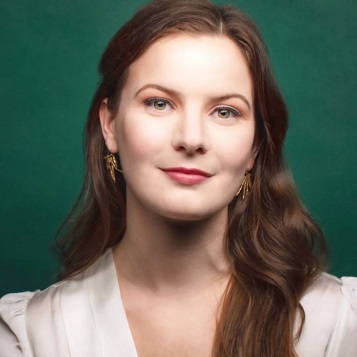
    Liv_Redpath jpg

    Liv Redpath gave a sterling Pamina, her timbre having a nice sheen to it, and her dynamics wonderfully responsive to the princess’s moods. When Papageno, attempting to rescue Pamina, suggests that they lie to Sarastro to cover their subterfuge, Ms. Redpath responded with a heavenly “Be truthful!” and, as mentioned earlier, her “Tamino mine!” was simply gorgeous. She phrased the arching line of Pamina’s great aria perfectly, though an undercurrent of noise from the many children in the audience somewhat undermined the moment.
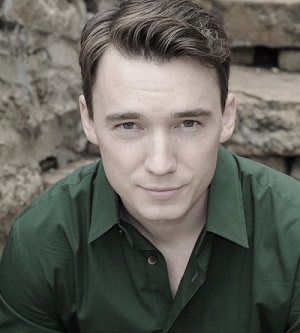
    Alexander-Elliot

    Alexander Birch Elliott (above) was a clear audience favorite – understandably so. His voice is robustly masculine and his diction clear as a bell: perfect delivery of line after line. He caught all the humor of the translation, and was truly hilarious as he employed an echo effect when trying to locate “Tamino…no…no…!” as darkness engulfed the scene. Mr. Elliott sealed his triumph with a terrific rendering of “Ein Mädchen oder Weibchen” (or whatever it is in translation) and enjoyed a lively ovation at his solo bow before calling forth his Papagena – Lindsay Ohse – who brought a nice touch of earthiness to her singing.

    At opposite ends of the opera’s vast span of vocal range, Jeni Houser (Queen of the Night) and James Creswell (Sarastro) both fared very well indeed. Ms. Houser’s a light-voiced Queen in the manner of Roberta Peters or Erika Köth; her first aria had some lovely delicacies of expression – as if to mask the Queen’s true intentions – and she spun out the coloratura of the concluding segment with aplomb. Her ‘vengeance aria’ was impressive in its agility and accuracy, and she summoned a nice dose of venom for her climactic command: “Swear…swear…swear!!!”  

    As the benevolent Sarastro, James Creswell’s spoken lines were vividly clear and finely inflected. In his two arias, he showed a bass voice suffused with a sense of compassion, true to his mission to save the world from encroaching darkness.

    If only we could find a Sarastro for our own time.

    ~ Oberon

  • Gianni Maffeo

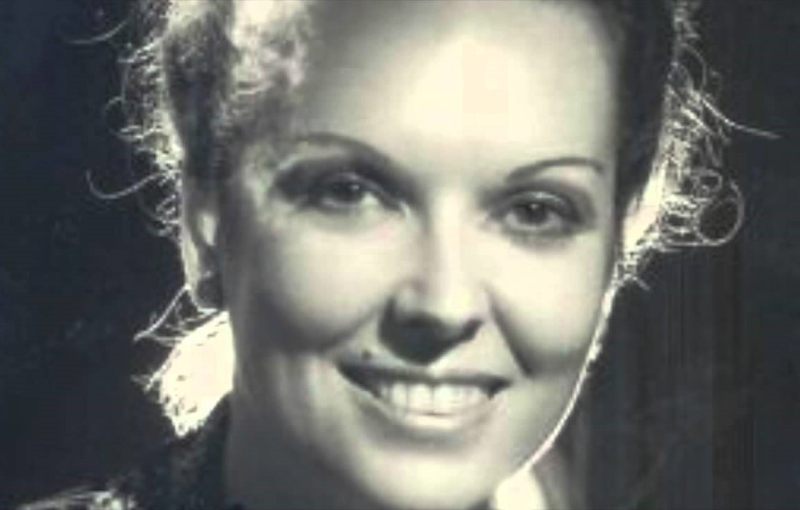
    Gianni maffeo

    After all these decades of listening to opera, I can still find voices that thrill me. How did I manage to overlook the Italian baritone Gianni Maffeo all these years? I came upon him quite by chance on YouTube recently.

    Born in Vigevano, Italy, in 1939 (or possibly in 1936), Maffeo performed in opera houses throughout Italy, as well internationally in Moscow, Munich, Monte Carlo, Nice, Avignon, Bordeaux, and Paris, among others.

    Maffeo sang Schaunard in a 1972 production of La Bohème with Luciano Pavarotti as Rodolfo and Mirella Freni as Mimi, and the Berlin Philharmonic under Herbert von Karajan’s baton. The performance was recorded and released by Decca Records; Karajan also chose Maffeo for a 1965 film production of La Bohème, directed by Franco Zeffirelli.

    Gianni Maffeo was 82 years old when he passed away on January 3, 2022.

    You can listen to this wonderful singer in various excerpts: 

    ~ Pagliacci Prologo here.

    ~ Scenes from Fanciulla del West and Andrea Chenier (with Edy Amadeo) here.

    ~ Andrea Chenier aria (twice!) here.

    ~ Forza del Destino aria here.

    ~ Duets with tenor Angelo Mori from Forza del Destino here and here.

    Enjoy!

  • Gabriella Tucci ~ ‘Ave Maria’ from Verdi’s OTELLO

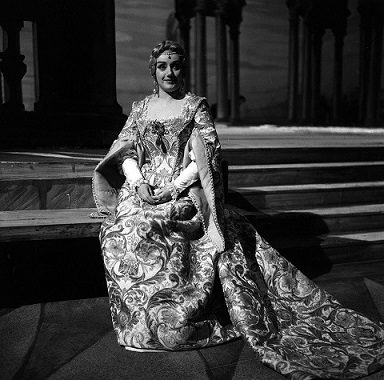
    Tucci desdemona

    Gabriella Tucci sings the Ave Maria from Verdi’s OTELLO from a 1967 performance given by The Met on tour in Atlanta. Zubin Mehta is the conductor.

    Listen here.

  • Gabriella Tucci ~ ‘Ave Maria’ from Verdi’s OTELLO

    Tucci desdemona

    Gabriella Tucci sings the Ave Maria from Verdi’s OTELLO from a 1967 performance given by The Met on tour in Atlanta. Zubin Mehta is the conductor.

    Listen here.

  • Tucci & Corelli ~ Vicino a te

    Tucci corelli

    Gabriella Tucci and Franco Corelli sing the final duet from Giordano’s ANDREA CHENIER from a 1971 performance at The Met; Cornell MacNeil is Carlo Gerard, and Fausto Cleva conducts.

    Listen here.

  • Biancamaria Casoni ~ Dalila in Italian

    Casoni copy

    Biancamaria Casoni sings Dalila’s seduction aria from SAMSON & DALILA in Italian. Ms. Casoni was my first-ever Cherubino in NOZZE DI FIGARO when the Rome Opera came to the (then) New Met in 1968.

    I love the subtleties in Ms. Casoni’s interpretation; she makes Dalila’s aria intimately persuasive. Her phrasing and the softness of her timbre are alluring, and her long line and vocal control are impressive…especially as it’s a live performance.

    Listen here

  • Bergonzi/Gulin ~ CHENIER duet

    Bergonzi gulin

    Ángeles Gulín and Carlo Bergonzi sing “Vicino a te“, the final duet from Giordano’s ANDREA CHENIER, from a performance given at London in 1970. Anton Guadagno conducts.

    Listen here.

  • Lisette Oropesa ~ Bellini’s I PURITANI

    Aaaaa

    Lisette Oropesa sings Elvira in Bellini’s I PURITANI in a concert performance given by the Teatro San Carlo, Naples, in July 2022.

    Watch and listen here.

    Cast:

    Arturo Talbot – Xabier Anduaga; Elvira – Lisette Oropesa; Sir Riccardo Forth – Davide Luciano; Sir Giorgio – Gianluca Buratto; Enrichetta – Chiara Tirotta; Lord Gualtiero Walton – Nicolò Donini; Sir Bruno Robertson – Saverio Fiore

    Conductor: Giacomo Sagripanti

  • Angel of Many Signs @ Gerald Lynch Theater

    A

    Above: performance photo by Alan Barnett

    Author: Shoshana Klein

    Saturday November 18th, 2023 – The New York Choral Society gave a concert on Saturday afternoon at the Gerald Lynch Theater, joined by the new-music focused Bergamot Quartet and composer/conductor/vocalist Raquel Acevedo Klein. The premise had to do with Hildegard von Bingen, and most of the repertoire was arrangements of her music for choir.

    I love a continuous performance, but for this one, I never really had in idea of where we were in the program, even though there was supposedly a multi-movement work sharing the title of the concert in the middle – at some points it was clear that the choir was singing in English and I suppose that was the giveaway, but the setup and video never really changed, so it was a little hard to tell. 


    The concert began with Raquel Acevedo Klein only, singing with some electronic manipulations, as everyone else gathered on stage. It was a sizeable group, so it was effective to have something going on instead of just having the audience watch while people found their spots onstage.


    B


    The electronic element was interesting: Ms. Acevedo Klein (above, photo by Alan Barnett) is able to make some very cool things happen. She and the quartet mostly acted as sort of interludes between the choral pieces, sometimes with some overlap. It was a nice juxtaposition to have the older and newer, but didn’t feel like it had a lot of direction.


    The video element was somewhat engaging as well, with one big screen behind the ensemble and two smaller ones flanking the stage. There were busy animations happening throughout the production, definitely tied to the music but only in instrumentation – usually when the quartet only was playing, the visuals would be sparser, one specific animation that recurred and tied things together a bit. When the whole choir was active, there would be many visuals that would come back to create a busy landscape, sometimes involving “angel” imagery, but usually not in a typical Christian imagining (which I did kind of appreciate, but this was never really explored as far as I could tell).


    The pieces were certainly not bad – I’ll definitely admit I’m not much of a choir person and surely missed plenty of nuance. Overall, the performance was interesting but repetitive, and I just didn’t have a sense of the structure, narrative, or takeaway, which – given all of the extra elements – it seemed like there was going to be.


    ~ Shoshana Klein

  • John Cage’s Ryoanji at the Japan Society

    John cage

    Above: John Cage in Japan; photo by Yasuhiro Yoshioka, Courtesy of Sogetsu Foundation

    Author: Shoshana Klein

    Sunday October 22nd, 2023 – The Japan Society is doing a John Cage’s Japan series, of which this was the second installment. It was directed by Tomomi Adachi and played by members of the International Contemporary Ensemble.

    The premise is very interesting – the performers play John Cage’s Ryoanji, and there is a video with reactive elements. After intermission, the video is played back and the performers use it as a score to perform again. I was left with many questions – though I read most of the program, I think it could have benefited from explanations of some sort.


    First of all, some musicians were here, and some were in Japan, supposedly. There was a vocalist and a Hichiriki (according to the program) coming from speakers, but we never saw these performers or were introduced to them. It was also 300 AM in Japan, so I’m not sure how likely it was that they were performing live in this performance. They were not present for the second half. Instead, Adachi (I think) performed with the original trio. 


    It was unclear to me how the video was reactive to the musicians – it was a sort of constellation visual with points of light moving around, and brightly colored lines and shapes would appear, connecting these star-like dots. If the lines and shapes were related to the audio being played, I couldn’t figure out how – my best guess for the video reactivity had to do with the perspective and the amount of movement. For instance, for a while it seemed like the perspective, zoom, and amount of movement of the start may be affected by the musicians, but if so, it seemed to change throughout the performance. It was interesting to try to figure out and they were cool visuals, but relatively static throughout the 20 or 30 minute performance.


    The piece, musically, was pretty sparse and I had trouble finding structure or latching on to anything, but the musicians obviously played well together and there were moments of responsiveness that were nice. Reading about the score is helpful – it’s not really notated and the performers are basically playing graphic scores of drawings of rocks. It should be noted that I do like John Cage, at least theoretically – I think his ideas and philosophical concepts are very interesting, but sometimes I find it hard to translate that to an enjoyable auditory experience.


    The second half had significantly more musical movement, though it wasn’t clear how they were using the video as a score, and it appeared that they were also reading music (maybe the original score in combination?). It seemed shorter than the first half but I’m not sure that it was, it could have been my perception since there was so much more to listen for. All in all, an interesting experience that I would have liked to know more about. 


    ~ Shoshana Klein