Category: Reviews

  • Julia Hamari ~ Bach’s “Erbarme dich”

    Hamari

    The Hungarian contralto Julia Hamari (above) is perhaps best-loved for her classic performance in Karl Richter’s 1971 televised performance of Bach’s Saint Matthew Passion, which is preserved on video. Her singing of the aria “Erbarme dich“, with violin soloist Otto Büchner, is spellbinding. Watch it here.

  • Morten Lauridsen’s AVE MARIA

    Lauridsen - Copy

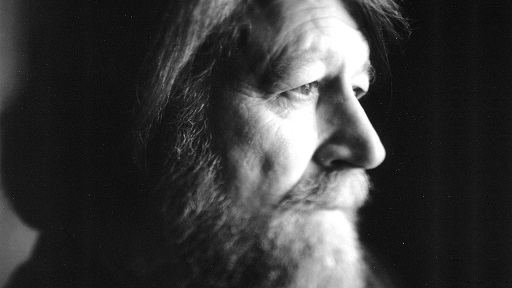
    Above: composer Morten Lauridsen

    The Luther College Nordic Choir perform Lauridsen’s Ave Maria. Watch and listen here.

    The performance took place at Bethany Lutheran Church in Denver, Colorado, in January 2012.

  • Morten Lauridsen’s AVE MARIA

    Lauridsen - Copy

    Above: composer Morten Lauridsen

    The Luther College Nordic Choir perform Lauridsen’s Ave Maria. Watch and listen here.

    The performance took place at Bethany Lutheran Church in Denver, Colorado, in January 2012.

  • TRISTAN UND ISOLDE ~ Chicago 1979

    Knie vickers

    Above: Roberta Knie as Isolde & Jon Vickers as Tristan; photo by Tony Romano

    A performance of Wagner’s TRISTAN UND ISOLDE given by Lyric Opera of Chicago in 1979. Franz-Paul Decker conducts, with the following cast:

    Tristan – Jon Vickers
    Isolde – Roberta Knie
    Brangaene – Mignon Dunn
    Marke – Hans Sotin
    Kurwenal – Siegmund Nimsgern
    Melot – Richard Versalle
    Shepherd – Gregory Kunde
    Steersman – Daniel McConnell
    Voice of a Young Sailor – William Mitchell

    Listen here.

  • Norman Treigle Sings Carlisle Floyd

    N t

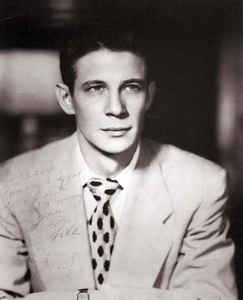
    The great American basso Norman Treigle (above) sings songs from Carlisle Floyd’s Pilgrimage. Listen here.

    Pilgrimage is described as a “solo cantata on Biblical texts, for low voice and piano or orchestra”; it was premiered by Mr. Treigle at Syracuse, New York, in 1960. Further information on this work may be found here.

  • Samuel Barber ~ Symphony #1

    Samue barber

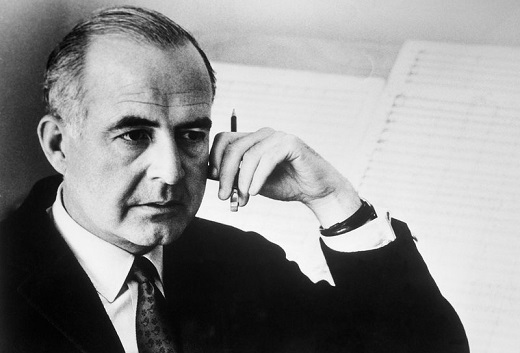
    Above: Samuel Barber (1910-1981)

    The Chicago Youth Symphony Orchestra, conducted by Allen Tinkham, in a 2018 performance of Samuel Barber’s Symphony #1, Opus 9.

    Watch and listen here.

  • Milanov~Bergonzi~Sereni CHENIER – Atlanta 1960

    Zinka

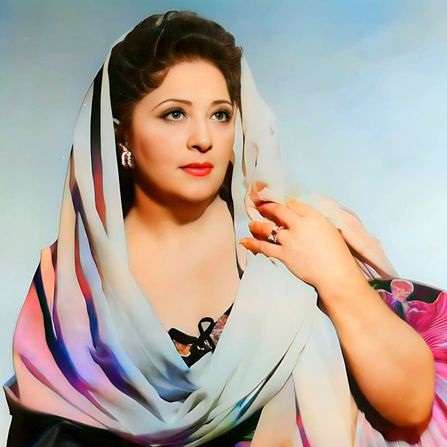
    Above: Zinka Milanov

    A performance of Giordano’s ANDREA CHENIER given in 1960 by The Met on tour in Atlanta has just popped up on YouTube. Listen here.

    This was at the time when I was just falling in love with opera, though I had not yet discovered the Met Texaco broadcasts. Zinka was on the very first opera LP that my parents gave me; Bergonzi was Pinkerton on the first complete opera set I ever bought (the ‘second’ Tebaldi Cio-Cio-San); and not long after, I bought the de los Angeles TRAVIATA on which Sereni sang Germont.

    One of the things I loved most about finding this Atlanta CHENIER was that the cast includes three mezzo-sopranos who – over time – were to give me so many wonderful memories: Belén Amparán, Helen Vanni, and Mignon Dunn. And just look at the Met stalwarts cast in the supporting male roles:

    Atlanta, Georgia (Metropolitan Opera on tour)
    May 2nd, 1960

    ANDREA CHÉNIER

    Andrea Chénier..........Carlo Bergonzi
    Maddalena...............Zinka Milanov
    Carlo Gérard............Mario Sereni
    Bersi...................Helen Vanni
    Countess di Coigny......Mignon Dunn
    Abbé....................Gabor Carelli
    Fléville................George Cehanovsky
    L'Incredibile...........Alessio De Paolis
    Roucher.................Clifford Harvuot
    Mathieu.................Ezio Flagello
    Madelon.................Belén Amparan
    Dumas...................Osie Hawkins
    Fouquier Tinville.......Norman Scott
    Schmidt.................Louis Sgarro
    Major-domo..............Lloyd Strang

    Conductor...............Fausto Cleva

    So, despite the sometimes wonky sound quality, this recording is such a treasure to me. 

  • DON GIOVANNI @ The Met

    Mattei fang

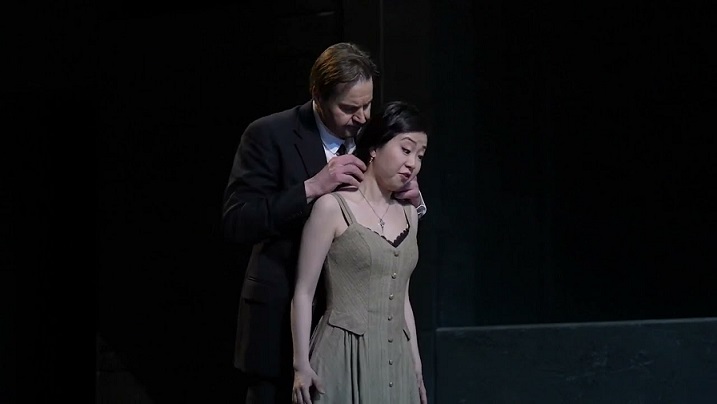
    Above: Peter Mattei as Don Giovanni & Ying Fang as Zerlina

    Author: Oberon

    Saturday May 27th, 2023 matinee – The Met’s new DON GIOVANNI is a grey affair. Large grey architectural set pieces loom above the action; from time to time they are moved to form varying spaces as the story unfolds. The costumes are drab and muted, with the only color splash coming at the Don’s party when mannequins are wheeled in, brightly dressed in period gowns. Much of the time the singers are dressed as they might be for a rehearsal. The greyness prevails until the opera’s final sextet, when flowers, potted plants, and vari-colored domestic furnishings suddenly decorate the set.

    Aside from the Don’s killing of the Commendatore with a gun rather than in a duel, there’s nothing radical in the staging. Of course, if the production had been set in the USA, everyone would have been toting an AK-15.

    With so little to distract us visually, focus was on the singing. Adam Plachetka sounded muted in Leporello’s opening lines, but he bloomed vocally with his Catalogue Aria and was thereafter very impressive. Dmitry Belosselskiy was a strongly-sung Commendatore, responding ominously to the Don’s dinner invitation, still wearing the bloody shirt in which he was killed. In powerful voice, Mr. Belosselskiy made me look forward to his upcoming Daland.

    As the peasant couple, Masetto and his Zerlina, Alfred Walker and Ying Fang were superb. Mr. Walker is always a joy to hear, and his excellent singing today turned the oft-neglected character into a leading role. Ying Fang, with one of the most appealing voices on the current operatic scene, was exquisite in both of her arias, and she blended with Peter Mattei’s suavely-phrased singing to make “La ci darem la mano” one of the highlights of the afternoon.

    Ana Maria Martinez was a bit unsettled vocally at first, and I wasn’t sure that Donna Elvira was a role for her; but she convinced me otherwise as the opera progressed. Her “Mi tradi” was fabulously sung: in a delightful musical collaboration with conductor Nathalie Stutzmann, Ms. Martinez made the aria glow. The soprano, looking like an earnest CEO in her fitted forest-green frock and black stilettos, found the perfect mix of determination and frustration in the character.

    Federica Lombardi had a triumph in her third Mozart role at The Met: following her Countess Almaviva and Elettra (IDOMENEO), she sang brilliantly as Donna Anna today, throwing in some embellishments along the way, which Mme. Stutzmann wisely allowed. All afternoon, the Lombardi voice rang clear and true, with free-flowing coloratura, and capping the ensembles brightly. In the great aria “Non mi dir“, Ms. Lombardi was poignantly expressive in her plea for understanding, and then set off the fireworks for the aria’s fast-paced conclusion.  

    Ben Bliss as Don Ottavio gave us some of the most expressive singing of the afternoon, with lovely dynamics in the touching “Dalla sua pace” and a sure command of the dazzling demands of “Il mio tesoro“. Ben’s visible frustration when Donna Anna asked for ‘more time’ after demise of her nemesis, Don Giovanni, was much appreciated by the audience.

    Peter Mattei’s Don Giovanni made a huge impression at The Met in 2009, in another drab production, which I watched with Lisette Oropesa – the first act onscreen at List Hall and the second from a balcony box. We  were both bowled over by his vivid characterization and his mellifluous singing. This afternoon, in a production that casts the Don as a psychopath, Mattei was equally impressive…and the voice is more beautiful and subtle than ever. His “La ci darem la mano” with Ying Fang, his ‘champagne aria’ (taken by Ms. Stutzmann at lightning speed) and his ravishing serenade, “Deh, vieni alla finestra“, were perfect.

    What separated this performance from most everything else I have seen at The Met this season was the conducting: the majority of the operas have been played fast and loud, apparently in an attempt to make things more ‘exciting’. As a result, singers were often made to choose between forcing or being drowned out. As a singer, Ms. Stutzmann knows what to do on the podium; so today, every note and word was clearly audible, and no one seemed to be putting undue pressure on their voice. 

    Moreover, Ms. Stutzmann gave the music a wonderful sense of flow, often moving directly from recitative to aria without pause. There was an especially lovely trio continuo players today: John C. Kelly (fortepiano), Kari Jane Docter (cello), and John Lenti (theorbo and mandolin). It was Mr. Lenti who gave the Mattei serenade its enchanting accompaniment. I cannot say which of the Met Orchestra’s cellists was responsible for the splendid playing in Ms. Martinez’s wonderful “Mi tradi“, nor which clarinetist brought such warmth and clarity to the playing of the downhill scales in Figaro’s “Non piu andrai” as part of the Don’s dinner music.

    And so, I wanted very much to meet Nathalie Stutzmann after the performance. I went down to the stage door – after the enthusiastic ovation during the curtain calls – to find that a large crowd had gathered there. The singers came out and were greeted like rockstars, and they all lingered, chatting up the fans.

    I think all afternoon the scandale was on people’s minds – at least those people who like gossip. During the performance, there had been no hint of any tension between the pit and the podium, although the players who sit nearest the spot from which the conductor enters – and who usually start clapping loudly when Maestro X, Y, or Z first appears – didn’t do that for Ms. Stutzmann today. But the audience soon spotted her and gave her a round of bravas.

    Ar last Ms. Stutzmann came out, and after she had greeted some other fans, it was my turn. I had thought of some non-controversial things to say to her, but my shyness overwhelmed me. She signed my program, and I embraced her, and said: “I love your Alto Rhapsody!” which made her smile. Listen to it here.

    Stutzmann autograph-1jpg

    ~ Oberon

  • Claire Chase ~ Density 2036 @ Zankel Hall

    Claire chase

    Above: Claire Chase

    Author: Shoshana Klein

    Thursday May 25th, 2023 – Claire Chase’s Density 2036 project is long and ambitious: a 24-year long project of new commissions, inspired by Varèse’s famous flute piece Density 21.5. Each year, she performs an entire new program of works. This year, she’s 10 years into the project, so the 10 days leading up to this concert have been a recap of all of these new pieces, culminating in Thursday’s world premiere of a 50-minute chamber piece by Anna Thorvaldsdottir named Ubique. For this evening’s piece, the ensemble was composed of Claire Chase, flutes; Katinka Kleijn and Seth Parker Woods, cellos; Cory Smythe, piano; and Levy Lorenzo, live sound. The concert started with a conversation between Ara Guzelimian and Thorvaldsdottir, who described a blank page at the beginning of a composition as freeing – that composing a piece “starts with a sensation – finding something that doesn’t exist yet”

    The introduction – which turned out to be a recurring theme – was a deep, low rumbling (not unlike the sound the subway makes in Zankel Hall, begging the question if that was an intentional move by the composer writing for the hall). There was striking low lighting around the ensemble, really creating a space that brought you into the beginning of the performance. The lighting changed throughout the piece in a way that was engaging and followed the different sections – adding some literal color changes to the musical color changes, very tastefully.


    The piece seemed to have many movements (though if so, they weren’t indicated in the program) – some quite short and full of quick gestures and handoffs, others more slow-moving. There were more sections and honestly more tonality than I was expecting from Thorvaldsdottir. There were a few parts where bass flute and the two cellos mixed in really interesting ways – Thorvaldsdottir is always one for unique texture and sound, and this piece was no exception.


    At about 40 minutes into the 50-minute piece, Chase finally picked up a C flute, as opposed to the Contrabass flute (named Bertha, as we were told in the pre-concert conversation) and the regular bass flute (whose name I do not know) that she’d been playing so far. The “regular” flute at this point in the piece was strangely light and really felt like a different world – a change from the usual where the lower flutes have the otherworldly feeling.


    I didn’t feel like I got a good sense of the structure of the piece, but I still enjoyed it, and the recurring rumbling theme gave it some sense of unity. I imagine it would be interesting to be keeping up with the entire project of new flute works and really get to know Chase’s playing – undoubtedly her style influences all of these new commissions, and her explicit goal is for the new pieces to “expand the boundaries of the instrument”. It’s also worth mentioning that as ambitious as it sounds that Claire Chase played a full length recital every night for 10 nights this month, the plan for the final concert of Density 2036 is for her to put on a 24-hour long concert with all of the new music commissioned throughout the project. 


    ~ Shoshana Klein

  • Montserrat Caballé as Norma ~ Madrid 1978

    Caballe norma

    Montserrat Caballé sings the title role in Bellini’s NORMA in a performance given at Madrid in 1978.

    Watch and listen here.

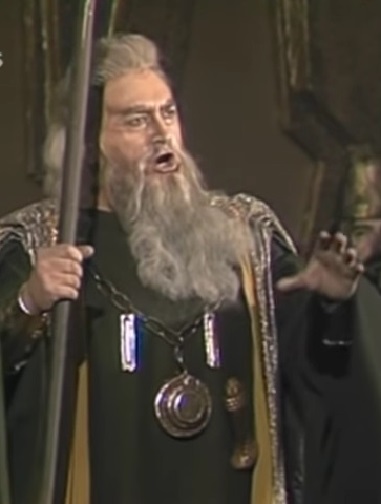
    Vinco norma

    Ivo Vinco (above) is an impressive Oroveso, Pedro Lavirgen sings Pollione, and Fiorenza Cossotto – though somewhat past her peak – has many wonderful passages as Adalgisa. But…it’s all about Montserrat.