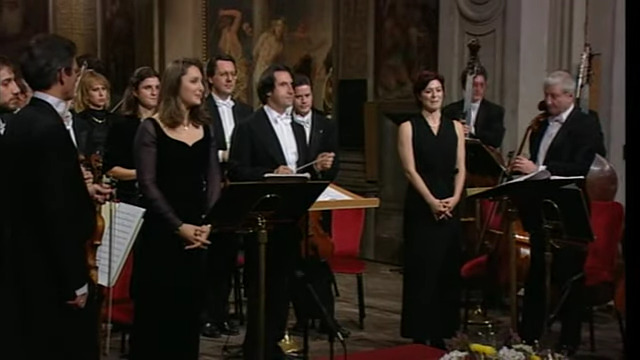
Riccardo Muti conducts a performance of Pergolesi’s STABAT MATER with soloists Barbara Frittoli and Anna Caterina Antonacci.
Watch and listen here.
Riccardo Muti conducts a performance of Pergolesi’s STABAT MATER with soloists Barbara Frittoli and Anna Caterina Antonacci.
Watch and listen here.
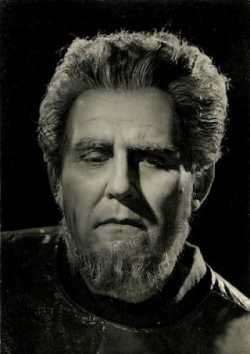
Above: basso Otto von Rohr
From 1952 comes this performance of Act I of Wagner’s DIE WALKURE with Gunther Treptow, Hilde Konetzni, and Otto von Rohr, with the RAI-Rome Orchestra conducted by Wilhelm Furtwängler.
Listen here.

Above: Kristin Draucker in Paul Taylor’s Images and Reflections
Some images from Paul Taylor Dance Company‘s June 2022 season at The Joyce; the photos are by Ron Thiele. Read about the Company’s opening night performance here.
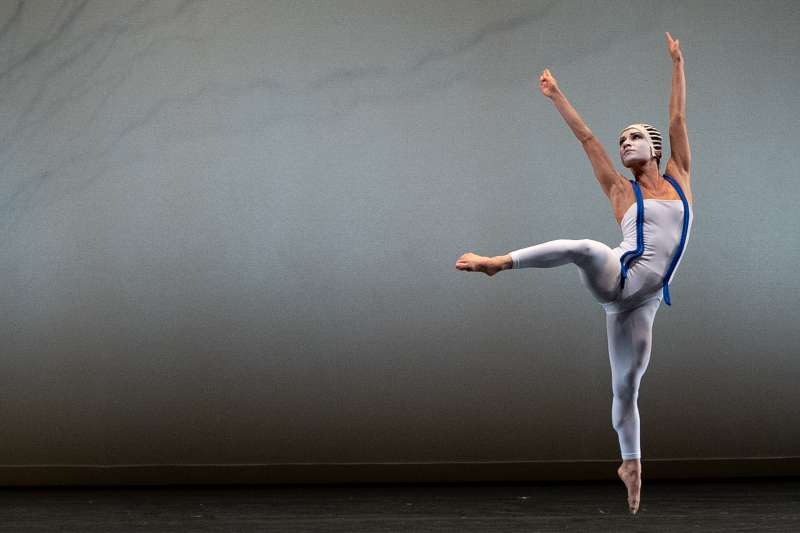
Lisa Borres in Paul Taylor’s FIBERS
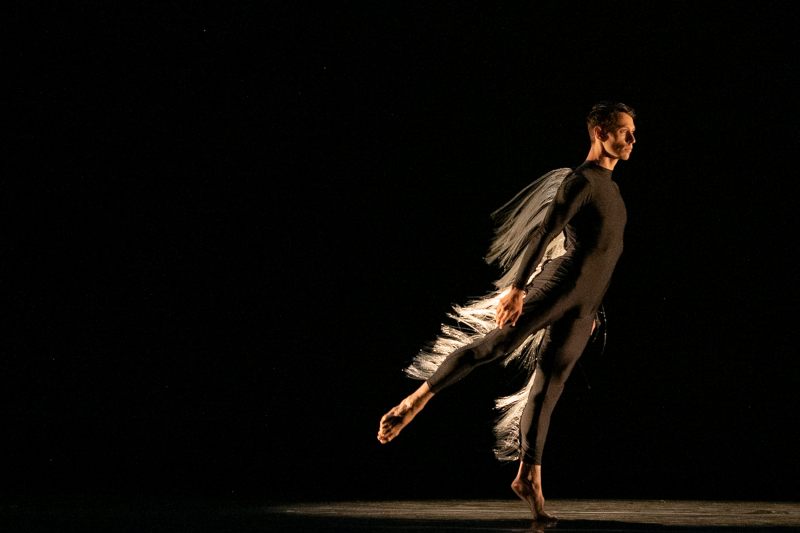
John Harnage in Paul Taylor’s Images and Reflections

From Michelle Manzanales’ HOPE IS THE THING WITH FEATHERS

Lisa Borres and Devon Louis in Paul Taylor’s FIBERS

Eran Bugge, Madelyn Ho, Alex Clayton, and John Harnage in Paul Taylor’s PROFILES

Shawn Lesniak and the Company in Michelle Manzanales’ HOPE IS THE THING WITH FEATHERS
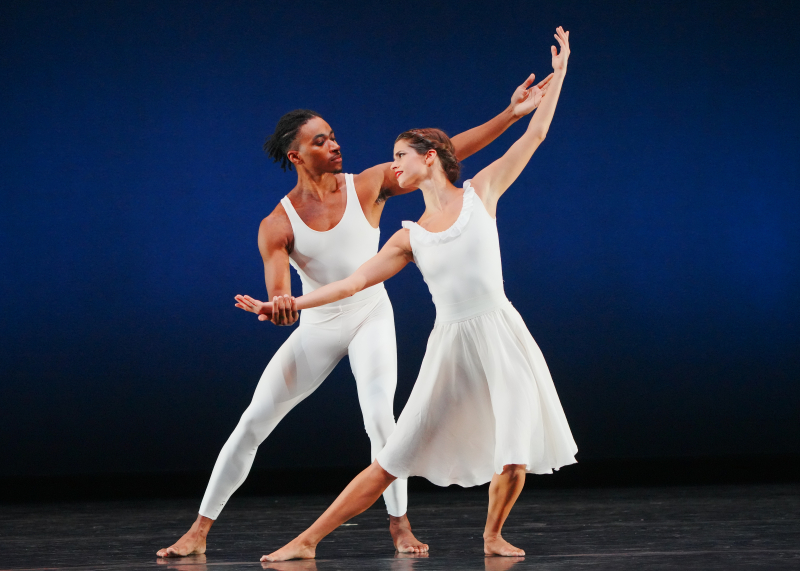
Devon Louis and Maria Ambrose in Paul Taylor’s AUREOLE

Madelyn Ho, John Harnage, and Eran Bugge in Paul Taylor’s PROFILES
All photos by Ron Thiele, courtesy of the Paul Taylor Dance Company
Lili Chookasian, Richard Verreau, and Ezio Flagello sing the Lux Aeterna from the Verdi REQUIEM; the performance was given at Los Angeles in 1965.
Lux Aeterna ~ Verdi REQUIEM – Lili Chookasian – Richard Verreau – Ezio Flagello- Los Angeles 1965
“Let eternal light shine upon them, O Lord,
with Thy saints forever,
for Thou art merciful.
Eternal rest grant them, O Lord,
and let perpetual light shine upon them.”
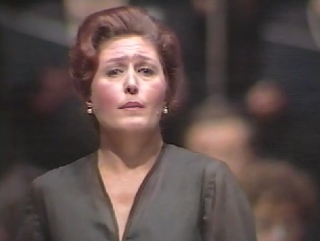
Above: soprano Anna Tomowa-Sintow
Maestro Claudio Abbado conducts the orchestra and chorus of La Scala in a performance of the Verdi REQUIEM given at Tokyo in 1981. The soloists are Anna Tomowa-Sintow, Lucia Valentini-Terrani, Veriano Lucchetti, and Nicolai Ghiaurov.
Watch and listen here.
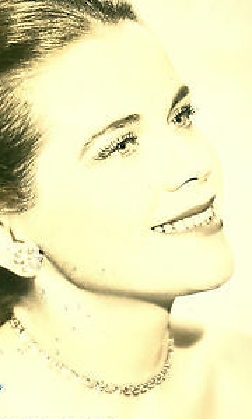
From the 1971 Glyndebourne Festival comes a performance of Strauss’s ARIADNE AUF NAXOS (sans Prologue) with Helen Vanni (above) in the title-role.
Listen here.
CAST:
Bacchus: Helge Brilioth
Zerbinetta: Sylvia Geszty
Ariadne: Helen Vanni
Harlekin: John Gibbs
Scaramuccio: Maurice Arthur
Brighella: John Fryatt
Truffaldin: Dennis Wicks
Naiade: Teresa Cahill
Dryade: Enid Hartle
Echo: Yvonne Fuller
Conductor: Aldo Ceccato
Royal Philharmonic Orchestra
Read more about Helen Vanni here.

Saturday May 21, 2022 matinee – Having no interest in seeing the Met’s Rust-Belt setting of LUCIA DI LAMMERMOOR, I took a score desk for this afternoon’s performance. In the Playbill, there’s a long essay by the director of the production. I didn’t bother to read it. This succinct program note from Tito Capobianco’s production for Beverly Sills at New York City Opera in 1969 tells us all we to need to know:

I recently asked a longtime singer/friend of mine why singers who should know better agree to appear in these bizarre and unsuitable productions, and he said: “If you want to work in opera nowadays, this is what opera has become. Take it or leave it. If you start turning down productions that do not respect the composer or librettist, you will soon stop being asked.”
So I sat with my score before me this afternoon, creating my own production in the theater of the mind. There were a lot of empty seats, more than usual for a matinee. And people laughed aloud at times: there is nothing very funny about LUCIA, really, but perhaps the libretto’s reference to Edgardo’s announced journey to the “friendly shores of France”, or Enrico telling Normanno to ride out “on the road to Scotland’s royal city” to greet Arturo, seemed out of place in the Rust Belt. It must always be a pesky thing to these cutting-edge directors to have to deal with references in librettos that deter them in their quest to make opera relevant to modern audiences.
Maestro Riccardo Frizza conducted the opera as if it were early Verdi. He sometimes let the orchestra cover the singers. The harp solo that opens the opera’s second scene was sublimely played by Mariko Anraku, but she had to contend with stage noises caused by the moving set, and then – as the solo neared its end – a cellphone went off.
The vocal stars of the afternoon were Polish baritone Artur Ruciński – who scored a great personal success as Enrico – and Christian van Horn, stepping in for an ailing Matthew Rose and singing magnificently as Raimondo.
In the opera’s opening scene, Mr. Ruciński’s voice showed its customary warmth and power; his extraordinary breath control allowed him to sail thru long phrases effortlessly, and he sustained the final note of his cabaletta throughout the musical postlude. In the duet where Enrico forcibly brings Lucia around to his was of thinking about her impending marriage, Ruciński sounded splendid, with an exciting mini-cadenza at “…insano amor!” And, as at the 2019 Richard Tucker Gala, he brought the baritone line in the sextet very much to the fore.
Mr. van Horn made every word and note of Raimondo’s role count; his voice spans the music’s range comfortably, and has both strength and nuance. In the duet where the chaplain (do they have chaplains in the Rust Belt?) persuades Lucia to yield to her brother’s demand that she marry Arturo, Mr. van Horn’s sense of line had a wonderful rightness, and once he had secured Lucia’s agreement, he expressed the character’s joy and relief with some powerfully righteous vocalism. Another great moment in the van Horn Raimondo came as he stepped between the adversaries to prevent bloodshed at the wedding ceremony:
“Respect in me
the awful majesty of God!
In His name I command you
to lay down your anger and your swords.
Peace, peace!…He abhors
murder, and it is written:
He who harms another by the sword,
shall perish by the sword.”
This is one of the opera’s great moments, and Mr. van Horn sang it thrillingly.
To hear this basso sing Raimondo’s announcement of the murder of Arturo almost persuaded me to stay to the end of the opera. If I say that Mr. van Horn was as thoroughly impressive and satisfying in this role as Robert Hale had been in the City Opera’s Sills production, that is very high praise.
Had our Edgardo and Lucia attained the level as Mssrs. Ruciński and van Horn this afternoon, this would have been one of the great LUCIAs of my experience. But Javier Camarena’s voice, while clear and pleasing, seemed a size too small for this music in the big House. For the most part, the conductor did not push the tenor to extremes, but a bit more ring and vigor were wanting. Passing moments of flatting and throatiness could be forgiven at this, the final performance of the run. The popular tenor seemed to struggle at times in the Love Duet, which was spoilt anyway by the persistent cough of someone in the audience. But he did go for the high E-flat, despite the fact that he and Nadine Sierra sounded somewhat screamy at this tense moment.
Ms. Sierra ‘s tone at first seemed to have a steady beat; this became less prominent as the afternoon wore on, though moments of slightly sharp singing came and went. It is a generic sound, and she does not put a personal stamp on the music as such memorable Lucias as Sutherland, Scotto, Sills, Gruberova, Devia, and Oropesa have done, but, for all that, she had some very exciting moments. For one thing, her top D-flat and D were spot on today, making for exciting ends to her Act I cabaletta, the sextet, and the Act II finale. However, I do not think the Sierra Lucia will be remembered for years to come as the ladies listed above have been and will continue to be.
As Normanno, tenor Alok Kumar was covered by the orchestra in the opening scene, but he was incisive later on. Deborah Nansteel fared very well as Alisa, and she handled the ‘high A’ moments in the Act II finale, which elude many mezzos, nicely. Eric Ferring sang the brief but demanding role of Arturo handsomely.
~ Oberon

Above: The Ghost of Hector appears to Aeneas; Henri Fantin-Latour (1836-1904)
Hector Berlioz’s LES TROYENS is a unique masterpiece. The libretto was written by Berlioz himself, drawn from Virgil’s epic poem The Aeneid. The two-part opera was composed between 1856 and 1858. Berlioz did not live to see a complete performance of the work.
Every time I listen to LES TROYENS, I’m thrilled by its power, mystery, and tragic sense of doom. The scene where the slumbering Aeneas is visited by the Ghost of Hector has become, over the years, a particularly moving one for me.
AENEAS:
“Oh, light of Troy!…Oh, glory of the Trojans!
From what fated region do you return? Your eyes are veiled.
Hector, what summons you back from the dead?”
THE GHOST OF HECTOR:
“Ah!… flee, son of Venus!
The enemy is within our walls! The whole of Troy crumbles!
A hurricane of flames engulfs our temples and palaces.
To save the soul of Troy
Pergamus commands you: Go, seek Italy!
After a perilous journey over the waves,
You shall found a mighty empire
That shall dominate the world.
There, a hero’s death awaits you.”
The Trojan soldiers rush in, confirming that the city is being destroyed. Aeneas leads them into the fray.
PRISE DE TROIE ~ O lumière de Troie! – Nicolai Gedda – Plinio Clabassi – RAI 1969

The beloved Polish soprano Teresa Zylis-Gara sings Elisabetta’s great aria “Tu che le vanità” from Verdi’s DON CARLO, from a performance given at Rome in 1969. Thomas Schippers conducts.
Listen here.

Above: Maestro Donald Runnicles
Saturday April 16th, 2022 matinee – Feeling no need to again see Patrice Chéreau’s intimate staging of Strauss’s ELEKTRA in the vast space of The Met, I took a score desk this afternoon to hear my ‘second favorite’ opera (my #1 opera remains the same composer’s ARIADNE AUF NAXOS). While the Chéreau production is a misfit at The Met, it is fascinating to watch on DVD: look for it here.
Today, The Met Orchestra under the baton of Donald Runnicles was the main attraction. They played Strauss’s astounding score for everything it’s worth: from the massive onslaughts of sound to those spine-tingling subtleties that the composer introduces at just the right moments. For the most part, Maestro Runnicles maintained a perfect balance between the orchestra and the voices, though – inevitably in this gruesome score – there were times when the voices were covered; and that might be what Strauss wanted all along. Mr. Runnicles also did everything he could to support soprano Nina Stemme, who was announced to be experiencing the effects of “seasonal allergies”.
If a singer needs to have an announcement made before the opera starts to the effect that she/he is suffering from some physical malady and asks our indulgence, this comes off as a cop-out. If said singer then goes on to give an abysmal performance, she/he has covered her/his ass, and the audience will be forgiving.
Today’s pre-curtain announcement of Nina Stemme’s allergy problem was not unexpected: she had been replaced (with success) by the debuting Rebecca Nash at the previous performance. But really, such announcements are unfair to the audience, who have paid good money to attend and who deserve to hear singers in their best of health. Ms. Stemme’s struggle today was palpable, and disturbing to hear. To me, it seemed like a simple case of taking on a role that is beyond her present capabilities. Signs of her vocal decline were evident in her 2016 performances here as Turandot and Isolde, and now – nearing the age of 60 – she has even less to work with. The result this afternoon was singing that was painful to the ear.
Lise Davidsen was a thrilling Ariadne earlier this season, and her soaring top notes were amazing in the music of Chrysothemis today: high B-flat is definitely her “money note”. But the rest of the voice is not all that alluring, as her Four Last Songs at the Met’s Gala for Ukraine in March hinted at: the sound can get lumpy and inexpressive. I am wondering if she is really the new goddess of sopranos, or just another flash in the pan. Time will tell.

Overall, top honors today went to Michaela Schuster (above, in a Met Opera photo) for her vivid and subtle singing of Klytemnestra’s music. The mezzo-soprano illuminated the terror and insinuation of the character’s music with her great verbal clarity, making her long narrative the most engrossing scene in the opera.
Greer Grimsley’s dark, growling sound was ominously powerful in the music of Orest; his “Laß den Orest…” was very impressive, and indeed it was he, rather than Ms. Stemme, who made the Recognition Scene – the heart of the opera – so riveting this afternoon.
Stefan Vinke did what he could with the brief, demanding, and thankless role of Aegisth. Harold Wilson made his mark as the Guardian, and the lively singing of Thomas Capobianco, set against the world-weariness of the inimitable Richard Bernstein, made the scene of the Young and Old Servants a perfect vignette.
Speaking of inimitable, Tichina Vaughn wonderfully chesty “Wo bleibt Elektra?” got the opera off to a perfect start. Her sister-Serving Women – Eve Gigliotti, Krysty Swann (interesting timbre indeed), and Alexandra Shiner – did much with their quick exchanges of lines. And the beloved Korean soprano Hei-Kyung Hong, as the valiant Fifth Maid who suffers a whipping for her brave defense of Elektra, sang poignantly, with a crystalline top note to climax the opera’s opening scene.
Metropolitan Opera House

Saturday April 16th, 2022 ~ matinee
ELEKTRA

Richard Strauss
Elektra………………..Nina Stemme
Chrysothemis……………Lise Davidsen
Klytämnestra……………Michaela Schuster
Orest………………….Greer Grimsley
Aegisth………………..Stefan Vinke
Overseer……………….Alexandra LoBianco
Serving Woman…………..Tichina Vaughn
Serving Woman…………..Eve Gigliotti
Serving Woman…………..Krysty Swann
Serving Woman…………..Alexandria Shiner
Serving Woman…………..Hei-Kyung Hong
Confidant………………Alexandra LoBianco
Trainbearer…………….Krysty Swann
Young Servant…………..Thomas Capobianco
Old Servant…………….Richard Bernstein
Guardian……………….Harold Wilson
Conductor………………Donald Runnicles
~ Oberon
 Oberon's Glade