Category: Reviews

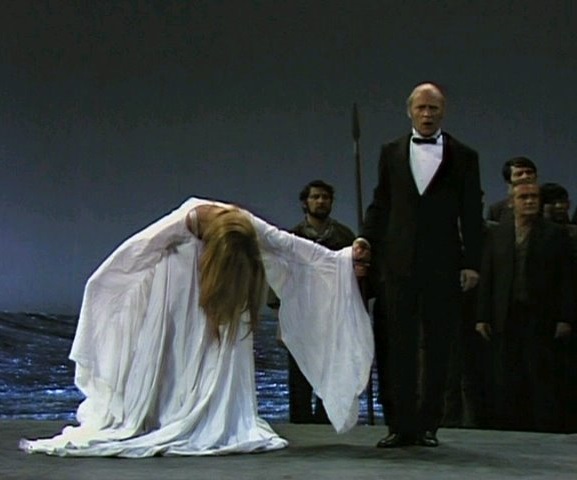
  • Janis Martin as Kundry

    Janis Martin

    The American soprano Janis Martin was my first Kundry; she was also my first Sieglinde and Marie in WOZZECK. She was a featured singer at the Bayreuth Festival from 1968 to 1989 where she appeared in nine different roles: Magdalene, Fricka, Eva, the Second Norn, Gutrune, Kundry, Freia, Sieglinde, and Brünnhilde. She returned in for the 1995 and 1997 festivals, again as Kundry.

    Janis Martin sang nearly 150 performances at the Metropolitan Opera, commencing in 1962 as Flora Bervoix in TRAVIATA. As a young opera-lover, I heard her many times on the Texaco broadcasts. She eventually progressed to “medium-sized” roles: Siebel, Nicklausse, Lola in CAVALLERIA RUSTICANA. Hearing her in these roles (in which she excelled), one would not have anticipated how her career would develop.

    Ms. Martin left The Met in 1965 to build a career abroad, moving into soprano territory. She returned to The Met from 1974 thru 1977, when I saw her as Kundry, Marie in WOZZECK, and Sieglinde. Following another hiatus, she was back at Lincoln Center from 1988-1992, singing the Witch in HANSEL & GRETEL, the Dyer’s Wife in FRAU OHNE SCHATTEN, Senta, the Foreign Princess in RUSALKA, and two performances of Tosca.

    Here is Ms. Martin as Kundry in a scene from the 1973 Bayreuth production of PARSIFAL; Jean Cox sings the title-role, with Eugen Jochum conducting:

    Janis Martin – Ich sah das kind ~ PARSIFAL – with Jean Cox – Bayreuth 1973

    ~ Oberon

  • Jean Cox ~ Heldentenor

    Jean Cox

    A native of Alabama, tenor Jean Cox studied with Marie Sundelius at the New England Conservatory and made his operatic debut at Spoleto as Rodolfo in LA BOHEME. In the early 1950s, Cox built his repertory and reputation at Kiel and Mannheim.

    The tenor made his Bayreuth debut in 1956 as the Steersman in FLIEGENDE HOLLANDER; he returned to the Festival as Lohengrin in 1967 and went on to sing there until 1984, taking on the Siegfrieds, Erik in HOLLANDER, Parsifal, and Walther in MEISTERSINGER.

    At other major opera houses, Cox sang Otello, Herod in SALOME, Bacchus in ARIADNE AUF NAXOS, Max in DER FREISCHUTZ, Gherman in PIQUE-DAME, and Captain Vere in BILLY BUDD. In 1976, Jean Cox made his Met debut as Walther von Stoltzing in a series of performances of DIE MEISTERSINGER in New York City and on tour. This was the sum total of his Met career.

    Jean Cox was married to the British mezzo-soprano Anna Reynolds, a noted interpreter of Bach and Wagner, and one of my very favorite singers. Following their retirement from the stage, the couple opened a vocal academy where they trained singers from all over the world. While I was working at Tower Records in the early 2000s, I met two students from this academy. I asked them to give  Ms. Reynolds a message from me; I wonder if they ever did.

    Jean Cox passed away in 2012 at Bayreuth; he was 90 years old. Ms. Reynolds died two years later.

    Enjoy this rare film clip of Jean Cox and the great basso Gottlob Frick in excerpts from Smetana’s BARTERED BRIDE and Weinberger’s SCHWANDA THE BAGPIPER.

    And here are some audio samplings of Jean Cox singing at the Bayreuth Festival.

    Jean Cox – Die Meistersinger ~ Prize Song

    Jean Cox as Parsifal – finale of the opera – Bayreuth 1973

    ~ Oberon

  • Anne-Sophie Mutter ~ Beethoven Evening

    CH1766263_Medium_res_comp

    Above: Anne-Sophie Mutter, photographed during the performance by © Jennifer Taylor.

    ~ Author: Oberon

    Thursday January 30th, 2020 – As the Beethoven Celebration year kicks off, only a handful of the announced “all-Beethoven” programs that are scheduled here in Gotham are of interest to me. But I would not have missed Anne-Sophie Mutter’s performance at Carnegie Hall tonight for anything. The esteemed violinist offered a pair of sonatas book-ending the “Ghost” trio. Ms. Mutter’s longtime collaborator, Lambert Orkis, was at the Steinway, and cellist Daniel Müller-Schott joined them for the trio.

    The comely violinist, now in the 40th year of her professional career, was warmly welcomed by a packed house as she walked onto the Carnegie Hall stage in a black gown bedecked with silver appliqué. She and Mr. Orkis immediately commenced the violin sonata No. 5 in F-Major, Op. 24, fondly known as “Spring”: the blithe opening passages were played softly, at once settling the audience and drawing them in.

    This opening Allegro continues thru a series of lyrical themes in which the two players alternate roles: melodist and accompanist. Minor key intrusions sometimes imply that clouds are passing overhead, but the sunshine always returns. A unison section shows the advantages of a longtime musical partnership: simply perfect.

    In the ensuing Adagio molto espressivo, Ms. Mutter and Mr. Orkis sustained a heavenly, pensive atmosphere with playing of exquisite delicacy and spun-out legato: they seemed to cast a spell over the venerable Hall. With a charming light touch, the Scherzo is over before it starts, and we are plunged into the Rondo – Allegro ma non troppo, in which almost Mozartean pleasantries are sometimes interrupted by jolts of fast and furious playing. But all’s well as ends well, and the Springtime sun illuminates the sonata’s optimistic ending.
    CH1766260_Medium_res_comp

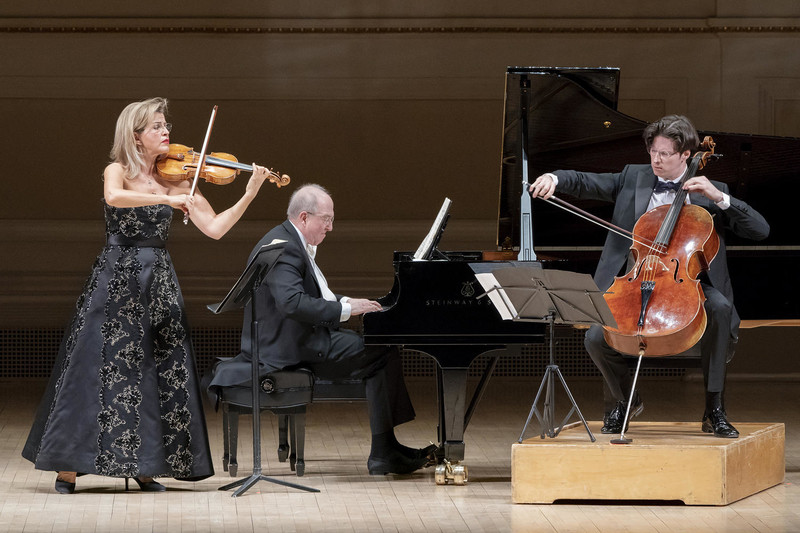
    Above: Ms. Mutter and Mssrs. Orkis and Müller-Schott, photo © Jennifer Taylor.

    The Piano Trio in D Major, Op. 70, No. 1, “Ghost” brought cellist Daniel Müller-Schott to the stage, joining Ms. Mutter and Mr. Orkis. 

    The energetic start of this popular trio, in which the cello quickly establishes a prominent place, leads on to a flowing lyricism with deftly rolling piano motifs which Mr. Orkis delivered with gracious sweep.

    The eerie start of the Largo heralds the movement which gives this trio its sobriquet: “Ghost.” A mournful theme from Mr. Müller-Schott’s cello is soon mingling with Ms. Muller’s bittersweet violin colorations. Again Mr. Orkis’s mastery of the piano’s softest dynamics is mesmerizing. Passion waxes and wanes as the movement approaches its finish, and Mr. Orkis plays a long and spell-binding downward scale in which every note has a quiet luminescence.

    Melancholy is swiftly dispelled by the opening of the concluding Presto. Mr. Orkis interjects flourishes of filigree as the music wends its way forward with alternating currents of vitality and delicacy. There were fleeting moments in the Trio this evening that made me feel that intonation was slightly off, but only by a hair’s breadth.
    CH1766262_Medium_res_comp

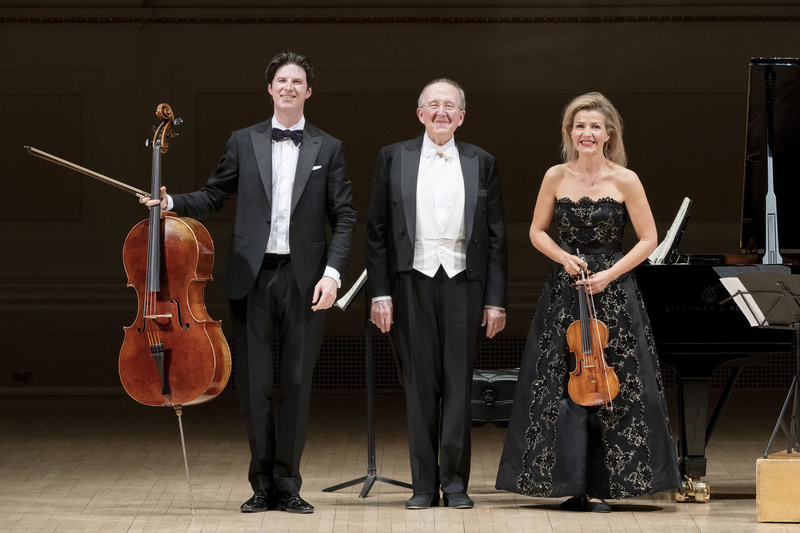
    Above: taking a bow after the “Ghost” trio, photo © Jennifer Taylor.

    During the interval, DK and I were anticipating our second “live” encounter with the Kreutzer sonata, Beethoven’s Op. 47, in the span of a month’s time. This epic work, which places so many demands on the two musicians, found the Mutter/Orkis partnership at its inimitable best.

    An intrusion at the very start almost destroyed the performance: just as the first notes were sounding, a very loud cellphone with a chiming ring tone-blared from one of the boxes. The culprit hastily fled, and for a moment I thought the musicians might pause and start over. But they moved on, leaving me to re-connect with the music as best I could. The playing was simply magnificent, with both players reveling in the bravura demands of the first movement’s Presto section. Together they brought a great sense of structure and musical coherence to the entire work.

    The “theme” of the ensuing Andante is a descending phrase which Arrigo Boito may have subconsciously lifted for the aria “Dai campi, dai prati” in his opera MEFISTOFELE. A ‘theme and variations’ setting develops, in which Ms. Mutter’s high-flying coloratura and enchanting trills ravished the ear. 

    The sonata’s Finale is exhilarating, with the irresistible impetus of a tarantella. A feeling of joy seemed to fill the house as the music sped on its way, Ms. Mutter and Mr. Orkis musically to urginge us to cast off our woes and – at least for the moment – savour the genius of Beethoven as played by two incredible artists.

    A massively enthusiastic full-house standing ovation commenced the moment the music ended. Ms. Mutter announced an encore: Beethoven’s Allegro in G-major, for mechanical clock, as arranged by Willy Hess. This little gem was delivered with tongue-in-cheek charm.

    Re-called by further waves of applause and cheers, Ms. Mutter charmingly introduced her second encore: an arrangement of ‘Nice To Be Around’ from the film Cinderella Liberty, part of her recent collaboration with composer John Williams. This beautiful tune was beautifully shaped by violinist and pianist.
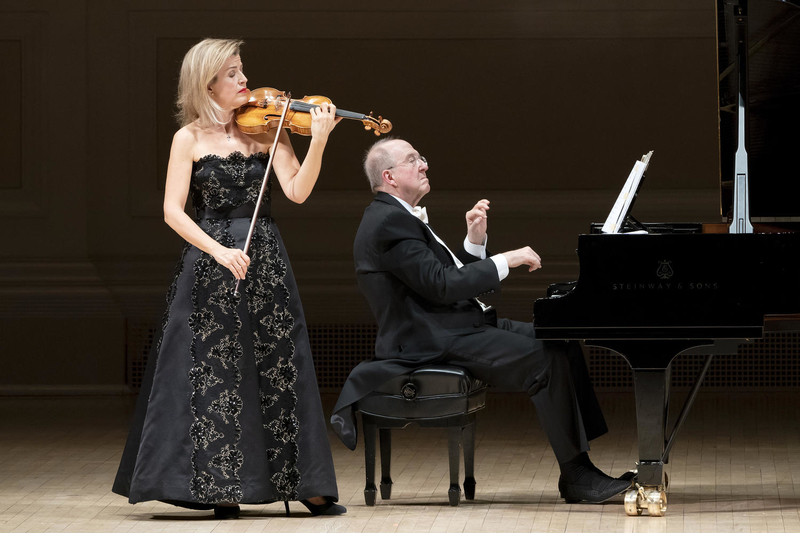
    CH1766261_Medium_res_comp

    Above: Ms. Mutter and Mr. Orkis, photo © Jennifer Taylor.

    All performance photos are © Jennifer Taylor, courtesy of Carnegie Hall.

    ~ Oberon

  • Franz Mazura Has Passed Away

    Mazura

    The great Austrian singing-actor Franz Mazura has passed away at the age of 96. Mazura made his operatic debut at Kassel in 1949, and went on to appear at numerous German theaters in a wide variety of roles. His career eventually took him to the great stages of Paris, Vienna, Bayreuth, and New York City.

    Mazura was a stalwart at the Bayreuth Festival for fifteen summers, beginning in 1971. His most frequent Wagnerian roles were Alberich in the RING Cycle and Klingsor in PARSIFAL, but he also sang the Wanderer and Gurnemanz at the Wagner shrine.

    Franz Mazura as Gurnemanz – Bayreuth 1973

    Cap189

    At Bayreuth, he appeared in 1976 as Gunther in the controversial Pierre Chéreau centennial production of the RING Cycle: photo above, with Dame Gwyneth Jones as Brunnhilde.

    In 1979, Mazura sang Doctor Schön and Jack the Ripper in the premiere of the completed version of Alban Berg’s LULU at the Paris Opéra, conducted by Pierre Boulez.

    After making his Metropolitan Opera debut in 1980 in the Berg double-role, Franz Mazura went on to appear on The Met stage 175 times. In 1989, he was a magnificent Alberich in the RING Cycle, my first experience of seeing the Cycle in the span of a week. Earlier, in 1987, he had stepped in as Wotan in WALKURE, a performance my friend Paul Reid attended; Paul described Mazura as “…a cantankerous god.”

    Franz Mazura’s final Met appearance was as Schigolch in LULU in 2002.

    Here is a sampling of his extraordinary portrayal of Klingsor:

    PARSIFAL – scene from Act II – Leonie Rysanek & Franz Mazura – Met bcast 1985(1)

    Among the many roles Franz Mazura sang in his long career was the Spirit Messenger in DIE FRAU OHNE SCHATTEN:

    Helga Dernesch & Franz Mazura – FRAU OHNE SCHATTEN ~ opening scene – C Perick cond – Met 1989

    He displayed his versatility in such roles as La Roche in CAPRICCO, Pizarro in FIDELIO, Scarpia in TOSCA, the Doctor in WOZZECK, Creon in OEDIPUS REX, and the Speaker in ZAUBERFLOETE. His final operatic appearance was at Berlin as Schwarz in MEISTERSINGER on April 21st, 2019…the eve of his 95th birthday.

    Franz Mazura appears in the film of Pierre Chéreau‘s 2013 production of ELEKTRA from the Aix-en-Provence Festival; he makes a touching effect as the Tutor of Orest.

    ~ Oberon

  • Souvenirs from Cardiff

    _68156259_1983-karita-matila

    Above: Finnish soprano Karita Mattila with the Cardiff Singer of the World trophy in 1983

    BBC Cardiff Singer of the World is a competition for opera and lieder singers held every two years. The competition was started by BBC Wales in 1983 to celebrate the opening of St David’s Hall in Cardiff, Wales, home of the BBC National Orchestra of Wales. The first singer to win the title of Cardiff Singer of the World was Karita Mattila. Since then, hundreds of singers have competed; many have gone on to stellar careers whilst others have faded from view.

    Karita Mattila’s winning performance is documented here.

    Soon after that first Competition, my English friend Mollie began sending me cassettes of the various rounds of each year’s competition. From these, I saved items of interest which I eventually was able to convert to MP3s.  I’ll be posting these, in no particular order, over the coming months.

    Sune

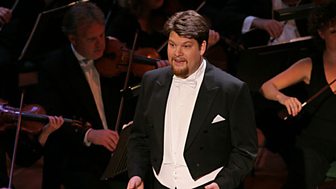
    Danish tenor Sune Hjerrild

    Sune Hjerrild – Waft her Angels ~ JEPTHA – Cardiff 2005

    P011ffrm

    Latvian counter-tenor Sergejs Jēgers

    Sergejs Jēgers – Latvian counter-tenor – Venga pur ~ MITRIDATE RE DI PONTO – Cardiff 2005

    J K

    Above: basso Julian Konstantinov

    In 1993, Italian mezzo-soprano Elisabetta Lombardi and Bulgarian basso Julian Konstantinov competed. Excerpts from their Cardiff appearance:

    Elisabetta Lombardi ~ Julian Konstantinov Cardiff 1993

    Lombardi

    Ms. Lombardi (above) sings Alban Berg’s Die Nachtigall here

    …and Samuel Barber’s Hermit Songs here.

    ~ Oberon

  • Mirella Freni as Liu

    Freninilsson

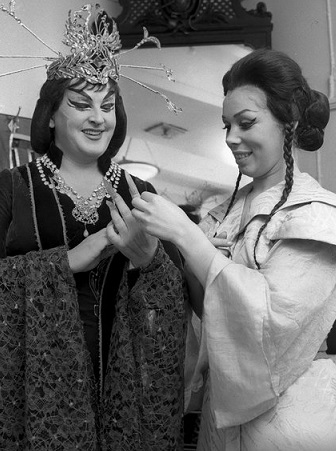
    Above: Birgit Nilsson and Mirella Freni backstage during a performance of TURANDOT

    Mirella Freni – Signore ascolta! ~ TURANDOT – Madrid 1972

  • Trifonov’s Scriabin @ The NY Philharmonic

    14c1e62d63f40ab53a8f7836fb151aeb.jpg.w=262

    Above: pianist Daniil Trifonov

    ~ Author: Oberon

    Friday November 29th, 2019 – The New York Philharmonic‘s Artist-in-Residence, Daniil Trifonov, performing the Scriabin piano concerto on a program with Tchaikovsky’s 5th symphony. The Philharmonic’s Music Director, Jaap van Zweden, was on the podium.

    This long-awaited performance was somewhat compromised for me due to a health issue my spouse was experiencing. I at first decided to skip the concert and let my friend Ben Weaver write about it, but after much discussion, I went to Geffen Hall for the Scriabin and left at intermission, asking Ben to let me know how the Tchaikovsky went.

    This was my first experience of the Scriabin concerto live, and Mr. Trifonov was absolutely spectacular from first note to last. After a brief elegiac orchestral statement, a pensive solo introduces the pianist. The music offers contrasting moods, which Mr. Trifonov and the Philharmonic artists savoured. Playing rippling figurations, Mr. Trifonov evoked a feeling of ecstatic glow; the music then turned cinematic.

    Splendid solo moments from Richard Deane (horn) and Pascual Martínez-Forteza (clarinet) added to the radiance of the performance. Playing in the Steinway’s very highest register, Mr. Trifonov gave the music “toy piano” feeling, which soon found a counter-balance in the Philharmonic’s plush-toned basses. The movement ends grandly.

    The quiet opening of the poetic Andante was marred by the inevitable cellphone ringing. There’s quite a long, lovely passage for strings before the pianist joins in. A solo from Mr. Forteza finds Mr. Trifonov adding a descant-like, bejeweled line. The mood shifts from lively to doleful, the basses and celli in a tutti passage of velvety depth.

    At times, the solo piano line seems to meander (over caressive strings) before finding focus in a wistful theme, to which Mr. Trifinov brought his trademark expressive feel for nuance. A pristine, sustained trill – a Trifonov delight – marked the Andante’s calm finish.

    The pianist then immediately launched the final Allegro moderato, wherein a romantic piano theme as well as phrases for horn and clarinet at times created a feeling of tender longing. 

    Suddenly there’s a full stop. The music then resumes, with piano, clarinet, and horn all actively engaged. Now there’s a bit of a letdown: the composer seems to be searching for the right ending. He finds it in an unexpected drumroll, and a sustained chord from the piano.

    Basking in an enormous flood of applause, the tall pianist made us wait for his reappearance, and then wait still longer for his dreamy, introspective encore.

    Quote
     
    Tchaikovsky’s 5th symphony won the enthusiasm of audiences right from its premiere performance in 1888. But the critics were less impressed, and this caused Tchaikovsky – upon hearing the piece in Prague a bit later – to question whether the 5th was as fine as he’d originally hoped it was. He eventually managed to banish his misgivings.
     
    The symphony’s second movement – steeped in Romanticism – shares its melodic birthright with the Vision Scene from the composer’s SLEEPING BEAUTY. I had been really looking forward to hearing this in the theater again, but that will have to wait until another time.
     
    Meanwhile, Ben Weaver has sent me a brief note, stating that “…the 5th was really good. The horn solo (I assume it was played by Richard Deane) was one of the best I’ve ever heard. And Anthony McGill impressed in the clarinet solo. Maestro van Zweden took the music at a nice clip, but never rushed it. Big, exciting climaxes! The orchestra played it as well as anyone I’ve heard.” [Coming from Ben, that’s high praise indeed!]
     
    Ben ended his message with: “The audience went nuts.” That made me really sorry to have missed it.

    ~ Oberon

  • Trifonov’s Scriabin @ The NY Philharmonic

    14c1e62d63f40ab53a8f7836fb151aeb.jpg.w=262

    Above: pianist Daniil Trifonov

    ~ Author: Oberon

    Friday November 29th, 2019 – The New York Philharmonic‘s Artist-in-Residence, Daniil Trifonov, performing the Scriabin piano concerto on a program with Tchaikovsky’s 5th symphony. The Philharmonic’s Music Director, Jaap van Zweden, was on the podium.

    This long-awaited performance was somewhat compromised for me due to a health issue my spouse was experiencing. I at first decided to skip the concert and let my friend Ben Weaver write about it, but after much discussion, I went to Geffen Hall for the Scriabin and left at intermission, asking Ben to let me know how the Tchaikovsky went.

    This was my first experience of the Scriabin concerto live, and Mr. Trifonov was absolutely spectacular from first note to last. After a brief elegiac orchestral statement, a pensive solo introduces the pianist. The music offers contrasting moods, which Mr. Trifonov and the Philharmonic artists savoured. Playing rippling figurations, Mr. Trifonov evoked a feeling of ecstatic glow; the music then turned cinematic.

    Splendid solo moments from Richard Deane (horn) and Pascual Martínez-Forteza (clarinet) added to the radiance of the performance. Playing in the Steinway’s very highest register, Mr. Trifonov gave the music “toy piano” feeling, which soon found a counter-balance in the Philharmonic’s plush-toned basses. The movement ends grandly.

    The quiet opening of the poetic Andante was marred by the inevitable cellphone ringing. There’s quite a long, lovely passage for strings before the pianist joins in. A solo from Mr. Forteza finds Mr. Trifonov adding a descant-like, bejeweled line. The mood shifts from lively to doleful, the basses and celli in a tutti passage of velvety depth.

    At times, the solo piano line seems to meander (over caressive strings) before finding focus in a wistful theme, to which Mr. Trifinov brought his trademark expressive feel for nuance. A pristine, sustained trill – a Trifonov delight – marked the Andante’s calm finish.

    The pianist then immediately launched the final Allegro moderato, wherein a romantic piano theme as well as phrases for horn and clarinet at times created a feeling of tender longing. 

    Suddenly there’s a full stop. The music then resumes, with piano, clarinet, and horn all actively engaged. Now there’s a bit of a letdown: the composer seems to be searching for the right ending. He finds it in an unexpected drumroll, and a sustained chord from the piano.

    Basking in an enormous flood of applause, the tall pianist made us wait for his reappearance, and then wait still longer for his dreamy, introspective encore.

    Quote
     
    Tchaikovsky’s 5th symphony won the enthusiasm of audiences right from its premiere performance in 1888. But the critics were less impressed, and this caused Tchaikovsky – upon hearing the piece in Prague a bit later – to question whether the 5th was as fine as he’d originally hoped it was. He eventually managed to banish his misgivings.
     
    The symphony’s second movement – steeped in Romanticism – shares its melodic birthright with the Vision Scene from the composer’s SLEEPING BEAUTY. I had been really looking forward to hearing this in the theater again, but that will have to wait until another time.
     
    Meanwhile, Ben Weaver has sent me a brief note, stating that “…the 5th was really good. The horn solo (I assume it was played by Richard Deane) was one of the best I’ve ever heard. And Anthony McGill impressed in the clarinet solo. Maestro van Zweden took the music at a nice clip, but never rushed it. Big, exciting climaxes! The orchestra played it as well as anyone I’ve heard.” [Coming from Ben, that’s high praise indeed!]
     
    Ben ended his message with: “The audience went nuts.” That made me really sorry to have missed it.

    ~ Oberon

  • Ah! Lève-Toi, Soleil!

    Franco_corelli-thumb-250x290-30666

    From a live performance nearly 50 years ago, Franco Corelli sings Romeo’s great aria from Gounod’s ROMEO ET JULIETTE.

    ~ Franco Corelli – Ah! lève-toi soleil! ~ ROMEO ET JULIETTE – 3~16~70

  • Marion Lippert

    Hqdefault

    Marion Lippert is a soprano I will always remember with affection, as she was my first (and a very lovely) Marschallin in a performance at The Met in 1970, conducted by Karl Böhm; she more than held her own in a stellar cast featuring Christa Ludwig, Reri Grist, and Walter Berry.

    Marion Lippert was born in Munich in 1936. Among her voice teachers was Annelies Kupper. Ms. Lippert made her operatic debut as Aida The Hague in 1956, later joining the opera companies of Cologne and Stuttgart, and singing in Berlin, Paris, Barcelona, and Venice. Her repertory included Lady Macbeth, Abigaille, Leonore in FIDELIO, Amelia in BALLO IN MASCHERA, Leonora in FORZA DEL DESTINO, Tosca, Norma, Senta, Elisabeth in TANNHAUSER, and Sieglinde.

    The soprano made her Met debut in 1968 as Turandot; she also sang Senta, and Elisabetta in DON CARLO   (which I saw) at the House in addition to the Marschallin.

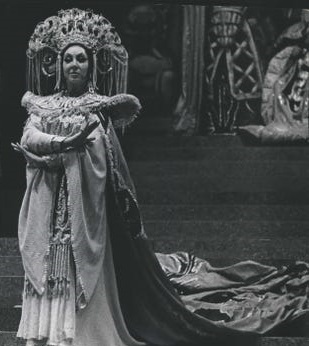
    Lippert Turandot

    Turandot became a signature role for Ms. Lippert; here is her “In questa reggia” from an unnamed venue, in 1969. Her Calaf is Flaviano Labò.

    Marion Lippert – In questa reggia ~ TURANDOT – 1969

    Marion Lippert’s ‘Vissi d’arte‘ (though missing the opening line) may be found here.