Category: Reviews

  • Score Desk for I PURITANI

    Lawrencebrownlee

    Above: tenor Lawrence Brownlee

    Tuesday April 22nd, 2014 – This performance of Bellini’s I PURITANI at The Met marked one of the few evenings this season that I have stayed til the end of the opera. It was to hear Lawrence Brownlee in the Act III love duet and Arturo’s aria “Credeasi, misera” that I endured two intermissions – the first over-extended, the second reasonable – and a less-than-memorable Mad Scene from soprano Olga Peretyatko and a mixed-bag rendering of the great baritone-basso duet “Suoni la tromba”. It was Mr. Brownlee – along with the basso Michele Pertusi – who made the evening worthwhile vocally. 

    There were the usual rather alarming number of empty seats at The Met tonight, and the audience had thinned out even further by Act III. The evening started with an announcement that Mariusz Kwiecien was ill and would be replaced as Riccardo by Maksim Aniskin. Mr. Aniskin has a pleasant enough voice but had some passing flat notes in his Act I aria and his coloratura was a bit labored. His verse of “Suoni la tromba” was on the flat side, but he rose to his best work in the duet’s cabaletta. Overall he seemed out of his depth here: he should probably be singing Marcello, Sharpless, and Guglielmo. Still, I don’t regret not hearing Mr. Kwiecien tonight, after experiencing his vocally drab Onegin earlier this season.

    Mr. Pertusi has a real sense of bel canto and his singing all evening was beautifully molded and expressive, most especially in the gentle aria “Cinta di fiori” and later in his flowing passage “Se tra il bujo un fantasma vedrai” in the big duet. Conductor Michele Mariotti did his baritone and basso no favors, his orchestra slugging away at “Suoni la tromba” as if it was NABUCCO.

    The conductor in fact did his wife, Ms. Peretyatko, no favors either, often pushing her at the climaxes where her thinned-out high notes carried no impact in the House. The soprano’s voice is tremulous and despite good musical instincts the sound is simply not particularly attractive, and the voice is a size too small for this iconic role in a big space like The Met. Her coloratura was reasonable, and she did produce some striking piano singing along the way, notably the very sustained high B-flat at the end of her offstage solo with harp in Act III. But the high notes at the end of her duet with Giorgio and to climax “Son vergin vezzosa” were pretty much covered by the orchestra. Her Mad Scene was lacking in vocal colour; there’s nothing really distinctive about her timbre, and her interjection of laughter was lame. The cabaletta “Vien diletto” was reasonably effective but again the conductor over-played his hand while the soprano sustained a rather wan high E-flat. A couple of guys in Family Circle shouted desperate ‘bravas’ after the Mad Scene, but the applause was not prolonged. The warmth of Mr. Brownlee’s voice gave the soprano a nice cushion in the love duet though they really didn’t need to hold the final high-C as if waiting for the cows to come home. The opera concluded with “O sento, o mio bell’angelo”, the ‘lost’ cabaletta discovered by Richard Bonynge, and again Ms. Peretyatko’s thinned out concluding note was covered by the orchestra. (The cabaletta isn’t even in the score; was it ever authenticated?).

    Before lavishing praise on Mr. Brownlee, I must mention Elizabeth Bishop’s excellent performance in the thankless role of Enrichetta. The mezzo made the very most of her brief role, with a real sense of dramatic urgency in her vocalism. Brava!

    Mr. Brownlee’s opening “A te, o cara” was as finely sung as any rendering of this aria I’ve ever heard; it was in fact right up there with my personal favorite: Alfredo Kraus singing it in Chicago in 1969. Mr. Brownlee’s singing was golden, gorgeous and ardent, with a spectacularly sustained high-C-sharp in the second verse. After the second verse, the soprano joins in and the lovers exchange tender declarations of affection. In Chicago, Mr. Kraus had the advantage of the beautifully expressive lyricism of Margherita Rinaldi to further heighten the impact of his singing. Ms. Peretyatko tonight was nowhere near as lovely, but Mr. Brownlee had triumphed anyway.

    Arturo vanishes and is not seen or heard from in Act II; he reappears, having saved Enrichetta from execution, to find himself declared a traitor and his girl-friend transformed into a mad woman. After jolting Elvira back to the reality of their love with his honeyed “Vieni fra queste braccia” and a vibrant, prolonged foray to a top-D, Mr. Brownlee launced the arduous “Credeasi misera” in which he successfully negotiated the treacherous, written high-F: of course this note sounds very un-natural and I generally feel it’s just as well not to include it, but I admired Mr. Brownlee all the more for taking the risk. In the end, it was his vocalism that lifted this PURITANI out of the ordinary and made staying til the end worthwhile.

    Listening to Ms. Peretyatko in Act I, I was reminded of an evening in 1991 when Marina Bolgan was singing a dutiful, rather pallid Elvira. Then suddenly before Act II there was an announcement: the soprano had withdrawn and Martile Rowland would make her Met debut in Act II. The audience was so thrilled by Ms. Rowland’s large-scale singing and her zany assault on the climactic E-flat of “Vien, diletto” that a huge ovation erupted the moment she let go of the note. I was kind of hoping something like that would happen tonight.

    Metropolitan Opera House                                                                         April 22, 2014   

    I PURITANI
    Vincenzo Bellini

    Elvira..................Olga Peretyatko
    Arturo..................Lawrence Brownlee
    Riccardo................Maksim Anishkin
    Giorgio.................Michele Pertusi
    Enrichetta..............Elizabeth Bishop
    Gualtiero...............David Crawford
    Bruno...................Eduardo Valdes

    Conductor...............Michele Mariotti

  • First Encounter: ARIADNE AUF NAXOS

    Ariadne6263.07
    Above: Leonie Rysanek, the Met’s first Ariadne

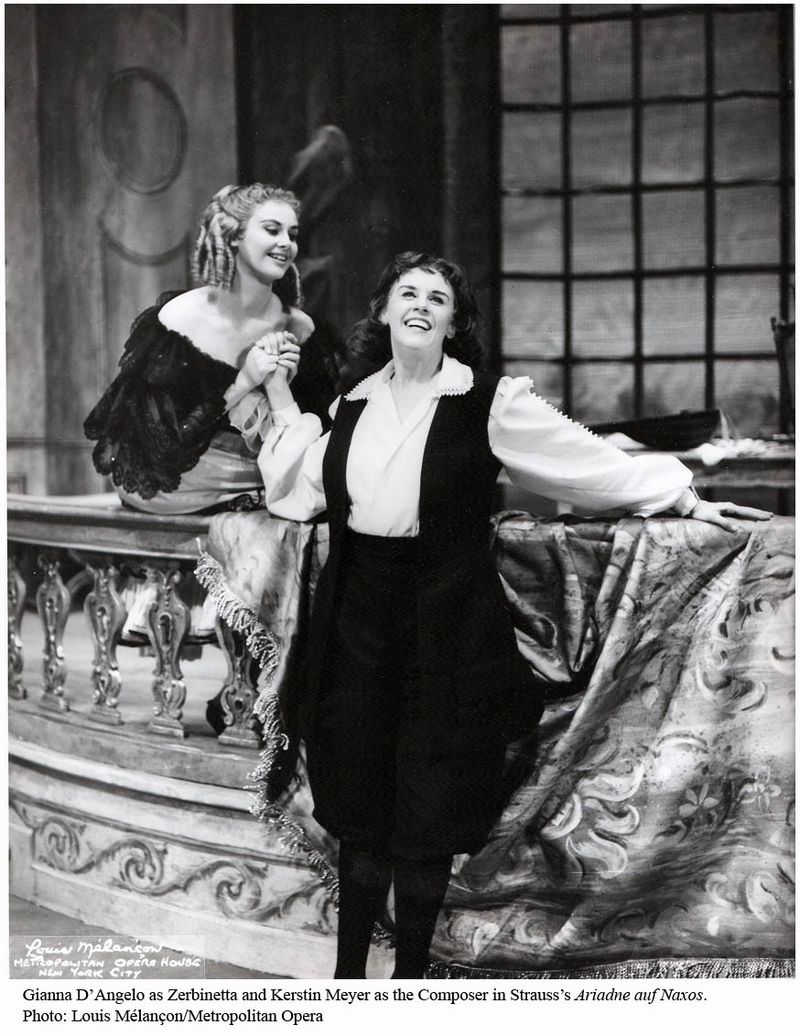
    As the 150th anniversary of the birth (on June 11th, 1864) of Richard Strauss draws near, I was recalling the first time I heard what was to become my favorite opera – the composer’s ARIADNE AUF NAXOS. This opera had come rather late to The Met: some fifty years after its world premiere, The Met presented ARIANDE with the following cast:

    Metropolitan Opera House
    December 29, 1962
    Metropolitan Opera Premiere

    ARIADNE AUF NAXOS
    R. Strauss

    Ariadne.................Leonie Rysanek
    Bacchus.................Jess Thomas
    Zerbinetta..............Gianna D'Angelo
    Composer................Kerstin Meyer
    Music Master............Walter Cassel
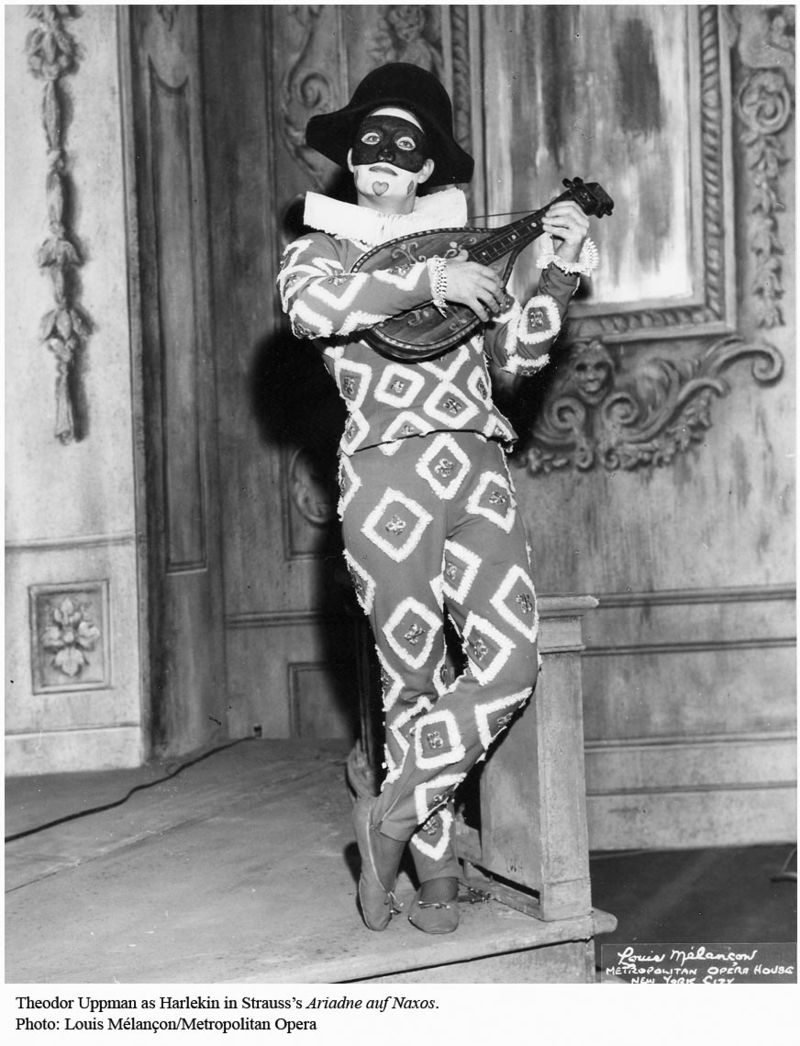
    Harlekin................Theodor Uppman
    Scaramuccio.............Andrea Velis
    Truffaldin..............Ezio Flagello
    Brighella...............Charles Anthony
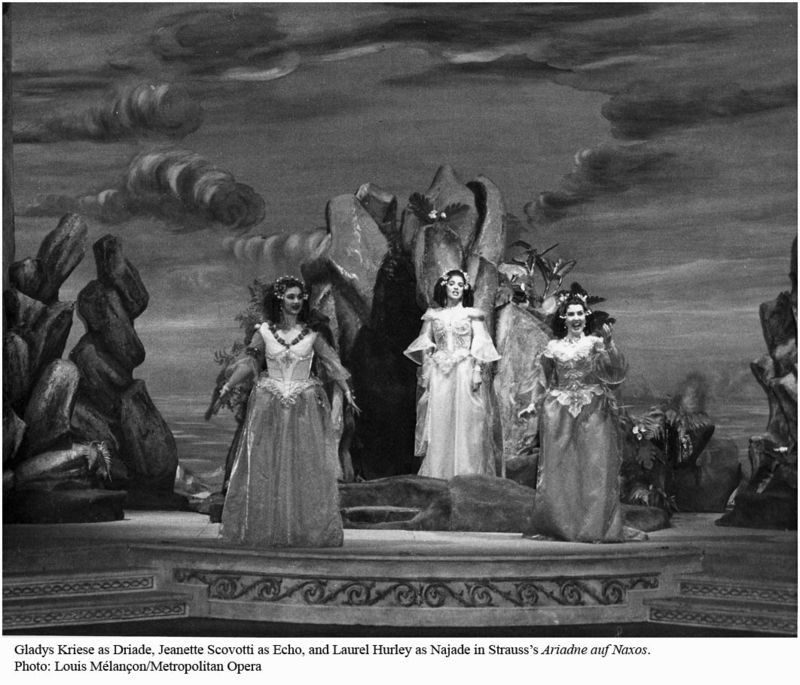
    Najade..................Laurel Hurley
    Dryade..................Gladys Kriese
    Echo....................Jeanette Scovotti
    Major-domo..............Morley Meredith
    Officer.................Robert Nagy
    Dancing Master..........Paul Franke
    Wigmaker................Roald Reitan
    Lackey..................Gerhard Pechner

    Conductor...............Karl Böhm

    The opera, with it’s almost chamber-music orchestration (only about 35 players are called for) was thought by some people to be too intimate for such a large house as The Met. But the production, revived several times over the ensuing years, continued to win new devotees to the incredible Strauss score. On March 12th, 1988 the Met production was telecast live to Europe; I was there – with Kenny and Jan – enjoying a superb cast led by Jessye Norman, Kathleen Battle, Tatiana Troyanos, and James King, with James Levine on the podium. In 1993 The Met unveiled a new and delightful production by Elijah Moshinsky with its ‘realistic’ prologue and fantasy-setting for the opera.  

    But, back to 1962: The Met’s house photographer at the time, Louis Melançon, routinely photographed each Met production as well as taking ‘portraits’ of the principal artists in costume. His photos graced Opera News for years, and I have several that were sent to me – autographed – by individual singers. Here are some of Mr. Melançon’s pictures from the Met’s premiere of ARIADNE AUF NAXOS:

    Ariadne6263.04

    Ariadne6263.24

    Ariadne6263.10

    Ariadne6263.22

    On February 2nd, 1963, Wagner’s FLIEGENDE HOLLANDER was scheduled for a Texaco/Metropolitan Opera matinee radio broadcast. Of course I was tuned in: this was my second season of Met radio broadcasts and I was thoroughly primed for my first experience of hearing HOLLANDER, with Opera News opened to the cast page and the household warned against any intrusions on my listening. Thus I was shocked when the friendly voice of Milton Cross delivered the alarming news: the opera was being changed!

    It seemed that tenor Sandor Konya, scheduled to sing Erik in HOLLANDER, was ill and so were his cover and other tenors who were in town who knew the role. It was decided to put on ARIANDE instead, since Leonie Rysanek – scheduled for Senta in the Wagner – was ready and raring to go. (ARIADNE had been scheduled for broadcast later in the season, with Lisa Della Casa the announced Ariadne; the change of opera on February 2nd thus deprived Della Casa of her chance to broadcast the role). The cast for the ‘substitution’ broadcast was the same as for the Met premiere, with the exception of Roberta Peters, replacing Gianna D’Angelo as Zerbinetta.

    Without any preparation for this ‘new’ opera, I listened and – to an extent – enjoyed ARIADNE though to be honest I was not a huge Strauss fan at that point in my operatic career. It wasn’t until 1970 that I actually saw the Met’s ARIADNE: from a front-row orchestra seat directly behind Karl Bohm’s left shoulder, I was transported by a splendid cast led by Leonie Rysanek, Reri Grist, Evelyn Lear, and James King. My love affair with ARIADNE became even more earnest a few seasons later with the New York City Opera’s beloved English/German production starring Carol Neblett/Johanna Meier, Patricia Wise, Maralin Niska, and John Alexander. But that’s a whole other story.

  • At Home With Wagner IV

    Richard+Wagner+02

    Note: this article has been written over the course of several months

    Four recordings of live performances of Wagner’s LOHENGRIN have come my way, courtesy of my friend Dmitry. Despite being rather busier during this Summer of 2013 than I’d anticipated, I found time on these hot afternoons to start listening to these performances, an act at a time. Invariably I’ll listen to the same act two or three times, so as not to miss anything.

    LOHENGRIN might be considered Wagner’s most beautiful opera; from the ethereal opening bars of the prelude, it weaves a spell of mystery, romance, and deceit all under-scored by the Dark Arts. Marvelous stretches of melodic splendor – Elsa’s Song to the Breezes (“Euch luften“), the bridal procession to the cathedral, Lohengrin’s tragically tender “In fernam land” – mix with ‘greatest hits’  like the über-familiar Wedding March and the thrilling Act III prelude. Three prolonged duets are the setting for major dramatic developments in the narrative: Ortrud and the banished Telramund outside the city walls; Elsa meeting with and being beguiled by Ortrud; and Elsa and Lohengrin on their bridal night where the hapless girl asks the fatal question. King Henry has his orotund prayer “Mein Herr und Gott!” whilst Ortrud calls upon the forsaken pagan gods in her great invocation “Entweihte Götter!” The conflict between darkness and light is manifested in the great confrontation between Ortrud and Elsa on the cathedral steps, the violins churning away feverishly as the two voices vie for the upper hand; Ortrud has the last word.

    So it’s an opera that is easy to listen to repeatedly; and the more you listen, the more you hear…yes, even after 50+ years of getting drunk on Wagner, I still discover new things in his operas.  

    Jess+Thomas

    Jess Thomas (above) is the Lohengrin on two of these recordings, the first from Munich 1964 and the second from Vienna 1965. I listened to the Munich first, conducted by Joseph Keilberth, and found it a strong, extroverted performance. None of the principal singers go in for much subtlety, instead flexing their Wagnerian vocal muscles in generous style.

    Keilberth’s conducting has sweep and intensity, though perhaps lacking a bit of the dreamlike quality that can illuminate the more spiritual passages of the opera. This accords well with the singing, since neither Jess Thomas nor his Elsa, Ingrid Bjoner, use much dynamic contrast (though when they do it works wonders). Both have big, generous voices and they are on fine form for this performance.

    Jess Thomas was my first Calaf (at the Old Met), Siegfried, Tristan and Parsifal. He was a mainstay at The Met in the helden roles from 1962 to 1982, returning in 1983 to sing part of Act I of WALKURE with Jessye Norman for the Met’s 100th birthday gala. His is not the most gorgeous sound imaginable but his power and security are amply in evidence in this Munich performance.

    Cox Bjoner

    Above photo: Ingrid Bjoner in GOTTERDAMMERUNG, with tenor Jean Cox

    I’ve always liked Ingrid Bjoner; her rather metallic sound and steely top served her well in a long Wagnerian career. I only saw her onstage onceas Turandot, a memorable performance both from a vocal and dramatic standpoint. In this Munich LOHENGRIN, Bjoner sails thru the music with exciting vocal security. If only rarely does she engage in the floating piani that many sopranos like to display in this music (the end of Bjoner’s ‘Euch luften’ is ravishing!), hers is an impressive reading of the music.

    In a thrilling performance, Hans Günther Nöcker turns the sometimes-overshadowed role of Telramund into a star part. His narration of the shame and degradation he feels at having been bested in the duel and then exiled is a powerful opening for the opera’s second act.
    0099925413729_600

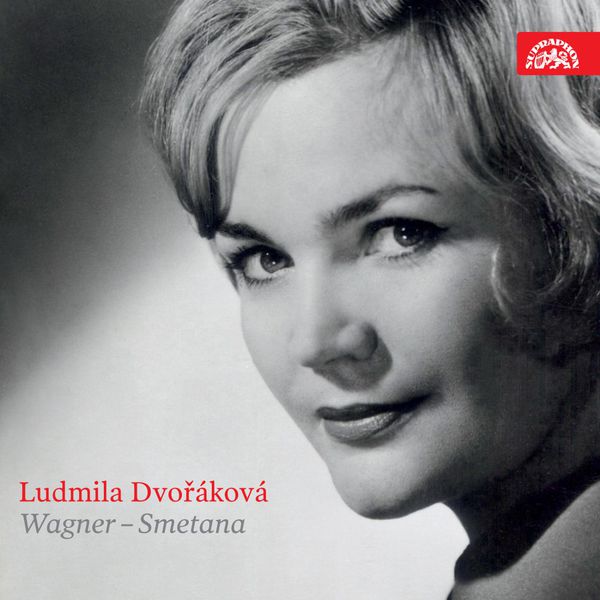
    Ludmila Dvorakova’s large, somewhat unwieldy voice has ample thrusting power for Ortrud’s great invocation in Act II, though she tends to leave off clear enunciation of the text in favor of simply pouring out the sound. Dvorakova (above) – who sang Isolde, Leonore and Ortrud at the Met in the 1960s – was known for her magnetic stage presence.

    Gottlob Frick is a powerful Henry, but there’s a question as to whether it’s Josef Metternich or Gerd Neinstedt as the Herald in this performance – whoever it is, he is not having his happiest night vocally.

    ~~~~~~~~~~~~~~~~~~~~~~~~~~~~~~~~~~~~~~~~~~~~~~~~~~~~~~~~~~~~~~~~~~~~~~~~~~~~~~~~~~~~~~~~~~~~~~~~

    Geddanc

    When in 1966 tenor Nicolai Gedda was announced for performances of Lohengrin in Stockholm, there was some hand-wringing among the fans. Gedda was known for his stylish lyricism and easy top in the bel canto and French repertoire; he had tackled such high-flying roles as Arturo in PURITANI and Raoul in HUGUENOTS with striking command. By venturing into Wagner, Gedda was thought to be putting his instrument at risk. But he sang Lohengrin on his own terms, with true-tenor (rather than baritonal) timbre, producing one beautiful phrase after another. The recording, which I owned on reel-to-reel at the time it was first available, is a valuable document since Gedda never again sang the role, nor any other Wagnerian role, onstage.

    Gedda in fact is one of the most pleasing Lohengrins to hear; as in another mythic/heroic role he tackled only once – Aeneas in TROYENS – the tenor’s clarity of both tone and diction – and his complete ease when the vocal line goes upward – mark his performances in these operas as ideal, even though they both quickly fell out of his active repertory.

    Gedda was my first Nemorino (at the Old Met) and I saw him many times over the ensuing years (as Don Jose, Don Ottavio, Elvino, Edgardo, Faust and  Lensky), always impressive in his artistry and vocal security. Far from ruining his voice, the Lohengrin simply served as a vocal adventure for the tenor; he went on singing for another 20 years after portraying the mysterious knight. His Met career spanned 25 years and nearly 375 performances, including singing the final trio from FAUST at the very last performance at the Old Met.

    Aside from Gedda, this Stockholm LOHENGRIN is very enjoyable in many ways though not quite reaching the mystical heights that some performances of this opera have attained. Conductor Silvio Varviso has a fine sense of pacing and if the orchestral playing is not world-class, a lyrical atmosphere develops nicely right from the start.

    Aase N-L

    I’m particularly taken with the performances by the two female leads: the Norwegian soprano Aase Nordmo Løvberg (above) makes a distinctive impression as Elsa; her voice, rather Mozartean in heft and feeling, has clear lyrical power and expresses the character’s vulnerability well. The soprano appeared at The Met 1959-60 as Elsa, Eva, Sieglinde and Leonore; she passed away earlier this year, one of those ‘forgotten’ voices still held dear by a diminishing group of aficianados who listen to older recordings.
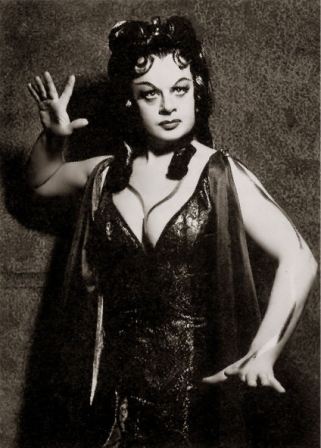
    Ericson

    As Ortrud, Barbro Ericson (above) gives a blazing performance. Like Nordmo Løvberg, Ericson did sing at The Met (1967-68): she was Siegrune in the ‘Karajan’ WALKURE performances, and stepped in once as Fricka; she returned a decade later to sing Herodias in SALOME with Grace Bumbry as her daughter. Ericson was a fearless singer with a rich chest voice and some stunningly easy top notes.

    As King Henry, Aage Haugland’s sturdy and humane bass sound is a big asset in the Stockholm LOHENGRIN; Rolf Jupither is a solid Telramund and Ingvar Wixell – who went on to be a major Verdi baritone (he was a wonderful Boccanegra at the Met in 1973-74) – already shows vocal distinction as the Herald.

    in the third act, this performance is particularly gratifying, for Ms. Nordmo Løvberg and Mr. Gedda sing one of the most lyrical and polished versions of the Bridal Chamber duet that I’ve ever heard. And the tenor is absolutely splendid in the long narrative “In fernem land” and his tender farewell address to his wife; with poetic expression tinged in sadness, he presents Elsa with the horn, sword and ring that are meant for her lost brother, Gottfried. Gedda’s anguished “Leb wohl!” to his distraught bride is like an arrow to the heart. This document of Gedda’s performance, capped by his magnificent vocalism in the opera’s final twenty minutes, can be considered a treasured rarity in the annals of great Wagner singing.

    ~~~~~~~~~~~~~~~~~~~~~~~~~~~~~~~~~~~~~~~~~~~~~~~~~~~~~~~~~~~~~~~~~~~~~~~~~~~~~~~~~~~~~~~~~~~~~~~~

    Rene-maison

    Above: tenor René Maison

    As Summer 2013 ended and the performance season started up, I had less time to devote to listening at home; and so it wasn’t until the dark, chilled days of February 2014 that I took up a rarity:  1936 LOHENGRIN from Buenos Aires which features René Maison, Germaine Hoerner, Marjorie Lawrence, Fred Destal, Alexander Kipnis, and Fritz Krenn, with Fritz Busch on the podium. Of the singers, Hoerner, Destal, and Krenn were names I’d never even heard of prior to settling down with this recording.
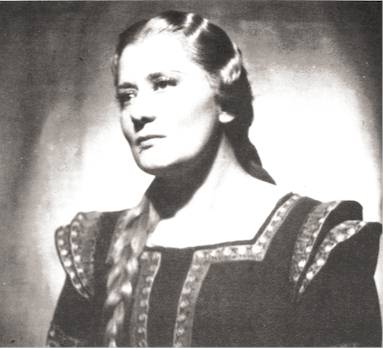
    Gorrhoernersenta

    Germaine Hoerner was born in Strasbourg in 1905, made her debut at L’Opera de Paris in 1929 and sang such roles as Elsa, Gutrune, Senta (photo above), Aida, Desdemona, the Marschallin, and Beethoven’s Leonore during her career which lasted thirty years. How strange that I’d never encountered her voice before.

    Fred Destal began his career as a choirboy in Liegnitz and sang professionally at the Deutsches Theater in Brünn, before joining the Deutsches Opernhaus (later the Städtisches Oper) in Berlin. In 1933 he left Germany for the Zurich Opera. He sang at the Vienna State Opera from 1936–1938, and emigrated to the United States in 1938. He made many guest appearances in Europe and frequently performed at the Colón in Buenos Aires where he essayed several Wagnerian roles as well as singing in operas by Mozart and Strauss, and in operetta.

    Fritz Krenn debuted in 1917, singing with the Vienna State Opera from 1920-1925 and the State Opera, Berlin, from 1927 til 1943. He became celebrated for his Baron Ochs, singing the role over 400 times including seven performances at The Met in 1950. He died in 1963.

    The three other leading artists in this 1936 Buenos Aires LOHENGRIN all had major careers – Marjorie Lawrence’s unfortunately much altered by the onset of polio in 1941. Though her legs were paralyzed, she returned to the stage in 1943, singing performances of Venus and Isolde at The Met from a seated position; but the wife of a Metropolitan Opera board member was put off by the sight of the disabled soprano onstage and her Met career ended. Lawrence’s life was the subject of a 1955 film, Interrupted Melody.

    The sound quality on this 1936 performance – needless to say – is very uneven; yet not enough so to deter the adventuruous listener. Passages where the volume fades come and go, and these sometimes occur at exactly the “wrong” moment. But there’s enough acceptable sonic accessability to have a pretty good idea of what the performance was like.

    Fritz Busch conducts and, though the orchestra playing (and the recording of it) leave something to be desired, the conductor establishes the dramatic atmosphere right from the start of the celestial prelude – a prelude which draws unexpected and sustained applause from the audience.

    Alexander Kipnis sounds somewhat unsettled in this performance as King Henry: his career had already lasted 20 years and The Met was still in his future. He may have suffered from the recording techniques employed or simply have been having an off-night. Here are no serious flaws in his singing, but surely he’s not as his best. Germaine Hoerner has a brightish voice with a slight flutter that gives her singing an almost girlish attractiveness and a vulnerable appeal – quite nice for this role. There are some vague pitch issues but she does make an impression right from her opening line. René Maison sings expressively as Lohengrin, with a good feel for the other-worldly yet heroic quality the music calls for; he shows impressive dynamic control from the start. Fritz Krenn begins rather anonymously as the Herald but gains ground as Act I progresses. Fred Destal’s Telramund is dramatically vivid in the opening act – his greatest moments lie ahead – and Ms. Lawrence makes only the briefest vocal appearance in Act I. 

    Despite the lack of immediacy in the sound quality, Busch opens Act II with a good sense of impending doom; in the duet for Ortrud and Telramund, Lawrence and Destal are appropriately gloomy. Later Ms. Lawrence is ever-so-slighly taxed by some of Ortrud’s highest notes but she’s very exciting at “Zurück, Elsa!” and the whole of their confrontation is well done. Destal’s attempt to incite the knights is another good passage, and Fritz Krenn’s singing as the Herald is more vivid than in Act I. Busch takes the wedding procession music rather faster than we often hear it, and the chorus sound a bit daunted at this point. What sets this second act on a higher plane is the singing of Hoerner and Maison: the soprano’s voice, now at full sail, is full of lyrical grace; her pitch is now steady and the voice takes on a silvery gleam in the upper range. Maison’s tenderness towards Elsa is lovingly expressed, and Ms. Hoerner responds to his reassurance with a finely-turned rendering of the marvelous passage “Mein Retter, der mir Heil gebracht! Mein Held, in dem ich muss vergehn, hoch über alles Zweifels Macht soll meine Liebe stehn.” (“My deliverer, who brought me salvation! My knight, in whom I must melt away! High above the force of all doubt shall my love stand.”)

    After a brisk prelude, Act III begins with the chorus of the bridal party approaching; the antique sound quality gives the voices a ghostly air, and as they recede I was struck by the fact that it’s unlikely anyone who was at this performance is still alive today, and struck yet again that it has come to us from across a three-quarter-century span of time.

    Ms. Hoerner and Mr. Maison achieve poetic vocal distinction in the Bridal Chamber duet; the tenor’s gentle ardor is movingly expressed with some lovely soft nuances and the soprano sounds girlishly enraptured; of course, their joy is short-lived as Elsa’s gnawing curiosity overwhelms her. As the opera moves to its inexorable end, Mr. Maison sings ‘In fernem land’ so movingly. Ms. Hoerner reacts to the imminent departure of her knight with frantic despair; but Ms. Lawrence is not comfortable in Ortrud’s final vengeful utterances: she sounds taxed and rather desperate. Mr. Maison then delivers the most extraordinary singing of the entire performance: at ‘Mein lieber schwan’ he pares down the voice to a mystic thread of tone, coloured with an amazing sense of weeping. I’ve never heard anything like it; it literally gave me the chills.

    ~~~~~~~~~~~~~~~~~~~~~~~~~~~~~~~~~~~~~~~~~~~~~~~~~~~~~~~~~~~~~~~~~~~~~~~~~~~~~~~~~~~~~~~~~~~~~~~

    0

    Then back to Jess Thomas for the Vienna 1965 performance. The tenor is perhaps a shade less commanding vocally than in the Munich/Keilberth performance, but impressive nevertheless.

    For the Vienna ’65, Karl Bohm is on the podium, giving a refined delicacy to the prelude and showing a near-ideal sense of pacing and of the architecture of the work. Bohm underscores a sense of impending doom when – initially – no champion answers the calls to defend Elsa’s honor.

    C Watson

    Claire Watson, the American soprano who never sang at The Met but was a beloved star at Munich for several years, sings Elsa with a nice aristocratic feel. The voice is clear and steady, with just a slight touch of remoteness that suits the character.

    Walter Berry (Telramund) and Eberhard Waechter (the Herald), two of Vienna’s most beloved baritones at this point in time, are very fine in Act I; Martti Talvela’s sing as King Henry is at once powerful and humane. Talvela’s voice has a trace of a sob, and there are passing moments of off-pitch singing here and there but overall he is impressive.

     And then we come to Act II…

    Christa

    Above: Christa Ludwig

    From the moment of curtain-rise, the second act of this LOHENGRIN is simply thrilling. Not only is the singing of the principals at a very high level throughout, but the dramatic atmosphere that is generated raises the temperature to the boiling point very early on in the act and sustains it til the final omnious re-sounding of the Ortrud motif as Elsa and Lohengrin enter the cathedral.

    It’s the divine Christa Ludwig and her then-husband Walter Berry who set this act on its magnificent trajectory. Outside the city walls, Mr. Berry, as Telramund, having been defeated in single combat by Elsa’s mysterious knight in shining armor, prepares to face his fate in exile: “Arise, companion of my shame!” he tells his wife. But Ortrud, as if in a trance, cannot comprehend their banishment. In his monolog of defeat, Telramund blames his wife for his predicament, ending his tirade with “Mein Ehr hab ich verloren!” (“I have lost my honor!”) Having sung this whole passage thrillingly, Mr. Berry dissolves in anguished sobbing. I’ve never heard this passage so powerfully delivered.

    In the ensuing dialogue, as Ortrud tells Telramund how his fate can be reversed, both singers are incredibly alive to ever nuance of the music and text. In a searing moment, Telramund/Berry states that his defeat was an act of God; to this, Ortrud/Ludwig replies with a blistering, sustained “Gott????!!!!!” and then emits a ghastly laugh. Mr. Berry’s rejoinder marks another high point for the baritone; indeed both he and Ms. Ludwig continue throughout this scene to match one another in intensity and vocal splendour. Singing in doom-ladened unison, they conjure up a vision of revenge in “Der Rache Werk…”

    Then Elsa appears on the high castle balcony: Miss Watson in fine lyric form for the Song to the Breezes. But Ortrud calls to her from out of the darkness and after a bit of servile groveling on Ortrud’s part, Elsa agrees to come down and speak with her wounded nemesis. Ms. Ludwig then lauches her hair-raising invocation of the ancient gods:

    “Ye gods profaned! Help me now in my endeavor!
    Punish the ignominy that you have suffered here!
    Strengthen me in the service of your holy cause!
    Destroy the vile delusions of those who deny you!
    Wotan! I call on you, O god of strength!
    Freia! Hear me, O exalted one!
    Bless my deceit and hypocrisy,
    that I may be successful in my revenge!”

    This brilliant passage, delivered with stunning amplitude and soaring top notes by the inimitable Christa Ludwig, literally stops the show. The audience bursts into frantic appplause, a mid-act rarity in Wagner performances, and Maestro Bohm must wait several seconds to continue. 

    In their ensuing duet, Christa Ludwig uses the subtle finesse of a great lieder singer to worm her way into Elsa’s trust. Both Ludwig and Ms. Watson sing superbly here, with a perfect blend as their voices entwine. Elsa’s overwhelming goodness seems to have converted Ortrud: the orchestral melody of forgiveness and sisterhood – my favorite moment in the opera – signals false hope. In a devastating passage as Elsa draws Ortrud into the castle, Telramund emerges from the shadows and again Mr. Berry is pure magnificence in his closing statement: 

    “Thus misfortune enters that house!
    Fulfil, O wife, what your cunning mind has devised;
    I feel powerless to stop your work!
    The misfortune began with my defeat,
    now shall she fall who brought me to it!
    Only one thing do I see before me, urging me on:
    that he who robbed me of my honour shall die!”

    As the scene ended I was literally stunned. It took me a couple of days before I could go on with the recording; I just wanted to savour what I’d heard. It’s such a great feeling to experience the pure exaltation of a genuinely exciting operatic performance – a feeling that is quite rare in this day and age – and know that the emotions are still there, waiting to rise to the surface.

    But when I did take up the recording again, there were still more thrills in the second act: for one thing, Mr. Wachter as the Herald is on top form, and Mr. Berry continues his exciting performance as he tries to shore up support from some disgruntled comrades. The bridal procession commences, and Dr. Bohm begins the steady build-up to the fiery confrontation beween Elsa and Ortrud. As their vocal duel is engaged, the steadfast and true Ms. Watson sails confidently thru her phrases, bolstered by the populace. Cresting to a splendidly sustained top note, Elsa seems to be the victor but it’s Ortrud who has the final word: Christa Ludwig delivering a vocal knockout punch with dazzling self-assurance.

    So: what a lot I have written about this second act! It’s truly one of the most fascinating listening experiences in my long operatic career. The opera goes on, of course, and the final act is perfectly pleasing in every regard. Claire Watson and Jess Thomas manifest their lyrical selves in the Bridal Chamber duet while the slow rise of panic is well under-lined by Dr. Bohm. Martti Talvela sings superbly in the opera’s final scene by the river bank, and Mr. Thomas has plenty in reserve for ‘In fernem land’, showing expert vocal control. Christa Ludwig is at her full and imperious best in Ortrud’s final vocal victory lap…but then she’s undone when Lohengrin magically produces Gottfried: Ms. Ludwig emits a devastating moan.

    So, nearly nine months after I started writing this article, I’ve run out of LOHENGRINs to write about…at least for the moment.
  • Vivier & Bruckner @ The NY Philharmonic

    L1016697_(2)

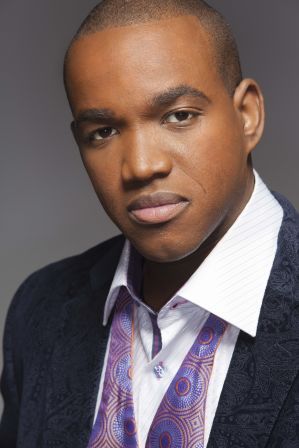
    Above: conductor Manfred Honeck, photographed by Felix Broede

    Saturday March 29, 2014 – Tonight at The New York Philharmonic, Claude Vivier‘s ORION and Anton Bruckner’s Symphony #9 were played without intermission.  Manfred Honeck, music director of the Pittsburgh Symphony Orchestra, was on the podium; Maestro Honeck was replacing the originally-announced Gustavo Dudamel, who withdrew from these concerts due to illness.

    Claude Vivier, the Canadian composer of ORION, was murdered in 1983, having had a macabre premonition of his own death. This from the program notes:

    “When Claude Vivier was fatally stabbed in his apartment on the night of March 8, 1983, an unfinished manuscript for a choral work lay on his worktable: Crois-tu en l’immortalité de l’âme? (Do You Believe in the Immortality of the Soul?), which, according to The Guardian, is a dramatized monologue in which the composer describes a journey on the Metro during which he becomes attracted to a young man. The music breaks off abruptly after the line: ‘Then he removed a dagger from his jacket and stabbed me through the heart.’ “

    ORION, dating from 1979, drew inspiration from the composer’s journey from Asia to the Middle East in 1976, where he absorbed the sounds of the cultures thru which he passed. This dense and fantastical work, so sumptuously played by the Philharmonic, ranges from thunderous proclamations to arching melodic forays; gongs evoke distant temples and – truly unique – there are two vocal interjections (performed by a percussionist) which might be the cries of a muezzin or the calls of the starry hunter for whom the piece was named. As Vivier concluded his original program note for ORION: “Go and find out for yourself!”

    Vivier’s untimely and violent death finds a link – and a counter-poise – in the Bruckner 9th, the unfinished symphony on which Bruckner was at work on the day he died. He is said to have spent the morning at his Bösendorfer, going over sketches for the symphony’s finale. After taking a walk, he had a cup of tea and then took a nap from which he never awoke. What a nice, peaceful way to take leave…the very opposite of Vivier’s violent fate.

    “It will be my last symphony,” Bruckner had told a guest earlier in the creative process. At the time of his death, three movements were complete, and Bruckner had been working on the finale for months, leaving a large accumulation of sketches and thematic fragments. It’s a grand and glorious work, even without a ‘proper’ ending.

    The fervor of Bruckner’s religiosity is apparent from the start of the 9th symphony: both solemn and uplifting, the music ranges from broad statements to intimate vignettes – especially from the wind instruments; a passage of pizzicato strings one moment will give way to burnished, expansive themes the next. Climaxes build and evaporate, and chorale-like passages take on a spiritual glow.

    Over the course of the three movements, we will sometimes be reminded of such disparate composers as Wagner and Mendelssohn. The symphony as it stands ends on a note of serenity, leaving us to wonder what might have been if Bruckner had lived to complete a fourth movement.

    It goes without saying that the Philharmonic artists gave a performance of remarkably mellow beauty and rhythmic clarity; Maestro Honeck – tall and somewhat formal in demeanor – became wonderfully involved in the music; his conducting style is both passionate and animated, and devoid of melodrama. The audience saluted him with great warmth as he was called out for extra bows to a standing ovation. Let’s hope he’ll be back on the Avery Fisher podium soon.

  • Schubert’s Octet @ CMS

    Schubert

    Above: Franz Schubert

    Sunday February 23, 2014 – A sold-out house at Alice Tully Hall as Chamber Music Society of Lincoln Center continued their series The Incredible Decade, featuring works composed between 1820 and 1830, with octets by Schubert and Mendelssohn.

    The evening didn’t quite turn out as I’d hoped; I’ve been fighting off a cold and I thought I had medicated myself sufficiently to get thru the concert. But about half-way thru the Schubert all the symptoms suddenly activated and – since I am always kvetching about people who come to performances when they are coughing – I thought the polite thing would be to leave at intermission. This choice was seconded by the presence of a fidgety woman next to me who kept poking me in the ribs with her elbow. I hated to miss the Mendelssohn – one of my favorite works – but in the end I think I made the right choice because by the time I got home I was really sick.

    At any rate, the performance of the Schubert octet in F-major was certainly worth my effort to attend; as is their wont, Chamber Music Society assembled a group of players of the highest calibre and their work – both as individuals and in ensemble – was dazzling. The vociferous ovation at the end was fully merited, the musicians called out twice as the audience’s cheering waves of applause swept over them.

    Schubert’s octet in F major, D. 803, was an ambitious project for the young composer. Sometimes viewed as a preparatory ‘outline’ for what would eventually become the Symphony No. 9 in C major, The Great, the octet in itself is a rewarding and innovative work. Performance timing of one hour makes this one of the longer chamber works in the active repertory; its six movements literally brim over with melodic and harmonic riches. The mood runs from sunshine to shadow and the work conveys Schubert’s musical and emotional ebb and flow; it’s a piece that calls for both vrtuosity and spiritual intention, and our stellar band of players tonight gave a performance that was nothing short of spectacular.

    D288FC0D-DBDE-8E54-239713E258DAC4D4

    I was particularly excited to encounter one of my favorite musicians, Alexander Fiterstein (above), whose prodigious talents as a clarinetist were very much an illuminating factor in this evening’s performance. In the Menuetto, Alexander and violinist Erin Keefe engaged in a courtly dialogue, and earlier in the Adagio it is the clarinet which first ‘sings’ the lovely melody. Ms. O’Keefe’s silken timbre was a joy to hear throughout, and her fellow string players – Sean Lee (violin), David Aaron Carpenter (viola), Jakob Koranyi (cello) and the Society’s formidable double-bass player Kurt Muroki – blended stylishly while the wind trio – along with Mr. Fiterstein – had Bram Van Sambeek (bassoon) and the matchless velvet of Radovan Vlatkovic’s horn playing. Having played the horn in high school, every time I hear Mr. Vlatkovic I develop a case of ‘timbre envy’. How does he do it? My timbre was always too trumpet-like. Special kudos to Mr. Koranyi as well: his ‘variation’ in the Andante was one of the outstanding passages of the evening.

    In her pre-curtain speech, co-Artistic Director of CMS Wu Han gave us the exciting news that subscription/ticket sales were already well ahead of projection for the 2014-2015 season.  Bravo CMS!

  • WARSAW SERENADE @ Merkin Hall

    Dina-_Kuznetsova

    Above: soprano Dina Kuznetsova

    Tuesday February 18, 2014 – An evening of Polish songs, presented by New York Festival of Song at Merkin Hall, offered an opportunity to hear music I’d never heard before. Michael Barrett and Steven Blier were at the Steinways as tenor Joseph Kaiser opened the evening with “Nakaz niech ozywcze slonko” from Stanislaw Moniuszko’s Verbum Nobile; to a march-like rhythm, Mr. Kaiser poured forth his rich-lyric tone with some strikingly sustained high notes. Soprano Dina Kuznetsova made her first appearance of the evening singing Edward Pallasz’s “Kiszewska” (a ‘lament of the mother of mankind’); intimate and mysterious at first, this song takes on a quality of deep sadness for which the singer employed a smouldering vibrato.

    Four songs by Grazyna Bacewicz represented a wide spectrum of vocal and expressive colours: Ms. Kuznetsova in three of the songs ranged from reflective to chattery, at one point doing some agitated humming as she expressed the numbing horror of having a severe headache. Mr. Kaiser’s rendering of “Oto jest noc”, a song to the moon, was powerfully delivered with some passages of vocalise and a big climactic phrase.

    JosephKaiser-682x1024

    Above: tenor Joseph Kaiser

    Each singer represented a song by Mieczyslaw Karlowicz: the tenor in the touchingly melodic “Mów do mnie jeszcze” (‘Keep speaking to me…’) with its rising passion so marvelously captured by the singer; and then the soprano in the composer’s very first published song “Zasmuconej” (‘To a grieving maiden…’) with its simple, poetic melody showing Ms. Kuznetsova’s communicative gifts with distinction.

    Mieczyslaw Weinberg’s Seven Yiddish Songs were composed in 1943 to texts by the great Yiddish writer, I. L. Peretz. Weinberg, whose life was lived under the dark clouds of anti-Semitism (his entire family destroyed in a concentration camp with the composer having fled to Russia in 1939), is only now experiencing a renaissance with his 1968 opera THE PASSENGER having been recently performed at Bregenz and Houston and due to be seen in New York City this Summer. This evening’s performance of the Seven Yiddish Songs, Opus 13, was my first live encounter with Weinberg’s music.

    The cycle commences with a child-like “la-la-la-la” duet and proceeds with solos for each singer; another duet takes the form of a playful dialogue. Things take a darker turn as Mr. Kaiser sings of an orphaned boy writing a letter to his dead mama; in the closing song “Schluss” the piano punctuates Ms. Kuznetsova’s musings. Both singers excelled in these expressive miniatures.

    Two more Moniuszko songs: a flowingly melodic ‘Evening Song’ with an Italianate feel from the tenor, and a ripplingly-accompanied, minor-key ‘Spinning Song’ delivered with charm by Ms. Kuznetsova.

    Mr. Blier spoke of Karol Szymanowski’s homosexuality and how it coloured much of the composer’s work. In four songs, the two singers alternated – first the soprano in a quiet, sensuous mood and then Mr. Kaiser singing with increasing passion in a Sicilian-flavored ‘”Zuleikha” (sung in German). Ms. Kuznetsova employs her coloristic gifts in one of the Songs of the Infatuated Muezzin, a cycle inspired by Szymanowski’s visit to North Africa. In ‘Neigh, my horse’ from The Kurpian Songs Mr. Kaiser tells of a rider, en route to his beloved, being distracted by another beauty he meets on the journey; the tenor’s voice rose ringingly to a clarion climax which faded as he sent his riderless horse on to reassure his waiting sweetheart.

    The evening ended with an operatically-styled ‘Piper’s Song’ by Ignacy Jan Paderewski where the two voices blended very attractively as the duet moved to its shimmering conclusion.

    Despite a bit too much talking – and an un-cooperative microphone – and some distracting comings and goings, the evening was an enjoyable encounter with rarely-heard music and the pleasing experience of hearing Ms. Kuznetsova and Mr. Kaiser lift their voices in expresive song.


  • Irene Dalis as Kundry

    Dalis-719053

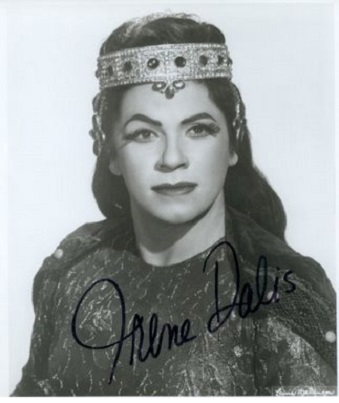
    Irene Dalis, a particular favorite of mine in my formative first decade of opera-going, made only one commercially-released recording during her distinguished career – and even this derived from a live performance: PARSIFAL from the 1962 Bayreuth Festival. She seems never to have found her way into a recording studio (though there is supposedly a set of CARMEN highlights recorded by her in German…which I can’t seem to locate); some of her Met broadcasts have now been issued on the Sony label.

    The Philips-label release of the Bayreuth ’62 PARSIFAL is a highly-regarded recording; the ‘Bayreuth Sound’ has been well-captured and the performance under Hans Knappertsbusch is overall very impressive. However, I’ve never felt that this particular performance of Kundry was representative of Irene Dalis’s finest work. So I was happy to receive from Dmitry a copy of Act II from the following year’s (1963) Bayreuth Festival which is now available at Opera Depot.

    To my ears, Irene seems far more herself vocally in this ’63 Kundry than she did the previous Summer. She sings a great deal of the role piano, beautifully supported by Knappertsbusch. This gives her interpretation a mysterious sense of intimacy; after the kiss (marvelously underscored by Kna and the orchestra) the tide begins to turn against Kundry. Irene’s colorful voicing of the character’s desperation and – later – fury makes for an exciting dramatic build-up in the final minutes of the Act. Traces of tension in some of her upper notes are evident, but her intense focus on Kundry’s psychological conflict propels the singer thru any thorny moments with success. Throughout, Knappertsbusch’s pacing is spot-on: ever forward-moving but not shirking either the sensual or spiritual aspects of the music. Wolfgang Windgassen is on fine form here, bringing firm lyricism and then steely power to the music of Parsifal’s emotional evolution. Gustav Neidlinger, Solti’s Alberich in the famous London/Decca RING, is a commandingly malevolent Klingsor.

  • Wotan’s Farewell: John Wegner

    Wegner

    After listening to John Wegner’s very impressive performance as Alberich in the State Opera of South Australia’s recording of DAS RHEINGOLD, I was thinking he’d probably be an equally good Wotan. And sure enough, I found this highly enjoyable version of the final scene of DIE WALKURE with Mr. Wegner (photo above) as the king of the gods and conducted by Gunther Neubold.

  • In The Beginning

    Guarrera mural

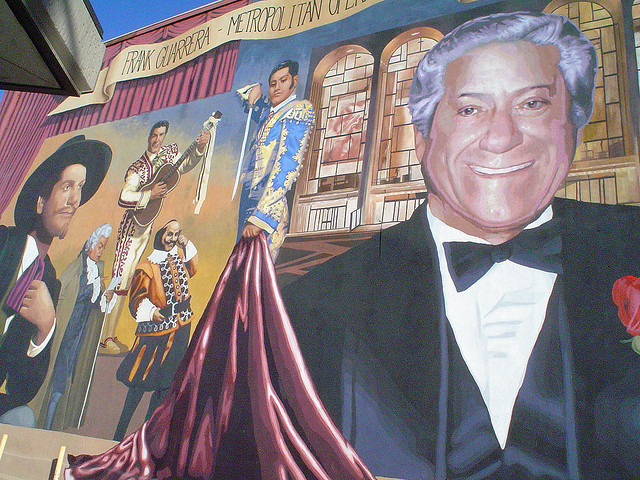
    Above: a huge mural in Philadelphia honors that city’s native son, baritone Frank Guarrera, who sang Rigoletto in the first opera performance I ever attended.

    People have often asked me about my earliest operatic experiences and how I became engrossed in this ‘exotic and irrational’ art form. Although it all began for me in 1959 when I chanced to see Renata Tebaldi performing excerpts from MADAMA BUTTERFLY on The Bell Telephone Hour, it was actually attending a performance in the theater three years later that got me hooked. And to this day nothing – not recordings, radio broadcasts, televised performances, HD theatercasts – can compare with being in an opera house and experiencing opera in its natural habitat.

    I was a very unhappy boy, growing up in that small town and feeling totally out-of-sync with the people who lived there, and especially alienated from my peers. I had been stricken with rheumatic fever at age five, and was in a hospital bed (at home) for several weeks; I actually had to learn to walk again, and I sometimes think this had a profound effect on my development. On re-entering school, I was thououghly lacking in self-confidence, lonely and reclusive; and by the time I was ten I began to realize just how different I was from the other boys my age. 

    Watching that Tebaldi telecast was such a revelation. From the brief narration I had only the vaguest grasp of what BUTTERFLY was about; but the effect of this large, handsome woman wearing a kimono and singing in a foreign language bowled me over. I knew instinctively that life changed for me during that half-hour. But once smitten, where could I turn?

    My poor parents, how difficult it must have been for them having this weird child on their hands! My brother was a handful in his own way, though a typical late-1950s teenger: a James Dean-type who smoked, carried a switchblade, and sometimes brushed up against the local sheriff. My sister was popular, very involved in school activities, an all-American girl. But there was no instruction manual – especially in that neck of the woods – for raising an eccentric, introverted, feminine boy like me.

    Going with the flow as best they could, my parents gave me a two-LP album of Verdi and Puccini arias sung by great RCA recording artists like Milanov, Albanese, Peerce, Bjoerling, Merrill, Warren and Tozzi. I wore it out in no time. Then I discovered the Texaco Metropolitan Opera Saturday radio broadcasts (Sutherland’s 1961 LUCIA was my first) and things moved to another level. No one was allowed to disturb me during those afternoons, and I had a big old reel-to-reel deck and used a microphone to tape the operas off the air. I played the tapes over and over: that’s how I learned the repertory. I subscribed to OPERA NEWS and sent fan mail to singers I heard on the airwaves. I still have the letters and signed photos they sent me.

    So it only remained to actually attend an opera performance. Every summer at the end of June, my father would close the drug store he owned for two weeks and take us on a car trip. We went to Maine, Boston, Washington DC, Niagara Falls. My mother hated those trips: she loved sleeping in her own bed and usually found fault with the motels where we stayed. But it was my dad’s annual opportunity to get away from it all, and so – being a good wife – she obliged.

    I had found out about the Cincinnati Summer Opera festival, held at the local zoo. As my father was casting about for a place to go in July 1962, I put forth the idea of attending an opera. He thought the venue might be interesting, and that we could combine the trip with an excursion to the horse farms of Kentucky. Opera tickets were ordered by mail, and at last we were off: on July 7th, 1962, in a production of painted flats and very traditional costumes and staging, RIGOLETTO unfolded before me.

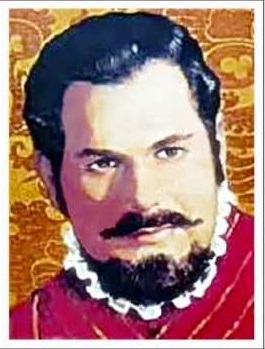
    The names and voices of the announced principals were familiar to me from hearing them on the Met broadcasts: Laurel Hurley, Barry Morell, and Frank Guarrera. A news item in the local paper had momentarily burst my bubble: Ms. Hurley was ill and would be replaced as Gilda by Nadja Witkowska. But by the time the conductor, Carlo Moresco, struck up the prelude, nothing else mattered: I was at the opera!

    I remember that Ms. Witkowska produced exciting high notes, that Mr. Morell’s voice was clear and warm, with a trace of a sob here and there; and that Mr. Guarrera sang strongly and really moved me with his “Pieta, signori!” sung prone on the stage, his face an inch or two off the floor. Irwin Densen, a basso who had a very long career and who I would see many times in years to come, was Sparafucile. And a devilish-looking tenor in a black beard and wearing black tights and tunic gave me – sub-consciously – a sexual frisson when he apeared as Borsa. That was Andrea Velis, a prominent Met comprimario. Another Met stalwart, Gene Boucher, was Count Ceprano.

    B morell

    Barry Morell (above) sang the Duke of Mantua

    After the performance I went backstage to meet the singers; oddly, I did not ask for autographs. I’ll never forget when Frank Guarrera came out to greet the fans: he had received a negative review for his prima performance, two nights earlier, from a woman named Eleanor Bell writing for the local newspaper. The crowd burst into applause and bravos when he emerged from the dressing room and as he began to sign autographs, he shouted triumphantly: “To hell with Eleanor Bell!”

    I think my parents actually had a good time: they took me back to the Zoo Opera for the next two summer vacations. We saw Licia Albanese singing her 100th Violetta (with Morell and Guarrera) and we saw Adriana Maliponte as Massenet’s Manon (with Morell and Guarrera) along with a TROVATORE starring Martina Arroyo and Irene Dalis. And my parents also took me to the Old Met, where I saw the Eugene Berman DON GIOVANNI – the first of eight performances I saw at the Old House – just days after John F. Kennedy had been assassinated.

    Finally, in late summer 1966, I was allowed to make my first solo trip to New York City to be on the first ticket line for the New Met. After that, there was no stopping me.

  • The Opera Lenz

    MefistoA14EM

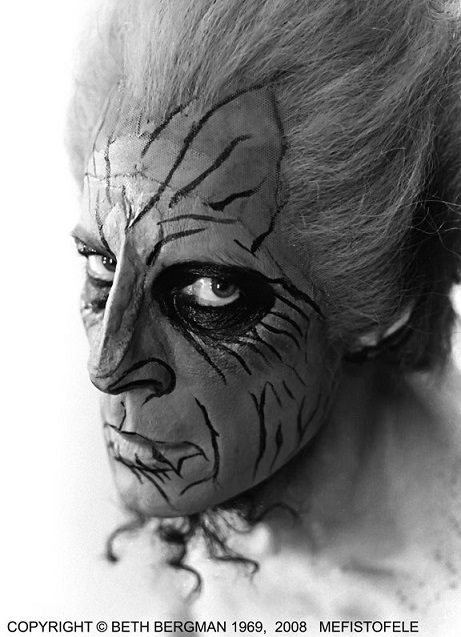
    Above: the great basso Norman Treigle as Mefistofele in the Boito opera at New York City Opera 1969; photo copyright Beth Bergman.

    I have just discovered Ms. Bergman’s blog, The Opera Lenz, which features images from her years working at New York City Opera, the Metropolitan Opera, and music venues in our City.

    The photos bring back so many memories: I even found pictures of Nadja Witkowska – the soprano who sang in the very first opera performance I ever saw (RIGOLETTO at the Cincinnati Zoo in 1962!) – when she attended a NYCO reunion in 2012. And there’s a lovely tribute to Claramae Turner (Toscanini’s Ulrica) who passed away in 2013. And so much more…both photos and recollections.

    Beth Bergman’s other site, The Beth Lenz, features many incredible images from nature.