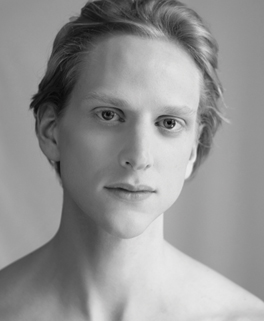
Category: Reviews

  • Score Desk for TOSCA @ The Met

    Tosca_(1899)

    Friday December 20, 2013 – Having greatly enjoyed the Portuguese soprano Elisabete Matos in her two previous roles at The Met (Minnie in FANCIULLA DEL WEST and Abigaille in NABUCCO) I was very much looking forward to her single scheduled Met performance of the current season. But since the Bondy production of TOSCA is such an eyesore, I opted for a score desk tonight as Matos sang her second Puccini role at The Met. {Rumor has it the Bondy production will soon be seen for the last time here in New York City; however, we cannot be sure of getting something better in their place.}

    A great many empty seats in the House was not a good sign; and the audience tended to laugh freely at the MetTitles making me think there were a lot of newbies present. But Marco Armiliato, on the podium for an opera that suits him to a T, gave an extroverted, blood-and-thunder reading of the score. The first act especially was genuinely exciting in every regard.

    Two bassos with enormous voices set the tone for the performance: Richard Bernstein was a capital Angelotti and John Del Carlo a stentorian Sacristan. Marcello Giordani, that most unpredictable of tenors, served notice in “Recondita armonia” that he was really in voice tonight. The aria was generously sung, with clear and expressive phrasing, a thrillingly sustained foray to the climactic B-flat, and a fine diminuendo to a very long piano on the last note.

    Ms. Matos and her tenor then gave a vididly declaimed version of the lovers’ banter and they were really exciting in the sustained passages of the ensuing love duet. George Gagnidze’s Scarpia added more decibels to the evening, and his dramatic inflections were spot on. Ms. Matos lost points with me only on the phrase “Tu non l’avrai stasera…giuro!” where she shrilled on the final word: I like to hear this done in chest voice (or sung ‘from the crotch’ as we used to say of Tebaldi). Mr. Gagnidze and the Met chorus brought the act to a thunderous conclusion with the Te Deum.

    Then, as so often happens at The Met these days, a long intermission seemed to drain the energy from the evening; and I have never heard such banging, thudding and shouting from behind the curtain as the stagehands struck the set.

    Act II found the principals and conductor doing their utmost to restore the dramatic tension siphoned away by the long interval. Mr. Giordani produced an amazingly sustained “Vittoria!” and Mr. Gagnidze was thoroughly impressive in every regard. Ms. Matos struck off steely but not always stable high notes and made a strong dramatic impact with Tosca’s iconic lines: “Assassino! Voglio vederlo!”, “Quanto?…il prezzo?”, “Ah…piuttosto giu m’avento!” and “E morto…or gli perdono!”: these were all delivered with the intensity of a seasoned verismo diva. Her rendering of the great aria “Vissi d’arte” was persuasive in its vulnerability and the prolonged top B-flat at the climax was exciting though she could not sustain the following descending phrase of A-flat and G…and the conductor did nothing to aid her.

    Faced with another extended intermission, I left after the Act II curtain. I would like to have heard Giordani’s “E lucevan…” and the big duet and the opera’s flaming finale, but the thought of another lull diminished my enthusiasm.

    Metropolitan Opera House
    December 20, 2013

    TOSCA
    Giacomo Puccini

    Tosca...................Elisabete Matos
    Cavaradossi.............Marcello Giordani
    Scarpia.................George Gagnidze
    Sacristan...............John Del Carlo
    Spoletta................Eduardo Valdes
    Angelotti...............Richard Bernstein
    Sciarrone...............Jeffrey Wells
    Shepherd................Thatcher Pitkoff
    Jailer..................David Crawford

    Conductor...............Marco Armiliato

  • Halcyon @ The Di Menna Center

    L1180776

    Above: pianist Ta-Wei Yu of the ensemble Halcyon

    Monday August 26th, 2013 – Halcyon gave an evening of piano trios at the Di Menna Center, a high-ceilinged yet intimate space on the lower level of the Baryshnikov Arts Center building. The hall proved very felicitous for musical clarity, and an attentive and appreciative audience maintained a deep silence between the movements of each trio, rewarding the musicians with enthusiastic applause at the end of the evening.

    Opening with the Arensky piano trio No.1 in D minor, the players immediately established themselves as technically accomplished and vividly communicative musicians. The opening movement glows with Tchaikovksian beauty of melody, suffused with shades of quiet longing. Violinist Hilary Castle, in a gorgeous ruby-red gown, brought a feeling of poignant lyricism to the opening theme, with pianist Ta-Wei Yu matching her in a sense of rhythmic flow. Cellist Luke Krafka’s velvety sound – a consistent pleasure all evening – seemed very much at home in this music which veers from feelings of melancholy to hope. The playful second movement materailizes as an ‘Arensky waltz’; this gives way to the poetic Elegia-Adagio where the playing of the three musicians was passionate and inspired. In the concluding movement, earlier themes re-appear as the piece builds to a dramatic conclusion.   

    The second work, Haydn’s piano trio No.39 (“Gypsy”) in G major dates from 1795, during the composer’s time in London, and contains some of his most innovative
    keyboard writing. The work also features solo passages
    for the violin; if the cello is less prominent here, it does provide beautiful textures. Ta-Wei Yu’s nimble playing was very much to the fore here, with felicitous nuances of dynamic and colour. The three musicians attained a high level of expressiveness in the finely-moulded second movement: really impressive music-making. It’s the trio’s final ‘Hungarian’ rondo movement that has led to dubbing this piece the ‘Gypsy’ trio: here Ms. Castle went to town with her flourishes à la zingarese whilst the two gentlemen kept pace in a breath-taking rush to the finish. The musicians played with infectious joy.

    I have a special place in my heart for the two Mendelssohn piano trios: they are my favorite chamber works and in fact it was a chance hearing of the first trio on the radio lo! these many decades ago that made me realize there’s other music beyond opera that is rewarding to hear. This evening, Halcyon played the Mendelssohn piano trio No.2 in C minor as their final offering and it was a wonderfully personal experience for me to hear it played live. The three players showed a lovely affinity for the work’s almost painfully beautiful melodies. The performance left me deeply satisfied and feeling at peace with the world.

  • At Home With Wagner III

    Wagner

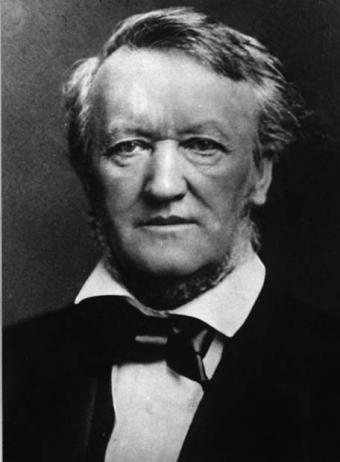
    Above: Richard Wagner

    Having taken a break from listening to Wagner at home while I was wrapped up with attending the RING operas at The Met, I picked up where I’d left off in playing CDs that my friend Dmitry has graciously made for me. These live recordings all come from a valuable source, Opera Depot, and this latest round of Wagnerian adventures kicks off with a 1966 performance of FLIEGENDE HOLLANDER from Covent Garden.

    HOLLANDER was not the first Wagner opera I ever experienced in the theatre, but my first encounter with it (in 1968) was a memorable event with Leonie Rysanek (singing despite a high fever) magnificent as Senta, and Walter Cassel, James King and Giorgio Tozzi as the male principals.

    Jones

    Above: Dame Gwyneth Jones

    For this 1966 performance from London, Sir Georg Solti is on the podium, stirring up a vivid performance that comes across excitingly in this recording which is in pretty good broadcast sound, with the voices prominent.

    David Ward is a bass-oriented Dutchman and his singing is moving in its passion and despair, fierce in anger and with a touching human quality in the more reflective passages. He and his Senta, Dame Gwyneth Jones, manage the strenuous demands of their long duet very well: both the tessitura and the emotional weight of this duet test the greatest of singers and if there are slight signs of effort here and there in this recording, the overall effect is powerful.

    Dame Gwyneth, just two years after her break-through performance at The Garden in TROVATORE casts out the powerful top notes before her final sacrificial leap thrillingly; earlier, in the Ballad she is engrossing in her use of piano singing and creates a haunting picture of the obsessed girl. The soprano’s well-known tendency to approach notes with a rather woozy attack before stabilizing the tone is sometimes in evidence; I find it endearing.

    The great basso Gottlob Frick is a wonderful Daland, and tenor Vilem Pribyl holds up well in the demanding role of Erik; his third act aria – which recalls Bellini in its melodic flow – is passionately sung. Elizabeth Bainbridge and Kenneth MacDonald give sturdy performances as Mary and the Steersman.

    ~~~~~~~~~~~~~~~~~~~~~~~~~~~~~~~~~~~~~~~~~~~~~~~~~~~~~~~~~~~~~~~~~~~~~~~~~~~~~~~~~~~~~~~~~~~~

    1024px-Horst_Stein

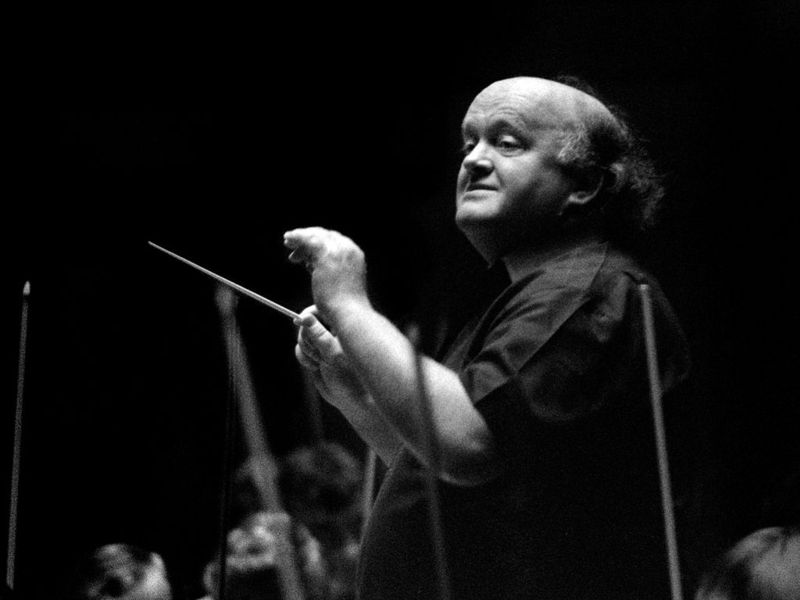
    A WALKURE Act I from Bayreuth 1971 finds conductor Horst Stein (above) giving a great sense of urgency to the opening ‘chase’ music. Helge Brilioth, probably better known for his Tristan and Siegfried, sounds a bit rough-hewn at first as Siegmund but summons up some poetry later in the act. Dame Gwyneth Jones as Sieglinde shows both contemplative lyricism and the power of a future Brunnhilde; her singing is emotional without breaking the musical frame. Karl Ridderbusch is a darkly voluminous Hunding; despite a few moments of sharpness here and there, he makes a strong impression.

    ~~~~~~~~~~~~~~~~~~~~~~~~~~~~~~~~~~~~~~~~~~~~~~~~~~~~~~~~~~~~~~~~~~~~~~~~~~~~~~~~~~~~~~~~~“

    540752_10151474196683142_112317311_n

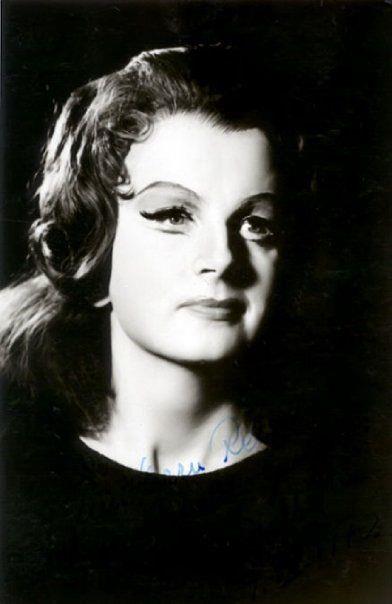
    The Swedish singer Berit Lindholm (above) was one of a group of sopranos – Rita Hunter, Ingrid Bjoner, Caterina Ligendza and Dame Gwyneth Jones were some of the others – who increasingly tackled the great Wagnerian roles as Birgit Nilsson’s career wound down. In 1976 Lindholm sang Brunnhilde in a performance of GOTTERDAMMERUNG at Covent Garden conducted by Sir Colin Davis, and she does quite well by the role, bringing a more feminine and vulnerable quality to her interpretation than Nilsson did. Lindholm reaches a fine peak as Act I moves toward its inexorable climax with the meeting between Brunnhilde and Waltraute, followed by the false Gunther’s rape of the ring.

    Interestingly, though both the recording and the Covent Garden website list Yvonne Minton as Waltraute in this performance, there is some question that she might have been replaced last-minute by Gillian Knight; in fact, some listings for this recording on other releases do show Knight singing Waltraute. A delicious mystery, since whichever mezzo it is is impressive indeed. (I’ve left an inquiry on the Opera Depot listing, perhaps someone can shed further light…)

    Jean Cox certainly has an authentic Wagnerian voice though at times in Act I his singing falls a shade below pitch. The wonderful basso Bengt Rundgren sounds fine as Hagen in Act I, and his half-siblings are Siegmund Nimsgern – later a Bayreuth Wotan – as Gunther, and Hanna Lisowska as Gutrune, a role she repeated at the Met when the ‘Levine’ Cycle was filmed for posterity.

    As an admirer of the Norn scene, I’m very pleased with the three women who sing this fantastic music here: Patricia Payne, Elizabeth Connell and Pauline Tinsley. Ms. Payne is steady and sure of voice and what a delight to hear a future Isolde (Ms. Connell) and Kundry (Ms. Tinsley) in these roles; Ms. Tinsley dips impressively into her chest voice at one point, an unusual and exciting effect.

    Sir Colin Davis builds the great span of the prologue/Act I persuasively; a few minor orchestral blips here and there are barely worth mentioning. Once Waltraute arrives at Brunnhilde’s Rock the conductor attains a heightened level of dramatic intensity and the act ends excitingly.

    Act II opens with the mysterious conversation between Alberich and his slumbering son, Hagen. Zoltán Kelemen, who was Karajan’s Alberich when the conductor inaugurated his RING Cycle at The Met (a project from which the maestro withdrew after the first two operas) makes a fine effect, and Mr. Rundgren maintains his sturdily sung Hagen throughout this act. Jean Cox is very authoritative as he declaims his oath on Hagen’s spear; any misgivings about him from Act I are swept away here. Berit Lindholm may lack the trumpeting, fearlessly sustained high notes of the more famous Nilsson, but her Brunnhilde is exciting in its own right, with her anguished cries of ‘Verrat! Verrat!’ (“Betrayed!”) a particularly strong moment.   

    Whether she is the Waltraute or not, Gillian Knight is definitely one of the Rhinemaidens, joined in melodious harmonies by Valerie Masterson and Eiddwen Harrhy for the opening scene of Act III. There’s some vividly silly giggling from this trio, and Ms. Masterson in particular sounds lovely – an augury of her eventual status as a fabulous Cleopatra.

    Mr. Cox has impressive reserves to carry him thru Siegfried’s taxing narrative – he’s at his best here – and if Ms. Lindholm’s voice doesn’t totally dominate the Immolation Scene, she’s very persuasive in the more reflective passages of Brunnhilde’s great concluding aria. Sir Colin Davis had built the opera steadily and with a sure sense of the music’s architecture; he saves a brilliant stroke for the end of the opera when he does not take the ‘traditional’ pause before the reprise of the ‘redemption thru love’ theme but instead sails forth into it with impetuous fervor.

    There were times while listening to this performance when I wondered if this was a broadcast performance or was recorded in-house. The voices do not always have the prominence we associate with broadcast sound, but perhaps the micorphones were oddly placed. At any rate, GOTTERDAMMERUNG has again made its mark as the culmination of the great drama of The RING.

  • At Home With Wagner II

    Wagner-02

    More Wagnerian treats have come my way, thanks to Opera Depot and to Dmitry’s generosity in making me copies. I have a ‘new’ (to me) TANNHAUSER, and an Act I of WALKURE, and a complete GOTTERDAMMERUNG to enjoy on these long Winter afternoons.

    0

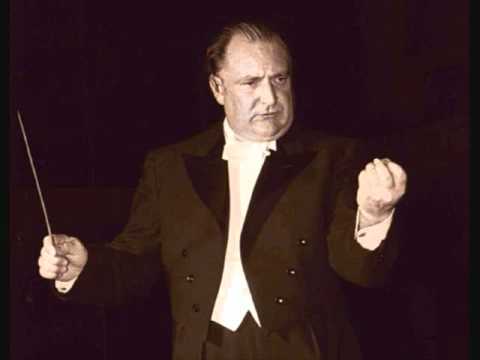
    I played the WALKURE Act I first; it comes (as does the GOTTERDAMMERUNG) from a 1959 Covent Garden RING Cycle conducted by Franz Konwitschny (above). This Cycle does not seem to be readily available in the USA, but it was on special offer at Opera Depot so Dmitry snatched it up since one can never have too many RING Cycles.

    Konwitschny opens with a superbly-paced prelude; it’s slightly on the fast side but gives an uncanny feeling of relentless pursuit: Siegmund is the prey and little does he know that he’ll find shelter in the very home of his pursuer. Ramon Vinay, who sang Siegmund in the 1953 Keilberth RING from Bayreuth, sounds more baritonal here – six years later – and tends he to be a bit more declamatory in his approach. Amy Shuard, who was to be Brunnhilde for Solti at Covent Garden in 1965 seems to me better suited to Sieglinde. She has a nice feeling of womanly lyricism in her voice and is especially moving in the passage where she asks Siegmud to stay with her and await Hunding’s return. Later, Shuard scores again with a wonderfully pensive quality at “O still, lass mich der Stimme lauschen!”. She has a few passing moments of flatness in the middle register, and Vinay is taxed by his final “…Walsungen Blut!” But overall they are quite exciting, and Kurt Boehme is a strong. dark-hued Hunding. Some random off-notes from the orchestra; the sound quality is quite good overall.

    ~~~~~~~~~~~~~~~~~~~~~~~~~~~~~~~~~~~~~~~~~~~~~~~~~~~~~~~~~~~~~~~~~~~~~~~~~~~~~~~~~~~~~~~~~~~~

    Taking a break from the RING, I moved to the 1965 Bayreuth TANNHAUSER. Andre Cluytens gives a well-paced reading of the score, and the sound quality of the recording is more than acceptable. Wolfgang Windgassen, then 50-years-old, takes on the arduous title-role; as he begins to sing there is a sense of strain, but he somehow manages to get the voice in gear and though there are moments when he seems tested, his knowledge of the role and of his instrument manage to sustain him through the first two acts. The strenuous demands of the Rome Narrative sometimes cause the tenor to sound as if he’s at the outer edge of his vocal possibilities, and although he steers thru the music without disaster it’s not pleasant to listen to. The fact that Tannhauser is exhausted and on the brink of madness can serve to cover some of the moments of vocal peril, but in the end it’s not something to listen to more than once. 

    Leonie Rysanek sings with her usual intensity and command of the upper range, and she uses a broad dynamic palette quite impressively. There are moments when she sounds unstable, notably in the Act III prayer which is taken quite slowly. In 1964, the soprano had had something of a vocal crisis which affected her performances in OTELLO and DON CARLO at The Met. At the end of the 1964-65 season she was gone from the Met for nearly a year (including the very Summer of this Bayreuth TANNHAUSER) and when she returned to New York City she seems to have given up nearly all of her Italian roles (aside from Tosca – though she later took on Medea, Gioconda and Santuzza, but not at The Met). She continued to sing Elisabeth in TANNHAUSER for twenty more years, including a stunning performance in San Francisco in 1973, and an impressive Met broadcast in 1982. This Bayreuth ’65 Elisabeth is perhaps not her finest rendering of the role, but it’s pretty exciting nonetheless. 

    Ludmila Dvorakova’s huge, over-ripe sound amply fills the role of Venus though her singing will not be to all tastes, and basso Gerd Neinstedt makes a strong impression as Biterolf in the scene of the song contest.

    Talvela4

    What makes the performance worthwhile are the performances of Martti Talvela (above) as the Landgraf Hermann and Hermann Prey as Wolfram. Talvela is on spectacular form, his commanding voice – marked by just a trace of the vocal ‘whine’ that was something of trademark – is thrilling to hear he welcomes the guests to the Watrburg and sets forth the framework of the contest. It was such a pleasure to hear this voice again.

    H prey

    Hermann Prey (above) as the steadfast Wolfram, who gallantly sets aside his own feelings for Elisabeth in view of her clear preference for Tannhauser, sings with lovely lyricism and expressiveness; a couple of the lowest notes of the Evening Star are a bit of a downward stretch for him, but for tenderness and poetic resonance his is a peerless incarnation of the role. Both Talvela and Prey have voices instantly recognizable, and their contributions to this performance are superb.

    ~~~~~~~~~~~~~~~~~~~~~~~~~~~~~~~~~~~~~~~~~~~~~~~~~~~~~~~~~~~~~~~~~~~~~~~~~~~~~~~~~~~~~~~~~~~~

    Thomas-Marjorie-03[771]

    Back to the ’59 Konwitschny Covent Garden RING Cycle for GOTTERDAMMERUNG in which the first voice we hear is that of Marjorie Thomas (above) as the First Norn. I had not been aware of this singer previously, despite her substantial career, and she makes a wonderful impression in thei opening scene of the RING‘s final opera – a scene I greatly enjoy both for its atmosphere and the vocal opportunities afforded the three singers. Her sister-Norns are Monica Sinclair – a mezzo who later joined Joan Sutherland’s touring Company and whose prodigious breath control makes her an unusually interesting Bradamante on the Sutherland recording of ALCINA – and soprano Amy Shaurd, who doubles as Gutrune here and later went on to sing the Brunnhildes.

    Wagner legends Astrid Varnay and Wokfgand Windgassen pour their hearts out in the prologue duet. Varnay is a soprano I sometimes find oddly matronly and overblown but here she is in very fine voice, moving from strength to strength as the opera progresses. I hear some similarities between her voice and that of Regina Resnik; does anyone else?  Windgassen is unfortunately not at his best in this performance. His voice is unsettled, his phrasing wayward. In this repertoire one has to allow for off-days; it”s just too bad this was a performance being preserved for posterity. Hermann Uhde (Gunter) and Gottlob Frick (Hagen) are simply magnificent, and Shuard is an ample-toned Gutrune, sometimes a shade off pitch.

    Stravinsky_und_boese1

    Ursula Boese (above, with composer Igor Stravinsky) is a rich-toned Waltraute, sometimes putting me in mind of Rita Gorr. Ms. Boese’s voice sometimes takes a moment to tonalize on a given note, giving a slight feeling of pitchiness, but overall she is impressive in her long scene with Varnay.

    Kraus-Otakar-01[Alberich-099]

    As Act II begins, the Czech-born baritone Otakar Kraus (above, great photo as Alberich) sings the role of the dwarf who appears to his son Hagen in a dream, singing with mysterious, haunted tone. This sets the stage for one of the most thrilling readings of the cataclysmic events of this singular Wagnerian act that I have heard. If only Mr. Windgassen had been on peak form on this day, we’d have been left with a veritable masterpiece. The tenor does sing powefully and doesn’t shrink for the demands, but moments of strain and rhythmical variances detract a bit from the overall sweep of the act.

    Th

    Astrid Varnay (above) is simply thrilling in this demanding music; her voice – not so much the timbre but the way she sings – continues to remind me a bit of Resnik. The top is earth-shattering and her expressively dramatic vocal thunderbolts are astounding in their bright, steady power. Along with her 1953 ELEKTRA this is my favorite Varnay recording I’ve heard to date. Gottob Frick is imperterbably sinister and grand as Hagen, and if the notion that Gunther’s undoing could be described as heartbreaking, you hear it magnificently here in Hermann Uhde’s uncanny vocal portrayal.

    I’ll confess to skipping over some of the final act, since Windgassen is so out-of-sorts. The Rhinemaidens – led by the girlish-sounding Joan Carlyle singing along with star-in-the-making Josephine Veasey and Marjorie Thomas, who fills out her evening by adding the third Rhinemaiden to her First Norn.

    Varnay’s Immolation Scene begins triumphantly. The diva is in huge and secure voice, and her characteristic tendency to sometimes approach a high note from below doesn’t bother me, since she always gets where she’s going eventually. In her deeply felt and lyrical singing of “Wie Sonne lauter strahlt mir sein Licht…” Varnay wins my heart entirely. A bit later though there is a jarring parting of ways between singer and orchestra: Varnay seems absolutely in the right to my ears (not having a score to hand), but a few measures of musical mayhem ensue before things are set to rights. Thereafter traces of fatigue creep into the soprano’s vocalism, but by this time she’s delivered so much marvelous singing that we can’t help but be swept away in admration for her overall performance.

  • Samurai Sword Soul: UTSUYO KAKURYO


    BRI_3771-Edit-17-L

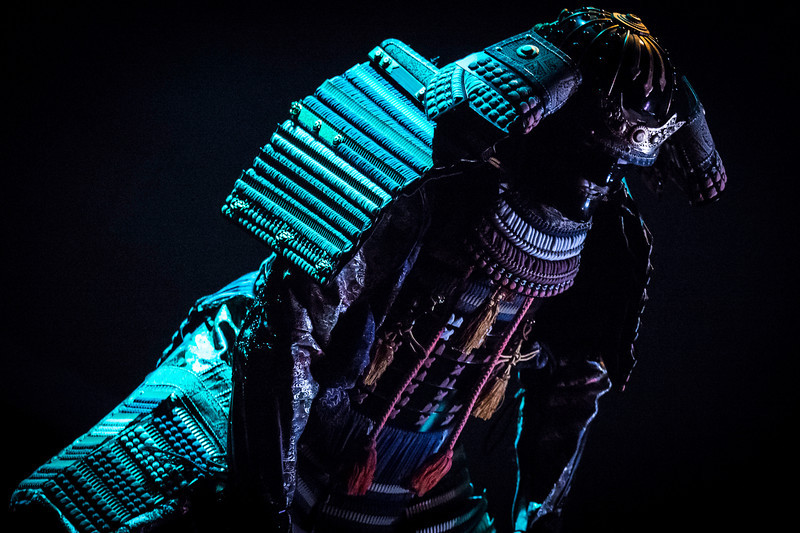
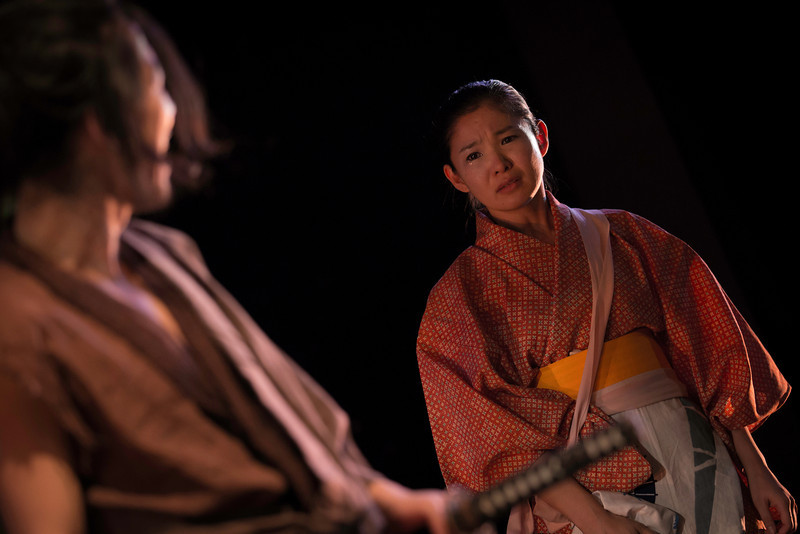
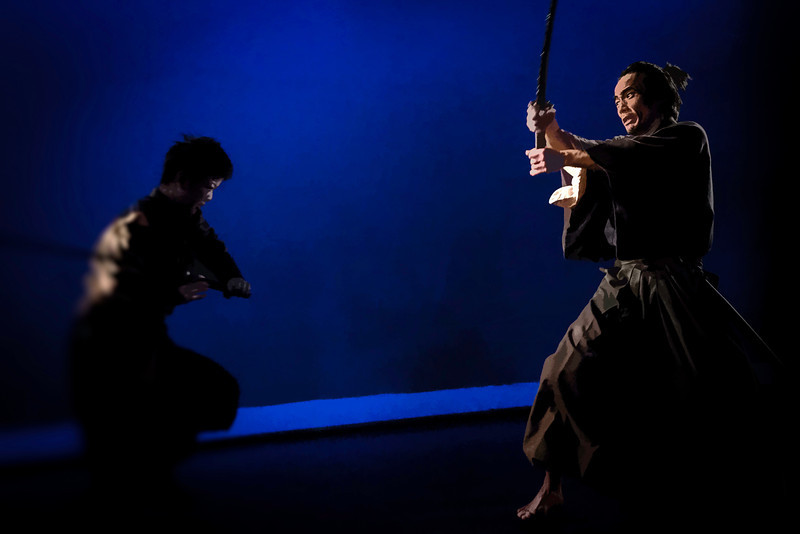
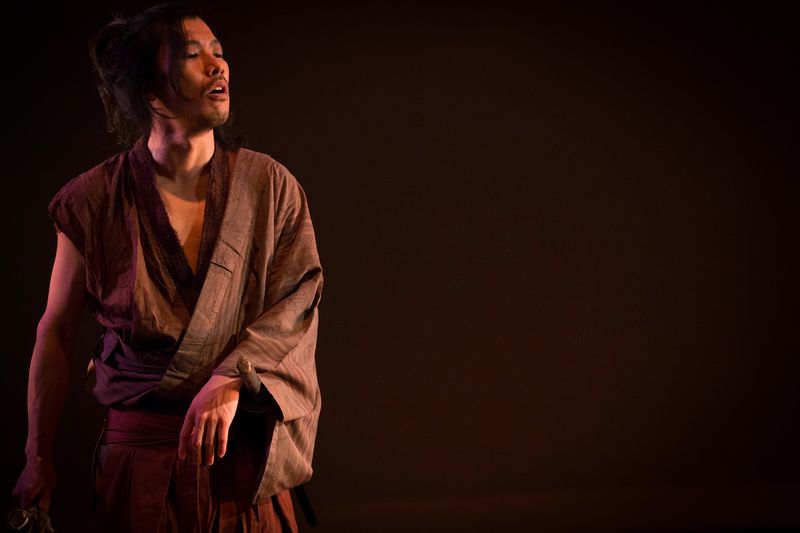
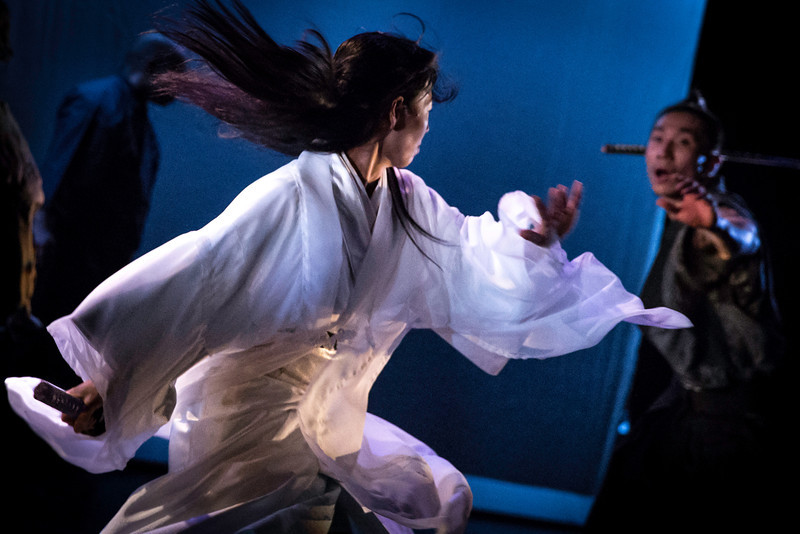
    Samurai Sword Soul, celebrating their tenth anniversary, are presenting UTSUYO KAKURYO: PASSING BY THE OTHER SHORE at the HERE! Theater.

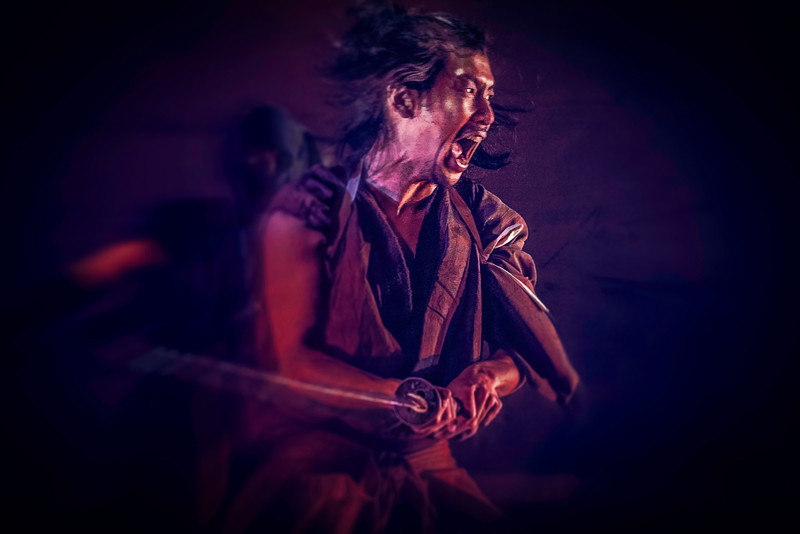
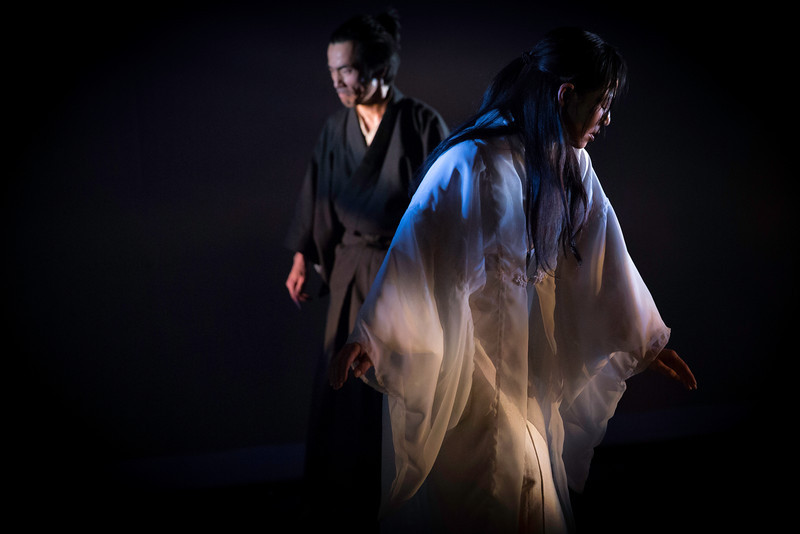
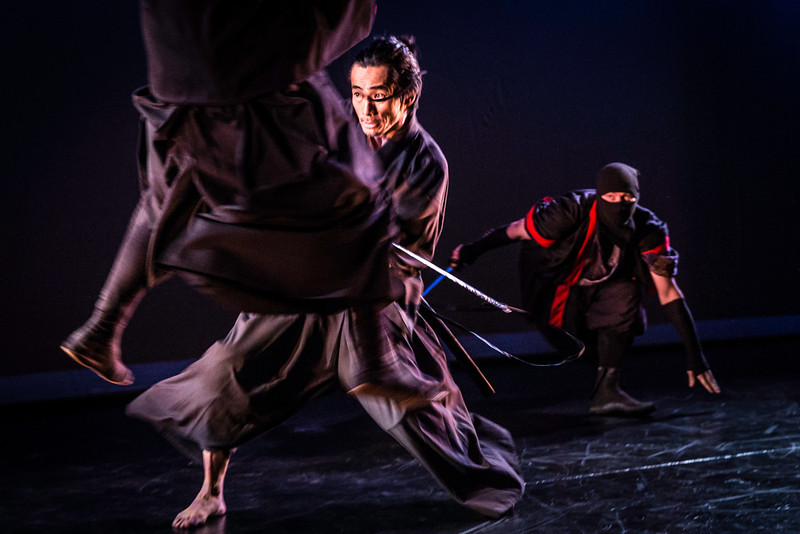
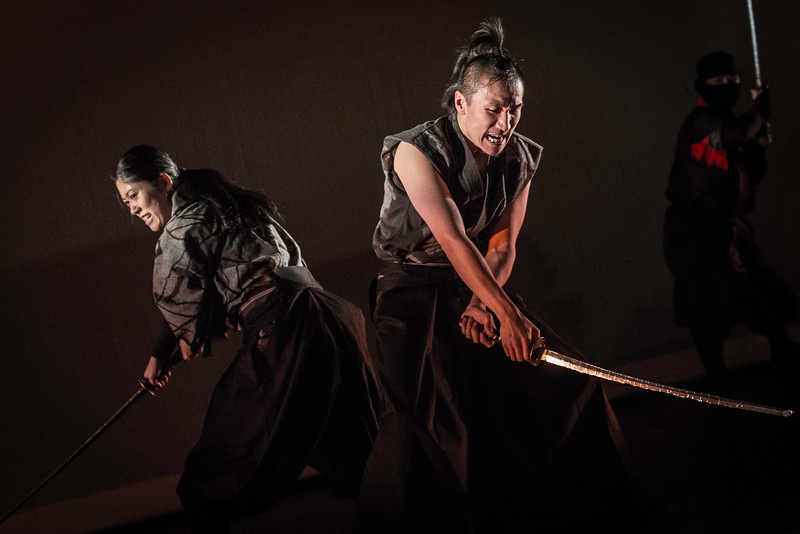
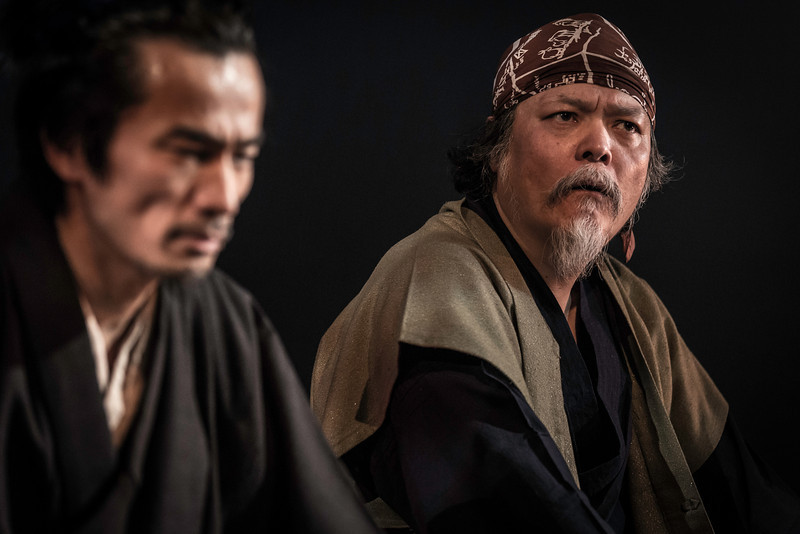
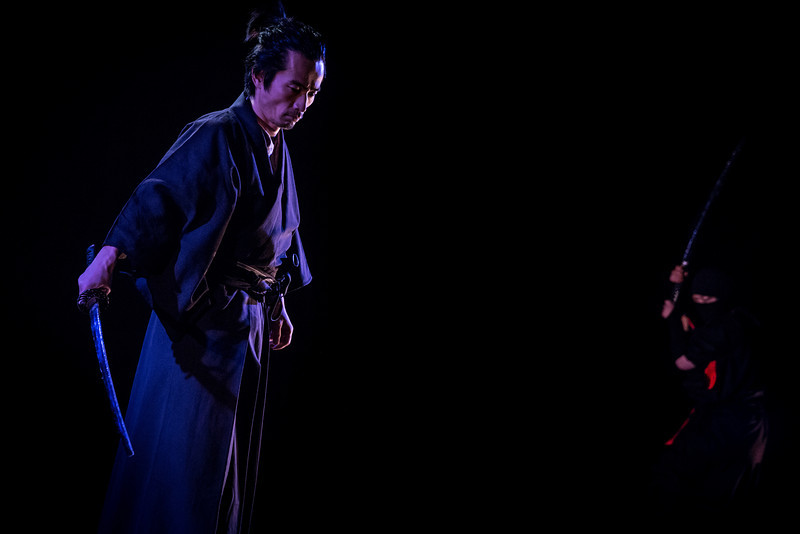
    Photographer Brian Krontz and I attended the dress rehearsal where Brian shot these production images. The play, performed in Japanese with English titles, combines elements of dance, sword-fighting, film, and Bunraku puppetry in a story that is part domestic drama and part morality play. It’s also something of a ghost story, and is peopled by Ninjas and wandering warriors. Honor, factional conflict, and revenge are major themes, and the tale unfolds with humorous interjections as the characters make life-or-death decisions.

    BRI_5093-26-L

    Above: Yoshi Amao is the founding force behind Samurai Sword Soul

    A

    Above: some of the actors involved in the narrative are (left to right) Lisa Itabashi, Yu-Taniguchi, Jiro Ueno, Shieri Yamafuji, Asuka Morinaga, Atsunori Umihei Hiyamizu, and Koji Nishiyama.

    Following are some of Brian Krontz’s images from the dress rehearsal. Click on each photo to enlarge:

    BRI_4305-Edit-2-Edit-Edit-19-L

    Yoshihisa Kuyama, as a wandering rogue warrior

    BRI_3897-12-L

    Yoshi with Takemi Kitamura, a beauteous spirit

    BRI_3498-2-L

    Beware the Ninja!

    BRI_3597-4-L

    Lisa Itabashi and Jiro Ueno

    BRI_3823-11-L

    Yoshi Amao

    BRI_3835-Edit-22-L

    Yoshi’s the victor…but the fight is far from over

    BRI_3620-5-L

    Lisa Itabashi

    Bri_3614-1a

    Atsunori Umihei Hiyamizu

    BRI_4130-15-L

    Lisa Itabashi and Koji Nishiyama

    BRI_3987-13-L

    Yoshi with Jiro Ueno

    BRI_4074-14-L

    Asuka Morinaga

    BRI_4708-Edit-Edit-18-L

    Above: Yu-Taniguchi and Yoshi Amao

    B

    Yoshihisa Kuwayama

    BRI_4811-20-L

    Takemi Kitamura

    BRI_4856-23-L

    Umihei and Takemi

    BRI_4948-24-L

    Apparition

    BRI_3734-10-L

    Yoshi Amao

    All photography by Brian Krontz.

  • At Home With Wagner

     Richard_wagner2

    Thanks to my friend Dmitry, I’ve added some exciting Wagner performances to my CD collection over the past few weeks: parts of two historic RING Cycles, a 1976 Met broadcast of LOHENGRIN conducted by James Levine (I was there!), and a surprisingly thrilling Act I of WALKURE from Hamburg 2008, conducted by Simone Young.

    Keilberth

    Chronologically the earliest of these acquisitions – the WALKURE, third Act of SIEGFRIED, and GOTTERDAMMERUNG – come (in surprisingly good sound) from the 1953 Bayreuth Festival. These are conducted by Josef Keilberth (above) who shared the RING podium duties with Clemens Krauss at the ’53 festival. The Krauss Cycle has been isssued commercially and is considered legendary; Keilberth’s 1955 Cycle is also available (from Testament) but this ’53 Keilberth seems a real rarity, at least here in the USA (I’ve seen import copies selling for $300+, while Dmitry and I found it at Opera Depot for considerably less).

    Dmitry gave me the GOTTERDAMMERUNG first and it’s a tremendous performance; this prompted me to ask for more and I’m really pleased with what I’m hearing. Keilberth is grand but never ponderous; his Twilight of the Gods unfurls like a magnificent sonic banner. The maestro has a powerhouse cast to work with.

    Martha-Modl

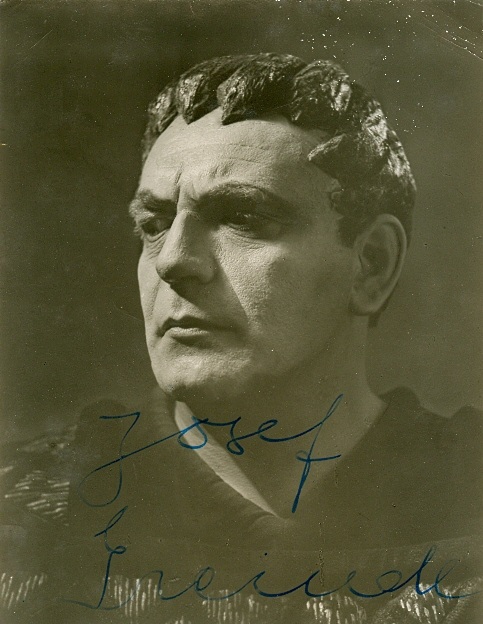
    I’ve never ‘gotten’ Martha Modl (above) until very recently, but she’s teriffic here as Brunnhilde. Her voice production reminds me somewhat of Irene Dalis’s. Modl’s flaming intensity and the colour and vitality of her singing are something to hear. Wolfgang Windgassen meets the huge demands of Siegfried with tireless power and is a good match for the soprano in terms of vocal generosity. A splendid Hagen from the Josef Greindl bristles with black-hearted malevolence, and in the most thrilling rendering of the role of Gunther that I’ve ever experienced, Hermann Uhde is overwhelming. With her rather odd tmbre, Natalie Hinsch-Grondahl nevertheless makes a mark as Gutrune. Ira Malaniuk’s superb singing as Waltraute makes me wish her long scene was even longer, and the mezzo is also a distinguished Second Norn in the prologue where she is joined by Maria von Ilosvay and then-soprano Regina Resnik.
    6186

    Back-tracking, I then took up the WALKURE from the same 1953 Keilberth RING and was again impressed by the immediacy of the sound. Herr Greindl (above) is again in cavernous voice, this time as Hunding. Regina Resnik and Ramon Vinay are the strong-voiced Walsung twins, though neither attain the heights that others have in this passionate music. The tenor’s baritonal sound  is sturdy but not particularly poetic and at one point the prompter gets involved, feeding him lines word for word. Miss Resnik gets lost at one point and her highest notes show a very slight sense of discomfort; her decision to switch to mezzo was a brilliant move and sustained her career for many years. In spite of these minor misgivings, Resnik and Vinay keep the temperature of the drama high, and Keilberth steers us thru the first act with true surety of hand.

    Hotter

    Hans Hotter (above) opens the second act grandly, and this performance shows why his Wotan was considered a revelation. Both in terms of godlike vocal heft and wonderfully nuanced shaping of the text, Hotter’s monolog is a masterpiece. Martha Modl flashes thru a spirited Ho-Jo-To-Ho though surprisingly later in the act, after the annunciation of death, she seems to tire a bit as she assures Siegmund she’ll protect him in the coming battle. Ira Malaniuk is a particularly fine Fricka; she doesn’t wheedle or whine but deals from the strength of her rightness. She is vocally so pleasing to experience, the registers even and the timbre filled with feminine dignity. Resnik and Vinay are effective here as the desperate lovers, seeking escape…waching over his sleeping sister-bride, Vinay finds the tenderness of the character. Resnik lets out a blood-curdling scream when Hunding strikes Siegmund dead. Hotter’s contemptuously whispered dismissal of Hunding followed by his towering rage as he sets out to punish Brunnhilde end the act with a veritable bang.

    In the Ride of the Valkyries, the sopranos swoop upward at will, not always in unison. Resnik handles the great scene of Sieglinde’s blessing of Brunnhilde quite exctingly; Hotter storms in and rages at his daughters who finally flee in terror. And then, starting with Brunnhilde’s ‘War es so schmalich’ the performance becomes something else altogether.

    Modl finds the magic that made her GOTTERDAMMERUNG so spell-binding, and Hotter is simply magnificent. The sound quality is pretty remarkable and the two singers give a performance that ranks wth my greatest experiences in 50+ years of listening to opera. Modl begins Brunnhilde’s self-defense with colours of deep despair, slowly gaining self-confidence. When she courageously tells her father that Sieglinde now keeps the sword Nothung, Hotter thunderoulsy reminds her “The sword that I shattered!!” Hotter outlines the punishment Brunnhilde will face; her pleading with him not to humiliate her is in vain. But Modl’s last desperate and gloriously sung passage finally wins the day; Hotter opens the floodgates and hs entire final scene is both vocally thrilling and wrenchingly expressive of a father’s longing and grief. Adjectives become superfluous on hearing this kind of vocalism.

    The third act of SIEGFRIED from this cycle is very exciting, commencing with Hotter’s majestic summons of Erda. As the act proceeds, it seems the great bass-baritone’s voice was recorded in a rather odd, somewhat echo-chamber acoustic. It doesn’t deter from his performance in the least, but it’s not quite as pleasing to listen to as the WALKURE. Maria von Ilosvay is a firm-toned and not overly weighty Erda; like her colleague Ira Malaniuk, Ilosvay seems largely to have been forgotten these days, which is a shame, It’s a wonderful voice. Windgassen arrives for his confrontation with his grandfather in fine vocal fettle; the two long-standing colleagues play up the dark humour of their banter at first, but after Siegfried puts Wotan in his place by breaking the spear, the once-powerful god slinks away in shame. Windgassen manages to hold his own against the fresh-voiced Modl, awakening as Brunnhilde and singing with remarkable intensity: despite her successful but less-than-blooming forays to the high-Cs, Modl’s voice is both maternal and seductive, with an unsettlling sexual sorcery in her timbre that makes it utterly distinctive.

    Overall this Keilberth cycle is fascinating in so many ways and seems to have caught the singers mostly at their peaks. I suppose I’ll want to eventually have the RHEINGOLD also. 

    ~~~~~~~~~~~~~~~~~~~~~~~~~~~~~~~~~~~~~~~~~~~~~~~~~~~~~~~~~~~~~~~~~~~~~~~~~~~~~~~~~~~~~~~~~~~
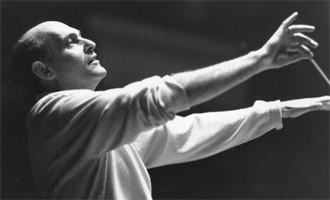
    Solti-conducting3

    From London’s Royal Opera House comes a RING Cycle conducted by Sir Georg Solti (above), from which the WALKURE (in very good sound) makes a strong impression, notably in the radiant singing of Dame Gwyneth Jones as Sieglinde. Apart from Ernst Kozub as Siegmund, the principals are all from the Royal Opera “home team”. Mr. Kozub is bright-voiced and steady, and Dame Gwyneth – just coming into fame – is already showing signs of the great Wagnerienne she was to become. Michael Langdon’s powerful Hunding anchors the first act, excitingly led by Solti.

    Amy Shuard is a bit uneven as Brunnhilde though overall she makes a positive impression; a bit of flatness here and there – most notable in the early pages of the Todesverkundigung – is offset by her bright Battle Cry and her moving singing of the opera’s final scene. Josephine Veasey starts off as a rather ladylike Fricka, but she soon works herself into a fine fettle of self-righteous indignation and casts off vivid dramatic sparks, her vocalism fervent and secure.   
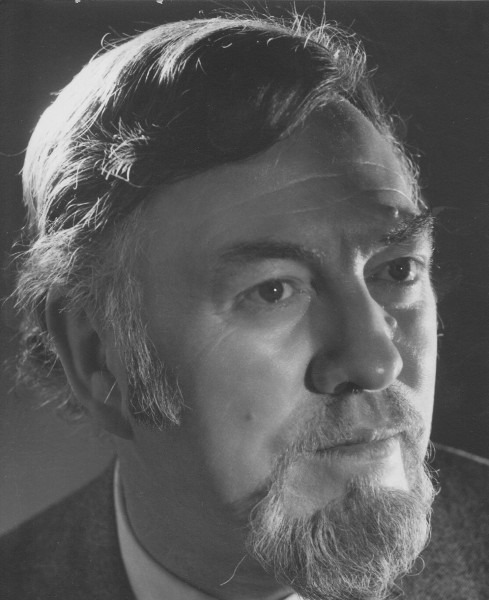
    347

    It is especially gratifying to hear David Ward (above) as Wotan. I still vividly recall hearing him as The Dutchman on a Met broadcast in 1965 opposite Leonie Rysanek. I love his Wotan here for its humanity. Ward is more a lyrical than a thunderous singer, and his bass-oriented sound give him a solid springboard thru the music. His monolog is intense and personal, with a miraculous reflective piano on “Das ende!” while his choked whisper of “Geh!” as he dispenses with Hunding at the close of Act II is breath-taking. Ms. Shuard is at her best as she joins Mr. Ward for the opera’s final scene: their exchanges have an intimate feel, dynamically subtle and with deep undercurrents of heartache. Pleading to be spared dishonor, Ms. Shuard’s feminine urgency spurs the bass-baritone on to a wonderful outpouring in “Leb wohl, du kunhes, herrliches Kind!”. Later, Mr. Ward’s great tenderness as he quietly kisses Brunnhilde’s godhood away is so moving. Sir Georg, on the podium, cuts a majestic path thru this glorious score.

    ~~~~~~~~~~~~~~~~~~~~~~~~~~~~~~~~~~~~~~~~~~~~~~~~~~~~~~~~~~~~~~~~~~~~~~~~~~~~~~~~~~~~~~~~~~~

    The 1976 series of LOHENGRINs at The Met marked Maestro Levine’s first experiences of conducting this opera in the House; he moulds the great arcs of music, from the ethereal to the thunderous, with grandeur; and his violins underline the great confrontation between Elsa and Ortrud with furiously driven playing.
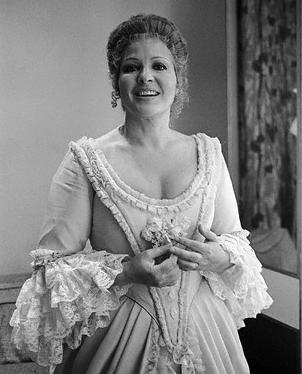
    Pl

    Pilar Lorengar (above) was a rapt, visionary Elsa, and her silvery and utterly feminine sound projected clearly into the great hall, cresting the ensembles radiantly. Rene Kollo in his debut role as Lohengrin (he sang only one other role at The Met: Bacchus in ARIADNE AUF NAXOS) sounded splendid in the House (yes, I was there!) though the recording shows some chinks in the vocal armor which the unforgiving mikes pick up. Still, it’s an impressive rendering of the music, especially his poetic ‘In fernam land’. Mignon Dunn sings with thrilling passion as Ortrud, meeting all the demands of what is essentially a dramatc soprano role. In the house, Mignon was made a tremendous impact with her acting, especially her raging discomfort at having to carry Elsa’s train during the bridal procession. Unable to contain her bitter fury, she breaks free and lashes out at her virginal rival in a confrontation that brought the performance to the boiling point. Donald McIntyre’s powerful Telramund and Allan Monk’s sturdy Herald make strong impressions, and Bonaldo Giaiotti (a great favorite of mine, presently celebrating his 80th birthday) is a splendid-sounding King Henry.

    Metropolitan Opera House
    December 4, 1976 Matinee Broadcast

    LOHENGRIN
    Wagner

    Lohengrin...............Rene Kollo
    Elsa....................Pilar Lorengar
    Ortrud..................Mignon Dunn
    Telramund...............Donald McIntyre
    King Heinrich...........Bonaldo Giaiotti
    Herald..................Allan Monk
    Gottfried...............Rex James
    Noble...................Robert Goodloe
    Noble...................Andrea Velis
    Noble...................Philip Booth
    Noble...................Charles Anthony

    Conductor...............James Levine

    ~~~~~~~~~~~~~~~~~~~~~~~~~~~~~~~~~~~~~~~~~~~~~~~~~~~~~~~~~~~~~~~~~~~~~~~~~~~~~~~~~~~~~~~~~~~
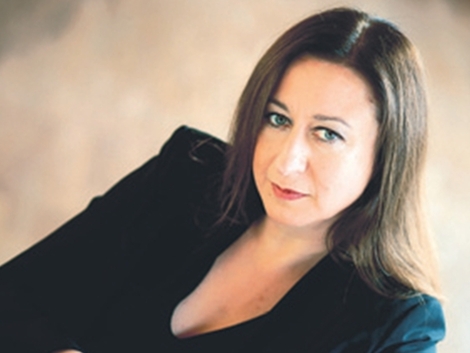
    Young

    The single act of the Hamburg WALKURE literally knocked me for a loop on first hearing; I’d never given Simone Young (above) much thought as a conductor, but from now on I’ll need to. She makes this thrice-familiar music sound incredibly fresh and alive. Her trio of singers, while perhaps unlikely to go into the history books alongside such names as Lehmann, Melchior, Rysanek or Vickers, are superbly tuned into both the music and the words. Following Young’s lead, they seem to give a feeling of music that is newly-discovered. Yvonne Naef’s Fricka and Waltraute at The Met in 2009 RING Cycles (the last performances of he “Levine” RING) were especially memorable in my view. There was some talk of her possibly taking on the Brunnhildes at one point, but she was probably wise to resist (exciting as the prospect would have been). Here she is a vivid Sieglinde, her middle voice and parlando so persuasive – the role lies right in her comfort range – and her top rings out excitingly. The sound of Stuart Skelton’s voice may not be intrinsically beautiful, but he is a strong and verbally alert singer, bringing some imaginative colours to his music. His cries of “Walse! Walse!” are steady and sustained, and he shows a sense ofSiegmund’s poetic side, long-buried in the hardships the Volsung has faced in his life. Mikhail Petrenko is a more lyrical Hunding than we usually hear; he sings well and fits finely into Young’s vision of the act. There are many felicitous passages in the conductor’s scheme of things, with a particular ‘lift’ of the tempo after Sieglinde concludes “Der manner sippe” that really took my breath away.

    After a lapse of ten days, I played this WALKURE Act I again just to be sure it was as good as I thought it was. It’s even better on second hearing, with some really fine playing from the individual instrumentalists. The singers and conductor make this very familiar music feel startlingly vivid. What more could we ask?

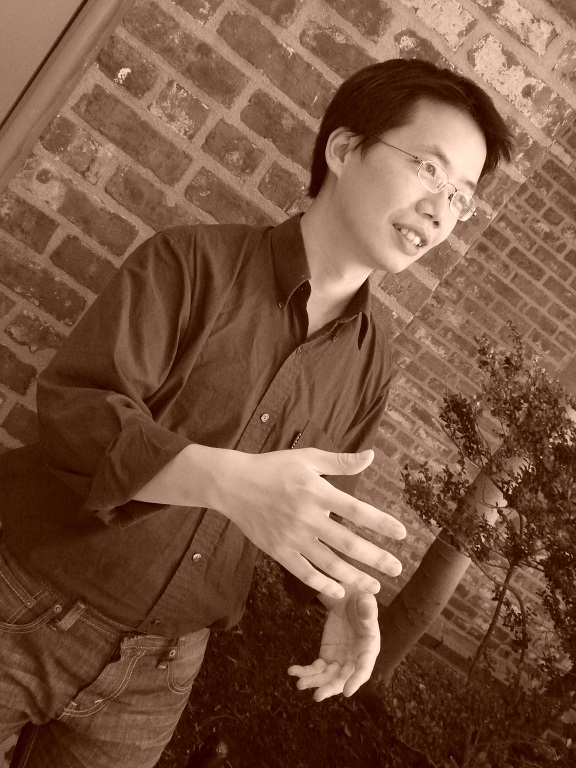
  • CLEMENZA DI TITO @ The Met

    Clemenza.0405.01

    Tuesday November 20, 2012 – The Metropolitan Opera’s current revival of their classic Jean-Pierre Ponnelle production of Mozart’s LA CLEMENZA DI TITO is a joy both to the ear and the eye. Marty Sohl’s production photo (above) illustrates the fantasy mixture of ancient Roman and baroque stylistic elements that give the sets and costumes their timeless visual appeal.
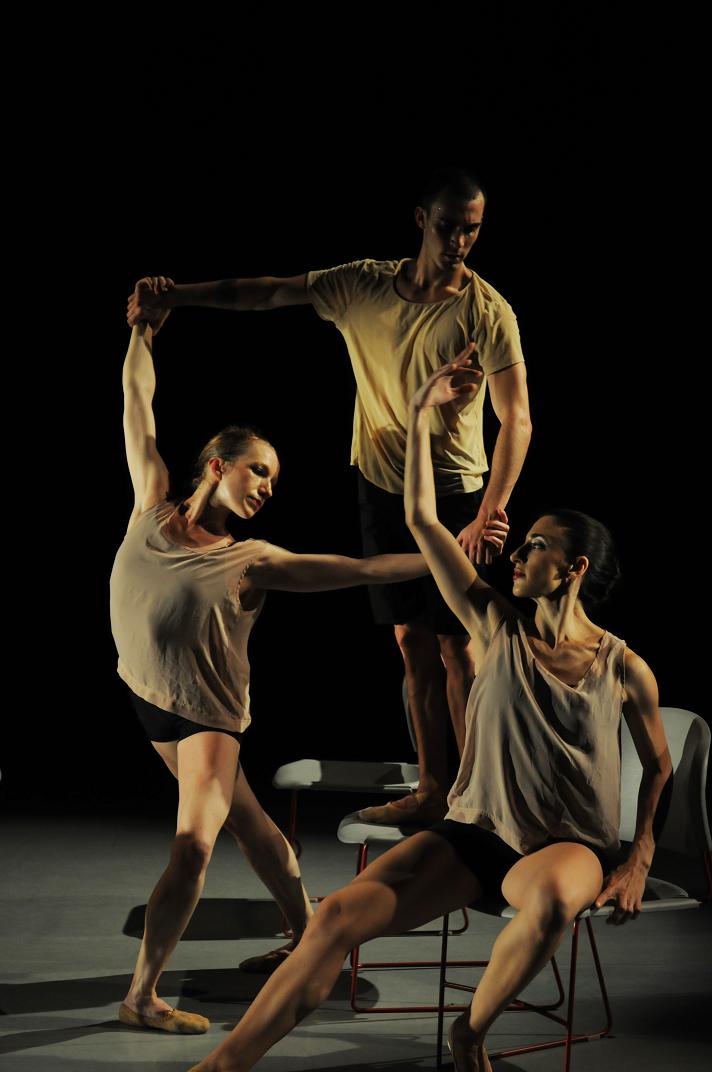
    Tonight, Harry Bicket led a sterling performance, with excellent continuo playing from Bradley Brookshire (harpsichord) and David Heiss (cello) as well as spectacular woodwind solos in two of the opera’s iconic arias: Andrew McGill (clarinet, in “Parto, parto”) and James Ognibene (basset horn, in “Non piu di fiori”). Mr. Bicket’s vivid pacing and his sense of the music’s flow put the singers in high relief; there were three outstanding vocal performances and overall it was one of the most satisfying evenings at The Met in recent seasons.

    Kate lindsey

    To think that I almost skipped this revival! But a chance to hear Kate Lindsey as Annio was not to be missed, and the beauteous young mezzo (above) gave an immaculate performance, her lithe figure and ease of movement onstage enhancing her interpretation at every turn. Like many of her predecessors in this fach, Kate spends a lot of her onstage time in trousers (she’ll debut at Glyndebourne as the Composer in ARIADNE AUF NAXOS in the coming year). Her singing tonight was pristine, with a particularly ravishing piano passage in “Tu fosti tradito” that would melt the coldest heart.  

    Gf

    With his noble and expressive face, Giuseppe Filianoti (above) made a splendid impression as Tito. His singing was clear and mellifluous, the words poetically delivered. The tenor finely delineated the emperor’s dilemma in dealing with his betrayal by his friend Sesto: should friendship trump justice? When I last heard Mr. Filianoti in the house, he was dealing with health issues, so it was really very pleasing to hear him on such beautiful vocal form tonight.

    Garanca

    Somehow I’ve managed not to encounter a live performance by the Latvian mezzo-soprano Elina Garanca (bove) up til now. I first heard her voice on a recording my friend Mollie sent me from the 2001 Cardiff Competition. Garanca has since developed into a world-class artist and after hearing her as Sesto tonight, she’s on my A-list of singers. Both in terms of vocal appeal and technical accomplishment, this was a stunning performance: Garanca’s voice is all of a piece, and she moves it thru the registers seamlessly. After a profoundly expressive rendering of the openng passages of the great aria “Parto, parto” Ms. Garanca sailed through the whirlwind coloratura flourishes of the aria’s later pages with nimble assurance. Later, as she knelt to invoke the strength to carry out her assassination of Tito, she summoned an amazing degree of projection, the voice sailing into the hall with startling force. In her second spectacular aria “Deh per questo istante solo”, the mezzo soprano coloured the voice movingly, reflecting the character’s anguish and also his stalwart refusal to implicate Vitellia in the crime. Ms. Garanca’s entire performance was a revelation.

    Barbara Frittoli, an unforgettable Desdemona at the Met in 1999, has more recently found considerable success in singing Mozart since she did her voice some damage during the first decade of the 21st century by singing music that was too heavy for her. Her canny manipulation of dynamics usually prevents her widening vibrato from becoming too prevelant. But for all her attractive qualities, Vitellia’s great aria “Non piu di fiori” simply lies too low for Ms. Frittoli to make her finest effect in the music. Vitellia in fact can be sung by a mezzo, except for that thorny top-D that Mozart threw into the act I trio, a note that eluded Ms. Frittoli tonight. Nevertheless, the soprano kept up her side of things all evening and the audience enjoyed her sometimes over-the-top dramatic portrayal.

    Lucy Crowe as Servilia is a pretty girl with luminous eyes and a pleasing lyric timbre. In his search for a wife, Tito’s first choice – Servilia – might have made him quite happy, especially with Ms. Crowe’s buxom grace and girlish smile.

    A wonderful Met evening, then, and there was every reason to stay to the end and shout’ bravi’ as the singers took their bows to sustained applause.

    Metropolitan Opera House
    November 20, 2012
    LA CLEMENZA DI TITO
    Mozart

    Tito.......................Giuseppe Filianoti
    Vitellia...................Barbara Frittoli
    Sesto......................Elina Garanca
    Servilia...................Lucy Crowe
    Annio......................Kate Lindsey
    Publio.....................Oren Gradus
    Berenice...................Toni Rubio

    Bradley Brookshire, Harpsichord Continuo
    Anthony McGill, Clarinet Soloist
    James Ognibene, Basset Horn Soloist
    David Heiss, Cello Continuo

    Conductor..................Harry Bicket

  • Gathering of Stars

    Requiem + renata

    Nicolai Ghiaurov, Fiorenza Cossotto, Renata Tebaldi, Leontyne Price and Carlo Bergonzi backstage at Carnegie Hall following a performance of the Verdi REQUIEM in 1964. Price, Cossotto, Bergonzi and Ghiaurov were the soloists, and Tebaldi was visiting her colleagues in the green room after the performance. Herbert von Karajan conducted.

  • Lydia Johnson Dance @ Peridance – Part 3

    Copy of 36

    Above: Reed Luplau of the Lar Lubovitch Dance Company in a guest appearance with Lydia Johnson Dance @ Peridance. Photo by Kokyat.

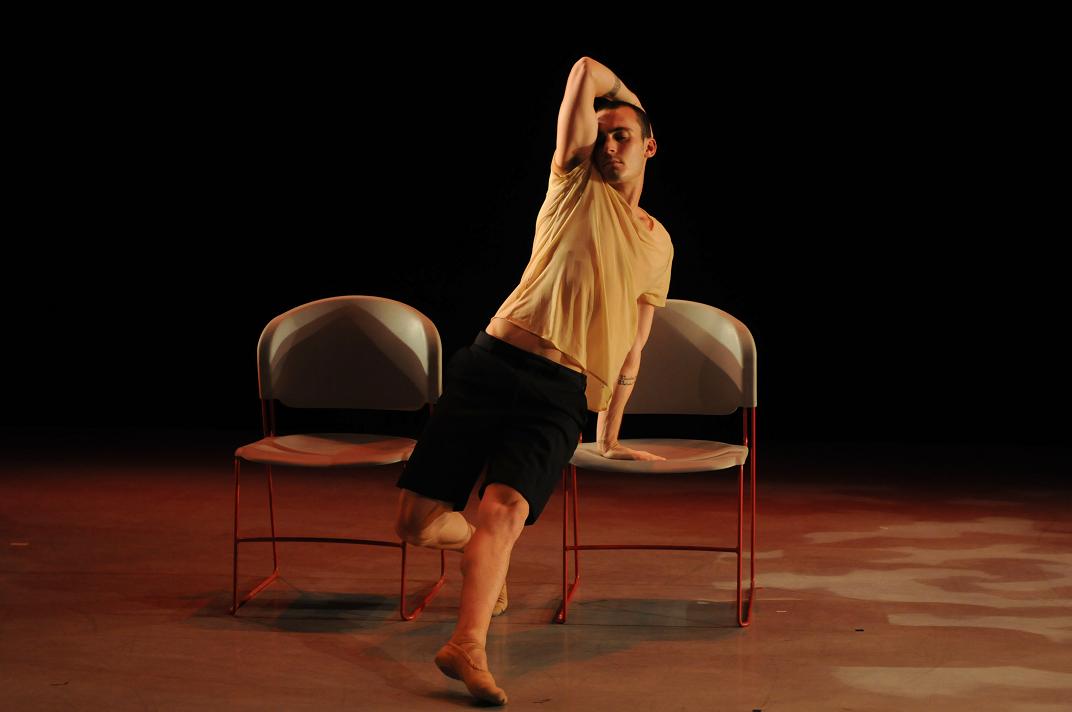
    Haunting and unique, Lydia Johnson’s SUMMER HOUSE is set to chamber works by Philip Glass. In this dreamlike piece, a man and three women recall a period of time spent together in a small Summer cottage far from the world’s hustle and bustle. There is no set narrative, and we do not know who these people are or how they came to be in the same space at the same time. Cross-currents of desire, despair and jealousy weave thru the dance though we can never be sure whose point of view we’re experiencing at a given moment. Thus SUMMER HOUSE leaves much to the imagination of the viewer, and for me – who once spent a marvelous summer in an old Victorian house on Cape Cod – it stirs up all sorts of memories.

    Copy of 2

    Reed Luplau gives a deeply poetic performance in SUMMER HOUSE. Though he interacts with each of the three women, there’s no way of telling where his heart lies; it may in fact lie elsewhere altogether. Reed uses his entire body as an expressive instrument, keeping the physicality of the movement ever-flowing and with his beautiful face illuminated by the emotional colours of the music.

    Copy of 58

    The three women dancing in SUMMER HOUSE – Laura DiOrio, Lisa Iannacito McBride and Jessica Sand – are steeped in Lydia Johnson’s style. Maintaining the mystique that surrounds the piece, we do not know if the girls are sisters, longtime friends or simply strangers who have come together for a brief span of time. Though each relates to the male character individually, there’s also an undeniable bond between the three of them. Thus another layer of enigmas wraps itself around the SUMMER HOUSE. The questions remain unanswered as the lights fade at the end.

    Here are some of Kokyat’s images from SUMMER HOUSE:

    Copy of 9

    Jessica Sand & Lisa Iannacito McBride

    Copy of 21

    Laura DiOrio & Reed Luplau

    Copy of 37

    Reed Luplau

    Copy of 50

    Reed Luplau, Jessica Sand

    Copy of 70

    Laura DiOrio, Lisa Iannacito McBride, Jessica Sand

    Copy of 86

    Reed Luplau

    Copy of 80

    Reed Luplau

    Copy of 92

    Reed Luplau

    Copy of 104

    Laura DiOrio, Reed Luplau

    Copy of 133

    Laura, Reed & Lisa

    Copy of 142

    Copy of 81

    Reed Luplau in Lydia Johnson’s SUMMER HOUSE. Reed will soon be appearing in the feature film FIVE DANCES, written and directed by Alan Brown.

    All photos by Kokyat.

  • ABT BAYDERE: Semionova/Hallberg/Seo

    Polina-semionova-2012

    Saturday May 26, 2012 evening – Following her memorable performance in SWAN LAKE last season at ABT, I was keen to see Polina Semionova (above) again. Tonight she danced Nikiya in LA BAYADERE with the Company for the first time, partnered by premier danseur David Hallberg. It was a performance I’d been anticipating for a long time and it was well worth the wait.

    The House, though better-populated than at the week’s earlier performance, was far from full. Some idiot brought a baby…WTF? After some whimpering in Act I, the kid konked out for Act II; then she took him home. What was the point?  People are so vain and thoughtless.

    DavidHallberg

    David Hallberg (above) now bestrides the dance world like a colossus – and a very elegant colossus at that. His dancing was splendid of course, with his stretched-out jetés and his imperial line. What struck me most about David’s performance tonight was the depth of poetic resonance that shone thru in his every moment onstage. He’s always had a beautiful presence onstage but it seemed to me that he’s now more intense in his emotional focus and superbly responsive to the dramatic nuances of the role. 

    Ms. Semionova is a thrilling Nikiya, her impeccable technique and supremely lissome physique investing her performance with a very personal radiance. From her first entrance it was clear we were in for a fascinating embodiment of the role. For all the inspired dancing that Semionova and Hallberg gave us tonight, it was the electrifying chemistry of their partnership that put the performance in that rare echelon of great evenings of dance. Right from their first encounter, the tenderness and steadfastness of their forbidden love gave the evening a vibrant romantic quality, reaching its apex in their reunion in the Kingdom of the Shades. The cares and concerns of the daily world fell away as we watched them dancing together.

    Hee Seo, a lovely Nikiya earlier in the week, was tonight appearing as Gamzatti. She gave an impressive performance despite a momentary lapse at the end of the fouette passage. A great beauty, Seo held the stage well, uneclipsed by the star-power of the Semionova/Hallberg duo. Joseph Phillips danced brilliantly in the Bronze Idol solo, effortlessly filling the stage with his leaps and turns. In a particularly appealing trio of Shades, Luciana Paris, Maria Riccetto and Yuriko Kagiya danced superbly and were well-contrasted in personality, each exuding her own perfume. Bravissimi!