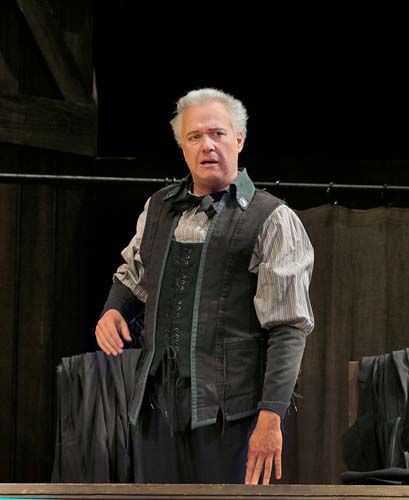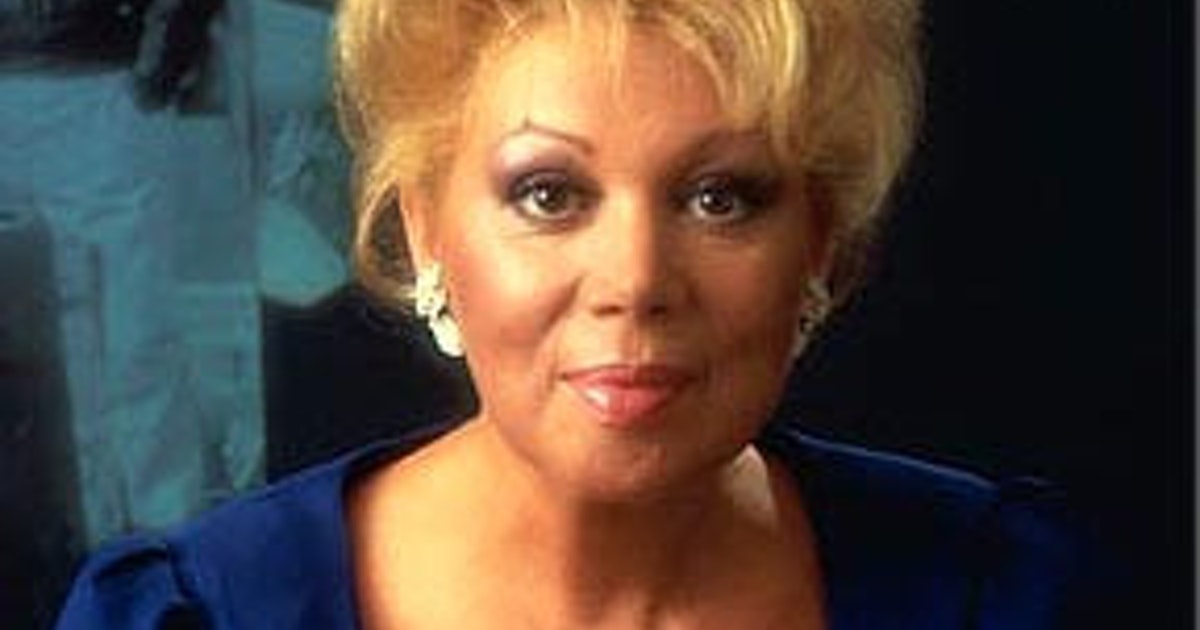
Category: Uncategorized

  • Grigorian/Tetelman BUTTERFLY @ The Met ~2024

    (Rescuing from Oberon’s Grove this article about a Metropolitan Opera MADAMA BUTTERFLY in 2024 that introduced me to two exciting singers: Asmik Grigorian and Jonathan Tetelman.)

    Grigorian tetelman

    Above: Asmik Grigorian and Jonathan Tetelman; photo by Evan Zimmerman/MET Opera

    Author: Oberon

    Saturday May 11th, 2024 matinee – An almost completely different cast from my BUTTERFLY earlier in the current Met season brought me back to my score desk today. My Met history with this opera goes all the way back to the Old Met where, in 1965, I saw the last Butterfly of the renowned Puccini specialist, Licia Albanese

    One might think that, after 60 years of Butterflies, I would have developed an immunity to the title-character’s heartbreak. But it’s an opera that can still move me to tears; this afternoon’s performance was one that touched me deeply, and for so many different reasons. Up at my score desk, I could not see the stage, but I really didn’t need to…I could imagine everything that was happening, and feel the emotions of the characters as the story evolved. 

    The guiding light of this performance was Xian Zhang, the diminutive conductor who, two evenings ago, led – on very short notice – a deeply satisfying Brahms REQUIEM at Carnegie Hall. The MET orchestra sounded especially marvelous this afternoon, with numerous moments when individual players could shine in passages Puccini had assigned them: he’s such a phenomenal orchestrator. 

    The lively prelude is brief, and then the singing starts. Tony Stevenson’s Goro is a treat: he sings all of his music, rarely – if ever – going into character-tenor mode with over-emphasis or semi-parlando phrases. He made a vivid impression at every moment today.

    New to me was the tenor Jonathan Tetelman, singing Pinkerton. His is an expressive, Italianate sound, with remarkable bloom in the highest range. His power-tops produced several spine-tingling effects as the opera progressed. As Suzuki, Elizabeth DeShong’s introductory lines are brief, but already we can sense a major voice at work; by the end of the opera, she had turned Suzuki into a star role. Lucas Meachum’s arrival as the American Consul Sharpless brought a voice of house-filling power and warmth into play.

    The scene between Pinkerton and Sharpless was vocally rich; Puccini offers them so many phrases to savor, and savor them they did. From the opening quote from the Star Spangled Banner, the scene was so alive. The tenor has two arias – ‘Dovunque al mondo’ and ‘Amore o grillo..’ – both melodically rewarding, whilst Sharpless’s description of hearing Cio-Cio-San’s voice when she called at the consulate the previous day (“Ier l’altro, il Consolato…) turns into an expression of concern over Pinkerton’s rather casual attitude towards the marriage: it’s the first warning sign of the disaster to come. Mssrs. Tetelman and Meachum excelled here, both in terms of expressiveness and sheer vocal appeal; from the pit, Xian Zhang and the MET players offered perfect support.

    Following Pinkerton’s revealing anticipation of a future “…sposa Americana!“, Tony Stevenson’s Goro breathlessly announces the arrival of the bridal party: is there any more poetic entrance aria in all of opera?  ‘I am come at the call of love…’ Butterfly sings. With some delicious rubato from the orchestra, Asmik Grigorian’s voice soared sweetly over the female chorus, her lovely sense of dynamics already in play. A silvery top D-flat caps this ecstatic passage. 

    The opera now unfolds in a performance wherein every word and note seems to have a special quality. Ms. Grigorian’s every utterance is enchanting; Mr. Meachum expressing shock at learning Butterfly is only 15 years old; the chattery charm of the ensemble of the bride’s relatives; Mr. Meachum’s heartfelt “O amico fortunata“. I fell under Ms. Grigorian’s spell thru the way she invested each phrase with just the right nuance: her description of the dagger (“…cosa sacra e mia…”) and the narrative “Ieri son salita…” were alive with vocal detail. 

    Paul Corona and Christian Jeong made the most of their brief lines as the officiants at the wedding scene, and then Robert Pomakov as the Bonze arrives: the depth of his anger is palpable, making his denunciation of Cio-Cio-San truly disturbing. Mr. Tetelman’s powerhouse “…e niente Bonzeria!” puts an end to the interruption; everyone clears out, still cursing the bride as their voices fade into the distance. 

    Tetelman grigorian

    Above: Jonathan Tetelman & Asmik Grigorian; photo by Evan Zimmerman/MET Opera

    The ensuing love duet was simply magical, with both singers bringing sustained beauty to their lines, the words so poetically expressed. The poignant violin solo that introduces “Vogliatemi bene…” heralded some of Ms. Grigorian’s most enchanting singing of the day: her hushed pianissimi and softly spun-out upper notes were dreamy indeed. The impatient Pinkerton cries out “È notte serena!” and then the passionate build-up from “Dolce notte, quante stelle!” begins, carrying the singers to a joint high-C.

    After an overly long intermission, Act II begins. This will essentially be a feast of wondrous singing and intense mood-swings. Butterfly does not know that her demise is already pre-ordained; her journey from the hopefulness of ‘Un bel di’ (sung with hushed beauty) thru the thorny interview with Sharpless (interrupted by a visit from the Yamadori of the excellent Jeongcheol Cha, who offers Cio-Cio-San a lifeline) to the desolation of “Che tua madre” brought spellbinding singing from Ms. Grigorian. Even the simple phrase “Quando fa la nidiata…” became a treasure in Ms. Grigorian’s haunting pianissimo.

    Ms. Grigorian and Mr. Meachum were riveting throughout this pivitol scene, which ends with Sharpless taking his leave, knowing of the cataclysm about to hit. The baritone nearly choked on the words “Tuo padre lo saprà, teloprometto…” as he bade farewell to Butterfly’s child. This scene really wiped me out.

    In a fury, Butterfly dismisses the gossipy Goro; her world seems about to collapse when the cannon thunders from the bay. In the pit, Xian Zhang conjures up an incredible sense of tension here, with Ms. Grigorian delivering a silvery lightning bolt as she reads thru her telescope the ship’s name: “Abramo Lincoln!!” Tense tremelos from the orchestra underscore her joy: her love and her faith have triumphed. “Eitorna, e m’ama!” finds Ms. Grigorian lingering ecstatically on the top B-flat before the orchestra unleashed all the pent-up emotion. Incredibly, the audience burst into applause with cries of brava! – something that used to happen quite often but that I have not heard for many years.

    Soprano and mezzo now commence to strew the house with flowers and this evolves into a gorgeously sung Flower Duet from Mlles. Grigorian and DeShong, with lovely harmonies…it occurred to me that this is actually the love duet in this opera. Ms. Grigorian then made a thing of beauty out of Butterfly’s musing soliloquy wherein her anger with the disbelievers gives way to an elusive peace. This will be her last night on Earth.

    Xian Zhang drew such beautiful sounds from the orchestra in the ensuing interlude, and the Humming Chorus was sung with extreme delicacy.

    It was a mistake to bring the house lights up to a quarter before commencing the final scene; the audience grew chatty, and they were still gabbing as the prelude began: a definite blot on the atmosphere.

    The orchestra played the prelude superbly, and Ms. Grigorian’s “Dormi, amor mio” was tinged with exquisite sadness. Now comes the most moving scene in the opera: darkness seems to fall, although it is morning…the end of Butterfly’s dream is at hand. Ms. DeShong and Mssrs. Tetelman and Meachum sang thrillingly in the emotional trio, the mezzo covering a wide range with her rich sound, Mr. Meachum so incredibly perfect, and the tenor giving the music his all…so passionate.

    Mr. Meachum then tears into the Mr. Tetelman, upbraiding him for his callousness, but then the Consul calms himself and pours out his feelings before intoning the heart-crushing “Andante…il triste vero da sola apprenderà”.  Mr. Tetelman’s “Addio, fiorito asil”, with a perfect diminuendo at one point, was drenched in sadness; it ended passionately, and then he ran away…again the audience broke in with applause. 

    Now we have come to the opera’s crushing final minutes. In an extremely tense exchange, Butterfly learns the truth from Suzuki: Pinkerton has indeed returned but not for the anticipated reason. Ms. DeShong has to struggle to even choke out the dreaded words to her mistress. Butterfly meets Kate Pinkerton, in the person of the comely mezzo-soprano Briana Hunter, and agrees to give up her child if Pinkerton will come alone in half an hour to fetch him.

    Suzuki tries desperately to remain with Butterfly, but she is firmly dismissed, to the sound of horrific drumbeats. Ms. Grigorian reads the inscription on her father’s dagger: “To die with honor when one can no longer live with honor…”, sung in a low monotone.

    Ms. Grigorian brought a desolate beauty to her singing of Butterfly’s farewell to her child; she sustained the vocal line heroically over the crushing orchestration. A moment later, Mr. Tetelman cries out “Butterfly!” three times, prolonging the notes to thrilling effect. The opera ends with a blazing, nightmarish chord.

    The curtain calls gave me an opportunity to scream my lungs out for several minutes…it felt like the old days. And then, I went to the stage door to congratulate and thank the singers. A large crowd of fans had gathered, and Jonathan Tetelman was the first singer to appear: a very tall, slender, and handsome man who took a great deal of time with each person who approached him, and posed endlessly for selfies. Briana Hunter, our Kate Pinkerton, is a lovely young woman…she expressed remorse over her character’s part in Cio-Cio-San’s undoing.

    Another very tall singer, Lucas Meachum, struck me as a man with a heart as big as his voice…which is saying something! So affable and patient as he pivoted among his admirers so they could snap photos. Conductor Xian Zhang has an animated personality; she spoke of the pressure (and ultimate pleasure) of having had to prepare the Brahms REQUIEM on 4-days notice.  Elizabeth DeShong is a petite woman who has been blessed with such a rich and opulent sound: a very likeable and friendly lady. At last, Ms. Grigorian appeared, tall and slender. People asked her if she was returning to The Met next season, and she said “no”, but that she’d be at Carnegie Hall for Strauss’s Vier letzte lieder. Needless to say, I will be there.

    Butterfly grigorian-1jpg

    ~ Oberon

    May 12, 2024 |

  • Memorable MEISTERSINGER @ The Met ~ 2021

    (Scrambling to rescue favorite opera articles from Oberon’s Grove and post them here at The Glade before the Grove disappears.)

    Meistersinger

    Sunday November 7th, 2021 matinee – Normally I would have wanted a seat with a view for the Met’s beloved production of DIE MEISTERSINGER, but between economizing a bit and wondering if I might need to leave early if my my lower back acted up during such a long sit, I took a score desk.

    I felt a curious excitement whilst en route to the Met today; I love the Met’s production of this very long Wagner opera (made even longer nowadays by two extended intermissions) and I have especially fond memories of the performances of it I saw during the Levine years – it was one of the Maestro’s greatest successes. 

    Arriving early, I found the curtain was open and the set for Act I being prepared while I listened to the tuba player warming up with phrases from today’s opera. Soon after, he was making lovely contributions to the opera’s Vorspiel.

    Antonio Pappano was on the podium this afternoon. This run of MEISTERSINGER marks the maestro’s first Met appearances since his debut performances of EUGEN ONEGIN in 1997. Pappano’s take on the overture was somewhat brass-heavy, but very well-paced. As the opera progressed, he sometimes allowed the orchestra to cover the singers. The many solo opportunities that Wagner’s score affords to the Met’s principals were gorgeously played, and overall the orchestra sounded terrific – and they were hugely applauded. For all that, there was a feeling of…magic…that was not quite attained today.

    Volle kramsle r termine

    Above: Michael Volle as Hans Sachs and Johannes Martin Kränzle as Beckmesser; photo by Richard Terimine

    Before the performance, Michael Volle passed by me en route to the stage door; I saluted him and brandished my score; he gave me a big smile and a hearty wave. That brief encounter seemed like a good luck charm to me. He gave a simply magnificent performance.

    The Volle voice sounded on top form this afternoon; his two monologues (Flieder- and Wahn) were surely highlights of the performance. But Mr. Volle never throws a line away: everything counted in his singing of the beloved cobbler of Nuremberg. His defense of Walther’s trial song in Act I was especially moving, and in Act II, his thunderous cries of “Jerum! Jerum!” were a real jolt; at the opposite end of the singer’s expansive dynamic range was a heavenly piano at “Johannisnacht…” in Act III. 

    Mr. Volle had ample voice left at the end of this very long role for Sachs’ controversial passage in defense of ‘holy German art…”:  savour it before cancel culture demands it be banished. A great roar went up when Mr. Volle stepped out for a solo bow in this: one of the very few productions still in the Met repertory where the time-honoured tradition of taking bows before the great gold curtain is still upheld.

    Johannes Martin Kränzle seemed like a perfect Beckmesser to me when he sang the role here in 2014. And he seemed perfect again today. His singing was full of subtleties of tone and expression, and he deftly managed the ‘koloratur” of his Act II serenade. And when power was needed, it was easily summoned: he nailed his “Fanget an!” in Act I. The Kränzle Beckmesser is a masterpiece that I was glad to experience  again. In the interim between these two MEISTERSINGERs, Mr. Kränzle showed us another aspect of his artistry with a powerful and thrilling performance as Bartók’s Bluebeard with the New York Philharmonic. Read about it here.

    All afternoon, Mssrs. Volle and Kränzle kept us under a spell with their marvelous singing. In some productions, Sachs and Beckmesser are reconciled at the end of the opera. I wish that had happened today, it would have been the frosting on this delicious Wagnerian cake. 

    Klaus Florian Vogt’s Walther was not to all tastes, but I enjoyed his rather adolescent tone quality in this music. He sang tirelessly and with great commitment in this arduous music. In Act III, the tenor sings the themes of the Prize Song endlessly: first in the building of the song with Sachs, then as a treat for Eva, and finally to the assembled Nurembergers on St. John’s Day. Mr. Vogt was still sounding well at the end, when he rejects the masters’ invitation to join their guild. This was my third time hearing this tenor in a demanding Wagner role at the Met: his Lohengrin and Parsifal were both unique experiences.

    To me, Lise Davidsen seemed miscast as Eva. In my view, this role is best served by a Pamina-type voice: Irmgard Seefried, Arlene Saunders, Pilar Lorengar, Karita Mattila (in her younger days), and Hei-Kyung Hong all spring immediately to mind. Ms. Davidsen’s voice is larger that the music requires, and though she scaled it down successfully, much of the role of Eva is conversational and lies low. Finally, in Act III, the soprano gets to soar. With “O Sachs! Mein Freund! Du teurer Mann!” and in the ensuing quintet, Eva gets her chance to shine vocally. Ms. Davidsen’s powerful top-B seemed a bit harsh (a later high-A as far more lovely) and her ending phrases of the quintet had the kind of glow we want to hear in this music. I’m not sure why she wanted to take on Eva anyway, but I think her upcoming Met Ariadne and Chrysothemis will show her to far greater advantage. At any rate, today’s audience gave her Eva a vociferous ovation.

    Zeppenfeld

    Some of the afternoon’s finest singing came from basso Georg Zeppenfeld (above) as Pogner. His is a proudly beautiful voice, of effortless power and very expressive. Would that he would come to the Met more often (his only previous Met appearances had been as Sarastro in 2009). He was so impressive today, his singing warm and affecting. Mr. Zeppenfeld studied with Hans Sotin, which says a lot. 

    The roles of Madgdalene and David were in the very capable hands (and voices) of Claudia Mahnke and Paul Appleby. Ms. Mahnke, physically dwarfed by Ms. Davidsen’s Eva, made a very fine ‘Lene, whilst Mr. Appleby not only handled David’s long discourse on the art of singing most attractively, but really made something of David’s scene at the start of Act III.

    Martin Gantner was sang well as Kothner (his second Met engagement in this role), and Alexander Tsymbalyuk was magnificent in the brief role of the Night Watchman. Miles Mykkanen as Vogelgesang made his every line count vividly, and the company of of meisters further included such favorites of mine as Scott Scully and Richard Bernstein. Mark Delavan, who sang pretty regularly at The Met between 2001 an 2016, was back as Nachtigall.  

    A long and deeply pleasing afternoon at the Met, marred only by the absurdly long intermissions. How I missed my score desk haven during the long months of the pandemic; it felt so good to be there again, and to escape, at least for a time, the woes and worries of daily life.

    ~ Oberon

  • Waltraud Meier’s Isolde @ The Met

    (This review of an exciting TRISTAN & ISOLDE at The Met in 2008 first appeared on Oberon’s Grove. I’ve copied and pasted it for the Glade.)

    20080109elpepicul_1

    Friday December 12, 2008 – Waltraud Meier’s announced appearance as Isolde in the Met’s TRISTAN UND ISOLDE (replacing Katarina Dalayman) prompted Dmitry and me to get standing room spots and attend another performance of the Wagner opera which I had greatly enjoyed earlier this month.

    Waltraud Meier is a pushed-up mezzo-soprano who has been singing some of the most arduous roles in the repertoire for many seasons, and singing them unsparingly. The heavy wear-and-tear on what is basically a lyric voice has left her with a somewhat shallow sound, a lower register that does not always ‘speak’ (for such a dramatically attuned singer, she avoids chest voice), an unpredictable top, and a non-existant high-C. All of this tells against her in making a viable Isolde, added to which in this event was her arrival the night before from Munich and her stepping into a production unfamiliar to her. By rights, it could have been a disaster. By sorcery, she transformed it into a thrilling reading of the role that was sometimes compromised vocally but never emotionally.

    Over the years, singers like Leonie Rysanek, Dame Gwyneth Jones and Hildegard Behrens have turned vocal flaws and unwieldiness into assets by virtue of their sheer passionate commitment to what they are singing. That’s sort of what Waltraud Meier did tonight though on a somewhat more intimate scale than those three ladies. Because Meier really was an intimate Isolde.

    Meier’s Isolde seemed so vulnerable, a victim of circumstance. With her faithful Brangaene towering over her, Meier seemed almost child-like as she raged against her fate and against the man who had taken everything from her and who was now bearing her off to an unwanted marriage. Meier’s steely, focused tone has a somewhat nasal quality which in lesser hands might become annoying; by her verbal acuity she turns it to an asset of remarkable expressiveness. No, she could not sustain the spear-like top notes of the Narrative & Curse; and in the exciting music preceding the Liebesnacht, the high-Cs simply failed to materialize. Ordinarily such vocal lapses would be cause for despair or even derision but so ardent is Meier’s approach to the music and so poetic her reading of most of the role that to worry about such things as a botched top note seemed the height of triviality.

    Meier seduced and bewitched me with her hauntingly ravaged timbre. In a few passages, Meier unleashed some striking fire-power, letting the voice blaze out into the theatre. But mostly she drew us in to Isolde’s suffering and humiliation, and later to the passion that overtook her after drinking the potion. In the Liebesnacht, Meier and Peter Seiffert scaled their singing and expression to the tender intimacy of a lieder recital. In the Liebestod, the passing errant note was swept aside by the dreamlike quality of Meier’s singing – she had passed into another world where nothing mattered but her love for Tristan. 

    Peter Seiffert’s Tristan was a fine match for Meier’s Isolde. Having had a reportedly disastrous night at the season premiere, Seiffert then withdrew from two performances in favor of the excellent Gary Lehman. Returning, Seiffert showed an essentially lyric voice that has been weathered by long usage but which remains beautiful and expressive enough to create a believable Tristan. The tone has a steady beat but also the power and stamina to get through the long scene in Act III convincingly. He and Ms. Meier were rightfully hailed by the house at their bows.

    1771

    Vocal honors for the evening went to the Korean basso Kwangchul Youn who sang King Marke with voluminous, darkish tone and a deep sense of the anguish of a man betrayed by his most trusted friend. As Youn poured out his mellow sound in wave after wave of generous lyricism, Marke’s monolog – which can sometimes seem over-long – could have gone on and on.

    Gerd Grochowski’s stalwart Kurwenal and Matthew Plenk’s beauty of sound as the Sailor added greatly to the evening’s success, and Stephen Gaertner’s Melot showed his vocal and dramatic powers which the Met should be using far more often and in far more prominent assignments. Michelle de Young’s Brangaene again left me wondering…      

    Daniel Barenboim and the Met orchestra gave Wagner’s score a thrillingly sensuous reading.

    December 13, 2008

  • Songs & Snow @ Chamber Music Society of Lincoln Center

    (My article about this phenomenal concert in May of 2024 didn’t move from the Grove to the Glade, but I couldn’t imagine leaving it to disappear. So…I’ve copied and pasted it here.)

    Above: Alisa Weilerstein with the players of Sandbox Percussion; photo by Da Ping Luo

    Tuesday May 7th, 2024 – Sandbox Percussion joined pianist Gilbert Kalish and cellist Alisa Weilerstein at Alice Tully Hall where Chamber Music Society of Lincoln Center presented a program of music by George Crumb and Tan Dun. The beloved soprano Dawn Upshaw was a special draw for me, at this – my last CMS concert of the current season. 

    It was an evening of fascinating music, thrillingly performed. The only comparable experience I can recall was the American Symphony Orchestra’s program, Requiem for the 20th Century, some ten years ago. Tonight’s concert was on a more intimate scale, and it held me under its spell from first note to last.

    The Alice Tully Hall stage was set with an enormous array of percussion instruments, and a jubilant ovation greeted Ms. Upshaw, Mr. Kalish, and the Sandbox boys; special lighting for this program had been devised by Alejandro Fajardo, melding the visual and the sonic aspects of the evening into a cohesive and immersive whole.

    Above: Gilbert Kalish and Dawn Upshaw; photo by Da Ping Luo

    George Crumb’s song cycle, The Winds of Destiny, is a setting of hymns, folk songs, and spirituals with otherworldly sounds created by an amplified piano and a percussion orchestra displaying a vast range of colours and rhythms.

    From a ghostly prelude, Ms. Upshaw’s voice emerges with remarkable purity in “Mine Eyes Have Seen the Glory”; the hushed sense of mystery in her singing gave me the chills. By contrast, a deafening thunder-burst of drumming seemed to herald the end of days. The soprano became exuberant in “When Johnny Comes Marching Home”; huge percussion assaults remind us of the horrors Johnny has experienced in time of war. There is a mystical interlude – did I hear a glass harmonica? – before Ms. Upshaw resumes her singing, now in a hesitant whisper. The vibraphone creates a hallucinatory atmosphere for the soprano’s ultra-soft rendering of “Lonesome Road”, evoking the fear of death. “Twelve Gates Into the City” brings on the xylophone, and some old-school coloratura from Ms. Upshaw; the song has a big-bang finish.

    The lights dim on the singer as Mr. Kalish joins the percussionists in an interlude: “De Profundis: A Psalm for the Night Wanderer”: music which conjures up spectral images in its quietude. Ms. Upshaw’s shushing whispers herald “Death’s Lullaby: All My Trials”, sung in her low register with delicate support from Mr. Kalish as an unearthly hush falls over the hall. Suddenly sparkling xylophone motifs bring a fantastical “Go Tell It On The Mountain”, alive with curiously Oriental harmonies.  The music turns pensive, then celebratory as Ms. Upshaw delivers uncanny echo effects on the sung words. Two massive drumbeats punctuate the song’s end. The vibraphone – very soft – introduces the mysteries of “The Enchanted Valley” in which her singing slowly becomes spoken words, ending with a whisper. Rippling piano phrases and soft bells conjure up the river currents of “Shenandoah”, sung to spell-binding effect by the soprano.  

    Ms. Upshaw, Mr. Kalish, and the gentlemen of Sandbox Percussion – Jonathan Allen, Victor Caccese, Ian David Rosenbaum, and Terry Sweeney – faced a colossal, rock-star ovation from the packed house – everyone screaming and whooping it up in appreciation for this unique musical experience. A second bow was demanded – and delivered – to the delight of he crowd. The performance had captivated me, and the intermission was a slow return to the real world. But, soon, we were taken on a second musical journey of equal power…and the kind of beauty that disturbs. 

    Alisa Weilerstein (above, photo by Da Ping Luo) and the percussionists took the stage in darkness for a devastating performance of Tan Dun’s 1991 Elegy: Snow in June – music which reflected the composer’s reaction to the 1989 Tiananmen Square uprising and the subsequent execution of protesters. In view of the current world situation, this work takes on a new timeliness.

    Snow in June derives its theme from a 13th century Chinese drama by Kuan Han-Ching, in which a young woman, Dou Eh, was executed for a murder she did not commit. Nature itself cries out for her innocence, with resulting miracles: her blood does not fall to Earth but flies upward, a heavy snow descends in June, and a devastating drought lays waste to the land. This Elegy is a lament for all the victims of the world.

    Mr. Fajardo’s lighting design underscored the drama of the work; Ms. Weilerstein was seated on a low platform with the percussion array in a semi-circle around her. The movements of the percussionists seemed almost like a choreographed ritual.

    As the lights slowly come up, the cello sighs…at first mournful, then agitated. Bells sound, and the music gets wilder, interspersed with more sustained motifs. The wind whines, there are whispered cries, static, and moments of silence. Ms. Weilerstein’s cello is heard in a high, pleading phrases.

    Suddenly: pandemonium! Crashing cymbals and battered drums signal a dance-like rhythm, the cello swaying and stuttering. A shrill whistle blows. Through all of this, the percussionists are as fascinating to watch as to hear.

    There is a cello drone, and hushed gongs create an extreme softness as long cello tones are sustained. Ms. Weilerstein takes up a forlorn melody, deep and tragic, and later becoming passionate. A crescendo…and then bustling activity among the men as they they seem to be playing multiple instruments simultaneously, alternating subtle and noisy effects. The cello strikes up afresh – animation all round – and then a massive drum attack induces a frantic cello response. Calm is restored: gongs and xylophone produce music of the spheres until a gigantic tidal wave of sound hits. A fast beat is taken up, the cellist playing mad trills and the virtuoso percussionists seem possessed by a mythic force. The whistle screams, the bass drum pounds, panic sets in.

    A deep cello note sounds, the music swells to a vast forte, then fades. To the sound of chimes, the cello strays to the high range before sinking to an ominous deep passage, which finally fades away.

    This thrilling Tan Dun piece elicited the evening’s second monumental ovation, with Ms. Weilerstein embracing each of the percussionists in turn. Repeated waves of cheers filled the hall as the artists returned for a second bow.

    (Performance photos by Da Ping Luo, courtesy of Chamber Music Society of Lincoln Center.)

    ~ Oberon

  • PRISE DE TROIE ~ scene: Dame Janet Baker and Raimund Herincx

    Listen to this magnificent scene from Berlioz’s PRISE DE TROIE, sung in English by Dame Janet Baker (above)and Raimund Herincx.

    This was from a concert performance via the BBC in 1966; Sir Colin Davis is the conductor.

  • A Leonie Rysanek Triumph

    (Bringing this forward from the Grove: some of Rysanek’s greatest singing ever!)

    Tannhauser

    Above: Leonie Rysanek and Jess Thomas in TANNHAUSER

    Leonie Rysanek had not sung at the San Francisco Opera for over a decade; her return in 1973, as Elisabeth in TANNHAUSER, must be counted among the great triumphs of her career.

    The audience greeted the beloved soprano with a wave of applause as she entered the Hall of Song at the Wartburg in Act II. Wagner purists would likely disapprove of an interruption after “Dich teure halle“, but the diva’s wonderfully emotional performance elicited more applause here; and after the great duet with tenor Jess Thomas (another San Francisco favorite), the audience could no longer contain themselves.

    I’m happy that, among my hundreds of old cassettes, a souvenir of this exciting night exists. I have recently converted it to MP3; there is a slight break after “Dich teure halle“. Enjoy!

    TANNHAUSER – Act II scene – Leonie Rysanek & Jess Thomas – San Francisco 1973

    Scanned Section 5-1

    Of all the many performances, broadcasts, and recordings of Rysanek that I have enjoyed over the years, this is my personal favorite.

    ~ Oberon

  • The Wadsworth Legacy @ Chamber Music Society

    (This article about a truly meaningful evening at Chamber Music Society in May of 2025 somehow didn’t make the transition from Oberon’s Grove to the Glade, so I have done a copy-and-paste.)

    Wadsworth

    Above: Charles Wadsworth

    ~ Author: Oberon

    Friday May 2nd, 2025 – This evening, Chamber Music Society of Lincoln Center honored its Founding Artistic Director, Charles Wadsworth, with a program book-ended by a trio sonata by the Baroque composer Johann Gottlieb Goldberg and a septet by Camille Saint-Saëns and centering on a unique set of Schumann vocal works sung by a quartet that included the one-and-only Frederica von Stade, with de luxe pianists Wu Han and Ken Noda.

    Wu Han explained that the opening Goldberg work had been the first piece played at the very first Chamber Music Society performance in this hallowed Hall back in 1969. At that time, this trio sonata was thought to have been composed by Bach himself; later it was determined that one of the maestro’s students, Johann Gottlieb Goldberg, had penned it. (Click on the concert images to enlarge.)

    W_521_CMS-SpringGala_CherylynnTsushima_20250501

    Above, at the end of the Goldberg: Chad Hoopes, Wu Han, Sterling Elliott, and Francisco Fullana; photo by Cherylynn Tsushima

    Wu Han was at the harpsichord this evening, joined by violinists Chad Hoopes and Francisco Fullana and cellist Sterling Elliott. From its serene opening Adagio, the music is cordial and was elegantly played, the musicians achieving an immaculate sonic blend. There follows an animated Alla breve, a melodious flow in which Wu Han’s expert keyboard playing could be savoured. The lamenting song of the violins, exchanging phrases or duetting, marked the Largo; with the Elliott cello providing deeper colours, the refined playing culminates with some delicious trills. The final Gigue is a joyous dance, full of delicious subtleties.

    The stage was now re-set for Robert Schumann’s Spanische Liebeslieder, a set of songs that tell of the various aspects of love. The cycle opens with a piano duo, Wu Han joined by the always-welcome Ken Noda. Their playing was enticing and finely wrought; a tiny mistake was charmingly resolved.

    Originally planned to feature the beloved voices of Kathleen Battle, Frederica von Stade, and Thomas Hampson, over time the quartet morphed into soprano Amanda Batista, tenor Ben Bliss, and baritone Joshua Hopkins – all currently (or recently) involved in productions at The Met – joining the inimitable Ms.von Stade. Flicka looked gorgeous in a long red coat, with Ms. Batista in a shimmering gown that seemed spun out of mithril

    Ms. Batista, who had just sung at the Gerda Lissner Foundation concert at Zankel Hall, has a larger and more extroverted voice that the anticipated Ms. Battle, but she was able, for the most part, to hone her singing down to blend with her lyrical colleagues. Ben Bliss, fresh from a triumphant series of Taminos at The Met, gave us a jolly song, blithely sung. Ms. von Stade joined Ms. Batista in a duet to a lulling rhythm, harmonizing to fine effect; their singing had an operatic edge, the signature von Stade sound still on display.

    W_530_CMS-SpringGala_CherylynnTsushima_20250501

    Above: pianists Wu Han and Ken Noda with baritone Joshua Hopkins; photo by Cherylynn Tsushima

    Following a light intro from Mr. Noda, Mr. Hopkins (a memorable Met Papageno and Ping, and now starring there as Mozart’s Count Almaviva) ) sang nobly, his voice warm and rich.

    A dance-like interlude from the piano duo led to a heartfelt song from Ms. Batista, and then on to Ben Bliss’s characterful singing of a song about the woes of having an angry girlfriend. Ms. von Stade, joining Ms. Batista, now charmed the crowd with her gentle, lovely singing whilst memories of her peerless Cherubino, her haunting Mélisande, and her captivating Octavian were evoked for me: some of my most beautiful operatic memories. Mssrs. Bliss and Hopkins joined forces for a jovial duet, which romped along to a big finish. The cycle’s concluding quartet, supported by rippling motifs from the pianists, was somewhat unbalanced vocally, but pleasing nonetheless.

    After the interval, three more Schumann works were sung, with Mr. Noda ever the perfect pianist. “Liebhabers Ständchen” united Ms. Batista and Mr. Bliss for some passionate singing, and then Mr. Hopkins joined Ms. von Stade for “Ich bin dein Baum”. They sounded simply delightful together, the baritone gazing at Flicka in admiration as the von Stade voice summoned so many memories for those of us who cherish that unique sound. In this duet about love and nature, all seemed well with the world; Mr. Hopkins gallantly kissed Flicka’s hand at the end. The concluding Schumann piece, “Tanzlied”, set to an accented tempo, brought the four vocalists together for a final celebration.

    One of the things I loved most during the Schumann songs was observing Flicka while her colleagues were singing; she leaned forward, watching them intently and smiling whenever they did something wonderful (which was often…). During the upbeat moments, she tapped her foot, and when things turned more pensive, a dreamy look came over her face, as if the music was summoning beautiful recollections for her. 

    Photos by Cherylynn Tsushima of the evening’s singers – Amanda Batista, Frederica von Stade, Ben Bliss, and Joshua Hopkins – with Wu Han and Ken Noda taking turns at the Steinway:

    W_533_CMS-SpringGala_CherylynnTsushima_20250501
    W_537_CMS-SpringGala_CherylynnTsushima_20250501
    W_539_CMS-SpringGala_CherylynnTsushima_20250501
    W_544_CMS-SpringGala_CherylynnTsushima_20250501

    To conclude the evening, a rarity: Camille Saint-Saëns’ Septet in E-flat major for Trumpet, Two Violins, Viola, Cello, Double Bass, and Piano, Op. 65 which is in four movements – Préambule,  Menuet,  Intermède, and Gavotte et Final. David Washburn’s trumpet rang forth in this rather unusual instrumental combination, wherein violinists Fallana and Hoopes were joined by violist Paul Neubauer, Mr. Elliott with his cello, Wu Han at the Steinway, and the velvety bass playing of Nina Bernat. If the music did not prove memorable, the playing of it was superb.

    W_551_CMS-SpringGala_CherylynnTsushima_20250501

    Above, playing the Saint-Saëns septet: Mssrs. Fullana, Hoopes, and Neubauer, Wu Han at the piano, Sterling Elliott, Nina Bernat, and Davd Washburn; photo by Cherylynn Tsushima.

    From the moment this program was announced, I’d hoped to meet Flicka again, and to get her autograph for my English friend Mollie, who has always attributed her life-long love of opera to having heard the von Stade voice back in the early 1970s and falling under its spell. We found the beloved singer being chatted up by fans, and she was as gracious as ever. And now I have something special to send to my friend across the sea.

    ~ Oberon

    (Performance photos by Cherylynn Tsushima, courtesy of Chamber Music Society, and with my thanks to Beverly Greenfield of Kirshbaum Associates.)

  • Double Bassist Nina Bernat @ Merkin Hall

    (One of several recent articles on Oberon’s Grove that did not transfer to Oberon’s Glade. It was a fine night of music-making, and I want to hold onto the memory of it.)

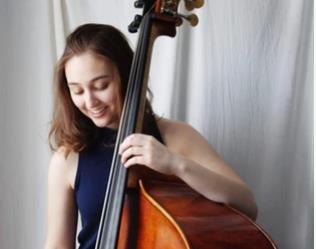
    Nina bernat jpg

    Above: Nina Bernat

    ~ Author: Oberon

    Friday May 9th, 2025 – In the past few years, I’ve been so captivated by the sound of the double bass, whether it’s a single player at a chamber music concert or six or eight of them playing a Wagner opera from the Met Opera’s pit. The bass really is the heartbeat of classical music, and I’ve sometimes become so focused on what the basses are doing that I have to snap out of it and give the other instruments their due. In recent seasons, I’ve been very impressed by Nina Bernat, a lovely and gifted musician who I’ve heard at Chamber Music Society of Lincoln Center, and most recently with the Sejong Soloists at Carnegie Hall.

    Tonight, Ms. Bernat gave a recital at Merkin Hall; this was only the second double bass recital I’ve attended…the first was given by Xavier Foley, a Young Concert Artists’ discovery whose playing really impressed me. Ms Bernat’s program looked very appealing on paper, ranging from Bach to a world premiere by Lara Poe.

    But even the listing of the works to be played didn’t prepare me for the thoroughly engaging musical experience that Ms. Bernat and her colleagues presented. She, mezzo-soprano Katherine Lerner Lee, and pianist Anthony Ratinov all seem so very young – the last named looks like an Ivy League freshman – yet they are accomplished musicians: indeed, they are artists.

    Setting the essentially serious tone of the evening was Ernest Bloch’s Prayer. Ms. Bernat’s playing was immediately engrossing – such richness of tone and such passionate commitment – whilst the composer also brings in some lovely writing for the piano, elegantly played by Mr. Ratinov. A haunting central section leads to an affecting cadenza. The audience had been rather distracting whilst settling in; this opening work settled the mood, and the program continued to hold the crowd under a spell until the very last note had sounded.

    Lara poe

    From composer Lara Poe (above) we heard a world premiere: Songs of Self. The composer spoke briefly about the four songs, which are settings of texts by female poets accompanied only by the bass. 

    Kll

    Mezzo-soprano Katherine Lerner Lee (above) – a strikingly beautiful woman in a classic maroon frock – has a wonderfully clear and expressive voice; she honored the poets with the clarity of her diction. The first song, I dwell in Possibility, is a setting of Emily Dickinson’s words. From a very soft start, the voice entwines with the wide-ranging bass line, which is laced with fiorature and trills. The two women created a silky-smooth blend. The second and fourth songs are settings of poems by Sara Teasdale – now, that is a name I haven’t heard for a very long time! An agitated bass line and shimmering, flighty singing merge in I could snatch a day. The second Teasdale poem, February Twilight, brings an extraordinary blend of sounds, with the high, lyrical voice over a bass part that has a folk-music feel.

    Between the Teasdale songs came I am a Witch; the text is by Saima Harmaja, a Finnish poet who lived only to the age of 23. Ms. Lee’s voice begins in a monotone, accompanied by eerie, creepy sounds from the Bernat bass. The song casts a spell; a sustained, fading tone from the singer is heard, and the music feels sinister as the song moves toward a terrifying finish. 

    Ratinov

    Above: pianist Anthony Ratinov

    There’s a story behind Aaron Copland’s Violin Sonata and how it became a Bass Sonata: in 1980, bassist Gary Karr and his partner, pianist Harmon Lewis, visited Aaron Copland at his home to request a composition for double bass. Copland proposed instead that Karr give his Sonata for Violin and Piano a try. Karr proceeded to sight-read it, and the composer was so pleased with what he heard that he had it published as their joint arrangement. This sonata is a genuine masterpiece. After its completion in 1943, Copland had learned of the recent death of Harry H. Dunham, a rich and handsome young man of his social circle, shot down while serving in the Air Force, and he dedicated the piece to Dunham’s memory. The sonata thereby became an elegy.

    Tonight, Ms. Bernat and Mr. Ratinov did both Copland and Karr proud. The sonata’s opening Andante semplice was lovingly shaped by both players; from  a prayerful start, the music becomes more animated, taking on a fresh rhythm. This is optimistic music, in which hints of Appalachian Spring can be detected. Ms. Bernat’s bass resonates in its lowest range, and the movement has a wistful finish. The ensuing Lento has a note-by-note piano opening; the bass is pensive in this simple, poetic music which develops a gentle flow and is tinged with sadness. The concluding Allegretto is restlessly rhythmic, a steady beat from the piano – decorated by miniature fanfares – suddenly goes high. Ms. Bernat covers the wide range of the bass in agile passages. The music slows, then re-bounds and cruises along to a pulsing bass beat, swirling away before settling down to a calm finish.

    Indian-American composer Reena Esmail‘s Perhaps is a double bass solo in which Ms. Bernat again impressed with the sheer richness of sound she can produce. From a thoughtful start, the music goes through shifting moods, covering a vast dynamic range. The composer was in the hall, and took a bow to warm applause.

    The Adagio from J.S. Bach’s Sonata No. 3 in E Major, BWV 1016, was another marvelous interpretation from the Bernat/Ratinov duo. The pianist’s measured introduction conjured up a a haunting theme from the bass. The two players switch roles between melody and rhythm. This music evoked bittersweet memories from me, whilst photos that Ms. Bernat had found in in the apartment of her late grandmother – a holocaust survivor – must have been having the same effect on the young musician as they were projected on a screen. What stories these images could tell. 

    As perfect and engrossing as the evening had been thus far, in the musicians’ performance of Allan Blank‘s Poems from the Holocaust they surpassed themselves in this powerful and deeply moving set of songs about some of the darkest years the world has ever experienced; the songs are particularly – and scarily – timely now, as we seem to be on the verge of another calamitous period.

    Katherine Lerner Lee again sang with sublime clarity and beauty of both timbre and expression; in terms of communicating emotion through the colourings of the texts, she put me in mind such iconic lieder singers as Barbara Bonney and Frederica von Stade.

    The opening song, At Terezin, has a dramatic feeling, anxious and unsettling. The second song, Close Your Precious Eyes, to a poem by Isaiah Spiegel from a book by Frieda W. Aarin entitled Bearing the Unbearable, was painfully touching to experience. Ms. Lee found wondrously expressive colours in her singing with which to illuminate the words, whilst Ms. Bernat and Mr. Ratinov wove magical, evocative sounds around the voice, giving us a darkly captivating and thoroughly fascinating musical experience. The song ends in chilling, unearthly quietude, with ominous shivering sounds from the bass.

    Continuing the Blank cycle, keyboard filigree with commenting bass phrases open The Butterfly, a poem written by Pavel Friedmann from his two years spent at The Theresienstadt Concentration Camp, where he died in 1944. Ms. Lee’s voice is lyricism personified. The cycle’s concluding Kaddish is soulful, despairing music which Ms. Bernat played so evocatively whilst Mr. Ratinov played with entrancing softness of touch. The music held us spellbound; the three artists were hailed with long, sincere applause.

    To conclude the program, a Hebrew Melody by Joseph Achron (ed. Leopold Auer) was played by Ms. Bernat and Mr. Ratinov, both with overwhelming beauty of tone and expression. An amazing cello ‘cadenza’ was a highlight in an evening of marvelous music-making. The pianist resumes, whilst Ms. Bernat gives us some entrancing bass trills and a dark-tinged postlude before Mr. Ratinov plays a final chord. 

    Ms. Bernat had chosen “something small” as an encore; she didn’t tell us what it was or who wrote it, but it was sweet, sad, and gorgeous…a sonic feast for my Romantic soul. 

    While celebrations marking the 80th anniversary of the end of World War II have just taken place, threats of a recurrence of those devastating times are everywhere. The familiar line that those who ignore history are doomed to repeat it is so timely.

    ~ Oberon

  • Robert Hale Has Passed Away

    (This 2023 obituary for bass-baritone Robert Hale, originally on Oberon’s Grove, somehow failed to make the transition to the Glade. I would not want him to be forgotten.)

    Robert-Hale-NYCO

    Robert Hale, the versatile American bass-baritone, has passed away at the age of 90.

    A native of Texas who grew up in Louisiana, Mr. Hale made his operatic debut as Colline in LA BOHEME in 1967 at the New York City Opera; he was, for several seasons, a pillar of that Company, and I saw him many times in a wide variety of roles: his Sparafucile, Colline, Mozart’s Figaro, and Don Giovanni were all first-class. He was a magnificent Raimondo in the famed ‘Sills production’ of LUCIA DI LAMMERMOOR, and also sang Escamillo, Henry VIII in ANNA BOLENA, and Handel’s Giulio Cesare. Hale was truly impressive in every one of these roles…here he is in the Don’s serenade:

    Robert Hale – Serenade – DON GIOVANNI – NYCO 1972

    His performance as Scarpia in TOSCA was extraordinarily powerful, especially as he dominated the chorus and orchestra in the Te Deum that ends the first act. Hale’s vocalism was thrilling here, and as the curtain fell, he crushed a rose in his hand. I was so bowled over by his Scarpia that I made a special return trip from Hartford to New York City to see it a second time, one week later.

    Mr. Hale’s huge international career found him singing at Berlin, Covent Garden, La Scala, Vienna, Barcelona, Hamburg, San Francisco, Sydney, the Royal Danish Opera, Teatro Colon, the Bolshoi, Finnish National Opera, and the Salzburg Festival.

    Behrens hale

    Above: Robert Hale as Wotan, with Hildegard Behrens as Brunnhilde

    Robert Hale became a leading exponent of the roles of Wotan/The Wanderer in the RING Cycle and the title-role of the FLIEGENDE HOLLANDER. He sang these roles at The Met – as well as Don Pizarro in FIDELIO – between 1990 and 1996, He recorded the RING and the Dutchman (video) with both Sawallisch and von Dohnányi. Hale also sings Jochanaan on a recording of Strauss’s SALOME, and portrays Barak in a video of DIE FRAU OHNE SCHATTEN conducted by Sir Georg Solti.

    This sampling of Hale’s Wotan from the Dohnányi recording:

    Robert Hale – Das Rheingold ~ Abendlich strahlt der Sonne Auge

    Robert Hale’s abiding love for sacred music and spirituals took him on concert tours with other artists offering varying programs of this music, and he made several recordings: listen to him sing Deep River“.

    One of my very favorite “Robert Hale” evenings at New York City Opera was this performance of LA BOHEME in which the five principal roles were taken by artists who I particularly admired.

    69311590_10216986479308219_4687127127571562496_n

  • GIULIO CESARE @ Carnegie Hall

    (Among my reviews which somehow failed to make it from Oberon’s Grove to Oberon’s Glade, this report on a wonderful Handel performance at Carnegie Hall is one I didn’t want to leave behind.)

    GIULIO CESARE @ Carnegie Hall

    CH11540969

    Above: Beth Taylor, who sang Cornelia; photo by Fadi Kheir

    ~ Author: Oberon

    Sunday May 4th, 2025 – The English Concert presenting Handel’s GIULIO CESARE in a concert performance at Carnegie Hall; Harry Bicket was at the harpsichord, with the following cast:

    Christophe Dumaux, Giulio Cesare
    Louise Alder, Cleopatra
    Paula Murrihy, Sesto
    Beth Taylor, Cornelia
    John Holiday, Tolomeo
    Morgan Pearse, Achilla
    Meili Li, Nireno
    Thomas Chenhall, Curio

    My primary reason for attending today’s performance was to hear Beth Taylor, the Scottish mezzo who made such a striking impression at the 2023 Cardiff Singer of the World competition, and who was singing Cornelia this afternoon. Immediately after the Cardiff finals, I had made friends with her on Facebook, and I have kept tabs on her ever since. 

    GIULIO CESARE is a long opera, and the seats at Carnegie Hall are notoriously bad for people who have lower back problems. I wasn’t at all sure I would make it thru the whole afternoon, though I knew that much of Cornelia’s music occurs in the first act: her lament “Priva son d’ogniconforto” and – the most moving music Handel ever wrote – “Son nato a lagrimar”, a mother’s poignant duet with her son as both are imprisoned.

    My first-ever experience with a Handel opera was at the opening night of the New York City Opera’s GIULIO CESARE in 1966. At that time, the Early Music mania had not yet commenced. The opera was treated like any other opera; I don’t recall any period instruments being used in the pit, though I wouldn’t have known what to look/listen for anyway. It was of course the production that thrust Beverly Sills, who had been singing with the Company for years, into the spotlight with her dazzling singing of Cleopatra. Cesare was sung by the great dramatic basso Norman Treigle. There were no counter-tenors in the cast; the characters of Tolomeo and Nireno were sung by bassos. 

    Fast-forward 30+ years and I was working at Tower Records where counter-tenor mania was in full flourish. The Met had given its all-star RINALDO in 1984 – a big hit – and the New York City Opera presented productions of Handel operas that drew enthusiastic crowds. I dutifully attended these, though my true passion was the Wagner/Strauss repertoire. 

    So today’s performance of GIULIO CESARE by the English Concert was the first Handel opera I’d attended in many moons. I was expecting a rather formal opera-in-concert presentation, with the singers seated onstage, rising when their characters sang, and using scores. Instead, we had a semi-staged production which included the head of Pompey in a shopping bag, and many comings-and-goings. I found it all rather distracting, and at times overly cute, as when Cesare walked down the aisle and took a seat to watch Cleopatra appear on Monte Parnasso to sing “V’adoro, pupille”.

    At any rate, it was a musically pleasing performance, with Maestro Bicket having everything well in-hand, and his orchestra full of virtuosos. There were times when the voices were covered by the musicians. Following the delicious overture, all the singers joined in the opening ‘chorus’, and then the story began to unfold. 

    We first meet Cesare in the person of the marvelous Christophe Dumaux, and Achilla (Morgan Pearse), who is toting Pompey’s head: a victory gift to Cesare from Tolomeo. The furious Cesare berates the messenger in the dramatic aria usually translated as “Tyrant, avoid my sight!” This is a brilliant introduction to M. Dumaux’s dazzling artistry.
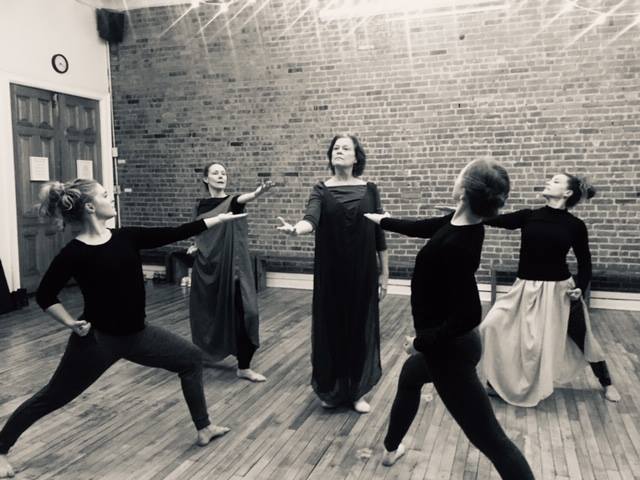
    Scottish mezzo-soprano Beth Taylor (the main reason I was at this performance) as Pompey’s widow Cornelia and her son – the tall, slender Paula Murrihy – are horrified by the treatment of the severed head. Cornelia’s aria “Priva son d’ogni conforto” introduces the mezzo’s unique voice, with a rich lower range and gorgeous moments of straight-tone, and an amazing dynamic range, all woven into the aria’s poignant melody. Ms. Murrihy’s Sesto replies with her own reassuring aria, “Svegliatevi nel core“, with its touching central song and a stunning cadenza.

    Louise Alder’s Cleopatra is introduced with “Non disperar“, her singing at once lovely and characterful, with humorous touches in the repeat. Cleopatra is played as rather too silly and juvenile in the early scenes, but this will change as her fate alters from scene to scene. John Holiday’s Tolomeo joins the action, his “Empio, sleale!” is vividly sung, though at times the orchestra covered his voice. In a peaceful, reflective interlude, M. Dumaux’s singing is refined and poignant. Cleopatra is introduced to Cesare (she’s wearing sunglasses) as “Lydia”.

    Beth Taylor returns, holding the urn of her husband’s ashes. She has a gorgeous recit, a dramatic monolog in which her multi-hued voice is fascinatingly employed. Introduced by a superb cello solo, Ms. Murrihy again brings her artistry to delight us in “Caro speme“; her subtle ornaments are captivating. Cesare’s ‘hunting’ aria, “Tacito e nascosta” was another Dumaux gem, though the horn playing was not immaculate, and the orchestra was a bit too loud; the counter-tenor’s ravishing cadenza made these concerns irrelevant. Morgan Pearse makes much out of Achilla’s big aria, and then the opera’s most magical moments unfold in the great duet for mother and son, “Son nata a lagrimar“. Mlles. Murrihy and Taylor achieved a miraculous blend of timbres, their singing exquisitely filled with subtleties and emotional shadings as they share their despair; they seemed to live and breathe as one.

    I seriously thought of leaving at this point, just to carry this incredible musical experience away in my heart.

    We settled in for Act II, counter-tenor Meili Li making a fine impression as Cleopatra’s help-mate Nireno. Ms. Alder’s Cleopatra was getting a bit annoying in this juvenile characterization (not the singer’s fault, but that of the staging); the soprano would soon find more depth in the character and her singing would become increasingly impressive…and moving. But for now, her “V’adoro pupille” was charmingly rendered…and the best was still to come.

    Violin virtuosity from Nadia Zweiner introduced another Dumaux delight, and then Ms. Taylor has another sad song, full of wondrous soft singing. Mr. Holiday’s Tolomeo threatens Cornelia in a florid aria. Sesto prevents his mother from killing herself, and Ms. Murrihy displays her deft coloratura in “An angry serpent never rests…”

    Ms. Alder’s “Venere bella” was charmingly sung, Thomas Chenhall’s Curio makes his mark, and M. Dumaux delivers some fabulous fiorature in an allegro aria. Calls for Cesare’s death are heard, and then Ms. Alder comes stunningly into her own with a heartfelt “Se pietà di me non senti”; in leaving behind the whole ‘Lydia’ conceit, the soprano now becomes truly compelling in both her vocalism and her hypnotic acting. 

    Another interval…the afternoon is stretching long, and my back sends me alarming signals (I’ll be paying for all this sitting in the proverbial “morning after”) but I persevered. 

    Tolomeo continues to court Cornelia, and Sesto tries to murder him. John Holiday’s aria here is most effectively delivered; in his anger, he makes his sister Cleopatra crawl. Ms. Alder’s “Piangerò la sorte mia” is quite magical; she’s very involved in the words and delivers some neat coloratura in the fast section. The da capo is a bit over-decorated, but very finely sung. 

    Now Mr. Dumaux brings all his gifts to the recit that precedes “Aure, deh per pietà“; a remarkable note swells from pianissimo to glowing power and then back to a whisper…truly astonishing. He then sings the aria with uncanny control and entrancing subtleties; a magical cadenza is the crowning touch. Cleopatra is on the brink of suicide when good news prompts a brilliant “Da tempeste” from the soprano. Tolomeo again rattles Cornelia, and this time Sesto strikes to kill. (One of the awkward things about the semi-staging is that dead people come back to life, stand up, and walk offstage…) 

    One wishes for a grand scena to seal Beth Taylor’s great success as Cornelia, but a rather modest song will have to do. Cleopatra and Cesare sing of their joy in an extended finale.

    Giulio cesare-1 jpg

    We met Ms. Murrihy at the stage door, such an elegant and friendly woman. 

    We then waited a long time for Beth Taylor to appear, but eventually we found out there was a reception going on, apparently with no end in sight. So I missed my chance to meet this woman with the fascinating voice.

    And now for some Fadi Kheir photos from the evening…click on each image to enlarge:

    CH11540973

    John Holiday as Tolomeo and Louise Alder as Cleopatra

    CH11540976

    Louise Alder as Cleopatra and Meili Li as Nireno

    CH11540980

    Christophe Dumaux as Cesare and Louise Alder as Cleopatra

    CH11540981

    M. Dumaux sings from the audience

    CH11540982

    Ms. Alder and M. Dumaux

    CH11540984

    Morgan Pearse as Achilla and Beth Taylor as Cornelia

    CH11540988

    Ms. Alder as Cleopatra

    CH11540992

    M. Dumaux and Ms. Alder

    CH11540994

    Paula Murrihy as Sesto

    CH11540995

    Christophe Dumaux as Giulio Cesare

    CH11540989

    The cast takes a bow: Beth Taylor, Paula Murrihy, Louise Alder, Christophe Dumaux, Maestro Harry Bicket, John Holiday, Morgan Pearse, Meili Li, and Thomas Chenhall.

    “Let fair joy and pleasure
    now return within our hearts;
    relieved of all sorrow,
    we may rejoice once again.”

    ~ Oberon

    (Performance photos by Fadi Kheir, courtesy of Carnegie Hall.)