
Cassandra:
“Malheureux roi! dans l’éternelle nuit,
C’en est donc fait, tu vas descendre!
Tu ne m’écoutes pas,
tu ne veux rien comprendre,
Malheureux peuple,
à l’horreur qui me suit!”
Saturday December 29, 2012 – The dilemma of whether or not to attend a performance of Berlioz’s LES TROYENS at the Met concerned me for a few days. This epic masterwork is one of the greatest operas ever written, unique in its structure (it is actually almost like two distinct operas; each could stand on its own), and it is a veritable goldmine of musical marvels. On a personal note, the opera plays a stellar role in my autobiography, since it was after a magnificent 1973 matinee performance of the Berlioz work that I had my long-awaited first homosexual experience. Normally it would be on my highest-priority list of operas to see in any Met season where it’s presented. But the combination of a production that has never really satisfied me visually, a conductor who has seldom – if ever – moved me, and the disastrous casting of two of the opera’s principal roles, I at first wrote it off completely.
But then the thought that I might never again have an opportunity to hear LES TROYENS in-house decided me in favor of going; not needing to see the production, I bought a score desk and waited for the day with a mixture of excitement and dread. A few days before the performance, one of the singers whose participation was troubling me – Marcelo Giordani – was announced as ‘withdrawing’ from the remainder of the run after a reportedly awful night at the prima folllowed by vocal struggles in the ensuing performances. His announced replacement, Bryan Hymel, has been making a name for himself of late in some of opera’s most demanding roles.
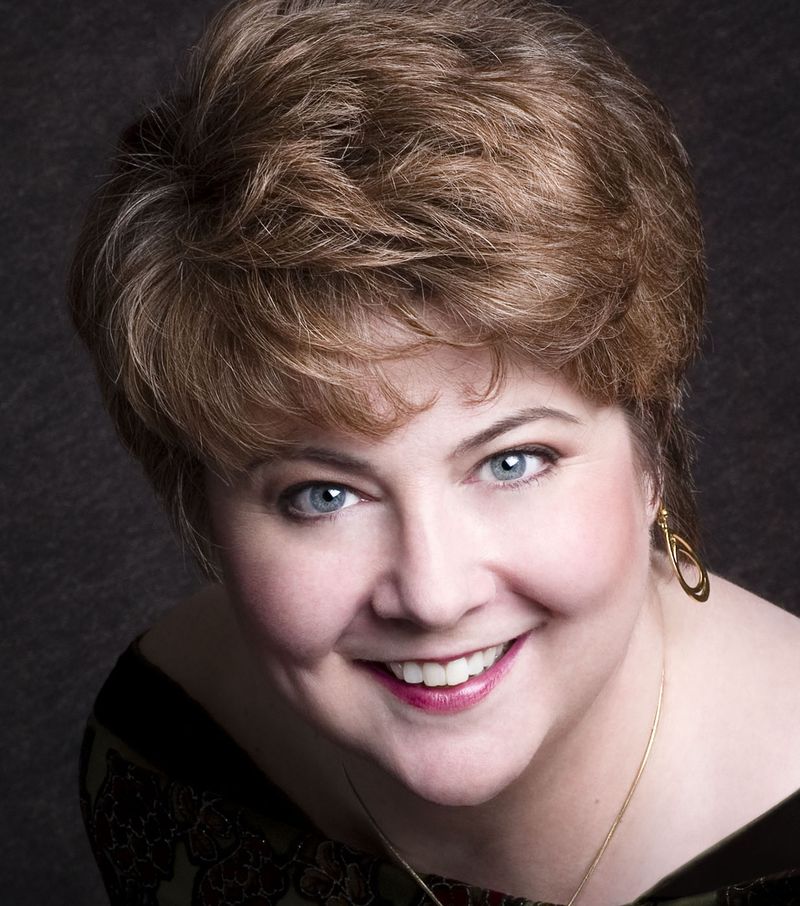
I arrived at the theatre to find another last-minute cast change: Elizabeth Bishop (above) was to sing Dido instead of Susan Graham. This was my second experience of hearing Ms. Bishop in a performance originally scheduled for Graham, and though I’d been looking forward to Graham’s Dido, Bishop was perfectly fine. So I settled in with my lovely old scores (one for each ”opera’), wishing for a different maestro and different Cassandra, but very much anticipating both the music and the singing of the other cast members.
The opera opened impressively with the lively chorus depicting the joy of the Trojan people who have discovered that the Greeks, who have besieged their city for a decade, have suddenly and inexplicably departed. Sadly, the afternoon then took a real slump as Deborah Voigt began Cassandra’s great opening monolog. Voigt’s voice has declined even further than from my last encounter with her in the theatre, and her singing of this iconic role was pallid; the voice is almost unrecognizable as the soprano who once thrilled me with her Ariadne and Elsa. Unsteady and small of scale, her singing seemed apologetic for the most part, with only very few notes that bore any relation to what she once sounded like. Her final high-B in the duet with Chorebus was desperate and unpleasant, and she simply lacked the expressive dramatic thrust for the great scene in which Cassandra tries to prevent the populace from bringing the giant horse within the city walls. And she was ineffectual in the opera’s great final scene. The role calls for forceful declamation and sweeping emotional conviction: a larger-than-life feel. That Voigt could not come within hailing distance of such great interpreters of the role as Shirley Verrett and Jessye Norman was indeed sad. Her shortcomings prevented the first half of the afternoon from making its usual vivid impression.
In 1994 Dwayne Croft replaced Thomas Hampson as Chorebus on a Saturday matinee broadcast of TROYENS; he sang superby that day and seemed in fine voice this afternoon until suddenly, near the end of the big duet with Cassandra, his voice seemed to go hoarse. Bryan Hymel made an impressive entry as Aeneas, his singing both beautiful and urgent. In the great scene where Aeneas is warned by the Ghost of Hector of Troy’s impending doom, Hymel and David Crawford were both excellent.
In the haunting scene where the widowed Andromache brings her young son before the court, her injection of a stifled shriek was perhaps unnecessary in what is written as a silent role. But here Ms. Voigt as Cassandra did have one of her fine moments as she quietly intoned her warning to Andromache: “Save your tears, widow of Hector! Disasters yet to come will make you weep long and bitterly”.
Though lacking a commanding Cassandra to lead them, the scene of the mass suicide of the Trojan women managed to make a very strong impression. Thus far, as the first part of TROYENS came to a close, Fabio Luisi’s conducting had been ‘factual’, each musical “i” dotted and “t” crossed (as per the score) but lacking in mystery and mythic grandeur. His pacing was on the quick side, which is fine.
Moving to Carthage, Luisi and his players seemed to find a more congenial glow in the music. I must commend the conductor for making the ballet music (which could just as well have been cut) fully palatable; and from Iopas’ serenade thru the grand septet and on to the end of the sublime love duet, Luisi gave what was for me his finest music-making to date at the Met.
Elizabeth Bishop’s voice is not creamy and opulent but she’s a fine singer and not only did she save the day, she did so with distinction. Establishing herself in the opening public scene, it was in the more intimate settings that follow where Bishop made her finest mark: the ravishing duet with her sister Anna and then – impressing in both tonal allure and poetic nuances – from “Tout conspire a vaincre mes remords” straight thru to end end of the “Nuit d’ivresse”. In the anger of the fiery quayside duet, and in her later expressions of regret, and of futile fury, Bishop brought some touches of verismo passion which worked well for her. In the stately, resigned “Adieu fiere cite” she was at her most poignant, then rousing herself yet again vocally to bring the opera to a close with her visionary “Rome!…Rome!…immortelle!” As the afternoon progressed, Bishop dispelled the disappointment of not hearing Ms. Graham, and the audience greeted her affectionately at her curtain calls.

Above: Bryan Hymel. Mr. Hymel’s Aeneas was marvelous and his type of voice – a liquid and juicy ‘big-lyric’ with a blooming top – is very well-suited to the music. Wagnerian tenors like Jon Vickers, Gary Lakes and Ben Heppner have often been heard in this role (Vickers managed to make it very much his own), and Placido Domingo handled it impressively despite its being too high for him. But for me the best rendering of this arduous music in living memory has come from Nicolai Gedda on an abridged RAI concert recording. In vocal size and stylistic grace, Hymel comes close to the Gedda ideal. A trace of sharpness crept in here and there, but from his tender farewell to his son Ascagne right thru to his final “Italie!” as Aeneas’ ships cast off for to their destiny, Hymel sang beautifully and had the audience in the palm of his hand.
He and Ms. Bishop found the magical blend that makes the love duet one of opera’s most memorable, and in his great scena “Inutile regrets” with its remorseful “Quand viendra l’istante” and the high-lying concluding ‘cabaletta’, Hymel was glorious. His singing was full-toned and expressive, encompassing some lovely piano effects, and so moving with his heartfelt “A toi mon ame!”; the audience reacted with excited cheers as the tenor swept to the sensational climax of this great scene, then drew our further admiration as he led his soldiers aboard ship to take leave of Carthage.
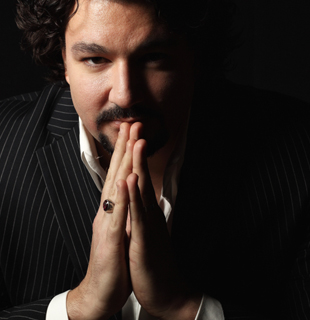
There are two more tenor roles in LES TROYENS A CARTHAGE and both were ideally sung today. In Iopas’ wondrously evocative (and very exposed) “O blonde Ceres” Eric Cutler (above) gave the afternoon’s most fascinating vocalism, with lovely line and ravishingly heady piano effects, and a spine-tingling ascent to a gloriously lyrical high-C. Bravo!!!

Above: Paul Appleby. In the homesick song of the young sailor Hylas, Mr. Appleby’s beautifully plaintive timbre and the haunting colours he wove into the words made this another high point of the day.
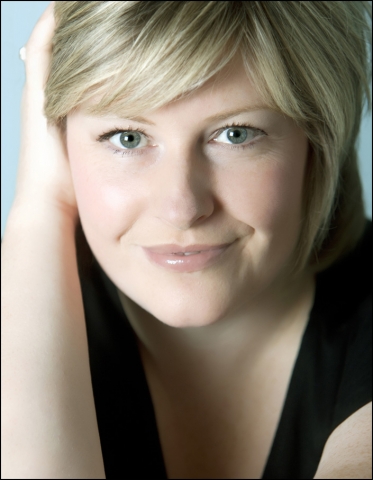
Above: Karen Cargill. I had very much enjoyed Ms. Cargill’s Waltraute last season and was glad of a chance to hear her again as Anna. There’s a touch of Marilyn Horne in Cargill’s voice and she sang her two big duets (one with Dido, the second with Narbal) most appealingly.
Kwangchul Youn’s voice is warm and sizeable; his tone seems to have taken on a steady beat now though he handled it quite well. His Narbal was pleasing, and he was also cast as Mercury, his voice bringing an ominous feel as he intones “Italie! Italie!” after the great love duet, reminding Aeneas of his duty and sealing Dido’s fate.
Richard Benstein was a strong-toned and authoritative Panthus and I very much liked hearing old-stagers Julien Robbins (Priam) and James Courtney (2nd Soldier) again. Julie Boulianne was a fine Ascagne, Theodora Hanslowe was Hecuba, and Paul Corona shared the soldiers’ scene with Mr. Courtney.
I so enjoyed experiencing this masterwork in-house again; it may not have been a perfect performance, but it certainly made for a very satisfying afternoon. So nice to see my friend Susan there, and – being n a good mood – I even chatted with some people around me: totally out of character. Very much looking forward to my next ‘score desk’ operas: DON CARLO and TRAVIATA (who needs to look at a clock and a sofa?), and then all the RING operas in the Spring. It’s the place to be!
Metropolitan Opera House
December 29, 2012 Matinee
LES TROYENS
Berlioz
Part I: La prise de Troie
Cassandra...............Deborah Voigt
Coroebus................Dwayne Croft
Aeneas..................Bryan Hymel
Ascanius................Julie Boulianne
Priam...................Julien Robbins
Hecuba..................Theodora Hanslowe
Helenus.................Eduardo Valdes
Andromache..............Jacqueline Antaramian
Astyanax................Connell C. Rapavy
Panthus.................Richard Bernstein
Hector's Ghost..........David Crawford
Part II: Les Troyens à Carthage
Dido....................Elizabeth Bishop
Anna....................Karen Cargill
Narbal..................Kwangchul Youn
Iopas...................Eric Cutler
Ascanius................Julie Boulianne
Panthus.................Richard Bernstein
Aeneas..................Bryan Hymel
Mercury.................Kwangchul Youn
Hylas...................Paul Appleby
Trojan Soldier..........Paul Corona
Trojan Soldier..........James Courtney
Priam's Ghost...........Julien Robbins
Coroebus's Ghost........Dwayne Croft
Cassandra's Ghost.......Deborah Voigt
Hector's Ghost..........David Crawford
Laocoön.................Alex Springer
Royal Hunt Couple.......Julia Burrer, Andrew Robinson
Dido's Court Duet.......Christine McMillan, Eric Otto
Conductor: Fabio Luisi
 Oberon's Glade
Leave a comment