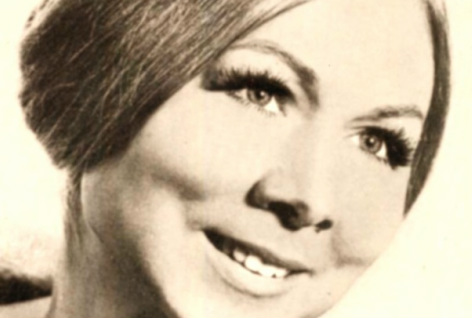
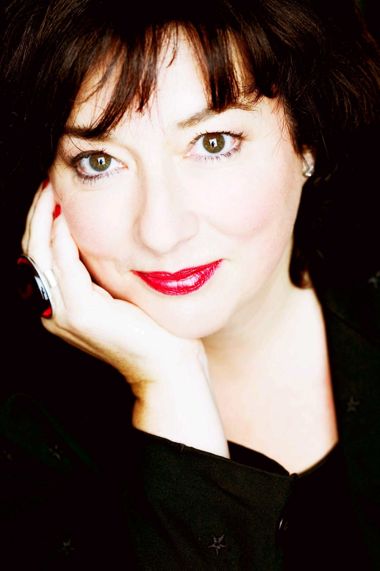
Although I never had an opportunity to see the German contralto Ortrun Wenkel (above) onstage, just watching her as Erda in the premiere telecast of Patrice Chéreau’s 1976 Bayreuth RING Cycle was enough to put her in my pantheon of exceptional operatic artists.
She passed away on December 21st, 2025, at the age of 83.
Watch and listen to Ms. Wenkel’s Erda being summoned by the god Wotan (the late, lamented Donald McIntyre) in Act III of SIEGFRIED here. Pierre Boulez is the conductor.
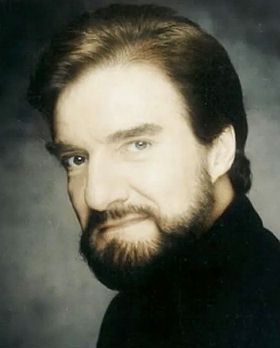
Robert Hale (above), Ekkehard Wlaschiha, Robert Tear, Hanna Schwarz, and Kurt Moll head the cast of DAS RHEINGOLD from a televised performance given at Munich in 1989. Wolfgang Sawallisch conducts.
Saturday December 27th, 2025 – Although it’s two days post- Christmas, tonight’s gala concert of operatic arias and duets – organized by Eugene Wintour-Irverstag, and featuring a sextet of fascinating opera singers – was a holiday gift for the Carnegie Hall audience. A handsome program booklet was provided, though the order of play was somewhat difficult to follow. The ever-excellent American Symphony Orchestra were under the baton of Francisco Lanzillotta, a handsome fellow who conducts with the grace and energy of a premier danseur.
The Maestro opened the evening with the overture to Rossini’s GUILLAUME TELL. This included a longish ‘introduction’ with which I was unfamiliar; then the beloved pastoral phrases sounded, and soon we were into the famed galloping race that is Rossini’s trademark.
Now Asmik Grigorian, in a rather eccentric frock of red and white, took the stage and gave us an “In questa reggia” of staggering clarity and power. As someone who heard Birgit Nilsson in the role – and in her prime – five times, I felt Ms. Grigorian the equal of the Swedish diva in terms of volume, whilst surpassing her in beauty of tone. Ms. Grigorian held the audience in her thrall throughout Turandot’s fiendishly demanding aria, and she would continue to do so all evening.
How wonderful to encounter Thomas Hampson again; now seventy years of age, he looks as handsome and elegant as ever, and there’s still a lot of voice at his disposal. Last at The Met in 2017, he regaled us tonight with an aria from one of his signature roles: Count Almaviva in NOZZE DI FIGARO. The size and deployment of the Hampson voice is impressive indeed, and the character is so clearly etched, as has ever been the singer’s wont.
Ms. Grigorian then returned to join the baritone in a thrilling final scene from EUGENE ONEGIN. This was acted out in full; with the conductor and orchestra ever-attentive, the couple seemed to live their roles with deep commitment. Ms. Grigorian’s Tatiana started out by assuring Onegin that she was not going to put up with any of his nonsense; she would stand firm in her resolve to remain steadfastly true to her husband. With a massive dose of Hampson charm, the baritone slowly brings her around to confessing she still loves him…her glowingly sustained piano top note here was astounding. Recalling his marvelous playing of this scene opposite Solveig Kringelborn at The Met in 2002, Mr. Hampson becomes desperate in his pleading. With a blazing high note, the soprano rushes away, leaving the crushed Onegin choking on his own despair. Brilliant!! Bravi!!
Nadine Sierra, in a form-fitting silver frock, appeared to a very warm welcome to sing Gilda’s “Caro nome”. I’ve always preferred a lighter voice in Gilda’s music – Roberta Peters, Patricia Brooks, and the young Scotto come immediately to mind. Ms. Sierra’s more full-bodied tone makes me think she may be ready for TROVATORE, ERNANI, NORMA. Her “Caro nome” tonight was persuasively interpreted, and fondly cheered.
Ms. Sierra returned for the LAKME “flower duet” with Sondra Radvanovksy making what she referred to as her “debut as a mezzo -soprano” as Mallika. Both voices seemed too large for the music, and I found myself wishing they’d sung a duet from NORMA or ANNA BOLENA instead.
Next, a lovely treat: the comely young mezzo-soprano Anita Montserrat – gorgeously gowned in red – treated us to some very fine bel canto singing in Cenerentola’s final aria from the Rossini opera. Her warm tone and fluent coloratura put me in mind of the magical Teresa Berganza; I can’t think of any higher praise.
Brian Jagde now appeared to bowl us over with a splendid “Dio mi potevi scagliar” from OTELLO. Living the aria with every note and word, the tenor poured out rich tones and then struck like an arrow to my heart with his ravishing “Ma, o pianto, o duol! m’han rapito il mirraggio dov’io, giulivo, l’anima acqueto…” before the build-up to the aria’s monumental finish. Bravissimo!!
I’d been hoping to hear Ms. Radvanovsky in an aria from one of the operas she’s been lately singing in Europe, but not yet here in NYC: maybe Lady Macbeth’s ‘letter scene’, or Maddalena di Coigny’s “La mamma morta”…? But instead she chose to revisit one of her Met triumphs with the Bolero from I VESPRI SICILIANI, which she sang with cunning bravado.
After an overly long intermission, we heard the delightful overture to Ambroise Thomas’s MIGNON in which the arias “Connais-tu le pays” and “Je suis Titania la blonde” are liberally quoted. This would have been a fine time to bring forth Mlles. Montserrat and Sierra to sing those arias, so rarely heard in this day and age. In the overture, the ASO’s players of clarinet, flute, and harp had an opportunity to shine.
Ms. Sierra dazzled us with “I Feel Pretty” from Bernstein’s WEST SIDE STORY, and then Mlles. Grigorian and Montserrat took us back to Imperial Russia with a finely-harmonized duet from Tchaikovsky’s PIQUE-DAME, in which piano, flute, and harp play integral roles. The two voices entwined delightfully.
Ms. Grigorian, who had changed to a ruffled sea-green gown of Olde World glamour for the evening’s second half, now sang a hauntingly sublime “Song To The Moon” from RUSALKA. Her highly personal and marvelously unique singing have now whetted our appetite for her upcoming Verdi REQUIEM here at Carngie Hall as well as her ONEGINs at The Met.
Thomas Hampson’s thrilling cry of “Perfidi!” introduced Macbeth’s poignant aria “Pieta, rispetto, amore” from the Verdi opera. The baritone sang with deep feeling as he grasped his fate: “Nor should you hope for kind words on your royal tomb: only curses, alas, will be your funeral hymn.” Remorse, the most wretched of emotions, has run him out. Mr. Hampson, despite a husky note here and there, got right to the core of the character, as he has ever done in every role from Figaro to Wozzeck.
Mr. Jadge then poured out the anguish of the betrayed Canio in PAGLIACCI with mind-blowing power in “Vesti la giubba…” This is the sound of a breaking heart. The tenor’s vocal generosity was then matched in intensity by Sondra Radvanovsky in the fiery/seductive duet of Manon and Des Grieux from the Puccini setting. In her emerald gown, the soprano dug into chesty tones and scorched us with flaming high notes.
All six singers now joined in “Make Our Garden Grow” from CANDIDE. With an array of somewhat mis-matched timbres, this finale became sort of a hot mess…but it hardly mattered. I was just happy to have been there.
Christmas Night Opera
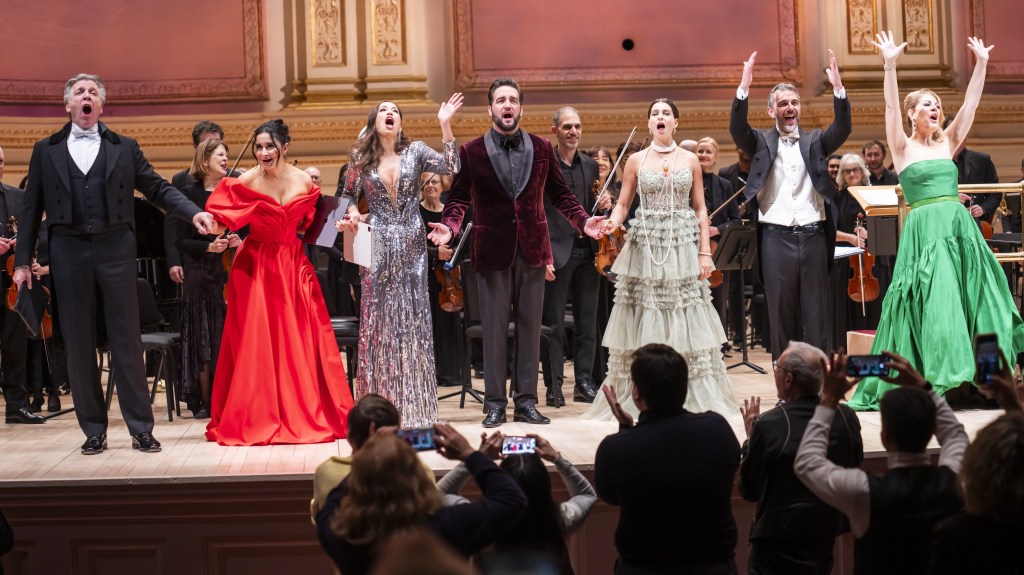
Above, the concert’s finale; photo by Chris Lee.
From left: Thomas Hampson, Anita Montserrat, Nadine Sierra, Brian Jagde, Asmik Grigorian, Maestro Lanzillatta, Sondra Radvanovsky
Wednesday December 24th, 2025 ~ Carnegie Hall is my favorite place to spend Christmas Eve. This year it was especially nice because my spouse accompanied me. The all-Mozart program, offered by the New York String Orchestra, was conducted by Jaime Laredo. A sell-out house gave the evening a joyous air, canceling out – at least for a brief time – the ways and woes of our current world with a re-affirmation of faith, hope, and love.
The young musicians of the NY String Orchestra took the stage, and Maestro Laredo was warmly greeted. Opening the evening was the overture to LE NOZZE DI FIGARO. Hearing this familiar music (which I first became familiar with when my high-school band director brought it into our rep, along with Meyerbeer’s Coronation March from LE PROPHETE and Elsa’s Procession to the Cathedral from LOHENGRIN) tonight conjured up memories of playing it, as well as thoughts of the first time I saw the Mozart masterwork in 1968, when Rome Opera brought their gorgeous Luchino Visconti production to The Met, conducted by Carlo Maria Giulini, with a stellar group of Italian Mozartians – Ilva Ligabue, Graziella Sciutti, Biancamaria Casoni, Rolando Panerai and…Tito Gobbi (my only time seeing him onstage!)
The NOZZE overture swept by, the Maestro keeping the music swift and sure. This was followed immediately by the Symphony No. 40 in G-minor, K. 550, one of only two Mozart symphonies in a minor key. The opening Molto allegro opens with a famous, agitated theme; a later central passage seems to anticipate Mendelssohn. The Andante is elegant and stately, laced with subtle touches of wit (such as a tiny “Tamino” reference); the music turns darker and more insistent. The Minuetto is rather more dynamic than expected, with basses and celli in powerful unison. It contains an interlude for the wind voices, in which the horns were impressive. In the concluding Allegro assai, there’s a sense of urgency; the music is richly played, with a lovely clarinet solo and other interjections from the winds. The audience applauded each movement; I guess that silent attentiveness throughout a piece with multiple movements is no longer considered de rigueur.
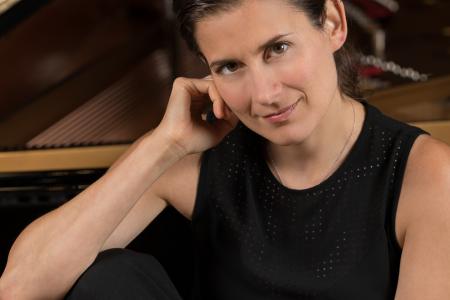
Pianist Anna Polonsky – a musician new to me – now seated herself at the Steinway for the Piano Concerto No. 27 in B-flat Major, K. 595. She looked striking in a black trouser-suit with silvery accents; with her mastery of dynamics and colour, she held the Hall under a spell.
The #27 was completed in 1791, the year of Mozart’s death. The opening Allegro commences with a pulsing start from the strings, which the piano joins with rippling passages that flow lovingly over the rhythmic structure. A hushed minor-key piano passage veers to major and then back to minor; the oboe and bassoon chime in. A gorgeous theme for piano draws a response from the flute, and the two sounds entwine. In the cadenza, Ms. Polonsky’s dynamic palette is impressively displayed.
The concerto’s Larghetto brings forth poignant music, with melancholy hues. Full lyricism awakens, and the music takes on a reverential feeling. A gracious melody from the piano – so deliciously played – draws us deeper into the music as a hushed, poetic atmosphere settles over the hall. A series of ascending trills leads into a long keyboard passage with commentary from the winds. As the music faded into silence, applause ruined the moment.
The concerto ends with a Rondo/Allegro; here Ms. Polonsky was simply marvelous. Mozart brings forth a theme from his song “Sehnsucht nach dem Frühling” (Longing for Spring). And then, with a dazzling cadenza, the pianist finished the evening by basking in an affectionate standing ovation from the packed house.
Periodically throughout the concerto, there was a sense that someone in the audience was humming along with the music. This is the second time this season that this has happened at Carnegie Hall.
Saturday December 20th, 2025 – On December 20, in an all-holiday concert entitled A Place Called Home, the New York Pops, featuring Essential Voices USA and guest artist Megan Hilty, brought the charm of home to Carnegie Hall.
What I love about the Pops is how skillfully they create a mood and atmosphere that everyone, from the most seasoned music veterans to those seeing an orchestra for the first time, can enjoy.
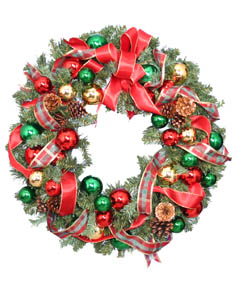
Even before the orchestra began, the festive mood was set by a giant, light-filled wreath hanging over the stage. As Maestro Steven Reineke walked out (with a cane, which I initially thought was a nod to A Christmas Carol, but which turned out to be the result of slipping on ice), applause erupted, and the audience settled in as the music began.
Without introduction, Reineke cued the orchestra, launching into the classic carol Deck the Halls (arranged by Carmen Dragon), joined by the full force of Essential Voices USA. The piece opened with sleigh bells, immediately setting the musical tone. It’s always thrilling to hear a choir paired with a full orchestra, and tonight was no exception.
What I particularly appreciated about the program was its balance: beloved classics like Deck the Halls alongside pieces deeply associated with the holidays but not necessarily top-ten staples. One such example was We Need a Little Christmas from Mame, which followed shortly after.
As the orchestra began the next number, It’s the Most Wonderful Time of the Year, Megan Hilty (who most recently starred in the new Broadway musical Death Becomes Her) strode onstage in a stunning red sequined gown, delivering the famous tune with flair.
The concert flowed seamlessly between orchestral, choral, and solo moments, keeping the program dynamic and engaging throughout the evening.
I was struck when Maestro Reineke introduced the fan favorite Carol of the Bells by highlighting its Ukrainian origins. He shared that he has programmed the piece for the past four years in solidarity with the Ukrainian people as they endure the war with Russia, and that he plans to continue doing so for as long as the conflict persists.
One of my favorite pieces of the night was a newer work by composer Benny Oschmann. Drawing on the familiar motif from God Rest Ye Merry, Gentlemen, the piece took a cinematic, almost video game–like turn. Oschmann, who primarily composes for video games, brought a distinctive energy that made the work stand out amid the traditional repertoire.
Another standout moment came when Hilty (now in a sparkling silver dress with a regal black cape) performed River by Joni Mitchell. I had never fully considered the song a Christmas piece, but hearing Hilty’s soulful rendition and noticing its recurring references to Christmas trees made its seasonal connection unmistakable.
Hilty’s performance of Santa Baby was another highlight. Channeling her inner Eartha Kitt, she delivered a sultry interpretation complete with verses I had forgotten, or perhaps never fully noticed, particularly those in which the singer asks Santa for increasingly extravagant gifts.
For Chanukah Joy and Peace, Essential Voices USA conductor Judith Clurman (who also composed the piece) took the podium to lead both choir and orchestra. Her conducting style, marked by sweeping gestures, contrasted noticeably with Reineke’s and brought back memories of my own days singing in a school choir. The piece was beautiful, and its message felt especially poignant given Reineke’s earlier acknowledgment of a recent mass shooting at a Chanukah celebration in Australia.
Later in the evening, during A Place Called Home from A Christmas Carol, Santa and one of his elves suddenly rushed down the aisle and joined the performers onstage. It was a delightfully cheerful moment, particularly the playful exchange between Reineke and Santa as they joked about congestion pricing and how it affects Santa’s annual worldwide journey.
After the magical duo exited, the concert continued with one of the night’s biggest showstoppers: O Holy Night. As Hilty, the orchestra, and the choir joined together in full force, the audience responded with an enthusiastic ovation.
With one final piece remaining, Reineke invited the audience to sing along to a closing medley of famous carols. As the music swelled, Santa and his elf returned to the stage to help bring the evening to a close, ending a truly festive and joyous night.
I was shocked to read of the death of Yvonne Naef on December 18th, 2025, at the age of 68.
A native of Switzerland, Yvonne Naef had a vast repertoire of operatic roles, from the great mezzo-soprano roles of Verdi and Wagner to such French operas as Ariane et Barbe-Bleue, Carmen, Les Troyens and La damnation de Faust. Her extensive concert repertoire ranged from Bach to Boulez, with a special affinity for Mahler. The list of conductors she worked with is mind-boggling: Marin Alsop, Pierre Boulez, Semyon Bychkov, Sylvain Cambreling, Gustavo Dudamel, Christoph Eschenbach, Rafael Frühbeck de Burgos, James Levine, Kent Nagano, Franz Welser-Möst, James Conlon, Christoph von Dohnanyi, Sir John Eliot Gardiner, Daniele Gatti, Michael Gielen, Bernard Haitink, Mariss Jansons, Philipp Jordan, Marc Minkowski, Sir Simon Rattle, Georges Prêtre and Michael Tilson Thomas
At the Metropolitan Opera, where she debuted in 2004 as Fricka in Das Rheingold, her repertoire was limited to both Frickas plus Waltraute in the RING Cycle, plus three performances as Amneris. I saw – and loved – her in her RING roles.
Among Ms. Naef’s recordings are Il Trovatore, Wagner’s Das Rheingold and Die Walküre, Othmar Schoeck’s Penthesilea, Schoenberg’s Gurrelieder, Beethoven’s Symphony No. 9, and Messiaen’s Poèmes pour Mi. Her solo albums of songs by Berlioz and Wagner are captivating.
In addition to her singing career, Yvonne Naef was a lecturer for singing at the Zurich University of the Arts.
Saturday December 20th, 2025 – I’ve enjoyed the Met’s Julie Taymor FLUTE, abbreviated though it is, several times since it premiered. With its large cast of substantial roles, it offers a chance to hear a number of voices in a 90-minute performance; young, upcoming singers often get their first Met opportunities to shine, while established favorites gain new followers.
Presiding in the pit today was James White, who I chanced to meet a few days ago at my favorite Lincoln Center area eatery, Il Violino. His tempi were swift and sure, and he was very supportive of the singers at all times. The score is of course heavily cut; in fact, some passages I especially love – like the “Bei Männern” duet and the Chorus of the Priests – are eliminated. If memory serves, the opening chords of the overture were always played before skipping ahead to the theme of the pursuing dragon, but today these chords were not included. Later in Act I, the slow opening portion of the Queen of the Night’s first aria was likewise eliminated.
This afternoon, two singers I much admire took the romantic leads: soprano Joelle Harvey as Pamina and tenor Paul Appleby as Tamino. I’d just recently heard both of them in a Bach evening at Chamber Music Society, and, earlier this season, the tenor had given us a sterling Don Ottavio at The Met.
Ms. Harvey and Mr. Appleby were both on fine form today, with wonderfully clear and nuanced singing, and excellent diction to boot. The three Ladies were likewise enjoyable to hear: Tessa McQueen, Edyta Kulczak, and Megan Esther Grey blended well and made much of their comic spoken lines.
Rainelle Krause, a recent Met debutante, has sung the Queen of Night frequently in her career to date. I can’t understand why the first aria’s opening slow passage was not sung today, but once Ms. Krause turned her attention to the aria’s florid “cabaletta” she was right at home, her high notes brilliant and her top-F spot-on. Later, in her vengeance aria, the soprano touched lightly but skillfully on the high-F’s and then scored a knockout with a sustained, titanic high B-flat on “Swear!” Her solo bow at the opera’s end drew massive applause and loud cheers.
Mr. Appleby’s encounter with The Speaker (Harold Wilson, strong of voice and verbally telling) made this, my favorite scene of the opera, especially savourable today. Mr. Appleby’s mystified “O endless night!” spoke of Tamino’s despair, but soon the magic flute (played today by Seth Morris) sets things to rights.
The boy sopranos playing the Three Spirits today seemed to be vocally more polished than some previous trios in this production, though they ran into some pitchiness later in the show. Tom Capobiano, a scene-stealing, voicey Monastatos, constantly causing trouble, met his match when he and his mean-spirited sidekicks fell under the spell of Papageno’s magic music box, which caused them to dance blithely into the wings.
Pamina’s luminous “Be truthful...” and her defense of her attempted escape found great beauty in Ms. Harvey’s vocalism; her forlorn aria was so expressively sung that the cuts made in it were all the more maddening.
A hit last season in his Met debut role as Colline in LA BOHEME, Hungarian-Romanian basso Alexander Köpeczi was back on our stage today as Sarastro, singing with power and warmth, his English quite clear, the handsomeness of his timbre undeniable.
Pamina and Tamino undergo their trials, Ms. Harvey’s “Tamino mine!” melting my heart. The Queen and her henchmen are cast down, love conquers all, and Sarastro praises the power of truth and light.
With all these fine singers onstage, it was quite an accomplishment for Michael Sumuel’s Papageno to steal the show, but that is just what he did. I’d heard him once before, in Massenet’s CENDRILLON, and was genuinely impressed today by the power of his voice, the clarity of his diction, and how he played for laughs whilst never going overboard. He latched onto all the comic possibilities along the way, especially the echo effect he produced whilst stumbling around in the darkness. His “Männchen oder Weibchen“, or whatever is goes by in English, was so entertaining that I regretted the repeat had been cut. And his ‘suicide scene’ was both amusing and touching, as it should be. Finally winning his Papagena, played by Emma Marchefka from the Met’s Young Artist program, Mr. Sumuel also won the hearts of the nearly 3800 people in the hall, who gave him an affectionate ovation.
The afternoon sped by, but despite the pleasure I drew from most of the music-making, the distractions caused by an audience that included scores of small children really infringed on my concentration today. Of course, having seen this Taymor show numerous times, I expected the atmosphere to be what it was. But it was more annoying than at any previous FLUTE I’d attended, with a continual undercurrent of whimpering voices, people eating potato chips from a crinkly bag, and one child who talked loudly throughout the entire second act…these really put a damper on things.
I have another FLUTE is two weeks, with a different cast; that might be my last visit to Taymorland, much as I’ve liked being there.


 Oberon's Glade