Blog

  • Met Opera All-Stars

    Thumbnail_image

    Helping Placido Domingo celebrate the 50th anniversary of his Met debut, four great stars who sang with him often came backstage to greet the “tenoritone” after his prima of GIANNI SCHICCHI. Above: Sherrill Milnes, Martina Arroyo, Placi, Teresa Stratas, and James Morris in a Met Opera photo.

    Having already seen him several times at New York City Opera, I was at Placido Domingo’s Met debut – the night he stepped in (on very short notice) for Franco Corelli – as Maurizio in Cilea’s ADRIANA LECOUVREUR:

    6a00d8341c4e3853ef00e554b71cce8833

    My fondest memory of that evening was of Renata Tebaldi, as Adriana, turning her back on the audience so that Placi could look over her shoulder to watch conductor Fausto Cleva during his Act I aria, “La dolcissima effigie“. During the ensuing ovation, Renata kept patting Domingo’s shoulder and saying “bravo! bravo!” They went on to be good colleagues and friends:

    Renata & Placi Met June 1970

    While that ADRIANA was Domingo’s first performance from the Met stage, he had sung a single concert performance of CAV & PAG with the Company at Lewisohn Stadium in August, 1966:

    Metropolitan Opera @ Lewisohn Stadium
    August 9th, 1966
    In Concert

    CAVALLERIA RUSTICANA
    Mascagni

    Santuzza................Irene Dalis
    Turiddu.................Plácido Domingo [First appearance]
    Lola....................Joann Grillo
    Alfio...................Russell Christopher
    Mamma Lucia.............Carlotta Ordassy

    Conductor...............Kurt Adler

    Sherrill Milnes had made his Met debut during the final season at the Old Met (in the same performance of FAUST that Montserrat Caballé made hers); Martina Arroyo and Teresa Stratas had already established themselves at the Old Met by the time the Company moved to Lincoln Center. James Morris made his Met debut in 1971, and I saw him there in one of his very first performances, as Raimondo in a student matinee of LUCIA DI LAMMERMOOR.

    Now let’s hear from each singer in the “reunion” photo at the top:

    Martina Arroyo – Ritorna vincitor! – AIDA – Buenos Aires 1968

    GHOSTS OF VERSAILLES ~ final scene – Teresa Stratas & Hector Vasquez – Met bcast 1995

    James Morris – RHEINGOLD ~ Abendlich Strahlt Die Sonne – w M Lipovsek

    Sherrill Milnes joins Domingo on the final note of their OTELLO duet…such an exciting moment:

    Domingo & Milnes – OTELLO duet – Met bcast – 2~2~85

    To finish this reminiscence, here’s Domingo in a opera The Met could/should have staged for him, Meyerbeer’s L’AFRICAINE:

    Placido Domingo – O Paradis! – L’AFRICAINE

    ~ Oberon

  • @ The Guggenheim: Hilma af Klint

    Af-Klint-Hilm_Svanen-971x980

    Above: Svanen by Hilma af Klint

    Presenting one of the most fascinating art exhibits I’ve ever had the chance to experience, The Guggenheim’s gone all out to bring us a panorama of works by the Swedish artist Hilma af Klint (1862-1944).

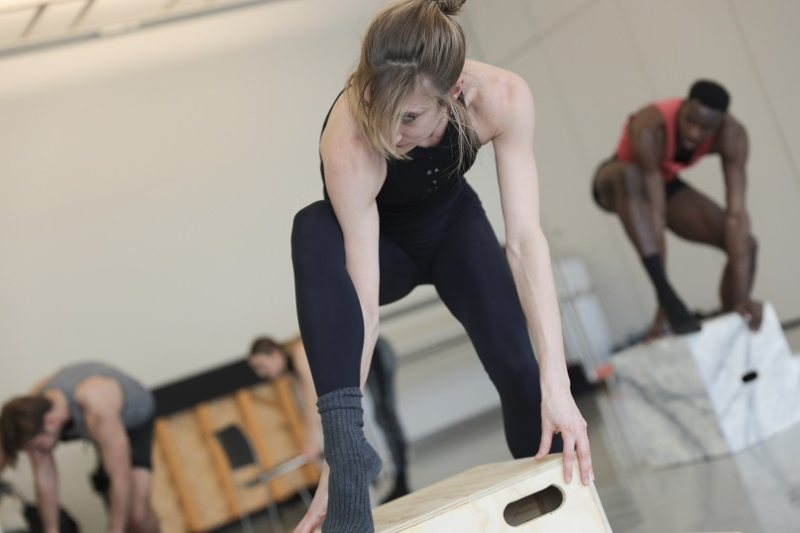
    Born in Stockholm in 1862, Hilma af Klint started out as an academy-educated painter of landscapes and portraits, including some striking botanical pieces. The Spiritualist movement and an interest in scientific progress led af Klint to visualize a world beyond daily realities. She began creating radically abstract paintings in 1906.
    L1980321

    Feeling that her art would be beyond comprehension during her lifetime, she shunned exhibits of her work and avoided publicity-seeking. af Klint passed away in 1944; she remained an unknown until the 1980s.

    The Guggenheim’s exhibition thrilled me, and I hope to return for another look at af Klint’s magnificent work. Although the slanting floor of the long, winding Guggenheim gallery threw off my equilibrium (and similarly affected my friend Deb Hastings, who was with me), this is art that one could study for hours and still not grasp it all. 

    Much of the magic of af Klint’s work is in the details; here are a few examples:

    L1980227

    L1980240

    L1980262

    L1980284

    Some of af Klint’s largest canvases are displayed on the museum’s main floor:

    L1980302

    Her colours dazzle:

    L1980305

    L1980309

    L1980259

    But photos don’t do the work full justice: you have to be there.

    The Guggenheim exhibit, titled Paintings for the Future, runs thru April 23rd, 2019.

    Quote hilma-af-klint

    ~ Oberon

  • Elena Zilio Today

    Elena Zilio 2018

    Mezzo-soprano Elena Zilio (above) made her operatic debut in 1963 and went on to sing dozens of roles – everything from Cherubino to Dame Quickly – throughout the world.

    One of my favorite Zilio souvenirs is her passionate singing of Suzuki, Madama Butterfly’s faithful servant who, in this trio, foresees the story’s tragic ending:

    BUTTERFLY scene Zilio P Dvorsky Stilwell Chicago 1985

    Here she sings the aria of a distraught mother, Rosa Mamai, from Cilea’s L’ARLESIANA:

    Elena Zilio – Esser madre e un inferno ~ L`Arlesiana

    More recently, Elena Zilio has carved out a lovely niche for herself in character roles.

    Earlier this year, Ms. Zilio had a personal triumph as Mamma Lucia in CAVALLERIA RUSTICANA at Covent Garden. In 2019, she alternates that role and Madelon in ANDREA CHENIER in performances at Firenze, Naples, London, and Munich.

    ~ Oberon

  • Jeannine Crader

    Crader Domingo Ginastera's DON RODRIGO Fred Fehl

    Above: Jeannine Crader and Placido Domingo in Ginastera’s DON RODRIGO; photo by Fred Fehl

    Soprano Jeannine Crader was a member of the San Francisco Opera’s Merola Program in the late 1950s, and sang Magda Sorel in Menotti’s THE CONSUL with the San Francisco Opera’s Spring Program in 1969.

    Crader-beni-baldwin

    She performed with the Metropolitan Opera Studio Company (above, in COSI FAN TUTTE, with Gimi Beni and Marcia Baldwin) before joining New York City Opera where she sang in the US premiere of Alberto Ginastera’s DON RODRIGO, opposite Placido Domingo, in 1966. 

    I saw Ms. Crader only once – as Donna Elvira at New York City Opera in 1966. With the Company, she also sang Tosca, Butterfly, and Giorgetta in IL TABARRO. In 1967, she and Domingo sang in ANDREA CHENIER together at the Cincinnati Opera.

    Ms. Crader appears on Maurice Abravanel’s recording of the Mahler 8th, and there is a complete recording of DON RODRIGO available from Opera Depot. Beyond that, I can only find two Puccini souvenirs, both with Mr. Domingo:

    Jeannine Crader & Placido Domingo – E Ben Altro Il Mio Sogno ~ TABARRO – NYCO 1968

    Jeannine Crader & Placido Domingo – TOSCA scene ~ Act III – NYC Opera

    Jeannine Crader sings a William Mayer duet, “Barbara, What Have You Done?” with Dorothy Renzi (audio only) on YouTube. I like it a lot. 

    Ms. Crader taught at the University of North Texas from 1970-1997.

    ~ Oberon

  • Catherine Gallant’s THE SECRET

    6a00d8341c4e3853ef01b7c86c90a3970b

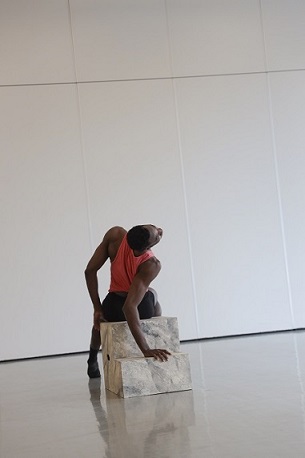
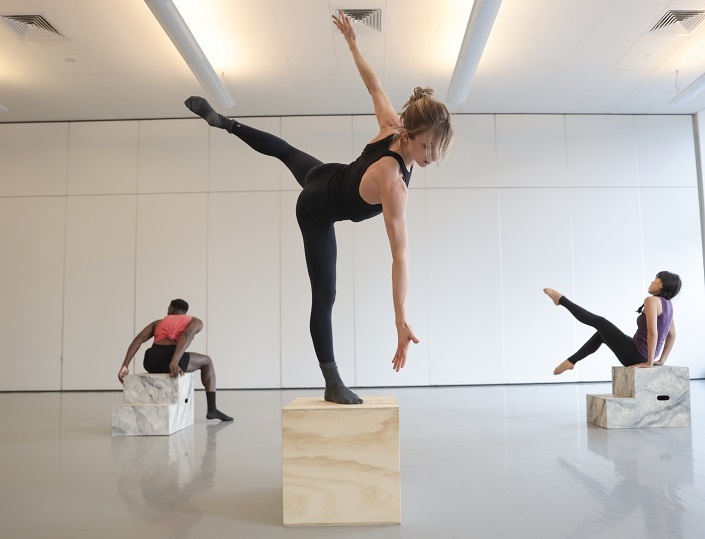
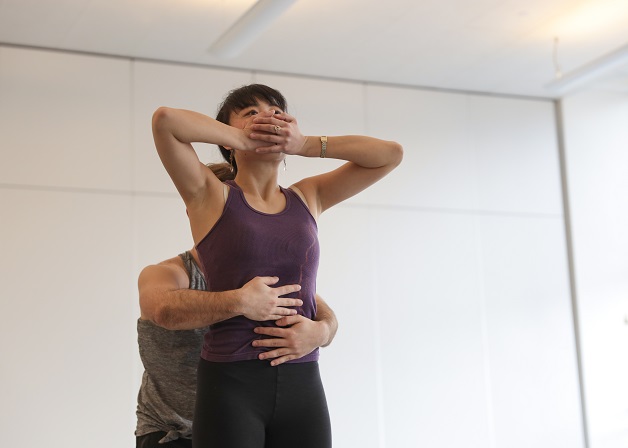
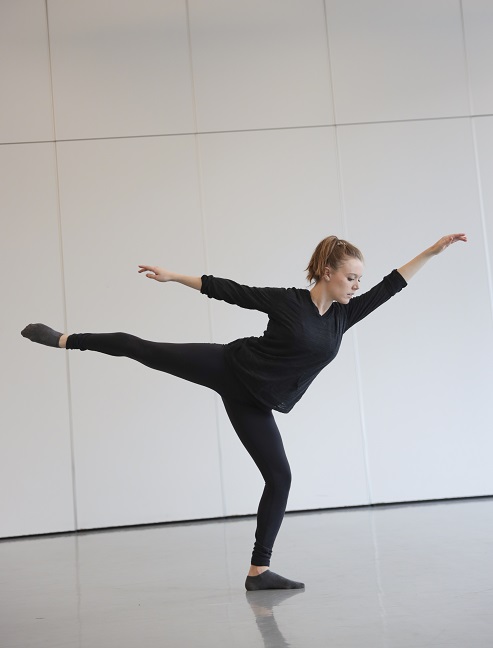
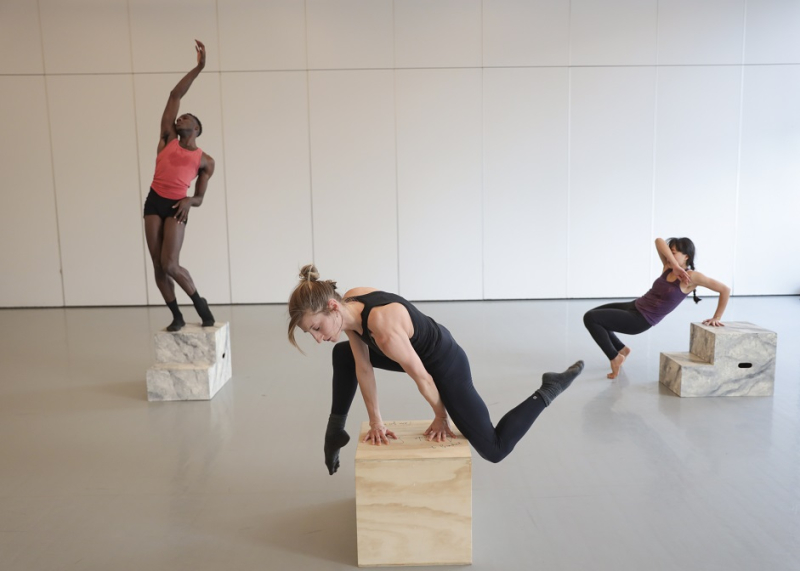
    Above: The Secret in rehearsal; the dancers are Janete Gondim and Eleanor Bunker

    Catherine Gallant’s The Secret, one of my favorite danceworks experienced in recent seasons, may be seen on Vimeo here.

    Seeing The Secret in 2016 prompted this response from me:

    “The evening could not have a had a more propitious start than Ms. Gallant’s The Secret; like white-clad angels, the two dancers – Janete Gondim and Eleanor Bunker – continually conveyed the sense of wonder which permeates this dancework like a delicious fragrance.

    With Ygor Shetsov at the piano, playing the Scriabin Poeme in F-sharp major, the two dancers moved about the space with a sort of quiet urgency, pausing to marvel at the treasure they had found, and which they were holding in the palms of their hands. The choreography flows gorgeously on the music: simple moves which take on a poetic resonance in the personalities of the two women; Janete and Eleanor were captivating to watch, and The Secret joins a short list of danceworks I’ve encountered in the past 20 years that ideally meld music, mood, and movement, leaving a lasting impression.”

    ~ Oberon

  • Catherine Gallant’s THE SECRET

    6a00d8341c4e3853ef01b7c86c90a3970b

    Above: The Secret in rehearsal; the dancers are Janete Gondim and Eleanor Bunker

    Catherine Gallant’s The Secret, one of my favorite danceworks experienced in recent seasons, may be seen on Vimeo here.

    Seeing The Secret in 2016 prompted this response from me:

    “The evening could not have a had a more propitious start than Ms. Gallant’s The Secret; like white-clad angels, the two dancers – Janete Gondim and Eleanor Bunker – continually conveyed the sense of wonder which permeates this dancework like a delicious fragrance.

    With Ygor Shetsov at the piano, playing the Scriabin Poeme in F-sharp major, the two dancers moved about the space with a sort of quiet urgency, pausing to marvel at the treasure they had found, and which they were holding in the palms of their hands. The choreography flows gorgeously on the music: simple moves which take on a poetic resonance in the personalities of the two women; Janete and Eleanor were captivating to watch, and The Secret joins a short list of danceworks I’ve encountered in the past 20 years that ideally meld music, mood, and movement, leaving a lasting impression.”

    ~ Oberon

  • @ My Met Score Desk For PEARL FISHERS

    Pearl fishers

    ~ Author: Oberon

    Saturday November 24th, 2018 matinee – The New York City Opera used to perform Georges Bizet’s Pêcheurs de Perles fairly often, and I saw it there four times in the 1980s with such sopranos as Diana Soviero, Carol Vaness, Diana Walker, and the enchanting Rachel Rosales; tenors Barry McCauley and Jerry Hadley; and baritones Dominic Cossa, William Stone, and Robert McFarland. During that time of my life, I really liked this melodious opera, with its enchanting soprano aria, a poetic (and difficult) tenor aria, and – of course – a beloved duet for tenor and baritone: “Au fond du temple saint“.

    But there’s also a lot of filler, atmospheric in its way yet in the long run just…filler. Pêcheurs was not on my initial list of operas to see/hear at The Met this season;  but as I was tallying up my score desk order, I added a couple of operas just to see if they’d still be of interest to me. Pêcheurs, as it turns out, isn’t.

    I had skipped this Met production of Pêcheurs when it was new, because I’d taken a strong dislike to Diana Damrau. This season, Pretty Yende is singing Leïla, a part which I imagined would suit her voice far better than Donizetti’s Lucia had. “O Dieu Brahma!” is not the easiest way to start your afternoon. Ms. Yende’s florid singing was not always fluent, and at times her pitch was a shade off; counter-balancing this were an ethereal high B-flat and a gorgeous high-D. I imagine her “Comme autrefois” would have been quite fine, but I couldn’t outlast the intermission to find out.

    Alexander Birch Elliott had stepped into the role of Zurga midway thru the season prima of Pêcheurs, replacing Mariusz Kwiecien, who has now withdrawn from the production due to illness. Mr. Elliott has a handsome lyric baritone voice, and he blended perfectly with Javier Camarena in their famous duet, which drew sustained applause.

    Mr. Camarena’s singing of the dreamy aria “Je crois entendre encore” was lovingly phrased, with exquisite piano effects. His voice is a bit light for this role in the big house, but it’s wonderfully present and expressive.

    On the podium, Emmanuel Villaume did what he could with this perfumed score, giving an atmospheric prelude (twice interrupted by applause); he sometimes let his orchestra cover the voices, however.

    Hearing this opera again had the effect of finding a disintegrating, powdery rose pressed in the pages of a book you haven’t opened in decades. You can’t remember who gave you the flower or why it was significant enough to save, but you feel a twinge of regret that something that once meant something to you no longer does.

    Metropolitan Opera House
    November 124th, 2018 matinee

    LES PÊCHEURS DE PERLES
    Georges Bizet

    Léila...................Pretty Yende
    Nadir...................Javier Camarena
    Zurga...................Alexander Birch Elliott
    Nourabad................Nicolas Testé

    Conductor...............Emmanuel Villaume 

    ~ Oberon

  • Seven Gates of Jerusalem

    Herod gate 4

    Above: the sheep market at the Herod Gate, Jerusalem, c. 1900

    ~ Author: Oberon

    Among the many documentaries I watched during those long, humid afternoons of the summer of 2018 was one about the ancient city of Jerusalem. Watching it, and learning about the legendary seven gates of the city, put me in mind of Krzystof Penderecki’s seventh symphony, which is almost always referred to as SEVEN GATES OF JERUSALEM. This oratorio-like work premiered in 1997 at the State Hall in Jerusalem in a performance conducted by Loren Maazel.

    In 1998, having lived in New York City for less than four months, I decided to attend a performance of the Penderecki work; I was mainly attracted by the listing of Christine Goerke and Florence Quivar among the vocal soloists. At this point in time, I had probably attended fewer than two-dozen performances of symphonic music in my opera-specific lifetime, and with few exceptions those were programs featuring vocal works. I don’t think I’d ever heard a note of Penderecki’s music prior to this concert:

    Scanned Section 22-1

    This was actually the US premiere of SEVEN GATES OF JERUSALEM, and I was completely bowled over by it. From my opera diary:

    “This exciting piece was brilliantly played by the Philharmonic, joined by the excellent Philadelphia Singers, some of whom were positioned in the boxes along the sides of the hall. Masur crafted the massive forces – including a large percussion section – into a cohesive and powerful whole. The work is short (one hour) and cries out for expansion [which the program note indicated might be forthcoming].

    Stretches of lyricism, including a gorgeous horn solo, alternated with pageant-like passages; the orchestration dazzles, with a solo bass trumpet positioned in the auditorium.  Striking rhythmic patterns abound, and the chorus has much to do – from near-whispers to full-cry.

    Of the soloists, Christine Goerke dominated, with her glowingly strong middle register and wildfire forays to the top. Florance Quivar was her usual magnificent self, making me wish she’d had even more to sing. Tenor Jon Villars displayed both power and tonal appeal. Wendy Nielsen and William Stone had briefer parts, but were nonetheless impressive. In a spoken role, Boris Carmeli made a chilling dramatic effect.

    The total impact of the work was splendid; and was greeted by an enthusiastic standing ovation. When Penderecki joined the players onstage, the applause re-doubled.”

    4097876

    Above: Krzystof Penderecki

    Flashing forward twenty years, I watched a terrific DVD of the symphony – watched it once, and then immediately straight thru again.  Although I rarely buy CDs any more, I did purchase a recording of this work in an excellent performance conducted by Kazimierz Kord and featuring the distinctive voice of contralto Jadwiga Rappé.

    The importance of Boris Carmeli’s contribution to this work can’t be over-emphasized: the basso’s speaking voice is eerie and quite unique. Mr. Carmeli passed away in 2009. Of Italian heritage but born in Poland, he took part in almost every listed production of the SEVEN GATES OF JERUSALEM up until his death. In both the CD and DVD recordings mentioned above, he makes an incredible, unforgettable impression.

    Carmeli-Boris-11[w-Johannes_Paul_II]

    Above: Pope John Paul II greets Boris Carmeli and Krzystof Penderecki

    Among the countless inventive, evocative sounds one hears in the course of SEVEN GATES OF JERUSALEM is that of the tubaphone. This tuned percussion instrument can be made of metal or plastic pipes (Penderecki calls for plastic) which are cut to various lengths, each producing a different tone. In the DVD I watched, this instrument is set upright, with the player hammering on the ends of the pipes with a mallet to get the desired effect. It is used extensively in the ‘scherzo‘ of SEVEN GATES, Lauda, Jerusalem, Dominum.

    Now my great hope is that I might have an opportunity to experience this thrilling work in a live performance once again, in my lifetime.

    ~ Oberon

  • Emmanuelle Haïm @ The NY Philharmonic

    Haim1hdl17105

    Above: Emmanuelle Haïm

    ~ Author: Oberon

    Wednesday November 21st, 2018 – Music of Handel and Rameau was on this evening’s bill as Baroque specialist Emmanuelle Haïm made her New York Philharmonic debut. Neither composer’s name is really associated with the orchestra (MESSIAH of course being the exception), but their music was most welcome tonight, following in the wake of a pair of less-than-enjoyable ‘contemporary’ works we’d just recently heard at Carnegie Hall.

    From first note to last, the music offered this evening – and the Philharmonic’s playing of it – seemed truly fresh and vital. And Ms. Haïm is so engaging to watch: her deep affection for the music is evident at every turn, and her conducting has an embracing style which drew superb playing from the orchestra. On Thanksgiving eve, we wondered how big of a crowd might turn out, but the house was substantially full. It was the most attentive audience of the classical music season to date – always a good sign.

    It was fun to enter the auditorium this evening and see two harpsichords parked on the Geffen Hall stage, one for Ms. Haïm, the other for Paolo Bordignon. Handel’s Concerto Grosso, Op. 6, No. 1, calls for a relatively small ensemble of musicians, with Sheryl Staples as concertmaster.

    From her first downbeat, Ms. Haïm’s conducting had a choreographic feeling. Swaying with the music, her gestures resonated like balletic port de bras. One could imagine her, gorgeously gowned and bejeweled, leading the dancing at Versailles in another lifetime. What a marvelous presence!

    In the Concerto Grosso, violinists Sheryl Staples and Qian Qian Li along with cellist Carter Brey, form a musical sub-set, playing trio motifs with elegance and verve.  The Allegro movements sparkled, the Adagio soothed and charmed, the exhilarating finale was full of life.

    58216

    Two of Handel’s Water Music suites were performed. In the first, No. 3 in G-minor, the tall and slender Sébastien Marq (above) brought his polished recorder tone and technique to the mix. Switching from alto to soprano after the suite’s first movement, Mssr. Marq piped away to captivating effect. Oboes, bassoon, bass, and theorbo add textures that constantly lure the ear, and a violin solo in the Minuet was graciously played by Ms. Staples. The familiar tunes of the final Gigues made for a happy ending.

    Philharmonic horn players Richard Deane and Allen Spanjer joined the ensemble for the Water Music Suite #1 in F-major; they were seated on the highest riser alongside oboist Sherry Sylar, a second young oboist I didn’t recognize, and bassoonist Kim Laskowski. These five artists made musical magic as the suite sailed forward.

    Ms. Sylar’s plangent playing of a solo in the Adagio was pure beauty, and the two hornsmen reveled in the harmonized coloratura passages of the second Allegro. The woodwind trio blended lovingly in the Andante, and then the noble horns graced the Minuet. In the Air, our string trio from the Concerto Grosso emerged again, to lovely effect, as the horns sustained long notes in support. Horn calls open the Minuet, and then the suite dances on with a Bourrée-Hornpipe-Bourrée combination: swift and light to start, with a woodwind trio intervention, and then a fast finale that tripped the light fantastic.

    Applause filled the hall; Ms. Haïm came out for a bow, but made a bee-line for the upper riser, where she drew the horn players from their chairs, then had Ms. Sylar take a solo bow (to warm shouts of ‘brava!‘), and then had the mystery oboist and Ms. Laskowski rise. What a fine gesture!  

    Selections from Rameau’s opera Dardanus, arranged as a suite by Ms. Haïm, made a splendid effect as the program’s second half. The opera, a classic five-act Tragédie en musique which premiered in 1739, follows Dardanus – the son of Zeus and Electra – in his feud with King Teucer. Their eventual pact of peace is reached as Dardanus marries Teucer’s daughter Iphise, who he’d met through the intervention of the sorcerer Isménor.

    If the plot sounds unlikely, the score is enchanting. An enlarged ensemble tonight brought abounding grace and drama to music which covers an extraordinary range of rhythms and textures. Among the many sonic treats are the sound of a repeatedly dropped chain in the “Entry of the Warriors“, a delicate blend of flutes and triangle in the Air, and the suggestive shaking of the tambourine.

    Ms. Haïm’s Philharmonic debut was a sure success; she passed among the musicians, greeting them individually as the applause rolled on. I hope she will come back to the Philharmonic in the future, bringing more Baroque gems with her. And what might she do with Gluck, Mozart, or Berlioz?

    ~ Oberon

  • Cecil Coles, Composer

    CecilFrederickGottliebColesa

    The name Cecil Coles was completely unknown to me when, at a recent Musica Viva NY concert, one of his works, Cortège, was performed as an organ solo. This sent me on a search for more information about the composer, who served in the Great War and who was killed by a sniper while on active duty in France, in April of 1918.

    Born in Scotland, Coles became an assistant conductor at the Stuttgart Opera, and was the organist at St. Katherine’s Church in that city. At the onset of the Great War, he signed up immediately and joined the Queen’s Victoria Rifles, serving as the regimental band-leader. Coles did not let the war stall his composing career; during his time at the Western Front, he would send his manuscripts back to his friend, composer Gustav Holst, in England. 

    There’s a wonderful page about Cecil Coles on the BBC Scottish Symphony Orchestra’s website here. Conductor Martyn Brabbins talks about the many Coles compositions that languished, forgotten, for decades, and of his own efforts in orchestrating some of them.

    British mezzo-soprano Fiona Kimm sings one of Cecil Coles’ most beautiful songs, A Benediction:

    Fiona Kimm – Cecil Coles ~ A Benediction

    56039937_1498123276

    Cecil Coles is buried at the Crouy British Cemetery in France.

    ~ Oberon