Blog

  • Joyous Mendelssohn @ Chamber Music Society

    16729309_10211418741411574_4800437195826780331_n

    In the days leading up to this evening’s concert at Chamber Music Society of Lincoln Center, it was announced that violinist Paul Huang was among the recipients of the 2017 Lincoln Center Awards.   

    Tuesday February 21st, 2017 – In the midst of their season celebrating Mendelssohn, Chamber Music Society of Lincoln Center offer two programs contrasting the joyous and the sorrowful. Today we reveled in the positive, sunny side of chamber music; on Sunday, February 26th, melancholy will prevail.

    The Variations in E-flat major, Op. 44, by Ludwig van Beethoven, is a series of fourteen variations on a theme written for piano, violin and cello. The theme is set forth, plain as day: the musicians play a series of arpeggios at a moderate pace. From thence, the variations proceed in a variety of rhythms, instrumentation, harmony, and embellishment. Orion Weiss (piano), Sean Lee (violin), and Paul Watkins (cello) played deftly, and I greatly enjoyed observing their musical camaraderie and silent communication with one another.

    The evening’s two pianists, Huw Watkins and Orion Weiss, gave us Mendelssohn’s Andante and Allegro brillant for Piano, Four Hands, Op. 92. And “brillant” aptly describes their performance, for they followed up the melodious Andante with a striking virtuoso display in the Allegro. Mr. Watkins took the lower octaves, and Mr. Weiss the upper, but they sometimes invaded each others domain. When things got fast and furious, each player had to lean out of the way to give the other access to the full keyboard in alternating solos. Thus their performance was as appealing to watch as to hear.
    _90769994_prom

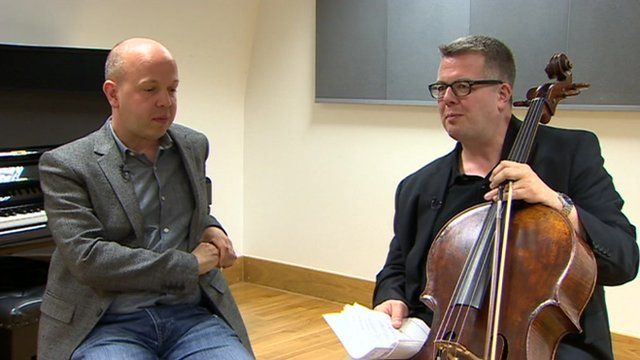
    Above: British brothers Huw and Paul Watkins

    Cellist Paul Watkins was joined by his pianist/brother Huw Watkins in a magnificent rendering of Mendelssohn’s Sonata in D-major for Cello and Piano, Op. 58. Their performance was truly engrossing, with the cellist’s soul-reaching depth of tone and the pianist’s perfect blend of elegance and vitality combining for a spell-binding musical experience.

    In the D-major Sonata, Mendelssohn exults in the outer movements, giving the pianist a barrage of arpeggios with which to delight us while the cellist sings felicitous melodic passages.The sonata gets off to a fast start, with a lively pulse; both players bring mellifluous tone which they are able to maintain even in the most rapid phrases. Paul’s cello buzzes while Huw plays melody for a spell; then they seem to reverse roles. The word ‘amazing’ is so over-used these days, but that’s what I wrote as this fabulous Allegro assai vivace carried us along. The playing hones down to great subtlety before re-bounding and sweeping onward.

    The second movement starts with a sprightly piano tune, with the plucking cello commenting, and then humming low. A lovely cello theme leads onto a more boisterous, slightly gritty passage before recurring. This little scherzo ends with a gentle whisper.

    Rhapsodic phrases from the piano herald the Adagio, the heart of the matter. A poignant melody wells up from the cello, Paul Watkins’ glowing tone like a transfusion for the soul. Huw rhapsodizes again, then takes up his own melody over long-sustained tones from the cello. This Adagio seemed all too brief when played so nobly as it was this evening; the brothers then took only the briefest pause before attacking the opening of the final movement.

    In this Molto allegro e vivace, both players flourished in the coloratura passages and in the melodic exchanges that ensue. After a lull, a slithery scale motif from the cello made me think of the moment in Strauss’s ELEKTRA before the murder of Klytemnestra – a far-fetched association to be sure, but there it is. The music ebbs and flows on to the finish, the Watkins brothers rightly hailed with spirited applause for their remarkable performance.
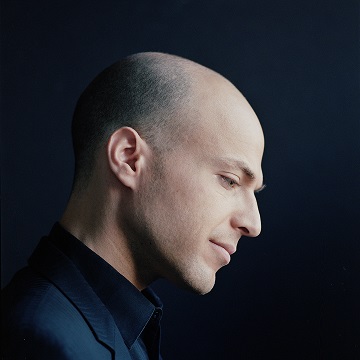
    Orion-WeissB09_credit-Jacob-Blickenstaff

    Mr. Weiss (above, in a Jacob Blickenstaff portrait) returned to the Steinway for Chopin’s Ballade in A-flat major for Piano, Op. 47, a piece long-familiar to me thru its appearance in the Jerome Robbins ballet The Concert. The pianist savoured the music, displaying a vast dynamic spectrum (blissful high pianissimi) and a keen appreciation for the shifting rhythmic patterns. When the music gets grand, Mr. Weiss’s playing is absolutely regal.  

    The Mendelssohn Quintet No. 2 in B-flat major for Two Violins, Two Violas, and Cello, Op. 87, drew together a most impressive string ensemble: Paul Huang and Sean Lee (violins), Paul Neubauer and Matthew Lipman (violas), and Paul Watkins (cello): their performance might be sub-titled ‘The Glory of Mendelssohn‘.

    The players plunged immediately into the music with a vibrant agitato rhythm, from which Paul Huang’s violin soars up to the heavens. Throughout the performance, Mr. Huang’s tone shone with an achingly beautiful polish, his profusion of technique and his uncanny ability to mix refinement and passion in perfect measure defined him an artist of exceptional gifts.

    This ensemble of wonderful musicians created a blend of particular cordiality, and each player took up their solo opportunities with stylish élan. Paul Neubauer’s playing was – as ever – aglow with poetic nuance; Matthew Lipman seconded him handsomely, displaying his trademark love of and commitment to the music, and Sean Lee’s suave phrasing is ever-pleasing to the ear. I found myself wishing that Mendelssohn had given the cello a bit more prominence, simply because I could not get enough of Paul Watkins’s playing.

    The quintet’s Adagio e lento found all the musicians at their most expressive, a reassurance in uncertain times; we so desperately need great music at this point in our lives when the future seems poised on the edge of a knife. With the dedication of such artists as we heard today, the light of hope continues to shine as a testament against the powers of darkness. 

    • Beethoven Variations in E-flat major for Piano, Violin, and Cello, Op. 44 (1804)
    • Mendelssohn Andante and Allegro brillant for Piano, Four Hands, Op. 92 (1841)
    • Mendelssohn Sonata in D major for Cello and Piano, Op. 58 (1843)
    • Chopin Ballade in A-flat major for Piano, Op. 47 (1841)
    • Mendelssohn Quintet No. 2 in B-flat major for Two Violins, Two Violas, and Cello, Op. 87 (1845)

  • Peter Meven

    Meven-portrait71

    Operatic basso Peter Meven was born in Cologne, Germany in 1929. After training at his hometown, he sang at Hagen, Mainz, and Wiesbaden before joining the Rheinoper, Düsseldorf, in 1964, where he remained a member of the ensemble for over 30 years until his retirement in 1994. He also sang frequently at the Staatsoper, Vienna, from 1972 to 1989, and he made numerous recordings.

    Peter Meven passed away in August 2003 at his residence in the Eifel.

    Peter Meven – Ich weiss ein wildes Geschlecht ~ WALKURE – Dusseldorf 1974

  • Graham/Duato/Cherkaoui @ The Joyce

    Mosaic4

    Above: Xin Ying and Abdiel Jacobsen in Sidi Larbi Cherkaoui’s Mosaic; photo by Brigid Pierce

    Friday February 17th, 2017 – A richly rewarding evening of dance from The Martha Graham Dance Company, performing works by Graham, Nacho Duato, and Sidi Larbi Cherkaoui at The Joyce. A packed house seemed spellbound by the ballets, and went wild for the Graham dancers – and rightfully so: their power, commitment, bravery, and beauty make them seem super-human. 

    As a prelude to the evening, Peter Sparling’s gorgeous film SacredProfane was shown as audience members found their seats and settled in. You can sample Sparling’s imaginative work here.

    Mysteries 2

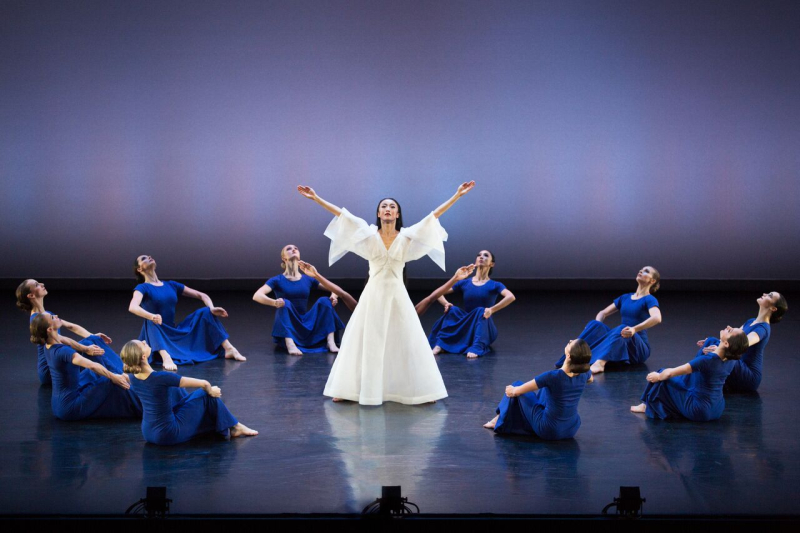
    Above: Pei-Ju Chien-Pott and the ensemble in Primitive Mysteries; photo by Brigid Pierce

    Primitive Mysteries is the Graham work I have most been wanting to see ever since I first read about it a few years ago, shortly after I had attended the rehearsal of Chronicle with photographer Brian Krontz which turned my curious interest in Graham into something of an obsession.

    Performed to music by Louis Horst for flute and piano, Primitive Mysteries is divided into three sections: “Hymn to the Virgin,” “Crucifixus,” and “Hosannah.” The work premiered on February 2, 1931, with Martha Graham in the central role. This ritualistic ballet draws inspiration from the veneration of the Virgin Mary that permeates Catholicism, but also from the rites of the Native Americans whose belief systems were obliterated by the arrival of undocumented immigrants on these hitherto unsullied shores.

    Mysteries 4

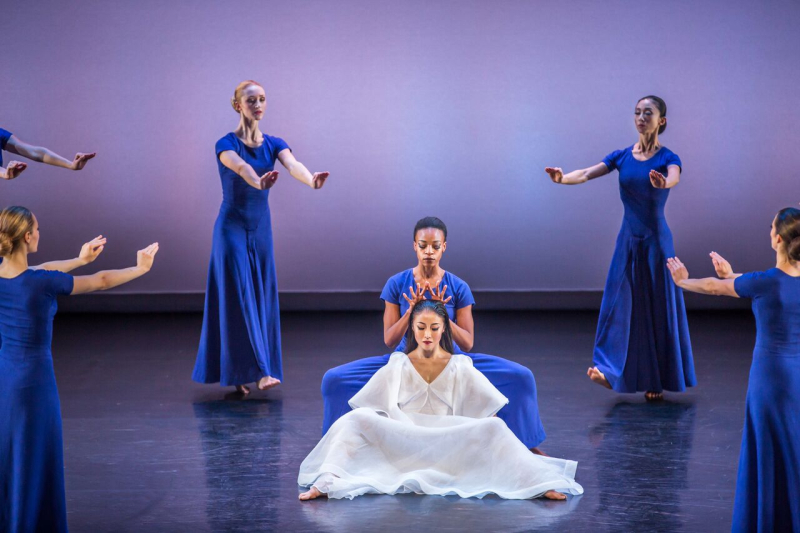
    Above: PeiJu Chien-Pott and the ensemble in Primitive Mysteries; photo by Brigid Pierce

    A corps of twelve blue-clad women frame the iconic Virgin, portrayed this evening by that fascinating Graham paragon, PeiJu Chien-Pott. Clad in pristine white, her hair flowing like black silk, Ms. Chien-Pott presides over her acolytes with benign yet unquestionable authority.

    The dancers enter in silence, with slow, unified strides: they will exit and re-enter in the same mode for each section of the ballet. Trademark Graham moves are to be seen, with high-stepping, contracted motifs, and regimented, stylized gestures unifying the sisterhood. In the second movement, Ms. Chien-Pott strikes a pose of crucifixion, arms outstretched, while the women circle her at increasing speed.

    Mysteries 3

    Above: PeiJu Chien-Pott and Leslie Andrea Williams (center) in a Brigid Pierce photo

    In the concluding “Hosannah”, Ms. Chien-Pott and Leslie Andrea Williams – a charismatic, ascending Graham dancer – strike ecstatic plastique poses, ending with Ms. Williams in a slow, backward collapse into Ms. Chein-Pott’s arms: a Pietà-like vision. Transfigured, the women slowly leave the stage as darkness falls.

    Primitive Mysteries evoked the first of the evening’s ovations, the dancers receiving vociferous screams of delight from the crowd as they took their bows.

    Rust 2

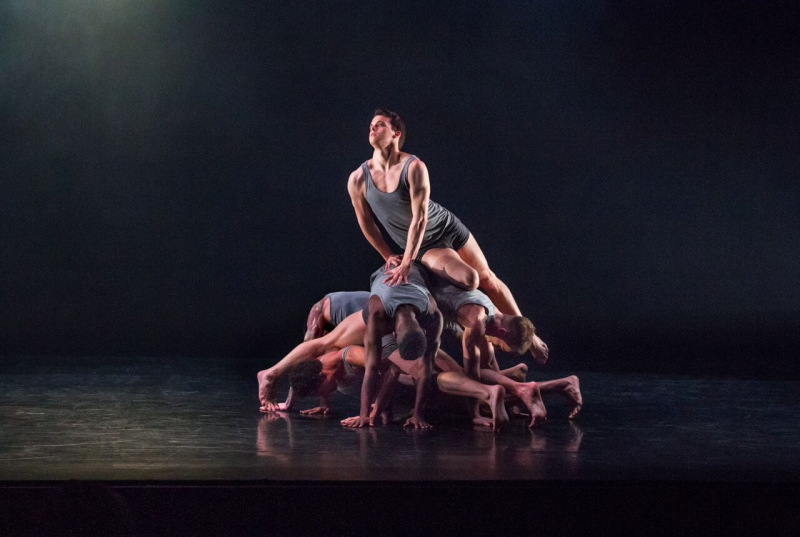
    Above: Lloyd Mayor at the top of the heap in Rust; a Brigid Pierce photo

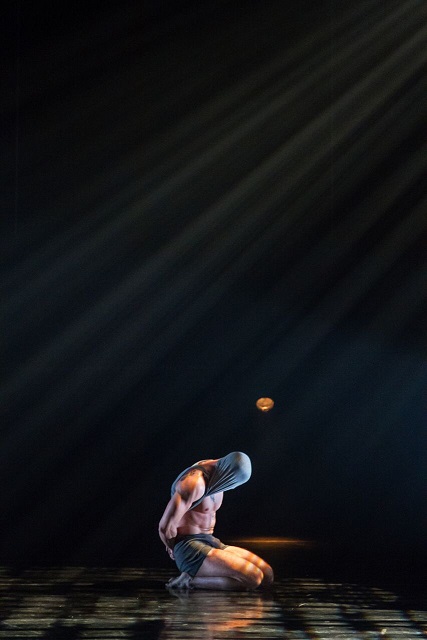
    After a brief pause, the curtain rose on Nacho Duato’s Rust, a powerful all-male work that served as an ideal counterpoise to the feminine spirit of the preceding Graham work. Lorenzo Pagano emerges from the shadows under the relentless beam of an interrogation spotlight; upstage, the hapless Ari Mayzick is kicked, tortured, and left for dead. Ben Schultz, Lloyd Mayor, and Abdiel Jacobsen complete the quintet as Mr. Duato puts them thru demanding physical passages and down-trodden floor work.

    Rust

    Above: from Rust; photo by Brigid Pierce

    Rust is danced to Arvo Pärt’s deep-chanting “De Profundis” (composed in 1980); voices emerge from the depths of despair, rising up to create an atmosphere of devotional reverence. The spirituality of the music and the brutality of the action remind us of the violence that permeates the history of the great religions. Rust ends with the men kneeling, hooded and with their hands tied behind their backs: all are prisoners, one way or another.

    Ben s rust

    Above: Ben Schultz in Rust; photo by Brigid Pierce

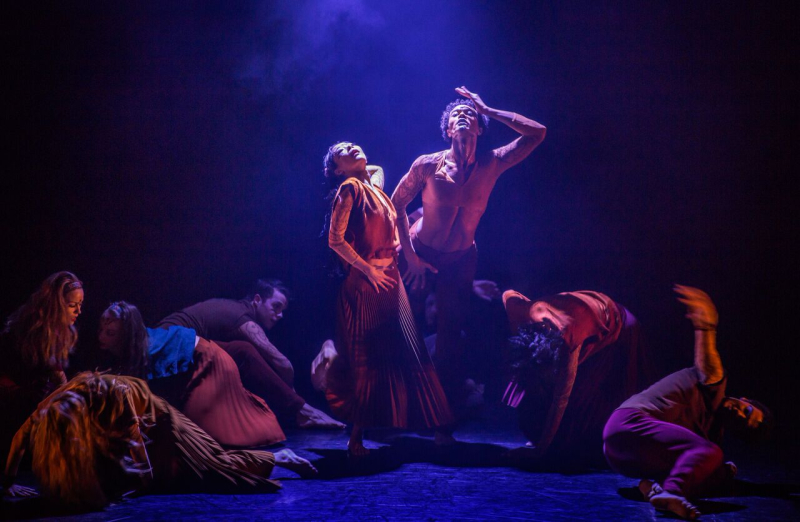
    We had had a preview of Sidi Larbi Cherkaoui’s Mosiac a few weeks ago at the Graham studios. Tonight this exotic, sensual but also shadowy ballet looked mysterious in Nick Hung’s lighting. Felix Bunton’s mid-Eastern score, spicy and alluring, is embellished by spoken commentary from the news networks.

    The dancers, costumed in soft, warm-hued garments, are seen in a cluster at curtain-rise. In a solo passage, Anne Souder’s personal beauty and physical flexibility made an alluring impression. Vocals that evoke deserts, minarets, and marketplaces set the dancers swirling; smoke drifts on the air as Lorenzo Pagano steps forward for a solo.

    Unspecified4d

    Above: Lorenzo Pagano in Mosaic; Brigid Pierce’s image from a studio showing 

    Mosaic

    Above: Xin Ying in Mosaic; photo by Brigid Pierce

    A threatening atmosphere arises; the incomprehensible talk all sounds like bad news. Stylized dancing under aqua lights brings forth the Company’s incredible Xin Ying: her feel for the sway of the music is intrinsic. A big beat and strobe lights give off contrasting impressions: are we in a nightclub or a prison yard? The dancers begin to shed their outer layers of clothing, and their vulnerability lends a new aspect to the story.

    Mosaic2

    A duet for Anne Souder and Lloyd Mayor (above, photo by Brigid Pierce) could be provocative, or manipulative. In the end, the dancers return to the clustered formation, but now they are trembling uncontrollably.

    Mosaic3

    Above: Xin Ying and Abdiel Jacobsen in Mosaic; a Brigid Pierce photo  

    To close the evening Diversion of Angels, Martha Graham’s glowing commentary on the aspects of love, was marvelously danced. To Norman Dello Joio’s lyrical, romance-tinged score, we meet three women who embody the ages of love: Charlotte Landreau (Young Love, in yellow), Xin Ying (Passionate Love, in red), and Konstantina Xintara (Deep and Lasting Love, in white); each has her beloved: Lloyd Mayor, Lorenzo Pagano, and Ben Schultz respectively. An ensemble of four women (So Young An, Marzia Memoli, Anne Souder, and Leslie Andrea Williams) and an additional man (Jacob Larsen – to complete the male quartet) fill out the stage picture with animated choreography, often heralding or echoing the principals.

    Konstantina-1

    Ms. Xintara (above) and Mr. Schultz exude calm: her elongated arabesques show romantic centeredness and confidence while his muscular physique provides a pillar of strength for his beloved. A particular gesture of Ben’s reminded me ever so much of Nijinsky’s Faune.  At times, this White Couple simply stand together, assured of their mutual affection as they watch the younger generations leap and swirl.

    Xin-ying

    Xin Ying (above), superbly beautiful in her red frock, repeatedly displays her own arabesque-motif, sustaining the pose with awesome control. Mr. Pagano is a more fleeting lover here, but when he and his love do meet up, their passion sizzles.

    Charlotte

    Charlotte Landreau (above) is a dancer to cherish. With her strong technique and engaging presence, Charlotte seems destined for many Graham roles. As the Woman in Yellow tonight, her breezy jetés – stretched long and wonderfully elevated – delighted my choreographer/friend Claudia Schreier and me. As Charlotte’s ardent young lover, Lloyd Mayor hovered over his sweetheart, looking at once smitten and protective. 

    Jacob Larsen, handsome of face and form, kept pace with the Company’s dynamic men; he looks likely to become a valuable asset in the Graham rep. 

    An excellent evening on every count, and the cheers and applause that greeted the generous Graham dancers as they took their bows were eminently deserved.

    Production photos in this article are by Brigid Pierce, sent to me at just the right moment by the Graham Company’s press agent, Janet Stapleton.

  • Barnatan|Honeck @ The NY Philharmonic

    Barnatan_16-500x500

    Thursday February 16th, 2017 –  Beethoven’s 1st piano concerto, with soloist Inon Barnatan (above), and Mahler’s 1st symphony were paired in tonight’s New York Philharmonic performance under the baton of Manfred Honeck.

    Beethoven’s 1st piano concerto was used by choreographer Helgi Tomasson in 2000 for his gorgeous ballet PRISM, originally danced by Maria (‘Legs’) Kowroski and Charles Askegard at New York City Ballet: that’s how I fell in love with this particular concerto. Throughout the third movement tonight, I was recalling Benjamin Millepied’s virtuoso performance of Tomasson’s demanding choreography.

    Israeli pianist Inon Barnatan, currently the first Artist-in-Association of the New York Philharmonic, has thrilled me in the past with his playing both with the Philharmonic and in frequent appearances with Chamber Music Society of Lincoln Center. And I don’t use the word ‘thrilled’ lightly. 

    Mr. Barnatan’s playing of the Beethoven this evening was remarkable as much for its subtlety as for its brio. Maintaining a sense of elegance even in the most whirlwind passages, the pianist had ideal support from Maestro Honeck and the artists of the Philharmonic. The cascading fiorature which sound soon after the soloist’s entrance were crystal-clear; with Mr. Barnatan relishing some delicious nuances of phrase along the way, we reached the elaborate cadenza where the pianist demonstrated peerless dexterity, suffusing his technique with a sense of magic.

    From the pianissimo opening of the Largo, Mr. Barnatan’s control and expressiveness created a lovely sense of reverie. He found an ideal colleague in Pascual Martinez Forteza, whose serenely singing clarinet sustained the atmosphere ideally. Maestro Honeck and the orchestra framed the soloist with playing of refined tenderness; the Largo left us with a warm after-glow.  

    The concluding Rondo: Allegro is one of the most purely enjoyable finales in all the piano concerto literature. Good humor abounds, the music is expansive, and a jaunty – almost jazzy – minor key foray adds a dash of the unexpected. Mr. Barnatan was at full-sail here, carrying the audience along on an exuberant ride and winning himself a tumult of applause and cheers. He favored us with a brisk and immaculately-played Beethoven encore, and had to bow yet again before the audience would let him go. 

    Inon Barnatan has, in the past two or three years, become a ‘red-letter’ artist for me – meaning that his appearances here in New York City will always be key dates in my concert-planning. His Gaspard de la Nuit at CMS last season was a true revelation, and tonight’s Beethoven served to re-affirm him as a major force among today’s music-makers. 

    Manfred-honeck-header

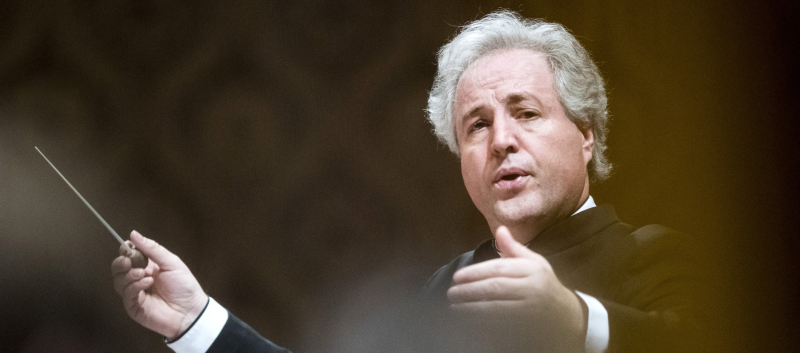
    Maestro Honeck (above) returned to the podium following the interval for the Mahler 1st. In the course of the symphony’s 50-minute span, the Maestro showed himself to be a marvelous Mahler conductor. The huge orchestra played splendidly for him, and the evening ended with yet another resounding ovation.

    From the ultra-soft opening moments of the first symphony, which Mahler described as sounds of nature, not music!”, this evening’s performance drew us in. The offstage trumpet calls seem to issue from a fairy-tale castle deep in a mysterious forest. The Philharmonic’s wind soloists – Robert Langevin, Philip Myers, and Liang Wang among them – seized upon prominent moments: Mr. Wang in fact was a key element in our pure enjoyment of the entire symphony. The pace picks up, and a melody from the composer’s Wayfarer songs shines forth; the music gets quite grand, the horns opulent, the trumpets ringing out, and so on to a triumphant climax.

    The symphony’s second movement, a folkish dance, also finds the horns and trumpets adding to the exuberance. After a false ending, a brief horn transition sends us into a waltzy phase, with winds and strings lilting us along. Then the movement’s initial dance theme returns, accelerates, and rushes to a joyful finish.

    The solemn timpani signals the ‘funeral music’ of the third movement; a doleful round on the tune of “Frère Jacques” ensues, but perhaps this is tongue-in-cheek Mahler. Mr. Wang’s oboe again lures the ear, and a Wayfarer song is heard before a return to the movement’s gloomy opening atmosphere. The unusual intrusion of a brief gypsy-dance motif melts away, and the funeral cortege slowly vanishes into the mist.

    Maestro Honeck took only the briefest of pauses before signaling the dramatic start of the finale. A march, a lyrical theme, a romance that grows passionate: Mahler sends everything our way. After several shifts of mood, it begins to feel like the composer is not quite sure how he wants his symphony to end. Various motifs are heard again, and at last Mahler finds his finish with a celebratory hymn, the horn players rising to blaze forth resoundingly.

  • YCA Presents Samuel Hasselhorn

    SamuelHasselhorn

    Wednesday February 15th, 2017 – Baritone Samuel Hasselhorn (above) presented by Young Concert Artists in recital at Merkin Hall. With Renate Rohlfing at the Steinway, the evening was a definitive success for both the tall singer and his lovely, expressive pianist. The imaginative program, which included both the familiar and the rare, was both beautifully sung and emotionally engaging.

    In my 50+ years of recital-going, baritones have invariably giving me lasting memories: Wolfgang Holzmair, Dmitri Hvorstovsky, the two Thomases (Allen and Hampson), Bo Skovhus, Matthias Goerne, Sanford Sylvan, Kurt Ollmann, Christopheren Nomura, Randall Scarlata, Keith Phares, John Michael Moore, David Won, Shenyang, Thomas Cannon – their voices echo in the mind and heart. Mr. Hasselhorn now joins that distinguished list.

    In their opening Schumann set, Mr. Hasselhorn and Ms. Rohlfing explored a wide range of moods: from the urgency of Tragödie I and the pensive resignation of Tragödie II, they progressed to the vivid narrative of Belsazar (Mr. Hasselhorn operatically powerful, with Ms. Rohlfing excelling), and the rather unusual Mein wagen rollet langsam. The effect of the defeat of Napoleon on two of his faithful foot-soldiers was marvelously depicted in song by Mr. Hasselhorn in Die beiden Grenadiere, with its sounding of the Marseillaise. Passionate desire fills Lehn’ deine Wang, and the contrasts of poetic and turbulent love were superbly expressed by baritone and pianist in Du bist wie eine Blume and Es leuchtet meine liebe, the latter ending with Ms. Rohlfing’s finely-played postlude.

    In charmingly accented and very clear English, Mr. Hasselhorn delighted us with Britten’s ironic Oliver Cromwell and The foggy, foggy dew. The singer’s exceptional control was manifested in his poignant rendering of O waly, waly with Ms. Rohlfing giving tender support. A long comic Britten narrative, The Crocodile, ended the evening’s first half.

    Addressing the audience before commencing the evening’s second half, Mr. Hasselhorn spoke of the woes of our planet today, thrown into further chaos by recent events. The plight of refugees worldwide, and the threats posed by war and terrorism to a hopeful humanity prompted the baritone to devise a set of works especially meaningful to him on a personal level; these he now offered to us with singing of real sincerity and depth of feeling.

    The juxtaposition of Hugo Wolf’s madly dramatic Die Feuerreiter (‘The Fireman’) and Franz Schubert’s haunting Litanei auf das Allerseelen (‘Litany for All-Saints’) was a masterstroke of programming beyond anything I’ve ever experienced in a recital. The fierceness and wild desperation of the Wolf was memorably contrasted with the sublime prayer for peace penned by Schubert. Mr. Hasselhorn and Ms. Rohlfing were simply thrilling: the pianist in a virtuoso rendering of the Wolf whilst the singer’s urgency in the narrative reached a feverish level. By contrast, the Schubert was heart-rending in its lyricism and spirituality. By taking only a brief pause between these two, our two artists cast a veritable spell over the house.

    Renate-Rohlfing

    Above: pianist Renate Rohlfing

    Three Poulenc songs, reflections on the Nazi occupation of Paris, showed the Hasselhorn/Rohlfing partnership at its most persuasive. The pre-dawn removal of (fictional) freedom-fighter André Platard in La disparu, a prayer to the Virgin in Priez pour pays (the pianist truly sublime here), and the return from the front of an exhausted sergeant in Le retour de sergent made a triptych – painted in the inimitable Poulenc style – which perfectly encapsulates a specific time and place. 

    The singer and pianist then sent chills thru me with the devastating emotional power of their performance of Schubert’s Erlkönig. Mr. Hasselhorn summoned up the three contrasting characters of the narrative with subtle rather than overly-theatrical variants of tone-colour – simply splendid singing! – and Ms. Rohlfing gave the piano’s role, with its contrast of relentlessness, desperation, and cruel seduction, full rein. A luminously intense performance.

    In the brief Wanderers Nachtlied II, poetry seeped gently into the air from Ms. Rohlfing’s keyboard, to be handsomely taken up by Mr. Hasselhorn like a benediction. Lingering on the heights of expressiveness, singer and pianist brought me to tears with the poignant song of Der blinde kind (‘The Blind Boy’), a youth who refuses to wallow in self-pity over his affliction. Mr. Hasselhorn’s gestures, stance, and expressive features portrayed the boy’s physical and emotional state movingly, evoking understanding rather than pity: such a touching song, superbly rendered.

    Schubert’s last song, Die taubenpost (‘The carrier-pigeon’), seems like a simple avowal of young love as the poet sends his trusty pigeon bearing messages to his beloved. The pigeon’s name Sehnsucht – that magical word for ‘longing’ – and he is the messenger of fidelity. For those of us who love from afar, the song takes on a sweet depth of meaning. True to all that has gone before, Mr. Hasselhorn and Ms. Rohlfing were perfect here. Their encore, the blessed An die musik (‘To Music’), served as a summarizing of this exceptional evening of song.

    I shall hope to hear Mr. Hasselhorn here in New York City again soon; how I should love to hear his voice in Schumann’s Dichterliebe! It also seems to me that there are many operatic roles in which he could shine at The Met. For this evening, I again express gratitude to Susan Wadsworth and Young Concert Artists for bringing us another in their series of exemplary recitals.

  • Renata Scotto’s “Ah! non giunge”

    Scotto

    At the end of October 1972, Renata Scotto was alternating performances of Amina in SONNAMBULA and the title-role of LUCIA DI LAMMERMOOR at The Met. I came down from Syracuse NY to see her as Amina on a Thursday night and her Lucia two nights later. Her tenor co-stars were Nicolai Gedda (Elvino) and Alfredo Kraus (Edgardo). The diva scored back-to-back triumphs.

    SONNAMBULA ends with Amina’s joyous cabaletta “Ah! non giunge”. Scotto, having held a rapt audience in the palm of her hand throughout the opera, now came down past the prompter’s box to the very edge of the stage and sang directly to us. As the second verse progressed, the house lights were slowly raised to full brightness; and so, in the end, singer and audience were “…uniti in una speme.

    Scotto sings ‘Ah non giunge!’ – SONNAMBULA – Met 10~28~72(1)


  • Brahms & Fauré @ Chamber Music Society

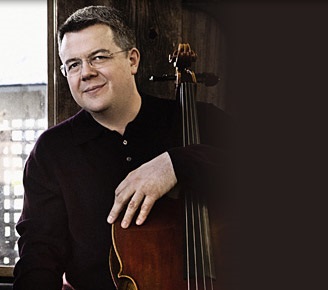
    Paul Watkins

    Above: cellist Paul Watkins

    Sunday January 29th, 2017 – Following an unsettling week, it was particularly reassuring to settle into the embracing space of Alice Tully Hall this evening and be serenaded by four estimable musicians in Chamber Music Society of Lincoln Center‘s program of works by Johannes Brahms and Gabriel Fauré. 

    In 1853, Robert Schumann and Johannes Brahms teamed up with Schumann’s student, Albert Dietrich, to write a “welcome home” sonata for violinist/composer Joseph Joachim, whose travels had kept him away from Düsseldorf for several weeks. The music was set around the notes F-A-E, which stood for Joachim’s personal motto, “Frei, aber einsam” (‘Free, but lonely’). Dietrich wrote the first movement, with Schumann taking on the second and fourth, leaving Brahms with the third.

    Joachim retained the sole copy of the score after performing it; he had the Brahms Scherzo published in 1906, after the composer’s death; the full sonata was not published until much later.

    The complete ‘FAE Sonata‘ is rarely heard these days, but the Brahms Scherzo has become a popular stand-alone work in the chamber music repertoire. It commences in a brisk, passionate mode which returns following an affettuoso interlude. Tonight, violinist Ani Kavafian and pianist Alessio Bax brought great energy to the opening paragraph, subsiding to a gently rhapsodic state in the calm of the central section before setting up a spirited drive to the finish.

    Violist Yura Lee and cellist Paul Watkins then joined Ms. Kavafian and Mr. Bax for the Fauré. A unison string theme opens the quartet, with the entrance of the piano filling out the sonic texture that will keep us enchanted for the next half-hour. Ms. Lee’s wonderfully sensitive playing – a hallmark of the evening – meshed lyrically with the sweetness of Ms. Kavafian’s violin, the quiet rapture of Mr. Watkins’ cello, and the elegant romance of Mr. Bax’s phrasing from the Steinway. The music veers briefly to the dramatic before subsiding into a cushioning warmth from viola and cello whilst the violin wafts on high.

    Plucking strings and a rolling theme from Mr. Bax open the second movement. Later, the piano comments ironically as the strings try to revive the first movement’s main theme in a rather off-kilter manner; the music slows, and then steals away.

    In the Adagio third movement, Yura Lee’s dreamy playing had a transportive quality; Fauré’s student Charles Koechlin has written that “…the viola would have to be invented for this Adagio if it did not already exist…”, and Ms. Lee’s playing underlined the truth of that notion. Moving forward, violin and piano achieve a lovely blend and the music begins to turn passionate; Fauré manages a balance of intensity and calm in this movement that is quite unique.

    A darker and somewhat turbulent mood is created at the start of the quartet’s concluding Allegro molto: Ms. Lee and Mr. Watkins sing a deep theme together before a more lilting quality begins to rise. Mr. Bax commences a dance, drawing the string players in with his rhythmic emphasis as the music builds and dances on to an exuberant end.

    Following the interval, the performance of the Brahms second quartet was somewhat compromised by the high-pitched sound of a faltering hearing-aid battery. After the quartet’s first movement, Ms. Kavafian asked the audience if they were hearing it too, and several people replied in the affirmative. The players took a moment to gather their concentration before proceeding. Annoying as such disruptive sounds are to the audience, it must be doubly difficult to play in such circumstances as the musicians are always listening for one another and the extraneous sound must be particularly jarring. They played on, admirably, and the noise seemed to subside as the performance evolved.

    It was in the Brahms quartet that Mr. Bax seized upon the prominence the composer assigned to the piano’s role and delighted us with truly gorgeous playing; my notes are full of little stars and exclamation marks, and scrawls of “Bax…Bax…Bax!”

    Rhythmic distinctiveness marks the first movement, the four players ever-alert to nuance as cello and violin each have a passage of stepping forward. And then, it’s in the Adagio that we get to the heart of the matter: commencing as a lullaby, the piano’s tranquil, song-like theme was an outstanding Bax passage. The string voices murmur deeply and the piano replies; passions ebb and flow, and the strings unite in a brief trio. Ms. Kavafian and Mr. Watkins play in unison, leading to the development of a big song from which the violinist eventually shimmers upward; a hushed coda aptly rounds out this Adagio dream.

    A simple song opens the Scherzo, which moves on thru various permutations. A transition to a more energetic passage leads to more animated playing, with a Hungarian lilt. This gypsy colouring extends into the quartet’s concluding Allegro, with Ms. Kavafian and Mr. Bax leading the way. The folksy dance motifs, however, are tempered by an unhurried feeling. The music becomes almost gentle at times, before a final build-up.

    We emerged into the cold chill of impending February, jolted back to the realities of life. Now – more than ever – we will seek solace in great music, art, poetry, and dance, looking to concert halls and museums as sanctuaries of reason and compassion.  

    • Brahms Scherzo, WoO 2, from “F-A-E” Sonata for Violin and Piano (1853)
    • Fauré Quartet No. 2 in G minor for Piano, Violin, Viola, and Cello, Op. 45 (1885-86)
    • Brahms Quartet No. 2 in A major for Piano, Violin, Viola, and Cello, Op. 26 (1861)
  • Brahms & Fauré @ Chamber Music Society

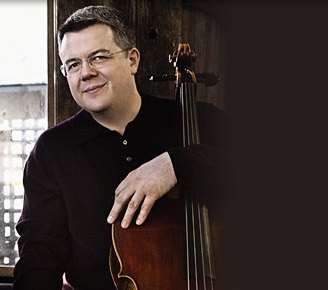
    Paul Watkins

    Above: cellist Paul Watkins

    Sunday January 29th, 2017 – Following an unsettling week, it was particularly reassuring to settle into the embracing space of Alice Tully Hall this evening and be serenaded by four estimable musicians in Chamber Music Society of Lincoln Center‘s program of works by Johannes Brahms and Gabriel Fauré. 

    In 1853, Robert Schumann and Johannes Brahms teamed up with Schumann’s student, Albert Dietrich, to write a “welcome home” sonata for violinist/composer Joseph Joachim, whose travels had kept him away from Düsseldorf for several weeks. The music was set around the notes F-A-E, which stood for Joachim’s personal motto, “Frei, aber einsam” (‘Free, but lonely’). Dietrich wrote the first movement, with Schumann taking on the second and fourth, leaving Brahms with the third.

    Joachim retained the sole copy of the score after performing it; he had the Brahms Scherzo published in 1906, after the composer’s death; the full sonata was not published until much later.

    The complete ‘FAE Sonata‘ is rarely heard these days, but the Brahms Scherzo has become a popular stand-alone work in the chamber music repertoire. It commences in a brisk, passionate mode which returns following an affettuoso interlude. Tonight, violinist Ani Kavafian and pianist Alessio Bax brought great energy to the opening paragraph, subsiding to a gently rhapsodic state in the calm of the central section before setting up a spirited drive to the finish.

    Violist Yura Lee and cellist Paul Watkins then joined Ms. Kavafian and Mr. Bax for the Fauré. A unison string theme opens the quartet, with the entrance of the piano filling out the sonic texture that will keep us enchanted for the next half-hour. Ms. Lee’s wonderfully sensitive playing – a hallmark of the evening – meshed lyrically with the sweetness of Ms. Kavafian’s violin, the quiet rapture of Mr. Watkins’ cello, and the elegant romance of Mr. Bax’s phrasing from the Steinway. The music veers briefly to the dramatic before subsiding into a cushioning warmth from viola and cello whilst the violin wafts on high.

    Plucking strings and a rolling theme from Mr. Bax open the second movement. Later, the piano comments ironically as the strings try to revive the first movement’s main theme in a rather off-kilter manner; the music slows, and then steals away.

    In the Adagio third movement, Yura Lee’s dreamy playing had a transportive quality; Fauré’s student Charles Koechlin has written that “…the viola would have to be invented for this Adagio if it did not already exist…”, and Ms. Lee’s playing underlined the truth of that notion. Moving forward, violin and piano achieve a lovely blend and the music begins to turn passionate; Fauré manages a balance of intensity and calm in this movement that is quite unique.

    A darker and somewhat turbulent mood is created at the start of the quartet’s concluding Allegro molto: Ms. Lee and Mr. Watkins sing a deep theme together before a more lilting quality begins to rise. Mr. Bax commences a dance, drawing the string players in with his rhythmic emphasis as the music builds and dances on to an exuberant end.

    Following the interval, the performance of the Brahms second quartet was somewhat compromised by the high-pitched sound of a faltering hearing-aid battery. After the quartet’s first movement, Ms. Kavafian asked the audience if they were hearing it too, and several people replied in the affirmative. The players took a moment to gather their concentration before proceeding. Annoying as such disruptive sounds are to the audience, it must be doubly difficult to play in such circumstances as the musicians are always listening for one another and the extraneous sound must be particularly jarring. They played on, admirably, and the noise seemed to subside as the performance evolved.

    It was in the Brahms quartet that Mr. Bax seized upon the prominence the composer assigned to the piano’s role and delighted us with truly gorgeous playing; my notes are full of little stars and exclamation marks, and scrawls of “Bax…Bax…Bax!”

    Rhythmic distinctiveness marks the first movement, the four players ever-alert to nuance as cello and violin each have a passage of stepping forward. And then, it’s in the Adagio that we get to the heart of the matter: commencing as a lullaby, the piano’s tranquil, song-like theme was an outstanding Bax passage. The string voices murmur deeply and the piano replies; passions ebb and flow, and the strings unite in a brief trio. Ms. Kavafian and Mr. Watkins play in unison, leading to the development of a big song from which the violinist eventually shimmers upward; a hushed coda aptly rounds out this Adagio dream.

    A simple song opens the Scherzo, which moves on thru various permutations. A transition to a more energetic passage leads to more animated playing, with a Hungarian lilt. This gypsy colouring extends into the quartet’s concluding Allegro, with Ms. Kavafian and Mr. Bax leading the way. The folksy dance motifs, however, are tempered by an unhurried feeling. The music becomes almost gentle at times, before a final build-up.

    We emerged into the cold chill of impending February, jolted back to the realities of life. Now – more than ever – we will seek solace in great music, art, poetry, and dance, looking to concert halls and museums as sanctuaries of reason and compassion.  

    • Brahms Scherzo, WoO 2, from “F-A-E” Sonata for Violin and Piano (1853)
    • Fauré Quartet No. 2 in G minor for Piano, Violin, Viola, and Cello, Op. 45 (1885-86)
    • Brahms Quartet No. 2 in A major for Piano, Violin, Viola, and Cello, Op. 26 (1861)

  • Bronfman|Bychkov ~ Tchaikovsky @ The NY Phil

    Bronfman_TchaikovskyFestival_2520x936

    Above: pianist Yefim Bronfman

    Friday January 27th, 2017 – With Semyon Bychkov on the podium and Yefim Bronfman at the Steinway, we were assured of an exciting evening at The New York Philharmonic. Music by Glinka and Tchaikovsky was played in the grand style under Maestro Bychkov’s magical baton, and Mr. Bronfman brought down the house with his splendid account of Tchaikovsky’s 2nd piano concerto. Throughout this à la Russe program, visions of the splendours of the Tsarist courts filled the imagination.

    The first half of the evening was given over to two scores which inspired George Balanchine to create two choreographic masterworks:  Mikhail Glinka’s brief Valse-Fantaisie, and the Tchaikovsky concerto. The two ballets unfolded clearly in my mind as the music, so familiar to me from innumerable performances at New York City Ballet, filled Geffen Hall in all its romantic glory.

    The infectious, lilting rhythm of the waltz propels the Glinka score; originally written for piano in 1839 and later orchestrated, it is rich in melody and intriguing shifts between major and minor passages, evoking the glamour, chivalry, and mystery of a glittering ball at the Winter Palace. Needless to say, it was sumptuously played under Maestro Bychkov’s masterful leadership.

    Tchaikovsky’s 2nd piano concerto has been a favorite of mine for years, thanks to my great affection for the ballet Balanchine created to it. Written in 1879–1880, the concerto was dedicated to Nikolai Rubinstein; but Rubinstein was never destined to play it, as he died in March 1881. The premiere performance took place in New York City, in November of 1881 with Madeline Schiller as soloist and Theodore Thomas conducted The New York Philharmonic orchestra. The first Russian performance was in Moscow in May 1882, conducted by Anton Rubinstein with Tchaikovsky’s pupil, Sergei Taneyev, at the piano.

    Tonight, Yefim Bronfman’s power and virtuosity enthralled his listeners, who erupted in enthusiastic applause after the concerto’s first movement. The eminent pianist could produce thunderous sounds one moment and soft, murmuring phrases the next; this full dynamic spectrum was explored in the monster cadenza, to mesmerizing effect. A word of mention here of some lovely phrases from flautist Robert Langevin and clarinetist Pascual Martinez Fortenza early in the concerto; in fact, all of the wind soloists were very much on their game tonight.

    In the Andante, a sense of gentle tenderness filled Bronfman’s playing, and his rapport with concertmaster Frank Huang and cellist Carter Brey in the extended passages where they play off one another made me crave an evening of chamber music with these three masters. The concerto sailed on thru the concluding Allegro con fuoco, with its gypsy-dance theme brilliantly set forth by both pianist and orchestra. Maestro Bychkov, who had set all the big, sweeping themes sailing forth grandly into the hall throughout, was particularly delightful in this lively finale. At the end, the audience erupted in a gale of applause and cheers, Mr. Bronfman cordially bringing Mssrs. Huang and Brey forward to share in the ovation. 

    Throughout this awe-inspiring performance, the choreography of Balanchine danced in my head, and visions of Viktoria Tereshkina, Teresa Reichlen, Faye Arthurs, and Jonathan Stafford sprang up, the music inspiring the memory of their sublime dancing in Mr. B’s remarkable setting of this concerto.

    Semyon_bychkov

    After the interval, Maestro Bychkov (above) led an epic performance of Tchaikovsky’s 5th symphony. From the burnished beauty of the horn solo near the start, thru the palpable fervor of the Andante cantabile (with its evocation of the SLEEPING BEAUTY Vision Scene), and on thru the Valse, which moves from sway to elegant ebullience, Maestro Bychckov and the artists of the Philharmonic gloried in one Tchaikovskyian treasure after another.

    The symphony’s finale, right from it’s soulful ‘Russian’ opening theme, seemed to sum up all that had gone before: vivid dancing rhythms from Russian folk music, a march-like tread, a brief interlude. Then the brass call forth, and a tremendous timpani roll heralds a mighty processional. One final pause before a stately repeat of the main theme and a swift, four-chord finish. The audience rightly responded to the Maestro and the musicians with a full-scale standing ovation.