Blog

  • The Young Björling

    1467513_330_449

    Jussi Björling’s was the first tenor voice I fell in love with. After I had discovered opera in 1959, my parents gifted me with a two-LP set of excerpts from RCA’s Verdi and Puccini catalog. The singers on those records –  Licia Albanese, Roberta Peters, Zinka Milanov, Jan Peerce, Robert Merrill, Leonard Warren, and Giorgio Tozzi, in addition to Björling – assumed god-like status for me.

    It was the plaintive sweetness of Björling’s voice that really ignited my imagination; and thru the ensuing years, it has often been the tenors – Tucker, Bergonzi, Corelli, Vickers, Pavarotti, Domingo – who provided the greatest thrills and chills in the many performances I have seen and heard.

    In the early 1930s, Björling made his first aria recordings, in Swedish. On a quiet afternoon yesterday, I was listening to – and savoring – the youthful lyricism of this remarkable voice; he had turned twenty in 1931:

    Jussi Björling – TOSCA aria – in Swedish

    By the end of that decade, Björling’s career was well underway, his voice was in full bloom, and he was singing in Italian:

    Jussi Björling – O Paradiso – L’AFRICANA

    He made many recordings in the ensuing years, including the Verdi REQUIEM under Fritz Reiner, which was recorded in June 1960; three months later, Björling died.

    Björlings_grav

    The great tenor was buried at Stora Tuna in the Dalarna province of his native land.

    Two decades before the Reiner recording of the REQUIEM was made, Björling recorded the Ingemisco from the Verdi masterpiece:

    Jussi Björling – Ingemisco – from Verdi REQUIEM

  • Suzanne Balguérie ~ Mort d’Yseult

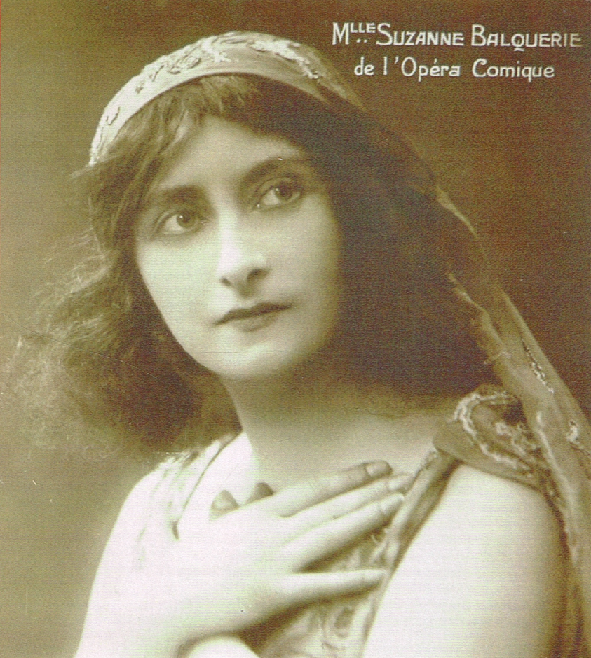
    Sb

    I’ve fallen in love with Suzanne Balguérie’s voice.

    For years I’ve had her ALCESTE aria on a cassette. After listening to it again, I went in search of more Balguérie and found this ravishing Liesbestod, in French. So atmospheric.

    Suzanne Balguerie – Tristan et Iseult _ Mort d’Iseult


  • Suzanne Balguérie ~ Mort d’Yseult

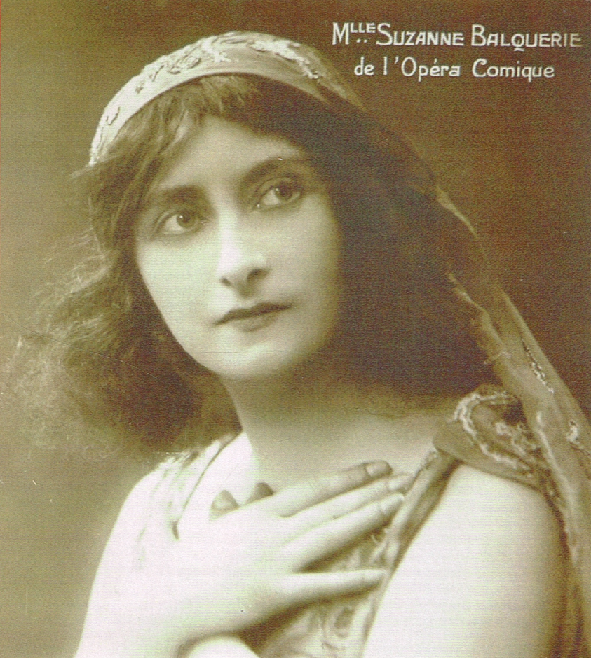
    Sb

    I’ve fallen in love with Suzanne Balguérie’s voice.

    For years I’ve had her ALCESTE aria on a cassette. After listening to it again, I went in search of more Balguérie and found this ravishing Liesbestod, in French. So atmospheric.

    Suzanne Balguerie – Tristan et Iseult _ Mort d’Iseult


  • Paul Taylor @ Lincoln Center 2016

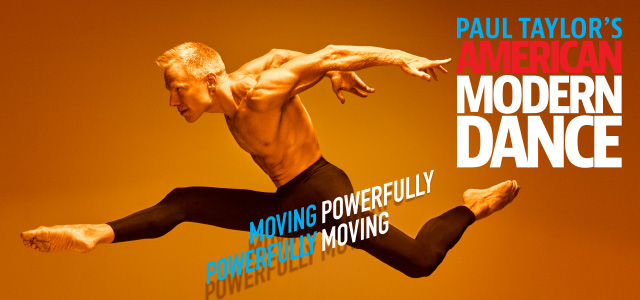
    ImageProxy.mvc

    Wednesday March 23rd, 2016 – “Taylor Does Graham” was my alternate headline for this article. Martha Graham’s Diversion of Angels has triumphantly entered the repertory of Paul Taylor’s American Modern Dance Company. I’ve always loved seeing the Graham dancers in this work, and now I also love seeing the Taylors: between these two companies, some of the greatest movers and shapers of our day are to be found. In the photo at top: Michael Trusnovec.

    Graham paragons Blakeley White-McGuire and Tadej Brdnik set Diversion on the Taylor company. The casting of the work’s three main couples seemed spot-on, with the elegant, patrician Laura Halzack in White paired with Michael Trusnovec; restless, passionate Parisa Khobdeh (in Red) dancing with Sean Mahoney; and the sun-filled joy of Eran Bugge’s Woman in Yellow handsomely partnered by Michael Novak. A women’s quartet consisting of Michelle Fleet, Jamie Rae Walker, Heather McGinley, and Christina Lynch Markham comprised a marvelously high-end “supporting” cast, and George Smallwood’s strong performance as the odd-man-in all made for a great deal of spacious, eye-catching dance.

    Several passages linger in the memory: the long frozen, stylized pose sustained by Ms. Halczak and Mr. Trusnovec early in the piece, and the lovely floated quality of Laura’s series of slow turns; Ms. Khobdeh’s agitated solo amidst the four women, her great sense of urgency as she rushes across the stage on some unknown quest, and Mr. Mahoney’s wonderful “catch” of her as she rushed to him; Ms. Bugge, who captivated me all evening, has a most congenial role; she brought Springtime freshness to her solo passages, and to her lyrically animated duet with Mr. Novak.

    A sustained deep note in the Norman Dello Joio score signals the “White” pas de deux; it almost goes without saying that the Halzack/Trusnovec duo were truly inspired and inspiring here.  

    Paul Taylor’s Three Dubious Memories is a gem of a ballet. When I first saw it a couple of years ago, it was mainly the witty elements that persuaded me of its stage-worthiness. Tonight somehow it seemed much deeper and more of a story-telling ritual than a mere series of relationship-vignettes. 

    In Three Dubious Memories, an incident from the evolving story of a romantic triangle is remembered differently by each of the three people involved. The competition between two men (Robert Kleinendorst and Sean Mahoney) for the affections of Eran Bugge brings the men to blows. But then, in a volte-face, the men are seen as a cozy pair and Ms. Bugge as the interloper. We’ll never know the real story, but Mr. Taylor has left us to ponder the way in which we each remember things.

    In addition to brilliant dancing and acting from the principal trio, Three Dubious Memories provides an intriguing role for James Samson: a silent narrator, a sort of master-of-ceremonies. James summons up each telling of the tale by the three protagonists; he also leads an ensemble of ‘choristers’ in stylized rituals. James did a beautiful job in this role which calls for both expressiveness and athleticism. In one memorable moment, Heather McGinley perches on James’s shoulders like a looming icon. The ballet was beautifully lit by Jennifer Tipton.

    In the evening’s concluding work, Spindrift, dates from 1993 and is set to Arnold Schoenberg’s String Quartet Concerto (after Handel), played live by the Orchestra of St Luke’s. To the sound of wind and waves, Michael Trusnovec emerges from the midst of a communal group moving in stylized slowness. Michael’s character displays the shifting nature of a romantic spirit with an affinity for the natural world; he’s an outsider, cast upon a mystic shore among a rather suspicious tribe.

    Certain movement motifs recall Nijinsky’s Faun, and in fact the costuming also makes us think of the Debussy ballet. The Handel/Schoenberg music seems at once old and new as Mr. Trusnovec pursues Mr. Halzack and is occasionally distracted by the quirky presence of Ms. Bugge.

    In the ballet’s second movement, an adagio solo for Mr. Trusnovec is the heart of Spindrift; in subtle twists of his torso, the power and beauty of this magnificent dancer’s physique given full rein, as is his indelible artistry: so compelling to behold. The movement becomes livelier and more off-kilter for a spell, then slows and – as Mr. Trusnovec melts into a reverential kneeling back-bend, the ballet seems about to end. But there’s another movement, laced with solos and duets for all the participants.

    As is all the great Taylor works, there are moments of seeming simplicity that make an unexpected impact; one such in Spindrift was a passage where four woman crossed on a diagonal, walking slowly. Other impressive passages were a duet for Ms. Bugge and Mr. Trusnovec and another one in which Michael was paired with Robert Kleinendost; Robert was on peak form all evening.

    In fact, the entire Taylor company’s looking pretty extraordinary these days. I was hoping to see more of Michelle Fleet (she only danced in the opening work, with Ms. Bugge replacing her in Spindrift); Francisco Graciano and Michael Apuzzo also appeared all-too-briefly, yet – as always – they each made their mark. Madelyn Ho, the newest dancer on the roster, appeared in the ensemble in Spindrift.

    I had great seats (thank you, Lisa Labrado!) and was delighted to spend the evening with my ballet-loving friend Susan, who I rarely see these days. And it’s always so nice to run into Janet Eilber, Blakeley White-McGuire, Take Ueyama and his wife Ana, and Richard Chen-See.

    Onward now to more Taylor…and then, in April, Graham!

  • Kavakos Plays Sibelius @ The NY Phil

    Kavakos-Leonidas-21

    Above: violinist Leonidas Kavakos

    Saturday March 19th, 2016 – Feeling under the weather today, I was nevertheless determined to hear Leonidas Kavakos play the Sibelius violin concerto with The New York Philharmonic. I’d looked forward to this red-letter evening since the season was announced, and even though I feel strongly that people who are sick are better off staying home, I was determined to go.

    In an unusual programming move, the concerto was the opening work tonight.

    Mr. Kavakos, very tall and with the air of a mythic sorcerer, launched his inspired rendering of the concerto with a magical glow: the spine-tingling opening passage – coolly sensual – immediately drew us in. Maestro Alan Gilbert and Mr. Kavakos have formed a rich rapport over time, and the conductor and his players were at their shining best as the violinist shaped the opening movement with alternating currents of broad-toned lyricism and spiky bravura. Few violinists today can match Kavakos for power – both sonic and emotional – and his playing as the concerto unfolded continually sent chills up and down my spine.

    In the central Adagio, with its heart-fillingly gorgeous main theme, violinist and orchestra were in a particular state of grace. One of the most winning aspects of Mr. Kavakos’ playing is his marvelously sustained phrasing; Maestro Gilbert and the orchestra provided the soloist with perfect support as passage after passage fell gratifyingly in the ear, everything lovingly dove-tailed and with an acute awareness of dynamic nuance. This performance of the Adagio was a high point in a season that has been rich in musical magic. 

    Mr. Kavakos then dug into the opening dance of the concluding Allegro with gusto, and the orchestra sounded simply magnificent in the big tutti passages. Give and take between soloist and ensemble produced some dazzling effects, and the lovely ‘wandering’ passage for violin when the music briefly slows down was particularly appealing. Following an energetic rush to the finish, Mr. Kavakos enjoyed a prolonged ovation, filled with shouts of joy from his listeners. The Philharmonic players seem clearly to revel in performing with this violin-magician, and his warm greeting of concert-master Frank Huang and a lovely embrace for Sheryl Staples indicated a deeper personal connection with his colleagues than we sometimes see between soloist and orchestra. 

    After several bows, Mr. Kavakos granted us a rather long solo encore which showed a more intimate side of his artistry. And now, here’s some excellent news: Mr. Kavakos will be with us more frequently next season as he has been designated the Philharmonic’s 2016-2017 Mary and James G Wallach Artist-in-Residence. In addition to programs featuring him as soloist, he will make his NY Phil conducting debut. Find out more about this residency here

    Much as I wanted to hear the Shostakovich’s The Age of Gold Suite, I knew it was time to go home, take Advil, and rest. I now have some rare downtime: an opportunity to re-charge before this busy season continues. I have lots of wonderful music to listen to, including Mr. Kavakos’s Sony double-disc of Mendelssohn’s concerto and the piano trios, which I highly recommend; find it here.

  • Ian Spencer Bell: Poet and Dancer

    12799298_10206186818733498_6040095322399417585_n

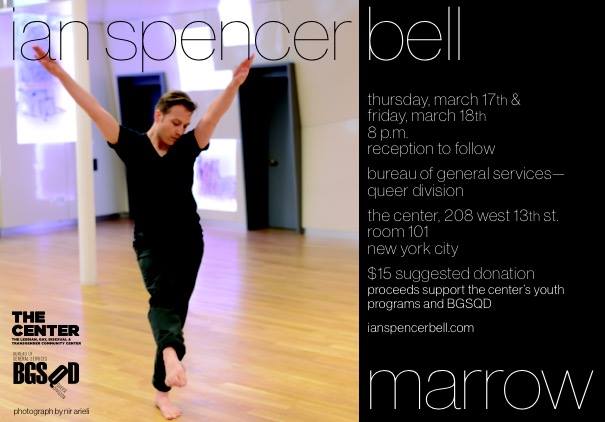
    Friday March 18th, 2016 – There are only a handful of true originals on the Gotham dance scene these days, and Ian Spencer Bell is one of them. In the past, his very sophisticated choreography of small ensemble pieces has always intrigued me; more recently, Ian has been exploring his two passions – dance and poetry – simultaneously in unique solo presentations. 

    Tonight at the Lesbian, Gay, Bisexual & Transgender Community Center on 13th Street, Ian performed his newest work, MARROW, in the intimate yet airy space of the recently-renovated Room 210. It was in the same setting, last June, that Ian’s double bill of GEOGRAPHY SOLOS and HOLLER made such a distinctive impression.

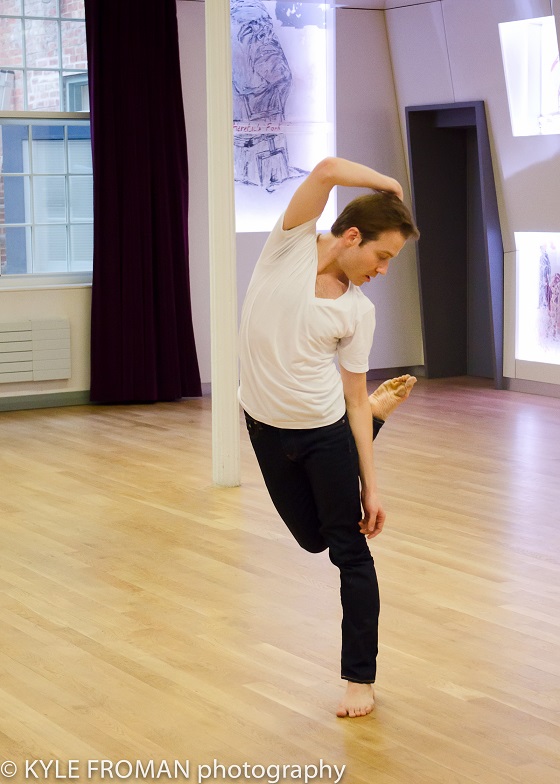
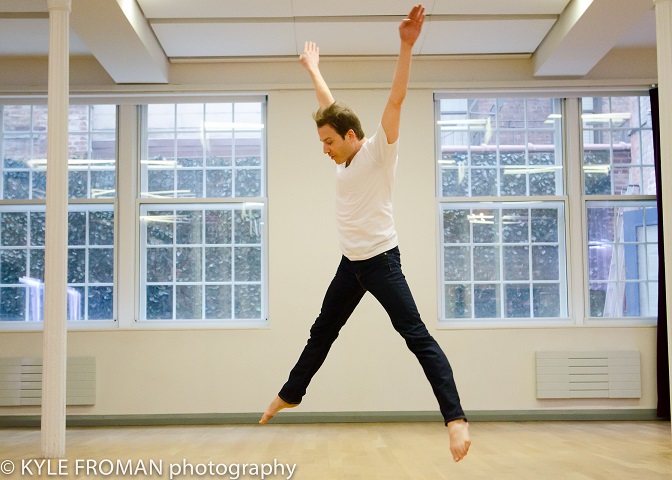
    An attentive and wonderfully silent audience seemed mesmerized this evening by Ian’s every word and move. Lithe and beautiful to behold, Ian dances with a rather gentle physicality; but the choreography can also take on a sharper aspect when the narrative gets more intense. 

    _KCF9145-2

    His poem tonight drew on his experiences as a Southern boy, a youth who was different from everyone else. How many times has this story been told??…and yet, rarely with the same poignancy as in Ian’s words and dancing.

    Waiting for the performance to start, we were listening to Ode to Billie Joe; thus was the setting for what we were about to witness already evoked. Beginning with a story about swarms of bees which attacked his home (“I’m allergic, and alone.”), Ian went on to describe a dream of men climbing out of manholes. (Yes, physical laborers have always created fantasies for gay boys…) As Ian spoke, his body spoke also – in rapid turns, or simple walking, with expansive port de bras; the sweeping motion of a foot; plunges to the floor where he cowered or lazed.

    Confidences and local gossip become part of the story, as does an incident of Ian’s mother falling into a hole on their property while tending horses. This left her with a permanent injury. Meanwhile, his siblings and step-father play out their expected roles: “Boys don’t act like that!” his step-dad yelled, uncomprehendingly. “I wanted my step-father to die,” was young Ian’s thought in response.

    _KCF9035-2

    From repose to restlessness, the dancing moves on: a harrowing episode where his step-father attempts to strangle him is the work’s most dramatic moment; but even the more mundane aspects of daily life – as of waiting in the checkout line at a local store to buy supplies for “making a funeral wreath” – take on an unusual resonance in Ian’s words.

    _KCF8670-2

    In the end, our stories of growing up gay are mostly all the same – a theme-and-variations setting of what it’s like to be different. What’s sad is that, apparently, so little progress was made in the years separating my experience from Ian’s.

    Waiting in the Center’s lobby for the performance to begin, I watched the hordes of young people coming and going. They have found a community and a haven here: such lovely kids, unbounded diversity. And while I am certain they are dealing with many of the same problems that have beset us all, they have resources now that we did not have…and they have each other.

    I had no one to turn to, and nothing to reassure me; I was alone, thinking – as I so often did in those first harrowing years of self-discovery – that I was the only one.

    Thus it is deeply moving to have Ian telling our story, and in such an imaginative and compelling way. 

    (Note: this article is now updated with new photos by Kyle Froman)

  • New Ravel @ New Chamber Ballet

    L1680670

    Saturday February 27th, 2016 – Miro Magloire’s New Chamber Ballet presenting five Magloire ballets, including a premiere, at City Center Studios. Exceptional music, played live, is always on offer at NCB; then there’s the bevy of ballerinas: five distinctive dancers who bring Miro’s classically-based but sometimes quirky – and always demanding – choreography to life.

    Tonight, the house was packed; extra chairs had to be set out, and some people were standing. The program was one of Miro’s finest to date – and he’s had an awful lot of fine evenings. Two classic French violin sonatas – Debussy’s and (part of) Ravel’s – were in the mix, along with some Schoenberg (the more Schoenberg I hear, the more I like), and works by Beat Furrer and Friedrich Cerha (who just celebrated his 90th birthday). 

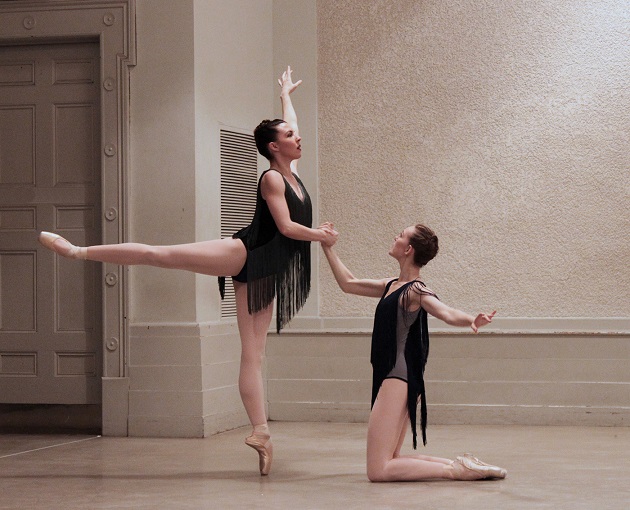
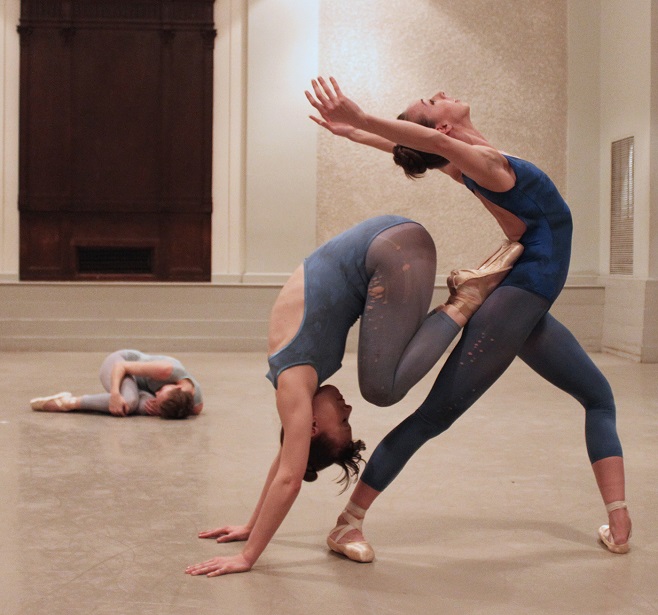
    The opening (premiere) work, RAVEL’D, is still “in-progress”; tonight we saw the first movement, with Miro promising the rest of it for his April performances. Doori Na and Melody Fader played beautifully, and Sarah Thea’s fringed tunics added an unusual flair to the movement. Stylized motifs – eating, praying, biting – are woven into the dance. One girl’s toe-shoed foot rests upon another girl’s head: this is one of several unexpected balancing devices. A space-filling unison trio stands out, and the closing section finds Sarah Atkins in a reverential pose as Amber Neff and Shoshana Rosenfield ‘converse’ in a series of mutually dependent balances. 

    The space was again well-utilized in GRAVITY; we were seeing the finished version of this work that Miro had started on last year. Doori Na’s expert playing of the Cerha score was something to marvel at: great subtlety and control are called for, and Doori delivered. The three dancers – Elizabeth Brown, Traci Finch, and Amber Neff – are engaged in extended paragraphs of the partnering vocabulary Miro has been exploring of late. Extremely challenging and movingly intimate, the intense physicality of these passages push the boundaries of what we expect from women dancing together. Miro’s dancers have taken to these new demands with great commitment: watching some of their improbable feats of balance and elastic strength gives us a fresh awareness of possibility. Adding yet another dimension to the work: when not actively dancing, each ballerina curls up on the floor to sleep. 

    Pianist Melody Fader evoked an air of mystery with her superb playing of Arnold Schoenberg’s Six Little Piano Pieces for the ballet QUARTET. Here Mlles. Atkins, Brown, Finch, and Neff appear in elegant, backless black gowns. They take seats at the four corners of the playing area, facing outward. With her hair down, a waif-like Shoshana Rosenfield dances in the center with a feeling of halting insecurity; her character seems dazed, perhaps drugged. Periodically, the four seated women move their chairs towards the center, slowing encroaching on Shoshana’s space. The four become aware of the lone ballerina as a potential victim: they turn and observe her intently. In the end, the four women have Shoshana trapped; as she sinks down in surrender, they caress her and run their fingers thru her hair. Eerie, and leaving us full of questions, QUARTET is as intriguing to watch as to hear.

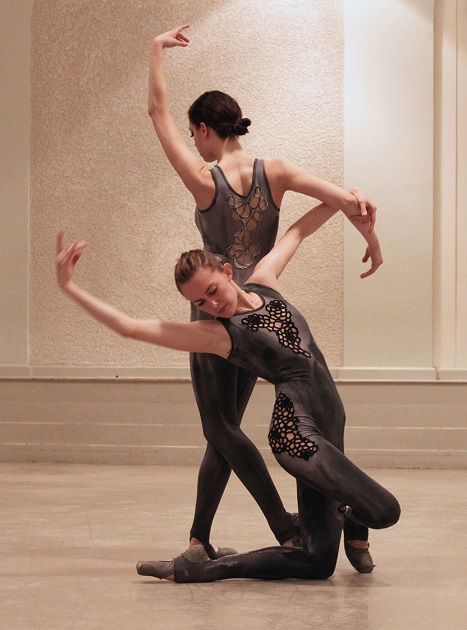
    In VOICELESSNESS, Beat Furrer’s mystical score was performed by Melody Fader; her playing had a fine air of somber quietude. Dancers Amber Neff and Shoshana Rosenfield, in Sarah Thea’s sleek body tights, become fervently entwined and mutually dependent in a duet that develops further elements of Miro’s intense and engrossing partnering technique.

    For a revival of TWO FRIENDS, Doori Na and Melody Fader had the lovely experience of playing Claude Debussy’s violin sonata, the composer’s last completed work. Wearing black gauzy tunics and black toe shoes, Elizabeth Brown and Sarah Atkins are the eponymous duo; they partner lyrically, and all seems right with the world. Then Traci Finch appears out of nowhere and the ballet’s dynamic shifts and splinters, with fleeting pair-ups as alliances form and vanish in a trice. The subtexts of attraction and jealousy are very subtly threaded into the movement; an in-sync duet for Elizabeth and Traci is one outstanding moment, and the sonata’s final movement calls for large-scale virtuosic dancing from all three. But then Sarah impetuously rushes off. 

    True to life, TWO FRIENDS often finds multiple narratives developing at the same time, and over-lapping. There is so much to watch and to savor: I especially relished a brief passage where Elizabeth Brown, suddenly finding herself standing alone, quietly runs her hands up and down her arms in a caressive gesture. Elizabeth, a dancer who always lures the eye with her confident technique and personal mystique, turned this fleeting moment into something of deeper resonance.  

    Having followed Miro’s New Chamber Ballet for several seasons now, what I’ve come to appreciate most about him is his musical integrity. His tastes are eclectic, but always sophisticated, and he’s able to win us over to some very unusual and not always ‘easy’ music thru his own personal enthusiasm for the works he presents. The benefits of having the music played live are numerous, and greatly enhance the atmosphere at NCB‘s performances. And Miro’s excellent dancers take up each new musical and choreographic challenge that he sets for them with a wonderful mixture of strength, musicality, willingness, and grace.

    The dancers tonight were Sarah Atkins, Elizabeth Brown, Traci Finch, Amber Neff, and Shoshana Rosenfield, with the music played by Doori Na (violin) and Melody Fader (piano) and costuming by Sarah Thea. Kudos to all, and to Miro for yet another fascinating evening of dance.

    During the intermission, I really enjoyed re-connecting with Melissa Barak, the former New York City Ballet ballerina who now runs her own Los Angeles-based company Barak Ballet. Melissa is currently here in New York City as the inaugural Virginia B. Toulmin Fellow for Women Choreographers at the Center for Ballet and the Arts at NYU. We shared an awful lots of news and ideas in our 15-minute chat. I love her energy!  

  • New Chamber Ballet ~ Gallery

    IMG_9128_edited

    Above: dancers Sarah Atkins and Amber Neff in Miro Magloire’s RAVEL’D

    Photographs from New Chamber Ballet‘s February 2016 performances at New York City Center Studios. Read about the program here, and about a rehearsal I attended here.

    All the choreography depicted is by Miro Magloire, and all the images are courtesy of New Chamber Ballet:

    IMG_9225_edited

    Amber Neff and Traci Finch in GRAVITY

    IMG_9239_edited

    Amber Neff, Elizabeth Brown, and Traci Finch in GRAVITY

    IMG_9359_edited-bw

    Shoshana Rosenfield in QUARTET

    IMG_9363_edited-bw

    Shoshana Rosenfield in QUARTET

    IMG_9369_edited-bw

    Shoshana Rosenfield with Sarah Atkins and Traci Finch in QUARTET

    IMG_9389_edited-bw

    Elizabeth Brown, Amber Neff, Traci Finch and Sarah Atkins surround Shoshana Rosenfield in QUARTET

    IMG_9406_edited

    Amber Neff and Shoshana Rosenfield in VOICELESSNESS

    IMG_9431_edited

    Shoshana Rosenfield and Amber Neff in VOICELESSNESS

    IMG_9443_edited

    Shoshana Rosenfield and Amber Neff in VOICELESSNESS