Blog
-
Freiburg Baroque @ Alice Tully Hall

Thursday February 25th, 2016 – This all-Mozart concert, performed by Freiburg Baroque at Alice Tully Hall tonight, was part of our Great Performers at Lincoln Center subscription series. Arias from the da Ponte/Mozart operas, the clarinet concerto, and the “Linz” symphony were scheduled. We were of course expecting the usual program order: the arias first, then the clarinet concerto, an intermission, and the symphony coming last.
Instead, in an attempt to re-create a type of concert popular in Mozart’s time, the movements of the symphony were played on the first half of the program, interspersed with arias. This may have seemed intriguing on paper, but in the event it lessened the effect of the symphony – which now seemed more like incidental music (great incidental music!) – while the arias seemed rather randomly chosen, two of them in fact being simply passages from ensembles.
Given all this, and despite some very fine playing, the first half of the evening seemed a bit of a jumble. Gottfried von der Goltz, the ensemble’s principal violinist and director, had an ideally light touch, and he set propulsive tempi for the symphonic movements. He and the singer, Christian Gerhaher, formed a very simpatico bond: Mr. Gerhaher’s very confident stage-presence, wide-ranging voice, and winningly characterful interpretations were finely supported by conductor and ensemble.
Prior to playing the concerto, soloist Lorenzo Coppola introduced us to the clarinet d’amour – an unusual instrument that is longer than a standard clarinet and with a flared bell at the end. Once the concerto was underway, Mr. Coppola played with sure technique, exploring the instrument’s wide range with plenty of body language and almost comic accentuation of the lowest notes. His performance took on a more serious tone for the haunting Adagio, one of Mozart’s most sublime creations. For all Mr. Coppola’s skill and artistry, there were times when the instrument itself seemed in control.
Mr. Gerharer then re-appeared for three of Mozart’s greatest arias for male voice: Leporello’s Catalogo, and one showpiece each from the opposing protagonists of NOZZE DI FIGARO: the valet’s “Non piu andrai” and Count Almaviva’s blazing “Hai gia vinto la causa!” In these three solos, Mr. Gerharer further displayed his impressive grasp of vocal characterization: in the Almaviva aria especially, he seemed to bring the drama most vividly to life.
Between the two NOZZE arias, the orchestra chimed in with a brief Contredanse (K. 610) subtitled “Les filles malicieuses“, a brief charmer of a piece. Who were these “malicious girls” and what did Mozart want with them? We’ll never know, any more than we’ll know whose cellphone went off at just the wrong moment tonight.
The Participating Artists:Freiburg Baroque/Gottfried von der Goltz, violin and director
Christian Gerhaher, baritone
Lorenzo Coppola, clarinet d’amour
The Repertory:
Arias from Mozart’s Don Giovanni, Così fan tutte, and Le Nozze di Figaro
Mozart: Clarinet Concerto
Mozart: Symphony # 36 (“Linz”)
-
CAV Without PAG @ The Met

Above: composer Pietro Mascagni
Tuesday February 23rd, 2016 – Having looked at photos and video clips of the Met’s current productions of CAV and PAG, I had no desire to see a performance of the famed double bill in such settings. But I do love both operas, and so I opted for a score desk this evening. I knew in advance I would be leaving after CAV. The combination of Barbara Frittoli and Marco Berti in PAG didn’t appeal to me much, and though I would have liked to have heard George Gagnidze’s Prologo, that would have meant enduring a Gelb-intermission. So it was CAV and then a casa, a casa, amici.
The Met has never felt emptier than it did tonight; I’ve seen some very sparse audiences in the last two or three seasons, but this was really depressing. To be sure, it was a star-less night; and ticket prices are high. But even on middling nights, the ‘affordable’ upper tiers of the House used to be reasonably full. Tonight, only a handful of people were sitting in the Balcony box and Family Circle box sections which are normally fully occupied by hard-core opera lovers. At the end of CAV, there was just barely sufficient applause to get the curtain back up for the bows.
The reasons for the decline in attendance have been discussed at length on other sites; suffice it to say that The Met seems to be committing a slow suicide, and that no one seems to be doing an intervention.
Liudmyla Monastyrska sang a good Tosca earlier this season, and it was to hear her Santuzza that I chose to go tonight. Tosca suits her better, or so it seems to me. In Santuzza’s music we are accustomed to an earthier, more chest-resonant sound than Ms. Monastyrska brought to the music of the hapless outcast. But she sang tonight with a fine sense of dynamic variety, and did some really nice lyrical singing in passages like “No, no Turiddu…” in her duet with the tenor and – even more expressively – at “Turiddu mi tolsi…” in the duet with Alfio. Her top notes are bright and house-filling, but with hints of a widening vibrato. In the curse, Ms. Monastyrska was convincing though without the deadly declamatory venom of a Simionato or a Cossotto.
Brazilian tenor Ricardo Tamura, much maligned last season when he stepped in as Don Carlo for an ailing colleague while himself being under-the-weather, did a reasonable job as Turiddu tonight. He sounded throaty and a bit quavery in the offstage serenade, but once onstage he fared better. The singing is idiomatic, and he kept pace with the soprano in their big duet. Later, as he pleaded with Alfio to consider Santuzza’s fate if he, Turiddu, is killed, Tamura was very persuasive.
The most idiomatic and vocally satisfying performance tonight came from baritone Ambrogio Maestri; his Alfio has the right vocal swagger and his top notes were full, ripe, and thrilling. My score refers Lola’s little entrance song as “Lola’s Ditty”; Ginger Costa-Jackson did a good job with it, throwing in some nice chesty insinuations along the way as she chided Santuzza. It’s always good to have Jane Bunnell in a cast. I’ve always liked her, and I still do.
Fabio Luisi’s conducting was the evening’s biggest asset: his pacing was excellent, with an effective build-up to the Easter Hymn, and he refused to over-cook the famous Intermezzo, instead making it a touching musical statement. Throughout the evening, Luisi brought out little nuances in the score that hadn’t previously registered with me, and he maintained an alert balance between voices and orchestra, never swamping his singers.
Kudos to the Met chorus, who made the Easter Hymn the musical focus of the evening. This great chorale always moves me in its expression of the simple and direct faith of the common folk. Tonight it reminded me yet again of how the great religions have been hi-jacked and politicized in recent years. These days, my own mother’s piety and kind-heartedness would be thought too mushy and weak. I often wonder what she would think of the current situation.
Metropolitan Opera House
February 23rd, 2016
CAVALLERIA RUSTICANA
Pietro MascagniSantuzza................Liudmyla Monastryska
Turiddu.................Ricardo Tamura
Lola....................Ginger Costa-Jackson
Alfio...................Ambrogio Maestri
Mamma Lucia.............Jane Bunnell
Peasant.................Andrea ColemanConductor...............Fabio Luisi
-
Rehearsal: New Chamber Ballet

Above: New Chamber Ballet dancers Amber Neff and Sarah Atkins
Monday February 22nd, 2016 – I dropped in at Ballet Hispanico’s studios today where Miro Magloire, just back from choreographing the ballet sequences for Sarasota Opera’s production of Verdi’s AIDA, is preparing his New Chamber Ballet dancers for their upcoming performances: February 26th and 27th, 2016, at City Center Studios. Ticket information here.
Marina Harss wrote a wonderful article for DanceTabs about Miro’s Sarasota experience: read it here.
At today’s rehearsal, Miro was fine-tuning the ballets we’ll be seeing on the coming weekend at City Center Studios. Here are some photos of the dancers I took at the studio today:

Amber Neff
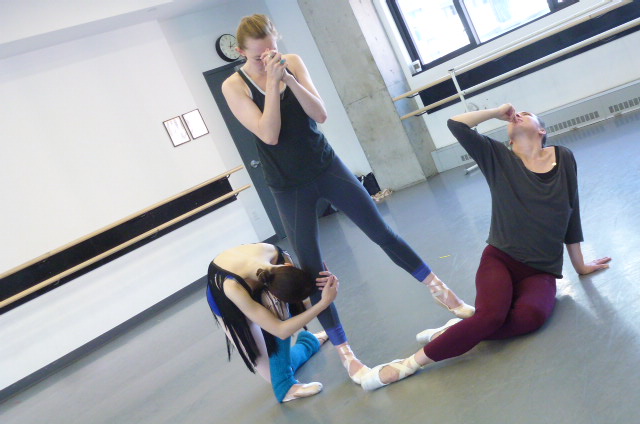
Shoshana Rosenfield, Amber Neff, Sarah Atkins

Shoshana Rosenfield, Sarah Atkins

Sarah Atkins, Amber Neff

Shoshana Rosenfield
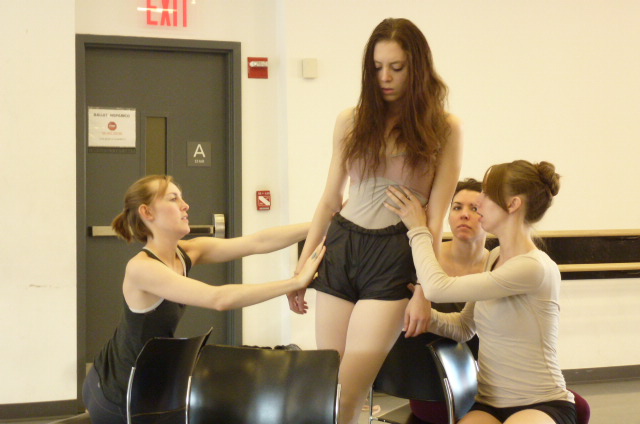

Traci Finch
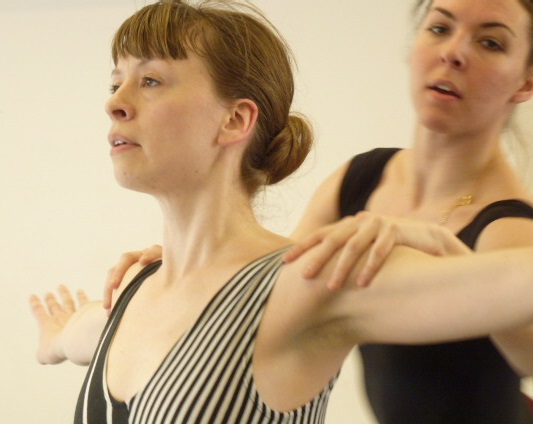
Elizabeth Brown, Sarah Atkins

Traci Finch, Elizabeth Brown

Elizabeth Brown, Traci Finch
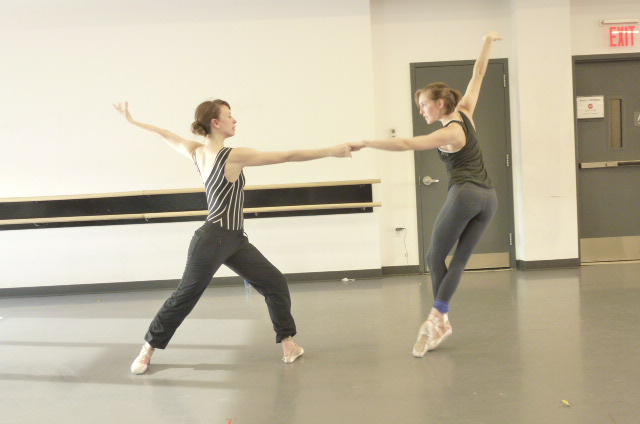
Elizabeth Brown, Amber Neff

Elizabeth Brown, Amber Neff
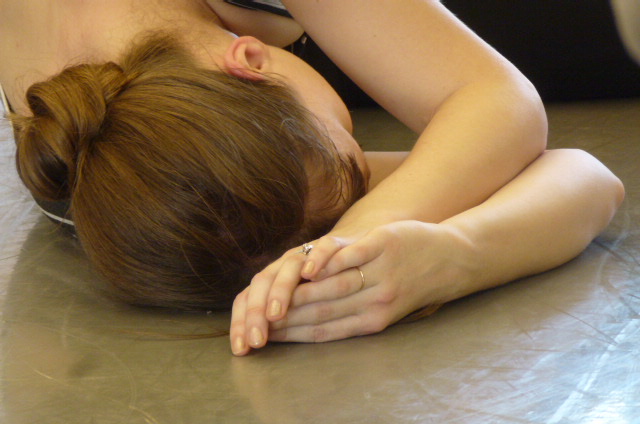
Elizabeth Brown
The works to be presented at the upcoming City Center Studio performances are: the premiere of the full version of Gravity to music by Austrian composer Friedrich Cerha, who turns 90 this month; the premiere of a new ballet to Maurice Ravel’s 2nd violin sonata; a revival of Quartet, a dramatic solo set to Arnold Schoenberg’s Six Little Piano Pieces; a revival of Two Friends, a trio danced to Claude Debussy’s violin sonata; and Miro’s recent success Voicelessness, a duet set to music by Beat Furrer.
The dancers are Sarah Atkins, Elizabeth Brown, Traci Finch, Amber Neff, and Shoshana Rosenfield, and the music will be played live by Doori Na (violin) and Melody Fader (piano).
-
CMS Beethoven Cycle: The Danish!

Above: the Danish String Quartet, photo by Caroline Bitten
Sunday February 21st, 2016 – Chamber Music Society of Lincoln Center‘s festival performances of the Beethoven string quartets drew to its close today with the Danish String Quartet playing the last music Beethoven ever wrote.
This was my first encounter with The Danish. Their story is probably unique among music-making ensembles, for three of them met as kids and fellow foot-ballers: so they literally grew up together. This may account for their wonderfully integrated sound. Along the way, a Norwegian cellist joined the family, fitting in perfectly.
This evening, as each voice was introduced to us at the start of the C-sharp minor quartet, I felt transfixed. I suddenly didn’t want to take notes, but rather to immerse myself in the music that was casting a spell over the wonderfully hushed, packed-to-the rafters Tully Hall.
The C-sharp minor quartet evidently seemed incomprehensible when it was first heard publicly in 1835, after the composer had already passed away. Certainly a first glance at the Playbill listing strikes one as very odd: seven movements? But Beethoven had been experimenting with structure over the years, and so she set this Opus 131 in seven sections, to be played without pause.
Richard Wagner, reflecting on the first of these seven movements, said that it “reveals the most melancholy sentiment expressed in music”. Today it perhaps seems more pensive than sorrowful. The second movement, marked Allegro molto vivace, is lively and extroverted. Following a brief ensemble recitative, we come to the slow movement, so expressive of yearning and tenderness.
In the Presto that follows – a whirlwind scherzo really – wit prevails in a lively, scurrying mode: here the Danes were at their most charming, and as this merry movement raced to its conclusion, the audience, thinking an end had been reached, were on the verge of unleashing a gust of applause. Then, with tongue-in-cheek irony, the players go on to a brooding Adagio and then a brilliant finale.
Upon finishing, the members of the Danish String Quartet were engulfed in a flood of applause and cheers. They were called out three times, a rather unprecedented happening.
During the intermission, I sat thinking about how – from my eleventh year until rather recently – so much of my musical focus has been on opera. Beethoven’s FIDELIO has never really attracted me – aside from Leonore’s glorious “Abscheulicher!” – and so the composer’s other works, iconic as they might be, have never really lured me. In fact, it’s only in the past three or four years – since I started attending Chamber Music Society and The New York Philharmonic regularly – that Beethoven’s music has begun to attract me. Better late than never!
Earlier in this CMS Beethoven cycle, the Miró Quartet’s playing of the “Razumovsky” quartets was a revelation. Of the symphonies, I’m most enamored of the 4th at present…something other music-lovers will find odd, I’m sure. But: enough rambling. Back to the matter at hand!
Of his final completed full work – the F-major quartet, Opus 135 – Beethoven reportedly stated that it was short because the commissioning fee was ‘short’; the sponsor would get what he paid for. And it was here, in the third movement marked Lento assai, cantante and tranquillo, that I found the Beethoven I’ve been searching for all these years – without knowing it. This music, which The Danish played so lovingly, really spoke to me. The entire piece, more traditional in both its structure and style than Opus 131, held the Tully audience in a state of rapt attentiveness: and the playing was marvelous throughout.
The concert concluded with the last music Beethoven ever completed: a ‘Finale: Allegro‘ which would serve as an alternate ending for the B-flat major quartet Opus 130. Here the players of The Danish were at full sail, clearly savouring both the music and the audience’s delight in listening to them.
The triple curtain call after Opus 131 was not a fluke, for the four blonde members of the Danish String Quartet reaped a full-house standing ovation at the close of this grand evening.
As so often happens nowadays, this great music – and the Quartet’s playing of it – turned gloomy thoughts of a world full of strife and woe into an optimistic notion that there’s still hope for humanity.
Meet The Danish String Quartet here.
The Artists:
Violin: Frederik Øland and Rune Tonsgaard Sørensen
Viola: Asbjørn Nørgaard
Cello: Fredrik Schøyen Sjölin
The Repertory:
- Beethoven Quartet in C-sharp minor for Strings, Op. 131 (1825-26)
- Beethoven Quartet in F major for Strings, Op. 135 (1826)
- Beethoven “Finale: Allegro” from Quartet in B-flat major for Strings, Op. 130 (1826)
-
Ballet Academy East @ Ailey Citigroup

Above: from Claudia Schreier’s ballet “Charge“, a Rosalie O’Connor photo
Saturday February 20th, 2016 – Young dancers from Ballet Academy East appeared tonight in performance at Ailey Citgroup Theatre. Ballets choreographed by Ashley Bouder, Jenna Lavin, and Claudia Schreier were on offer, as well as George Balanchine’s classic “Raymonda Variations”, staged by Darla Hoover, BAE’s artistic director and a répétiteur for the Balanchine Trust.
Though billed as a ‘studio showing’, the presentation was fully staged, with lighting and costumes. The house was packed, with some dance-world luminaries who teach at BAE among the crowd.
Jenna Lavin’s “Barcarolle” opened the evening; set to the beloved music of the same title from Offenbach’s CONTES D’HOFFMANN, Lavin’s charmer of a ballet was danced by the youngest group of dancers on tonight’s programme: ages 10 to 12 years. The ballet’s three boys were showing early development of the courtly style which is an essential component to classical ballet, whilst the girls – in pretty pink tutus – danced with amiable grace.
Ashley Bouder, principal ballerina with New York City Ballet, has choreographed “Mozart’s Little Nothings“, a ballet to the great composer’s “Les petits riens” for a cast of 13 BAE dancers ranging in age from 12 to 15. The choreography is elegant and well-structured – as perfectly befits the music. The girls wear white with violet ribbon trim, and the ballet has a classic hierarchy of principal couple, pas de trois, and corps de ballet. The dancing was accomplished, the young dancers successfully imparting a sense of both balletic decorum and the joy of performing, and celebrating in a wonderful ‘big circle’ moment. Ms. Bouder, with a beautiful baby bump, was greeted warmly when she took a bow at the end of her ballet.
Boldly and thrillingly choreographed for 22 of the school’s most technically advanced dancers, Claudia Schreier’s premiere, “Charge” calls upon her youthful cast for both strong traditional ballet technique and an unusually supple fluency of the upper body, with correspondingly fluid port de bras. “Charge” is set to the third movement of the contemporary Dutch composer Douwe Eisenga‘s piano concerto.
Ms. Schreier showed a clear mastery of structure in deploying her large cast with consummate skill from start to finish in this exciting ballet. Opening with a single girl onstage, the choreographer commences to build her ballet with a duo, a trio, and a quartet of dancers arriving in succession, eager to dance. By the time the full cast are onstage, the choreography and Mr. Eisenga’s sparkling, dramatic score are whisking us along on an exhilarating ride.
“Charge” unfolds with a dynamic sense of the inevitable: the music propels Ms. Schreier’s choreography at every moment, and the dancers give it their all. So many highlights along the way: a passage for six boys is echoed by six girls; a stylized pacing motif; a grand circle that rushes to form and then vanishes just as quickly; an off-kilter pas de deux; four quartets in canon; fleeting solos; unusual lifts. Ms. Schreier miraculously managed her large cast – in a limited space – so compellingly that things never seemed over-crowded or chaotic.
In sum, “Charge” writes another vivid page in Ms. Schreier’s dance diary: a perfect follow-up to the memorable works she presented on this very stage in August 2015. Kudos to the young dancers who illuminated “Charge” with their flair and commitment.
After the interval, Ms. Lavin turned to Schubert’s piano trio # 2 in E- flat major, Opus 100, for the premiere of “(S)EVEN”. Three girls in blue and four is pale rose comprise the cast. Ensemble moments give way to a series of short solos performed on pointe, each tailored to the specific technical gifts and personality of the seven teen-aged dancers.
“Raymonda Variations”, one of George Balanchine’s signature ballets, offers the BAE dancers a showcase for their diverse lyrical and virtuosic gifts. Darla Hoover cast the Academy’s advanced students with a keen sense of showing them off to best advantage. The level of dancing was high, and was matched by the musicality and Romantic-era sensibilities of the performers.
Alexander Glazunov’s music, exuding the perfumed elegance of a bygone era, is captivating – and surely inspired the young BAE dancers to put forth their charming and scintillating best. It must have been a thrill to dance Balanchine at a young age, and for a very receptive audience.
Several individual dancers in tonight’s performance could be singled out for special praise, but I don’t feel it’s really beneficial to do so at a student performance. Everyone gave of his or her best, and these young talents seem to be in very good hands at Ballet Academy East.
-
New York Philharmonic: Bronfman/Valčuha

Above: pianist Yefim Bronfman
Thursday February 18th, 2016 – In recent seasons, as I’ve gradually moved away from opera and dance and into the realm of symphonic and chamber music, concerts featuring the great pianist Yefim Bronfman have consistently been outstanding events; we still talk about these evenings – and about the pianist – with great admiration and affection. To me, Mr. Bronfman is a unique musician: an artist in the highest echelon of great performers today.
This evening’s concert at The New York Philharmonic is something my friend Dmitry and I have been looking forward to since it was announced. Maestro Juraj Valčuha was on the podium tonight as Mr. Bronfman performed Liszt’s Piano Concerto #2 on a program that further featured works of Kodály, Dvořák, and Ravel.
Opening the concert with Kodály’s Dances of Galánta; the Philharmonic had played this piece in 2013 and I was happy to experience this music again: it’s happy music! Zoltán Kodály wrote his Dances of Galánta to celebrate the 80th anniversary of the Budapest Philharmonic Orchestra. Galánta is a small village in Hungary where the composer spent seven years of his childhood and where, thanks to the town’s popular gypsy band, the young Kodály became aware of of the style and motifs of gypsy music.
Launched by a clarinet tune from the Philharmonic’s inimitable Anthony McGill, Dances of Galánta has a wonderful lilt and swagger. Flautist Robert Langevin and oboist Liang Wang pipe up charmingly, and the big, passionate main theme is irresistible. Maestro Valčuha – tall, handsome, and with an elegant baton technique – drew out all the vivid colours of the score, which ends with a romping folk dance.
Mr. Bronfman then appeared, to a congenial welcome from the Philharmonic audience. Meticulous of technique and warmly confident in stage demeanor, the pianist’s performance of the Liszt Piano Concerto No. 2 was impressive in its virtuosic clarity and in its meshing of the piano line with the orchestra. Maestro Valčuha’s feeling for balance and pacing was spot-on.
The concerto, which Liszt tinkered with endlessly between 1839 and 1861, is particularly congenial to experience as it sweeps forward in one continuous movement over a span of about 20 minutes; yet it has the feel of a more traditionally structured concerto. Along the way, Liszt pairs the piano with various orchestral voices – a gorgeous piano/cello lullabye; rippling piano motifs as the oboe sings; high and delicate piano filigree over gentle violins; horns and cymbals sounding forth as the piano flourishes triumphantly.
Mr. Bronfman’s fluency in the rapid passages was a delight: sprightly in a high-lying scherzo passage, then swirling and cascading up and down the keyboard with joyous bravado. The concerto further alternates moments of big drama with passages of sheer melodic glow, all of which Mr. Bronfman delivered to us with his customary assurance and polish.
Audience and orchestra alike embraced the pianist with a prolonged ovation; an encore was given which elicited even more applause, and the affable Mr. Bronfman was called out twice again. Next season, he’s down for the Tchaikovsky 2nd with The Phil: it’s already on my calendar, circled in red.

Following the interval, Maestro Valčuha (above) and the Philharmonic players further displayed their cordial rapport in two well-contrasted “tone poems”: Dvořák’s folkish and finely-orchestrated The Water Golbin (curiously enough, having its Philharmonic premiere tonight – some 120 years after it was written) and Ravel’s darkly magical La Valse, which always makes me think of Rachel Rutherford and Janie Taylor.
While it seemed a bit odd not to have a symphony on the program, the two shorter works in the second half of the evening worked well together, were beautifully played, and allowed us to savor Maestro Valčuha‘s conducting from both a musical and visual standpoint.
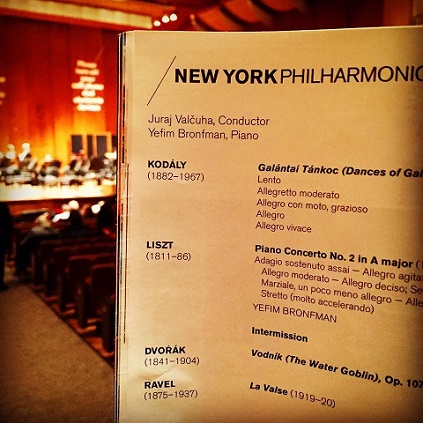
Photo by Dmitry.
-
Dmitri Hvorostovsky @ Carnegie Hall

Wednesday February 17th, 2016 – No one in the realm of classical music needs to be told the background of tonight’s Carnegie Hall recital by the great baritone Dmitri Hvorostovsky. He has, since his 1989 winning of the Cardiff Competition, become one of the most admired and beloved of artists; his current personal health battle has his devotees worldwide praying for him and pulling for him. Now, for the second time since his diagnosis, he has come to New York City to honor his commitments to sing for us.
Carnegie Hall was completely sold out, and the applause greeting Dima and his pianist, the excellent Ivari Ilja, was particularly warm. The program was a taxing one for the voice – songs by Glinka, Rimsky-Korsakov, Tchaikovsky, and Richard Strauss – and Hvorostovsky sang with his characteristic generosity, tenderness, and passion. It is – and always has been – a uniquely beautiful voice, one of the very very few today that gives such constant and pleasing rewards.
A bit of sharpness in the first Glinka song soon vanished as the voice warmed to the hall. As the Glinka set continued, the caressive warmth of the voice came to the fore. Always a singer possessed of a vast dynamic range, Dima tonight moved impressively from haunting soft passages to thrillingly sustained, powerful top notes, and everything was coloured with emotional hues from longing to tranquility to regret.
Rimsky-Korsakov’s “Not the wind, blowing from the heights” was an especially marvelous rendering in the evening’s first half, and – after the interval – Hvorostovsky gave us some of the Tchaikovsky romances that have been among his signature pieces: songs that he has helped to popularize throughout the world. These were beautifully voiced.
In the evening’s concluding group of Strauss songs, so familiar yet so welcome in these hauntingly sung interpretations, Hvorostovsky expressiveness was at full flourish.
One audience distraction after another intruded on the evening, but these complaints we will set aside for now, and feel instead a sense of gladness just to have been there.
-
TURANDOT at The Met – 4th of 4

Above: a Met TURANDOT blast-from-the-past with Birgit, Franco (Z, not C), Jimmy, Eva, Liz, and Placi
Saturday January 30th, 2016 matinee – I took a score desk this afternoon to hear the fourth of four sopranos who have sung the role of Turandot during the current Met season. My history of Turandots at The Met goes back to the Old House, where Mary Curtis-Verna was the first soprano I heard in the role. Since then, I have witnessed almost every singer to tackle this part in New York City, from The Big B (Birgit Nilsson) to sopranos you never heard of, several of them at New York City Opera where a perfectly nice Beni Montresor production held forth for many seasons.
At The Met, where Franco Zeffirelli’s extravaganza (which replaced Birgit’s Cecil Beaton setting in 1987) has been home to such post-Birgit divas as Eva Marton, Dame Gwyneth Jones, Ghena Dimitrova, and Jane Eaglen, audiences still cheer – as they did today – the massive vision of the royal palace as it comes into view midway thru Act II.
Act I today was very pleasing to hear: after a dragging tempo for the opening scene of the Mandarin’s address (grandly declaimed by David Crawford, who had the breath control to fill out the slo-mo phrases), conductor Paolo Carignani had everything just about right. The score is a marvel of orchestration: so much detail, so many textured layers of sound. I simply love listening to this music, especially passages like “O taciturna!” where Carignani drew forth such evocative colours from his players.
Anita Hartig sang very attractively as Liu, her voice reminding me just a bit of the wonderful Teresa Zylis-Gara’s. Hartig did not do a lot of piano/pianissimo singing, which can be so very appealing in this music, but she had the power to carry easily over the first act’s concluding ensemble. The Romanian soprano’s concluding B-flat in “Signore ascolta” was first taken in straight tone; she then allowed the vibrato to seep in: quite a lovely moment. Hartig’s voice has an unusual timbre and just a touch of flutter to bring out the vulnerability of the character.
I was likewise very impressed and moved by the singing of Alexander Tsymbalyuk as Timur: mellow and warm of tone, and with a deep sense of humanity.
Whilst not holding a candle to such past Calafs as Corelli, Tucker, McCracken, Domingo, or Pav, Marco Berti did very well in Act I: his idiomatic singing carried well (though Carignani swamped him a couple of times, unnecessarily), and his piano approach to the opening phrases of “Non piangere, Liu” was finely judged. Berti firmly sustained his final call of “Turandot!” at the act’s conclusion.
The three ministers – Dwayne Croft, Tony Stevenson, and Eduardo Valdes – did well, especially as they reminded Berti/Calaf that La vita è così bella! These three singers, as far as I know, sang these trio roles at every performance of TURANDOT this season and made a fine job of it; but a ‘second cast’ might have been given an opportunity. Variety is the spice of operatic life, after all.
After the ridiculously long intermission, Act II started well but then things began to unravel a bit. Mr. Croft experienced some hoarseness, and Mr. Berti didn’t sound solid in the vocally oddly-placed lines at “Figlio del cielo!” where he re-affirms to the old Emperor his desire to play Turandot’s riddle game. A silence of anticipation filled the house just as Nina Stemme was about to commence “In questa reggia“, but the moment was spoilt by voices from the lighting bay at the top of the hall shouting “Have you got her?” The chatter continued through the opening measures of the aria.
Ms. Stemme’s now-prominent vibrato sounded squally at first; the phrasing was uneven and frankly the singing had a rather elderly quality. The top notes were rather cautiously approached and seemed a bit unstable, though she was mostly able to disguise the effort. Concerns about producing the tone seemed infringe on her diction, with some odd results. The opening challenge of the riddle scene – “Straniero! Ascolta!” – did not have the desired ring.
Stemme’s posing of the riddles was a mixed bag vocally – and Berti’s responses were clipped, with traces of hoarseness creeping in. By the third riddle, the soprano seemed to be gaining steadiness. In the great moment after her defeat when Turandot is called upon by Puccini to blaze forth with two high-Cs over the chorus, Stemme made no impact on the first one and was assisted by the chorus soprani for the second. Berti responded with a skin-of-his-teeth high-C on “…ti voglio tutto ardente d’amor!” but the tenor came thru with a pleasingly tender “…all’alba morirò…” before the chorus drew the act to a close.
I debated staying for the third act, mainly to hear Hartig and Tsymbalyuk, but the thought of another 40-minute intermission persuaded me otherwise. Returning home, I found a message from a friend: “So, who was the best of the Met’s four Turandots?” The laurel wreath would go to Lise Lindstrom. Jennifer Wilson in her one Met outing was vocally savvy but it would have been better to have heard her a few years earlier. The role didn’t seem a good fit for Goerke or Stemme, who expended considerable vocal effort to make the music work for them (Goerke more successfully, to my mind) but both would have perhaps been wiser to apply their energy to roles better suited to their gifts (namely, Wagner and Strauss). Still, it was sporting of them to give La Principessa a go.
As with the three earlier TURANDOTs I attended this season, and the many I’ve experienced in this Zeffirelli setting over the years, the house was packed today. Even Family Circle standing room was densely populated. To me, this indicates the opera-going public’s desire for the grand operas to be grandly staged.
There’s a rumor circulating that today’s performance marked the final time this classic production will be seen. It seems a mistake to discard it, since it originated fully-underwritten by Mrs. Donald D. Harrington, revivals have always been generously supported by major Met donors, and it obviously does well at the box office. Why put a cash cow out to pasture? It’s already been suggested that the next Met TURANDOT production will be set in Chinatown in the early 1900s and will star Anna Netrebko and Jonas Kaufmann (who will cancel), with Domingo as Altoum.
Metropolitan Opera House
January 30th, 2016 matinee
Giacomo Puccini's TURANDOT
Turandot................Nina Stemme
Calàf...................Marco Berti
Liù.....................Anita Hartig
Timur...................Alexander Tsymbalyuk
Ping....................Dwayne Croft
Pang....................Tony Stevenson
Pong....................Eduardo Valdes
Emperor Altoum..........Ronald Naldi
Mandarin................David Crawford
Maid....................Anne Nonnemacher
Maid....................Mary Hughes
Prince of Persia........Sasha Semin
Executioner.............Arthur Lazalde
Three Masks: Elliott Reiland, Andrew Robinson, Amir Levy
Temptresses: Jennifer Cadden, Oriada Islami Prifti, Rachel Schuette, Sarah Weber-GalloConductor...............Paolo Carignani
-
The Orchestra Now (TŌN): Carnegie Debut
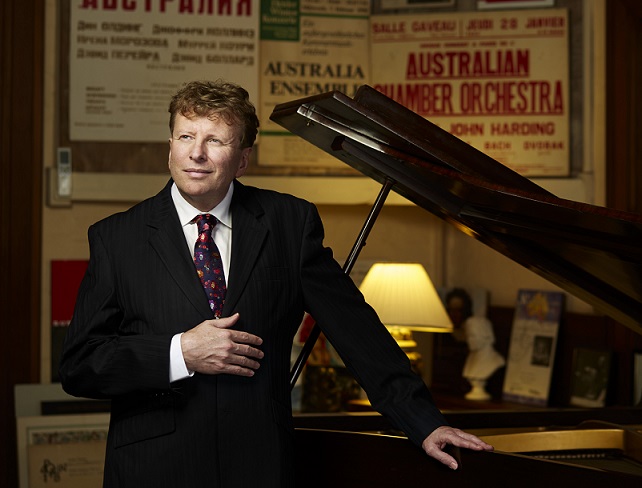
Above: pianist Piers Lane, in a Keith Saunders photo; Mr. Lane was the guest soloist in this evening’s concert at Carnegie Hall
Friday January 29th, 2016 – The Orchestra Now (TŌN) in their Carnegie Hall debut, playing works by Beethoven and his contemporaries, under the baton of Leon Botstein. Piers Lane was the soloist in Ferdinand Ries’ piano concerto #8, having its New York premiere tonight – some 190 years after it was written.
The Orchestra Now is a new orchestra, comprised of young musicians who are transitioning from conservatory to career. With the women of the orchestra all wearing dresses in shades of blue, yet each one unique, the ensemble is as appealing to the eye as to the ear.
The program was perhaps more interesting as a concept than as a musical experience: the Cherubini overture was a good choice, and the Ries piano concerto was a pleasant surprise. But the longish Reicha symphony, having its US premiere tonight, meandered forward amiably enough but seemed something of a waste of preparation time for the young musicians since it’s unlikely they’ll ever be called on to play it again.

Luigi Cherubini (above), best known for his opera Medea, was a composer greatly admired by Beethoven. Thus tonight’s program, subtitled Beethoven’s “Likes”, opened with the overture to another Cherubini opera, Les Deux Journées. This dramatic piece takes a while to gain traction, but it was well-played by the young musicians.

Anton Reicha (above), an exact contemporary and good friend of Beethoven, left us a large catalog of chamber music as well as eight symphonies, eight operas, and some large-scale choral works. As professor of counterpoint and fugue at the Paris Conservatory, Reicha numbered among his pupils Berlioz, Liszt, Gounod, and Franck.Reicha’s 3rd symphony in F-major dates from the same year as Beethoven’s famous 5th, but that’s about the only thing they have in common. Aside from a rather nice clarinet solo in the Adagio, nothing in the Reicha really grabbed my attention. It’s an elegant work, and perfectly pleasant, but lacking in the peaks and valleys that make for a memorable symphonic experience. As Maestro Botstein remarked before he took up the baton for this work: “You’ll never hear it again!”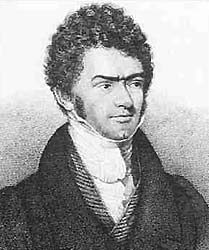 Ferdinand Ries’ piano concerto No. 8 on the other hand was a lovely discovery. In his brief remarks prior to playing the concerto, pianist Piers Lane said the music would remind us of works by several other composers but that Ries (above) has crafted it in a way very much his own. He was right!The concerto’s manuscript bears the inscription ‘Gruss an den Rhein‘ (‘Greetings From The Rhine’) – a tribute to the river Ries he grew up near – and indeed the first movement does evoke the gentle flow of the river along its broad banks. In the Larghetto that follows, there seems to be a heralding of the Romantic age in some of Ries’ very appealing melodic and harmonic writing. The concluding Allegro molto, its mega-abundance of rapid notes brilliantly tossed off by Mr. Lane, had the infectious and vivacious charm of an opera buffa cabaletta. Throughout, the genial pianist made the strongest possible case for the concerto, winning the audience’s joyous appreciation at the end.
Sad to say, our enjoyment in experiencing this “new/old” concerto was compromised by a trio of young people who took seats in front of us as the houselights went down following intermission. They obviously had friends onstage – or perhaps they were members of the orchestra who were off-duty for the second half of the program – and they spent the entire time-span of the concerto whispering and nudging one another while the girls shared a bottle of water. We decided to leave after the concerto, our evening having been spoilt by their thoughtlessness.


 Oberon's Glade