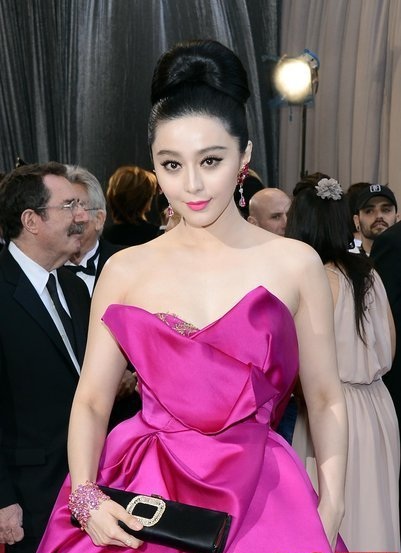
Fang Bing Bing at the 2013 Oscars ceremony.
My Oscar Winners:
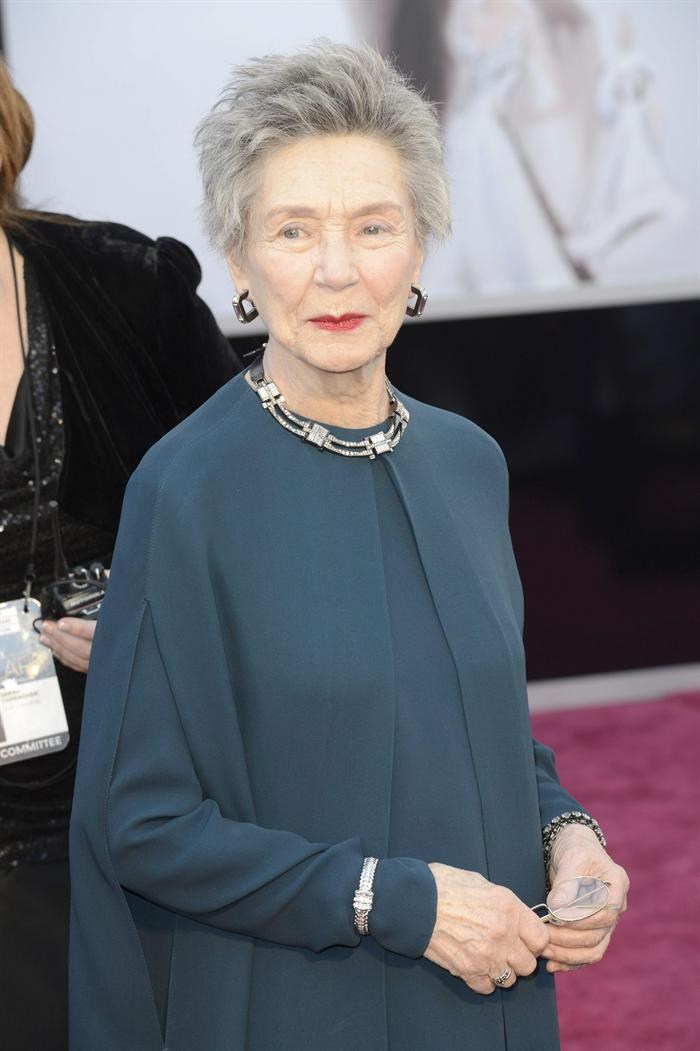
Emmanuelle Riva (AMOUR)

Adele
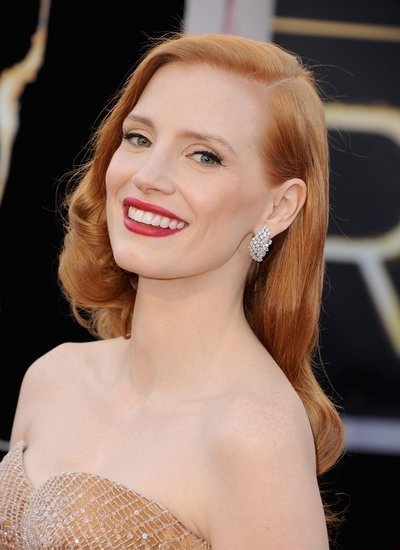
Jessica Chastain
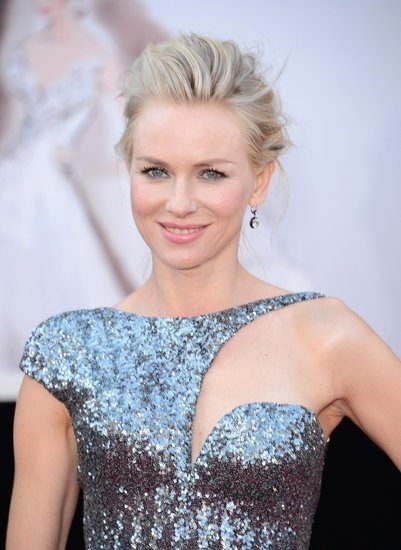
Naomi Watts
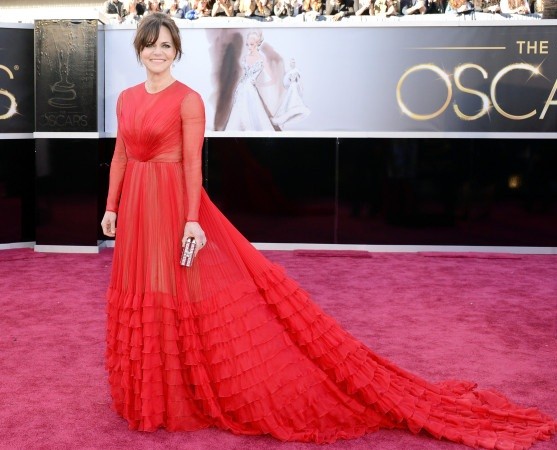
Sally Field
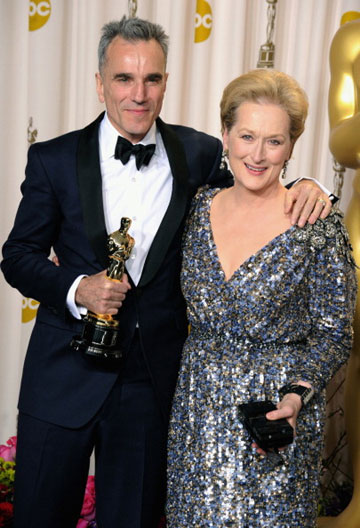
Meryl Streep with Best Actor award-winner Daniel Day-Lewis
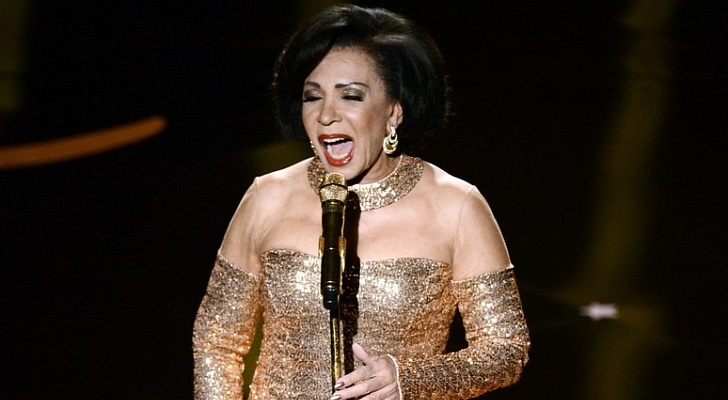
Dame Shirley Bassey
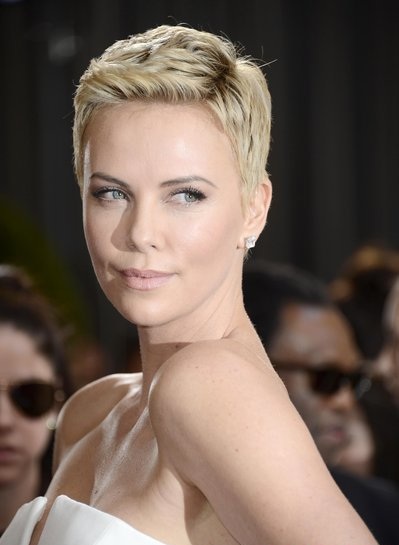
Charize Theron
Fang Bing Bing at the 2013 Oscars ceremony.
My Oscar Winners:
Emmanuelle Riva (AMOUR)
Adele
Jessica Chastain
Naomi Watts
Sally Field
Meryl Streep with Best Actor award-winner Daniel Day-Lewis
Dame Shirley Bassey
Charize Theron

Saturday evening February 23, 2013 – This was a triumphant evening all round and a grand finale for my NYCB Winter season. As the evening unfolded I found myself regretting all the more the fact that I hadn’t been able to see all the BEAUTY casts this Winter. Practicality had prevailed, and now I wish it hadn’t.
Clothilde Otranto and the NYCB orchestra gave a very full-bodied and generally rather speedy rendition of this tremendous score; in the Vision Scene – a highlight in an evening of very high lights – the players spun out the romance-drenched melodies will special lushness. Were there a couple of bad notes along the way? Yes. Did it matter? No. What did Beethoven have to say about this? “To play a wrong
note is insignificant; to play without passion is
inexcusable.”
From beginning to end, the tireless dancers of the NYCB corps gave and gave of themselves; with the roster seemingly at an all-time low count and with lots of SAB dancers pressed into service to fill out the ballet’s big ensemble passages, our dancers were doubling or tripling roles in this production and if they were fatigued or harried, you’d never know it. A special word of praise for the radiant octets of Lilac Fairy attendants and Maids-of-Honor. In the Vision Scene, the beauteous bevy of ballerinas wove their patterns gracefully while the Prince fell in love with Aurora.
I fell in love with her, too: Ashley Bouder was on spectacular form tonight, dancing with generous perfection. Her perfomance was laced with wondrous balances and a zillion impeccable pirouettes, but then she’s always been a technical marvel. What induced raptures tonight was her portrayal of Aurora, for she has softened and deepened her interpretation since she first tackled the role. Tonight her acting and expressions were every bit as fascinating as her brilliant dancing. She had a slightly different ‘greeting’ for each suitor in the Rose Adagio, and in her birthday variation she ideally caught the spirit of a young woman on the brink of romance. Her Vision Scene was a masterpiece of hope and tenderness – her dancing here so velvety – and then at the end of the ballet she transformed flawlessly from princess to queen. With her trademark style, Ashley lingered on her balances and sustained her port de bras one moment, then moved impetuously forward the next. Her Rose Adagio was a special triumph, and if she’d danced it at ABT rather than NYCB, she’d still be taking curtain calls. And her solo in the Vision Scene was simply spectacular. This was a revelatory Bouder evening, a signal meshing of technique and artistry.
Andrew Veyette’s Prince was not just a perfect partner for his ballerina but a star performance in its own right. A handsome dancer with no affectations in his acting, Andrew seemed cool and rigid as he dismissed the Countess’s advances but once he was alone, his true nature began to manifest itself. When the Lilac Fairy offers him a cure for his lonely heart, Andrew turns from unhappy hunter to smitten romantic in the twinkling of an eye. His partnering is astute and his dancing space-filling, his high-velocity air turns and cat-like landings emblematic of his technical assurance. Andrew and Ashley whipped up the audience’s enthusiasm with their grand partnership in the Wedding pas de deux.
Radiating beauty and goodness, Janie Taylor was a dream of a Lilac Fairy. Her calm handling of the ‘Carabosse crisis’ and her gentle guidance of the newly-met Aurora and Prince in the Vision Scene were high points of her interpretation. Her dancing was serene, her persona a spell-binding mixture of mystery, allure and grace. She’s one of a kind, and I adore her.
Ballerina beauty abounded tonight, with a glamorous line-up of fairies in the prologue, including three of our newly-promoted soloists: Megan LeCrone, Lauren King, and Brittany Pollack. Gwyneth Muller’s ‘finger-fairy’ was danced on the grand scale, and Lydia Wellington as Generosity was simply breath-taking. Christian Tworzyanski as the Lilac Fairy’s cavalier gave a text-book lesson in partnering and stagecraft.
Jenifer Ringer repeated her gleefully evil Carabosse and Marika Anderson’s Queen was a gem of a characterization, opposite the King of Justin Peck.
At the wedding, Jared Angle squired Savannah Lowery, Alina Dronova and Erica Pereira through an appealing performance of the Jewel pas de quatre. Kristen Segin and Devin Alberda hissed and scratched with flair in the Cat duet, and Daniel Applebaum was the tall, crafty Wolf. Antonio Carmena, Giovanni Villalobos and Austin Laurent engaged the audience with their bravura dancing and their building of a human tower. Daniel Ulbricht’s Bluebird was a masterpiece of high-flying leaps and feathery beats, and his Princess Florine was the delectable Lauren Lovette, just promoted to soloist.
The evening flew by, and Wei and I enjoyed it thoroughly. I really think this production should be given annually: it shows off the Company in its full splendor, and brings in full houses.
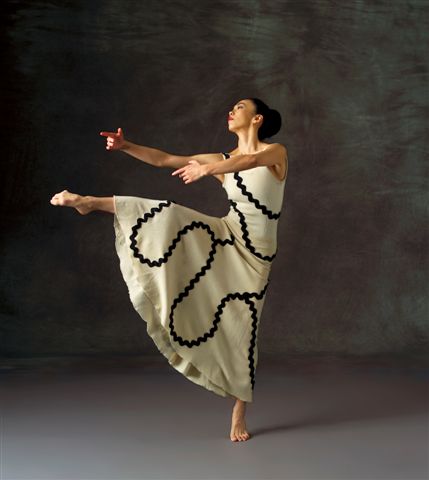
Above: Miki Orihara in the original costume for Graham’s ERRAND INTO THE MAZE; photo by John Deane.
Saturday evening February 22, 2013 – The Martha Graham Dance Company are at The Joyce thru March 3rd with three programmes centering on themes of myth and transformation, as well as a special gala. Details of the performances and ticket information here.
Tonight’s bill consisted of three Graham masterworks, each with an iconic principal female role – and each of those roles performed by one of the Graham goddesses of the 21st century: Blakeley White-McGuire as Medea in CAVE OF THE HEART, Miki Orihara as Ariadne in ERRAND, and Katherine Crockett as Jocasta in NIGHT JOURNEY. The musical scores are by three of the 20th century’s leading composers: Samuel Barber, Gian Carlo Menotti, and William Schuman.
In Martha Graham’s CAVE OF THE HEART, the choreographer distills the story of Medea, her betrayal by Jason, and her subsequent destruction of Jason’s young bride into a powerfully compact dancework. As Medea, Blakeley White-McGuire, a brilliant red-haired sorceress, gave a compelling performance – whether moving about the space with restless passion or laying in utter stillness waiting to play out her revenge, Blakeley is a riveting presence. Her marvelously spastic solo as the piece moves towards its inevitable denouement was something to behold. Tadej Brdnik’s boyish handsomeness underscored Jason’s ambitious heartlessness, and his striking musculature propelled him boldly thru the athletics of the choreography and the demands of the partnering. Xiaochuan Xie was a vision of loveliness as the Princess, her dancing spacious and light-filled, blissfully unaware of her impending doom. Powerful presence and physical suppleness marked the performance of Natasha Diamond-Walker as the Chorus, majestic in her black and red striped gown.
The collaboration between Martha Graham and sculptor/designer Isamu Noguchi created the look we associate with these Graham ballets. In both CAVE OF THE HEART and NIGHT JOURNEY, Noguchi’s set pieces evoke a feeling of familiarity – of being in a space we have been in before. But the damage to the Company’s sets and costumes caused by Storm Sandy left the decor for ERRAND INTO THE MAZE beyond repair. The sets will be re-created in time, but for the current season an alternative solution for presenting this important Graham work was needed. Choreographer Luca Veggetti, working with Miki Orihara, devised a stripped-down version of the piece, now referred to as ERRAND. Martha Graham’s original choreography remains intact, but the work is presented on a bare stage, reaching to the exposed brick wall at the rear of the space. Miki, as the heroine, wears a long plain white skirt with a ‘nude’ leotard white Ben Schultz as the Minotaur wears only his tattoos and white briefs. The effect is absolutely stunning.
Graham’s choreography feels utterfly fresh, and Miki’s vulnerable qualities have never seemed so touching as here, menaced by the ominous man-bull of Ben’s splendid physique. The illusions of near-nudity gave the piece a timeless, mythic quality. Miki was ravishing, the poetic expressiveness of her body illuminating the smallest nuances of gesture and movement. Ben stalked about the set like a gladiator awaiting his chances in the arena; even standing still, he posed a threat. At the end, having conquered the monstrous symbol of her fear, Miki’s stance of quiet victory and her feeling of wonderment were poignantly expressed.
During the intermission I caught bits of several conversations among the crowd; people seemed to be saying that this new look at ERRAND had lifted the piece out of a somewhat dated context they’d experienced in CAVE OF THE HEART. Much as I admire Noguchi’s work – and if you haven’t been to the Noguchi museum in Queens you owe it to yourself – and the Graham-designed costumes, I have to say that Mr. Veggetti’s take on ERRAND is a revelation. I’ve often wondered how Balanchine’s ORPHEUS, for which Noguchi designed both sets and costumes, would look as an unadorned black-and-white ballet. In presenting this ERRAND, the Graham Company took a chance – and in my view it paid off handsomely.
In its full Noguchi-Graham decor, NIGHT JOURNEY is theatrically satisfying, yet I did find myself thinking it would hold up very well in a bare-stage-and-leotard configuration. The choreography, especially for the female ensemble (led by the beauteous and triumphant Mariya Dashkina Maddux) is striking in any event. And it did cross my mind how forceful the athletic movements of the blind seer Tiresias – a marvelous role for Abdiel Cedric Jacobsen – would seem if he was to be divested of his bulky garments. But, we’re getting ahead of ourselves here: NIGHT JOURNEY is perfect as it stands, and Katherine Crockett is beyond perfect in the role of the devastated Jocasta who strangles herself on discovering she has been married to her own son, the man who killed her first husband. (“The killer of the King is a King.”) Ms. Crockett, a luminous gift to the world of dance, is thrilling to behold – as much for her beauty and intensity as for her exalting extension and the evocative flow of her arms and hands. Ben Schultz polished off his demanding, two-ballet evening with a majestically tragic portrayal of the ill-fated Oedipus, the dancer’s godlike physique taking on an assailable aspect as his world collapsed.
And how does the Graham repertory strike a young person today who has never experienced any of it, except for tidbits on YouTube? My twenty-something dancer-friend Alejandro was quite taken with the evening, with a special affinity for ERRAND. I’ll be seeing the other two programmes of the current season, each with a “Graham virgin” as my companion. It will be interesting to see what they think.
“I’m sure everyone will have heard this by now,
but we have new principals at New York City Ballet: Ask LaCour, Adrian
Danchig-Waring, and Chase Finlay, as well as a very nice group of new
soloists: Ashley Laracey, Brittany Pollack, Megan LeCrone, Lauren King,
Georgina Pazcoguin, Lauren Lovette, Justin Peck and Taylor Stanley.”
Congratulations to all!

Photos by Paul Kolnik from the New York City Ballet‘s performances of the Peter Martins production of SLEEPING BEAUTY, Winter 2013 season. Above: Marika Anderson as Carabosse. Click on the image to enlarge.

Ashley Bouder and Andrew Veyette

Robert Fairchild, Rebecca Krohn and Sterling Hyltin…click on the image to enlarge.
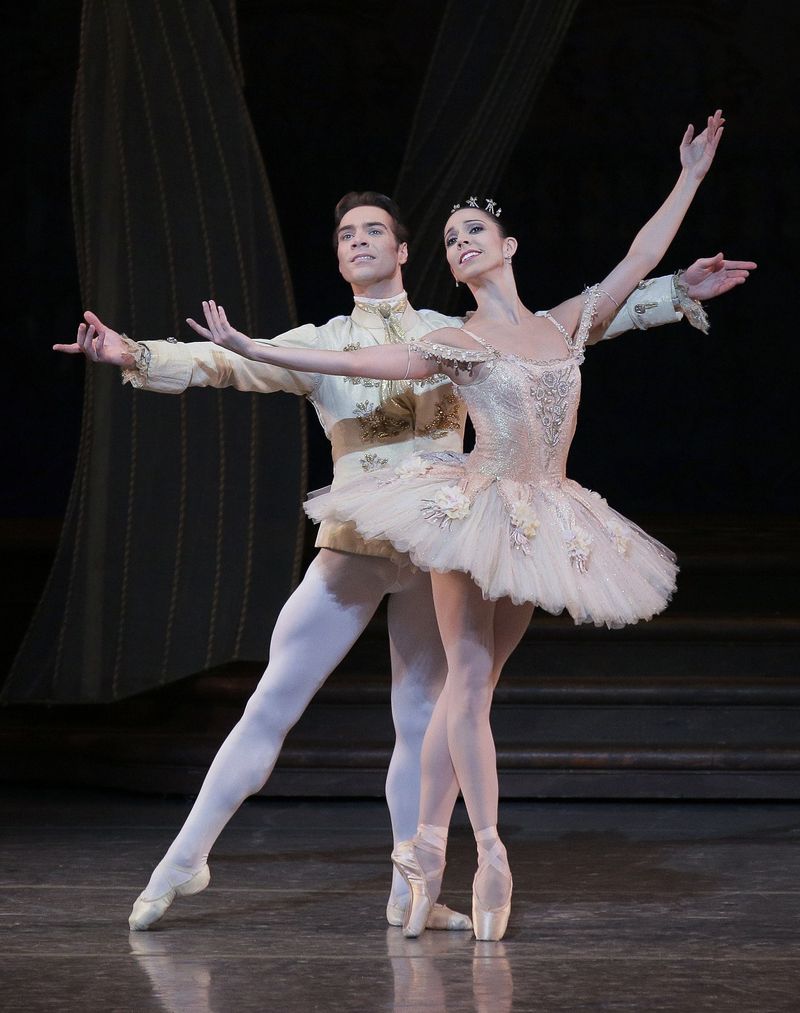
Gonzalo Garcia and Ana Sophia Scheller
I think this production should become an annual Wiinter-season tradition at NYCB: full houses, beautiful sets and costumes, a great score and…wonderful dancers.
Henning Rubsam reflects on the performances he saw here.
My thanks to Mr. Kolnik and the NYCB press department for providing these photographs.
Samurai Sword Soul, celebrating their tenth anniversary, are presenting UTSUYO KAKURYO: PASSING BY THE OTHER SHORE at the HERE! Theater.
Photographer Brian Krontz and I attended the dress rehearsal where Brian shot these production images. The play, performed in Japanese with English titles, combines elements of dance, sword-fighting, film, and Bunraku puppetry in a story that is part domestic drama and part morality play. It’s also something of a ghost story, and is peopled by Ninjas and wandering warriors. Honor, factional conflict, and revenge are major themes, and the tale unfolds with humorous interjections as the characters make life-or-death decisions.

Above: Yoshi Amao is the founding force behind Samurai Sword Soul

Above: some of the actors involved in the narrative are (left to right) Lisa Itabashi, Yu-Taniguchi, Jiro Ueno, Shieri Yamafuji, Asuka Morinaga, Atsunori Umihei Hiyamizu, and Koji Nishiyama.
Following are some of Brian Krontz’s images from the dress rehearsal. Click on each photo to enlarge:
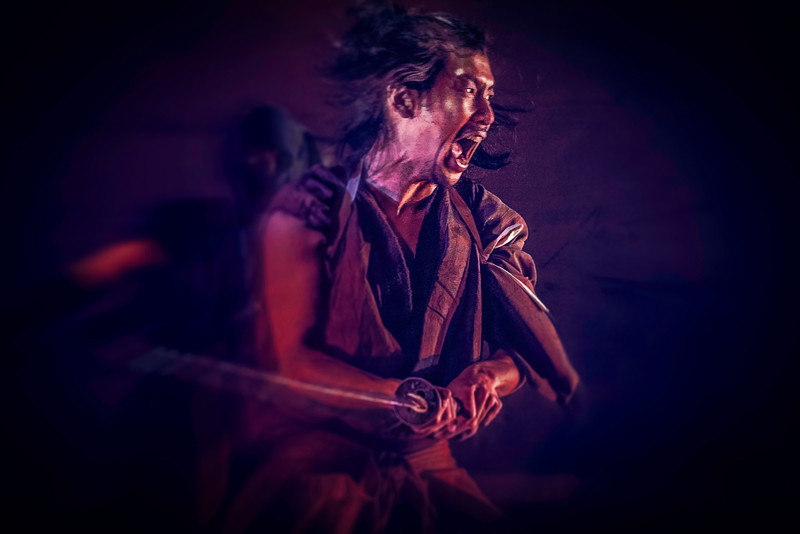
Yoshihisa Kuyama, as a wandering rogue warrior
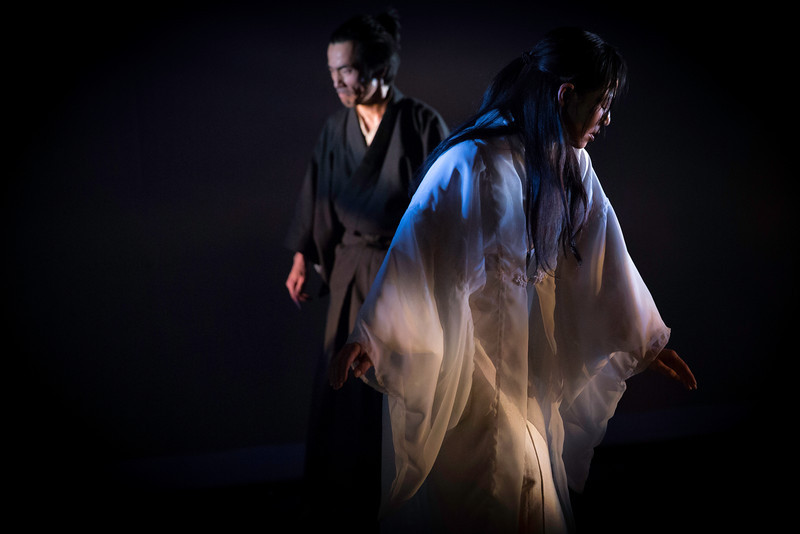
Yoshi with Takemi Kitamura, a beauteous spirit
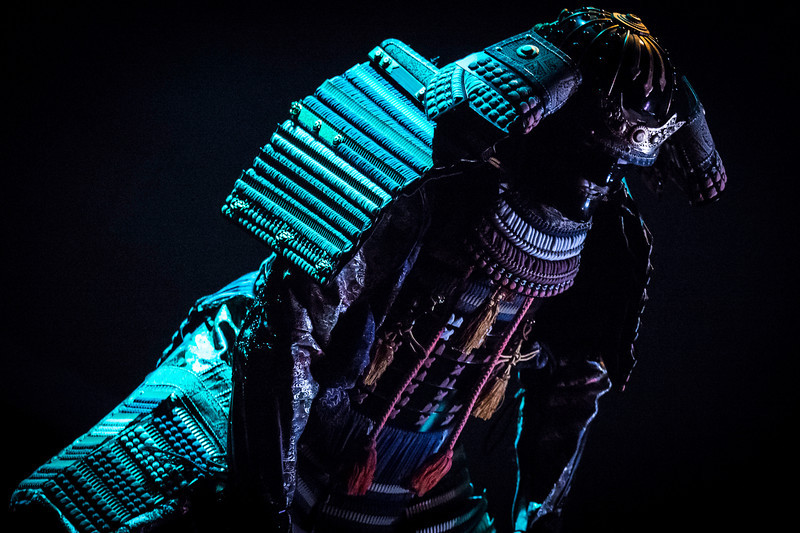
Beware the Ninja!

Lisa Itabashi and Jiro Ueno
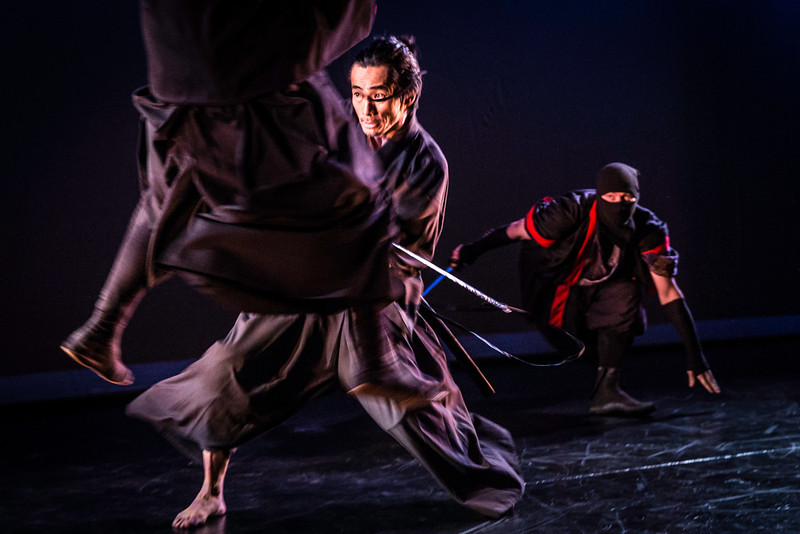
Yoshi Amao

Yoshi’s the victor…but the fight is far from over

Lisa Itabashi

Atsunori Umihei Hiyamizu
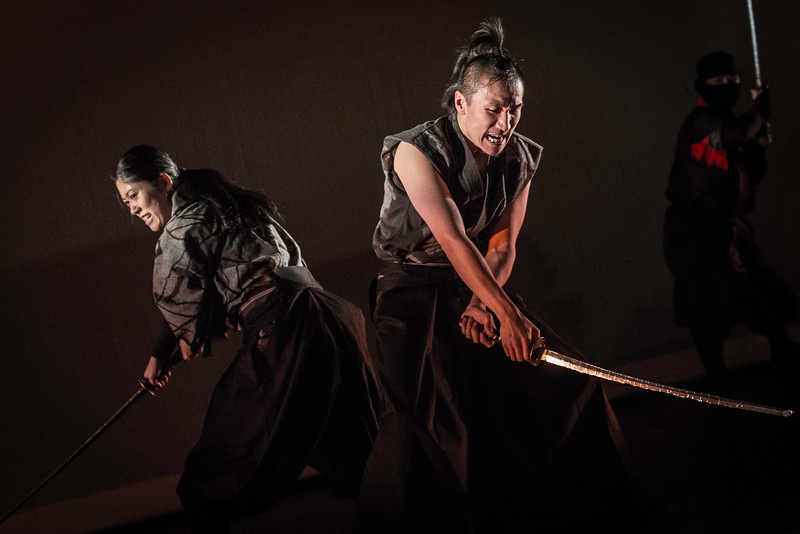
Lisa Itabashi and Koji Nishiyama
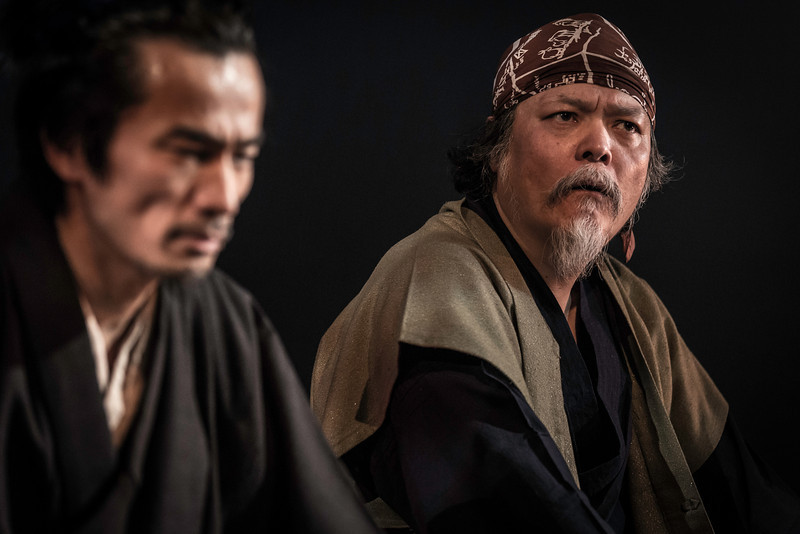
Yoshi with Jiro Ueno
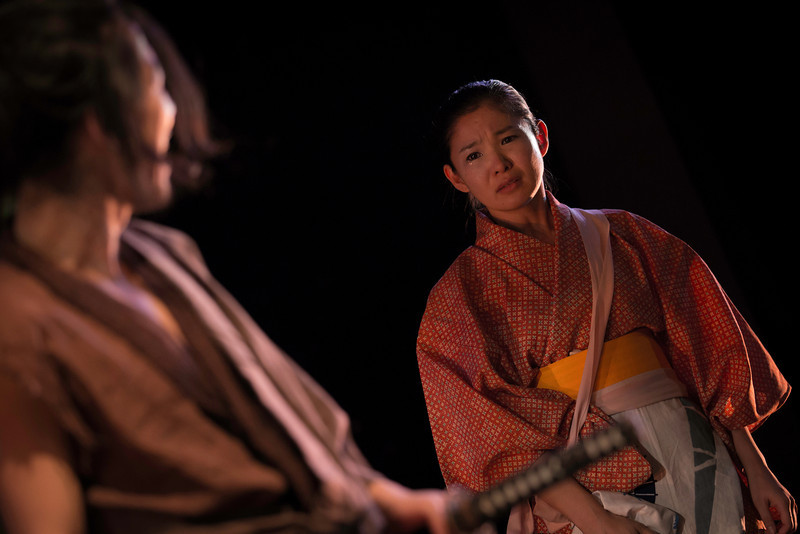
Asuka Morinaga
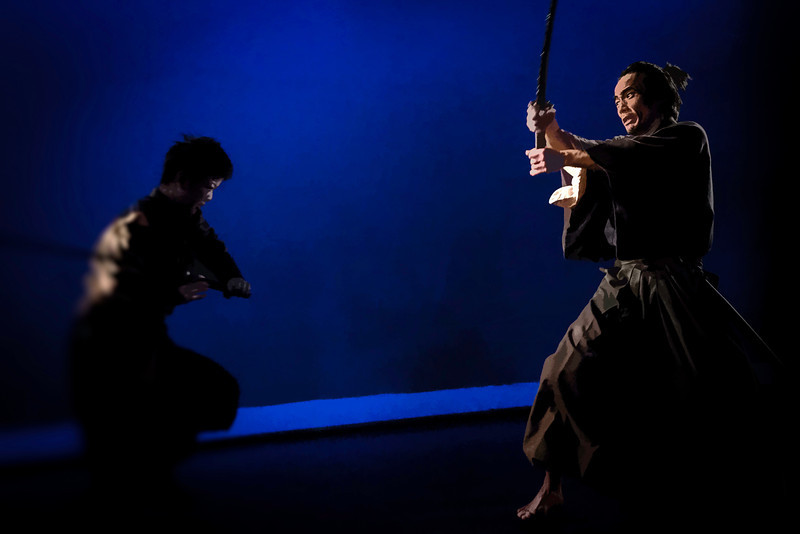
Above: Yu-Taniguchi and Yoshi Amao
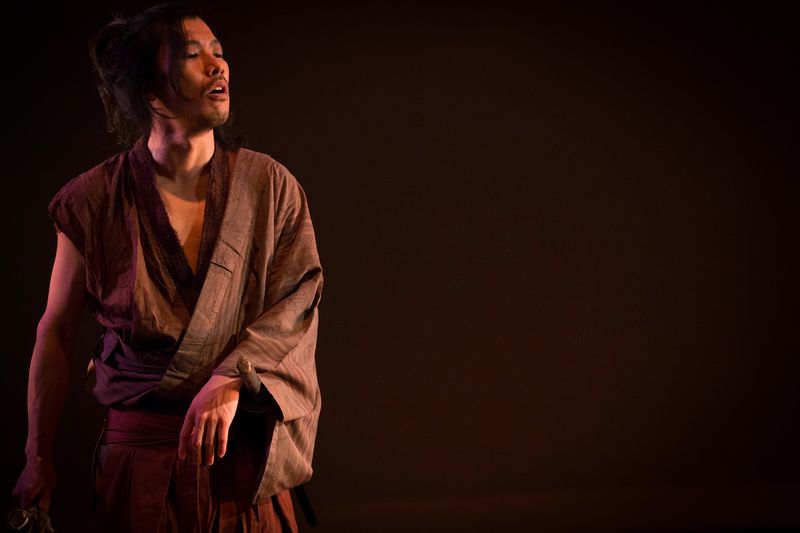
Yoshihisa Kuwayama
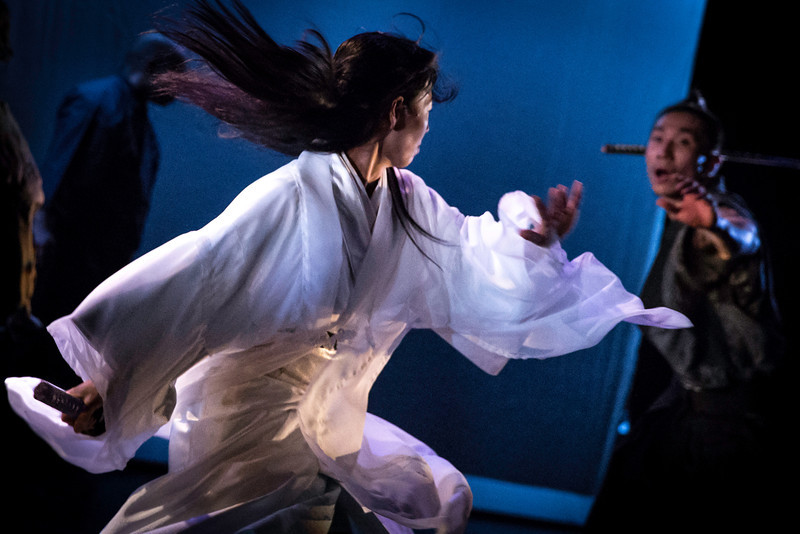
Takemi Kitamura

Umihei and Takemi

Apparition
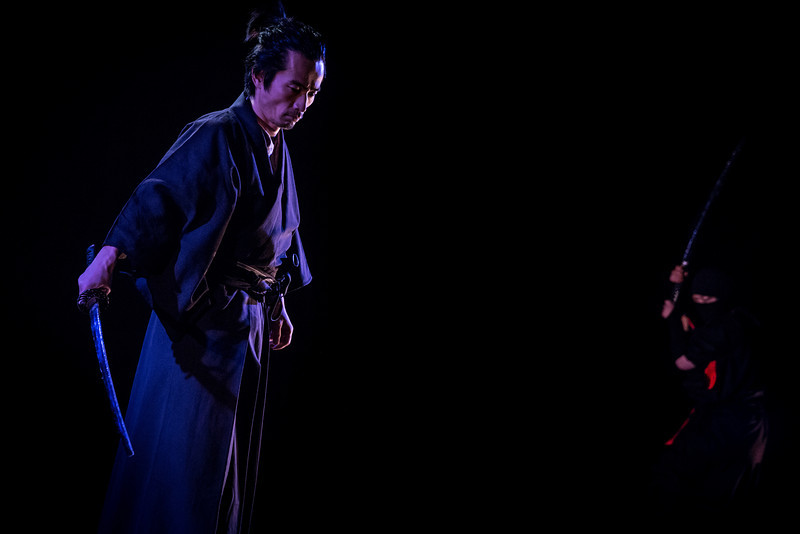
Yoshi Amao
All photography by Brian Krontz.

Above: dancer Yuki Ishiguro, photographed by Kokyat.
Wednesday January 30, 2013 – These words from the Yoo & Dancers press release piqued my curiosity:
“Glass Ceiling” turns the audience upside-down and inside out. The dancers defy the audience’s understanding of the traditional physics of dance by performing as if various walls and surfaces in the space were in fact the floor…by shifting traditional notions of orientation for a dance performance, “Glass Ceiling” opens the viewer’s mind to different perspectives, new ways to think of their relationship to the space. New aspects of movement and physicality emerge when the focus is rotated and the audience is no longer the dancers’ focal point. When the dancers are presenting towards imaginary audiences, real viewers are given the opportunity to question their own role in the performance environment.”
Then I noticed that my friend Yuki Ishiguro was listed among the participating dancers. I decided to attend the performance: I seldom have an opportunity to add new dance groups to my calendar but by chance this evening was open and so I walked over to the East Side on a cool, damp night to see what Yoo & Dancers had to offer.
The work, at least the part of it that I saw (“Without A Net”) is truly inventive and was expertly performed by Yuki and four fellow-dancers. The far wall of the space has become the floor for the dancers and they balance, stagger and climb across the actual studio floor with disorienting commitment. To live piano music – a collage of familiar and unknown works – real dance elements are woven into the choreography – a tango, a ballet pas de deux – but they are danced inside-out and sideways, so to speak.
The audience were clearly intrigued by the piece, and of the dancers Yuki seemed most at home in this off-kilter world: often balancing for long periods on one hand, he scrambled about the space with the grace of an earthbound Spiderman. Meanwhile his gestures and expressions were genuinely amusing. Since I’m unfamiliar with these dancers I can’t say who the girls were (the Company’s other male dancer, Sean Hatch, gave an engaging performance) but they all had the spirit of the work well within their grasp.
The space is perhaps not ideal to present this floor-oriented piece since only viewers in the front row have a clear sightline. Those seated further back had to stand or move about. Nevertheless I truly enjoyed it.
After the intermission, the seating had been re-configured and I was fortunate to still be placed in the front row – and very eager to see the rest of the performance. But as the lights went down, four very small children came and sat on the floor at my feet. I hastily grabbed my coat and left.

Above: Kile Hotchkiss and John Eirich of TAKE Dance rehearsing the men’s quartet from Take’s SALARYMAN, the closing number on this evening’s DANCE FROM THE HEART programme at Cedar Lake Theater. Photo by Kokyat. Click on the image to enlarge.
Tuesday January 29, 2013 – This cloudy, drizzly day was a bright and
dance-filled day for me, starting with a visit to Luca Veggetti’s
rehearsal at the Martha Graham studio where Luca and five Graham
beauties were polishing up his new creation which will be shown at the
upcoming Graham season at The Joyce. Then a brisk walk up to 26th Street
to Cedar Lake for the annual Dancers Responding to AIDS gala.
The evening offered a nice diversity of dance styles, opening with an impressive tap solo by Ayodele Casel. Its title, ACID, seemed to herald an edgy and ominous piece yet it was anything but: the dancer was lovely and her dancing was lyrical, with delicate nuances in her tap technique.
Christina Noel Reaves and Lonnie Poupard in tangy orange costumes used the space beautifully in a Jody Oberfelder duet THROB in which the dancers are called upon for bold physicality, momentarily pausing from time to time in geometric constructions. The duet was well-sustained by Andy Akiho’s score, and the dancers were excellent.
A shift in programmme order produced a slight glitch when the ‘wrong’ music started to play, but the tall and stately Julia Burrer of Doug Varone’s troupe simply held her pose and her composure until things were set to rights. The excerpt from Varone’s TUGGING UNDER was darkly entrancing: beautifully restless quality of movement with passing punctuations of stillness. A Julia Wolfe score set the dancers on their speedy trajectories with partnering motifs worked into the flow. Aside from Ms. Burrer, the dancers were Erin Owen, Hollis Bartlett, Alex Springer and Eddie Takata: a very handsome ensemble.
Mark Dendy’s opening solo to Peggy Lee’s “My Analyst Told Me” was witty and wonderful; but then there was a lull with too much talking and a bagpiper…until a ravishing goddess, Catherine Miller, rose spot-lit in the audience and took the stage for a shadowdance as Ms. Lee’s sultry voice intoned “Me And My Shadow”. Clinging to the brick wall, Ms. Miller looked sensational.
In gorgeously fitted quasi-Baroque Santo Loquasto costumes, two of the dance world’s most marvelous creatures – Michelle Fleet and Michael Trusnovec – appeared to dance the courtly duet from Paul Taylor’s Bach ballet CASCADE. Heavenly bodies? Look no further than these two superb dancers. They moved with measured elegance yet an undercurrent of sensuality is ever-present. A delicious appetizer to the upcoming Taylor season at Lincoln Center.
Tom Gold’s SOME KIND OF ROMANCE takes wing on the lilting music of the Vitamin String Quartet. Stylish, witty and rooted in the vocabulary of classical ballet (the girls are on pointe) the fast-paced choreography has a touch of contemporary spice here and there, and the three sexy boys look enticing in their sparkly silver briefs. Tom culled his ensemble of young dancers from Pennsylvania Ballet (Abigail Mentzer – who also designed the costumes – Alexander Peters and Amir Yogev) and Miami City Ballet (Zoe Zien and Ezra Hurwitz). Last week I’d seen a rehearsal of this work, at which Tom told me he plans to expand on the currrent structure; we should be seeing the finished creation during his New York season.
The evening came to a fittingly exciting climax as the beautiful boys from TAKE Dance set the stage afire in Take’s murderously demanding male quartet from SALARYMAN. To the relentless driving percussive throb of “Soul’s Ville” by AUN, the guys (in suits and ties) stunningly fling themselves around the space, crashing into one another, leaping and swirling in competitive combinations and improbably off-kilter phrases, hitting the floor only to rise again and literally climb the walls. A momentary pause for a battery-charge and they are off again in this mad and magnificent masterwork for men dancers.
The boys – John Eirich, Kile Hotchkiss, Brynt Beitman and Jeffrey Sykes – bought down the house with their remarkable performance. In a brief respite, Take’s girls – Kristen Arnold, Gina Ianni, Marie Zvosec and Lynda Senisi – appear as coat-check girls and divest the boys of their jackets. Then the wildness continues. Great finale for an evening of dance.
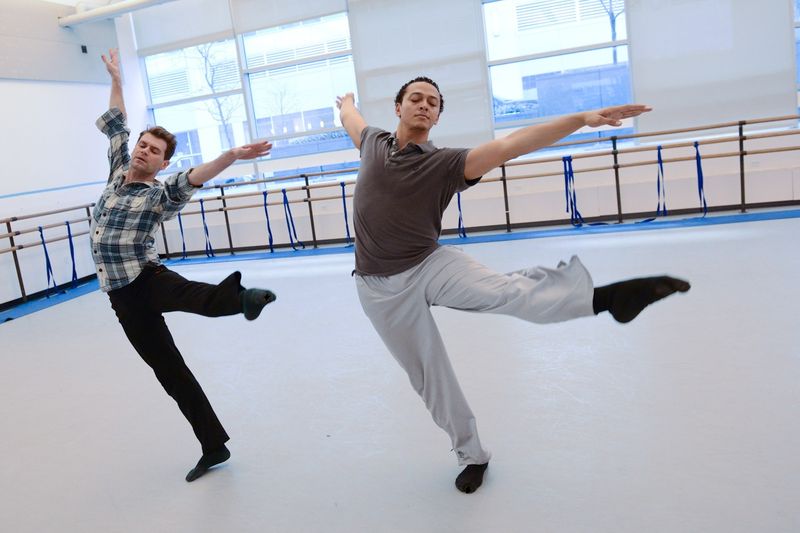
Above: Attila Joey Csiki and Clifton Brown. Photo by Nir Arieli. Click on the image to enlarge.
Sunday January 27, 2013 – I’ve had the great good fortune in recent years to witness some truly unforgettable moments in dance that the rest of the world isn’t privy to. In the Autumn of 2012 Wendy Whelan gave me a precious gift when she arranged for me to sneak into one of her rehearsals – it was such a transformative experience, though I never wrote about it on my blog for fear of getting her in trouble with the powers that be. I had the memorable opportunity of watching Adrian Danchig-Waring’s first-ever rehearsal of APOLLO. And I was at a MORPHOSES rehearsal when Pontus Lidberg kept dancing after the scheduled studio time had run out. He didn’t ask me to leave, he simply danced on in his own private world and I sat there in a breathless state. Yuan Yuan Tan, Katherine Crockett, Maria Kowroski, Laura Halzack, Veronika Part…I’ve seen them all at their most beautiful – up close and personal – freed from the theatricality of a performance and simply working on their craft, immersed in the music and the movement.
Dancers and choreographers have been so kind and generous, welcoming me into their studios and sharing the creative experience with me. In this way I have gotten as close as one can get to dance without actually dancing. At the end of a rehearsal, the dancers invariably will come up for an embrace and always they will say: “I’m all sweaty!” Your sweat is my holy water, please don’t apologize.
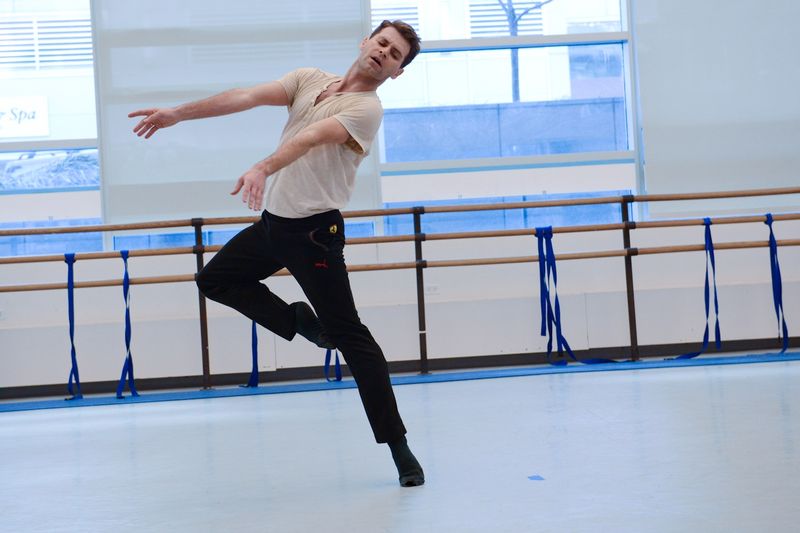
So a week ago Attila Joey Csiki (above) contacted me and invited me to a reherasal of a Lar Lubovitch duet, set to Mozart, to be danced by Attila and Clifton Brown at an upcoming gala in Washington DC. Mozart, Lubovitch, Attila and Clifton…what could be finer? I arranged to meet photographer Nir Arieli at the MMAC studios; it turned out to be an hour of dance that I’ll never forget.
Lar Lubovitch created this dancework in 1986 – when the AIDS epidemic was decimating the world – and he named it CONCERTO 622 after the Mozart work usually referred to as “the Clarinet Concerto”. The pas de deux for two men is danced to the concerto’s adagio, music which became familiar to an audience that stretched far beyond the world’s concert halls when it was played in the epic film OUT OF AFRICA.

We arrived at the studio today for the final hour of the rehearsal; Clifton Brown has danced this work before but Attila Joey Csiki has not. Mr. Lubovitch had them ironing out the timing of certain passages, including a big lift which must be honed to perfection to make its effect. The boys ran thru the segment several times, and Clifton’s keen eye and astute preparation soon had it mastered: his wonderfully deep plié as Attila came hurtling towards him was something to behold, and he swept his fellow danseur overhead in one sweepingly seamless motion.
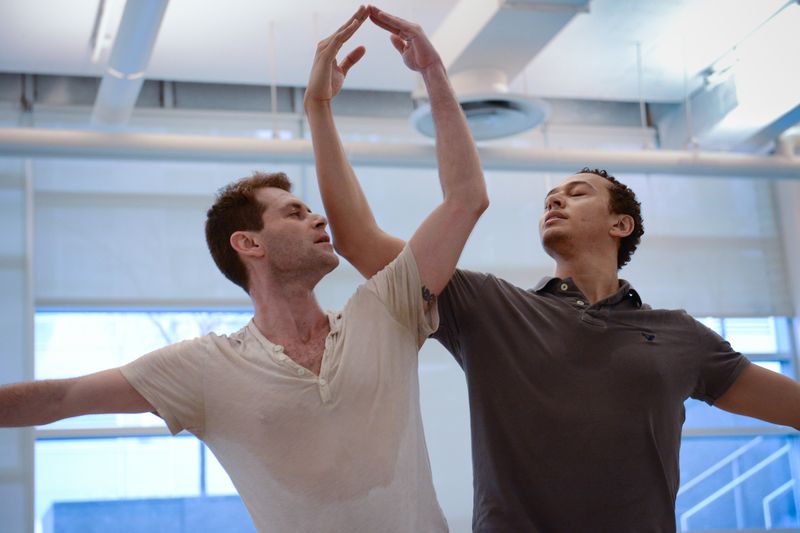
Then Mr. Lubovitch put the music on and the dancers began the first of two full runnings of the duet. Quite honestly my reaction surprised me: chills ran up my spine, my heart started racing, I could barely keep myself from crying. This is a piece that transcends its components – music, choreography and dancing – and speaks to us of things that can only be felt, not seen. The two men are tender and noble, they console and support one another and their passion pulsates just below the surface. The duet is not sentimental or overtly romantic; it has a luminous purity that springs from the celestial melodies of the genius Mozart. The choreographer has found the heart of the music and exposes it to us in movement that seems inevitable. I’ll never again be able to listen to this adagio without seeing Attila and Clifton in my dreamworld.
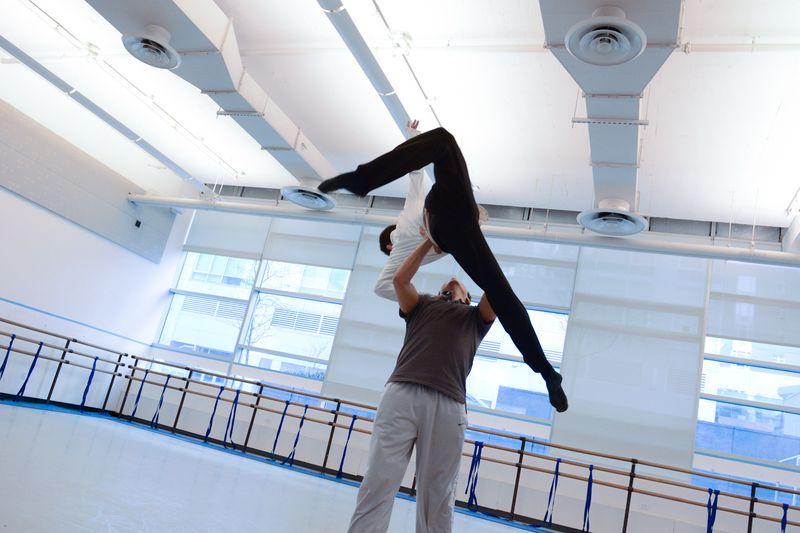
After a break and a bit more tweaking of certain partnering elements, the dancers began again and once again they moved me so deeply…words can’t express it. If they are this gorgeous in the studio, what will they be like onstage? I sincerely hope we will have a chance to find out.
I hated to see the hour drawing to its close, and was feeling deeply grateful to Mr. Lubovitch for his kindness in allowing us to be in the studio today. Attila and Clifton were packing up, beautifully drenched in perspiration; their mutual affection and admiration was so evident: “We used to be rivals,” Attila said. “And now we are friends dancing together.”
More images from the rehearsal:

Clifton Brown


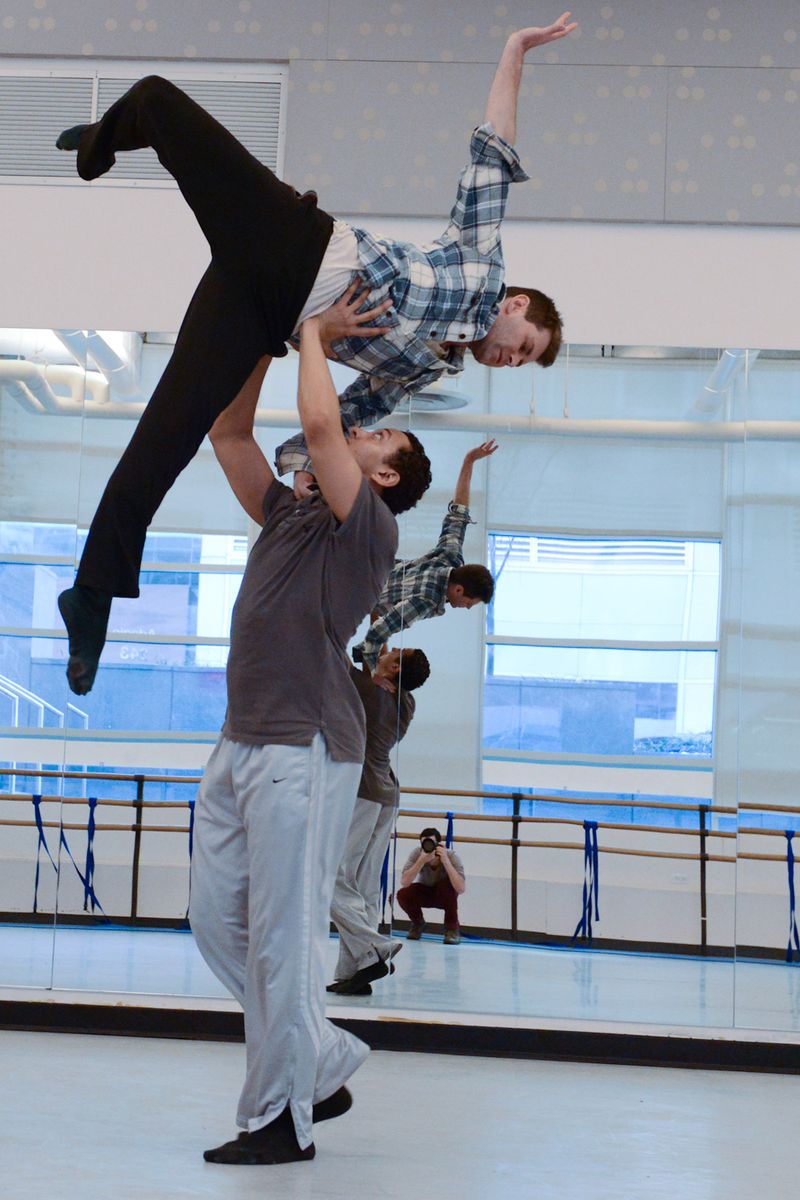
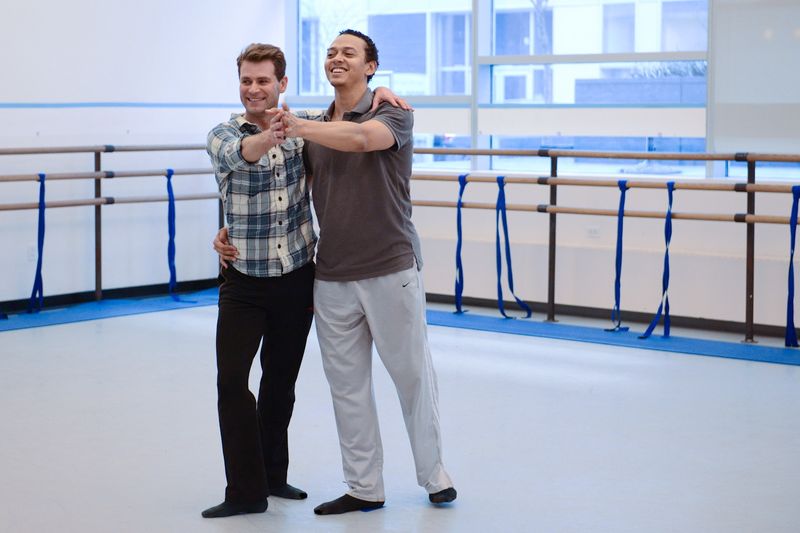
All photos by Nir Arieli.
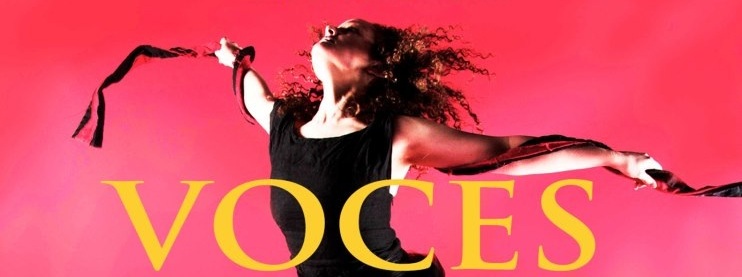
Sunday January 27, 2013 – Roberto Villanueva’s current programme for BalaSole, entitled VOCES, was originally scheduled for late October 2012 but was postponed due to Hurricane Sandy. The presentation finally took place at Ailey CitiGroup Theater yesterday and today, with a slightly different lineup of participating dancers than originally planned. The performances played to sold-out houses both nights.
Roberto Villanueva created BalaSole Dance Company as a platform for dancer/choreographers to present their work in a concert setting. For each BalaSole presentation, ten artists are usually chosen in an audition process. In the time frame between audition and performance, Roberto mentors the dancers and helps them get their solos stageworthy. A week before the performances, the entire group work on new ensemble pieces which will open and close the show. Roberto creates a solo for himself, and his dancing is always a highlight of the evening – as it was again tonight. Fine lighting and sound enhance the work of the particiating artists, and Roberto has developed a faithful following so that the dancers have a chance to be seen in a very auspicious setting.
Tonight’s collection of dancers was a strong one, with some beautiful individual work. The ensemble pieces were set to the heavy, relentless beat of Black Violin as the dancers – all clad in black – moved in unison or in canonic phrases in smaller groups against deeply-hued changing colours on the back panel.
I sometimes wish the performers (both here and in general on the dance scene) would give a bit more thought to their musical choices. So many pieces seem to come with a rather anonymous, vaguely ominous sound track. It usually works, but if they would put a bit more thought into their music something really memorable might result.
Aaron Gregory’s choice of Zoe Keating is a good one, his solo #Lovesick had a nice hesitant stillness to it. Lauren Alpert, a beautiful dancer I know from her performances with Columbia Ballet Collaborative, brought elements of classical ballet to her spacious solo, Surface Interface. Emily Pacilio’s somewhat androgynous presence and her gorgeous dandelion-coloured leotard, maintained our focus as did her use of chiming Eastern/gamelan style music (her solo an except from Keeping Company With Cage). In 2 tears in a Bucket, Troy Barnes made a handsome impression in a solo limned in weeping and despair, though rays of hope seemed to manifest near the end. My companion Javier Chavez and I were both impressed by Sarah J Ewing in her solo Inside Looking Out which further benefitted from Dario Marinelli’s harp-textured, other-worldly score.
Excellent lighting enhanced Morgana Rose’s well-danced solo Sacred, and then Roberto Villanueva’s solo – again turning to Black Violin for his music – was so expressively danced in a tuxedo and open white shirt. Roberto moves so sinuously, his face always beautifully poetic in the lighting. the solo Ssssssssshallow was – he told me – rather a last-minute affair. I never would have guessed, so compelling was his presentation. Nicole Calabrese moved from a chair into a pool of light in her restless solo Chaos/Contained, and Javier and I both especially loved Jessica Cipriano’s moonlit solo We Could What If All Day with its opening setting of spoken poetry. The final solo came from Andrew Nemr, the first tap-dancer to appear in a BalaSole programme; his dancing was subtle and savory, performed to his own music in a solo called Node Beat.
The closing ensemble work had a sexy sway, and then Roberto bade us goodnight, inviting us to the next performances which will be happening in July.
I’d like to urge all my dancer-friends – in whatever genre and at whatever point in your dance-career – to take Roberto’s next audition (Sunday March 24th – details here). BalaSole‘s concept is a unique one which provides a rare opportunity to present your work in a theatrical context to an audience who really care about dance.

 Oberon's Glade