Blog

  • Lydia Johnson Dance @ Peridance – Part 3

    Copy of 36

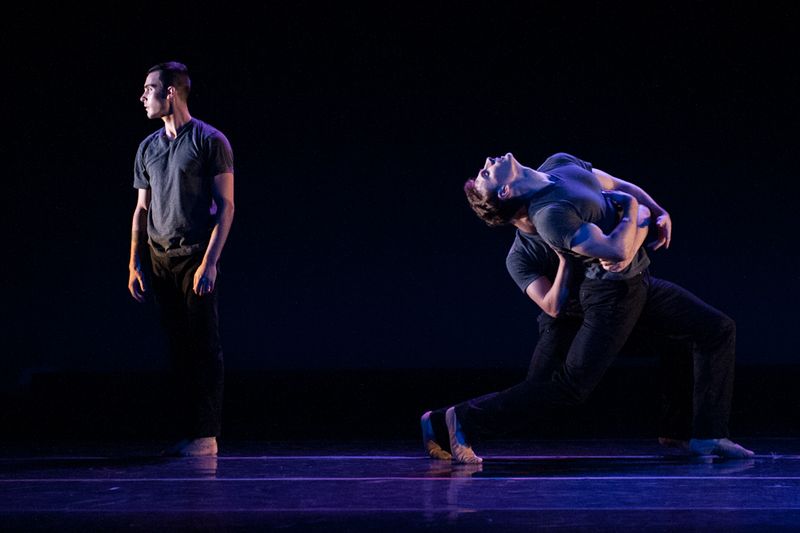
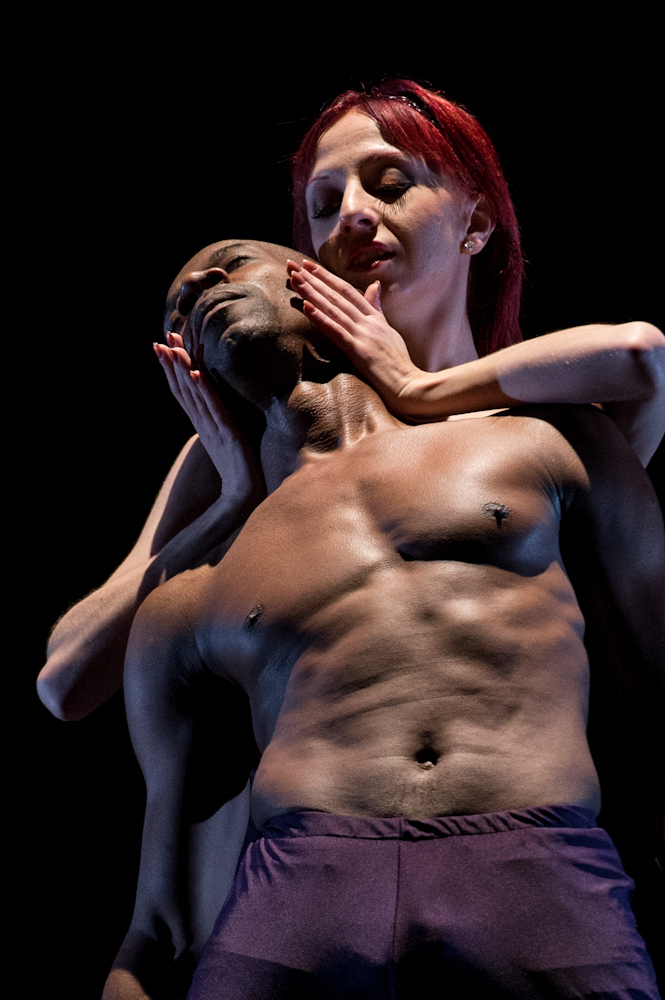
    Above: Reed Luplau of the Lar Lubovitch Dance Company in a guest appearance with Lydia Johnson Dance @ Peridance. Photo by Kokyat.

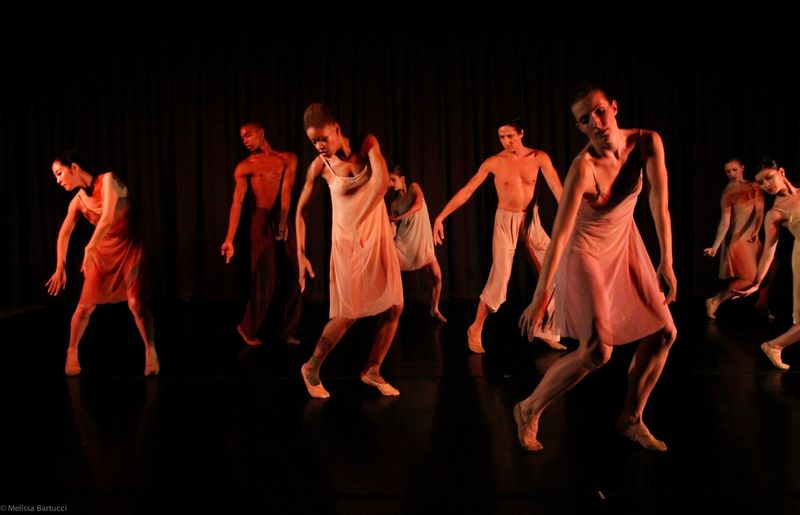
    Haunting and unique, Lydia Johnson’s SUMMER HOUSE is set to chamber works by Philip Glass. In this dreamlike piece, a man and three women recall a period of time spent together in a small Summer cottage far from the world’s hustle and bustle. There is no set narrative, and we do not know who these people are or how they came to be in the same space at the same time. Cross-currents of desire, despair and jealousy weave thru the dance though we can never be sure whose point of view we’re experiencing at a given moment. Thus SUMMER HOUSE leaves much to the imagination of the viewer, and for me – who once spent a marvelous summer in an old Victorian house on Cape Cod – it stirs up all sorts of memories.

    Copy of 2

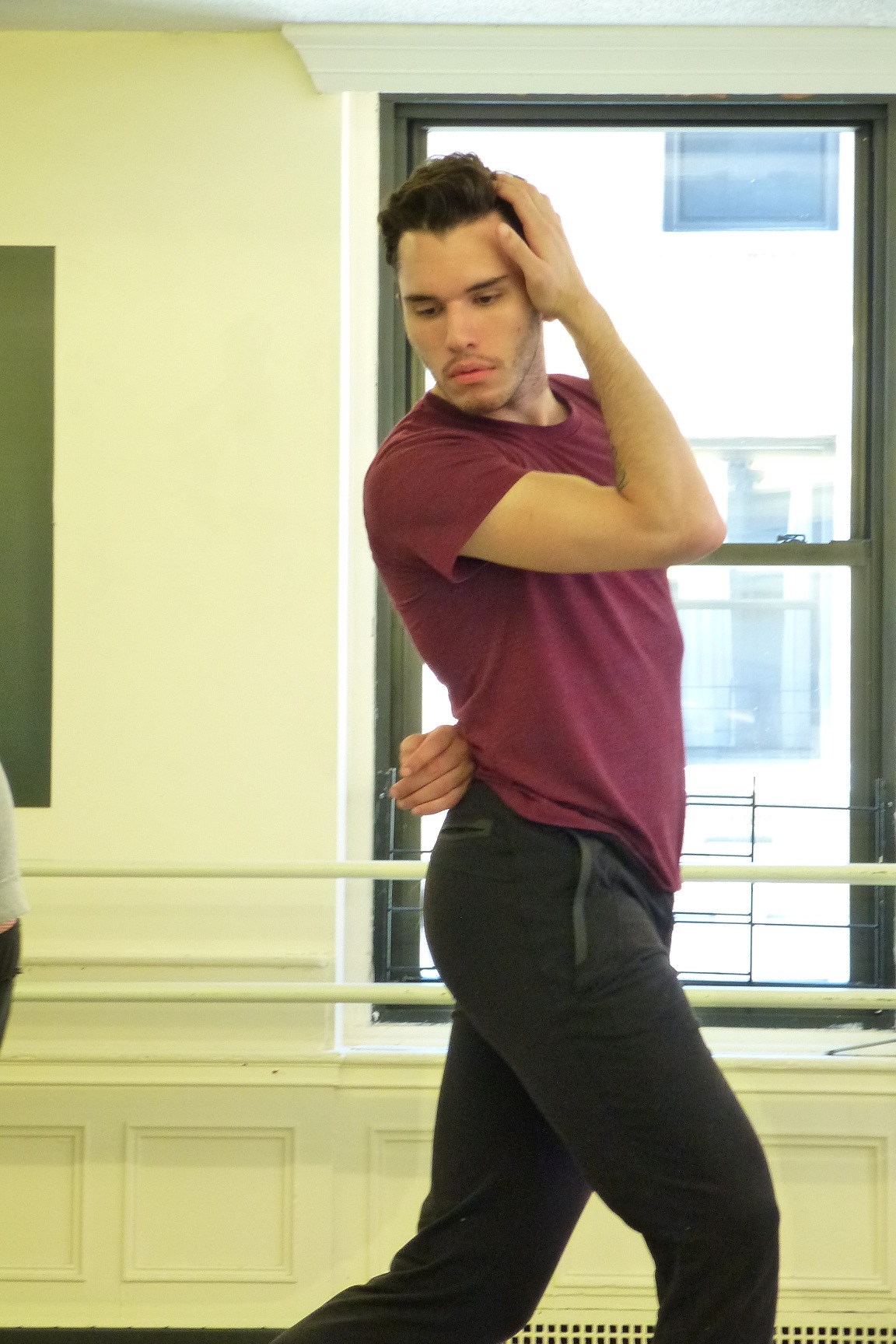
    Reed Luplau gives a deeply poetic performance in SUMMER HOUSE. Though he interacts with each of the three women, there’s no way of telling where his heart lies; it may in fact lie elsewhere altogether. Reed uses his entire body as an expressive instrument, keeping the physicality of the movement ever-flowing and with his beautiful face illuminated by the emotional colours of the music.

    Copy of 58

    The three women dancing in SUMMER HOUSE – Laura DiOrio, Lisa Iannacito McBride and Jessica Sand – are steeped in Lydia Johnson’s style. Maintaining the mystique that surrounds the piece, we do not know if the girls are sisters, longtime friends or simply strangers who have come together for a brief span of time. Though each relates to the male character individually, there’s also an undeniable bond between the three of them. Thus another layer of enigmas wraps itself around the SUMMER HOUSE. The questions remain unanswered as the lights fade at the end.

    Here are some of Kokyat’s images from SUMMER HOUSE:

    Copy of 9

    Jessica Sand & Lisa Iannacito McBride

    Copy of 21

    Laura DiOrio & Reed Luplau

    Copy of 37

    Reed Luplau

    Copy of 50

    Reed Luplau, Jessica Sand

    Copy of 70

    Laura DiOrio, Lisa Iannacito McBride, Jessica Sand

    Copy of 86

    Reed Luplau

    Copy of 80

    Reed Luplau

    Copy of 92

    Reed Luplau

    Copy of 104

    Laura DiOrio, Reed Luplau

    Copy of 133

    Laura, Reed & Lisa

    Copy of 142

    Copy of 81

    Reed Luplau in Lydia Johnson’s SUMMER HOUSE. Reed will soon be appearing in the feature film FIVE DANCES, written and directed by Alan Brown.

    All photos by Kokyat.

  • Lydia Johnson Dance @ Peridance – Part 2

    Copy of B30

    Above: Max van der Sterre and Kerry Shea in Lydia Johnson’s FALLING OUT, photo by Kokyat. This dancework, set to Philip Glass’s 3rd Symphony, was created in 2006 and revived for Lydia’s 2012 season at Peridance. FALLING OUT centers on a romantic triangle in which the tranquility of a domestic relationship is threatened by the appearance of another woman who captures the roving eye of Max van der Sterre.

    Copy of B11

    Kerry Shea (above) portrays Max’s established lady love…

    Copy of B1

    …and Jessica Sand (above) is the woman who, at first perhaps unwittingly, causes the disruption by her mere presence.

    Copy of B64

    In a complex pas de deux which is a continuous thread throughout the work, the central couple veer from tenderness to outright antagonism. 

    Copy of B44

    For a brief moment the man seems close to making a choice, yet he is continually drawn back to his longtime lover.

    Copy of B107

    In the end, though Max and Kerry are still together, the situation remains unresolved.

    FALLING OUT provides a sustained and demanding central role for the male dancer in which Max van der Sterre’s magnetic stage presence and the compelling security of his partnering make a vivid impression. Kerry Shea, looking striking in a cerise frock, captures both the strength and vulnerability of the woman whose peace of mind is threatened: beautifully danced, Kerry’s performance is marked by subtle shifts in facial expression that reveal the insecurities beneath the surface of a long-established relationship. Jessica Sand, in the physically demanding role of the ‘other woman’, spends quite a bit of the piece facing upstage; her upper back, shoulders and neck become expressive instruments even when we cannot see her face.

    Copy of B4

    A quartet of women provide a sort of chorus for the work; at first they remain on the sidelines doing synchronized moves either prone or seated. Later they take a more active part in the drama. They seem to represent the man’s past loves – no longer essential to him, but still unforgotten.

    More of Kokyat’s images from FALLING OUT:

    Copy of B1

    Jessica Sand

    Copy of B53

    Copy of B36

    Copy of B80

    All photography by Kokyat. Read more about this performance here, with more to follow.

  • Checking In With Tom Gold Dance

    6a00d8341c4e3853ef016762aa026d970b-800wi

    Tom Gold Dance will be performing at Kykuit, the Rockefeller Estate in Sleepy Hollow, New York on June 27th, 2012. Abi Stafford (in a Matt Murphy photo above), principal ballerina at New York City Ballet will share the stage with her fellow NYCBers: principal Jared Angle, and corps de ballet dancers Likolani Brown, Amanda Hankes, Gretchen Smith, Devin Alberda and Russell Janzen. Tom Gold himself will put on his dancing shoes again and appear in two of the works on the programme.

    On Monday June 25th, I stopped in at City Center Studios where Tom and his dancers were putting the finishing touches on the works to be danced at Kykuit. They’d started rehearsing at the ungodly hour of 10:00 AM yet they all seemed full of vim and vigor. New York City Ballet pianist Susan Walters was at the keyboard and Willy Burmann, Tom’s designated ballet master, was giving out tidbits of advice to the dancers: invariably he was spot on.

    Put me in a room with dancers from NYCB and I’m happy – especially with this particular bunch of dancers who happen to be among my favorites in my favorite Company. It’s incredible to see these great technicians at close range. Tom’s choreography looks really demanding to me: a virtuoso himself, he asks for virtuosity in his ballets. He’s chosen top-notch music: Faure, Satie, Poulenc, Gershwin and – in his newest creation – classic songs by Noel Coward and Ivor Novello which will be sung live by vocalist Sasha Weiss.
    The Coward/Novello ballet, entitled Mad About The Boy, features Amanda Hankes dancing an elegant solo to the title song. My opera glasses frequently get ‘stuck’ on Amanda during NYCB performances; I so enjoyed watching her today. The ballet has a Gosford Park air about it, with Likolani Brown and Devin Alberda as the below-stairs couple kicking things off with a charming duet. Abi Stafford, Gretchen Smith, Jared Angle, Russell Janzen and Tom Gold take turns whirling around the salon in pairs and solos while the songs remind us of a more innocent time…though of course, it wasn’t really.

    Another ensemble work, Faure Fantasy, will open the Kykuit evening, and Abi Stafford and Jared Angle will dance in Tom’s setting of the Gershwin Preludes. Likolani Brown and Russell Janzen perform Suite Francaise, three duets in contrasting moods set to music by the French immortals Faure, Satie and Poulenc.

    Earlier this year, Tom Gold Dance gave their full-evening New York City debut performance at Florence Gould Hall. In the coming months the Company will tour to Spain and Cuba, with anticipated performances in New York City this Autumn.

  • Lydia Johnson Dance @ Peridance

    Copy of 19

    Sunday February 26, 2012 matinee – Lydia Johnson Dance presented two works at Peridance this afternoon. The performance marked the first full presentation of Lydia’s new, as-yet-untitled work to music of Osvaldo Golijov as well as a revival of her 2006 piece to music of Philip Glass: FALLING OUT.

    Kokyat and I have been following the creation of the Golijov work from its earliest days, visiting the studio periodically to view the work’s progress. Lydia is so generous in sharing her creative process, giving us an extraordinary insight into how ideas become danceworks.

    Click on each image to enlarge:

    Copy of 2

    In the Golijov, a trio of women first appear in soft golden gowns; their black-lace bodices provide a Spanish feel. Remaining in place, they perform a gestural ritual implying both spirituality and cleansing.

    Copy of 6

    Quietly they move in a circular pattern…

    Copy of 16

    …which is expanded by the entry of two more women.

    Copy of 21

    With an unexpected juxtaposition of calm and urgency, the women continue their mysterious rites as the music takes on a soulful expression. 

    Copy of 35

    Images of silent despair and of consolation are evoked…

    Copy of 39

    …blended with uplifting gestures of unity and hope.

    Copy of 40

    The final movement of the Golijov is marked by themes of rocking as each girl in turn swoons into the arms of her sisters to be gently lulled.

    Copy of 45

    In this work, choreographer Lydia Johnson seems to be telling a story yet the mystique of the five women – who they are and what their rituals mean to them – is left to the imagination of each viewer. One of the things about Lydia’s work that I most appreciate is her unerring taste in music: she always seeks out the best, whatever genre she might decide to work in. Here, the religious themes of the Golijov pieces she uses offer a wide range of interpretative images, from the earthy to the sublime. Darkly handsome in atmosphere, this dancework resonates with the bonds of sisterly unity and affection; it steers clear of sentimentality, thus striking a deeper chord.

    Copy of 26

    Always a choreographer’s greatest good fortune: to have dancers who understand and communicate the imagined nuances of a given work. The lyricism and grace of the five women dancing in the Golijov maintained the spirit of the music and movement from first note to last. They are (above): Sarah Pon, Lisa Iannacito McBride, Kaitlin Accetta, Laura DiOrio, and Jessica Sand.

    Details of the afternoon’s second work, set to music of Philip Glass, will appear here shortly.

    All photographs by Kokyat.

  • Amanda Selwyn’s DETOUR

    Copy of 3

    Above: Justin Lynch in Amanda Selwyn’s DETOUR, photo by Kokyat.

    Friday June 22, 2012 – Last season my first encounter with Amanda Selwyn Dance Theatre was a very satisfying experience, so I was looking forward to tonight’s performance of DETOUR at New York Live Arts. I had met Amanda at her studio earlier this year and was taken with her as a personality and with her creative style.

    DETOUR proved just as engaging as Amanda’s FIVE MINUTES had been last year. Several factors gave the evening a special place among recent dance events: an evocative collage of music was effectively blended with varied sonic colours and tempos, excellent lighting and projections, changes of costuming which gave each section of the work its own flavour, very fine and committed dancing, and a nearly-full house that seemed keenly attentive. At 50 minutes, DETOUR held our focus wthout over-staying its welcome. Overall, an ideal evening of dance.  

    DETOUR is set in three sections, each with sub-sections, which flow into one another. The dancing takes place in a dreamscape (design: John McDermott) in which floating translucent columns, lit from within, shift quietly to create new pespectives for each movement of the work. The back-panel is drenched in ever-changing rich colours; projections and shadowy films of the dancers complete the visual aspect of DETOUR which seems to shift from illusion to illusion as the dancers come and go. 

    Copy of 10

    Though essentially an ensemble piece, solo opportunities for the individual dancers abound (Alexander Dones, above); they move thru various encounters – romantic, ritualistic or antagonistic – without taking on specific relationships. The ever-shifting patterns of movement and partnering suggest a dream in which perceptions vary from moment to moment. The dancers are sexy and strong, with unique personalities which Selwyn allows them to manifest while maintaining the spirit of a mysterious tribe. Other-worldly aspects of the piece meld into a communal finale in which an awakening is implied. 

    Kokyat photographed the dress rehearsal of DETOUR and here is a series of his images from the work:

    Copy of 4

    The opening ensemble: Illusions

    Copy of 14

    Catherine Coury, Justin Lynch

    Copy of 30

    Robert Vail, Justin Lynch, Fracisco Silvino

    Copy of 36

    Copy of 40

    Jenny Gillan

    Copy of 44

    Ensemble

    Copy of 55

    Robert Vail

    Copy of 49

    Joori Jung

    Copy of 77

    Robert Vail

    Copy of 82

    Mackenzie Tyler

    Copy of 100

    Joori Jung, Justin Lynch

    An additional gallery of photos from DETOUR appears here.

    All photography by Kokyat.

  • Amanda Selwyn’s DETOUR/Gallery

    Copy of 138

    Images from the dress rehearsal of Amanda Selwyn Dance Theatre‘s production of DETOUR; all photos by Kokyat. Above: Joori Jung.

    Copy of 7

    Catherine Coury

    Copy of 42

    Jenny Gillan

    Copy of 52

    Robert Vail

    Copy of 73

    Robert Vail, Catherine Coury

    Copy of 95

    Robert Vail

    Copy of 112

    Justin Lynch, Francsco Silvino

    Copy of 115

    Justin Lynch, Francisco Silvino

    Copy of 117

    Francisco Silvino

    Copy of 137

    Joori Jung

    Copy of 148

    Catherine Coury, Francisco Silvino

    Copy of 151

    Copy of 156

    Final ensemble

    Click on the images to enlarge.

  • New Chamber Ballet: Gallery II

    Copy of D1

    More photographs from New Chamber Ballet‘s Spring 2012 repertory evenings; above: Elizabeth Brown and Sarah Atkins in Miro Magloire’s EMILIA, set to Karlheinz Stockhausen’s Klavierstück VII and VIII.

    Also from EMILIA:

    Copy of D2

    Holly Curran

    Copy of D5

    Sarah Atkins

    Copy of D7

    Holly & Sarah

    Copy of D11

    Elizabeth Brown

    Copy of D9

    Elizabeth & Sarah

    The following series of pictures are from Miro Magloire’s ALLEGRETTO, INNOCENTE, a light-hearted trio to music of Haydn:

    Copy of C3

    Victoria North

    Copy of C31

    Madeline Deavenport

    Copy of C19

    Sarah Atkins

    Copy of C38

    Victoria

    Copy of C36

    Victoria, Maddie & Sarah in ALLEGRETTO, INNOCENTE.

    All photography by Kokyat.

  • In the Studio with Ian Spencer Bell

    Copy of 23

    UPDATE: I happened to be at City Center last night and took a peek in at Studio 4 during Ian’s performance. It’s the first time I’ve seen lighting used in the Studio there and it was really intriguing. Gives the space an other-worldly quality. Now I can’t wait for tonight’s performance – the second and last.

    The Studio Experience: I met Ian Spencer Bell earlier this year at a studio showing by the Martha Graham Dance Company. He recently contacted me regarding his upcoming performances at City Center Studio and – later this summer – at Jacob’s Pillow. Information here. In the top photo, Mara Driscoll and Nathaniel Darst.

    At the DANY studios on May 5, 2012, Kokyat and I had a look at the work Ian has created, set to Olivier Messaien’s mind-bending Quartet for the End of Time.

    Copy of 41

    Joshua Tuason, Jenna Liberati

    Copy of 17

    Joshua and Jenna

    Copy of 13

    Joshua & Jenna

    Copy of 6

    Mara Driscoll, Joshua Tuason and Nathaniel Darst

    Also to be shown is Ian’s solo work, SOCKET,of which he writes:

    “I named the solo for the electrical socket in the small room where I made the dance this past winter. Socket also refers a hollow piece of something—for holding and receiving. Dancers are sockets. I’ve started to incorporate the solo into the other material I’ve been making with the dancers. That movement came from video I took of the dancers on my phone, warming up and preparing for rehearsal—as well as some more formal compositions I’ve been making with them.”

    Here’s the information for the upcoming performances at City Center Studio:

    Ian Spencer Bell dances Socket
    and other new work with 
    Jenna Liberati
    Nathaniel Darst
    Joshua Tuason
    Mara Driscoll 

    Wednesday, May 30, 8 p.m.
    Thursday, May 31, 8 p.m.

    New York City Center Studios
    130 West 56th Street, Studio 4

    $20 suggested donation
  • The Third Kingdom

    6a00d8341c4e3853ef0168e7bb11cd970c-800wi

    Monday May 28, 2012 – By this, my third ABT BAYADERE within a week, certain aspects of the ballet were not quite holding my attention. Contributing to my inability to focus during Act I were a pair of people in the next box who wouldn’t shut up. They were obviously Cojocaru fans, since every move the ballerina made caused them to turn to one another and comment, with animated gestures. It seemed to me they missed about half of her performance as they analyzed her play-by-play. They were just out of range for shushing. So I retreated to the Family Circle where there were rows of empty seats; I watched my third ravishing Kingdom of the Shades from on high, then decided I’d had enough BAYADERE for one season and went home.

    The thrills of the evening were provided by Herman Cornejo (photo at top) who was I believe dancing Solor at The Met for the first time. He was simply splendid, a lover by turns ardent and distraught, a young prince of a fellow caught in a triangle not of his own devising. His dancing was magnificent; his Act I solo at the betrothal festivities simply thrilling – the audience went wild – and he was equally impressive in the Shades variation. Herman’s partnering was gallant and smooth, and he maintained his cool command even when the feather in his headpiece went somewhat awry in Act I. And he’s just such a handsome man, you can’t help loving him. My only regret in leaving early was not to be present for the final curtain calls where, I feel certain, Herman would have received a dazzling ovation.

    Alina Cojocaru danced beautifully as Nikiya and I thoroughly enjoyed watching her; unfairly (and ironically) the antics of her two admirers in the next box kept me from fully engaging in her performance in Act I. In Shades, she had a lovely lightness of movement that was captiviating, though I did feel at times she was not getting just the tempo she wanted from the pit. An opera singer can communicate to an attentive conductor when she wants to go a bit faster or slower, but there’s really no way for a dancer to do this unless she simply dances on at her own pace and hopes the orchestra will catch up. I wonder if I’d have been more drawn into Cojocaru’s portrayal if she’d been my first rather than my thrid Nikiya of the week. Hee Seo had successfully mined the deep lyricism and mystery of the role, and Polina Semionova’s dramatically nuanced interpretation and her breath-taking dancing somehow held more resonance for me, though Cojocaru was nothing short of sublime. 

    The scheduled Gamzatti, Natalia Osipova, was ill and was replaced by Isabella Boylston, repeating the role in which she made a very fine impression last week. The trio of solo Shades – Sarah Lane, Maria Riccetto and Yuriko Kajiya – danced grandly and were well-differentiated. Roddy Doble was an especially vivid High Priest. In the third scene of Act I, I had a very hard time prying my opera glasses off Simone Messmer; whenever she was onstage I was enslaved.

  • ABT BAYDERE: Semionova/Hallberg/Seo

    Polina-semionova-2012

    Saturday May 26, 2012 evening – Following her memorable performance in SWAN LAKE last season at ABT, I was keen to see Polina Semionova (above) again. Tonight she danced Nikiya in LA BAYADERE with the Company for the first time, partnered by premier danseur David Hallberg. It was a performance I’d been anticipating for a long time and it was well worth the wait.

    The House, though better-populated than at the week’s earlier performance, was far from full. Some idiot brought a baby…WTF? After some whimpering in Act I, the kid konked out for Act II; then she took him home. What was the point?  People are so vain and thoughtless.

    DavidHallberg

    David Hallberg (above) now bestrides the dance world like a colossus – and a very elegant colossus at that. His dancing was splendid of course, with his stretched-out jetés and his imperial line. What struck me most about David’s performance tonight was the depth of poetic resonance that shone thru in his every moment onstage. He’s always had a beautiful presence onstage but it seemed to me that he’s now more intense in his emotional focus and superbly responsive to the dramatic nuances of the role. 

    Ms. Semionova is a thrilling Nikiya, her impeccable technique and supremely lissome physique investing her performance with a very personal radiance. From her first entrance it was clear we were in for a fascinating embodiment of the role. For all the inspired dancing that Semionova and Hallberg gave us tonight, it was the electrifying chemistry of their partnership that put the performance in that rare echelon of great evenings of dance. Right from their first encounter, the tenderness and steadfastness of their forbidden love gave the evening a vibrant romantic quality, reaching its apex in their reunion in the Kingdom of the Shades. The cares and concerns of the daily world fell away as we watched them dancing together.

    Hee Seo, a lovely Nikiya earlier in the week, was tonight appearing as Gamzatti. She gave an impressive performance despite a momentary lapse at the end of the fouette passage. A great beauty, Seo held the stage well, uneclipsed by the star-power of the Semionova/Hallberg duo. Joseph Phillips danced brilliantly in the Bronze Idol solo, effortlessly filling the stage with his leaps and turns. In a particularly appealing trio of Shades, Luciana Paris, Maria Riccetto and Yuriko Kagiya danced superbly and were well-contrasted in personality, each exuding her own perfume. Bravissimi!