Blog

  • JEWELS at New York City Ballet

    18636_1161763139218_1682023755_311494_5262028_n

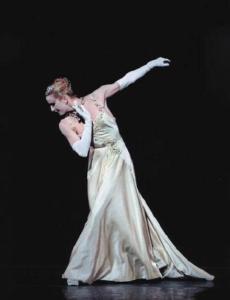
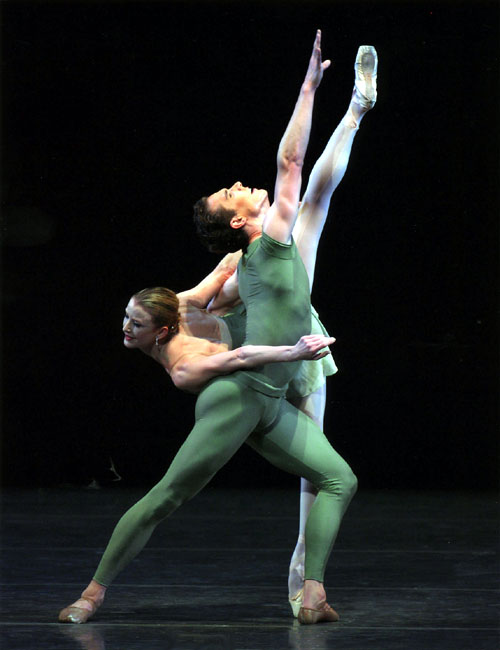
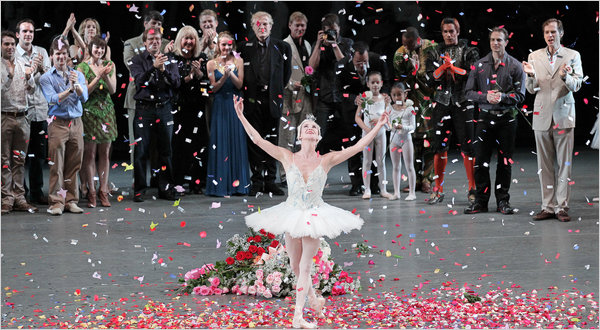
    Saturday February 27, 2010 evening – It’s so nice to see (and hear) JEWELS again, even though to be honest I don’t really like the current settings which make RUBIES and DIAMONDS look like tinsel. Above, Sara Mearns in EMERALDS, my favorite ‘jewel’ and the one which looks best in this production. It was also played with luxuriant tenderness by the orchestra under Maurice Kaplow’s benevolent baton.

    Stafforda Anglej

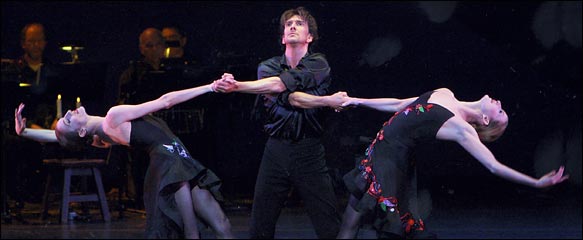
    Abi Stafford and Jared Angle made the first duet a testimonial to the art of ballet partnering; these two dancers with their keen appreciation of the nuances of Faure score gave a wonderfully detailed and subtle performance. It’s a lovely experience to sit there anticipating a familiar musical phrase and to watch Abi and Jared respond to it so perfectly. Abi’s solo was immaculate.

    Pk_jewels_emeralds_sara_mearns_jonathan_stafford_pointe_pose_500

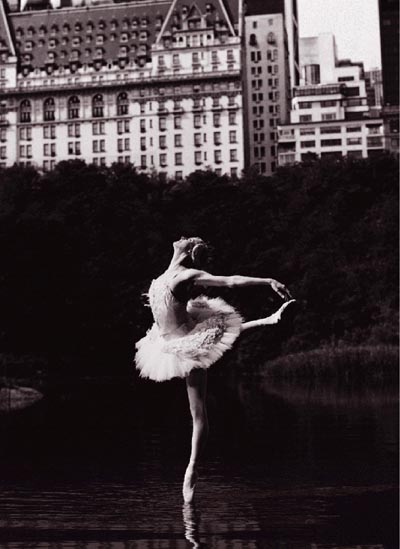
    Sara Mearns was sigh-inducing in her poetic approach and Jon Stafford was her noble and sincere cavalier. Sara seemed to enthrall the audience with her lush adagio style. The quartet of principals meshed music and movement into a hypnotic dream.
    In the pas de trois, Erica Pereira concluded her premiere season as a soloist with yet another excellent performance in which her evident pleasure of being onstage transmits itself so clearly that her joy becomes ours. Robert Fairchild looked dashing here – he can easily move on to one of the principal roles in this ballet – and Ana Sophia Scheller was just splendid, giving the exit phrase of her solo a slight pause of prima ballerina glamour as she swept away. An intoxicating moment.

    In RUBIES, Janie Taylor sizzled with jazzy allure and provocative, loose-limbed dancing. This is a wonderful new role for her and she and Benjamin Millepied were alternately playful and saucy as they moved thru Balanchine’s combinations with a nice lightness of touch. Savannah Lowery brought a dash of Folies-Bergere showgirl hauteur to her performance as the ‘other’ woman.

    Lowery

    I love Savannah’s new hair colour, by the way: her new headshot by Paul Kolnik, above. The corps and the quartet of sporting boys in RUBIES were all fine.

    Jewels_diamonds_whelanneal

    Tonight’s DIAMONDS was a special occasion as Philip Neal – celebrating his birthday – danced what would seem to be his final performance in this ballet. I cannot tell you how many times I have seen the elegant pairing of Philip with Wendy Whelan in DIAMONDS and how they always succeed in making it seem utterly fresh and alive.

    Kaitlyn Gilliland and Amanda Hankes established the mood with their refined dancing in the opening movement and they were later joined by Faye Arthurs and Gwyneth Muller in the scherzo.

    If it was Balanchine’s idea that the ballerinas in JEWELS should embody the characteristics of the gemstones for which each movement is named, then Wendy Whelan is the Diamond-diva deluxe. It isn’t just the clarity of the steps or the finesse of her port de bras and hands or even her queenly presence that make her so memorable; it is the way she absorbs the glow of the music and refracts it into the theatre in a blaze of light.

    She and Philip have danced together so often that partnering is second-nature to them: so natural and smooth and with many an illuminating flourish timed perfectly to the music. In a remarkable tribute to their artistry, the audience was pin-drop silent throughout the pas de deux. As the ballet flowed toward its conclusion, I wanted the music to go on and on so Wendy and Philip could keep dancing together. The audience, sensing the significance of their performance, acclaimed the two dancers with an especially warm ovation.

    All photographs: Paul Kolnik.

  • Elena Cernei Sings “Voce di Donna”

    Verdi AIDA - Amneris - N.Y.Metropolitan Opera

    Surfing around YouTube I came upon this rendition of the aria ‘Voce di donna’ from Ponchielli’s LA GIOCONDA sung by the Romanian contralto Elena Cernei.

    Cernei is one of those nearly-forgotten operatic names. She made her debut with the Metropolitan Opera in a performance of SAMSON ET DALILA on March 17, 1965 singing opposite Jon Vickers. Three days later she was a last-minute replacement for Irene Dalis as Amneris in a matinee broadcast of AIDA. At the time I was a huge Irene Dalis fan and, listening on the radio, was annoyed that an unknown was going to substitute. But I rather liked Cernei’s very plummy, chesty sound despite a few errant moments in terms of pitch.

    In December 1967 I saw Cernei for the first and only time, also as Amneris (photo above) opposite Gabriella Tucci and (another undeservedly forgotten singer) Flaviano Labo. This was my first-ever AIDA in the House; in my diary I called Cernei’s voice “impressive”; I also noted that the conducting of Thomas Schippers was “not good”. I wonder what it was that I disliked about it?

    Cernei made a commercial recording of Dalila which I had on LP. With her voluminous chest voice she was quite good as I recall. I do not seem to find it currently available though we sold it at Tower in a budget CD reissue.

    Cernei sang 21 performances at the Met appearing with such greats as Leontyne Price, Renata Tebaldi and Franco Corelli. It was fun to come upon her name on YouTube and to hear her voice again.

  • Kathleen Kim as Zerbinetta

    23442_358025035929_713855929_5341506_3608948_n

    Kathleen Kim’s recent double success as Olympia in HOFFMANN and Zerbinetta in ARIADNE AUF NAXOS at the Met led me to go searching for photos of her in the latter role. I found these images Met photographer Marty Sohl. Above, Kathleen in the Prologue with mezzo-soprano Sarah Connolly as the Composer.

    21060_328385110929_713855929_5227851_6248986_n

    Kathleen struck up a fine and sexy rapport with her handsome Harlekin, baritone Markus Werba.

    19260_339244250929_713855929_5266899_2650019_n

    Zerbinetta eavesdrops as Harlekin tries to cheer Ariadne up with a serenade. Nina Stemme is Ariadne.

    19260_339244235929_713855929_5266898_5679179_n

    If you missed Kathleen’s performances this season, she will reprise Zerbinetta during the 2010-2011 Met season, as well as appearing as Madame Mao in the Met premiere of NIXON IN CHINA by John Adams.

  • NYC Ballet SLEEPING BEAUTY 2010 #2

    Red-rose-side

    Saturday January 30, 2010 evening – Tonight is was Megan Fairchild’s turn to accept the roses from her suitors as she danced the role of Aurora in the New York City Ballet’s SLEEPING BEAUTY. Megan’s Aurora in the last revival of the production was well-nigh perfect, but she’s surpassed that level now. She looks ideally girlish and petite but her dancing has the poise and stature of a fully-matured artist. Given her technical fluency, the steps are spun off with complete command. Beyond that she has developed a lovely capacity for dreaminess and romantic longing that made her Vision Scene a real pleasure.

    But: I’ve gotten ahead of myself. Megan began casting her magic spell on the ballet very early in the Rose Adagio as she makes her way up the diagonal of the suitors by striking a supported arabesque with each man and then moving to the next. Megan made the transition from one partner to the next with a sort of swooning feeling that was really attractive. The first big unsupported balance of the adagio was grandly sustained. In the variation that follows, her multiple pirouettes were pristine.

    Megan’s partnership with Joaquin de Luz has been a big success and even though she is now a bit taller than he is when she’s on pointe, they are so accustomed to dancing together that it doesn’t matter. From the first encounter in the Vision Scene to the final coronation, they are a dream team in this ballet. Joaquin’s solo dancing was splendid: three sets of blazing air turns with cushioned landings were a high point for him, but everything in his performance was so vividly alive. And he’s a handsome prince to boot. Joaquin and Megan had the best success with the fishdives of any pairing I’ve seen in this production in recent revivals. The audience lavished waves of cheers on Megan and Joaquin when they took their curtain calls.

      C23156-8_beauty_mfair_deluz_1 

    Production photo by Paul Kolnik of Megan Fairchild and Joaquin de Luz in the ballet’s final moment. Ellen Bar is the Lilac Fairy here.

    Jennie Somogyi was tonight’s sparkling Lilac Fairy, flourishing in the multiple pirouettes and sustained attitudes of the role. It was a real pleasure to see her on such fine form tonight after her long road back from a serious injury, reminding us of her many virtues as a dancer. As her counter-part, Maria Kowroski was an imperious Carabosse with a dash of sexy thrown in. The audience adored her.

    The fairy set-piece in the Prologue went especially well tonight; I felt that Maurice Kaplow’s tempi helped the five girls make the very most of their solos. Maya Collins (Tenderness) danced radiantly and one of our newer ballerinas Sara Adams was impressive in the Vivacity variation. As Generosity, Faye Arthurs showed all the facets of her dancing that have made her a very special ballerina for us. Alina Dronova (Eloquence) showed a lively coloratura style and Ellen Bar looked superb and danced with flair as Courage. Then there are the largely unsung cavaliers – the production does give them moments to shine, and shine they did: Andrew Scordato, Chase Finlay, Vincent Paradiso, Cameron Dieck, Daniel Applebaum, and Sam Greenburg.  Among the Lilac Fairy attendants, Megan Johnson was my girl to watch this evening. Justin Peck and Gwyneth Muller were the royal pair, nicely doting on their daughter. In the Hunting Scene Georgina Pazcoguin’s Countess was more hurt than huffy when the Prince dismissed her: a nice little vignette.

    Jared Angle led the Jewels pas de quatre with a stylish performance; I wish he’d been cast as Desire this season but we do have his Siegfried in SWAN LAKE to look forward to. Savannah Lowery was having a grand time as Diamond until she slipped; she recovered quickly but I fear she may have injured herself. We sometimes forget what a precarious job this is. Lauren King was a lustrous Emerald with a superb concluding balance, and Ashley Laracey a delight as Ruby. Kristen Segin’s White Cat was menaced by a wonderfully vivid Puss-in-Boots from Craig Hall.

    Abi Stafford’s purity of technique and innate grace made her a very appealing Princess Florine. Antonio Carmena danced impressively as the Bluebird but had a momentary falter in his partnering. Christian Tworzyanski was the stalking Wolf. Troy Schumacher’s lightness of touch in the Jester pas de trois marked him out as a future Bluebird; Vincent Paradiso and Giovanni Villalobos completed the trio in this lively dance just before the classic Somogyi solo and the Fairchild/de Luz truly grand pas de deux brought the evening to a coronation-conclusion.

    Watch Kristin Sloan’s vastly entertaining and informative video about performing the Wedding pas de deux from SLEEPING BEAUTY with Megan Fairchild and Andrew Veyette here.

    Tonya writes about the BEAUTY cast I was unable to see here.

  • NYC Ballet SLEEPING BEAUTY 2010 #1

    Yellowrose

    Friday January 29, 2010 – The New York City Ballet’s very attractive production of SLEEPING BEAUTY is running for two weeks at Lincoln Center; tonight was my first opportunity to attend. The settings are straight out of a fairy tale with the passage of time and the changing of the seasons depicted in lovely projections. Clothilde Otranto conducted the somewhat truncated score fairly briskly and a huge contingent of dancers – from principals to young SAB students – filled the stage in a performance that was very enjoyable despite a few passing flaws. The production features the Balanchine choreography for the Garland Waltz, always a stage-filling spectacle with its pattern-richness. 

    169_1278

    Sterling Hyltin as Aurora (above, in Paul Kolnik’s photo) was really superb; her elegant line and her technical certainty were combined with her lovely characterization of a girl on the brink of womanhood. In meeting her four suitors, her sense of eagerness and curiosity was kept in check by the instinctive good manners of a princess. The Rose Adagio went very well and the big solo variation even better but it was in the Vision Scene where Sterling was at her most was sublime, her dancing so refined and poetic. Her solo in the Wedding pas de deux was dazzlingly executed. For all her technical strength, Sterling has a complimentary air of delicacy which makes watching her such a sheer pleasure.

    Jonathan Stafford matched Sterling very well and he spun off some polished air turns; Jon is a very good actor, unfussy and sincere. Only in the fish dives did they falter: a stunning first one was followed by a precarious second.  I really wish something could be substituted for the dives which are so seldom accomplished with the necessary flash. Progressing to the Vision Scene, Jon, Sterling and Teresa Reichlen (the Lilac Fairy) wove in and out among the dream-like nymphs creating a living tapestry of movement. Tess is a pure delight as the Lilac Fairy, a role which seems tailor-made both for her long-limbed physical grace and her benevolent radiance of expression. Her calm dignity and her gentle reprimand of her nemesis Carabosse were beautifully expressed. With her many attitude poses, flourishing pirouettes and magical extension, Tess wove a silken thread of dance that holds the whole ballet together. 

    Jenifer Ringer, one of the finest Auroras I ever saw, took on a new role: one might think of her as an ideal Lilac Fairy but, having been cast against type, Jenifer revels in joyous nastiness as Carabosse, gleefully foretelling Aurora’s demise only to be thwarted by the omnipotent Tess. In this production Carabosse is a glamorous woman and Jeni fills the bill to perfection. 

    Among the beautifully-costumed fairies in the Prologue – featuring Gretchen Smith, Georgina Pazcoguin, Stephanie Zungre and Gwyneth Muller – Ashley Laracey made a particularly fine impression both in her variation (Generosity) and most especially in her solo passage in the coda. The Lilac Fairy has a very pretty octet of attendants ‘led’ by the always-lovely Likolani Brown. Ask LaCour’s was a perfect king and Arch Higgins was Catalabutte, the much put-upon Lord Chamberlain. In an all-too-brief appearance in the Hunting Scene, Amanda Hankes was a fetching Countess.

    There may be a shortage of men in the Company now – some are out with injuries – which meant Vincent Paradiso had to dance in the Garland Waltz and then transform himself into the Bluebird. It was really nice to see Matthew Renko back onstage; having watched Matthew at close range lately working with Avi Scher and Adam Hendrickson he seems one of the finest young male dancers around. Let’s hope the reunion becomes permanent. The four princely suitors in the Rose Adagio included Justin Peck who looked striking in the Native American costume and later appeared as a high-leaping Wolf in the wedding divertissement

    Wei and I greatly enjoyed seeing Faye Arthurs in a new role: the White Cat where she cannily found ways to show off her extension; Adrian Danchig-Waring was the wily Puss-in-Boots. Rebecca Krohn was a regal Diamond in the Jewel pas de quatre where Alina Dronova’s fancy footwork and Erica Pereira’s fluent charm were seen to advantage as Emerald and Ruby respectively. Tyler Angle (Gold) looked great partnering Rebecca but he could not quite bring off the end of his variation. As Princess Florine and the Bluebird, Ana Sophia Scheller and Vincent Paradiso were physically well-matched in their dark-haired attractiveness. Vincent’s diagonal of fluttering beats at high velocity was impressive – the steps here look impossible to me – and Ana Sophia was superb, giving a lesson in classical presentation that the new-comers among the girls in the Company should heed. Daniel Ulbricht’s spectacular air combinations brought whoops of delight from the House, with Allen Peiffer and Ralph Ippolito as his jestering pals keeping pace in this spirited interlude.

    For all this array of wonderful dancing I found myself constantly drawn to one person onstage who does not dance at all: Kaitlyn Gilliland as the Queen. Right from her first entrance Kaitlyn’s majestic height and gorgeous face grabbed my attention; whenever she was onstage my opera glasses would drift over to watch her beautifully expressive mime or the royal radiance with which she simply sat watching the festivities.

    A couple of costume malfunctions were distracting but not nearly as much as the audience chatting during the interludes, the unwrapping of food and people getting up during the music and wandering to the exits possibly thinking they were at the cinema and could come and go at whim. Newcomers to the ballet are needed, of course, but they also have to be educated in how to behave during performances. In a time when common courtesy is no longer common, it’s up to the Company to assure an atmosphere where the people who really care about the ballet aren’t alienated.

  • BOCCANEGRA @ The Met

    Domingo marty sohl

    Monday January 25, 2010 – Above, Placido Domingo as Simon Boccanegra in the Council Chamber scene of the Metropolitan Opera production of the Verdi opera. Photo by Mary Sohl from the Met website. Click on the image to enlarge.

    Placido, who has been singing professionally since 1957 and who I first heard at the New York City Opera in 1966, recently made the decision to take on the great Verdi baritone role of the Doge of Genoa and it has turned out to be not only a career-extending role for him but also one of the most truly satisfying and impressive vocal and dramatic performances of the past quarter century.

    Domingo is in fact the last man standing who was part of the ‘last’ golden age of opera which began fading out in the early 1980s. He sang with Tebaldi, Nilsson, Price and Sutherland in a period when the singing was what made opera vibrant.  Blessed with the greatest asset a singer can possess – a unique and immediately identifiable timbre – Domingo, like the ladies he sang with, made a personal mark on many of the great operatic roles.

    Figlia duet 

    And now he has done so again, with Boccanegra. Firstly, there is the sheer presence of the voice – a truly Met-sized sound that fills the big space effortlessly and projects clearly at any dynamic. Then there is the instinctual Verdi style, the legato and portamento so expressively used, the words always so clearly declaimed and the vocal coloration so emotionally apt. His physical portrayal – including a couple of very risky falls – is uncomplicated and devoid of melodrama: he doesn’t act, he just is. And finally there is the simple generosity of spirit which has been an essential component of his career. Photo above: Adrianne Pieczonka & Placido Domingo in the great father-daughter duet. Photo/Mary Sohl from the Met’s website.

    Yes, of course: this is a tenor sound singing in the baritone range. But after only a phrase or two, the ear is tuned-in and Domingo just lets it roll. From the anguish of finding his beloved ‘s corpse thru the elation of meeting his long-lost daughter to the authoritative declamation of the Council Chamber scene and on to the poetic expressions of tenderness as he dies in Amelia’s arms, Domingo was magnificent. Well-supported by Levine, Placido phrased so generously with many sustained notes in the upper reaches of the role, and a spine-tingling prolonged piano on the word ‘Figlia!’ at the end of the recognition scene.

    The rest of the cast gave of their respective best: Adrianne Pieczonka, best known for her excellent Sieglinde, seemed miscast to a degree. But despite some edginess here and there, she was successful in modulating her voice which has the power and warmth needed if not always the delicacy of expression. Marcello Giordani gave another maddeningly uneven performance – he could be sublime one moment and sloppy the next – but his singing had a strong emotional undercurrent and in his best phrases he was impressive, and his singing had the right Italianate throb. James Morris has kept his voice ‘up’ for so many years singing Wotan, Hans Sachs and the Dutchman and now suddenly he wants to go back ‘down’ to plumb the depths of the music of Jacopo Fiesco. Unfortunately it didn’t work: his lower range has little resonance now and so for all his good intentions the role lost its profundity. Patrick Carfizzi had an excellent opportunity as Paolo Albani and seized it with a strong vocal and dramatic portrayal of this creepy, duplicitous character. Richard Bernstein’s Pietro was also powerfully sung.

    The orchestra played grandly under Maestro Levine’s baton; I always feel he rushes the tempo of Amelia’s opening aria but perhaps he does it to accommodate the breath-control of his soprano. A couple of times the brass playing covered the singers but the overall sweep of the music with its leitmotif characteristics was beautifully served.

    Domingo won a big volley of cheers when he stepped out for his solo bow, and then in the next group bow Levine held Placi onstage after the other singers had walked off. It was a nice salute to the great tenor but of course as soon as the houselights came up everyone dispersed. In the old days there would have been a fifteen-minute ovation…confetti…the asbestos curtain stopped in its tracks.