Blog

  • A Late-Season BOHEME @ The Met

    Met boheme may 2025 ~ MET Opera photo

    Above, today’s BOHEME cast: Anthony Clark Evans, Gabriella Reyes, Dmytro Popov, Sean Michael Plumb, Corinne Winters, and Alexander Köpeczi; a MET Opera photo

    ~ Author: Oberon

    Sunday May 25th, 2025 matinee – A cast largely new to me brought me to the Met this afternoon for yet another BOHEME. It proved to be one of the most moving BOHEMEs I have ever experienced, and it brought us the Mimi of an extraordinary soprano, Corinne Winters.

    Opening my Playbill today, I was surprised to find that Yannick Nézet-Séguin was listed as the conductor. I was quite certain that he had not originally been scheduled, and sure enough – in checking the season brochure – it was to have been Riccardo Frizza. I was annoyed at the prospect of Y N-S ruining the afternoon with his tendency to overwhelm the singers with volume from the pit. There were passages where this happened today, but to me he was more attentive than usual to the voices. (Chatting with folks at the stage door after the show, the general feeling was that the orchestra was often too loud.)

    The quartet of Bohemians today was exceptionally pleasing. Tenor Dmytro Popov as Rodolfo had made a very fine impression in this role last season, and he was equally appealing today. The two excellent young baritones in the cast were Anthony Clark Evans as Marcello and Sean Michael Plumb as Schaunard.
    Alexander Köpeczi

    And the Hungarian-Romanian basso Alexander Köpeczi (above) was making Met debut this afternoon as Colline; I’d lately read about him and have watched some of his video clips on Facebook….very impressive!

    A favorite with Met audiences, Gabriella Reyes, was a warm-toned, lively Musetta, and in Corinne Winters we had one of the most moving Mimis of my (extensive) experience; she had first appeared at the Met in 2011 as Countess Ceprano in RIGOLETTO, but today really felt like a Met debut – and an extraordinary one at that.

    Curtain up, and Mr. Evans’ rich tone gets the singing off to a great start; Mr. Popov immediately shows off a finely-projected lyric tenor. They are joined by Mr. Köpeczi, his darkish, handsome timbre will keep the music gorgeously anchored all afternoon. And then Mr. Plumb makes his mark with a voice that will bring Schaunard to prominence as the opera unfolds. Evans/Marcello baits the Met’s go-to Benoit – Donald Maxwell – and then he and his pals head out to Cafe Momus, leaving Mr. Popov momentarily alone. A knock at the door brings Corinne Winters’ Mimi onto the Met stage: the beginning of a captivating performance from this fascinating singer. Her sound and style are Italianate, and the voice carries beautifully in the big space.

    Mr. Popov’s “Che gelida manina” is lovingly phrased, with persuasive dynamics and a true sense of the poetry. The conductor is not really supportive, but the tenor fares very well anyway, with a nice top-C. Then Ms. Winters commences Mimi’s narrative, in the course of which both Rodolfo and myself will fall in love with her. Clear-toned lyricism is a Winters trademark; her lower range distinctive, her word-colourings always fresh and appealing. The orchestra is much too loud at the start of the love duet – and must the audience laugh at every single title as love blooms between poet and seamstress? But the singing is so convincing as the couple experience the delight of new-found happiness. The act ends on a long-held, harmonized note. Magic!

    The scene-change lasts so long, they might as well make it an intermission: the mood has been shattered anyway. Mr. Popov makes the most of every note and word as he introduces Mimi to his friends…and the tenor makes something special out of “…sbaccio l’amor!” The children’s chorus have fun with their calls of “Parpignol…Parpignol!” and Mssrs. Evans, Plumb, and Köpeczi seize upon every note to keep their characters engaging us in this crowded staging.

    Musetta arrives in the person of Gabriella Reyes, and, as she settles in after some initial commotion, Ms. Winters and Mr. Popov have a lovely exchange. Then Ms. Reyes launches the waltz, full of allure and insinuation. The soprano shines in this aria, capping it with a house-filling top-B. Anthony Clark Evans then encores the melody with baritone-power, leading to a massive climax. The parade passes thru: the last joyous moment of the opera.

    Following an endless interval, the prelude to Act III was nicely and subtly played by the Met orchestra. Ms. Reyes’s sweet lyricism recalls her waltz, and then the hapless Mimi appears. From her first hesitant line, Corinne Winters captures every nuance of Mimi’s plight with her touching, expressive singing. Finding Marcello/Evans, the soprano and baritone are simply wonderful in their duet: clear, emotionally-charged singing from both. The soprano is spectacular here, her timbre and way with the words would make you swear you’re listening to an Italian prima donna

    As Mimi hides, Mssrs. Popov and Evans have a telling exchange, superbly voiced despite some over-playing from the pit. Then the tenor confesses his fears about Mimi’s health with “Mimi a tanto malata…” which continues to his outpouring of truth at “Una terrbil tosse“. Mr. Popov saturates these passages with passionate despair…bravissimo!

    Mimi steps forward to the sound of a theme full of heartbreak, and Ms. Winters is infinitely touching in Mimi’s farewell, “Donde ieta usci...”, so beautifully phrased and coloured, her lower range so evocative, her crushing final words gorgeously intoned, with a lingering last note that vanished into the air like a whispered goodbye. 

    Rodolfo/Popov seeks to mend things; the couple remind one another of the things they love – and hate – about each other. Meanwhile, Musetta and Marcello are having their own battle royale. In the ensemble, the sopranos pour out vibrant sounds. Then, alone again, Mimi and Rodolfo resolve to stay together: Mr. Popov’s ravishing “…stagion di fior...” true poetry.

    After a pathetic second intermission wherein most of the audience stayed in their seats, twiddling their thumbs, we have the reminiscing duet of Rodolfo and Marcello, recalling happier days: wonderful singing from the Popov/Evans team; and though the orchestra encroached for a spell, it ended with soft musing. Bravi, gentlemen! 

    Now the four Bohemians reunite; recalling past good times together, they party, all singing lustily. Mr. Plumb again impresses here. They dance, and duel, until suddenly Musetta bursts in, bringing with her the dying Mimi. In this heart-stopping moment, time seems to stand still. Ms. Winters brought forth a wealth of detail in her singing here, from the outpouring of Si rinasce…” to her wistful greeting of each of the Bohemians: “Tutti qui...”  

    Mr. Köpeczi sings Colline’s wrenching farewell to his old coat, hauntingly recalling it as his longtime companion thru good times and bad…the basso’s resonant voice, loaded with emotion, sounds marvelous in the big house. Bravissimo!

    Finally left alone with Rodolfo, Ms. Winters seals her fascinating performance with her heart-rending singing of “Sono andanti…?”  Pure poetry here, her lower range battering my heart with its unique incandescence.

    The mood was somewhat spoilt by audience members laughing at the title/translations…they should by turned off by this point. But Ms. Winters restores proper dignity when she finds Mimi’s pink bonnet under the pillow, inducing a flow of memories. And then she sleeps away.

    The curtain calls were lovely today, each singer warmly greeted as he/she stepped before the gold curtain in this, one of the last two Met productions wherein curtain calls involve an actual curtain. Ms. Winters was deservedly cheered for her engrossing performance.

    Boheme may 2025-1 jpg
    Above: a sizeable crowd gathered at the stage door to greet the singers, and I was very happy to re-connect with tenor and voice teacher Jason Ferrante, who I’d met when he was at Julliard and I worked at Tower Records. Ms. Winters is one of Jason’s longtime students. I met Ms. Reyes, and Mssrs. Evans, Plumb, and Köpeczi (how Mr. Popov managed to slip by me I am not sure). And Ms. Winters’ personality is as lovely as her voice; she seemed genuinely moved by the audience’s response to her performance this afternoon. 

    All in all, a wonderful afternoon at The Met…an afternoon that recalled another such day – many, many seasons ago – when I fell in love with Jeannette Pilou. Today, Corinne Winters cast a similar spell over me. She was so kind as I tried – so clumsily – to express my admiration.     

    ~ Oberon

  • Antonia and Jane

    a and j

    I had a bit of free time yesterday and decided to watch again a film I have loved and watched many times: ANTONIA & JANE. It always surprises me when people tell me they never heard of some of my favorite movies, and this one in particular seems to have been almost totally overlooked.

    Friends from childhood, Antonia (Saskia Reeves) and Jane (Imelda Staunton) have a relationship that falls into disrepair after Antonia steals Jane’s boyfriend. But they cannot let their bond go entirely so they meet once a year for dinner. Jane is frumpy, insecure and paranoid while Antonia is successful, classy and attractive. Unbeknownst to one another, they share a therapist. It also turns out that each envies the other.

    In a series of hilarious coincidences and by-ways, each woman muddles through her own romantic and sexual relationships while their friendship, however strained, remains constant. One-liners and quirky turns of plot make this a film that will provoke quiet laughter but underneath it all we can feel a sense of recognition of our own longtime friendships – which, if you’re like me, can sometimes make you wonder “Why am I still friends with this person?” and then you remember things you’ve been thru together and the answer becomes obvious. 

  • John Adams: ANTONY & CLEOPATRA @ The Met

    Antony-and-cleopatra

    ~ Author: Oberon

    Saturday May 24th, 2025 matinee – I hadn’t originally planned to go to a performance of John Adams’ Antony & Cleopatra, but some singers I especially like were in the cast, so I got a score desk – even though I was scoreless – for today’s matinee. My previous experiences with the composer’s operas have both disappointed (though the second was enthralling for the first 40 minutes); you can read about my reaction to The Death of Klinghoffer here and to El Niño here.

    The Met’s first incarnation of the Shakespearean tale of Antony and Cleopatra was the opera by Samuel Barber which opened the New Met in 1966. In the late summer of that year, I had made my first solo trip to New York City in order to buy tickets to some of the performances in the first few weeks of the season, and Antony & Cleopatra was on my list. 

    On the evening of September 16th, 1966, in my little room in the little town, I was tuned in for the live broadcast of the new opera. I was on pins and needles because the Met Orchestra had announced an impending strike; they’d agreed to play the opening night as it was drawing international attention in the music world. Luminaries had flown in from other nations, and Lady Bird Johnson was to be the guest of honor. For two acts, I was feeling more and more certain that the performances I’d bought tickets for would never take place: rumors indicated that the standoff could not be resolved, and that both sides were standing firm. Then, before the start of Act III, Sir Rudolf Bing appeared before the gold curtain to announce that a settlement had been reached and to welcome the musicians back “as friends”. I ran screaming thru the house; my mother thought – not for the first time – that I was deranged. 

    On December 1st, 1966, I saw the last Met performance of the Barber Antony & Cleopatra to date. I’d learned a lot of the music from repeated playings of the reel-to-reel tape I had made of the opening night broadcast, and I was thrilled to experience the voices of Leontyne Price, Justino Diaz, Jess Thomas, Ezio Flagello, and Rosalind Elias in this music ‘live‘; I was able to silently sing along with them much of the time. 

    Though the Met never revived the opera, a production given at the Juilliard School, staged by Gian Carlo Menotti and conducted by James Conlon, kept much of the music intact, whilst introducing a love duet for the title-characters. Then, in 2009, the New York City Opera presented a concert performance of the Barber opera at Carnegie Hall, with Lauren Flanigan and Teddy Tahu Rhodes in the leading roles. Read about it here

    In the ensuing years, I’ve kept favorite passages of the opera in my mind: not just the big themes and the weighty arias, but the delicious (and later cut) scene for the eunuch slave Mardian and Cleopatra’s handmaidens, full of one-liners; the haunting, poetic beauty of Antony’s young attendant Eros’s suicide (“Thus do I escape the sorrow of Antony’s death...”), and most especially the opera’s original ending, with Charmian finishing Cleopatra’s last line, “What? Should I stay…?” “…in this vile world?  Now boast ye, Death, for in thy bosom lies a lass unparalleled…your crown’s awry! I’ll mend it, then play til Doomsday...” as intoned by the sumptuous voice of Rosalind Elias. And of course, the glorious sound of Leontyne Price is forever bound to the music of Cleopatra.

    Enough nostalgia, and forgive me for rambling on. 

    So this afternoon, I am sitting alone in the great darkened hall that had reverberated to the Barber score some sixty years ago, hoping to be similarly captivated by the new Adams opera. As it turned out, I was far more fascinated with the orchestral writing than with the vocal. The composer had written a very long program note, but the print was so small I could not read it. Even while the players were tuning and warming up in the pit, the sounds of such instruments as celeste, harmonium, harpsichord, mandolin, glockenspiel, vibraphone, tam-tam, flexatone (which creates glissando effects), and numberless bells, chimes, and drums, teased my ear. Adams put all of these to cunning use, creating textures that sustained my interest throughout the 90-minute first act.

    The composer reportedly stipulates that amplification of the singing be used when his operas are presented. It’s OK by me, but the mixing board (taking up one of the parterre boxes) sometimes allowed the voices to be covered by the orchestra despite the singers being miked. A few times, the lower range of Julia Bullock (Cleopatra) took on a reverb feeling from over-amplification. I also noted that the cast’s diction was not always clear.

    A restless orchestral prelude opens the opera, wherein Antony (Gerald Finley, the superb baritone) ignites Cleopatra’s fury when he tells her he must return to Rome due to the death of this wife, Fulvia. Between un-interesting vocal writing and patches where the singers were covered by orchestral volume, this scene was basically expendable. 

    A noisy interlude takes us to Rome, where Antony is greeted coolly by his ‘boss’, Caesar (the clear, lyrical tenor Paul Appleby). To patch things up between the two men, it is suggested that Antony marry Caesar’s sister, Octavia. Agrippa, the match-maker (sung by Jarrett Ott, whose clear diction was a joy) gives way to Enobarbus (that superb basso Alfred Walker) whose description of Cleopatra sailing on the Cydnus is more a sung narrative than a melodious “aria”. 

    Back in Alexandria, Cleopatra’s voicing of “O happy horse, to bear the weight of Antony!” is no match for Samuel Barber’s setting of the text, which Leontyne Price savoured so smoulderingly. Told by Eros (Brenton Ryan) of Antony’s marriage to Octavia sets off a wild reaction from Cleopatra, though it is expressed more by the orchestra than by Ms. Bullock’s parlando and her furious song, which goes on too long…though finely rendered by the soprano.

    After an orchestral interlude, a big, beaty, turbulent theme is launched as Octavia (the plush-toned mezzo Elizabeth DeShong) cannot decide between loyalty to her brother Caesar and the appeal of Antony. Tired of her vacillating, Antony divorces her on the spot and rushes back Cleopatra. Ms DeShong brings vocal glamour to her singing, though at times the orchestra covered her. Caesar’s fury at Antony’s treatment of his sister is another case of the fascinating orchestration trumping the vocal line. When Octavia/deShong reveals (with some gorgeous measures of vocalism) that she is pregnant, her brother declares war on Antony. 

    A wondrously wrought orchestral interlude leads to a musical depiction of a disastrous sea battle, in which Antony miscalculates and Cleopatra erroneously calls off her own fleet of ships; there is a brief vocal highlight wherein Mr. Finley’s lament blends with a soaring phrase from Ms. Bullock; but it’s over almost as soon as it begins. Lights flash thru the hall as the orchestra pounds away at themes of battle in an endless ending to the opera’s first act. 

    In the 90-minute span of this opening act, memorable vocal moments have been few and far-between, whilst the orchestra has shone brilliantly. The voices were there, ready to make much of the music, but the composer’s lack of “lyric musing” (program note) deprives them of opportunities.     

    ~ Oberon

  • Bel Canto Duet

    puritani

    Lisette Oropesa and Lawrence Brownlee in a duet from Bellini’s I PURITANI, from a performance in March 2025 at l’Opéra Bastille in Paris.

    Watch and listen here:

  • Josef Jeongmeen Ahn ~ Pierrot’s Tanz-Lied

    Josef Jeongmeen Ahn

    Baritone Josef Jeongmeen Ahn sings Pierrot’s Tanz-Lied from Korngold’s DID TOTE STADT. The pianist is Nadia Kisseleva.

    Watch and listen here.

  • CMS: Beethoven Quartet Cycle ~ Finale

    Calidore_Beethoven

    Above: the Calidore String Quartet, photo by Frank Impelluso

    ~ Author: Ben Weaver

    Sunday May 18th, 2025 – Chamber Society of Lincoln Center reached the end of its 2024-25 Beethoven String Quartets cycle, performed by the the outstanding Calidore String Quartet. For the sixth and final concert the quartet – violinists Jeffrey Meyers and Ryan Meehan, violist Jeremy Berry, and cellist Estelle Choi – performed Beethoven’s quartets Nos. 14 and 16.

    String Quartet No. 14 in C-sharp minor, Op. 131, composed in 1825-1836, and has been studied and individually praised by the likes of Richard Wagner, Robert Schumann, and Franz Schubert – who had it played for him privately a week before his death. Composed in seven movements played without a break, it opens with a somber melody on the first violin. The rest of the musicians enter one by one, the music remaining austere and calm, perhaps reflecting Beethoven’s deep faith as it resembles parts of his earlier Missa Solemnis. Wagner once wrote that this was “the saddest thing ever said in notes.” The Calidores played this beautifully, with extreme care and dedication. The music shifts to a playful dance and then back to darkness, and then back again and again. The playful Scherzo (marked Presto), with its charming melody, zooms around like a playful puppy, lovingly played by the Calidores. There’s a memorable moment towards its conclusion where all four instruments play pianissimo in their highest registers, then the volume is quickly raised, which felt like being suspended in zero gravity and then quickly falling down. The Finale is a violent march with occasional soaring melodies to break up the clouds.

    The Quartet No. 16 in F major, Op. 135 ended up being Beethoven’s almost-last composition for the string quartet. (The only thing remaining was the new final movement for Quartet No. 13, which ended up being the very last piece Beethoven ever composed.) It opens once again with a somber melody, but unlike the darkness of the earlier quartets, this one is simply mournful and lovely. The Calidores held the audience in thrall with the beauty of their playing. The second movement, Vivace, is wonderfully chaotic, as if ready to unravel at any point. The following Lento assai, cantabile e tranquillo is Beethoven at his most lyrical, full of stops and starts, like breathing of a dying man. And the Finale: Grave, ma non trope tratto, begins ominously and violently, but ends on a lighter, even triumphant, note.

    The terrific musicians of the Calidore Quartet undertook a monumental challenge, performing all sixteen of Beethoven’s String Quartets in a single season. The works themselves are the Mount Everest of the string quartet repertoire and the challenges are enormous. Beethoven wrote his string quartets in three batches of his life and career: early, middle, and late. They show a profound progress of an artist who became the leading figure of Romanticism, sturm und drang; but also a musician of frequently surprising humor. Mssrs. Meyers, Meehan, Berry, and Ms. Choi combine all the elements needed to bring these million faces of Beethoven to life.

    ~ Ben Weaver

  • Parsons Dance @ The Joyce ~ 2025

    Her-Gifts-Photo-by-Steven-Pisano1-1024x683

    Above: the one and only Zoey Anderson in David Parsons’ new solo, Her Gifts; photo by Steven Pisano

    Sunday May 18th, 2025 matinee – Parsons Dance at The Joyce with a program of works by Rena Butler, Robert Battle, and the founding choreographer himself: David Parsons.

    The program opened with Parsons’ 2005 work Wolfgang, to music of Mozart. Hints of Paul Taylor as well as nods to the classical ballet world are woven into the choreography. Howell Binkley’s emblematic lighting designs – both here and later, in Caught and In The End – are so atmospheric. 

    Wolfgang  Photo by Paula Lobo

    Wolfgang (photo above by Paula Lobo) has a beautiful, flowing feeling, with a series of duets giving the dancers ample opportunity to shine (the “either/or” listing of the dancers left me wondering who was who at times). For a while, the dancers lounge on the floor. The adagio brought finely-lit poses, laced with touches of humor. There were vanishing acts, where the dancers disappeared into the upstage darkness. In the light and bright finale, Parsons makes canny use of the music; a series of turns elicited a burst of applause.

    A brand new – and stunning – solo, Her Gifts, choreographed by David Parsons to Roberta Flack’s immortal classic ‘The First Time Ever I Saw Your Face’, was a gift from David to the radiant Zoey Anderson. In a striking Judy Wirkula gown, glowingly bathed in golden light, Zoey took complete command of the stage with her hypnotic way of moving: her every step and gesture held the audience under a spell.

    The Hunt (2010), is choreographed by Robert Battle to a tumultuous score by the French percussion band Les Tambours du Bronx. I seem to recall being at the studio one afternoon early on in this work’s creative process. Of course, it was a whole different set of dancers in those days. 

    The Hunt can be danced by either men or women, and today it was a female quartet – Téa Pérez, Megan Garcia Ziminski, Justine Delius, and Joanne Hwang – who took us on this wild ride. Burke J. Wilmore’s lighting bathes the quartet in bloody light; later, saturated colors illuminate the back panel. The dancing is provocative, ritualistic, ecstatic. Pairing off, bodies are dragged about. The pace is relentless, the women so compelling in their moves. The crowd responded with unbridled enthusiasm.  

    Sheep_s-Gothic-Paula-Lobo

    Above: from Rena Butler’s Sheep’s Gothic; photo by Paula Lobo

    Sheep’s Gothic, a 2025 creation by Rena Butler opened the evening’s second half. Moody lighting by Christopher Chambers showed us seven dancers costumed by Asha Ama in athletic gear, including knee pads. The “either/or” cast listing (and a prevailing darkness) again kept me from figuring out who was who, but the dancing was impressive throughout.

    A cappella choral works by Felix Mendelssohn have an oddly nationalistic air. Offsetting these, music by Darryl J Hoffman creates a sonic tapestry; things speed up, echo effects entice, whimsical elements are introduced as this darkish dancework evolves. The chorale resumes, with some mechanical noises further deepening the nocturnal mood. Hymn-like music and spoken words sustain the atmosphere, but after a while, a feeling of longueurs creeps in. A relaxed beat underpins a spacious ensemble as this enigmatic dance moves to its end.   

    I cannot count the times I’ve seen David’s signature masterpiece Caught; I first saw this solo danced by the choreographer at Jacob’s Pillow many years ago. Since then, it’s been performed by both male and female dancers, and it never fails to elicit a delirious response from the audience. This afternoon, Joseph Cyranski wowed the crowd with his magnetic presence and dazzling dancing, perfectly timed to give Caught the visual magic this iconic dancework demands.    

    In The End  Photo by Steven Pisano

    Above: Joseph Cyranski in In The End; photo by Steven Pisano

    David Parsons created In The End – to the music of the Dave Matthews Band – in 2005. It makes a perfect closing number, as all ten of the Company’s dancers join in. Again, Howell Binkley’s lighting is a key element to the work’s appeal. The dancers move thru the Parsons choreography with a mix of lyricism and athletic poise, evoking a celebratory ovation at the end as each dancer rushes on for a solo bow.  

    ~ Oberon

  • Jadwiga Rappé Has Passed Away

    Rappe

    One of my favorite contraltos, the Polish concert and opera singer Jadwiga Rappé (above), has passed away at the age of 73. Ms. Rappé performed at the most prestigious venues in Europe, Asia, and North America, and she leaves behind more than fifty recordings. She worked with such illustrious conductors as Chailly, Sir Colin Davies, Harnoncourt, Nagano, Janowski, and Antoni Wit.

    I first became intrigued by Ms. Rappé’s voice after hearing a recording of her singing in Krzysztof Penderecki’s Seven Gates of Jerusalem – a work in which she had sung the world premiere performance at Jerusalem in 1997 under the baton of Loren Maazel. In 2001, she sang the premiere performance of Wojciech Kilar’s Missa pro pace at Warsaw, conducted by Kazimierz Kord. Works were composed specially for her contralto voice by Juliusz Łuciuk, Piotr Moss, and Krzysztof Baculewski. In 2008, in Prague, she took part in the world premiere of Ladislav Kubik’s Gong ~ Sinfonietta for solo mezzo-soprano, Mixed choir and orchestra, and in July 2011 she premiered Paweł Mykietyn’s Symphony no.3 at the National Philharmonic in Warsaw.

    Jadwiga Rappé’s operatic repertoire included works by Gluck, Handel, Ponchielli, Verdi, Wagner, and Richard Strauss. Erda in Wagner’s RING Cycle was her most frequent stage role: she appeared in nine different premiere productions of the cycle at opera houses around the world, and she recorded the role for EMI under the baton of Bernard Haitink. She scored  successes as Gaea in Strauss’s Daphne, and as Clytemnestra.

    Her discography includes recordings on several labels: BMG Music, Teldec, Erato, Denon, Orfeo, Philips, Decca, Chandos, CD-Accords, and Naxos.

    After retiring from performing, Jadwiga Rappé taught at the Fryderyk Chopin University of Music, and later headed the board of the Witold Lutosławski Society.

    Ms. Rappé sings the aria “Weh ihnen, dass sie von mir weichen” from Mendelssohn’s ELIAS here.

    And here is “Zasmuconej” by Mieczysław Karłowicz.

    The contralto sings Cagion son io del mio dolore” from Handel’s SERSE here.

  • Peixin Chen

    Chinese basso Peixin Chen has impressed me with his performances as Timur and Sarastro at The Met.

    He sings “Gada Meiren“, a Mongolian folk song, here:

  • Irene Dalis as The Nurse

    Dalisobit-blog427

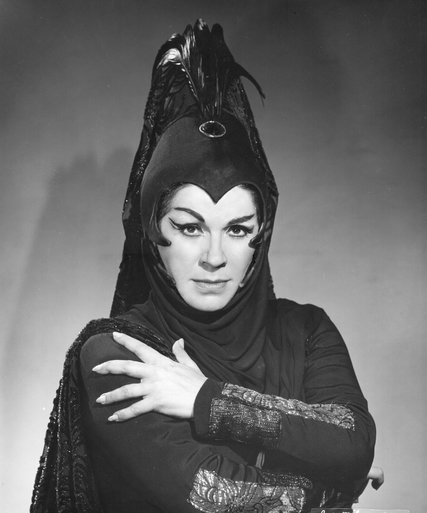
    The great mezzo-soprano Irene Dalis (above) found her most memorable role as The Nurse in Richard Strauss’s DIE FRAU OHNE SCHATTEN; I was fortunate enough to have seen her in this opera twice at The Met, and both times she simply dazzled in the fiendishly difficult vocal writing whilst creating a vivid theatrical portrait of this mercurial creature.

    The Nurse above all is devoted – to the point of obsession – to her charge: the half-human/half-spirit Empress, daughter of the mysterious and omniscient Keikobad. In the opera’s opening scene, the Nurse is visited by Keikobad’s messenger. The Empress has been married to the Emperor, a mere mortal, for one year, but as she still does not cast a shadow – the sign of her ability to bear children – Keikobad plans to re-claim her for the spirit world in three days. The Nurse is delighted, as she very much hates the Emperor; she longs to return to Keikobad’s realm.

    The Nurse asks what will become of the Emperor after the Empress is taken by her father; “Er wird zu Stein!” says the Messenger: “He will be turned to stone!” This prospect gives the Nurse even greater satisfaction: “He will be turned to stone!” she repeats. “There do I recognize Keikobad, and bow before him!”

    FRAU ~ opening scene – Irene Dalis & William Dooley – Bohm cond – Met bcast 1966

    January 23, 2017 | Permalink