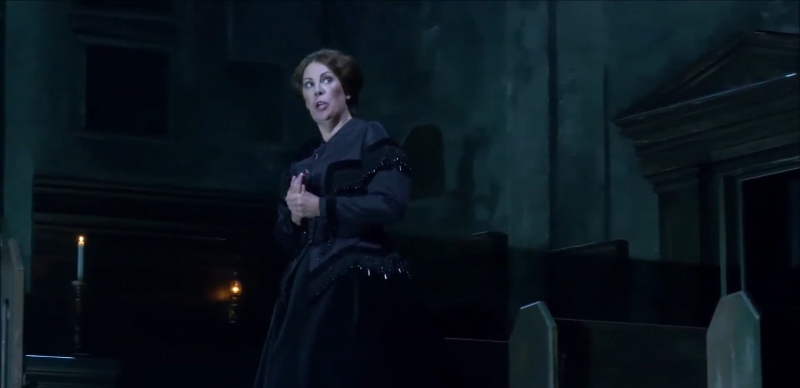
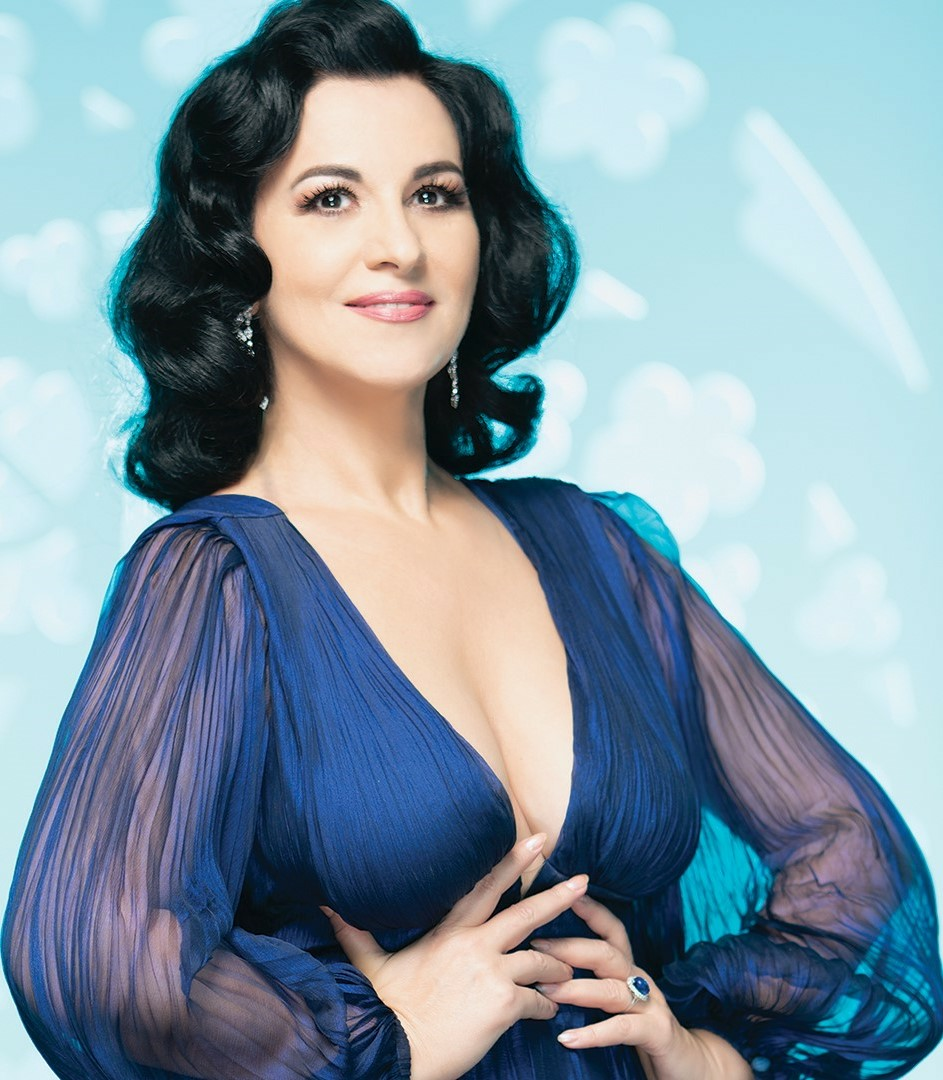
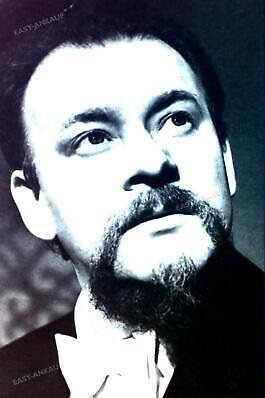
A performance of TOSCA given at Nice in 1980 featuring Montserrat Caballe and Jose Carreras (above) as Floria Tosca and Mario Cavaradossi, and Juan Pons as Baron Scarpia. The conductor is Jésus Etcheverry.
Watch and listen here.
A performance of TOSCA given at Nice in 1980 featuring Montserrat Caballe and Jose Carreras (above) as Floria Tosca and Mario Cavaradossi, and Juan Pons as Baron Scarpia. The conductor is Jésus Etcheverry.
Watch and listen here.
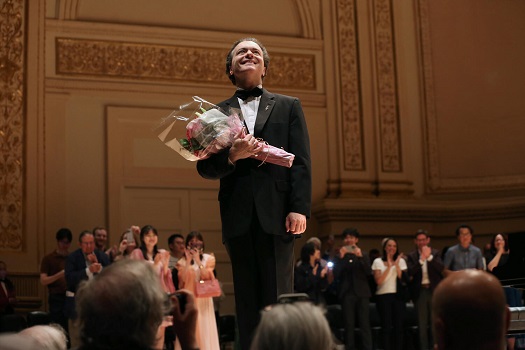
Above: Anthony McGill, photo by Todd Rosenberg
~ Author: Oberon
Sunday February 25th, 2024 – Music by two of France’s most beloved composers – Camille Saint-Saëns and Gabriel Fauré – was on offer this evening at Alice Tully Hall. Chamber Music Society of Lincoln Center once again assembled a stellar group of musicians, assuring a thoroughly enjoyable concert experience.
Gabriel Fauré’s Dolly Suite for Piano, Four-Hands, composed between 1894 and 1896, made for a charming start to the program. Pianists Anne-Maria McDermott and Gloria Chien gave a splendid performance of the work, which derives its name from an affectionate nickname for Helene Bardac, the young daughter of Fauré’s long-time mistress, Emma Bardac. Fauré composed these gem-like miniatures between 1893 and 1896, to mark Helene’s birthdays and other events in her young life.
The suite’s movements are:
Tonight, Ms. Chien was in charge of the lower octaves, and Ms. McDermott of the upper. They seemed to be truly enjoying playing this music, which veers from rambunctious to elegant. At the end, they embraced, and then basked in the audience’s warm applause.
It’s always a delight to hear Anthony McGill, Principal Clarinet of The New York Philharmonic, and this evening he regaled us with his sumptuous playing of Camille Saint-Saëns’ Sonata in E-flat major, Op. 167, dating from 1921…one of the composer’s last works. With Ms. Chien at the Steinway, the music simply glowed, from first note to last.
The opening Allegretto has a subdued start, but passion lurks beneath the surface. Mr. McGill was soon astounding us with his mastery of dynamics and his fluent coloratura. His pianissimi must be experienced to be believed: such control! Infinite beauty of tone is a McGill trademark, reaching our souls like a blessing from above. The movement has a poetic finish.
From a sprightly start, the Allegro animato finds the two players in perfect simpatico mode. Enchanting subtleties from both musicans continually cast a spell over the Hall. Ms. Chien opened the Lento with a deep, somber melody. She then commences a soft heartbeat motif, with Mr. McGill’s clarinet singing a forlorn melody. A wistful ‘ending’ is reached, but there’s a lovely piano postlude to follow.
Rapid keyboard figurations open the concluding Molto allegro, wherein the virtuosity of both players delights us: rapid scales and sparkling cascades of notes are crystal clear. Then M. Saint-Saëns makes a surprising mood-swing: there is a gorgeous fade-away, from which a lovely melody arises. Mr. McGill’s final pianissimo note, sustained to spine-tinlging effect, was simply uncanny.
I cannot recall ever having heard Fauré’s La Bonne Chanson performed live before. When this concert was first announced, Sasha Cooke was listed as the soloist; but in the event, it was the radiant young Chinese soprano Meigui Zhang (photo above) who sang the Fauré for us…exquisitely.
It’s been nearly a year since I first heard Ms. Zhang: in John Luther Adams’ Vespers of the Blessed Earth, on a memorable evening at Carnegie Hall, which you can read about here. For the Fauré songs tonight, she joined an ensemble of outstanding musicians: violinists Arnaud Sussmann and Paul Huang, violist Matthew Lipman, the NY Phil’s primo basso Timothy Cobb, and Ms. Chien at the piano.
The nine songs are settings of nine poems by Paul Verlaine, which the poet wrote as a wedding gift to his wife. (Ironically, Verlaine had also had an affair with Emma Bardac, mistress of Fauré.)
The songs explore many moods, by turns restless, idyllic, passionate, and pensive. The pretty, lyrical quality of Ms. Zhang’s voice is ideally suited to these songs. Particularly impressive were “J’allais par les chemins perfides” where the singer’s silken tone sounded especially lovely among the rich string mix; the urgent ecstasy of “Avant que tu ne t’en ailles“; the meltingly soft allure of her tone in “Donc, ce sera par un clair j:our d’été” with its beautifully sustained final note; and the sweet rapture of her “L’hiver a cessé“. Surely Ms. Zhang gained many new admirers this evening.
In these songs, the piano and strings provide a sonic tapestry into which the voice is woven to magical effect. Ms. Chien’s playing was a constant source of pleasure, and Arnaud Sussmann’s tone shimmered on high, seconded by Paul Huang. The deeper voices gave plushness to the ensemble: Matthew Lipman (viola) and David Requiro (cello) have much to do – they were particularly fine in “N’est-ce pas?” The composer might have given more to the bass, but Mr. Cobb made the most of each opportunity.
Following the interval, a glorious rendering of Camille Saint-Saëns’ 1875 Quartet in B-flat major brought together Ms. McDermott, and Mssrs. Huang, Lipman, and Requiro. Ms. McDermott commences the opening Allegretto, with the trio of strings joining in a unison passage. The blending of the four voices is most cordial, with the pianist’s seamless phrasing and the intriguing timbres of the three string players. I hadn’t heard Paul Huang for a while, and it was simply great to hear his distinctive sound again, as he sailed thru an ascending/decending solo motif. The Allegretto has a terrific ending.
Ms. McDermott emphatically attacks the opening bars of the Andante maestoso; the strings again join in unison, and the music has a vaguely Russian feel. There’s a slow piano theme, with the strings etching in comments along the way. Things then turn fast and furious, Ms. McDermott commanding the keyboard and the strings slashing away. Turbulence!
Mr. Lipman and Ms. McDemott launch the delightful Poco allegro, which charmed my companion and me with its Mendelssohnian flavor. There are major/minor shifts which lead to a Paul Huang cadenza, passionately played and with a ravishing trill. The music races lightly forward to a deliciously subtle finish.
The concluding Allegro starts briskly, the piano leading the way. The strings play in unison or pass phrases to one another. There’s an underlying restlessness that calms to a series of soft pizzicati. A slow build-up of tension gives way to a luxuriant sense of peace before a rising passage brings this splendid piece to its end. The musicians enjoyed a standing ovation; with our spirits lifted, we headed out into the freezing winter night.
~ Oberon
Jan Derksen (above) and Ángeles Gulín have the leading roles in a 1968 radio broadcast from Amsterdam of Verdi’s I DUE FOSCARI, conducted by Fulvio Vernizzi.
Ms. Gulín is Lucrezia Contarini and Mr. Derksen sings Francesco Foscari. Luigi Lega (Jacopo), Ugo Trama (Loredano), Cor Niessen (Barbarigo), and Adriana Hali (Pisana) complete the cast.
Listen here.
~ Author: Oberon
Thursday February 22nd, 2024 – American composer Amy Williams (photo above by John Mazlish) was the guest at this evening’s Composer Portrait, a popular ‘interview and performance’ series offered by the Miller Theatre at Columbia University. Read the composer’s bio here.
Tonight the illustrious JACK Quartet were with us to perform Tangled Madrigal (the world premiere of a Miller Theatre commission) and other works by the composer, who, as an accomplished pianist, joined them for a trio and a quintet.
The evening opened with Cineshape 2 for piano and string quartet, composed in 2007. This was a compelling introduction to the composer’s music. It starts off with a sizzling motif from John Pickford Richards’ viola; as the music turns somber, the viola is joined by Jay Campbell’s distinctive cello, with the composer providing pizzicati from the piano. Suddenly there’s an explosive crash, followed by a passage for skittering piano and chirping violins. Another crash, and then the music turns dreamy, becomes agitated, and stutters before a third crash. The strings descend, the music pulsing, then shivering, before it fades magically away.
For Bells and Whistles (2022) the composer was joined by violinist Christopher Otto and Mr. Campbell. The gentlemen tap their strings whilst Ms. Williams reaches into the piano to pluck the strings. It’s quite hypnotic! The music grows louder and becomes turbulent, the piano part is very active, with swirls of notes running up and down the keyboard. A trudging motif arises, churning and relentless. An eerie postlude ensues, develops a dense quality, and then turns other-worldly.
One of Ms. Williams’ most highly regarded works, Richter Textures (2011), was inspired by the paintings of Gerhard Richter. Listed as being in seven movements, my companion and I both detected five: some of the subtle transitions seem to have eluded us.
From an agitato start, the music turns high and spacey, with brilliant interjectory phrases from Jay Campbell’s cello. As the cello goes low and ominous, the unison violins and viola take up a slow, descending theme, which the cello eventually joins. Then things ascend to the heights.
Slashing bows evoke a painter’s aggressive brush strokes; these are quietened, and the cello sings low, whist the violins linger on high. Insectuous, insistent buzzings give way to ethereal, kozmic high harmonies. The music becomes driven – and rather jazzy – before a sudden stop.
Following the customary interview of the composer, the world premiere of Tangled Madrigal was magnificently played by the JACK Quartet. Early Music influences colour this music, which is so beautifully written…and written with these specific players in mind. From a high, squeaky start, the composer takes us on a time-warp journey back to the Renaissance. Mr. Richards’ viola is gorgeously prominent, Mr. Otto’s violin shines, Jay’s cello has a song to sing, and violinist Austin Wullmans floats in the high register. There is a cadenza from the viola, but it’s the cello that has the last word. I think I could have derived even more pleasure from this piece had not the two girls sitting in front of kept whispering and checking their phones.
The program was a fine introduction to the composer’s work, though a certain sameness prevailed as the evening progressed. It would have been interesting to hear Ms. Williams in a solo piano work, since her playing is truly captivating. So…the Miller will have to have her back at some point. Meanwhile, having the JACK Quartet for the whole evening was its own reward.
~ Oberon
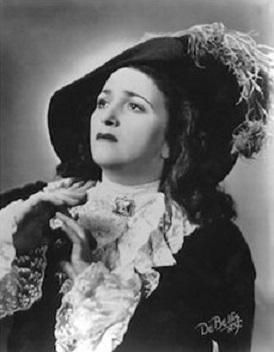
Rita Gorr sings Giulia’s “Impitoyables dieux” from Spontini’s LA VESTALE, recorded in 1958.
Listen here.
Rita Gorr sings Giulia’s “Impitoyables dieux” from Spontini’s LA VESTALE, recorded in 1958.
Listen here.
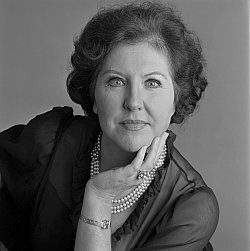
Above: Judith Forst
I attended this exciting concert performance of Donizetti’s ANNA BOLENA in 1975 at Avery Fisher Hall. Dame Joan Sutherland, Judith Forst, Cynthia Clarey, Jerry Hadley, and Greg Yurisich sang the principal roles, and Richard Bonynge was on the podium.
Watch and listen here.
The final scene of Verdi’s DON CARLO, performed in concert at the Musikvereinsaal in Vienna in 1988. The soloists are soprano Mara Zampieri, tenor Giacomo Aragall, and bass Kurt Rydl. Mr. Rydl sings the lines of Philip II, the Grand Inquisitor, and the Ghost of Charles V. Very sporting of him!
Watch and listen here.
~ Author: Oberon
Saturday February 17th, 2024 matinee – The Joffrey Concert Group offering a program of four works by three choreographers at the Ailey Citigroup Theater. The dancers were all technically adept and physically attractive, and the performance was enhanced by excellent lighting. While each ballet was enjoyable to watch individually (and to listen to, at least until someone pumped up the volume), being performed one after the other made for an afternoon lacking in contrasts.
Chicago-born Alvin Ailey American Dance Theater principal dancer Vernard J Gilmore has created “Dawn Of Love”, which opened the show. The work’s six movements do offer some variety of pacing and atmosphere, all basically coloured by the power and intensity of the music by Prince, distinctively played by the Vitamin String Quartet and mixed by long-time collaborator, DJ April Reign.
“Dawn Of Love” gets off to a big-beat start with “Not Afraid” in which four couples wend thru various ballet partnering motifs. “Neverending” begins with the women, soon joined by the men – the music has a hoedown feeling. A steady beat pulses thru “Specks of Hope“, danced by a trio of women, and then there is an ethereal solo, “I Will, I Am” danced poetically by Mari Murata, with her lovely pointe work. (I should note that, throughout the evening, some of the women were on pointe and others in soft slippers). A pointy duet for Annika Davis and Sydney Williams opens “Diamonds and Pearls“, danced to an insistent beat. The other women join, and finally the men. The ballet concludes with a duet for Breeanna Palmer and Faahkir Bestman entitled “Nothing…”; the stage is bathed in a red glow, and the music has an oddly Appalachian feel. Although this duet went on a bit too long, it was very finely danced. An extra bravo to lighting designer Michael Faba.
There were no bows after the opening work, and after a brief pause Bradley Shelver’s “Random People With Beautiful Parts” commenced. The music draws on the Hilliard Ensemble’s recordings of J S Bach; the piece is in three sections, beginning with a solemn air of ritual. Traditional ballet combinations weave into the music, and a sense of light vs darkness develops. An interesting motif of skidding on pointe is introduced, reminding me of Mauro Bigonzetti’s gorgeous “Luce Nascosta” for NYC Ballet (2010). There’s a lot happening in this opening section; the eye is constantly drawn from dancer to dancer.
Mr. Bestman joined Yumeno Takechi for the ballet’s central pas de deux, set to a pulsing beat. Then trilling percussion opens the dramatic finale, in which several individual dancers had a chance to shine, notably Charles Klepner. The dancing is showy and gets somewhat competitive as the music accelerates.
“The Relentless Nature of Dreaming” by choreographer Eryn Renee Young, is set to music by J.S. Bach and an original score by emerging composer Heather Cook. It’s been quite a long time since I last saw Ms. Young’s work: 2014, in fact, when I saw her excellent Bartok piece “Symphonie Miroir “. From the title of Ms. Young’s ballet on offer this evening, “The Relentless Nature of Dreaming“, I was envisioning an atmosphere of Shades or Wilis; but it’s actually the word “restless” in the title that most aptly applies.
The large cast (seemingly everyone in the Company) were clad in red (the men) and hot pink (the women), making quite a breath-taking sight as the lights came up. The women are divided into two groups: some in soft slippers and other on pointe. Neat patterns and myriad steps are skillfully choreographed. An exceptional solo, danced by one of the soft-slipper girls, was a highlight of the opening movement, but I can’t tell you her name.
The second section of Ms. Young’s ballet is danced to “Be My Water Tonight” by Heather Cook. For some reason, this was played at a very high volume; the dancing – at times quite animated – could have been really engaging, but the music was simply earsplitting. The song eventually turns watery, as if submerged (thus the word ‘water’ in the song’s title); there is so much going on for the dancers but it all gets lost in the musical overkill. The ballet ends with an elaborate final pose.
Closing the program is “OOF”, choreographed by Mr. Shelver. Set to music by Machito, Sunny and the Sunliners, and Balkan Beat Box, it sustained the high-energy, rather relentless feeling of the program. There were passing moments when it seemed a mood-swing might happen – one such was a male solo which commenced in a pool of light – but the idea was not developed: it simply melded into an ensemble.
The choreography is athletic and at times quirky, with something of a gypsy tinge to it. The final duet, set to “I Only Have Eyes For You“, was danced by Joliana Canaan and Faakhir Bestman, and was beautfully done.
What was lacking in the evening was a feeling of emotional connections between the dancers; seldom was any tenderness expressed, though in fact the extroverted nature of the ballets rarely called for it.
As to the music, there seems to be a tradition in this performing venue that music will be played in the theatre for a half-hour before curtain time, and during the interval. This means that the scores the choreographers have chosen to set become part of a larger sound scheme, diminishing their effect.
~ Oberon
Above: sax man José Carlos Cruzata Revé, and dancers Roxy King, Orlando Hernandez, Naomi Funaki, and Ana Tomioshi; photo by Titus Ogilvie Laing
~ Author: Oberon
Tuesday January 30th, 2024 – I haven’t had this much fun in years…in decades, really! I Didn’t Come to Stay, an evening-length work from the New York City-based company Music From The Sole, opened at The Joyce on Tuesday night and it left me feeling higher than a kite. Everything about the evening was uplifting: such a joy to see…and to hear: for the musicians were beyond fabulous…and they can dance, too!
The Brazilian tap dancer and choreographer Leonardo Sandoval had rocked me with the brilliant piece he devised for the Philip Glass études program earlier this season.
Bassist/composer Gregory Richardson led the five-piece band featuring Jennifer Vincent (cello & bass…such resonant sounds!), José Carlos Cruzata Revé (delicious tones from his sax & flute), and stellar percussionists/keyboardists Noé Kains and Josh Davis, both of whom showed singing talent as well. The sounds and rhythms this ensemble produced were wondrously vivid and inspiring. And when they joined in the dancing, it gave the show one more thing to love.
As we settled in, a projected ‘logo’ floated on the backdrop: a circle and a triangle; these changed colors throughout the evening. The lighting for the entire performance, by Kathy Kaufmann, was a major factor in the brilliance of the show: shadow effects, and a segment with the dancers in silhouette, were meshed with vibrant saturated hues illuminating the backpanel. The costumes, by Dede Ayite, seemed ideally matched to each dancer’s personality.
As the houselights dimmed, a commotion developed at the back of the hall: the dancers and musicians made a spectacular entrance, parading down the aisle and up onto the stage, singing and jamming. This created a feeling of rejoicing, which permeated the evening.
Hypnotic, irresistible rhythms filled the space as the dancing progressed from full ensemble numbers (including the musicians) to solos and passages for smaller groups. Both abundant, full-out athletic energy and intriguing subtlety came naturally to these titans of tap. A particularly engaging quartet brought together Gisele Silva, Mr. Sandoval, Lucas Santana, and Ana Tomioshi (photo above by Titus Ogilivie Laing). Early in the evening, a solo by Orlando Hernandez displayed his appealingly casual grace and smoothness of style; then we didn’t see him again until the finale was imminent. Tall and super-cool, Gerson Lanza looked totally at home in every step and gesture; he also seemed to have a natural, effortless gift for acting. Along with Mlles. Silva and Tomioshi, the women all excelled technically: Naomi Funaki, a veritable speed-demon in some of the most demanding passages, and Roxy King, whose lively, suave dancing and sheer enjoyment in her art made her an audience favorite.
The evening sped by; most of the crowd – myself included – were bouncing and swaying in our seats the whole time. There was a roaring standing ovation at the end as the company made their exit up the aisle, high-fiving people, smiling, singing, drumming, and blowing kisses to as, whilst tossing streamers into the air.
What made the evening so special on a personal level was the fact that it made me feel young again. I was remembering how much I used to love going out dancing: in my late 30s, I had a much younger lover, and we would go out dancing most weekends, either in Hartford or P’town. Tonight, for the first time since then, I felt like dancing again.
~ Oberon