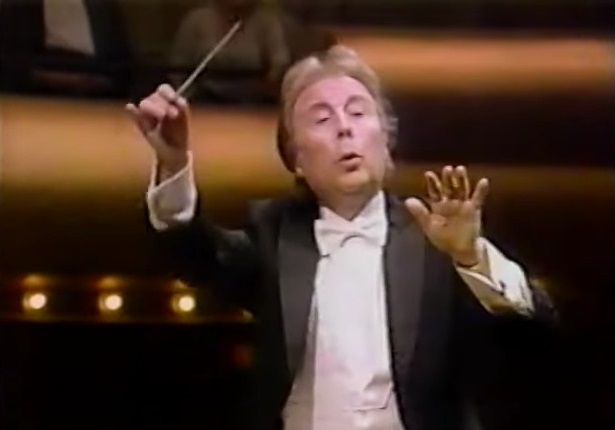
Above: Maestro Anton Guadagno
The usual stellar line-up for the 1988 Richard Tucker Gala.
Watch and listen here.
Above: Maestro Anton Guadagno
The usual stellar line-up for the 1988 Richard Tucker Gala.
Watch and listen here.

Music from the golden age of the castrati, performed by Filippo Mineccia, Samuel Mariño, and Valer Sabadus, with the Orchestre de l’Opéra Royal conducted by Stefan Plewniak.
Watch and listen here.

Above: Sergei Rachmaninov
~ Author: Ben Weaver
Tuesday October 17th, 2023 – The Philadelphia Orchestra was Sergei Rachmaninov’s favorite orchestra. He not only composed multiple works which they premiered, but it was the orchestra he chose to record his symphonies and piano concertos with. And, through the decades, the Philadelphians have played Rachmaninov as well as anyone and better than most.
The orchestra’s current artistic director, Yannick Nézet-Séguin, has already recorded Rachmaninov’s complete symphonies and piano concertos (with Daniil Trifonov as soloist) and is continuing his presentation of the works at Carnegie Hall. (In a one-time-only mega event, pianist Yuja Wang and the combination of maestro Nézet-Séguin and Philadelphia Orchestra performed all the piano iano Concertos and the Rhapsody on the Theme of Paganini at Carnegie Hall in a single memorable concert last season.) On October 17th Nézet-Séguin presented a marvelous evening of two of Rachmaninov’s audience favorite works: the Symphonic Dances and Symphony No. 2.
Rachmaninov composed the Symphonic Dances in 1940 and the Philadelphia Orchestra and Eugene Ormandy premiered it in January of 1941. Apparently Ormandy was not very fond of the work, though he did perform it frequently and record it more than once.
The first dance opens with a three-note staccato motif, dark – even sinister – in tone, and it remains the driving rhythmic force throughout the movement. An alto saxophone plays a memorable role during the quieter moments (alas the wonderful player is not specified in the Playbill.) Rachmaninov ends the movement with a modified quote from his First Symphony, a work that had been lost 40 years earlier, so he knew nobody would have any idea what they were hearing. (The score was fortunately discovered again, but after Rachmaninov died, so he did not get an opportunity to hear it again after it’s catastrophic premiere led to his composers’ block.) Maestro Nézet-Séguin took a hard-driven, very steady, and deliberate pacing in the beginning of the work, speeding up considerably when the opening theme returned later in the movement.
The second dance is a stilted Waltz that I always thought of a cousin to Ravel’s La Valse. The compositions share an odd limping rhythm, the wistful minor key melodies swirling like aged ballerinas remembering happier days. Perhaps Nézet-Séguin lingered a little too much occasionally here, but always recovered the pulse of the work. The final dance, with its heavy reliance on the Dies Irae (a theme Rachmaninov used in many of his works) fights against a quotation from Rachmaninov’s own All-night Vigil Vespers, as light tries to conquer darkness. It seems the heavens win (Rachmaninov even scribbled “Hallelujah” in the score.) The Philadelphia Orchestra and Nézet-Séguin dazzled all the way through.
The Symphony No. 2 in E minor, Op. 27 is, along with his Piano Concerto No. 2, Rachmaninov’s most beloved work and oft-performed work. A gigantic, lush, deeply Romantic and melodic work was a hit from its premiere (conducted by Rachmaninov himself in St. Petersburg in 1908; the US premiere took place just one year later in – where else – Philadelphia under the composer’s baton.) Maestro Nézet-Séguin’s interpretation was magnificent, sometimes even revelatory. The tumultuous climax of the first movement, with its howling brass, for the first time reminded me of Tchaikovsky’s Pathétique Symphony. The magnificent Adagio movement – with a ravishing melody everyone recognizes – contains a tremendous extensive solo for the clarinet, played by principal clarinetist Ricardo Morales with incredible beauty and tenderness that made you lean forward. The final Allegro vivace movement was a high voltage thrill ride which the orchestra dispatched with effortless aplomb.
I must acknowledge that the concert opened with a performance of Jennifer Higdon’s Fanfare Ritmico, a brief 1999 piece I occasionally thought may have resembled John Adams’ “Short Ride in a Fast Machine.” But the resemblances were fleeting even if they existed. My red flags went up when I looked at the list of instruments used in this 6 minute piece and it contains, as so many contemporary works do, every imaginable percussion instrument there is. Perhaps 2/3 of the instruments listed were percussive. I suppose to Higdon’s credit she does not use them all at once (something others do and never to anybody’s benefit). But she does fall into the same trap countless contemporary composers do where being unable to transition from one theme to another, the easiest path is to have somebody hit something. And so things kept getting hit. When it ended I said to my companion: “Well, whatever that was, they played it very well.”
~ Ben Weaver
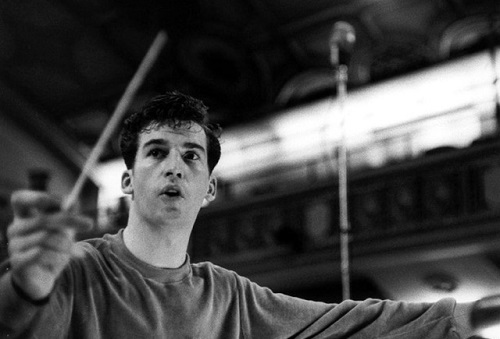
Thomas Schippers (above) conducts a performance of Verdi’s DON CARLO given by RAI Rome in 1969.
Listen here.
CAST:
Don Carlo: Bruno Prevedi
Elisabetta: Teresa Zylis-Gara
Philip II: Nicolai Ghiaurov
Princess Eboli: Fiorenza Cossotto
Rodrigo: Piero Cappuccilli
Grand Inquisitor: Dimiter Petkov
A Monk: Ubaldo Caroli
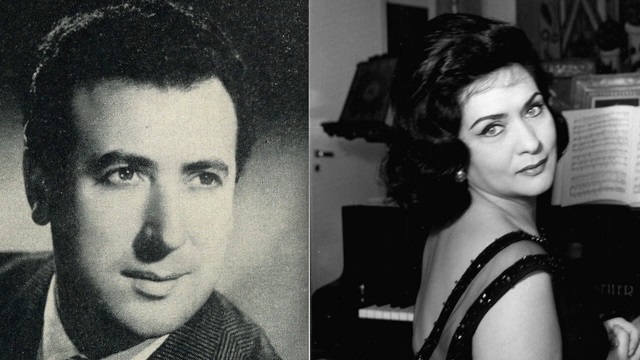
Virginia Zeani and Agostino Lazzari sing the Act I love duet from Puccini”s MADAMA BUTTERFLY from a concert given at Hamburg in 1956. Listen here.
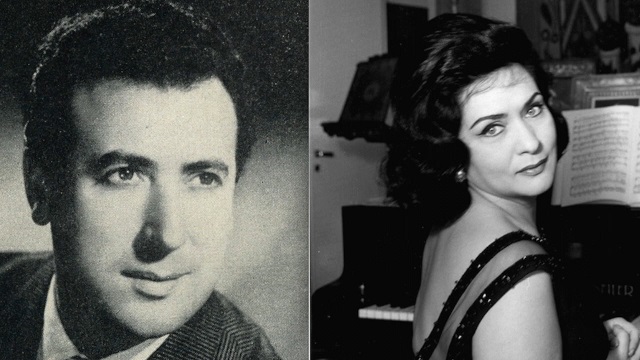
Virginia Zeani and Agostino Lazzari sing the Act I love duet from Puccini”s MADAMA BUTTERFLY from a concert given at Hamburg in 1956. Listen here.

American soprano Susan Dunn (above) made her Opera Australia debut in 1988 as Desdemona in Verdi’s OTELLO. Here she is heard in the Willow Song and Ave Maria from Act IV. Mezzo-soprano Heather Begg sings Emilia, and the conductor is Carlo Felice Cillario.
Listen here.

The Norwegian-born mezzo-soprano Lorri Lail sings Mahler’s Kindertotenlieder with the Berlin Radio Symphony conducted by Rolf Kleinert.
Listen here.
In memory of my brother, Jeffrey Morse Gardner, who passed away on September 26th, 2023.
Author: Oberon
Sunday September 24th, 2023 – This evening at Westbeth, dancers Miki Orihara and Ghislaine van den Heuvel joined a fantastic ensemble of musicians in a program entitled ONOKORO – creations/beginnings. The production, Tokyo to New York, is under the artistic direction of Thomas Piercy; the performance took place at the Martha Graham Studios.
Onokoro comes from the ancient Kojiki, Japan’s oldest mythology; it was the name of the first island formed by the gods Izanagi and Izanami when they were creating Japan. The evening’s program took us on a musical and spiritual journey from “Ryoanji” (the first sounds) to “Netori, Netori” (the emergence of organized sound and music), and onward thru to “Onokoro” (which combines the Eastern and Western styles of music and movement).
The Graham space at Westbeth was the perfect setting for this production. As the house lights went out and silence fell over the space, the studio’s large windows created a feeling of l’heure bleue, that fleeting time when day yields to night. In the darkness, the musicians took their places to perform John Cage’s 1985 work “Ryoanji”. The only source of light in the room was the tablets from which the musicians read their scores. The piece opens with a kneeling percussionist, Marina Iwao, striking a bell; this summons is repeated insistently throughout the piece. Thomas Piercy plays the hichikiri, a small double-reed Japanese instrument which seems like a cross between flute and oboe. Mr. Piercy is joined by two other hichikiri players: Lish Lindsey and James Joseph Jordan. The sound of their instruments veers from sighs and whispers to squawking and whining. The audience seemed intrigued by the music.
Mr Piercy now took up his clarinet for Bin Li‘s clarinet concerto “Netori, Netori”. A seated Gagaku ensemble – Ms. Lindsey and Mr. Jordan joined by Harrison Hsu (sho) and Masayo Ishigure (koto) – create fascinating, otherworldly musical colours which are plucked or piped. As Mr. Piercy begin to play, dancer Maki Yamamae appears, dressed as a young warrior and carrying a ceremonial spear. The space is illuminated in golden light as the the slow ritual dance evolves in a series of poses. Mr. Piercy illuminates the music with soft trills and warblings, and the sound of escaping air; his dynamic control is uncanny. There are silent pauses in the music, and eventually the ensemble rejoins. Following the dancer’s exit, there is a quirky coda for the clarinet.
Two works having their world premieres at these concerts came next. The first, Gilbert Galindo‘s “Primordial” for clarinet, cello, and piano, opened with a somber cello passage, introducing us to an extraordinary cellist: Daniel Hass. Mr. Piercy again took up his clarinet for this work, and Ms. Iwao was at the keyboard. Galindo’s pensive music is hauntingly beautiful, bringing us a magical mixing of timbres. Mr. Hass produced shivering tremolos while Ms. Iwao found poetic depths in the piano’s lower octaves, and Mr. Piercy’s lambent tone and dynamic variety made for an engrossing experience.
After the briefest of pauses, the players proceeded to the second premiere, Miho Sasaki’s “黎明 – reimei – Dawn”. Here Mr. Piercy traded his clarinet for the ohichiriki. This music is intense, with threads of melody woven in amidst jarring harmonies. From this emerges high, delicate figurations from Ms. Iwao’s keyboard, while Mssrs. Piercy and Hass create a very distinctive tonal blend. The music, veering from disturbing to reassuring along the way, was very impressively served by these three musicians. And both the Galindo and the Sasaki works seemed to me ideal candidates for choreography.
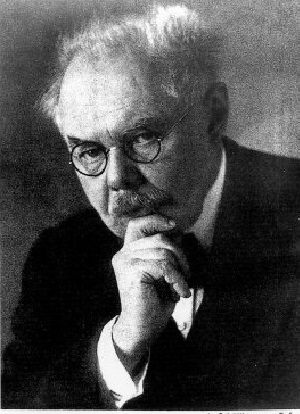
Above: composer Richard Wetz (1875 – 1935)
Listen to Richard Wetz’s’ REQUIEM here. Read about this forgotten composer here.
The soloists are Marietta Zumbült, soprano, and Mario Hoff, baritone, with the Dombergchor Erfurt, the Philharmonischer Chor Weimar, and the Thüringisches Kammerorchester Weimar.
Conductor: George Alexander Albrecht
 Oberon's Glade