The National Youth Choir of Australia, conducted by Noel Ancell, sing Benjamin Britten’s Rosa Mystica at the Sacred Heart Church, Carlton, Melbourne, on July 9, 2018.
Watch and listen here.
The National Youth Choir of Australia, conducted by Noel Ancell, sing Benjamin Britten’s Rosa Mystica at the Sacred Heart Church, Carlton, Melbourne, on July 9, 2018.
Watch and listen here.
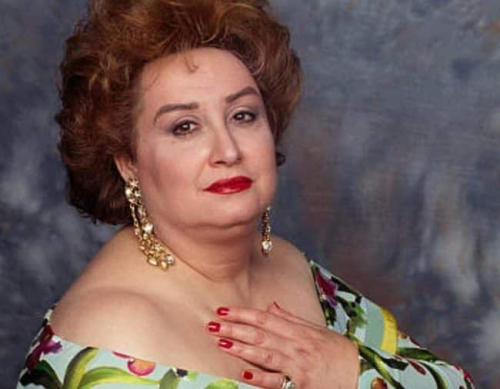
Ingeborg Hallstein sings Frühlingsstimmen (‘Voices of Spring’) by Johann Strauss II.
Watch and listen here.
Ingeborg Hallstein sings Frühlingsstimmen (‘Voices of Spring’) by Johann Strauss II.
Watch and listen here.
Monday October 24th, 2022 – When I saw the announced program for this evening’s concert by Ensemble Connect at Weill Hall, I knew I had to be there: what an enticing line-up of composers…and, in the event, it was all so dazzlingly played!
The young musicians of Ensemble Connect are exceptionally talented; all the music tonight sounded fresh and vibrant. They are also appealing to watch. The works on this well-contrasted program spanned the years from 1717 to 1994, and it was a sonic feast from first note to last.
Above, playing the Martinů: Yasmina Spiegelberg, Garrett Arney, Laura Andrade, and Cort Roberts; photo by Fadi Khier
Bohuslav Jan Martinů’s rarely heard Quartet for Clarinet, Horn, Cello, and Side/Snare Drum, H. 139, dates from 1924. This rather quirky mix of instruments does – as hornist Cort Roberts pointed out in his introductory remarks – represent the four ‘families’ of the symphony orchestra: strings, winds, brass, and percussion. What delightful sounds we heard from Mr. Roberts and his colleagues: Yasmina Spiegelberg (clarinet), Laura Andrade (cello), and Garrett Arney (snare drum).
The work is full of wit and irony, yet in the central Poco Andante comes a poignant lament that is extraordinarily moving. Snare drum and cello lead off the opening Allegro moderato, which becomes march-like as the clarinet and horn join in. A trudging feeling develops, with a horn solo which later shifts to the clarinet. The music seems about to fade away, but there’s a big bang ending.
As the Andante commences, my companion and I were simply blown away by the depth and beauty of tone that cellist Laura Andrade produced. Ms. Andrade played in all four works this evening, and maintained her beautiful sound and sterling musicality at every moment. Ms. Spiegelberg joins the cellist with a rather mysterious air; Mr. Arney’s snare drum comments on the women’s duet, and then Mr. Roberts’ mellow horn sounded a somber theme. The cello solo returns to the touching opening passages, played with heart-rending beauty.
At the jaunty start of the concluding Allegretto, the voices enter one by one: drum, cello, clarinet, horn. The music jogs along, with the horn ringing forth. After the instruments have exchanged lively, wry phrases, there is a little unison coda to round things off. Such a wonderful way to open the evening, and what a stroke of genius on Martinů’s part to center the work on that profound lament.
The petite but hugely talented pianist Joanne Kang now joined the impressive Venezuelan violinist Rubén Rengel and Ms. Andrade for a simply glorious performance of Clara Schumann’s Piano Trio in G-Minor, Op. 17. Their playing was tremendously beautiful and moving, and they are as attractive to watch as to hear; their performance of this masterwork seem so vital and immediate, making it an outstanding musical experience of recent seasons
Clara Schumann’s writing shows a mastery of counterpoint and a heartfelt gift for melody. It’s music alive with romantic ardor. The opening Allegro moderato begins in a melancholy mood, and soon develops a passionate flow of lyricism, with dramatic outbursts along the way adding a sense of urgency. Ms. Kang kept the momentum going with her perfect timing, whilst Mr. Rengel and Ms. Andrade displayed rich, abundant tone as one lustrous theme after another sprang up. The Scherzo – “in the tempo of a minuet” – commences with an elegant passage for violin and piano; it is gentle, pensive music, and again Ms. Andrade’s plush sound warmed the soul.
Ms. Kang lovingly played the Andante‘s waltz-like opening, soon joined by the hushed, poetic sound of Mr. Rengel’s violin; their blend carries them thru captivating harmonies. The music gets a bit wild, only to be calmed by more gorgeousness from the Andrade cello. Achingly beautiful playing from these young artists, with the cellist rounding everything of with a simple descending scale that brought tears to my eyes.
The trio’s final Allegretto brought forth more dazzling playing from the three musicians; Ms. Kang in particular shown here with sumptuous, large-scale playing and – later – passages of glistening arpeggios. Following a mini-fugue, the music gets grand, only to simmer down to a melody of longing, then moving onward to its epic finish. My companion and I were so thrilled by this rapturous performance.
Following the interval, music by the Jamaican-born composer Eleanor Alberga (photo above): her String Quartet No. 2. As violist Halam Kim remarked before the playing started, the entire 18-minute single movement develops from a very brief descending phrase that opens the piece; this Mr. Rengel dashed off for us as an introductory demo: it lasts less than a second.
From its active start, dance-like with dazzling dissonances, the piece moves on with complex harmonies and rhythmic shifts as well as witty touches, such as a repetitive figuration for the 2nd violin (Brian Hong) that made me smile. Mellowing to an andante section laced with enticing harmonies, we arrive at an intriguing passage where tremolo shivers from Mlles. Kim and Andrade underscore an eerily harmonized theme for Mssrs. Rengel and Hong. Ms. Andrade’s knockout cello playing continues to fascinate us, whilst plucked notes from Ms. Kim and Mr. Hong support a high-flying passage for Mr. Rengel’s violin.
Above, playing the Alberga quartet: Rubén Rengel, Brian Hong, Laura Andrade, and Halam Kim; photo by Fadi Kheir
The music dances on, getting dense and with a big buildup until it turns heartfelt and lush; we seem to be headed to the finish line, but…no: a delightful return of the tremolo viola/cello combo with woozy violins pops up before the music’s energetic final measures. The piece was enthusiastically received; I was hoping Ms. Alberga might be among the audience so we could hail her for her colorful, marvelous score.
There was a slight delay before the evening’s concluding piece as a technical glitch with the tablets took some straightening out. Ah, for the simple beauty of a paper score!
Above: the ensemble playing Bach; photo by Fadi Kheir
It was with J. S. Bach’s Brandenburg Concerto No. 5 that the evening closed. The large ensemble featured all the players from earlier in the evening, plus bassoonist Nik Hooks – a player with rich, amiable tone and agile technique – and the proverbially “tall, dark, and handsome” Iranian/Pakistani/American flautist, Amir Farsi: limpid of tone, with a personable presence as he bends and sways to the music. Mr. Hooks and Ms. Andrade provided a very high-class continuo, with Ms. Kim and Mr. Hong the supporting strings. Mr. Rengel and Mr. Farsi played magnificently, and there was truly a sense of magic in the hall as the performance unfolded.
Above, Joanne Kang at the harpsichord for the Bach; photo by Fadi Kheir
Of course, this is “the Brandenburg with the harpsichord”, and Mr. Kang gave us a fleet-fingered and fabulous rendition of the long cadenza. The audience, and her colleagues, could not resist breaking in with applause for her stunning playing, one of the highlights of the evening. Other treats in the Bach were the poignant blending of Mr. Rengel’s violin with Mr. Farsi’s flute in the Affetuoso, and the light and lively finale wherein Ms. Andrade and Mr. Hooks put the continuo in the spotlight.
Above, the principal players for the Bach: Rubén Rengel, Joanne Kang, and Amir Farsi; photo by Fadi Kheir
Such a pleasing and deeply satisfying evening! For two hours, the woes of the world and the cares of daily life were forgotten. A thousand thanks to these dedicated musicians, and to the music that makes life worth living.
All photos by Fadi Kheir, courtesy of Carnegie Hall.
Midori plays the Chaconne from Bach’s Partita #2, filmed at Castle Köthen, where the sonatas and partitas for solo violin were written.
Watch and listen here.
Georgian basso Goderdzi Janelidze sings Prince Gremin’s aria from Tchaikovsky’s EUGEN ONEGIN.
Watch and listen here.
Georgian basso Goderdzi Janelidze sings Prince Gremin’s aria from Tchaikovsky’s EUGEN ONEGIN.
Watch and listen here.
Elīna Garanča sings Johannes Brahms’ Alto Rhapsody with Christian Thielemann conducting. The performance took place at the Salzburg Festival on July 30th, 2022.
Watch and listen here.
Above: Maxim Vengerov
Thursday October 20, 2022 – In February 2020, just days before life-altering pandemic commenced, Maxim Vengerov and Polina Osetinskaya gave a memorable recital at Carnegie Hall. This evening, they were back on the Carnegie stage with another enticing program.
But our evening did not quite go as planned. First, a 20-minute delay of the start of the concert caused the audience to become restless. Then, during the music, the women behind me chatted whilst a woman next to me fell asleep and snored lightly. Then, about 90 seconds before the end of the Kreutzer sonata, a woman stood up and struggled over the people in her row to get to the aisle. My friend Dima, who is Russian, always says ‘Russian audiences are the worst’; we decided to have a late supper rather than endure more distractions. It was kind of sad to leave, because Mr. Vengerov and Ms. Osetinskaya really were playing divinely.
The artists finally took the stage, Mr. Vengerov rather oddly clad in what appeared to be a bulky blue sweater and matching trousers. Ms. Osetinskaya on the other had was a vision of elegance in a black frock which perfectly showed off her lithe figure.
J. S. Bach Violin Sonata No. 1 in B-Minor, BWV 1014, is different from many other works for violin and harpsichord from this era, because the right hand of the harpsichord is fully written out by Bach. Up to this point in time, it had been customary for only the left hand and the chords for the keyboard to be specified. But BWV 1014 changed the relationship of the instruments: the harpsichord would now be equal to the violin, not merely an accompaniment. The harpsichord thus became a second melodic voice, changing the art of the violin sonata forever.
Of course, Ms. Osetinskaya was at the Steinway rather than a harpsichord; her playing of the Bach was simply exquisite, though – in fact – she surpassed herself in the ensuing Beethoven. It is the piano that opens the Bach sonata with a really gorgeous passage, and then the violin enters on a long, soft-suspended tone. Throughout the sonata, the two artists’ dynamic modulations were perfectly in sync.
The first Allegro is lively and charming, and the Andante – with its hushed, sustained start – has a fine, dignified feeling. The minor-key finale is fast and fun, with the two players keenly tuned into one another as the music hastens along.
The artists took only a momentary break – not leaving the stage – before commencing their luminous rendering of Beethoven’s immortal Violin Sonata No. 9 in A-Major, Op. 47, “Kreutzer“.
The sonata begins with a slow introduction played by the solo violin. The piano then responds, Ms. Osetinskaya displaying a gracious subtlety. Mood swings now come into play: passages of animation alternate with more pensive phrases. The music gets almost angry before the composer reverts to the calm of the sonata’s opening.
Ms. Osetinskaya launches the familiar theme of the Andante with a softly rippling motif. Now comes a delicious set of variations in which the ravishing sound of the piano sustains each mood and meshes with Mr. Vengerov’s sweetly turned phrases, his whisper-light top notes, and fabulous trills.
From its sprightly start, the third movement, a tarantella based on another familiar theme, calls for great virtuosity from both players: “Tons of notes!!”, I scrawled on my Playbill. The sonata ends with a celebratory final rush. The audience gave the musicians a resounding ovation though, in fact, they deserved even more.
Mr. Vengerov is scheduled to return to Carnegie Hall on Sunday May 21st, 2023, for a Concert in Honor of Andrei Sakharov. Gidon Kremer, Steve Isserlis, Evgeny Kissin, Lera Auerbach, and the Emerson String Quartet willm also take part.
Now if we could just get Ms. Osetinskaya here for a concerto evening, or – better still – a solo recital…!
We headed out, sorry to miss the arrangements of six songs from Dmitri Shostakovich’s marvelous song cycle, From Jewish Folk Poetry; these songs are so dear to me.
~ Oberon
Tuesday October 18th, 2022 – An exhilarating evening at The Joyce as choreographer Fouad Boussouf brought his handsome Company of dancers from his native Morocco to thrill us with Näss. The title is Arabic for “people”, and it’s a work where eclectic dance styles converge effortlessly, combining restless, relentless activity with a feeling of ancient masculine rituals. For an hour, the seven men danced to rhythmically wide-ranging music, with perfect timing and synchronization; though clearly carefully structured and well-rehearsed, Näss feels wonderfully and thoroughly spontaneous.
The dancers in Näss are Sami Blond, Mathieu Bord, Maxime Cozic, Yanice Djae, Loïc Elice, Justin Gouin, and Maëlo Hernandez.
Above, photo by Charlotte Audureau
The curtain rises on a totally darkened stage. Very slowly, the back panel is illuminated with the dancers ranged in a line-up, backs to the audience. Mingled with the sounds of street noise noise and garbled talking, angel voices are heard. Drumming strikes up and the men begin moving in place, stepping to the beat.
Suddenly, they burst into movement, stomping and romping about the space. Unison moves, with gestures of supplication, are mingled with free-flowing solo passages and duets which vary in feeling from humorous to wildness.
Above photo by Charlotte Audureau
The lighting takes on a golden hue; the men’s jackets are slowly shed and each is wearing a loose t-shirt of autumnal solour. Going into breakdance mode, they give us headstands and intricate floor motifs executed with panache. The t-shirts become part of the dance: they are pulled up to cover the men’s faces and expose their abs as the light fades a bit and a sense of calm is briefly felt. The dancers start talking.
Then a quintet of men step-dancing in unison circle the stage in almost military precision whilst two others dance a pas de deux in their own world. The brotherhood then tramp about the space with heavy-footed accents. The lighting shifts, providing shadowplay.
The dancers move upstage, clustered with backs to us; they become silhouettes as the music fades and the lighting is slowly extinguished until they vanish into the darkness from whence they came.
As silence fell there was a very brief lull before a house-wide standing ovation commenced. People screamed and shrieked as the dancers came out for their bows. Great atmosphere! Then the seven men began striking poses along the edge of the stage, and they commenced an impromptu encore, clapping their hands to set the pace. The audience picked up the rhythm, clapping and stomping. It was like being at a revival meeting where everyone has been saved. I felt high as a kite.
Photo: Charlotte Audureau
~ Oberon