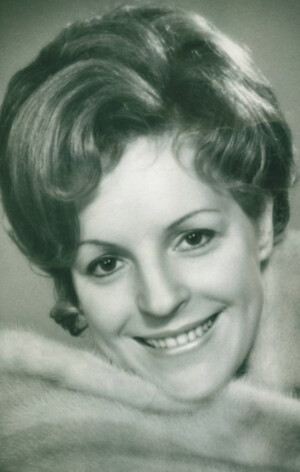
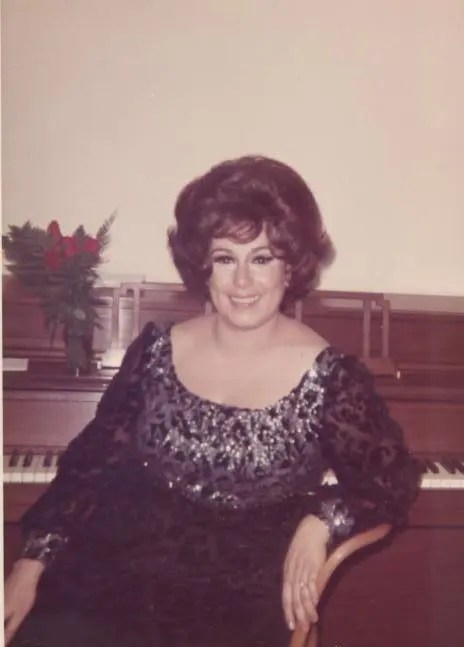
The Hungarian mezzo-soprano Júlia Hamari singing songs of Brahms and Strauss from a 1974 recital given at Hilversum, Netherlands, in 1974. Konrad Richter is the pianist.
In 1982, I saw Ms. Hamari as a lovely Rosina in Rossini’s BARBIERE DI SIVIGLIA with the Metropolitan Opera on tour in Boston. Her excellent colleagues were Rockwell Blake, Pablo Elvira, Sesto Bruscantini, and Jerome Hines. Sir Andrew Davis conducted.
Wednesday November 19th, 2025 – An all-Taylor evening at Lincoln Center opened with SCUDORAMA, continued with SUNSET, and ended with Taylor’s signature work, ESPLANADE.
This was my second SCUDORAMA of the current season; thru the years, I have found myself changing my mind about this piece every time I see it. Earlier in the current season, I found it wasn’t reaching me on any level, aside from the dancing itself. Tonight, I thought the score was fascinating, and that there’s lots to like about the staging and choreography…as well as lots that seems incomprehensible.
The musicians of the Orchestra of St. Luke’s, conducted by David LaMarche, really got into it tonight. At the performance 2 weeks ago, my companion had found that the Clarence Jackson score has a Bernstein feeling to it; tonight, I could hear that reference clear as a bell.
The dancing was exceptional tonight; Devon Louis and Kenny Corrigan excelled in their duet, as did Gabielle Barnes and Madelyn Ho in theirs; and Kristin Draucker and Mr. Louis make a marvelous partnership. The dark clouds in a post-apocalypse sky remain an intriguing mystery.
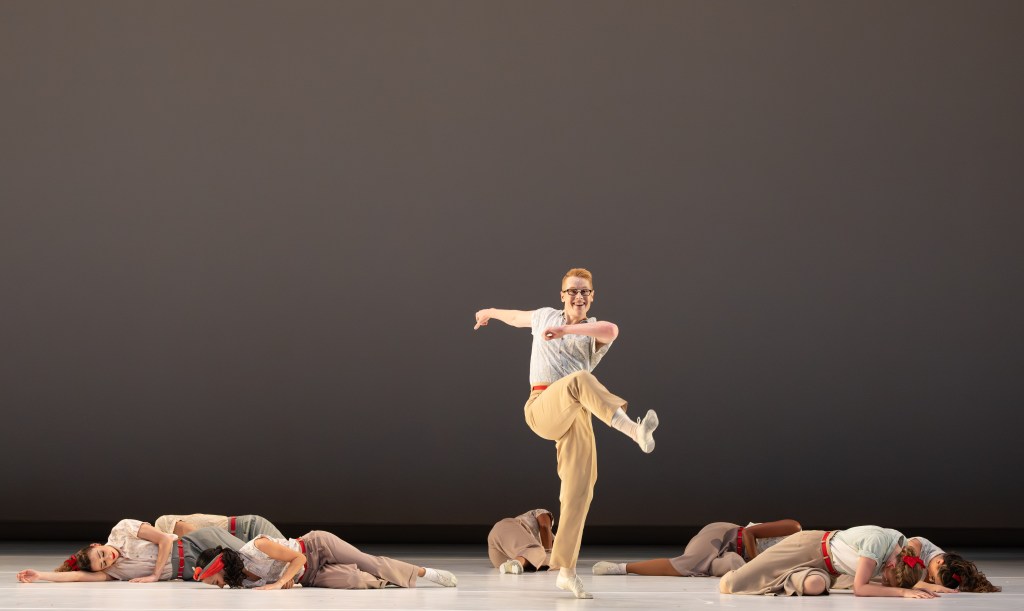
Paul Taylor’s SUNSET is one of the Master’s finest lyrical masterpieces. Created in 1983, the set and lighting by Alex Katz and Jennifer Tipton’s lighting create a uniquely peaceful atmosphere; but there are undercurrents of tension as well. The luminous music by Edward Elgar is made more affecting by the recorded cries of loons.
A group of young soldiers in red berets are hanging out in a park at twilight; perhaps they’re awaiting marching orders for the coming morn. The set is so simple: bare branches of trees, painted on bare walls, imply that its Autumn…and a rail fence could be an allusion to a ballet barre.
Girls in white dresses come by to flirt: Madelyn Ho, Kristin Draucker, Jada Pearman, and Jessica Ferretti all look so innocent. The soldiers – Lee Duveneck, Alex Clayton, Devon Louis, John Harnage, Kenny Corrigan, and Patrick Gamble – seem at times swaggering, at others…uncertain. A duet for Lee Duveneck and John Harnage alludes to something beyond soldierly camaraderie, and the ever-lovely Madelyn Ho shines in a dance of almost childlike playfulness. Jada Pearman is radiant in a section with the boys that seems to evoke a remembered time. A dropped beret as the soldiers move out is saved as a souvenir; many years hence, it will be found stashed in a bureau drawer and produce a flood of memory.
Kudos again to the St. Luke’s players, under Tara Simoncic’s baton, for their entrancing playing of Elgar’s music. The recorded loon calls lend a nostalgic air, though my companion found then somewhat ominous.
I never tire of ESPLANADE, one of Taylor’s most perfect meshings of music and movement. Violinists Krista Bennion Feeney and Alex U Fortes regaled us with their playing of the timelessly evocative music of Bach; their St. Luke’s colleagues, under Maestro LaMarche’s baton, made us feel that everything’s right with the world.
The dancers – Kristin Draucker, Jada Pearman, Jessica Ferretti, Gabrielle Barnes, Emmy Wildermuth, and Elizabeth Chapa with Lee Duveneck, Devon Louis, and Austin Kelly – danced to perfection. I’ve been very much taken with Ms. Barnes this season; she – and all the dancers – seemed to be inspired Bach’s music, making for many truly gorgeous moments as ESPLANADE unfolded tonight..
In the ballet’s final movement, famous for Paul Taylor’s choreography which calls on the dancers to race about the stage at hi-velocity whilst periodically flinging themselves to the floor, the dancers were astounding. This is a risky business, but tonight the dancers seemed bent on challenging one another to feats of derring-do. In a solo passage, Emily Wildermuth captivated the crowd with her extraordinary passion and commitment. Earlier in the piece, Emily had shown another facet of her dancing in a lyrical duet with Devon Louis.
ESPLANADE ends as the dancers rush off in different directions, leaving the irresistible Jada Pearman alone onstage, opening her arms as if to embrace all of us.
For a while, this iconic moment in dance was owned by Michelle Fleet. Tonight, I was thinking back to my earliest Taylor experiences, at Jacob’s Pillow back in the late 1970s, and how the roster has evolved over the years. Dancers with extraordinary technical prowess and engrossing personalities have passed their roles onto the next generations, and the Taylor flame burns as brightly as ever.
It was in this pensive mood that one of my favorite Taylor heroes, Take Ueyama, came over tonight to say hello.
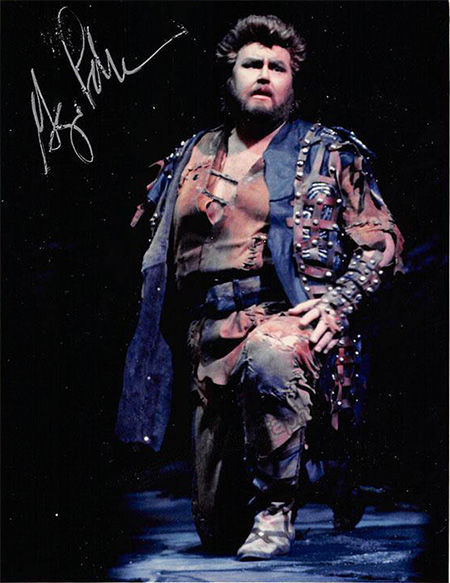
The great American heldentenor Gary Lakes (above, as Siegmund) has passed away at the age of 75. An Oklahoma native, he studied at Southern Methodist University with tenor Thomas Hayward, and made his operatic debut as Froh in RHEINGOLD at Seattle in 1981.
The 6’4″ tall Mr. Lakes made his Metropolitan Opera debut in 1986 as the High Priest in IDOMENEO. Over the next ten years, a gave over 100 performances at The Met. During that time, I was frequently trekking from Hartford to The Met for long weekends, and so I saw his Erik in FLIEGENDE HOLLLANDER, Emperor in FRAU OHNE SCHATTEN, Samson, Don Jose, and Siegmund. His other Met roles included Parsifal (his Kundrys were Jessye Norman and Deborah Polaski), Laka in JENUFA, Berlioz’s Aeneas, Beethoven’s Florestan, and Jimmy Mahoney in RISE AND ALL OF THE CITY OF MAHAGONNY.
Elsewhere, he sang Tannhauser, Tristan, Siegfried, Lohengrin, Admete in ALCESTE, and Bacchus in ARIADNE AUF NAXOS.
Gary Lakes sings Siegmund in the final scene of Act I of DIE WALKURE from a concert given at the Cincinnati May Festival in 1986. Lorna Haywood is Sieglinde and Artur Korn is Hunding; James Conlon conducts. Listen here.
Thursday November 13th, 2025 – Some music should really be performed in churches, or at least is best heard in churches. Sacred music, like the famous requiems, is often heard in concert halls, but the acoustics of a church really highlight such music in the best ways. Great composers aren’t only able to write beautiful music; they also know how to make the music sound its best given the medium they are working in. Part of this is knowing how to write for particular instruments or voice types, but another part is understanding the acoustical features of where their music is supposed to be performed.
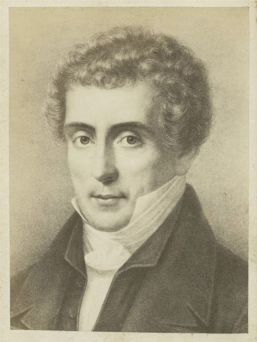
The American Symphony Orchestra held their November 13th concert in Midtown Manhattan at St. Bartholomew’s Church and did so with the perfect repertoire for the venue. The ASO is known for performing classics as well as more forgotten pieces. This concert featured music by two composers, Peter Cornelius and Luigi Cherubini. Although they are not household names today, in their own times they were well regarded. Cherubini, in particular, was one of the most famous composers when he was alive, enough so that Beethoven thought he was the greatest composer of his era.
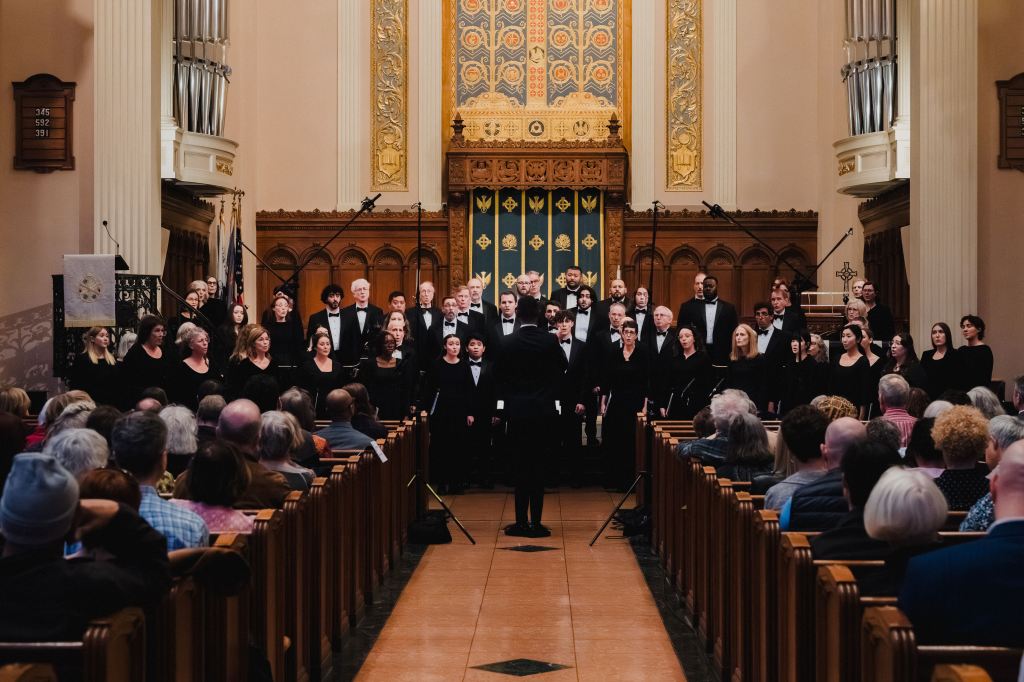
St. Bartholomew’s Church was a beautiful and perfect acoustic for both the orchestra and the Bard Festival Chorale, who would be performing the two pieces under the baton of Leon Botstein.
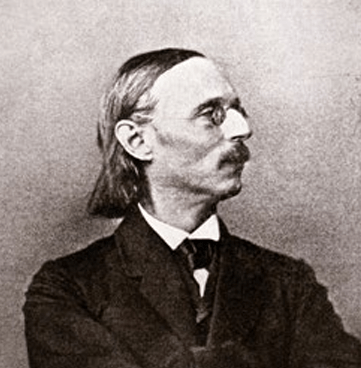
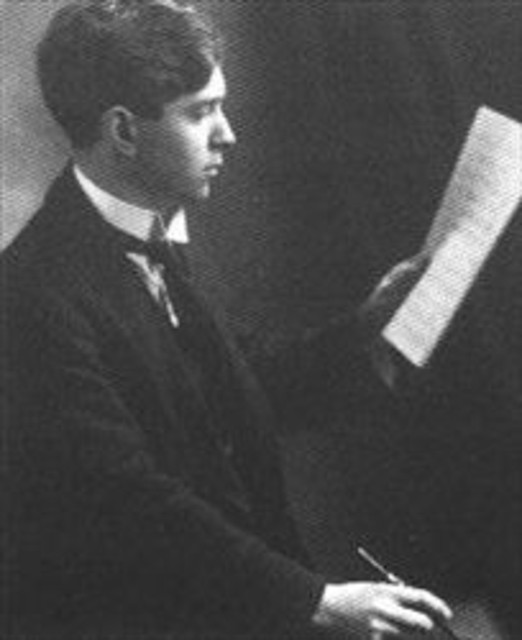
Above: Peter Cornelius
The concert started with Cornelius’ Stabat Mater, which was having its U.S. premiere with this concert. The Stabat Mater was composed in 1849, which is considered to be in his early period. The soloists for this piece were Wendy Bryn Harmer (soprano), Krysty Swann (mezzo-soprano), Eric Taylor (tenor), and Harold Wilson (bass).
The piece opened with the orchestra playing a solemn and tragic-sounding opening, reminiscent of Beethoven’s more tragic works. The real majesty of the piece started to unfurl when the choir came in. The first movement was truly breathtakingly beautiful and, with the booming acoustics of the church, felt so moving. The choir and orchestra did a wonderful job of weaving in and out while the two switched off the lead.
The piece continued with Harmer singing a brief solo interspersed with choral responses. Afterwards, the soloists sang together in a sort of ensemble, doing a call and response with the choir.
The soloists all did a phenomenal job. I particularly liked Wilson as the bass soloist. His voice cut through while not overpowering at any time.
A standout section of the Stabat Mater was the Eja Mater movement. This movement was the only true solo aria of the entire piece and was sung eloquently by Harmer. The solo had the workings of an early German Romantic feel to it.
The piece concluded with a fanfare of both orchestra and chorus in a glorious finale full of brass fireworks. The entire piece was so masterfully performed by both the orchestra and the choir. It was a truly phenomenal job that every musician should be proud of.
During the intermission, several of the orchestra members packed up, as the Cherubini Requiem would have a smaller orchestral ensemble and no soloists. The Requiem was written about 30 years prior to Cornelius’ Stabat Mater, and as such, had more of a late Classical feel to the piece.
Above: Luigi Cherubini
The Requiem started with a menacing undertone that meandered forebodingly until the choir whispered into existence. You could immediately hear why Beethoven was so enamored of Cherubini’s music (even if the admiration apparently wasn’t requited). The Introit movement is such a delicately haunting piece of music, where the choral colors really float in the domed sound of St. Bartholomew’s.
What I find so interesting about requiems is how differently each composer tackles the same text. Verdi’s Dies Irae and Fauré’s Pie Jesu, for instance, are so different from any others. And similarly, Cherubini’s treatment of these texts is uniquely sublime.
Cherubini’s Dies Irae feels like it has the same Judgment Day focus that other settings of the text have, but with a more distinctly moderated Classical feeling.
I liked the treatment that the musicians gave the Pie Jesu. It was hauntingly beautiful and so elegantly performed. The orchestra’s deftness of sound was noteworthy.
The Agnus Dei closed out the Requiem and was perhaps my favorite movement of the entire piece. It had moments of fanfare but also the quiet intimacy that highlighted the text beautifully. There was a recurring descending motif throughout the entire movement that was passed around all the different voices, bringing a cohesive shape and symbolically tying all of the musicians together. The movement ended with that theme swirling around and the choir sustaining a sort of hum that ended not with a bang, but a forceful whisper, just like the Requiem had started with.
Gilda Cruz-Romo (photo above by Bill Hendrickson) sings the title-role in Ponchielli’s LA GIOCONDA in a performance given at Milwaukee in 1981. Harry Theyard is Enzo, Guillermo Sarabia is Barnaba, Susanne Marsee is Laura, Freda Rakusin is La Cieca, and Ralph Bassett is Alvise. The conductor is Joseph Rescigno.
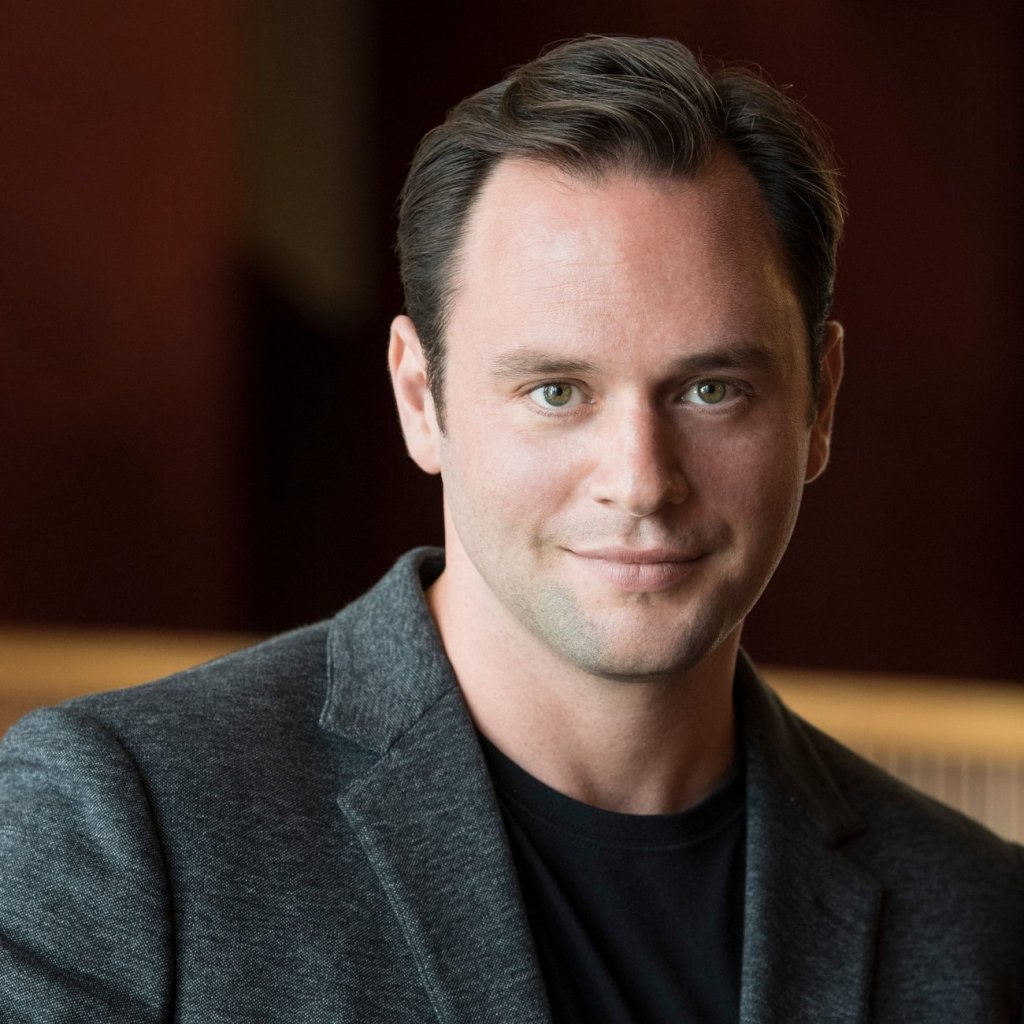
Above: tenor Paul Appleby, this afternoon’s Don Ottavio; photo by Jonathan Tichler
Saturday November 15th, 2025 – Sixty-two years ago, almost to the day, I saw DON GIOVANNI for the first time; it was my first-ever performance at the (Old) Met. Waiting for today’s matinee at the (‘New’) Met to start, memories of that experience – and of all that has happened in my operatic world in the interim – raced thru my mind: I was 15 at the time of that long-ago DON GIOVANNI, and had already been obsessed with opera for 4 years. I couldn’t have predicted that the obsession would last – and grow exponentially – through the ensuing decades.
This afternoon’s cast included three singers who were new to me: Quanqun Yu as Donna Anna, Andrea Carroll as Zerlina, and Tommaso Barea as Leporello. All fared well.
Under the baton of the Met’s Principal Guest Conductor Daniele Rustioni, the overture was both grand and lively. Mr. Barea, who sings mainly baritone roles, brought a different quality to the role of Leporello than that of the usual basso buffo. His opening scene augured well for the performance. Ms. Yu (Donna Anna) and our Don Giovanni, Kyle Ketelsen, argued bitterly until the huge and magnificent voice of Soloman Howard’s Commendatore intercedes; his daughter rushes off to summon help. Moments later, a gunshot rings out. Ms. Yu returns with her betrothed, Don Ottavio, in the person of tenor Paul Appleby, to find her father bleeding to death. The soprano/tenor vengeance duet is swiftly and surely sung; I took an immediate liking to both of these voices: Ms. Yu’s with a luminous yet penetrating quality, and Mr. Appleby’s suave lyricism, always showing tenderness towards his beloved..
As Donna Elvira, Anita Hartig, her voice in full-bloom, arrives with her dramatic opening “Ah! fuggi il traditor“, its fireworks effortlessly tossed off. The soprano’s tendency to go very slightly sharp from time to time becomes less notceable as the afternoon progresses. Encountering the man who defiled and abandoned her, their dialogue draws some embellishing from Kyle Ketelsen’s Don Giovanni, who leaves his jilted victim to be comforted by Mr. Barea’s excellent Catalog Aria, into which he weaves some subtle turns of phrase.
The peasant couple, Zerlina (Andrea Carroll) and Masetto (Brandon Cedel), arrive. Their opening duo is taken a bit too swiftly, but they make it work. Ms. Carroll’s voice is lovely, and though Zerlina is usually thought of as a soubrette, I can hear a lyrisicm in the soprano’s singing that make me think she’ll one day be a Mimi and Liu. Mr. Cedel did not overdo the buffo aspects of Masetto’s music, displaying a handsome and affable voice throughout the afternoon.
Mr. Ketelsen’s expertise in making recititives mean something leads him into his enticingly-sung “La ci darem la mano“; Ms. Carroll soon learns that resistance is futile; they duet beautifully…but the sudden entrance of Ms. Hartig to sing a fiery “Ah, fuggi il traditor” cuts the seduction short. In the ensuing quartet we hear a nice blending of timbres.
Ms. Yu, having recognized the Don as her father’s murderer, recounts that fatal encounter to Don Ottavio; the soprano’s savourable top notes as she describes how she escaped being raped draw Mr. Appleby’s sigh of relief with his heavenly-sung “Respiro!” Ms. Yu’s vengeance aria, “Or sai chel’onore!“, produced a thrilling flow of notes, vibrantly sung. The soprano added a mini-cadenza, up to a shimmering top note, before sailing on to the aria’s furious finish.
Mr. Appleby now held the House under a spell with his ravishing “Dalla sua pace“, some of the most beautiful singing I’ve ever heard. The tenor’s deeply-felt sense of poetry, and his control of the voice in piano/piamissimo phrases, felt like a gift from heaven. His hushed singing of the melody’s reprise seemed to make time stand still, and his re-affirming of his devotion with a powerful “Morte mi da...” underscored Ottavio’s steadfastness before the reflective final bars of the aria.
Kyle Ketelsen took the whirwind pace of the Drinking Song, “Finch’an dal vino“, in his stride. Ms. Carroll’s “Batti, batti…” was lovingly sung, and the Mask Trio of Mlles. Yu and Hartig and Mr. Appleby produced appealing harmonies. The great ensemble that ends Act I found Maestro Rustioni in speed-demon mode…but he has it all under control.
The intermission seemed endless, but at last we were back for a witty dialogue between master and servant; Mssrs. Ketelsen and Berea tricked Ms. Hartig’s Donna Elvira – whose “Ah, taci, ingiusto core” displayed how effortlessly present this soprano’s voice is in the House – into believing Leporello was actually Giovanni. This allowed the Don to serenade Elvira’s maid with his suavely seductive singing of “Deh, vieni alla finestra”. Masetto/Cedel gets beaten up by Don Giovanni’s thugs, and Zerlina/Carroll arrives to soothe her good-hearted boyfriend with the charming “Vedrai, carino…” to which she added some jewel-like embellishments.
Mozart’s mastery of ensemble writing shines in the sextet that follows: Ms. Yu singing sounds luscious, Mr. Appleby chimes in beautifully, and Mr. Barea phrases so well, with a dash of humor as he seeks to make his escape.
Mr. Appleby’s Don Ottavio strikes gold for the second time this afternoon with “Il mio tesoro” wherein Maestro Rustioni provides perfect support. The tenor’s pliant lyricism and magically sustained tones are to the fore, and his breath-control is remarkable…as are his subtle embellishments, which gave me moments of pure delight. The tenor’s masterful singing unleashed cries of “Bravo!” from the crowd, but – like so many arias that are so finely sung at The Met these days – the applause only lasted a few moments. Back in the day, Mr. Appleby would have stopped the show twice with his ardent, elegant singing.
Ms. Hartig now took the stage for a splendid rendering of “Mi tradi“; the clarity and warmth of her tone, her poised technique, and her stylish ease in the agile passages drew the evening’s longest aria-applause…but still, nothing like what she deserved.
Don Giovanni and Leporello now meet at the tomb of the Commendatore to invite the ghost of the old gentleman to supper; Soloman Howard’s response was cool and collected, and Maestro Rustioni made another gem of this sometimes glossed-over scene.
Mr. Appleby’s Don Ottavio almost loses patience with what he feels is Donna Anna’s coldness towards him since her father’s murder; he cites her cruelty. She responds, defending herself and asking for his understanding; her recitative ends with a heavenly, floated pianissimo on “Abastanza…” and she then embarks on a very exciting rendering of “Non mi dir“. Her shimmering softness in certain passages of the slow melody, her silvery etchings of the words, and her thoroughly accomplished coloratura polish off the aria brilliantly.
The audience chuckles as a theme from NOZZE DI FIGARO is played during Don Giovanni’s last supper. Ms. Hartig’s desperate Donna Elvira rushes in to beg the Don to repent; her pleading ends with a terrified scream when the bloodied ghost of the Commendatore appears. Here Soloman Howard’s thunderous voice doomed the decadent Don Giovanni to eternal suffering in Hell. Maestro Rustioni and his orchestra compellingly underscored the drama with their urgent playing.
Donna Anna, Don Ottavio, Donna Elvira, Leporello, Zerlina, and Masetto join in the opera’s finale before going their separate ways. During their bows, the audience finally gave the singers the kind of applause they’d been deserving all thru the opera.
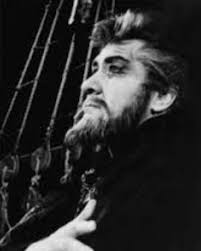
Sir Donald McIntyre (photo above as the Flying Dutchman) has passed away at the age of 91. A native of Auckland, NZ, he made his operatic debut in 1959 as Zaccaria in NABUCCO at the Welsh National Opera. He went on to sing on the opera world’s greatest stages: at Covent Garden, La Scala, Bayreuth, and The Met (among others).
Sir Donald gave 120 performances at The Met, debuting there in 1975 as the RHEINGOLD Wotan (and singing in WALKURE and SIEGFRIED as well). His other Met roles were Pizarro in FIDELIO, Telramund, Orestes, Kurwenal, the Speaker in MAGIC FLUTE, Klingsor, Shaklovity in KHOVANSCHINA, Hans Sachs (a veritable triumph), the Doctor in WOZZECK, Count Waldner in ARABELLA, and Dr. Kolenaty in THE MAKROPULOS CASE (his last Met role, in 1996). At other opera centers, he took on the Dutchman, Debussy’s Golaud, and Wagner’s Gurnemanz.
In 1976, Sir Donald was chosen by Pierre Chéreau and Pierre Boulez to sing Wotan/The Wanderer in the mind-blowing Centenary RING at Bayreuth. The production, ferociously booed at its premiere, received a 90-minute ovation at its final presentation five seasons later. McInyre won an Emmy in 1982 for the recording of the Cycle.
In 1985, the much-loved singer was knighted by Queen Elizabeth II.
M. Chéreau called on Sir Donald once again when he staged ELEKTRA for the Aix-en-Provence Festival in 2013. This was to be Chéreau’s final production. Esa-Pekka Salonen conducted. Sir Donald was cast as the Old Servant, and another veteran – Franz Mazura – played the role of Orestes’ Tutor. The sight of McIntyre emerging from the dingy palace and kneeling at the feet of Orestes was one of the most moving moments of the production.
Now Sir Donald’s in Valhalla, with so many other great Wagnerians from his (and my) era. Ruhe! Ruhe, Du Gott!
Here are three of my favorite souvenirs of the McIntyre career:
Above: Lee Duveneck in “Oh Johnny, Oh Johnny, Oh!” from Paul Taylor’s COMPANY B; photo by Ron Thiele.
Wednesday November 12th, 2025 – Tonight’s program for the Taylor Company’s Lincoln Center season featured only one Taylor work. The evening opened with two very short solos – one a re-imagining by Jody Sperling of a Loie Fuller solo, and the second a fleeting invention by Robert Battle. It felt like we’d only just gotten settled in when there was an intermission; Lauren Lovette’s SOLITAIRE was then presented, followed by another intermission, and finally Taylor’s iconic COMPANY B.
Ms. Sperling’s Vive La Loïe is visually stunnning and musically marvelous. The score, by Max Richter, offers two movements: the first an allegro moderato, the second an andante. Dancer Jessica Ferretti, posing on a raised platform, manipulates a massive amount of billowing white fabric, which seems lit from within. The dance is hypnotic; it requires a dancer with strength, control, and steadfastness. Ms. Ferretti has all of this…and more. She was simply mesmerizing to watch.
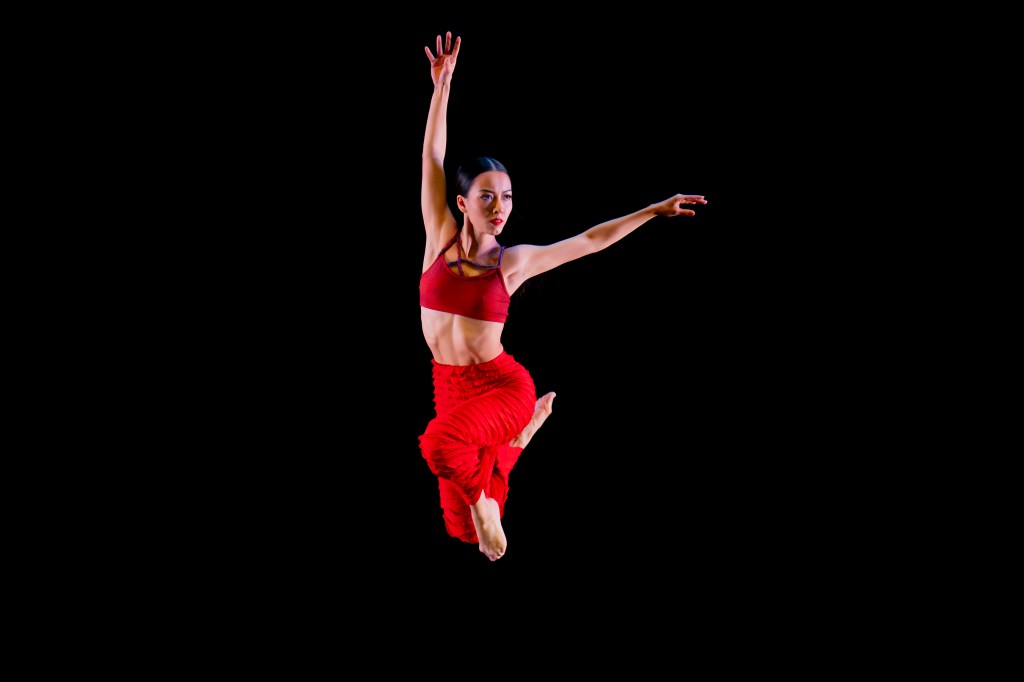
One of the Company’s newest members, Payton Primer (photo above by Hisae Aihara), is already making her mark with her technical security and striking stage presence. This evening, she appeared in Robert Battle’s tricky, quick-stepping solo, TAKADEME, which was vividly danced and perfectly timed to the crazy rhythmic patterns. The audience took Ms. Primer to their hearts.
Lauren Lovette’s SOLITAIRE is set to a score by Ernest Bloch (his Concerto Grosso #1) which my companion of the evening spoke highly of. After hearing his pre-performance remarks, I took a closer listen this evening and…he’s right: it’s terrific music. Ms. Lovette premiered this piece in 2022; at that time, I wasn’t really taken with it. In the interim, she seems to have made some changes that are marked improvements. And, with the music as my focus, the choreography felt more flowing and natural.
The central role in SOLITAIRE was created on dancer John Harnage, who seemed ideal as a sort of “lost boy”; tonight, Alex Clayton took on the role and gave it a different feeling. Alex seemed to be a searcher…seeking something (or someone) to hold onto. His solo was sublimely danced, and a fleeting encounter with Lee Duveneck seemed more developed than I recall from the premiere season. Meanwhile, the music – veering from dramatic to tender, from ominous to shimmering – proved that Ms. Lovette had been right to create a dancework on it.
The Andrews Sisters’ songs used in Taylor’s COMPANY B were recorded between 1937 and 1953. I can recall my grandmother playing them on her old Victrola; my mom sometimes sang along – in her limited, 5-note range – and I would dance and mimic the words. My favorite was always Tico-Tico, with its very catchy beat and word-play.
Tonight, it was again vastly pleasing to hear this collection of songs; while the atmosphere in mostly light-hearted and upbeat, the choreography subtly depicts a darker side of things: soldiers marching off to war, a sex-trafficking mother, a youthful bugler shot down, a new recruit leaving his beloved bereft as he goes to face the horrors of war. COMPANY B is one of Paul Taylor’s most original and compelling works.
Tonight’s cast did the Master proud with their dancing, their acting, and their dedication to the Taylor heritage. Kristen Draucker and Austin Kelly gave us a lively Pennsylvania Polka, and Alex Clayton was a perfect Tico. Lee Duveneck was hilarious in Oh, Johnny! Oh! Johnny! Oh! and Ms. Ferretti so touching in her dance of broken dreams. The carefree innocence of John Harnage’s lively Bugle Boy being cut down by a single bullet, and the afore-mentioned Ms. Primer selling herself and her daughter to sailors drunk on Rum and Coca-Cola were upsetting vignettes. The big heartbreak comes with There Will Never Be Another You , hauntingly danced by Elizabeth Chapa and Davon Louis, knowing that they may never see one another again.
It was Tico Tico that I carried with me out into the chilly evening; I’ve been singing it ever since the show. The song reminds me of my own Tico, far way across the Pacific.
“For just a birdie – and a birdie who goes nowhere – he knows of every lovers’ lane and how to go there.”
Saturday November 8th, 2025 – The Dessoff Choirs at Brick Presbyterian Church on Park Avenue in a program entitled Resilience & Revelation.
Herbert Howells (above) has an oboe sonata that my oboe teacher in undergrad really liked, so it caught my eye when the Dessoff choirs were performing his Requiem and Magnificat last Saturday. I don’t go to choir concerts much, and tend to forget how easily they sound religious, sometimes aggressively so. I suppose I should have expected that, at least with a Requiem.
Both Howells pieces were full of lush, deep harmony and texture I don’t hear often (on account of not going to choir concerts). The Requiem is a capella, and has a different structure and text than completely traditional Requiems, from what I gather. There was also a small antiphonal choir – I think referred to as a “semichoir”, though it was unclear if this is part of the piece or an artistic decision by the performers. It’s hard for me to have an informed opinion about vocalists, but the choir had impressive control, especially in quiet moments – which creates such a different texture than orchestra.
The three Philip Glass etudes in the middle of the concert were a little out of character, but also nice variation from the choral texture. It was hard to match the polished sound of the choir, but pianist Steven Ryan had some fresh interpretation, especially of number 3, where I was able to hear different harmonies than I’m used to. He did play them in a different order than they were listed in the program!
The composers on the latter half of the program, Tania Leon and Adolphus Hailstork, were both in attendance, which was a nice surprise – both well-known names. Tania Leon’s piece It’s a journey was nice, with some sweet choir interaction and more contemporary elements than the Howells.
The Hailstork The World Called with text by Rita Dove was a very nice piece that had some incongruous organ interludes that sounded like circus music. I believe the piece was originally written for choir with orchestra, so maybe something was lost in the orchestral reduction, but I had a lot of trouble making sense of what those interludes were conveying. The soprano soloist, Nicole Osmolovskaya, was a student at Brooklyn college and did a great job.
Though I really don’t understand much about the choral music ecosystem of New York, supposedly the Dessoff choirs are some of the best in the city, and after that concert I wouldn’t have any reason to disagree!
Sunday November 9th. 2025 matinee – What a treat it is to hear such a world class orchestra on a rainy Sunday! As part of Carnegie’s International Festival of Orchestras, the Orchestre National de France performed an all-French program filled with classics as well as one more obscure piece.
I’ve been told that European orchestras have a special way of playing, maybe it’s their philosophy of music, or perhaps because much of the repertoire originated in their homeland, but the difference is truly palpable.
I arrived at the hall a little earlier than usual and watched as it started to fill up with an audience. Part of what’s fun about seeing these international orchestras perform at Carnegie is seeing the audience that they bring in. When the Seoul Philharmonic performed the week before, I could hear a buzz of Korean around me. Today’s concert wasn’t quite as Frenchified in the same way, but there were definitely more Frenchmen than I would usually see.
I read the program and saw that the concert consisted of two piano concertos (Ravel,then Saint-Saëns), the Daphnis et Chloé Suite No. 2 also by Ravel, and Symphony No. 2 “Voina” by Elsa Barraine. The only composer missing from the household-name canon of French composers seemed to be Debussy.
Before the concert began, an announcement was made that the order of the concertos was going to be flipped, with the Saint-Saëns being performed after intermission.
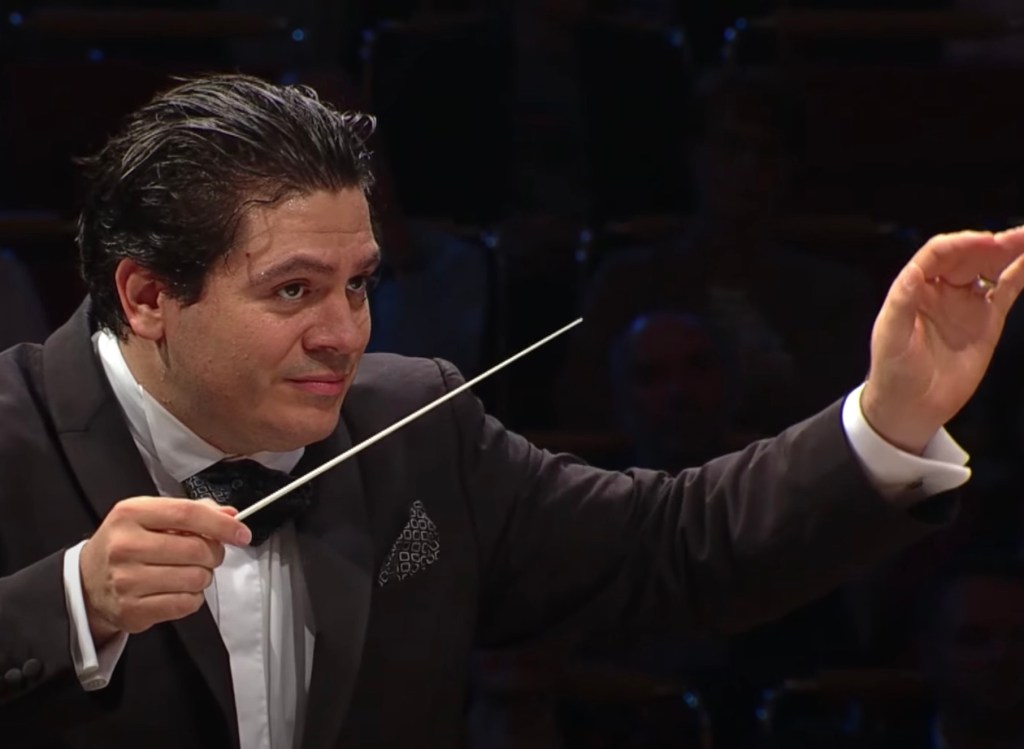
As the lights started to dim and Maestro Macelaru walked out onto the podium, the concert started.
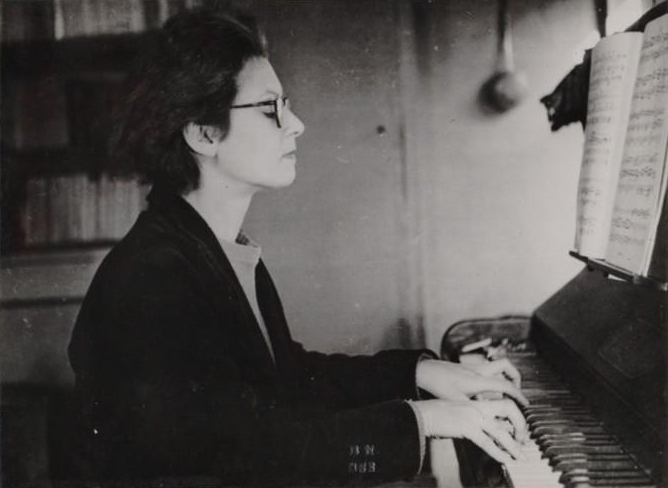
I had never heard of Elsa Barraine (photo above). She was a composer whose life spanned several periods of music (1910–1999), and she was a very decorated and, in her life, celebrated composer: a winner of the Prix de Rome and a student of Paul Dukas.
Her second symphony, subtitled War in Russian, was composed in 1938. In general, I loved it. It was tonally quite unique but had whispers of composers like Prokofiev and Debussy sprinkled in. The symphony started off with a haunting flute melody that broke into a more angular melody taken up by the strings.
Unlike a lot of French music of that time period, her symphony had a more traditional format instead of the more nebulous tone poem. The symphony was strident but beautiful. You could hear the war-like atmosphere in the echoes of marching and dominant flute solos reminiscent of battlefield instruments. At once playful and menacing, the music quickly became one of my new early 20th-century favorites.
The music, though, was not only fantastic because of the composition but also because of the performers. What was so characteristic of these orchestra musicians was that they all seemed to have their own individual playing style; however, the sound they produced was somehow more in sync than any other orchestra I had ever seen. The concertmaster bopped along so playfully throughout the entire symphony, while every other performer had their own expression of the music, but their musicianship all complemented each other. I’m so used to seeing performers playing with machine-like precision, but somehow that never produced the same sonic unity as these performers with their own unique stylings had.
When the violins played a very sheer pianissimo, it sounded so fantastic! The control that each section had made it seem not like a combination of voices, but one singular instrument played by a master. This ability to have such delicate control and tonal beauty wasn’t limited to the violins or just to this first piece.
There was a moment in the second movement where the concertmaster had a solo right after her entire section played, and her playing simply melted out of the entire section as if it materialized out of thin air – really so phenomenal.
The second movement started with a brass fanfare that flourished into a sort of dirge, and the symphony ended with an oddly optimistic, almost Christmassy-sounding ending. Barraine’s symphony really is a masterwork that deserves more attention, so I was so glad to have heard it performed in such capable hands.
Once the piece ended, the orchestra changed configuration to bring out the piano for Ravel’s Piano Concerto. The soloist for tonight was Daniil Trifonov (photo above), an accomplished soloist, collaborative pianist, and veteran Carnegie performer.
The concerto started with its characteristic bang and quirky piano motif. Trifonov seemed to hover over the keys as he played, while the orchestra seemed to hover over him, as if the sound were simply appearing around him.
I’ve heard this piece several times before in concert, but somehow the music just felt different. There was a real conversation with the orchestra and the piano, and nothing ever felt forced.
The second movement of the concerto opens with a simple-sounding piano solo, which is unusual for its lack of flash compared to other concertos. The piano part in some ways resembled Pavane pour une infante défunte, also by Ravel, in its haunting beauty.
Trifonov really had such a gentle touch with the instrument that was perfect for this piece. There was no harshness in tone or jerkiness. His playing seemed to be like a cloud of sound emanating from the piano.
You could really tell how phenomenal the orchestra was at the end of the second movement, where the strings end the movement on another pianissimo that was barely audible but so resonant in its ethereal quality.
During the intermission, I noticed that there was a technician attending to the piano. I guess I hadn’t really seen many concerts with two concertos back to back, but it was certainly an interesting detail.
Once the intermission was over, Maestro Macelaru and Trifonov came back out to perform Saint-Saëns’s famous Second Piano Concerto.
Trifonov played the opening hauntingly and beautifully. One thing I noticed was his delicate touch. This concerto in particular is more often than not played in a very romantic way, very much of the time period it was written. Trifonov, however, emphasized not the booming bass or the dramatic chords, but the elegance of the piece. Saint-Saëns is a bit of an odd composer in that his music straddles classical beauty more reminiscent of Mozart while also being a full-fledged romantic.
The concerto was played more in the Mozartian style, and where other performers would push the music into storm and drama, Trifonov played it as more smoke and mystery.
My friend accompanying me to the concert noted how random the entire concerto seemed. Each movement is beautiful in its own right, but each movement did seem a bit disconnected from the piece overall. That being said, it was still played masterfully by Trifonov and the orchestra alike.
After the piece concluded, Trifonov took several triumphant and well-deserved curtain calls to a fully standing audience and then proceeded to perform an encore. I mentioned earlier that the only household-name French composer missing was Debussy, and lo and behold, we were treated to a beautiful rendition of Reflets dans l’eau by Debussy. After the shimmering piano piece was done, Trifonov received a giant red rose bouquet and was treated to another well-deserved standing ovation.
Once the orchestra was resettled after the removal of the piano, the numbers augmented to a large degree to perform Ravel’s Daphnis et Chloé Suite No. 2.
The orchestra picked the best piece to end on. The sound from the very beginning filled the hall in such gentle but angelic waves of sound. They had such amazing dynamic control. It was one of the few moments when I could do nothing but enjoy the sheer majesty and perfection of the music and playing.
I’ve heard many performances over the years, but this particular Daphnis et Chloé was one to really remember. Once they had finished a fairly long program, I was sad that it was already over. However, as people in the audience started to get up, the orchestra picked up again to play the entirety of Ravel’s Boléro! There was an audible chuckle from the audience when everyone realized what was going to be performed. We all sat listening to this final treat from a phenomenal orchestra.

 Oberon's Glade