Tag: Ailey Citigroup Theatre

  • Claudia Schreier & Company @ Ailey Citigroup

    Y9sFFU7MHcPVPSPHekpAuI0a2psEiYGmG3xQfZxEJVw

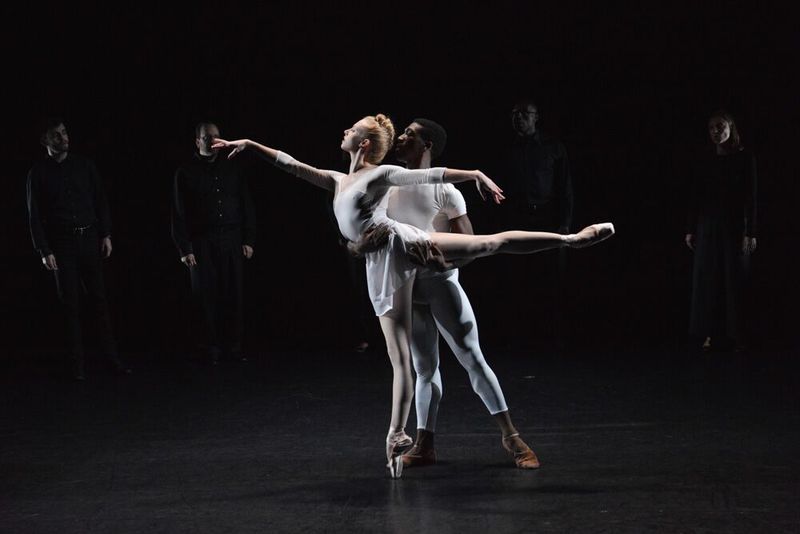
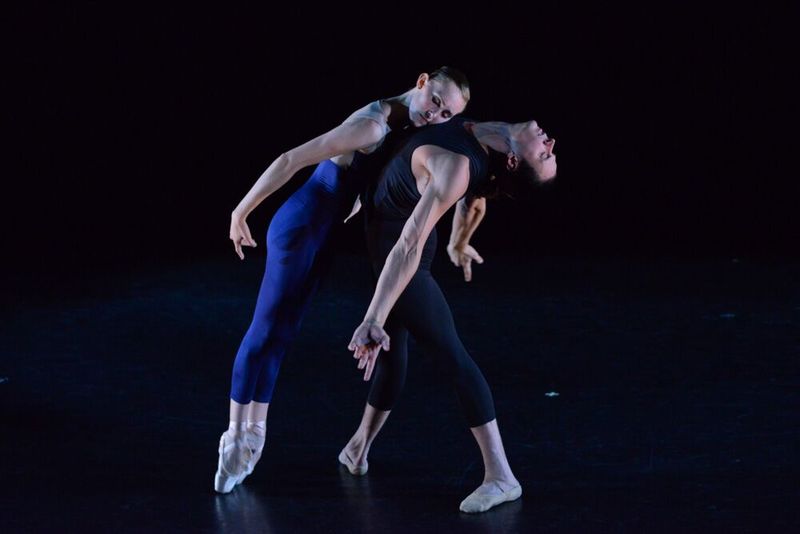
    Above: Amber Neff and Drew Grant dancing with Claudia Schreier & Company at Ailey Citigroup Theatre; photo by Nir Arieli

    Saturday August 8th, 2015 – Exactly one year ago tonight, Claudia Schreier won the Breaking Glass Project’s competition for female choreographers with her brilliant ballet, HARMONIC. Her prize was to present a full evening of her own work at Ailey Citigroup Theatre, and that prize was claimed tonight as five of Claudia’s works were performed by an array dancers drawn together specially for the occasion.

    The evening was an unalloyed triumph for all concerned, including two contemporary composers whose works were choreographed by Claudia (Jeff Beal and Douwe Eisenga – both of them were present and took a bow at the end); the choral group Tapestry who performed live for the ballet VIGIL; a chamber quartet playing Jeff Beal’s score for ALMOST MORNING live, and – of course – the superb ensemble of dancers.

    K5E9rMw6UqO0VVtyJciW6UK4NPyQplBgLO9YtZmNWic

    Above: the chamber musicians, with dancers Amber Neff and Drew Grant, in ALMOST MORNING

    When we first started watching House of Cards, my partner and I were very much taken with Jeff Beal’s score: “…this music would make a great ballet!” And now it’s come to pass: ALMOST MORNING is set to an original score composed for Ms. Schreier by the multi-Emmy Award-winning Mr.Beal. Six dancers appear in a series of overlapping duets interspersed among ensemble passages. The music pulses and percolates, but can also turn moody or melodious along the way. The musicians – Kieran Ledwidge (violin), Tia Allen (viola), Kirin McElwain (cello) and Ta-Wei Yu (piano) – delivered the score with propulsive assurance.

    The choreographer responds to this music with movement that has a broad overall sweep but also features countless felicitous and original touches. Amber Neff is thrice tossed into the air, spiraling before being caught by her partner Drew Grant; the blondes – Kaitlyn Gilliland and Elizabeth Claire Walker – dance in tandem; and a sustained duo for Ms. Walker and Mr. Grant is particularly striking. A pas de trois for Ms. Neff, Francis Lawrence, and Da’Von Doane progresses to a pensive solo danced by the incomparable Kaitlyn Gilliland. There are stretches of visual polyphony; the dancers form a circle before sweeping into a triple pas de deux set to the score’s most lyrical theme. Then the dancers rush off in the end, leaving the stage to the musicians.

    The conclusion of the ballet triggered the first of the evening’s enthusiastic ovations: having observed ALMOST MORNING in a keen state of silence, the audience demonstrated their approval for both the music and the dancing in no uncertain terms. And this was only the beginning.

    The evening continued on its soaring trajectory with HARMONIC, the ballet to Douwe Eisenga’s stimulating score which clinched the prize for Claudia Schreier at last year’s Breaking Glass competition. HARMONIC was originally created by Ms. Schreier in 2013 for the Columbia Ballet Collaborative, and was subsequently re-staged for Craig Salstein’s Intermezzo Dance Company, who performed it at Vassar College in March 2014. Inspired by Mr. Eisenga’s magical score, HARMONIC is a contemporary ballet that seems built to last.

    Tonight HARMONIC received a mesmerizing performance, with ABT’s entrancing Stephanie Williams displaying marvelous technique and a particularly attractive presence. Earlier this month, Stephanie danced – splendidly – for Joshua Beamish at The Joyce. The principal male role here was taken by Dance Theatre of Harlem’s intrepid Da’Von Doane; Da’Von danced in four ballets tonight and, after a long day of tech/dress/performance, he seemed totally fresh at the end of the evening and looked ready to repeat the whole programme. Strength and stamina are essential, but when you add Da’Von’s stunning physique, impeccable partnering, generosity of spirit, and his intangible gift for making everything seem right with the world, you have a paragon.

    VrNHJfYYogm9siRJvr8UW4yNJwsOXitV7P3HNzXAtv8

    Da’Von’s dancing with Ms. Williams (above) was electrifying to behold, for they are well-matched in terms of both daring and allure.

    One could say there are no supporting roles in Claudia Schreier’s ballets: she puts demands on everyone involved in a given work and then rewards them with opportunities to shine. Thus tonight in HARMONIC, Amber Neff and Elinor Hitt were utterly essential; they danced their hearts out, and basked beautifully in those passages of being partnered by Da’Von. Again, the audience response was thunderous.

    More images from HARMONIC:

    1O0yCW6DIWcuNbi1kgkPvPGcePxqUPemQqgrPxdPvz4

    1KVDMItwF91iXMsAH0RJgcUAIUCf9rcaCuNakLLIelU

    Elinor Hitt

    DJGLT5k-HOM4CJA1j2KxvMdRDzTWJ5ORhvToe5qMktY

    P6ARkgQ5VYLSGcmYLnuZH8l1PchvvsZI0BMCKKlz7Co

    Stephanie Williams

    A new production of Ms. Schreier’s 2009 ballet ANOMIE is imbued with a striking atmosphere of lyricism and poetry. Set to the heartfelt beauty of César Franck’s Prelude, Fugue and Variation

    YhV7QelfH4upXWT4oiaD-78zKzAtRftqDr9iTDjJF9A

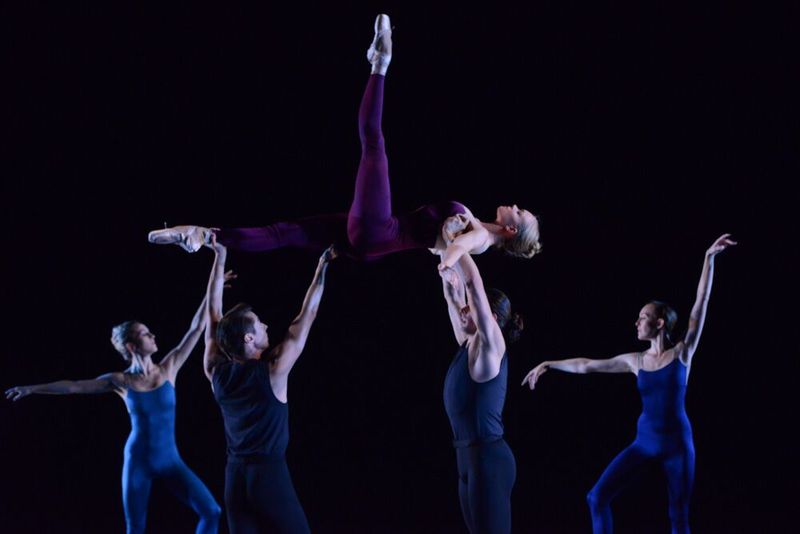
    ANOMIE opens (above) with New York City Ballet’s distinctive Lydia Wellington posed in Daniel Applebaum’s arms in a pool of light; Lydia slowly unfolds and the ballet begins its beautiful flight. In addition to the abounding artistry of this wonderfully simpatico City Ballet duo, we could also savor the ever-vivid clarity of Amber Neff’s dancing, the aristocratic face and silken line of Elizabeth Claire Walker, and the handsomely assured presence of Drew Grant.

    MTvRlLhuisXRhclACmQpP0zgIyStKb4ZHLIJVPn9NeA

    Elizabeth Claire Walker (above) with Drew Grant…

    Km16R_5Ghax9vRLyntasKf3rdlEOq9zhuVWZ9d66jJE

    Elizabeth Claire Walker and Daniel Applebaum

    All five dancers appear in a diagonal, with a canonic dramatic port de bras motif, before Lydia Wellington and Daniel Applebaum meet again to end the ballet as in a fading dream.

    I can’t resist sharing more of Nir Arieli’s images from ANOMIE:

    0SI--26VGCSLSQ1gDOxIEQ4xgNID-k3mdpnnDljo19Q

    Daniel Applebaum and Elizabeth Claire Walker
    FvlGBVqpyOqaUaW8zjRLkEJd-fZiidefP2BCSIXMC-c

    Lydia Wellington, aloft

    WCtSTfFoPykM9C5iNf8-kojGyykv_vH4UVLRPgi0TO8

    Daniel Appebaum and Elizabeth Claire Walker: a most congenial partnership

    IA3Qcvp60nkoGJv_l9Cis0n4Ozy8gJ17Ln84d96OPnc

    Daniel Applebaum and Lydia Wellington

    RijS3j2j-Jpi87ApxZlCx2AGm4t0sNxnw_usIr_eYSU

    Lydia Wellington and Daniel Applebaum

    Following the interval, the atmosphere became spiritual as Vigil, a pas de deux danced by Elinor Hitt and Da’Von Doane to sacred choral music by Tomás Luis de Victoria and Sergei Rachmaninoff which was performed live onstage by the 20-member choir Tapestry. The singers, clad in black, arranged themselves in a semi-circle around the dance-space; they are a wonderful, physically diverse group of musicians and they harmonized with a kind of gentle intensity that created an atmosphere of both reverence and hope. 

    OMWIE-Czaw11xYyV6-Yp5ksiWQKagBj7OsbBC5lXRfk

    Above from VIGIL, danced by Elinor Hitt and Da’Von Doane

    Ms. Hitt was one of the revelations of the evening; her jazzy dancing in HARMONIC made us think of her as an extroverted allegro dancer, yet in VIGIL she displayed a poignantly expressive adagio style that put me in mind of Sara Mearns’ elegiac luminosity. It almost goes without saying that Da’Von Doane achieved another miracle of control, strength, and grace here; the partnership had a gorgeous flow and resonance, so finely attuned to the music. The dancers seemed angel-like in their white costumes, and their shaping of Ms. Schreier’s port de bras and the heavenly quality of the duet’s numerous lifts really cast a spell. The performance moved me to tears.

    More of Nir Arieli’s images from VIGIL: 

    49n005VJzsvCb1DSx1izV2GEyvS5GRJT2BntjAFD4Ws

    Q-zW7cFvJZoHyaykkqrjcfXBZ4hGjKNHsIcpnF_IquE

    VaQpT_k1TO1GAKh6316DP5wLFNXQoymriluYoN8f5K8

    VFHA0EntR26McD6nDkHZSs9sK94ep3yhkUTShl5V6O0

    PULSE, a driving full-company work, is set to Dutch composer Douwe Eisenga‘s marvelous Piano Concerto: I. With her customary flair for visualizing the music, Claudia Schreier molded the Eisenga score into another fascinating dancework: as exciting as HARMONIC, but bigger and splashier. In its dynamic thrust, PULSE reminded me at times of Robbins’s GLASS PIECES.

    CWHSP3A2JsVyFKX16Pv3HMRcTOaL9rzfcNk8A-Hg9EU

    Claudia’s full contingent of dancers took the stage for this impressively-structured ballet, and there were some dancers in the cast we hadn’t seen earlier in the evening, including New York City Ballet soloist Lauren King (above); always a welcome sight onstage, Lauren danced with her trademark mixture of lyricism and edge: a combination that always makes her so exciting to watch. Also appearing in PULSE were Nayara Lopes and Craig Wasserman, vivid dancers who I wish we could have seen more of over the course of the evening.

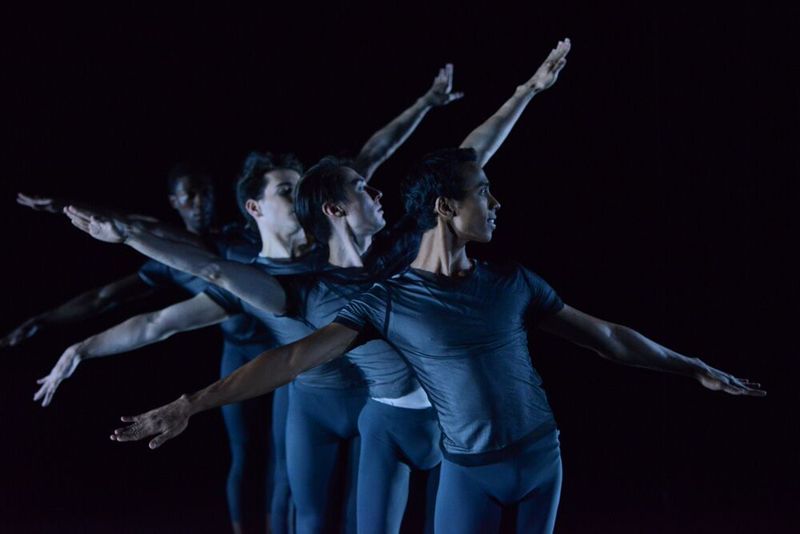
    Da’Von Doane’s opening solo in PULSE showed yet another facet of this dancer…a dancer to whom the word “amazing” can most truly be applied. The solo becomes an echo-duet for Da’Von and Craig Wasserman…
    TAfmoe5NcoVFqwZVPvC-J9V_zkqt3i68a-U0OkWrjHw

    …with motifs later taken up by the male ensemble (above): Da’Von, Craig, Daniel,and Francis.

    PULSE plunges forward, Claudia Schreier’s choreography ever-attentive to the nuances of the Eisenga score. At one moment, an air of mystery pervades only to surrender to the inevitable forward impetus of the music. There’s a buildup as waves of dancers enter…

    2ziWPMmcUodSe3Dt9DDlQiswd_cOeVh2NzDFOOW3RLo

    …and then suddenly we are lured into a solo passage for Kaitlyn Gilliland (above), dancing with goddess-like authority. Lines of dancers along a right-angle converge…

    UxOjxlMBczwmXTal7Fng6a1-szas2tTIKUoKcPRjIWo

    …and then Lauren King and Da’Von Doane (above) meet up for a duet, followed by other fleeting episodes. The women dance as a group, and then the men, and then everyone, as PULSE sprints to the finish line: a perfect finale for a grand evening of dance.    

    WZl3qKdcPsLlQ_y6I-HnVzT934N7DdbHhdc8fM-zGas

    Amber Neff and Da’Von Doane in PULSE: “We could have danced all night…in fact, we did!” To the dancers, one and all, heaps of roses and buckets of iced champagne.

    The performance ended with a colossal standing ovation and a din of cheers; the enthusiasm poured out into the lobby where the audience seemed reluctant to take leave after such an extraordinary evening. Although I have been following Claudia Schreier’s work for a few seasons, I must say that experiencing a full programme of her choreography surpassed my expectations, which were very high indeed. In addition to her enviable ability to choose just the right music and fill it with meaningful movement, her work is blessedly free of gimmicks or self-indulgence. Claudia knows the value of not over-extending her ideas, so that after each piece we are left wanting more.

    All photo by Nir Arieli, with my sincere thanks for his patience and his artistry.
  • MÉLANGE @ BalaSole Dance Company

    L1440328

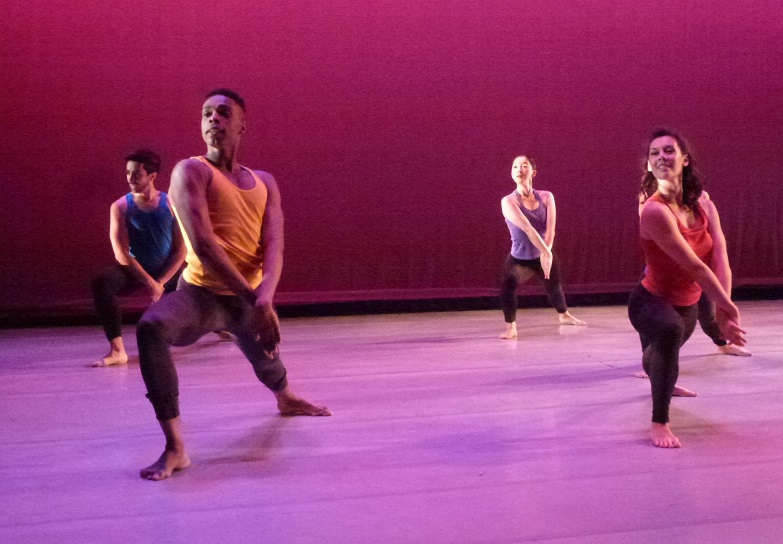
    Friday July 18th, 2014 – Roberto Villanueva’s BalaSole Dance Company presenting MÉLANGE at the Ailey Citigroup Theatre. BalaSole’s evenings of concert dance afford a rare opportunity for dancers in all genres to present solo works in a professional setting, with expert lighting and sound, before a large audience. Roberto Villanueva has made a niche for his Company in the New York City dance world: I don’t know of anyone else who organizes this kind of programme, a boon for both emerging and established dance artists who need to have their work seen. 

    This evening’s program was one of BalaSole‘s strongest to date. Roberto likes to stress variety in his presentations, and this evening there was something for everyone. The audience – a packed house – watched in attentive silence and warmly applauded all the participating dancers. I had watched the dress rehearsal (a couple hours before curtain time) and I tried to take some pictures, but I wasn’t having much luck this time around.

    BalaSole‘s programming follows a set blueprint: eight or ten artists are chosen by audition to present their solo works. They are mentored by Roberto, getting their dances stage-worthy. In the week prior to the show, ensemble pieces are created which will open and close the evening. This time around, Roberto chose wonderfully ‘danceable’ music by Franz Joseph Haydn for these group numbers, and the dancers – in vividly coloured leotards – evoked the joy of the sharing the stage with colleagues. Following a welcoming speech by Roberto, the solos began. 

    To an Al Kooper blues tune, Sara Braun strolls coolly onto the stage, wearing sunglasses. Removing her shades seems also to remove her self-confidence. The dance takes on a restless quality, though her poise is restored when she dons the glasses again. The dancework, entitled Amy W 27, clearly carries some meaning in the dancer’s life; the fact that we don’t know what inspired her to create the piece adds to the mystique of the character.

    Tall and commanding, Steven Jeudy performs a balletic solo to the Callas recording of “O mio babbino caro” from Puccini’s GIANNI SCHICCHI. Moving with supple grace, the bare-chested dancer shows off a fine line and an impressive extension. He continues to dance after the aria ends. The title of the solo is Resplendent – a title that well-describes Mr. Jeudy himself.

    In the solo Steady Tread (choreographed by Monica Hogan), Courtney Liu danced on pointe to music by the Carolina Chocolate Drops –  music which somehow has a Mid-Eastern sway to it. Pausing in balanced arabesques or bringing a jogging motif into play, the pretty dancer covered the space with lively charm.

    L1440461

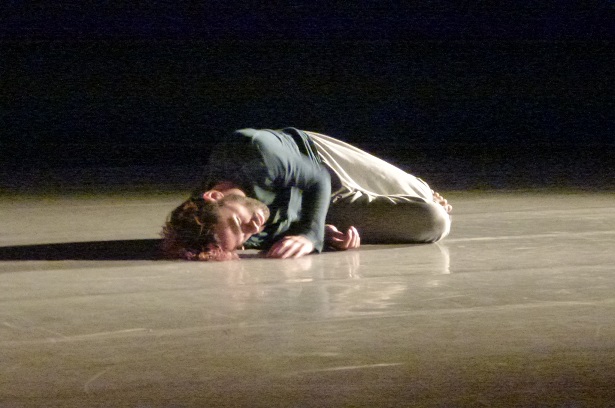
    Alvaro Gonzalez danced a solo (choreographed by Tatiana Martinez) entitled En La Ausencia (In The Absence) in which the dancer, to a poignant Yann Tiersen score, is filled with loneliness. An empty embrace evokes the sense of loss; even Mr. Gonzalez’s hair seems to be expressive. The dance evolves to an agitated coda, until the dancer finally curls up on the floor in despair.

    In a daffodil-yellow frock, Kendra Ross takes the stage with a striking command of sensuous musicality for Manifest Divine, danced to an Everett Saunders song. A natural mover, Ms. Ross explores her own private world for our delectation, at the end dissolving into marvelous laughter as she rushes away.

    L1440517

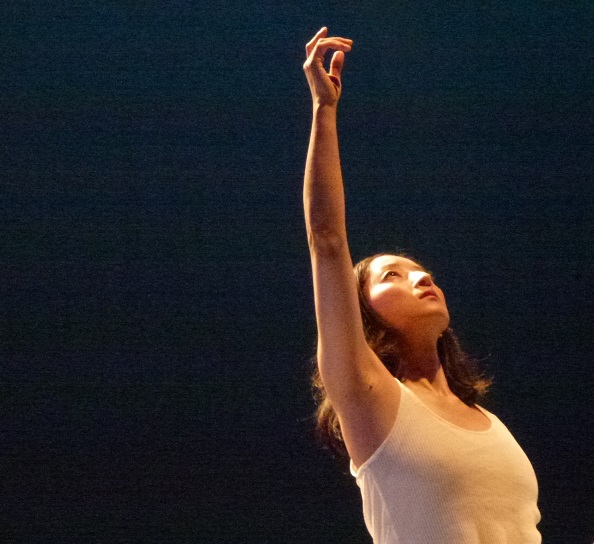
    Exquisite artistry marked Misei Daimaru’s performance of her solo Stars in The Dark. Having seen Misei performing with Sunhwa Chung/KoRyo Dance Company and with Janusphere, I was very pleased to see her in a solo work. To music by Pierre and Gaspard Genard, Misei’s solo begins in a pool of light. Many dancers have used a chair in their solo works over the years, but few have made such compelling use of it as Misei; it became her virtual partner in the scheme of things. Misei’s dancing has a lovely internalized feeling, and a deeply expressive movement quality.

    Roberto Lara’s personal magnetism underscored his spell-binding performance of Via Crucis (The Way of the Cross), a poignant rendering of Camille Saint-Saens’ classic Dying Swan. Dancing in toe shoes, Roberto’s black tutu contrasted with his creamy alabaster torso. This justaposition of male and female characteristics was played out without any hint of Trockadero-style camp from the muscular dancer with his dark eyes and scruffy beard. The audience responsed to this tantalizing solo with genuine enthusiasm.

    In The First Ten, Katie Kilbourn appears in childish innocence. She evokes a nursery-like atmosphere while the music, by CoCo Rosie, makes us think of a music box. Sometimes sucking her thumb, the dancer moves with a doll-like feeling of naïveté. In the end, she slowly winds down while standing in a pool of light, her girlish white dress enveloping her in the virgnial purity of youth.

    Schubert’s Ave Maria served as the basis for Journey, a solo by Chloe Cappo. Using her flexible physique, the dancer wove elements of pure ballet technique into her solo which used the space well and responded clearly to the music in its sense of phrasing.

    L1440289

    In a slow progress along a lighted path across the stage, Roberto Villanueva displayed his physical control in the opening passage of Caught Up; the sound of clapping hands is later swept into ecstatic phrases for violin in a musical mixture of Steve Reich and Max Richter. Roberto pauses in a lighted circle to dance an animated section, seemingly wishing to escape. Then he continues on his way until the light fades to darkness.

    BalaSole have announced their next audition for August 1st, 2014 with performances in October.

  • BalaSole: IDIOMS

    L1310260

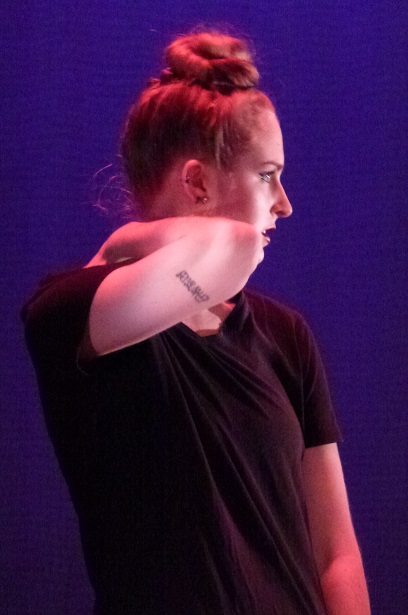
    Above: dancer Marion Helfenstein

    Saturday January 25th, 2014 – BalaSole Dance Company presenting IDIOMS at the Ailey Citigroup Theatre.  A sold-out house, including many people who were experiencing BalaSole for the first time, reacted enthusiastically to each solo work performed, covering a wide stylistic and musical range. The Company’s artistic director Roberto Villanueva selected and mentored nine solo artists for this program which also featured Emerging/Re-Emerging artists Hailey Bates, Lea Clay, and Nicole Roberts. And no BalaSole performance would be complete without Roberto himself dancing.

    True to the customary BalaSole formula, all of the evening’s participating dancers appear together in the opening and closing pieces on the program; these danceworks are created during the week-long run up to the performance dates, and for IDIOMS they were danced to a delicious musical fusion of Richter and Vivaldi.

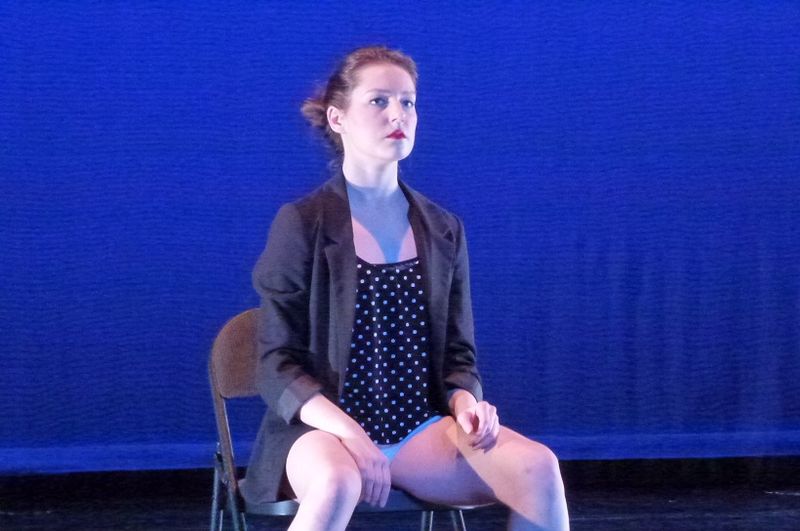
    Marion Helfenstein commenced her solo Who Are Those Ugly Ladies In The Mirror? seated in a chair. A spoken passage gives way to a pulsing mandolin rhythm as the dancer’s gestures tell her story. When the music (by Rene Aubry) develops a deeper resonance and more intense beat, she rises to dance swiftly about the space; yet in the end she cannot escape her chair.

    Trashina Conner first enters in a state of calm wonderment to the sound of a piano; as the cello takes over, a ritual of mourning takes place. The dancer then veers between hope and despair as the music becomes more intense; she runs around the space – either pursuing something or being pursued. At last she speaks: a date – March 26, 2006 – “A nightmare…with eyes wide open…” This recollection of a traumatic event gives this solo its title 3.26.06. This intensely personal work was expressively danced, evoking real emotion from both dancer and viewer.

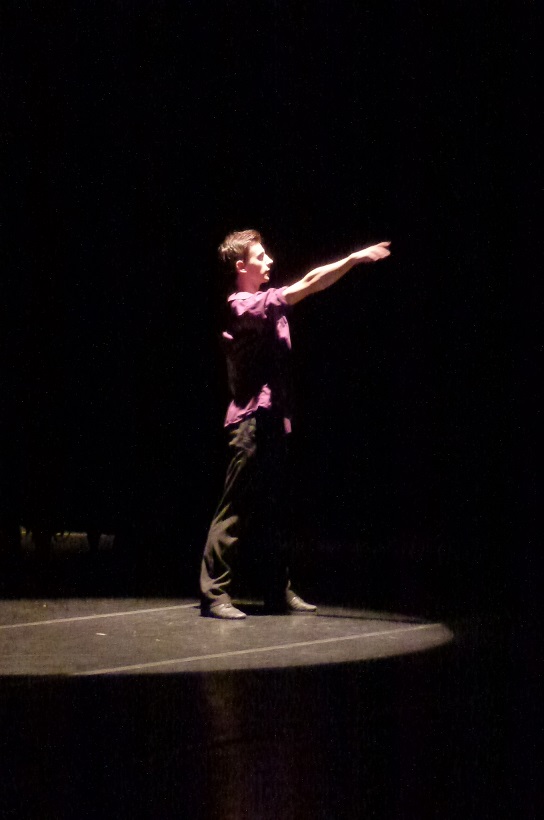
    Jonathan Breton’s solo Memories was performed to a beautiful score by Ezio Basso; the dancer’s slender form moved with supple grace and lyrical port de bras thru combinations from the classic ballet vocabulary persuasively meshed into a contemporary statement. Jonathan’s lithe torso and handsome line created a lyrical atmosphere, whether he was standing in a pool of light or moving freely about the space. A self-embrace near the end was a fine expressive touch.

    Ashley Peters appeared as an Emerging Artist in BalaSole‘s Autumn 2013 concert: VISAGES. I thought then that she showed real potential, and tonight she was back in a solo work: Past and Pending. To music by Outside – violin over a heavy metallic beat – Ashley covered the space in restless, dynamic moves, her body talking to us directly.

    Paulina Bracone’s solo It’s Possible developed well in the unusual juxtaposition of spoken word and ballet-based movement. This restless solo showed the dancer’s vulnerable femininity; as the music swells under the spoken narrative, her movement becomes more expansive. This improbable combination of masculine (the voice) and feminine (the dancer) elements ended up working well thanks to Paulina’s sense of commitment.

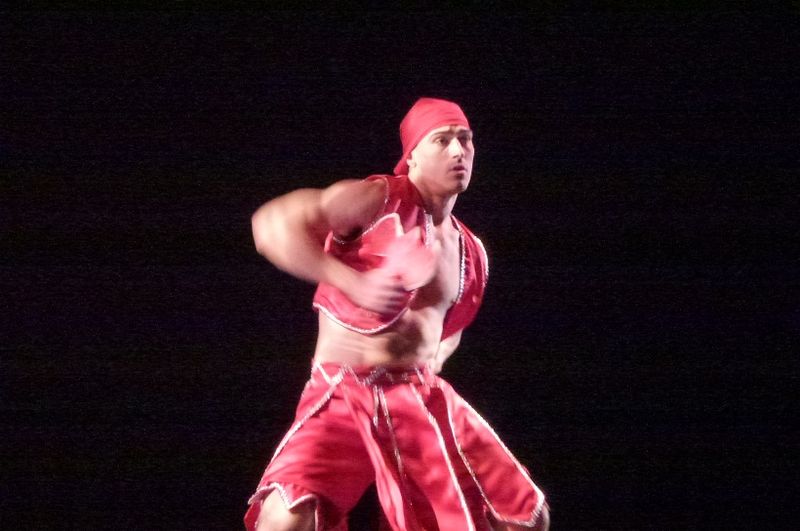
    Hunter Frederick Houde’s Afro-Cuban solo Changó emerges from Santeria folk legend: Changó is the owner of fire, lightening, thunder, and war, but he is also the patron of music, drumming, and dancing. He represents male beauty and virility, passion and power. Dressed in red and carrying a small hatchet, the dancer’s moves were vibrant and instinctive; rolling thunder, folklike chant/vocals and intense drumming push this fiery solo to its conclusion: a huge thunderclap as the lights go out. 

    Christen Quattlebaum’s solo Fireflies opens to a piano tune and is later taken up with the whimsical lyrics of the title-song. Christen shows off an expansive developpé and zooming extension, but her quirky choreography also includes gentle hops and an arcane gestural language. This off-kilter solo drew our focus in its movement, while making us wonder what the song was really about. 

    Tracy Singer enters rather dejectedly for her solo What I Did With What You Left Me. This is a proud woman who’s been shot down by love, but she’s going to bounce back. Sultry jazz marks her sense of post-breakup lethargy, but agitation emerges in supple nuances. She hits the floor – literally – but then takes off in a space-filling self-absorbed danced passage to a big blues anthem.

    Caroline Brethenoux’s solo Message Send Failure opens in silence, the dancer having difficulty breathing. At last she is able to enunciate: “There was something that I wanted to tell you.” Since she finds difficulty in speaking, she hesitantly begins to express herself in dance, though remaining on the floor; her frustration leads to a silent scream. In the end she rises, suggesting she is ready to pull herself together. But then…she can’t.

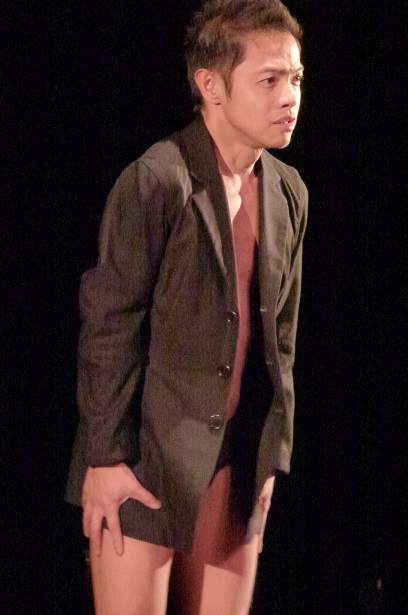
    Roberto Villanueva’s solo Incomplete – performed to solo guitar – found the dancer clad in abbreviated black briefs and a dinner jacket. He alternately reveals and conceals his torso; the dance however is not provocative but instead reflects an inner dilemma: it’s sexy but not at all sexual. On the surface we can savor Roberto’s handsome physique, but there’s more going on beneath the exterior attraction. The apex of expression is reached in a long, slow-developing arabesque. As the solo ends, delicate tremors in the hands indicate the dancer has a lot on his mind. This dance is personal: while it exposes the dancer physically, in the end Roberto retains his mystique.

    I didn’t have very good luck taking pictures at the dress rehearsal, but here are a few of the individual dancers (sorry that I didn’t get everyone!):

    L1310169

    Christen Quattlebaum

    L1310302

    Trashina Conner

    L1310321

    Jonathan Breton

    L1310389

    Hunter Frederick Houde

    L1310525

    Roberto Villanueva