Tag: Alice Tully Hall

  • Ballets Russes @ Chamber Music Society

    Photo nicolas dautricourt 74

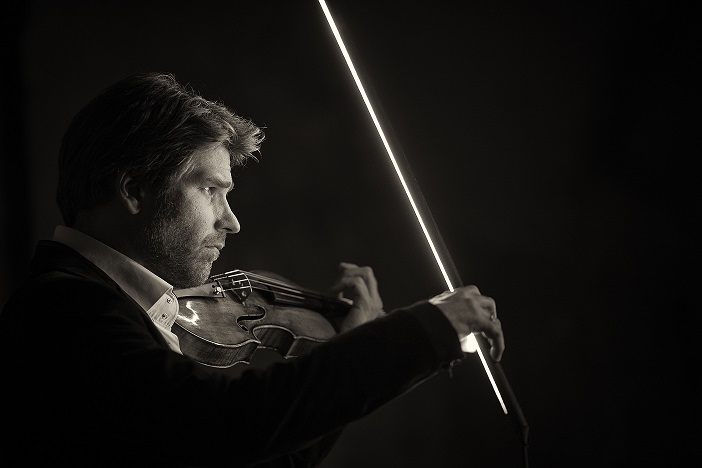
    Above: violinist Nicolas Dautricourt, photographed by Bernard Martinez

    ~ Author: Oberon

    Sunday May 19th, 2019 – For their final concert of the 2018-2019 season at Alice Tully Hall, Chamber Music Society of Lincoln Center offered a program of works by composers associated with Serge de Diaghilev’s Ballets Russes. It was a long program, full of rewards.

    Jennifer Johnson Cano, the Metropolitan Opera mezzo-soprano who in February shared a memorable program with tenor Matthew Polenzani at Zankel Hall, sang works by Manuel de Falla and Maurice Ravel, and a septet of marvelous musicians were heard – in varying configurations – in these, plus music by Debussy, Prokofiev, and Stravinsky. 

    JJC

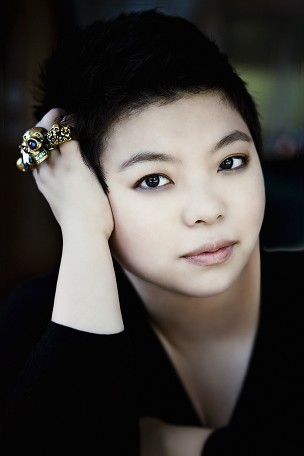
    Ms. Cano (above, in a Matthu Placek portrait) opened the concert with Manuel de Falla’s Psyché in which she was joined by Tara Helen O’Connor (flute), Nicolas Dautricourt (violin), Yura Lee (viola), David Finckel (cello), and Bridget Kibbey (harp). Composed in 1924, as a setting of a poem by Georges Jean-Aubry, this is the awakening song of Psyché, a mortal woman whose beauty has caught the eye of Cupid, god of Love, who she will eventually marry.

    The flûte enchantée of Tara Helen O’Connor opens the work; the addition of M. Dautricourt’s ethereal violin and Ms. Kibbey’s delicate harp create an exotic atmosphere. Ms. Cano’s singing – clear, warm, and wonderfully nuanced –  was vastly pleasing; in her unaccompanied opening passage, the sheer beauty of her tone and its evenness throughout the registers marked her as a singer of exceptional natural gifts.

    Adding depth and colour to the enticing ‘orchestration’ were Ms. Lee’s viola and Mr. Finckel’s cello; overall the five instrumentalists created an impression of a larger ensemble thru the richness of their individual timbres. The music becomes urgent, and Ms. Cano’s singing golden, as flute trills and harp melismas lure the ear.  Psyché this evening was an intoxicating delight.

    For Maurice Ravel’s chamber arrangement of Shéhérazade, Ms. Cano and Ms. O’Connor returned, along with pianist Alessio Bax. It’s Mr. Bax’s delicate, silvery playing that sets the mood of the opening song, Asie. At “Je voudrais voir des assassins souriant“, passion builds: Ms. Cano brought an operatic quality to her performance at this point, rising to her steady and blooming upper range to fine effect. Asie has a little pendant at the end, full of lovely mystery. It ends on an exquisitely tapered note.

    La flûte enchantée brings forth limpid, entrancing sounds from Ms. O’Connor’s flute, and the weaving together of voice, flute, and piano is hypnotic. The concluding song, L’indifferent, begins with a calm lullabye played by Mr. Bax. Ms. Cano’s beguiling singing, sometimes bringing straight tone into play, was a marvel of expressiveness.

    Infringing on our enjoyment of the Ravel was the sound of text booklets dropping onto the floor, and a crash of something falling in the outside corridor. But Ms. Cano held to her course; this is a truly wonderful voice that I would love to hear in the music of Massenet’s Charlotte.
    Maxresdefault

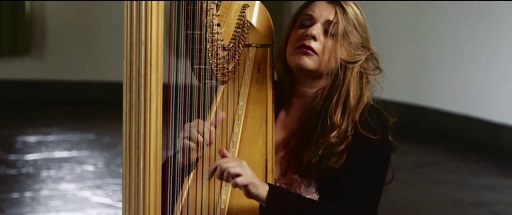
    Above: harpist Bridget Kibbey

    Mlles. O’Connor, Lee, and Kibbey then offered a sublime performance of Claude Debussy’s Sonata for Flute, Viola, and Harp, written in 1915. In an evening filled with marvelous sounds, the opening sustained flute tone of this sonata – taken up by the viola – sent chills thru me at the start of the Pastorale. The blend these three remarkable musicians produced was exceptional. A gentle animation arose – soft and merry – only to subside. Mlles. Lee and O’Connor duet, the viola deep and buzzy. Swirls of notes from the harp – and then from the flute – lingered on the air.

    The Interlude commences with a viola melody underpinned by the harp, After a sprightly interjection, viola and flute play in unison, and the harp tapers to pianissimo.The viola is plucked, the music soft and swift. A percolating motif opens the Finale, like the break of dawn on a sunny day; after a momentary slowing down, the piece ends abruptly.

    Prokofiev’s Sonata in D-major for Violin and Piano, Op. 94a, brought together Mssrs. Dautricourt and Bax for a fabulous performance that sparked a shouting, standing ovation from the crowd. Though the piece was composed in 1943 as a flute sonata, Prokofiev later obliged the great violinist David Oistrakh by creating a violin version, which premiered in 1944.

    Mr. Dautricourt launched the sonata with a high sweet/melancholy song. As the music becomes increasingly animated, an ultra-familiar theme is heard, which will crop up several times along the way. Vibrant, agitated, march-like music ensues; Mr. Bax displays magic tricks of his own, and the movement has a lovely ending.

    In the Scherzo, Mr. Dautricourt’s virtuosity is astounding. A demented, off-kilter dance commences, then slows to a high-lying interlude before resuming. The music, and the playing of it, are thrilling…and then it comes to a sudden halt.

    The audience, who all evening applauded between movements, prompted the violinist to declare “Two more!” before commencing the Andante: a sorrowful song which tends to meander a bit over time, with a hint or two of of jazz thrown in; in the end it becomes high and eerie. 

    The concluding Allegro con brio dances along, with some respite for a poignant interlude before dancing on again. Moodiness briefly takes over, and then a rush to the finish. The applause began before the music stopped: Dautricourt/Bax are a winning team.

    Alessio-600

    Lucille Chung and Alessio Bax (above, photographed by Lisa-Marie Mazzucco) joined together for the evening’s Fokine finale, saluting Diaghilev’s ground-breaking choreographer with a piano-four-hands arrangement of Igor Stravinsky’s Petrushka.

    Despite more intrusions – a loud clang from the balcony, and the sound of something (or someone) falling – Stravinsky’s brilliance prevailed. For 40-minutes, the outstanding Bax/Chung duo sustained the vibrancy of a theatrical presentation; everything felt so alive – with dazzling rhythms and infinite colours – that the entire ballet danced in the mind. For their brilliant and generous playing, the couple were rewarded with hall-filling, joyous applause. What a way to end the season!

    ~ Oberon
  • Concerto Night @ CMS

    A-M McDermott

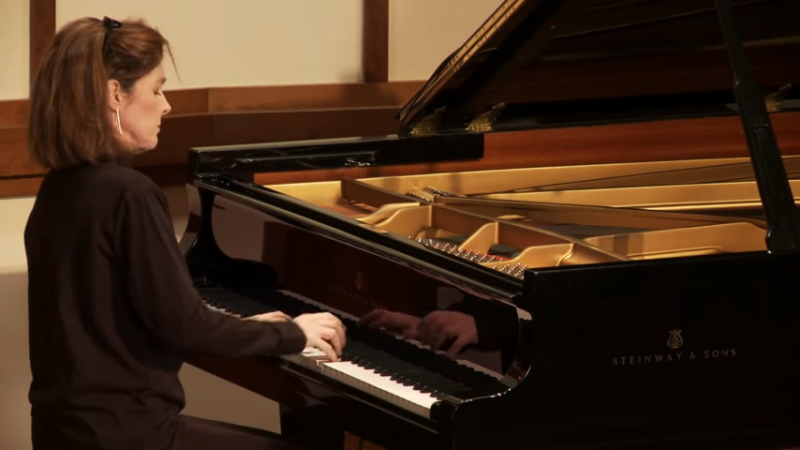
    Above: Anne-Marie McDermott at the Steinway; she delivered a phenomenal Mozart K. 466 at Chamber Music Society of Lincoln Center‘s end-of-the-season performance at Alice Tully Hall tonight.

    Author – Oberon

    Sunday May 20th, 2018 – For the final offering of their 2017-2018 season, Chamber Music Society of Lincoln Center presented five concerti, each calling for a varied ensemble of players; an impressive group of artists came together to assure yet another great CMS evening of music-making. A surprise addition to the program, in the second half, was an added treat.

    Jean-Marie Leclair’s Concerto in B-flat major for Violin, Strings, and Continuo, Op. 10, No. 1 was a wonderful program-opener, bringing forth a sterling performance from violinist Bella Hristova. This was my second Leclair encounter this Spring: in April, the composer’s Sonata for Two Violins in E-minor was played by artists from the New York Philharmonic at a Merkin Hall matinee. Today, again, Leclair’s music seemed truly fresh and vivid.

    Bella

    Ms. Hristova (above, in a Lisa-Marie Mazzucco portrait) looked gorgeous in a gunmetal grey gown, styled à la Grecque. Gilles Vonsattel was ready to play at the harpsichord and, with an ensemble of string players – Aaron Boyd, Sean Lee, Mihai Marica, Paul Neubauer, and Timothy Cobb – ranged around her, Ms. Hristova and her colleagues created a picture that somehow represented everything I love about Chamber Music Society. And then they began to play. 

    Ms. Hristova has always played beautifully, but there was some intangible quality in her artistry tonight that gave her performance a special glow. In this elegant, cordial music, she sounded splendid in both the lyrical passages and in the abounding coloratura. The poignant melody of the Andante was particularly appealing, where Mr. Cobb’s genial and rich bass also made a fine impression. In the concluding Gigue, veering between major and minor, Ms. Hristova the capped her triumph. As waves of applause swept thru the hall, Ms. Hristova strode back onto the stage for a bow, assuming that her colleagues were right behind her. But the men had held back, so that she could bask in the warm reception that she so truly deserved.

    For Mozart’s Concerto in D minor for Piano and Strings, K. 466 – composed in 1785 and played tonight in Carl Czerny’s arrangement – Anne-Marie McDermott took her place at the Steinway, joined by Tara Helen O’Connor (flute), Sean Lee and Ms. Hristova (violins), Paul Neubauer (viola), Mihai Marica (cello), and Timothy Cobb (bass). The audience, poised to hear great music-making, experienced a revelatory performance from Ms. McDermott.

    The concerto’s opening Allegro has an almost sneaky start, and then proceeds thru alternating modes of storm and calm. From the piano’s first entrance in a solo passage, it was clear we were in for exceptional playing from Ms. McDermott. The movement has a da capo with added piano roulades and an exchange of phrases between Sean Lee’s violin and Ms. O’Connor’s flute. The piano part becomes increasingly prominent. After a second da capo, Ms. McDermott trilled her way into a big cadenza; then the music again moved thru major/minor variants.

    The Romance begins with the piano in straightforward phrases which develop over a gracious pulsing motif from the strings. Ms. McDermott’s gift for nuance, and her suave turns of phrase, were abundantly pleasing to hear. In the da capo, Ms. O’Connor’s flute adds a sparkle to the harmonies; modulations, masterfully handled by Mozart, carry thru to the finish.

    Agitated bowing sets up the Rondo-finale, and as Ms. McDermott sailed thru delicious virtuoso passages with technical dazzle and amazing grace. One could sense the audience’s pent up excitement was about to burst. And burst it did. Thunderous applause filled the hall, with the pianist’s colleagues joining in and refusing to stand until she had stepped forward for a bow. The delirium continued, everyone on their feet, as Ms. McDemott and her fellow artists returned for two more bows.

    VonSattelGilles_bio

    To open the evening’s second half, Gilles Vonsattel (above) treated us to an immaculate performance of the Bach Concerto in G minor for Keyboard, BWV 975 (after Vivaldi RV 316). The oldest music on the program (dating from 1713-14), it sounded brand new: so alive and clean. In the Largo, especially, Mr. Vonsattel’s hushed pianissimi phrases and his rippling figurations played over a gentle pulse made an enchanting impression. Pianist, piano, Bach…a wonderfully intimate performance, the audience keenly attentive and appreciative.

    Paul_neubauer

    Above: violist Paul Neubauer

    Still on a high from experiencing The New York Philharmonic’s extraordinary performance of the Shostakovich 5th under Semyon Bychkov’s baton a few days ago, I was happy to hear Wu Han announce a surprise addition to the scheduled program this evening. Recently when she was in Saint Petersburg, Wu Han heard that the manuscript of a very short Shostakovich piece for viola and piano had just been discovered. Somehow she managed to bring a copy of this two-page work back to New York City with her. Paul Neubauer learned it in a day, and – with Wu Han at the piano – gave us what was most likely the first public performance (and for sure the US premiere) – of Shostakovich’s Impromptu for Viola and Piano (1931).

    This Impromptu is in two movements, a sad and very Russian melody – soft and sorrowing – which displayed Mr. Neubauer’s finely-controlled tone – and then a lively, folk-like dance kicked off by Wu Han at the piano, her bright-red shoes tapping the floor. A little musical gem, this would seem a perfect encore piece for Mr. Neubauer in future.

    Leos Janáček’s Concertino for Clarinet, Bassoon, Horn, Two Violins, Viola, and Piano (1925) is a quirky delight of a piece. As if the unusual instrumentation was not enough on its own, the full complement of musicians do not play in the first and second movements. The opening Moderato involves only the piano and horn (Ms. McDermott and burnish-toned Stewart Rose), and for the second – Più mosso – only clarinet (Tommasso Lonquich) and piano are heard, until the strings add a couple of chords at the finish.

    Mr. Lonquich had brought three clarinets to the stage, switching from one to another as the music progressed. His lively trills danced the music on to a string finish. The Concertino moves on: a rocking, swaying mode, an off-kilter march, slashing bows, dancing or jogging along, vigorous plucking, extended string trills, a misterioso piano, a fast finale.  

    Bg01

    Above: percussionist Ayano Kataoka

    The evening closed with the most recently-written work on the bill: Micro-Concerto for Solo Percussion, Flute, Clarinet, Violin, Cello, and Piano, composed 1999 by Steven Mackey. Ayano Kataoka moved from place to place on the stage where her various percussion instruments were arrayed. A superb “supporting cast” had been assembled: Tara Helen O’Connor (flute, and piccolo), Tommaso Lonquich (clarinet, and bass-clarinet), Sean Lee (violin), Mihai Marica (cello), with Gilles Vonsattel at the Steinway. The musical ensemble has their work cut out for them, as the writing seemed quite tricky and they were sometimes called upon to make unusual sound effects.

    Ms. Kataoka played several ‘legit’ percussion instruments, plus a few that she and composer John Mackey apparently found under the proverbial kitchen sink, including whistles and clickers. Often she played two or three of these at a time. A petite woman with giant talent, Ms. Kataoka had choreographed herself to always be in the right place at the right time, and the audience seemed genuinely intrigued by her every move and by all the varied sounds she produced. 

    The work opens with an extra-terrestrial quality. Tara Helen O’Connor had 2 flutes and a piccolo at her fingertips; the composer calls on her for everything from low sputtering to piccolo pipings. Two passages have special appeal: one for bass clarinet (Mr. Lonquich) and Ms. Kataoka’s vibraphone, and a second where Mihai Marica’s expert cello playing meshed with the marimba to sensuous effect.  

    The composer bounded onto the stage for a bow at the end, thanking all the players, and embracing Ms. Kataoka. The percussionist’s frock was a contemporary take on traditional Japanese dress with a shortened skirt and a fanciful obi.  

    ~ Oberon

  • Tetzlaff @ Tully

    ~ Author: Scoresby

    Wednesday March 28th, 2018 – It is difficult to write about Bach’s Sonatas and Partitas for Solo Violin, especially live performances. It is stunning music with too many layers to write about, nearly impossible to play well live (recordings polish all the difficulties away), and something that many people are familiar with. Of course it is far harder to play them in an evening – the endurance required is a feat that few violinists attempt. As part of the Lincoln Center Great Performers series in Alice Tully Hall, violinist Christian Tetzlaff gave a solo recital of two thirds of the set. Mr. Teztlaff has a history of performing these works every few years in NY, he has played them twice in full at the 92nd Street Y before (both of which I regretfully missed) and just issued his second recording of the set last year. Thus it seemed like the perfect opportunity to sit down and listen.

    Mr. Tetzlaff was all business this evening, walking out on stage and starting to play the Grave of Sonata No. 2 in A minor, BWV 1003 before the audience had even stopped clapping. The audience took this entire movement before settling in (people were still rustling in their seats, whispering, etc…). He took a brisk tempo and sounded almost improvisatory with this opening. The sound was clean and had almost no vibrato. Without a pause he jumped straight in to the Fuga, making the two movements sound like something out of the Well-Tempered Clavier

    The fugue was orchestral in scale and each down-bow was emphasized to give the piece its own internal rhythm. The effect was hypnotic, drawing the listener into Mr. Tetzlaff’s world. While not clean playing by any means, that’s not the point when listening to Mr. Tetzlaff. He is able to build large structures without making the music sound pretentious – his playing is fluid and with ease all at once.

    Giorgia Bertazzi
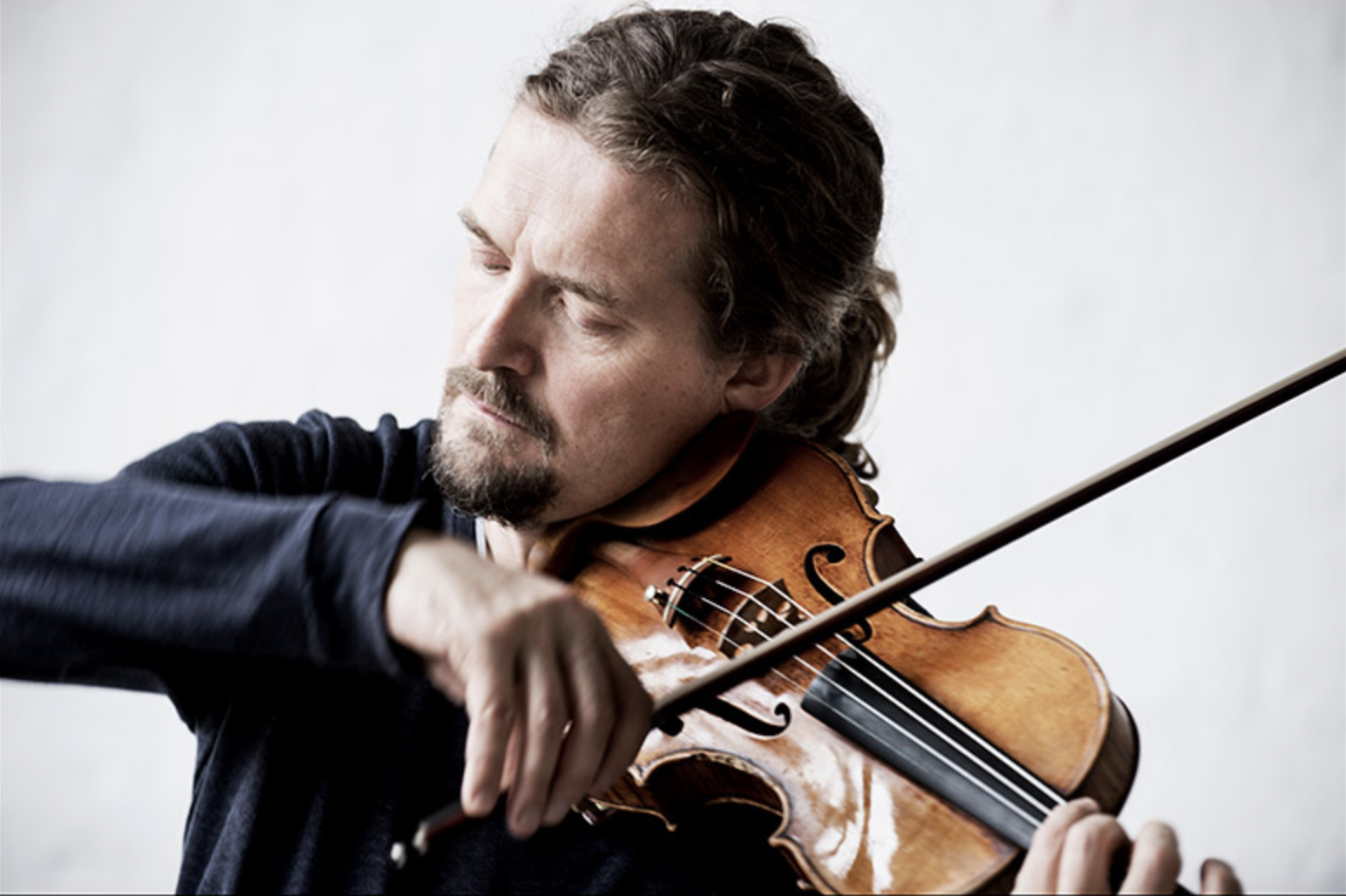
    Above: violinist Christian Tetzlaff; photo credit: Giorgia Bertazzi

    The Andante was the highlight of the concert. Again a faster pace than is typically played, Mr. Tetzlaff used this to bring out the accompanying pulse in the bass. Just by playing it faster, the piece sounded more orchestral and unified without losing its charm. Many violinists eschew this pulse for the main melody, but Mr. Tetzlaff gave them equal importance making the melody sound like a baroque soloist sitting atop an accompanying recorder. Despite that large sonority, Mr. Tetzlaff was unassuming in his playing – not injecting anything besides bringing out that counter-melody. There was basically no tension nor ornamentation, just the soft padding of the pedal point and the beautiful melody sitting atop. It is moving to hear music played that joyously and humbly; the happiness was contagious.

    In the sunnier second half of the program with Sonata No. 3 in C major, BWV 1005 and Partita No. 3 in E major, BWV 1006, Mr. Tetzlaff was more at home. His unpretentious, almost folksy sound worked well with both of these works. The Fuga of Bach’s 3rd sonata is one of Bach’s most complex fugues. It starts with a simple theme that is put through the wringer of different techniques that would be difficult on a keyboard, let alone a violin. Mr. Tetzlaff navigated its complexity by highlighting the inner voices and given a soft bowing, making this work sound more intimate despite a slew of mistakes. The dense chords became chorale like. 

    The other highlight of the program was the fourth movement of this sonata. Mr. Tetzlaff played the Allegro assai with ease, eliminating all of the rough sonorities that torment other violinists. His tone was understated, quiet, and made every voice entirely visible. His bowing was magical to watch, it looked (and sound) as if there was no tension – just gliding through the technical piece like water pours into a glass. This allowed him to make each key shift stand out and take on its own timbre – a brilliant way of playing Bach. The last Partita fit Mr. Tetzlaff’s down-to-Earth sensibilities. He played with a delicate sensibility letting the music unravel on its own through various bursts of speed and thoughtful passagework. He eschewed almost all ornamentation and just played the music.

    After the performance one person nearby me said ‘Well, he can’t play all the notes’, to which I gladly agree. Instead his performance was human, vulnerable, and humble. In spite of some of his idiosyncratic rhythms, this performance showed that he is the antithesis of a virtuoso, something all too rare. 

    ~ Scoresby

  • Brahms & Fauré @ Chamber Music Society

    Paul Watkins

    Above: cellist Paul Watkins

    Sunday January 29th, 2017 – Following an unsettling week, it was particularly reassuring to settle into the embracing space of Alice Tully Hall this evening and be serenaded by four estimable musicians in Chamber Music Society of Lincoln Center‘s program of works by Johannes Brahms and Gabriel Fauré. 

    In 1853, Robert Schumann and Johannes Brahms teamed up with Schumann’s student, Albert Dietrich, to write a “welcome home” sonata for violinist/composer Joseph Joachim, whose travels had kept him away from Düsseldorf for several weeks. The music was set around the notes F-A-E, which stood for Joachim’s personal motto, “Frei, aber einsam” (‘Free, but lonely’). Dietrich wrote the first movement, with Schumann taking on the second and fourth, leaving Brahms with the third.

    Joachim retained the sole copy of the score after performing it; he had the Brahms Scherzo published in 1906, after the composer’s death; the full sonata was not published until much later.

    The complete ‘FAE Sonata‘ is rarely heard these days, but the Brahms Scherzo has become a popular stand-alone work in the chamber music repertoire. It commences in a brisk, passionate mode which returns following an affettuoso interlude. Tonight, violinist Ani Kavafian and pianist Alessio Bax brought great energy to the opening paragraph, subsiding to a gently rhapsodic state in the calm of the central section before setting up a spirited drive to the finish.

    Violist Yura Lee and cellist Paul Watkins then joined Ms. Kavafian and Mr. Bax for the Fauré. A unison string theme opens the quartet, with the entrance of the piano filling out the sonic texture that will keep us enchanted for the next half-hour. Ms. Lee’s wonderfully sensitive playing – a hallmark of the evening – meshed lyrically with the sweetness of Ms. Kavafian’s violin, the quiet rapture of Mr. Watkins’ cello, and the elegant romance of Mr. Bax’s phrasing from the Steinway. The music veers briefly to the dramatic before subsiding into a cushioning warmth from viola and cello whilst the violin wafts on high.

    Plucking strings and a rolling theme from Mr. Bax open the second movement. Later, the piano comments ironically as the strings try to revive the first movement’s main theme in a rather off-kilter manner; the music slows, and then steals away.

    In the Adagio third movement, Yura Lee’s dreamy playing had a transportive quality; Fauré’s student Charles Koechlin has written that “…the viola would have to be invented for this Adagio if it did not already exist…”, and Ms. Lee’s playing underlined the truth of that notion. Moving forward, violin and piano achieve a lovely blend and the music begins to turn passionate; Fauré manages a balance of intensity and calm in this movement that is quite unique.

    A darker and somewhat turbulent mood is created at the start of the quartet’s concluding Allegro molto: Ms. Lee and Mr. Watkins sing a deep theme together before a more lilting quality begins to rise. Mr. Bax commences a dance, drawing the string players in with his rhythmic emphasis as the music builds and dances on to an exuberant end.

    Following the interval, the performance of the Brahms second quartet was somewhat compromised by the high-pitched sound of a faltering hearing-aid battery. After the quartet’s first movement, Ms. Kavafian asked the audience if they were hearing it too, and several people replied in the affirmative. The players took a moment to gather their concentration before proceeding. Annoying as such disruptive sounds are to the audience, it must be doubly difficult to play in such circumstances as the musicians are always listening for one another and the extraneous sound must be particularly jarring. They played on, admirably, and the noise seemed to subside as the performance evolved.

    It was in the Brahms quartet that Mr. Bax seized upon the prominence the composer assigned to the piano’s role and delighted us with truly gorgeous playing; my notes are full of little stars and exclamation marks, and scrawls of “Bax…Bax…Bax!”

    Rhythmic distinctiveness marks the first movement, the four players ever-alert to nuance as cello and violin each have a passage of stepping forward. And then, it’s in the Adagio that we get to the heart of the matter: commencing as a lullaby, the piano’s tranquil, song-like theme was an outstanding Bax passage. The string voices murmur deeply and the piano replies; passions ebb and flow, and the strings unite in a brief trio. Ms. Kavafian and Mr. Watkins play in unison, leading to the development of a big song from which the violinist eventually shimmers upward; a hushed coda aptly rounds out this Adagio dream.

    A simple song opens the Scherzo, which moves on thru various permutations. A transition to a more energetic passage leads to more animated playing, with a Hungarian lilt. This gypsy colouring extends into the quartet’s concluding Allegro, with Ms. Kavafian and Mr. Bax leading the way. The folksy dance motifs, however, are tempered by an unhurried feeling. The music becomes almost gentle at times, before a final build-up.

    We emerged into the cold chill of impending February, jolted back to the realities of life. Now – more than ever – we will seek solace in great music, art, poetry, and dance, looking to concert halls and museums as sanctuaries of reason and compassion.  

    • Brahms Scherzo, WoO 2, from “F-A-E” Sonata for Violin and Piano (1853)
    • Fauré Quartet No. 2 in G minor for Piano, Violin, Viola, and Cello, Op. 45 (1885-86)
    • Brahms Quartet No. 2 in A major for Piano, Violin, Viola, and Cello, Op. 26 (1861)
  • Brahms & Fauré @ Chamber Music Society

    Paul Watkins

    Above: cellist Paul Watkins

    Sunday January 29th, 2017 – Following an unsettling week, it was particularly reassuring to settle into the embracing space of Alice Tully Hall this evening and be serenaded by four estimable musicians in Chamber Music Society of Lincoln Center‘s program of works by Johannes Brahms and Gabriel Fauré. 

    In 1853, Robert Schumann and Johannes Brahms teamed up with Schumann’s student, Albert Dietrich, to write a “welcome home” sonata for violinist/composer Joseph Joachim, whose travels had kept him away from Düsseldorf for several weeks. The music was set around the notes F-A-E, which stood for Joachim’s personal motto, “Frei, aber einsam” (‘Free, but lonely’). Dietrich wrote the first movement, with Schumann taking on the second and fourth, leaving Brahms with the third.

    Joachim retained the sole copy of the score after performing it; he had the Brahms Scherzo published in 1906, after the composer’s death; the full sonata was not published until much later.

    The complete ‘FAE Sonata‘ is rarely heard these days, but the Brahms Scherzo has become a popular stand-alone work in the chamber music repertoire. It commences in a brisk, passionate mode which returns following an affettuoso interlude. Tonight, violinist Ani Kavafian and pianist Alessio Bax brought great energy to the opening paragraph, subsiding to a gently rhapsodic state in the calm of the central section before setting up a spirited drive to the finish.

    Violist Yura Lee and cellist Paul Watkins then joined Ms. Kavafian and Mr. Bax for the Fauré. A unison string theme opens the quartet, with the entrance of the piano filling out the sonic texture that will keep us enchanted for the next half-hour. Ms. Lee’s wonderfully sensitive playing – a hallmark of the evening – meshed lyrically with the sweetness of Ms. Kavafian’s violin, the quiet rapture of Mr. Watkins’ cello, and the elegant romance of Mr. Bax’s phrasing from the Steinway. The music veers briefly to the dramatic before subsiding into a cushioning warmth from viola and cello whilst the violin wafts on high.

    Plucking strings and a rolling theme from Mr. Bax open the second movement. Later, the piano comments ironically as the strings try to revive the first movement’s main theme in a rather off-kilter manner; the music slows, and then steals away.

    In the Adagio third movement, Yura Lee’s dreamy playing had a transportive quality; Fauré’s student Charles Koechlin has written that “…the viola would have to be invented for this Adagio if it did not already exist…”, and Ms. Lee’s playing underlined the truth of that notion. Moving forward, violin and piano achieve a lovely blend and the music begins to turn passionate; Fauré manages a balance of intensity and calm in this movement that is quite unique.

    A darker and somewhat turbulent mood is created at the start of the quartet’s concluding Allegro molto: Ms. Lee and Mr. Watkins sing a deep theme together before a more lilting quality begins to rise. Mr. Bax commences a dance, drawing the string players in with his rhythmic emphasis as the music builds and dances on to an exuberant end.

    Following the interval, the performance of the Brahms second quartet was somewhat compromised by the high-pitched sound of a faltering hearing-aid battery. After the quartet’s first movement, Ms. Kavafian asked the audience if they were hearing it too, and several people replied in the affirmative. The players took a moment to gather their concentration before proceeding. Annoying as such disruptive sounds are to the audience, it must be doubly difficult to play in such circumstances as the musicians are always listening for one another and the extraneous sound must be particularly jarring. They played on, admirably, and the noise seemed to subside as the performance evolved.

    It was in the Brahms quartet that Mr. Bax seized upon the prominence the composer assigned to the piano’s role and delighted us with truly gorgeous playing; my notes are full of little stars and exclamation marks, and scrawls of “Bax…Bax…Bax!”

    Rhythmic distinctiveness marks the first movement, the four players ever-alert to nuance as cello and violin each have a passage of stepping forward. And then, it’s in the Adagio that we get to the heart of the matter: commencing as a lullaby, the piano’s tranquil, song-like theme was an outstanding Bax passage. The string voices murmur deeply and the piano replies; passions ebb and flow, and the strings unite in a brief trio. Ms. Kavafian and Mr. Watkins play in unison, leading to the development of a big song from which the violinist eventually shimmers upward; a hushed coda aptly rounds out this Adagio dream.

    A simple song opens the Scherzo, which moves on thru various permutations. A transition to a more energetic passage leads to more animated playing, with a Hungarian lilt. This gypsy colouring extends into the quartet’s concluding Allegro, with Ms. Kavafian and Mr. Bax leading the way. The folksy dance motifs, however, are tempered by an unhurried feeling. The music becomes almost gentle at times, before a final build-up.

    We emerged into the cold chill of impending February, jolted back to the realities of life. Now – more than ever – we will seek solace in great music, art, poetry, and dance, looking to concert halls and museums as sanctuaries of reason and compassion.  

    • Brahms Scherzo, WoO 2, from “F-A-E” Sonata for Violin and Piano (1853)
    • Fauré Quartet No. 2 in G minor for Piano, Violin, Viola, and Cello, Op. 45 (1885-86)
    • Brahms Quartet No. 2 in A major for Piano, Violin, Viola, and Cello, Op. 26 (1861)

  • Clarinet Trios @ Chamber Music Society

    Clarinettrios

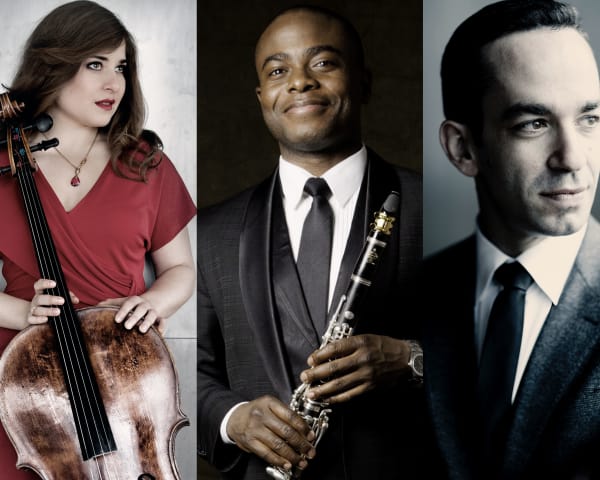
    Tuesday January 24th, 2017 – Cellist Alisa Weilerstein, clarinetist Anthony McGill, and pianist Inon Barnatan sharing the Alice Tully Hall stage in a program of piano trios presented by Chamber Music Society of Lincoln Center. Beloved works by Beethoven and Brahms book-ended the New York premiere of Short Stories for Clarinet, Cello, and Piano by Joseph Hallman. The presence of three such superb artists on the program signaled this as a red-letter event in the current season; I’d been looking forward to this evening for months, and it truly surpassed expectations.

    The three artists took the stage, Ms. Weilerstein in a beautiful deep violet gown, and launched the Beethoven Trio for Clarinet, Cello, and Piano, opus 11; it quickly became evident that we were in for a night of exceptional music-making. In this particular work, exuberance and delicacy alternate in perfect measure, and the three players relished both the propulsive passages and – most enticingly – those moments when nuance is all.

    One of Beethoven’s early masterpieces, this clarinet trio shows the influence of Haydn and Mozart; but once can clearly sense that Beethoven is already finding his own voice. The writing for the three instruments is often conversational, and how lovingly our three musicians this evening spoke to one another.

    The opening Allegro con brio is alive with rhythmic delights, including a touch of syncopated witticism. Mr. Barnatan’s scintillating agility was a constant attraction, and it was a great pleasure to watch the  communication between the three players.

    Ms. Weilerstein opened the Adagio with a cello theme; her heartfelt playing took this simple, straight-forward melody to the heights. She and Mr. McGill duetted tenderly, both playing with great subtlety. The music becomes achingly gorgeous.

    Good humor abounds in the Theme and variations setting of the finale: drawing on an aria wildly popular at the time, “Pria ch’io l’impegno” (“Before I begin, I must eat”) from Joseph Weigl’s opera L’AMOR MARINARO, Beethoven sets up bravura hurdles for the three musicians, all of them joyously over-leapt by our intrepid trio. Mr. Barnatan revels in the cascading piano passages, peaking in a perfect cadenza which ends with king-sized trills. Meanwhile Ms. Weilerstein and Mr. McGill seem to finish each other’s sentences, indulging in an amiable game of “Anything you can play, I can play finer!” Again, the sense of camaraderie, and of the players’ anticipation of the sheer pleasure of playing the next phrase, kept the audience visually engaged.

    Short Stories, the new Hallman work, is a five-movement trio; it might also be called Scenes from a Relationship. One doesn’t, however, need any narrative reference to enjoy this purely as a musical experience, for Mr. Hallman is an excellent craftsman, and a colorist as well. The composer was sitting just a seat away from us; I can only imagine how delighted he must have been to hear his music being played by three such paragons…a veritable dream come true.

    The opening movement, the Break-up, gets off to a stuttering start. The cello shivers before going deep and mournful, whilst the clarinet comments on her predicament. Then they switch roles, like a therapist taking over the couch from his patient. They play in unison, and things turn temporarily witty. But the music ends in the depths.

    familial memories at a funeral opens with Mr. McGill’s clarinet in a whispering, misterioso mood. After briefly perking up, a pensive quality develops with a repeated two-note motif for the piano. The clarinetist’s astounding breath-control and his sustained beauty of tone throughout the dynamic range keep the audience mesmerized.

    back-and-white noir: hardboiled with a heart of gold is the whimsical title of the third story. It begins agitato, developing an off-kilter rhythm. Mr. Barnatan sweeps up to the high register, while the clarinet and cello play a droopy duo. Ms. Weilerstein then descends to her velvety deep range. The music ebbs and flows, both rhythmically and tonally, as the composer explores the coloristic possibilities of the three instruments.

    regret is for the weak is a title that hits home. Mr. Hallman here sets up an eerie, hesitant start. The clarinet percolates briefly, then settles into a very quiet mood whilst the cellist plucks; later, the cello trembles while the piano sounds softly. We seem to be in a moody memory, with Mr. Barnatan drawing forth fleeting surges of melody. Ms. Weilerstein and Mr. McGill sing sadly before the pianist dips down to a punctuating low note.

    In the path of the curve, Mr. Barnatan sometimes reaches inside the piano to manipulate the sound. The music here is very quiet, until the clarinet starts warbling. Fluttering and swirling motifs sneak in, then the music seems to run down and the cello again deepens. The piece ends in a sustained quietude.  

    The only slight reservation I had about Short Stories was that the final movement is perhaps a bit too drawn out; my companion felt the same way. It was unfortunate that, during the work’s quiet closing moments, a cellphone went off directly behind us. At the same time, someone in the from row had a violent coughing fit. Such unfortunate timing. Yet despite these distractions, the Short Stories each cast their own spell, and they were spectacularly played.

    Following the interval, the Brahms trio (opus 114) found the three artists on the heavenly heights of tonal and technical perfection, their playing so generous and emotive. From Ms. Weilerstein’s sublime playing of the yearning opening theme, thru the plaintive entry of Mr. McGill’s clarinet and the ever-expressive beauty Mr. Barnatan drew from keyboard, the music took on an impassioned glow. In my scrawled notes, the word “gorgeous’ appears over a dozen times.

    Mr. McGill’s spellbinding playing of the sweetly serene theme that opens the Adagio was a magical passage, taken up by the soulful spirituality of Ms. Weilerstein’s cello. The luminous qualities of clarinet and cello are set in high relief by the profound tranquillity evoked by Mr. Barnatan. A long-lined clarinet solo leaves one grasping for adjectives to describe the McGill sound, and his ardent tapering of line. One wanted this meditation by the three players to linger on and on.

    A questioning clarinet passage and more marvelous phrasing from Mr. Barnatan set up the waltz-like grace of the Andantino.  After a brief diversion, we dance on towards the movement’s end; unexpectedly, Brahms tucks in a calming coda to make a lovely finish.

    Restraint is cast aside as the trio dig into the concluding Allegro. A tinge of gypsy colour weaves thru this music. Ms. Weilerstein takes up a melody which she passes to Mr. McGill; then they harmonize. Things speed up. “More cello passion!” was my last dashed-off remark; the Brahms sailed on to its joyous conclusion, and the three stellar artists were greeted with immediate shouts of approval. They took a double curtain call, delighting the crowd.

    A thought that recurred to me frequently during the evening was: if Mozart had met McGill, Amadeus would have written DIE ZAUBERKLARINETTE.

    • Beethoven Trio in B-flat major for Clarinet, Cello, and Piano, Op. 11 (1797)
    • Hallman Short Stories for Clarinet, Cello, and Piano (CMS Co-Commission) (New York premiere) (2016)
    • Brahms Trio in A minor for Clarinet, Cello, and Piano, Op. 114 (1891)

  • Sumptuous Strings @ Chamber Music Society

    Photo

    Above: violist Yura Lee

    Sunday May 22nd, 2016 – Bringing together a sextet of first-class string players, Chamber Music Society of Lincoln Center presented the final program of their Alice Tully Hall season (a program which will be repeated on Tuesday, May 24th); music by Richard Strauss, Brahms, and Dvořák was on offer.

    In Richard Strauss’s intimate opera CAPRICCIO, a rehearsal of Flamand’s newly-composed string sextet is in progress as the curtain rises on the salon of the Countess Madeleine’s château. As the opera evolves, the Countess will be called upon by her rival suitors – the composer Flamand and the poet Olivier – to answer the eternal question, “Which is the greater art, poetry or music?”, and thus to determine which of the two gentleman she favors. The opera, which includes the beloved Moonlight Music and ends with the Countess’s ravishing final aria, has been a vehicle for such beloved sopranos as Lisa Della Casa, Dame Kiri Te Kanawa, and Renee Fleming.

    It was a real treat to hear the string sextet this evening in a concert setting, and especially as it was given such a radiant performance by today’s ensemble…an ensemble of stars. Erin Keefe, wearing a striking pleated gown of gunmetal grey which set off her auburn hair, displayed (all evening, really) her ability to spin out magical phrases over a vast dynamic spectrum: she can taper her tone down to a shimmering piano/pianissimo only to soar in full-bodied melody moments later. Across from Ms. Keefe, Yura Lee, in a deep persimmon shawl and be-jeweled stilettos, summoned heartfelt sounds from her viola. A delicious “trembling” motif heralded Nicholas Canellakis’ solo, with his lustrous depth of tone.

    As Wu Han remarked in a program note, one of the things players love most about performing string sextets is: you have a mate playing the same instrument sitting next to you. And when – as in today’s Strauss – these are musicians of the calibre of Ani Kavafian (violin), Matthew Lipman (viola), and David Finckel (cello), the level of music-making is off the charts. Such gorgeous and immaculate blendings of sound, and such congenial lyricism.

    From the Strauss, so deeply engaging both musically and emotionally, the players turned to Johannes Brahms’ String Quintet No. 1. This piece was a particular favorite of the composer himself, or at least that is the impression he gave in writing this to his publisher: “You have never before had such a beautiful work from me.”

    Ms. Kavafian took the lead here, playing with her signature grace and expressiveness; she and Ms. Keefe formed a de luxe violin duo, their voices mingling with engaging clarity and savoring their many pinpoint dynamic nuances. In the melodically abounding first movement of this work, Yura Lee’s viola sings – three times – a melody that brings to mind some of the composer’s most beloved lieder. At one point, Yura and Ani ‘converse’ with one another. Nick Canellakis’s cello gives the music its resonant grounding, whilst Mr. Lipman’s evident enjoyment of the music he is playing makes him a musician as pleasing to watch as to hear. 

    In the quintet’s second movement, the instrumental voices created a lovely chorale-like atmosphere; a more animated interlude soon gives way to a return to wistfulness, and then fades mysteriously away. For the concluding Allegro energico, the five players could cavort amiably thru the rhythmic shifts with zestful playing and much mutual eye-contact as the piece sailed on to its merry conclusion.

    Following the interval, Antonin  Dvořák’s Sextet in A-major, with its goodly portion of folkish elements, found all six players on optimum form. Right from the start, with Erin Keefe’s shining tone in the opening theme, one could sense we were in for a special treat. Nick Canellakis took up the melodic thread as the Allegro moderato proceeded thru some very imaginative harmonies.

    [A cellphone went off, but at least it was between movements…and it was a ‘classical-music’ ringtone.]

    In the second movement, Dumka: Elegie; Poco allegretto, a dance which is at once both droll and dolorous is heard. The music has a sad gypsy lilt. David Finckel’s cello sets up a treading motif, over which a lament from his fellow players suggests a walk to the graveyard. In a swift change of mood, the Furiant: Presto is lively as fleeting snatches of melody pass from voice to voice. A swaying feeling pervades the music.

    The resonantly poetic sound of Matthew Lipman’s viola sets forth the theme of the final movement; variations follow where we could again savour the silver-lit sheen of Ms. Keefe’s playing and delight once more in her ability to colour phrases with her dynamic gradations.

    A sprightly dance gives way to a thoughtful cello theme from Mr. Canellakis; things intensify before subtle turns of phrase draw us to a lingering fade-out. Ms. Keefe weaves a new variation on the melody as Mr. Finckel and the violas offer plucking support. And then a high-energy dance bursts forth, only to accelerate to double-time before an urgent rising motif sends us on to a grand finish.

    The players were called out twice by the delighted audience; both the players and their admirers seemed reluctant for the concert – and the season – to end.

    Now we will have a hiatus from CMS concerts, though the musicians we’ve come to love will stay busy playing here, there, and everywhere worldwide. For the second year, the Society will offer a Summer festival at Alice Tully Hall – details here – which will help to sustain us til the Autumn.

    The Repertory:

    The Participating Artists:

  • The Romantic Viola @ Chamber Music Society

    042416_TRV

    Sunday April 14th, 2016 – No fewer than eight violas were in play on the Adrienne Arsht Stage at Alice Tully Hall this evening as Chamber Music Society of Lincoln Center offered an exceptional program, curated and head-lined by Paul Neubauer (above), in which the viola was heard in music by seven different composers (plus one anonymous composition). The program ranged from mid-19th century works to a world premiere by Joan Tower, who was present and took a bow…and got a kiss from Mr. Neubauer.

    A Robert Schumann rarity and a fantasy-suite by August Klughardt were the first two works on the program; written about twenty years apart, the two pieces each call for violist, pianist, and a woodwind collaborator. It was our good fortune this evening to have clarinetist Romie de Guise-Langlois and oboist James Austin Smith joining Mr. Neubauer and pianist Alessio Bax. Both Mlle. de Guise-Langlois and the dapper Mr. Smith are elegant players, and both are blessed with astonishing breath control.

    Romie-de-guise-langlois-155x232

    Above: Romie de Guise-Langlois

    The Schumann opens like a breath of Springtime. Clarinet and viola pass melodies back and forth, eventually honed down to a dialogue where they finish one another’s sentences. Underscored by Mr. Bax’s immaculate playing, Mlle. de-Guise-Langlois’ and Mr. Neubauer’s blend of timbres was most appealing. The second movement veers from march-like to moments of ironic deftness to a free flow of song, which the pianist takes up. Poignant and pensive, the third movement has a touch of mystery; here Mlle. de Guise-Langlois was able to sustain long lines with total control, tapering the tone into a sweet blend with the Neubauer viola. The animated fourth movement – which pauses midway thru for a gently-paced passage – was as pleasant to watch as to hear, as the eye-to-eye contact of Romie and Paul was keenly focused; Mr. Bax’s piano provided added joy.

    James-sq

    Above: James Austin Smith

    The slender frame and expressive face of James Austin Smith might have graced the salons at Kellynch Hall or Pendersleigh Park: a youthful, romantic figure. His playing also has an Olde World geniality: dulcet of tone and (as with Mlle. de Guise-Langlois) blessed with an uncanny ability to spin out long lines. In August Klughardt’s Schilflieder, Mr. Smith established at once an ideal rapport with Paul Neubauer.

    The first of the five “fantasies” opens with solo piano, soon joined by the plaintive oboe and the soulful viola; the second brings the restless viola into harmonizing with the oboe. Mr. Bax’s dreamy playing leads off the third movement, with the viola and then the oboe singing sadly and tenderly; the pianist’s sense of delicacy was a lovely asset here. The fourth movement begins dramatically, with viola and oboe sounding forth over a rippling piano motif.

    Mr. Smith’s formidable breath control was much admired in the closing movement; the atmosphere is poetic and sustained, the viola wistful. A nicely-turned cadenza for oboe led to the end of the work with a very sustained joint oboe/viola note. 

    Both the Schumann and Klughardt were brand new to me, and both made me wonder why we don’t hear them played more often. Of course, the Gordon Jacob piece for eight violas will always be a rarity, simply because the logistics of getting eight first-rate violists together to rehearse and perform it would take some doing. Mr. Neubauer was able to call upon his viola-playing colleagues to assemble a classy octet – including Cynthia Phelps, the NY Phil’s principal violist. Ida Kavafian and Daniel Phillips, more usually seen with their violins, took up violas to join in the fun tonight. Along with Mr. Neubauer, Hsin-Yun Huang, Richard O’Neill, Lawrence Dutton, and Pierre Lapointe formed a very impressive ensemble.

    This Suite for Eight Violas, composed in 1976, created quite a buzz. It opens with a unison “Russian” theme, the eight voices blended in song. The second movement, Scherzo and Drone, is a sprightly romp: a folk-dance with a sly finish. Sweet sadness prevails in the Chorale: Lento. Richard O’Neill then kicked off the closing Tarantella with swirling rushes of notes alternating with gentler interludes. A broad melody sweeps us thru to the end. The audience, clearly relishing the combined talents of these eight artists, sent up an enthusiastic ovation. 

    Following the interval, Paul Neubauer appeared alone onstage. 

    I love Joan Tower’s music, and I really enjoyed hearing tonight the two solo works she wrote expressly for Mr. Neubauer, the second of which was having its world premiere. Simply Purple is deceptively simple; a slowly rising scale, with a deep sense of mystery pervading, must be delivered with consummate control and subtle dynamic variants. The premiere, Purple Rush, is a scurrying downward swirl; it goes low and dusky, with cascades of notes and shimmering, slippery slides. Mr. Neubauer’s mastery held the audience throughout; and it was so nice to see Ms. Tower there, sharing the applause with the violist.

    Jennifer_Johnson_Cano

    Stepping across the Plaza from The Met, where she has been appearing as Emilia in Verdi’s OTELLO, mezzo-soprano Jennifer Johnson Cano (above, in a Fay Fox photo) sang the two Brahms viola songs, the only music on the program that I was familiar with. A comely young woman with a voice to match, Ms. Cano’s warm, even tone and her natural feeling for the words – and for finding beautiful hues to express them – provided a most appealing rendering of these two familiar and beloved melodies. She formed an immediate rapport with Mr. Neubauer as they faced one another across their music stands; their blend of timbres was a pleasure to hear, and Mr. Bax, at the Steinway, continued to take a major role in the proceedings with his lustrous playing. May we have Ms. Cano back please – and soon! – perhaps for the Wesendonck Lieder?

    Photo_abax

    Above: Alessio Bax, a superb pianist who played in six of the works on offer this evening

    A flash of Spanish light and colour is welcome on any concert program; tonight, Joaquín Turina’s Escena andaluza proved yet another notable discovery. An opening cascade from the piano becomes a caress. Ms. Kavafian and Mr. Phillips are back with their violins now, and together with Richard O’Neill (viola),  Paul Watkins (cello), and Mr. Bax at the piano they catch the music’s sensuous moodiness and underline Mr. Neubauer’s tonal affluence ideally. Outstanding playing from Romie de Guise-Langlois put the final flourish on this miniature Andalusian tone poem.

    A lilting and passionate violin solo (Ms. Kavafian) is answered by Mr. Watkins’ velvety cello; Mr. Bax’s keyboard shifts between the insinuating and the rhapsodic, and there’s a flurry of string instruments being plucked.

    Ms. Kavafian opens the second section of the Turina playing in the high range. The music glides from sly seduction to rising desire and on to a shimmering glow before the pianist – abetted by the clarinet – urges us to surrender to our passions.

    The same ensemble from the Turina remained onstage for Hermann Schulenberg’s Puszta-Märchen; they were already seated and raring to go. But where was Paul Neubauer? The ensemble struck up – a gypsy romance – and Mr. Neubauer stepped from the wings, already playing, and strolled down the steps and into the audience. He stopped next to me and my friend Claudia Schreier and – fixing me with an intense gaze – played a dusky, wine-drenched melody with great passion; I could actually feel the resonance of the music rising from the viola. He then locked eyes with Claudia and continued to play, totally by instinct. Momentarily he walked away, but then came back to us to continue his serenade. After a few moments he turned his attention to the usherette and played to her on intimate terms.

    Onstage, his colleagues were continuing to play while keeping one eye on the wandering minstrel. Suddenly they switched to a brilliant czardas; Mr. Neubauer returned to center-stage, playing on with virtuoso élan, and evoking swirling roulades from Romie’s clarinet. The music halted as all the players stomped their feet, and the audience burst into applause.

    Mr. Neubauer’s arrangement of Rumanian Canary, with its bird-song ‘cadenza’, was the concluding delight of the program. This led to a joyous standing ovation, and the players being called out twice.

    Being serenaded by Paul Neubauer is something I’ll always remember: an unexpected and charming episode in my life – a life that remains full of surprises. 

    The Repertory:

    The Participating Artists:

  • American Visions @ CMS

    Randall-Scarlata

    Above: baritone Randall Scarlata

    Tuesday May 19th, 2016 –  Chamber Music Society of Lincoln Center offering a diverse program of ‘Americana’. On entering the auditorium at Alice Tully Hall tonight, we found the stage filled with a vast array of percussion instruments; these were set up in four “territories”, each to be managed by a specific musician in the program’s second half: a spectacular performance of a fascinating work by George Crumb. 

    In the midst of all the chimes, gongs, and other percussive paraphernalia, the sleek Steinway was parked. Pianist Michael Brown took the driver’s seat and set the evening on its way with Louis Moreau Gottschalk’s The Union, Concert Paraphrase on National Airs for Piano. Composed in 1862 by the wildly popular Gottschalk, this 9-minute fantasia weaves together arrangements of Hail Columbia, Yankee Doodle Dandy, and The Star-Spangled Banner. The work’s virtuoso demands were a stroll in the park for Mr. Brown, who simply rippled off the composer’s flourishing flights and furbelows with sprightly brilliance. This patriotic little gem sparkled on New York’s Primary Day.

    Mr. Brown returned immediately to perform Antonin Dvorak’s Sonatina in G-major with violinist Chad Hoopes. Written (swiftly) in New York City in 1893, this attractive piece was the composer’s opus 100, and he chose to mark that milestone by writing a work for his two children: Otilie (a 15-year-old pianist) and young Antonin (aged 10, and already a capable violinist); the sonatina was first performed at Dvorak’s home on East 17th Street, right here in Gotham.

    Mssrs. Hoopes and Brown found this Dvorak work most congenial; their performance was finely coordinated and together they gave us a savorable rendering of the folkish elements which are so typically Dvorakian. In the work’s four movements, both lyricism and dexterity are called for, and the two musicians polished off the music with style and flair.

    A group of songs by Charles Ives were then performed by baritoneRandall Scarlata and Gilbert Kalish. These two expert artists have worked together frequently and their rapport is a delight to witness. Randy Scarlata’s wide-ranging voice, his fluency of language, and his natural gift for making it seem like he is singing just to you have always given his performances a special appeal – starting back in his Juilliard days, when I first met him and we began a friendship that has been sustained over the years.

    The six Ives songs Randy programmed tonight showed the many felicities of his vocal and interpretive style, and Mr. Kalish was the ideal collaborator. The soft ending of “The Things Our Father’s Loved” was haunting; the ironic sense of triumph of “In Flanders Field” showed vocal expressiveness at its finest. A music hall feeling is evoked in the narrative “Charlie Rutlage” which covers many moods and at one point erupts in a huge tumult; “The Indians” veers from the dramatic to the pensive. A particularly masterful rendering of “The Housatonic at Stockbridge” opened with Mr. Kalish’s atmospheric piano introduction; the music is then taken up by Randy with finely-inflected phrasing and spine-tingling dynamic control. “The Circus Band”, a jolly tongue-in-cheek affair, calls for a baritone who is also an actor, and it ended the evening’s first half vividly.

    So lovely and pleasant to simply sit in the hall during the interval, watching the percussionists as they made sure everything was in place for the work about to be performed: George Crumb’s American Songbook II: A Journey Beyond Time.

    I can hardly begin to describe the effect of this ingenious and truly splendid work. The composer, with his ever-rich musical imagination, has taken some of the best-beloved spirituals and spun them into a sound tapestry that is nothing less than magical. The work calls for four top-flight percussionists, a pianist of consummate skill who is willing to extend his range beyond the keyboard, and a great communicator as vocal soloist. CMS brought together just such a remarkable ensemble tonight, and the result was both aurally dazzling and rich in spiritual reward.

    Each of the four percussion players – Christopher Froh, Ayano Kataoka, Eduardo Leandro, and Ian David Rosenbaum – had his or her own island kingdom of instruments to preside over. An open-topped piano awaited Gil Kalish, with a pair of small mallets and an odd conch-like horn set out for him: things most pianists have no use for. At the center of it all, Randy Scarlata, ready to pour his heart and soul into the eight timeslessly powerful songs that Mr. Crumb had arranged for this epic work.

    Otherworldly sounds transport us immediately; as the work progresses, the textures developed by the percussion orchestra will chill, delight, and fascinate us. The baritone voice emerges from this soundscape in the haunting melody of “Swing Low, Sweet Chariot” – Randy Scarlata at his expressive best. Mr. Kalish must reach into the piano to pluck the strings, and meanwhile the percussionists are setting up echo effects and rich reverberations. The chimes of midnight sound, uncanny deep resonances glow and fade, ghostly shimmers hang in the air. Randy’s control of finely-honed piano demi-tints gave me goosebumps as the ‘sweet chariot’ vanished into the mists.

    Bizarre rhythms and noisy cacophony signal ‘the walls come tumbling down’ in “Joshua Fit de Battle ob Jerico”; Mr. Kalish’s horn bleats desperately, Randy Scarlata’s voice rages and exhorts. Things fade away before a big bang of an ending. Tremendous!

    Soft chimes lend an air of mystery to Randy’s poignant singing of “Steal Away”. This is followed by the impulsive rhythms of “Rock My Soul” in which Randy sings, speaks, and whispers in turn. An instrumental interlude (“The pregnant earth : a Psalm for Noontide”) brings forth delicate effects. Here Mr. Kalish alternately plays and plucks the strings of the Steinway while the four percussionists seem to vie in a contest to see who can play most quietly. Kozmic softness!

    Marimba and rattles set the rhythmics of “Sit down, Sister!”, in which the pianist also has a say. Randy sings “I just got to heaven and I want to look around!”; the song then teases forward until he shouts “Sit down!” This is punctuated by a sonic boom.

    Soggy chimes make us think of weeping; “Nobody Knows the Trouble I See” laments, with Randy’s voice low and mournful. The stage lights inexplicably dimmed to darkness by mistake midway thru this song; the music halted but light was soon restored and the musicians picked up where they’d left off. Eerie echoes are heard.

    A deep growl…a thudding drum…a welter of gongs and chimes: “Let My people Go!” This is “Go Down, Moses”, robustly declaimed by Randy Scarlata, and it is big singing indeed. The music is ominous but fades to a long, reverberant end.

    Gongs and chimes, chirps, and the sound of tinkling broken glass create a halo of mystery around Randy’s plaintive singing of “Sometimes I feel like a Motherless Child”. After a last percussive power burst, Mr. Kalish brings forth some extremely delicate playing, and some eerie tapping. The singer turns to parlando with “Motherless children have a hard time…a long way from home”: eventually Randy hums wordlessly as the music fades sway into thin air.

    The audience seemed spellbound by the Crumb work; it is not easy music, but instead unsettling, thought-provoking, and richly rewarding in its own way. I was so grateful for this opportunity to experience it, and in such a thoroughly impressive and moving performance.

    The Repertory: 

    The Participating Artists:

  • Freiburg Baroque @ Alice Tully Hall

    Mozart

    Thursday February 25th, 2016 – This all-Mozart concert, performed by Freiburg Baroque at Alice Tully Hall tonight, was part of our Great Performers at Lincoln Center subscription series. Arias from the da Ponte/Mozart operas, the clarinet concerto, and the “Linz” symphony were scheduled. We were of course expecting the usual program order: the arias first, then the clarinet concerto, an intermission, and the symphony coming last. 

    Instead, in an attempt to re-create a type of concert popular in Mozart’s time, the movements of the symphony were played on the first half of the program, interspersed with arias. This may have seemed intriguing on paper, but in the event it lessened the effect of the symphony – which now seemed more like incidental music (great incidental music!) – while the arias seemed rather randomly chosen, two of them in fact being simply passages from ensembles.

    Given all this, and despite some very fine playing, the first half of the evening seemed a bit of a jumble. Gottfried von der Goltz, the ensemble’s principal violinist and director, had an ideally light touch, and he set propulsive tempi for the symphonic movements. He and the singer, Christian Gerhaher, formed a very simpatico bond: Mr. Gerhaher’s very confident stage-presence, wide-ranging voice, and winningly characterful interpretations were finely supported by conductor and ensemble. 

    Prior to playing the concerto, soloist Lorenzo Coppola introduced us to the clarinet d’amour – an unusual instrument that is longer than a standard clarinet and with a flared bell at the end. Once the concerto was underway, Mr. Coppola played with sure technique, exploring the instrument’s wide range with plenty of body language and almost comic accentuation of the lowest notes. His performance took on a more serious tone for the haunting Adagio, one of Mozart’s most sublime creations. For all Mr. Coppola’s skill and artistry, there were times when the instrument itself seemed in control.

    Mr. Gerharer then re-appeared for three of Mozart’s greatest arias for male voice: Leporello’s Catalogo, and one showpiece each from the opposing protagonists of NOZZE DI FIGARO: the valet’s “Non piu andrai” and Count Almaviva’s blazing “Hai gia vinto la causa!” In these three solos, Mr. Gerharer further displayed his impressive grasp of vocal characterization: in the Almaviva aria especially, he seemed to bring the drama most vividly to life.

    Between the two NOZZE arias, the orchestra chimed in with a brief Contredanse (K. 610) subtitled “Les filles malicieuses“, a brief charmer of a piece. Who were these “malicious girls” and what did Mozart want with them?  We’ll never know, any more than we’ll know whose cellphone went off at just the wrong moment tonight.

    The Participating Artists:

    Freiburg Baroque/Gottfried von der Goltz, violin and director

    Christian Gerhaher, baritone

    Lorenzo Coppola, clarinet d’amour

    The Repertory:

    Arias from Mozart’s Don Giovanni, Così fan tutte, and Le Nozze di Figaro

    Mozart: Clarinet Concerto

    Mozart: Symphony # 36 (“Linz”)