Tag: Alice Tully Hall

  • Chamber Music Society: Nights in Vienna

    043015-GK

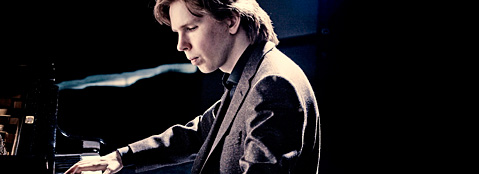
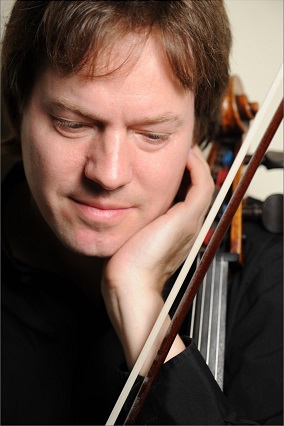
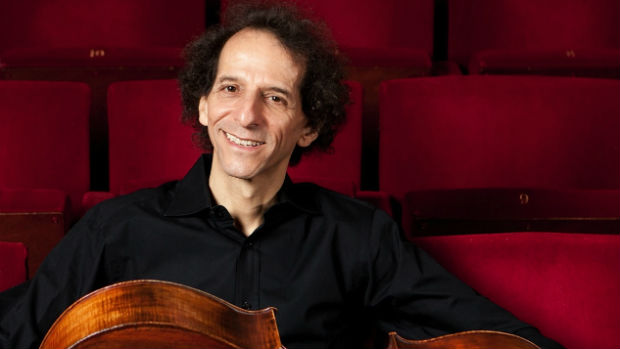
    Sunday November 22nd, 2015 – Pianist Gilbert Kalish (above) and a septet of his top-notch colleagues met on the stage of Alice Tully Hall this evening for a programme of works by three composers whose lives were linked to the city of Vienna. On a day when we are still trying to comprehend the recent terror attacks in Paris – and also remembering the death of John F Kennedy on this date 52 years ago – Chamber Music Society of Lincoln Center‘s offered music that was by turns heartening and thought-provoking, and all of it impeccably played.

    When New York’s great musical organizations – Chamber Music Society, the NY Phil, Carnegie Hall, The Met, Young Concert Artists – announce their upcoming seasons each year, I love to pore over the listings, searching for certain works or artists and putting the dates immediately on my calendar. Thus for many weeks I’ve been looking forward to today’s Chamber Music Society concert as an opportunity to experience first-hand Arnold Schoenberg’s Kammersymphonie; I discovered this piece years ago – it was actually my introduction to Schoenberg – and have always wanted to hear it played live. Today’s performance of the Webern arrangement was incredibly vivid.

    But, to start at the beginning, this musical celebration of Vienna opened with music of Haydn: the E-minor piano trio. Gilbert Kalish, who played in all three works this evening, is at that marvelous point in his career where his playing retains youthful vitality while his artistry – developed over a long career – is at its peak. His playing was marked by effortless technique, an assured rightness of style in each of the three contrasting works, and an Olde World feeling of grace without theatricality.

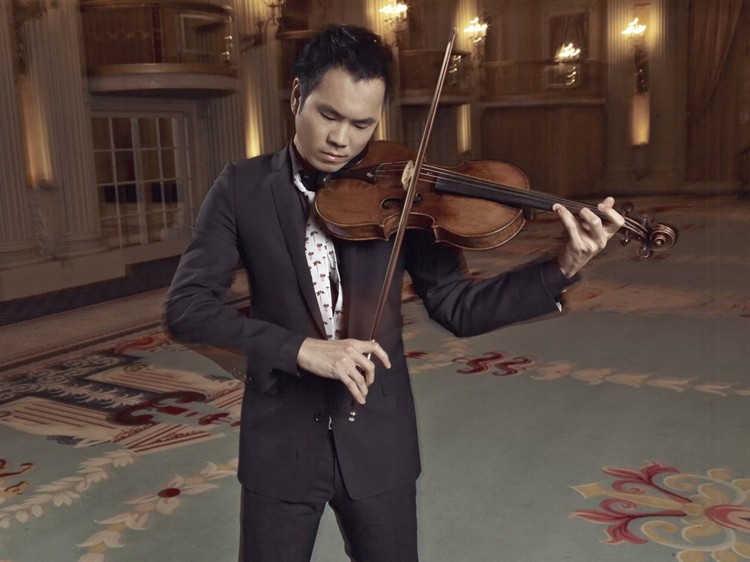
    Seeming taller and slimmer than the last time I saw him, violinist Nicolas Dautricourt strode onstage and for a moment I mistook him for ABT’s Marcelo Gomes. Mr. Dautricourt is a particular favorite of mine, both to watch and to hear; his stage presence is paradoxically relaxed and intense, and his playing is beautifully nuanced with especial attention to dynamic gradations. Cellist Torleif Thedéen was an ideal colleague for M. Dautricourt today: their rapport was inspiring to watch, aligning the harmonies and relishing the melodic opportunities Haydn has given them. Their affection and respect for Mr. Kalish was clearly evident both here and – later – in the concluding Brahms.

    Schoenberg’s Chamber Symphony spans a single movement, though the composer has identified five distinct sub-divisions: Sonata (Allegro), Scherzo, Development, Adagio, and Recapitulation and Finale. Originally written for ten wind and five string players, the composer asked his student Anton Webern to re-cast the piece for a smaller ensemble, the better to take it out on tour. The result: twenty-two minutes of sheer musical brilliance.

    The Kammersymphonie tonight was given a captivating performance: the quintet of musicians played with such richness of tone, such stimulating sense of colour, and such depth of feeling that one had the impression of a much larger ensemble playing. Gilbert Kalish’s sent waves of plush sound from the Steinway, giving the music an undercurrent of Late-Romantic lyricism; this same feeling was embraced by violinist Kristin Lee who seized upon the composer’s every melodic gesture with her pearly tone. Whenever the music turned more prickly, both Kalish and Lee were up for the adventure.

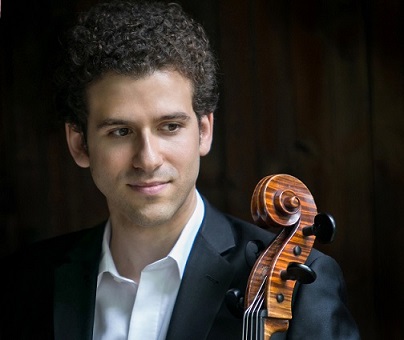
    Tara Helen O’Connor, one of the Society’s elite, sent her flute roulades wafting brightly overall whilst the gorgeous (no other word suffices) tone of Nicholas Canellakis’s cello seems always to achieve a direct hot-wire to the heart-strings.
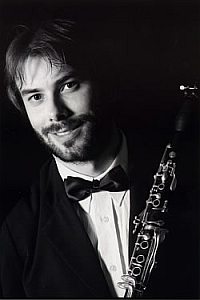
    TommasoLonquich_bio2

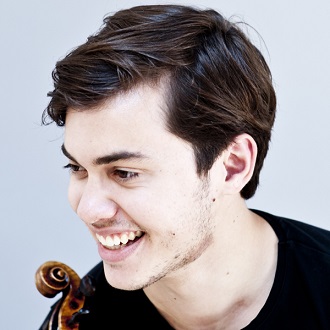
    New to me this evening was clarinetist Tomasso Lonquich (above) who made a spectacular impression both with his sumptuous tone and the passion of his playing. Whether at full cry or honing the sound down to a thread, Mr. Lonquich displayed his mastery at every moment; meanwhile his deep commitment to the music sometimes nearly drew him out of his chair as he polished off Schoenberg’s demanding phrases with compelling sincerity. 

    This staggeringly opulent ensemble drew a din of applause from the Alice Tully audience; as they took a second bow, my companion Adi – who had professed indifference to Schoenberg’s music before the concert began – found his opinion of the composer transformed. That’s what a great performance can accomplish.

    As so often at Chamber Music Society’s concert, I found myself at the interval wondering how this level of music-making could possibly be sustained into the second half. Needless to say, as violist Paul Neubauer joined Mssrs. Kalish, Dautricourt and Thedéen for the Brahms Third Piano Quartet, any thoughts of a letdown were immediately dismissed.

    Nearly twenty years were to pass between the time Brahms began working on this quartet (in 1855, at the time of his friend Robert Schumann’s last illness, when Brahms was torn between sorrow for his friend and desperate love for his friend’s wife, Clara) and its publication. His romantic inclinations toward Frau Schumann seem to perfume the music, especially in the third movement.

    Tonight, Mr. Kalish’s opening octave set the tone for a performance of beautifully blended voices and outstanding solo passages (Mr. Neubauer’s expressiveness so congenial) which achieved a level of  surpassing excellence in the Andante. Here Mr. Thedéen’s opening solo was poignantly set forth, with Mssrs. Dautricourt and Neubauer joining in turn: ravishing…a deep delight. The Andante ends magically, and then Nicolas Dautricourt launched the finale with a finely-turned solo. The audience’s enthusiasm at the end called the players back twice.

    There was an odd sensation at times tonight that someone was humming along with the music. At first I thought it might have been some acoustical oddity, but Adi noticed it as well.

    Prior to the start of the concert, co-artistic Director Wu Han announced the death of the venerable violinist on teacher Joseph Silverstein. This first movement from the Barber violin concerto shows Silverstein’s poetic qualities and persuasive tone to perfection.

    The Repertory:

    The Participating Artists:


  • Golden Age of the Violin @ CMS

    Violin

    Following the senseless horror of the terrorist attacks in Paris this past Friday, we turn yet again to music as a source of consolation. These words from Leonard Bernstein have echoed thru my mind over this weekend since the appalling news from France reached us: “This will be our reply to violence: to make music more intensely, more beautifully, more devotedly than ever before.”

    Sunday November 15, 2015 – A trio of superb young violinists were featured at this evening’s concert given by at Chamber Music Society of Lincoln Center at Alice Tully Hall. Paul Neubauer and David Finckel – masters of the viola and cello respectively – joined their young colleagues in celebrating the expressive violin style epitomized by the legendary Fritz Kreisler.

    Kreisler was in fact the first violinist I ever heard; my parents had some of his recordings and by the age or eight or nine I was already preferring these – and Horowitz, Flagstad, and Toscanini – to my mom’s favorites: Lawrence Welk and the McGuire Sisters.

    The first music we heard this evening was also oldest music on the programme: a sonata for two violins by Jean-Marie Leclair. Leclair may be the only violinist/composer in history to have had a highly successful career as a ballet dancer prior to turning to composing full-time around 1723. Today’s sonata dates from 1730 and was played with lively charm by Danbi Um and Sean Lee. Passing the melodies back and forth, the duo were well-matched, nuance for nuance. The tender sadness of the sonata’s Andante graziosa maintained a forward momentum, and then our two violinists sailed confidently thru the swirls of notes than make up the concluding Presto.

    Mr. Lee returned to the stage immediately with Benjamin Beilman and Paul Neubauer for Anton Dvorak’s C-major terzetto, composed in 1887. It opens with a tranquil theme, becomes more animated, then gently shifts between moods. After a passage of hesitations, as if unsure where to go next, the composer gives us a warm lullabye-like melody with a genial ending. A feeling of propulsive dance – and a touch of Mendelssohnian sparkle – fills the Scherzo; a central song with the flavour of a country waltz is most attractive, followed by a da capo which sweeps forward in alternating currents of lyrical breadth and teasing delicacy. In the final movement, Mr. Neubauer’s viola had a shivering motif, followed by an impassioned theme from Mr. Beilman; then there’s a brisk rush to the finish. 

    David Finckel’s name in my Playbill is now triple-underlined and festooned with exclamations marks for his marvelous playing in the Alexander Borodin 1881 D-major quartet. The cello sets the pace for the opening Allegro moderato and is given some heartfelt melodies in the later movements; these were relished by Mr. Finckel whose tone has an intimate, romantic glow.

    A Spring-like feeling pervades the opening of the Scherzo: Allegro, and then a familiar tune is heard: my mother would have recognized it as the melody of the 1950s pop song Baubles, Bangles & Beads(from the musical KISMET) which was recorded – seemingly – by everyone, including Marlene Dietrich and Frank Sinatra. For all the tune’s appeal, it still sounds best in its original Borodin setting. The second movement then rushes ahead, only to withdraw to a pizzicato fadeout at the end.

    Borodin sets the third movement as a Nocturne and Mr. Finckel sets the mood to perfection. Danbi Um, in the first violin chair, then takes up a sweet, high theme. Mssrs. Lee and Neubauer make the middle voices sing, the latter in a lovely melodic exchange with Mr. Finckel’s cello (“Gorgeous blends!” I scrawled in my Playbill.) Ms. Um takes up a shining theme, passing it to Mr. Finckel who descends with it into the cello’s depths. This Nocturne, with all four players deeply immersed in the music, made a particularly satisfying impression. In the concluding movement, the quartet summarized the work in recurrent themes, playing with such conviction that the audience were swept along and responded with especially warm applause, summoning the musicians out for a second bow. 

    After the interval, Ben Beilman stood alone on the stage and delivered a stunning performance of Eugene Ysaÿe’s E-minor sonata (1924). The work is a virtuosic test piece for which Mr. Beilman gets top marks. This young artist displays thorough technical assurance as well as a masterful control of dynamics. He took the strenuous demands Ysaÿe places on the player in stride, and an appealing aspect of modesty in his delivery endeared him to the crowd. This is a serious musician with something to say to us. The applause that enveloped Mr. Beilman at the end of his dazzling performance was amply deserved, bringing him out for a double curtain call. 

    No one could blame Fritz Kreisler for featuring the violin in his A-minor quartet: it was, after all, his instrument. Mr. Beilman, fresh from the demands of the Ysaÿe, was at his most lyrically persuasive here, regaling us with the melodic treats Kreisler has laid out for him. Danbi Um seconded Ben’s beautiful playing with many graceful turns of phrase, while Mssrs. Neubauer and Finckel brought Olde World warmth and expressiveness to their playing.

    Though rife with melodic felicities, including a waltz tune “mit schlag” and a gorgeously-sustained Ben Beilman high fade-away at the conclusion of the Romanze, the Kreisler quartet is one of those perfectly pleasant works that falls short of being truly memorable. But I can’t imagine it being better-played than it was this evening.

    In her welcoming remarks tonight, Chamber Music Society co-artistic director Wu Han had spoken of the distress we have all been feeling after the horrible events in Paris. She said that from Friday night til Sunday morning she had been so consumed with sadness that she couldn’t play the piano, but that at last she sat down to practice and found solace at the keyboard. She promised us that the evening’s programme would be uplifting, and she was right. 

    The Repertory:

     The Participating Artists:

  • 2015-2016 Season Opens at CMS

    N C

    Above: cellist Nicholas Canellakis

    Sunday October 18th, 2015 – Chamber Music Society of Lincoln Center opening their new season at Alice Tully Hall with a sold-out concert that played to a crowd of music lovers as attentive as they were appreciative.

    As is their wont, Chamber Music Society put together an impressive ensemble of musicians this evening; it was especially gratifying to hear cellist Nicholas Canellakis again after he had bowled me over with his playing of Leon Kirchner’s Music for Cello and Orchestra with the American Symphony Orchestra this past April. Mr. Canellakis played in all three works this evening – a triple treat.

    Over the course of the evening, three pianists took turns at the Steinway. After greeting the audience  tonight in her capacity as co-artistic director of the Society, Wu Han took her place at the keyboard and dazzled us yet again with her subtle, evocative artistry. She was joined for the opening Haydn trio by Ani Kavafian – in her 44th year (!) of participating in the Society’s concerts and playing with her characteristic super-fine style – and Mr. Canellakis, whose deep-burgundy cello resonance was amply pleasing.

    The blended timbres of these three ‘voices’ and the gracious communicative rapport they established immediately drew the audience into the music, setting the tone for the whole evening. Their deeply-felt playing of the central Andante gave way to the foot-tapping dance rhythm of the final Allegro, which they set forth with joyous vigor.

    The Mendelssohn D-major sextet sounded remarkably fresh this evening in a glowing performance of such dazzling clarity that the audience could barely suppress their delight, erupting in a gale of applause the moment the final chord was released. The players basked in a lively ovation, deservedly called out for a second bow.

    And what players! The velvety bass of Joseph Conyers set the groundwork for the piece, with Mr. Canellakis and violists Paul Neubauer and Matthew Lipman summoning up some exceptionally tender harmonies in the Adagio, where Chad Hoopes interjected some sweet violin solo moments. In his first concert with CMS, pianist Michael Brown’s rippling enticements and poised lyricism in the earlier movements gave way to thrilling virtuosity in the concluding Allegro vivace.

    This final movement, taken at an exhilaratingly speedy pace, found all the players reveling in the dancing spirit of the work. A sudden change of pace and mood brought out some of Mr. Brown’s most fabulous playing, and then the work sailed on to its invigorating end. The audience’s spontaneous reaction and their embrace of the players during the ensuing applause was both joyous and heartfelt.

    A tough act to follow, indeed; yet as pianist Anne-Marie McDermott led her colleagues out for the concluding Schumann, I felt certain we were in for yet another revelatory experience. And I was right.

    Here we could more extensively savour Mr. Lipman’s viola skills: this young musician, who made an impromptu CMS debut last season when he stepped in for another artist, displayed handsome tone and a smile that seemed to signal his delight in playing such great music for such an engaged audience. Ms. Kavafian, unspooling silken melodies, was amiably seconded by Mr. Hoopes, whilst Nicholas Canellakis polished off his evening with engaging, expressive playing. Ms. McDermott’s luxuriantly dexterous playing fell ever-so-pleasingly on the ear.

    In the first movement, cellist and violist participate in rise-and-fall scale motif, Mr. Lipman seeming to finish Mr. Canellakis’s sentences.The second movement begins hesitantly; the viola becomes prominent, and Ms. Kavafian plays high and sweet. A rising scale theme is passed from voice to voice. In the concluding movement, we are dancing again; but there’s a sudden volte-face, a slowdown where Ms. McDermott’s piano rumbles in some lower range scalework before the engines are revved up again and the piece dances on to the end.

    Another warm ovation, another double curtain call; and then out into the first chill of early Autumn.

    The Repertory:

    The Participating Artists:


  • Schubert & Schnittke @ CMS

    JuhoPohjonen

    Above: Juho Pohjonen

    Friday March 20th, 2015 – Three outstanding artists joined forces this evening at Alice Tully Hall as Chamber Music Society of Lincoln Center presented yet another outstanding programme in their Intimate Expressions series.  Pianist Juho Pohjonen joined violinist Benjamin Beilman for Schubert and cellist Jan Vogler for Schnittke; then all three musicians concluded the performance with Schubert’s trio #1 in B-flat major.

    Despite a late-Winter snowfall and chilling winds, a large audience filled Tully Hall, and it was in a marvelous state of silent anticipation that the listeners opened their hearts and minds to the extraordinary music coming from the stage. This state of mutual communication, where the players can’t help but be aware of the spell they are casting over the Hall, is one of the great pleasures of Chamber Music Society‘s presentations.

    The level of artistry today was extraordinarily high. When Benjamin Beilman and Juho Pojhonen walked onstage we were struck by their youthful appearance and a trace of shyness as they acknowledged the welcoming applause. But as soon as they began to play, their surety of technique and depth of musicality drew us in to their compelling delivery of the opening Schubert. 

    Benjamin_beilman_artistpage

    Above: Benjamin Beilman

    The Schubert Fantasy in C-major (1827) is a long work in seven inter-connected movements and it places extraordinary demands on the violinist while also requiring a pianist who is far more than an accompanist, but rather a partner in expressiveness.

    The extraordinary delicacy of Mr. Pohjonen’s opening measures showed us at once that we were in the presence of a master of dynamic control; the silken seamlessness of his playing was ideally taken up by Mr. Beilman in his opening lyrical flight. As the sonata progresses, the violin’s poignant theme of longing shifts to a dynamic dancelike passage. In a set of variations, Mr. Beilman showed his skill in alternate plucking and bowing, as well as in flourishes of fast fiorature and rolling cascades of melody. A rapturous theme for violin and piano has a heart-rending quality, and soon we return to the still calm of the work’s opening statements. The gallantly graceful pace of the finale lulls into a last evocative slow passage before a dash to the finish. The audience embraced the two young paragons with warm enthusiasm for their savorable performance.

    29782

    Above: Jan Vogler

    Jan Vogler was making his CMS debut today, and a welcome event it was: he took on the the daunting combination of angularity and soulfulness that make the Schnittke sonata so remarkable, and again Mr. Pojhonen at the Steinway was an ideal accomplice.

    Commencing with a rather ominous cello theme, this sonata often has a dreamlike (even nightmarish) sense of mystery. The cellist at one point slithers up and down a snakelike scale passage with a creepiness that evokes thoughts of the eerie prelude to Klytemnestra’s murder in Strauss’s ELEKTRA. In fact, the Schnittke might be said to echo the Strauss opera in its mixture of violence and unexpected flashes of  lyricism. 

    I scrawled several brief notes, not wanting to take my eyes off our intrepid players: “march-like piano”, “rambunctious cello”, “bizarre waltz”, “restless quest”…and then suddenly Mr. Pohjonen lays into the lowest notes of the keyboard to produce a violent sonic boom. He then immediately swirls upward to the highest range, whilst Mr. Vogler takes up a desolate theme. The cello goes to the depths – and such resonant depths – interrupted by an aching/annoying 2-note motif before ending up on a very sustained tone. A brief, mysterious plucked passage before settling back into the deep while the piano creates a soft cloud of starshine in the highest range.

    Let’s have Mr. Vogler back for the second Schnittke sonata, at the earliest opportunity.

    After the interval, the three gentlemen set to a performance of Schubert’s Trio in B flat major, immediately establishing the kind of congenial rapport that makes a great piece of music even greater.

    The trio was probably written in 1827; the original autograph score is lost. It is in four movements, and I can’t imagine a more pleasing rendition than tonight’s with its fusion of the three voices constantly sending those delightful little chills up the spine. The nostalgic theme that opens the Andante expanded into a vivid emotional experience with playing that was subtle and full of nuance. The three gentlemen were in a playful mood for the witty and sparkling Scherzo – with its lovely surprise of a slower interlude – and then moved on to the sprightly dance of the final Rondo, which includes an unusual ‘fluttery’ motif.

    In this trio, the three players showed both graceful dexterity and a mutual desire to draw forth each thread of melody for our delight. Both in programming and in the choice of artists, Chamber Music Society sets the highest standard. I entered Alice Tully Hall tonight with great expectations, only to find they were not simply met, but surpassed. Incredibly, that seems to be the norm here at CMS.

    The Repertory:

    The Participating Artists: Juho Pohjonen (piano); Benjamin Beilman (violin); Jan Vogler (cello)

  • Dvořák/Schubert/Chausson @ CMS

    Ani-kavafian.jpg.pagespeed.ce.EDRXV6ZGFP

    Above: violinist Ani Kavafian, celebrating an important anniversary at CMS this season

    Sunday November 16th, 2014 – A concert both musically and emotionally rewarding at Alice Tully Hall today as Chamber Music Society of Lincoln Center presented works by three composers. In her welcoming speech, the Society’s co-Artistic Director Wu Han announced that the scheduled violist, Lawrence Power, would be unable to appear due to illness; in his stead, Matthew Lipman – slated to join CMS 2 next season – stepped in, making an immediate and very favourable impression in the concert’s opening work.

    The old letter in my book“, the first of four songs from Antonin Dvořák’s Cypresses which commenced the programme, gives the melody to the viola, and Mr. Lipman’s playing showed both winningly mellow tone and warmth of expression. In the company of seasoned chamber artists, he seemed entirely at home. The prominent violin passages in “Death reigns in many a human breast” and “You ask why my songs”  were played suavely by Ani Kavafian, celebrating her 35th season with Chamber Music Society. In “When your sweet glances on me fall“, Areta Zhulla (violin 2) and Gary Hoffman (cello) added their luxuriant voices to those of Ms. Kavafian and Mr. Lipman in a resonant meshing of timbres.

    172982_750

    Mr. Lipman (above) returned with Mlles. Zhulla and Kavafian, cellist Nicholas Canellakis, and double-bassist David Grossman for a poetic rendering of Dvořák’s Nocturne in B-major. Here Ms. Zhulla spun out a silken thread of lullabye whilst Mr. Grossman’s double-bass gently indicated the music’s heartbeat. In a rich blend of inner voices, Ms. Kavafian and Mssrs. Lipman and Canellakis sustained the atmosphere of reverie with their dreamy lyricism.

    F3f9ab_fad926d58fd0409da7bbd12fbd6428ab.jpg_srz_p_325_454_75_22_0.50_1.20_0.00_jpg_srz

    Above: Areta Zhulla

    While Schubert’s ‘Trout‘ quintet was undoubtedly a major draw for music-lovers today, it was a soul-stirring performance of Ernest Chausson’s Trio in G-minor that most truly moved me. Chausson’s music with its deep-lilac perfume always gets under my skin, and this trio is particularly affecting in its melodic allure and its build-up to rhapsodic climaxes.

    Th

    Keyboard magician Inon Barnatan (above) cast a spell over the hall right from the start, with the misterioso opening of the trio elegantly intoned. As the work progresses, Ms. Zhulla and Mr. Canellakis sustained the feeling of rapture, their impassioned playing expanding the impression of yearning and melancholy in the third movement. Together they crafted an intensely rich sound, giving the illusion of a larger ensemble. Their heartfelt playing, and Mr. Barnatan’s evocatively nuanced piano line, really drew me in.

    8917fb601b89466fecca47f46bfa9edc.wix_mp_1024

    Above: Nicholas Canellakis

    As the Chausson surges forward in the waltz-like final movement, romantic tides rise up and we feel an expectation that things may end on an upbeat note; yet instead the composer takes a plunging chromatic descent into the darkish realm of the trio’s somber opening. The audience, having been held in the thrall of the three superb musicians, erupted in a gale of applause, recalling the players for an extra bow.

    For the programme’s finale, the Schubert “Trout“, Ms. Kavafian took the lead; Mr. Barnatan really went to town here, showing sparkling virtuosity. Matthew Lipman, Gary Hoffman, and David Grossman defined the music’s inspiring textures with a genial sense of community. The Theme and Variations section, based on that enduringly popular Schubert song “Die forelle” was especially gratifying, and the sold-out house seemed thoroughly engaged by this famiiar and ever-welcome masterpiece.

    The Repertory:

    The Artists:

  • Fauré & Ysaÿe at Chamber Music Society

    AnneMarie-McDermott-Jan-2013-468x310

    Above: pianist Anne-Marie McDermott

    Sunday October 26th, 2014 – Works by the Belgian violinist/composer Eugène Ysaÿe and his better-known French contemporary Gabriel Fauré were on the bill at Alice Tully Hall as Chamber Music Society of Lincoln Center presented this dusk-hour concert on a cool Autumn day. My friend Monica Wellington and I are both very much admirers of the Fauré works used by George Balanchine in his poetic ballet EMERALDS, but neither of us were much familiar with the music of Ysaÿe.

    The opening work: why is it called the Dolly Suite? Excellent question, and one I’d never thought to delve into until now, when I’m hearing it played live for the first time. ‘Dolly’ was the affectionate nickname of Helene Bardac, the young daughter of Fauré’s long-time mistress, Emma Bardac. Fauré composed the brief works that comprise the suite between 1893 and 1896, to mark birthdays and other events in Helene’s life.

    The suite’s movements are:

    Berceuse (a lullabye), honoring Helene’s first birthday (Allegretto moderato).
    Mi-a-ou, which gently mocks Helene’s attempts to pronounce the name of her elder brother Raoul, who later became a pupil of Fauré’s.
    Le Jardin de Dolly (Andantino); this was composed as a present for New Year’s Day, 1895. It contains a quotation from Fauré’s first violin sonata, composed 20 years earlier.
    Kitty-valse: this is not about a cat, but rather about the Bardacs’ pet dog, named Ketty.
    Tendresse, an andante, was written in 1896 and presages the composer’s beloved Nocturnes.
    Le pas espagnol (Allegro) denotes a lively Spanish dance tune which brings the suite to its close.

    Cms_01

    The suite is set for piano four-hands, and as I watched Wu Han (above) and Anne-Marie McDermott together at the keyboard, I couldn’t help but think of them as the Dolly Sisters. In her opening remarks, Wu Han spoke of the intimate nature of chamber music and the fact that there’s nothing quite so intimate as playing piano four-hands. She and Ms. McDermott seemed to be having a grand time with this music. Their immaculate playing illuminated the six contrasted movements, which veer from boisterous to delicate, sometimes in the twinkling of an eye. The audience were as charmed by the work as by the players.

    Index

    Yura Lee (above) is a favorite with CMS audiences; she seems most often to be heard here as a violist, but tonight she had a lovely opportunity to bring forth her violin for a subtle and ravishing performance of Ysaÿe’s Rêve d’enfant (a CMS premiere) in which she played with clear lyricism and great control. Ms. McDermott at the Steinway underscored her colleague’s transportive musicianship with playing of calming refinement.

    Dautricourt

    In a rare performance of Ysaÿe’s Sonata in A minor for Two Violins (tonight marked the work’s CMS premiere), a duet sometimes deemed unplayable, Yura Lee and Nicholas Dautricourt (above) remained undaunted by the composer’s overwhelming technical demands, and they formed a spirited team, spurring one another on in a friendly atmosphere of “Anything you can play, I can play sweeter…softer…faster…” Mr. Dautricourt appeared for this piece in his shirtsleeves, tieless and untucked: clearly he meant business. The two virtuosos sailed on and on through the intricacies of this long duet, the audience with them every step of the way and saluting them sincerely at the end for having triumphed against improbable odds.

    Carr cellist

    After the interval, cellist Colin Carr (above) indeed charmed Monica and me with his gorgeous playing of Fauré’s Sicilienne; originally set for cello and piano, as we heard it performed tonight, this melodious gem was later re-worked by the composer into his score of incidental music for a production of Maeterlinck’s Pelléas et Mélisande; and from that incarnation, Balanchine plucked it to be part of his elegant ballet EMERALDS. Mr. Carr, with Wu Han’s polished support, brought his warm tone and a particularly nice, merlot-flavoured lower register to this evocative performance. As a contrast, cellist and pianist gave us another Fauré miniature: Papillon (‘Butterfly’) in which the cellist’s fingers flutter up and down the strings, twice pausing in more sustained passages.

    In Fauré’s Quartet No. 1 in C minor for Piano, Violin, Viola, and Cello, Op. 15 – the concluding work tonight – Ms. McDermott summoned up the rhapsodic qualites of the opening movement, then turned vividly playful in the scherzo which follows. Ms. Lee  – her viola really singing – along with Mssrs. Dautricourt and Carr treated us to some genuinely poetic playing, especially in the adagio where the three voices passed the melodies between themselves with playing of a satiny eloquence. Indeed, the level of playing throughout the evening left me yet again in awe of the Society’s unique roster of artists.

    The Program:

    Fauré Dolly Suite for Piano, Four Hands, Op. 56 (1894-96)

    Ysaÿe Rêve d’enfant for Violin and Piano, Op. 14 (1895-1900)

    Ysaÿe Sonata in A minor for Two Violins (1915)

    Fauré Sicilienne for Cello and Piano, Op. 78 (1898) 

    Fauré Papillon for Cello and Piano, Op. 77 (before 1885)

    Fauré Quartet No. 1 in C minor for Piano, Violin, Viola, and Cello, Op. 15 (1876-79)

    The Participating Artists


  • Chamber Music Society/Season Finale

    Gilbert-kalish-8f09f8a16f90e3f2

    Above: pianist Gilbert Kalish

    Sunday May 18th, 2014 – With this concert of works by Mendelssohn and Brahms, the current season of Chamber Music Society of Lincoln Center at Alice Tully Hall came to a close. The Society’s programs – and the roster of incredible musicians they are able to draw from – have made CMS a key element in my musical life. It’s almost like going to church, but even more meaningful.

    Gilbert Kalish is such a pure musician. Nothing clutters up his delivery; he sits down and plays, opening a direct conduit between composer and listener. Kalish’s virtuosity is so assured and the emotive qualities of his playing so genuine that the music comes vividly and memorably to life. He opened today’s concert with a selection from Mendelssohn’s Lieder ohne Worte (‘Songs Without Words’); composed between 1829 and 1845, these melodious miniatures were published in eight volumes. Mr. Kalish’s sampler of four of the songs covered the 15-year compositional span and were performed with astute dynamic contrasts and a lovely lightness of touch.

    Waiting for the stage to be set for the string players, my friend Adi and I discussed which of the program’s two composers we preferred, and whether we’d rather take the music of Mendelssohn or that of Brahms to the proverbial desert island. I chose Mendelssohn – the man who wrote my very favorite chamber works (his piano trios); and a few minutes later, as the playing of the adagio from the Quintet #2 moved me to tears, I knew I was right. (Adi sided with Brahms…)

    The Mendelssohn Quintet #2, composed in 1845 – rather near the end of Mendelssohn’s too-brief lifetime – shows the composer’s continuing attachment to the Classicism of Mozart or Haydn while coloristically venturing deeper and deeper into the Romantic territory. It is perhaps his occupying this very bridge between two great eras in musical history that makes Mendelssohn so intensely appealing.

    The cellist Paul Watkins gave the music a velvety weight, and Arnaud Sussman took the viola 1 line with some lovely nuances. Violinist Philip Setzer and violist Richard O’Neill provided the inner voices – Mendelssohn keeps all the players singing throughout. For all the joy and clarity of the outer movements, it’s the adagio that gives this work its very special appeal. Here, violinist Shmuel Ashkenasi provided truly ravishing ascending phrases, soaring over the harmonies with poignant beauty of tone. This was the cause of my weeping today.

    After intermission, Mr. Kalish was again at the Steinway for two Brahms Intermezzi – pensive, bordering on melancholic – which bracketed his splendidly agile playing of the Capriccio in G-minor (Opus 116) where his dexterity took us on a whilrwind ride, letting us catch our breath in the melodic central passage. Again, his connection to the music and the deep sincerity of his playing were much appreciated.

    For the Brahms G-major Quintet (Opus 111), Mr. Setzer took the concertmaster post and all five of the musicians invested this music with glowing tone and intrinsic technical mastery. When Brahms submitted this quintet to his publisher in 1890, the score was accompanied by a message in which the composer suggested that this would be his final work. Fortunately he went on composing, producing several masterworks in the ensuing seven years until his death.

    48849_750

    Above: violist Richard O’Neill

    The Brahms G-major Quintet features a prominent role for viola 1, and today Richard O’Neill’s passionate playing was as inspiring to behold as to hear: gorgeous tone, impeccable technique. Reading up on Mr. O’Neill’s background, I came across this quote: “To violist Richard Yongjae O’Neill, music is like a religion in which Mozart and Beethoven are gods.” No wonder I feel such a connecton to his playing: we’re worshipers at the same altar.

    This evening’s participating artists:

  • Schubert’s Octet @ CMS

    Schubert

    Above: Franz Schubert

    Sunday February 23, 2014 – A sold-out house at Alice Tully Hall as Chamber Music Society of Lincoln Center continued their series The Incredible Decade, featuring works composed between 1820 and 1830, with octets by Schubert and Mendelssohn.

    The evening didn’t quite turn out as I’d hoped; I’ve been fighting off a cold and I thought I had medicated myself sufficiently to get thru the concert. But about half-way thru the Schubert all the symptoms suddenly activated and – since I am always kvetching about people who come to performances when they are coughing – I thought the polite thing would be to leave at intermission. This choice was seconded by the presence of a fidgety woman next to me who kept poking me in the ribs with her elbow. I hated to miss the Mendelssohn – one of my favorite works – but in the end I think I made the right choice because by the time I got home I was really sick.

    At any rate, the performance of the Schubert octet in F-major was certainly worth my effort to attend; as is their wont, Chamber Music Society assembled a group of players of the highest calibre and their work – both as individuals and in ensemble – was dazzling. The vociferous ovation at the end was fully merited, the musicians called out twice as the audience’s cheering waves of applause swept over them.

    Schubert’s octet in F major, D. 803, was an ambitious project for the young composer. Sometimes viewed as a preparatory ‘outline’ for what would eventually become the Symphony No. 9 in C major, The Great, the octet in itself is a rewarding and innovative work. Performance timing of one hour makes this one of the longer chamber works in the active repertory; its six movements literally brim over with melodic and harmonic riches. The mood runs from sunshine to shadow and the work conveys Schubert’s musical and emotional ebb and flow; it’s a piece that calls for both vrtuosity and spiritual intention, and our stellar band of players tonight gave a performance that was nothing short of spectacular.

    D288FC0D-DBDE-8E54-239713E258DAC4D4

    I was particularly excited to encounter one of my favorite musicians, Alexander Fiterstein (above), whose prodigious talents as a clarinetist were very much an illuminating factor in this evening’s performance. In the Menuetto, Alexander and violinist Erin Keefe engaged in a courtly dialogue, and earlier in the Adagio it is the clarinet which first ‘sings’ the lovely melody. Ms. O’Keefe’s silken timbre was a joy to hear throughout, and her fellow string players – Sean Lee (violin), David Aaron Carpenter (viola), Jakob Koranyi (cello) and the Society’s formidable double-bass player Kurt Muroki – blended stylishly while the wind trio – along with Mr. Fiterstein – had Bram Van Sambeek (bassoon) and the matchless velvet of Radovan Vlatkovic’s horn playing. Having played the horn in high school, every time I hear Mr. Vlatkovic I develop a case of ‘timbre envy’. How does he do it? My timbre was always too trumpet-like. Special kudos to Mr. Koranyi as well: his ‘variation’ in the Andante was one of the outstanding passages of the evening.

    In her pre-curtain speech, co-Artistic Director of CMS Wu Han gave us the exciting news that subscription/ticket sales were already well ahead of projection for the 2014-2015 season.  Bravo CMS!

  • Beijing Dance Company @ Alice Tully Hall

    BDC 3 Warriors photo

    Friday November 25, 2011 – Beijing Dance Company are on a US tour this month; having danced in Boston, Pittsburg, and Washington DC they are at Alice Tully Hall for a four-performance run. There’s been something of a Chinese invasion here of late: Cloud Gate and Beijing Dance Theater have recently been at BAM, and the National Acrobats of the People’s Republic of China put on a vastly entertaining single show at Brooklyn College last month. The trend continues in January with performances of THE PEONY PAVILION by the China Jinling Dance Company at Lincoln Center. Information here.

    The works presented tonight by Beijing Dance Company were inspired by Chinese folklore and myth, dating back hundreds of years BC. Of the ten danceworks presented, most had a sentimental feeling underscored by the traditional-sounding music. Only in the final Yellow River could one sense a slight break with tradition. As one colorful work followed another, the excellence of the dancers and their commitment to dance was strongly evident.

    References to iconic cultural elements abound: calligraphy, bamboo, the crane, the butterfly, flying fairies, the terra-cotta warriors, Bhuddist rituals. Costumes were rich in detail though sometimes a bit garish while a series of projections which set the tone of each piece might have been even more effective if the colours had been more subdued. 

    My favorite work of the evening was Free and Unfettered Spirits in which the men of the Company seemed at one with nature; wearing mossy-green full-sleeved costumes the brotherhood danced their rites in an outdoor setting. Earlier, in her solo Flying Fairy, dancer Zhao Qiao manipulated the super-long sleeves of her dress in mesmerizing swirls and flourishes. The most powerful and exciting dance came from the four men who appeared as warriors (top photo) in Emperor Qin’s Soldiers; their fusion of kung fu, acrobatics and ballet elicited a loud ovation.

    Perhaps the best-known work on the programme was The Butterfly Lovers, a Romeo and Juliet tale of forbidden love. Very well-danced, this work at times veered into the realms of cloying sentimentality; it is a little too long and the choreography sometimes seemed thinly stretched over the music. Nevertheless, the dancing was excellent.

    The audience for the most part were attentive and enthusiastic – except, of course, the young boy sitting near us who squirmed and muttered throughout the first half without any admonishment from his mother. Most dance programmes are not for kids, especially one like this which is somewhat stately in its pacing and musical presentation.