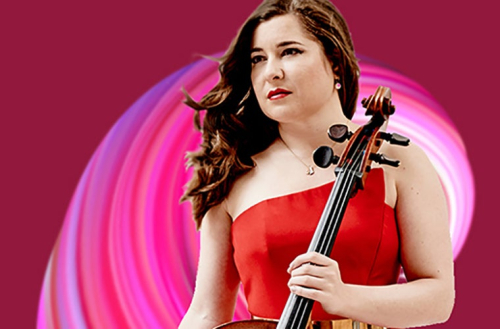
Tag: Alisa Weilerstein

  • Alisa Weilerstein ~ FRAGMENTS 2

    CH11513997

    Above, Alisa Weilerstein/FRAGMENTS 2 ~ performance photo by Fadi Kheir

    ~ Author: Shoshana Klein

    Tuesday January 21st, 2025 – This evening at Zankel Hall, Alisa Weilerstein’s’ Fragments project continued with its the second installation. You may remember the first one, last April.


    Like last time, there was no program given until the end – a practice I still find interesting, though slightly frustrating. I had a bit of a conclusion that the ideal listener either knows the Bach suites by heart, or doesn’t know them at all; someone like me (knowing them but certainly not well versed on the particular movements, etc) ends up a little stuck on which is which and where we are. 


    For the staging, the same light boxes that were set up for the first installment are set up spread around the stage rather than in a circle around the cellist like they were last time. She entered in full darkness – though during that moment, someone’s phone went off and said clearly “calling emergency services” and everyone laughed, which was a fun communal moment.


    This setting struck me as more theatrical than the last – it started with a bang and bright lights, and Weilerstein was wearing fishnets, a bright fuchsia short dress, and dramatic stage makeup with her hair curled and all over the place. It seemed to evoke a sort of dramatization and maybe a teenage emotionality.


    The way that she played the Bach suite movements were sweeping, very light even though much of the suite is in minor. Her playing of the fast passages is very elegant – bringing out the vocal and conversational qualities of these multi-line pieces written for one instrument.


    CH11513956


    Performance photo by Fadi Kheir


    For the first couple movements there were really smooth transitions and stark lighting changes. The new pieces were lit with green and the Bach was a warmer white/yellow. I wondered if it would continue like that the whole time with the lighting just indicating whether or not we were hearing a new piece, but as it went on the changes became less stark, and the movements had different types of lighting. Maybe adding to this, or reflected by it, particularly in the beginning of the set, the Bach had a more veiled angstyness while the newer pieces had more brash emotionality in the forefront, as if the newer compositions were unearthing the meanings of the Bach and saying them more plainly.


    One standout movement near the end had only pizzicati and required Weilerstein to sing along with her playing. It was simple sounding and also grounding, particularly because this person who is at the highest levels of cello playing was singing like a normal person. Not to say it was bad, it just humanized her in a way that brought reality back in a really sweet way.


    ~ Shoshana Klein
  • NYO-USA at Carnegie Hall

    Aw

    Above: cellist Alisa Weilerstein

    Author: Ben Weaver

    Friday July 29th, 2022 – Elgar’s Cello Concerto and Mahler’ Fifth Symphony made up the very ambitious program by the National Youth Orchestra of the United States of America at Carnegie Hall. The young American musicians – aged 16 to 19 – are embarking on a world tour with these works and will perform at the Concertgebouw in Amsterdam, as well as in Berlin, Ravello, and Lucerne in the upcoming weeks. Leading the orchestra in all these concerts is the British conductor Daniel Harding, with American cellist Alisa Weilerstein the soloist in the Elgar.

    Elgar’s Cello Concerto, composed in 1919, was mildly popular before Jacqueline du Pré gave it immortality with Sir John Barbirolli in the 1960s. There are few mainstream works as identified with one performer as Elgar’s concerto is with du Pré. For any cellist to take on this work must be intimidating. Alisa Weilerstein is a cellist who needs not fear anything from comparison. A consummate artist of genuine depth, gravitas, and beauty, Ms. Weilerstein’s performance glowed with humanity and grace. From the first passionate notes of the work – no orchestral introduction here – Elgar’s  writing for the cello is intricate and deeply emotional. Even the Scherzo has little frivolity. Ms. Weilerstein’s warm and powerful playing, the rich sound of her cello effortlessly filling the hall, was a true joy. Elgar’s ability to compose for a large orchestra, yet keep the orchestration translucent so it never buries the solo instrument, is perhaps rather unique among cello concertos. And Maestro Harding also kept the young players of the orchestra at bay, letting loose when necessary, but allowing Ms. Weilerstein to always be heard. Everything in this performance was perfectly balanced. An all-around marvelous performance of a very special work.

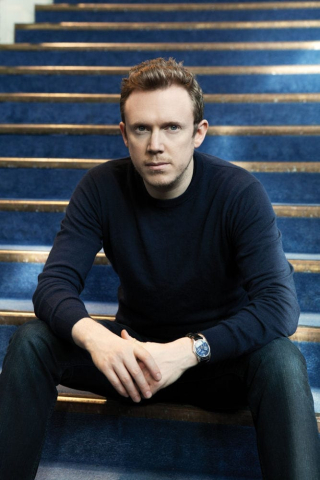
    Harding

    With Mahler’s Fifth Symphony things got a bit more complicated. Maestro Harding (above) is an excellent Mahlerian, having began his career as an assistant first to Simon Rattle in Birmingham and then to Claudio Abbado in Berlin. And his decision to include such a difficult work for a young orchestra was certainly brave, but it did not pay off on this evening. There’s no need to mention any specific mistakes made by specific musicians – I’ve heard the same mistakes made by professional and very experienced musicians of the New York Philharmonic. And there were many wonderful moments too: the horns were warm and fruity, the concertmaster’s solo was lovely, the percussion section was on peak form (I especially enjoyed the grin on the face of one of the percussionists every time he played something loud – his enthusiasm and joy were wonderful, charming, and infectious.) But the totality of the work just did not come together. There were wonderful moments scattered throughout. Perhaps it was Maestro Harding who failed to bring it all together. Perhaps the orchestra’s future performances, as they face more audiences and play the work more, will come together. But, with its faults, I’m glad these young musicians played Mahler. They are the future members of our great American orchestras.

    ~ Ben Weaver

  • Weilerstein|Bychkov ~ All-Dvořák @ Carnegie Hall

    Af22462a9412c5a25af7c7678f4b1224

    Above: cellist Alisa Weilerstein

    Author: Ben Weaver

    Saturday October 27th, 2018 – The Czech Philharmonic Orchestra, under the direction of its chief conductor and music director Semyon Bychkov, rolled into Carnegie Hall on Saturday, October 27th for a two-concert visit. The first concert was an all-Dvořák program which featured two of the composer’s greatest works: the Cello Concerto (with soloist Alisa Weilerstein) and Symphony No. 7.

    Dvořák’s Cello Concerto was composed in New York City in 1894-95. Dvořák had long-held reservations about a concerto for the instrument: an early effort to write one in 1865 was left unfinished and lost until 1925; attempts by scholars to reconstruct it for performance have met with mixed results. But Dvořák was so impressed by a New York Philharmonic performance of Victor Herbert’s Cello Concerto No. 2 that he decided to try again. (Herbert, a highly successful composer of operettas in his own right, was principal cellist of the NY Philharmonic.) The resulting cello concerto by Dvořák, in the key of B minor, is arguably the greatest one of all. Brahms, for example, exclaimed: “Why on earth didn’t I know that a person could write a violoncello concerto like this? If I had only known, I would have written one long ago.”

    The opening Allegro begins with a mournful clarinet solo, a melody that reappears throughout the movement – and returns in the second half of the final movement. The cello enters playing the same melody, though in a different key. Alisa Weilerstein is one of the finest cellists in the world today and she held the audience spellbound with her passionate, emotionally generous and technically precise playing. With Maestro Bychkov, and an orchestra that has Dvořák in their bones, this was a performance from all that could not be improved. (Special recognition for the magnificent, soulful horn solo playing by, I assume from the roster, Kateřina Javůrková.) The lovely second movement, Adagio, contains Dvořák’s tribute to his dying sister-in-law Josefina (with whom he was secretly in love). He revised the finale of the concerto after returning to Prague and learning that Josefina had died. Dvořák inserted a melancholy section right before the end of the work. He wrote to the publisher: “The finale closes gradually, diminuendo – like a breath…”

    The audience greeted Ms. Weilerstein’s performance with a warm standing ovation. Weilerstein’s control of the instrument is superb. She manages to produce a million colors of sound, the rich and warm tone of her cello glows. The audience kept calling her to return, no doubt hoping for an encore. Alas, not on this night. But it’s hard to top perfection anyway.

    After the intermission the orchestra performed what many consider to be Dvořák’s finest symphony, No. 7, commissioned by the London Philharmonic Society in 1884. Dvořák himself conducted the premiere in 1885. The symphony opens with a sinister theme from the lower strings. This melody, and the dark mood, dominate the movement and haunt the rest of the symphony. No. 7 has a reputation as Dvořák’s tragic work and many conductors emphasize the darkness. But maestro Bychkov and the orchestra find more nuance here. Despite the somber mood of the opening movement there is plenty of humor too, including a lively Scherzo that could have been rejected from Dvořák’s Slavonic Dances. It is a truly great Symphony, even if has not gained the popularity of Symphonies Nos. 8 and 9.  And the Czech Philharmonic plays it better than anyone.

    The glowing strings, warm brass (no barking here), and the obvious love they have for this music are incomparable. Although most great orchestras can play everything well, there is something to be said for orchestras of a composer’s native land taking precedence in how their music can and should sound. Russians play Tchaikovsky better than anyone, Czech musicians do it with with Dvořák and Janáček, the French play French in ways most others simply don’t, an Italian voice can do things with a Verdi line that no one else can, etc. It’s not just about all the notes being played – any decent orchestra can do that – it’s about how the musicians feel about those notes. And this great orchestra clearly feels Dvořák’s music in a  singular way. It’s not just love for the music, it’s pride in the music. It is impossible to replicate anywhere else.

    You could hear and feel this uniqueness tonight, especially in the two encores: two Slavonic Dances, the lilting Starodávný (Op. 72, No. 2; surely one of Dvořák’s most memorable melodies) and the thrilling Furiant (Op. 46, No. 8). If you didn’t sway or tap along to this music, if you didn’t sing it to yourself, you weren’t doing it right.

    ~ Ben Weaver