Tag: American Symphony Orchestra

  • Ewa Podleś Has Passed Away

    Podles jpg

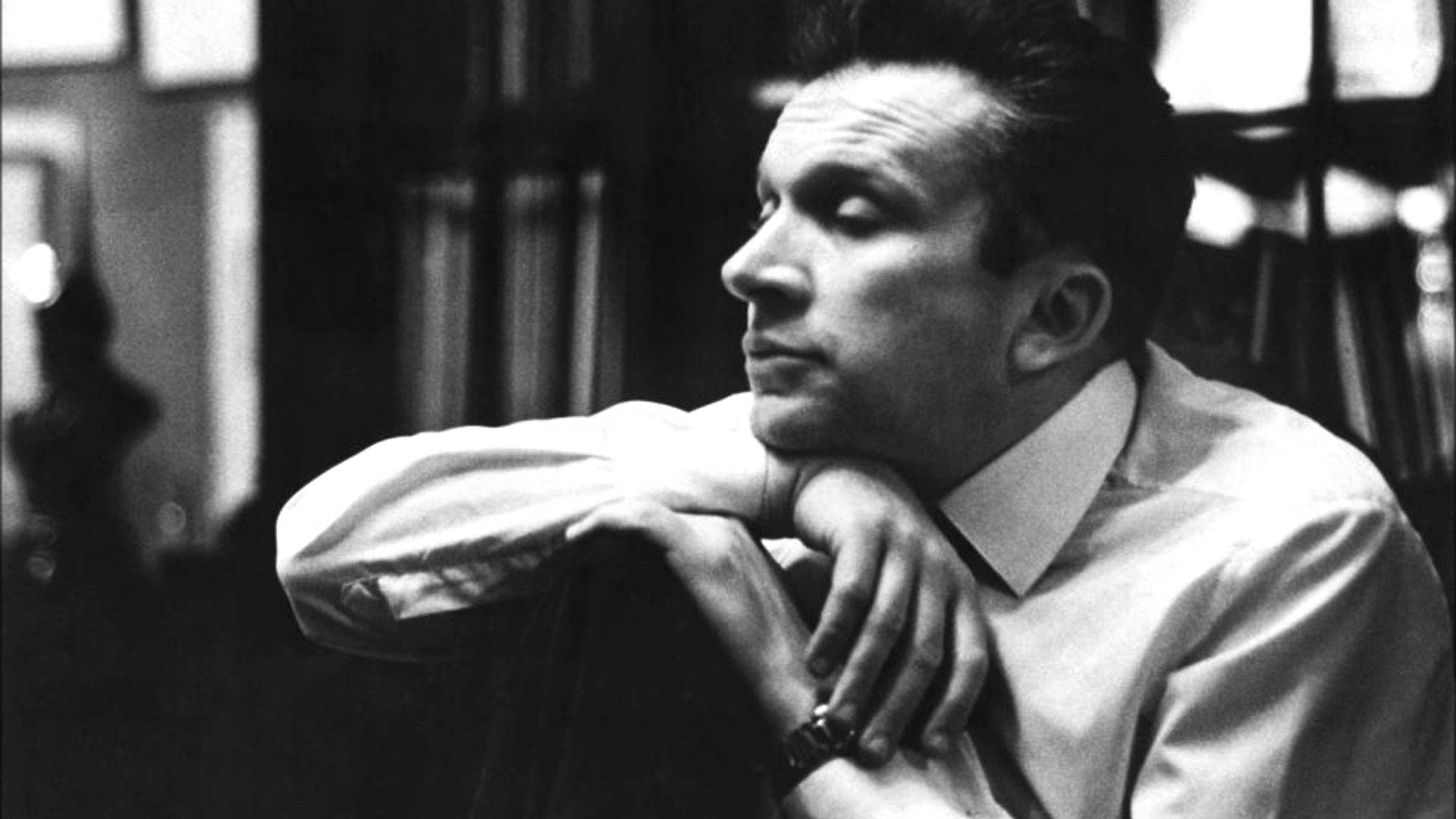
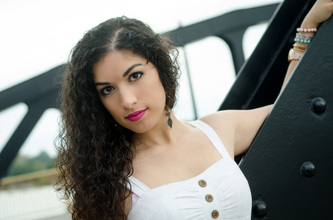
    The magnificent Polish contralto Ewa Podleś (above) passed away on January 19, 2024, at the age of 71. Hers was one of the most remarkable voices I ever heard, but ironically I only saw her live one time: she sang Mahler’s Kindertotenlieder with the American Symphony Orchestra under Leon Botstein’s baton at a concert given at Alice Tully Hall in 1999. 

    That evening, the Mahler cycle was the last thing on the program. Ms. Podleś walked onstage, a short and rather plump woman. She took a stance on the stage and, as, the music commenced, she tipped her head back slightly and began to pour the music forth as if from the depths of her soul. The richness of the voice, with its cavernous lower register, was like nothing else I had ever heard. For one magical half-hour, she had the audience completely under her spell. A the end, she took a couple of bows, nodding to us slightly.

    Back in those days, Alice Tully Hall still had its cozy greenroom, and I went there to greet Maestro Botstein and the evening’s two soloists: soprano Edith Wiens, and Ms. Podleś. Of course, I was too shy to say anything, so Ms. Podleś signed my program, and nodded to me with a slight smile. I will always recall that evening as one of the most profound musical experiences of my life.

    Aso 1999-1 jpg

    You can read all about the Podleś career here, and listen to her unique voice in Wagner…

    The Norns~GOTTERDAMMERUNG – Eva Podles – Stephanie Blythe – Margaret Jane Wray – Seattle 2006

    …and Rossini: 

    Ewa Podles – scena d’Arsace – SEMIRAMIDE

    And her monumental rendering of “Cara sposa” from Handel’s RINALDO can be savored here.

    Spoczywaj w pokoju, beloved Ewa.

  • ASO Presents Strauss’s DAPHNE

    Daphne

    Thursday March 23rd, 2023 – The American Symphony Orchestra performing Richard Strauss’s rarely-heard DAPHNE in concert form at Carnegie Hall, with Maestro Leon Botstein on the podium. The Bard Festival Chorale, under the direction of James Bagwell, had a big part to play in the proceedings.

    The one-act opera, written in 1936-1937, comes late in Strauss’s composing career, when ELEKTRA, SALOME, ROSENKAVALIER, DIE FRAU OHNE SCHATTEN and ARIADNE AUF NAXOS were already established in the world’s opera houses. 

    The story of DAPHNE in a nutshell: Shepherds anticipate the feast of Dionysus, with Daphne’s parents, Peneios and Gaea, presiding over the preparations. Daphne, in love with nature, shuns the ways of men. Her childhood playmate, the shepherd Leukippos, tries to embrace her lovingly, but she repels him and renounces the coming festivities. She refuses to don the clothing her mother has lovingly prepared for her, and runs away. Playfully, the women persuade Leukippos to wear the clothes instead. Apollo arrives, in a peasant’s disguise, and is immediately drawn to Daphne, who rebuffs him. The feast begins, and the disguised Leukippos offers Daphne a cup of wine, arousing the jealousy of Apollo. The heavens respond to the god’s anger with rumbles of thunder, which cause the sheep to run away; the shepherds chase after the flock, leaving Apollo, Daphne, and Leukippos alone. Leukippos reveals his true identity, and challenges Apollo to reveal his. Instead, Apollo shoots Leukippos dead with his bow. Apollo begs Daphne’s forgiveness, saying he will grant her wish to join the natural world and will then love her in the form of a laurel tree. Her transformation begins, and her disembodied voice is heard among the rustling leaves.

    About tonight: The evening got off to a rather stodgy start as a large phalanx of choristers slowly filled the stage space to sing An den Baum Daphne, an a cappella choral epilogue to the opera which Strauss composed in 1943. This seemed like a nice idea on paper, but the music overall is not terribly interesting,  consisting of numerous repeats of a five-note theme familiar to me from DIE FRAU OHNE SCHATTEN. It seemed to go on and on, and while there were many appealing individual voices among the chorus, they did not always blend well. There were some pitch issues along the way, and a feeling that the piece was a bit under-rehearsed.

    Then came an intermission, which completely killed the Straussian atmosphere that had been established, with people chatting blithely and wandering up and down the aisles. At last the opera itself commenced, but it took time for the crowd to re-settle.

    DAPHNE is a gorgeous opera: a veritable feast of melody…there is never a dull moment musically. The vocal writing is extremely demanding; a very fine cast had been assembled, but their work was often undermined by over-loud playing from the orchestra. At the climaxes, voices were being forced in order to stay afloat, This has been happening at The Met a lot this season too, where conductors seem to think loud = exciting. Yes, there is a superficial thrill to it, but in the end it doesn’t do anyone any good.

    That being the case, the singers could only be admired for holding steadfast and getting thru these taxing moments…especially when an orchestra is onstage behind you rather than in the pit.

    The opera got off to an excellent start with baritone Kenneth Overton’s handsome singing as the 1st Shepherd. The voice is fresh and warm, and he cuts a fine figure to boot. Later in the opera, a trio of choristers come forward to portray his fellow shepherds: Jack Cottrell, Paul Holmes, and Blake Austin Brooks.

    In the title-role, so ravishingly sung on the esteemed EMI recording by the great Mozartean Lucia Popp, Jana McIntyre displayed a clear, soaring lyrical sound that deftly encompassed the role’s wide range. It is a girlish timbre, perfect for expressing youthful vulnerability and impetuosity, but Ms. McIntyre also summoned considerable power when needed. In one especially lovely passage, her voice entwined with an obbligato from the ASO’s concertmaster, Cyrus Beroukhim. There were a few spots when the orchestra pressured the soprano, but she held her own and emerged unfazed. Daphne is a “big sing” and without a persuasive interpreter, the opera is not worth reviving. Ms. McIntyre not only sang beautifully, but she looked fetching in her pale lime-green frock, and she used her expressive hands with the grace of a ballerina to shape the music and send it out to us.

    As two maids, Marlen Nahhas and Ashley Dixon were much more than supporting players: both have luscious voices, sounding very much at home in the Carnegie Hall space. In solo phrases, they were each truly appealing to hear, and then they duetted to charming effect. Their scene was not mere filler, but a musical treat all on its own. 

    Strauss hated tenors: that is what people say when listening to an otherwise fine tenor struggle with the demands of Bacchus or the Emperor in FRAU OHNE SCHATTEN,  Tonight, both the leading tenors – rivals in the story – fared well, despite the assaults of the orchestra at certain inconvenient moments. Kyle Van Schoonhoven as Apollo (sometimes deemed Strauss’s cruelest tenor role) had the scope of the role, and the testing top notes were successfully attained. A more thoughtful conductor could have made the singer’s job easier but Mr. Van Schoonhoven was always impressive. And, in the more lyrical stretches, he displayed a very appealing timbre…and a sense of poetry. 

    As Daphne’s admiring swain, Leukippos, Aaron Blake made a striking impression. Slender of frame, and intense of presence, the tenor’s lyrical sound contains a vein of metal (aligned to crisp diction) that he can call upon to cut thru when needed. By turns playful and cocky, the character was portrayed to perfection, and the tenor unleashed a laser-beam  sustained note as fate closed in on him.

    Magnificent singing came from contralto Ronnita Miller (Gaea) and basso Stefan Egerstrom (Peneios), as Daphne’s parents. Ms. Miller, whose 1st Norn at The Met simply dazzled me a few seasons back, sings like a goddess with earthy chest tones of unusual richness. Stunning in her every note and word, the contralto looked like a fashion icon gowned all in black, and she shed her blessèd maternal light over the proceedings, even when sitting silently while others sang. Stefan Egerstrom, where have have you been al my life? What a powerful, resonant voice this man commands. He delivered his music with great authority: each note was rounded and true, and everything compellingly phrased. And yet, for all the strength of their voices, even Ms. Miller and Mr. Egerstrom were not immune to the effects of the encroaching orchestra.

    Daphne Matthew Dine 1

    Above, onstage at Carnegie Hall (from left): Stefan Egerstrom, Ronnita Miller, Aaron Blake, Kyle Van Schoonhoven, Jana McIntyre, Leon Botstein (back to camera), and Ashley Dixon. Photo by Matthew Dine.

    ~ Oberon

  • American Symphony Orchestra Presents ‘Hollow Victory’

    Weinberg

    Above: composer Mieczysław Weinberg

    ~ Author: Ben Weaver 

    Sunday February 29th, 2018 – Leon Botstein and his American Symphony Orchestra always present interesting programming of rarely-performed works. On January 28th, the theme was “Jews in Soviet Russia after the World War” and was perhaps one of their finest concerts. Presented were three works by two composers: first half was dedicated to Mieczysław Weinberg and second half to Vieniamin Fleishman. Both men were close friends with Dmitri Shostakovich, whose influence can be heard in their works.

    Mieczysław Weinberg is perhaps the better-known of the two. Born in 1919 in Warsaw, Poland into an artistic family (his father was a conductor and composer of the Yiddish theater and his Ukrainian-born mother was an actress.) During the war his parents and younger sister were interned in the Lodz ghetto and died in the Trawnicki concentration camp. After the war, in the Soviet Union where he settled, Weinberg was arrested by the KGB in 1953. Shostakovich’s personal appeal to Lavrenti Beria – and Stalin’s death soon thereafter – saved Weinberg’s life. Weinberg’s vast musical output includes 22 symphonies, 17 string quartets, 9 violin sonatas, 7 operas, 40 film and animation scores (including for the Palm d’Or-winning film “The Cranes are Flying.”)

    Leon Botstein began the concert with Weinberg’s “Rhapsody on Moldavian Themes,” composed in 1949. An ancient state – forced to be one of the Soviet Union’s republics between 1940 and 1991 – Moldavia’s culture is closely related to Romania’s and it’s folk melodies sometimes will bring to mind folk melodies Brahms and Dvořák used in their famous collection of dances. Weinberg’s Rhapsody begins with a drive from the low strings and then an oboe introduces the first mournful theme. The Rhapsody moves easily between the mournful and infectious dance tunes, alternating soaring full string section and solos for individual instruments. There is a definite Klezmer dance tune near the end, which brings the work to an exciting close.

    Weinberg’s substantial Symphony No. 5, composed in 1962, without a doubt takes inspiration from Shostakovich’s Symphony No. 4, which though it was premiered in 1961 was composed 25 years earlier, and Weinberg and Shostakovich used to play a two piano arrangement of it for friends long before the premiere. The work opens with a slow “siren,” two repeated notes, from the violins. This motif returns over and over throughout the symphony like a wail of doom, sometimes picked up by other instruments. There are sudden interruptions from the timpani, bringing to mind Mahler’s 6th Symphony. There are beautiful and beautifully-played solos for various instruments, most notably the flute (Yevgeny Faniuk is listed as principal flautist) and horn (Zohar Schondorf)). The Symphony ends with a hushed march, growling trombones and a mysterious celesta.

    Veniamin Fleischman was born in 1913 and entered the Leningrad Conservatory in 1939. His teacher, Shostakovich, called Fleishman his favorite student. While a student, on Shostakovich’s suggestion, Fleishman began composing the opera “Rothschild’s Violin,” from a short story by Chekhov. (Fleishman wrote his own libretto.) When the Nazis invaded the USSR in the summer of 1941 Fleishman enlisted in the Red Army and was killed on September 14 near Leningrad. Shostakovich went to great lengths to retrieve Fleishman’s manuscript of the opera. He completed and orchestrated the work in 1943-44, and later went to great lengths to have it performed, though without much success. Its sympathetic portrayal of Jewish people no doubt did not fit comfortably with the Soviet regime. There was one concert performance in Moscow in 1960 and a staged performance did not take place until 1968. Shostakovich wrote in his memoirs: “It’s a marvelous opera – sensitive and sad. There are no cheap effects in it; it is wise and very Chekhovian. I’m sorry that theatres pass over Fleishman’s opera. It’s certainly not the fault of the music, as far as I can see.” 

    The main character, a Christian coffin maker Yakov Ivanov, undergoes a spiritual crises and something of an awakening. After Yakov’s wife Marfa informs him that she is dying, they both reminisce about their dead child, and Yakov realizes he will have to build his own wife’s coffin. “Life is all loss, only death is gain,” he says. Though Yakov quarrels with Rothschild, the young flautist in the local Jewish orchestra, at the end he leaves Rothschild his most prized possession: the violin, which Rothschild begins to play as the opera ends.

    Rothschild’s Violin” is a magnificent opera. Fleishman, editing Chekov’s story, brilliantly removed all secondary characters and stories, keeping only the story of the coffin-maker. We know nothing even about the young Jew to whom Yakov leaves his violin; nor about Yakov’s wife Marfa, who is dying. This is a story of one man, there are no loungers or pauses in the narrative. It moves quickly through monologues and dialogues, only pausing for Yakov’s final apotheosis where he comes to understand his life and losses. Though the characters, especially Marfa, feel sorry for themselves, there is no sentimentality or cheap dramatic effects. The simplicity of it is what gives the work so much power.

    220px-Mikhail_Svetlov_bass.jpg_300_(2)

    The quartet of singers assembled for the opera was perfect. Bass Mikhail Svetlov (above) was a deeply moving and beautifully sung Yakov. The only native Russian speaker in the cast, he projected the text and all its nuances in a way few can. His is a big, rich voice, with an easy top.

    Index

    Mezzo-soprano Jennifer Roderer (above) was a plum-voiced Marfa; managing to be both a nagging self-pitying wife and a woman who, perhaps on her deathbed, has obviously suffered so much. What kept flying through my head as she was singing is that Ms. Roderer’s large, beautiful and booming mezzo would make a fantastic Fricka; it is a role she sings and we can only hope she is able to sing it at the Metropolitan Opera (which is supposed to bring back its Ring cycle soon.)

    M heller

    Tenor Marc Heller (above), singing the role of the leader of the Jewish orchestra, would make a pretty good Siegfried. The huge, ringing voice flew easily over the orchestra and Maestro Botstein’s rather unforgiving volume.

    AaronBlake200

    Lyric tenor Aaron Blake (above) was a lovely and nervous young Rothschild. There is actually very little for Rothschild to sing, so Mr. Blake made up for it with pantomime acting, particularly at the end after Yakov has gifted him his fiddle (kindly loaned for the proceedings by a violinist on stage), and an extended orchestral postlude (including lovely solo violin playing by concertmaster Gabrielle Fink) summarizes not only Yakov’s sacrifice, but Rothschild’s future. Intentionally or not, there was something quite poetic and moving in the fact that a member of the orchestra gave up her violin and was not able to play the extended orchestral passage in the end, mirroring Yakov’s own losses.

    It is also worth nothing that the final orchestral passage goes from being lightly scored and transparent to having a very close resemblance to the searing final moments of Shostakovich’s 5th Symphony.

    Rothschild’s Violin” is a great opera; it deserves to be staged.

    ~ Ben Weaver

  • American Symphony Orchestra Presents ‘Hollow Victory’

    Weinberg

    Above: composer Mieczysław Weinberg

    ~ Author: Ben Weaver 

    Sunday February 29th, 2018 – Leon Botstein and his American Symphony Orchestra always present interesting programming of rarely-performed works. On January 28th, the theme was “Jews in Soviet Russia after the World War” and was perhaps one of their finest concerts. Presented were three works by two composers: first half was dedicated to Mieczysław Weinberg and second half to Vieniamin Fleishman. Both men were close friends with Dmitri Shostakovich, whose influence can be heard in their works.

    Mieczysław Weinberg is perhaps the better-known of the two. Born in 1919 in Warsaw, Poland into an artistic family (his father was a conductor and composer of the Yiddish theater and his Ukrainian-born mother was an actress.) During the war his parents and younger sister were interned in the Lodz ghetto and died in the Trawnicki concentration camp. After the war, in the Soviet Union where he settled, Weinberg was arrested by the KGB in 1953. Shostakovich’s personal appeal to Lavrenti Beria – and Stalin’s death soon thereafter – saved Weinberg’s life. Weinberg’s vast musical output includes 22 symphonies, 17 string quartets, 9 violin sonatas, 7 operas, 40 film and animation scores (including for the Palm d’Or-winning film “The Cranes are Flying.”)

    Leon Botstein began the concert with Weinberg’s “Rhapsody on Moldavian Themes,” composed in 1949. An ancient state – forced to be one of the Soviet Union’s republics between 1940 and 1991 – Moldavia’s culture is closely related to Romania’s and it’s folk melodies sometimes will bring to mind folk melodies Brahms and Dvořák used in their famous collection of dances. Weinberg’s Rhapsody begins with a drive from the low strings and then an oboe introduces the first mournful theme. The Rhapsody moves easily between the mournful and infectious dance tunes, alternating soaring full string section and solos for individual instruments. There is a definite Klezmer dance tune near the end, which brings the work to an exciting close.

    Weinberg’s substantial Symphony No. 5, composed in 1962, without a doubt takes inspiration from Shostakovich’s Symphony No. 4, which though it was premiered in 1961 was composed 25 years earlier, and Weinberg and Shostakovich used to play a two piano arrangement of it for friends long before the premiere. The work opens with a slow “siren,” two repeated notes, from the violins. This motif returns over and over throughout the symphony like a wail of doom, sometimes picked up by other instruments. There are sudden interruptions from the timpani, bringing to mind Mahler’s 6th Symphony. There are beautiful and beautifully-played solos for various instruments, most notably the flute (Yevgeny Faniuk is listed as principal flautist) and horn (Zohar Schondorf)). The Symphony ends with a hushed march, growling trombones and a mysterious celesta.

    Veniamin Fleischman was born in 1913 and entered the Leningrad Conservatory in 1939. His teacher, Shostakovich, called Fleishman his favorite student. While a student, on Shostakovich’s suggestion, Fleishman began composing the opera “Rothschild’s Violin,” from a short story by Chekhov. (Fleishman wrote his own libretto.) When the Nazis invaded the USSR in the summer of 1941 Fleishman enlisted in the Red Army and was killed on September 14 near Leningrad. Shostakovich went to great lengths to retrieve Fleishman’s manuscript of the opera. He completed and orchestrated the work in 1943-44, and later went to great lengths to have it performed, though without much success. Its sympathetic portrayal of Jewish people no doubt did not fit comfortably with the Soviet regime. There was one concert performance in Moscow in 1960 and a staged performance did not take place until 1968. Shostakovich wrote in his memoirs: “It’s a marvelous opera – sensitive and sad. There are no cheap effects in it; it is wise and very Chekhovian. I’m sorry that theatres pass over Fleishman’s opera. It’s certainly not the fault of the music, as far as I can see.” 

    The main character, a Christian coffin maker Yakov Ivanov, undergoes a spiritual crises and something of an awakening. After Yakov’s wife Marfa informs him that she is dying, they both reminisce about their dead child, and Yakov realizes he will have to build his own wife’s coffin. “Life is all loss, only death is gain,” he says. Though Yakov quarrels with Rothschild, the young flautist in the local Jewish orchestra, at the end he leaves Rothschild his most prized possession: the violin, which Rothschild begins to play as the opera ends.

    Rothschild’s Violin” is a magnificent opera. Fleishman, editing Chekov’s story, brilliantly removed all secondary characters and stories, keeping only the story of the coffin-maker. We know nothing even about the young Jew to whom Yakov leaves his violin; nor about Yakov’s wife Marfa, who is dying. This is a story of one man, there are no loungers or pauses in the narrative. It moves quickly through monologues and dialogues, only pausing for Yakov’s final apotheosis where he comes to understand his life and losses. Though the characters, especially Marfa, feel sorry for themselves, there is no sentimentality or cheap dramatic effects. The simplicity of it is what gives the work so much power.

    220px-Mikhail_Svetlov_bass.jpg_300_(2)

    The quartet of singers assembled for the opera was perfect. Bass Mikhail Svetlov (above) was a deeply moving and beautifully sung Yakov. The only native Russian speaker in the cast, he projected the text and all its nuances in a way few can. His is a big, rich voice, with an easy top.

    Index

    Mezzo-soprano Jennifer Roderer (above) was a plum-voiced Marfa; managing to be both a nagging self-pitying wife and a woman who, perhaps on her deathbed, has obviously suffered so much. What kept flying through my head as she was singing is that Ms. Roderer’s large, beautiful and booming mezzo would make a fantastic Fricka; it is a role she sings and we can only hope she is able to sing it at the Metropolitan Opera (which is supposed to bring back its Ring cycle soon.)

    M heller

    Tenor Marc Heller (above), singing the role of the leader of the Jewish orchestra, would make a pretty good Siegfried. The huge, ringing voice flew easily over the orchestra and Maestro Botstein’s rather unforgiving volume.

    AaronBlake200

    Lyric tenor Aaron Blake (above) was a lovely and nervous young Rothschild. There is actually very little for Rothschild to sing, so Mr. Blake made up for it with pantomime acting, particularly at the end after Yakov has gifted him his fiddle (kindly loaned for the proceedings by a violinist on stage), and an extended orchestral postlude (including lovely solo violin playing by concertmaster Gabrielle Fink) summarizes not only Yakov’s sacrifice, but Rothschild’s future. Intentionally or not, there was something quite poetic and moving in the fact that a member of the orchestra gave up her violin and was not able to play the extended orchestral passage in the end, mirroring Yakov’s own losses.

    It is also worth nothing that the final orchestral passage goes from being lightly scored and transparent to having a very close resemblance to the searing final moments of Shostakovich’s 5th Symphony.

    Rothschild’s Violin” is a great opera; it deserves to be staged.

    ~ Ben Weaver

  • In Troubled Days of Peace @ ASO

    Donnie-Ray-Albert

    Above: baritone Donnie Ray Albert

    Wednesday October 19th, 2016 = The American Symphony Orchestra presenting concert settings of operas by Ernst Krenek and Richard Strauss in their season-opening program. The timely theme of dictatorships and the eternally evasive concept of peace hung in the air at Carnegie Hall, where appreciative music lovers had gathered, skipping a pointless presidential ‘debate’ in favor of hearing some rarely-performed works. 

    Ernst Krenek’s Der Diktator was completed in August 1926. You can read a synopsis of the opera and find background material here, since I’m going to concentrate on the evening’s presentation.

    Leon Botstein and his intrepid players gave a fine rendering of the very palatable score. The performance was dominated by Donnie Ray Albert as the Dictator. A stalwart force in the realms of opera and concert since 1976, Mr. Albert is now 66 years of age, and boasts a voice that has retained its power, along with interpretive skills that are truly impressive. Whether in bold declamation or in the music’s more lyrical passages, Mr. Albert gave a masterful performance. Another impressive voice was that of Karen Chia-Ling Ho as Maria: displaying a large, spinto sound and hall-filling top notes, the soprano also invested her singing with dramatic urgency. Ilana Davidson, a petite woman with a baby-dollish timbre, piped up boldly as Charlotte, and Mark Duffin was able to combine the power of a helden- and the verbal edge of a character-tenor. Portraying an officer blinded by poison gas while in the Dictator’s service, Mr. Duffin wore sunglasses and managed, for all his gritty vocal power, to create a moving figure.

    Richard Strauss’s Friedenstag (Peace Day) was premiered at Munich in 1938, with Adolf Hitler among the audience. Set during the Thirty Years War, the story is unfolds in a city under siege; after many twists and turns of plot, the wife of the city’s Commandant intercedes with the head of the besieging force and brings about a reconciliation. With music includes many reminders of DIE FRAU OHNE SCHATTEN, FRIEDENSTAG is a good experience for an old Strauss-lover like me; however, it is somewhat weakened by an endless series of “finales”, as though Strauss did not know when to stop.

    Continuing his highly successful evening, Donnie Ray Albert made a grand impression as the Commandant with his generous singing and imposing stature. I had very much been anticipating hearing Tamara Wilson as Maria, the Commandant’s wife, but when we arrived at Carnegie Hall, we found that she had canceled and was being replaced by Kirsten Chambers. A program-insert bio lists Ms. Chambers as the cover for both Isolde and Salome at The Met this season. Blonde, and clad in a bright red gown, the soprano unsparingly hurled herself into the demanding music of Maria, showing a voice of considerable thrust. If one top note was just shy of the mark, overall she managed well in a fiendish role, and saved the evening.

    R Lugo

    Bass Ricardo Lugo (above), as the opposing general, made a vibrant impression with his imposing voice and intrinsic sense of the drama. He was an excellent foil for Mr. Albert, and, between these two powerhouse voices, they kept our focus on the work keenly secured. Mr. Duffin, amplifying the forceful impression he had made in the Krenek, was back as the Burgomaster: one of his upper notes was sustained for an incredibly long time…I really don’t know how he did it!

    FRIEDENSTAG has a number of small roles in which savvy interpreters are able to make their mark. I especially liked the clear sweetness of Scott Joiner’s tenor as a Piedontese soldier (he sang in Italian) and Carsten Wittmoser’s sturdy vocalism as a Musketeer. Tenor Doug Jones and baritone Steven Eddy (in a dual role) seized their chances and did very well, with baritones Steven Moore, Daniel Collins, and Benjamin Cohen contributing strongly. 

    In small vignettes, a number of chorus members stepped forward from time to time. One of these had a special meaning for me: Rachel Rosales, as a Woman of the People, is a soprano I heard lo! these many seasons ago as an exquisite Leila in LES PECHEURS DES PERLES at New York City Opera. I have seen her name listed among choral rosters before, and was feeling nostalgic when she intoned her brief, dramatic solo, a solo which made me think of Strauss’s writing for Die Amme in FRAU OHNE SCHATTEN. In the finale tonight (the final finale), Ms. Rosales and other chorus sopranos sent some high notes sailing into the hall.  

    The Participating Artists:

    American Symphony Orchestra
    Leon Botstein, conductor
    Bard Festival Chorale/James Bagwell, director
    Ilana Davidson, Karen Chia-ling Ho and Kirsten Chambers, sopranos
    Donnie Ray Albert and Steven Eddy, baritones
    Mark Duffin, Scott Joiner and Doug Jones, tenors
    Carsten Wittmoser, bass-baritone
    Ricardo Lugo, bass

  • Russian Jewish Composers @ ASO

    Leon-Botstein

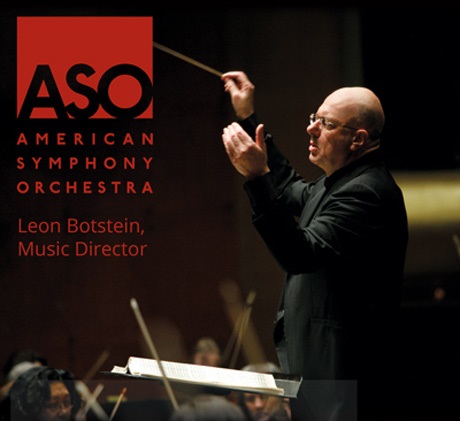
    Thursday December 17th, 2015 – Tonight at Carnegie Hall, Leon Botstein (above) was on the podium for a program of music written by Russian Jewish composers between 1874 and 1921. Performed by the American Symphony Orchestra, the concert featured two U.S. premieres and one New York premiere, as well as Anton Rubinstein’s 2nd cello concerto with soloist István Várdai.

    Aleksandr Krein’s The Rose and The Cross (‘Symphonic Fragments after Aleksandr Blok’) was composed between 1917-1920, making it the newest work on tonight’s program. Blok was a great Symbolist poet and his mystical drama The Rose and The Cross went thru more than 200 rehearsals at the Moscow Art Theater but was never performed in public. The composer Krein was inspired by Blok’s writing and composed this suite to honor the poet. Tonight’s performance marked the suite’s New York premiere.

    The music, which shows traces of harmonic advancement over the other three – older – works played this evening, opens with a somber, rather creepy atmosphere. Later it will take on an almost cinematic feeling, with effects such as trumpet fanfares and shades of exotica from the harp. A songful melody becomes a recurring theme, and the suite rises to a triumphant conclusion depicting the “boundless energy of the heart that sings.” 

    Várdai István nagyfelbontású fotó

    The Hungarian cellist István Várdai (above) then took the stage for the evening’s one (somewhat) familiar work: the second cello concerto of Anton Rubinstein. The oldest and most conservative piece on tonight’s bill, it marks the pianist-composer as a pioneer, since he was the first major Russian composer to work in the concerto genre (Tchaikovsky’s violin concerto still lay four years in the future). Rubinstein draws upon a very ‘Russian’ sense of melody; the concerto is a vastly pleasing work, and one which places great demands on the soloist.

    Mr. Várdai, tall and youthful-looking, is an extraordinarily gifted musician and seemed to win the hearts of the Carnegie Hall audience this evening within moments of starting to play. His timbre has a lovely, deep-violet colour and his technique is refined in both agility and dynamic control. From his opening soulful song, the cellist moved thru a scampering passage and on to a strikingly brisk downhill scale that ended on a delicious trill. A second theme plumbs the most pungent depths before turning into a rapid dance.

    The concerto’s movements flow into one another, with a wind chorale signaling the start of the Andante; Mr. Várdai embarks on an optimistic melody but the composer cannot resist a desire to let the music dance. After a mini-cadenza, a jogging Allegro carries us along. The orchestral texture lightens, with cello filigree, then lapses into an interlude and grows quiet. Things slow down beautifully for another injection of melody and the cellist then serves up a more sustained cadenza before a final surge to the end.

    Mr. Várdai’s superb performance elicited a very enthusiastic response from the audience; I very much hope to have further opportunities to experience his artistry.

    Following the interval, Mikhail Gnesin’s From Shelley (‘Symphonic Fragment after Percy Bysshe Shelley’s Prometheus Unbound‘) had its U.S. premiere. Written between 1906 and 1908 this short (8 minutes) work was composed while Gnesin was studying with Rimsky-Korsakov. Its brevity precludes any real development of ideas, yet there is a fine sense of the theme blossoming, and some very nice writing for the horns and harp. The ending is, in a word, beautiful. 

    The U.S. premiere of Maximilian Steinberg’s first symphony raised the question: why did it take nearly one hundred and ten years for this symphony to reach us? It’s as exciting and finely-crafted as many other well-known symphonies; the composer appears to have drawn inspiration from such symphonists as Beethoven and Schumann, eschewing the Russian-nationalist influence of his teacher Rimsky-Korsakov. 

    Steinberg’s 1st has an animated, congenial opening with the immediate establishing of a rich theme that that put me in mind of – of all things – Humperdinck’s HANSEL UND GRETEL (“Der Wind! Der Wind!”); this theme will re-sound throughout the symphony. This is big, pleasing music with a variety of rhythmic patterns. The timpani lend a stately quality.

    In an exuberant Allegro vivace, the composer lightens things to a scherzo quality, later taking on a waltzy air. This second movement ends with Mendelssohnian charm.

    After a darkish start, the Andante features a clarinet theme which develops into a tutti passage. In a gentle acceleration, horns and oboe play a part, and then in a richer build-up the horns grow passionate. Horn and clarinet voices entwine; oboe and flute pipe up. The music becomes cinematic in sweep before receding to solo clarinet.

    “Der Wind! Der Wind!” is again evoked by horns and trumpets as the finale commences. The oboe speaks out, then the horns launch a fugue. As the Allegro moderato continues on, the music meanders somewhat, as though Steinberg was unsure how best to end the piece: but end it does – strongly. 

    Kudos to Maestro Botstein for assembling a rewarding program of relative rarities, for including the Rubinstein cello concerto (and Mr. Várdai’s excellent playing of it), and for bringing the Steinberg symphony to these shores.

    This evening’s repertory – click on each composer’s name for biographical information:

    Aleksandr Krein – The Rose and the Cross (N.Y. Premiere)
    Anton Rubinstein– Cello Concerto No. 2
    Mikhail GnesinFrom Shelley (U.S. Premiere)
    Maximilian Steinberg– Symphony No. 1 (U.S. Premiere)

  • ASO Season Opens @ Carnegie Hall

    Strauss

    Above: Richard Strauss, the composer of Also sprach Zarathustra

    Friday October 16th, 2015 – The American Symphony Orchestra opened their 2015-2016 season at Carnegie Hall with a program entitled Mimesis: Musical Representations.

    Gunther Schuller’s 7 Studies on Themes of Paul Klee opened the program, and what a brilliant and highly imaginative piece it is. The seven songs are vividly differentiated in instrumentation and rhythm, becoming aural counterparts for seven paintings by the Swiss modernist Paul Klee (1879-1940). “Each of the seven pieces bears a slightly different relationship to the original Klee picture from which it stems,” Schuller wrote. “Some relate to the actual design, shape, or color scheme of the painting, while others take the general mode of the picture or its title as a point of departure.”

    In “Antique Harmonies” Schuller’s music is sombre and dense. An immediate contract comes in “Abstract Trio” with whimsical winds and a single pluck of the strings. “Little Blue Devil” is captivatingly jazzy, with thrumming bass, muted trumpet, xylophone. Insectuous sounds pervade “The Twittering Machine” with edgy woodwinds and a wood-on-wood tone block marking time. “Arab Village” is an absolute delight, with a flautist playing from offstage; her ‘voice’ inspires a magical dance for harp, viola and, as the full orchestra plays very softly. They play even softer for the opening of “An Eerie Moment” which eventually rumbles grandly before fading away. For the final “Pastorale”, the violins play a repetitive two-note figure while the winds sigh, rather mournfully.

    The Schuller really is a great piece; I’ve only encountered his music rarely over the years…I need to seek it out.

    1869781

    Henri Dutilleux’s Correspondances brought forth the beauteous soprano Sophia Burgos (above). In this cycle of five songs, the composer draws on a variety of texts: poems by Rilke and Mukherjee, and letters written by Solzhenitsyn to the Rostropovichs and by Vincent van Gogh to his brother Theo.

    The singer’s agile, silvery timbre is shot thru with gem-like flecks of colour; she has an extensive range and her voice was beautifully set off by the marvelous instrumental combinations Dutilleux has employed. Countless entrancing passages for various instrumental combinations keep the ear pricked up: an especially appealing tuba outing in the Interlude, and the cunning use of accordion.

    Ms. Burgos moved with thorough vocal command from urgency to passion to evocation; the audience, very taken with her, broke in with applause during the cycle, and Maestro Botstein took it in stride, nodding approvingly. In the final song, the soprano was at her most poignantly expressive: an affecting descending vocalise is heard over the shimmering strings before things take a dramatic turn and she soars to an ecstatic concluding high note. Brava! And bravi to the players as well. 

    Following the interval, Nico Muhly’s Seeing is Believing seemed to me – and to my pianist-companion – the least interesting work on the program. A sort of tone poem for electric violin (played by virtuoso Tracy Silverman) and orchestra, the work stretched out over 25 minutes of rather ‘same-y’ sounds and repetitive motifs.

    According to the program notes, Muhly’s inspiration for the work was the practice of mapping the stars in the sky; yet I could detect no sense of the wonderment one would expect to experience is questing the heavens. Instead the music seemed earth-bound and tended to wallow in its own density. Mr. Silverman was in total command of his electrified instrument, producing some striking effects in the layered, echoing passages. Having been impressed by Muhly’s orchestrational skills in his opera. The Dark Sisters, I was disappointed with tonight’s offering. The composer was present and took a bow from his box. To me, the audience seemed to embrace the violinist without embracing the music he had just played.

    Richard Strauss’s Also Sprach Zarathustra closed the evening on an epic note. Beyond its super-familiar but always impressive opening statement, the work is a rich and royal sonic tapestry into which Strauss has woven one appealing thread after another. Abounding in solo opportunities for individual instruments, this thrilling work further features a gorgeous tutti theme for celli and violins, and some interjections for organ to Westernize its spiritual aspects; an entrancing Viennese waltz looks forward to ROSENKAVALIER in no uncertain terms.

    Overall, a grand finale for an impressively-played concert. And the American Symphony Orchestra‘s next concert, on December 17th, looks fascinating to me.  

  • American Symphony Orchestra’s MUSIC U

    Cd_cover460

    Sunday April 19th, 2015 – This note from the press release describes the inspiration for today’s programme, entitled ‘MUSIC U’, by the American Symphony Orchestra: “In a country without kings and courts, universities have served as the patrons for many of America’s greatest composers.” Leon Botstein and the ASO were joined by the Cornell University Glee Club & Chorus in a celebration of five Ivy League composers.

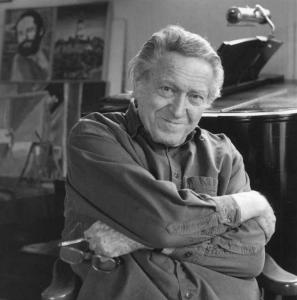
    RandallThompson480

    In 1940, Randall Thompson (above) who taught at Harvard and was director of the Curtis Institute, was commissioned to compose a choral work for the opening exercises of the new Berkshire Music Center at Tanglewood, to be performed by the entire student body. The composer offered a setting of the Alleluia. Distraught over the Nazi invasion of France, Thompson could not bring himself to compose a joyous fanfare. Instead, he produced this solemnly beautiful and introspective piece, inspired by the Biblical passage (Job 1:21): “The Lord gave and the Lord has taken away; blessed be the name of the Lord.”

    Performing a cappella under the direction of Robert Isaacs, the young singers from Cornell displayed a lovely vocal blend in the heavenly harmonies of this slow, lilting choral miniature. The gentle pace quickens somewhat near the work’s end, but falls back into calm with a very sustained final note that hung on the air.

    Parker

    After a rather long pause, the concert continued with the oldest work (late 19th century) on the programme: the cantata Dream-King and his Love by Horatio Parker (above), one-time Dean of Music at Yale. This cantata won first prize in its category in a competition judged by Dvořák himself. A fanciful romantic text tells the tale of a maiden visited in her dream by a kingly lover.

    The work is melody-filled and seems to echo some of the exotic works of Jules Massenet. From the lyrical opening (the harp is prominent) thru passages dance-like, rapturous, and triumphant by turns, the music opens out like a perfumed lotus blossom. The naturally youthful sound of tenor soloist Phillip Fargo fell pleasingly in the ear, and the singers from Cornell again gave of their best.

    Rochberg-George-01

    The Symphony No. 2 by George Rochberg (above), who ran the music department at the University of Pennsylvania, was the longest work on the programme. Composed in 1955-1956, this symphony today sounds like a generic work from an era when classical music was not quite sure what direction it was headed in. It’s a big-scale piece, one which seems to take itself very seriously. One can sense such influences as Prokofiev, Stravinsky and Schönberg in the writing, and the composer’s fine craftsmanship is never in doubt. Yet despite its rhythmic variety and interesting sonic textures – oboe and horns are well-employed – the piece seemed over-extended. Melody is pretty much banished – a promising duet passage for two violas evaporated after a few seconds – and although melody is not essential, it is inevitably gratifying. Maestro Botstein’s commitment to the work and the excellent playing of the ASO – many fleeting bits of solo work are strewn throughout the score – made as strong a case for the symphony as one could hope to hear.

    300h

    Music for Cello and Orchestra by Harvard’s Leon Kirchner (above)…

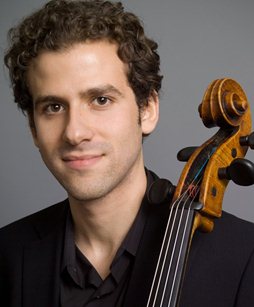
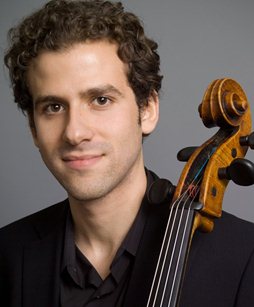
    Nicholas-Canellakis

    …with soloist Nicholas Canellakis (above) opened the second half of the concert. The cellist is a frequent participant in Chamber Music Society of Lincoln Center‘s superb concerts.

    Today, Kirchner’s music seemed to me to have found what was missing from the Rochberg: a connection to the heart. Throughout the Kirchner, the solo cello gives his piece a sense of unity and purpose that – to my ears – the Rochberg lacks. Kirchner’s orchestration is colorful and dense, with excellent use of percussion, and the music sometimes takes on a cinematic quality. I love hearing a piano mixed into an orchestral ensemble work, and at the reference to TRISTAN UND ISOLDE, my friend Adi and I exchanged smiles.

    Mr. Canellakis was simply breathtaking right from the cello’s passionate opening statement. He was deeply involved in the music, moving seamlessly from a gleaming upper register to the soulful singing of his middle range. Capable of both redolent lyricism and energetic, jagged flourishes, Nicholas’s playing seemed so at home in the venerable Hall. The audience gave him lusty and well-deserved round of applause as he was called back to the stage after his exceptional performance.   

    Robertosierraheadshot

    The chorus then returned to the stage for the concert’s grand finale: the world premiere of Cantares by Roberto Sierra (above), which Cornell University commissioned for this concert in celebration of their 150th anniversary. In this panoramic work, the cultures of the African, Spanish, Native Peruvian, and Aztec peoples are entwined in vivid musical settings of texts dating back to the 16th and 17th centuries. The composer has re-imagined these invocations and narratives for the contemporary world; for this piece, the Cornell choristers leapt readily from Quechua to Spanish.

    A long sustained tone opens Cantares; then, emerging from dark turbulence, the chorus begins to ‘speak’. A trumpet call, a wandering xylophone, a celestial harp, an oddly ominous rattle: these are all heard as kozmic sound-clouds drift by. The music is mystical and – with the under-pacing of rhythmic chant – takes on an other-worldly feeling.

    The second movement evokes African ritual and that continent’s ancient connection to Cuba. The music seems to echo thru time in its heavenly, ecstatic vibrations. Somehow Chausson’s Poeme de l’amour et de la Mer came to mind.

    An orchestral interlude has the flutter of birdsong and a dense-jungle yet transparent appeal and leads into the final Suerte lamentosa, an epic of dueling cultures told from both the winners’ and the losers’ points of view.

    The work is perhaps a trifle too long, but the composer has been successful in drawing us to contemplate the oft-forgotten (or ignored) events surrounding the injection of Christianity into the Western Hemisphere. And musically it’s truly brilliant.

  • American Symphony Orchestra’s MUSIC U

    Cd_cover460

    Sunday April 19th, 2015 – This note from the press release describes the inspiration for today’s programme, entitled ‘MUSIC U’, by the American Symphony Orchestra: “In a country without kings and courts, universities have served as the patrons for many of America’s greatest composers.” Leon Botstein and the ASO were joined by the Cornell University Glee Club & Chorus in a celebration of five Ivy League composers.

    RandallThompson480

    In 1940, Randall Thompson (above) who taught at Harvard and was director of the Curtis Institute, was commissioned to compose a choral work for the opening exercises of the new Berkshire Music Center at Tanglewood, to be performed by the entire student body. The composer offered a setting of the Alleluia. Distraught over the Nazi invasion of France, Thompson could not bring himself to compose a joyous fanfare. Instead, he produced this solemnly beautiful and introspective piece, inspired by the Biblical passage (Job 1:21): “The Lord gave and the Lord has taken away; blessed be the name of the Lord.”

    Performing a cappella under the direction of Robert Isaacs, the young singers from Cornell displayed a lovely vocal blend in the heavenly harmonies of this slow, lilting choral miniature. The gentle pace quickens somewhat near the work’s end, but falls back into calm with a very sustained final note that hung on the air.

    Parker

    After a rather long pause, the concert continued with the oldest work (late 19th century) on the programme: the cantata Dream-King and his Love by Horatio Parker (above), one-time Dean of Music at Yale. This cantata won first prize in its category in a competition judged by Dvořák himself. A fanciful romantic text tells the tale of a maiden visited in her dream by a kingly lover.

    The work is melody-filled and seems to echo some of the exotic works of Jules Massenet. From the lyrical opening (the harp is prominent) thru passages dance-like, rapturous, and triumphant by turns, the music opens out like a perfumed lotus blossom. The naturally youthful sound of tenor soloist Phillip Fargo fell pleasingly in the ear, and the singers from Cornell again gave of their best.

    Rochberg-George-01

    The Symphony No. 2 by George Rochberg (above), who ran the music department at the University of Pennsylvania, was the longest work on the programme. Composed in 1955-1956, this symphony today sounds like a generic work from an era when classical music was not quite sure what direction it was headed in. It’s a big-scale piece, one which seems to take itself very seriously. One can sense such influences as Prokofiev, Stravinsky and Schönberg in the writing, and the composer’s fine craftsmanship is never in doubt. Yet despite its rhythmic variety and interesting sonic textures – oboe and horns are well-employed – the piece seemed over-extended. Melody is pretty much banished – a promising duet passage for two violas evaporated after a few seconds – and although melody is not essential, it is inevitably gratifying. Maestro Botstein’s commitment to the work and the excellent playing of the ASO – many fleeting bits of solo work are strewn throughout the score – made as strong a case for the symphony as one could hope to hear.

    300h

    Music for Cello and Orchestra by Harvard’s Leon Kirchner (above)…

    Nicholas-Canellakis

    …with soloist Nicholas Canellakis (above) opened the second half of the concert. The cellist is a frequent participant in Chamber Music Society of Lincoln Center‘s superb concerts.

    Today, Kirchner’s music seemed to me to have found what was missing from the Rochberg: a connection to the heart. Throughout the Kirchner, the solo cello gives his piece a sense of unity and purpose that – to my ears – the Rochberg lacks. Kirchner’s orchestration is colorful and dense, with excellent use of percussion, and the music sometimes takes on a cinematic quality. I love hearing a piano mixed into an orchestral ensemble work, and at the reference to TRISTAN UND ISOLDE, my friend Adi and I exchanged smiles.

    Mr. Canellakis was simply breathtaking right from the cello’s passionate opening statement. He was deeply involved in the music, moving seamlessly from a gleaming upper register to the soulful singing of his middle range. Capable of both redolent lyricism and energetic, jagged flourishes, Nicholas’s playing seemed so at home in the venerable Hall. The audience gave him lusty and well-deserved round of applause as he was called back to the stage after his exceptional performance.   

    Robertosierraheadshot

    The chorus then returned to the stage for the concert’s grand finale: the world premiere of Cantares by Roberto Sierra (above), which Cornell University commissioned for this concert in celebration of their 150th anniversary. In this panoramic work, the cultures of the African, Spanish, Native Peruvian, and Aztec peoples are entwined in vivid musical settings of texts dating back to the 16th and 17th centuries. The composer has re-imagined these invocations and narratives for the contemporary world; for this piece, the Cornell choristers leapt readily from Quechua to Spanish.

    A long sustained tone opens Cantares; then, emerging from dark turbulence, the chorus begins to ‘speak’. A trumpet call, a wandering xylophone, a celestial harp, an oddly ominous rattle: these are all heard as kozmic sound-clouds drift by. The music is mystical and – with the under-pacing of rhythmic chant – takes on an other-worldly feeling.

    The second movement evokes African ritual and that continent’s ancient connection to Cuba. The music seems to echo thru time in its heavenly, ecstatic vibrations. Somehow Chausson’s Poeme de l’amour et de la Mer came to mind.

    An orchestral interlude has the flutter of birdsong and a dense-jungle yet transparent appeal and leads into the final Suerte lamentosa, an epic of dueling cultures told from both the winners’ and the losers’ points of view.

    The work is perhaps a trifle too long, but the composer has been successful in drawing us to contemplate the oft-forgotten (or ignored) events surrounding the injection of Christianity into the Western Hemisphere. And musically it’s truly brilliant.

  • Ives 4th + Mahler 8th @ Carnegie Hall

    Mahler 2

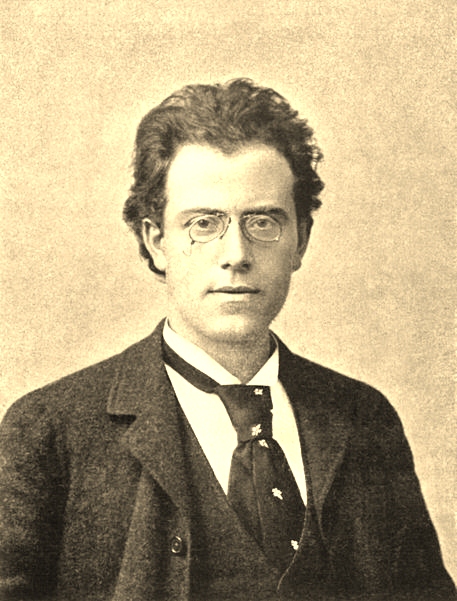
    Above: Gustav Mahler

    Friday October 26, 2012 – The  Collegiate Chorale and the American Symphony Orchestra teamed up at Carnegie Hall tonight for a symphonic double-bill, with a delightful ‘prelude’ in the form of Leopold Stokowski’s arrangement of The Star-Spangled Banner. I rarely have the opportunity to work symphonic concerts into my calendar of dance and operatic events (and I continue to suffer from a lack of chamber music in my diet). So I am grateful to the Collegiate Chorale and publicist Michelle Brandon Tabnick for this evening’s invitation.

    The evening marked the 50th anniversary of the American Symphony Orchestra and in celebration, tickets were sold at 1962 prices, with a $7.00 top. There was a nice atmosphere in the house and a warm reception for all the musicians involved.

    Maestro Leon Botstein swept his forces thru the ‘Stokowski’ Star-Spangled Banner with its wonderful deeper sonorities near the end.  Players and audience alike stood for the anthem, and I personally felt a pang of sadness at the state of our country today. But we won’t go into that here.

    The players then settled in and the Ives began. This is a fabulous score and I found myself smiling and even chuckling softly to myself as the work progressed: it takes itself so seriously, yet to me it abounds with wit and irony. It seemed clear that some in the audience had not previously encountered Ives’ work: they didn’t know what to make of it. But for me, this was 30-minutes of pure sonic pleasure.

    Ives

    Above: Charles Ives

    The wondrous layering of sound, the floating cacophonies wafting over the dense militaristic undercurrents, the dazzling individual instrumental voices shining forth: the ear is constantly titillated. In a stunning volte face, Ives gives us straightforward melody in the 3rd movement which must have felt like a sonic oasis to the uninitiated. Throughout, the piano (expert playing from Blair McMillen) gives the symphony the unexpected feel of a concerto trying to make itself heard thru the waves of sound. A terrific performances, and the players have my admiration for what must be a nightmare of counting.

    After intermission, the vast tapestry of the Mahler 8th unfurled itself in the venerable hall. Relentless in its cresting waves of vocal sound flooding over the massive orchestral forces, this is a work like no other. The two choruses simply pour it on all evening, whilst an octet of principal voices – the sopranos often kept in the upper reaches of their range – trade off solo passages of melodic intensity.

    Duncan-Tyler-01[Colin-Mills]

    Of the vocal soloists, three stood out: baritone Tyler Duncan (above, in a Colin Mills portrait) brought a welcome sense of lyric beauty to his solo. Basso Denis Sedov was equally fine, using his expressive hands to shape the music. In the taxing top soprano line, Rebecca Daviss’ voice gleamed beautifully all evening.

    Maestro Botstein was a few minutes into the symphony’s second half when he suddenly stopped; I could not hear his over-the-shoulder remark, but with a tap of the baton he started over. The performance then surged onward, and the audience stayed on at the end to cheer.

    • Blair McMillen, piano
    • Rebecca Davis, soprano
    • Abbie Furmansky, soprano
    • Katherine Whyte, soprano
    • Fredrika Brillembourg, mezzo-soprano
    • Susan Platts, mezzo-soprano
    • Clay Hilley, tenor
    • Tyler Duncan, baritone
    • Denis Sedov, bass
    • Brooklyn Youth Chorus
    • The Collegiate Chorale