Tag: Arte Opera Ensemble

  • dell’Arte Opera Ensemble: Salieri’s LA CIFRA

    AngkyBudiardjono_Ensemble

    Above: Angky Budiardjono (center) and his cast-mates in Salieri’s LA CIFRA, presented by dell’Arte Opera Ensemble at La MaMa. Photo by Brian Long.

    ~ Author: Oberon

    ~ Photos: Brian Long

    Sunday August 26th matinee – Following last season’s excellent production of Cavalli’s LA CALISTO by dell’Arte Opera Ensemble, I was happy to re-connect with this enterprising Company at La MaMa today for their American premiere production of Antonio Salieri’s LA CIFRA (“The Code“).

    As with the Cavalli last Summer, director Brittany Goodwin worked wonders, her cast bringing wit and occasional wistfulness to both their singing and the staging. Giving things a commedia dell’arte slant, Ms. Goodwin put her singers thru their acting paces; they responded with a fine mixture of gusto and charm.

    In brief, the plot revolves around the Scottish noble Milord Fideling’s quest to find Olympia, a count’s daughter betrothed to him in childhood. Milord’s search has brought him to this town where he believes one of the Mayor Rusticore’s daughters is actually Olympia, now a young maiden. The key to the mystery is in a locked chest that Rusticore has hidden away. At the opera’s end the code to the chest’s secret is broken, and Rusticore’s daughter Eurilla is revealed to be the long-lost Olympia. Eurilla and Milord Fideling have already formed an attachment, so the revelation pleases them to no end. Rusticore’s other daughter, Lisotta, who had longed to become Milady, settles instead for her long-suffering suitor Sandrino, and all’s well as ends better. 

    The only problem with LA CIFRA is that the music’s by Salieri rather than Mozart. CIFRA is long for a comic opera, skating on the thin ice of a contrived, formulaic scenario. Mozart’s comedies are long, too, but they have the Master’s music to give everything a special lustre. Salieri’s music is thoroughly pleasant and well-crafted, but it never touches the soul.

    ConductorCatherineO'Shaughnessy

    But let’s concentrate on the performance itself. A fine band of musicians were seated stage right where, under the direction of Catherine O’Shaughnessay (above), they played with spirit. Chris Fecteau, dell’Atre’s Artistic Director, was at the harpsichord. An ensemble of young singers appeared variously as rustics, shepherdesses, and huntsmen. Claire Townsend’s costumes blended Ms. Goodwin’s commedia dell’arte references with Highland plaids for Milord and his entourage. 

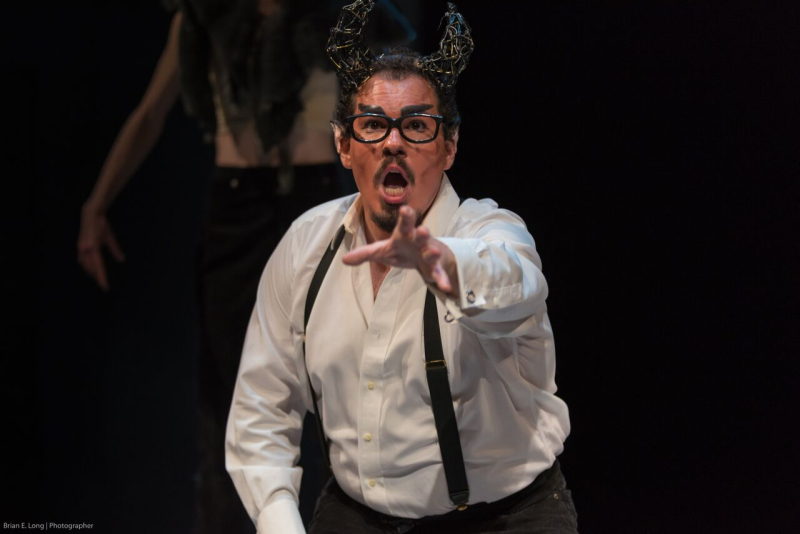
    AngkyBudiardjono

    Topping the cast in a virtuoso performance as Rusticore was Angky Budiardjono (above). This gifted baritone had made a notable impression as Silvano is last year’s dell’Arte CALISTO; as Rusticore today, Mr. Budiadjono had the chance to dominate (or steal) scene after scene, and he seized every opportunity – both vocally and dramatically. In the tradition of the great buffos, Mr. Budiardjono’s diction – and his relishing of the words – was a delight; his timing of interjections into other character’s scenes was priceless. But the Budiardjono voice is too attractive and expressive to be limited to buffo parts: I think he has limitless possibilities.

    Mezzo-soprano Allison Gish (Lisotta) is likewise a singer who has it all: a plushy instrument of vast range, and a knack for comedy. She simply threw herself into the role, singing with flair, and running the gamut of facial expressions from snobbish to sassy with telling effect. Ms. Gish’s Act II aria was a vocal high-point of the afternoon, a tour de force really. But much earlier, she endeared herself to me as an actress when Milord’s servant Leandro (played by Stephen Steffens) made bawdy gestures towards her. Allison’s Lisotta got the message – loud and clear – and signaled back that she was ready, willing, and able. Ah, a libidinous girl…a girl after my own heart: I laughed out loud.

    But the Gish voice: this is the sound we want for Erda, for 1st Norn, for the Handel contralto roles, and the Brahms ‘viola’ songs.  
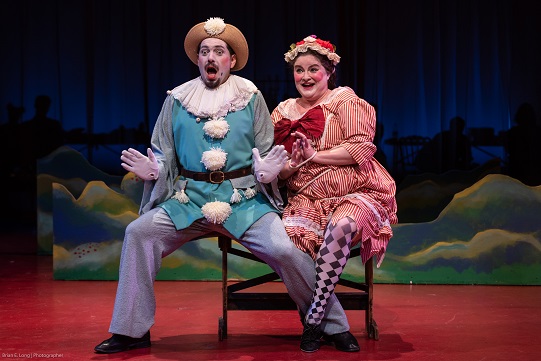
    JayChacon_AllisonGish

    Above: Jay Chacon as Sandrino and Allison Gish as Lisotta. Mr. Chacon’s wooing of Lisotta is a long and tormented ordeal: this is a Pierrot desperate for his Pierette, and willing to endure her hard-hearted rebuffs until his patience wins out. Mr. Chacon played the role to perfection.

    RachelBarker-Asto_AngkyBudiardjono

    Above: Rachel Barker-Asto as Eurilla with Angky Budiardjono as Rusticore. Ms.Barker-Asto has a bright, lyric-coloratura sound which Salieri’s writing stretches to some uncanny low notes, just as Mozart stretches Fiordiligi and Constanze. Ms. Barker-Astro met the vocal demands with assurance, and is as pretty a girl as I’ve seen on any stage.

    TimothyStoddard_Ensemble

    Above: tenor Timothy Stoddard as Milord Fideling. Mr. Stoddard bought an ideal combination of vocal grace and princely bearing to this part. He and Ms. Barker-Asto made their duet of mutual attraction a vocal highlight of the long-running second act.

    Rounding out the cast of principals was Stephen Steffens as Milord’s manservant Leandro. He made a pleasing vocal impression and, as already noted, showed a randy streak when first setting eyes on Lisotta. Later, while the girl’s singing her big aria, Mr. Steffens executes a hilarious dance routine in the background.   
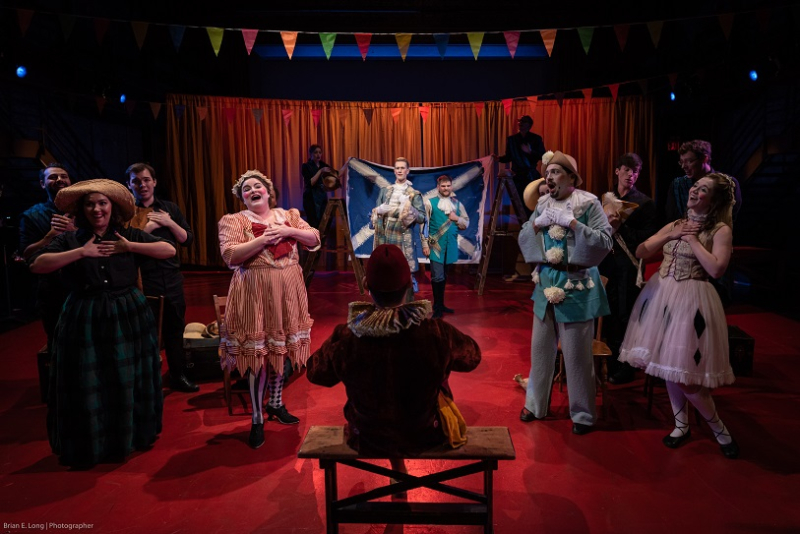
    Ensemble

    Above, from left: Allison Gish, Timothy Stoddard and Stephen Steffens (background), Mr. Chacon and Ms. Barker-Asto, with Mr. Budiardjono (back to camera) and the center     

    One interesting vocal aspect of the afternoon was that, at various points, Mssrs. Chacon, Budiardjono, and Steffans each had to sustain a very looooong note. Their supplies of breath seemed endless. In Act I, a particular line – “…e giubilar mi fa!”  – caught my ear: straight out of Mozart’s NOZZE. And throughout the opera, characters kept saying: “I swear on this head of cabbage…!” Hilarious!

    Though the music began to wear thin in Act II, Ms. Goodwin and her cast never let their energy slump. The audience seemed genuinely taken with the production, showering everyone onstage with enthusiastic applause at the end.

    All production photos by Brian Long.

    ~ Oberon

  • dell’Arte Opera Ensemble: LA CALISTO

    CAVALLI

    ~ Author: Oberon

    Sunday August 20th, 2017 matinee – Francesco Cavalli (above) wrote about 30 operas, and of them LA CALISTO has become a favorite with contemporary audiences. Premiered in 1651, the opera’s brief and richly-varied musical numbers – and its sensuous, lusty characters – seem wonderfully fresh and relevant to us today, especially in a performance such as was offered this afternoon by the enterprising dell’Arte Opera Ensemble down at the La MaMa Theater.

    A brief synopsis of the opera will help sort out the twists of plot and the infatuations and motivations of the various characters:

    THE PROLOGUE
    Nature and Eternity celebrate those mortals who have climbed the path to immortality. Destiny insists that the name of Calisto be added to the list.

    THE OPERA
    A thunderbolt hurled by Giove has gone awry and decimated a portion of the valley of Arcadia. The god comes down with his sidekick Mercurio to inspect the damage They find the nymph Calisto, desperately seeking water. Giove causes a stream to gush up. He then attempts to seduce Calisto, who is a follower of Diana – the goddess of the hunt – and a staunch virgin. She rejects Giove’s advances, but later succumbs when he disguises himself as Diana. Meanwhile, the real Diana, because of her vow of chastity, cannot return the love of the handsome shepherd boy Endimione. Diana relies on the help of her attendant nymph, Linfea, who desires a husband but spurns the advances of a young satyr.

    On Mount Lycaeus, Endimione sings to the moon, the symbol of Diana. As he sleeps, Diana covers him with kisses. He awakes and they sing of their love. Jove’s infidelity is discovered by his wife Juno, while Diana’s secret is found out by Pane, the god of the forest, who has long desired her. Endimione is persecuted by Pane and his satyrs.

    The Furies turn Calisto into a bear at the command of the indignant Juno. Giove sadly confesses all to Calisto: she must live the rest of her life as a bear, but eventually he will raise her to the stars. Diana rescues Endmione and they agree that, while their kissing-fest was enjoyable, they will leave it at that. Giove and Mercurio celebrate Calisto’s ascension to her heavenly home in the constellation Ursa Major

    ~~~~~~~~~~~~~~~~~~~~~~~~~~~~~~~~~~~~~~~~~~~~~~~~~~~~~~~~~~~~~~~~~~~~~~~

    Sung in the original Italian, with English surtitles, the dell’Arte production is directed with wit and affection by Brittany Goodwin, who let the bawdiness of certain scenes play out without lapsing into vulgarity. The costumes by Claire Townsend mix modern-day wear with fantasy elements. The scenic design is by You-Shin Chen, and the atmospheric lighting by Dante Olivia Smith.

    The score was played by an expert period-instrument ensemble led by Charles Weaver, with Mr. Weaver and Adam Cockerham playing lutes, violinists Dongmyung Ahn and Sarah Kenner, cellist Matt Zucker, and Jeffrey Grossman at the harpsichord. Their unfailing grace and perceptive dramatic accents brought Cavalli’s music into our time in all its glory.  

    20768180_10107878883186965_3866968242292011471_n

    Vocally, the afternoon got off to a splendid start as Allison Gish (above, in a backstage portrait) intoned the lines of La Natura with a voice that evoked thoughts of the great contraltos of bygone days.

    In a scene which anticipates Wagner’s GOTTERDAMMERUNG Norns (even down to having a contralto sing first), Ms. Gish’s La Natura is joined by Elyse Kakacek as L’Eternità and Jungje Xu as Il Destino. Ms. Kakacek looked striking as she sang from the mezzanine; the voice is full and wide-ranging, pinging out into the theater space. Jungje Xu’s voice is lyrical, and she sang very well as she pleaded Destiny’s case for giving Calisto a place in the heavens. When these three singers blended voices, the effect was superb. Later in the opera, they portrayed the stream which sprang up to quench Calisto’s thirst, and – later still – were Furies, minions of the goddess Juno, who revel in a scene where they torment Calisto.

    20747980_10154800303580777_7132399321096474619_o

    Above: Emily Hughes as Calisto, with her fellow archers of Diana’s entourage, in a Brian Long photo. Ms. Hughes was the lovely focal-point of the story; with her clear, appealing timbre and a charming streak of vulnerability in her personification of the role, the young soprano made Jupiter’s infatuation entirely understandable. Her long aria in the opera’s second half was particularly pleasing.  

    Mason Jarboe as Giove (Jupiter) – handsome in appearance and authoritative of voice – was an ideal matching of singer to role. My only wish was that he’d had more to sing. The same might be said of tenor Brady DelVecchio as Mercurio; his characterful singing, easy stage demeanor, and pimp-like persona were much appreciated. Both gentlemen savoured their every moment onstage.

    EmilyHughes_AdriaCaffaro

    Above: Emily Hughes as Calisto with Adria Caffaro, who appears both as Diana and as Giove disguised as Diana. Ms. Caffaro was able to subtly differentiate vocally between her two roles; the voice is warm, sizable and pliant, with a touch of earthiness. And she exuded goddess-like confidence. After an episode of heated kissing between Calisto and Giove in his Diana guise, Ms. Caffaro returns as ‘Diana herself’ and is amused – and then annoyed – by Calisto’s description of ‘their’ smooching session and the implication that Diana might have same-sex desires: Ms. Caffaro here turned fiery, making the scene one of the highlights of the afternoon. 

    PadraicCostello

    Above: Padraic Costello as Endimione. Mr. Costello’s honeyed counter-tenor and gift for persuasive phrasing fell graciously on the ear. His portrayal of the shepherd, infatuated with Diana, was as expressive as his singing. As the most human character in the story, and the one for whom love is truly all, Mr. Costello was as moving in his sincerity as in the beauty of sound he produced.   

    JoyceLin

    Above: Joyce Yin as Linfea, one of Diana’s handmaidens who is torn between preserving her chastity and losing it. Satirino, a lusty satyr, offers to solve Linfea’s dilemma for her, but she fends him off. Ms. Yin’s voice is clear and assertive, pealing forth to express her excitement. Stage-wise, she was a bundle of energy, and very amusing when she ‘remembered’ to strike the required archer’s poses.

    RaymondStorms

    Above: Raymond Storms as Pane. This is the opera’s second counter-tenor role and Mr. Storms excelled in the music, which veered from passionate declaration to soft, sweet turns of phrase. His acting was spot-on as yet another frustrated lover of Diana (she’s so popular!).

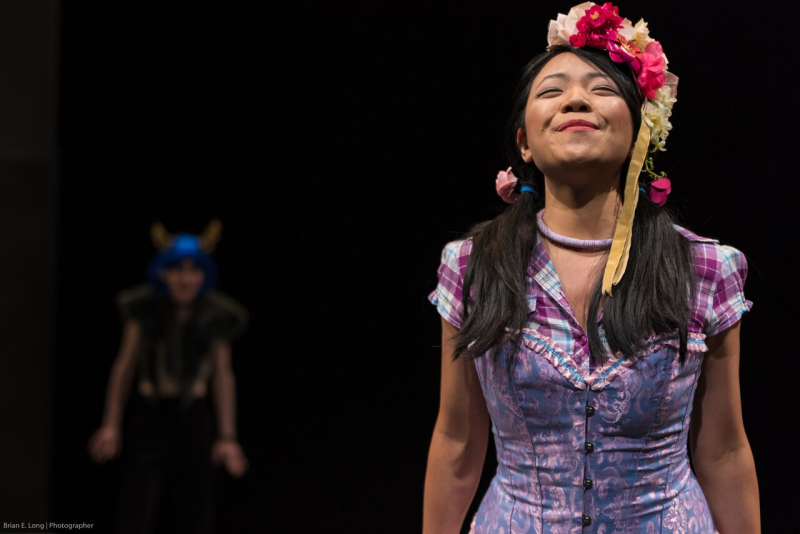
    Pane’s pals are Shawn Palmer as Satirino (the satyr who tried to have his way with Linfea earlier) and Angky Budiardjono as Silvano. This trio’s scenes recall the rustics in MIDSUMMER NIGHT’S DREAM…and all three are actors who can sing.

    Ms. Palmer looked androgynous with her lithe, long-legged figure and glossy blue bob-wig. Her cantering walk and occasional pawing of the ground revealed her animal nature. Her rather long dramatic aria showed a deeper side to the character, and she sang it so well.

    Mr. Budiardjono’s singing was wide-ranging and ample-toned, a very pleasing sound to be sure. In Part II of the opera, Mssrs. Storms and Budiardjono have a duet that really showed off their talents; Ms. Palmer then joined them in a trio that was sheer fun to see and hear.

    Sophie Delphis as the goddess Giunone, wife of Jove, did not descend from the heavens until the start of Part II. Clad in an elaborate haute couture dress, spike heels, and a flame-red hat, Ms. Delphis’ appearance was as striking as her singing and acting. A complete immersion into the character made her every note, word, and movement vivid. In a vindictive rage upon learning her husband has been unfaithful, Ms. Delphis unleashed her anger like a sylvan Santuzza. The voice has a real bite to it.

    Diana’s archers also served as stagehands, quickly maneuvering floor platforms into different configurations and nimbly transforming swaths of long, hanging sheer-white fabric into clouds, canopies, or pillars.

    The afternoon flew by; all too soon we were hearing what seemed to be a choral finale with all the characters mingling voices as Giove showed Calisto the firmament…her future home. But the voices fade away and the opera ends on a parlando passage from Giove.

    Production photos by Brian Long.

    ~ Oberon