Tag: Arthur Honegger

  • Rarity: Honegger’s “Les Mille et Une Nuits” (1937)

    Edouard_kriff_02

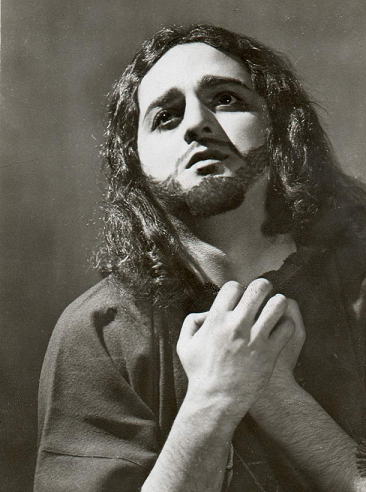
    Above: Édouard Kriff as Samson

    Searching for recordings by the Algerian tenor Édouard Kriff, I came upon this delicious work by Arthur Honegger: LES MILLE ET UNE NUITS (A Thousand and One Nights) written in 1937: LINK

    I found these very informative paragraphs about Édouard Kriff by Philippe Olivier of The Orel Foundation:

    “During Kriff’s first contract year at the National Opera House of Paris of September 1938, he sang the roles of Samson, Radames and Faust in LA DAMNATION DE FAUST by Berlioz. After the armistice of June 1940 , he appeared at the National Radio, mostly under the direction of Paul Bastide, in thirty leading roles. Denounced as a Jew by employees of the theater, he was arrested by collaborationist French police on 22 January 1943, along with his mother, but he escaped by jumping from the train to Sobibor; Kriff joined up with the snipers and partisans operating in the Ardèche.

    In 1944, the tenor resumed his activities at the Opéra-Comique, where he sang Don José, Werther, Hoffmann and Canio in PAGLIACCI. He sang Julien in Charpentier’s LOUISE in 1950. From 1956 to 1958 he was stage director of the Opéra-Comique.”
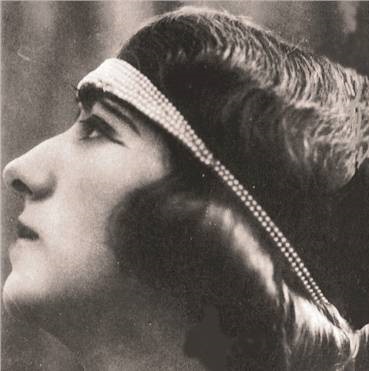
    Cernay1

    It’s also wonderful to hear Germaine Cernay (above) in this exotic Honegger work. She’s long been a favorite of mine among voices from the past. Cernay she made her debut in 1925 at the Paris Opéra in Fauré’s Pénélope. She was a beloved star at the Opéra-Comique (Salle Favart), where she made her debut in 1927 in Alfano’s Risurrezione opposite Mary Garden and went on to appear there as Mallika (Lakmé), Suzuki, Mignon, Geneviève, Carmen, and Charlotte. She was also a favorite at La Monnaie, Brussels, and sang often at provincial French opera houses. She toured North Africa, England, Ireland, Italy, and Switzerland. Cernay is remembered as a fine interpreter of J.S. Bach.

    Germaine Cernay was deeply religious, and in 1942 she retired from the stage and prepared to take her vows as a nun. She died – of an epileptic seizure – in 1943, before having fulfilled her wish to enter the convent.

    Germaine Cernay sings Nevin’s The Rosary

    CLOEZ - 1959

    The Honegger is conducted by Gustave Cloëz (above).
  • Rarity: Honegger’s “Les Mille et Une Nuits” (1937)

    Edouard_kriff_02

    Above: Édouard Kriff as Samson

    Searching for recordings by the Algerian tenor Édouard Kriff, I came upon this delicious work by Arthur Honegger: LES MILLE ET UNE NUITS (A Thousand and One Nights) written in 1937: LINK

    I found these very informative paragraphs about Édouard Kriff by Philippe Olivier of The Orel Foundation:

    “During Kriff’s first contract year at the National Opera House of Paris of September 1938, he sang the roles of Samson, Radames and Faust in LA DAMNATION DE FAUST by Berlioz. After the armistice of June 1940 , he appeared at the National Radio, mostly under the direction of Paul Bastide, in thirty leading roles. Denounced as a Jew by employees of the theater, he was arrested by collaborationist French police on 22 January 1943, along with his mother, but he escaped by jumping from the train to Sobibor; Kriff joined up with the snipers and partisans operating in the Ardèche.

    In 1944, the tenor resumed his activities at the Opéra-Comique, where he sang Don José, Werther, Hoffmann and Canio in PAGLIACCI. He sang Julien in Charpentier’s LOUISE in 1950. From 1956 to 1958 he was stage director of the Opéra-Comique.”

    Cernay1

    It’s also wonderful to hear Germaine Cernay (above) in this exotic Honegger work. She’s long been a favorite of mine among voices from the past. Cernay she made her debut in 1925 at the Paris Opéra in Fauré’s Pénélope. She was a beloved star at the Opéra-Comique (Salle Favart), where she made her debut in 1927 in Alfano’s Risurrezione opposite Mary Garden and went on to appear there as Mallika (Lakmé), Suzuki, Mignon, Geneviève, Carmen, and Charlotte. She was also a favorite at La Monnaie, Brussels, and sang often at provincial French opera houses. She toured North Africa, England, Ireland, Italy, and Switzerland. Cernay is remembered as a fine interpreter of J.S. Bach.

    Germaine Cernay was deeply religious, and in 1942 she retired from the stage and prepared to take her vows as a nun. She died – of an epileptic seizure – in 1943, before having fulfilled her wish to enter the convent.

    Germaine Cernay sings Nevin’s The Rosary

    CLOEZ - 1959

    The Honegger is conducted by Gustave Cloëz (above).

  • Philharmonic Finale: JOAN OF ARC

    Joanpiffard

    Above: Joan of Arc, a late-19th century painting by Harold H. Piffard

    Saturday June 13th, 2015 – Jeanne dArc au bûcher (Joan of Arc at the Stake), an oratorio by Arthur Honegger, was the final offering of the New York Philharmonic’s 2014-2015 season. Leave it to Alan Gilbert to end an exciting season with a big bang: Honegger’s epic work unfolded in a staged version which captured both the gravitas and the insouciant sarcasm of the score.

    Jeanne dArc au bûcher was originally commissioned by Ida Rubinstein, who had enflamed Paris when she appeared with Diaghilev’s Ballets Russes in the title role of Cléopâtre in 1909, and Zobéide in Scheherazade in 1910. Rubinstein premiered Jeanne d’Arc with her own Company at Basel in 1938; she bade farewell to the stage in the same work in 1939.

    The New York Philharmonic last performed the oratorio in 1994 with Marthe Keller in the title role. For the current performances, the superb French actress Marion Cotillard has taken on the role of Jeanne which she has previously performed at Orléans and Barcelona, and most recently on a tour of Monaco, Toulouse and Paris in the present production by Côme de Bellescize.

    Arthur Honegger’s setting of Claudel’s text centers on Joan of Arc’s last moments of life at the stake, where she sees the events of her life pass before her eyes before succumbing to a terrifyingly painful death. Her confessor, Brother Dominique, reads to her from the book of her life, starting with her trial and conviction for heresy and witchcraft in 1431 and goes back even further, beyond Charles VII’s coronation, to her awakening to the voices of the saints – Catherine and Margaret – in her country garden as a young maiden. Honegger’s theatrical setting calls for three speaking actors – as Joan, Brother Dominique, and a Narrator, respectively – as well as singing soloists and adult and children’s choruses.

    The often quirky score includes parts for saxophone, piano, and the electronic ondes martenot, and the musical influences range from plain chant and Baroque to folksong and jazz. The Philharmonic musicians were at their customary high level of play, and Maestro Gilbert’s detailed handling of the score made the best possible case for this unusual work.

    A runway wraps around the partially sunken orchestra, with the children’s chorus and various players coming into close range of the audience. Behind the orchestra, the adult chorus on risers loom up on either side of the grim stake, which rests on a small platform where Brother Dominique attempts to ease the horror of Joan’s impending torturous death by reminding her of her past good deeds and the notion of heavenly reward.

    The mood of the piece veers sharpy from piety to farce, with the presiding dignitaries at Joan’s sham trial portrayed as a pig and a donkey. The evening’s most memorable moments came at the end, as deep red light representing the consuming flames filled not only the stage but much of the auditorium. As everything faded to black, every chorister and musicians held up a small faerie light, leaving us with a vision of the eternal stars.

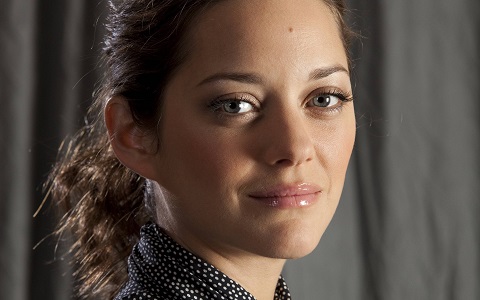
    Marion-Cotillard

    Above: Marion Cotillard; her portrayal of Joan was a tour de force, her wonderful voice encompassing both the irony and the terror of her speeches. From girlish sing-song to her witty responses to her captors thru to the earthy, guttural expressions of her fear of death, and at last her final ecstasy, Cotillard gave a masterful performance, as touching to watch as to hear. 

    Her fellow actors – Eric Génovèse as Brother Dominique and Christian Gonon (as narrator, and in multiple smaller roles ) – were ideally cast both in terms of their voicing of the lines and their characterizations. Among the various supporting roles, two singers stood out: soprano Erin Morley, radiant-toned in the high-lying phrases of the Virgin, and tenor Thomas Blondelle who sang fearlessly and with clear projection in the taxing tessitura of Porcus, the pig-magistrate, and in other smaller roles. Everyone, in fact, sounded well in this sometimes tricky music, and both choruses – the adults and the children – made a very fine effect.