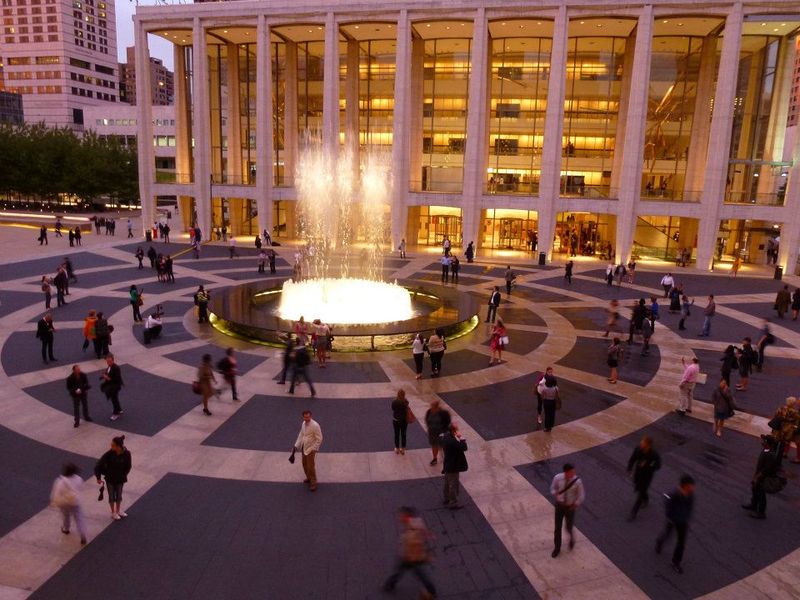
Tag: Avery Fisher Hall

  • Sutherland/Forst/Hadley ~ ANNA BOLENA

    Forst

    Above: Judith Forst

    I attended this exciting concert performance of Donizetti’s ANNA BOLENA in 1975 at Avery Fisher Hall. Dame Joan Sutherland, Judith Forst, Cynthia Clarey, Jerry Hadley, and Greg Yurisich sang the principal roles, and Richard Bonynge was on the podium.

    Watch and listen here.

  • Trifonov Triumphs @ The NY Phil

    Daniil-Trifonov

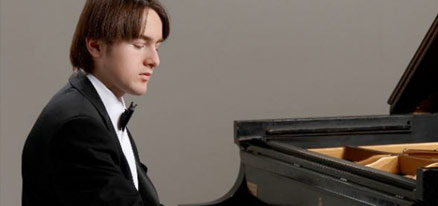
    Above: pianist Daniil Trifonov

    Tuesday December 30th, 2014 – My final musical event of the year. Avery Fisher Hall was packed with avid music-lovers as the Spanish conductor Juanjo Mena (NY Philharmonic debut) took the podium for the opening work, Capriccio espagnol by Nikolai Rimsky-Korsakov. 

    Painted in vibrant colours and dancing in dazzling rhythms, this Capriccio is a vivid evocation of Spain. Finding inspiration in Spanish folk songs, Rimsky-Korsakov cast the piece in five continuous  movements: Alborada (“morning song”); Variazoni; again Alborada; “Scene and Gypsy Song”; and the fabulous Fandango Asturiano (a dance popular in northern Spain) which features the lilting sonic illusion of guitars being strummed to the jaunty clicking of castanets. The work features prominent passages for the solo violin, Sheryl Staples winning a round of ‘bravas‘ as the conductor led her forward a solo bow at the end. Likewise Carter Brey (cello), Robert Langevin (flute) and Anthony McGill (clarinet) were all embraced by the enthusiastic crowd. And the horns were having a fine night of it. Señor Mena’s debut was off to an auspicious start.

    Kudos to the Hall’s stagehands who re-configured the seating and parked the Steinway front-and-center in the twinkling eye.

    The appearance of the boyish Daniil Trifonov was warmly greeted; with a charismatic air of mystery, this pale young man seemed to summon up imaginings of such great pianistic wonders as Chopin and Liszt who, if we believe what is written, could cast a spell over the multitudes with their virtuosic musical wizardry and their spiritual connection to the piano itself. Mr. Trifonov was so clearly enamoured of the keyboard, caressing it with his elegantly styled hands, nearly putting his ear to the keys as if they were whispering secrets to him. Intense when in motion, he seemed to be under in the piano’s thrall, unable to resist it, like an obsessive lover. If all of this sounds high-flown, it’s thoroughly true – though of course it would all be for nought if he lacked the technical mastery to match his physical passion. But…he has massive technique: he seems to burn with it, in fact. 

    So it became both an aural and a visual fascination to experience his playing tonight, playing that was beautifully embraced by the orchestral sound under Maestro Mena’s articulate leadership. For all the spectacular fluency of Trifonov’s agility as his hands whisked magically up and down the keyboard, it was in the central Andante that his mystic conversation with Rachmaninoff reached us most affectingly: especially in the gentle hush of the long, slow ascent at the end.

    Hailed by the crowd, the pianist gave us a solo encore played with delicate rapture. You can get a sense of the spell Daniil Trifonov casts with his playing here. And this quote from a Playbill article about the pianist says so much about him as an artist:  “…he approaches his work almost as a mission, and has compared the classical performer to a pastor and the performance space to a temple of art. He is ever mindful of the audiences who, he believes, need to experience something profound and meaningful in every concert.”

    Mena

    Above: conductor Juanjo Mena

    Maestro Mena has an Old World aura about him: passionate yet gentlemanly. His rendering of the Tchaikovsky 6th (Pathétique) symphony had great melodic breadth as well as a sense of nobility. From Judith LeClair’s pensive opening bassoon passage, the symphony bloomed sonically with some truly splendid playing by the Philharmonic’s richly gifted artists. In the midst of so much fabulous music-making, one moment stood out as exceptional: Anthony McGill’s truly remarkable – whispered – playing of the clarinet theme near the end of the first movement. This was some of the purest and truest music-making I’ve ever experienced: how daring of Mr. McGill to play it ppppp…and how gorgeously he succeeded!

    The symphony’s final movement, the Adagio Lamentoso, was choreographed (more as a ritual than an actual ballet) by George Balanchine; seeming to be the choreographer’s farewell to the world, it was performed only once during his lifetime, at the New York City Ballet’s 1981 Tchaikovsky Festival. Longtime NYCBalletomanes have different memories of repeat performances, but it’s most likely true that it was seen again – just once – after Balanchine’s death, danced as a memorial. I never saw it, but I wish that I had.

  • Beethoven Piano Concertos @ NY Phil III

    310696_2199382298108_399524588_n

    Wednesday June 25th, 2014 – The New York Philharmonic presenting the final programme of their 2013-2014 subscription season at Avery Fisher Hall; over the past two weeks, the orchestra have offered the first four Beethven piano concertos with Alan Gilbert on the podium and Yefim Bronfman at the Steinway. Tonight Mr. Bronfman played the 5th (‘Emperor’) concerto as the concert’s finale; earlier in the evening, he was joined for the Triple Concerto by the Philharmonic’s soon-to-retire concertmaster Glenn Dicterow, and the principal cellist Carter Brey join Mr. Bronfman. This same programme will be repeated on June 26th, 27th, and 28th, the final evening marking Glenn Dicterow’s farewell performance with the Philharmonic.

    The Triple Concerto (1804) opens with a traditional Allegro in which the solo voices are introduced one by one: the cello, then the violin, and finally the piano. In the Largo which follows (and is rather short), the concerto finds its heart with a melody, introduced by the cello, which displays the expressive richness that characterize the greatest passages of Beethoven’s works. Without pause, the final Rondo alla Polacca commences; again the insistently repeated phrases of the cello are prominent. This rondo features joyful themes seemingly inspired by Polish folk music, with lively shifts from major to minor.

    The performance, though thoroughly enjoyable, somehow never really developed a rapport between the three solo players, mainly due to the fact that Mr. Bronfman, of necessity, had his back to his string-playing collegues. Mssers. Dicterow and Brey were able to communicate directly with one another, whilst Mr. Bronfman was left in his own (beautiful) world.

    20130205193002_la-1337491-et-bronfman-1-lkh

    Following the intermission, Yefim Bronfman’s playing of the ‘Emperor’ concerto this evening was a superb finale to this NY Philharmonic Beethoven Concerto Festival. This majestic work was given a vibrant performance by the pianist and the artists of the Philharmonic, all wonderfully woven together by Maestro Gilbert’s baton.

    By this Saturday, Mr. Bronfman will have played on thirteen evenings over a three week period: an exhausting schedule, yet the pianist’s playing seemed awesomely fresh and vital tonight, with his uncanny mastery of dymanics always giving a shimmer to the sound. For all his technical brilliance, Bronfman’s playing also has a noble, heartfelt quality that makes his playing so deeply satisfying. The waves of applause that have engulfed him at each of these concerts have been very moving to experience. And it’s to our good fortune that he will be back at Avery Fisher Hall in late October 2014 playing the Bartok 3rd with Alan Gilbert on the podium. The dates are already on my calendar.

  • Salonen Conducts WOZZECK

    Salonen

    Monday November 19, 2012 – The Philharmonia Orchestra under the baton of Esa-Pekka Salonen (above) offered a concert performance of Alban Beg’s WOZZECK at Avery Fisher Hall. Incredibly, it was the first time I have experienced this opera in a live performance that was conducted by someone other than James Levine.

    The particpating artists:

    Philharmonia Orchestra
    Westminster Choir 
- Joe Miller, director
    The American Boychoir – Fernando Malvar-Ruiz, music director

    Conductor: Esa-Pekka Salonen

    Simon Keenlyside Wozzeck
    Angela Denoke Marie
    Hubert Francis Drum Major
    Joshua Ellicott Andres
    Peter Hoare Captain
    Tijl Faveyts Doctor
    Henry Waddington First Apprentice
    Eddie Wade: Second Apprentice
    Harry Nicoll Idiot
    Anna Burford Margret

    The performance was compelling both in the awe-inspiring magnificence of the orchestral playing and in the powerful simplicity of the semi-staging: the singers, clad in contemporary everyday chic, moved thru the drama in a narrow space at the lip of the stage. Direct and uncomplicated in its presentation. the drama was expressed with stripped-down clarity. Thanks to a cast of singing-actors each vividly inhabiting his or her character, this tale of madness, despair, bullying and betrayal cast its extraordinary spell.

    The score unfolded under Maestro Salonen’s baton like a vast dark tapestry; individual orchestral voices shoot thru the fabric of sound like shimmering threads. As in SALOME, the musical imagery often evokes moonlight seen thru sooty, scudding clouds…but here the moon is blood-red. The conductor struck an ideal balance of unleashing the insane power of the orchestra yet never overwhelming his singers. The cumulative effect was electrifying..

    In the early scenes of the opera, dark comedy runs rampant: the Captain and the Doctor who hold Wozzeck their mental hostage are so deranged and their words so far-fetched as to evoke laughter. Brilliant characterzations from Peter Hoare and Tijl Faveyts respectively set their vignettes in high relief. Hubert Francis was the swaggering bully of a Drum Major and Joshua Ellicott as Andres – one of Wozzeck’s few links to normalcy – sang with clarity. Anna Burford as Margret delivered her Swabia-lied with drunken blowsiness; Harry Nicoll was an eerily happy Idiot. I took special pleasure in the robustly earthy singing of Henry Waddlington and Eddie Ware as the two apprentices. Their scene simply crackled with verbal and vocal power and they steered clear of the comic cliches of acting out drunkiness, making their performances all the more impressive.

    Angela Denoke, a soprano still talked-about in Gotham for her only Met performances (a series of Marschallins in 2005) was a wonderfully feminine and vunerable Marie. For all her toughness (“better a knife in my heart than lay a hand on me”), Marie is a marvelously human woman torn between desire and guilt, and Ms. Denoke’s portrayal struck an ideal balance while providing vocalism of gleaming lyricism and intriguing colours. She now proudly joins my gallery of memorable portrayals of this character over the years: Janis Martin, Anja Silja, Hildegard Behrens, Katarina Dalayman and Waltraud Meier.

    As Wozzeck, Simon Keenlyside enjoyed a great personal triumph. Hurling himself into the drama with a dazzling affiinity for the expressive physical manifestations of madness and with tortured facial responses to Wozzeck’s downward spiral, the baritone sang with unfettered power and a full palette of vocal colours which he drew upon to project the character’s ravaged humanity. Keenlyside’s performance was nothing short of perfection.

    And so, one of the most thrilling nights of opera in recent seasons…and the proof of it was in the utter silence of the audience in those unexpected stillnesses that Berg applies from time to time. They are as key to the dark glory of WOZZECK as the shocking power of the great post-murder crescendos. Salonen and his mighty forces gave us an exciting evening, reaffirming the still-powerful desire of the New York public for meaningful operatic experiences.