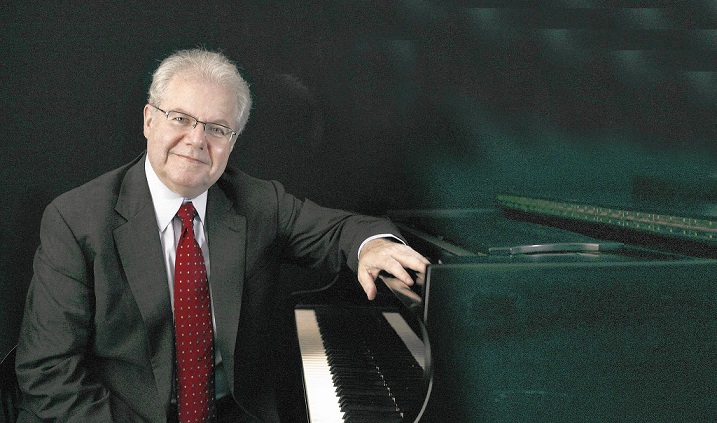
Above: pianist Emanuel Ax
~ Author: Oberon
Saturday October 26th, 2019 – How wonderful to encounter Emanuel Ax again so soon after his lovely performance of the Schumann piano quintet with the Dover Quartet last week at Zankel Hall. Tonight the great pianist joined The New York Philharmonic for Beethoven’s Piano Concerto #1.
The announced program looked long on paper, and indeed – after an engrossing first half – there was something of a slump with Albert Roussel’s 3rd symphony. It’s understandable that Maestro Stéphane Denève would want to include it, but somehow it did not quite fit in with the other works: it didn’t hold hold up well in the company of Beethoven and Ravel.

Above: composer Jennifer Higdon
Jennifer Higdon’s blue cathedral, composed in 2000 in memory of her brother, opened the evening. Read the composer’s eloquent program note on this work here.
blue cathedral opens with most ethereal of sounds: barely audible at first, the music slowly seeps into our consciousness. Cello, the plaintive flute, clarinet, piano, and harp bring their colours to bear; the strings are lush and grand, with the high violins set against the deep celli and basses. A massive wave of drums and low brass hits like a tsunami. The marimba, oboe, and Cynthia Phelps’ dusky viola are heard: each solo voice seems to evoke a particular memory of the departed.
The music then becomes cinematic, with a back-beat dynamic. Brass fanfares lead to epic grandeur before calm sets in. Now the solo voices are heard again – flute, clarinet, oboe – and an especially fine passage for a cello/viola quartet as the music fades to the gentle chiming of a solitary bell.
In her program note, Ms. Higdon wrote about her use of the clarinet, which was her brother’s instrument. It was in the passages for that instrument, sublimely played by the inimitable Pascual Martínez-Forteza, that Ms. Higdon’s moving tribute to her sibling found its most poignant voice.
Emanuel Ax, ever a welcome guest at the Philharmonic, was warmly greeted as he took his place at the Steinway. The pianist sat quietly as the musical introduction – at first courtly, then stately – sets the mood. Mr. Ax then began his enchanting performance: crystal-clear arpeggios, subtly modulated, drew us in. Beethoven’s font of melody – both for the pianist and the orchestra – is filled to overflowing. In a long paragraph, the pianist displayed his gifts with nimble downhill scales played pianissimo, and cascades of notes of great delicacy, clarity, and warmth.
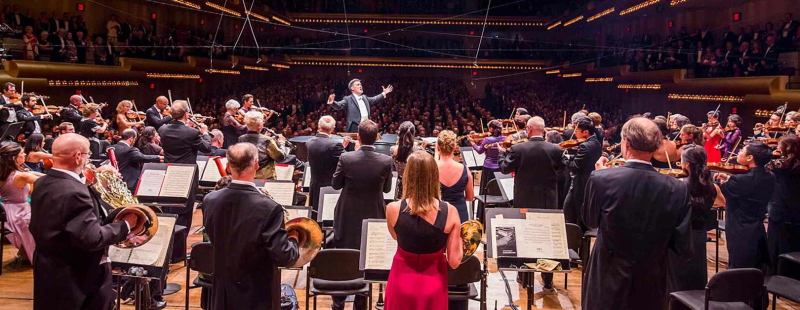
Following a majestic orchestral passage, the long cadenza – which seems almost like a sonata in itself – was impeccably delivered, the audience in a state of rapt attentiveness. One sensed that an ovation might erupt at this point, but Maestro Denève was able to forestall an intrusion by keeping a cautionary hand raised.
Now came the Largo, featuring one of Beethoven’s most gorgeous themes. For the next several minutes, my companion and I were transfixed by the ongoing dialog between Mr. Ax’s keyboard and Pascual Martínez-Forteza’s clarinet. Two great musicians, trading subtleties: mesmerizing!
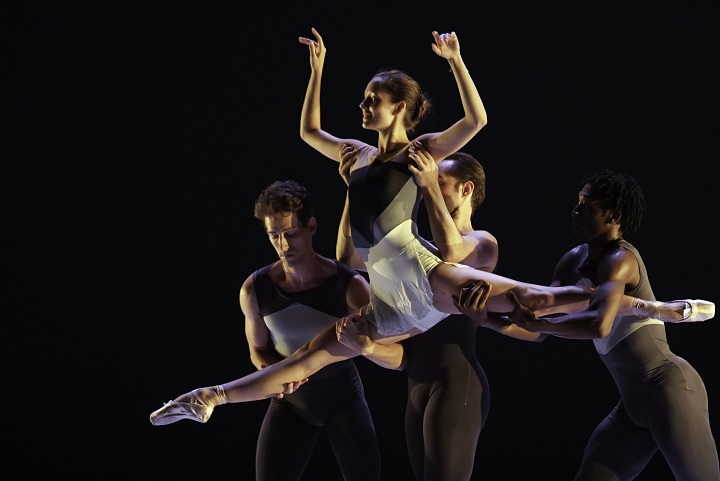
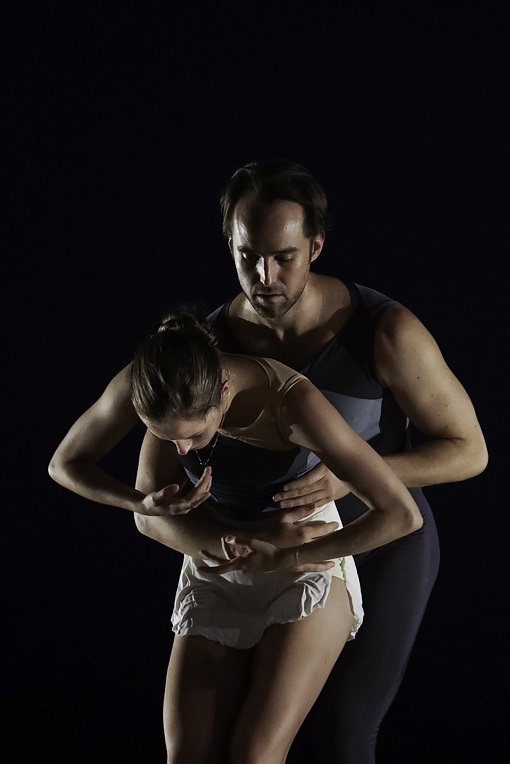
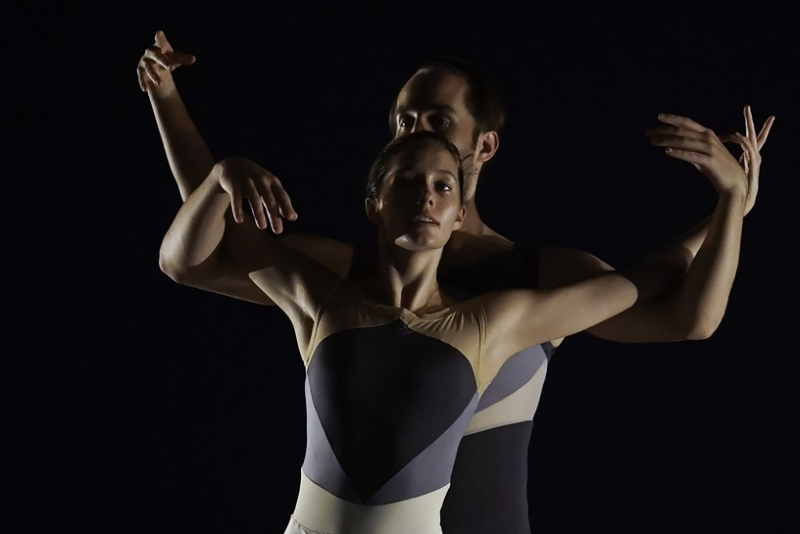
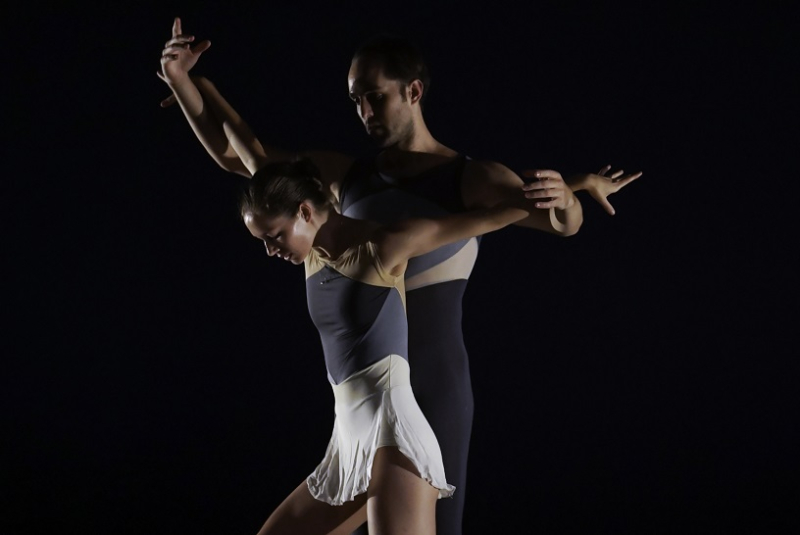
Mr. Ax immediately commenced the concerto’s concluding Rondo: Allegro, bringing to mind – with its jaunty interjections – the ballet Prism which Helgi Tomasson choreographed to this score for New York City Ballet in 2000. The esteemed pianist continued to dazzle us right to the last note, causing the audience to leap to their collective feet as he took his bows; Mr. Martínez-Forteza was also asked to rise, deservedly so.
An encore was demanded, and Mr. Ax sustained the ballet connection for me with his Chopin, used by Jerome Robbins in his ballet Dances at a Gathering.

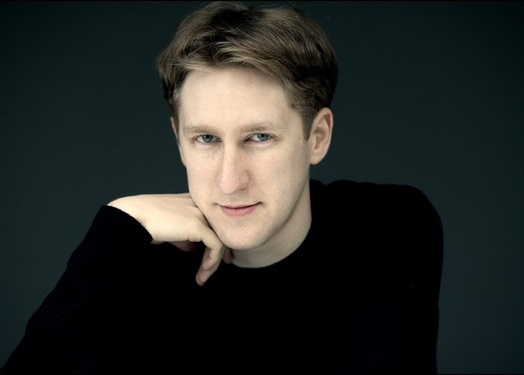
Following the interval, Maestro Stéphane Denève (above) brought us two works by his fellow Frenchmen: Albert Roussel’s Symphony #3 (composed 1929-1930) and Maurice Ravel’s immortal La Valse, which premiered in 1930.
The Roussel at first seemed wonderfully refreshing: its jazzy, driven, bustling opening augured well for thorough enjoyment. Yet as the work unfolded, it seemed full of ideas but lacking in coherence. The first, second, and fourth movements each felt overly long, and there was a sense of increased audience restlessness. The piece features a lot of ‘big’ music; rhythmic variety and enticing instrumentation are never lacking. Though poignant, witty, and ebullient by turns, the music slips in one ear and out the other, leaving little lasting impression. Some wonderful solo passages for violin, played beautifully by Frank Huang, were appealing.

Above: New York City Ballet’s Marika Anderson in George Balanchine’s La Valse
“We are dancing on the edge of a volcano…” wrote Maurice Ravel’s in his notes for La Valse. Such a timely concept, as our world these days often seems to be rushing toward its doom. This music, which George Balanchine choreographed for his evocative “death and the maiden” ballet of the same title, has been with me for decades.
Tonight’s performance, under Maestro Denève’s ardent baton, was everything one can hope for in this marvelous music. The musicians made the most of every opportunity, whether by solo or by section. La Valse again entranced with its dark allure and inevitability. Resistance is futile.
As we were walking down to the subway, my friend Cherylyn Lavagnino and I both spoke of the effect that the playing of Mssrs Ax and Martínez-Forteza in the Beethoven adagio had on us, and of the consolation of such musical experiences in these dark days. Thank you, gentlemen.
~ Oberon












 Oberon's Glade