Tag: Balanchine

  • Back at the Ballet

    6a00d8341c4e3853ef015435034561970c-800wi

    Wednesday January 25th, 2017 – I haven’t been to a New York City Ballet performance since Jennie Somogyi’s farewell in 2015, but I keep running into the dancers and am constantly reminded of how much I miss watching them dance. A few weeks ago, on a whim, I ordered a ticket for tonight’s all-Balanchine program, before casting was announced. A domestic surprise – a nice one – called me home early: I missed FOUR TEMPERAMENTS tonight. But I greatly enjoyed seeing ALLEGRO BRILLANTE and the Balanchine SWAN LAKE again. 

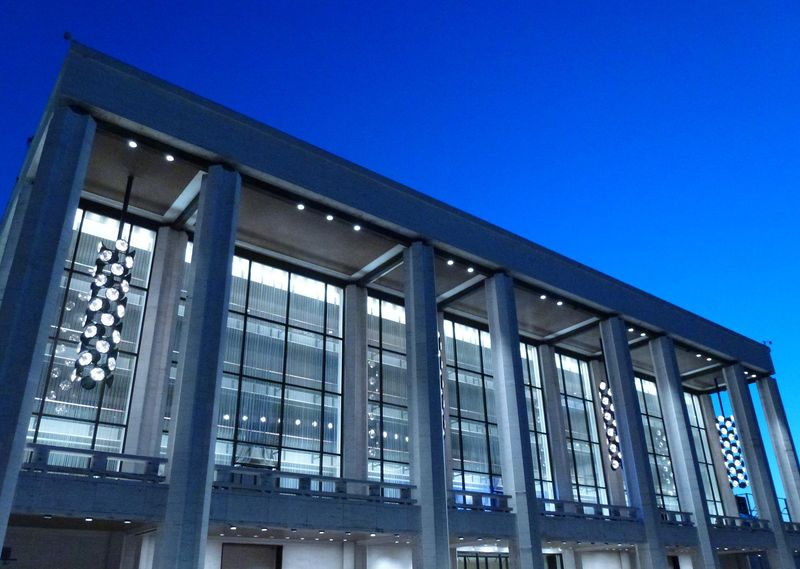
    On entering the theater lobby, I was very happy to see that The Lyre has been restored to a place of honor. Once seated, I watched the musicians warming up while the theater filled slowly. I was not feeling the old sense of anticipation, and I was not sure if my idea of re-connecting with NYCB was making sense: perhaps it’s a chapter best left closed? 

    But then the house lights went down; pianist Susan Walters and conductor Andrew Litton entered the pit for ALLEGRO BRILLANTE and suddenly it felt right to be there. This was my first experience of having Andrew Litton on the podium; the orchestra – apart from a random note or two going astray in SWAN LAKE – played the big Tchaikovsky themes sumptuously. Ms. Walters did a beautiful job with ALLEGRO BRILLANTE; and later in the evening, concertmaster Arturo Delmoni played a ravishing White Swan solo. 

    Tiler Peck was originally listed for ALLEGRO BRILLANTE, but a pre-curtain announcement informed us that Megan Fairchild would be dancing instead. I was pleased with this announcement, as I’d become quite an admirer of Ms. Fairchild over time; I was curious to see how the Fairchild/Veyette partnership would work under the circumstances, but they are both professionals and carried it off in fine style. Megan’s dancing had a lovely lyrical feeling, and I began to realize how very much I have missed her dancing over the past several months.

    When the swans made their entry in the Balanchine SWAN LAKE, it really sank in just how long I’d been away: hardly a familiar ballerina in sight. There was a time when I knew every single person in the Company and could scan a large group of corps dancers with my opera glasses and see one friendly face after another. Tonight the girls seemed beautifully anonymous; I wonder who among them might captivate me as Rebecca Krohn and Ashley Laracey had once done, right from their first performances with the Company?

    The soloists, Megan LeCrone and Lauren King, both danced very well. Teresa Reichlen and Russell Janzen created a true sense of poetry and ill-fated romance in their partnership. Russell looks the epitome of a romantic hero: his sense of wonder at finding this fragile creature by the lake, and his desire to protect and cherish her were beautifully expressed. Tess was an elegant Swan Queen, terrified at first and only slowly surrendering to the calming effects of Russell’s care. The two long-limbed dancers make a striking couple, and their ardent tenderness mirrored the music ideally. They were rapturously applauded, and called out for an extra bow.

    In ALLEGRO BRILLANTE, I was particularly impressed by the dancing of the supporting ensemble of eight dancers; Balanchine gives them plenty to do, and they all looked superb. These are dancers I followed closely back in my days as an NYCB regular, and it was really good to see them all again, looking so attractive and dancing with such assurance and grace: Megan Johnson, Meagan Mann, Gretchen Smith, Lydia Wellington, Devin Alberda, Daniel Applebaum, Cameron Dieck, and Aaron Sanz. Watching them, I was keenly aware of what I’ve been missing.

  • Duo Gagnant: French Music for Two Pianos

    Maxresdefault

    Wednesday September 21st, 2016 – Dan K Kurland invited me to this concert of French music – from the familiar to the relatively obscure – for two pianos at Juilliard’s Paul Hall. The program looked very inviting, and since dance themes prevailed throughout the hour-long presentation, it was especially agreeable to have choreographer Claudia Schreier sitting next to me.

    We arrived just moments before the house lights dimmed; Paul Hall was nearly full, and we found seats in the front row, in the aisle. The balance of sound may have been slightly off, but it was a very interesting perspective visually.

    ~ POULENC L’embarquement pour Cynthère
    Pianists: Dan K Kurland and Jonathan Feldman

    Opening with this 1951 Poulenc gem – music that is so quintessentially French – the tone for the entire evening was set. Described as a Valse-Musette, this piece delights from its vivacious start to its ironic finish. Though Dan Kurland was not originally schedule to play tonight, he did…and wore red socks into the bargain, a subtle nod to a beloved French pianist. Joining Dan was Jonathan Feldman, chairman of Juilliard’s Collaborative Piano Department, making for a brilliant performance. 

    ~ DEBUSSY Prélude à l’après-midi d’une faune
    Pianists: Michał Biel and Brian Zeger

    Shifting moods, we are plunged into the erotic mystery of Claude Debussy’s Prélude à l’après-midi d’une faune in a splendid performance by Michal Biel and Brian Zeger. The composer completed his symphonic poem Afternoon of a Faun in 1894, and published a version for two pianos the following year. In a rapture-inducing performance of perfumed sonorities, the two pianists beautifully summoned up the music’s alternating currents of delicacy and turbulent passion. I so enjoyed seeing Brian Zeger again, here in the hall where I first heard him play many moons ago. 

    ~ FRANÇAIX Huit Dances Exotiques
    Pianists: Cherie Roe and Arthur Williford

    Dating from 1957, these eight miniatures represent the “newest” music on the program. Pianists Cherie Roe and Arthur Williford jumped right into the music hall swing-and-sway of the opening Pambiche. Sprightly syncopation and etched-in miniature glissandi delighted us in Baiao, and more syncopation followed in Nube gris; both here and in the lively Merengue that follows, sudden endings took us by surprise. The rolling rhythm of the Mambo was further enhanced by a mid-song change of key. Both the urbane, casually shrugging Samba and the bouncy swirl of the Malambeano caught us off-guard by ending in mid air. The final Rock ‘n’ Roll, wryly jazzy, would have caused my old friend Franky to exclaim, “This is so jive!” The two pianists seemed to be having a blast with this music.   

    ~ CHAMINADE Duo Symphonique
    Pianists: Dror Baitel and Nathan Raskin

    Cécile Chaminade, the sole female composer to be included on this evening’s program, wrote her Duo Symphonique in 1905. Of all the music heard this evening, this was the most traditionally “classical” in feeling. It opens operatically, runs on to swirls of notes and later to fanfare-like motifs. The highest and lowest registers of the piano are explored, the vast range adding to the truly symphonic quality of the piece: “…lyrical grandeur…” was one of my descriptive scrawls. A more delicate theme heralds a song-like interlude, followed by a build-up and an a grandiose finale. I loved every minute of it, and was very impressed by the expert playing of Dror Baitel and Nathan Raskin. 

    ~ SAINT-SAËNS Danse Macabre
    Pianists: Jinhee Park and Ho Jae Lee

    Saint-Saëns’ Danse Macabre is a musical setting of a poem by the French poet Henri Cazalis, based on the allegory of the ‘dance of death’. Pianists Ho Jae Lee and Jinhee Park maintained communication across the pianos, which in their sleek blackness took on a coffin-like aspect. The music rises from the depths to jangling heights, descending passages seem to point to the grave (or to hell), and at one point the very lowest notes of the keyboard resound. Becoming wildly dramatic, the music speeds up before turning more pensive and ending in sudden death. The audience took special delight in this piece, and in the two players. 

    ~ DEBUSSY Petite Suite
    Pianists: Katelan Terrell and Michał Biel

    Debussy’s Petite Suite was published in its original four-hands version in 1889; transcriptions for solo piano and for violin and piano followed in 1906. The work found great popularity in a 1907 adaptation for chamber orchestra by Henri Büsser. Tonight the four-hands version was played by Katelan Terrell and Michal Biel, seated together at a single keyboard. Commencing in dreamy softness, the suite continues with evocations of Spring, very slight tinges of gypsy allure, contrasts of rhythm and lull, and bursts of joyous rippling in the higher range which maintain brightness. The final movement seems very ‘Parisian’, and, after an interlude, we are carried back to the boulevards by our two sophisticated pianists.

    ~ RAVEL La Valse
    Pianists: Sora Jung and Adam Rothenberg

    Best known (especially to Balanchine admirers) in its orchestral version, Ravel’s La Valse was transcribed by the composer twice, once for solo piano and again for two pianos. The first performance of the piano duo version was given at the home of Misia Sert, with Ravel himself one of the pianists. Misia, one of my favorite characters in the history of music and dance, was the work’s dedicatee. Among those present at Misia’s salon for the premiere performance were Serge Diaghilev, Igor Stravinsky, Francis Poulenc, and Léonide Massine: how I wish I could have been there! 

    The mystery of the opening of La Valse loomed up from the depths as pianists Sora Jung and Adam Rothenberg launched their intense and remarkable performance. At last the waltz struggles to the surface, and the two pianists delight in flinging myriad colours onto the sonic canvas. Thunderous intrusions alternate with madly ironic swirls of dance. This is music on the verge of madness. 

    Throughout the Ravel, images of two beloved dancers – Janie Taylor and Sébastien Marcovici – overtook my imagination: they danced this Balanchine masterwork at their New York City Ballet farewell performance in 2014.

    Tonight, as all the pianists appeared for a bow on the stage of Paul Hall at the end of the concert, an exuberant standing ovation greeted them. A really wonderful evening!

  • Joshua Bell @ Mostly Mozart

    Joshua-Bell

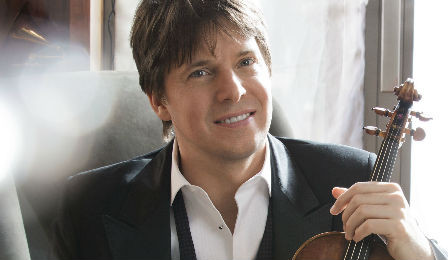
    Above: violinist Joshua Bell

    Wednesday August 17th, 2016 – Geffen Hall was packed to the rafters for Mostly Mozart tonight: all the stage seats were taken, and there was a line for ticket returns: could it have had something to do with Joshua Bell being the scheduled soloist?  Mr. Bell certainly impressed in his performance of Mozart’s 4th violin concerto, and the program overall was highly enjoyable.

    Any hearing of Felix Mendelssohn’s overture to A Midsummer Night’s Dream is bound to summon up visions of Balanchine’s enchanted forest – it’s quite amazing, in fact, when you think of the amount of narrative and dancing Mr. B was able to fit into this 12-minute overture, without ever for a moment seeming over-busy. The Mostly Mozart Orchestra coped well with the brisk tempi set by the youthful-looking conductor, Matthew Halls, and it was so much sheer fun to hear these familiar themes played live again. I must mention Jon Manasse’s lovingly-phrased clarinet solo.

    Joshua Bell then appeared to a warm greeting from the crowd. In this rendering of the Mozart violin concerto #4 in D-major, the violinist and the conductor formed a steady rapport. Unobtrusively using a score, Mr. Bell launched the solo line in the stratosphere and went on to play the Allegro vivace‘s capricious music with easy aplomb. There’s a lot of high-velocity coloratura in play here, and it culminates with a florid, witty cadenza of Mr. Bell’s own design.

    On a high, sweetly sustained note, Mr. Bell lures us into the Andante cantabile; the melody eventually dips into a lower range where his playing a balm to the ear. An elegant ‘interlude’ has a different sort of appeal; then the main theme recurs, before the violinist ascends to another high-lying cadenza. 

    After an elegant start, the Rondeau turns sprightly – a delicate mini-cadenza teases us and then there’s another more extended cadenza. The soloist joins the massed violins in a sort of chorale, and Mr. Bell continues to seize opportunities for yet two more cadenzas, the first having an ironic buzzing quality.

    As ever, Mr. Bell’s physically engaged playing is as enjoyable to watch as to hear. The random smudged note here or there was nothing to deter from the ongoing sweep of his music-making, and though I agreed with my companion that the cadenzas sometimes seemed rather too ‘modern’, they gave the performance an individuality that was refreshing in its own right.

    Beethoven’s overture to Coriolan, Op. 62, was the composer’s first opportunity to write for the stage, and his success has kept the overture in the repertory. Originally conceived as a prelude to the play of the same title by the composer’s friend Heinrich Joseph von Collin – a theatrical success in Vienna in 1802 – the overture didn’t appear until 1807, when the play’s popularity had waned. It seems that only one performance of the play with Beethoven’s overture took place: on April 17th, 1807. After that, the eight-minute overture went on to thrive as a concert number.

    This evening’s performance was finely-wrought by Maestro Halls, and most attractively played. The contrasting themes of anger and tenderness express the theme of the play: the betrayal of his duty as a Roman general by Coriolanus, and his mother’s entreaties to abandon his plan to lead the enemy forces in an attack on Rome. Her pleading is effective: Coriolanus abandons his scheme and faces his punishment.

    A warm and appealing performance of Beethoven’s “little” symphony – the 8th – concluded the evening on an optimistic note. The last time I heard this symphony performed live was in December 2013 when the Spanish conductor Rafael Frühbeck de Burgos, then in his 80th year, led the New York Philharmonic in the work and left my friend Dmitry and I with wonderful memories of the highly-respected Maestro, who passed away in June 2014. We still speak of that Philharmonic concert with special affection. 

    Timed at around twenty-five minutes, this four-movement symphony flies by: there’s no adagio to make us stop and ponder, but rather a charming and often witty flow of themes with the congeniality of dance rhythms ever-ready to buoy the spirit.

    A lively podium presence, Maestro Halls was well in his element here, and the musicians seemed fully engaged in this music which successfully blends elegance with folkish gaiety. The horns sounded plush, and again Mr. Manasse made his mark: an outstanding musician.

  • L.A. Dance Project @ The Joyce

    Helix2a

    Above: Stephanie Amurao and Aaron Carr of L.A. Dance Project in Justin Peck’s HELIX; photo by Rose Eichenbaum

    Wednesday July 27th, 2016 – First off, I must heap praise on the dancers of L.A. Dance Project: throughout this long, uneven program at The Joyce, their energy, commitment, sexiness, and spirit kept us engaged, even when the choreography lapsed. Some of these dancers are familiar to me: Stephanie Amurao (she danced briefly with TAKE Dance), Morgan Lugo (he danced in Luca Veggetti’s BACCHAE for Morphoses in 2011); and Aaron Carr (formerly of Keigwin & Co); then there’s Anthony Bryant, a lovely guy I’ve known via Facebook and who I have now met as both a dancer and friend.

    The Joyce was packed – so nice to run into Denise Vale of the Martha Graham Dance Company! – as works by Sidi Labri Cherkaoui, Martha Graham, Justin Peck, and The Project’s director Benjamin Millepied were offered up.

    Mr. Cherkaoui – whose ORBO NOVO for Cedar Lake Contemporary Ballet in 2009, and SUTRA, seen at the White Lights Festival in 2010, linger in the memory – gives us HARBOR ME, a darkish piece set to music by Park Woojae. This work may be danced by three men or three women: tonight, it was the female trio: Stephanie Amurao, Julia Eichten, and Lilja Rúriksdóttir. The music features poignant cello passages; each of the three women has a solo, then trios develop in which they form languid structures. The music pulses up, with a mid-Eastern feel. The women dance a trio in a pool of light, conversing in gestures. The ballet starts to feel overly drawn-out: the alternation of solos and trios becomes repetitive, and there’s a bit too much floorwork. In the end, it’s the compelling dancing that saves it. 

    After the first interval, MARTHA GRAHAM DUETS proved a welcome change of pace. The three pas de deux were culled from a 1957 Graham documentary, A Dancer’s World, and are performed to piano music by Cameron McCosh from the film’s soundtrack. White Duet is now familiar to Graham devotees in its incarnation as part of Diversion of Angels; Star Duet and Moon Duet have not been seen since the 1960s.

    Developing the Graham style takes years for a dancer, and so one could not expect tonight’s sextet of dancers to look like the members of the current Graham company – people who are deeply invested in the Graham technique. Instead, a beautiful fusion has been achieved, and it’s simply wonderful to be seeing these duets performed with such lustre: Rachelle Rafailedes and Nathan Makolandra looked divine in the stylized White Duet, here danced in Janie Taylor’s sleek costumes, recalling the Balanchine black-and-whites.

    The delights of Star Duet were served up by Stephanie Amurao and Anthony Bryant. There are kick-lifts and arabesque balances, and then things get playful: Stephanie stands on Anthony’s thighs as he revolves in a gentle plié. In Moon Duet, Morgan Lugo looks like a young god. He and Julia Eichten gorgeously conveyed a sense of wonderment and quiet ecstasy as their duet unfolds.

    Justin Peck’s HELIX was far and away the most impressive of the program’s three new works. In her costume designs for this ballet, Janie Taylor puts the dancers in grey but playfully adds powder-blue socks. Esa-Pekka Salonen’s score is eminently dance-worthy and Justin’s choreography evolves naturally from the music. But for the lack of toe shoes, this piece is brilliantly balletic…with a contemporary twinge.

    At curtain-rise, three couples stand back-to-back. Then movement bursts forth: tricky footwork and complex partnering mark the three duets that Justin has created, and the dancers dive right in, vibrant and assured. When the music gets big, the dancers go still and then strike poses. A series of exuberant solos follows. Urgent comings and goings engage the eye, and then: everyone collapses. The crowd went wild, showering the dancers with applause. Kudos to all: Laura Bachman, Anthony Bryant, Nathan Makolandra, Robbie Moore, Rachelle Rafailedes, and Lilja Rúriksdóttir.

    Following a second intermission, Benjamin Millepied’s ON THE OTHER SIDE brought the full Company on in a colour-filled dancework set to piano music by Philip Glass. The ballet was premiered about a month ago at Sadler’s Wells, and perhaps it was scheduled for its Joyce performances without sufficient thought as to how it would fit in the program. Basically, it’s fatally over-extended.  

    ON THE OTHER SIDE starts more than promisingly – and it’s danced superbly from start to finish – but it simply goes on and on. Each segment, and the music that supports it, is more than pleasing to watch and hear, but after a while one could sense the audience’s impatience and desire for an ending. The dancers labored valiantly and never for a moment let the choreographer down; eventually my companion and I were feeling numb. 

    When the curtain finally fell, the dancers were warmly applauded but the rabble-rousing ovation they so deserved was dampened by the fatigue that had set in watching this last ballet. With judicious cutting, ON THE OTHER SIDE could still be a viable work; as it stands now, it’s as exhausting to watch as some of Twyla Tharp’s over-extended creations.

  • Joffrey Ballet Concert Group @ NYLA

    2016 St. Saens 4th mvmt. fouette jump Lindsey Felix, Daniel White, Genaro Freire JBS_CONCERT GROUP_5-25-2016_by Lucas Chilczuk-1277

    Above: Lindsey Felix, Daniel White, and Genaro Friere of the Joffrey Ballet Concert Group in Gerald Arpino’s Suite St. Saens; photo by Lucas Chilczuk

    Friday May 27th, 2016 – The JOFFREY BALLET CONCERT GROUP, under the Artistic Direction of Davis Robertson, performing a mixed program of classics (Gerald Arpino’s Suite St. Saens, and Balanchine’s Valse Fantaisie) along with newly-created pieces by Gabrielle Lamb, Robert Jeffrey, and Dwight Rhoden plus an Asaf Messerer pas de deux à la Russe to music by Rachmaninoff which brought down the house. A very attractive company of dancers held the audience in an attentive, appreciative state; excellent lighting (David Moodey) enhanced each ballet as this highly enjoyable program of dance unfolded before us. 

    Valse Fantaisie - Shaina Wire & Sergio Arranz saute de chat

    Above: Shaina Wire and Sergio Arranz in Valse Fantasie; photo by Lucas Chilczuk

    To start a ballet evening with Balanchine is always a good thing, and Valse Fantaisie – to the intoxicating Glinka score – engaged us immediately. Stacey Caddell has staged the ballet on the young Joffrey dancers, and they did very nicely by it. Four lovely ballerinas sailed thru the lyrical (and sometimes tricky) Balanchine choreography with a sense of joy; in the principal roles, Shaina Wire and Sergio Arranz were appealing in both appearance and technique, displaying a fine mixture of nobility and charm.

    Mr. Arranz was back onstage moments later, in silhouette, for the opening of Robert Jeffrey’s Confianza. This intimate, moody pas de deux is set to a collage of music by Benjamin Brown, Steven Stern, Eric Satie, and Max Richter. The choreographer gives the dancers – Victoria Santaguida and Mr. Arranz – complex and demanding partnering motifs which the couple handled with persuasive aplomb, bringing tenderness tinged with sensuousness to their dancing.

    And So It Goes - Sierra French & Genaro Freire in ecarte pull

    Above: Sierra French and Genaro Friere in And So It Was…photo by Lucas Chilczuk

    Dwight Rhoden’s And So It Was… is danced to Bach’s Partita #2 in D-minor. As smoke wafts across the dramatically-lit stage, a sexy atmosphere is developed with the seven boys in silky briefs and the girls sleekly costumed. The choreographer’s sense of musicality serves up a succession of duets – sometimes with all seven couples duetting at the same time – with an endless flow of dancers coming and going. As is so often the case in using Bach’s music, the ballet eventually began to feel repetitive; the dancers were able to sustain this longish work thru their personal attractiveness and commitment.

    Tessellations - Shayla Hutton & Sergio Arranz arabesque

    Above: Shayla Hutton and Sergio Arranz in Tesselations; photo by Lucas Chilczuk

    Gabrielle Lamb’s Tessellations provided a wonderful change of pace; using a brilliant mix of music by The Amestoy Trio and Cat Power, Gabrielle’s ballet at first seems to be just another ‘loner vs community” narrative, but it is far more quirky – ironic, moving, and witty by turns – and was expressively danced by the Joffrey troupe. 

    The dancers wear dark clothing and socks. The Amestoy Trio’s fresh meshing of gypsy, Parisian, and Latino influences is a kick to hear, and Cat Power’s vocals for a pas de deux has its own slightly gritty appeal. Periods of silence allow us a bit of reverie before the dancing moves on. The dancers alternately dance and observe, forming fleeting cliques and chains, standing in ordered designs, communicating in gestures, and creating a world in which alternating currents of sentiment and low-key street savvy hold us under a spell. It’s been a while since I’ve seen any of Gabrielle’s work, and this was really refreshing to experience.

    Spring Waters - Mariana Perez and Jon-Paul Hills ecarteJBS_CONCERT GROUP_5-25-2016_by Lucas Chilczuk-813

    Above: Mariana Perez and Jon-Paul Hills in Spring Waters; photo by Lucas Chilczuk

    Asaf Messerer’s Spring Waters, the boyish and muscular Jon-Paul Hills wowed the audience with the fearless strength of his partnering, placing his ballerina – Mariana Perez – in improbable lifts with the assurance of an Olympic athlete, catching her as she rushes to his arms and sweeping her overhead. The duet ends with a spectacularly high lift as Mr. Hills rushes across the stage and into the wings, bearing Ms. Perez aloft like an exulted icon: the audience simply went nuts as they sped away.  

    Gerald Arpino’s Suite Saint-Saëns was the closing number this evening, a large-scale work filled with movement and alert to the music’s many fragrances. The dancers enter one by one, with brisk jetés and meeting up in fleeting partnerings. Lindsey Felix, a featured soloist in the first two movements (Caprice Valse and Serenade) was agile and lovely to watch.

    The Serenade has a dreamier quality; four couples to start, with other dancers joining. The simple act of walking takes on its own resonance. An intimate pas de trois for Ms. Felix, Maria Sol Maratin, and William Hall evolves beautifully as other dancers come and go.

    A march-like theme jolts us, but soon settles in to a Minuet with a ‘classic’ pas de deux – and another big lift – before hastening on to the concluding Pas Redoublé which features leaping boys and even a set of fouetté turns. The music is bouncy, the dancing exuberant.

    Amid all the bustle and swirl of this wonderful ballet, a dancer who had not appeared earlier in the evening – Haojun Xie – made a very fine impression with his lithe jump and sincere presence.

  • Ballet Academy East @ Ailey Citigroup

    12729135_10102663014065261_1219830271059168853_n

    Above: from Claudia Schreier’s ballet “Charge“, a Rosalie O’Connor photo

    Saturday February 20th, 2016 – Young dancers from Ballet Academy East appeared tonight in performance at Ailey Citgroup Theatre. Ballets choreographed by Ashley Bouder, Jenna Lavin, and Claudia Schreier were on offer, as well as George Balanchine’s classic “Raymonda Variations”, staged by Darla Hoover, BAE’s artistic director and a répétiteur for the Balanchine Trust.

    Though billed as a ‘studio showing’, the presentation was fully staged, with lighting and costumes. The house was packed, with some dance-world luminaries who teach at BAE among the crowd.

    Jenna Lavin’s “Barcarolle” opened the evening; set to the beloved music of the same title from Offenbach’s CONTES D’HOFFMANN, Lavin’s charmer of a ballet was danced by the youngest group of dancers on tonight’s programme: ages 10 to 12 years. The ballet’s three boys were showing early development of the courtly style which is an essential component to classical ballet, whilst the girls – in pretty pink tutus – danced with amiable grace.

    Ashley Bouder, principal ballerina with New York City Ballet, has choreographed “Mozart’s Little Nothings“, a ballet to the great composer’s “Les petits riens” for a cast of 13 BAE dancers ranging in age from 12 to 15. The choreography is elegant and well-structured – as perfectly befits the music. The girls wear white with violet ribbon trim, and the ballet has a classic hierarchy of principal couple, pas de trois, and corps de ballet. The dancing was accomplished, the young dancers successfully imparting a sense of both balletic decorum and the joy of performing, and celebrating in a wonderful ‘big circle’ moment. Ms. Bouder, with a beautiful baby bump, was greeted warmly when she took a bow at the end of her ballet. 

    Boldly and thrillingly choreographed for 22 of the school’s most technically advanced dancers, Claudia Schreier’s premiere, “Charge” calls upon her youthful cast for both strong traditional ballet technique and an unusually supple fluency of the upper body, with correspondingly fluid port de bras. “Charge” is set to the third movement of the contemporary Dutch composer Douwe Eisenga‘s piano concerto.

    Ms. Schreier showed a clear mastery of structure in deploying her large cast with consummate skill from start to finish in this exciting ballet. Opening with a single girl onstage, the choreographer commences to build her ballet with a duo, a trio, and a quartet of dancers arriving in succession, eager to dance. By the time the full cast are onstage, the choreography and Mr. Eisenga’s sparkling, dramatic score are whisking us along on an exhilarating ride.

    Charge” unfolds with a dynamic sense of the inevitable: the music propels Ms. Schreier’s choreography at every moment, and the dancers give it their all. So many highlights along the way: a passage for six boys is echoed by six girls; a stylized pacing motif; a grand circle that rushes to form and then vanishes just as quickly; an off-kilter pas de deux; four quartets in canon; fleeting solos; unusual lifts. Ms. Schreier miraculously managed her large cast – in a limited space – so compellingly that things never seemed over-crowded or chaotic.

    In sum, “Charge” writes another vivid page in Ms. Schreier’s dance diary: a perfect follow-up to the memorable works she presented on this very stage in August 2015. Kudos to the young dancers who illuminated “Charge” with their flair and commitment.

    After the interval, Ms. Lavin turned to Schubert’s piano trio # 2 in E- flat major, Opus 100, for the premiere of “(S)EVEN”. Three girls in blue and four is pale rose comprise the cast. Ensemble moments give way to a series of short solos performed on pointe, each tailored to the specific technical gifts and personality of the seven teen-aged dancers.

    Raymonda Variations”, one of George Balanchine’s signature ballets, offers the BAE dancers a showcase for their diverse lyrical and virtuosic gifts. Darla Hoover cast the Academy’s advanced students with a keen sense of showing them off to best advantage. The level of dancing was high, and was matched by the musicality and Romantic-era sensibilities of the performers.

    Alexander Glazunov’s music, exuding the perfumed elegance of a bygone era, is captivating – and surely inspired the young BAE dancers to put forth their charming and scintillating best. It must have been a thrill to dance Balanchine at a young age, and for a very receptive audience.

    Several individual dancers in tonight’s performance could be singled out for special praise, but I don’t feel it’s really beneficial to do so at a student performance. Everyone gave of his or her best, and these young talents seem to be in very good hands at Ballet Academy East.

  • At Year’s End

    6a00d8341c4e3853ef00e54f201b938834-800wi

    Above: Me and my friend Richard outside the Perry Street condo, shortly after I moved to New York City in 1998.

    Odd-numbered years are often unpleasant ones for me. Just after Thanksgiving, one of my oldest friends – Richard – was found dead in his apartment in Southington, CT. The news did not shock me, since he had been in declining health for months, and he had seemed unwilling to pursue medical treatment.

    Our friendship stretched back to 1976 when we were both working at the old Covenant Insurance Company in Hartford CT. We shared many adventures over the years, and we had a few fallings-out, though never anything that lasted more than a day or two.

    Up until the time of his death, we spoke twice a week by phone (he had never shown an interest in owning a computer) and when he failed to call me on the Saturday after Thanksgiving I knew something was wrong. I tried to call him but his voicemail was full. Then Suzanne contacted me with the news of his death.

    The fact that he’s no longer with us and that we’ll never again meet in New Haven for lunch or spend a day together here in the City has sunk in slowly. I continue to miss his slightly raspy voice on the phone, and the other day when the phone rang (it seldom does) I momentarily thought: “Ah…Richard’s calling… finally…” and then I remembered.

    During 2015, three people I am very close to lost people dear to them, all in sudden and unexpected circumstances. To Dmitry, Brix, and Ta-Wei go my sympathies…life will never be quite the same for us now, even though the deep initial sorrow will fade over the years to come.

    ~~~~~~~~~~~~~~~~~~~~~~~~~~~~~~~~~~~~~~~~~~~~~~~~~~~~~~~~~~~~~~~~~~~~~~~~~~~~~~~~~~~~~~~~~~~~~~~

    2015 also saw a major change in my blog which – as a retired person – occupies a great deal of my time. During their Winter season, I finally gave up on New York City Ballet. They had become increasingly random with their press tickets and since my calendar is so full and events planned weeks in advance, it became very frustrating to be told on a Monday that they couldn’t accommodate you that week, after you’d set aside the date just for them. 

    I withdrew from their press list and have only been back once since: for Jennie Somogyi’s farewell. I miss the dancers and the Balanchine rep terribly, but it became clear to me that the powers that be didn’t care if I came and wrote about their Company or not.  

    My plan now is to go to NYCB from time to time; I don’t mind in the least buying tickets though by the time casting is announced, affordable seats in parts of the house where I like to sit are usually unavailable.

    Of course, New York City Ballet was one of the main attractions for me in making the move to New York City. That I will now see them rarely is sad in a way, yet – like the Countess Olenska in THE AGE OF INNOCENCE – I must go where I’m invited. 

    Curiously, losing NYCB started to make me think about my blog’s dance coverage in general. I realized my interest had been flagging, in part because I simply saw too much dance and in a way a lot of it was starting to look (and sound) the same. Meanwhile I was finding The New York Philharmonic, Chamber Music Society of Lincoln Center, Young Concert Artists, and the American Symphony Orchestra were all offering truly exciting concerts, and were wonderfully welcoming and very appreciative of having their performances written about.

    Since these major classical music organizations – along with The Met (yes, I still go…often…but that’s a whole ‘nother story) – announce their programming months in advance, it makes it easy to fill up my calendar for the entire season…but leaves far less time for dance. 

    So…voilà…my dance blog has become a classical music blog. Dance will certainly not be written off entirely though: a handful of Companies whose work I have enjoyed over the last several seasons will continue to have their rehearsals and performances covered here.

    There is so much more I could say about this transition, but in fact I am simply following the natural flow of things and am finding myself deriving enormous pleasure and meaning in the eternal realm of great music.

    I cannot wait to flip my calendar to 2016, and I wish everyone a year full of music, hope, and love.   

  • At Year’s End

    6a00d8341c4e3853ef00e54f201b938834-800wi

    Above: Me and my friend Richard outside the Perry Street condo, shortly after I moved to New York City in 1998.

    Odd-numbered years are often unpleasant ones for me. Just after Thanksgiving, one of my oldest friends – Richard – was found dead in his apartment in Southington, CT. The news did not shock me, since he had been in declining health for months, and he had seemed unwilling to pursue medical treatment.

    Our friendship stretched back to 1976 when we were both working at the old Covenant Insurance Company in Hartford CT. We shared many adventures over the years, and we had a few fallings-out, though never anything that lasted more than a day or two.

    Up until the time of his death, we spoke twice a week by phone (he had never shown an interest in owning a computer) and when he failed to call me on the Saturday after Thanksgiving I knew something was wrong. I tried to call him but his voicemail was full. Then Suzanne contacted me with the news of his death.

    The fact that he’s no longer with us and that we’ll never again meet in New Haven for lunch or spend a day together here in the City has sunk in slowly. I continue to miss his slightly raspy voice on the phone, and the other day when the phone rang (it seldom does) I momentarily thought: “Ah…Richard’s calling… finally…” and then I remembered.

    During 2015, three people I am very close to lost people dear to them, all in sudden and unexpected circumstances. To Dmitry, Brix, and Ta-Wei go my sympathies…life will never be quite the same for us now, even though the deep initial sorrow will fade over the years to come.

    ~~~~~~~~~~~~~~~~~~~~~~~~~~~~~~~~~~~~~~~~~~~~~~~~~~~~~~~~~~~~~~~~~~~~~~~~~~~~~~~~~~~~~~~~~~~~~~~

    2015 also saw a major change in my blog which – as a retired person – occupies a great deal of my time. During their Winter season, I finally gave up on New York City Ballet. They had become increasingly random with their press tickets and since my calendar is so full and events planned weeks in advance, it became very frustrating to be told on a Monday that they couldn’t accommodate you that week, after you’d set aside the date just for them. 

    I withdrew from their press list and have only been back once since: for Jennie Somogyi’s farewell. I miss the dancers and the Balanchine rep terribly, but it became clear to me that the powers that be didn’t care if I came and wrote about their Company or not.  

    My plan now is to go to NYCB from time to time; I don’t mind in the least buying tickets though by the time casting is announced, affordable seats in parts of the house where I like to sit are usually unavailable.

    Of course, New York City Ballet was one of the main attractions for me in making the move to New York City. That I will now see them rarely is sad in a way, yet – like the Countess Olenska in THE AGE OF INNOCENCE – I must go where I’m invited. 

    Curiously, losing NYCB started to make me think about my blog’s dance coverage in general. I realized my interest had been flagging, in part because I simply saw too much dance and in a way a lot of it was starting to look (and sound) the same. Meanwhile I was finding The New York Philharmonic, Chamber Music Society of Lincoln Center, Young Concert Artists, and the American Symphony Orchestra were all offering truly exciting concerts, and were wonderfully welcoming and very appreciative of having their performances written about.

    Since these major classical music organizations – along with The Met (yes, I still go…often…but that’s a whole ‘nother story) – announce their programming months in advance, it makes it easy to fill up my calendar for the entire season…but leaves far less time for dance. 

    So…voilà…my dance blog has become a classical music blog. Dance will certainly not be written off entirely though: a handful of Companies whose work I have enjoyed over the last several seasons will continue to have their rehearsals and performances covered here.

    There is so much more I could say about this transition, but in fact I am simply following the natural flow of things and am finding myself deriving enormous pleasure and meaning in the eternal realm of great music.

    I cannot wait to flip my calendar to 2016, and I wish everyone a year full of music, hope, and love.   

  • Kochetkova/Cornejo SWAN LAKE @ ABT

    ABT_Swan_Lake_14_event

    Friday June 26th, 2015 – This evening my 2014-2015 officially ended with a bang when Maria Kochetkova and Herman Cornejo gave the ABT audience a SWAN LAKE to cheer about. The two dancers were recently paired in a very fine performance of BAYADERE and now, having established a lovely rapport, they must be seen in GISELLE, COPPELIA, and ROMEO & JULIET.

    ABT really needs a new SWAN LAKE, and their audiences deserve it. Though at fifteen years of age the production is not old by ballet standards (think of Balanchine’s NUTCRACKER or MIDSUMMER NIGHT’S DREAM), so much of it looks merely random and dutiful rather than dramatic and intriguing. Its main redeeming value is that any incoming pair of principals can step into the classic elements of the white/black/white scenes and feel perfectly at home; it’s the court scenes that really need freshening.

    Tonight in the opening scene we had a superbly-danced pas de trois from Sarah Lane, Skylar Brandt, and Joseph Gorak; all three had ample technique and charm, and Mr. Gorak’s beautifully pointed feet were an added delight. The national dancers in the Black Swan scene are burdened with over-costuming and funny fake moustaches; tonight, only Nicole Graniero (in Hungarian) managed to seize my opera glasses with her vivid performance. Later, as Herman Cornejo was anguishing over which unwanted princess to choose, I wanted to text him and suggest that he grab Nicole and elope to Morocco.

    James Whiteside was wonderfully alluring in the solo where he glamors every woman in the hall (and probably some of the men); yet however well this solo is performed, I always feel Rothbart doesn’t need to be humanized and that the less the character does, the more potent his force seems.

    But all these quibbles vanished in the face of the wonderful telling of the central love story from Ms. Kochetkova and Mr. Cornejo. Having sailed thru some high-flying combinations in the opening scene, it was at the lakeside that Herman’s Siegfried took on the poetic expressiveness that made his performance so compelling. Such a handsome young prince with the cheekbones, the silken mop of hair, the dark eyes filled with wonder – and later with despair. Slowly overcoming her fear of this ardent youth, Ms. Kochetkova surrendered to his tenderness in an adagio filled with haunting romantic nuance. The ballerina’s pin-pointe turns and poised balances wove a spell thru Odette’s music.

    In the Black Swan, the Kochetkova/Cornejo duo simply soared; the detailed courtship and Kochetkova/Odile’s brazen mimicking of the Odette motifs made for a vivid narrative in the adagio. Herman’s solo was a virtuoso show-stopper – igniting a volley of cheers and applause – and in her solo turn, the ballerina displayed her agility and technical command to impressive effect. Then the couple whipped the crowd into fits of rapture in the coda, where Kochetkova’s dazzling speed-of-light fouettés had real sparkle, with Herman taking up the challenge with his own barrage of pirouettes. A roar went up as they struck the final pose.

    In the last scene by the lake, the hapless lovers take final leave of one another; their joint suicide leads to the breaking of the curse and Rothbart’s destruction by the swans. The pink sunrise, with the lovers shown embracing in some afterlife, is a final miscalculation in this production. But as Kochetkova and Cornejo came forward for their bows, nothing else mattered: the audience, pleased as punch, were still screaming as I headed up the aisle.

  • The Royal Ballet: Mendelssohn & Mahler

    C7bc4191abf4460d877244cfebd694b0

    Above: Edward Watson in the Royal Ballet’s production of SONG OF THE EARTH; photo by Johan Persson

    Thursday June 25th, 2015 – The Royal Ballet are presently at Lincoln Center, and this evening’s double-bill of Sir Frederick Ashton’s THE DREAM and Sir Kenneth MacMillan’s SONG OF THE EARTH seemed particularly appealing to me, not least for the music of two of my favorite composers: Felix Mendelssohn and Gustav Mahler. The fact that Edward Watson would be appearing in the MacMillan made an appealing prospect irresistible.

    Ashton’s THE DREAM was the first ballet I ever saw live, performed by The Joffrey at New York’s City Center on October 16th, 1974; Rebecca Wright, Burton Taylor, and Russell Sultzbach had the principal roles that evening. I’ve not seen the ballet again since that performance.

    The Royal Ballet’s production of the Ashton boasts a particularly evocative and gorgeous set, and lovely costumes – notably those for the corps of ‘adult’ fairies (unlike in Balanchine’s version, there are no children to be seen in the Ashton, aside from the Changling Boy). Ashton tells the story in a more abbreviated rendering than Mr B – Ashton’s mortal couples are less-fully-fleshed-out as characters than Balanchine’s; Ashton’s Titania has a more sensuous quality and his Puck is more annoying (in a good way) than their Balanchine counterparts. Ashton sometimes has Oberon and Puck doing virtuoso passages at the same time, and they oddly seem to cancel one another out.

    The Mendelssohn score (played by the New York City Ballet orchestra – though in a different arrangement than that used for the Balanchine), sounded as charm-filled as ever, with some lovely singing from the Brooklyn Youth Chorus.

    Golding oberon

    Above: Matthew Golding as Oberon in THE DREAM; photo by Bill Cooper

    Matthew Golding’s tall, long-limbed Oberon, with beautifully up-right pirouettes, was handsomely characterized with a mixture of nobility and sexiness. Natalia Osipova was a lushly sensuous Titania, with an interesting touch of earthiness. Dancing in oddly-battered toe shoes, she had just polished off a lovely solo passage when suddenly she slipped and fell to the floor; she re-bounded at once and went on to a winning performance, beautifully meshed with Mr. Golding in their pas de deux.

    Valentino Zucchetti was a sprightly Puck; his performance was a big hit with the audience and though I prefer the Balanchine portrait of this character, Zucchetti’s dancing had plenty of verve. Jonathan Howells met the challenge of dancing Bottom on pointe. The mortal couples were finely danced, making the most of their fleeting vignettes: a special bravo to Ryoichi Hirano for his excellent Lysander. A pretty quartet of principal fairies, given their Shakespearean names, added yet another delectable element to the performance.

    17055613604_41fabbcb30

    Above: Edward Watson, Laura Morera, and Nehemiah Kish in SONG OF THE EARTH; photo from The Royal Ballet‘s website

    I had no idea what to expect from Kenneth MacMillan’s SONG OF THE EARTH. In pondering what it might be like, my first thought was that Mahler’s score is singularly unsuited to dance. But how wrong I was! I ended up being thoroughly mesmerized by the unexpected ‘rightness’ of MacMillan’s setting of the music, and by the superb dancing of the three principals.

    9848827a-c4de-491d-8c48-63368e0b21ec

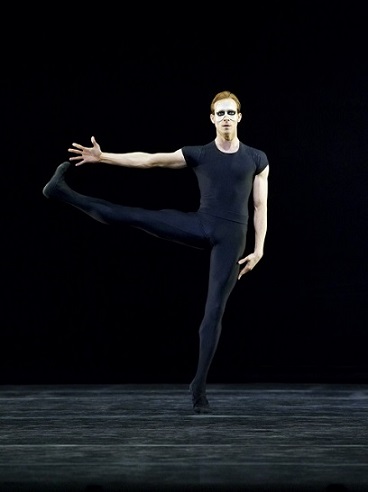
    If there’s a more distinctive danseur on the planet than Edward Watson (above), I’ve yet to find him. The lithe muscularity, the pale skin, the ginger hair, and the hypnotic eyes – clearly gleaming thru a half-masque tonight as MacMillan’s Messenger of Death – combined with a lyrically powerful technique make his performances (far too rare here in Gotham) something to cherish. The moment I saw his name listed for this evening’s performance I knew I had to be there.

    D74f4800af5876ce8dca814c00c1e26c

    A great pleasure to see Nehemiah Kish (above) again; he danced with MORPHOSES in their premiere New York season. Tall and with an easy command of space, his role in the MacMillan serves as both a compliment and a counter-poise to Edward Watson’s character: at the very end of the ballet, Mr. Kish appears masked, clearly ‘marked’ by Mr. Watson’s influence.

    13467865565_8cf990feaa

    New to me and making a magnificent impression was Laura Morera, a Spanish-born ballerina whose clarity of steps and of gesture as well as a radiant, far-searching gaze, marked her as a unique presence: despite the overwhelming allure of Mssers. Watson and Kish, I found it hard to take my eyes off Ms. Morera. She showed a deep connection to the music, and a blessed freedom from theatricality. (The rehearsal photo of Laura Morera above is from The Royal Ballet website…I simply love it…and her!)

    The Mahler score of Das Lied von der Erde calls for two vocal soloists: they alternate in singing the songs. For his ballet, MacMillan has them unobtrusively step out from the opposite sides of the  proscenium to sing; thus the focus remains on the dancers throughout. Tenor Thomas Randle seemed a bit stressed by the vocal demands cruelly placed on him by Mahler, but he managed well enough. Katherine Goeldner, who a few seasons back was an excellent Carmen on this very stage, summoned up some very expressive vocalism, making an especially haunting effect in the final passages of the work as she repeats the word “Ewig…” (‘Forever’) in gradations from piano to lingering pianissimo.

    To attempt to describe for New York dance-goers the overall look of the choreography MacMillan devised for this musically epic piece one might say it combines the stripped-down immediacy of Balanchine’s black-and-white ballets with the ritualistic aspects of Martha Graham’s mythic masterworks.

    In the abstract yet curiously meaningful passages for the corps, MacMillan has created a stylized world thru which the principals and soloists come and go with alternating sensations of urgency and angular introspection. Irony manifests itself at times, but overall the work takes itself very seriously and that in itself makes it all the more compelling.

    There were times when I wished for a bit more sense of unity of movement from the ensemble; of course Mahler’s endless thematic ebbs and flows don’t provide a real rhythmic blueprint for synchronization of steps and gestures. Nevertheless, everyone looked wonderfully handsome and attractive, individual personalities emerging even in the regimented sequences.

    To the splendid performances from Ms. Morera, Mr. Watson, and Mr. Kish were added some radiant dancing from Yuhui Choe and Lara Turk. There were others, too, who caught the questing gaze of my opera glasses but I’m not familiar enough with the Company to single them out.

    In a week that brought the news of Albert Evans’ untimely death, it was moving to be back in the theatre where I saw him dance hundreds of times. So lovely, too, to run into Wendy Whelan, who shared that stage with Albert on countless evenings. My feeling is that Albert would not want us to stop dancing…not even for a moment.