Tag: Balanchine

  • Beloved Albert

    6a00d8341c4e3853ef00e5523b71cf8833-800wi

    Above: Albert Evans with Wendy Whelan in Ratmansky’s RUSSIAN SEASONS, photo by John Ross

    Tuesday June 23rd, 2015 – I don’t want to be writing this.

    It seems impossible that Albert Evans has passed away. News of his death came this morning in an e-mail from a fellow balletomane; my initial reaction was that it must be some other Albert Evans because our Albert’s life force was too vibrant to have been extinguished.

    The news is still sinking in. These days, I am constantly hearing of the passing of dancers, singers, and musicians whose artistry made an impression on my life; but these are people in their 80s and 90s who have lived out their lives to the fullest. One would certainly have expected Albert to be with us for many, many more years. That’s why his passing is so tragic. It reminds us that we must never take for granted the presence of the people in our lives.

    It’s true that Albert’s passing brings back a flood of dance memories, and yet – as with all my favorite dancers – recollections of his performances have frequently sprung to mind in the days since his retirement.

    6a00d8341c4e3853ef013484aab3f8970c

    Among his most felicitous roles was Puck in Balanchine’s MIDSUMMER NIGHT’S DREAM (with Arch Higgins and Alexandra Ansanelli, above, in a Paul Kolnik photo). In a role often undertaken by dancers of smaller physical stature, Albert made his own indelible mark with his brilliant characterization and marvelous, cat-like landings. The ‘Rhinestone Cowboy’ in WESTERN SYMPHONY was another Evans gem, as were his performances in AGON, THE FOUR TEMPERAMENTS, STRAVINSKY VIOLIN CONCERTO, and EPISODES. Albert frequently appeared in new repertory too, with Dove’s RED ANGELS, Ratmansky’s RUSSIAN SEASONS and Wheeldon’s LITURGY and KLAVIER among the most memorable. And who could forget his epic Rothbart in Peter Martins’ SWAN LAKE?

    6a00d8341c4e3853ef00e552536a7d8834-800wi

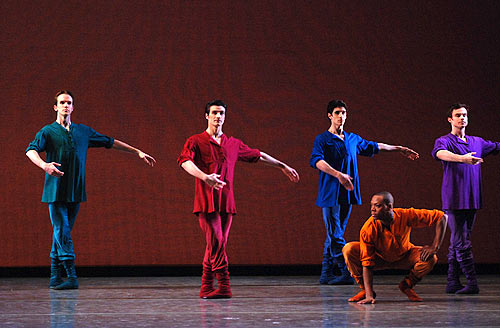
    Above: Albert in Ratmansky’s RUSSIAN SEASONS with NYCB colleagues Jonathan Stafford, Antonio Carmena, Sean Suozzi, and Adam Hendrickson. Photo: John Ross

    After his 2010 farewell to dancing at New York City Ballet, Albert continued working there as a ballet master. I would still run into him sometimes in the Lincoln Center area and there was always a smile and a friendly greeting. 

    6a00d8341c4e3853ef01348366cad2970c-800wi

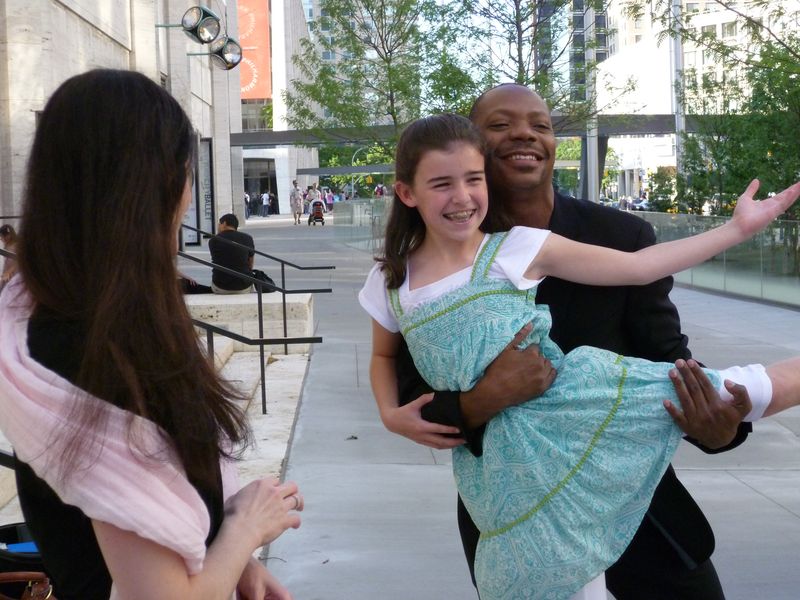
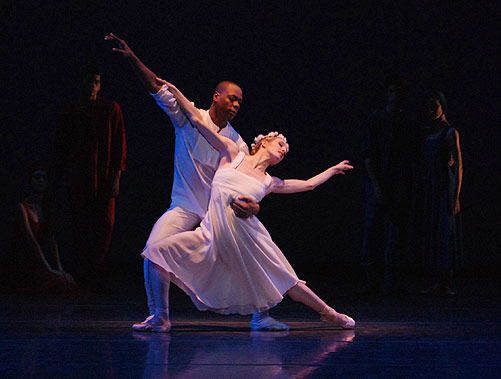
    Albert was always such a thoughtful person, always illuminating other people’s lives in a special way. After Yvonne Borree’s NYC Ballet farewell, Albert amazed a young dance student outside the stage door by sweeping her up into a pas de deux pose. It was such a happy moment, and that’s how I want to remember him.

    34127_1422702001586_4885590_n

    Above: curtain call at Albert’s NYCB farewell

  • Chamber Music Society’s Season Finale

    Banner1

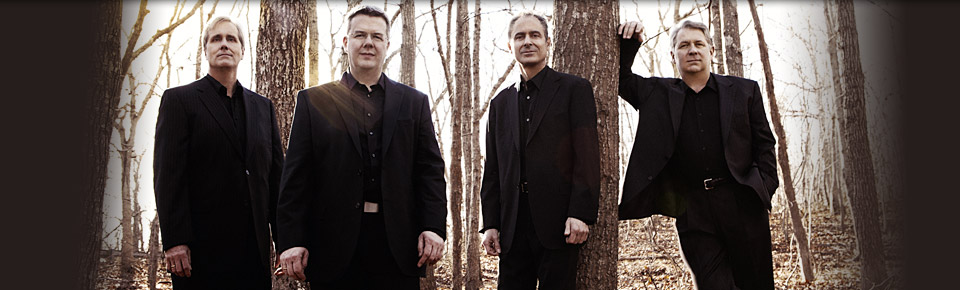
    Above: The Emerson String Quartet (Lawrence Dutton, Paul Watkins, Eugene Drucker, Philip Setzer) in a Lisa Mazzucco photo

    Tuesday May 19th, 2015 – Marking the end of their wonderful 2014-2015 season, Chamber Music Society of Lincoln Center presented the Emerson String Quartet, joined by violist Paul Neubauer and cellist Colin Carr, in a programme featuring the New York City premiere of a Lowell Liebermann work plus classics from Mozart and Tchaikovsky.

    It seems like only yesterday that I opened the CMS 2014-2015 season brochure and found myself anticipating every single one of the concerts listed; how quickly the months have flown by! But a few weeks ago, the Society announced their first Summer Season, and so now we will not have to wait until Autumn to be back at Tully Hall, hearing the great music and incredible artists who make the Society such a valuable part of our lives. 

    Tonight Alice Tully Hall was packed for this, the second performance of this programme. The Emerson String Quartet, surely one of the greatest chamber ensembles of all time, showed their mastery in works of contrasting styles; their marvelously integrated sound has a richness all its own: there are times you’d swear you’re listening to larger orchestra.

    Lowell Liebermann’s String Quartet No. 5 is one of the finest new works I have heard in recent years; not only is it superbly crafted, but it also draws a deep emotional response – something you can’t honestly say about a lot of newer music. Mr. Liebermann, who was seated directly behind us, wrote this brief note for the Playbill: “…I have no doubt that my mindset composing the piece and its resultant overriding elegiac tone was at least partly influenced by any number of depressing/terrifying events of the kind with which we are bombarded daily, in what seems more and more like a world gone mad.”  That sentence encapsulates to perfection my own feelings as I turn to the news each day and think “Can these things really be happening? Can people really have become so vain, shallow, and heartless? Has humanity lost its soul?” And so we turn to great music, both for consolation and also – sometimes – to weep with us. And that’s exactly what this quartet does.

    The music wells up from a deep cello phrase to eerie murmurings and a mournful viola theme. There’s a muted lullabye and a lamenting theme passed from viola to violin 2. Poignant textures draw us deeper and deeper into the music, and then it starts to scurry. A dance for viola is taken up by the violin; agitation builds. A full-scale canon develops, then more swirling dance music. A buzz, a violin duo, and then calm is restored with a yearning theme. A simply gorgeous violin solo is passed to violin 2 and then to the viola, which sings of anguish. A plucked passage from violin and viola takes us to a violin solo of pristine sadness before the music starts to echo its beginnings, fading in a ghostly glimmer. A profound silence filled the hall as the musicians finished: this evocative and thought-provoking piece had clearly made a deep impression. The composer was called to the stage, as bravos resounded. Both the music and the playing of it left me spell-bound.

    I kind of wished there’d been an intermission at that point, the better to remain in reverie; but Mozart’s Quintet in E-flat major K 614 brought the esteemed violist Paul Neubauer to the stage with the Emerson for music that was an antidote to the Liebermann and, almost against my will, I was drawn out of my pensive state into a sunnier place.

    Though written in Mozart’s last year, this Quintet is optimistic in tone and quite jolly in its dance motifs. Its elegant andante, prancing minuet, and jaunty finale were all played with spirit and grace, with much lovely ‘communicating’ between the players.

    For the evening’s concluding performance of Tchaikovsky’s Souvenir de Florence, Philip Setzer took the 1st violin stand with Mr. Neubauer and cellist Colin Carr adding their rich voices to the Emerson’s choir. The sound of this ensemble was really phenomenal, of symphonic resonance.

    The Souvenir is a pleasure from first note to last, but just as Tchaikovsky’s adagios in Swan Lake and Sleeping Beauty strike us most deeply in the heart, it’s the second movement of Souvenir that speaks directly to the receptive spirit. It reminded me so much of the composer’s Serenade for Strings which Balanchine transformed into his remarkable and eternal ballet masterpiece Serenade. Tonight’s performance of this Adagio cantabile was so richly played and so moving: music as consolation.     

    The Repertory:

    The Participating Artists:

  • Chamber Music Society’s Season Finale

    Banner1

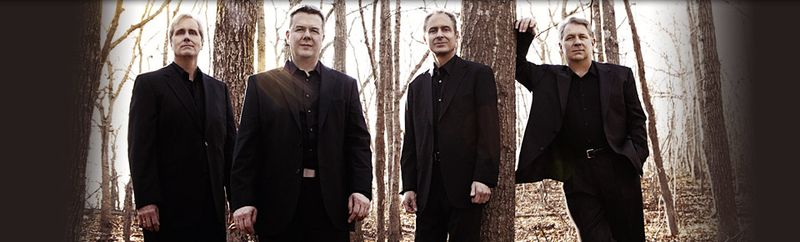
    Above: The Emerson String Quartet (Lawrence Dutton, Paul Watkins, Eugene Drucker, Philip Setzer) in a Lisa Mazzucco photo

    Tuesday May 19th, 2015 – Marking the end of their wonderful 2014-2015 season, Chamber Music Society of Lincoln Center presented the Emerson String Quartet, joined by violist Paul Neubauer and cellist Colin Carr, in a programme featuring the New York City premiere of a Lowell Liebermann work plus classics from Mozart and Tchaikovsky.

    It seems like only yesterday that I opened the CMS 2014-2015 season brochure and found myself anticipating every single one of the concerts listed; how quickly the months have flown by! But a few weeks ago, the Society announced their first Summer Season, and so now we will not have to wait until Autumn to be back at Tully Hall, hearing the great music and incredible artists who make the Society such a valuable part of our lives. 

    Tonight Alice Tully Hall was packed for this, the second performance of this programme. The Emerson String Quartet, surely one of the greatest chamber ensembles of all time, showed their mastery in works of contrasting styles; their marvelously integrated sound has a richness all its own: there are times you’d swear you’re listening to larger orchestra.

    Lowell Liebermann’s String Quartet No. 5 is one of the finest new works I have heard in recent years; not only is it superbly crafted, but it also draws a deep emotional response – something you can’t honestly say about a lot of newer music. Mr. Liebermann, who was seated directly behind us, wrote this brief note for the Playbill: “…I have no doubt that my mindset composing the piece and its resultant overriding elegiac tone was at least partly influenced by any number of depressing/terrifying events of the kind with which we are bombarded daily, in what seems more and more like a world gone mad.”  That sentence encapsulates to perfection my own feelings as I turn to the news each day and think “Can these things really be happening? Can people really have become so vain, shallow, and heartless? Has humanity lost its soul?” And so we turn to great music, both for consolation and also – sometimes – to weep with us. And that’s exactly what this quartet does.

    The music wells up from a deep cello phrase to eerie murmurings and a mournful viola theme. There’s a muted lullabye and a lamenting theme passed from viola to violin 2. Poignant textures draw us deeper and deeper into the music, and then it starts to scurry. A dance for viola is taken up by the violin; agitation builds. A full-scale canon develops, then more swirling dance music. A buzz, a violin duo, and then calm is restored with a yearning theme. A simply gorgeous violin solo is passed to violin 2 and then to the viola, which sings of anguish. A plucked passage from violin and viola takes us to a violin solo of pristine sadness before the music starts to echo its beginnings, fading in a ghostly glimmer. A profound silence filled the hall as the musicians finished: this evocative and thought-provoking piece had clearly made a deep impression. The composer was called to the stage, as bravos resounded. Both the music and the playing of it left me spell-bound.

    I kind of wished there’d been an intermission at that point, the better to remain in reverie; but Mozart’s Quintet in E-flat major K 614 brought the esteemed violist Paul Neubauer to the stage with the Emerson for music that was an antidote to the Liebermann and, almost against my will, I was drawn out of my pensive state into a sunnier place.

    Though written in Mozart’s last year, this Quintet is optimistic in tone and quite jolly in its dance motifs. Its elegant andante, prancing minuet, and jaunty finale were all played with spirit and grace, with much lovely ‘communicating’ between the players.

    For the evening’s concluding performance of Tchaikovsky’s Souvenir de Florence, Philip Setzer took the 1st violin stand with Mr. Neubauer and cellist Colin Carr adding their rich voices to the Emerson’s choir. The sound of this ensemble was really phenomenal, of symphonic resonance.

    The Souvenir is a pleasure from first note to last, but just as Tchaikovsky’s adagios in Swan Lake and Sleeping Beauty strike us most deeply in the heart, it’s the second movement of Souvenir that speaks directly to the receptive spirit. It reminded me so much of the composer’s Serenade for Strings which Balanchine transformed into his remarkable and eternal ballet masterpiece Serenade. Tonight’s performance of this Adagio cantabile was so richly played and so moving: music as consolation.     

    The Repertory:

    The Participating Artists:

  • New Chamber Ballet: Four Works

    L1550484

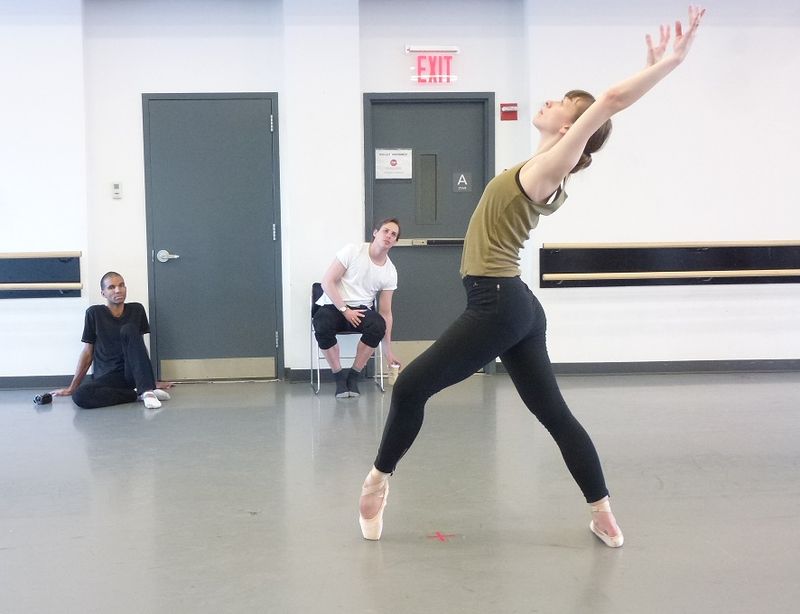
    Above: Elizabeth Brown of New Chamber Ballet rehearsing the solo Moments, observed by choreographers Miro Magloire and Constantine Baecher

    Saturday April 18th, 2015 – “Ballet is Woman,” said George Balanchine; and Miro Magloire‘s New Chamber Ballet seems to be living proof of it. Miro’s obvious delight and skill in choreographing for female dancers has resulted in a series of works which honor the ballerina tradition whilst at the same time pushing boundaries, especially in the realm same-sex partnering. Tonight, the customary New Chamber Ballet formula of women dancing in an up-close-and-personal setting to live music brought us works by both Miro and NCB‘s resident choreographer Constantine Baecher, including two world premieres.

    Now celebrating their tenth anniversary, New Chamber Ballet have always presented an ensemble of finely-trained ballerinas with vivid, individualized personalities. The current quartet maintains the high standard: these are women who are comfortable with having their audience literally within reach, able to dance with confidence and poise in an intimate setting. Their dancing is enhanced by the accomplished musicality of violinist Doori Na and pianist Melody Fader who are always ready, willing, and able to tackle whatever music Miro hands them – and that’s saying a great deal.

    Entangled, a quartet for on- and off-pointe dancers, is performed to Paganini’s Caprices expertly played by Doori Na. The girls, in Sarah Thea’s minty-green sheer costumes with a harem feeling, are paired off: two on pointe (Sarah Atkins and Traci Finch) and two in slippers (Elizabeth Brown and Amber Neff). 

    L1550289

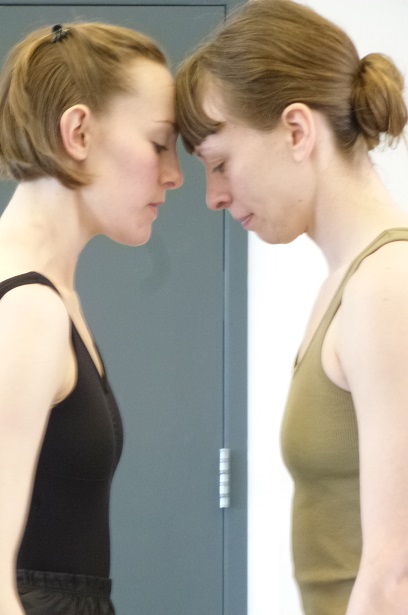
    The ballet opens with Amber and Elizabeth face to face (rehearsal image, above); they rush away from one another and then meet again – repeatedly – in an approach-avoidance sequence. Their dance becomes spastic; they struggle on the floor and there are shakes and shapes. Doori, the violinist, is meanwhile making fast and furious with the demanding Paganini score. The pointe couple appear: Sarah and Traci in stylized balletic poses with stretched arabesques and sculptural port de bras. The couples alternate; the soft-slipper girls have a shuffling little jig. As the adagio begins, the pointe pair lean into one another before they are left alone to a high violin shimmer. Innovative floor choreography follows. We half expect a faster final movement, but instead the ballet ends quietly.  

    Elizabeth Brown, a founding member of New Chamber Ballet, has been thru a serious injury episode and has come back in phenomenal physical condition and more expressive than ever. A unique dancer, Elizabeth performed Miro’s solo Moments to Salvatore Sciarrino’s Caprices 5,2, and 6. Doori Na plays the annoying (in a good way) and demanding score with touches of wit. The opening section is all about line and control, and Elizabeth here reveled in these beautiful, slow-to-still poses. The choreography becomes more animated, gestural, and space-filling, with a spirited circle of piqué turns. New Chamber Ballet audiences tend to be rather reserved, but lusty cheers went up after Moments.

    L1550245

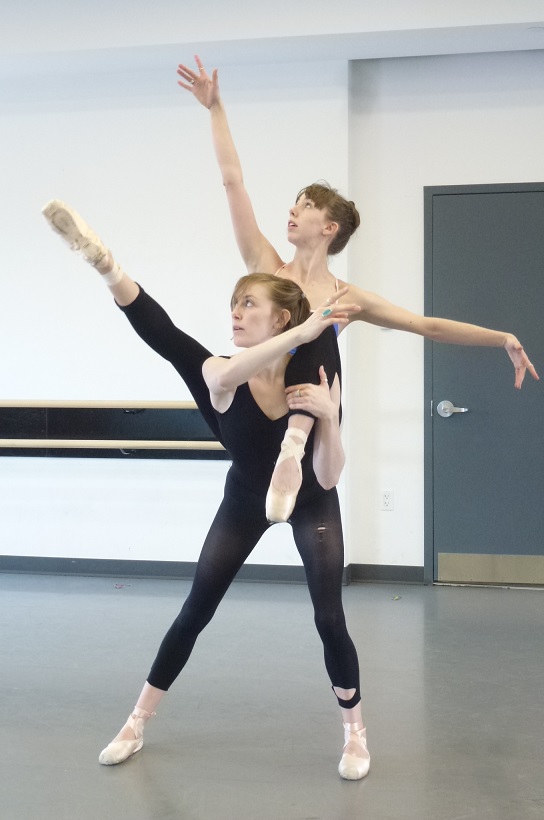
    Above: Traci Finch and Amber Neff rehearsing Miro Magloire’s newest ballet, La Mandragore

    La Mandragore (The Mandrake) is a new duet by Miro set to Tristan Murail’s solo piano work of the same title. Melody Fader at the keyboard showed a particular affinity for this music which begins misterioso, becomes turbulent, then sinks back into eerie calm. Dancers Traci Finch and Amber Neff meet Miro’s complex partnering demands head-on; they are fearless, strong and supple as they wrap around one another, performing lifts and mutually supportive feats in an unusual mixture of power and intimacy. Miro pushes the two dancers to extremes and they respond with compelling assurance and grace.  

    The world premiere of NCB resident choreographer Constantine Baecher’s Two Tauri and A Tiger marked yet another success for Constantine, who has created several works for New Chamber Ballet over the years. Two Tauri opens with Elizabeth Brown rushing on to a stimulating Mozart theme played by Melody Fader; Elizabeth’s solo is questing and energetic. Traci Finch enters next, followed by Sarah Atkins, each dancing a restless and animated solo. The movement has a playful, windswept feeling with an aspect of childlike joy, as when Elizabeth and Traci join hands and spin mirthfully about. 

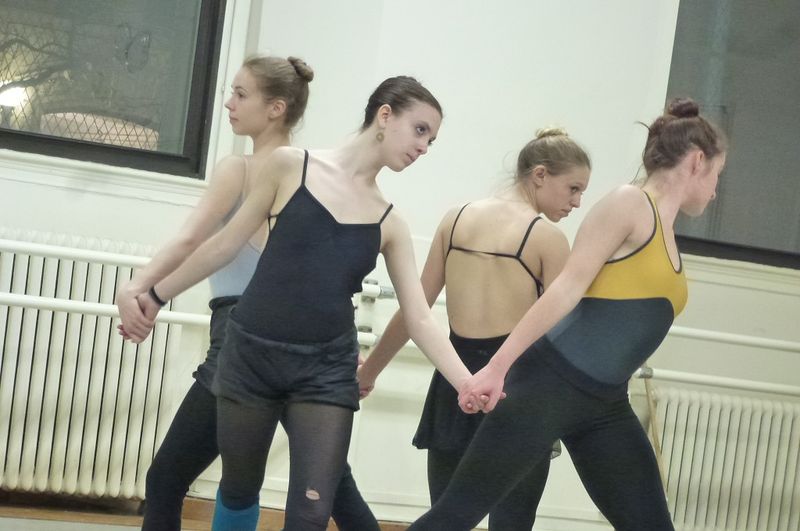
    The music pauses and we hear the dancers breathing; they re-group in silence, have a walkabout, and a bit more spinning. As Melody intones a more staid Mozart theme, the ballet becomes pensive. The girls circle around, holding hands and relying on counter-balance. This passage recalls Balanchine’s fondness for similar linkings, and also evokes Matisse’s La Danse. As the music animates, the dancers rush about and a pair will playfully drag the third as in a children’s game. This recedes into a more temperate passage with some stretching motifs. Overall, Two Tauri seems like a romping, good-natured piece; yet I feel there might be some underlying shadows, too. I’ll need to see it again to get a deeper sense if it. One thing for sure: the three dancers seemed to be genuinely having a good time dancing it.

    So nice to see Candice Thompson, Amy Brandt, Emery LeCrone, and Lauren Toole among the audience tonight.

    New Chamber Ballet will conclude their 10th anniversary season with performances on June 12th and 13th, 2015. Further details will be forthcoming.

  • Miro Magloire for CBC

    L1540856

    Above: dancers from Columbia Ballet Collaborative rehearsing a new Miro Magloire ballet; the girls are Vanessa van Deusen, Shoshana Rosenfield, Alyssa Hubbard, and Morgan Caglianone

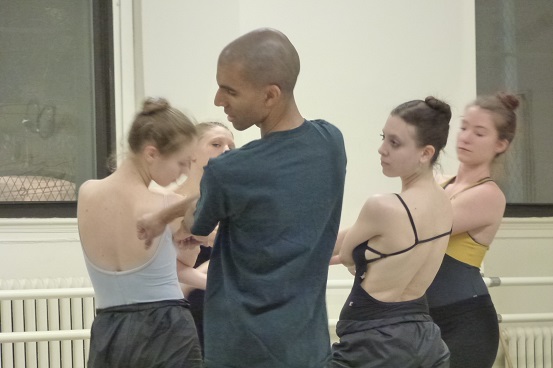
    Sunday March 29th, 2015 – This evening I stopped in at Barnard College where Miro Magloire, artistic director of New Chamber Ballet, is creating a new work for Columbia Ballet Collaborative‘s upcoming performances – a matinee and an evening show at The Miller Theater, Columbia University on Saturday April 18th, 2015.

    L1540721

    Above: violinist Pala Garcia, Miro Magloire

    The music Miro has selected is “tanz.tanz” for solo violin by composer Reiko Fueting, who is a professor at Manhattan School of Music; it will be played live by violinist Pala Garcia.

    L1540947

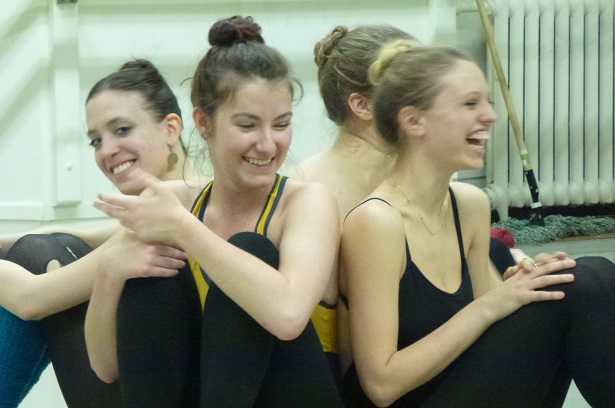
    A nice, relaxed atmosphere in the studio this evening; the dancers were experimenting with a seated back-to-back formation from which Miro wanted them to rise…

    L1540804

    …this produced some mirth from the girls, but eventually they figured out how to make it work. 

    L1540883

    There was also an attempt to cover their neighbor’s mouth or eyes by feeling: more levity. But again it soon was absorbed into the dance.

    L1540861

    Miro later had them draw into a Matisse-like circular formation, moving faster and faster.

    L1540730

    There are fleeting partnered passages (Morgan and Alyssa, above)…

    L1540931

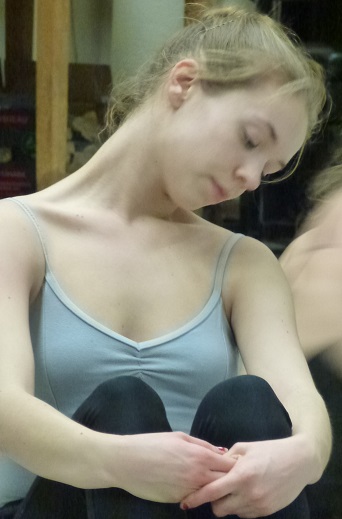
    …and reflective moments where the girls sit, each in her own dreamy world (Vanessa, above).

    L1540880

    As the rehearsal was drawing to a close, Shoshana Rosenfield (above) breezed thru a beautiful solo passage, full of swift, lyrical turns.

    For the Spring 2015 season, Columbia Ballet Collaborative welcomes new ballets by five choreographers: Charles Askegard, former dancer with American Ballet Theatre and New York City Ballet and co-founder of Ballet Next; Roya Carreras, graduate of UC Irvine’s Claire Trevor School of the Arts and dancer with Danielle Russo Dance Company (NYC); Serena Mackool, senior at the School of General Studies and former dancer with Tulsa Ballet, Ballet San Antonio, and Proyectos en Movimiento; Miro Magloire, founder and artistic director of New Chamber Ballet; and Katya Vasilaky, Postdoctoral Earth Institute Research Fellow at Columbia University and former dancer with San Francisco Ballet. CBC is also proud to present selections from George Balanchine’s Who Cares?.

    Tickets will be $10 with a Columbia University ID, $15 with a non-Columbia University student ID, and $22 for general admission. They are available for purchase via these links: 

    3pm Show

    8pm Show

  • Ax/Robertson @ The New York Philharmonic

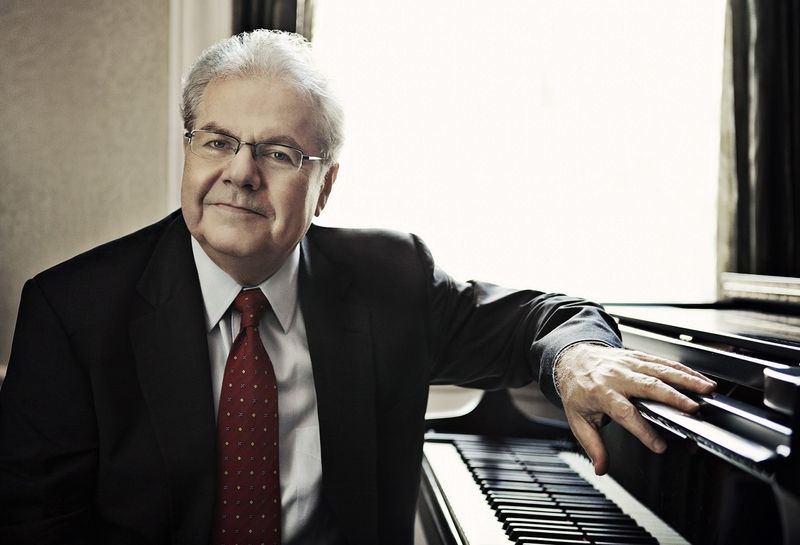
    Emanuel Ax

    Above: Emanuel Ax

    Thursday January 29th, 2015 – The esteemed pianist Emanuel Ax, enormously popular with New York Philharmonic audiences, was warmly cheered tonight after his performance of the Chopin piano concerto #2. David Robertson was on the podium for a programme that proved highly enjoyable and that allowed several of the individual players of the orchestra to shine.

    5377c09f319dd.preview-620

    Above: David Robertson

    As a brief and savorable prelude, the Vocalise of Sergei Rachmaninoff was rendered in full romantic bloom by Mr. Robertson and the orchestra. Originally a wordless composition for soprano, the Vocalise was written in 1915; the composer went on to orchestrate the work which is perhaps his best-known melody, whether performed in the arrangement for soprano and orchestra or for orchestra alone. So many of Rachmaninoff’s best-loved works are in a minor key, giving the music a mood of melancholy and gentle regret. The orchestra played it with distinction; the melodic familiarity of the piece has the poignant effect of encountering an old friend one has not seen for many years.

    Mr. Ax then appeared for the Piano Concerto No. 2 of Frédéric Chopin. In the summer of 1829, the 19-year-old Chopin, recovering from the breaking of an unhappy romantic attachment, sketched out the F-minor concerto and when he returned to Warsaw for the winter season, he performed this new concerto at the National Theatre the following March. The concerto gained Chopin the public exposure and audience acclaim that his numerous private salon performances could not have achieved.

    As the years passed, musicologists began to denigrate the Chopin concertos as being inferior to much of his writing for solo piano. Tonight’s superb performance made an emphatic stand in the concerto’s favor: it’s simply a beautiful piece of music.

    A contemporary account from the concerto’s premiere in 1830 records: “How beautifully (Chopin) plays. What fluency! What evenness!” And the same could be said of Mr. Ax’s performance tonight. In a refined partnership with Maestro Robertson, the pianist let the music flow with grace and charm, allowing us to savour the thematic generosity of Chopin in an illuminating performance. The unfortunate ringing of a phone just as the concerto’s first movement ended prompted a witty exchange between pianist and conductor. But order was immediately restored as Mr. Ax commenced the Larghetto, a movement full of lyricism in which the pianist’s glowing tone captivated the audience. With flourishing agility, the pianist then took wing in the final Allegro vivace. Near the end, trumpet calls herald the concerto’s final rippling cadences; it all ends with Mr. Ax striking a single low note as the orchestra takes the final chord. The audience’s warm expressions of admiration drew Mr. Ax to offer us a Chopin encore, summoning up visions of the Jerome Robbins ballet DANCES AT A GATHERING.

    The Firebird (Suite/1919) – Igor Stravinsky arranged three suites from the full score of The Firebird, in 1911, 1919 and 1945. It is the second of these which is most frequently played today, containing as it does approximately half the music of the complete score. This suite follows the narrative of the original ballet scenario, so familiar to admirers of the Balanchine/Chagall incarnation often seen across the Plaza at New York City Ballet. The atmospheric score – Stravinsky at his most colorful  and melodious – casts a spell of enchantment. It includes themes from two Russian folk songs: one a lyrical melody danced by the captive princesses, and the second the regal anthem which closes the ballet.

    Maestro Robertson and the Philharmonic players reveled in this extraordinary music, with oboist Sherry Skylar particularly impressive in her plaintive theme. The conductor drew forth some ravishing, shimmering piani as well as the lulling tenderness of the Berceuse; and the nightmarish Infernal Dance of  Kastcheï’s ghoulish slaves was given the full, brilliant treatment.

    The Miraculous Mandarin (Suite) is drawn from Bela Bartók’s pantomime-ballet of the same title. The original theatrical setting of the piece (written 1918-1919) was considered too vulgar in its portrayal of lurid sex, violence, and the macabre. After its 1929 premiere at Cologne, it was banned after a single performance. But Bartók, perhaps foreseeing that the ballet would not survive as a stage work, had already arranged the Suite, which we heard tonight in a thoroughly engrossing performance.

    Opening with a big, noisy clatter of sound, the score employs a wide range of instrumentation to ear-tingling effect: piano, flute, harp, xylophone, and celeste all play a part in this sonically intriguing piece. Ms. Skylar’s oboe artistry and Anthony McGill’s remarkable clarinet playing were especially clear and colourful. And a broad, dancing passage with drums near the end served as a reminder of the Suite’s balletic beginnings.

    I at first wondered how the Stravinsky and Bartok would play back-to-back, but the cumulative effect was indeed rewarding: both works have a similarity of texture at certain points, and there’s even some over-lapping of effects – trombone glissandi and frequent interjections of solo winds – which made second half of tonight’s concert every bit as satisfying as the first half.

  • Balanchine Classics @ NYC Ballet

    4852307_orig

    Above: Ashley Bouder and Andrew Veyette in DONIZETTI VARIATIONS; photo by Paul Kolnik

    Wednesday January 28th, 2015 – So pleasing to savour another all-Balanchine programme at New York City Ballet. Tonight’s line-up featured some prominent debuts, and there was excellent work from the soloists and corps. The audience, perhaps affected by the winter chill, didn’t seem to display the enthusiasm that the performance merited, and it wasn’t til the end of the evening that they finally roused themselves from their lethargy to give Teresa Reichlen and Adrian Danchig-Waring a well-deserved round of cheers for their joint debut in CHACONNE.

    DONIZETTI VARIATIONS is always a joy to experience, especially when it is danced with such flair and fabulousness as it was tonight by Ashley Bouder and Andrew Veyette. Ashley was beyond awesome and amazing (those two over-used words, but here thoroughly apt). Her dancing has reached a pinnacle of technique, artistry, and grace; but since she seems to take herself to ever-higher levels from season to season, it won’t surprise me if she continues to ascend. Tonight she was thrilling in her fluent rendering of the steps, her innate sense of stagecraft, and her sheer joy at being able to dance like this.

    Few danseurs could hold their own onstage with such a paragon, but Andrew Veyette managed to do just that, filling the space with his virtuoso feats yet also displaying a cordial lyricism in his partnering as well as a wry bit of humour when inter-acting with the corps. Team Bouder-Veyette simply danced up a storm.

    Outstanding corps dancing in DONIZETTI tonight: Mr. B gives them a lot to do and they went at it with élan. Caught without my opera glasses, I was left to admire their dancing from a distance: Mllles. Adams, Dronova, Gerrity, Johnson, Kretzschmar, and Segin along with those three genial virtuosos: Alberda, Applebaum, and Schumacher.

    LA VALSE looks gorgeous with its recently-freshened costumes. It opens with a delectable trio of “Fates” – Marika Anderson, Gretchen Smith, and Lydia Wellington; they immediately drew us into the ballet’s atmosphere with their glamorous mystique. 

    Three pairs of soloists then engage us with some marvelous dancing: Lauren King and Antonio Carmena are suave and lyrical whilst the vibrant partnership of Georgina Pazcoguin and Sean Suozzi generated a very special electricity. Ashley Laracey (surely a candidate for the leading role in this ballet) was so lovely in her solo, and she and Zachary Catazaro were another marvelous match-up. Zachary, with the poetic appearance of a 19th century romance-novel heart-throb, really commanded the stage in his extended scene with Marika, Gretchen, and Lydia.

    Sara Mearns brought a voluptuous quality to the role of the doomed girl; any ballerina taking on this iconic part must contend with memories of Rachel Rutherford and Janie Taylor, each of whom owned it during their NYCB careers. Sara, ever-lovely to watch, already draws a convincing portrait of the girl’s mixture of vanity, vulnerability, and palpitating curiosity. More nuances will doubtless develop as she goes deeper into the role (this was her debut). Tyler Angle was pale and distraught as her lover – what a courtly presence he can create – and Justin Peck, livid of visage, portrayed Death in a tour de force performance of frightening stillness and surety of domination.

    In CHACONNE we could welcome the debuts of Teresa Reichlen and Adrian Danchig-Waring, those gorgeous creatures. As a counter-poise to SERENADE, the ballerina in CHACONNE first appears with her hair down, a Grecian goddess wandering through Elysium; later she reappears in full ballerina mode: hair up, and wearing a bejeweled wisp of a frock. Tess was radiant throughout: so expressive, and with her revelatory extension. Adrian looks like Apollo re-incarnated.

    The two dancers experienced a minor partnering glitch late in their first duet, a spot where others have glitched before. They covered it beautifully, but it left me wondering what is happening here choreographically that causes the problem (my fourth time to see it happen, in exactly that same spot) and whether it might be altered slightly to assure a smooth transition.

    Thereafter Tess and Adrian were truly splendid: wonderful mutual rapport, with their dancing elegant and so musically inspired. They built their duet – where they exchange solo passages while the other observes – with dazzling assurance and together they shook the audience out of its collective winter dream into a well-deserved round of cheers.

    In the pas de trois, Aaron Sanz re-affirmed his nobility and long-limbed grace, dancing with the queenly Gwyneth Muller and – a rising favorite of mine – Claire Kretzschmar: all three so appealing to behold. Lauren King and Antonio Carmena sustained the excellent impression they’d made in LA VALSE with a polished performance of their CHACONNE pas de deux which features fast-paced, rather tricky partnering elements. In the pas de cinq, Indiana Woodward brought a light freshness to her supple dancing. And in the finale, some expert demi-soliste dancing from Ashley Hod, Unity Phelan, Devin Aberda, and David Prottas. 

    So nice to run into Jessica (Sand) and Casey Blonde, and Carol Weil tonight!

    DONIZETTI VARIATIONS: Bouder, Veyette

    LA VALSE: *Mearns, *T. Angle, *J.Peck, Kayali, King, Carmena, Pazcoguin, Suozzi, Laracey, Catazaro, Smith, Wellington, Anderson

    CHACONNE: *Reichlen, *Danchig-Waring, King, Carmena, Muller, Kretzschmar, Sanz,*Woodward, Hod, Phelan, Alberda, Prottas
  • NYCB: Opening Night|Winter Season 2015

    Balanchine-Stravinsky-1965

    Above: George Balanchine and Igor Stravinsky

    Update: Happy Birthday Mr. B ~ January 22nd!

    Tuesday January 20th, 2015 – An all-Balanchine evening to open the New York City Ballet‘s Winter 2015 season. In the days leading up to the performance there were several changes to the originally-announced casting, and it all turned out very well. Clothilde Otranto was on the podium to bring us the three contrasting scores, and the spirit of Balanchine hovered overall. 

    SERENADE received a performance aglow with lyricism; having recently heard the score played at Carnegie Hall, I was again thinking how Balanchine’s choreography is so intrinsically linked to the music: when you hear it played anywhere you immediately see the dance.

    Sterling Hyltin graced the enchanting melodies with her unique mixture of sophistication and impetousity; I wonder what perfume Mr. B would have chosen for her? There was a wonderful chemistry between Sterling and Robert Fairchild, especially in the passage where he pursues her around the stage: she draws him onward, elusive but always looking back to gently reassure him. This was just one of many such nuanced moments in their partnership tonight. As the ballet seems to take a darker turn, Sterling’s vulnerability came into play…so movingly. During the intermission, we sought superlatives to describe this ballerina’s performance: yet none seemed to suffice, really. So we simply basked in her beautiful glow.

    Erica Pereira could celebrate her birthday a day early with a new role: the Russian Girl, to which she initially brought an airy charm; as the ballet progressed, Erica found deeper hues of feminine resonance in her role. She was especially lovely in the opening of the third movement, dancing with the her four sisterly demi-solistes (Mlles. Adams, Dronova, Mann, and Sell) and later, her lustrous black hair flowing free, Erica rushed into Ask LaCour’s waiting arms with a sense of urgent grace.

    Teresa Reichlen, after swirling thru her elegant pirouettes earlier on, drew sighs of admiration for her sustained supported arabesque in the final movement, always a heart-filling moment. She danced radiantly, whetting the appetite for her upcoming debut in CHACONNE.

    Throughout the ballet, the corps ballerinas provided so many moments to savour, both as individuals and in the ensemble passages which Mr. B wove for them with such an imaginative sense of visual poetry. I wanted to throw roses onstage for all of them.

    AGON tonight was a triumph, with a powerful performance of the central pas de deux by Maria Kowroski and Amar Ramasar. At their charismatic finest, these two dancers displayed the amazing stretch, uncanny pliability, and dynamic counter-balances that Mr. B demands of them. Their bold physicality clearly captivated the crowd who wouldn’t stop applauding until Maria and Amar had bowed three times.

    Andrew Veyette’s wonderfully strong and supple dancing and his brazen high kick put a personal stamp on his solo. The masculine vigor of his presence held our focus whenever he was onstage. Likewise, Megan LeCrone made an excellent impression with her poised, steady balance and authoritative movement. Demi-solistes get to shine in AGON and tonight we had Lauren King, Ashley Laracey, Devin Alberda, and Daniel Applebaum all on peak, opening-night form. The quirky Stravinsky score continues to prick up our ears, no matter how many times we’ve heard it.

    That bountiful ballerina, Ashley Bouder, took command of the opening movement of SYMPHONY IN C. Dancing with her emblematic generosity, technical dazzle, and a touch of playful rubato, she not only illuminated the Allegro Vivo but continued to dance with outstanding clarity and musicality in the ballet’s demanding finale. Chase Finlay kept pace with her and was a handsome-as-ever cavalier. Particular pleasure was derived from watching the two ballerina demis in this opening movement: Claire Kretzschmar and Meagan Mann. They have a lot to do and they did it brillliantly.

    Sara Mearns, dancing with velvety sumptuousness and her own particular mystique, was partnered with gallant grace by Jared Angle. They made the Adagio – one of the wonders of Balanchine’s world – as breath-taking as it should be, with a slow, gorgeous melt into the final pose. Their artistry and lyrical poise made this duet a bulwark of beauty in a darkening world. 

    Further illumination came as Lauren Lovette and Gonzalo Garcia filled the space with swirling vibrancy in the Allegro Vivace. They are a marvelous match-up: a fetching ballerina and a prince of a cavalier. Let’s see them together again soon: so many possibilities.

    Brittany Pollack opened the finale with some sparkling combinations, soon joined by the fascinating Adrian Danchig-Waring, a man who mixes classicism and dynamic strength in perfect measure. The stage then filled with all my beloved NYCB dancers and the evening swept on to its imperial conclusion.

    A word of praise for all the demi-solistes in the Bizet; their role in this ballet is so much more than decorative. So thanks to all: Meagan and Claire (already noted for their excellence), Andrew Scordato, Joshua Thew, Jenelle Manzi, Sarah Villwock, Lars Nelson, Devin Alberda, Mary Elizabeth Sell, Gretchen Smith, Peter Walker, Daniel Applebaum, Alina Dronova, Ralph Ippolito, Troy Schumacher and Kristen Segin (who had also made her mark in SERENADE)…and indeed to everyone who made this a grand night for dancing.

  • Trifonov Triumphs @ The NY Phil

    Daniil-Trifonov

    Above: pianist Daniil Trifonov

    Tuesday December 30th, 2014 – My final musical event of the year. Avery Fisher Hall was packed with avid music-lovers as the Spanish conductor Juanjo Mena (NY Philharmonic debut) took the podium for the opening work, Capriccio espagnol by Nikolai Rimsky-Korsakov. 

    Painted in vibrant colours and dancing in dazzling rhythms, this Capriccio is a vivid evocation of Spain. Finding inspiration in Spanish folk songs, Rimsky-Korsakov cast the piece in five continuous  movements: Alborada (“morning song”); Variazoni; again Alborada; “Scene and Gypsy Song”; and the fabulous Fandango Asturiano (a dance popular in northern Spain) which features the lilting sonic illusion of guitars being strummed to the jaunty clicking of castanets. The work features prominent passages for the solo violin, Sheryl Staples winning a round of ‘bravas‘ as the conductor led her forward a solo bow at the end. Likewise Carter Brey (cello), Robert Langevin (flute) and Anthony McGill (clarinet) were all embraced by the enthusiastic crowd. And the horns were having a fine night of it. Señor Mena’s debut was off to an auspicious start.

    Kudos to the Hall’s stagehands who re-configured the seating and parked the Steinway front-and-center in the twinkling eye.

    The appearance of the boyish Daniil Trifonov was warmly greeted; with a charismatic air of mystery, this pale young man seemed to summon up imaginings of such great pianistic wonders as Chopin and Liszt who, if we believe what is written, could cast a spell over the multitudes with their virtuosic musical wizardry and their spiritual connection to the piano itself. Mr. Trifonov was so clearly enamoured of the keyboard, caressing it with his elegantly styled hands, nearly putting his ear to the keys as if they were whispering secrets to him. Intense when in motion, he seemed to be under in the piano’s thrall, unable to resist it, like an obsessive lover. If all of this sounds high-flown, it’s thoroughly true – though of course it would all be for nought if he lacked the technical mastery to match his physical passion. But…he has massive technique: he seems to burn with it, in fact. 

    So it became both an aural and a visual fascination to experience his playing tonight, playing that was beautifully embraced by the orchestral sound under Maestro Mena’s articulate leadership. For all the spectacular fluency of Trifonov’s agility as his hands whisked magically up and down the keyboard, it was in the central Andante that his mystic conversation with Rachmaninoff reached us most affectingly: especially in the gentle hush of the long, slow ascent at the end.

    Hailed by the crowd, the pianist gave us a solo encore played with delicate rapture. You can get a sense of the spell Daniil Trifonov casts with his playing here. And this quote from a Playbill article about the pianist says so much about him as an artist:  “…he approaches his work almost as a mission, and has compared the classical performer to a pastor and the performance space to a temple of art. He is ever mindful of the audiences who, he believes, need to experience something profound and meaningful in every concert.”

    Mena

    Above: conductor Juanjo Mena

    Maestro Mena has an Old World aura about him: passionate yet gentlemanly. His rendering of the Tchaikovsky 6th (Pathétique) symphony had great melodic breadth as well as a sense of nobility. From Judith LeClair’s pensive opening bassoon passage, the symphony bloomed sonically with some truly splendid playing by the Philharmonic’s richly gifted artists. In the midst of so much fabulous music-making, one moment stood out as exceptional: Anthony McGill’s truly remarkable – whispered – playing of the clarinet theme near the end of the first movement. This was some of the purest and truest music-making I’ve ever experienced: how daring of Mr. McGill to play it ppppp…and how gorgeously he succeeded!

    The symphony’s final movement, the Adagio Lamentoso, was choreographed (more as a ritual than an actual ballet) by George Balanchine; seeming to be the choreographer’s farewell to the world, it was performed only once during his lifetime, at the New York City Ballet’s 1981 Tchaikovsky Festival. Longtime NYCBalletomanes have different memories of repeat performances, but it’s most likely true that it was seen again – just once – after Balanchine’s death, danced as a memorial. I never saw it, but I wish that I had.

  • New York String Orchestra @ Carnegie Hall

    Augustin-hadelich-1

    Above: violinist Augustin Hadelich

    Sunday December 28th, 2014 matinee – An matinee concert by the New York String Orchestra at Carnegie Hall brought us the scores of two favorite ballets: Tchaikovsky’s Serenade for Strings (the setting of Balanchine’s beloved classic) and the Barber violin concerto (one of Peter Martins’ finest creations). In addition, Beethoven’s Pastoral symphony (#6) rounded out the afternoon.

    A huge crowd filled the venerable hall, perhaps drawn as much by attractive ticket pricing as by the inviting programming. Although betraying a lack of sophistication by applauding between movements – and even during one movement of the Serenade – they were on the whole very attentive and appreciative, and there were lots of young people present, a hopeful sign that live classical music still has the power to inspire in an age of I-phones and ‘clouds’. We could have done without the baby, though.

    Jaime Laredo took the podium, mustering a lush and soul-lifting sound from his young musicians in the Tchaikovsky. I sometimes wonder if people who’ve never seen Balanchine’s ballet get the same spine-tingling raptures on hearing this score played in a concert hall. For ballet-goers, this is music indelibly linked to movement: to toe shoes and ice-blue tulle; so much so that, even though we know full well the order of the last two movements will be reversed, it’s still a bit of a jolt when it happens. The musicians (so many Asian players – always a treat!) simply reveled in the rich textures and broad melodies with which the composer both seduces and inspires us. It was a – indeed, an inspiring – performance, loaded with sonic ravishments.

    Augustin Hadelich then appeared, slender and dapper, and together with Maestro Laredo and the orchestra (enhanced by winds, piano, and timpani) gave a marvelous reading of the Barber concerto. Mr. Hadelich has an extraordinary gift for lyricism, his tone remaining blessedly sweet in the highest register whilst meanwhile showing an almost viola-like resonance in the lower range. Sweeping thru the poignant themes that the composer has lavished on the work, the violinist seemed to be reaching the hearts of the listeners; and in the insanely swift and dancing coloratura of the final presto, he was indeed impressive. 

    Barber gives shining moments to some of the orchestral voices as well, most notably the oboe solo heard early in the second movement, played lovingly today by Emily Beare. Horn, flutes, clarinet and bassoon each have their say, and I love the way the piano is woven into the tapestry, Amalia Rinehart making a fine impression at the keyboard. I also greatly enjoyed the female timpanist, Yibing Wang.

    Mr. Hadelich was rightly given a warm ovation and he very much deserved the Paganini encore which was granted, though I think I would have preferred to carry my deep enjoyment of the Barber right into the interval.

    Beethoven’s Pastoral is a very nice symphony: the music is overwhelmingly lovely and cordial, and even the momentary storm (which passes as swiftly as Rossini’s witty thunderbolts in Barbiere di Siviglia) can’t detract from the sheer serenity of the music. Well-played by the young musicians, I found the symphony too lulling and too long to sustain interest over its 40-minute duration. But the first half of the concert was entirely satsfying.