Tag: Balanchine

  • Joy To The World: BRANDENBURGS @ CMS

    2000px-Johann_Sebastian_Bach_signature.svg_

    Tuesday December 16th, 2014 – New York City Ballet have Balanchine’s NUTCRACKER; The Philharmonic offers the MESSIAH; and The Met’s giving holiday performances of HANSEL & GRETEL. But it’s Chamber Music Society of Lincoln Center who give us an extra-special gift every year in the run up to Christmas Eve: the complete Brandenburg concertos of Johann Sebastian Bach.

    Last year the Society scheduled two performances of this programme, both of which were sold out. This year they have added a third performance, which is the one Dmitry and I attended tonight. And on Thursday they’ll take the Brandenburgs on the road, to the Harris Theater in Chicago.

    A large crowd this evenng, with additional rows of seating near the stage. A pair of fidgety neighbors were a bit of a distraction, but at least they were silent. The concertos, played in a different order each year, unfolded magically; each has its own complement of players and the Society assembled a roster of excellent musicians who traded off ‘seatings’ from one concerto to the next. So nice to see principal artists from The New York Philharmonic (Robert Langevin, flute, and Timothy Cobb, double-bass) and The Metropolitan Opera (Julia Pilant, horn) joining CMS from their neighboring home theatres. Mr. Cobb and John Gibbons (immaculate playing at the harpsichord) performed in all six concertos. The programme looks long on paper, but actually the evening flew by with a savourable mixture of virtuosity and expressive poetry.

    The performance opened with the #1 concerto in F-major, which sounds so Handelian to me. This is the concerto with two horns and a trio of oboes. Ms. Pilant and Julie Landsman sounded the brightly-harmonized horn calls with assurance, whilst Stephen Taylor, Randall Ellis, and James Austin Smith piped up delightfully with their oboes, joined by Marc Goldberg on bassoon. Oboe, violin, bassoon and bass sound the poignant adagio, then the high horns ring out briskly in the allegro. You think it’s over, but there’s a surprise fourth movement – it veers from minuet to polonaise – in which separate choirs of winds and strings summon up the rhythms of the dance.

    In concerto #6 (B-flat major) which follows, a trio of cellos (Pauk Watkins, Eileen Moon, Timothy Eddy) bring a particular resonance to the score. The adagio – one of Bach’s most movingly melodious inventions – opens with the solo viola (Lily Francis) who passes the theme to violinist Lawrence Dutton. This is a passage that one wants to go on and on. But the closing allegro sweeps us inexorably forward.

    Violinist Benjamin Beilman took the lead in the 4th concerto (in G-major); the satiny sheen of his sustained tones and his very deft management of the coloratura passages were indeed impressive, and he is an animated, deeply involved musician. The duo flautists Sooyun Kim and Robert Langevin warbled with silvery sweetness in the fleet phrases of the outer movements and blendied serenely in the central andante.  Ben Beilman’s striking virtuosity and his elegant lyricism marked a high point in an evening loaded with superb playing.

    After the interval, in the 5th concerto (D-major), John Gibbons’ harpsichord artistry was to the fore, giving great pleasure in a long, complex and brilliantly etched ‘mega-cadenza’ at close of the first movement. The central affetuoso movement brings the sterling flute of Mr. Langevin and the poised violin phrasing of Sean Lee, mingling their ‘voices’  with the keyboard textures Mr. Gibbons so impressively evoked. Yet again, we feel Bach’s genius being transmitted to us in all its poignant clarity. The mood and pace then bounce back emphatically with a brisk final allegro.

    The 3rd concerto, in G-major, is unique in that the expected central slow movement is replaced by a mere couple of chords before going immediately into allegro overdrive. Thus the entire piece simply rushes forward in a whirlwind of animated playing. The all-strings setting (plus harpsichord, of course) features a large ensemble and much rhythmic and melodic variety whilst always sailing onward.

    The evening’s final work, the 2nd concerto (in F-major), arrived far to soon. In flourishing flights to the upper range, David Washburn’s Baroque trumpet gave the arcangel Gabriel a run for his money. Equally scintllating to the ear was Sooyun Kim’s limpid flute playing: both in agility and in sustained, luminous tone, she made a wonderful impression. In the andante, a particularly fine blend of timbres from Ms. Kim, Stephen Taylor (oboe), Lawrence Dutton (violin) and Paul Watkins (cello) made me again want to linger; but the trumpeter’s silvery calls in the final allegro assai swept us on to the evening’s celebratory conclusion.

    The young violinist Sean Lee, playing the concertos with CMS for the first time, wrote movingly of the experience in a Playbill note: “I cannot think of a more joyous, warm, celebratory set of pieces to revel to, as if gathering around a fire during these winter months.” Amen to that!   

    The participating artists:

  • Fauré & Ysaÿe at Chamber Music Society

    AnneMarie-McDermott-Jan-2013-468x310

    Above: pianist Anne-Marie McDermott

    Sunday October 26th, 2014 – Works by the Belgian violinist/composer Eugène Ysaÿe and his better-known French contemporary Gabriel Fauré were on the bill at Alice Tully Hall as Chamber Music Society of Lincoln Center presented this dusk-hour concert on a cool Autumn day. My friend Monica Wellington and I are both very much admirers of the Fauré works used by George Balanchine in his poetic ballet EMERALDS, but neither of us were much familiar with the music of Ysaÿe.

    The opening work: why is it called the Dolly Suite? Excellent question, and one I’d never thought to delve into until now, when I’m hearing it played live for the first time. ‘Dolly’ was the affectionate nickname of Helene Bardac, the young daughter of Fauré’s long-time mistress, Emma Bardac. Fauré composed the brief works that comprise the suite between 1893 and 1896, to mark birthdays and other events in Helene’s life.

    The suite’s movements are:

    Berceuse (a lullabye), honoring Helene’s first birthday (Allegretto moderato).
    Mi-a-ou, which gently mocks Helene’s attempts to pronounce the name of her elder brother Raoul, who later became a pupil of Fauré’s.
    Le Jardin de Dolly (Andantino); this was composed as a present for New Year’s Day, 1895. It contains a quotation from Fauré’s first violin sonata, composed 20 years earlier.
    Kitty-valse: this is not about a cat, but rather about the Bardacs’ pet dog, named Ketty.
    Tendresse, an andante, was written in 1896 and presages the composer’s beloved Nocturnes.
    Le pas espagnol (Allegro) denotes a lively Spanish dance tune which brings the suite to its close.

    Cms_01

    The suite is set for piano four-hands, and as I watched Wu Han (above) and Anne-Marie McDermott together at the keyboard, I couldn’t help but think of them as the Dolly Sisters. In her opening remarks, Wu Han spoke of the intimate nature of chamber music and the fact that there’s nothing quite so intimate as playing piano four-hands. She and Ms. McDermott seemed to be having a grand time with this music. Their immaculate playing illuminated the six contrasted movements, which veer from boisterous to delicate, sometimes in the twinkling of an eye. The audience were as charmed by the work as by the players.

    Index

    Yura Lee (above) is a favorite with CMS audiences; she seems most often to be heard here as a violist, but tonight she had a lovely opportunity to bring forth her violin for a subtle and ravishing performance of Ysaÿe’s Rêve d’enfant (a CMS premiere) in which she played with clear lyricism and great control. Ms. McDermott at the Steinway underscored her colleague’s transportive musicianship with playing of calming refinement.

    Dautricourt

    In a rare performance of Ysaÿe’s Sonata in A minor for Two Violins (tonight marked the work’s CMS premiere), a duet sometimes deemed unplayable, Yura Lee and Nicholas Dautricourt (above) remained undaunted by the composer’s overwhelming technical demands, and they formed a spirited team, spurring one another on in a friendly atmosphere of “Anything you can play, I can play sweeter…softer…faster…” Mr. Dautricourt appeared for this piece in his shirtsleeves, tieless and untucked: clearly he meant business. The two virtuosos sailed on and on through the intricacies of this long duet, the audience with them every step of the way and saluting them sincerely at the end for having triumphed against improbable odds.

    Carr cellist

    After the interval, cellist Colin Carr (above) indeed charmed Monica and me with his gorgeous playing of Fauré’s Sicilienne; originally set for cello and piano, as we heard it performed tonight, this melodious gem was later re-worked by the composer into his score of incidental music for a production of Maeterlinck’s Pelléas et Mélisande; and from that incarnation, Balanchine plucked it to be part of his elegant ballet EMERALDS. Mr. Carr, with Wu Han’s polished support, brought his warm tone and a particularly nice, merlot-flavoured lower register to this evocative performance. As a contrast, cellist and pianist gave us another Fauré miniature: Papillon (‘Butterfly’) in which the cellist’s fingers flutter up and down the strings, twice pausing in more sustained passages.

    In Fauré’s Quartet No. 1 in C minor for Piano, Violin, Viola, and Cello, Op. 15 – the concluding work tonight – Ms. McDermott summoned up the rhapsodic qualites of the opening movement, then turned vividly playful in the scherzo which follows. Ms. Lee  – her viola really singing – along with Mssrs. Dautricourt and Carr treated us to some genuinely poetic playing, especially in the adagio where the three voices passed the melodies between themselves with playing of a satiny eloquence. Indeed, the level of playing throughout the evening left me yet again in awe of the Society’s unique roster of artists.

    The Program:

    Fauré Dolly Suite for Piano, Four Hands, Op. 56 (1894-96)

    Ysaÿe Rêve d’enfant for Violin and Piano, Op. 14 (1895-1900)

    Ysaÿe Sonata in A minor for Two Violins (1915)

    Fauré Sicilienne for Cello and Piano, Op. 78 (1898) 

    Fauré Papillon for Cello and Piano, Op. 77 (before 1885)

    Fauré Quartet No. 1 in C minor for Piano, Violin, Viola, and Cello, Op. 15 (1876-79)

    The Participating Artists


  • Tchaikovsky/Balanchine @ New York City Ballet

    10708211_10152712762704814_256726488_n

    Above: at a New York City Ballet rehearsal; photo by Craig Hall

    Wednesday September 24th, 2014 – An impressive line-up of favorite dancers in familiar roles, the music of Tchaikovsky, the choreography of Balanchine: what better way for me to start a new season at New York City Ballet?

    Under Clothilde Otranto’s baton, the four Tchaikovsky scores were nicely served up by the NYC Ballet‘s intrepid musicians. Tonight was probably considered an ‘easy’ night for these players: scores they have played dozens of times. They always deserve their spot-lighted ‘curtain call’ at the end of the evening, and it was good to hear a warm swelling of applause for them tonight.

    Ms. Otranto seemed to be favoring fast tempi in SERENADE tonight; the musicians assured that the emotional colours of the music came thru, and the dancers took it all in glorious stride. From curtain-rise, the corps provided an endless panorama of beautiful faces, forms, and personalities. It’s funny that I still find myself looking for people like Amanda Edge and Pauline Golbin among these ice-blue-gowned angels: and where’s Amanda Hankes tonight? Ah, well, they have danced into other phases of their lives – gone from this stage but never forgotten. 

    For present loveliness, we have a delectable quartet of demi-solistes: Faye Arthurs, Alina Dronova, Meagan Mann, and Mary Elizabeth Sell. And Gwyneth Muller always moves me as the consoling maternal figure at the end of the ballet.

    This was a blonde SERENADE: Sara Mearns, Sterling Hyltin, and Teresa Reichlen all looked sumptuous, especially when their hair came down for the final movement. Sara’s luxuriant dancing was given noble grounding by Jared Angle, ever the ideal cavalier. Sterling – her lingering balances spot-on – found just the right mixture of elegance and vivacity, catching the many musical moods in which her ‘character’ finds herself. Tess was divine lyricism personified, and Adrian Danchig-Waring seemed to have come down from Mount Olympus. The sight of Adrian and Tess crossing the stage together, raising Sara from her dream, and Tess’s marvelous slow-turning supported arabesque summed up everything that is SERENADE. The audience responded with a deeply resonant ovation; I am sure there were people in the audience seeing SERENADE for the first time, and I’m sure they will want to see it again.

    The quiet radiance of Maria Kowroski’s Preghiera in MOZARTIANA showed the great ballerina at her most communicative: the lovely passage with her hands in prayerful attitude was especially evocative tonight, as was the gentle silence of her pin-point bourrées. Later, as the ballet’s mood becomes more expansive, Maria’s swirling turns and trademark extension were woven into the music with queenly assurance. I couldn’t take my eyes off her. Tyler Angle was on fine form, his dancing marking the first of three displays of male virtuosity which had the audience cheering this evening. Maria and Tyler have formed an impressive partnership and I look forward to their future endeavors. The ever-excellent Daniel Ulbricht maintained the elegance of the ballet with his stylish dancing – his Gigue has become a signature role – and the Menuet was graciously performed by Marika Anderson, Megan Johnson, Emily Kikta, and Gwyneth Muller.

    A rousing rendition of the TCHAIKOVSKY PAS DE DEUX caused the audience to shed any trace of decorum and yell lustily as Ashley Bouder and Gonzalo Garcia traded technical fireworks in a vivid and smile-inducing performance. After a graciously musical adagio, Gonzalo gave an astonishing performance of his solo – some of the best dancing he’s ever done – nailing the myriad turns at the end before a final brilliant combination to the knee, expertly timed. The crowd went wild. Ashley then swept thru her own dazzling display of danced coloratura, tossing in spicy little pauses and teasing us with her technical savoir faire. Another roar went up as her solo’s final fantastical turns stopped on the proverbial dime. Now with the audience squarely in the palms of their hands, these two magicians of dance swept thru a blazing coda – Ashley’s deluxe fouettés yet another savorable moment – and brought down the house. 

    In the haunted ballroom setting for the Élégie of TCHAIKOVSKY SUITE #3, Rebecca Krohn and Ask LaCour brought tears to my eyes with their poetic evocation of an ideal found…and lost. Rebecca’s restless, almost feral allure was captivating to behold. And Ask is so perfect here: covering the space with questing leaps in pursuit of his elusive muse. Their performance moved me deeply, their parting and Ask’s sinking back into a reverie of heartache drawing up so many emotions.

    Abi Stafford and Justin Peck sustained a mood of mystery in the Valse Mélancolique, Justin’s innate sense of drama nearly drawing the coolly captivating Abi into his world. Yet it is she who prevails: at the end he backs away from her, completely under her spell. Abi and Justin are among my favorite dancers to watch; having them cast together here was a very nice gift.

    In the Valse, a particularly appealing trio of diverse beauties – Olivia Boisson, Lara Tong, and Claire Kretzschmar – looked fetching in one of the ballet’s many featured corps passages.

    In a bewitching performance, Erica Pereira spun marvelously thru the plentitude of pirouettes Balanchine demands of her in the Scherzo; her lustrous black hair and shimmering silver-white tulle flowing as she traced a comet-like trajectory around the stage. Antonio Carmena matched Erica’s spinning flourishes with his airy leaps; they fly off in opposite directions at the end. 

    And now we come to the grand finale: Theme and Variations. The recently refurbished costumes for this ballet seem to glow as Tiler Peck and Joaquin de Luz set forth the elegant opening Theme. Moments later, in her first solo variation, Tiler displayed her epic perfection as a classical ballerina with some truly glorious dancing. The audience showered her with a torrent of applause. The ballet progressed – with excellent suppport from the corps – as Tiler and Joaquin moved continually from one peak of perfection to another. Joaquin’s marziale variation was thrillingly executed, the devilishly handsome dancer basking in another avalanche of cheers, the iconic de Luz smile justifiably lighting up. The ballet swept forward, buoyed not only by the two spectacular principals but by a very impressive quartet of demi-solistes: Lauren King, Brittany Pollack, Mary Elizabeth Sell, and Lydia Wellington. Their cavaliers in the finale were Daniel Applebaum, Allen Peiffer, David Prottas and Andrew Scordato.

    As Ms. Otranto guided the evening to its triumphant close, the audience burst yet again into a passionate ovation: Tiler and Joaquin – and indeed the entire Company – were saluted at the end of a great evening…a great evening for dance, for Tchaikovsky, and for the enduring magnificence of Mr. B.

  • Lydia Johnson Dance: Returning to Newport

    L1430931

    Above: Sarah Pon and Blake Hennessy-York of Lydia Johnson Dance

    Sunday July 13th, 2014 – Lydia Johnson Dance will have a return engagement at the Great Friends Dance Festival in Newport, RI performing on July 18th, 19th, and 20th, 2014. Details of the festival here.

    For these performances, Lydia has created a new work entitled WHAT COUNTS set to two songs by The Bad Plus: ‘Seven Minute Mind‘ (danced by a trio of women) and ‘For My Eyes Only‘ (a pas de deux). Today I stopped in at Lydia’s studio where she was putting the finishing touches on what is still a work-in-progress; in fact, she is considering adding a third section…but for now, it’s a two-movement dancework that will travel to Newport.

    The music is jazz-oriented and really appealing, and Lydia has set it in her unique balletic style with a particularly pleasing stylized quality. More than anything, the ballet reminded me of Balanchine’s classic APOLLO, in part because it features a single man and three women and also because the music has a Stravinskyian tinge to it.

    L1440215

    Sarah Pon, Laura DiOrio and Katie Martin Lohiya

    L1440224

    Trio

    L1430945

    Blake and Sarah: duet

    L1430992

    L1440074

    Final pose

  • Tom Gold Dance: Images from Sofia

    10366055_10152566065832755_6100055162900197831_n

    Above: Pacific Northwest Ballet principal Seth Orza and New York City Ballet principal ballerina Maria Kowroski performing Balanchine’s APOLLO with Tom Gold Dance on their June 2014 tour to Bulgaria; photo by Ani Collier. 

    Tom Gold has sent me some of Ani Collier’s photos from his Company’s recent performances at Sofia, Bulgaria: 

    10304429_10152562878547755_3474847024320160015_n

    Seth Orza in APOLLO

    10475933_10152556875692755_6276963205773144048_n

    Maria Kowroski in Robbins’ CONCERTINO

    PZNOv3fQLxZUJB2weXRxx6extnvCOCoiSI7Q1x-mOlI

    New York City Ballet‘s Daniel Applebaum and Savannah Lowery in Twyla Tharp’s JUNK DUET

    SbNJYkN8ZcPM9aPbYP3dKjNN16Rgo_eA_H3DO9ImQBE

    The ensemble in Tom Gold’s LA PLAGE

    10449964_10152566965962755_2817086933432883500_n

    Pacific Northwest Ballet principal ballerina Carla Korbes with New York City Ballet‘s Andrew Scordato and Devin Alberda in LA PLAGE

    10430868_10152566930407755_6802768218685379841_n

    Carla Kotrbes and Seth Orza in Tom Gold’s GERSHWIN PRELUDES 

    While in Sofia with Tom’s troupe, our beloved Maria Kowroski was the subject of a photoshoot.

    In the week leading up to the tour, photographer Nir Arieli and I had stopped in at one of Tom’s rehearsals: read about it here.

  • Boston Ballet @ Lincoln Center

    10492224_10152189404857607_7335500118768821092_n

    Friday June 27th, 2014 – Boston Ballet have been celebrating their 50th season with performances at Lincoln Center this week. Tonight’s programme looked so tantalizing on paper, and it turned out to be a magnificent evening overall: Vaslav Nijinsky’s Afternoon of a Faun, George Balanchine’s Symphony in Three Movements, Jorma Elo’s Plan to B and Jiří Kylián’s Bella Figura were all superbly danced by the Boston troupe.

    When visiting companies bring Balanchine to New York, I sometimes wonder if it’s a good idea. Can’t you bring us something we don’t see all the time? But understandably, other companies are proud of their Balanchine and want to show off their abilities. Boston Ballet did a great job with The Master’s Symphony in Three Movements, even bringing their own orchestra to play the score. And Boston Ballet has strong Balanchine ties: he became Artistic Advisor to the Company in 1963, gifting them with more than seventeen of his ballets as a gesture of support.

    Curtain up, and I immediately found Shelby Elsbree in the diagonal. The ballet surges forward, with delightful performances by Misa Kuranaga and Jeffrey Curio – the high-bouncing couple – and Rie Ichikawa and Bradley Schlagheck. In the ballet’s central pas de deux, Lia Curio and Lasha Khozashvili excelled. The audience, fortified by a contigent of Bostonians, gave liberal and much-deserved applause to the dancers.

    Boston Ballet had brought their production of Vaslav Nijinsky’s Afternoon of a Faun to Fall for Dance in 2009 and I was mesmerized by it. Seeing the Leon Bakst backdrop and costumes again this evening provided a tangible link to the history of ballet and to that scandalous night over a century ago when Faun set Paris on its collective ear. Tonight, Altan Dugaraa embodied the exotic beauty of the Faun, his mystique and his longings, and Erica Cornejo was the Nymph, miming with stylized perfection. So grateful to have had another opportunity to see this production.

    In 2006, I experienced Jorma Elo’s work for the first time at the New York City Ballet’s premiere of Slice to Sharp. Slice received the longest ovation of any new work I’ve encountered at the ballet over the years: endless curtain calls and a state of euphoria among the crowd. Boston Ballet‘s performance of Mr. Elo’s Plan to B had something of the same a dynamic pungency about it. Illuminated by a large glowing screen stage right, six dancers reveled in fantastical choreographic patterns, flinging themselves into off-kilter leaps and flying across the stage, arms whirling like windmills in a tornado. Dusty Button, Whitney Jensen, Bo Busby, Jeffrey Cirio, John Law, and Sabi Varga danced thrillingly and were deservedly cheered for their jaw-dropping virtuosity.

    Alas, I am afraid Jiří Kylián’s Bella Figura was not really to my liking. Returning from the intermission, we find the dancers already onstage…warming up? Or is it a choreographed passage to start the ballet? Either way, it’s pretentious. Purgatorial and several minutes too long, the Bella Figura seemed to be more about the staging than anything else: black curtains endlessly re-arranged, a complex lighting scheme, flaming braziers bringing a taste of Hell to the stage, dancers coming and going almost randomly. The dancing was of course remarkable, and there are some very attractive passages, most especially when the topless dancers in long red skirts dance in unison. But it seemed to go on and on.

  • A Novel: ASTONISH ME by Maggie Shipstead

    Astonish-Me

    Maggie Shipstead’s ballet-based novel ASTONISH ME draws its title from something Serge Diaghilev reportedly used to say to his dancers: “”Etonnez-moi!” The novel will make a good Summer read for balletomanes who will likely enjoy getting to know book’s characters who are based (loosely or otherwise) on Gelsey Kirkland, Mikhail Baryshnikov, Natalia Makarova, George Balanchine and Suzanne Farrell, among others.

    In the novel, a young American ballerina named Joan is rather mysteriously tapped to assist the great Russian dancer Arslan Rusakov in defecting to the West in 1975. A romance between the two follows, but Arslan eventually ends up with Ludmilla, his Russian lover who has also defected. Joan gives up her dancing career and settles into a solid but conventional marriage. But as her son Harry grows up, he displays a remarkable natural affinity for ballet and he plunges headlong into that world, meeting and being mentored by his idol, Arslan Rusakov.

    The novel is at its most convincing when dealing with the world of ballet and with the devotion, disappointments, amours, addictions and quirks of the various dancers who people the story. Chapters dealing with Joan’s life away from ballet are a bit tedious, but as Harry’s career seems poised to take off, she is drawn back into the center of things. What might be considered the ‘big revelation’ of the story will in fact be rather obvious to alert readers way before it occurs to the characters involved.

    One interesting aspect of the story is that the ‘Balanchine’ character, here called “Mr. K”, succumbs to AIDS.

    The ending of the novel is somewhat under-mined by the convention of having the various interactions of the characters and the inter-twinings of their lives danced out in a ballet; I kept wishing that Shipstead could have found a more vivid way of drawing the threads of the story together, providing us with a less predictable denouement.

    Despite some reservations, the book is very well-written and definitely worth checking out.

  • RIOULT: Martha, May and Me @ The Joyce

    Rioult_4181

    Above: Charis Haines of RIOULT; photo by Paul B Goode

    Saturday June 21st, 2014 matinee – Celebrating twenty years of dance, RIOULT– named for their founder/choreographer Pascal Rioult – offered two programmes at The Joyce. My over-stuffed, end-of-season calendar only showed space for a single performance, and it was a great afternoon of dance.

    May O’Donnell was only a name to me, and one that I honestly had heard only in passing. I knew nothing of her work beyond the fact that she had danced for Martha Graham. RIOULT have revived O’Donnell’s 1943 work, SUSPENSION, set to a score by Ray Green. This ‘blue ballet’ made an absolutely stunning effect as the opening work on today’s programme at The Joyce – a programme in which Pascal Rioult honored the creative influence of two women for whom he danced: Ms. O’Donnell and Martha Graham. In a brief film shown before the O’Donnell was performed, Pascal Rioult spoke of the deep impression made on him when he first saw SUSPENSION; the piece had the same powerful effect on me today. 

    SUSPENSION opens with a marvelous solo danced today by Sara E. Seger. In deep blue body tights, her hair in a ponytail, Ms. Seger is perched upon a pair of powder-blue boxes set stage left. This solo has the feel of an Olympic balance-beam ‘routine’ and was performed with a combination of athleticism and grace by the dancer. Her colleagues, in vari-hued blue body tights then assemble: Jane Sato, Anastasia Soroczynski, Catherine Cooch, Jere Hunt, Holt Walborn, and Sabatino A Verlezza. In stylized movement, they display deep arabesques and open wingspans, striking sustained poses with great control. Their communal rituals are at once stripped-down and ornate; SUSPENSION is as clear as a pristine Summer sky.

    Pascal Rioult’s BLACK DIAMOND (2003) shows O’Donnell’s influence in the gestural language. This duet for two women is set to Igor Stravinsky’s ‘Duo Concertant‘, a work familiar to ballet-goers thru George Balanchine’s ballet of the same name. The curtain rises on a black space pierced by David Finley’s shafts of light. In a smoky atmosphere, dancers Charis Haines and Jane Sato – each atop a large black box – begin to move in parallel solos, sometimes in-sync and sometimes echoing one another. Later they descend to stage level and the dancing becomes more spacious. They return to the heights for the final moments of the ballet, with a breath-taking lighting coup as the curtain falls.

    Earlier this month, photographer Matt Murphy and I watched Charis and Jane rehearsing BLACK DIAMOND – a memorable hour in Pascal’s studio. Read about that experience here, with Matt’s striking images.

    Martha Graham’s 1940 work EL PENITENTE employs a specially-written score by Graham’s ‘dear  indispensability’ Louis Horst. Inspired by the simple penitential morality plays presented by traveling players in the American Southwest, we see the self-inflicted torture of flagellation, the temptation of Adam by Eve, repentance, crucifixtion, and redemption all played out with naive simplicity. Michael S Phillips is the Christ figure and Charis Haines plays all the female roles, from virgin to temptress. With his god-like physique and powerful dancing, Jere Hunt’s Penitent was a perfect portrayal.

    For the afternoon’s closing work, VIEWS OF THE FLEETING WORLD, master-choreographer Pascal Rioult turns to the music of Bach – from ‘The Art of the Fugue‘ – for this seven-part dancework interpersed with empty-stage interludes which create a pensive atmosphere. The ensemble passages, with the dancers sometimes clad in long red skirts, give way to three duets in which the couples appear in evocative vignettes: Marianna Tsartolia and Michael S Phillips in Dusk, Charis Haines and Jere Hunt in Summer Wind, and Sara E Seger and Brian Flynn in Moonlight. Here – and throughout the afternoon – the technical prowess and personal allure of the RIOULT dancers set the choreography in high relief; their commitment and artistry are wonderfully satsfying to behold.

  • Viktoria Tereshkina in ABT’s BAYADERE

    Tereshkina

    Thursday May 29th, 2014 – This red-letter date had finally arrived: the guest appearance of ballerina Viktoria Tereshkina (above) in ABT‘s production of LA BAYADERE. I fell in love with Tereshkina when I saw her dancing Balanchine’s BALLET IMPERIAL with the Kirov at City Center in 2008. Vladimir Shklyarov was this evening’s Solor while ABT‘s beautiful Isabella Boylston portrayed Gamzatti.

    ABT‘s BAYADERE is old-fashioned looking, but that’s fine…it’s an old-fashioned ballet. The Lanchberry arrangement of Ludwig Minkus’s melodious score often takes on a cheapish, ‘music hall’ feeling, yet nothing can destroy the perfection of the Kingdom of the Shades, in which the ABT corps danced so well tonight; they very much deserved the sustained applause they received after their entrée.

    There was lots of excellent dancing to be seen all evening, starting with Aaron Scott’s energetic and commanding Head Fakir: very clever of him to slip the antidote to the High Brahmin just before Nikiya finds an asp at her bosom. One distracting element of attending ballet performances at The Met is the noise the toe-shoes make on the opera house’s stage. Somehow the lovely Stella Abrera overcame this problem in her Shade solo, lyrically and silently danced; her sister Shades were Skylar Brandt (very impressive as she crossed the stage in a series of arabesque hops on pointe) and Melanie Hamrick, always a pleasure to watch.

    Zhiyao-zhang

    Zhiyao Zhang (above) stepped out from the corps to dance the demanding solo of the Bronze Idol and did a very neat and precise job of it; he is a young dancer to keep an eye on.

    6a00d8341c4e3853ef017d3d08210a970c-800wi

    Casting about for a photo of Isabella Boylston, I recalled the day Jade Young and I watched Bella (above) rehearsing with Pontus Lidberg for MORPHOSES.  She was on particularly radiant form tonight as Gamzatti, a more complex character than she at first seems. Though vengeful, she is merely acting as her position dictates: a princess can’t be trumped by a mere temple dancer. Gamzatti accepts and embraces her arranged marriage; it’s Solor who has thrown a monkey wrench into things by failing to observe the accepted etiquette and giving his heart elsewhere. Thus for all her spitefulness in Act I, Gamzatti does engage our sympathies when her wedding ceremony crumbles before her very eyes in the ballet’s final scene: Isabella was particularly lovely in the solo here, expressing a bride’s hope and quiet joy, shadowed by the knowledge that her husband’s heart is elsewhere. Earlier, at the betrothal fete, she showed her technical command with some elegant and very grand dancing. The audience loved her.

    Jr_bayadere_tereshkina_shklyarov_014_1000.sized

    Above: Tereshkina and Shklyarov in the Mariinsky production of BAYADERE; photo by John Ross.

    Vladimir Shklyarov completely won the Met audience’s collective heart tonight; enthusiastic applause greeted his solo passages and his partnering of Ms. Tereshkina was simply exquisite. Shklyarov’s dancing was marked by big virtuosity, his jumps sublimely floated and grandly elevated, his turns rapid and sure. His portrayal was marked by great tenderness for Nikiya and the despair of helplessly watching his beloved expire, forced by decorum to turn his back on her anguish. Remorse and guilt, and then the elation of finding Nikiya again among the Shades, were finely depicted by the danseur; by the time he stands before the Brahmin to be married, Solor is nearly mad, haunted by visions of his love.

    Ms. Tereshkina was everything one can hope for in a Nikiya; her dancing – all rooted in a stupendously strong technique – was refined, spiritual, and deeply musical. Forming a particularly resonant relationship with her partner, the ballerina reveled in the tenderness and ecstacy of their mutual love. In the solo danced before the betrothed Gamzatti and Solor, Tereshkina’s lithe and fluid body revealed the temple dancer’s sense of both duty and humiliation in a finely nuanced performance. In the Kingdom of the Shades, the ballerina attained a remarkable level of technique and artistry, re-affirming the great admiration I had felt when I first saw her dancing with the Kirov. She made a stunning spirit in the final scene as she drove the bridal couple asunder.

    When the final curtain fell on Nikiya and Solor ascending the stairway to heaven, the audience commenced an appreciative ovation that lasted longer than anything I’ve heard at the opera or the ballet in recent seasons. Tereshkina and Shklyarov bowed together several times, and even after the house lights were up and the gold curtain definitively closed, they were called out yet again. The audience clearly wanted solo bows, but the two stars remained resolutely a couple throughout the ovation.

    One especially lovely moment during the bows: Tereshkina came to the very edge of the stage and gave a deep curtsey to the musicians in the pit, thanking them with a sweeping gesture.

    I must remember in future not to spend the extra money for a balcony seat at ABT; there’s a massive invasion of the Balcony level from Family Circle: people who have paid less but want more clambering over me, marking seats with jackets and scarves, inquiring ‘Is that seat taken?’  The Met’s depleted ushering staff aren’t able to police the area, so this practice is virtually unimpeded. I myself retreated to the near-empty Family Circle once these eager, pushy people descended. I mean, if you are half-a-block from the stage, a few more yards either way hardly matters. But then, even during Shades, people continue playing musical chairs, much to the disadvantage of the performance. Had it been anyone other than Tereshkina, I probably would have left.

  • At NYC Ballet: Jonathan Stafford’s Farewell

    FY11 J.Stafford 10081JS_019

    Above: Jonathan Stafford, photo by Henry Leutwyler

    Sunday May 25th, 2014 matinee – Jonathan Stafford’s farewell performance at New York City Ballet turned out to be not only a royal send-off for this all-American prince, but one of the finest performances that I’ve seen the Company give in recent seasons. Everyone – musicians and dancers alike – were really on their game and the affectionate tributes at the final curtain showed the sincere esteem and friendship in which his dancing colleagues hold Jonathan. It was a very emotional but also a truly happy farewell: the fact that Jon’s not going anywhere – he stays on with us as ballet master and also continues to teach at SAB – reassures us that we’ll continue to see him around Lincoln Center from time to time. It also would not surprise me if he pops up onstage again in an acting role some day.

    When I think of Jon Stafford’s dancing, two images immediately come to mind: his beautiful air turns – in several diifferent ballets – where he could effortlessly change from left turn to right in the blink of an eye; and a truly mirthful moment in the first-season performances of Ratmansky’s CONCERTO DSCH where Jon stood in place, simply jumping up and down endlessly, keeping a straight face the whole time. These two elements – technical finesse plus an ability to transform the simplest of movements into something vivid – have always made Jon’s performances so highly enjoyable to watch.

    6a00d8341c4e3853ef0120a7fc6fe3970b

    And then there’s the partnering: Jon is a prince of a partner (above, in CORTEGE HONGROIS with Maria Kowroski in a Paul Kolnik photo). At the end of this afternoon’s performance, the principal ballerinas and then the female soloists all came out to present Jon with bouquets; their hugs seemed particularly sincere because over the years he’s helped them all to look their best onstage.

    Symphony-in-C-AStaffordJStafford

    Siblings: Jon and his sister, NYCB principal ballerina Abi Stafford, in Balanchine’s SYMPHONY IN C, photo by Paul Kolnik. Jon and Abi danced together in EMERALDS this afternoon.

    2013_01_16_01_35_1742_09_ballet

    A special memory: Jon’s performances in Balanchine’s setting of Tchaikovsky Piano Concerto #2 during the 2008 season moved me to tears in the ballet’s second movement. I saw it several times that year, when Jon danced with Ashley Bouder (Paul Kolnik photos, above and below).

    Pk_tschaikovsky_piano_concerto_2_jonathan_stafford_ashley_bouder_ppd_1000

    Today Ashley danced the ‘other’ girl in EMERALDS and gave a remarkable performance. 

    10261998_10154135166880529_3211500853438514229_n

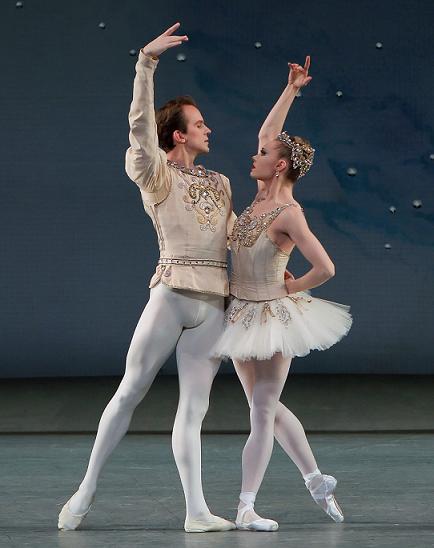
    Above and below: Jon in DIAMONDS with Sara Mearns

    C29896-8_MearJstafDiam

    Sara danced this role with Jon this afternoon, celebrating a grand finale to his NYCB career in high style.

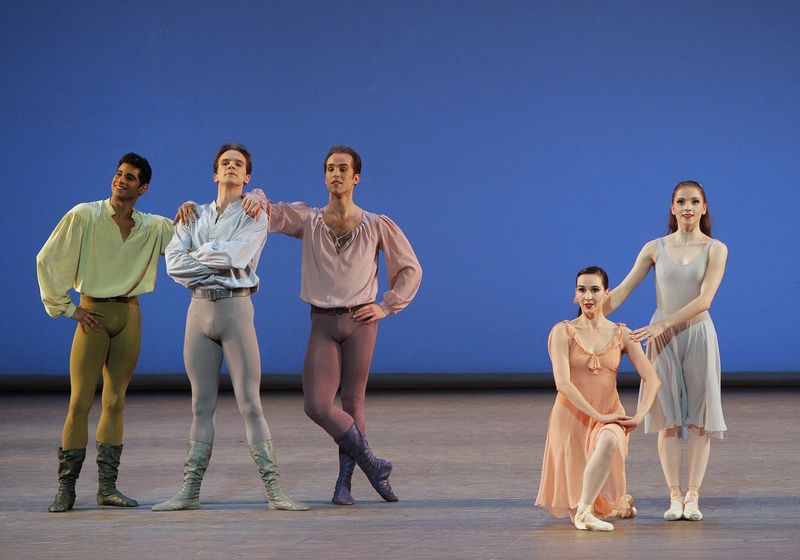
    Of course, ‘retirement’ performances always summon up a vast array of memories of the dancer being celebrated. Of the many evenings I have watched Jon Stafford onstage, I especially recall his perfect characterizations of several “Prince” roles: in FIREBIRD, in SLEEPING BEAUTY and in SWAN LAKE. From Balanchine, we enjoyed his LIEBESLIEDER, WESTERN SYMPHONY and NUTCRACKER cavalier, and from Robbins his IN THE NIGHT and DANCES AT A GATHERING (where he played “catch-the-ballerina” so memorably). Jon also made his mark in such diverse contemporary ballets as RUSSIAN SEASONS, VESPRO, LUCE NASCOSTA, OLTREMARE, and RIVER OF LIGHT; in the last-named Peter Martins ballet, Jon pulled off some thrilling one-armed lifts of Erica Pereira. His height and noble bearing made an outstanding impression as the venearble Father in PRODIGAL SON.

    Aside from dancing, Jon showed his organizational skills when he put together the 2008 Dancers’ Choice event, a performance I recall clearly to this day.

    6a00d8341c4e3853ef01310f1e4f4c970c

    Above: Jon with colleagues Amar Ramasar, Jared Angle, Jenifer Ringer and Abi Stafford in Robbins’ DANCES AT A GATHERING, a Paul Kolnik photo. Amar partnered Ashley Bouder in EMERALDS this afternoon and together they launched the afternoon with their elegant and truly inspired dancing.

    And so, now to the details of today’s performance. Guest conductor Koen Kessels was on the podium and as always the under-sung musicians of the NYCB orchestra played beautifully, especially in the Faure which was so moving today.

    Sometimes at a farewell, the actual performance is eclipsed by the event. Ashley Bouder and Amar Ramasar assured us immediately on curtain-rise that we were in for a super-JEWELS: save the confetti and flowers for later, we’re going to do some serious dancing! What a poetic atmosphere these two dancers created immediately, summoning up a quiet yet somehow electrifying bond between two charismatic personalities. Amar’s courtliness and Ashley’s lyric wistfulness played beautifully off one another. Complete enchantment.

    The iconic and perfumed solos which Balanchine created for the two principal ballerinas in EMERALDS were so expressively danced today by Ms. Bouder and Abi Stafford. And the gracious pas de trois was danced with lovely, refined virtuosity by Erica Pereira, Ashley Laracey, and Antonio Carmena.

    And then at last Jonathan appeared: the music here is too delicate to allow for applause for his entrance, but a murmur of excitement passed thru the House. Ever the dedicated cavalier, Jon devoted all his poetic energy to presenting his ballerina as if she were a precious jewel. Abi’s dancing, so light-filled and polished, had a calm radiance that ideally embodied the music. Together they were perfect.

    As EMERALDS moves towards its conclusion, the dancers walk slowly about the stage as the women begin to exit. In a beautiful moment, as Jon passed in front of Ashley Bouder, a subtle smile illuminated her face – a beautiful, personal homage from one dancer to another. 

    A sizzling performance of RUBIES followed: Sterling Hyltin was absolutely stunning in her virtuosity, toying with the music whilst reeling off pirouettes at improbable speed and creating a character at once elegant, provocative, and playful. She met her match in Andrew Veyette who, fresh from a triumphant guest appearance in THEME AND VARIATIONS at ABT, cut loose with some vibrantly jazzy moves to Stravinsky today. The imperial Teresa Reichlen danced a signature role in today’s RUBIES, wowing the audience with her extension and dazzling sexiness. At the close of the passage where she’s manipulated by four men into uncanny poses, Tess plunges into a deep Arabesque Pencée, eye-to-eye with Giovanni Villalobos; she holds his gaze with remarkable intensity: does she want to kiss him or kill him?  Huge applause today for the RUBIES principals and corps.

    And finally, DIAMONDS: Jon and Sara Mearns have created a special magic with their partnership in this ballet and the obvious shared joy of dancing beautifully together to beautiful music was tinged today by the knowledge that this would be the last time. Looking a bit forlorn at first, Sara was soon swept along by the gorgeous Tchaikovsky themes and the ardent support of her prince: her smile became luminous, her dancing grand and glorious.

    DIAMONDS was somewhat truncated today; eliminating the Scherzo meant that the demi-soliste women had less chance to dazzle us, but in the opening movement Gwyneth Muller and Gretchen Smith gave us some excellent dancing, their contrasting personalities drawing us in to the music.

    And so, inevitably, the stage is filled with dancers in white and gold, the opera glasses momentarily zeroing in on the individual dancers of the corps de ballet who make this Company what it is, with Sara and Jonathan at the helm of Balanchine’s jewel-encrusted masterpiece.

    What an extraordinary send-off for Jon: the respect and affection of his colleagues was shown in innumerable ways during the long ovation, streamers shooting down and bouquets being flung to the stage. The afternoon ended with Jon standing by a massive heap of flowers while the Company applauded him with sincere admiration.

    Jon kept us waiting a long time at the stage door (I think secretly he just wanted to sneak out after everyone had left!); Wei met me there after his work day and we were especially happy to catch up with Faye Arthurs, and to greet so many of the dancers we admire so deeply. I’m sure they were all exhausted and just wanting to have supper, or a beer, and rest their weary bones. But they all took the time to chat us up, reflect on their association with Jon, discuss the highlights of their season, and tell us their summer plans. They are such incredible, dedicated, passionate, and amusing people and I’m so grateful to all of them, both for their dancing and just for being themselves.

    At last Jon appeared and with a lovely mix of elation and exhaustion he thanked the intrepid fans who had stayed on to greet him. I mainly wanted to wish him a happy golf game!

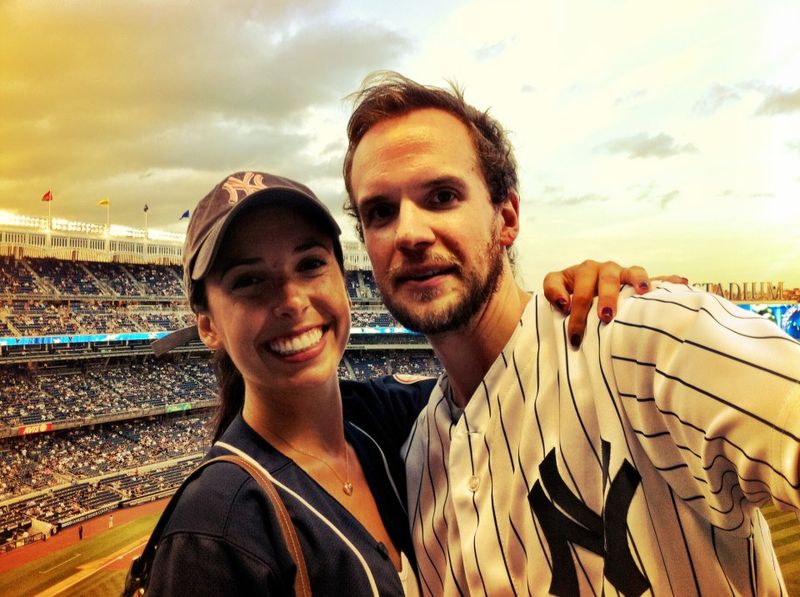
    On a personal note, Jon has his wedding to look forward to: in August he’ll be marrying New York City Ballet soloist Brittany Pollack. And here they are, at a Yankees game:

    253817_3683865459771_1041692134_n

    Best wishes, Brittany & Jon!

    703e0a8c201913cc7ebab0c7bcc60267

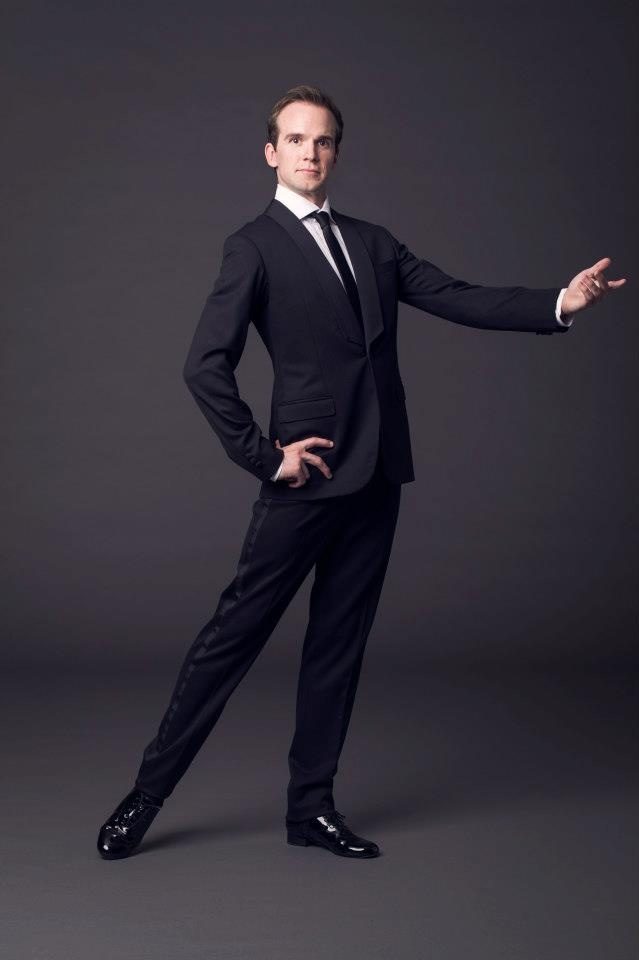
    And one more image of Jon, dressed by Valentino (above)…a class act if ever there was one. I’m sure to be seeing Jonathan around the Plaza in the months ahead, so there’s no real need to say ‘farewell’.