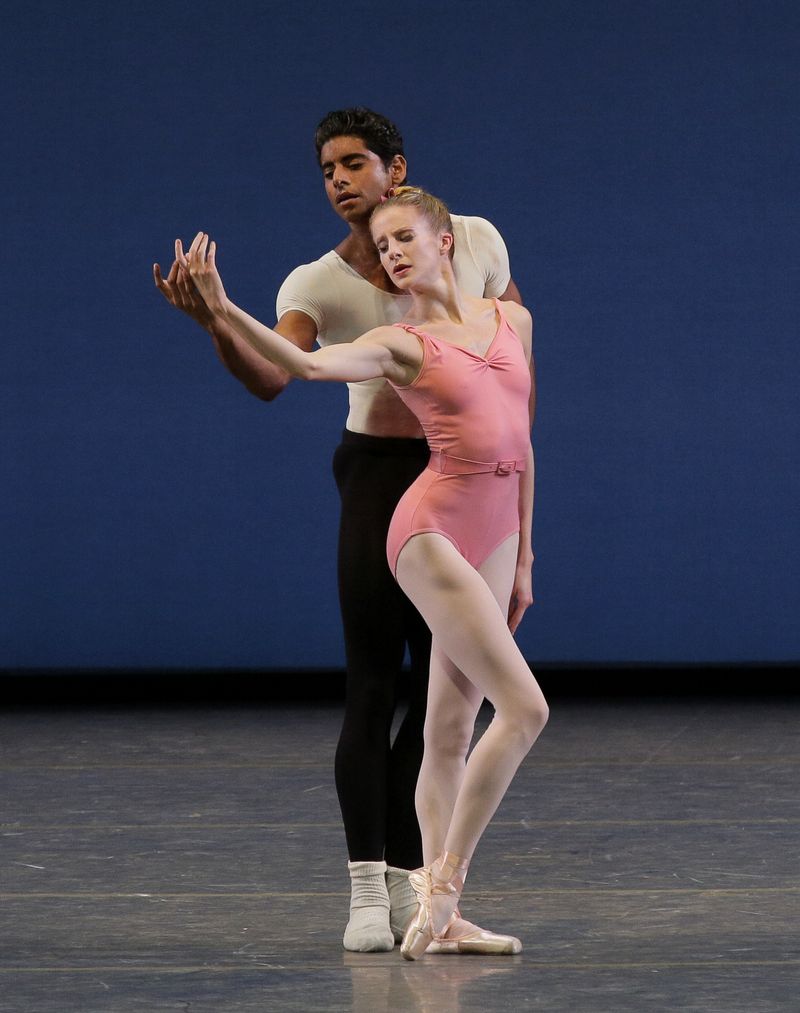
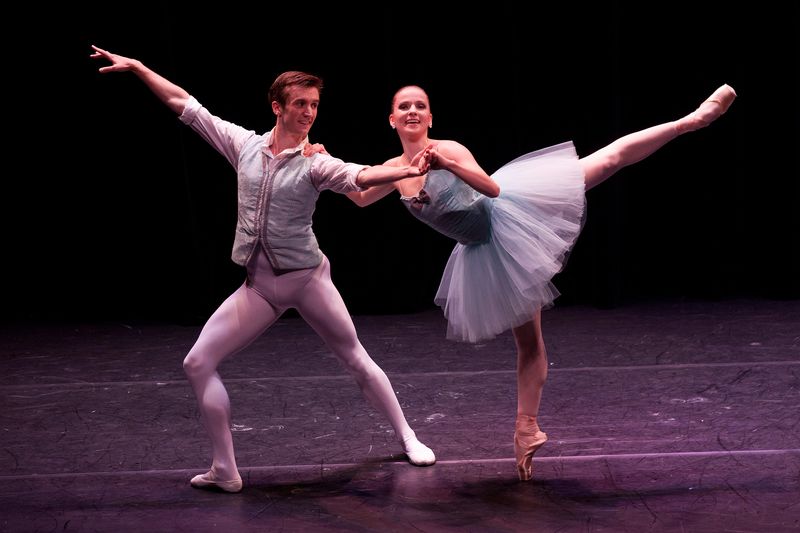
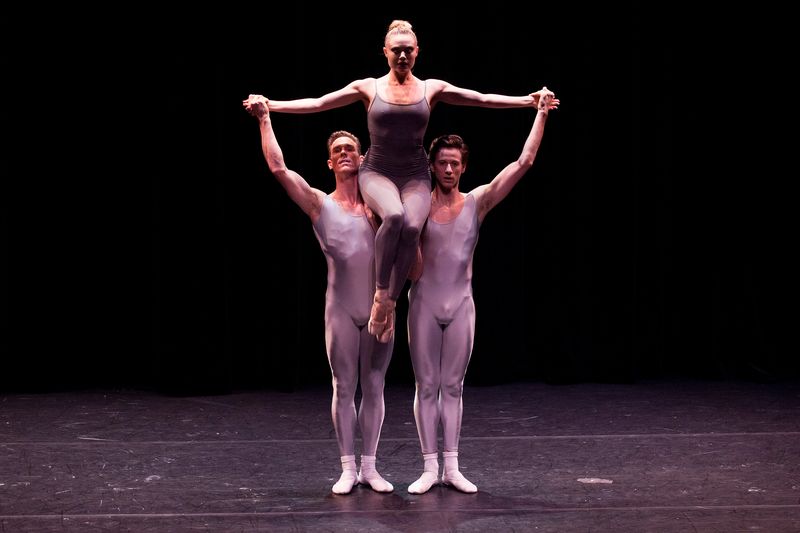
Tag: Balanchine

  • Balanchine’s “Davidsbündlertänze” @ NYCB

    C37708-3_Davidsb_LaraceySuozzi

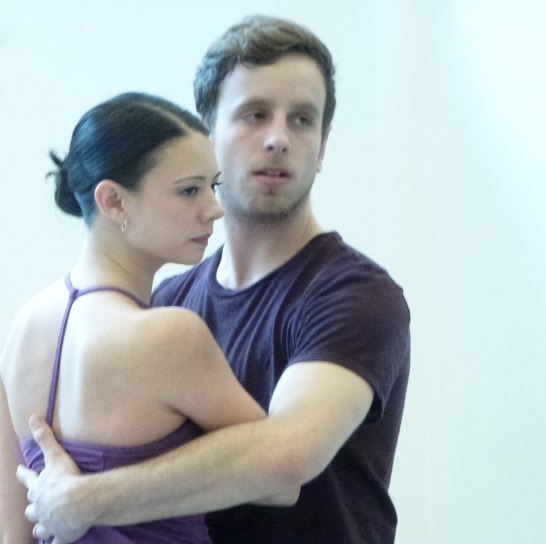
    Above: Ashley Laracey and Sean Suozzi in Robert Schumann’s Davidsbündlertänze, photo by Paul Kolnik

    Tuesday May 20, 2014 – Created in 1980, George Balanchine’s setting of Robert Schumann’s Davidsbündlertänze was one of the choreographer’s last works. It’s a unique ballet, deeply moving in its depiction of the composer Robert Schumann’s descent into madness. 

    During the winter of 1854, Schumann’s developing insanity took a dramatic turn: he began hearing “angelic” voices which evolved into the bestial cries of wild animals. One February morning he walked to a bridge over the Rhine and threw himself in; he was rescued by fishermen. Schumann himself asked to be institutionalized, to prevent his becoming a burden on his wife, Clara. He was placed in a sanatorium. His doctors prevented Clara from seeing him for more than two years, until days before his death.

    The Rouben Ter-Arutunian setting for this ballet, which has an antique look, surrounds the dancing area with gauzy curtains. The backdrop shows a body of water – perhaps alluding to Schumann’s attempt to drown hmself – and a far-shining cathedral hovering in the sky, the source perhaps of the “angelic” voices summoning the composer. At one point, mysterious figues all in black and holding large quill pens appear: these represent the Philistines, whose admonishing writings were poised to oppose art or innovation in the arts and against who the Davidsbündler (the League of Davidthe composer’s imaginary society of artists) took a firm stance.

    The ballet, danced by four couples, seems to depict various phases of the relationship between Schumann and Clara; it may also hint as certain aspects of Balanchine’s many romances. In Suzanne Farrell’s book, Holding Onto The Air, the great ballerina says that Balanchine never told her what Davidsbündlertänze was “about” during the course of the ballet’s creation. It wasn’t until later that she made the connection to Schumann’s own life.

    Suzanne Farrell came very much to mind tonight in the ballet’s opening duet, for Rebecca Krohn reminded me more than ever of Farrell, who was of course Balanchine’s longtime muse. Partnered by the dashing Zachary Catazaro, Rebecca’s sweeping lyricism and the communicative range of her expressions and gestures kept me riveted to her throughout the ballet. This was Farrell’s role (the girl in blue) at the ballet’s premiere and – like Suzanne – Rebecca may eventually take on the “Clara” role (the woman in white). Tonight her dancing was spell-binding.

    C37699-15_Davidsb_Krohn

    Above: Rebecca Krohn in Robert Schumann’s Davidsbündlertänze, photo by Paul Kolnik

    This evening’s entire cast in fact were new to this ballet, having all debuted in it together the previous week. Continuing to make a vibrant effect in each new assignment, Ashley Laracey was at her most delightful here…impetuous, charming, and dancing so very well. Sean Suozzi, who always brings his own distinctive energy to each role he undetakes, was her excellent cavalier. Tyler Angle, dancing with space-filling generosity and fineness of line, courted Tiler Peck with gentle urgency. Tiler, who to my mind seems to move from one pinnacle to another in the progress of her career, was just spectacular, her lush swirls of pirouettes radiating confidence and grace.

    In her portrait of Clara, Teresa Reichlen, so elegant in her presence and so refined in her line and port de bras, strove poignantly to comprehend the changes that were overtaking her beloved. Her attempts to draw him back to her embracing tenderness became increasingly desperate, and Tess at the end must finally accept their parting: in an exquisite moment, she bows her head in silent grief as the light fades.

    In a major career leap, the tall and poetic Russell Janzen’s portrayal developed a melancholy acceptance of Schumann’s tragic destiny. At the end of his very first duet with Tess, Russell’s visage showed an early indication of madness with a far-away look. These momentary drifts away from reality eventually overtake him, and at the end of the ballet he withdraws with an expression mingling fear and resignation. Earlier, Russell’s solo – set to the score’s most haunting melody – was beautifully danced.
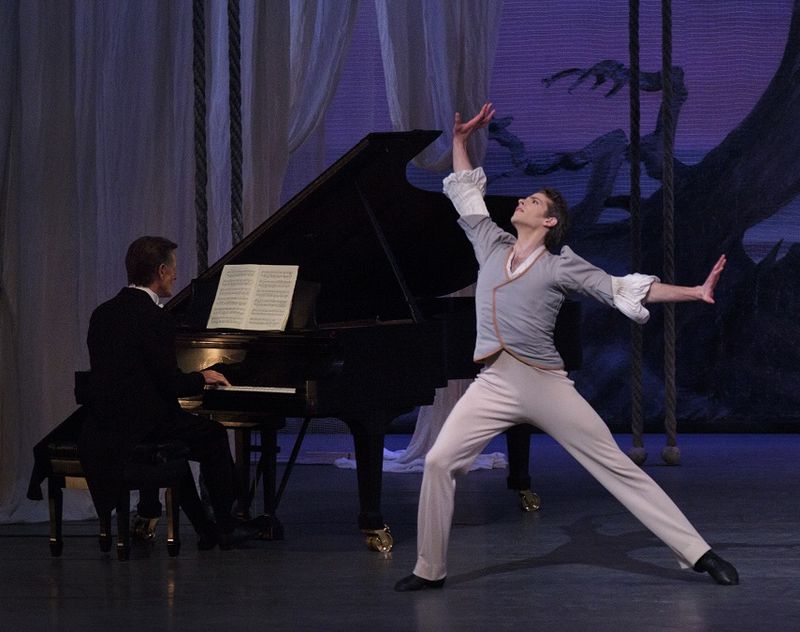
    C37701-8_Davidsb_Janzen_Crop1

    Above: Russell Janzen, with Cameron Grant at the piano, in Robert Schumann’s Davidsbündlertänze, photo by Paul Kolnik

    Cameron Grant, seated at the onstage grand piano, played the Schumann score with clarity and with tempos that seemed to propel the dancers while allowing them opportuniy for nuance. 

    Just as singers have sometimes told me they can’t sing anything after performing Franz Schubert’s “An die Musik”, it’s difficult to imagine watching (or dancing in) another ballet after Davidsbündlertänze, such is the haunting atmosphere it creates. And so I didn’t stay beyond the intermission: even going out to the Promenade seemed too hasty a return to reality. I was in a very subdued mood, and glad of a peaceful train ride home to reflect on the beauty of Schumann and touching artistry of tonight’s dancers.     

    ROBERT SCHUMANN’S “DAVIDSBÜNDLERTÄNZE”: Reichlen, Krohn, Laracey, T.Peck; Janzen, Catazaro, Suozzi, T. Angle [Solo Pianist: Grant]

  • Deborah Wingert/Lydia Johnson Dance Salon

    L1340657

    Above: Deborah Wingert

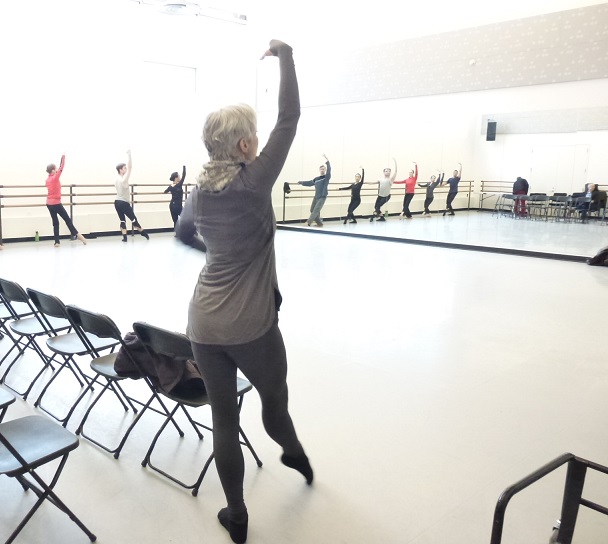
    Sunday March 23, 2014 – Friends – long-time and new – of Lydia Johnson Dance gathered at Manhattan Movement and Arts Center this afternoon for a salon/studio presentation of Lydia’s latest work-in-progress, set to the Mozart Fantasy in C-minor, K. 475. Wearing one of her many hats, the extraordinary Deborah Wingert – teacher, choreographer, stager for the Balanchine Trust, and ballet mistress for Lydia Johnson Dance – gave a pre-salon class, demonstrated her inspirational coaching abilities, and spoke of her life as a dancer whose career took wing with Balanchine’s blessing.

    L1340608

    First, a class. The dancers of Lydia’s company come from varied backgrounds. Deborah, who teaches Company class weekly for LJD, has been imbuing a feeling of stylistic unity in the dancers. Lydia’s choreographic vision is an unusual fusion of ballet and contemporary; Deborah’s class work places an emphasis on ballet while at the same time encouraging the individuality of expression of each dancer. It seems like a paradox, but it’s happening.

    The Mozart-in-progress opens with a lyrical solo danced by Katie Martin; throughout this work, Lydia provides each of her dancers with prominent passages allowing their singular qualities to shine thru.

    L1340648

    One extended segment is a duet for Sarah Pon and Anthony Bocconi (above), dancing in a realm of tenderness and trust.

    L1340633

    A duet for Blake Hennessy-York and Chazz Fenner-McBride (above), which the boys have just started working on, was coached by Deborah and in the span of a few moments took on a more vivid quality, having made slight adjustments in placement and support. Chazz, the newest dancer in Lydia’s company, brings the same sincerity to his dancing here that made his performances in Robin Becker’s INTO SUNLIGHT so meaningful.

    Kerry Shea, Laura DiOrio, Lisa Borres and Min Kim along with Katie and Sarah create beautiful shapes and a sense of quiet urgency as they come and go with dream-like unpredictability – all of this to Mozart’s peerless melodies.

    L1340686 - Copy

    LJD‘s Steve Cramer interviewed Deborah (above); she spoke of the affinity that has developed between Lydia Johnson and herself, and of their shared belief in the communicative power of music. Deborah further regaled us with stories of working for Mr. B, sharing anecdotes which were moving and witty by turns.

    L1340692

    As a savory ‘dessert’, Kerry Shea and Eric Williams (above) performed a duet from Lydia’s ballet NIGHT OF THE FLYING HORSES, to a score by Osvaldo Golijov. My friend Lisette Oropesa and I shared a secret smile as the haunting melody of “Je crois entendre encore” from Bizet’s PECHEURS DES PERLES suddenly materializes in a Golijovian incarnation. I was so glad to have my friends Lisette, Steven and Joe at the studio today; this was Lisette’s first opportunity to witness dance at close range, and I think it really moved her, especially since her beloved Mozart was an integral element of the afternoon.

    The new Mozart, along with the Golijov and Lydia’s ravishing Schubert ballet NIGHT AND DREAMS, will all be part of her upcoming season at Ailey Citigroup in June; details will be forthcoming.

  • Preljocaj & Martins @ NYC Ballet

    Stravaganza-key

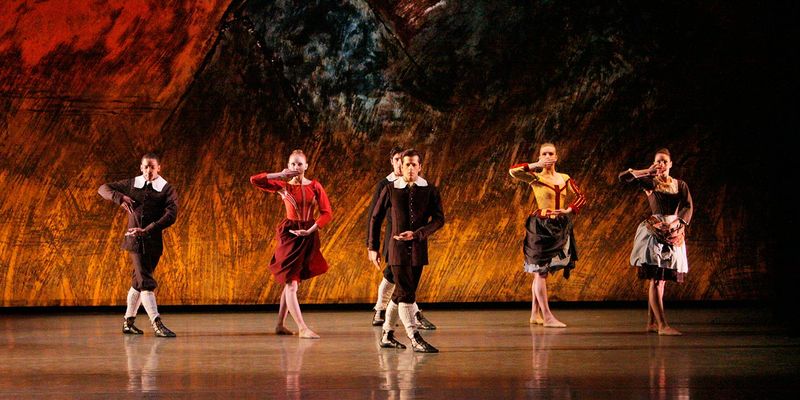
    Above: from LA STRAVAGANZA

    February 25th, 2014 – Angelin Preljocaj’s unusual 1997 ballet LA STRAVAGANZA and Peter Martins’ tango extravaganza TODO BUENOS AIRES (dating from 2000) were on the bill at New York City Ballet tonight, along with a Wheeldon pas de deux A PLACE FOR US.

    To date I’ve admired everything I’ve seen by Mr. Preljocaj, most especially his L’ANNONCIATION which has been perfomed in New York City by Cedar Lake Contemporary Ballet. I was at the NYCB premiere of LA STRAVAGANZA over a decade ago and was very taken with this dancework which revolves around a warp in the time continuum.

    In LA STRAVAGANZA, a sextet of young people in contemporary dress are dancing quietly in the twilight to the music of Vivaldi. At the intrusion of mechanical sounds, a black panel at the rear of the stage rises to review another sextet: three men in Puritan garb and three colourfully-dressed peasant girls. The contemporary group warily explore these aliens from another era who dance in stiff patterns with a stylized gestural language. A pas de deux ensues for one of the contemporary girls and one of he Puritans; in the end the girl is abducted and taken off to the other world. The contemporary dancers return to their original formation and the lost girl magically reappears: the story seems poised to repeat itself, endlessly. 

    In this rather odd ballet, which as I recall tended to baffle people at its premiere, Mr. Preljocaj has successfully merged the heavenly Baroque music with works of 20th century composers Evelyn Ficarra, Robert Normandeau, Serge Morand, and Ake Parmerud. Dance highlights are a duet for two of the Puritan men – Sean Suozzi and Craig Hall – moving in-sync with fast-paced gestures, and the time-spanning pas de deux danced by the ever-intriguing Gretchen Smith and Sean Suozzi.

    The contemporary boys – Devin Alberda, Joseph Gordon and Allen Peiffer – have some demanding combinations and later they stand stock still in a field of light as the girls – Ms. Smith, Brittany Pollack and Sara Adams – tentatively examine their bodies. Daniel Applebaum was the third Puritan, and a very attractive female trio – Emilie Gerrity, Claire Kretzschmar and Lydia Wellington – worked beautifully together and seemed to have stepped out of a Vermeer painting. 

    The title A PLACE FOR US made me think we were in for that cloyingly sentimental song from WEST SIDE STORY; but mercifully Chris Wheeldon turned to far more interesting – and rare – works from Andre Previn and Leonard Bernstein for this duet, the music being performed live onstage by Steven Hartman (clarinet) and Nancy McDill (piano).

    The duet, danced by NYCB‘s beloved couple Tiler Peck and Robert Fairchild, is performed in squares of light gleaming onstage. The piece has a dedication: ‘For Jerome Robbins. A thank you.’ and that choreographer’s work is indeed recalled while watching this pas de deux with its combination of romance and wit. Oddly enough, though – perhaps because of Robbie’s white tights and soft tunic – this pas de deux made me think of Balanchine’s APOLLO more than once. Needless to say, the dancers and musicians did very well by it.

    TODO BUENOS AIRES premiered in 2000 with Darci Kistler and Wendy Whelan in the principal female roles. In 2005, Peter Martins re-worked the ballet to incorporate a featured role for Julio Bocca. It’s the 2005 version we saw tonight, with our own primo bailarín Joaquin de Luz in a virtuoso performance.

    The musicians, led by concertmaster Kurt Nikkanen and featuring JP Jofre on bandoneon, are seated onstage, and two large soft drapes mark out the dance floor of a spacious after-hours club. Five Piazzolla tangos, arranged by Ron Wasserman, provide the setting for a series of duets and ensembles. Maria Kowroski – could her extension be any more heavenly? – danced with cool allure surrounded by a quartet of sexy boys: Jared Angle, Robert Fairchild, Adrian Danchig-Waring and Amar Ramasar. In a performance marked by radiant star-power, Ashley Laracey took on the role created on Wendy Whelan and made it her own. Right from her first duet with the sensuous Amar Ramasar, Ashley was thoroughly captivating; it seems to me that she is a dancer who could take on a huge variety of roles and make them all shine.

    Joaquin had the audience in the palm of his hand from the start: his speed-of-light pirouettes and spacious leaps caused the people around me to gasp in disbelief. The character’s moods range from aloof to seductive, and Joaquin seemed to be having a blast as he covered the stage with his daredevil feats, in the end basking in the adulation of the crowd and flashing his award-winning smile.

  • Violin Concertos @ NYC Ballet

    318356_2232197878477_977158597_n

    Above: Russell Janzen of New York City Ballet

    Wednesday February 19th, 2014 – Ballets by Jerome Robbins, Peter Martins, and George Balanchine – each set to a great 20th century violin concerto – were on the bill at New York City Ballet this evening. To an already-great line-up of dancers there was a late addition: Russell Janzen made his debut in BARBER VIOLIN CONCERTO; Tiler Peck and Amar Ramasar were also making role debuts tonight.

    Three conductors passed the baton one to another as the evening progressed; the Company’s two concertmasters – Kurt Nikkanen and Arturo Delmoni – shared the soloist spotlight, Kurt playing the Prokofiev and Arturo playing Barber and Stravinsky. It was a programme during which really missed my beautiful seat in Fourth Ring AA where I used to watch the orchestra from on high.

    The evening opened on a high note: the curtain rose on Robert Fairchild, all in white, as the restless dreamer of Jerome Robbins’ OPUS 19/THE DREAMER – my favorite Robbins ballet. Robert danced the ballet’s opening solo with deep musicality and supple fluidity of movement. Out of the blue, his muse materializes: Tiler Peck, in this role for the first time, found a perfect balance between the classical vocabulary and the sometimes jagged expressionism the ballet requires. In the more lyrical passages, her lush pirouettes had remarkable clarity; to a role that has been gorgeously danced in recent seasons by Wendy Whelan, Jenifer Ringer, and Janie Taylor, Tiler brought her own distinctive touches. Robbins gives the corps some dreamy moves – and also some athletic ones – in OPUS 19; I very much enjoyed tonight’s collective which was made up of some of my favorite dancers.

    It took me a few hearings to figure out exactly what it is about the opening measures of the Barber violin concerto that sings to me so clearly: it’s the use of the piano, especially the opening chord. It gave me a little frisson again tonight; while I love so many violin concertos I think sometimes the Barber is my actual favorite. I remember one summer driving very fast out Route 6 with Kenny to the end of the world – Provincetown – with the Barber blasting on the car stereo. Music and memory are so often indelibly linked.

    In tonight’s performance of the Barber, Teresa Reichlen and Russell Janzen looked great together – not just because they are long-limbed and attractive, but because they share a sense of elegance that manifests itself in their bearing and the grace of their line. A chill passed thru me as Amar Ramasar entered, a fallen angel with a dangerous ‘loner’ appeal who will eventually draw Tess to the dark side. Megan Fairchild excels in the barefooted role created by Kate Johnson: it’s a far cry from the charming, pristine pointe-work that is Megan’s specialty, but she jumps right in and makes it happen.

    After their classical parterning passages in the first movement, Tess and Russell will each experience a transformation. At first seeming to console Amar, Tess falls under his spell and is borne away to an unknown fate; their duet is a psychological conflict which reaches its turning point when the subjugated woman lets her hair down. Amar’s character is not so much seductive as simply a force that cannot be withstood; Tess in her vulnerability looks ravshingly ravished. Random thought: I’d love to see Amar in the Martha Graham rep.

    In the final allegro, Russell strives to withstand the endless torment of Megan’s advances: she’s playing one of the most annoying characters in all dance. She ends up writhing on the floor as Russell backs away, covering his eyes to blot out the vision of her over-sexed frenzy. In a final attempt to get what she wants, Megan literally climbs up Russell’s back to perch on shoulder; in a last defense, he flips her over and sends her crashing to the floor. The two dancers handled this tricky finale with aplomb and in fact danced the whole third movement to perfection.

    6a00d8341c4e3853ef014e887730ac970d-800wi

    Above: Janie Taylor, in a Henry Leutwyler portrait

    Tonight’s Stravinsky had a special energy; it was in fact one of the finest performances of this ballet I’ve seen. Part of the singular excitement in the atmosphere tonight may have stemmed from the presence of Janie Taylor, the Company’s enigmatic/charismatic principal ballerina who is soon to retire. I’ve been crazy about Janie since she first stepped out, a mere slip of a girl just over from SAB, to dance the lead in LA VALSE. After building a reputation as a dancer at once fragile and fearless, a long hiatus due to a complicated injury took her away from the stage for months…years, even. Her ‘second career’ has been a real source of joy for me and so tonight it was bittersweet to think that in a few days she will be vanishing from this stage, leaving only perfumed memories. But what memories they are!

    Tonight’s performance showed off of Janie’s balletic split personality: a palpable vulnerability alinged to a steely technical resiliance: she’s simply extraordinary…and irreplacable. Ask LaCour’s partnering of this blonde enigma developed a wonderful simpatico, a sense of tenderness in what is after all an abstract and ’emotionless’ ballet. In that marvelous moment where the ballerina stands against her partner as he shows her a view of the world with a sweeping gesture of the arm, I thought I’d never seen anything so beautiful.

    Janie and Ask seemed poised to walk off with the gold tonight, but the other Stravinsky couple – Rebecca Krohn and Adrian Danchig-Waring – were so potent technically and so vivid in their presentation that the entire ballet took on a grand dynamic, abetted by the excellent corps (the quartet of leaping boys won a ‘bravo’ all their own). Rebecca Krohn has really done wonders in the leotard ballets; she looks phenomenally confident and polished, and for me she’s the equal of any ballerina I’ve seen in this rep, going way back to Suzanne and Karin. Her generous dancing found a fine match in Adrian Danchig-Waring’s vibrant physicality; together these two dancers crafted amazing shapes as they moved thru the ballet’s demanding partnering motifs, ending their pas de deux with Adrian in a finely-timed fall to the floor and Rebecca in a sweeping back-bend.

    Extra delight: Faye Arthurs in a brief partnered segment with Adrian; she danced in both the Prokofiev and the Stravinsky tonight. So nice to run into Erica Pereira and Caitlin Dieck…and Tess, after the show.

    OPUS 19/THE DREAMER: *T. Peck, R. Fairchild [Conductor: Sill, Solo Violin: Nikkanen]

    BARBER VIOLIN CONCERTO: Reichlen, *Ramasar, M. Fairchild, *Janzen [Conductor: Otranto, Solo Violin: Delmoni]

    STRAVINSKY VIOLIN CONCERTO: Taylor, la Cour, Krohn, Danchig-Waring [Conductor: Capps, Solo Violin: Delmoni]

  • Gautier Capuçon @ The NY Philharmonic

    Gc

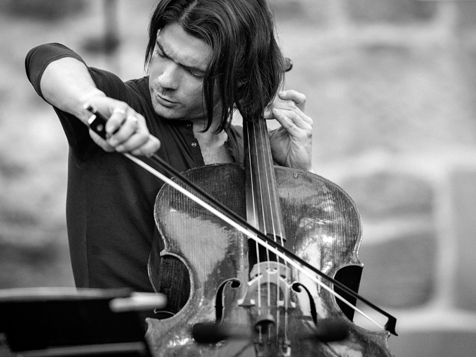
    Friday January 24th, 2014 matinee – Cellist Gautier Capuçon (above) gave an inspired rendering of the Shostakovich cello concerto #1 at this afternoon’s New York Philharmonic concert. Conducted by Andrey Boreyko, the programme was book-ended by works of two Russian composers with close ties to the world of classical ballet.

    The name Nikolai Tcherepnin immediately conjures visions of the Ballets Russes, for it was he who not only conducted the first performance of Diaghilev’s troupe in the West (on May 19th, 1909, at the Chatelet) but also composed the score of that evening’s opening ballet – Le Pavillon d’Armide – which swept the Parisians into a fever as they beheld Karsavina and Nijinsky onstage.

    Today the Philharmonic opened their concert with Tcherepnin’s tone poem The Enchanted Kingdom which dates from 1909-1910. The “kingdom” referred to in the work’s title is that of Katschei the Immortal – yes, the same sorcerer who was soon to appear in the Fokine/Stravinsky Firebird. In seems fact, Tchrepnin’s score may have been under consideration by Diaghilev as a setting for Fokine’s ballet. That didn’t transpire, but the score Tchrepnin left us is quite magical in its own right.

    The huge orchestra under Maestro Boreyko gave a richly-coloured performance: right from its sombre opening, this music reveals a vibrant sound-palette: celesta, piano and harp produce magical effects while solo wind voices add characterful touches. The cinematic central melody is simply gorgeous.

    Gautier Capuçon then took the stage for the Shostakovich; this charismatic artist took all the demands that the composer sets before the cellist in his stride. M. Capuçon’s playing of the central theme of the moderato literally gave me the chills, such was the spell he was able to cast; and as he played he sometimes seemed to be gazing off into some distant horizon: truly poetic. In the very long and technically demanding cadenza, the cellist’s clarity and his mastery of dynamics was most impressive – and a great smile illuminated his face when this sustained solo passage came to an end and the orchestra began to play again. Capuçon’s playing won the audience’s unstinting praise, and after the customary bows with the conductor the soloist was called out yet again for a solo bow, evoking a standing ovation.

    The Shostakovich was excellently played by the artists of the Philharmonic, with the prominent horn solos finding Philip Myers at his finest: amazingly plush sound, a real treat for the ear.

    Boreyko

    Above: conductor Andrey Boreyko

    The Philharmonic’s final offering today was the Tchaikovsky Suite #3, immortalized for dance lovers in Balanchine’s marvelous ballet of the same name. Of course throughout this performance the Balanchine choreography unfolded in the mind’s eye. Is there any music so romantically overpowering as the Élégie, especially when played as sumptuously as it was today? Throughout the forty-minute piece (it seems much shorter when there’s dancing to be watched), Maestro Boreyko kept a precise pulse: he was especially adept in the subtle rhythmic shifts of the Valse, and the final polonaise was regally done. The playing was stellar.

  • Martha Graham’s ‘Hérodiade’

    Miki herodiade

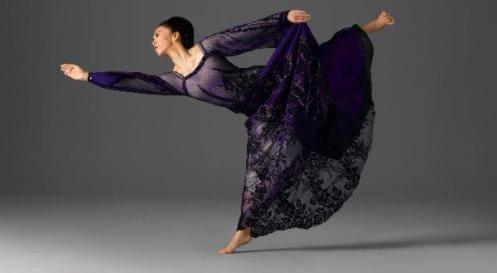
    Above: Miki Orihara in Graham’s Hérodiade

    Wednesday November 20, 2013 – Two of today’s foremost interpreters of the works of Martha Graham – Miki Orihara and Katherine Crockett – appeared tonight in a studio showing of the great choreographer’s 1944 work Hérodiade. As a splendid prelude, Ms. Crockett also danced Spectre-1914. It was an evening that resonated for me in so many different ways.

    Martha Graham Dance Company‘s artistic director Janet Eilber welcomed an overflow crowd to this second of three presentations of this programme. The Company’s spacious studio/theater on the eleventh floor of the Westbeth complex had been hung with black drapes, and after Ms. Eilber’s brief remarks, the majestic Katherine Crockett appeared to dance Spectre-1914, the opening solo from Martha Graham’s Chronicle.

    6a00d8341c4e3853ef0168eb764f31970c-800wi

    Above: Katherine Crockett, photographed by Matt Murphy

    Chronicle, dating from 1936, is Graham’s powerful statement on the devastation and futility of war; it is a great masterwork for female ensemble and it opens with a magnificent solo in which the dancer manipulates a voluminous skirt lined in red fabric to evoke both the bloodshed and the flames of war.

    Spectre-1914 had all but passed from memory until 1994 when it was researched and reconstructed by Terese Capucilli and Carol Fried, using film clips and still photos by Barbara Morgan. May Terpsichore bless these women for their efforts, for Spectre-1914 is as powerful a dancework as may be found, and it was danced tonight with marvelous amplitude and a deep sense of consecration by the marvelous Katherine Crockett. The audience beheld the dance in an awed state of pin-drop silence.

    Noguchi herodiade set

    Above: the Isamu Noguchi set pieces for Martha Graham’s Hérodiade

    After the Noguchi setting had been swiftly installed in the space, we watched a full performance of Graham’s ballet Hérodiade. Set to music by Paul Hindemith and commissioned by Elizabeth Sprague Coolidge for the Library of Congress, the ballet was originally called Mirror Before Me, and was first seen on October 30, 1944, at the Elizabeth Sprague Coolidge Auditorium, Library of Congress, Washington, D.C. Writing of that performance for the New York Times (November 1, 1944), critic John Martin said: “Miss Graham has created a powerful study of a woman awaiting a ‘mysterious destiny’ of which she has no knowledge…into it she has poured a somber tension that is relentless and altogether gripping. The music is rich and dark in color and the action on the stage meets it magnificently on its own terms.”

    That music, scored for chamber orchestra, was written by Paul Hindemith, a composer perhaps best-loved in the dance world for his superb Four Temperaments, choreographed by Balanchine.

    When I received the announcement that Hérodiade would be performed this evening, I suppose my natural reaction as an opera-lover was that it would be a dance about the Biblical princess Herodias and her daughter Salome and their conspiracy to have the prophet John the Baptist executed. But that is not the case: there are no allusions to either the Strauss or Massenet operas, nor to the Bible, nor to Oscar Wilde who penned the famous play Salome – Salome does not figure in the Graham work at all.

    Martha Graham had been interested in the poem Hérodiade by Stephane Mallarmé and in creating her ballet, the choreographer eschewed a specific narrative and instead turned to an abstraction of the character. Herodias is never named; she is simply referred to as ‘A Woman’. In Graham’s description, we see “a glimpse into the mirror of one’s being,” and she refers to this Woman as ‘doom-eager’, going forth with resolve to embrace her destiny.

    The Hindemith score is in eleven short movements, and we watch with intense interest as the radiant Miki Orihara, as the Woman in a deep violet gown, and the more austere Ms. Cockett, her Attendant in simple grey, move about the space. The choreography is restless and urgent, the Woman clearly obsessed with whatever fate awaits her while the Attendant seeks to comfort or forestall her mistress. The two dancers were simply engrossing to behold: Miki often in rapid, complex combinations moving swiftly about the stage while Katherine deployed her uncanny extension with mind-boggling expressiveness.

    In the end, Miki steps out of her rich gown and is revealed in virginal white; the Attendant withdraws and the Woman, taking up a black veil, contemplates her destiny. Mysterious, and all the more powerful for the unanswered questions it raises, Hérodiade is breath-taking.

  • A Balanchine Evening @ NYC Ballet

    Mourka & mr b

    Above: Mr. B with Mourka

    Wednesday September 25th, 2013 – This evening’s all-Balanchine programme at New York City Ballet was a veritable parade of favorite dancers. The audience, at least in my immediate vicinity, seemed comprised of long-time NYCBers; in fact I seemed to be at the lower end of the age spectrum. It was an attentive crowd, though rather subdued in terms of expressing enthusiasm.

    Any evening that begins with Faye Arthurs onstage is off to a beautiful start; the ballerina – partnered by Zachary Catazaro – danced the opening theme of Balanchine FOUR TEMPERAMENTS. This ballet is for me the most spectacular of the Balanchine black-and-whites, not only because of its marvelous steps and structuring, but the Hindemith score seems to me a true 20th century masterpiece. 

    Lauren King and Allen Peiffer (who literally danced all night) took the second theme, crossing the stage with semaphoric gestures; the melodic sway of the third theme brought forth yet another impressive partnership: Ashley Laracey and Justin Peck. All three couples danced to perfection.

    Robert Fairchild’s Melancholic had a restless grandeur about it: what a compelling stage presence! Meagan Mann and Georgina Pazcoguin circled the handsome danseur, deploying their extensions to dramatic effect. Tyler Angle replaced his brother Jared in the Sanguinic pas de deux; I do not recall having previously seen Tyler paired with Savannah Lowery but it turned out to be an interesting match-up, with Tyler bringing a touch of classic nobility which dovetailed with Savannah’s authoritative contemporary style. In Phlegmatic, Adrian Danchig-Waring seemed to have descended from Mount Olympus: his striking physique and intense focus were engrossing. Ashley Bouder gave a stunning Choleric, her dancing – vivid and grandly secure – was marked by sustained balances and a rich feeling of commitment. In the pit, guest conductor Carolyn Kuan led this splendid score with passionate élan, and pianist Cameron Grant made a significant contrbution to the ballet’s atmosphere.

    EPISODES is basically a series of four duets, three of them performed with attendant corps dancers. Clothilde Otranto and the NYCB musicians gave clarity to the quirky Webern pieces which comprise the ballet’s score, ending with the composer’s imaginative tribute to Bach in a setting from Musical Offering.

    Abi Stafford and Sean Suozzi were finely-matched in the ballet’s opening Symphony; their articulation of the steps and their fluent work as partners made me wish to see them together in other ballets. Three couples echo the principal pair: Marika Anderson with Russell Janzen, Gwyneth Muller with Allen Peiffer and Gretchen Smith with Andrew Scordato. This entire opening movement, with the stage bathed in an unusual verdigris hue, was absorbing to watch.

    Things then take a darker turn as Teresa Reichlen and Ask LaCour appear in pools of light and dance a mysterious succession of five brief duets, their relationship physical but unfathomable. The ballet’s sense of mystery extends to the ethereal Janie Taylor’s appearance in Concerto; dancing with Sebastien Marcovici (who is just back from a hiatus), Janie retains the allure of being the Company’s most enigmatic ballerina.

    EPISODES ends with a gorgeous ritual: a corps of fourteen female acolytes weave patterns around the central couple: Maria Kowroski-  looking supremely divine – and her noble consort Jonathan Stafford. The two principal dancers, so well matched both in physique and in their ability to make expressive nuances count in these abstract ballets, were superb.   

    Principal ballerina Megan Fairchild talks about Balanchine’s DUO CONCERTANT here. When Chase Finlay sustained an injury onstage last week, forcing him to withdraw from his immediate-future performances, I wondered who might partner Ms. Fairchild in this evening’s performance. My thoughts ran to Jared Angle, who had danced DUO so perfectly at Yvonne Borree’s farewell. And sure enough: Jared it was, stepping into the ballet tonight with his signature nobility of style and peerless partnering abilities.

    Kurt Nikkanen and Cameron Grant performed this panoramic Stravinsky score – it veers from playful to deeply expressive – with impressive musicianship. The ballet is an ideal vehicle for Megan Fairchild, sweeping her from girlish impetuosity to womanly tenderness on the brilliant changing modes of the rhythms and harmonies of the instrumental voices. Jared was by turns playful, protective and poignant as he interacted with his ballerina; their partnership was a rewarding one to experience, and the audience – heretofore rather reserved in their reactions to the evening – greeted the dancers and musicians with warm applause. Now I’m wanting to see the Megan/Jared duo in other ballets.

    From its iconic opening diagonal of sleekly white-clad, pony-tailed ballerinas to the final ritualistic tableau as the dancers kneel or raise their arms (in homage to Balanchine and Stravinsky, I imagine) SYMPHONY IN THREE MOVEMENTS is one of NYCB‘s treasures. Excellent demi- and corps work in tonight’s performance, which opened with the vitality of Daniel Ulbricht’s remarkable high leaps; Ana Sophia Scheller, letting her hair down, shows us that a first-class tutu-and-tiara ballerina can also be a dynamic contemporary stylist. Rebecca Krohn looked stunning in her deep-rose leotard and danced with abandon, matched by Andrew Veyette’s speed and clarity. In the central pas de deux, one of Balanchine’s more effective, Sterling Hyltin and Amar Ramasar were at their finest. Earlier, Sterling had made a swift trajectory, circling the stagetwice in pique turns at ever-increasing speed. Amar’s charismatic presence, his commancing partnering and his generosity as a dancer make him an invaluable member of this troupe.

    As the work soared forward to its energetic conclusion, propelled by Carolyn Kuan’s baton, one felt yet again the great genius of Balanchine, and the continuing pleasure of experiencing his works, year after year.

    THE FOUR TEMPERAMENTS: Arthurs, Catazaro, King, Peiffer, Laracey, J.Peck, R. Fairchild, Lowery, T. Angle, Danchig-Waring, Bouder

    EPISODES: A. Stafford, Suozzi, Reichlen, laCour, Taylor, Marcovici, Kowroski, J.Stafford
     
    DUO CONCERTANT: M. Fairchild, J Angle
    SYMPHONY IN THREE MOVEMENTS: Hyltin, Scheller, Krohn, Ramasar, Ulbricht, Veyette

  • Images from NYC Ballet’s Balanchine Evening

    C36439-15_Duo_MFairJAng_1

    A series of Paul Kolnik’s photographs from last night’s Balanchine programme at New York City Ballet. Above: Jared Angle and Megan Fairchild in DUO CONCERTANT.

    C34660-9_Sym3_HyltinRama

    Amar Ramasar & Sterling Hyltin in SYMPHONY IN THREE MOVEMENTS.

    C36436-12_Episodes

    Janie Taylor & Sebastien Marcovici with the corps de ballet in EPISODES.

    C36429-16_4Temp

    Tyler Angle & Ashley Bouder in THE FOUR TEMPERAMENTS.

    My thanks to Mr. Kolnik and the NYCB press office for providing these photos

  • Tom Gold Dance @ Bilbao

    TOM GOLD DANCE  Apollo with   Sara Mearns,  Adrian Danchig Waring, Abi Stafford

    On August 21st and 22nd, 2013 Tom Gold Dance performed at the Guggenheim Museum at Bilbao, Spain. The programme consisted of Tom’s ballet LA PLAGE, Balanchine’s APOLLO, Jerome Robbins’ CONCERTINO, and the pas de deux from FLOWER FESTIVAL AT GENZANO. In the top photo, Sara Mearns, Likolani Brown, Adrian Danchig-Waring and Abi Stafford in APOLLO.

    Click on each photo to enlarge.

    TOM GOLD DANCE   Flower Festival at Genzano  with  Devin Alberda and Abi Stafford

    Above: Devin Alberda and Abi Stafford in the FLOWER FESTIVAL pas de deux.

    TOM GOLD DANCE  Concertino, with  Stephen Hanna, Sara Mearns, Andrew Scordato

    Above: Stephen Hanna, Sara Mearns and Andrew Scordato in CONCERTINO.

    These images from the performance are courtesy of The Guggenheim Museum, Bilbao.

  • Bountiful Balanchine @ New York City Ballet

    6a00e3982574bd8833013487f8adad970c-800wi

    Above: New York City Ballet principal ballerina Ashley Bouder in a Matt Murphy portrait

    Friday May 24th, 2013 – A panoramic vision of George Balanchine’s choreographic artistry was on display this evening at New York City Ballet: an iconic classic, a quirky and mysterious series of danced vignettes, a spirited showpiece pas de deux, and a masterwork set in a luminous Chagall decor.

    It must be a memorable landmark in a NYCB ballerina’s career to be cast in one of the principal roles in SERENADE. Sterling Hyltin, who recently took on the Russian Girl, was tonight making her debut as the Waltz Girl. Sterling has her own brand of youthful elegance and sophistication as well as the mature depth of artistry to bring something very personal to this role. As the inherent drama of the ballet evolved, Sterling’s sure sense of the music and her nuanced conveyance of its romantic beauty made a poetic impression, enhanced by the angelic fall of her hair. 

    Jared Angle was a perfect cavalier for Sterling in their Waltz, and his airy solo passage was beautifully crafted. Megan LeCrone’s unique persona and wonderfully fluid movement continually found inspiration in the Tchaikovsky score, and Adrian Danchig-Waring was again a marvel of physique and presence.

    I’ve seen Megan Fairchild as the Russian Girl many times and I felt that tonight she surpassed her own high standards in the role; every phrase had a serene quality and in matters of expressiveness she found the exact hues in her dancing to enhance the lyrical glow of the music. It was a very pleasing interpretation in terms of both technique and artistry.    

    C35663-8_Ivesiana_Laraceyrr

    Above: newly-promoted to soloist, Ashley Laracey – one of the Company’s most distinctive dancers – in IVESIANA; photo by Paul Kolnik. The opening section of this ballet, entitled In Central Park, commences with a convergence of almost zombie-like women wandering the park at night. Ms. Laracey, in virginal white, moves among them – a blind girl feeling her way in the darkness. She encounters the broodingly handsome Zachary Catazaro and falls prey to his sexual desire, but it’s all very subtly manifested.

    6a00d8341c4e3853ef017eeafd0416970d-800wi

    Above: Anthony Huxley and Janie Taylor in The Unanswered Question from IVESIANA; photo by Paul Kolnik. In this duet, the barefoot ballerina is borne aloft by unseen carriers while the desperate young man pursues her in vain. I’m reminded of a similar Balanchine duet, PORTE ET SOUPIR, in which the female character appears ever beyond reach. The two ballets end differently, but the mystery and allure evoked are provocative in both works. Anthony Huxley, beautifully vulnerable, gives a charismatic youthfulness to the questing boy and his thwarted desires, while the divine Janie Taylor, wrapped in an enigma, entrances with her pale skin and iconic hair. 

    In a sudden snap-out-of-it burst of reality, Teresa Reichlen and Amar Ramasar appear in a vaudeville-like duet. Playful and unromantic, they trade solo passages before shaking hands and going their separate ways. Confident and super-attractive, Tess and Amar give IVESIANA its only bright spot, for the ballet ends in deep twilight with the corps now walking about on their knees, downcast and anonymous.

    The programme then did a volte face and gave us Balanchine at his most witty and entertaining with TARANTELLA, a virtuoso courting duet with a Neopolitan flair. Daniel Ulbricht gave a dynamic and high-flying performance, the crowd with him every step of the way as he leapt and swirled about the stage in uncanny combinations. Not to be outdone, the charming Erica Pereira brought a delicate but spicy air to her performance: her fancy footwork matched Daniel’s, and she showed off some very pretty attitude turns. As the pas de deux sails forward, the zils started to fly off from Daniel’s tambourine causing much mirth in the audience. The two dancers swept offstage after Daniel’s victorious kiss, then returned to an avalanche of applause. They were called out four times by the delighted crowd.

    It’s not often we see a fourth curtain call after a ballet at NYCB, but it happened a second time tonight as Ashley Bouder delivered a brilliant Firebird to end the evening. Ashley’s boundless technique is matched by her insightful dramatic interpretation, filled with subtle detail and highly personal musicality. She created a vibrant and magical atmosphere, topped off by a striking manege of full-stretched jetes. But then she also summoned up the gentle rapture needed in the whispering bourees of the Berceuse. Fortunate ballet-goers to have experienced two superb Firebirds – Ashley’s and Maria Kowroski’s – in a single week. They are as different as two birds of a feather could be, yet each seems perfect.

    Justin Peck was the wide-eyed and courtly Prince and Gwyneth Muller the willowy, enchanting Princess. Blessings on my lovely girls in the Dance of the Captive Maidens. Conductor Leif Bjaland and the NYCB players gave a jewel-like rendering of this fascinating Stravinsky score.  

    SERENADE: Hyltin, M. Fairchild, LeCrone, J. Angle, Danchig-Waring  [Guest Conductor: Bjaland]
    IVESIANA: Laracey, Catazaro, Taylor, Huxley, Reichlen, Ramasar  [Conductor: Sill]
    TARANTELLA: Pereira, Ulbricht  [Conductor: Sill, Solo Piano: Chelton]
    FIREBIRD: Bouder, J. Peck, Muller, Scordato  [Guest Conductor: Bjaland]